Vocabularies

English Vocabulary Dictionary | Word Meanings, Definitions & Examples

adjective C1
/səˈtɪrɪk/
сатирический (satiricheskiy)

Relating to or using satire.

"The novel takes a satiric view of urban life."

"Роман представляет собой сатирическое видение городской жизни." (Roman predstavlyaet soboy satiricheskoe videnie gorodskoy zhizni.)
adjective C1
/səˈtɪrɪkəl/
сатирический (satiricheskiy)

containing or using satire to criticize or mock

"The satirical cartoon mocked the government's new policy."

"Сатирический рисунок высмеивал новую политику правительства." (Satiricheskiy risunok vysmeival novuyu politiku pravitel'stva.)
verb C1
/ˈsætəˌraɪz/
сатиризировать (satirizirovat)

to mock or criticize something using satire

"The play satirizes the greed of modern corporations."

"Пьеса сатирает жадность современных корпораций." (P'esа satirayet zhадnost' sovremennykh korporatsiy.)
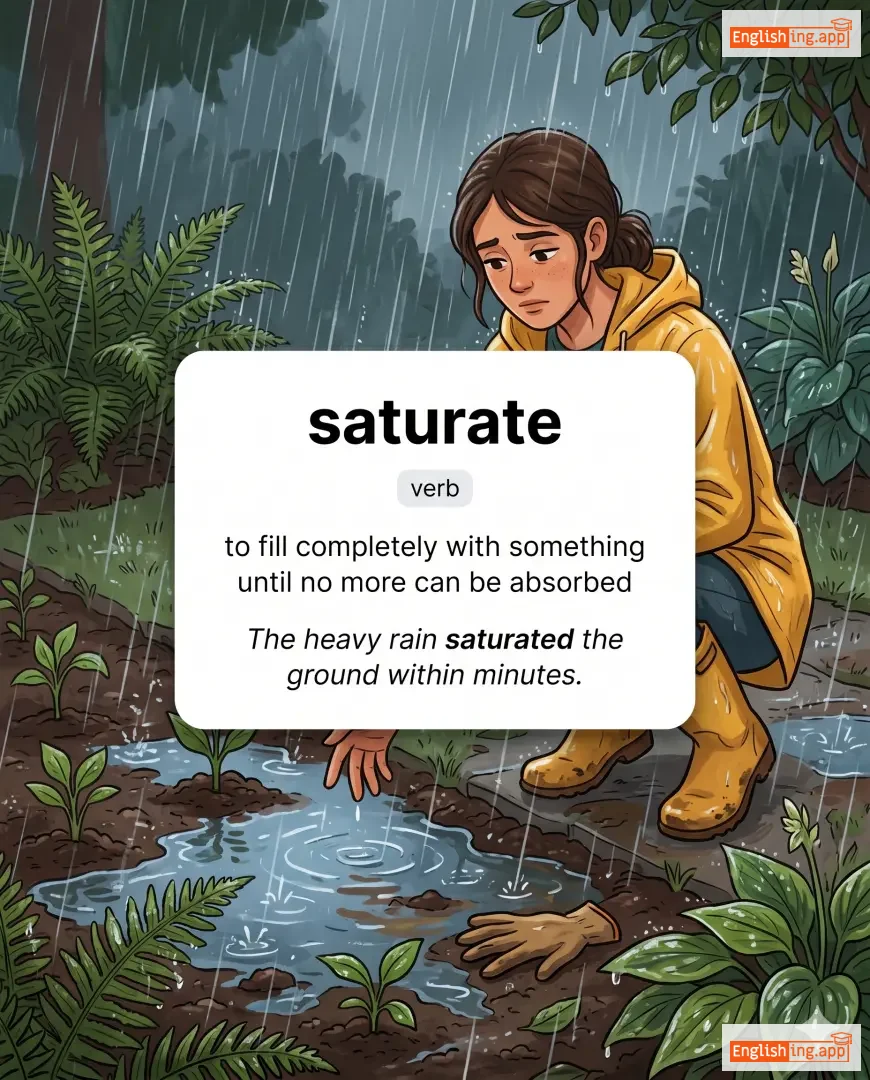
saturate definition card — visual illustration of the meaning
verb C1
/ˈsætʃəˌreɪt/

to fill completely with something until no more can be absorbed

"The heavy rain saturated the ground within minutes."

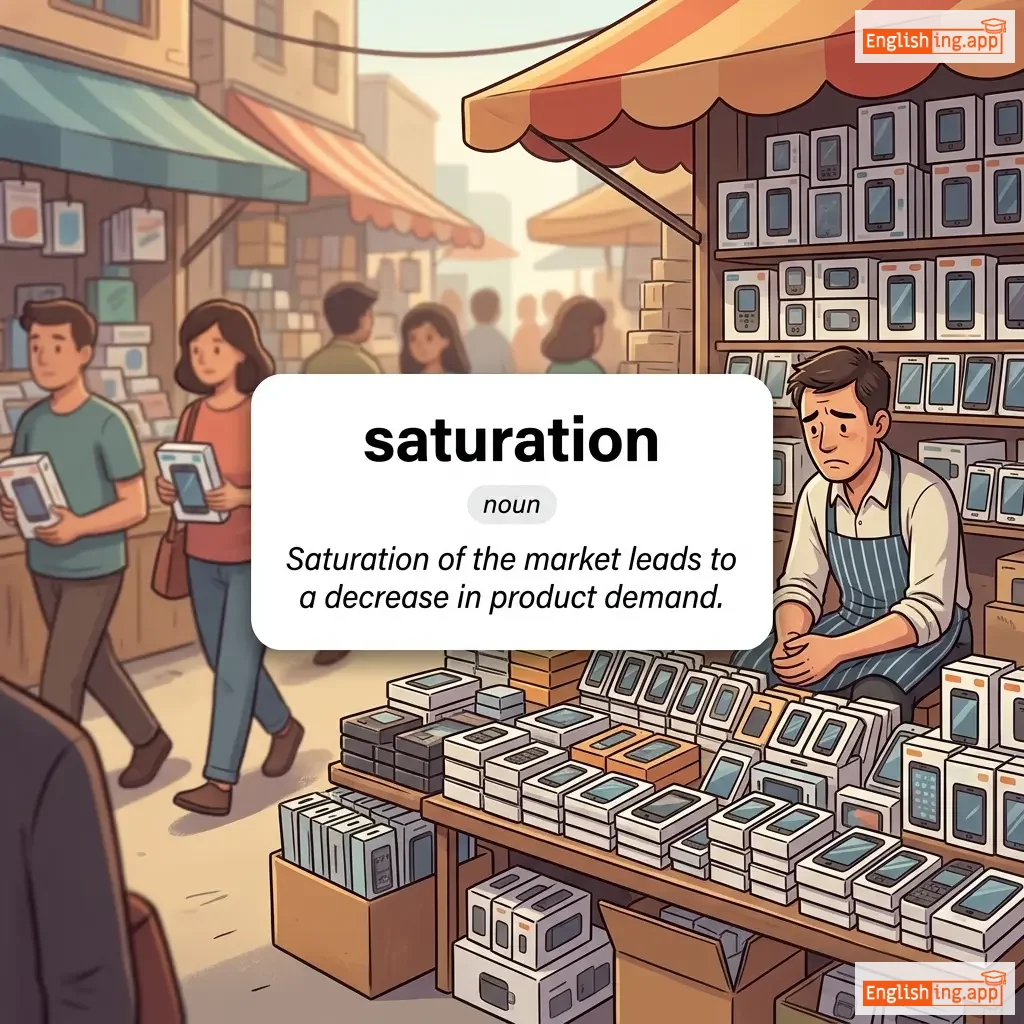
saturation definition card — visual illustration of the meaning
noun C1
/ˌsætʃəˈreɪʃən/
насыщение (nasyshchenie)

The state or process that occurs when no more of something can be absorbed, combined with, or added.

"Saturation of the market leads to a decrease in product demand."

"Насыщение рынка приводит к снижению спроса на продукцию." (Nasyshchenie rynka privodit k snizheniyu sprosa na produktsiyu.)
adjective C1
/ˈsɔːsi/
наглый (naglyi)

Boldly rude, cheeky, or playfully disrespectful.

"The child gave a saucy reply to his teacher."

"Ребёнок дал наглый ответ своему учителю." (Rebyonok dal naglyi otvet svoemu uchitelyu.)
verb C1
/ˈsɔːntər/
прогуливаться (saunter)

to walk in a slow, relaxed manner without hurry or effort

"We sauntered along the riverside, stopping now and then to watch the boats."

"Мы неспешно прогуливались вдоль набережной, иногда останавливаясь, чтобы посмотреть на лодки." (My nespesno progulivalisya vdol naberezhnoy, inogda ostanavlivayas, chtoby posmotret na lodki.)
noun C1
/səˈvænə/
саванна (с рассеянными деревьями) (savanna (s rasseyannymi derev'yami))

a grassy plain with scattered trees, typical of tropical and subtropical regions

"Giraffes browsed on acacia trees across the wide savanna."

"Жирафы щипали акациевые деревья на широкой саванне." (Zhirafy shchipali akatsievye derev'ya na shirokoy savanne.)
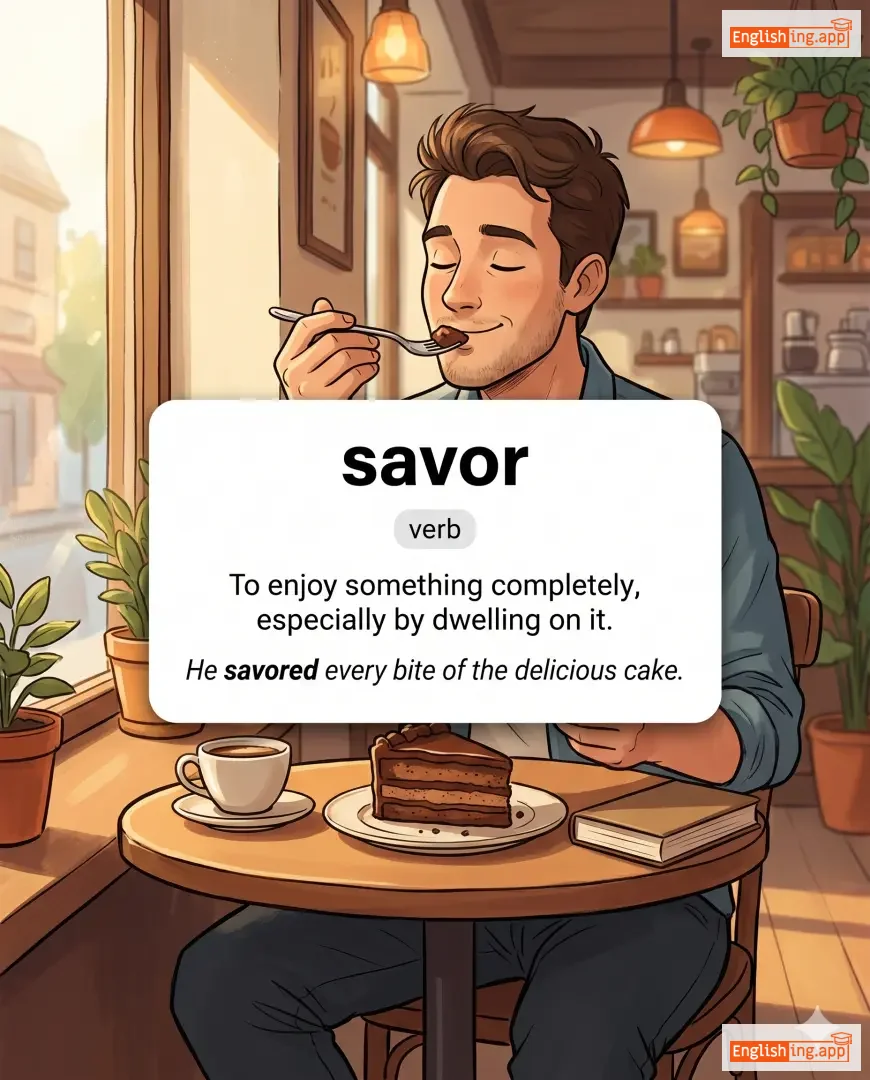
savor definition card — visual illustration of the meaning
verb C1
/ˈseɪ.vər/
наслаждаться (naslazhdat'sya)

To enjoy something completely, especially by dwelling on it.

"He savored every bite of the delicious cake."

"Он наслаждался каждым куском вкусного торта." (On naslazhdalsya kazhdym kuskom vkusnogo torta.)
adjective C1
/ˈseɪ.vər.i/
вкусный (соленый или острый) (vkusny (soleny ili ostryy))

Having a pleasant salty or spicy taste; morally acceptable.

"The restaurant serves a variety of savory dishes."

"Ресторан предлагает разнообразные вкусные блюда." (Restoran predlagaet raznoobraznye vkusnye blyuda.)
adjective C1
/ˈsæv.i/
умный, ловкий (umnyy, lovkiy)

Having practical knowledge and the ability to make good judgments.

"She is a tech-savvy entrepreneur."

"Она - предприниматель с хорошими техническими знаниями." (Ona - predprinimatel' s khoroshimi tekhnicheskimi znaniyami.)
noun C1
/ˈsɔː.dʌst/
опилки (opilki)

The tiny particles of wood produced by sawing or sanding.

"The floor was covered with sawdust from the carpentry work."

"Пол был покрыт опилками от плотницких работ." (Pol byl pokryt opilkami ot plotnitskikh rabot.)
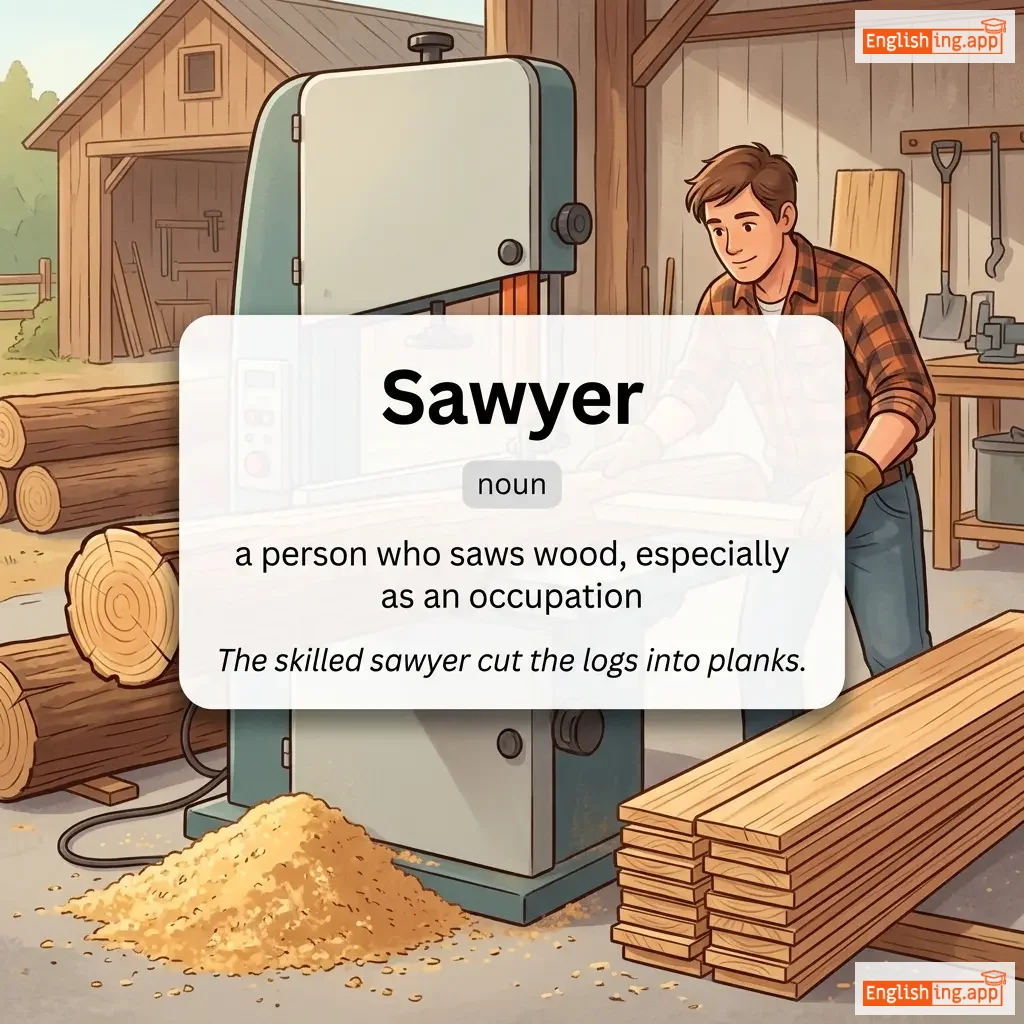
Sawyer definition card — visual illustration of the meaning
noun C1
/ˈsɔːjər/
плотник (plotnik)

a person who saws wood, especially as an occupation

"The skilled sawyer cut the logs into planks."

"Опытный плотник нарезал бревна на доски." (Opytniy plotnik narezhal brevna na doski)
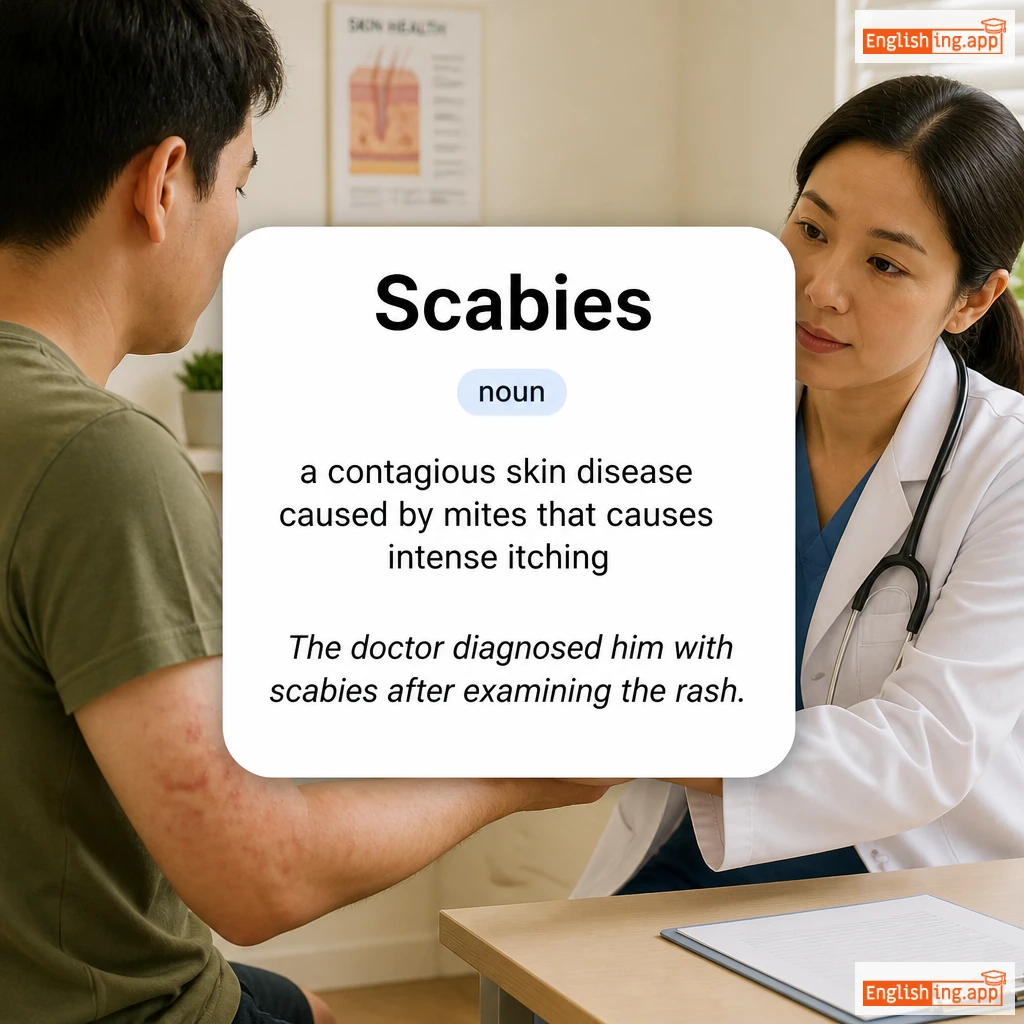
Scabies definition card — visual illustration of the meaning
noun C1
/ˈskeɪ.biːz/
чесотка (chesotka)

a contagious skin disease caused by mites that causes intense itching

"The doctor diagnosed him with scabies after examining the rash."

"Доктор поставил диагноз чесотка после осмотра сыпи." (Doktor postavil diagnoz chesotka posle osmotra sypi.)
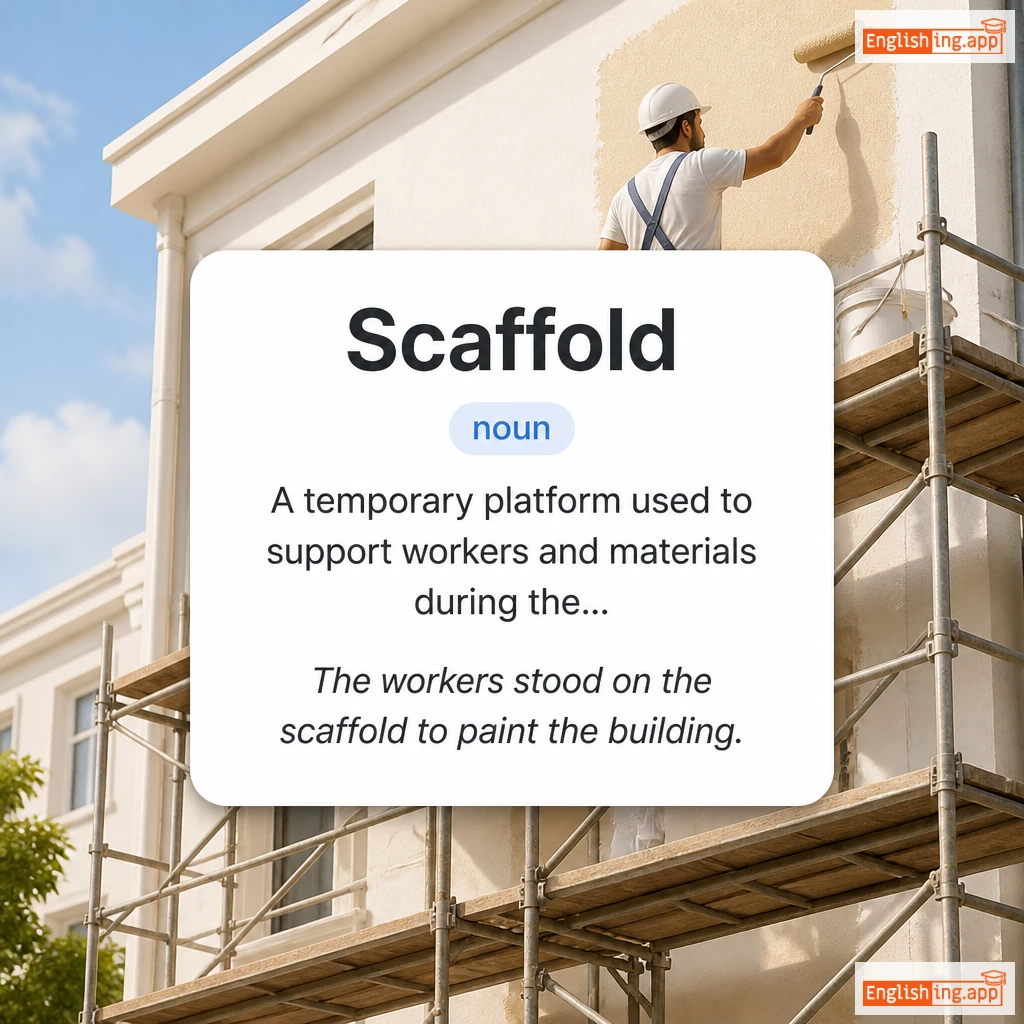
Scaffold definition card — visual illustration of the meaning
noun C1
/ˈskæf.əʊld/
лесa (lesa)

A temporary platform used to support workers and materials during the construction or repair of a building.

"The workers stood on the scaffold to paint the building."

"Рабочие стояли на лесах, чтобы покрасить здание." (Rabochie stoyali na lesakh, chtoby pokrasit' zdanie.)
scalability definition card — visual illustration of the meaning
noun C1
/ˌskeɪ.ləˈbɪl.ə.ti/
масштабируемость (masshtabiruemost)

The ability to expand to larger scales while maintaining efficiency

"The startup focused on scalability to handle future growth."

"Стартап сосредоточился на масштабируемости, чтобы справиться с будущим ростом." (Startap sosredotochilsya na masshtabiruemosti, chtoby spravitsya s budushchim rostem.)
noun C1
/ˈskælpəl/
скальпель (skalpel)

A small and extremely sharp bladed instrument used for surgery and dissection.

"The surgeon carefully used a scalpel to make the first incision."

"Хирург осторожно использовал скальпель, чтобы сделать первый разрез." (Khirurg ostorozhno ispol'zoval skalpel', chtoby sdelat' pervyy razrez.)
adjective C1
/ˈskeɪ.li/
чешуйчатый (cheshuychaty)

covered with scales; having a rough surface like scales

"The fish has scaly skin."

"У рыбы чешуйчатая кожа." (U ryby cheshuychataya kozha.)
adjective C1
/skænt/
скудный (skudnyy)

Barely sufficient or inadequate in amount, degree, or quantity.

"There was scant evidence to support the claim."

"Было мало доказательств для поддержки утверждения." (Bylo malo dokazahtel'stv dlya podderzhki utverzhdeniya.)
adjective C1
/ˈskænti/
бедный (bednyy)

Small in quantity; insufficient or meager.

"The refugees survived on scanty food supplies."

"Беженцы выжили на скудных запасах пищи." (Bezhen'tsy vyzhili na skudnykh zapasakh pishchi.)
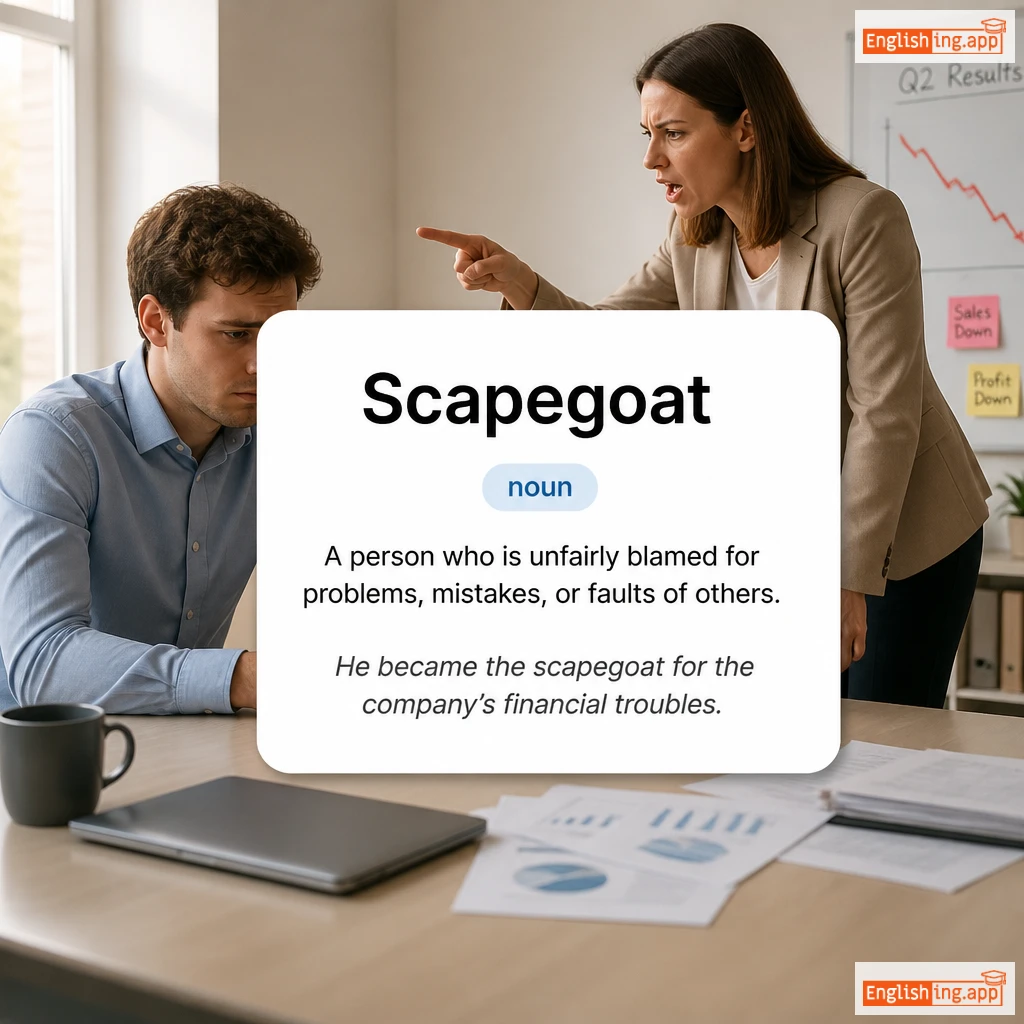
Scapegoat definition card — visual illustration of the meaning
noun C1
/ˈskeɪpˌɡoʊt/
козел отпущения (kozel otpushcheniya)

A person who is unfairly blamed for problems, mistakes, or faults of others.

"He became the scapegoat for the company’s financial troubles."

"Он стал козлом отпущения за финансовые проблемы компании." (On stal kozlom otpushcheniya za finansovye problemy kompanii.)
adjective C1
/ˈskeɪðɪŋ/
язвительная критика (yazvitelnaya kritika)

severely critical; harshly scornful

"The critic wrote a scathing review of the movie."

"Критик написал язвительную критику о фильме." (Kritik napisal yazvitel'nuyu kritiku o filme.)
verb C1
/ˈskævɪndʒ/
искать в мусоре (iskat' v musore)

to search through waste or discarded material to find useful items

"The children scavenged for food in the garbage dump."

"Дети искали еду на свалке." (Deti iskali yedu na svale.)
noun C1
/ˈskævɪndʒər/
падальщик / сборщик мусора (padal'shchik / sborshchik musora)

an animal or person that feeds on dead or discarded material

"Vultures are natural scavengers that clean up the environment."

"Скопы являются природными скэвенджерами, которые очищают окружающую среду." (Skopy yavyayutsya prirodnymi skavyendzherami, kotorye ochishchayut okruzhayushchuyu sredu.)
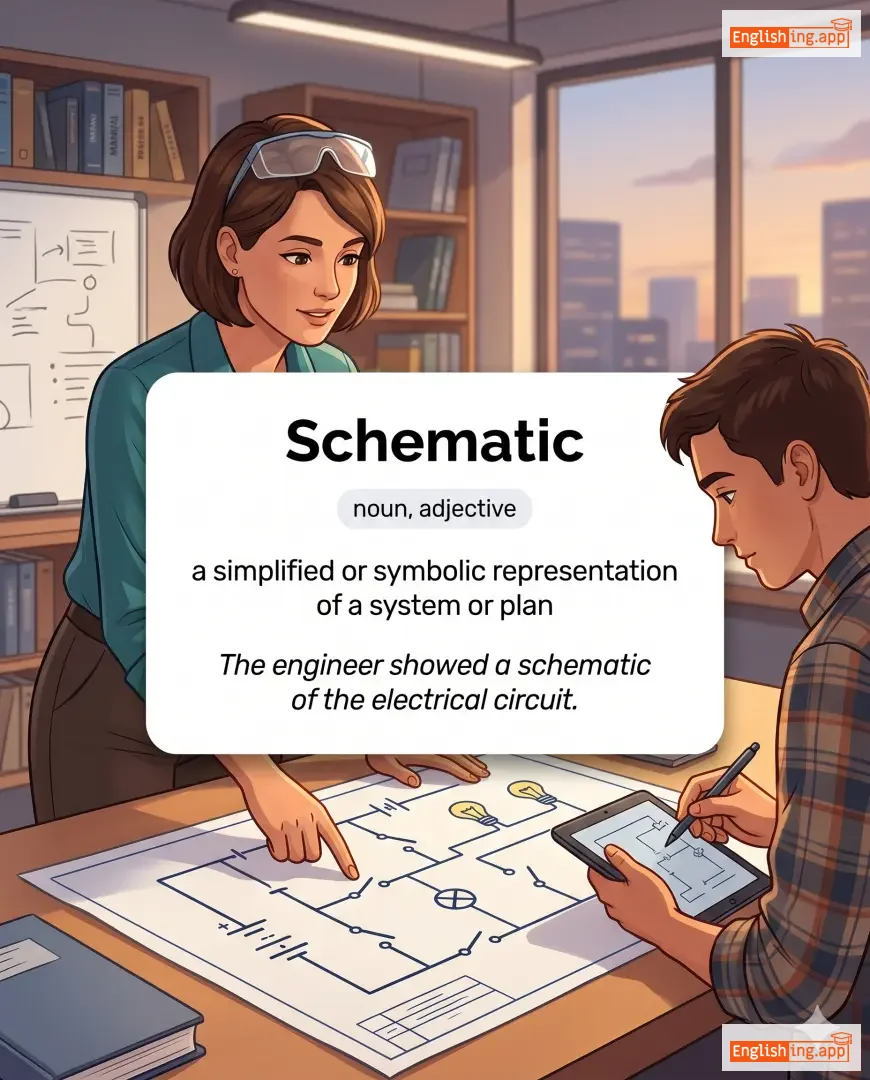
Schematic definition card — visual illustration of the meaning
noun, adjective C1
/skiːˈmætɪk/
схематический (schematicheskiy)

a simplified or symbolic representation of a system or plan

"The engineer showed a schematic of the electrical circuit."

"Инженер показал схему электрической цепи." (Inzhener pokazal skhemu elektricheskoy tsepi.)
adjective C1
/skəˈlæstɪk/
учебный (uchebnyy)

Relating to schools, education, or academic learning.

"The school organizes scholastic competitions every year."

"Школа организует школьные конкурсы каждый год." (Shkola organizuyet shkol'nyye konkursy kazhdyy god.)
adjective C1
/ˈsɪn.tɪ.leɪ.tɪŋ/
искрящийся (iskryashchiesya)

brilliantly clever, exciting, or sparkling

"Her scintillating conversation kept everyone entertained."

"Её искрящийся разговор развлекал всех." (Yeyo iskryashchiesya razgovor razvlekal vsekh.)
noun C1
/ˈsaɪ.ən/
потомок (potomok)

a descendant of a wealthy, aristocratic, or influential family

"He is the scion of a wealthy industrialist family."

"Он потомок богатой индустриальной семьи." (On potomok bogatoy industrial'noy sem'i.)
verb C1
/skɒf/
насмехаться (nasmekhat'sya)

to speak about something in a mocking or dismissive way

"He scoffed at the idea of moving abroad."

"Он насмехался над идеей переезда за границу." (On nasmekhalsya nad ideyey pereyezda za granitsu.)
verb C1
/skɔːrtʃ/
обжигать (obzhigat)

to burn the surface of something slightly

"The fire scorched the walls of the building."

"Огонь обжёг стены здания." (Ogon' obzhëg steny zdaniya.)
adjective C1
/ˈskɔːrnfəl/
презрительный (prezritelnij)

showing contempt or disdain; expressing scorn

"She gave him a scornful look when he made the rude comment."

"Она посмотрела на него с презрением, когда он сделал грубый комментарий." (Ona posmotrela na nego s prezreniem, kogda on sdelal grubyj kommentarij.)
verb/noun C1
/skɒtʃ/
положить конец / шотландский виски (polozhit' konets / shotlandskiy viski)

to put an end to something; also a type of whisky

"The report scotched the rumors of a merger."

"Отчет положил конец слухам о слиянии." (Otechot polozhil konets slukham o sliyaniji.)
noun C1
/ˈskaʊndrəl/
негодяй (negodyay)

a dishonest or unscrupulous person; a villain

"That scoundrel cheated the old man out of his savings."

"Этот негодяй обманул старика и украл его сбережения." (Etot negodyay obmanul starika i ukral ego sberezheniya.)
verb C1
/ˈskaʊər/
тереть / искать тщательно (teret / iskat' tщatel'no)

to clean or brighten the surface of something by scrubbing; to search thoroughly

"She scoured the kitchen until it shone."

"Она вычистила кухню до блеска." (Ona vychistila kukhnyu do bleska.)
noun/verb C1
/skɜːrdʒ/
бич / наказание (bich / nakazanie)

A source of great pain or punishment; to whip or inflict suffering on someone.

"Disease and poverty remain a scourge in many regions."

"Болезнь и бедность остаются бичом во многих регионах." (Bolezn' i bednost' ostayutsya bichom vo mnogikh regionakh.)
verb/noun C1
/skaʊl/
хмурить брови (khmurit brovi)

To frown in an angry or bad-tempered way.

"She scowled when she heard the unfair remark."

"Она нахмурилась, услышав несправедливое замечание." (Ona nakhmurilas, uslyshav nespravedlivoe zamechanie.)
adjective C1
/ˈskræpi/
бойцовский / беспорядочный (boytsovskij / besporyadochnyj)

Determined and willing to fight or argue; also messy or disorganized.

"Despite being small, he was a scrappy fighter."

"Несмотря на небольшой размер, он был бойцовским бойцом." (Nesmotrya na nebol'shoj razmer, on byl boytsovskim boytsom.)
verb C1
/skrɔːl/
быстро и небрежно писать (bystro i nebrezhno pisat)

to write or draw something quickly and carelessly, making it hard to read

"He scrawled his signature at the bottom of the page."

"Он написал свою подпись внизу страницы." (On napisal svoyu podpis' v nizу stranitsy.)
adjective C1
/ˈskrɔːni/
тощий (toschij)

very thin and bony, often looking unhealthy

"The scrawny boy could barely lift the heavy bag."

"Тощий мальчик едва мог поднять тяжёлую сумку." (Toschij mal'chik edva mog podnyat' tyazholuyu sumku.)
noun C1
/skraɪb/
писец (pistets)

a person who writes documents, especially in ancient times; a professional copyist

"In ancient Egypt, scribes recorded important events."

"В Древнем Египте писцы записывали важные события." (V Drevnem Egipte pis'tsy zapisyvali vazhnyye sobytiya.)
noun C1
/ˈskrɪmɪdʒ/
тренировочная игра (trenirovochnaya igra)

A practice game or informal match, often in sports, especially football.

"The team had a scrimmage before the official season started."

"Команда провела тренировочную игру перед началом официального сезона." (Komanda provela trenirovochnuyu igru pered nachalom ofitsial'nogo sezona.)
adjective C1
/ˈskrɪptʃərəl/
писанный (pisannyy)

Relating to or contained in the scriptures or holy writings.

"The priest gave a scriptural reference during the sermon."

"Священник привел писанный пример во время проповеди." (Svyashchennik priyel pisannyy primer vo vremya propovedi.)
scrolling addiction definition card — visual illustration of the meaning
noun C1
স্ক্রোলিং অ্যাডিকশন
зависимость от прокрутки (zavisimost ot prokrutki)

A compulsive need to continuously scroll through content on digital devices, particularly smartphones and social media platforms.

"Scrolling addiction is a growing concern among smartphone users."

"Зависимость от прокрутки является растущей проблемой среди пользователей смартфонов." (Zavisimost ot prokrutki yavlyaetsya rastushchey problemoy sredi pol'zovateley smartfonov.)
adjective C1
/ˈskrʌfi/
неопрятный или неухоженный на вид; грязный и изношенный (neopryatnyy ili neukhodzhenyy na vid; gryaznyy i iznoshenyy)

untidy or unkempt in appearance; shabby and worn

"The scruffy old dog wandered through the streets looking for food."

"Неряшливый старый пес бродил по улицам, ища еду." (Neryashlivyy staryy pes brodil po ulitsam, ishchya yedu.)
adjective C1
/ˈskrʌmpʃəs/
вкусный (vkusnyy)

extremely tasty or delicious

"She baked a scrumptious chocolate cake for the party."

"Она испекла вкусный шоколадный торт для вечеринки." (Ona ispekla vkusnyy shokoladnyy tort dlya vecherinki.)
noun C1
/ˈskruːpəl/
скрупул (skrupul)

A moral or ethical consideration that restrains actions.

"He had no scruples about lying to get ahead."

"У него не было скрупулов, чтобы лгать ради продвижения." (U nego ne bylo skrupulov, chtoby lgat' radi prodvizheniya.)
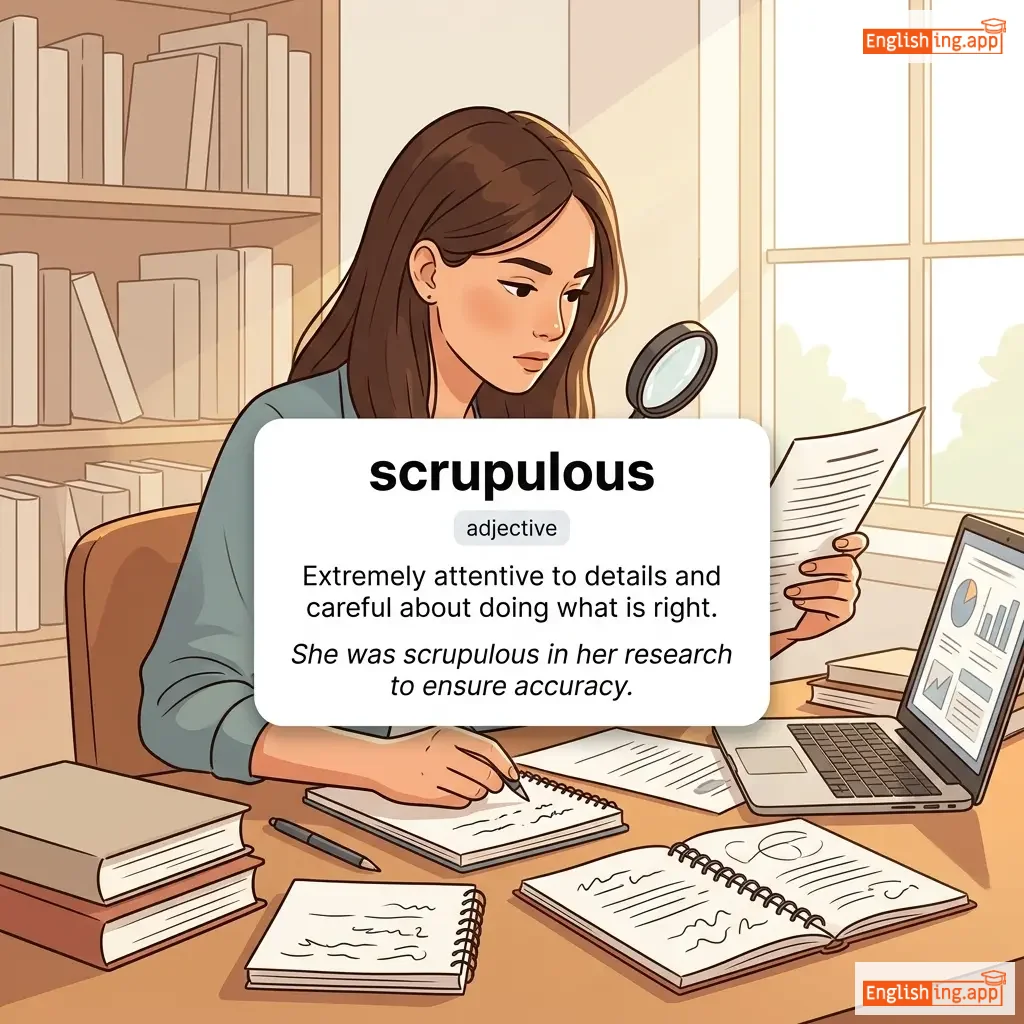
scrupulous definition card — visual illustration of the meaning
adjective C1
/ˈskruːpjələs/
скрупулезный (skrupulezny)

Extremely attentive to details and careful about doing what is right.

"She was scrupulous in her research to ensure accuracy."

"Она была скрупулезной в своем исследовании, чтобы гарантировать точность." (Ona byla skrupuleznoy v svoem issledovanii, chtoby garantirovat' tochnost'.)
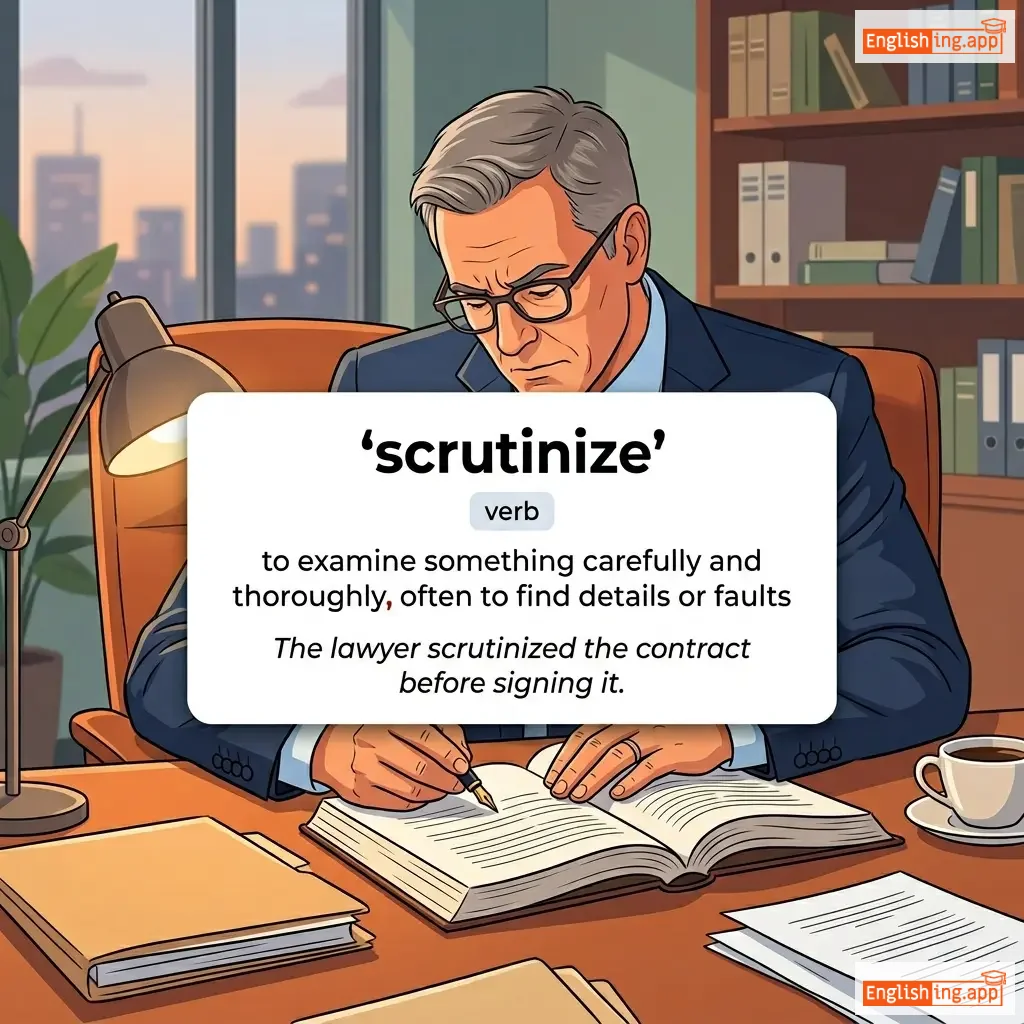
scrutinize definition card — visual illustration of the meaning
verb C1
/ˈskruː.tɪ.naɪz/

to examine something carefully and thoroughly, often to find details or faults

"The lawyer scrutinized the contract before signing it."

verb C1
/skʌf/
стереть (sterec)

to mark or scratch the surface of something by rubbing

"He scuffed his shoes on the pavement."

"Он стер свои ботинки о тротуар." (On ster svoi botinki o trotuyar.)
noun, verb C1
/ˈskʌf.əl/
ссора (ssora)

a short, confused fight or struggle; to engage in such a fight

"Two players scuffled on the field after the foul."

"Два игрока подрались на поле после фола." (Dva igroka podralis' na pole posle fola.)