Vocabularies

English Vocabulary Dictionary | Word Meanings, Definitions & Examples

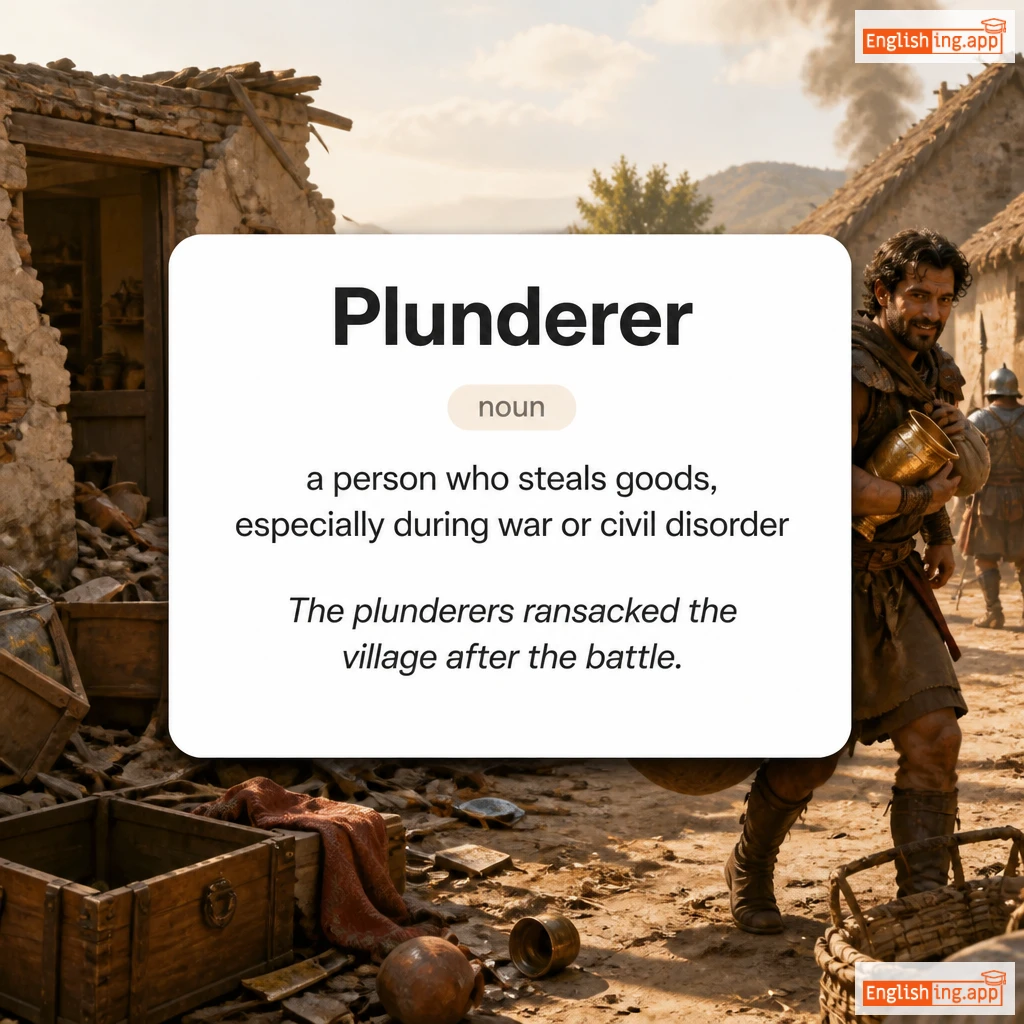
Plunderer definition card — visual illustration of the meaning
noun C1
/ˈplʌn.dər.ər/
略奪者 (ryakudatsusha)

a person who steals goods, especially during war or civil disorder

"The plunderers ransacked the village after the battle."

"戦いの後、略奪者たちは村を荒らしました。" (tatakai no ato, ryakudatsusha-tachi wa mura wo arashimashita.)
noun C1
/plʊəˈrælɪti/
多数派または過半数 (tasūha mata wa kahansū)

the state of being multiple; the greater part or majority

"In the election, she won by a plurality of votes."

"選挙では、彼女は票の多数で勝利しました。" (Senkyō de wa, kanojo wa hyō no tasū de shōri shimashita.)
noun C1
/ˈpoʊdiətrɪst/
足病医 (ashibi-ii)

a doctor specializing in foot care

"I have an appointment with the podiatrist for my ankle pain."

"足首の痛みのためにポディアトリストに予約があります。" (Ashikubi no itami no tame ni podiatrist ni yoyaku ga arimasu.)
noun C1
/poʊˈɛt.ɪks/
詩学、詩の理論 (shigaku, shi no riron)

the study or theory of poetry and its principles

"He wrote a book on poetics explaining the art of verse."

"彼は詩の技法を説明するポエティクスに関する本を書きました。" (Kare wa shi no gihou o setsumei suru poetikusu ni kansuru hon o kakimashita.)
noun C1
/ˈpɔɪ.nən.si/
悲しみ, 痛み (kanashimi, itami)

the quality of evoking a keen sense of sadness or regret; emotionally touching

"The poignancy of the farewell brought tears to everyone's eyes."

"別れの痛ましさは、みんなの目に涙をもたらした。" (Wakare no itamashisa wa, minna no me ni namida o motarashita.)
adjective C1
/ˈpɔɪ.njənt/
胸を打つ, 感動的 (mune wo utsu, kandouteki)

evoking a keen sense of sadness or regret; deeply touching

"The movie's ending was so poignant that many in the audience were moved to tears."

"映画のラストシーンは非常に感動的で、多くの観客が涙を流しました。" (Eiga no rasuto shi-n wa hijou ni kandouteki de, ooku no kankyaku ga namida wo nagashimashita.)
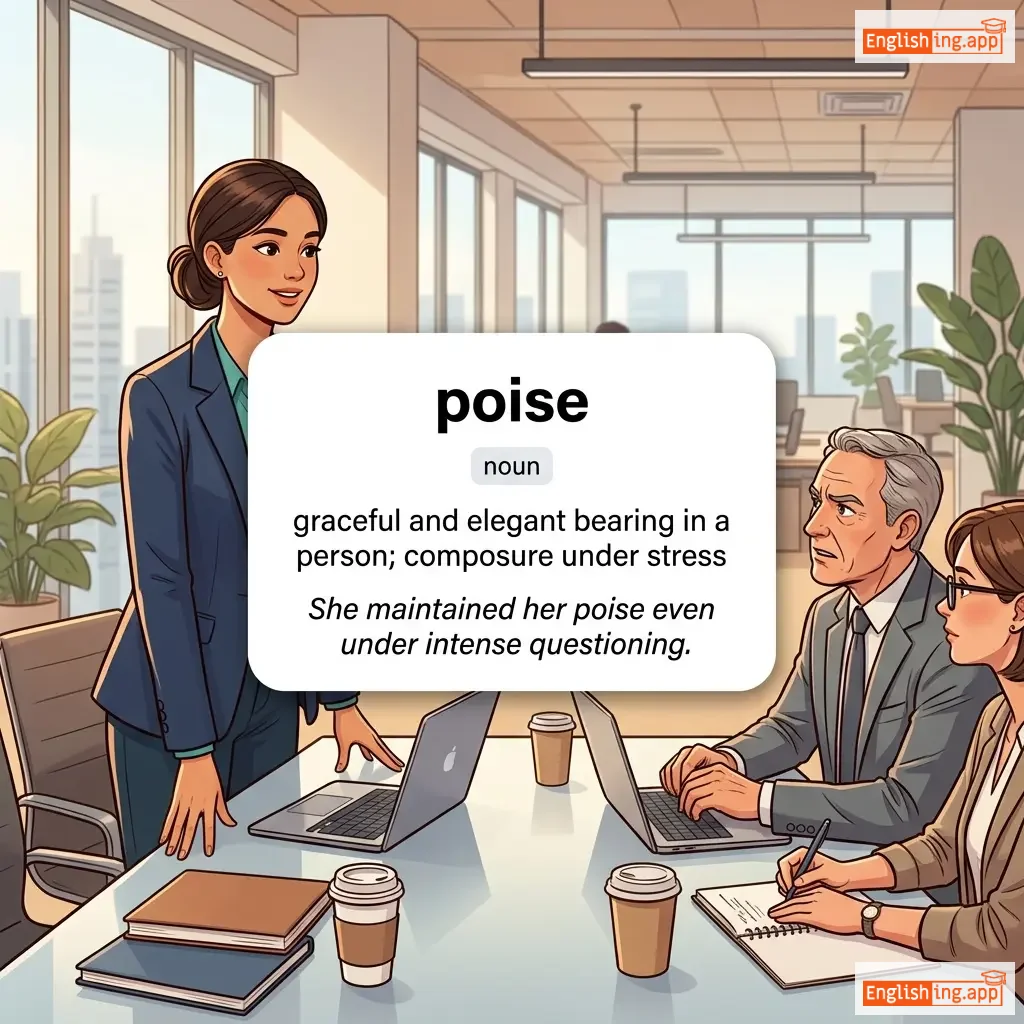
poise definition card — visual illustration of the meaning
noun C1
/pɔɪz/
優雅, 落ち着き, 姿勢 (yūga, ochitsuki, shisei)

graceful and elegant bearing in a person; composure under stress

"She maintained her poise even under intense questioning."

"彼女は激しい尋問の中でも冷静さを保ちました。" (Kanojo wa hageshī jinmon no naka demo reisei-sa o tamochimashita.)
noun C1
/poʊˈlær.ɪ.ti/
極性 (kyokusei)

the state of having two opposite or contradictory tendencies, opinions, or aspects

"The polarity between the two political parties is growing stronger."

"二つの政治党派の間の極性は強くなりつつあります。" (Futatsu no seiji touha no aida no kyokusei wa tsuyoku nari tsutsu arimasu.)
verb C1
/ˈpoʊ.lə.raɪz/
極化する (kyokuka suru)

to divide or cause to divide into two sharply contrasting groups or sets of opinions or beliefs

"The controversial decision polarized public opinion."

"論争を呼んだ決定は世論を二つの対立する意見に分けた。" (Ronsō o yonda kettei wa seiron o futatsu no tairitsu suru iken ni waketa.)
adjective C1
/ˈpoʊləraɪzd/
分極された (bunkyo sareta)

divided into two sharply contrasting groups or opinions

"The debate polarized the community on the issue of climate change."

"その議論は気候変動問題についてコミュニティを分裂させました。" (Sono giron wa kikō hendō mondai ni tsuite komyuniti o bunretsu sasemashita.)
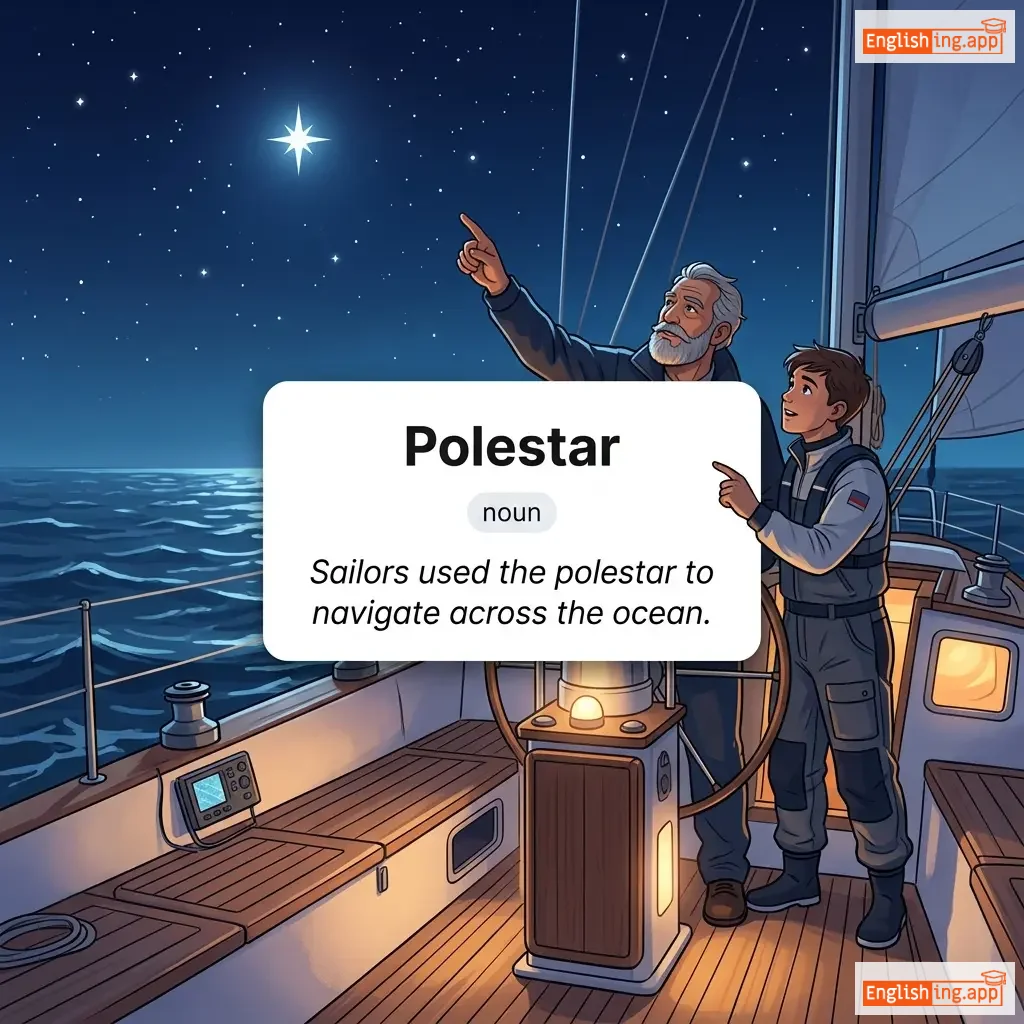
Polestar definition card — visual illustration of the meaning
noun C1
/ˈpoʊl.stɑːr/
北極星 (hokkyokusei)

a bright star that appears to stay in the same position in the sky and is used for navigation

"Sailors used the polestar to navigate across the ocean."

"船乗りはポールスターを使って海を渡った。" (funanori wa pōrusutā o tsukatte umi o watatta.)
adjective C1
/ˈpɒlɪtɪk/
賢明な、慎重な (kenmei na, shinchou na)

shrewd, prudent, or tactful in practical matters

"It was politic of him to remain silent during the argument."

"論争中に沈黙を守るのは賢明な判断だった。" (Ronsou-chuu ni chinmoku wo mamoru no wa kenmei na handan datta.)
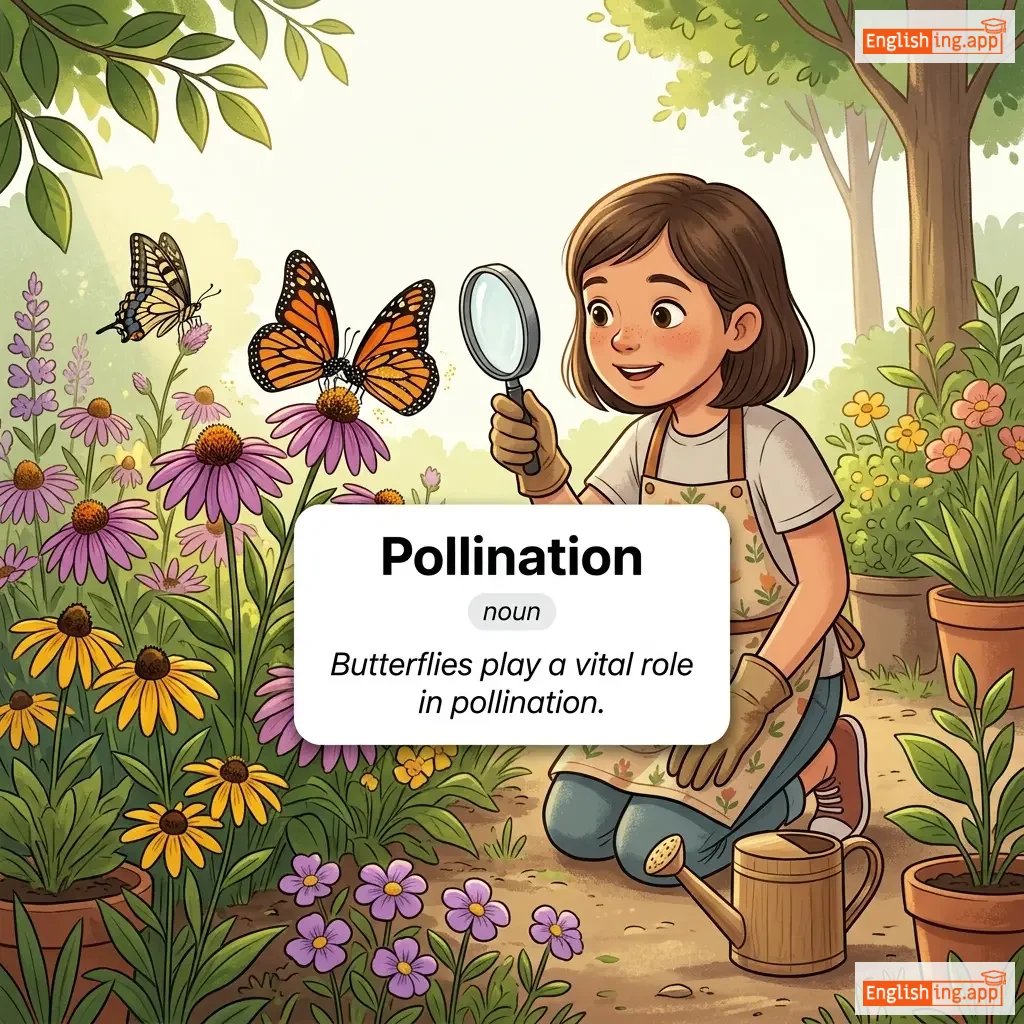
Pollination definition card — visual illustration of the meaning
noun C1
ˌpɒlɪˈneɪʃən
受粉 (jufun)

The process by which pollen is transferred from flowers, enabling plant reproduction.

"Butterflies play a vital role in pollination."

"蝶々は受粉において重要な役割を果たしています。" (Chōchō wa jufun ni oite jūyō na yakuwari o hatashiteimasu.)
noun C1
/ˈpoʊlstər/
世論調査員 (seron chōsain)

a person or organization that conducts surveys to gauge public opinion

"The pollster predicted a close election outcome."

"世論調査員は接戦の選挙結果を予測しました。" (Seron chōsain wa sessen no senkyo kekka o yosoku shimashita.)
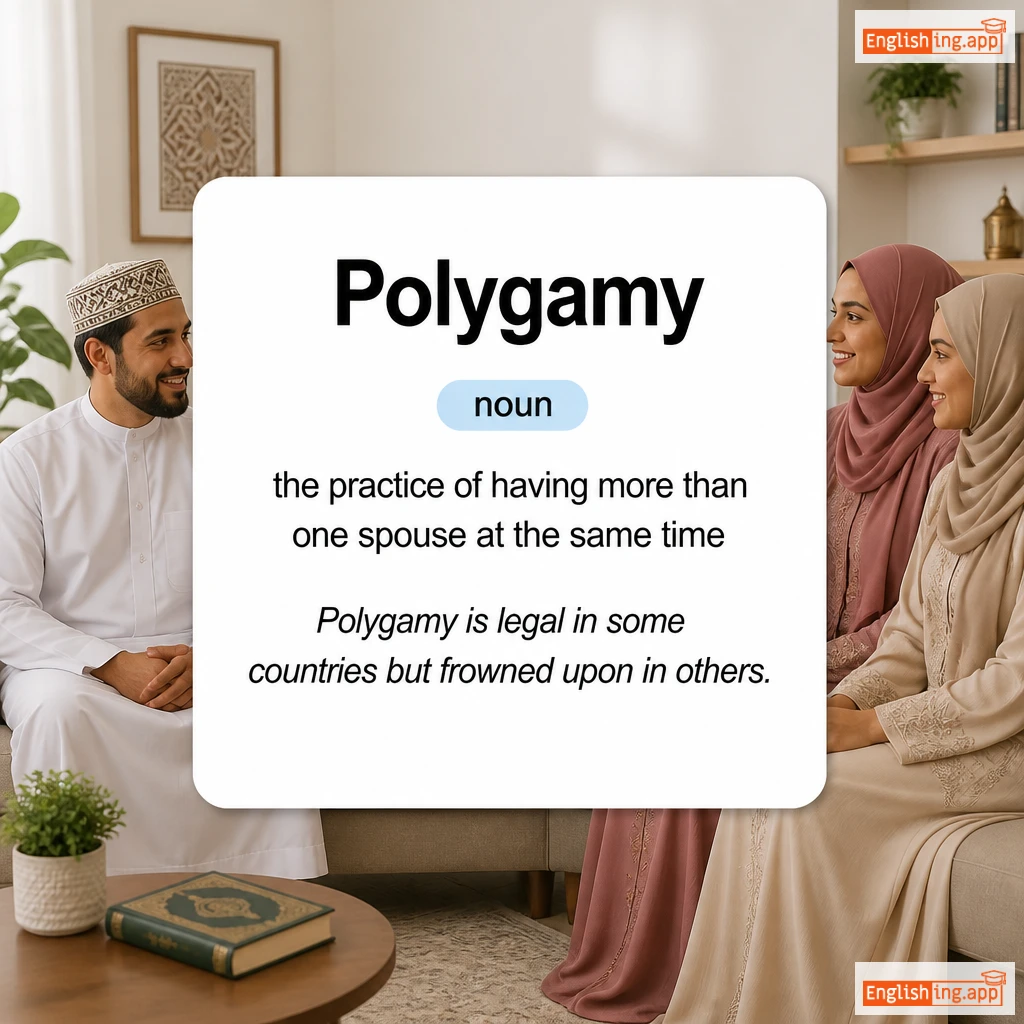
Polygamy definition card — visual illustration of the meaning
noun C1
/ˈpɒlɪɡəmi/
重婚 (jūkon)

the practice of having more than one spouse at the same time

"Polygamy is legal in some countries but frowned upon in others."

"ポリガミーは一部の国では合法ですが、他の国では非難されています。" (Porigamī wa ichibu no kuni de wa gōhōdesu ga, hoka no kuni de wa hinan sareteimasu.)
noun C1
/ˈpɒlɪɡlɒt/
ポリグロット (porigurotto)

a person who knows and can use several languages

"She is a polyglot, fluent in English, Spanish, and Bengali."

"彼女はポリグロットで、英語、スペイン語、ベンガル語に堪能です。" (Kanojo wa porigurotto de, eigo, supeingo, bengarugo ni tannō desu.)
noun C1
/ˈpɒlɪɡɒn/
多角形 (takakkei)

a flat shape with three or more straight sides

"The artist drew a colorful polygon on the canvas."

"アーティストはキャンバスにカラフルなポリゴンを描きました。" (Atisuto wa kyanbasu ni karafuru na porigon o kakimashita.)
noun C1
/ˌpɒl.iˈtek.nɪk/
ポリテクニック (poritekunikku)

an educational institution offering practical and technical courses

"She studied engineering at a well-known polytechnic in her city."

"彼女は自分の街の有名なポリテクニックで工学を学んだ。" (Kanojo wa jibun no machi no yūmei na poritekunikku de kōgaku o mananda.)
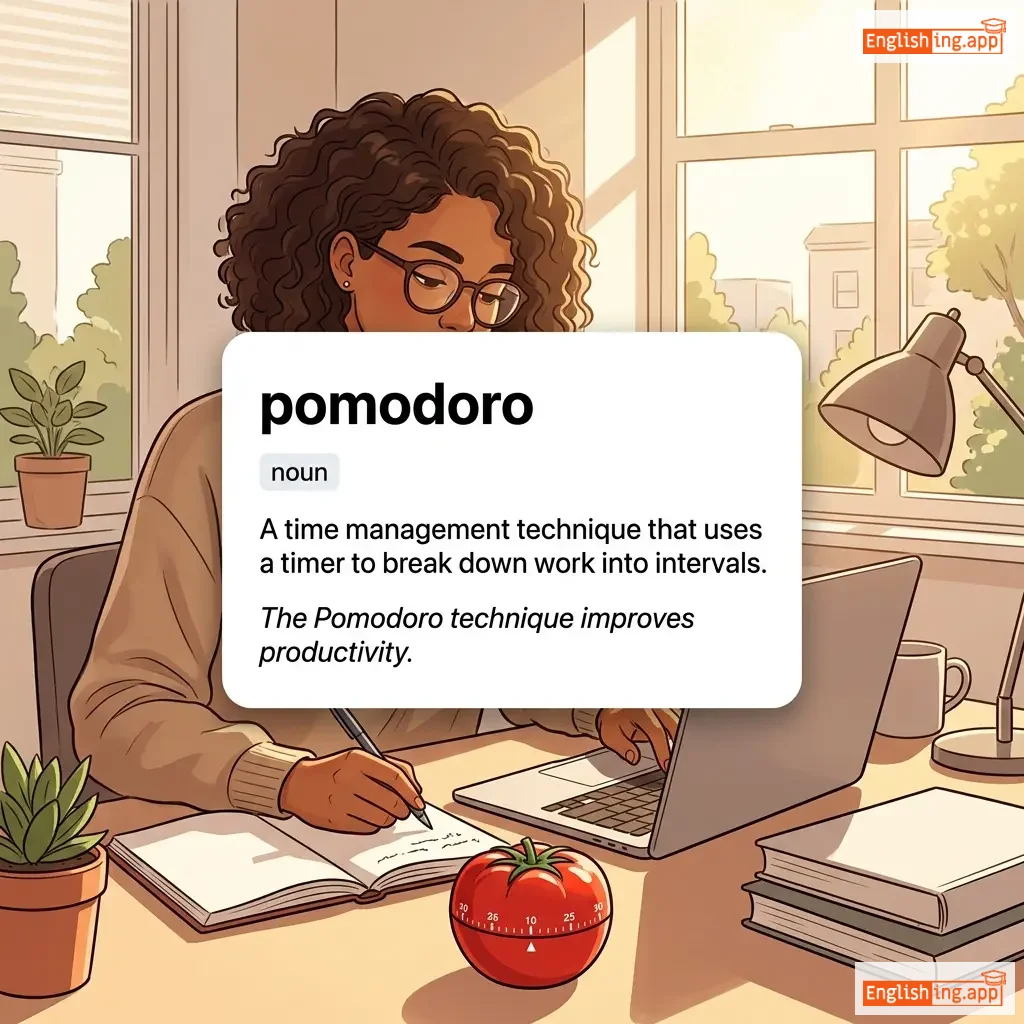
pomodoro definition card — visual illustration of the meaning
noun C1
/ˌpɒməˈdɔːrəʊ/
ポモドーロ (pomodoro)

A time management technique that uses a timer to break down work into intervals.

"The Pomodoro technique improves productivity."

"ポモドーロ技法は生産性を向上させます。" (Pomodoro gihō wa seisansei o kōjō sasemasu.)
noun C1
/pɒmp/
壮大, 豪華 (sōdai, gōka)

ceremonial display or splendor; grandeur

"The graduation ceremony was full of pomp and circumstance."

"卒業式は壮大で豪華でした。" (Sotsugyō shiki wa sōdai de gōka deshita.)
adjective C1
/ˈpɒmpəs/
傲慢な (gōman na)

exaggeratedly self-important; ostentatious

"The manager had a pompous attitude that annoyed his team."

"マネージャーは、チームを苛立たせるようなポンポスな態度を取っていた。" (Manējā wa, chīmu o iradataseru yō na ponposu na taido o totte ita.)
adjective C1
/ˈpɑːndərəs/
重くて遅い (omokute osoi)

slow and clumsy because of great weight; dull and labored

"The ponderous lecture made it hard for students to stay awake."

"重くて遅い講義は学生たちが目を覚ましているのを難しくした。" (Omokute osoi kougi wa gakuseitachi ga me o samashite iru no o muzukashiku shita.)
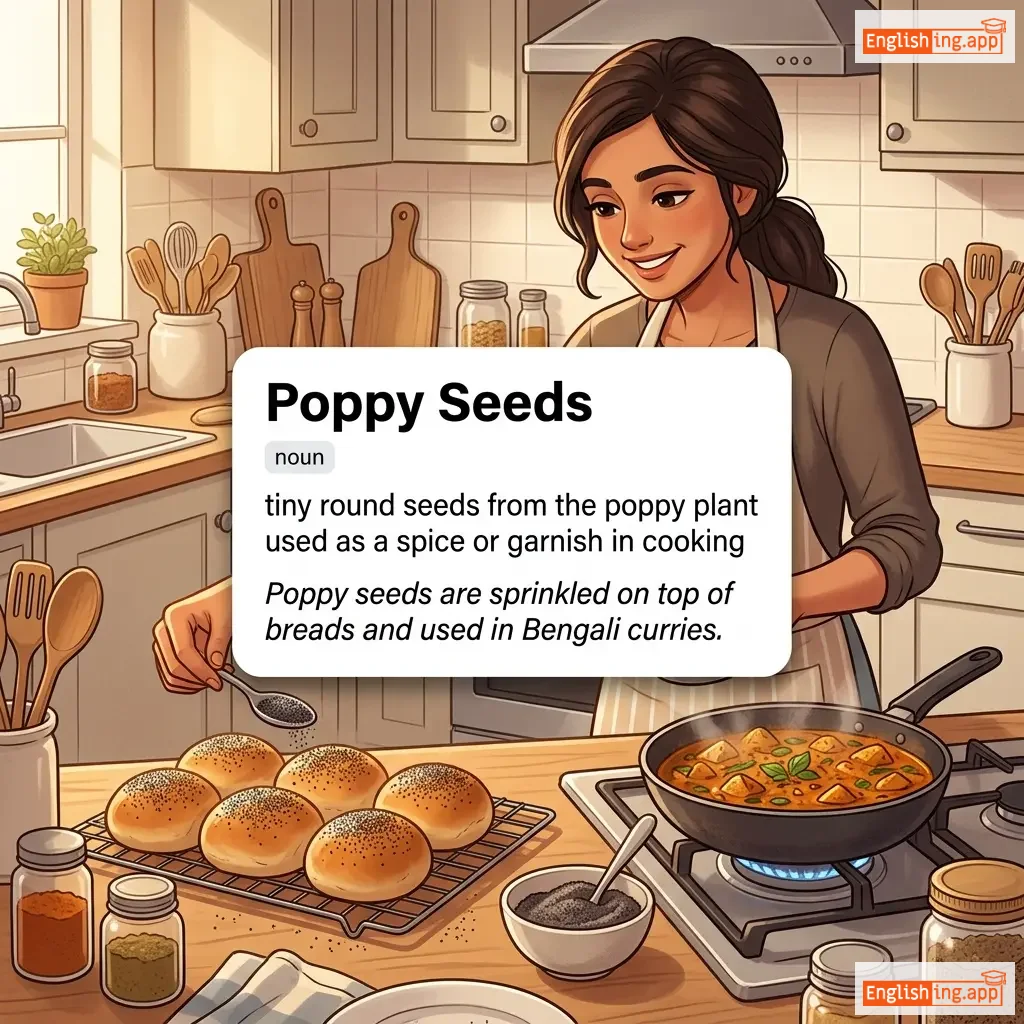
Poppy Seeds definition card — visual illustration of the meaning
noun C1
/ˈpɒp.i siːdz/
ケシの実 (keshi no mi)

tiny round seeds from the poppy plant used as a spice or garnish in cooking

"Poppy seeds are sprinkled on top of breads and used in Bengali curries."

"ケシの実はパンの上に振りかけられ、ベンガルカリーに使われます。" (Keshi no mi wa pan no ue ni furikakerare, bengaru karī ni tsukawaremasu.)
noun C1
/ˈpɒpjʊləs/
住民 (jumins)

the general public; the ordinary people living in a country or area

"The new law was welcomed by the local populace."

"新しい法律は地元の住民によって歓迎されました。" (Atarashī hōritsu wa jimoto no jūmin ni yotte kangei saremashita.)
noun C1
/ˈpɒpjʊlɪst/
ポピュリストのリーダー (popyurisuto no rīdā)

A politician or person who seeks to appeal to ordinary people who feel their concerns are ignored by elites.

"The populist leader promised to put the needs of common citizens first."

"ポピュリストのリーダーは、一般市民のニーズを最優先すると約束しました。" (Popyurisuto no rīdā wa, ippan shimin no nīzu o saiyūsen suru to yakusoku shimashita.)
adjective C1
/ˈpɒpjələs/
人口密度の高い (jinkō mitsudo no takai)

Having a large population; densely inhabited.

"Dhaka is one of the most populous cities in the world."

"東京は世界で最も人口密度の高い都市の一つです。" (Tōkyō wa sekai de mottomo jinkō mitsudo no takai toshi no hitotsu desu.)
noun C1
/ˈpɔːrsəlɪn/
磁器 (jiki)

A white, hard ceramic material often used for dishes and ornaments.

"The museum displayed ancient porcelain vases from China."

"博物館は中国の古代のポーセリンの花瓶を展示しました。" (Hakubutsukan wa Chūgoku no kodai no pōserin no kabin o tenji shimashita.)
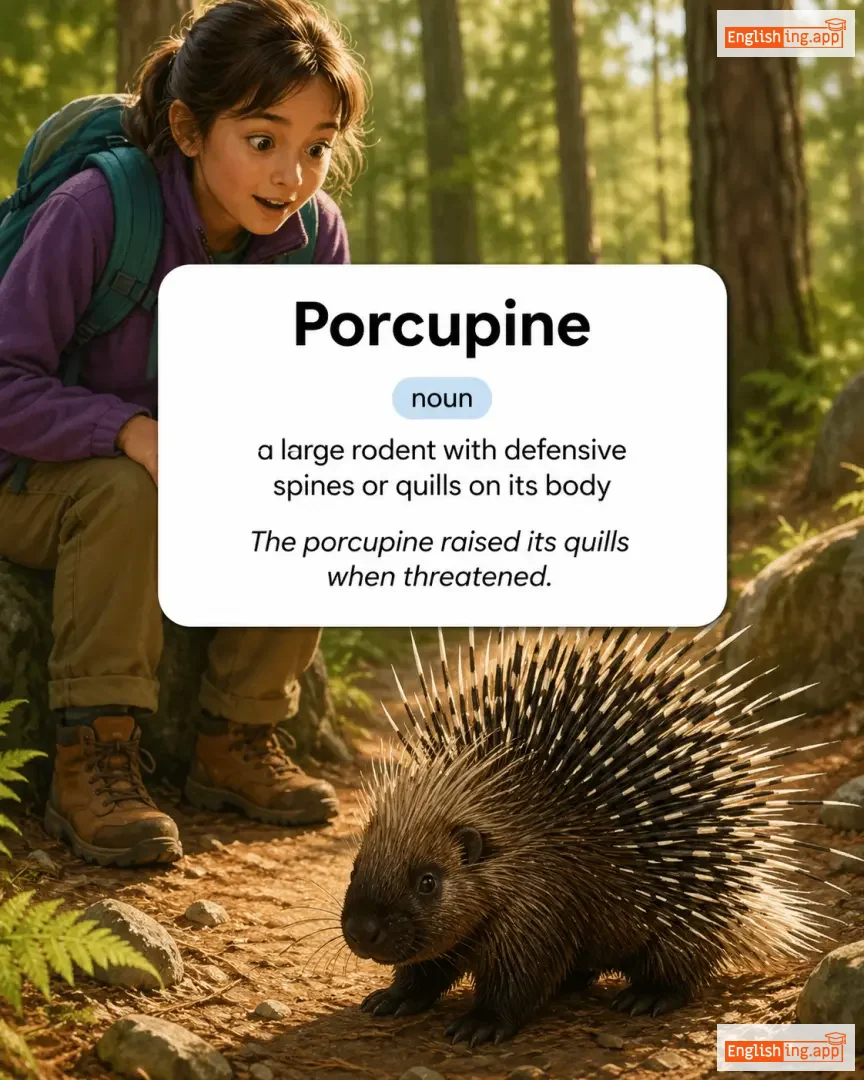
Porcupine definition card — visual illustration of the meaning
noun C1
/ˈpɔːr.kjə.paɪn/
ヤマアラシ (yama arashi)

a large rodent with defensive spines or quills on its body

"The porcupine raised its quills when threatened."

"ヤマアラシは脅威を感じると針を立てた。" (Yama arashi wa kyōi o kanjiru to hari o tateta.)
noun/verb C1
/pɔːr/
毛穴 / 注意深く研究する (mōana / chūi fukaku kenkyū suru)

As a noun: a tiny opening in the skin or surface. As a verb: to study something carefully.

"She pored over the documents for hours before making a decision."

"彼女は決定を下す前に何時間も書類をじっくりと読みました。" (Kanojo wa kettei o kudasu mae ni nanjikan mo shorui o jikkuri to yomimashita.)
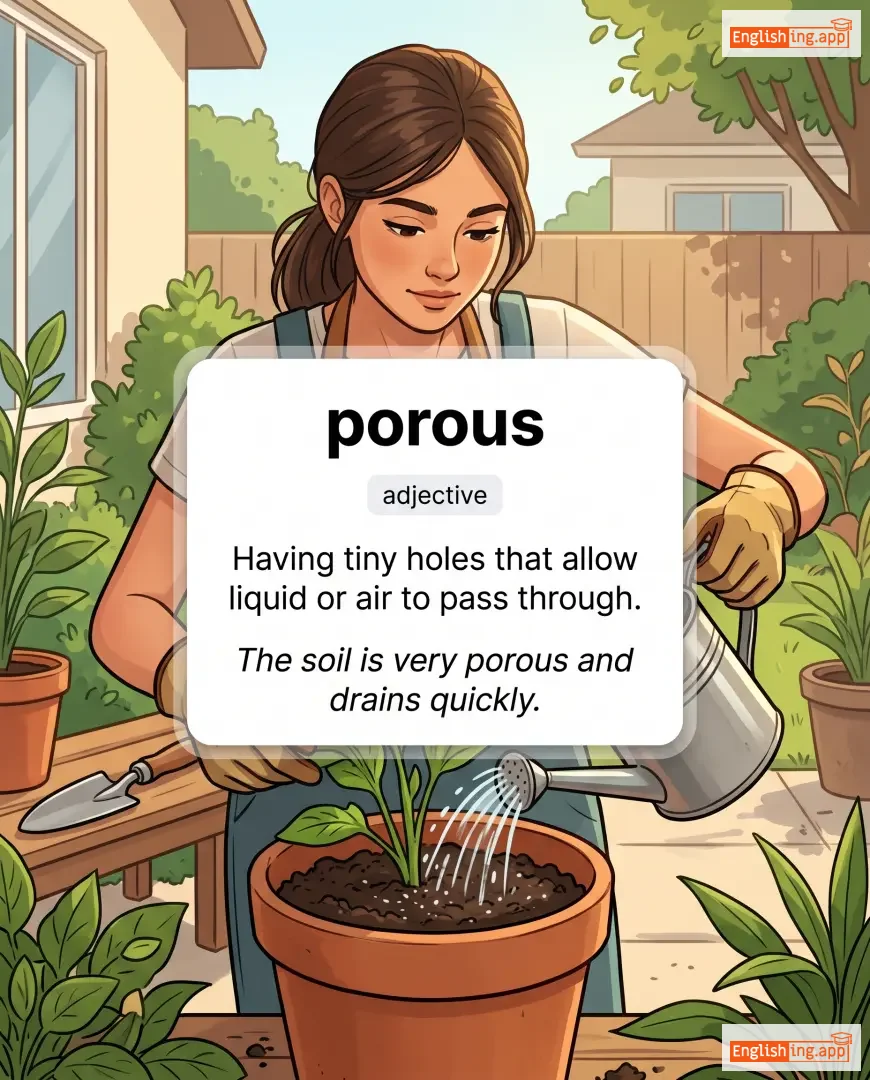
porous definition card — visual illustration of the meaning
adjective C1
/ˈpɔːrəs/
多孔性の (takōsei no)

Having tiny holes that allow liquid or air to pass through.

"The soil is very porous and drains quickly."

"土壌は非常に多孔性で、すぐに水を排出します。" (Dojō wa hijō ni takōsei de, sugu ni mizu o haishutsu shimasu.)
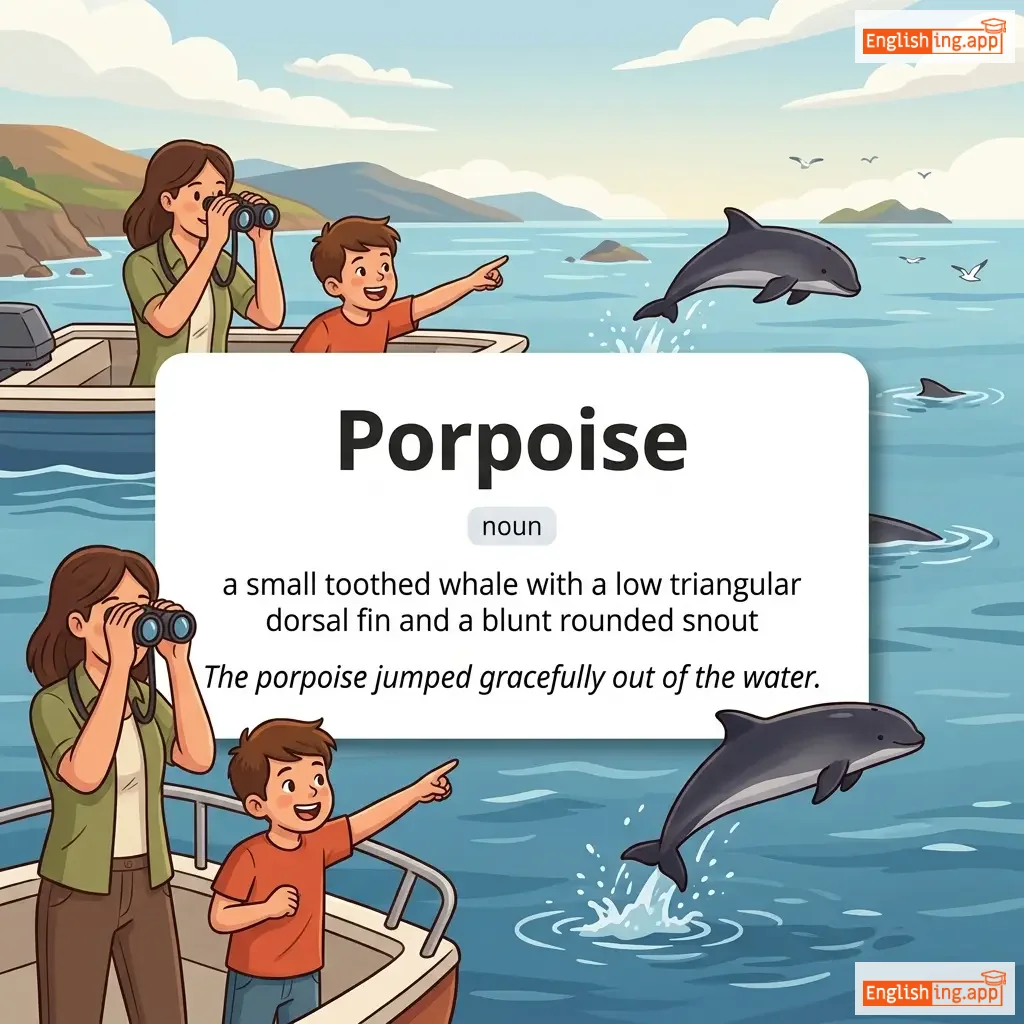
Porpoise definition card — visual illustration of the meaning
noun C1
/ˈpɔː.pəs/
ハクジラ (hakujira)

a small toothed whale with a low triangular dorsal fin and a blunt rounded snout

"The porpoise jumped gracefully out of the water."

"ハクジラは優雅に水から飛び跳ねた。" (Hakujira wa yūga ni mizu kara tobi haneta.)
💡

posit

verb C1
/ˈpɑːzɪt/

To assume or suggest something as a fact or basis for reasoning.

"The scientist posited a new theory to explain the phenomenon."

noun C1
/pəˈzɛsər/
所有者 (shoyuusha)

A person who owns or holds something.

"The possessor of the land built a new house."

"土地の所有者は新しい家を建てました。" (Tochi no shoyuusha wa atarashii ie o tatemashita.)
verb C1
/ˌpoʊstˈdeɪt/
後日の日付を記入する (gojitsu no hizuke o kinyū suru)

To assign a date later than the actual date to a document or event.

"She postdated the check to next month."

"彼女は小切手に来月の日付を付けました。" (Kanojo wa kogitte ni raigetsu no hizuke o tsukemashita.)
adjective C1
/pɒˈstɪəriər/
後部 (kōbu)

Situated at or toward the back; later in time.

"The posterior part of the brain controls vision."

"脳の後部は視覚を制御します。" (Nō no kōbu wa shikaku o seigyo shimasu.)
noun C1
/pɒˈstɛrɪti/
後世 (kōsei)

All future generations of people.

"The monument was built for the benefit of posterity."

"記念碑は後世のために建てられました。" (Kinenhi wa kōsei no tame ni tateraremashita.)
adjective C1
/ˈpɒstjʊməs/
死後の (shigo no)

Occurring, awarded, or appearing after the death of the originator.

"He received a posthumous award for his bravery."

"彼は勇気に対して死後の賞を受けました。" (Kare wa yūki ni taishite shigo no shō o ukemashita.)
noun, adjective C1
/ˌpəʊstˈmɔːtəm/
死後解剖 (shigo kaibou)

An examination of a dead body to determine the cause of death.

"The doctor carried out a postmortem on the body."

"医者は死体にポストモーテムを行った。" (Isha wa shitai ni posutomootemu o okonatta.)
noun C1
/ˈpəʊstˌskrɪpt/
追伸 (tsuishin)

an additional remark at the end of a letter or text, after the signature

"She added a brief postscript to thank him again."

"彼女は再度彼に感謝するために簡単な追伸を加えました。" (Kanojo wa saido kare ni kansha suru tame ni kantan na tsuishin o kuwaemashita.)
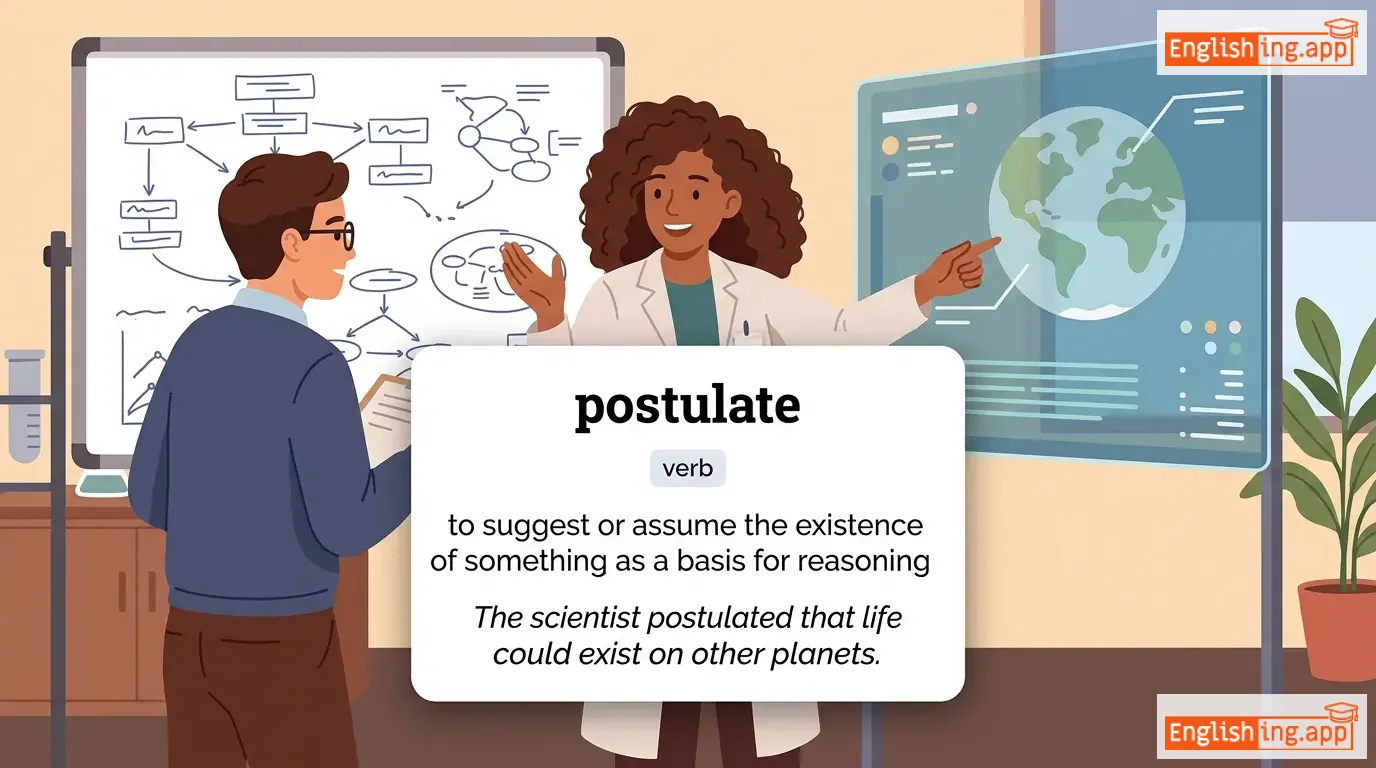
postulate definition card — visual illustration of the meaning
verb C1
/ˈpɒstjʊˌleɪt/
仮定する (katei suru)

to suggest or assume the existence of something as a basis for reasoning

"The scientist postulated that life could exist on other planets."

"科学者は他の惑星で生命が存在する可能性があると仮定しました。" (Kagakusha wa hoka no wakusei de seimei ga sonzai suru kanōsei ga aru to katei shimashita.)
adjective C1
/ˈpəʊtəbl/
飲料水 (inryousui)

safe to drink; drinkable

"The villagers did not have access to potable water."

"村人たちは飲用水へのアクセスがありませんでした。" (Murabito-tachi wa inryousui e no akusesu ga arimasen deshita.)
noun C1
/ˈpoʊtənsi/
効力 (kōryoku)

The power or ability of something to affect or influence; strength or effectiveness.

"The potency of the new medicine amazed the doctors."

"新薬の効力に医者たちは驚きました。" (Shinyaku no kōryoku ni ishatachi wa odorokimashita.)
adjective C1
/ˈpoʊtənt/
強力 (kyōryoku)

Having great power, influence, or effect.

"This is a very potent drug that should be used carefully."

"これは非常に強力な薬で、慎重に使用する必要があります。" (Kore wa hijō ni kyōryoku na kusuri de, shinchō ni shiyō suru hitsuyō ga arimasu.)
noun C1
/ˈpoʊʃən/
薬の飲み物 (kusuri no nomimono)

a liquid with healing, magical, or poisonous properties

"The witch gave the hero a healing potion."

"魔女はヒーローに治療用のポーションを渡しました。" (Majo wa hīrō ni chiryōyō no pōshon o watashimashita.)
verb C1
/paʊt/
口を尖らせる (kuchi wo togaraseru)

to push one's lips forward as an expression of annoyance or sulkiness

"The child began to pout when he didn’t get the toy."

"おもちゃをもらえなかったとき、子供は口を尖らせることを始めた。" (Omocha wo moraenakatta toki, kodomo wa kuchi wo togaraseru koto wo hajimeta.)
adjective C1
/ˈpræk.tɪ.kə.bəl/
実行可能 (jikkou kanou)

able to be done or put into practice successfully

"The plan is not practicable without more resources."

"その計画はより多くのリソースがなければ実行不可能です。" (Sono keikaku wa yori ooku no risōsu ga nakereba jikkou fukanou desu.)
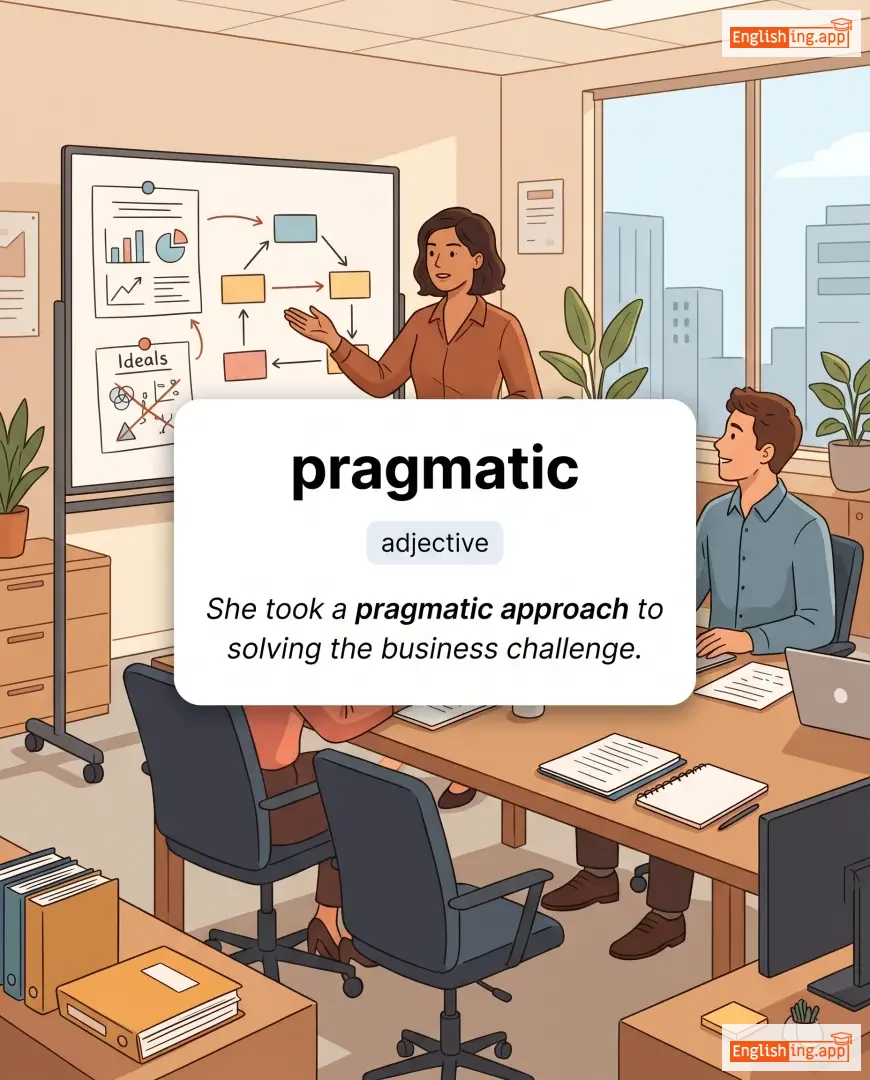
pragmatic definition card — visual illustration of the meaning
🛠️

pragmatic

adjective C1
/præɡˈmætɪk/

Dealing with problems in a practical and sensible way rather than depending on theories or ideals.

"She took a pragmatic approach to solving the business challenge."

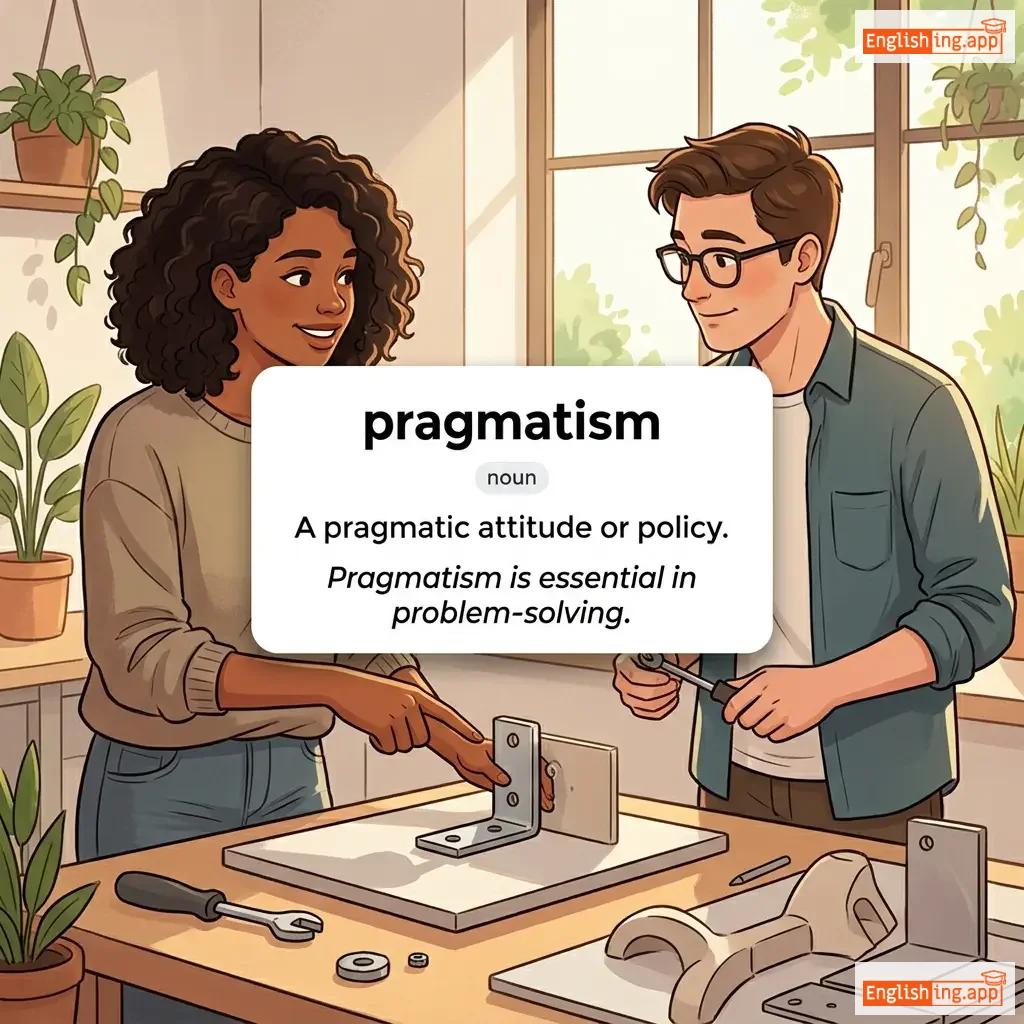
pragmatism definition card — visual illustration of the meaning
noun C1
/ˈpræɡ.mə.tɪ.zəm/
実用主義 (jitsuyou shugi)

A pragmatic attitude or policy.

"Pragmatism is essential in problem-solving."

"問題解決には実用主義が不可欠です。" (Mondai kaiketsu ni wa jitsuyou shugi ga fukaketsu desu.)
noun C1
/ˈpræɡmətɪst/
実利主義者 (jitsuri shugisha)

A person who deals with things in a practical and realistic way.

"He is a true pragmatist who values results over ideals."

"彼は結果を理想よりも重視する真の実利主義者です。" (Kare wa kekka o risou yori mo juushi suru shin no jitsuri shugisha desu.)
noun C1
/ˈprɛəri/
草原 (kogen)

A large open area of grassland, especially in North America.

"The bison roamed freely across the prairie."

"バイソンは草原を自由に歩き回った。" (Baison wa kogen o jiyuu ni arukimatta.)