Vocabularies

English Vocabulary Dictionary | Word Meanings, Definitions & Examples

noun C1
/ˈmʌltɪtuːd/
множество (mnozhestvo)

A large number of people or things.

"A multitude of fans gathered at the stadium."

"Множество фанатов собрались на стадионе." (Mnozhestvo fanatov sobralis' na stadioe.)
verb C1
/ˈmʌmbəl/

To speak quietly and not clearly so that words are difficult to understand.

"He mumbled an apology before leaving."

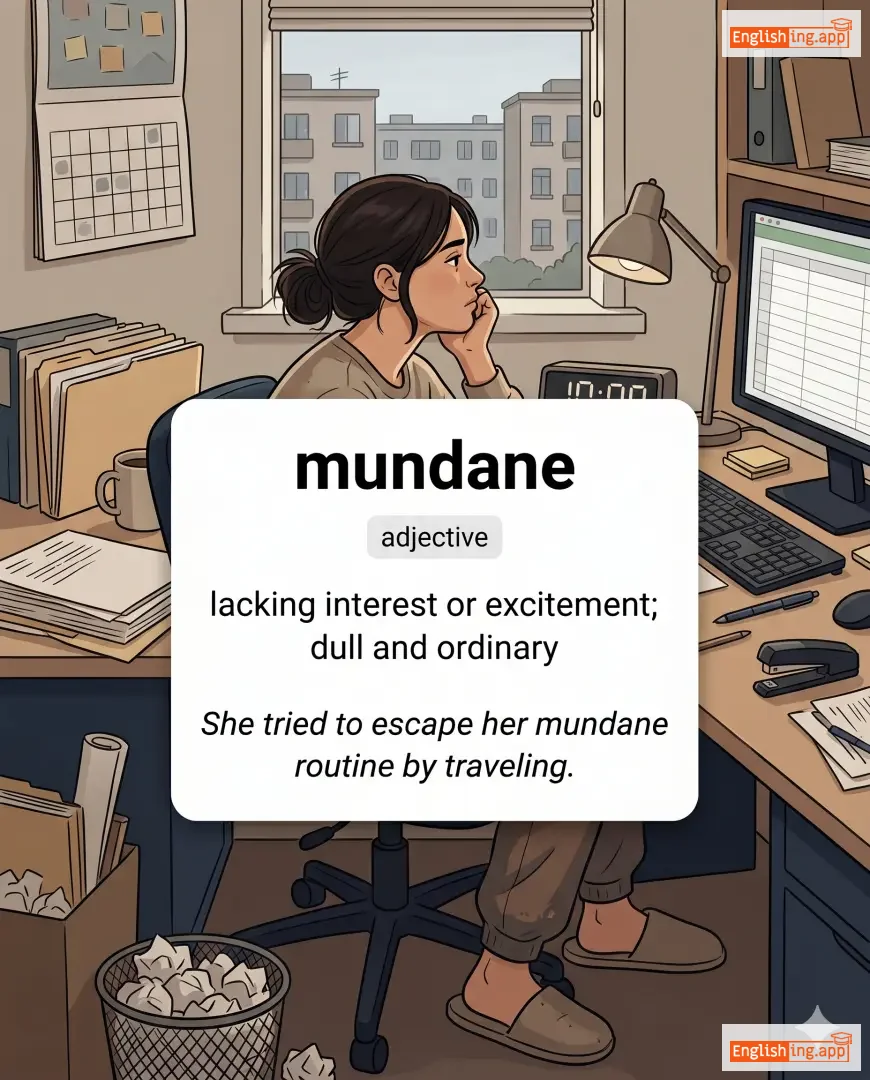
mundane definition card — visual illustration of the meaning
adjective C1
/mʌnˈdeɪn/
обычный (obychny)

lacking interest or excitement; dull and ordinary

"She tried to escape her mundane routine by traveling."

"Она пыталась выбраться из своей скучной рутины, путешествуя." (Ona pytalas' vybrat'sya iz svoey skuchnoy rutiny, puteshestvuyaya.)
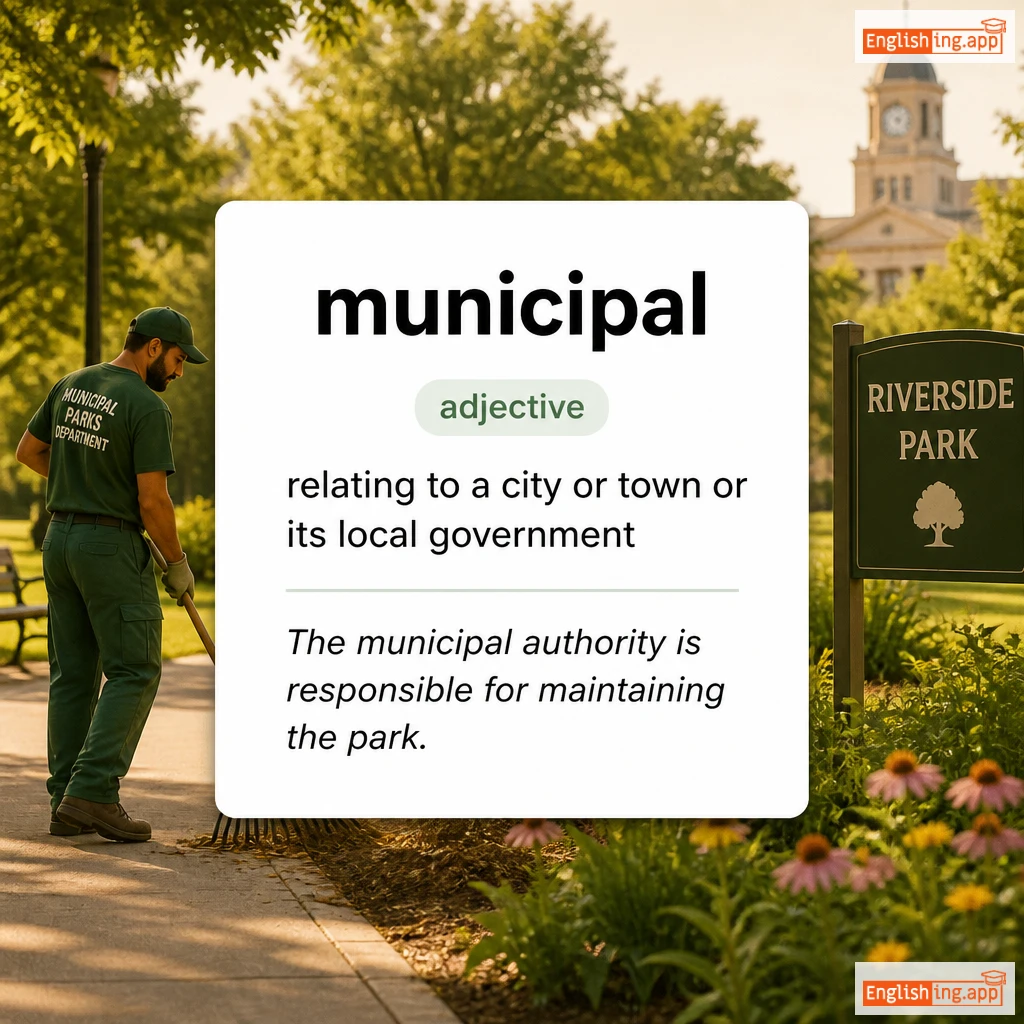
municipal definition card — visual illustration of the meaning
adjective C1
/mjuːˈnɪsɪpəl/
муниципальный (munitsipalny)

relating to a city or town or its local government

"The municipal authority is responsible for maintaining the park."

"Муниципальные власти отвечают за обслуживание парка." (Munitsipal'nye vlasti otvechayut za obsluzhivanie parka.)
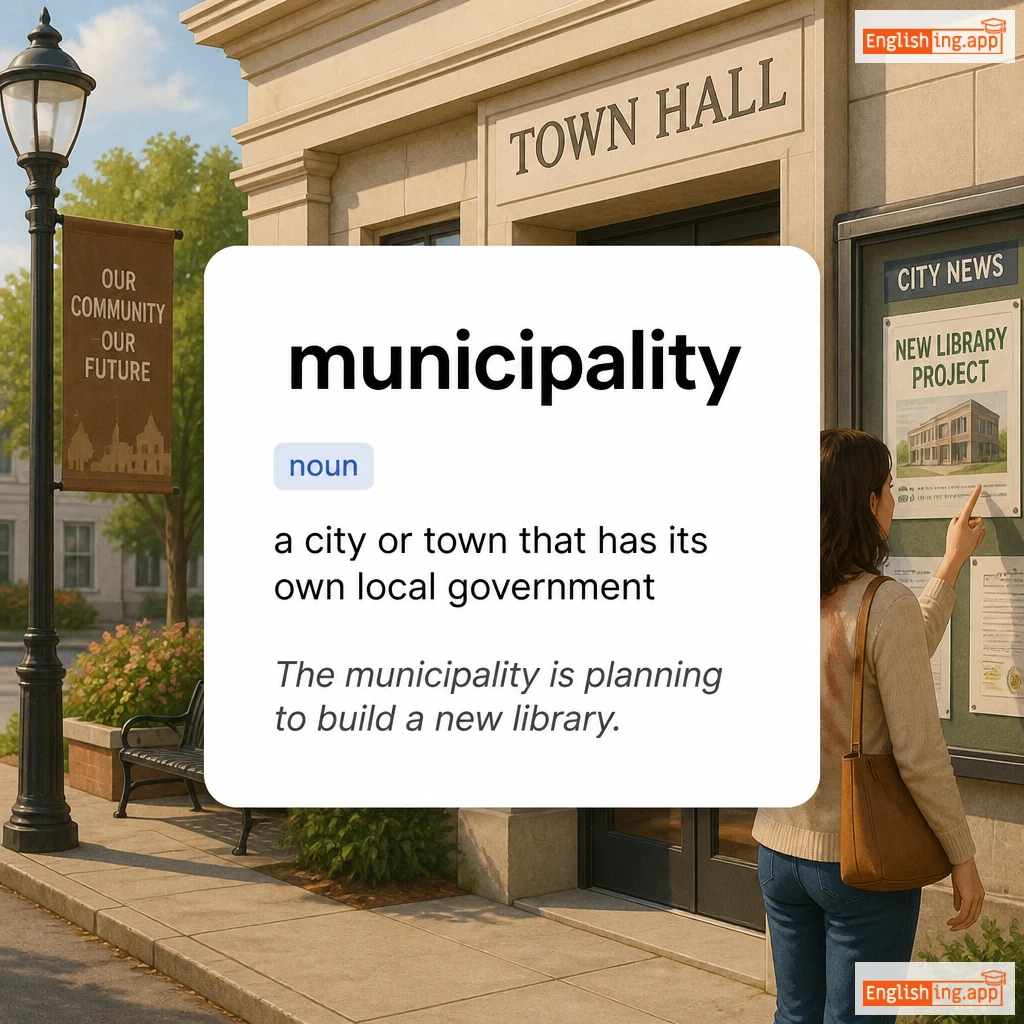
municipality definition card — visual illustration of the meaning
noun C1
/ˌmjuːnɪsɪˈpæləti/
муниципалитет (munitsipalitet)

a city or town that has its own local government

"The municipality is planning to build a new library."

"Муниципалитет планирует построить новую библиотеку." (Munitsipalitet planiroyet postroit' novuyu biblioteku.)
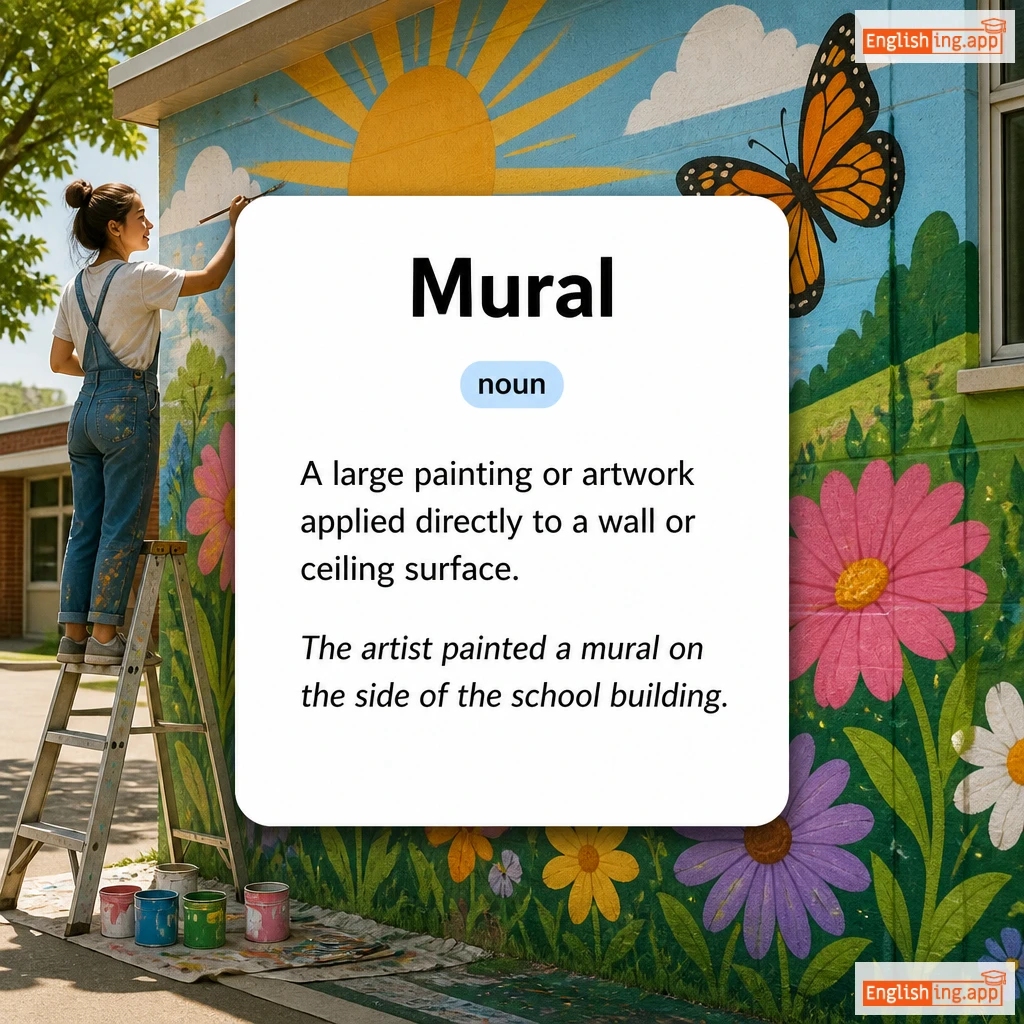
Mural definition card — visual illustration of the meaning
noun C1
/ˈmjʊərəl/
фреска (freska)

A large painting or artwork applied directly to a wall or ceiling surface.

"The artist painted a mural on the side of the school building."

"Художник нарисовал мурал на стене школьного здания." (Khudozhnik narisoval mural na stene shkol'nogo zdaniya.)
adjective C1
/ˈmɜː(r)dərəs/
убийственный; с намерением убить; крайне жестокий; кровожадный (ubyistvennyy; s namereniem ubit'; kraine zhestokiy; krovokhory)

having the intent to kill; extremely violent; bloodthirsty

"The murderous look in his eyes frightened everyone."

"Убийственный взгляд в его глазах напугал всех." (Ubiystvennyy vzglyad v ego glazakh napugal vsekh.)
adjective C1
/ˈmɜːki/
мутный (mutnyy)

Dark, gloomy, and difficult to see through; obscure.

"We avoided swimming in the murky river."

"Мы избегали плавать в мутной реке." (My izbegali plavat' v mutnoy reke.)
verb C1
/ˈmɜːrmər/
бормотать (bormotat)

To say something in a low, soft, or indistinct voice.

"She murmured a prayer before going to sleep."

"Она бормотала молитву перед сном." (Ona bormotala molitvu pered snom.)
🤔

muse

verb, noun C1
/mjuːz/

to think deeply about something; a source of inspiration, especially for an artist or writer

"She sat by the window to muse about her future."

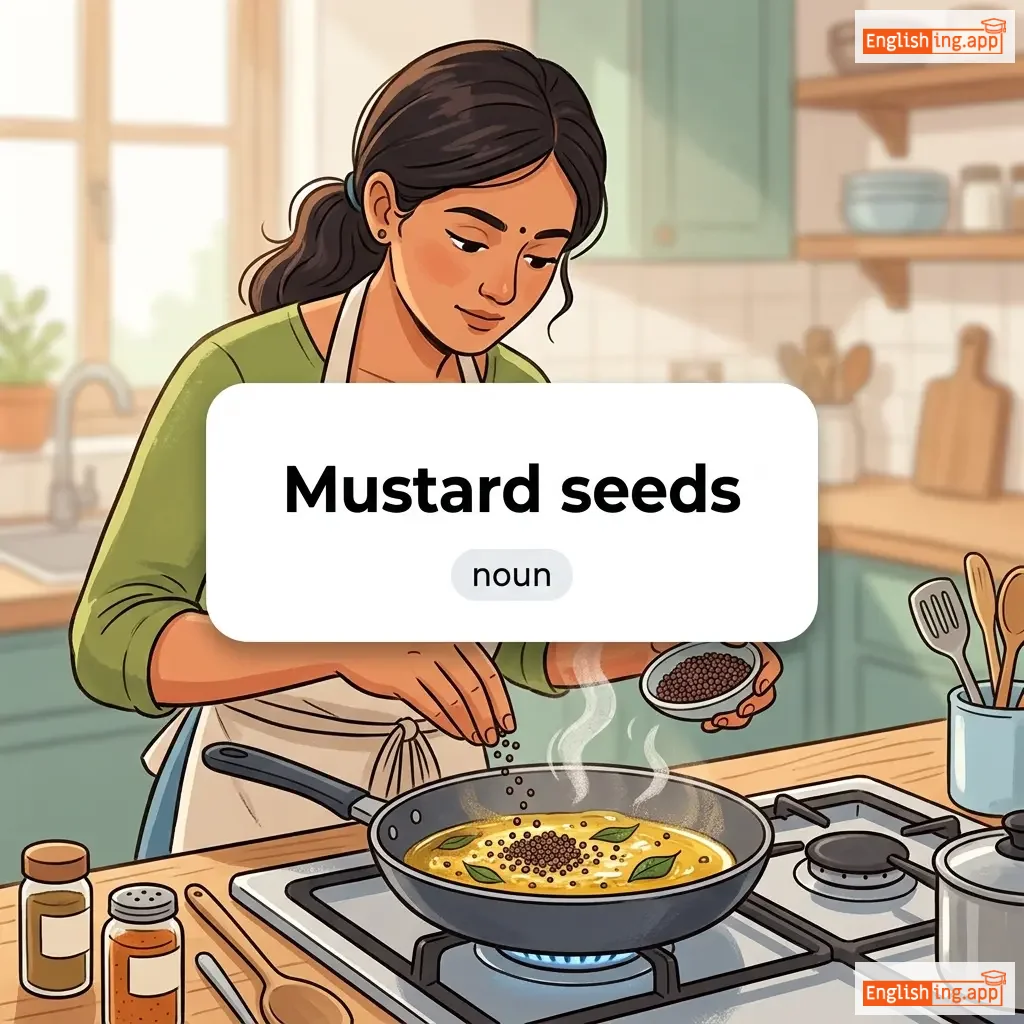
Mustard seeds definition card — visual illustration of the meaning
noun C1
/ˈmʌs.tərd siːdz/
горчичные семена (gorchichnye semena)

small round seeds from the mustard plant, used as a spice and for making mustard condiment

"Mustard seeds are often tempered in hot oil to release their nutty flavor before adding to dishes."

"Семена горчицы часто обжариваются в горячем масле, чтобы раскрыть их ореховый вкус перед добавлением в блюда." (Semena gorchitsy chasto obzhariyvayutsya v goryachem masle, chtoby raskryt' ikh orekhovyy vkus pered dobavleniem v blyuda.)
verb, noun C1
/ˈmʌstər/
собирать / собирать мужество (sobirat / sobirat muzhectvo)

to gather people, especially soldiers; to summon courage or strength

"He mustered enough courage to face the challenge."

"Он собрал достаточно мужества, чтобы встретиться с вызовом." (On sobral dostatochno muzhestva, chtoby vstrechatsya s vyzovom.)
verb C1
/ˈmjuːteɪt/
мутировать (mutirovat')

To change or cause to change in form, nature, or character.

"The virus can mutate into a more dangerous strain."

"Вирус может мутировать в более опасный штамм." (Virus mozhet mutirovat' v bolee opasnyy shtamm.)
noun C1
/mjuːˈteɪʃn/
мутация, генетическое изменение (mutaciya, geneticheskoe izmenenie)

A change in form, structure, or nature, especially in genetics.

"Scientists discovered a genetic mutation that caused the disorder."

"Учёные обнаружили генетическую мутацию, которая вызвала расстройство." (Uchyonye obnaruzhili geneticheskuyu mutaciyu, kotoraya vyzvala rasstroystvo.)
adjective C1
/ˈmjuːtɪd/
приглушенный (priglushennyy)

softened in sound, color, or effect; subdued

"The room was painted in muted shades of blue and grey."

"Комната была покрашена в приглушенные оттенки синего и серого." (Komnata byla pokrashena v priglushennye otnetki sinyego i serogo.)
noun C1
/ˈmjuːtɪni/
мятеж (m'yatezh)

an open rebellion against authority, especially by soldiers or sailors

"The sailors staged a mutiny against their captain."

"Моряки устроили мятеж против своего капитана." (Moryaki ustroili m'yatezh protiv svoego kapitana.)
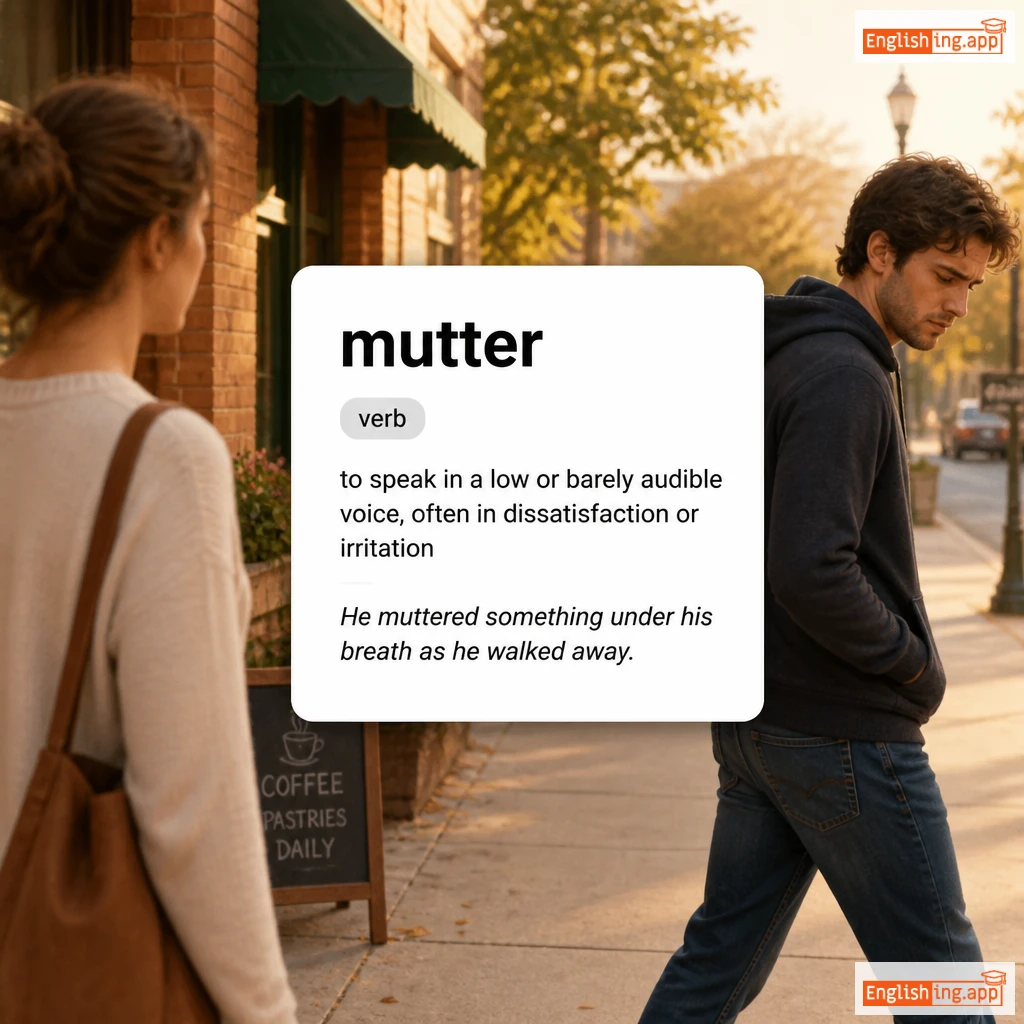
mutter definition card — visual illustration of the meaning
verb C1
/ˈmʌtər/
бормотать (bormotat)

to speak in a low or barely audible voice, often in dissatisfaction or irritation

"He muttered something under his breath as he walked away."

"Он пробормотал что-то под нос, когда уходил." (On probormotal chto-to pod nos, kogda ukhodyl.)
adjective C1
/maɪˈɑːpɪk/
миопия, ограниченное зрение (miopiya, ogranichennoe zrenie)

lacking foresight or long-term perspective; also refers to nearsightedness

"The company’s myopic strategy led to long-term losses."

"Миопическая стратегия компании привела к долгосрочным потерям." (Miopicheskaya strategiya kompanii privela k dolgrosrochnym poteryam.)
noun/adjective C1
/ˈmɪriəd/
бесчисленный (beshchislennyy)

a countless or extremely great number

"There are myriad stars in the night sky."

"В ночном небе бесчисленные звезды." (V nochnom nebe beschislenniye zvezdy.)
noun/adjective C1
/ˈmɪstɪk/
мистический, духовный искатель (misticheskiy, duhovnyy iskatel')

relating to mysteries, spirituality, or hidden truths; a person who seeks spiritual insight

"The mystic devoted his life to meditation and spiritual discovery."

"Мистик посвятил свою жизнь медитации и духовному открытию." (Mistik posvyatil svoyu zhizn' meditacii i dukhovnomu otkrytiyu.)
noun C1
/naɪˈiːvteɪ/
наивность (naivete)

The quality of being naive; lack of experience, wisdom, or judgment.

"His naivete made him an easy target for manipulation."

"Его наивность делала его легкой мишенью для манипуляций." (Yego naivnost delala ego legkoy mishenyu dlya manipulyatsiy)
noun C1
/naɪˈiːvɪti/
наивность (naivnost)

The quality of being innocent, simple, and lacking experience or sophistication.

"Her naivety made her trust people too easily."

"Её наивность заставила её слишком легко доверять людям." (Eyo naivnost' zastavila yeye slishkom legko doveryat' lyudyam.)
adjective C1
/ˈneɪmləs/
безымянный (bezymyannyy)

Without a name or not known by name.

"A nameless fear crept over him in the dark room."

"Безымянный страх охватил его в темной комнате." (Bezymyannyy strakh okhvatil ego v temnoy komnate.)
nanotechnology definition card — visual illustration of the meaning
noun C1
ˌnæn.oʊ.tekˈnɒl.ə.dʒi
нанотехнология (nanotekhnologiya)

The branch of technology that deals with dimensions and tolerances of less than 100 nanometers.

"Nanotechnology is advancing medical treatments."

"Нанотехнология делает прорывы в медицинских исследованиях." (Nanotekhnologiya delayet proryvy v meditsinskikh issledovaniyakh.)
narcissism definition card — visual illustration of the meaning
noun C1
/ˈnɑːrsɪsɪzəm/
нарциссизм (nartsissizm)

Excessive interest in or admiration of oneself.

"His constant selfies were a sign of his narcissism."

"Его постоянные селфи были признаком его нарциссизма." (Yego postoyannyye selfi byli priznakom yego nartsissizma.)
noun C1
/ˈnɑːrsɪsɪst/
нарциссист (nartsissist)

A person who has an excessive interest in or admiration of themselves.

"Everyone avoided him because he was a narcissist."

"Все избегали его, потому что он был нарциссистом." (Vse izbegali ego, potomu chto on byl nartsissistom.)
noun C1
/nɑːrˈkɒtɪk/
наркотик (narkotik)

A drug that dulls the senses and relieves pain, often causing sleep and sometimes addiction.

"The police seized a large amount of narcotic substances."

"Полиция изъяла большое количество наркотических веществ." (Politsiya izyalyalo bol'shoye kolichestvo narkoticheskikh veshchestv.)
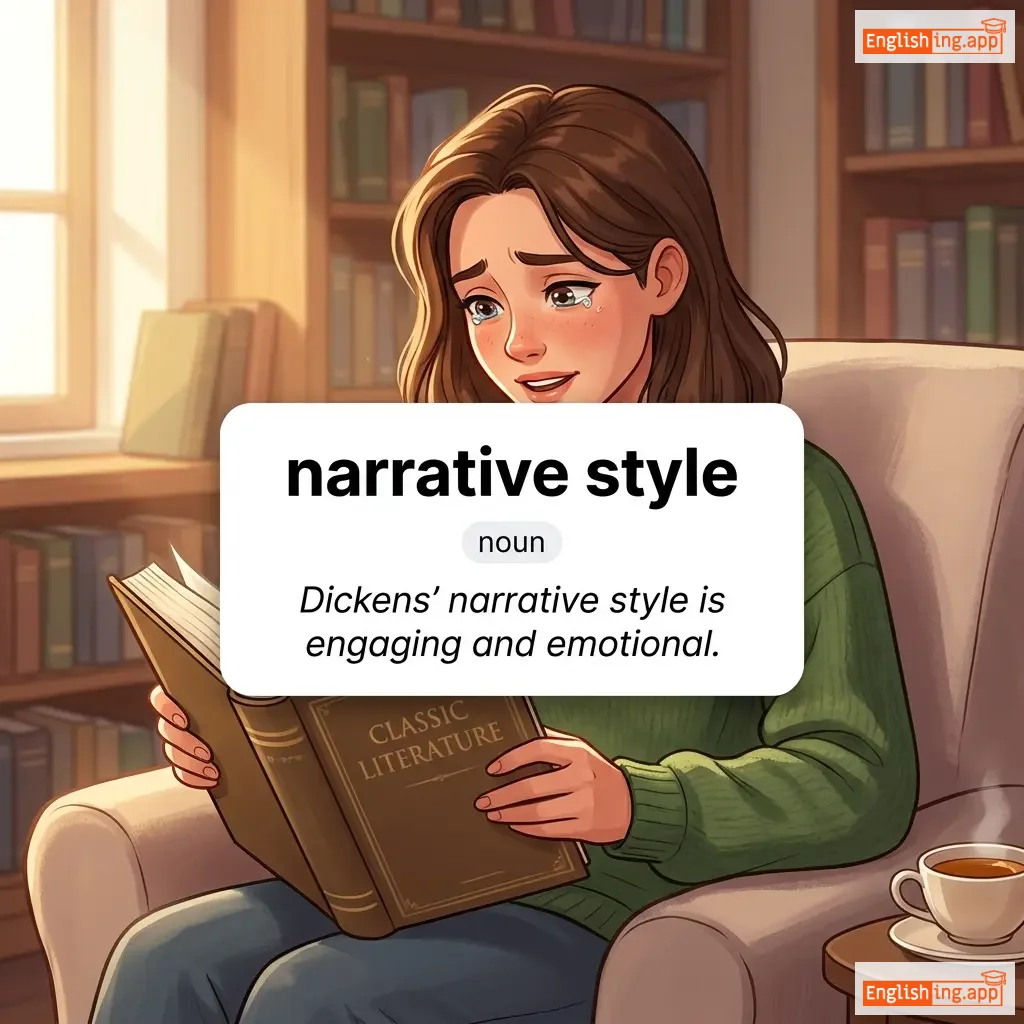
narrative style definition card — visual illustration of the meaning
noun C1
ˈnærətɪv staɪl
повествовательный стиль (povestvovatel'nyy stil')

The way in which a story is told, including the point of view and the voice of the narrator.

"Dickens' narrative style is engaging and emotional."

"Повествовательный стиль Диккенса захватывающий и эмоциональный." (Povestvovatel'nyy stil' Dikkensa zakhvatyvayushchiy i emosional'nyy.)
adjective C1
/ˌnæroʊˈmaɪndɪd/

Having a limited outlook or unwillingness to accept different opinions or ideas.

"She was too narrow-minded to consider other perspectives."

adverb C1
/ˈnæroʊli/
едва; с трудом (yedva; s trudom)

by a small margin; barely; in a limited way

"She narrowly escaped the accident."

"Она едва избежала аварии." (Ona yedva izbezhalа avarii.)
adjective C1
/ˈneɪzl/
назальный (nazal'nyj)

Relating to the nose; a sound produced through the nose.

"He spoke with a nasal voice due to his cold."

"Он говорил с носовым голосом из-за простуды." (On govorit s nosovym golosom iz-za prostudy.)
nascent definition card — visual illustration of the meaning
adjective C1
/ˈneɪsnt/
зарождающийся (zarozhdajushchijsja)

Just coming into existence and beginning to develop.

"The nascent technology has great potential."

"Зарождающаяся технология имеет большой потенциал." (Zarozhdajushchajasja tekhnologija imejet bol'shoj potencial.)
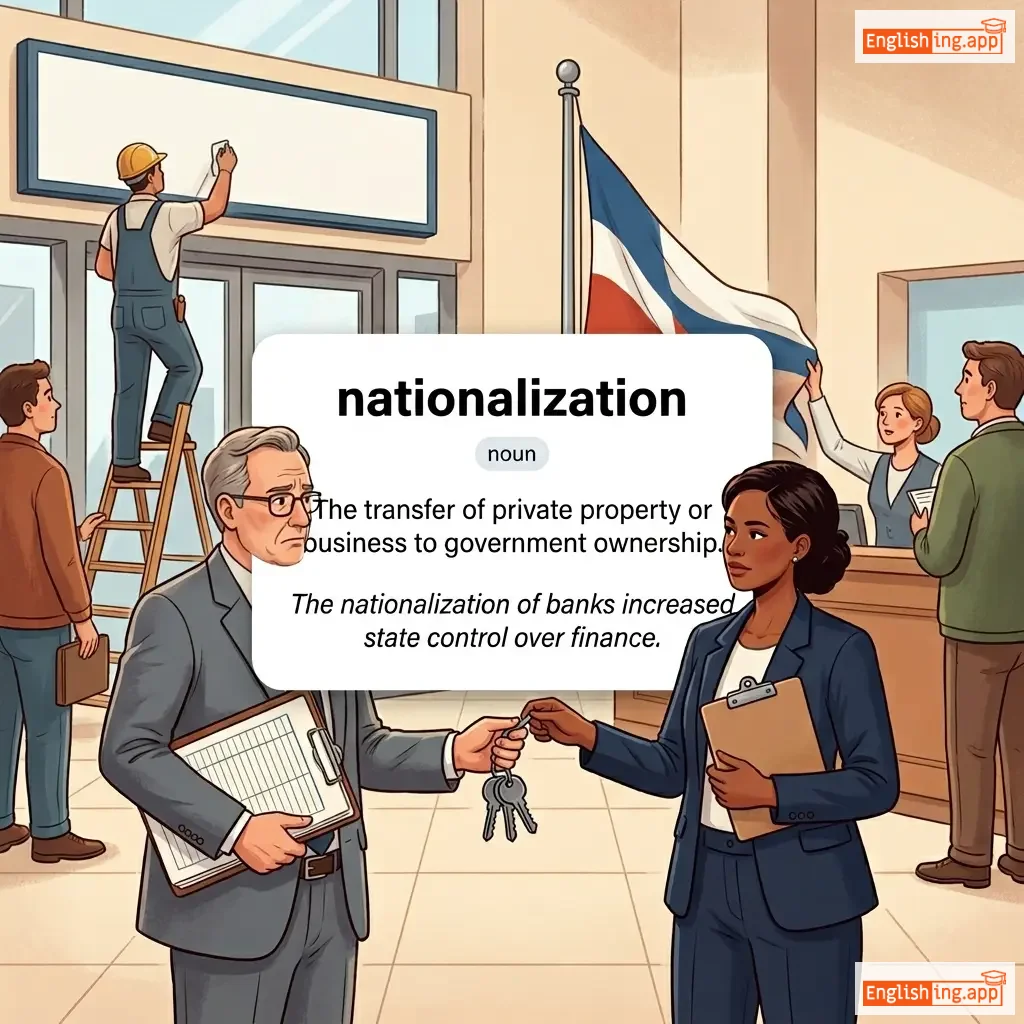
nationalization definition card — visual illustration of the meaning
noun C1
/ˌnæʃ.ən.ə.laɪˈzeɪ.ʃən/
национализация (natsionalizatsiya)

The transfer of private property or business to government ownership.

"The nationalization of banks increased state control over finance."

"Национализация банков увеличила государственный контроль над финансами." (Natsionalizatsiya bankov uvelichila gosudarstvennyy kontrol' nad finansami.)
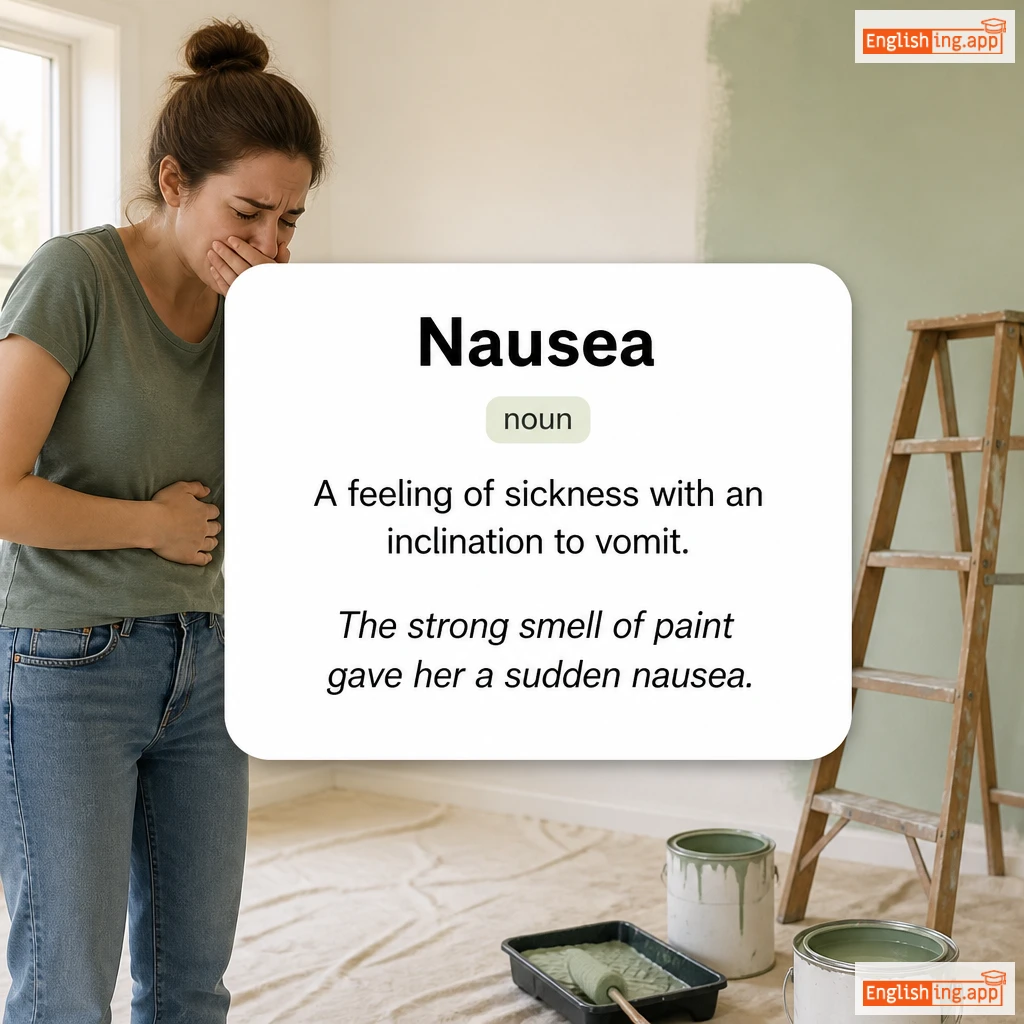
Nausea definition card — visual illustration of the meaning
noun C1
/ˈnɔːziə/
тошнота (toshnota)

A feeling of sickness with an inclination to vomit.

"The strong smell of paint gave her a sudden nausea."

"Резкий запах краски вызвал у неё внезапную тошноту." (Rezkij zapah kraski vyzval u neyo vnezapnuyu toshnotu.)
adjective C1
/ˈnɔːʃəs/
ощущать тошноту (oshchushchat toshnotu)

feeling like you are about to vomit; causing a feeling of sickness

"The smell of rotten food made her feel nauseous."

"Запах гниющей пищи заставил её почувствовать тошноту." (Zapakh gniyushchey pishchi zastavil yeye pochuvstvovat' toshnotu.)
adjective C1
/ˈnɔːtɪkəl/
морской (morskoy)

relating to ships, sailors, or navigation on water

"He studied nautical charts before setting sail."

"Он изучал морские карты перед тем, как отплыть." (On izuchal morskie karty pered tem, kak otplyt'.)
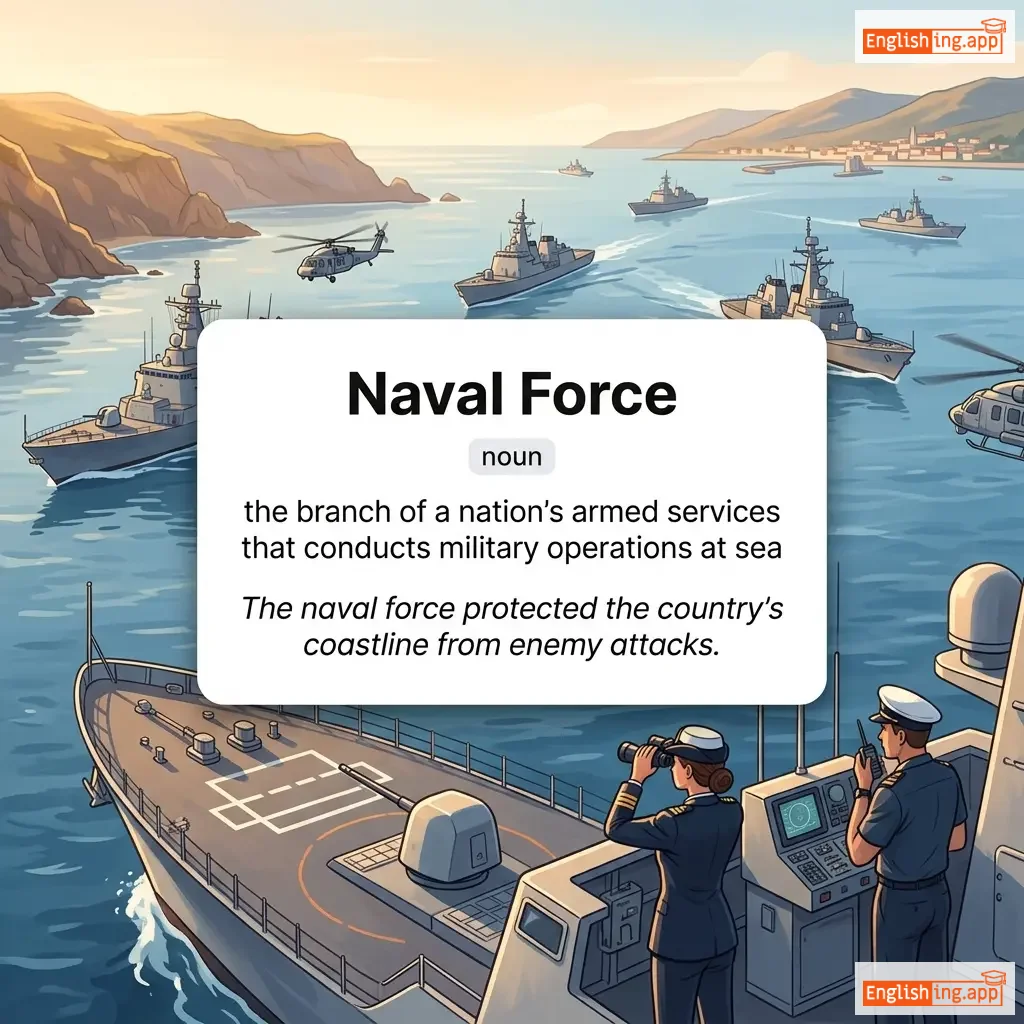
Naval Force definition card — visual illustration of the meaning
noun C1
/ˈneɪ.vəl fɔːrs/
военно-морские силы (voenno-morskie sily)

the branch of a nation's armed services that conducts military operations at sea

"The naval force protected the country's coastline from enemy attacks."

"Военно-морские силы защитили побережье страны от вражеских атак" (Voyenno-morskie sily zashchitili poberezhe strany ot vrazheskikh atak)
👶

Navel

noun C1
/ˈneɪvəl/

the small hollow or raised area in the middle of the stomach, also called the belly button

"The baby’s navel was carefully cleaned after birth."

adjective C1
/ˈnæv.ɪ.ɡə.bəl/
плавучий (plavuchiy)

Able to be sailed on or through by ships or boats.

"The river is navigable for large cargo ships."

"Река пригодна для больших грузовых судов." (Reka prigodna dlya bol'shikh gruzovikh sudov.)
noun C1
/ˈneb.jʊ.lə/
туманность (tumannost')

A cloud of gas and dust in outer space, sometimes visible in the night sky.

"The Orion Nebula is one of the brightest in the sky."

"Орионская туманность — одна из самых ярких на небе." (Orionskaya tumannost' — odna iz samykh yarkikh na nebe.)
verb C1
/nəˈsɛsɪteɪt/
сделать необходимым (sdelat' neobkhodimym)

To make something necessary or unavoidable.

"The heavy rains necessitated the cancellation of the event."

"Тяжелые дожди сделали отмену мероприятия неизбежной." (Tyazhelye dozhdi sdelali otmenu meropriyatiya neizbezhnoi.)
noun C1
/ˈnɛkˌlaɪn/
вырез (vyrez)

the edge of a garment around the neck, especially as cut to form a particular shape

"The dress has a beautiful V-shaped neckline."

"Платье имеет красивый вырез в форме V." (Plat'ye imeet krasivyy vyrez v forme V.)
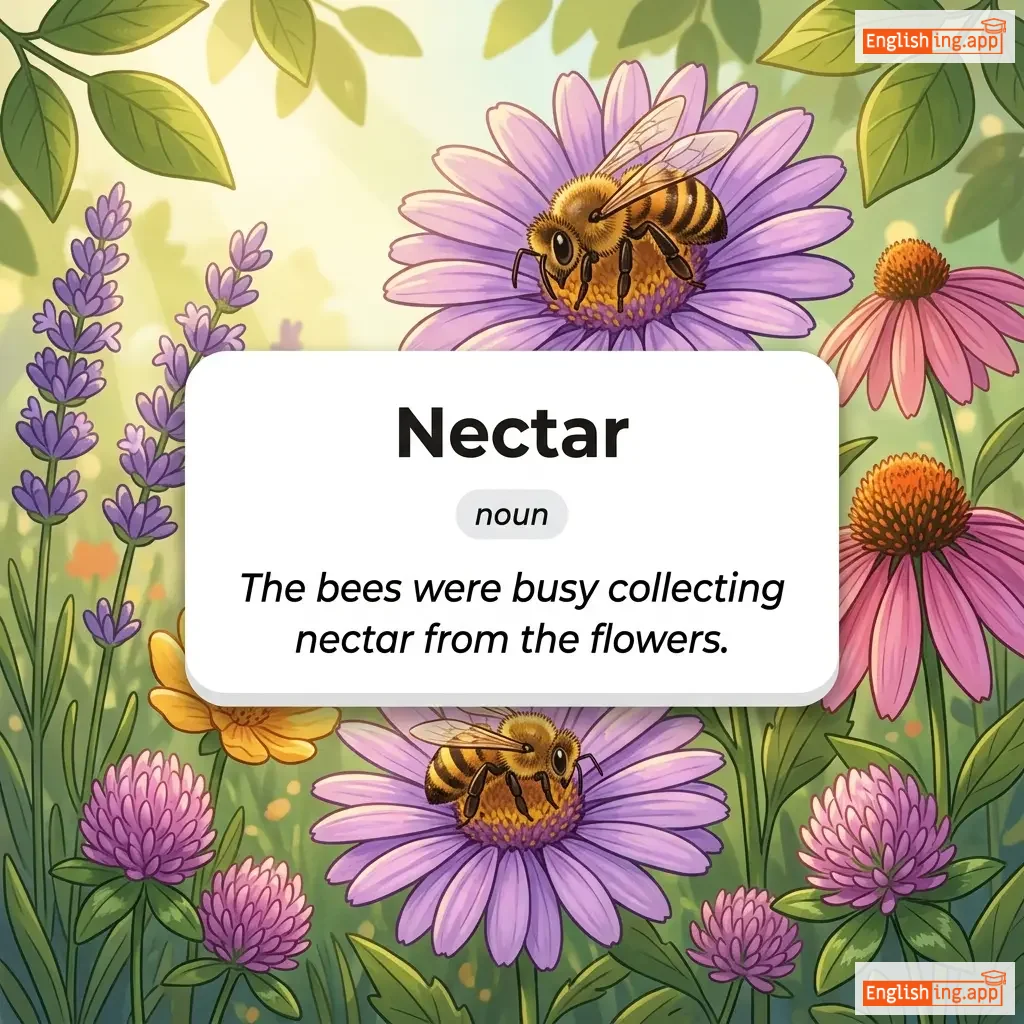
Nectar definition card — visual illustration of the meaning
noun C1
/ˈnɛktər/
нектар (nektar)

a sweet liquid produced by flowers and collected by bees; in mythology, the drink of the gods

"The bees were busy collecting nectar from the flowers."

"Пчелы были заняты сбором нектара с цветов." (Pchely byli zanyaty sbornom nektara s tsvetov.)
noun C1
/ˈnɛktəriːn/
нектарин (сорт персика с гладкой кожурой) (nektarin)

A smooth-skinned variety of peach.

"She bought a basket of fresh nectarines from the market."

"Она купила корзину с свежими нектаринами на рынке." (Ona kupila korzinu s svezhimi nektarinami na rynke.)
adjective C1
/ˈniːd.ləs/
ненужный (nidless)

unnecessary; not required; without purpose

"The argument was needless and could have been avoided."

"Аргумент был излишним и его можно было избежать." (Argument byl izlishnym i ego mozhno bylo izbezhat)
noun C1
/ˈniːdəlwɜːrk/
работа с иглой, вышивка (rabota s igloy, vishivka)

The craft of sewing, embroidery, or knitting done with a needle.

"Her grandmother taught her the art of needlework."

"Ее бабушка научила ее искусству работы с иглой." (Eyo babushka nauchila yeye iskusstvy raboty s igloy.)
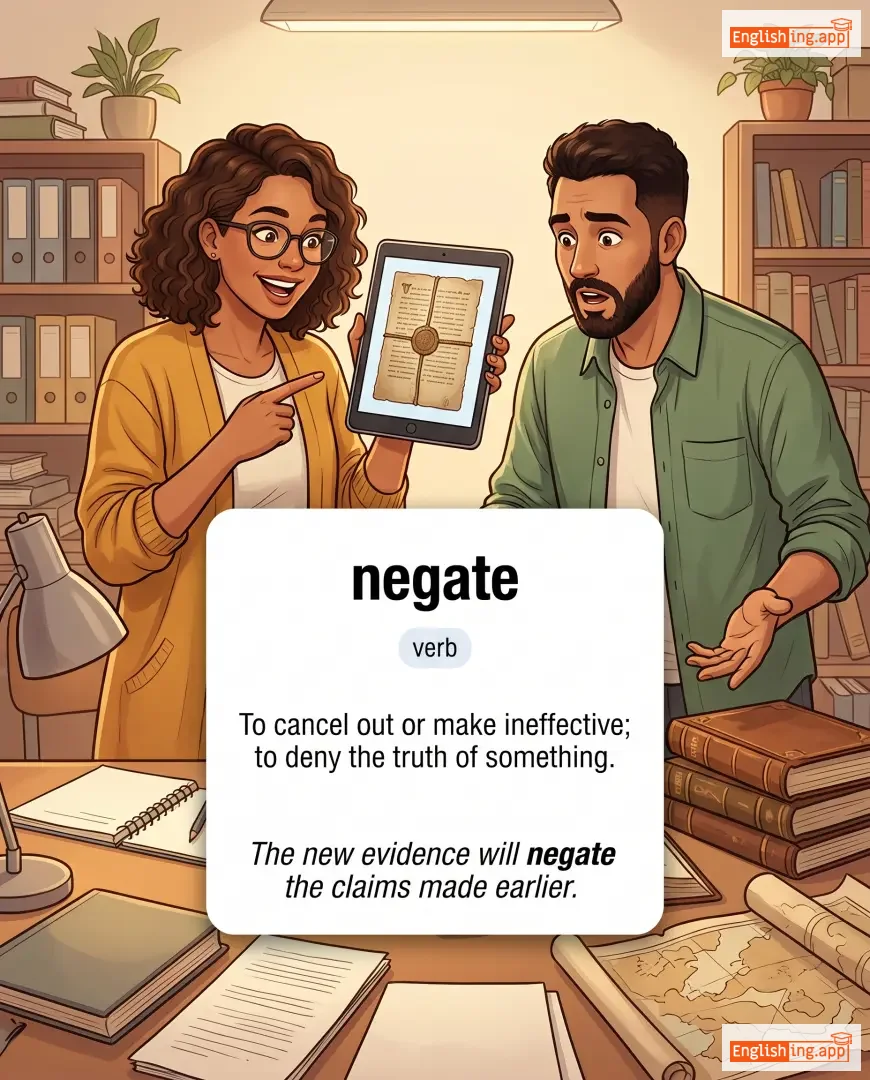
negate definition card — visual illustration of the meaning
verb C1
/nɪˈɡeɪt/

To cancel out or make ineffective; to deny the truth of something.

"The new evidence will negate the claims made earlier."

noun C1
/nɪˈɡeɪʃən/
отрицание (otricanie)

The act of denying something; the contradiction or absence of something.

"The theory is built on the negation of traditional beliefs."

"Теория основана на отрицании традиционных убеждений." (Teoriya osnova na otritsanii traditsionnykh ubezhdeniy.)
adjective C1
/nɪˈɡlɛktfʊl/
небрежный (nebrezhnyy)

Failing to give proper care or attention.

"The neglectful parent left the child alone for hours."

"Небрежный родитель оставил ребенка одного на несколько часов." (Nebrezhnyy roditel' ostavil rebenka odnogo na neskol'ko chasov.)
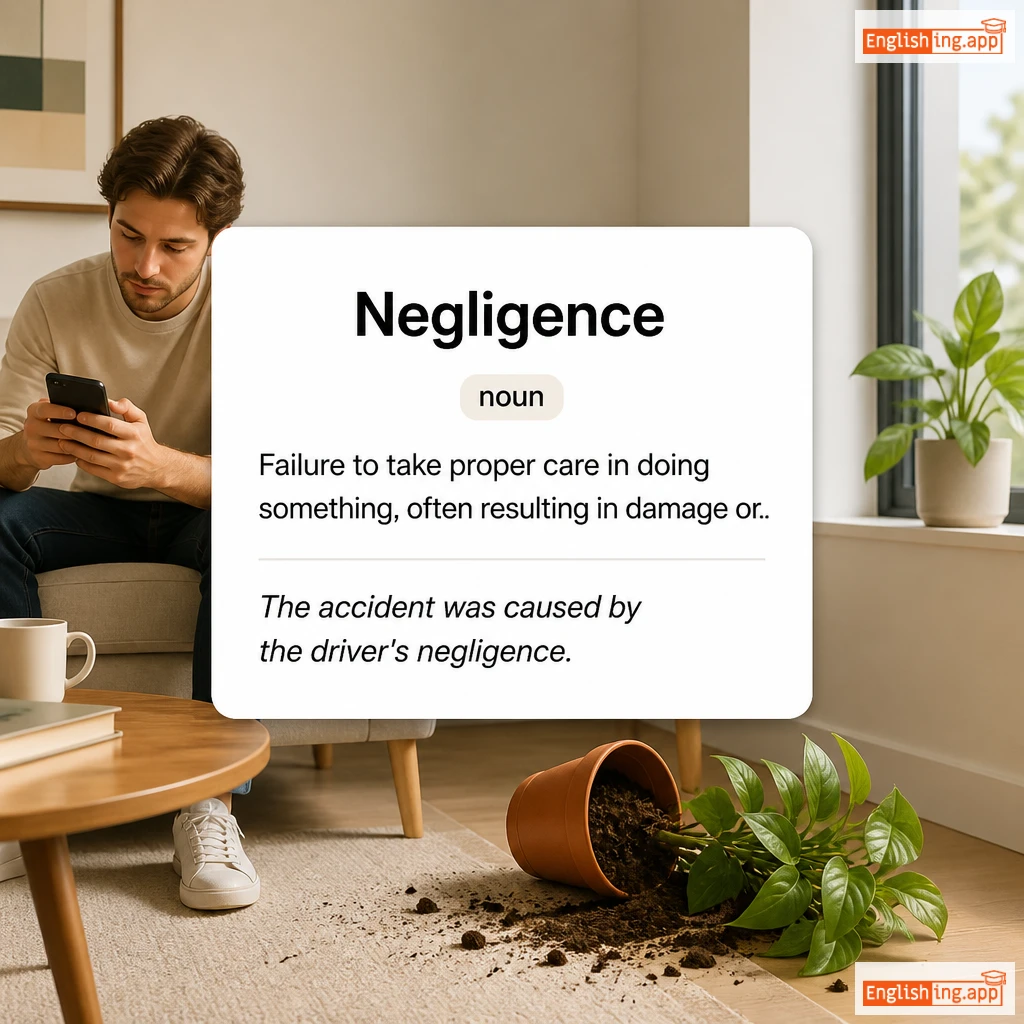
Negligence definition card — visual illustration of the meaning
noun C1
/ˈnɛɡlɪdʒəns/
небрежность (nebrezhnost)

Failure to take proper care in doing something, often resulting in damage or harm.

"The accident was caused by the driver's negligence."

"Авария произошла из-за небрежности водителя." (Avariya proishla iz-za nebrezhnosti voditelya.)