Vocabularies

English Vocabulary Dictionary | Word Meanings, Definitions & Examples

verb C1
/ɪmˈpɑːrt/
伝える (tsutaeru)

to make information known; to bestow or communicate

"The teacher imparted valuable knowledge to her students."

"教師は生徒に貴重な知識を授けました。" (Kyōshi wa seito ni kichōna chishiki o sazukemashita.)
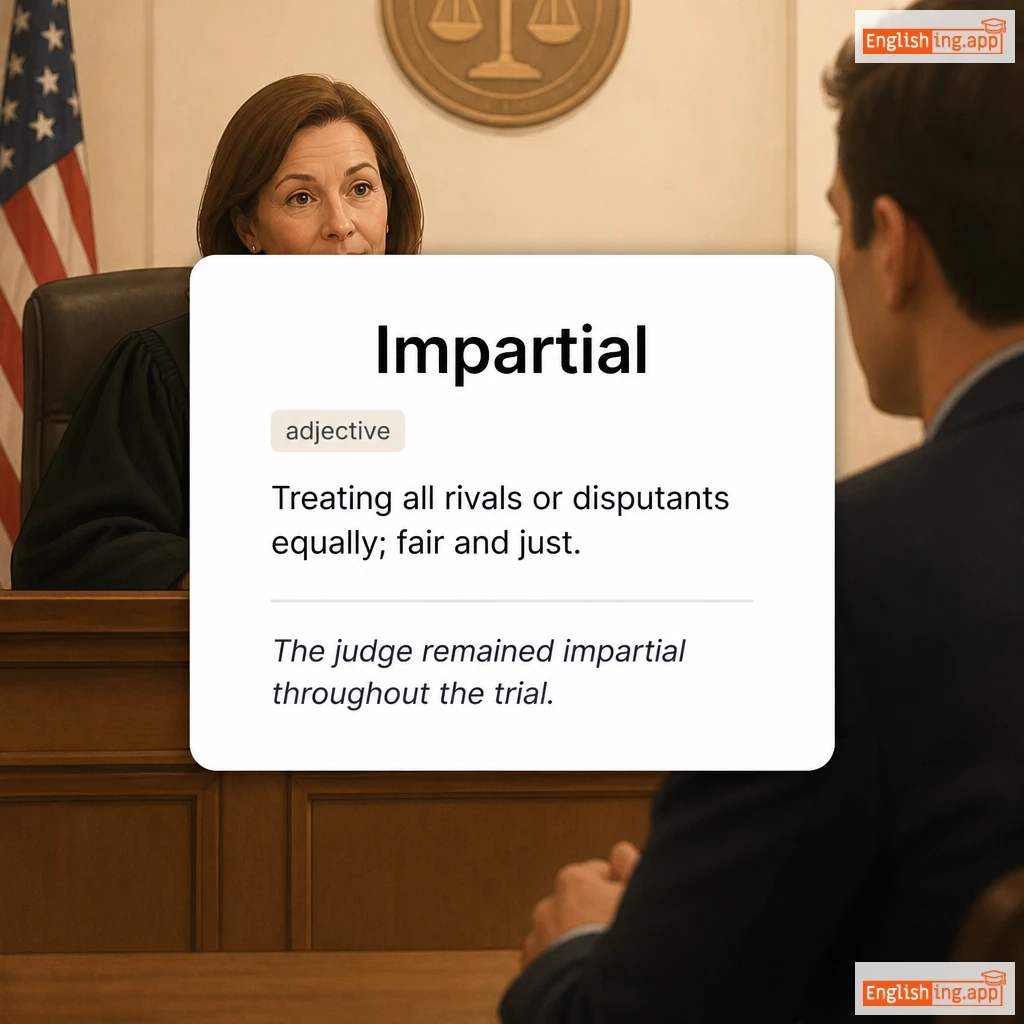
Impartial definition card — visual illustration of the meaning
adjective C1
/ɪmˈpɑːrʃəl/
公平 (kouhei)

Treating all rivals or disputants equally; fair and just.

"The judge remained impartial throughout the trial."

"裁判官は裁判の間、公平を保ちました。" (Saibankan wa saiban no aida, kōhei o tamochimashita.)
adjective C1
/ɪmˈpæsəbəl/
通行不可能 (tsuukou fukanou)

Impossible to travel along or over.

"The road became impassable after the heavy snowfall."

"大雪の後、道は通行不可能になりました。" (Ooyuki no ato, michi wa tsuukou fukanou ni narimashita.)
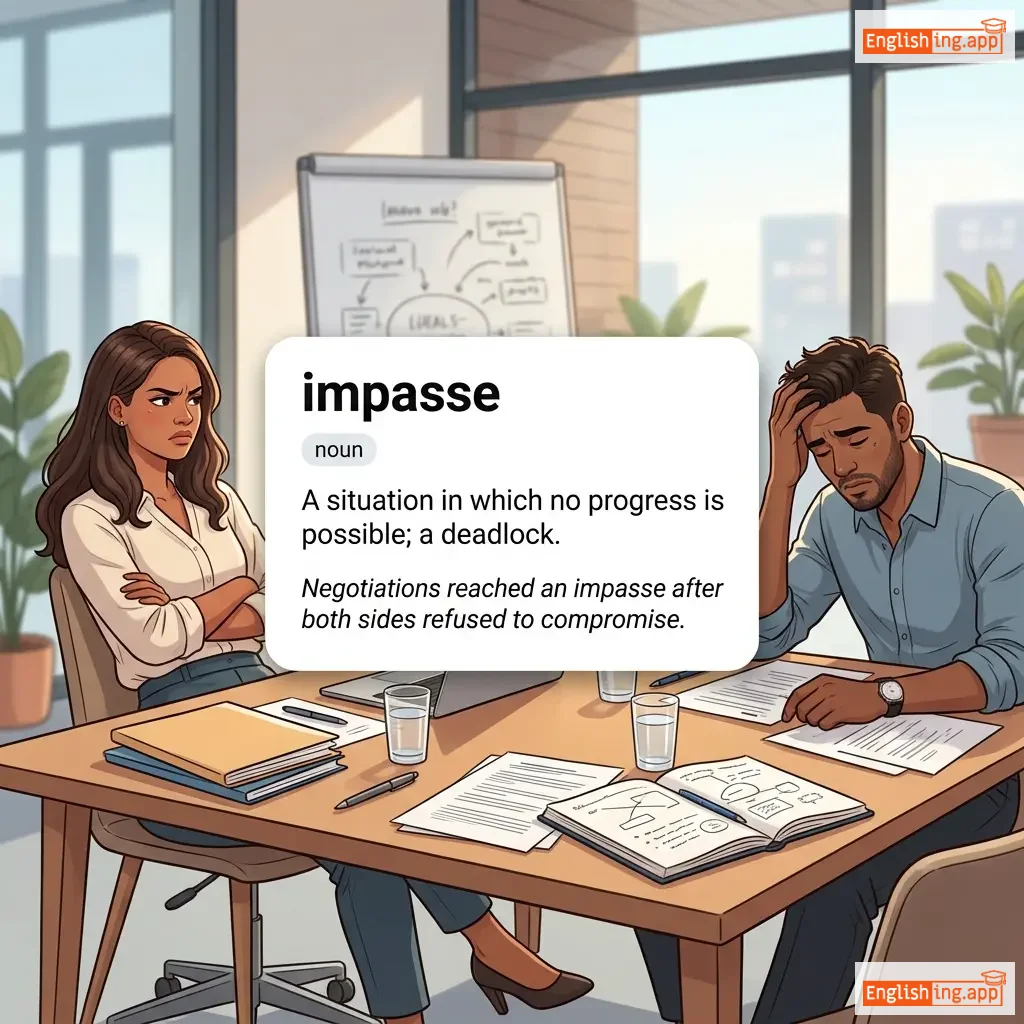
impasse definition card — visual illustration of the meaning
noun C1
/ˈɪmpæs/
行き詰まり (ikidzumari)

A situation in which no progress is possible; a deadlock.

"Negotiations reached an impasse after both sides refused to compromise."

"両サイドが妥協を拒否したため、交渉は行き詰まりました。" (Ryō saido ga dakyo o kyohi shita tame, kōshō wa ikidzumari mashita.)
adjective C1
/ɪmˈpæʃənd/
情熱的な (jōnetsuteki na)

Filled with or showing great emotion.

"She gave an impassioned speech about human rights."

"彼女は人権について情熱的なスピーチを行いました。" (Kanojo wa jinken ni tsuite jōnetsuteki na supīchi o okonai mashita.)
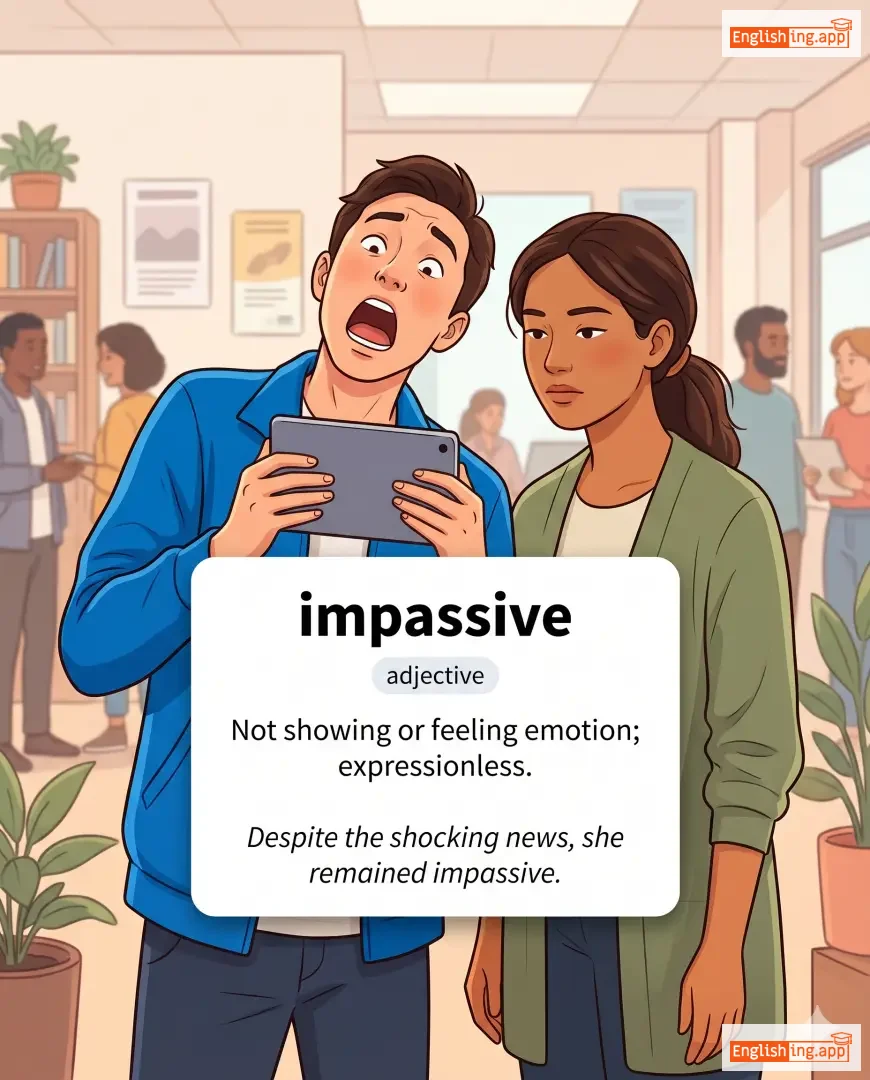
impassive definition card — visual illustration of the meaning
adjective C1
/ɪmˈpæsɪv/
無表情 (muhyōjō)

Not showing or feeling emotion; expressionless.

"Despite the shocking news, she remained impassive."

"衝撃的なニュースにもかかわらず、彼女は無表情のままでした。" (Shōgeki-teki na nyūsu ni mo kakawarazu, kanojo wa muhyōjō no mamadashita.)
⚖️

impeach

verb C1
/ɪmˈpiːtʃ/

To charge a public official with misconduct while in office.

"The parliament voted to impeach the president."

impeccable definition card — visual illustration of the meaning
adjective C1
/ɪmˈpɛkəbl̩/
完璧 (kanpeki)

Perfect; without flaws or faults.

"She delivered an impeccable performance on stage."

"彼女はステージで完璧なパフォーマンスを披露しました。" (Kanojo wa suteeji de kanpeki na pafomansu o hiroshimashita.)
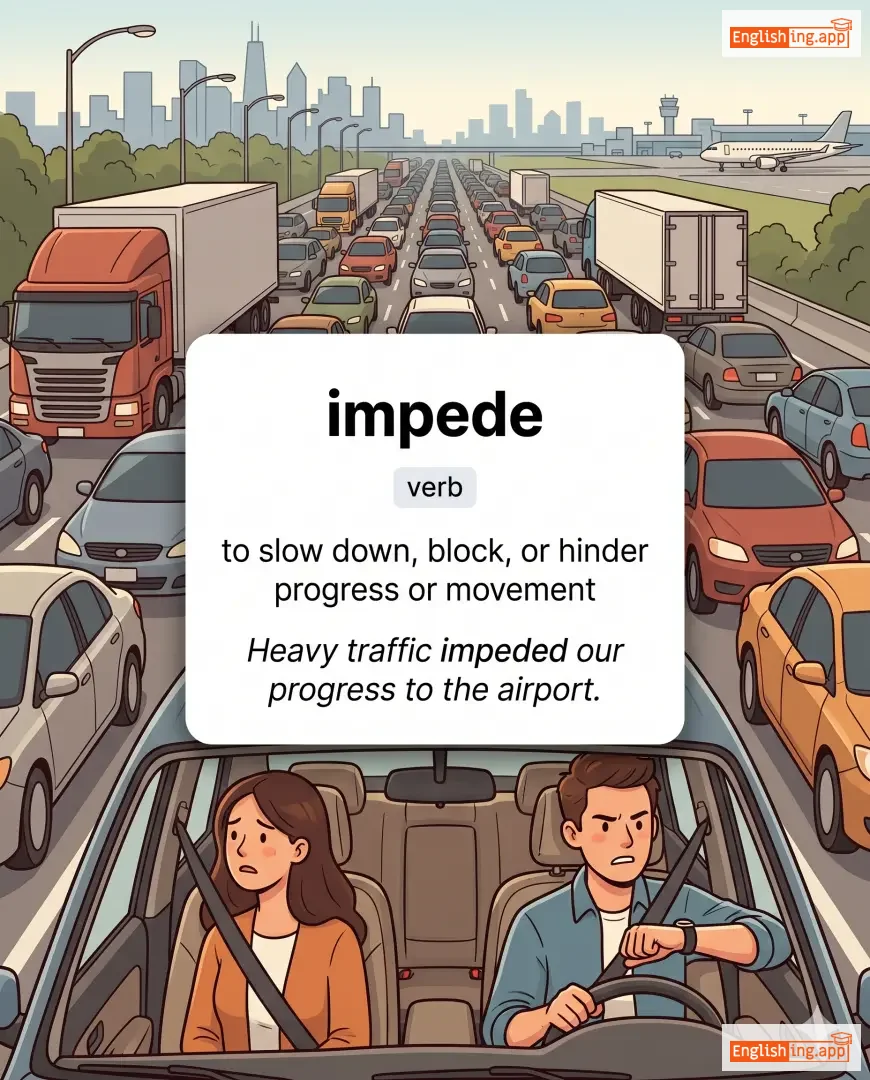
impede definition card — visual illustration of the meaning
verb C1
/ɪmˈpiːd/
妨げる (samatajeru)

to slow down, block, or hinder progress or movement

"Heavy traffic impeded our progress to the airport."

"交通渋滞が空港への進行を妨げました。" (Koutsuu juutai ga kuukou e no shinkou o samatagemashita.)
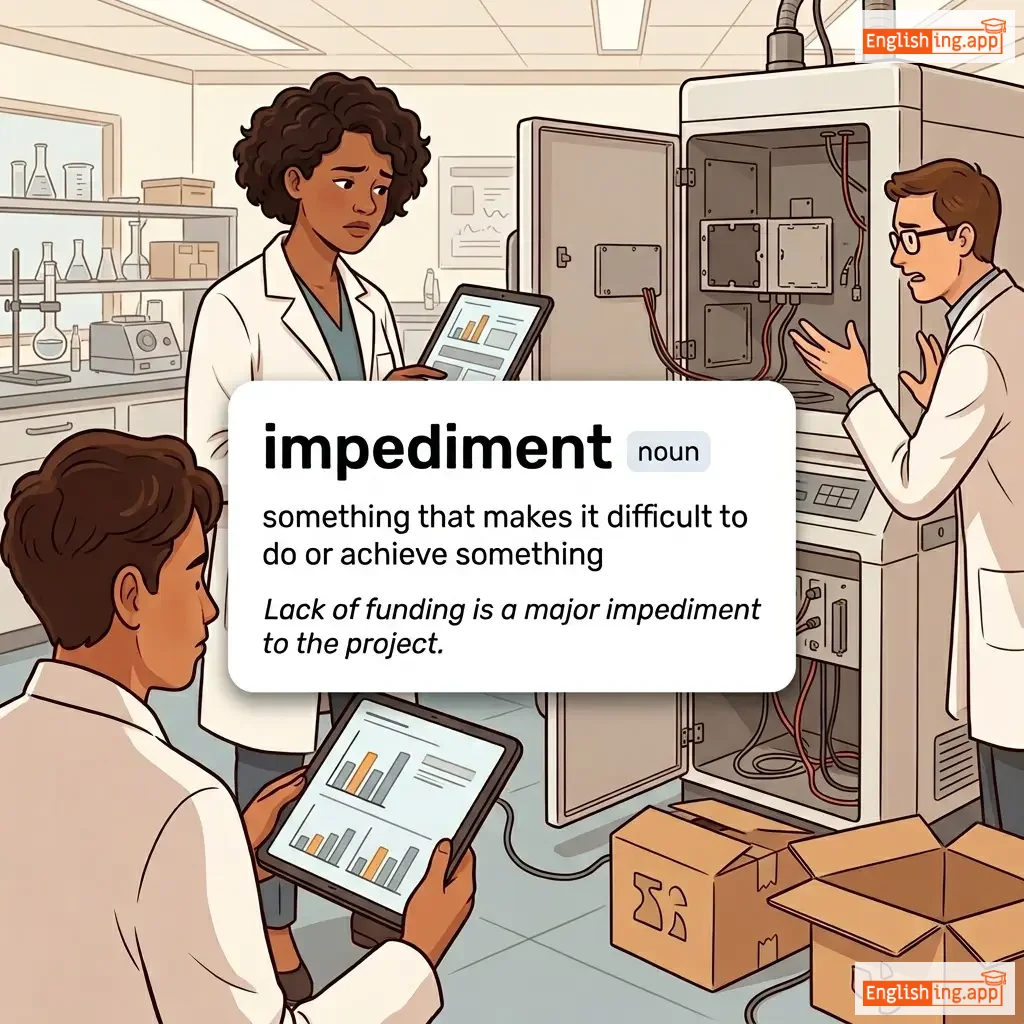
impediment definition card — visual illustration of the meaning
noun C1
/ɪmˈpɛdɪmənt/

something that makes it difficult to do or achieve something

"Lack of funding is a major impediment to the project."

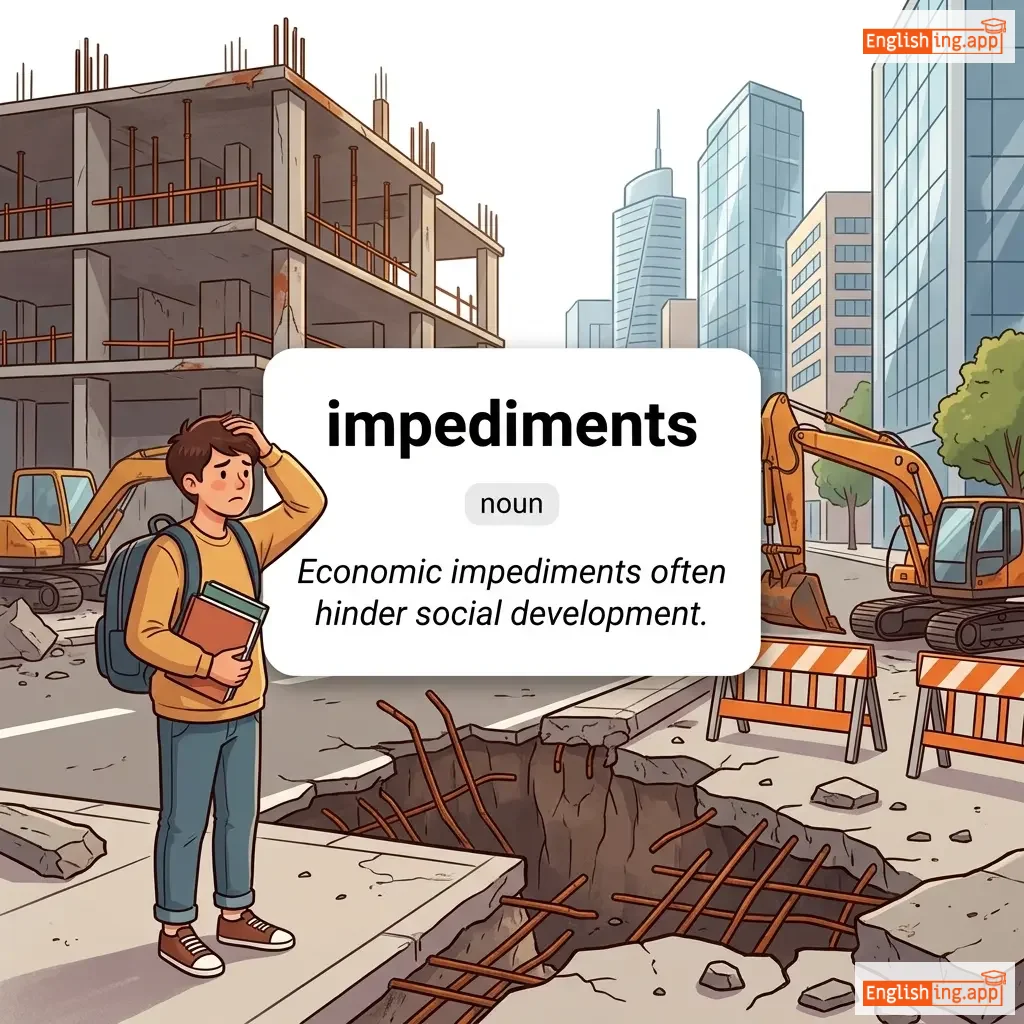
impediments definition card — visual illustration of the meaning
noun C1
/ɪmˈpɛdɪmənt/
障害 (shōgai)

A hindrance or obstruction in doing something; things that prevent progress or achievement.

"Economic impediments often hinder social development."

"経済的な障害はしばしば社会的発展を妨げる。" (Keizaiteki na shōgai wa shibashiba shakaiteki hatten o samatageru.)
➡️

impel

verb C1
/ɪmˈpɛl/

to drive, force, or urge someone to do something

"Her curiosity impelled her to open the mysterious box."

adjective C1
/ɪmˈpɛndɪŋ/
差し迫った (tashisometta)

about to happen soon, usually something unpleasant or threatening

"The villagers were worried about the impending flood."

"村人たちは差し迫った洪水を心配していた。" (Murabito-tachi wa tashisometta kōzui o shinpai shite ita.)
adjective C1
/ɪmˈpɛn.ɪ.trə.bəl/

Impossible to pass through or enter; impossible to understand.

"The dense forest was nearly impenetrable."

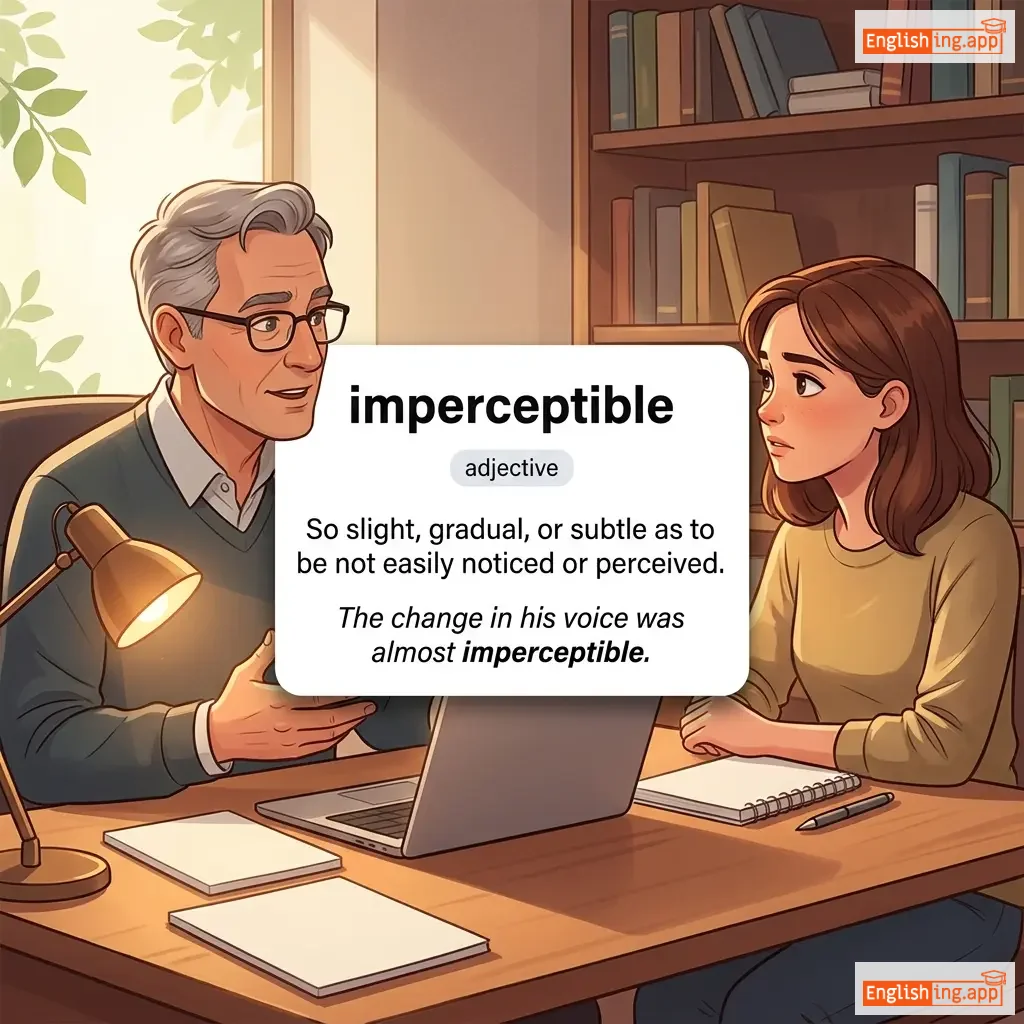
imperceptible definition card — visual illustration of the meaning
adjective C1
/ˌɪm.pəˈsɛp.tə.bəl/
知覚できない (chikaku dekinai)

So slight, gradual, or subtle as to be not easily noticed or perceived.

"The change in his voice was almost imperceptible."

"彼の声の変化はほとんど知覚できませんでした。" (Kare no koe no henka wa hotondo chikaku dekimasen deshita.)
verb C1
/ɪmˈpɛrɪl/
危険にさらす (kiken ni sarasu)

To put in danger or at risk.

"Reckless driving can imperil the lives of others."

"無謀な運転は他人の命を危険にさらす可能性があります。" (Mubō na unten wa tanin no inochi o kiken ni sarasu kanōsei ga arimasu.)
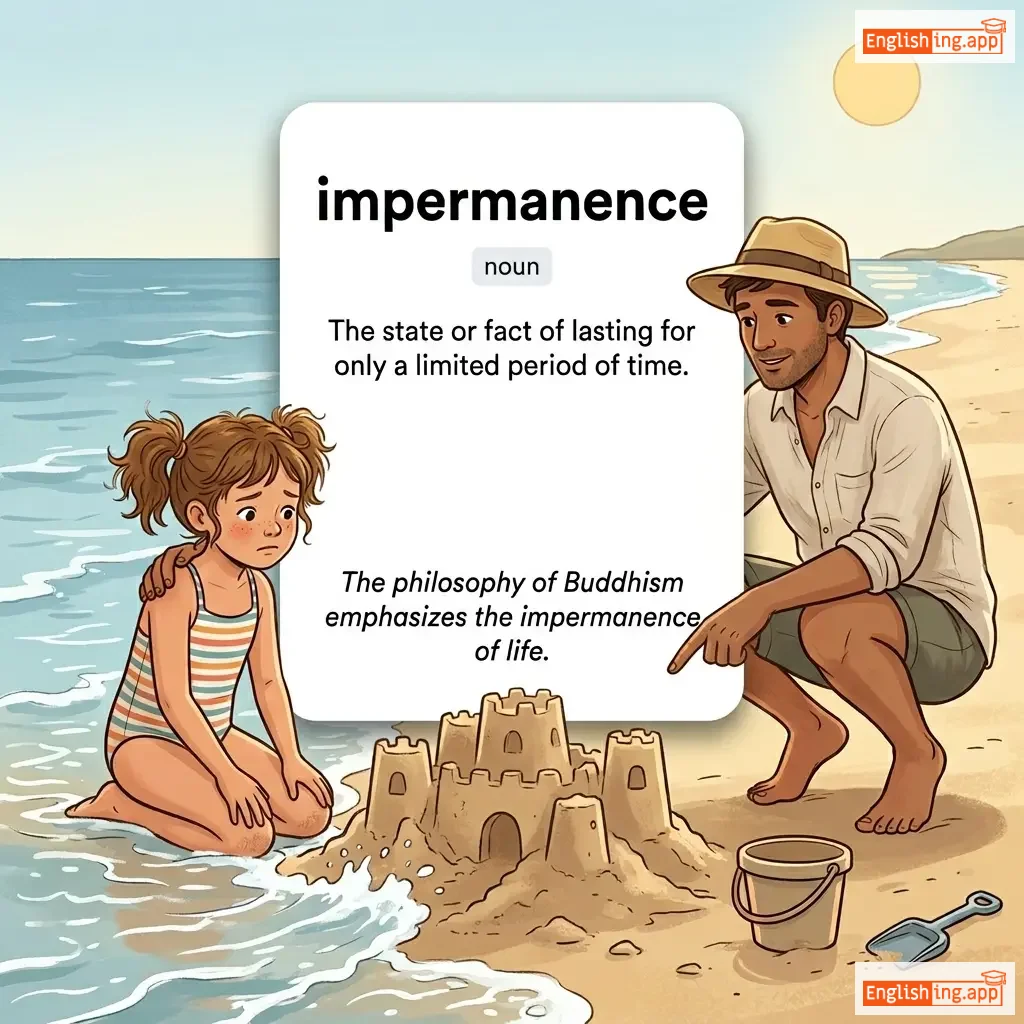
impermanence definition card — visual illustration of the meaning
noun C1
/ɪmˈpɜː.mə.nəns/
無常 (mujou)

The state or fact of lasting for only a limited period of time.

"The philosophy of Buddhism emphasizes the impermanence of life."

"仏教の哲学は、人生の無常性を強調します。" (Bukkyo no tetsugaku wa, jinsei no mujou-sei wo kyouchou shimasu.)
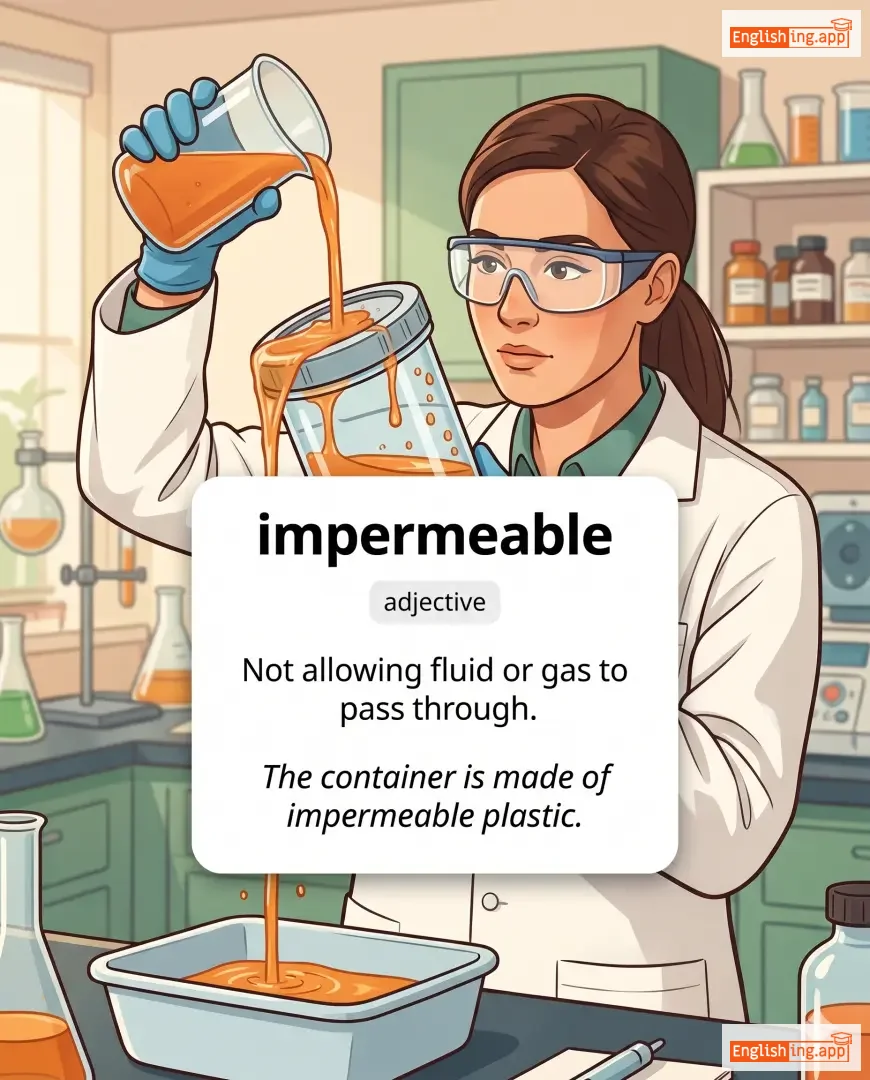
impermeable definition card — visual illustration of the meaning
adjective C1
/ɪmˈpɜːmiəbl/
不透水の (futōsui no)

Not allowing fluid or gas to pass through.

"The container is made of impermeable plastic."

"その容器は不透水のプラスチックでできています。" (Sono youki wa futōsui no purasuchikku de dekiteimasu.)
adjective C1
/ɪmˈpɜːrsənl/
無個性 (mukosei)

not influenced by, showing, or involving personal feelings; lacking human warmth or emotion

"The letter was written in a very impersonal style."

"その手紙は非常に無個性的なスタイルで書かれていました。" (Sono tegami wa hijou ni mukosei-teki na sutairu de kakareteimashita.)
verb C1
/ɪmˈpɜːrsəneɪt/
偽る (itsuwaru)

to pretend to be another person in order to entertain or deceive

"He was arrested for trying to impersonate a police officer."

"彼は警察官を装おうとしたため逮捕されました。" (Kare wa keisatsukan wo yosou to shita tame taiho saremashita.)
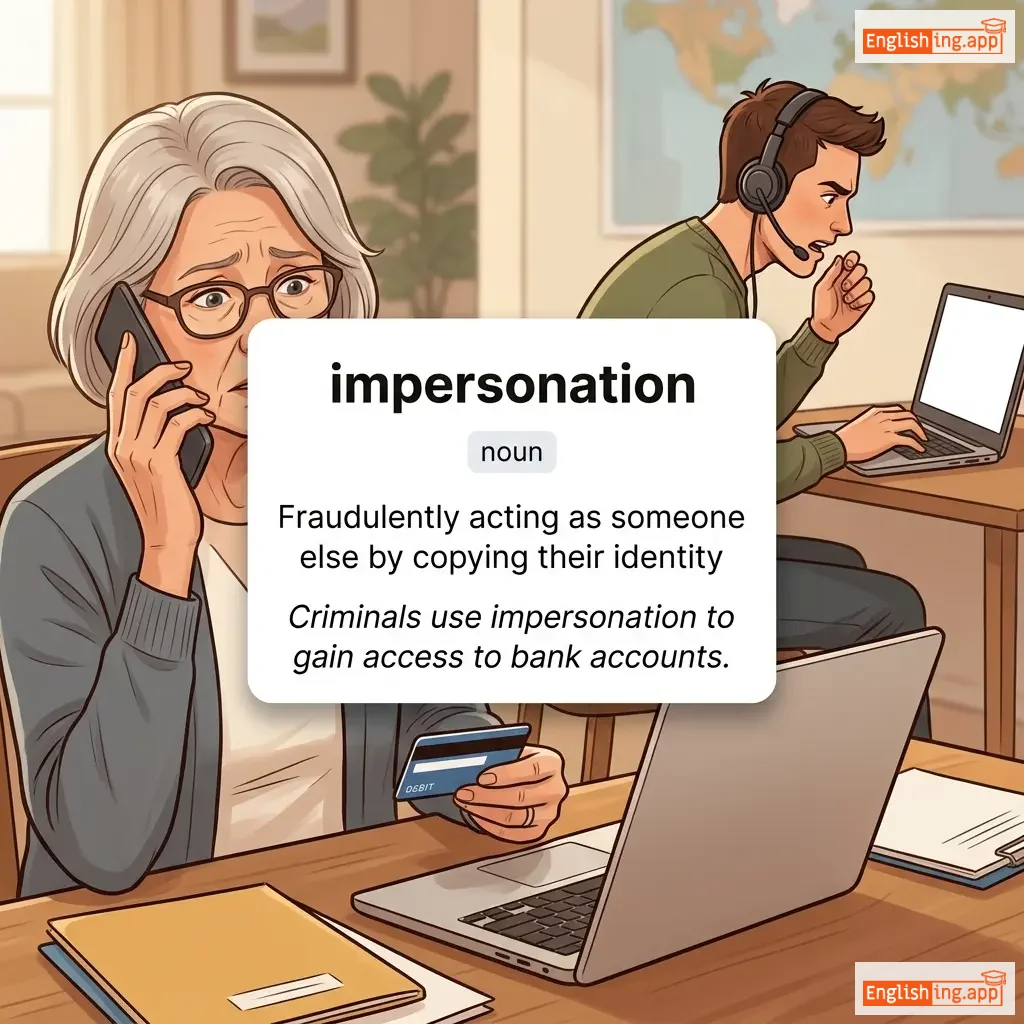
impersonation definition card — visual illustration of the meaning
noun C1
/ɪmˌpɜː.səˈneɪ.ʃən/
なりすまし (narisumashi)

Fraudulently acting as someone else by copying their identity

"Criminals use impersonation to gain access to bank accounts."

"犯罪者は銀行口座にアクセスするためになりすましを使用します。" (Hanzaisha wa ginkō kōza ni akusesu suru tame ni narisumashi o shiyō shimasu.)
noun C1
/ɪmˈpɜːrtɪnəns/
無礼 (burei)

lack of respect; rudeness

"The teacher was shocked by the student's impertinence."

"教師は生徒の無礼さに驚いた。" (Kyoushi wa seito no burei sa ni odoroita.)
adjective C1
/ɪmˈpɜːrtɪnənt/
無礼な (burei na)

rude and showing a lack of respect

"It was impertinent of him to question the manager's decision."

"マネージャーの決定に疑問を呈するのは無礼でした。" (Manējā no kettei ni gimon o tei suru no wa burei deshita.)
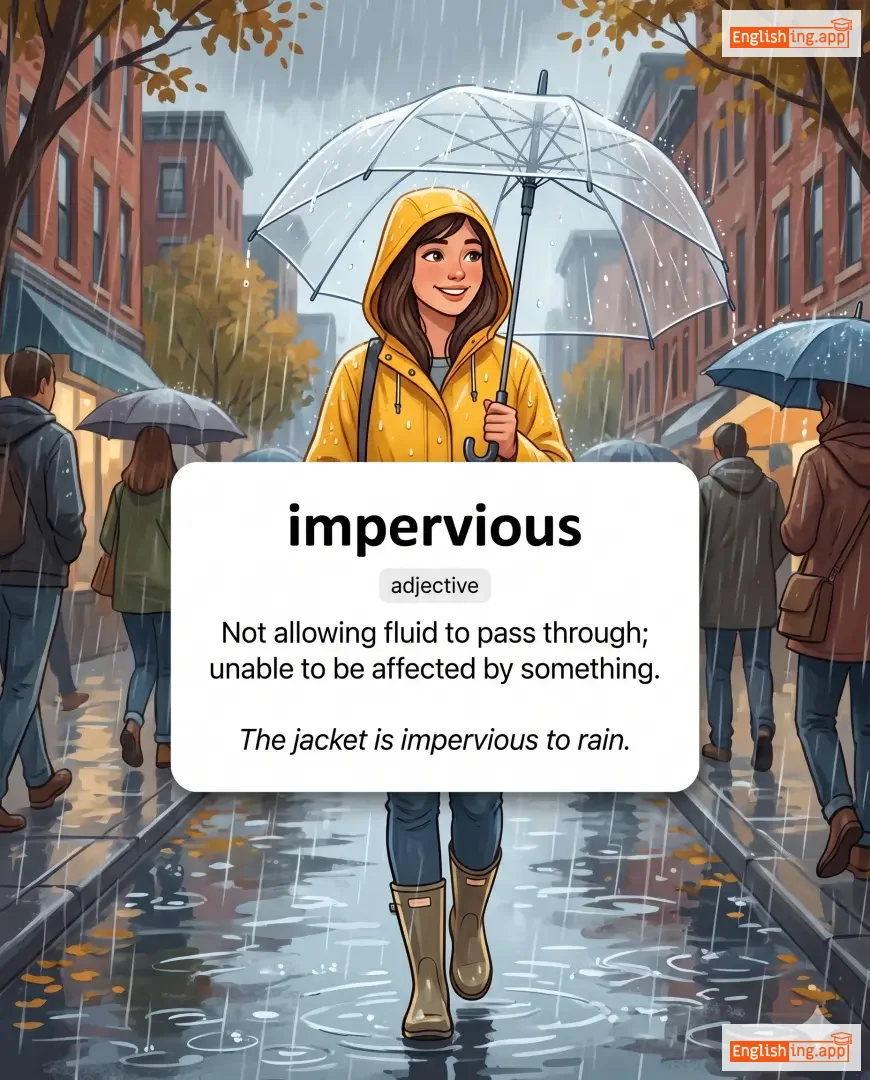
impervious definition card — visual illustration of the meaning
adjective C1
/ɪmˈpɜːrviəs/
透過しない (toukashinai)

Not allowing fluid to pass through; unable to be affected by something.

"The jacket is impervious to rain."

"ジャケットは雨に透過しません。" (Jaketto wa ame ni toukashinai desu.)
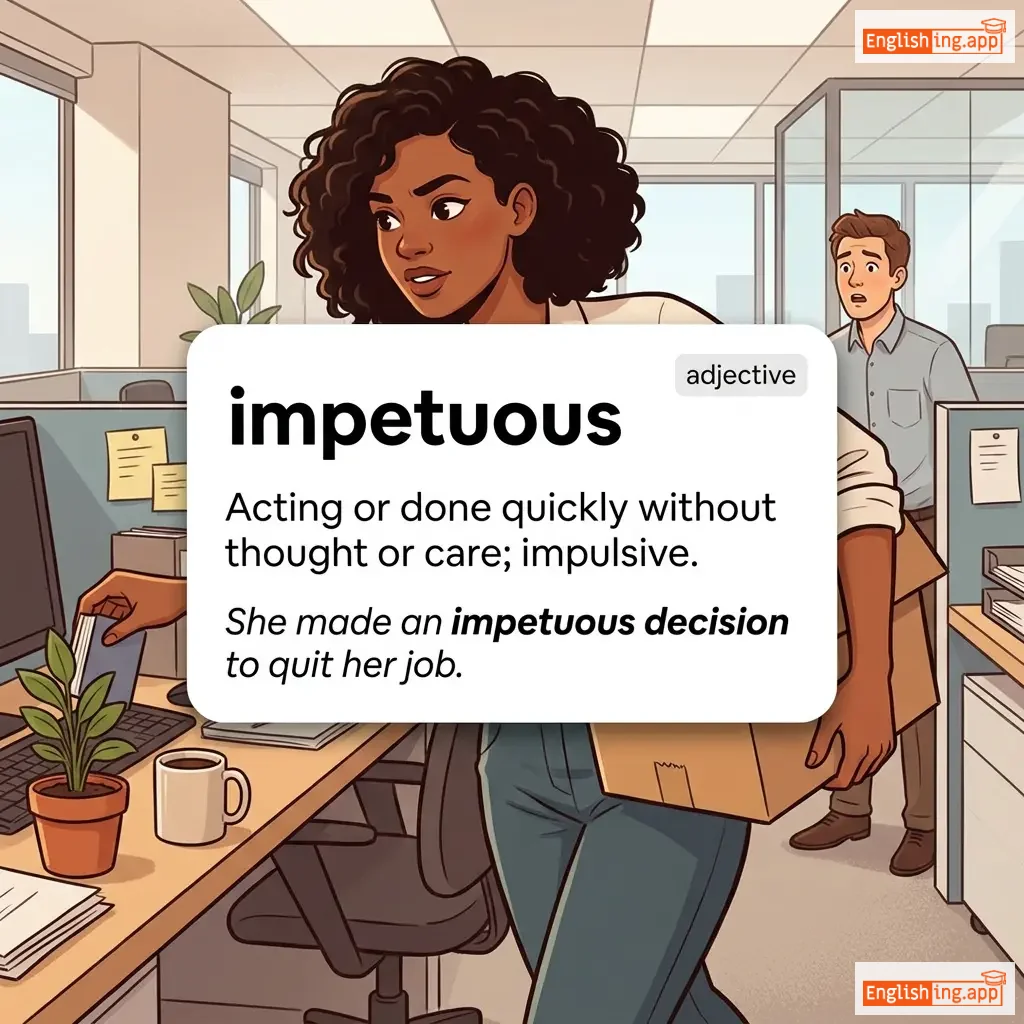
impetuous definition card — visual illustration of the meaning
adjective C1
/ɪmˈpetʃuəs/
衝動的 (shōdōteki)

Acting or done quickly without thought or care; impulsive.

"She made an impetuous decision to quit her job."

"彼女は衝動的に仕事を辞める決断をしました。" (Kanojo wa shōdōteki ni shigoto o yameru ketsudan o shimashita.)
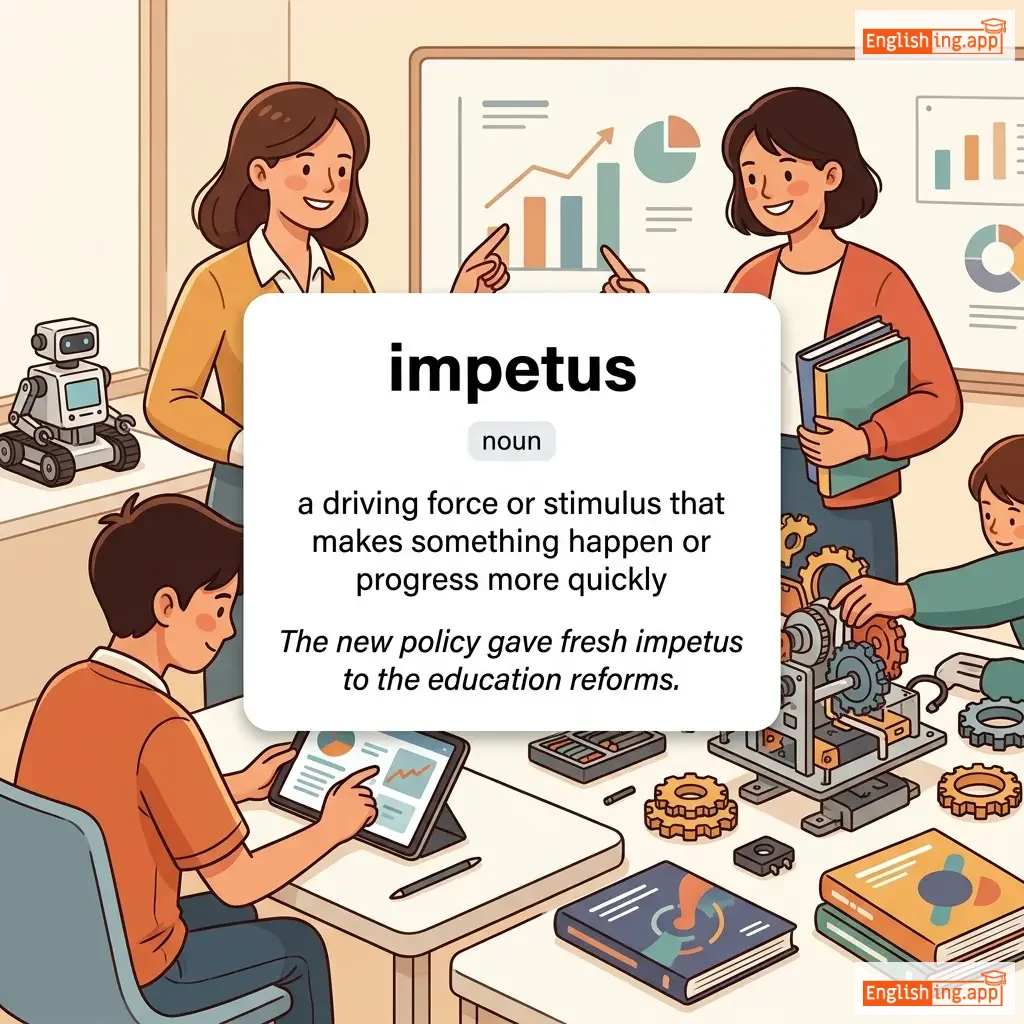
impetus definition card — visual illustration of the meaning
noun C1
/ˈɪmpɪtəs/
推進力 (suishinryoku)

a driving force or stimulus that makes something happen or progress more quickly

"The new policy gave fresh impetus to the education reforms."

"新しい政策は教育改革に新たな推進力を与えました。" (Atarashī seisaku wa kyōiku kaizen ni aratana suishinryoku o ataemashita.)
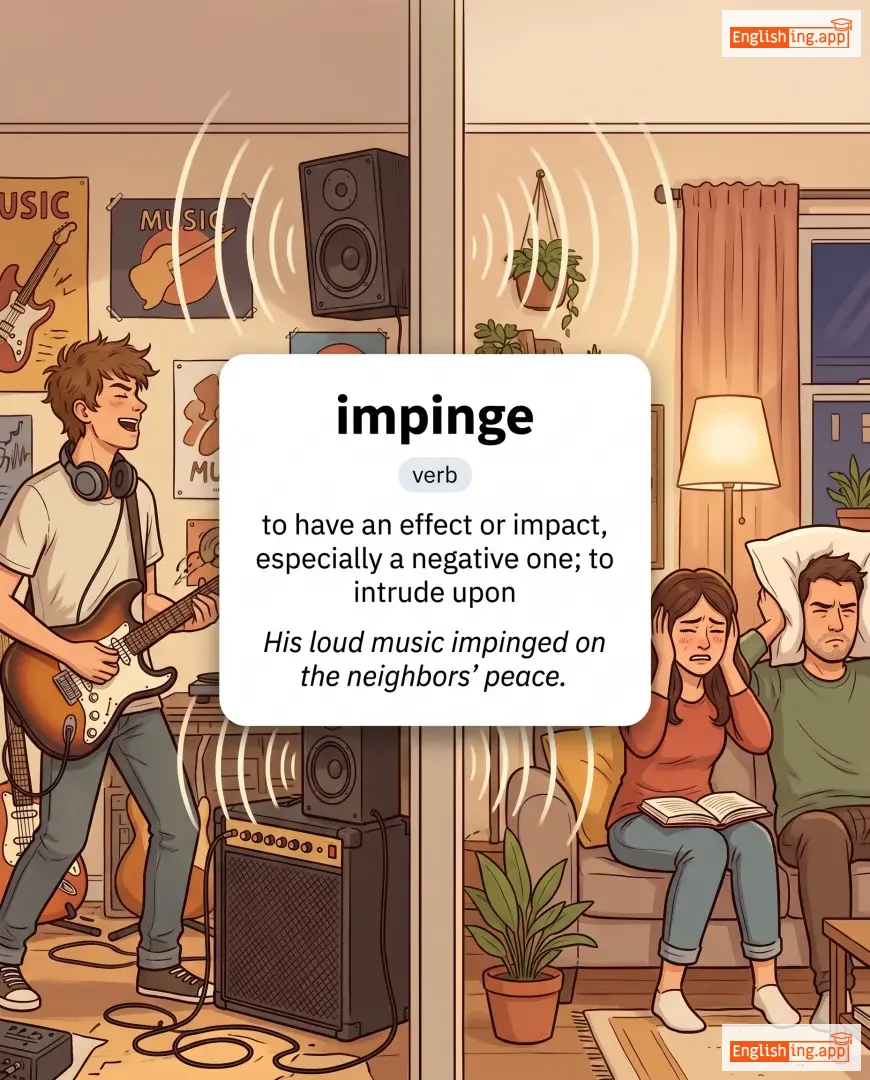
impinge definition card — visual illustration of the meaning
verb C1
/ɪmˈpɪndʒ/

to have an effect or impact, especially a negative one; to intrude upon

"His loud music impinged on the neighbors’ peace."

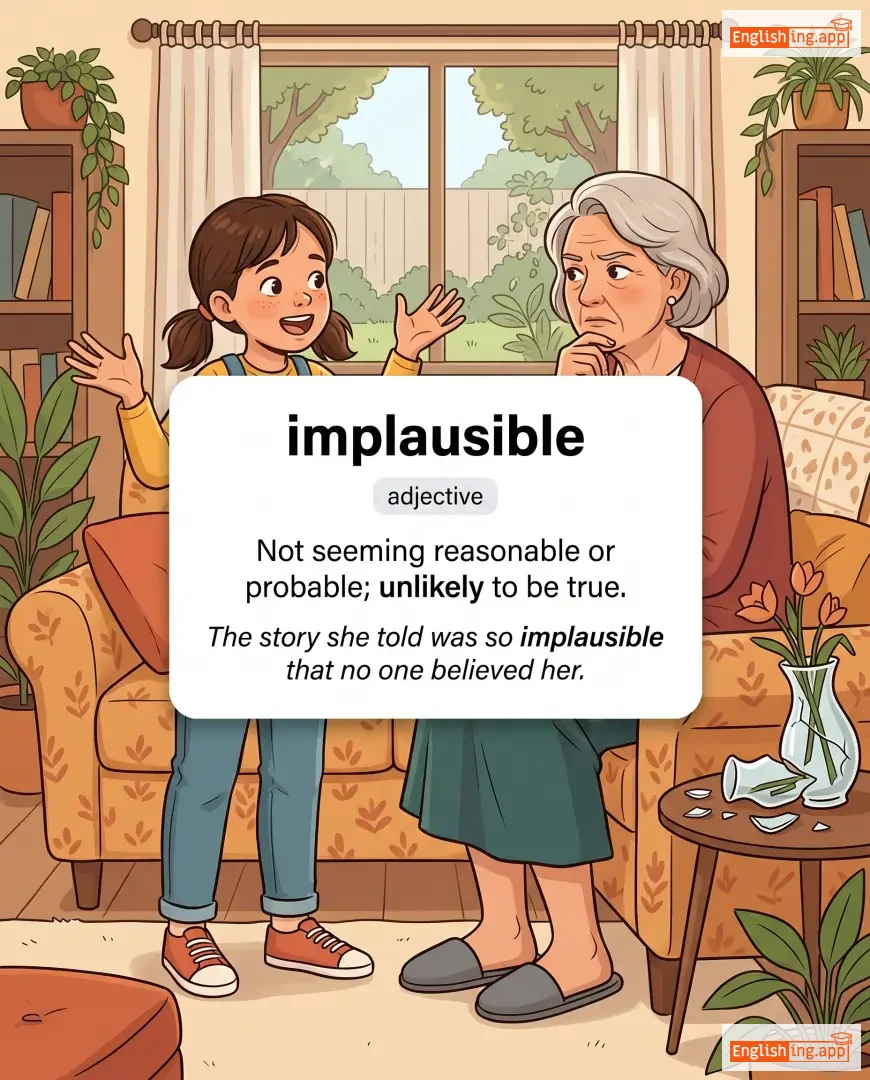
implausible definition card — visual illustration of the meaning
adjective C1
/ɪmˈplɔːzəbl/
信じがたい (shinjigatai)

Not seeming reasonable or probable; unlikely to be true.

"The story she told was so implausible that no one believed her."

"彼女が話した話はあまりにも信じられないほどで、誰も彼女を信じなかった。" (Kanojo ga hanashita hanashi wa amari ni mo shinjirarenai hodo de, dare mo kanojo o shinjinakatta.)
verb C1
/ˈɪmplɪˌkeɪt/
関与する (kan'yo suru)

To show someone’s involvement in a crime or wrongdoing.

"The evidence implicated several officials in the scandal."

"証拠はスキャンダルに関与した何人かの職員を示した。" (Shōko wa sukyandaru ni kan'yo shita nannin ka no shokuin o shimeshita.)
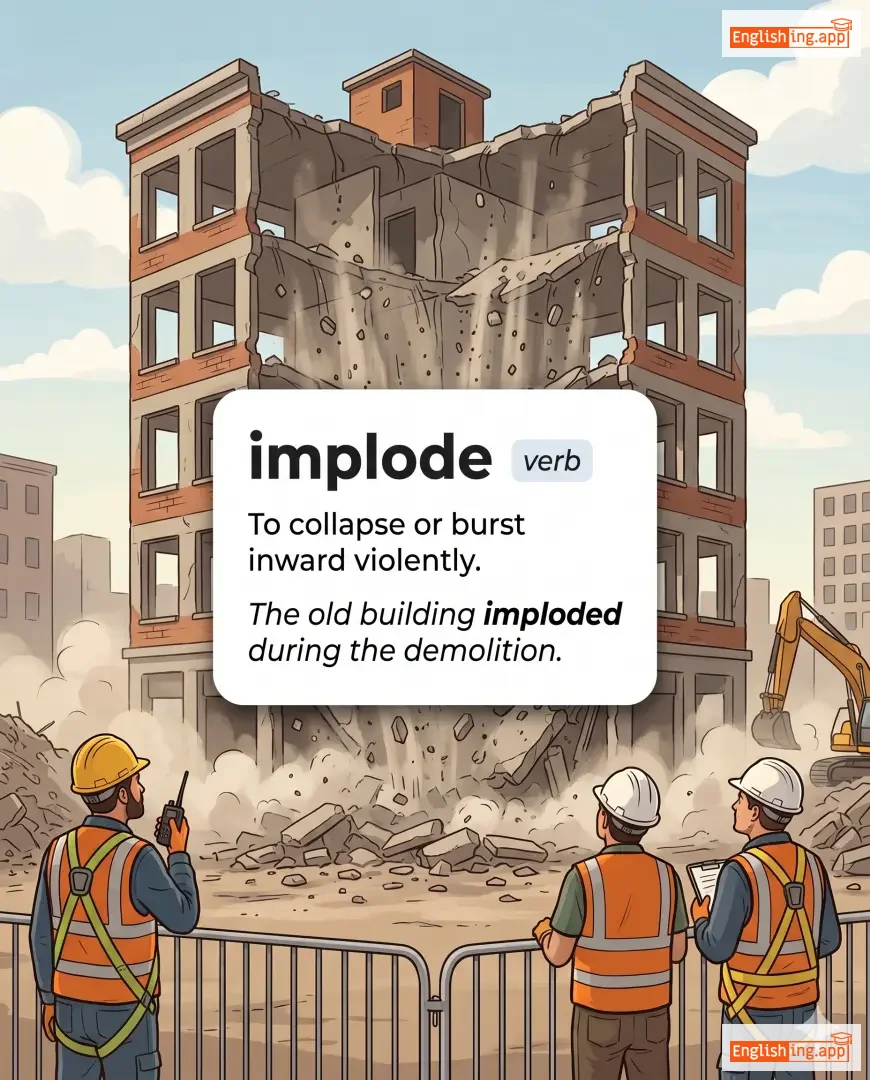
implode definition card — visual illustration of the meaning
verb C1
/ɪmˈploʊd/
内爆 (naibaku)

To collapse or burst inward violently.

"The old building imploded during the demolition."

"古い建物は解体中に内向きに崩壊しました。" (Furui tatemono wa kaitai chuu ni uchimuki ni houkai shimashita.)
verb C1
/ɪmˈplɔːr/

To beg someone earnestly or desperately to do something.

"She implored him to stay with her."

noun C1
/ˌɪmpɔːrˈteɪʃən/
輸入 (yunyuu)

The act of bringing goods or services into a country from abroad

"The importation of luxury goods is strictly regulated."

"高級品の輸入は厳しく規制されています。" (Koukyuuhin no yunyuu wa kibishiku kisei sareteimasu.)
adjective C1
/ɪmˈpoʊzɪŋ/
威圧的な (iatsuteki na)

having an appearance that is grand, impressive, or commanding

"The castle is an imposing structure overlooking the valley."

"その城は谷を見下ろす威圧的な構造です。" (Sono shiro wa tani o miorosu iatsuteki na kōzō desu.)
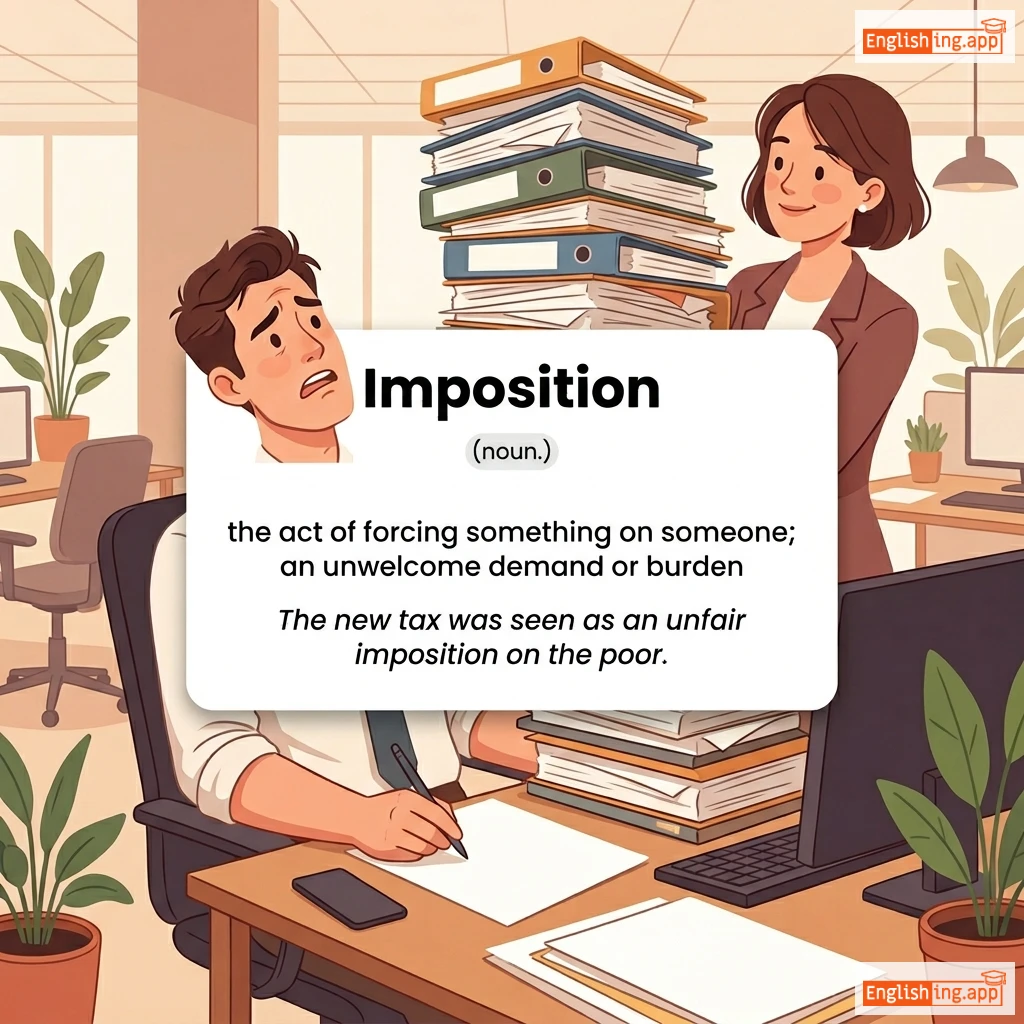
Imposition definition card — visual illustration of the meaning
noun C1
/ˌɪmpəˈzɪʃən/
押し付け (oshitsuke)

the act of forcing something on someone; an unwelcome demand or burden

"The new tax was seen as an unfair imposition on the poor."

"新しい税金は貧しい人々への不公平な押し付けと見なされました。" (Atarashī zeikin wa mazushī hitobito e no fukōhei na oshitsuke to minasa remashita.)
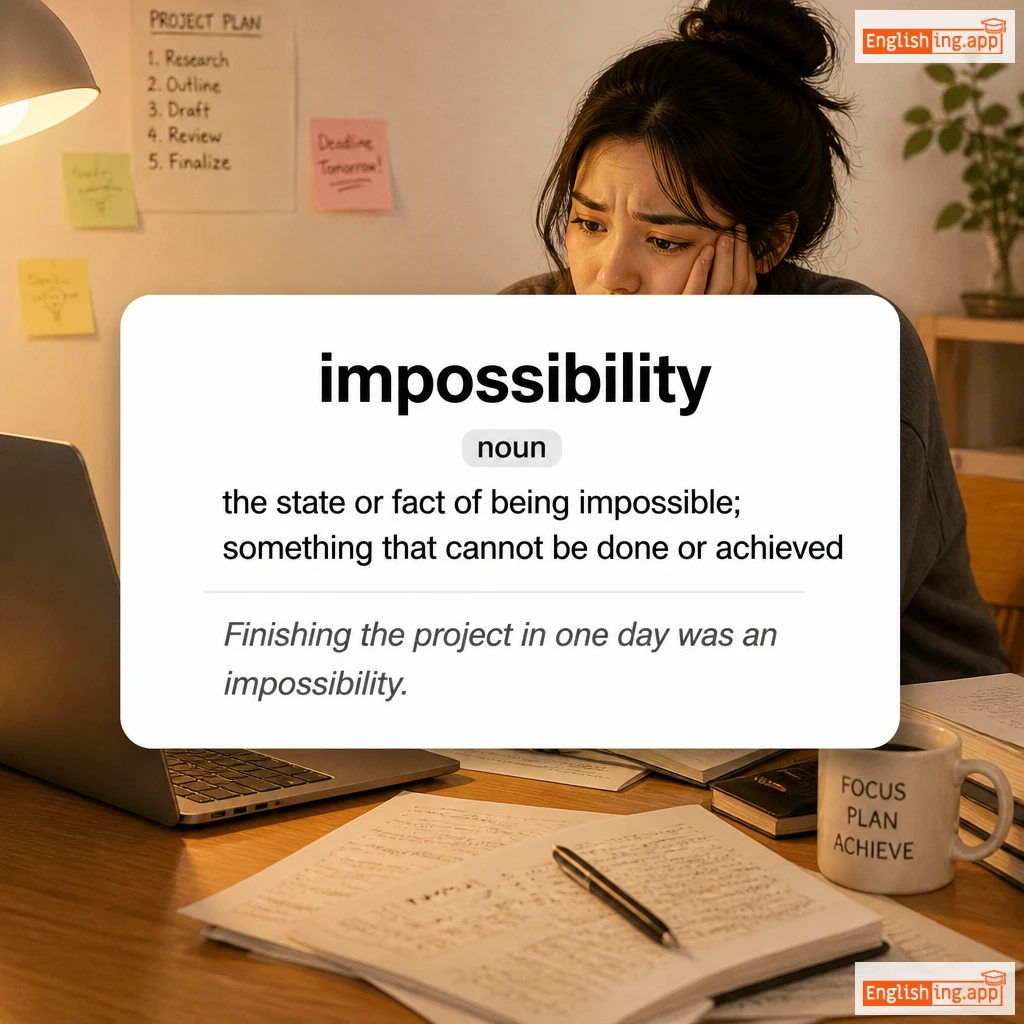
impossibility definition card — visual illustration of the meaning
noun C1
/ɪmˌpɒsəˈbɪlɪti/
不可能性 (fukanousei)

the state or fact of being impossible; something that cannot be done or achieved

"Finishing the project in one day was an impossibility."

"一日でそのプロジェクトを終えるのは不可能だった。" (ichinichi de sono purojekuto wo oeru no wa fukanou datta)
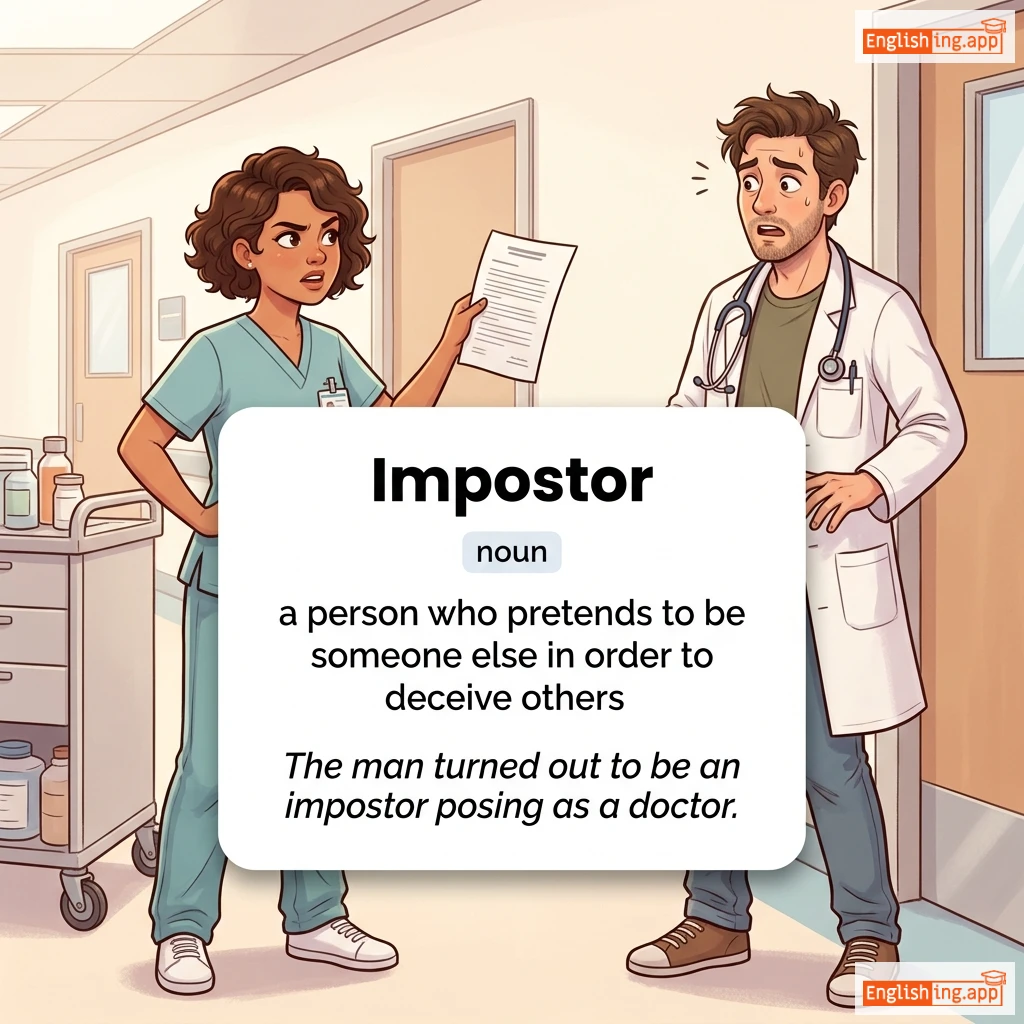
Impostor definition card — visual illustration of the meaning
noun C1
/ɪmˈpɑːstər/
詐欺師, 偽者 (sagishi, nise-mono)

a person who pretends to be someone else in order to deceive others

"The man turned out to be an impostor posing as a doctor."

"その男は医者を装った詐欺師だった。" (Sono otoko wa isha o yosotta sagishi datta.)
adjective C1
/ˈɪmpətənt/
無力 (muryoku)

Lacking power, ability, or strength to take effective action.

"The citizens felt impotent against the corrupt system."

"市民は腐敗したシステムに対して無力だと感じた。" (Shimin wa fuhai shita shisutemu ni taishite muryoku da to kanjita.)
verb C1
/ɪmˈpɒvərɪʃ/
貧困にする (hinkon ni suru)

To make someone poor or reduce the quality or richness of something.

"The long war impoverished the entire nation."

"長い戦争が国全体を貧困にした。" (Nagai sensō ga kuni zentai o hinkon ni shita.)
adjective C1
/ˌɪmprɪˈsaɪs/
不正確 (fuseikaku)

Not exact or accurate; vague.

"His explanation was too imprecise to be helpful."

"彼の説明はあまりにも不正確で役に立たなかった。" (Kare no setsumei wa amari ni mo fuseikaku de yaku ni tatanakatta.)
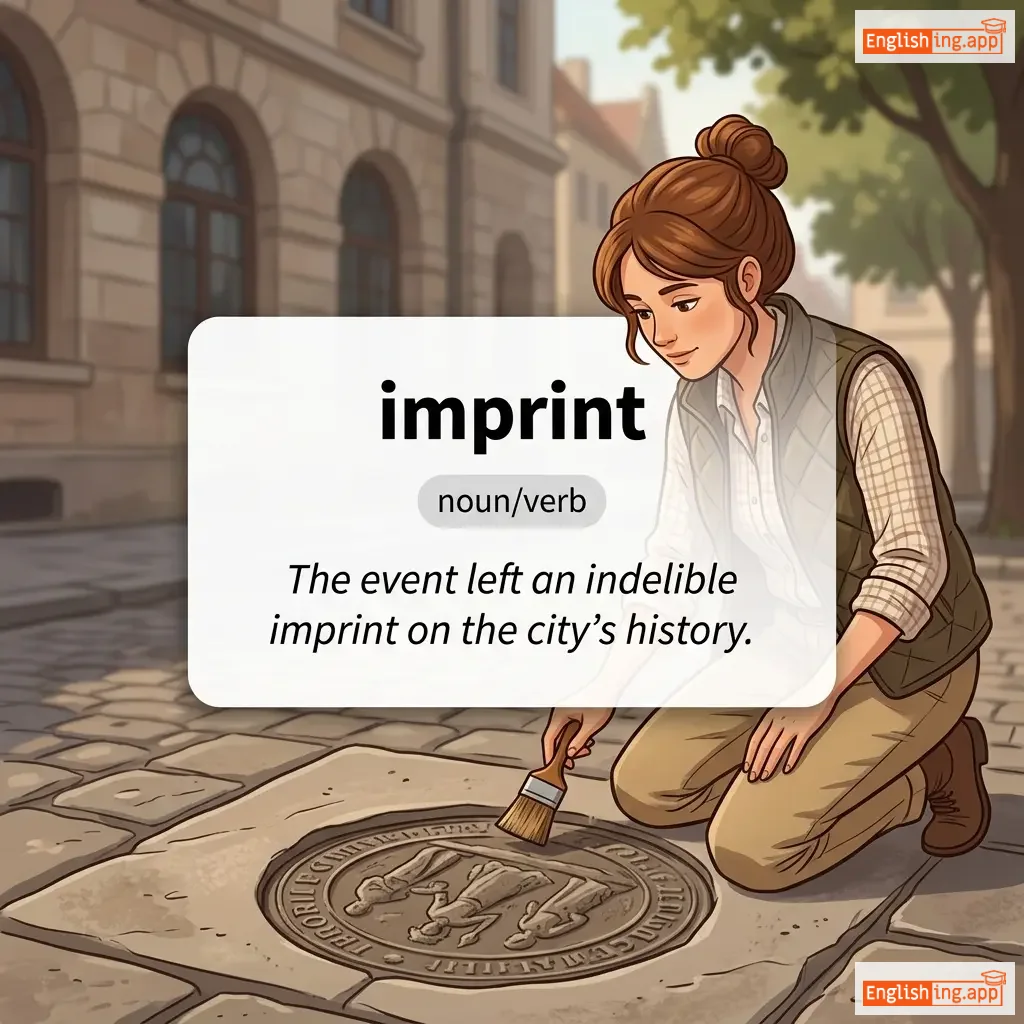
imprint definition card — visual illustration of the meaning
noun/verb C1
/ˈɪmprɪnt/
刻印 (kokuin)

A mark or impression made by pressure; to establish or fix firmly in someone's mind.

"The event left an indelible imprint on the city's history."

"その出来事は都市の歴史に消えない刻印を残した。" (Sono dekigoto wa toshi no rekishi ni kienai kokuin o nokoshita.)
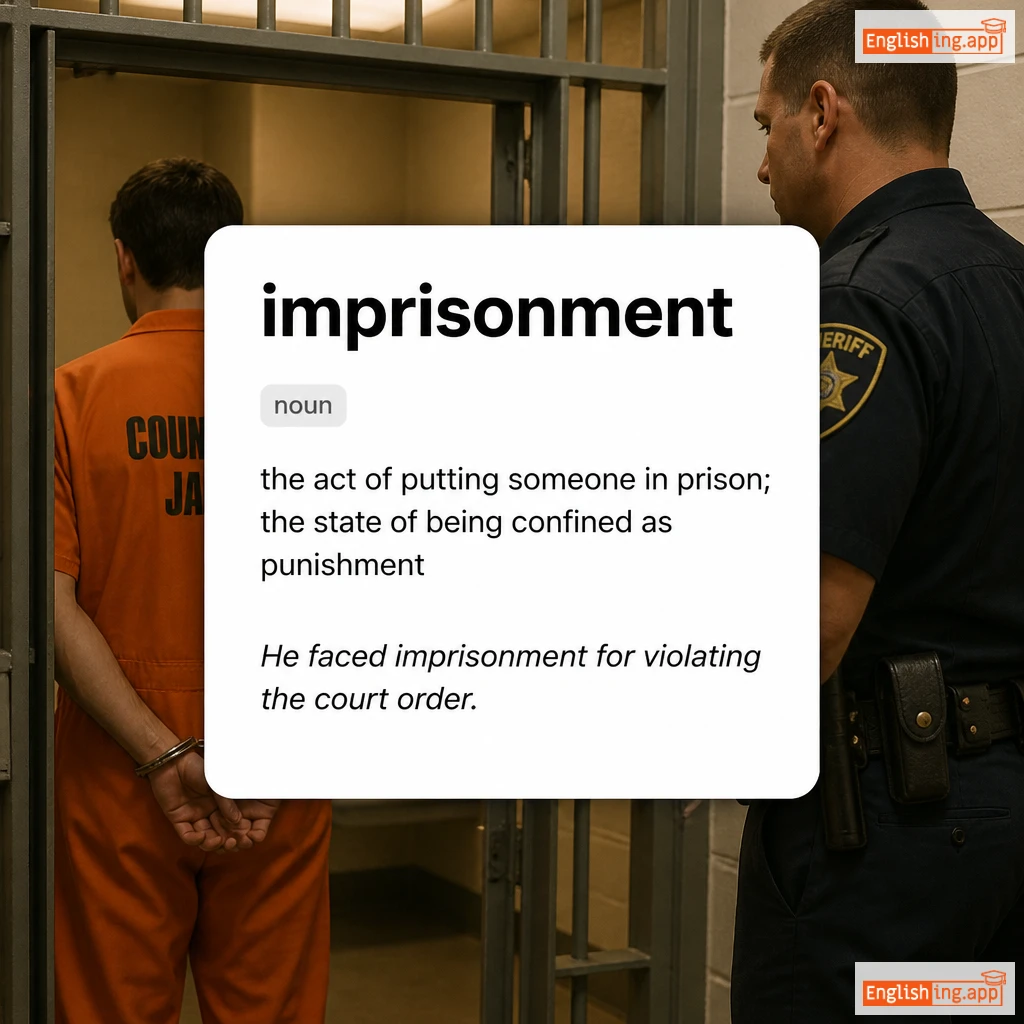
imprisonment definition card — visual illustration of the meaning
noun C1
/ɪmˈprɪzənmənt/
投獄 (tougoku)

the act of putting someone in prison; the state of being confined as punishment

"He faced imprisonment for violating the court order."

"彼は裁判所の命令に違反して投獄に直面した。" (Kare wa saibansho no meirei ni ihan shite tougoku ni chokumen shita)
adjective C1
/ɪmˈprɒbəbl/
あり得ない (arienai)

Not likely to be true or to happen.

"It seems improbable that he will arrive on time."

"彼が時間通りに到着するのはあり得ないようだ。" (Kare ga jikan dōri ni tōchaku suru no wa arienai yō da.)
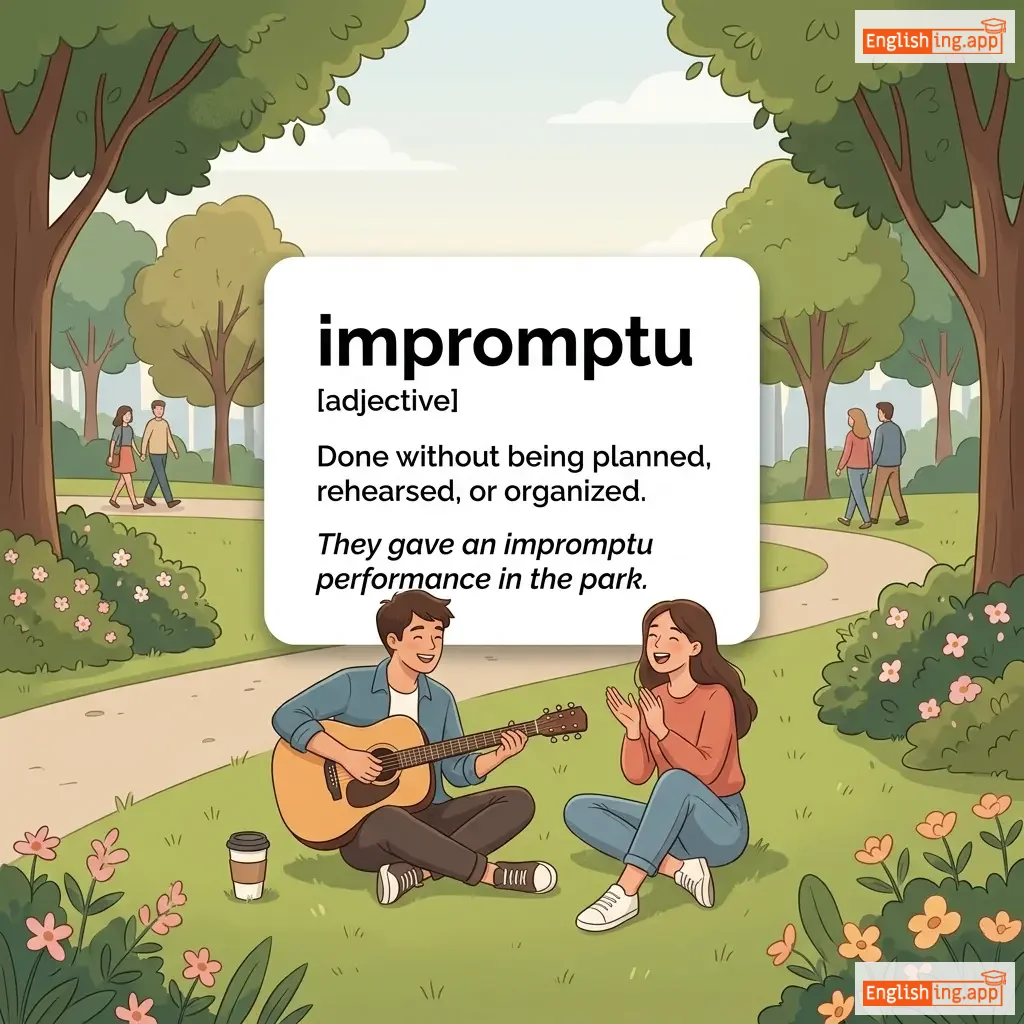
impromptu definition card — visual illustration of the meaning
adjective C1
/ɪmˈprɒmptjuː/
即興 (sokkyou)

Done without being planned, rehearsed, or organized.

"They gave an impromptu performance in the park."

"彼らは公園で即興のパフォーマンスをしました。" (Karera wa kouen de sokkyou no pafōmansu o shimashita.)
verb C1
/ˈɪmprəvaɪz/

To create or perform something spontaneously without preparation.

"The actor had to improvise his lines when he forgot the script."

adjective C1
/ˈɪmpjəd(ə)nt/
無礼な、厚かましい (bureina, atsukamashii)

not showing due respect for another person; rude

"The impudent child talked back to the teacher."

"その無礼な子供は先生に逆らった。" (Sono bureina kodomo wa sensei ni sakaratta.)
adjective C1
/ɪmˈpʌlsɪv/
衝動的な, 直感的な (shoudouteki na, chokkan teki na)

acting suddenly without careful thought

"She made an impulsive decision to buy the car."

"彼女は衝動的な決定で車を買うことにしました。" (Kanojo wa shoudouteki na kettei de kuruma o kau koto ni shimashita.)
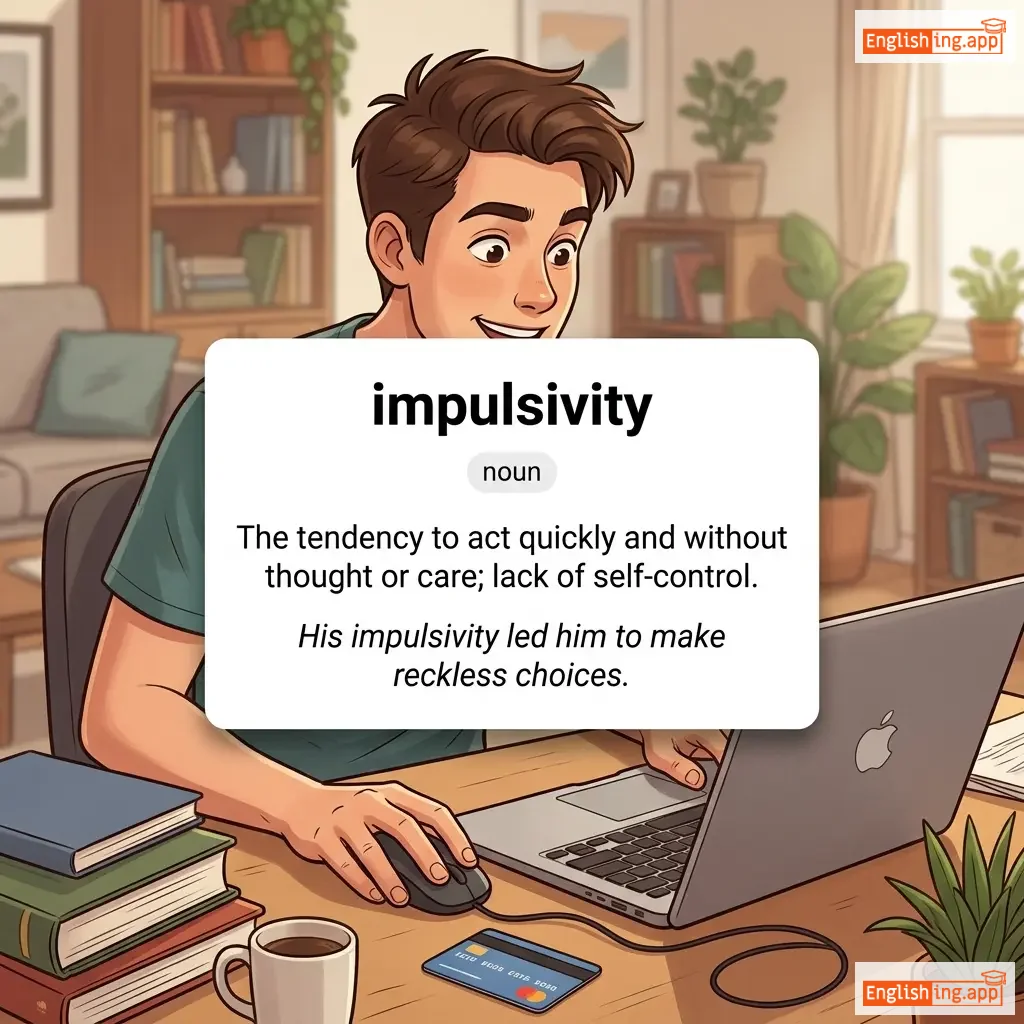
impulsivity definition card — visual illustration of the meaning
noun C1
ˌɪm.pʌlˈsɪv.ɪ.ti
衝動性 (shōdōsei)

The tendency to act quickly and without thought or care; lack of self-control.

"His impulsivity led him to make reckless choices."

"彼の衝動性は、無謀な選択をさせた。" (Kare no shōdōsei wa, mubō na sentaku o saseta.)
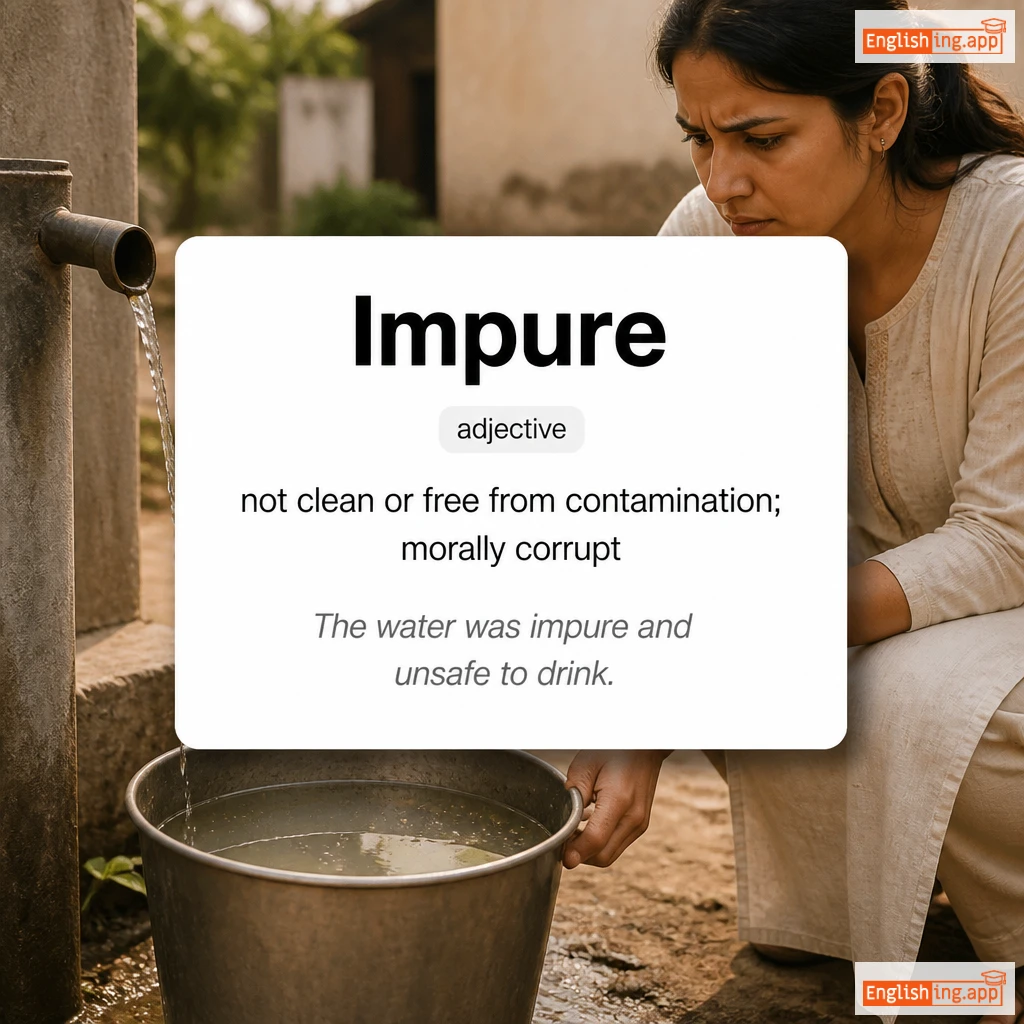
Impure definition card — visual illustration of the meaning
adjective C1
/ɪmˈpjʊər/
不純 (fujun)

not clean or free from contamination; morally corrupt

"The water was impure and unsafe to drink."

"水は不純で飲むには安全ではなかった。" (Mizu wa fujun de nomu ni wa anzen de wa nakatta.)
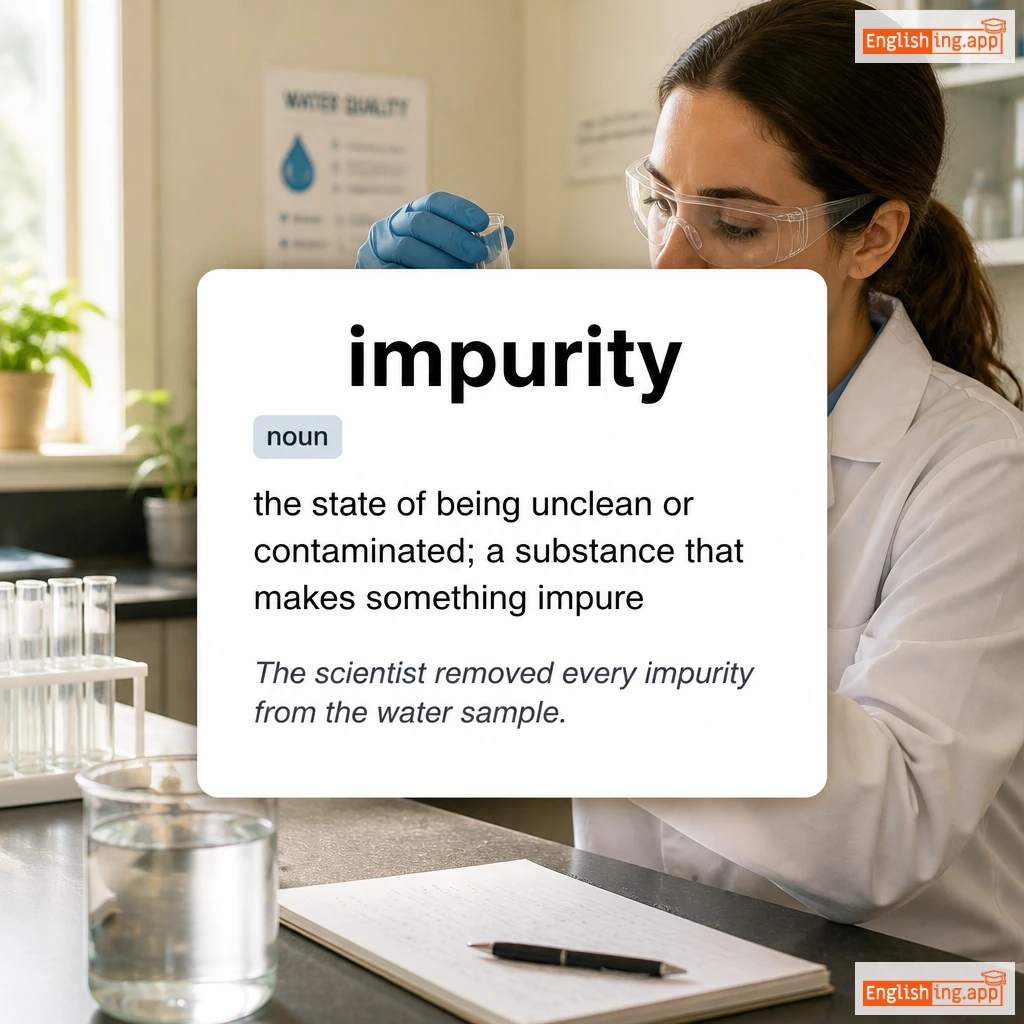
impurity definition card — visual illustration of the meaning
noun C1
/ɪmˈpjʊərəti/
不純物 (fujunbutsu)

the state of being unclean or contaminated; a substance that makes something impure

"The scientist removed every impurity from the water sample."

"科学者は水のサンプルからすべての不純物を取り除いた。" (kagakusha wa mizu no sanpuru kara subete no fujunbutsu o torinoita)
adjective C1
/ˌɪnækˈsɛsəbl/
アクセスできない (akusesu dekinai)

unable to be reached, entered, or understood

"The remote village is almost inaccessible during the rainy season."

"その遠隔地の村は雨季にはほとんどアクセスできません。" (Sono enkaku-chi no mura wa uki ni wa hotondo akusesu dekimasen.)