Vocabularies

English Vocabulary Dictionary | Word Meanings, Definitions & Examples

noun (plural) C1
/ˈhɪntərlændz/
отдалённые районы (otdalennye raiony)

Plural of hinterland; remote or less developed regions.

"Explorers traveled deep into the hinterlands of the country."

"Исследователи путешествовали глубоко в отдалённые районы страны." (Issledovateli puteshestvovali gluboko v otdalennye raiony strany.)
verb C1
/hɔːrd/
накапливать (nakaplivat)

to accumulate and hide away a large supply of something, often secretly

"During the crisis, many people began to hoard food and water."

"Во время кризиса многие люди начали накапливать еду и воду." (Vo vremya krizisa mnogie lyudi nachali nakaplivat' yedu i vodu.)
adjective C1
/hɔːrs/
хриплый (khriply)

having a rough, harsh, or weak voice, often due to illness or shouting

"After shouting all day at the rally, his voice was hoarse."

"После того как он кричал весь день на митинге, его голос стал хриплым." (Posle togo kak on krichal ves' den' na mitinge, ego golos stal khriplym.)
noun C1
/hoʊks/
обман, ложь (obman, lozh)

a trick or false story meant to deceive people

"The news about aliens landing turned out to be a hoax."

"Новости о приземлении инопланетян оказались обманом." (Novosti o prizemlenii inoplanetyan okazalis obmanom.)
noun C1
/ˈhɒl.ə.kɔːst/
холокост (holokost)

A large-scale destruction, especially by fire; historically, the genocide of Jews during World War II.

"Millions of people perished during the Holocaust."

"Миллионы людей погибли во время Холокоста." (Milliony lyudey pogibli vo vremya Holokosta.)
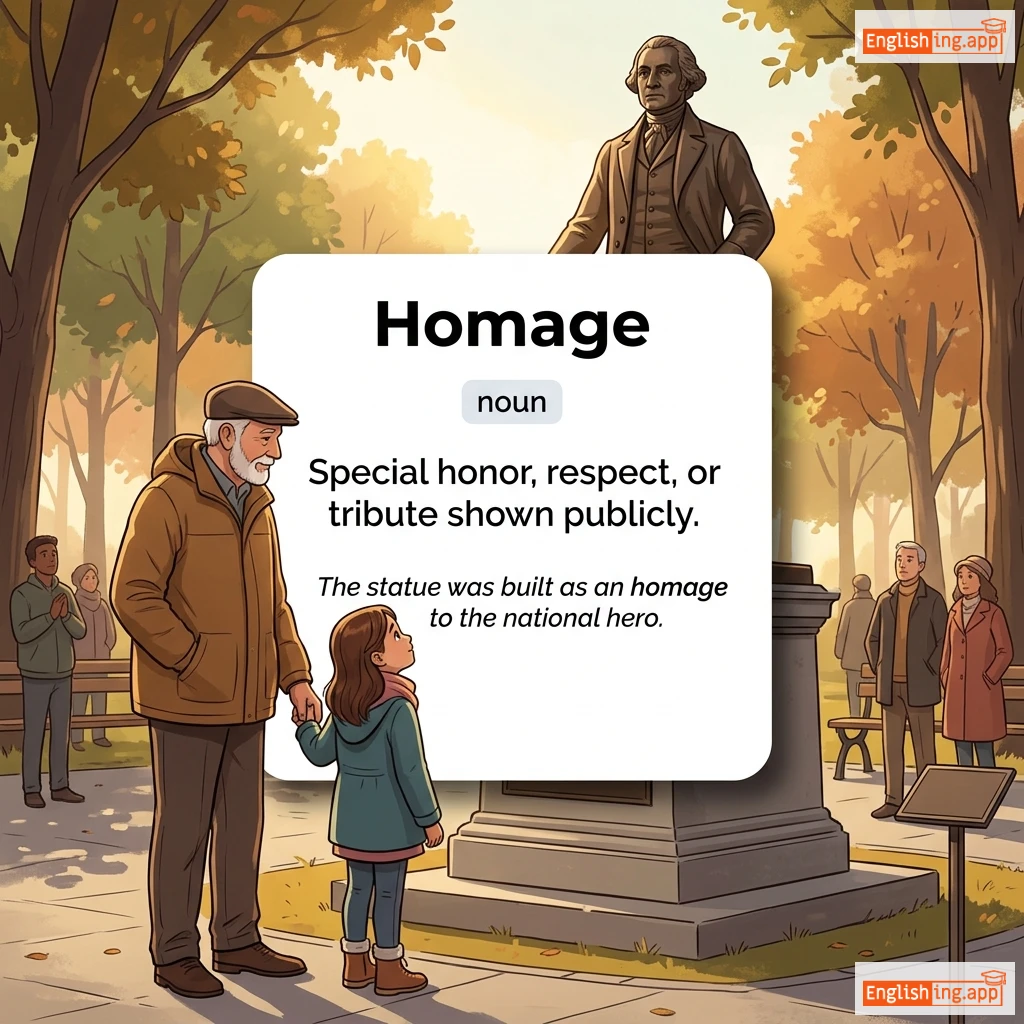
Homage definition card — visual illustration of the meaning
noun C1
/ˈhɒm.ɪdʒ/ or /ˈɑː.mɑːʒ/
дань (dan)

Special honor, respect, or tribute shown publicly.

"The statue was built as an homage to the national hero."

"Статуя была построена как дань уважения национальному герою." (Statuya byla postroyena kak dan' uvazheniya natsional'nomu geroju.)
noun C1
/ˌhoʊmiˈɑːpəθi/
гомеопатия (homeopathy)

a system of alternative medicine based on treating diseases with highly diluted substances

"He believes in homeopathy for treating common colds."

"Он верит в гомеопатию для лечения обычных простуд." (On verit v gomeopatiyu dlya lecheniya obychnyh prostud.)
Homicide definition card — visual illustration of the meaning
noun C1
/ˈhɑːmɪsaɪd/
убийство (ubiystvo)

the killing of one human being by another

"The police are investigating a case of homicide."

"Полиция расследует дело об убийстве." (Politsiya rassleduyet delo ob ubiystve.)
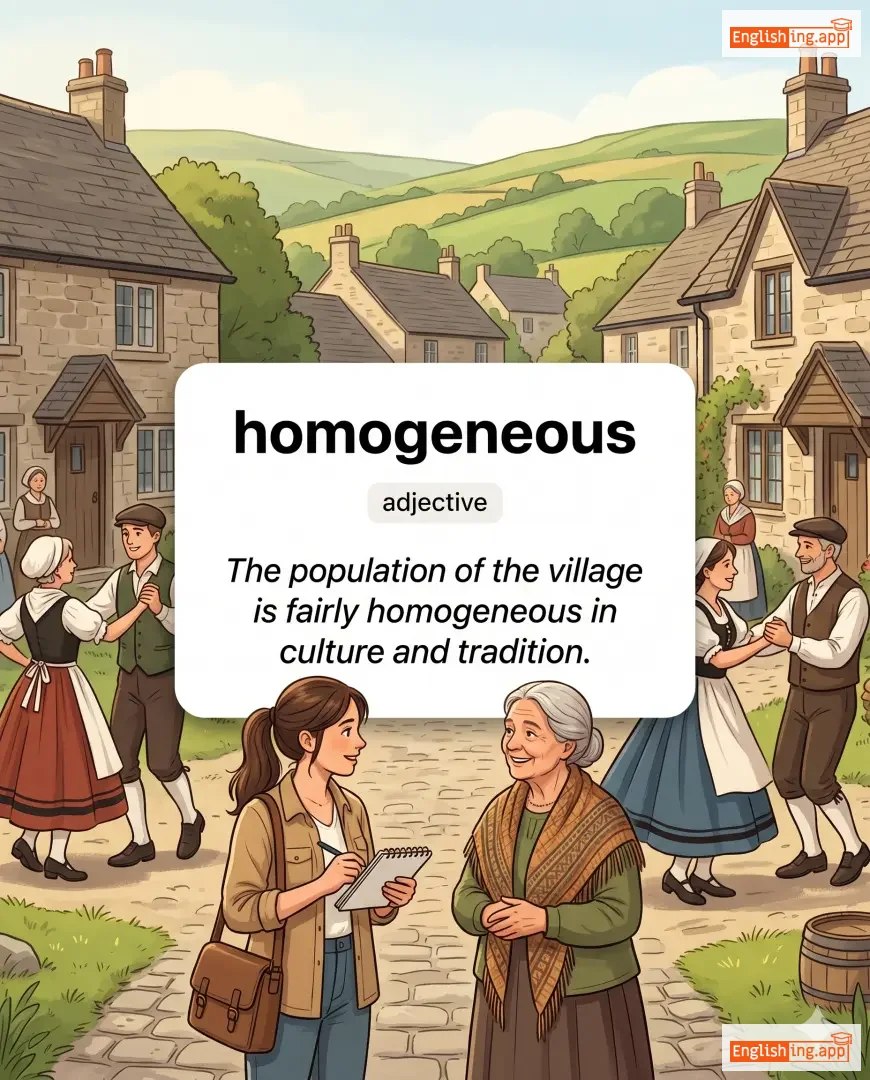
homogeneous definition card — visual illustration of the meaning
adjective C1
/ˌhoʊ.məˈdʒiː.ni.əs/
однородный (odnorodnyj)

Consisting of parts or elements that are all the same kind; uniform in composition.

"The population of the village is fairly homogeneous in culture and tradition."

"Население деревни довольно однообразно по культуре и традициям." (Naseleije derevni dovol'no odnorodno po kul'ture i tradicijam.)
adjective C1
/həˈmɑː.dʒə.nəs/
однородный (odnorodny)

Similar or uniform in nature; often used interchangeably with 'homogeneous'.

"The class was made up of a homogenous group of students."

"Класс состоял из однородной группы студентов." (Klass sostoyal iz odnorodnoy gruppy studentov.)
noun C1
/ˈhɑː.mə.nɪm/
омоним (omonim)

A word that is spelled and pronounced like another word but has a different meaning.

"The word 'bat' is a homonym because it can mean an animal or a sports tool."

"Слово 'летучая мышь' — это омоним, потому что оно может означать как животное, так и спортивный инструмент." (Slovo 'letuchaya mysh' - eto omonim, potomu chto ono mozhet oznachat' kak zhivotnoye, tak i sportivnyy instrument.)
noun C1
/ˈhɒməˌfoʊn/
омофон (omofon)

A word that is pronounced the same as another word but differs in meaning, and often spelling.

"The words 'pair' and 'pear' are homophones."

"Слова 'pair' и 'pear' — это омофоны." (Slova 'pair' i 'pear' - eto omofony.)
verb C1
/hoʊn/
точить, улучшать навыки (tochit', uluchshat' navyki)

To sharpen a blade or to improve a skill through practice.

"She honed her presentation skills before the big meeting."

"Она отточила свои навыки презентации перед большим собранием." (Ona ottochila svoi navyki prezentatsii pered bol'shim sobraniem.)
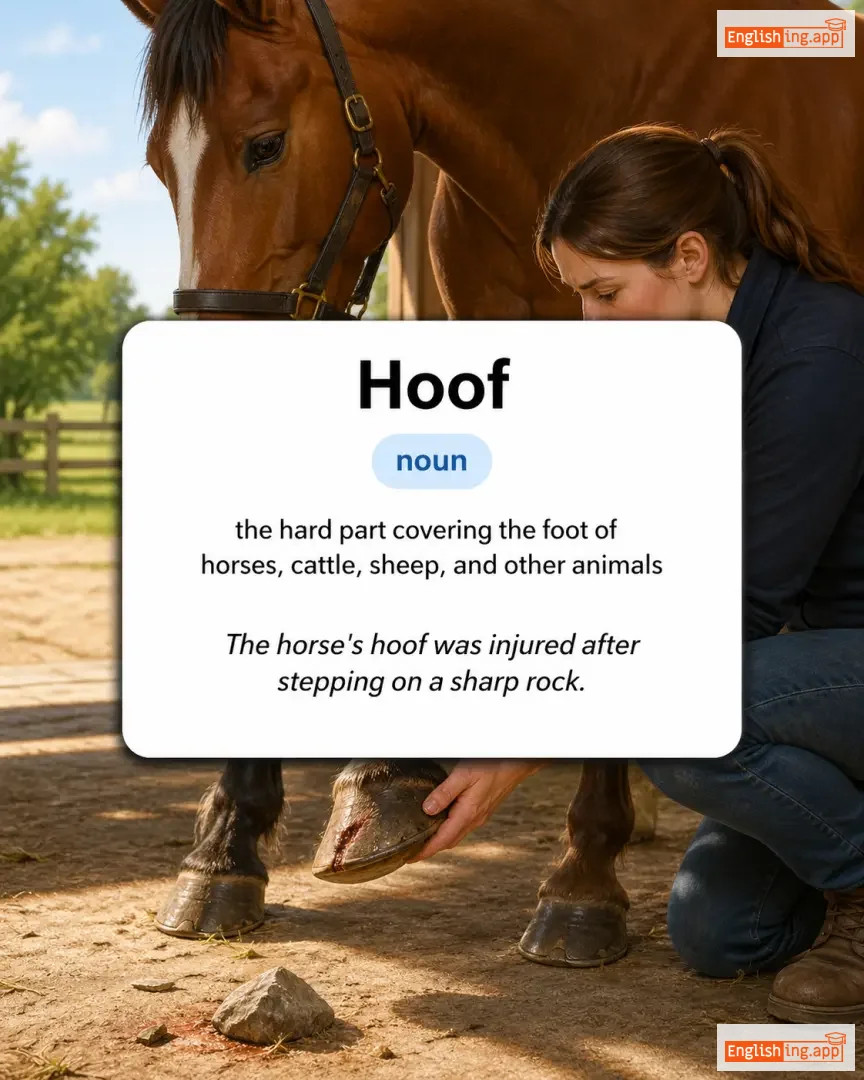
Hoof definition card — visual illustration of the meaning
noun C1
/huːf/
копыто (kopyto)

the hard part covering the foot of horses, cattle, sheep, and other animals

"The horse's hoof was injured after stepping on a sharp rock."

"Копыто лошади было повреждено после того, как оно наступило на острый камень." (Kopyto loshadi bylo povrezhdeno posle togo, kak ono nastupilo na ostryy kamen'.)
noun C1
/hɔːrd/
орда (orda)

A large group or crowd, especially one that is disorderly or difficult to control.

"A horde of fans gathered outside the stadium."

"Орда фанатов собралась у стадиона." (Orda fanatov sobrala's u stadiona.)
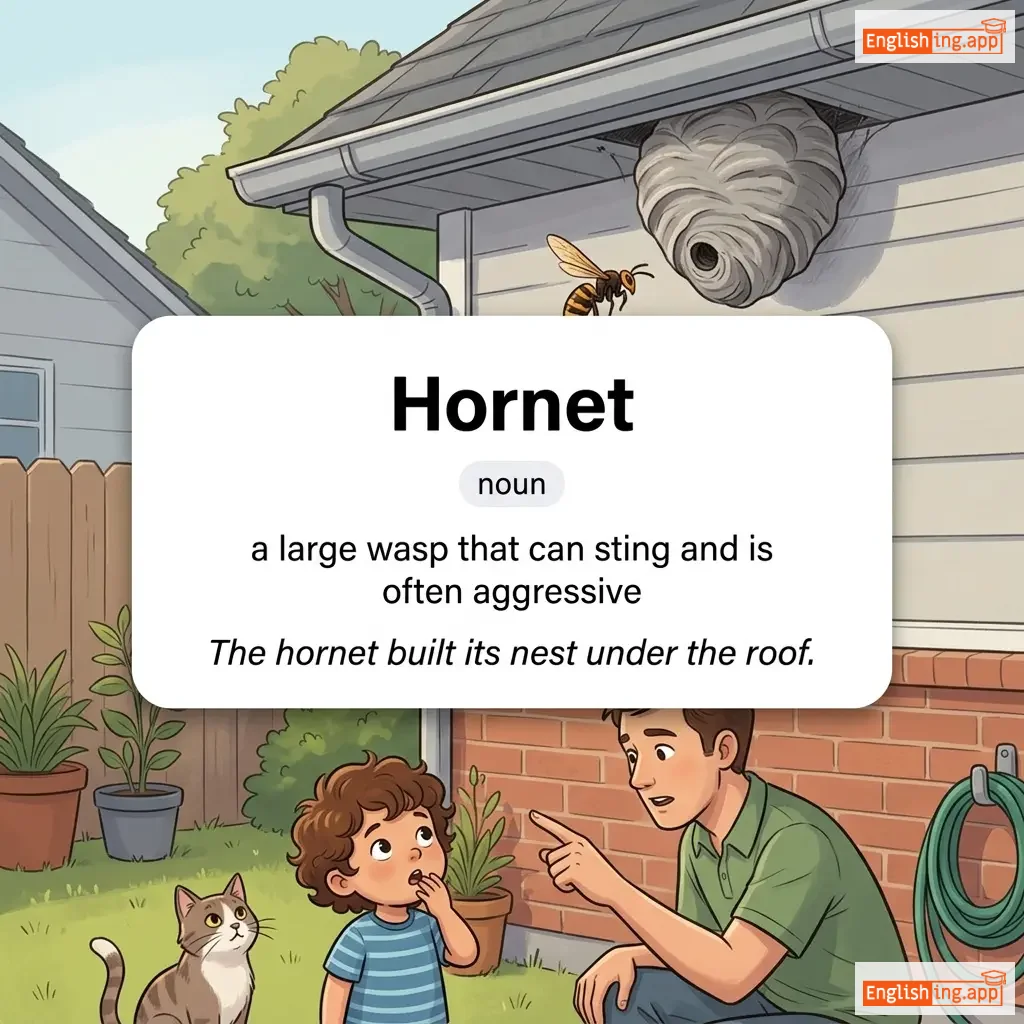
Hornet definition card — visual illustration of the meaning
noun C1
/ˈhɔːr.nət/
шершень (sheršen')

a large wasp that can sting and is often aggressive

"The hornet built its nest under the roof."

"Шершень построил свое гнездо под крышей." (Sheršen' postroil svoe gnezdo pod kryshey.)
noun C1
/ˈhɒrəˌskoʊp/
гороскоп (goroskop)

A forecast of a person's future based on the positions of the stars and planets at their birth.

"She read her horoscope every morning to see what the stars predicted."

"Она читала свой гороскоп каждое утро, чтобы увидеть, что предсказали звезды." (Ona chitala svoy goroskop kazhdoe utro, chtoby uvidet', chto predskazali zvezdy.)
horrify definition card — visual illustration of the meaning
verb C1
/ˈhɔːrɪfaɪ/
ужасать (uzhasat)

to fill with horror; to shock or disgust greatly

"The violent scene horrified the audience."

"Жестокая сцена ужаснула публику." (zhestokaya stsena uzhasnula publiku)
adjective C1
/ˌhɔːrtɪˈkʌltʃərəl/
связанный с садоводством (svyazannyy s sadovodstvom)

Relating to the art or practice of garden cultivation and management.

"She studied horticultural science at the university."

"Она изучала садоводческие науки в университете." (Ona izuchala sadovodcheskie nauki v universitete.)
noun C1
/ˈhɔːrtɪˌkʌltʃər/

The art or practice of garden cultivation and management.

"Horticulture plays a vital role in producing fruits, vegetables, and ornamental plants."

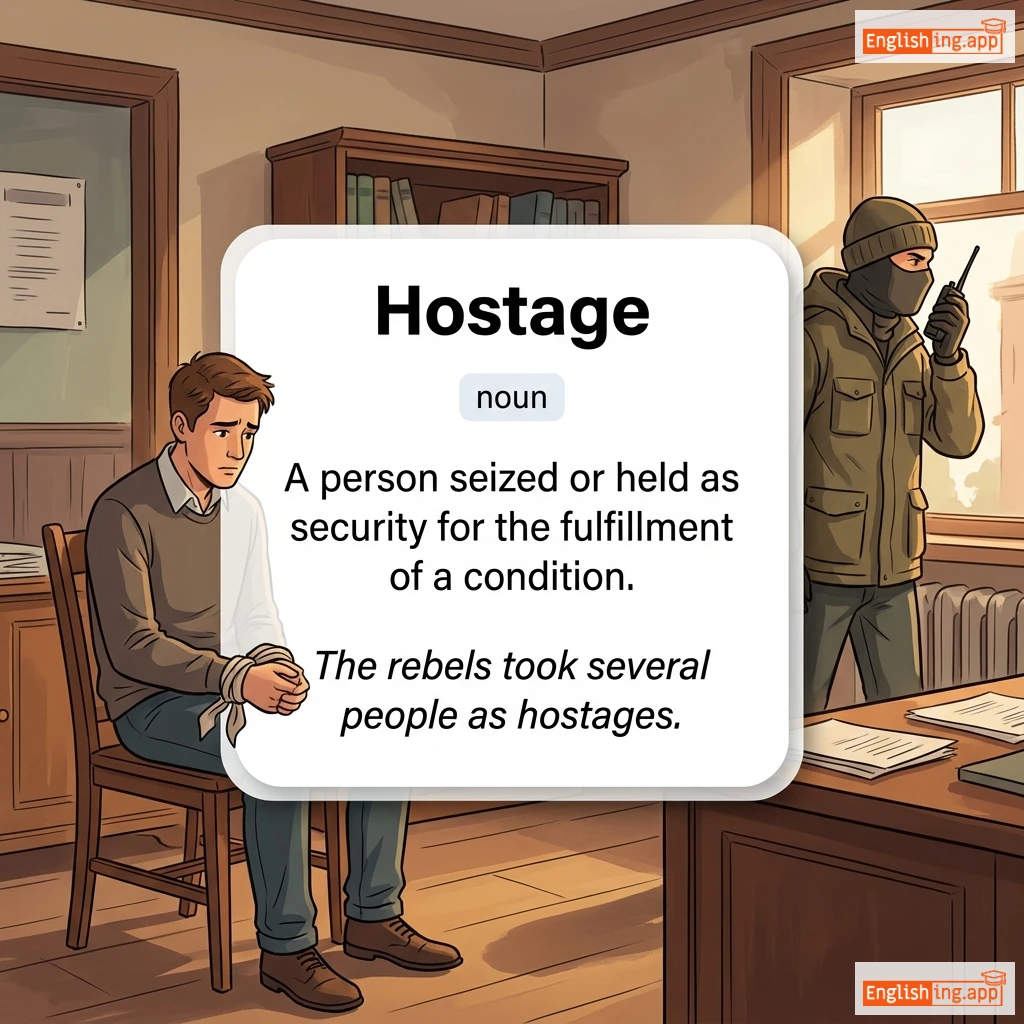
Hostage definition card — visual illustration of the meaning
noun C1
/ˈhɑːstɪdʒ/
заложник (zalozhnik)

A person seized or held as security for the fulfillment of a condition.

"The rebels took several people as hostages."

"Повстанцы взяли нескольких человек в заложники." (Povstantsy vzyali neskol'ko chelovek v zalozhniki.)
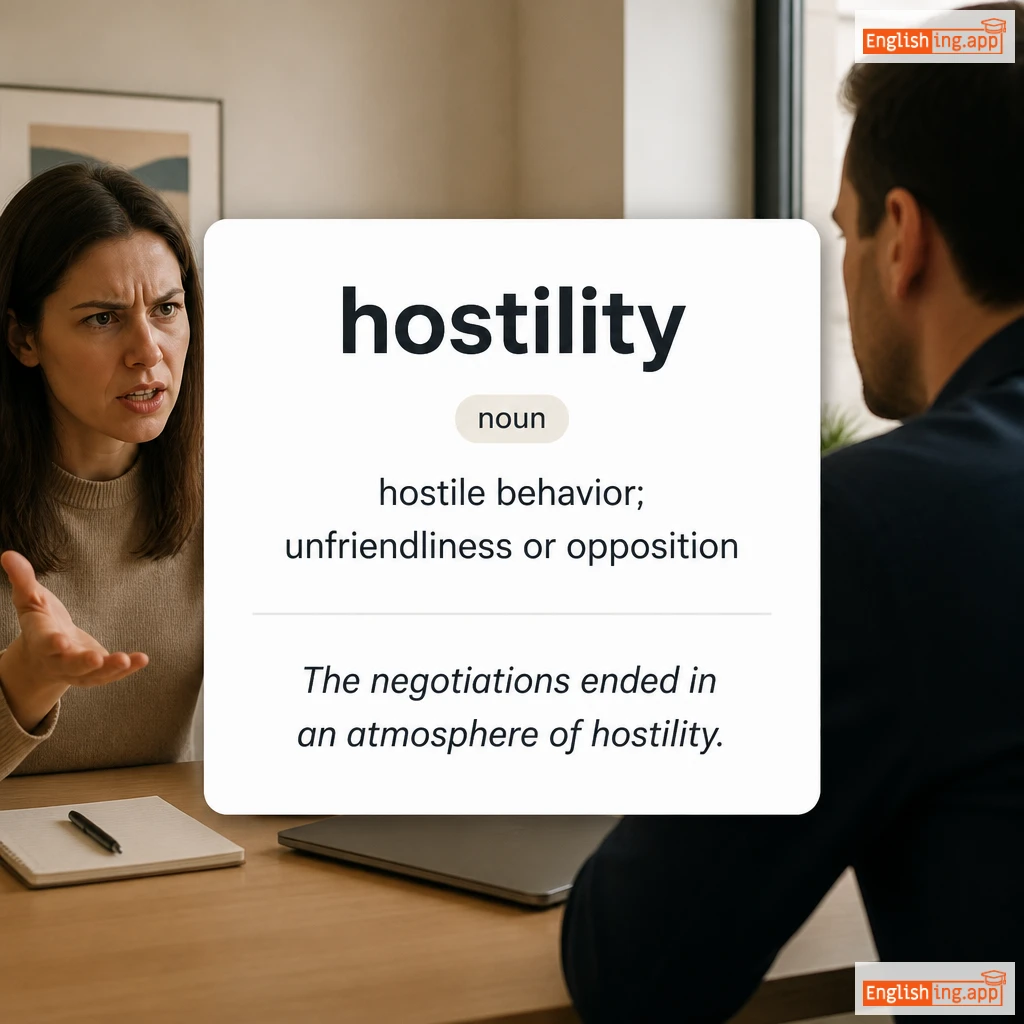
hostility definition card — visual illustration of the meaning
noun C1
/hɒˈstɪləti/
враждебность (vrazhdebnost)

hostile behavior; unfriendliness or opposition

"The negotiations ended in an atmosphere of hostility."

"Переговоры завершились в атмосфере враждебности." (Peregovory zavershilis v atmosfere vrazhdebnosti.)
adverb C1
/ˈhɒtli/
гневно (gnevno)

in an intense, angry, or passionate way

"She hotly denied the accusations."

"Она с гневом отвергла обвинения." (Ona s gnevom otvergla obvineniya.)
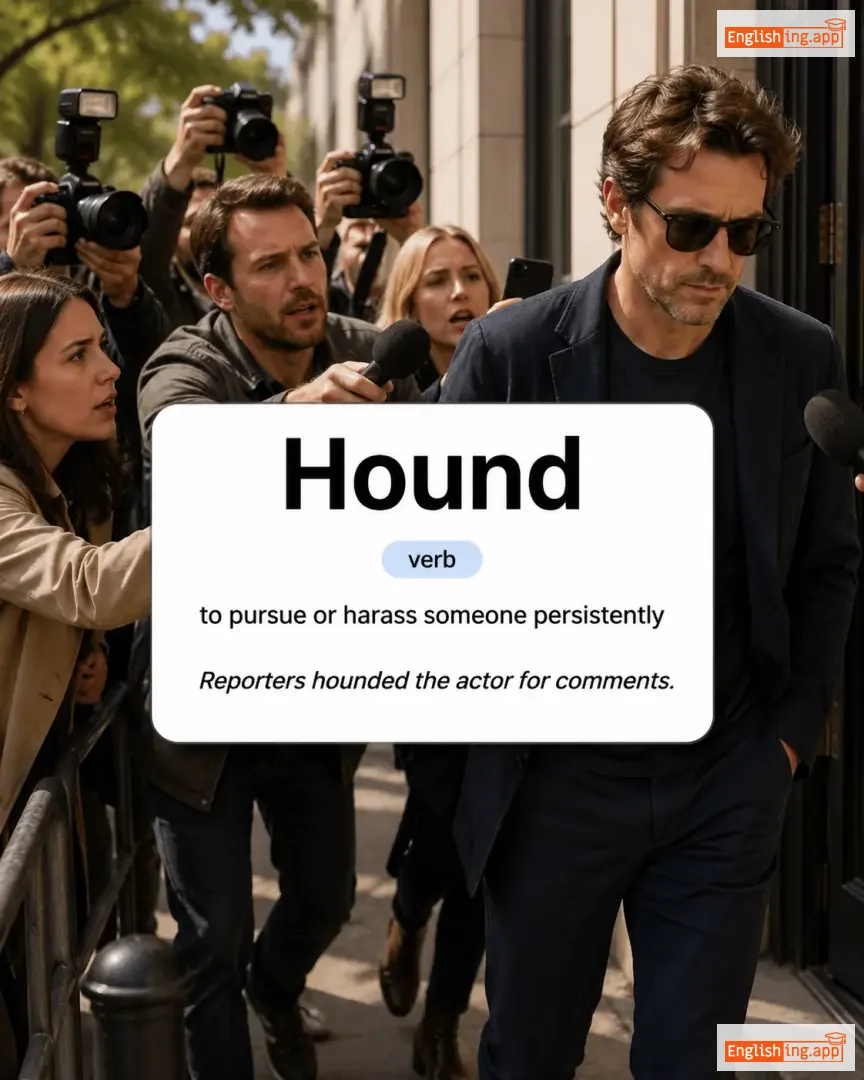
Hound definition card — visual illustration of the meaning
verb C1
/haʊnd/
преследовать (presledovat)

to pursue or harass someone persistently

"Reporters hounded the actor for comments."

"журналисты преследовали актера за комментарии." (zhurnalisty presledovali aktora za kommentarii.)
noun C1
/ˈhʌbʌb/
шум (shum)

a loud noise caused by a crowd of people talking or shouting

"There was a hubbub in the market as the sale began."

"На рынке был шум, когда началась распродажа." (Na rynke byl shum, kogda nachalas' rasprodazha.)
noun C1
/ˈhjuːbrɪs/
хабрис (khabris)

excessive pride or self-confidence

"His hubris led to his downfall."

"Его хабрис привел к его падению." (Yego khabris privyol k yego padeniyu.)
noun C1
/hjuː/
цвет (tsvet)

A color or shade.

"The artist chose a soft blue hue for the background."

"Художник выбрал мягкий синий цвет для фона." (Kudozhnik vybral myagkiy siniy tsvet dlya fona.)
noun C1
/hʌl/
корпус корабля / оболочка семени (korpus korablya / obolochka semeni)

The outer covering of a seed or fruit; also the main body of a ship.

"The sailors inspected the ship’s hull for any damage."

"Моряки осмотрели корпус корабля на наличие повреждений." (Moryaki osmotreli korpus korablya na nalichiye povrezhdeniy.)
adjective C1
/hjuːˈmeɪn/
гуманный (gumannyy)

Showing compassion or benevolence.

"The doctor provided humane treatment to the injured animals."

"Доктор предоставил раненым животным гуманное лечение." (Doktor predostavil ranimym zhivotnym gumannoe lechenie.)
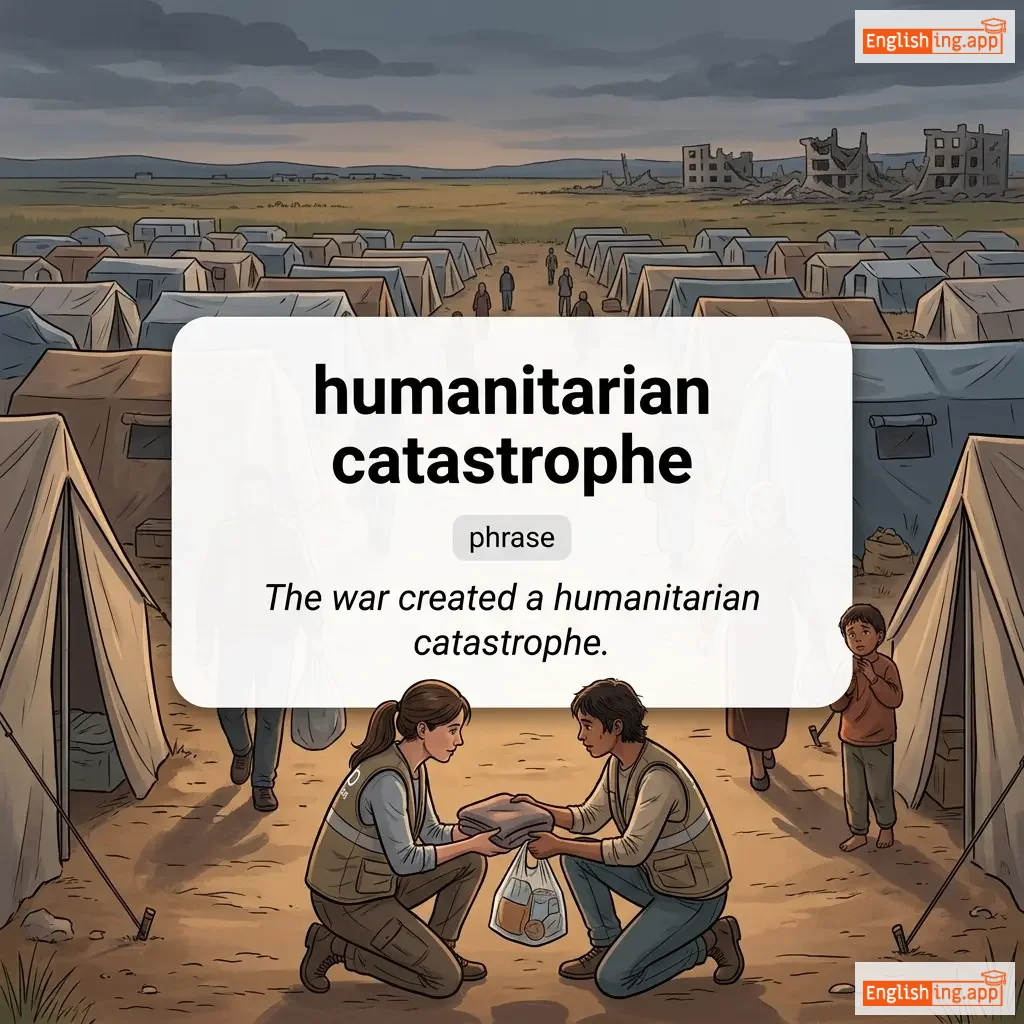
humanitarian catastrophe definition card — visual illustration of the meaning
phrase C1
ˌhjuː.məˈnɪt.ər.i.kəˈtæs.trə.fi
гуманитарная катастрофа (gumanitarnaya katastrofa)

A widespread disaster affecting human life, health, and well-being on a large scale.

"The war created a humanitarian catastrophe."

"Война создала гуманитарную катастрофу." (Voyna sozdala gumanitarnuyu katastrofu.)
verb C1
/ˈhjuːmənaɪz/
гуманизировать (gumanizirovat)

To make something more humane, kind, or relatable.

"The teacher tried to humanize the lesson with personal stories."

"Учитель пытался гуманизировать урок с помощью личных историй." (Uchitel' pytalsya gumanizirovat' urok s pomoshch'yu lichnykh istoriy.)
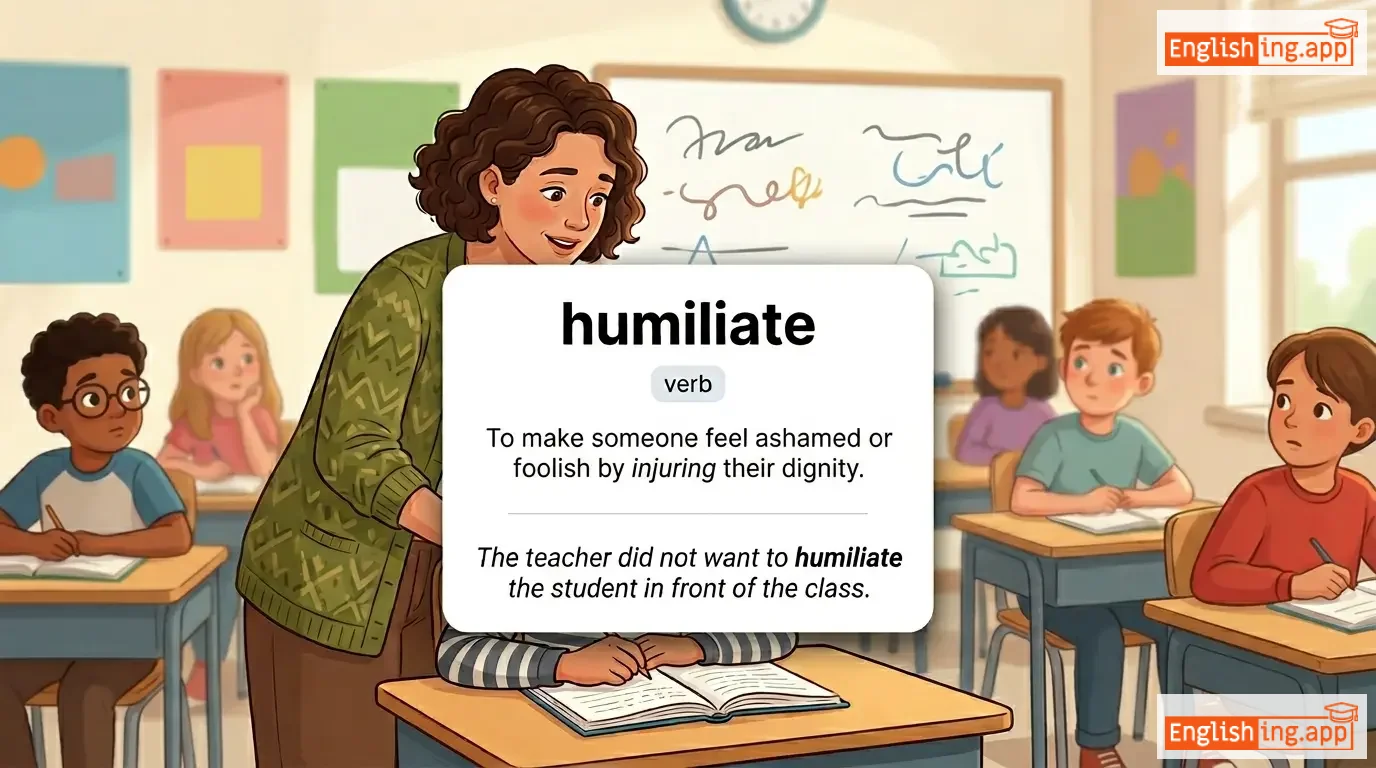
humiliate definition card — visual illustration of the meaning
verb C1
/hjuːˈmɪl.i.eɪt/

To make someone feel ashamed or foolish by injuring their dignity.

"The teacher did not want to humiliate the student in front of the class."

noun C1
/hjuːˈmɪl.ɪ.ti/
смирение (smirenie)

The quality of having a modest or low view of one's importance.

"She accepted the award with grace and humility."

"Она приняла награду с грацией и смирением." (Ona prinjala nagradu s graciey i smireniem.)
adverb C1
/ˈhʌŋ.ɡrə.li/
голодный; жадно; с нетерпением (golodnyy; zhadno; s neterpeniyem)

in a way that shows hunger; greedily; eagerly

"The dog ate hungrily after not eating for hours."

"Собака ела голодным образом после того, как не ела несколько часов." (Sobaka yela golodnym obrazom posle togo, kak ne yela neskol'ko chasov.)
🪨

hurl

verb C1
/hɜːrl/

To throw something with great force.

"The boy hurled a stone into the river."

husbandry definition card — visual illustration of the meaning
noun C1
/ˈhʌzbəndri/
сельское хозяйство и животноводство (selskoe khozyaystvo i zhivotnovodstvo)

the care, cultivation, and breeding of crops and animals; management and conservation of resources

"Modern husbandry practices focus on sustainability and animal welfare."

"Современные практики сельского хозяйства и животноводства сосредоточены на устойчивости и благополучии животных." (Sovremennye praktiki selskogho khozyaystva i zhivotnovodstva sosredotocheny na ustoychivosti i blagogoslovii zhivotnykh.)
verb C1
/ˈhʌsəl/
трудиться / быстро двигаться (trudit'sya / bystro dvigat'sya)

to move quickly and energetically; to push or work hard to achieve something

"She had to hustle to finish the project on time."

"Ей нужно было потрудиться, чтобы закончить проект вовремя." (Ey nuzhno bylo potrudit'sya, chtoby zakonchit' proyekt vovremya.)
noun C1
/ˈhaɪbrɪd/
гибрид (gibrid)

a mixture of two different things, often combining the best qualities of both

"The car is a hybrid that runs on both electricity and fuel."

"Этот автомобиль является гибридом, который работает как на электричестве, так и на топливе." (Etot avtomobil' yavlyaetsya gibridom, kotoryy rabotaet kak na elektrichestve, tak i na toplive.)
adjective C1
/haɪˈdrɔːlɪk/
гидравлический (gidravlicheskiy)

operated by the pressure of liquid, especially water or oil

"The mechanic repaired the hydraulic system of the machine."

"Механик отремонтировал гидравлическую систему машины." (Mexanik otremontiroval gidravlicheskuyu sistemu mashiny.)
adjective C1
/ˌhaɪdroʊɪˈlɛktrɪk/
гидроэлектрический (gidroelektricheskiy)

Relating to or denoting the generation of electricity using flowing water.

"The country invested heavily in hydroelectric power plants."

"Страна активно инвестировала в гидроэлектрические станции." (Strana aktivno investirovala v gidroelektricheskie stantsii.)
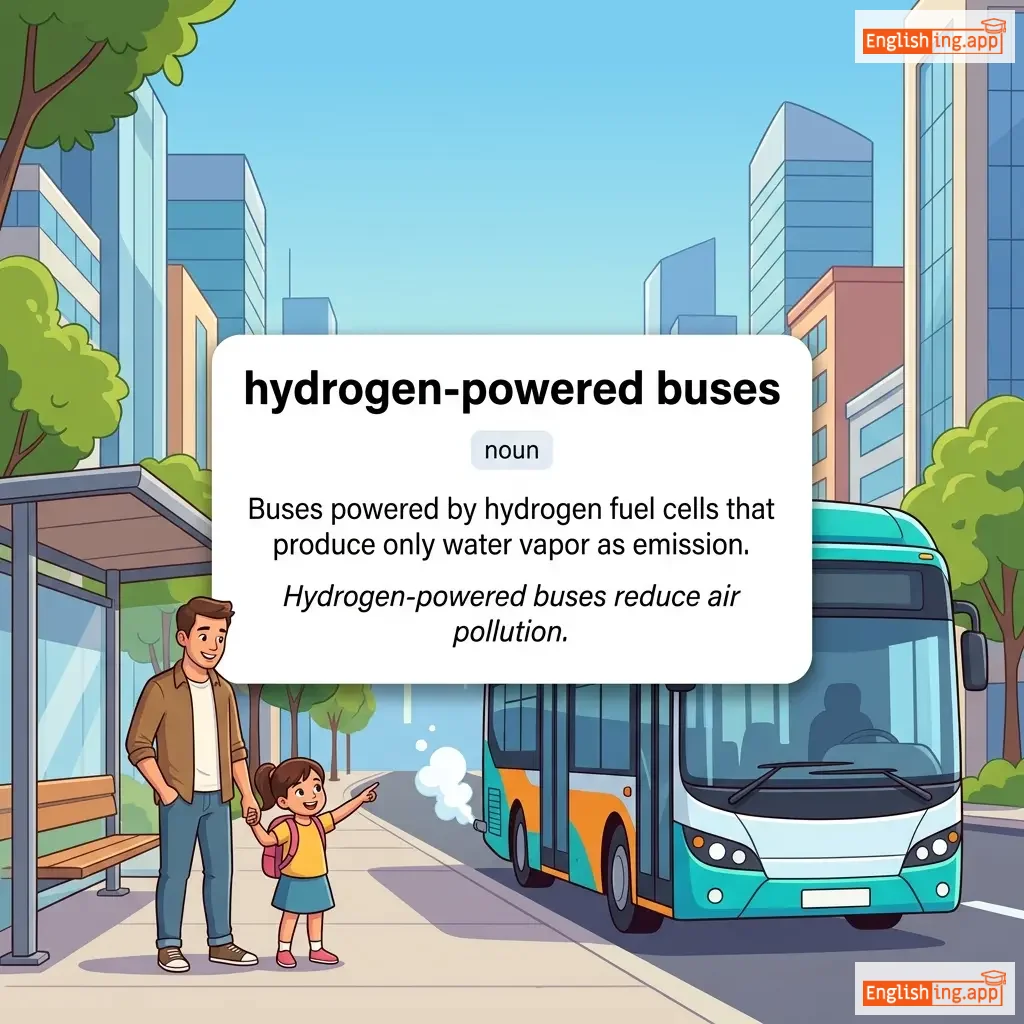
hydrogen-powered buses definition card — visual illustration of the meaning
noun C1
ˈhaɪ.drə.dʒən ˈpaʊ.əd bʌsɪz
автобусы на водородном топливе (avtobusy na vodorodnom toplive)

Buses powered by hydrogen fuel cells that produce only water vapor as emission.

"Hydrogen-powered buses reduce air pollution."

"Автобусы на водородном топливе снижают загрязнение воздуха." (Avtobusy na vodorodnom toplive snizhajut zagryaznenie vozdukha.)
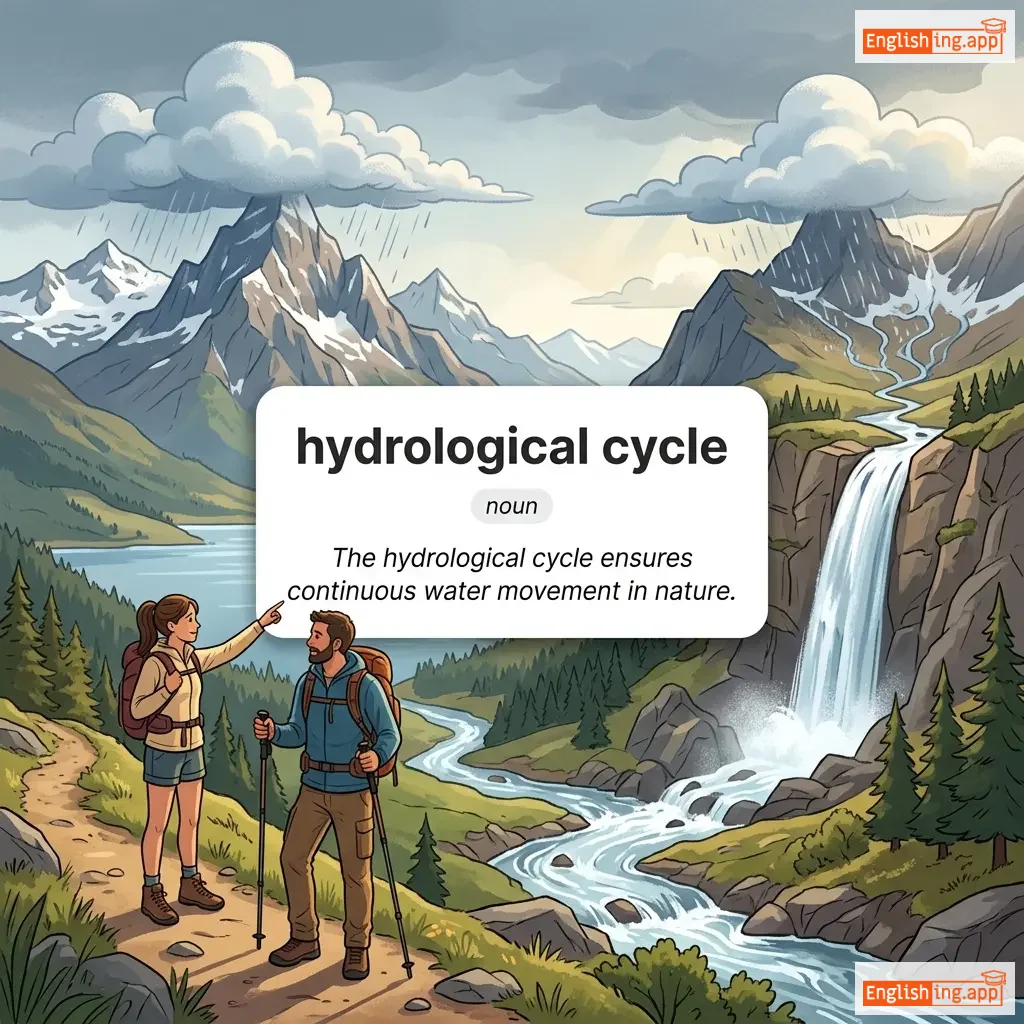
hydrological cycle definition card — visual illustration of the meaning
noun C1
ˌhaɪ.drəˈlɒdʒ.ɪ.kəl ˈsaɪ.kəl
гидрологический цикл (gidrologicheskiy tsikl)

The cycle of processes by which water circulates between the earth's oceans, atmosphere, and land.

"The hydrological cycle ensures continuous water movement in nature."

"Гидрологический цикл обеспечивает непрерывное движение воды в природе." (Gidrologicheskiy tsikl obespechivaet nepreryvnoe dvizhение vody v prirode.)
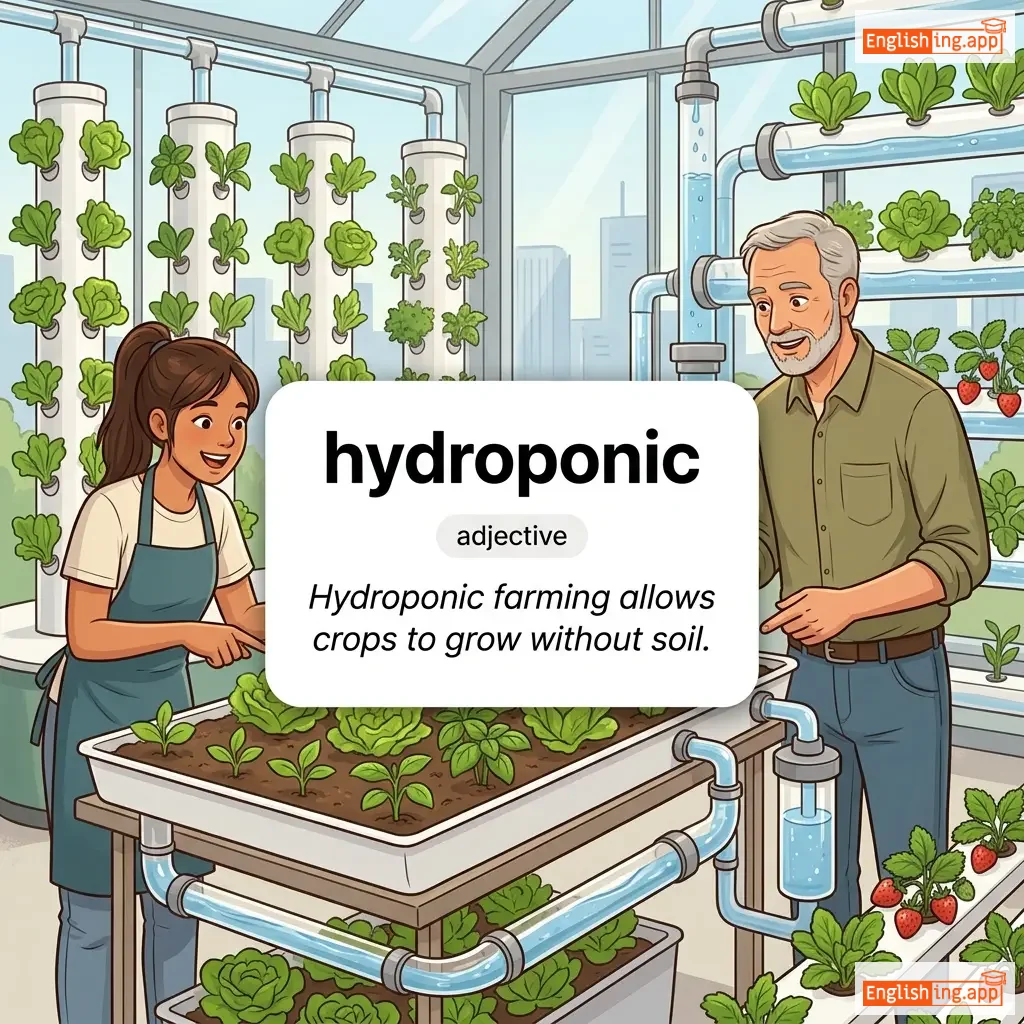
hydroponic definition card — visual illustration of the meaning
adjective C1
/ˌhaɪ.drəˈpɒn.ɪk/
гидропонный (gidroponny)

Relating to the process of growing plants in sand, gravel, or liquid, with added nutrients but without soil.

"Hydroponic farming allows crops to grow without soil."

"Гидропонное земледелие позволяет выращивать растения без почвы." (Gidroponnoe zemledelie pozvolyaet vyrashchivat' rastenija bez pochvy.)
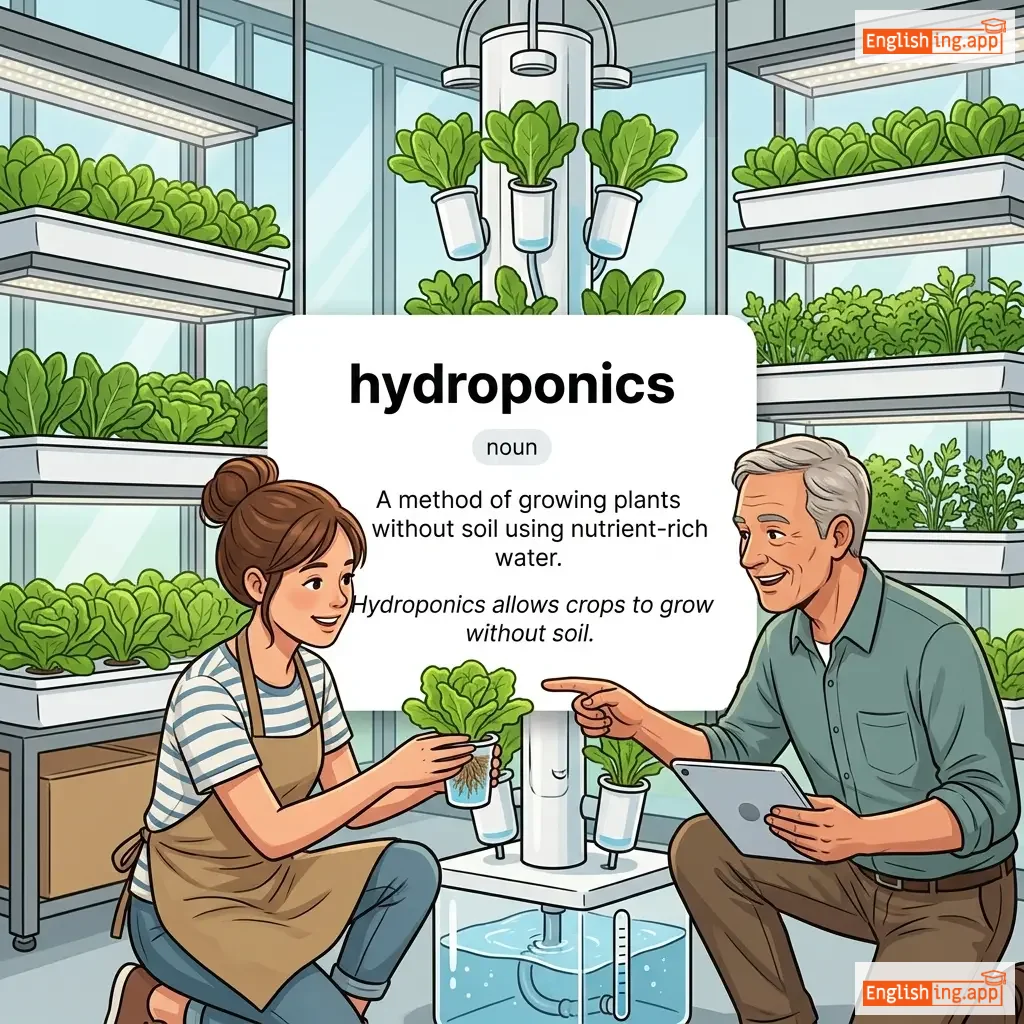
hydroponics definition card — visual illustration of the meaning
noun C1
/ˌhaɪ.droʊˈpɒn.ɪks/
гидропоника (gidroponika)

A method of growing plants without soil using nutrient-rich water.

"Hydroponics allows crops to grow without soil."

"Гидропоника позволяет выращивать культуры без почвы." (Gidroponika pozvolyaet vyrashivat kultury bez pochvy.)
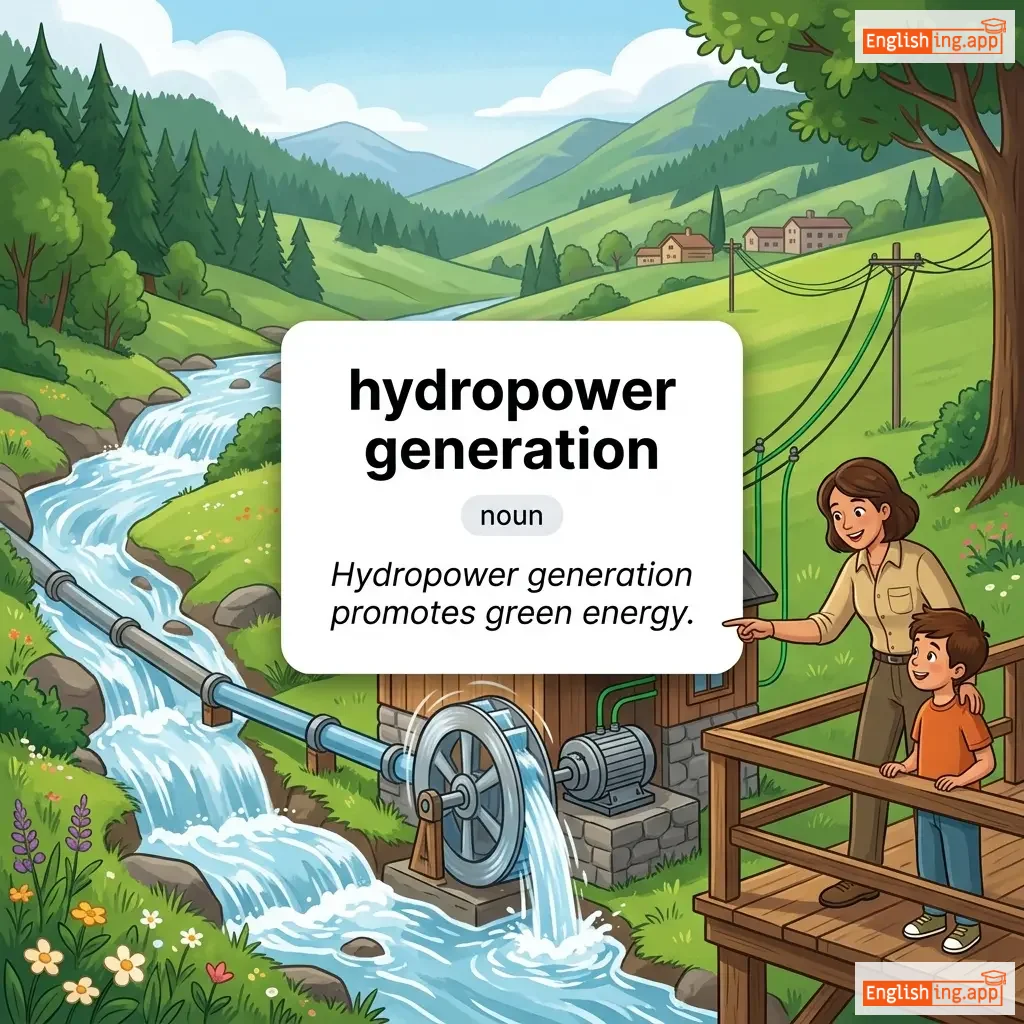
hydropower generation definition card — visual illustration of the meaning
noun C1
/ˈhaɪ.drəʊˌpaʊər ˌdʒen.əˈreɪ.ʃən/
гидроэлектрическое производство (gidroelektricheskoe proizvodstvo)

The production of electrical power through the use of the gravitational force of falling or flowing water.

"Hydropower generation promotes green energy."

"Гидроэлектрическое производство способствует зеленой энергии." (Gidroelektricheskoe proizvodstvo sposobstvuet zelyonoi energii.)
noun C1
/hɪm/
гимн (hymn)

A religious song or poem of praise to God or a deity.

"The congregation sang a hymn during the morning service."

"Община пела гимн во время утреннего богослужения." (Obshchina pela gimn vo vremya utrennogo bogosluzheniya.)
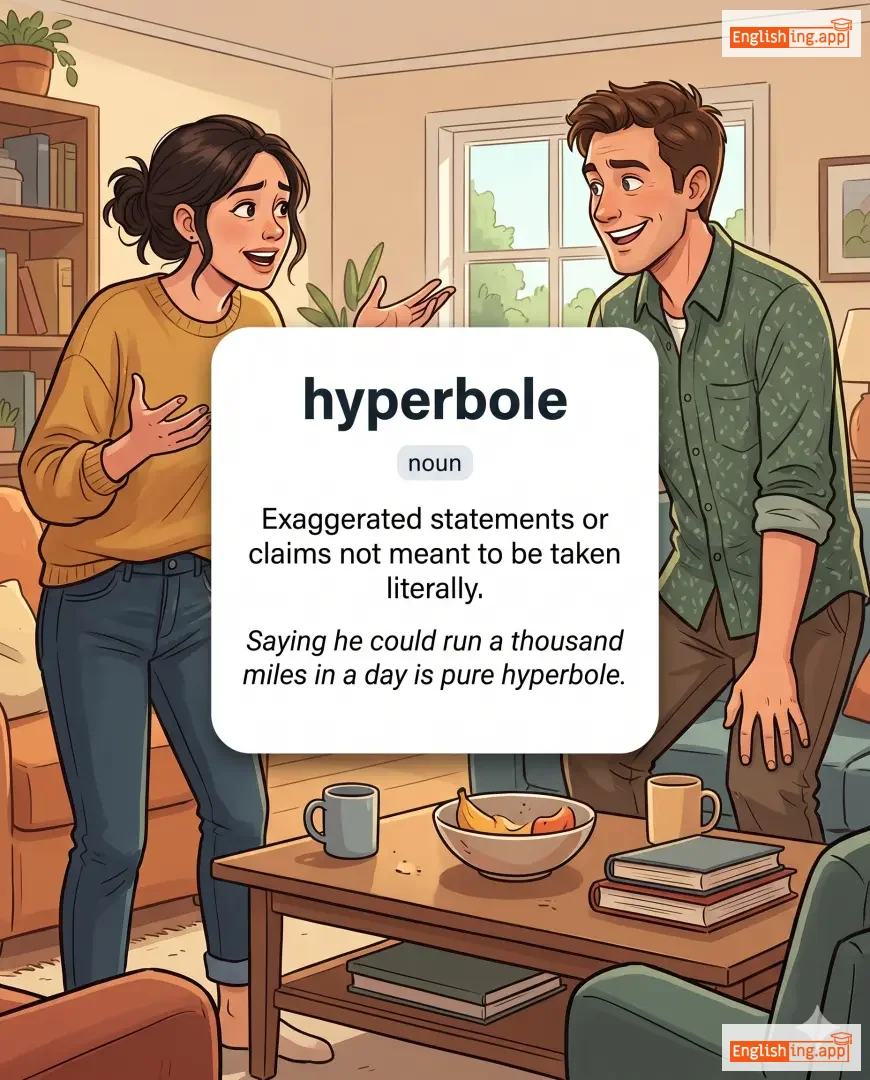
hyperbole definition card — visual illustration of the meaning
noun C1
/haɪˈpɜːrbəli/
гипербола (giperbola)

Exaggerated statements or claims not meant to be taken literally.

"Saying 'I’m so hungry I could eat a horse' is a classic example of hyperbole."

"'Я так голоден, что могу съесть лошадь' - это классический пример гиперболы." ('Ya tak goloden, chto mogu s'yest' loshad' - eto klassicheskiy primer giperboly.)
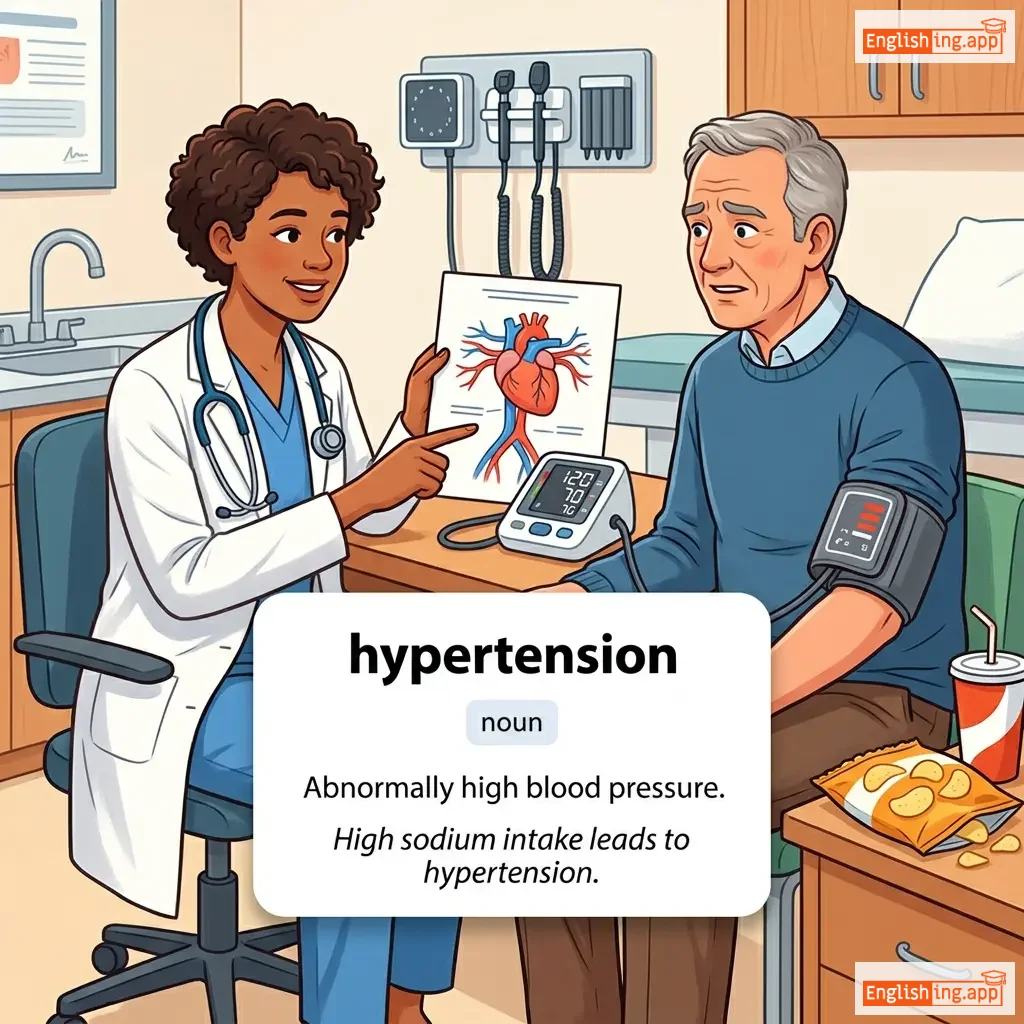
hypertension definition card — visual illustration of the meaning
noun C1
ˌhaɪ.pɚˈten.ʃən
гипертония (gipertoniya)

Abnormally high blood pressure.

"High sodium intake leads to hypertension."

"Высокое потребление натрия приводит к гипертонии." (Vysokoye potrebleniye natriya privodyt k gipertonii.)
noun C1
/hɪpˈnoʊsɪs/
гипноз (gipnoz)

A trance-like state of consciousness usually induced by suggestion.

"She underwent hypnosis to overcome her fear of flying."

"Она прошла гипноз, чтобы преодолеть свой страх перед полетами." (Ona proshla gipnoz, chtoby preodolet' svoi strakh pered poletami.)
adjective C1
/hɪpˈnɒtɪk/
гипнотический (gipnoticheskiy)

Producing sleep or a trance-like state; mesmerizing.

"The music had a hypnotic effect on the audience."

"Музыка оказала гипнотическое влияние на аудиторию." (Muzyka okazala gipnoticheskoe vliyaniye na auditoriyu.)