Vocabularies

English Vocabulary Dictionary | Word Meanings, Definitions & Examples

adjective C1
/ˈɡraʊnd.ləs/
sin fundamento; infundado (sin fundamento; infundado)

without foundation or justification; baseless

"His accusations against her were completely groundless."

"Sus acusaciones contra ella eran completamente infundadas." (Sus acusaciones contra ella eran completamente infundadas.)
noun C1
/ɡroʊv/
arboleda / huerto pequeño (arboleda / huerto pequeno)

A small group of trees growing close together.

"They walked through the orange grove."

"Ellos caminaban por el huerto de naranjas." (Ellos caminaban por el huerto de naranjas.)
verb/noun C1
/ɡraʊl/
gruñir (grunir)

To make a low, guttural sound, often in anger (by animals or humans).

"The dog growled at the stranger."

"El perro gruñó al extraño." (El perro grunyo al extrano.)
noun/verb C1
/ɡrʌdʒ/
rencor (rencor)

A persistent feeling of ill will or resentment from a past insult or injury.

"She still holds a grudge against him for what happened years ago."

"Ella todavía guarda rencor contra él por lo que ocurrió hace años." (Ella todavia guarda rencor contra él por lo que ocurrió hace años.)
adjective C1
/ˈɡrʌdʒɪŋ/
renuente (renuente)

Reluctant or unwilling; given or allowed only with hesitation.

"She gave him a grudging smile after the argument."

"Le dio una sonrisa renuente después de la discusión." (Le dio una sonrisa renuente después de la discusión.)
adjective C1
/ˈɡruːəlɪŋ/
agotador (agotador)

Extremely tiring and demanding.

"The athletes faced a grueling training session."

"Los atletas enfrentaron una sesión de entrenamiento agotadora." (Los atletas enfrentaron una sesión de entrenamiento agotadora.)
adjective C1
/ˈɡruːsəm/
espantoso (espantoso)

Causing horror or disgust.

"The police discovered a gruesome crime scene."

"La policía descubrió una escena de crimen espantosa." (La policía descubrió una escena de crimen espantosa.)
verb C1
/ɡrʌnt/
gruñir (grunir)

to make a low, rough sound, often when exerting effort or expressing annoyance

"He grunted as he lifted the heavy box."

"Él gruñó mientras levantaba la caja pesada." (Él gruñó mientras levantaba la caja pesada.)
adjective C1
/ˈɡɑːrdɪd/
reservado (reservado)

Cautious and careful in speech or action, often to avoid giving too much away.

"He gave a guarded reply to the journalist."

"Él dio una respuesta reservada al periodista." (Él dio una respuesta reservada al periodista.)
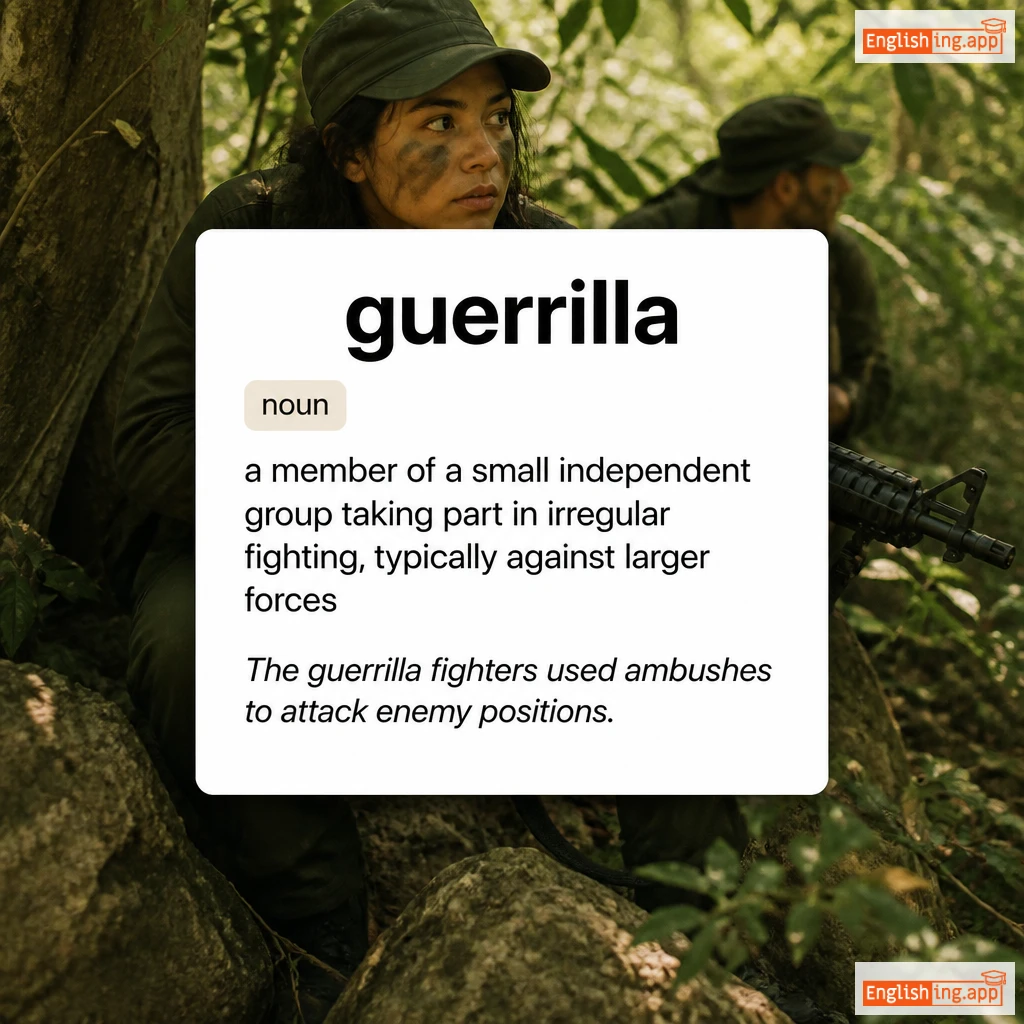
guerrilla definition card — visual illustration of the meaning
noun C1
/ɡəˈrɪlə/
guerrillero (guerrillero)

a member of a small independent group taking part in irregular fighting, typically against larger forces

"The guerrilla fighters used ambushes to attack enemy positions."

"Los combatientes guerrilleros usaron emboscadas para atacar las posiciones enemigas." (Los combatientes guerrilleros usaron emboscadas para atacar las posiciones enemigas.)
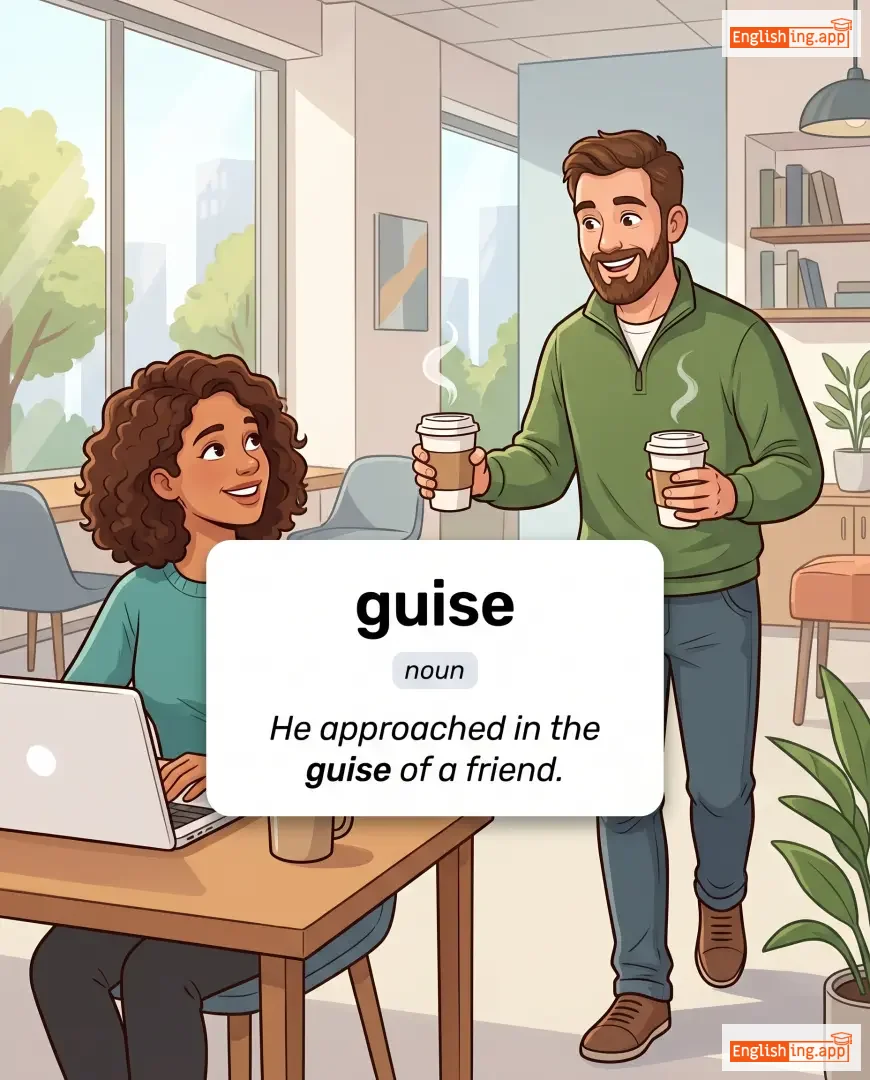
guise definition card — visual illustration of the meaning
noun C1
/ɡaɪz/
disfraz (disfraz)

An external form, appearance, or manner of presentation, often hiding the true nature

"He approached in the guise of a friend."

"Se acercó con el disfraz de amigo." (Se acercó con el disfraz de amigo.)
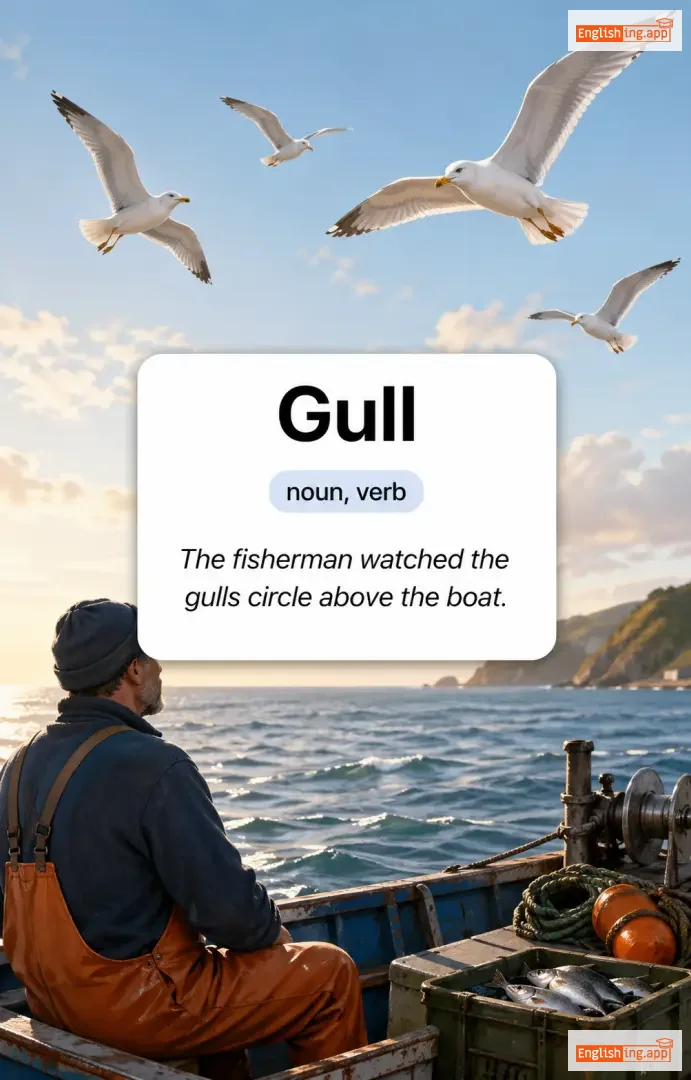
Gull definition card — visual illustration of the meaning
noun, verb C1
/ɡʌl/
gaviota; engañar (gaviota; enganãr)

A seabird with long wings and usually white and gray feathers; as a verb, to deceive or trick someone.

"The fisherman watched the gulls circle above the boat."

"El pescador miraba las gaviotas girando sobre el bote." (El pescador miraba las gaviotas girando sobre el bote.)
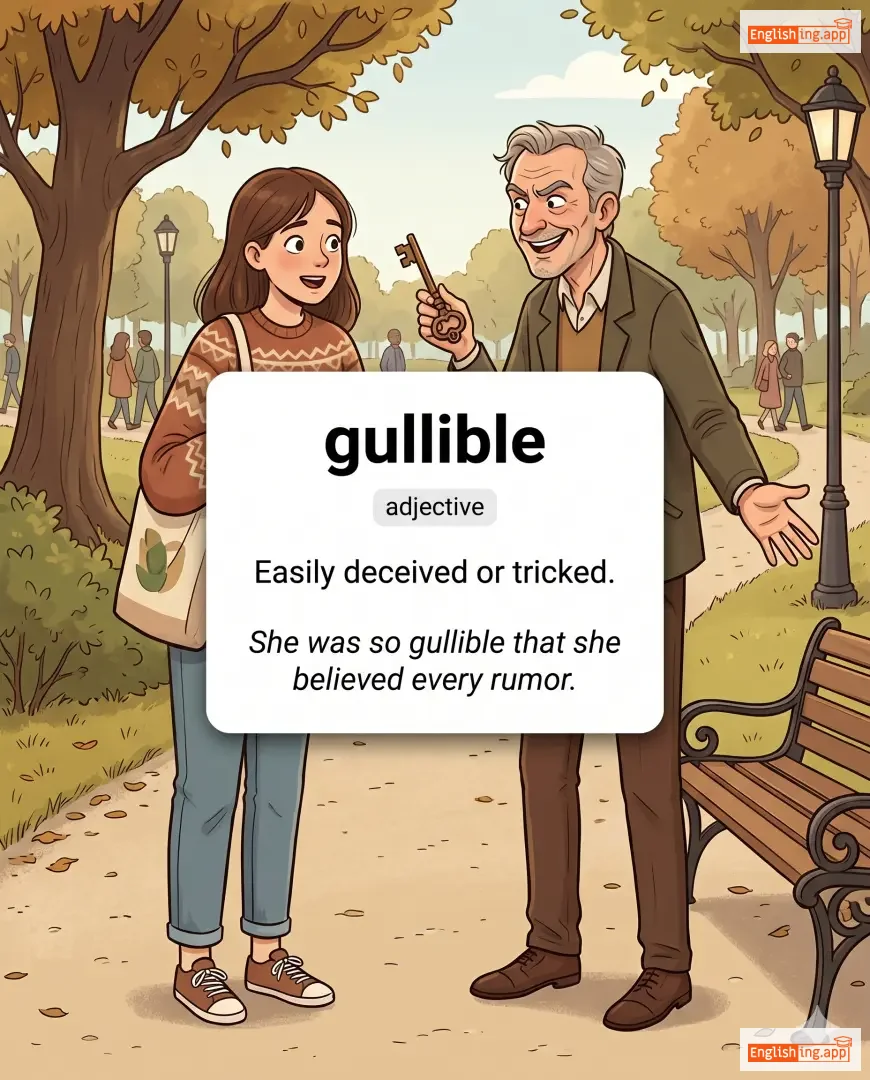
gullible definition card — visual illustration of the meaning
adjective C1
/ˈɡʌl.ə.bəl/
fácilmente engañado (facilmente engañado)

Easily deceived or tricked.

"She was so gullible that she believed every rumor."

"Ella era tan crédula que creía cada rumor." (Ella era tan crédula que creía cada rumor.)
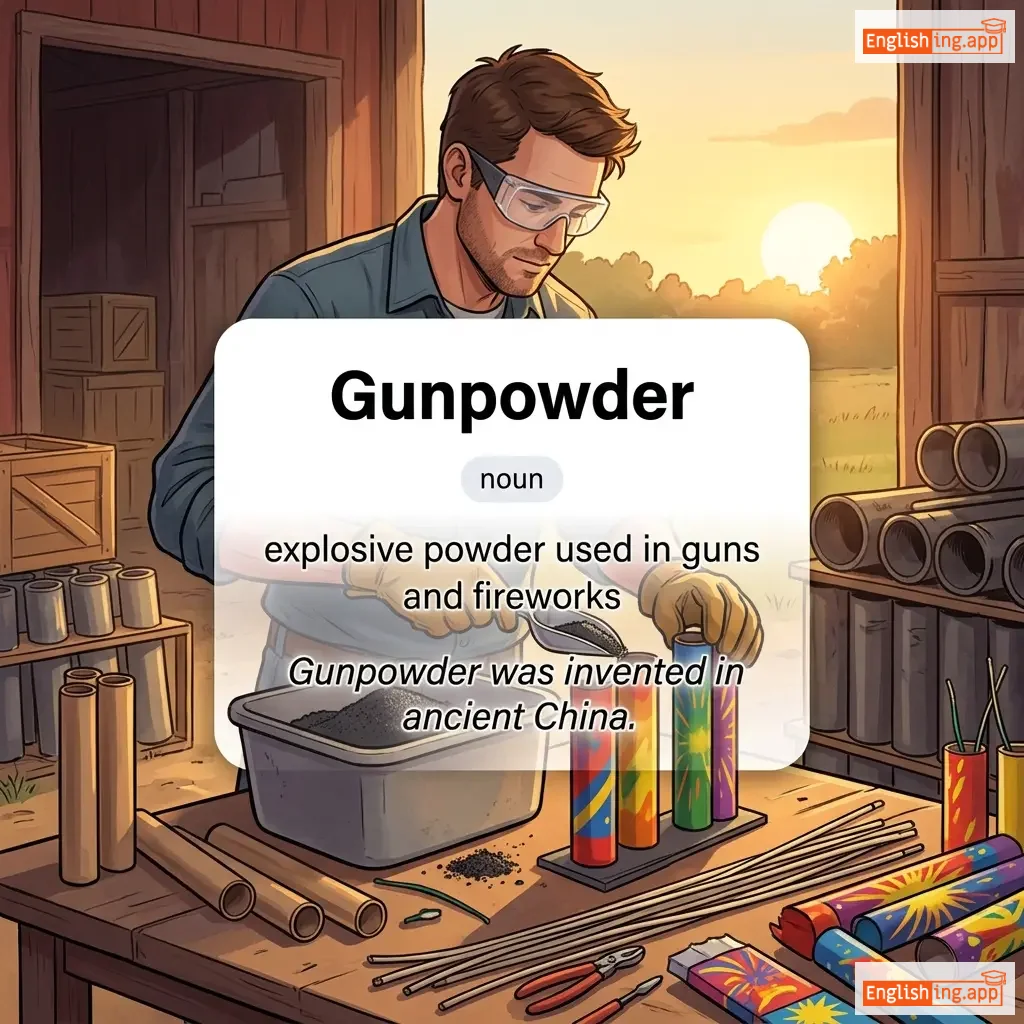
Gunpowder definition card — visual illustration of the meaning
noun C1
/ˈɡʌnˌpaʊdər/
pólvora (polvora)

explosive powder used in guns and fireworks

"Gunpowder was invented in ancient China."

"La pólvora fue inventada en la antigua China." (La polvora fue inventada en la antigua China.)
verb C1
/ɡʌʃ/
brotar (brotar)

to flow out suddenly and forcefully, or to express something enthusiastically

"Tears began to gush from her eyes."

"Las lágrimas empezaron a brotar de sus ojos." (Las lagrimas empezaron a brotar de sus ojos.)
noun C1
/ɡʌst/
rafaga de viento (rafaga de viento)

a sudden strong rush of wind or air

"A sudden gust of wind blew the papers away."

"Una repentina ráfaga de viento voló los papeles." (Una repentina ráfaga de viento voló los papeles.)
noun C1
/ˈɡʌstoʊ/
entusiasmo (entusiasmo)

great enjoyment, energy, or enthusiasm in doing something

"She sang the song with great gusto."

"Ella cantó la canción con gran entusiasmo." (Ella canto la cancion con gran entusiasmo.)
adjective C1
/ˈɡʌsti/
ventoso (ventoso)

characterized by strong, sudden bursts of wind

"It was a cold, gusty day by the sea."

"Fue un día frío y ventoso junto al mar." (Fue un dia frio y ventoso junto al mar.)
noun C1
/ˌɡaɪnəˈkɒlədʒi/
ginecología (ginecología)

the branch of medicine dealing with women's reproductive health

"She decided to specialize in gynecology after medical school."

"Decidió especializarse en ginecología después de la escuela de medicina." (Decidió especializarse en ginecología después de la escuela de medicina.)
adjective C1
/ˈhæbɪtəbl/
habitable (habitable)

Suitable to live in; capable of sustaining life.

"Scientists are searching for habitable planets beyond our solar system."

"Los científicos están buscando planetas habitables más allá de nuestro sistema solar." (Los científicos están buscando planetas habitables más allá de nuestro sistema solar.)
adjective C1
/həˈbɪtʃuəl/
habitual (habitual)

Done or doing constantly or as a habit; customary.

"He was a habitual latecomer to class."

"Él era un habitual retrasado en clase." (Él era un habitual retrasado en clase.)
adjective C1
/ˈhæk.nid/
cliché (clishe)

Used too often and therefore lacking originality or freshness.

"The speech was filled with hackneyed phrases that failed to inspire the audience."

"El discurso estaba lleno de frases cliché que no lograron inspirar al público." (El discurso estaba lleno de frases cliché que no lograron inspirar al público.)
adjective C1
/ˈhæɡ.ərd/
agotado (agotado)

Looking exhausted, unwell, or worn out, especially from fatigue or suffering.

"After working all night, she looked pale and haggard."

"Después de trabajar toda la noche, ella parecía pálida y agotada." (Despues de trabajar toda la noche, ella parecia palida y agotada.)
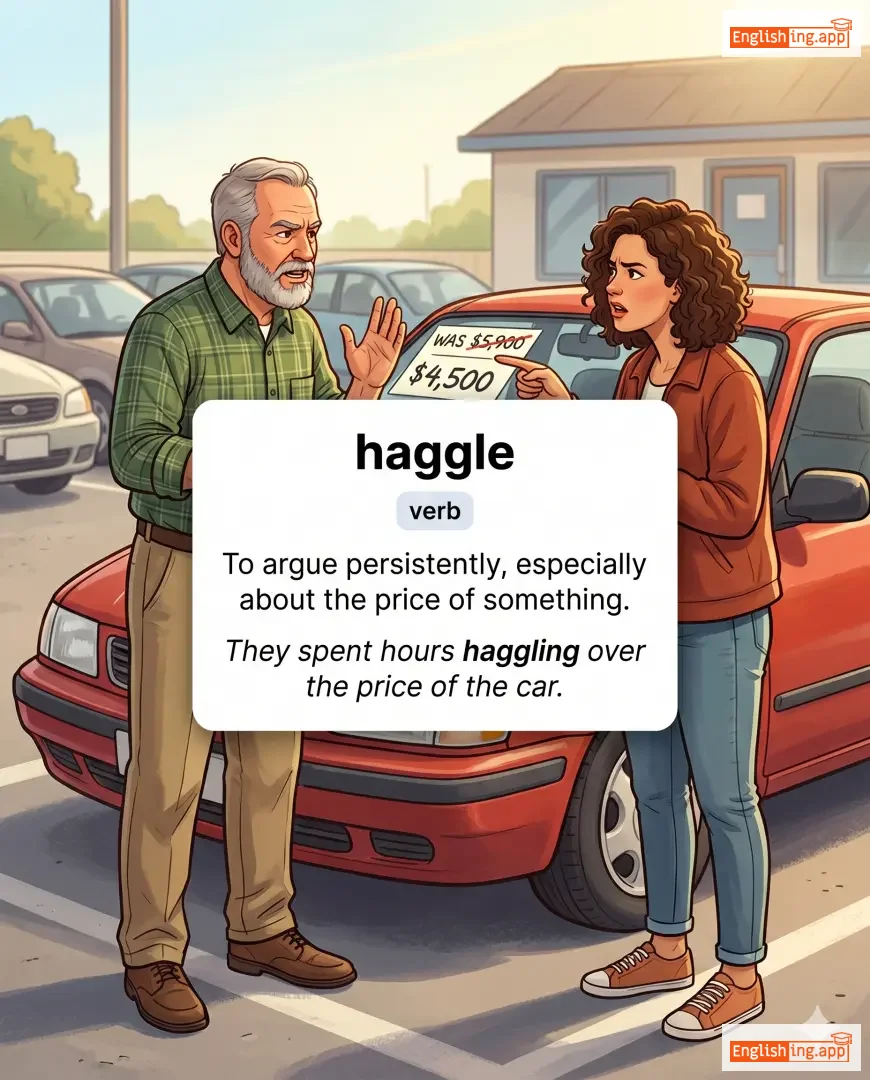
haggle definition card — visual illustration of the meaning
verb C1
/ˈhæɡ.l̩/
regatear (regatear)

To argue persistently, especially about the price of something.

"They spent hours haggling over the price of the car."

"Pasaron horas regateando sobre el precio del coche." (Pasaron horas regateando sobre el precio del coche.)
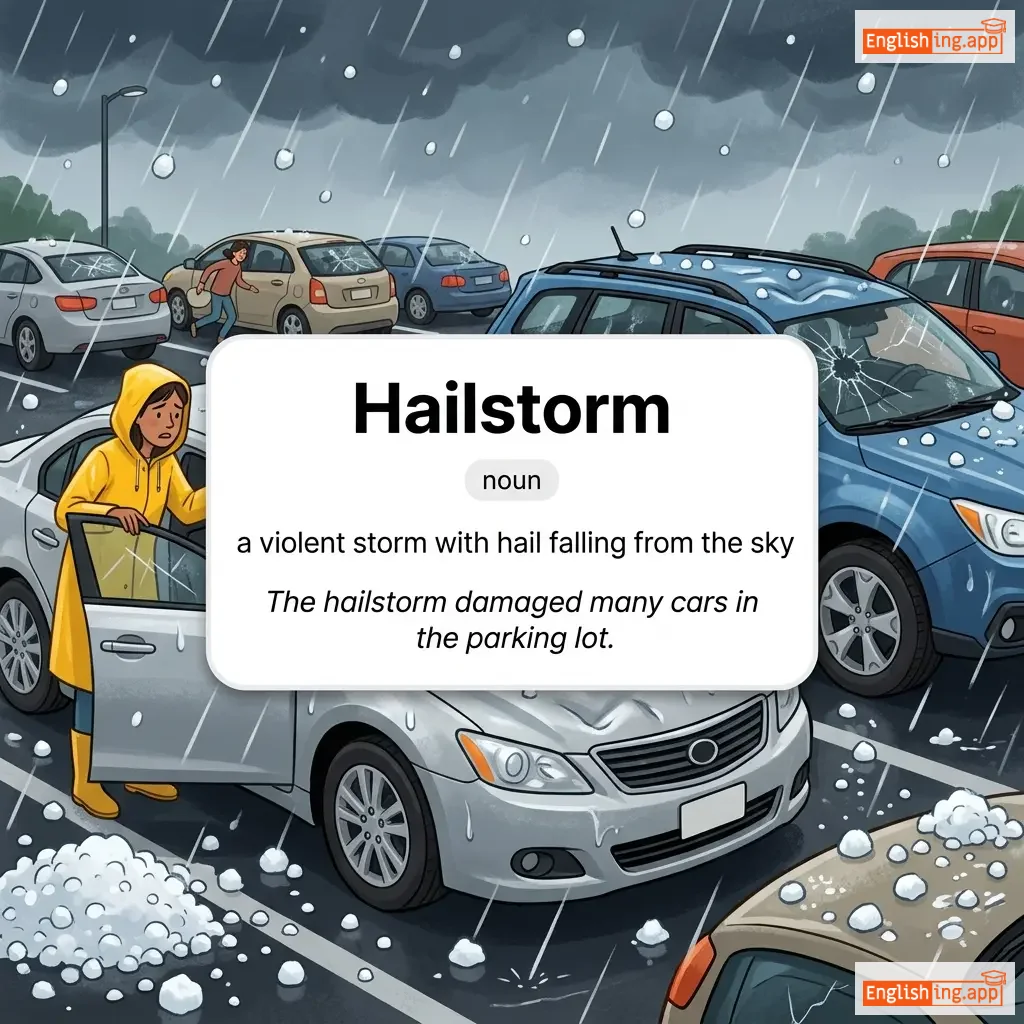
Hailstorm definition card — visual illustration of the meaning
noun C1
/ˈheɪl.stɔːrm/
tormenta de granizo (tormenta de granizo)

a violent storm with hail falling from the sky

"The hailstorm damaged many cars in the parking lot."

"La tormenta de granizo dañó muchos autos en el estacionamiento." (La tormenta de granizo dañó muchos autos en el estacionamiento.)
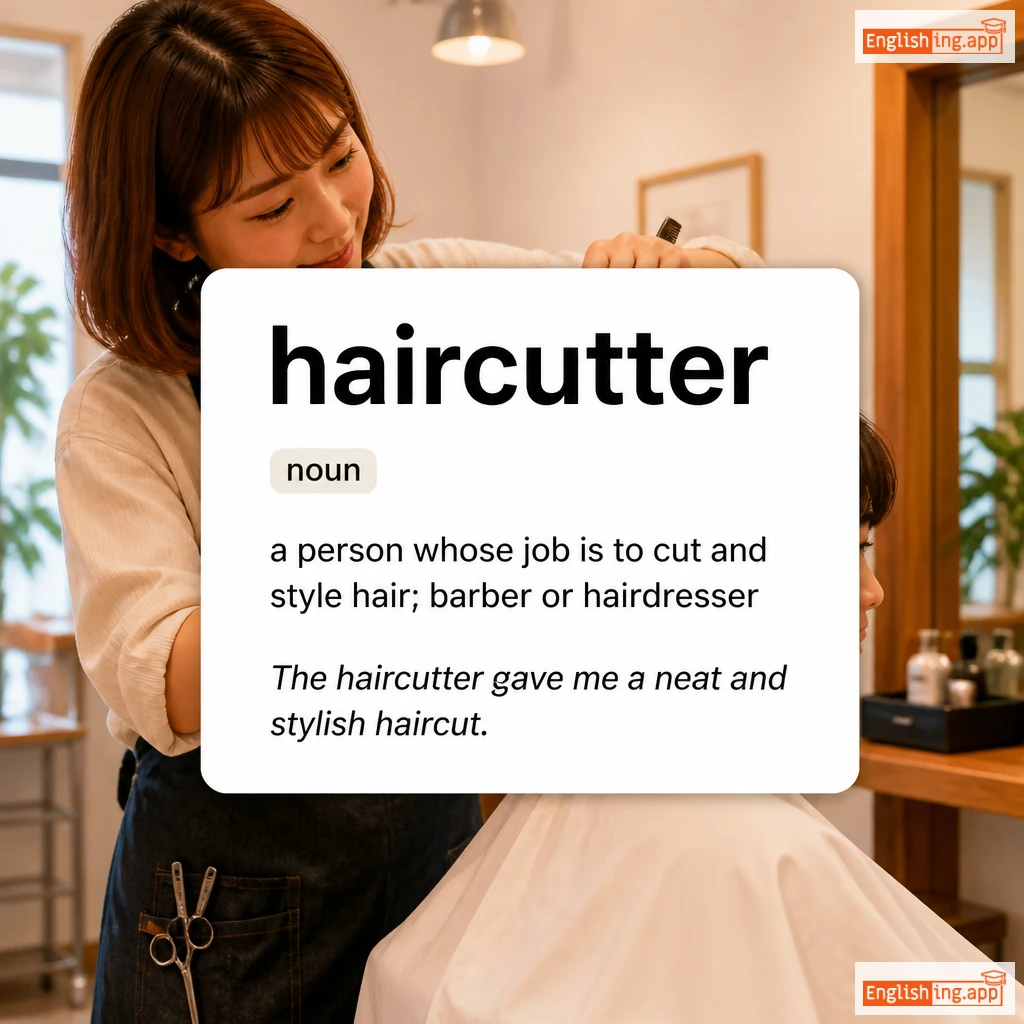
haircutter definition card — visual illustration of the meaning
noun C1
/ˈheəˌkʌtər/
peluquero (peluquero)

a person whose job is to cut and style hair; barber or hairdresser

"The haircutter gave me a neat and stylish haircut."

"El peluquero me hizo un buen corte de pelo." (el peluquero me hizo un buen corte de pelo)
noun C1
/ˈhɔːl.mɑːrk/
marca distintiva (marca distintiva)

a typical characteristic or feature of someone or something

"Honesty is the hallmark of a good leader."

"La honestidad es la marca distintiva de un buen líder." (La honestidad es la marca distintiva de un buen lider.)
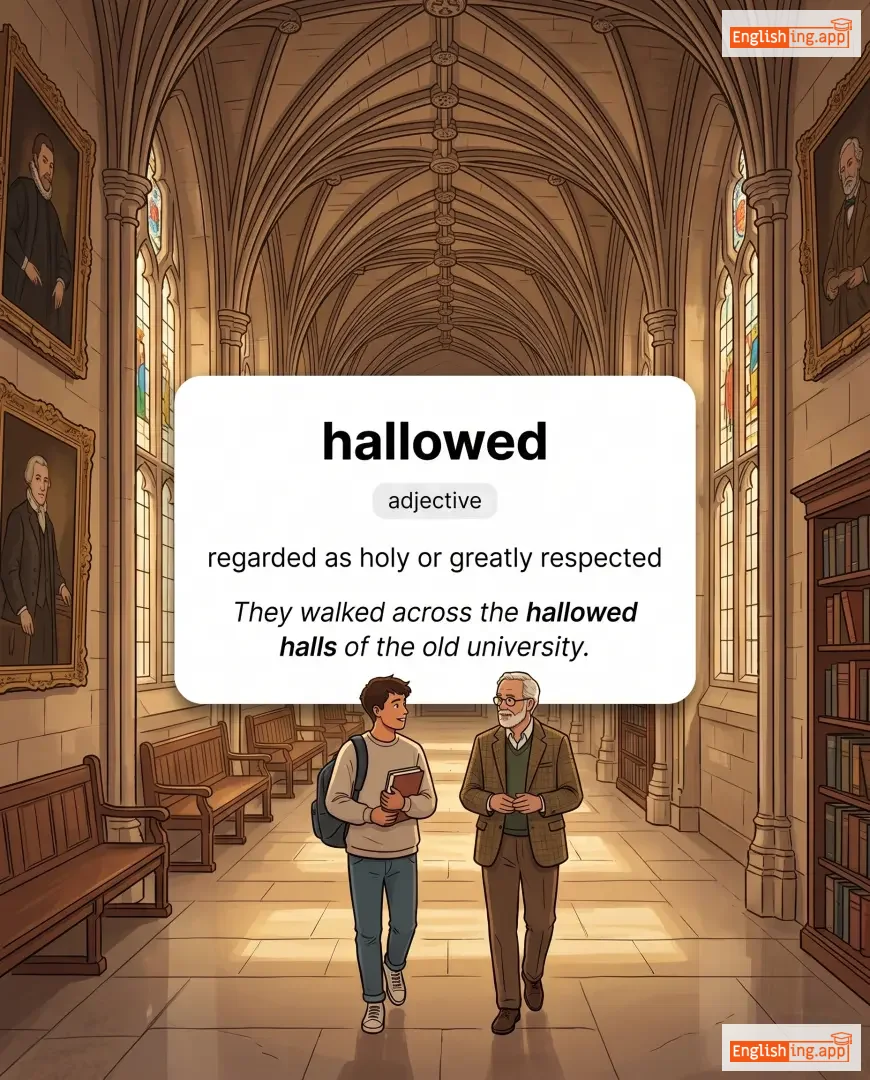
hallowed definition card — visual illustration of the meaning
adjective C1
/ˈhæloʊd/
sagrado (sagrado)

regarded as holy or greatly respected

"They walked across the hallowed halls of the old university."

"Cruzaron los sagrados pasillos de la vieja universidad." (Cruzaron los sagrados pasillos de la vieja universidad.)
verb C1
/həˈluːsɪneɪt/
alucinar (alucinar)

to see, hear, or sense things that are not actually present, often due to illness or drugs

"After taking the medicine, he began to hallucinate strange shapes."

"Después de tomar la medicina, comenzó a alucinar formas extrañas." (Despuès de tomar la medicina, comenzo a alucinar formas extrañas.)
noun C1
/həˌluːsɪˈneɪʃən/
alucinación (alucinacion)

a false perception of objects or events, usually caused by mental illness or drugs

"After the medication, he began to experience vivid hallucinations."

"Después de la medicación, comenzó a experimentar alucinaciones vívidas." (despues de la medicacion, comenzo a experimentar alucinaciones vividas.)
adjective C1
/ˈhɔːltɪŋ/
vacilante (vacilante)

slow and hesitant, especially due to lack of confidence

"She gave a halting reply during the interview."

"Ella dio una respuesta vacilante durante la entrevista." (Ella dio una respuesta vacilante durante la entrevista.)
noun C1
/ˈhæm.lət/
pequeña aldea (pequena aldea)

a small rural settlement, smaller than a village; a small community

"The tiny hamlet nestled in the valley had only a dozen houses and one small church."

"La pequeña aldea enclavada en el valle tenía solo una docena de casas y una pequeña iglesia." (La pequena aldea enclavada en el valle tenia solo una docena de casas y una pequena iglesia.)
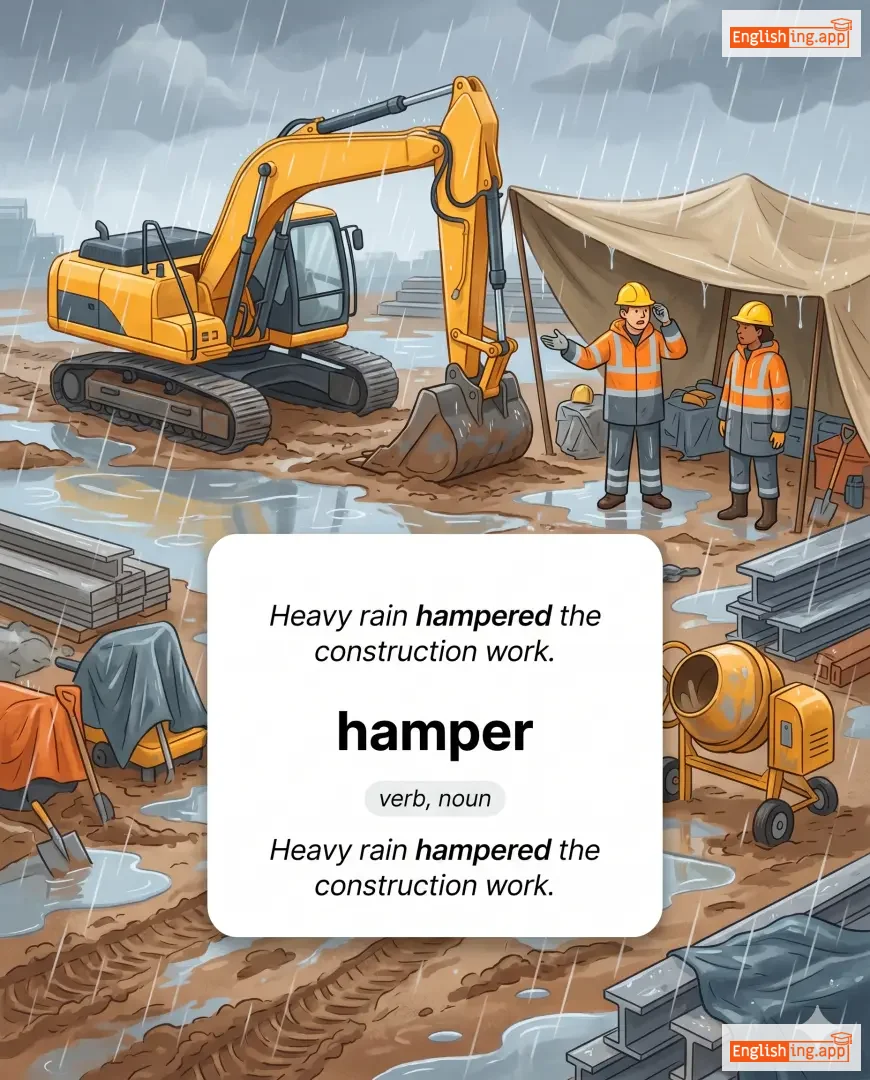
hamper definition card — visual illustration of the meaning
verb, noun C1
/ˈhæmpər/
obstruir, canasta para ropa (obstruir, canasta para ropa)

to prevent or slow down the progress of something; also, a basket with a lid, typically for laundry.

"Heavy rain hampered the construction work."

"La lluvia fuerte dificultó el trabajo de construcción." (La lluvia fuerte dificultó el trabajo de construcción.)
noun C1
/ˈhæŋ.ər/
hangar (hangar)

a large building with extensive floor area, typically for housing aircraft; an aircraft shelter

"The airplane was stored safely in the hangar during the severe thunderstorm."

"El avión fue guardado de forma segura en el hangar durante la tormenta severa." (El avion fue guardado de forma segura en el hangar durante la tormenta severa.)
Hanger definition card — visual illustration of the meaning
noun C1
/ˈhæŋ.ər/
percha (percha)

a shaped piece of wood, plastic, or metal with a hook at the top, used to hang up clothes

"She hung her dress on a wooden hanger to prevent it from getting wrinkled."

"Colgó su vestido en una percha de madera para evitar que se arrugara." (Colgo su vestido en una percha de madera para evitar que se arrugara.)
adjective C1
/hæpˈhæzərd/
desordenado, aleatorio (desordenado, aleatorio)

lacking any obvious order or organization; random

"The books were stacked in a haphazard way on the table."

"Los libros estaban apilados de manera desordenada sobre la mesa." (Los libros estaban apilados de manera desordenada sobre la mesa.)
adjective C1
/ˈhæpləs/
desdichado, desafortunado (desdichado, desafortunado)

unfortunate, unlucky, deserving pity

"The hapless traveler lost his passport on the very first day."

"El desdichado viajero perdió su pasaporte en el primer día." (El desdichado viajero perdió su pasaporte en el primer día.)
adjective C1
/ˌhæpi ɡoʊ ˈlʌki/
alegre, despreocupado, sin preocupaciones (alegre, despreocupado, sin preocupaciones)

cheerfully unconcerned about the future; carefree

"She has a happy-go-lucky attitude and never worries about tomorrow."

"Ella tiene una actitud feliz y despreocupada y nunca se preocupa por mañana." (Ella tiene una actitud feliz y despreocupada y nunca se preocupa por mañana.)
adjective C1
/ˌhɑːrdˈhɑːrtɪd/
despiadado (despiadado)

showing no kindness or sympathy; cruel

"The landlord was hard-hearted and refused to help the poor family."

"El arrendador era muy duro de corazón y se negó a ayudar a la pobre familia." (El arrendador era muy duro de corazón y se negó a ayudar a la pobre familia.)
adjective C1
/ˈhɑːrdi/
resistente, robusto (resistente, robusto)

Strong, robust, and capable of enduring difficult conditions.

"Hardy plants can survive the harsh winter."

"Las plantas resistentes pueden sobrevivir al invierno severo." (Las plantas resistentes pueden sobrevivir al invierno severo.)
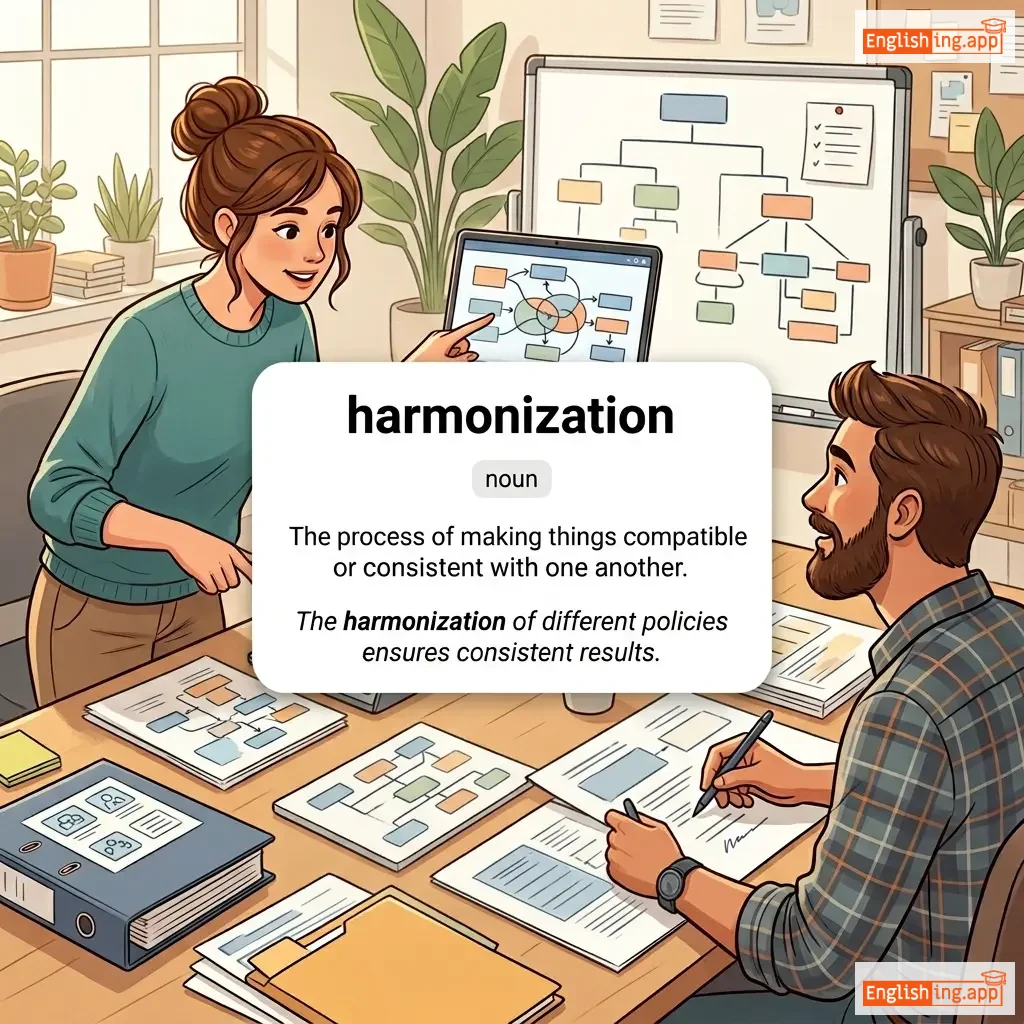
harmonization definition card — visual illustration of the meaning
noun C1
/ˌhɑːmənaɪˈzeɪʃən/
armonización, conciliación (armonizacion, conciliacion)

The process of making things compatible or consistent with one another.

"The harmonization of different policies ensures consistent results."

"La armonización de diferentes políticas garantiza resultados consistentes." (La armonizacion de diferentes politicas garantiza resultados consistentes.)
Harp definition card — visual illustration of the meaning
verb C1
/hɑːrp/
quejarse repetidamente, insistir (quejarse repetidamente, insistir)

To dwell on or complain about something persistently.

"He kept harping on the same mistake over and over."

"Él seguía quejándose del mismo error una y otra vez." (Él seguía quejándose del mismo error una y otra vez.)
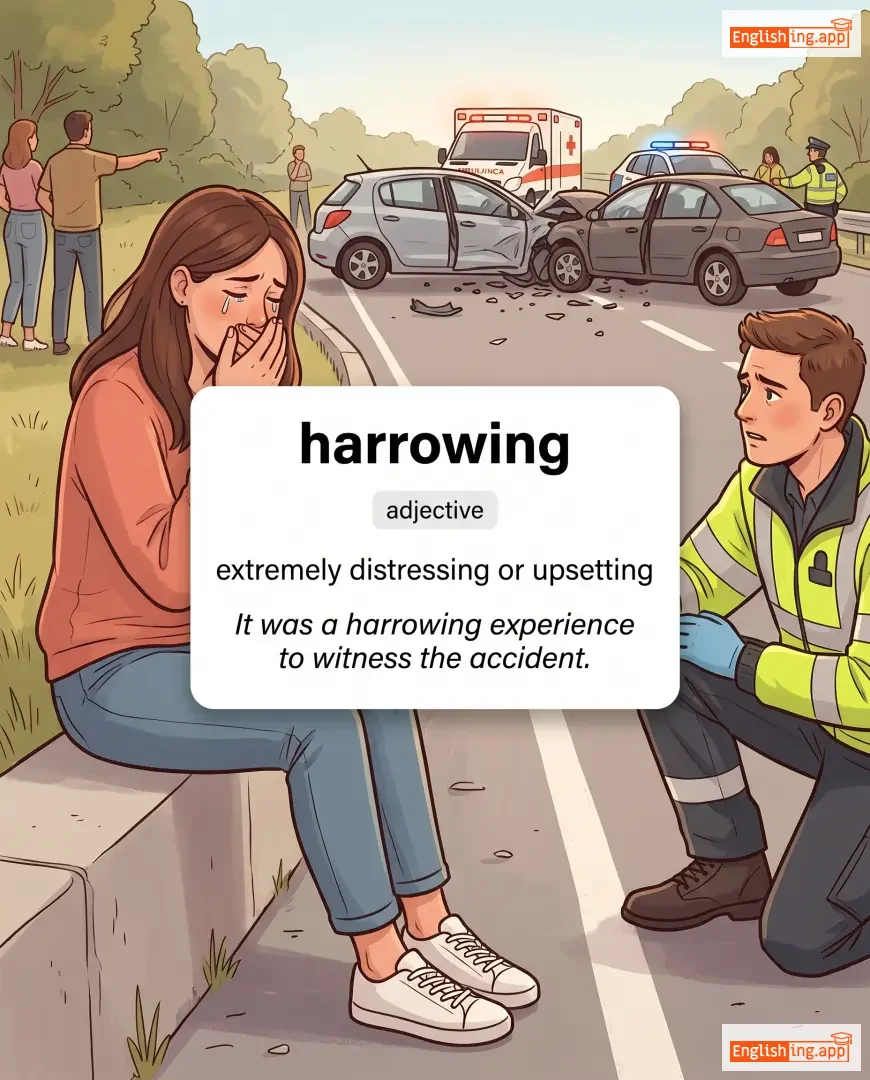
harrowing definition card — visual illustration of the meaning
adjective C1
/ˈhær.oʊ.ɪŋ/
aterrador y angustioso (aterrador y angustioso)

extremely distressing or upsetting

"It was a harrowing experience to witness the accident."

"Fue una experiencia aterradora ser testigo del accidente." (Fue una experiencia aterradora ser testigo del accidente.)
verb C1
/ˈheɪsən/
apresurar (apresurar)

To move or act quickly; to cause something to happen sooner.

"He hastened to finish his work before the deadline."

"Se apresuró a terminar su trabajo antes de la fecha límite." (Se apresuró a terminar su trabajo antes de la fecha límite.)
adverb C1
/ˈheɪs.tɪ.li/
apresuradamente (apresuradamente)

in a hurried or rushed manner; quickly and carelessly

"She hastily packed her bags before leaving for the airport."

"Ella empacó apresuradamente sus maletas antes de irse al aeropuerto." (Ella empacó apresuradamente sus maletas antes de irse al aeropuerto.)
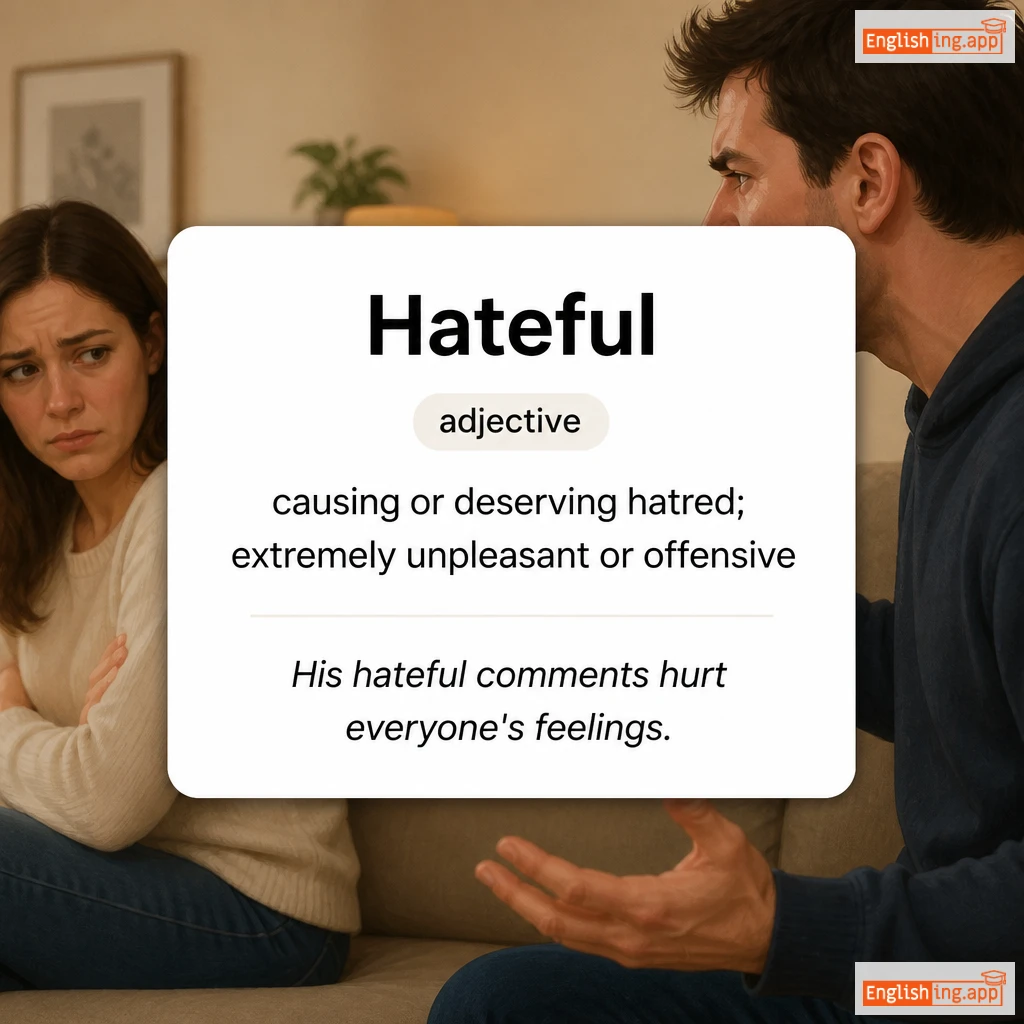
Hateful definition card — visual illustration of the meaning
adjective C1
/ˈheɪt.fəl/
Odioso (odioso)

causing or deserving hatred; extremely unpleasant or offensive

"His hateful comments hurt everyone's feelings."

"Sus comentarios odiosos lastimaron los sentimientos de todos." (Sus comentarios odiosos lastimaron los sentimientos de todos.)
adjective C1
/ˈhɔːti/
arrogante (arrogante)

arrogantly superior and disdainful

"She gave him a haughty look and walked away."

"Ella le dio una mirada arrogante y se alejó." (Ella le dio una mirada arrogante y se alejó.)
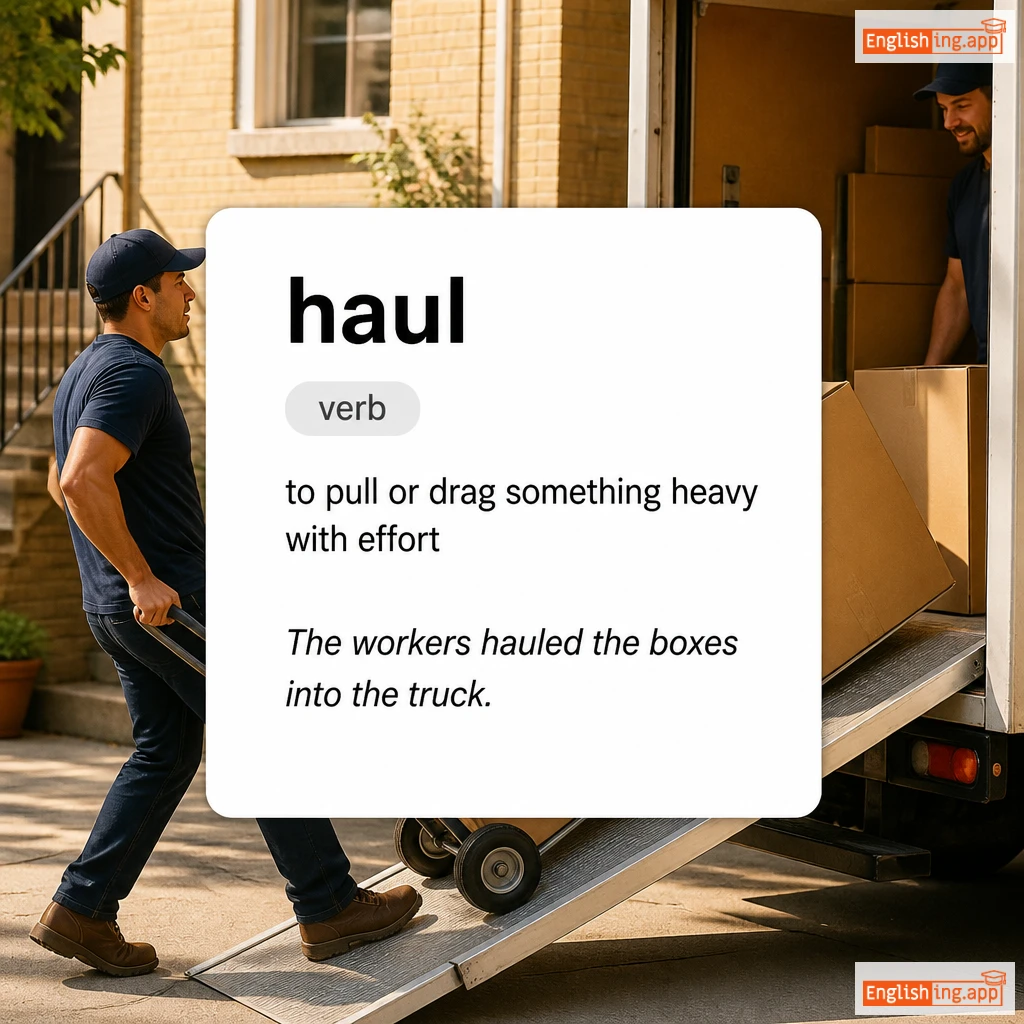
haul definition card — visual illustration of the meaning
verb C1
/hɔːl/
arrastrar (arrastrar)

to pull or drag something heavy with effort

"The workers hauled the boxes into the truck."

"Los trabajadores arrastraron las cajas al camión." (Los trabajadores arrastraron las cajas al camión.)
noun C1
/ˈheɪvən/
refugio (refugio)

a safe place or shelter

"The library became a haven for students during exams."

"La biblioteca se convirtió en un refugio para los estudiantes durante los exámenes." (La biblioteca se convirtió en un refugio para los estudiantes durante los exámenes.)
noun C1
/ˈhævək/
destrucción (destruccion)

widespread destruction or disorder

"The storm caused havoc in the coastal villages."

"La tormenta causó destrucción en los pueblos costeros." (La tormenta causo destruccion en los pueblos costeros.)