Vocabularies

English Vocabulary Dictionary | Word Meanings, Definitions & Examples

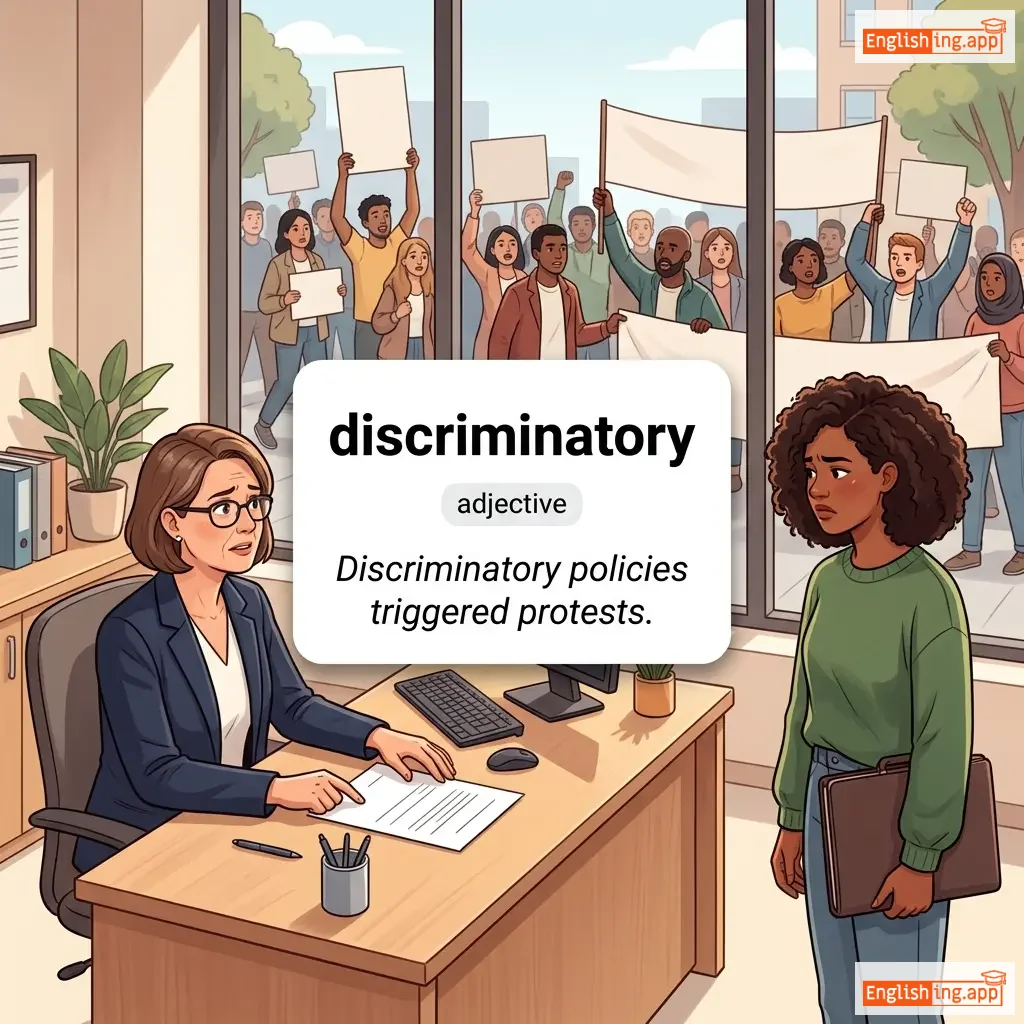
discriminatory definition card — visual illustration of the meaning
adjective C1
dɪˈskrɪmɪnətɔːri
дискриминационный (diskriminatsionnyy)

Making or showing an unfair or prejudicial distinction between different categories of people or things.

"Discriminatory policies triggered protests."

"Дискриминационные политики вызвали протесты." (Diskriminatsionnye politiky vyzvali protesty.)
noun/verb C1
/dɪsˈdeɪn/
презрение (disdein)

The feeling that someone or something is unworthy of respect; to regard with contempt.

"She looked at the messy room with open disdain."

"Она смотрела на беспорядочную комнату с открытым презрением." (Ona smotrela na besporyadochnuyu komnatu s otkrytym prezreniem)
verb C1
/ˌdɪsɪmˈbɑːrk/
высаживаться (vysazhivatsya)

To leave a ship, aircraft, or other vehicle.

"The passengers disembarked from the plane after landing."

"Пассажиры сошли с самолета после приземления." (Passazhiry sochli s samolyota posle prizenleniya.)
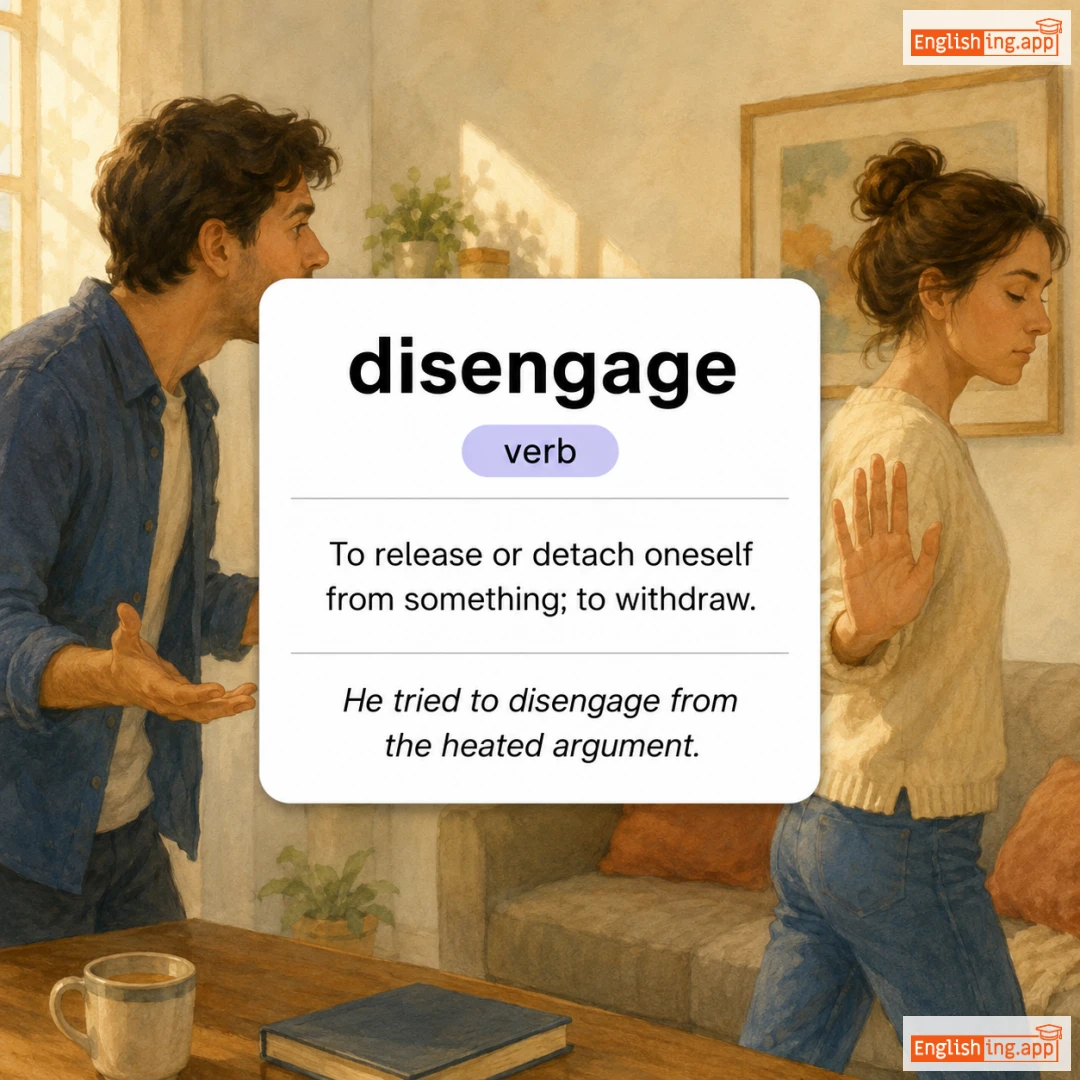
disengage definition card — visual illustration of the meaning
verb C1
/ˌdɪsɪnˈɡeɪdʒ/
освободиться (osvoboditsya)

To release or detach oneself from something; to withdraw.

"He tried to disengage from the heated argument."

"Он попытался освободиться от напряжённой дискуссии." (On popytalsya osvoboditsya ot napryazhennoy diskussii.)
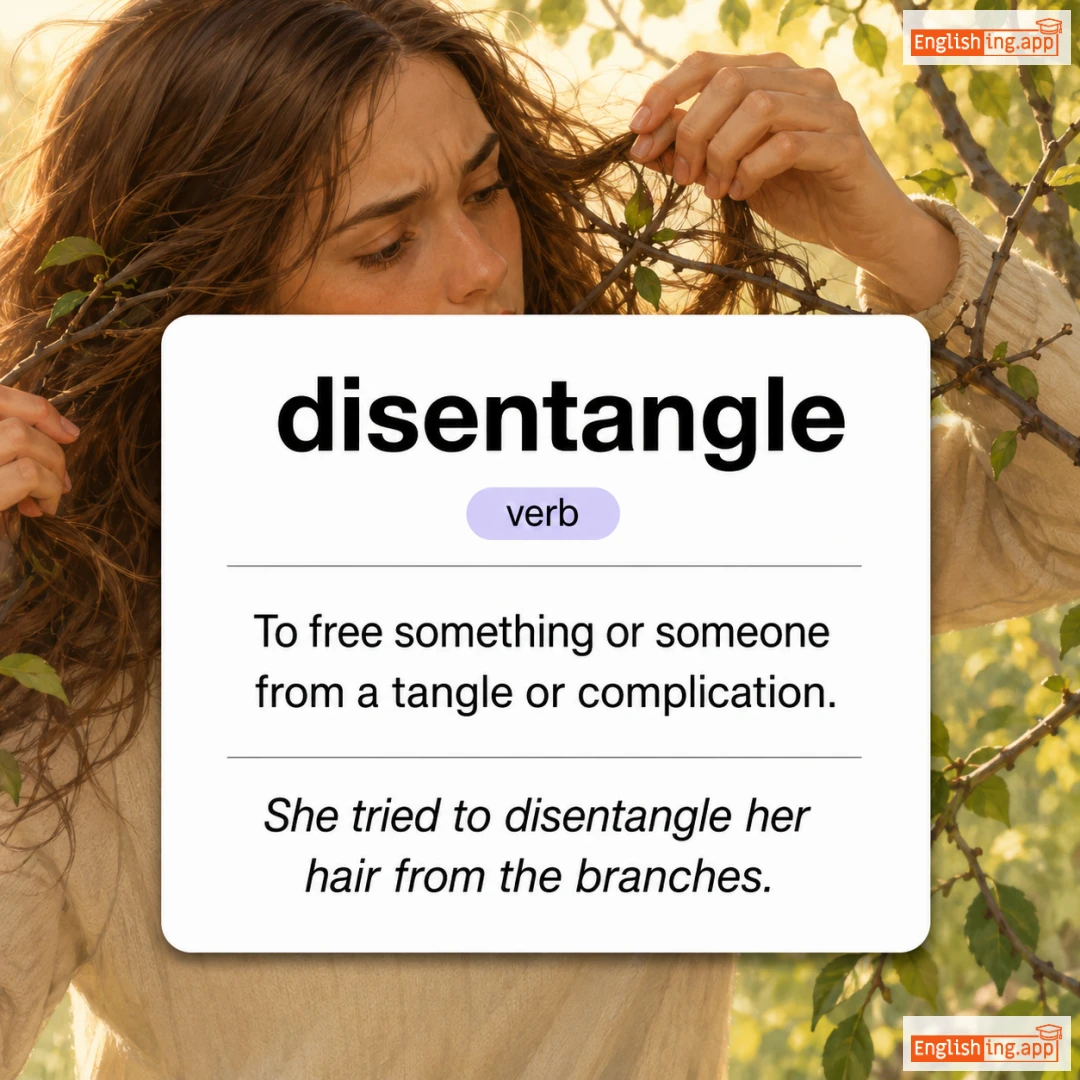
disentangle definition card — visual illustration of the meaning
verb C1
/ˌdɪsɪnˈtæŋɡl/
распутывать (rasputyvat)

To free something or someone from a tangle or complication.

"She tried to disentangle her hair from the branches."

"Она попыталась распутать свои волосы от веток." (Ona popytalas' rasputat' svoi volosy ot vetok.)
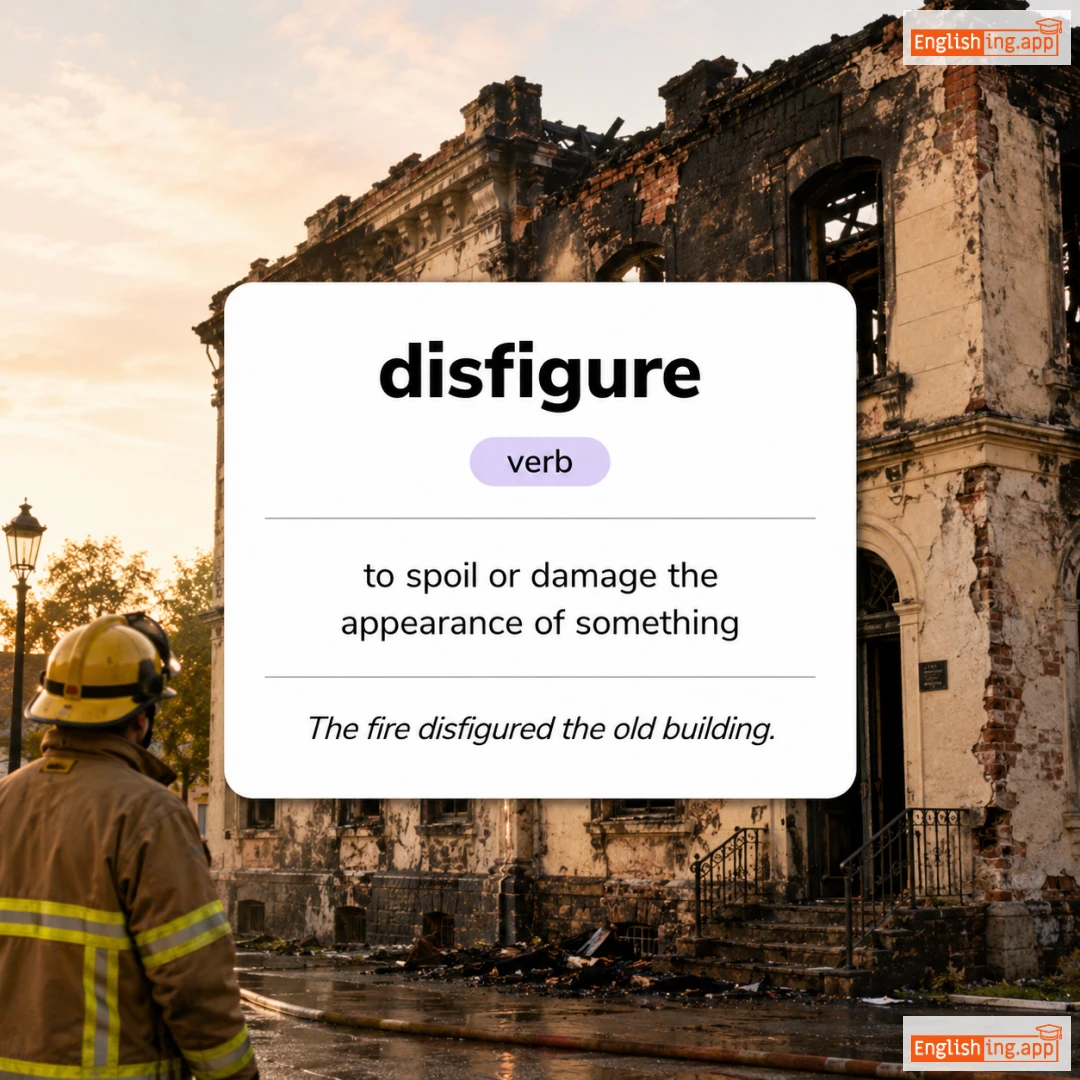
disfigure definition card — visual illustration of the meaning
verb C1
/dɪsˈfɪɡjər/
искажать (iskazhat)

to spoil or damage the appearance of something

"The fire disfigured the old building."

"Огонь исказил старое здание." (Ogon iskazil staroye zdanie.)
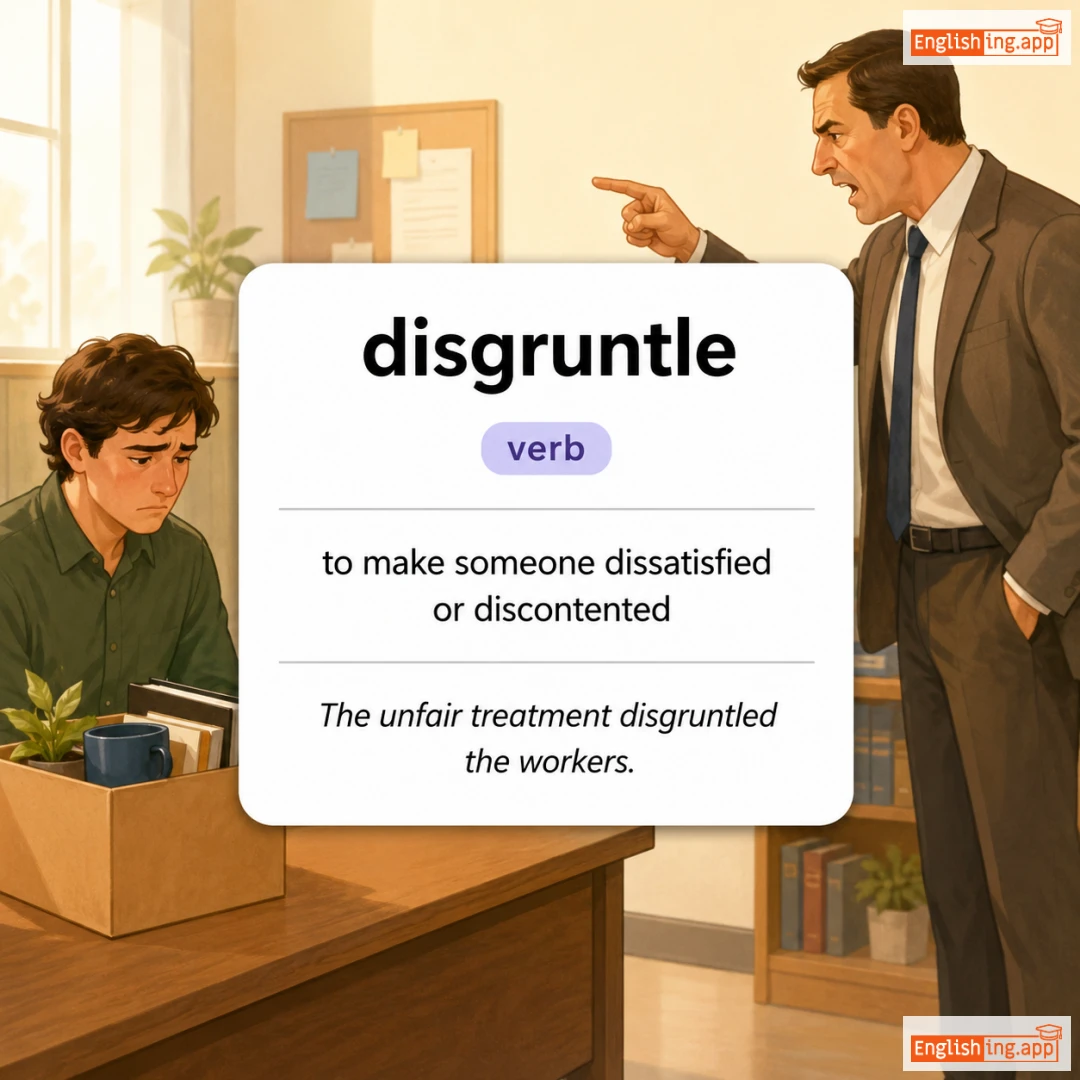
disgruntle definition card — visual illustration of the meaning
verb C1
/dɪsˈɡrʌntl/
раздосадовать (razdosadovat)

to make someone dissatisfied or discontented

"The unfair treatment disgruntled the workers."

"Несправедливое обращение раздосадовало рабочих." (Nespravedlivoe obrashchenie razdosadovalo rabochikh.)
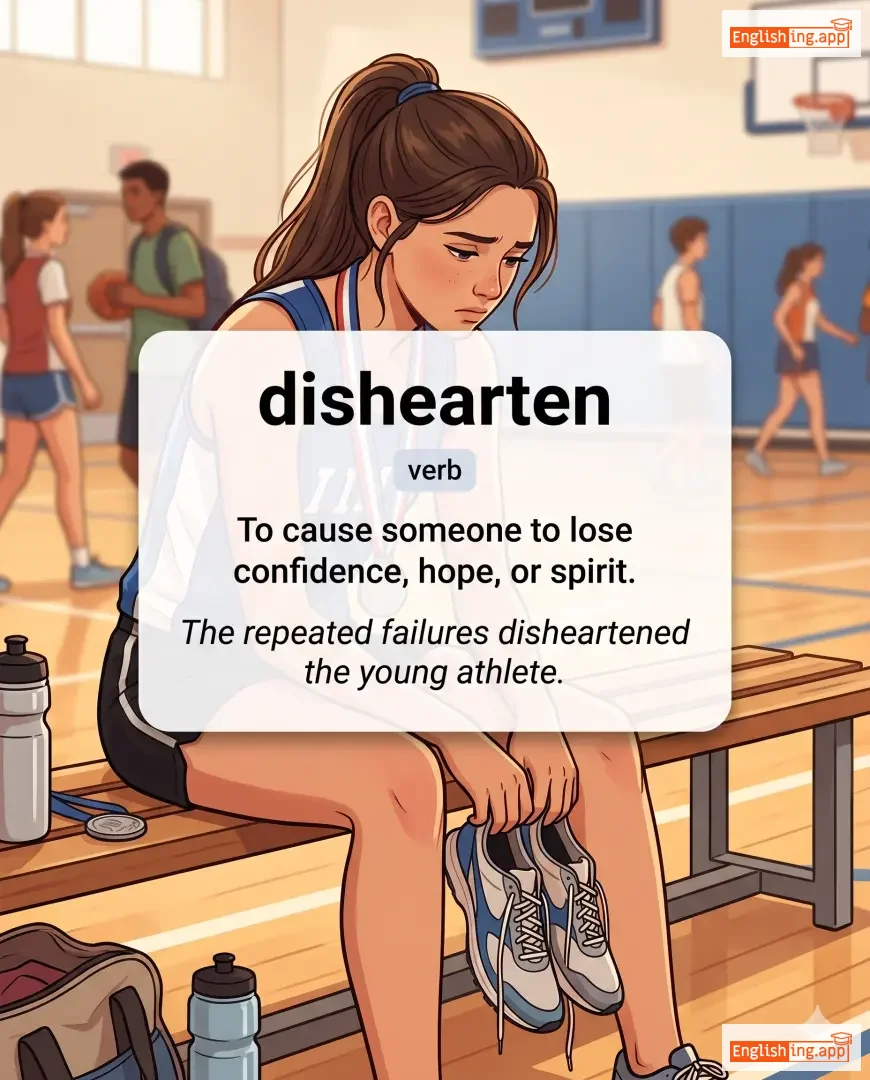
dishearten definition card — visual illustration of the meaning
verb C1
/dɪsˈhɑːrtən/
разочаровывать (razocharovyvat)

To cause someone to lose confidence, hope, or spirit.

"The repeated failures disheartened the young athlete."

"Повторные неудачи разочаровали молодого атлета." (Povtornye neudachi razocharovali molodogo atleta.)
adjective C1
/dɪsˈhɑːrtənd/
упавший духом (upavshiy dukhom)

Having lost confidence, hope, or spirit; discouraged.

"She looked disheartened after receiving the bad news."

"Она выглядела уныло после того, как получила плохие новости." (Ona vyglyadela unylo posle togo, kak poluchila plokhie novosti.)
adjective C1
/dɪˈʃɛvəld/
неопрятный (neopryatnyy)

Untidy, messy, or in disorder, especially of hair or clothing.

"He arrived with disheveled hair and wrinkled clothes."

"Он пришел с неопрятными волосами и помятыми вещами." (On prishel s neopryatnymi volosami i pomyatymi veshchami.)
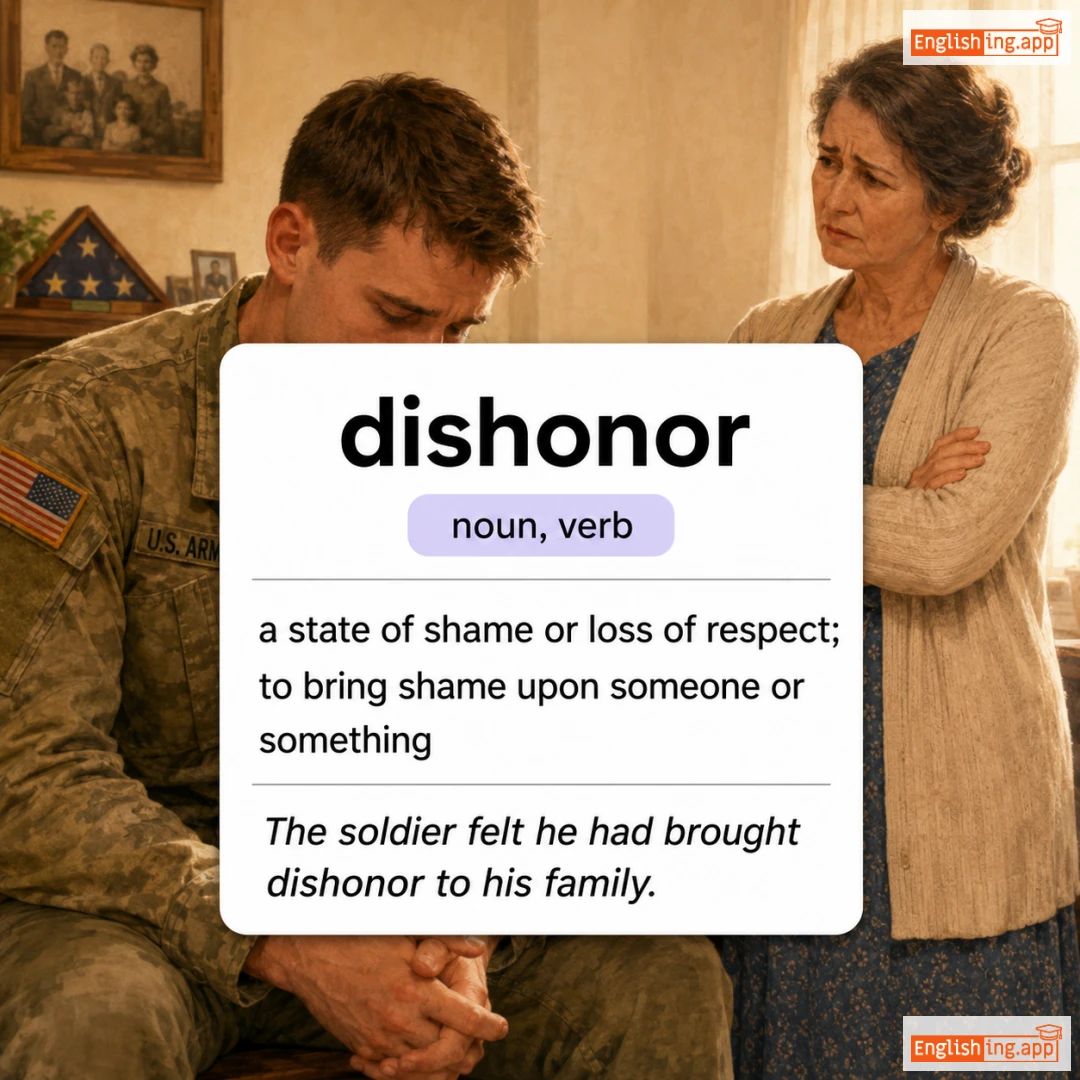
dishonor definition card — visual illustration of the meaning
noun, verb C1
/dɪsˈɑːnər/
бесчестие (besschestie)

a state of shame or loss of respect; to bring shame upon someone or something

"The soldier felt he had brought dishonor to his family."

"Солдат почувствовал, что он принес бесчестие своей семье." (Soldat pochuvstvoval, chto on prines besschestie svoey sem'ye.)
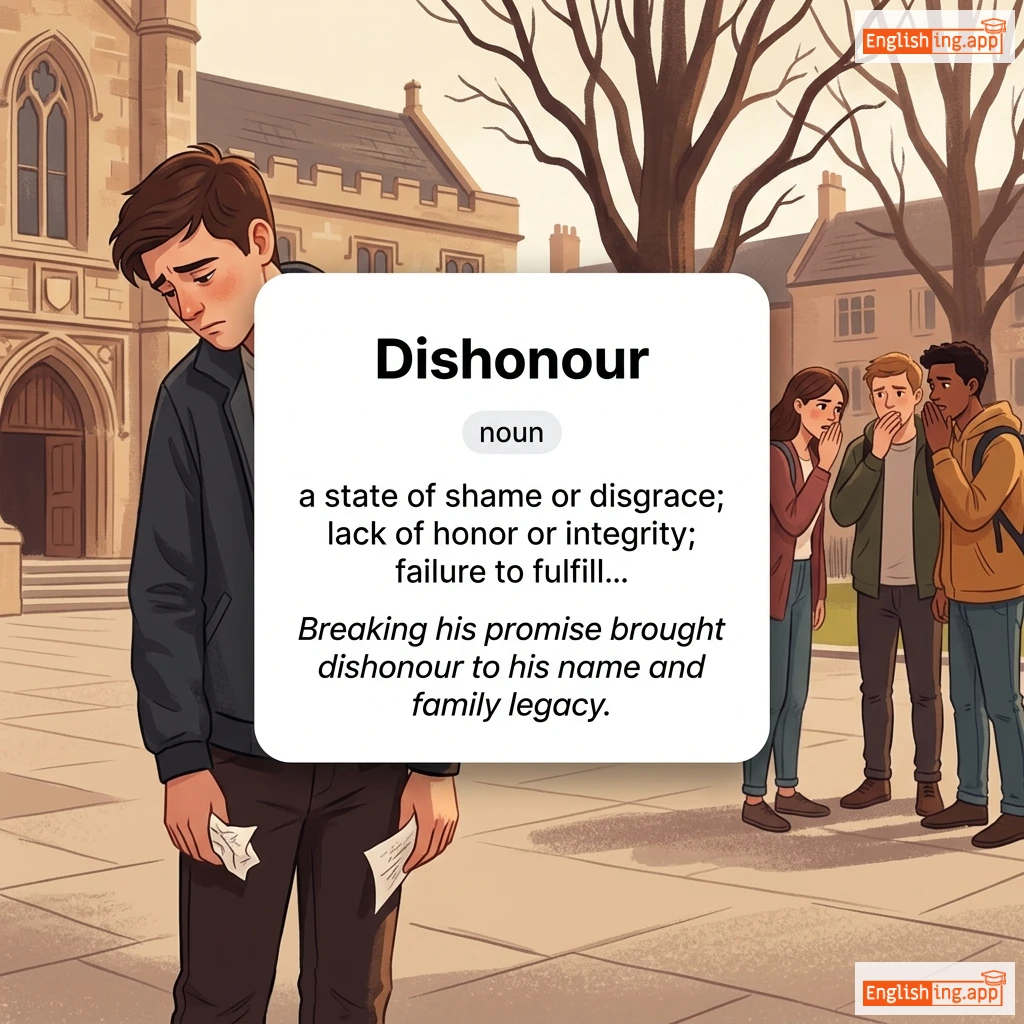
Dishonour definition card — visual illustration of the meaning
noun C1
/dɪsˈɒn.ər/
бесчестье (beshchestye)

a state of shame or disgrace; lack of honor or integrity; failure to fulfill obligations

"Breaking his promise brought dishonour to his name and family legacy."

"Нарушение своего обещания принесло бесчестье его имени и семейному наследию." (Narushenie svoego obeshchaniya prineslo beschestye ego imeni i semeynomu naslediyu.)
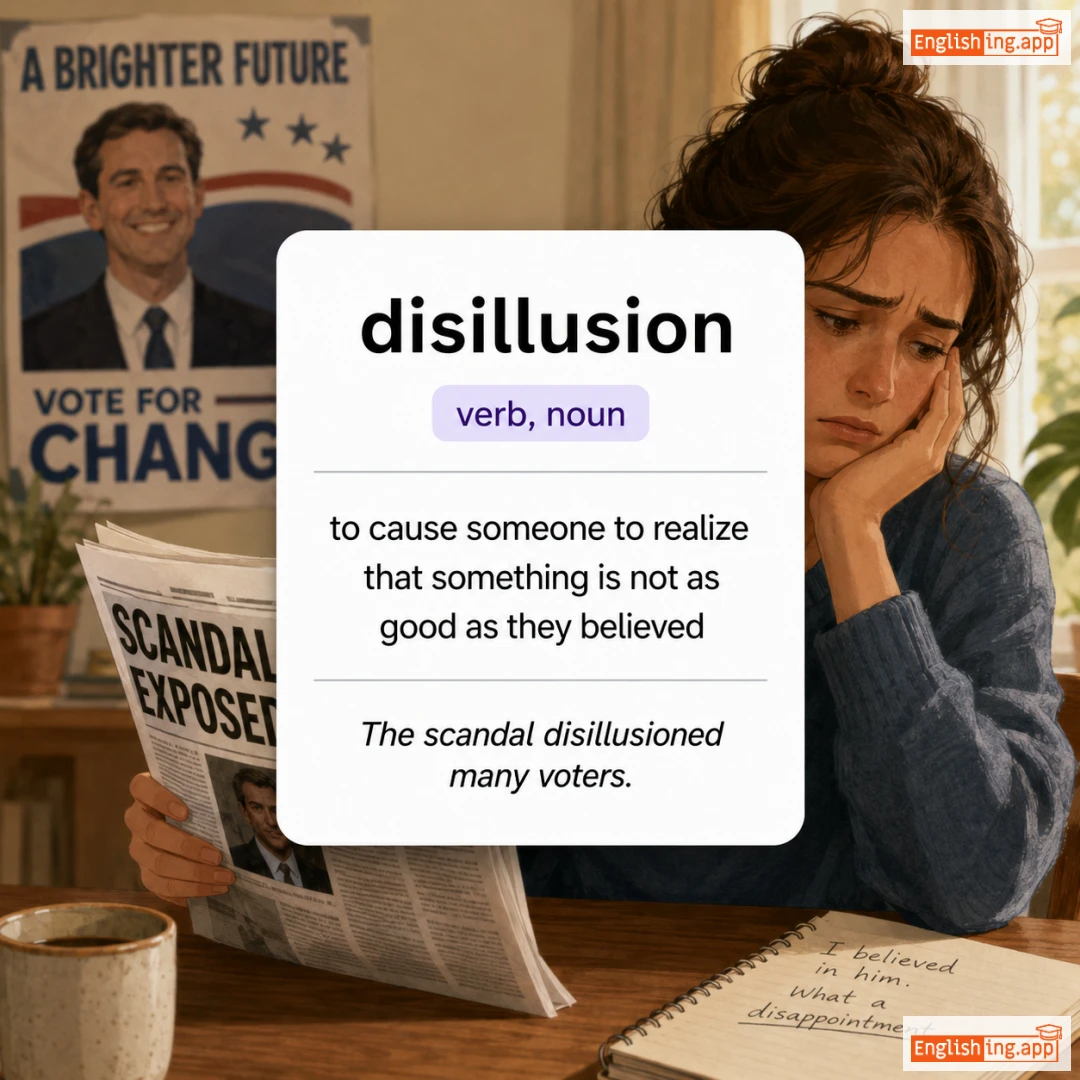
disillusion definition card — visual illustration of the meaning
verb, noun C1
/ˌdɪsɪˈluːʒən/
дезиллюзия (dezilyuziya)

to cause someone to realize that something is not as good as they believed

"The scandal disillusioned many voters."

"Скандал разочаровал многих избирателей." (Skandal razocharoval mnogikh izbirateley.)
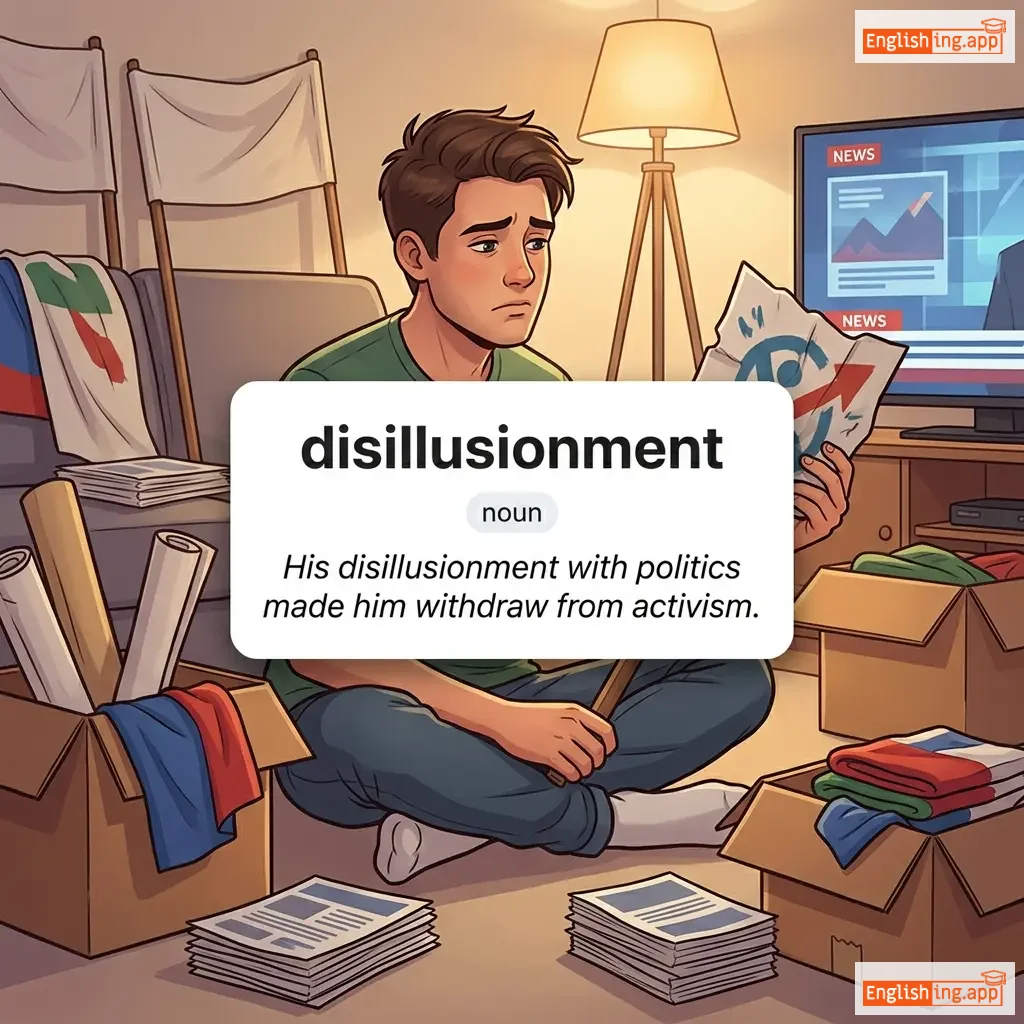
disillusionment definition card — visual illustration of the meaning
noun C1
/ˌdɪs.ɪˈluː.ʒən.mənt/
разочарование (razocharovanie)

A feeling of disappointment resulting from the discovery that something is not as good as one believed it to be.

"His disillusionment with politics made him withdraw from activism."

"Его разочарование в политике заставило его отойти от активизма." (Ego razocharovanie v politike zastavilo ego otoyti ot aktivizma.)
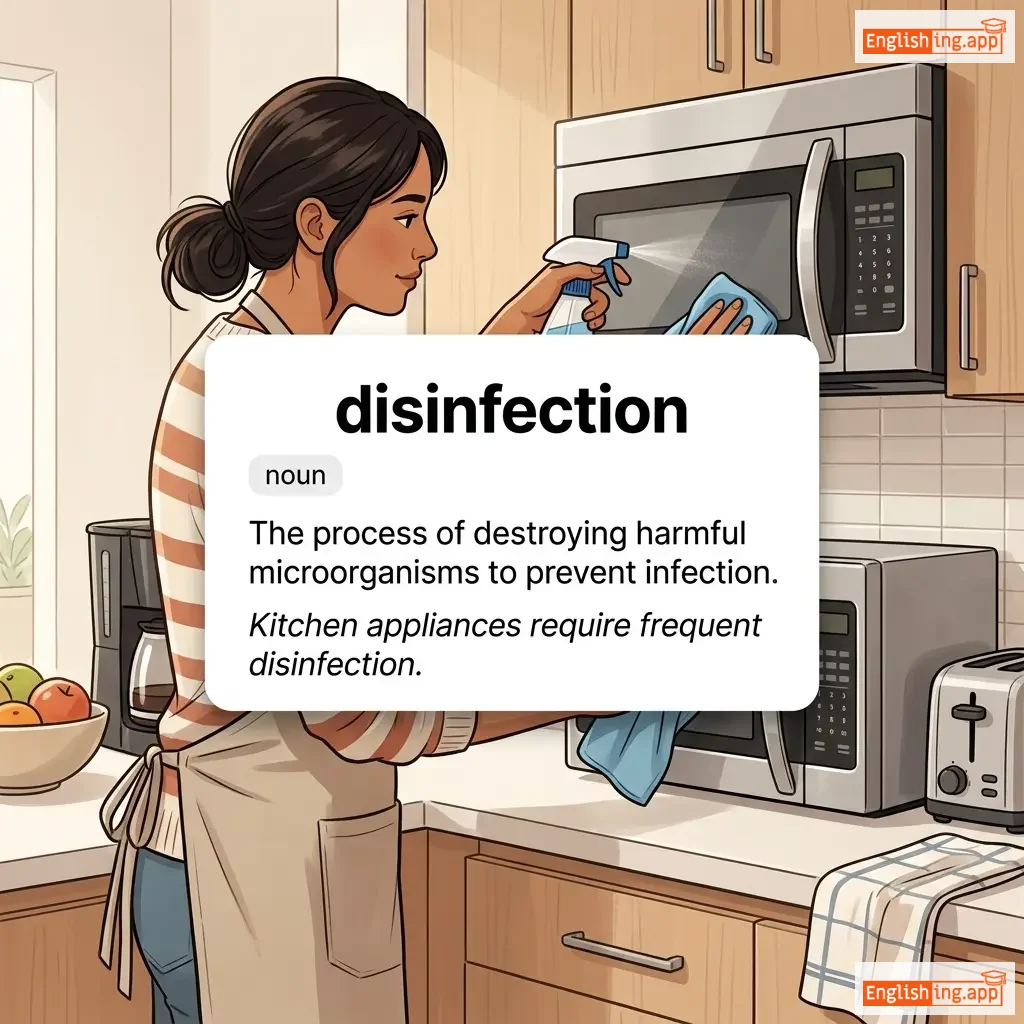
disinfection definition card — visual illustration of the meaning
noun C1
ˌdɪs.ɪnˈfek.ʃən
дезинфекция (dezinfekciya)

The process of destroying harmful microorganisms to prevent infection.

"Kitchen appliances require frequent disinfection."

"Кухонная техника требует регулярной дезинфекции." (Kukhonnaya tekhnika trebuyet regulyarnoy dezinfektsii.)
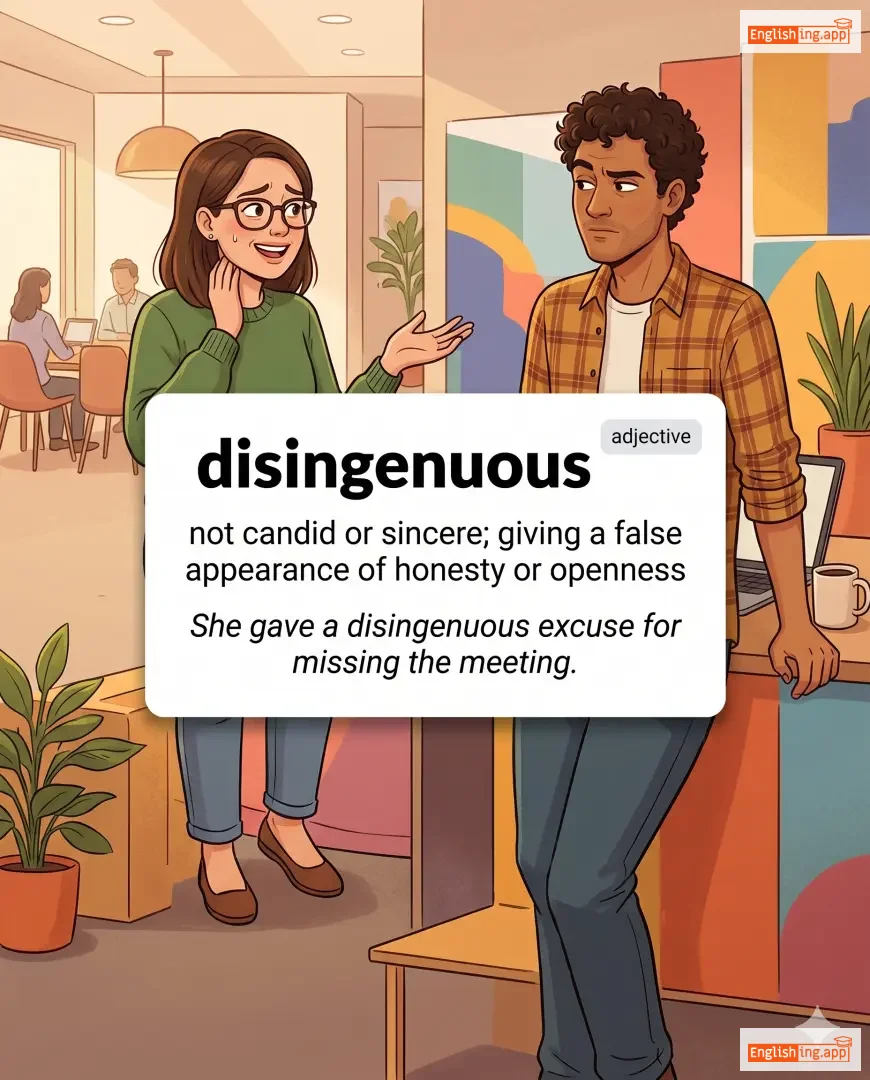
disingenuous definition card — visual illustration of the meaning
adjective C1
/ˌdɪsɪnˈdʒɛnjʊəs/
лицемерный (litsemernij)

not candid or sincere; giving a false appearance of honesty or openness

"She gave a disingenuous excuse for missing the meeting."

"Она дала лицемерное оправдание, чтобы не прийти на встречу." (Ona dala litsemernoe opravdanie, chtoby ne prijt' na vstrechu.)
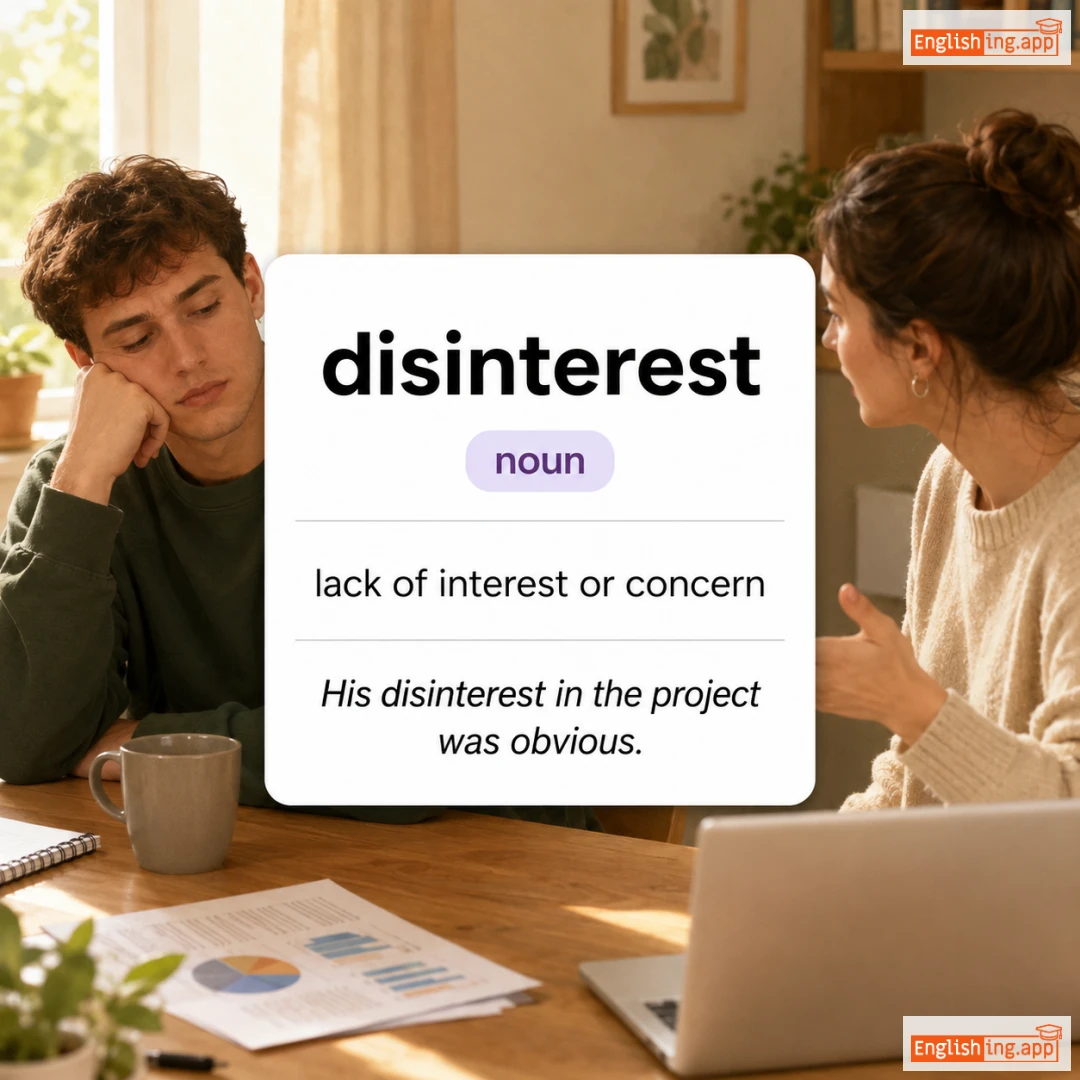
disinterest definition card — visual illustration of the meaning
noun C1
/dɪsˈɪntrəst/
безразличие (bezrazlichie)

lack of interest or concern

"His disinterest in the project was obvious."

"Его безразличие к проекту было очевидно." (Ego bezrazlichie k proyektu bylo ochevidno.)
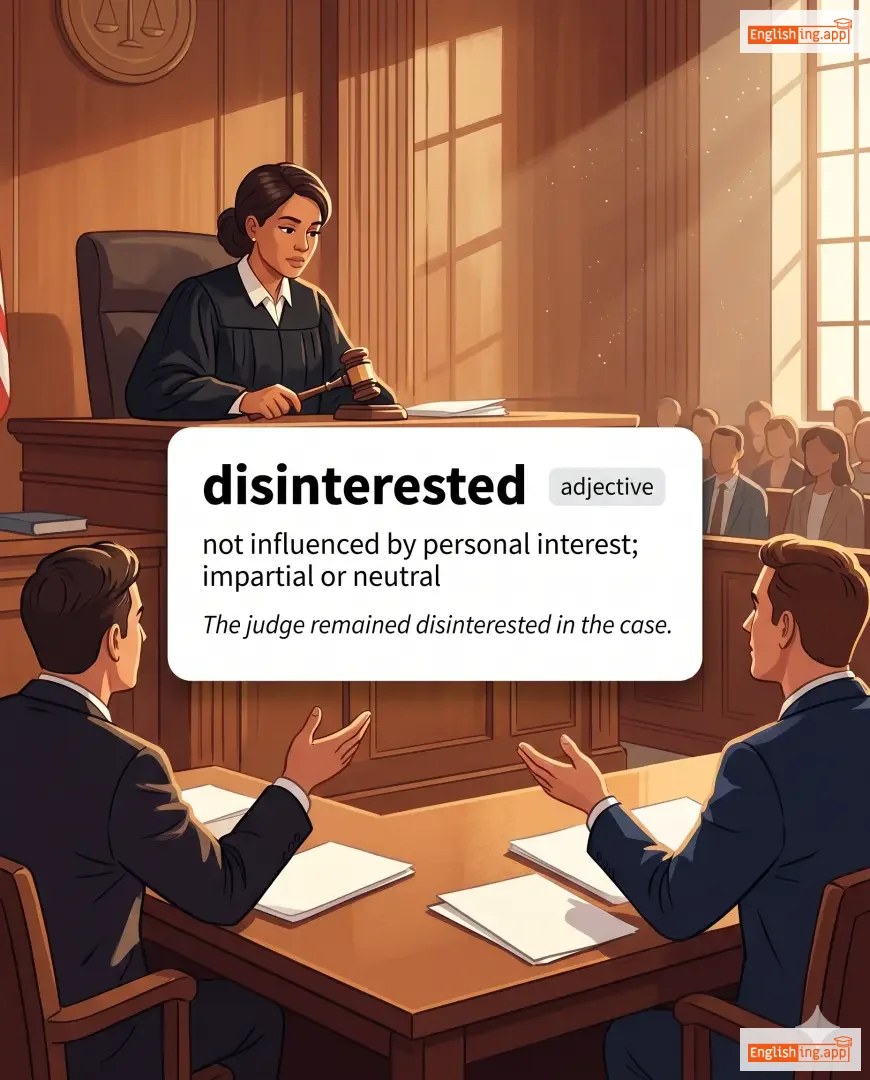
disinterested definition card — visual illustration of the meaning
adjective C1
/dɪsˈɪntrəstɪd/
безинтересный (bezinteresny)

not influenced by personal interest; impartial or neutral

"The judge remained disinterested in the case."

"Судья остался безинтересным в деле." (Sudiya ostalsya bezinteresnym v dele.)
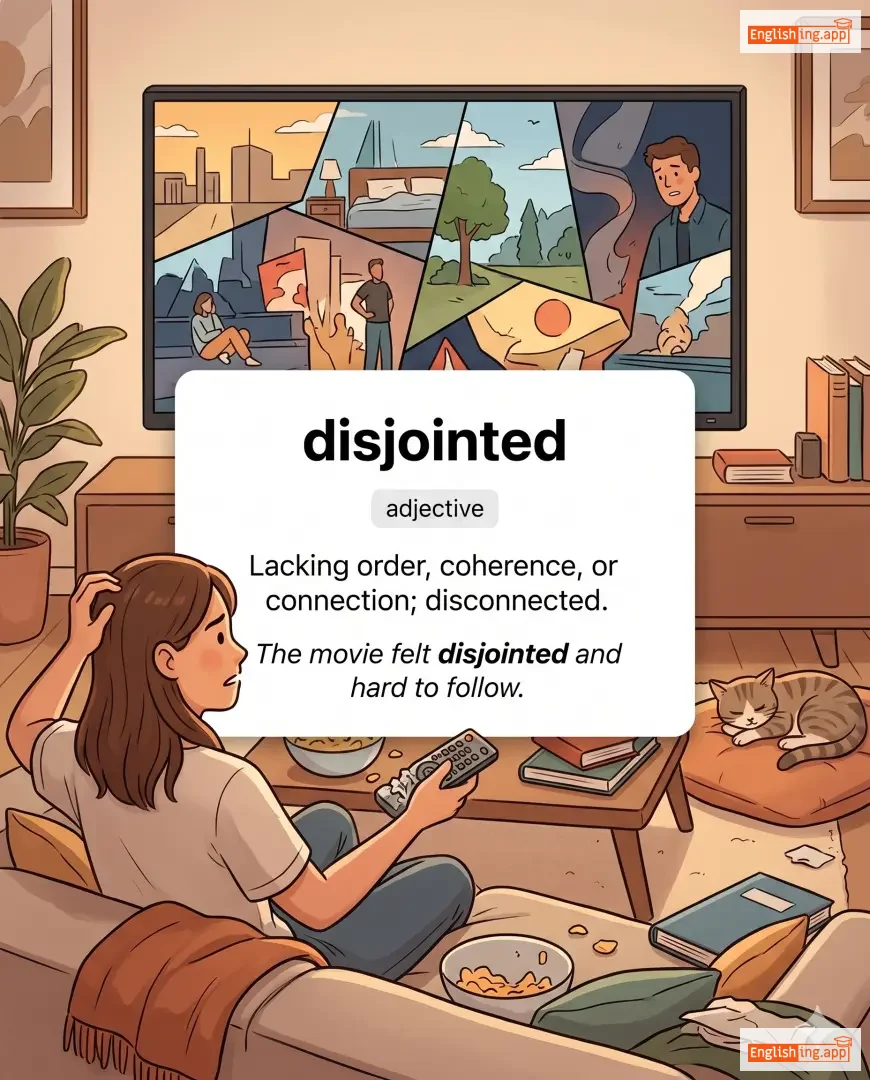
disjointed definition card — visual illustration of the meaning
adjective C1
/dɪsˈdʒɔɪntɪd/
беспорядочный (besporyadochny)

Lacking order, coherence, or connection; disconnected.

"The movie felt disjointed and hard to follow."

"Фильм показался беспорядочным и трудным для восприятия." (Film pokazalsya besporyadochnym i trudnym dlya vospriyatiya.)
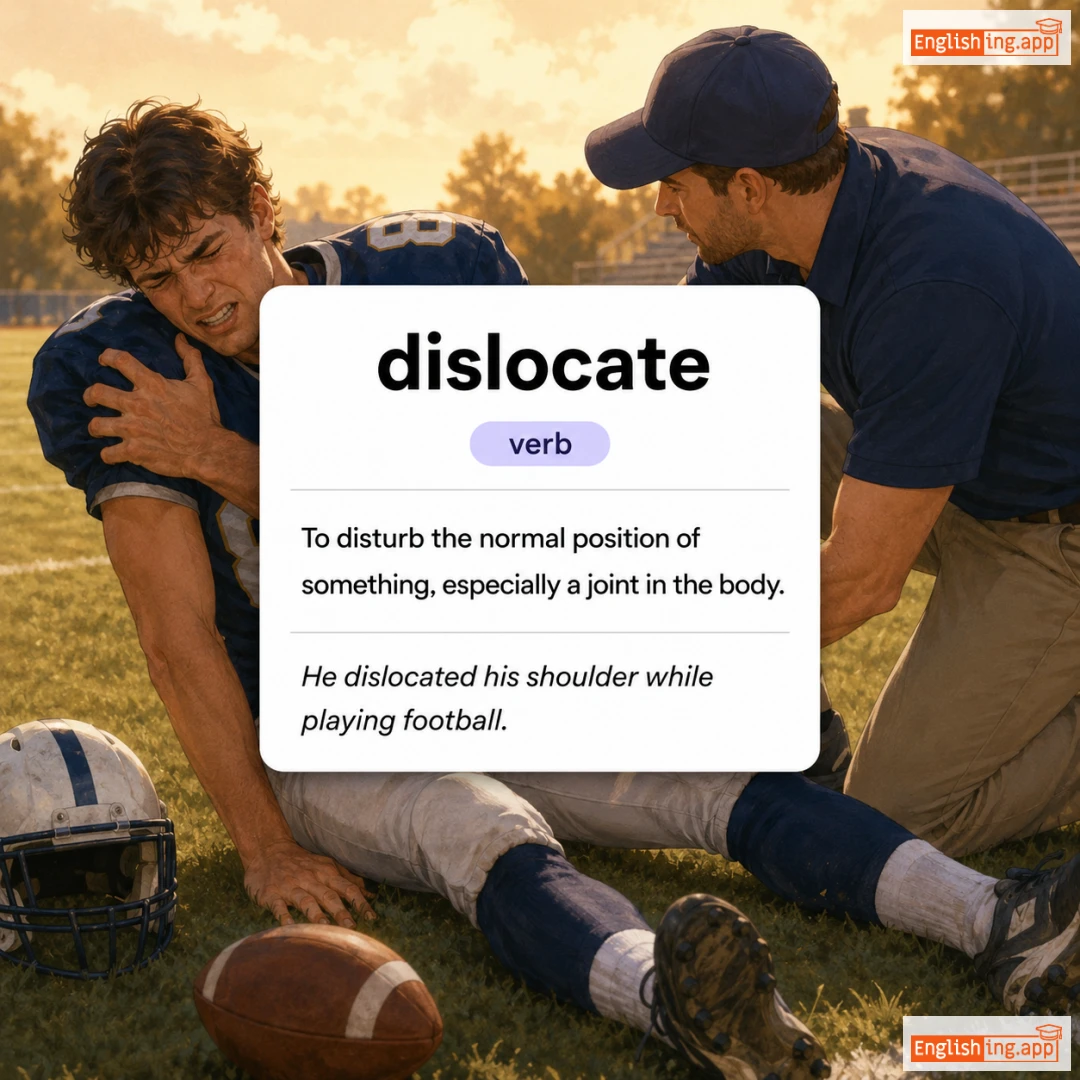
dislocate definition card — visual illustration of the meaning
verb C1
/ˈdɪsləkeɪt/
вывихнуть (vyvikhnut)

To disturb the normal position of something, especially a joint in the body.

"He dislocated his shoulder while playing football."

"Он вывихнул плечо, играя в футбол." (On vyvikhnul plecho, igrya v futbol.)
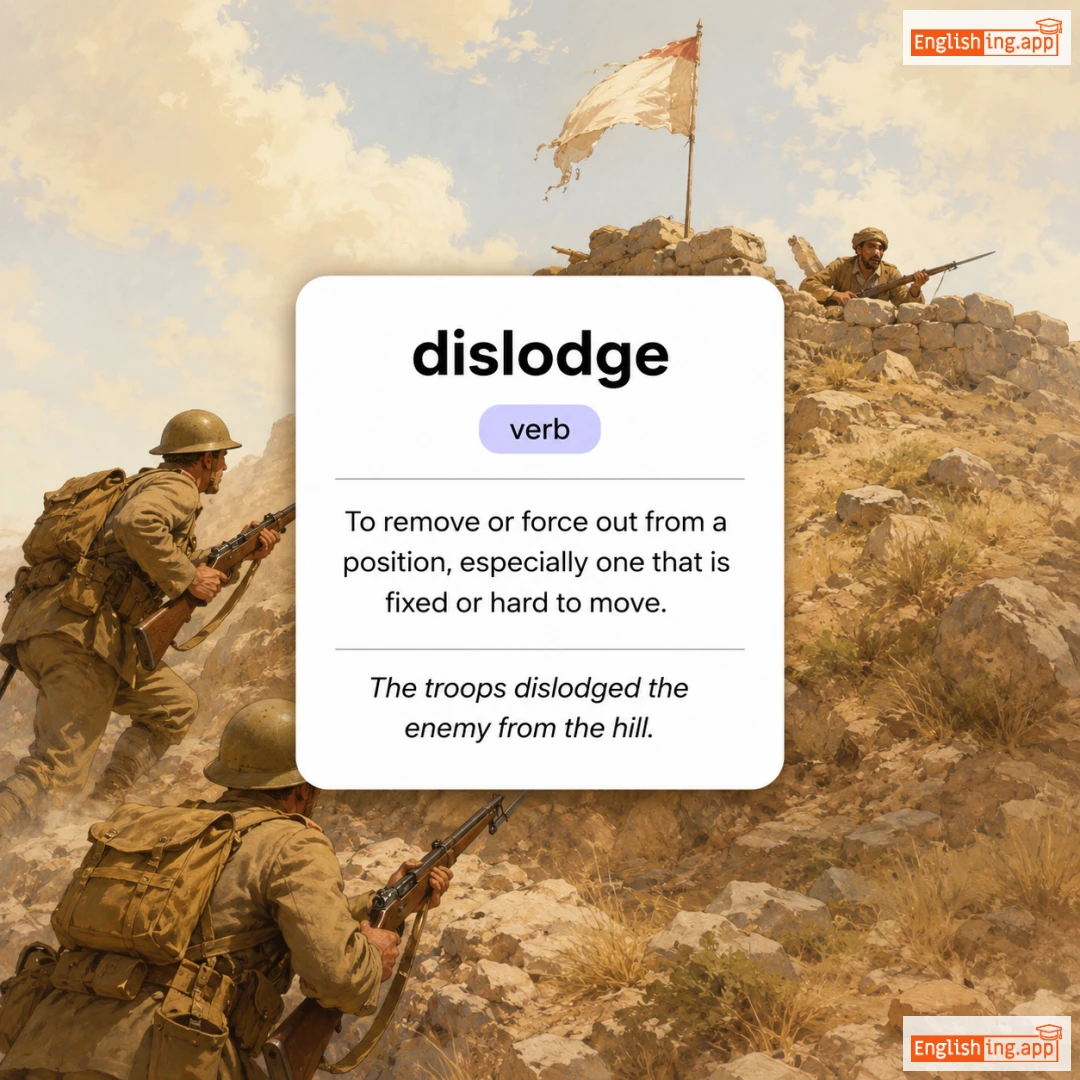
dislodge definition card — visual illustration of the meaning
verb C1
/dɪsˈlɒdʒ/
выталкивать (vytalkivat)

To remove or force out from a position, especially one that is fixed or hard to move.

"The troops dislodged the enemy from the hill."

"Войска вытолкнули врага с холма." (Voyiska vytolkhnuli vraga s kholma.)
adjective C1
/ˈdɪzməl/
мрачный; депрессивный; печальный (mrachniy; depressivniy; pechal'nyy)

gloomy; depressing; causing sadness or despair

"The weather was dismal with heavy rain and dark clouds."

"Погода была мрачной с сильным дождем и темными облаками." (Pogoda byla mrachnoy s sil'nym dozhdem i temnymi oblakami.)
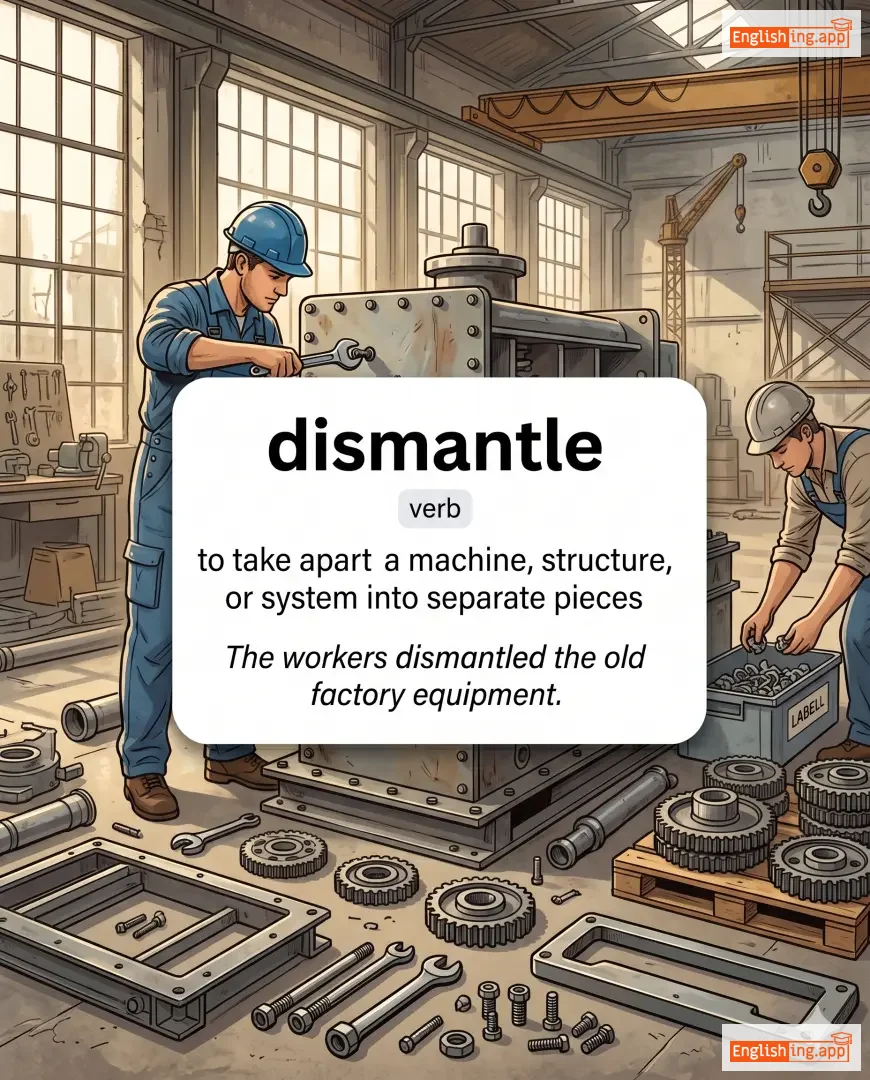
dismantle definition card — visual illustration of the meaning
verb C1
/dɪsˈmæntl̩/
разбирать (razbirat)

to take apart a machine, structure, or system into separate pieces

"The workers dismantled the old factory equipment."

"Рабочие разобрали старое оборудование на фабрике." (Rabochie razobrali staroe oborudovanie na fabrike.)
verb C1
/ˌdɪsˈmaʊnt/
сойти (soyti)

to get off or down from something, especially a horse, bicycle, or motorcycle

"The rider dismounted from the horse after a long journey."

"Всадник сошел с лошади после долгого путешествия." (Vsadnik soshel s loshadi posle dolgogo puteshestviya.)
noun C1
/ˌdɪsəˈbiːdiəns/
неповиновение (nepovinovenie)

failure or refusal to obey rules, laws, or authority

"The child's disobedience worried his parents."

"Неповиновение ребенка обеспокоило его родителей." (Nepovinoenie rebenka obespokoilo ego roditelya.)
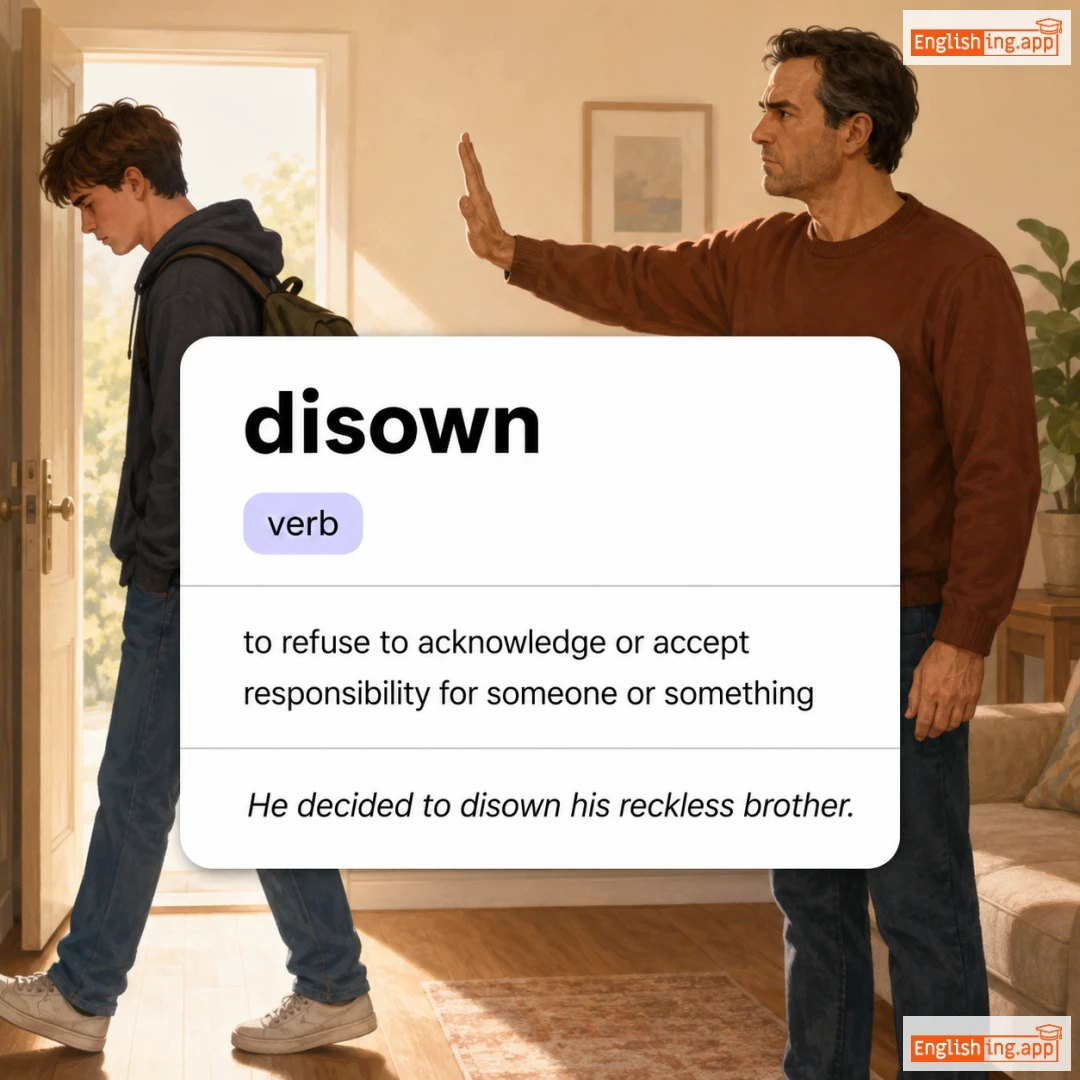
disown definition card — visual illustration of the meaning
verb C1
/dɪsˈoʊn/
отрекаться (otrekatsya)

to refuse to acknowledge or accept responsibility for someone or something

"He decided to disown his reckless brother."

"Он решил отказаться от своего безрассудного брата." (On reshil otkazatsya ot svoego bezrassudnogo brata.)
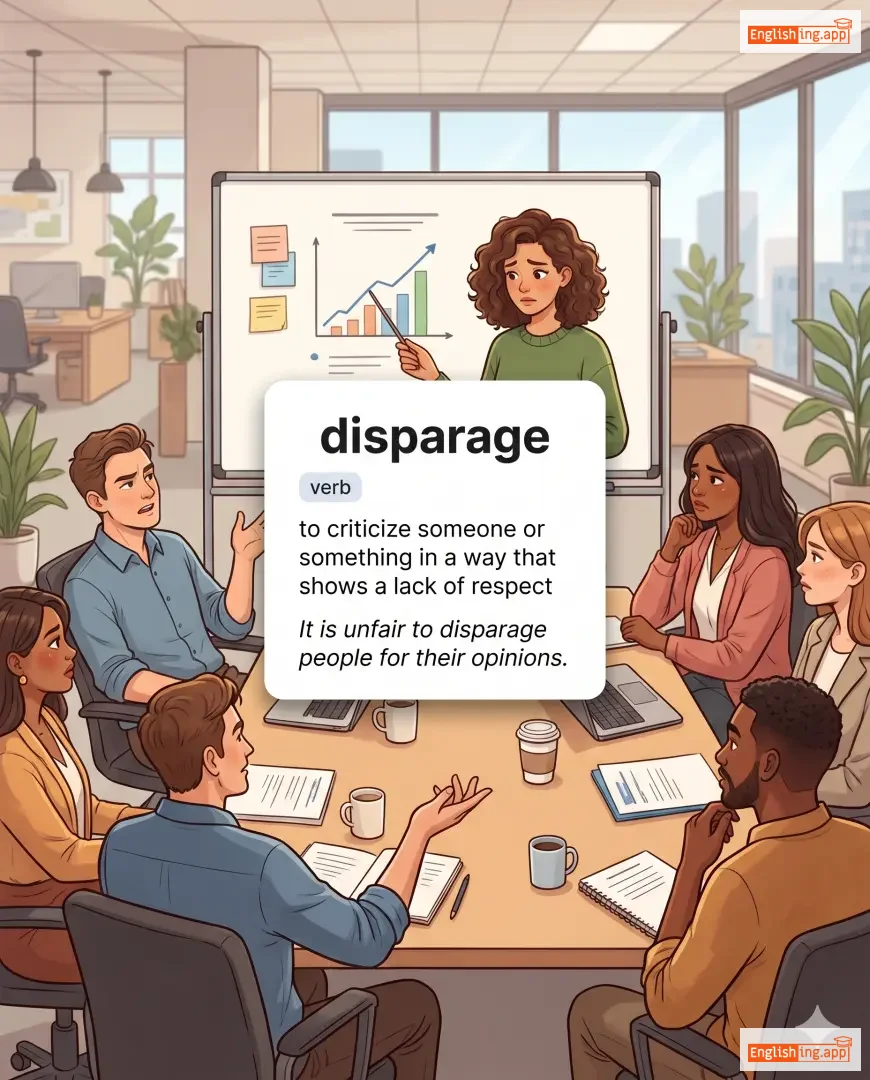
disparage definition card — visual illustration of the meaning
verb C1
/dɪsˈpærɪdʒ/
унижать (unizhat)

to criticize someone or something in a way that shows a lack of respect

"It is unfair to disparage people for their opinions."

"Несправедливо унижать людей за их мнения." (Nespravedlivo unizhat' lyudey za ikh mneniya.)
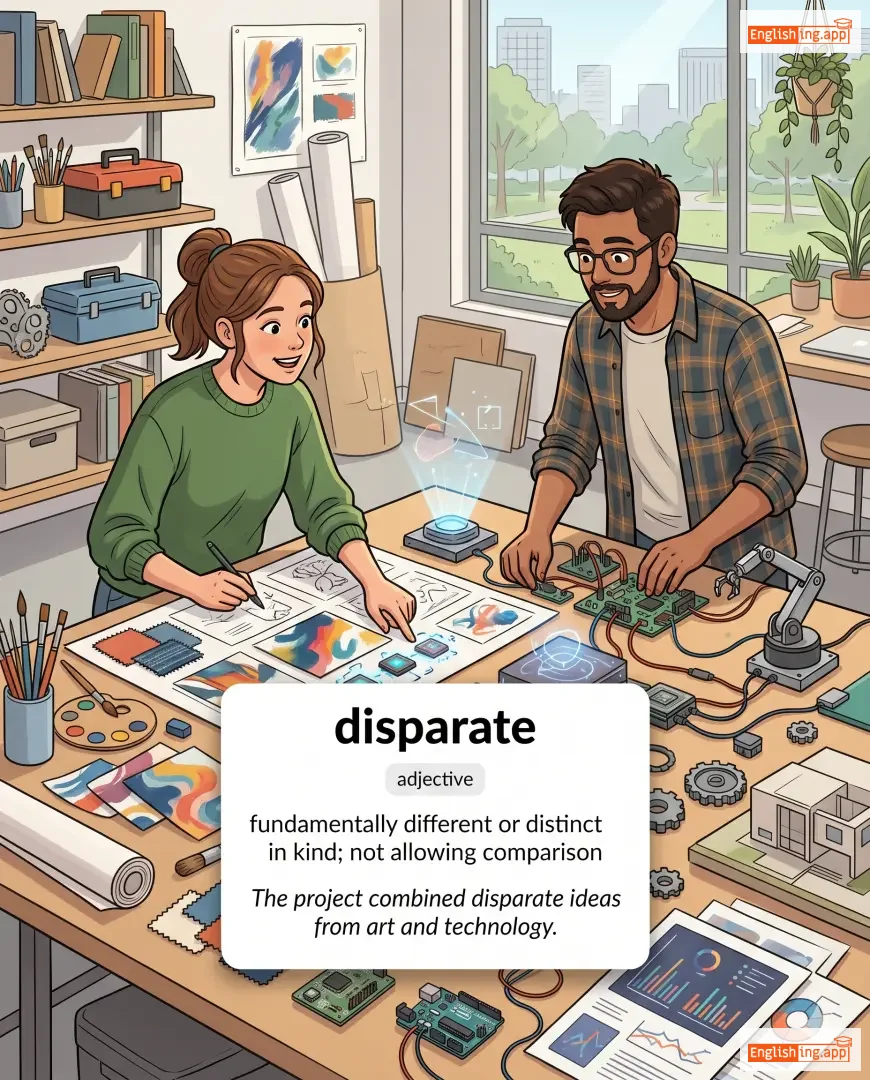
disparate definition card — visual illustration of the meaning
adjective C1
/ˈdɪspərət/
непохожие (nepokhozhie)

fundamentally different or distinct in kind; not allowing comparison

"The project combined disparate ideas from art and technology."

"Проект объединил непохожие идеи из искусства и технологий." (Proyekt obyedinił nepokhodiye idei iz iskusstva i tekhnologiy.)
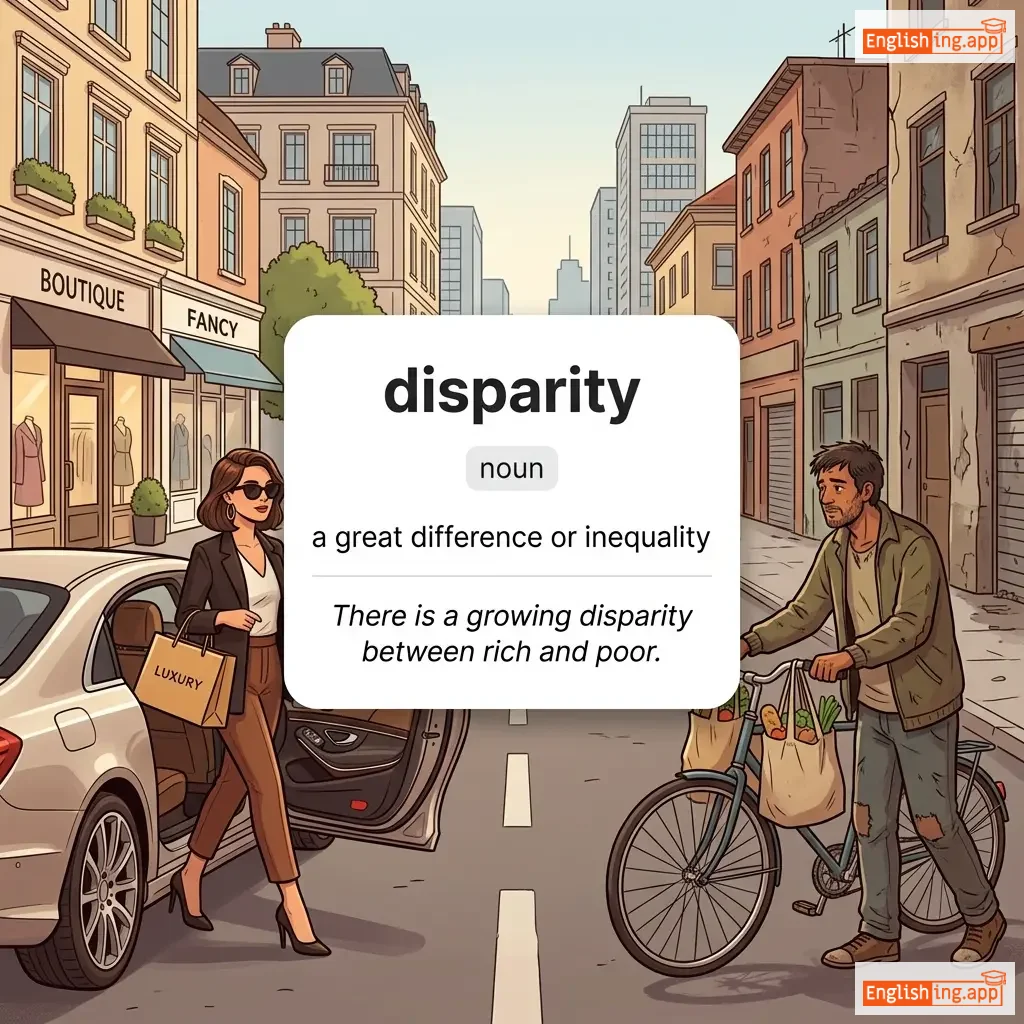
disparity definition card — visual illustration of the meaning
noun C1
/dɪˈspærəti/
неравенство (neravenstvo)

a great difference or inequality

"There is a growing disparity between rich and poor."

"Существует растущее неравенство между богатыми и бедными." (Sushchestvuet rastushchee neravenstvo mezhdu bogatymi i bednymi.)
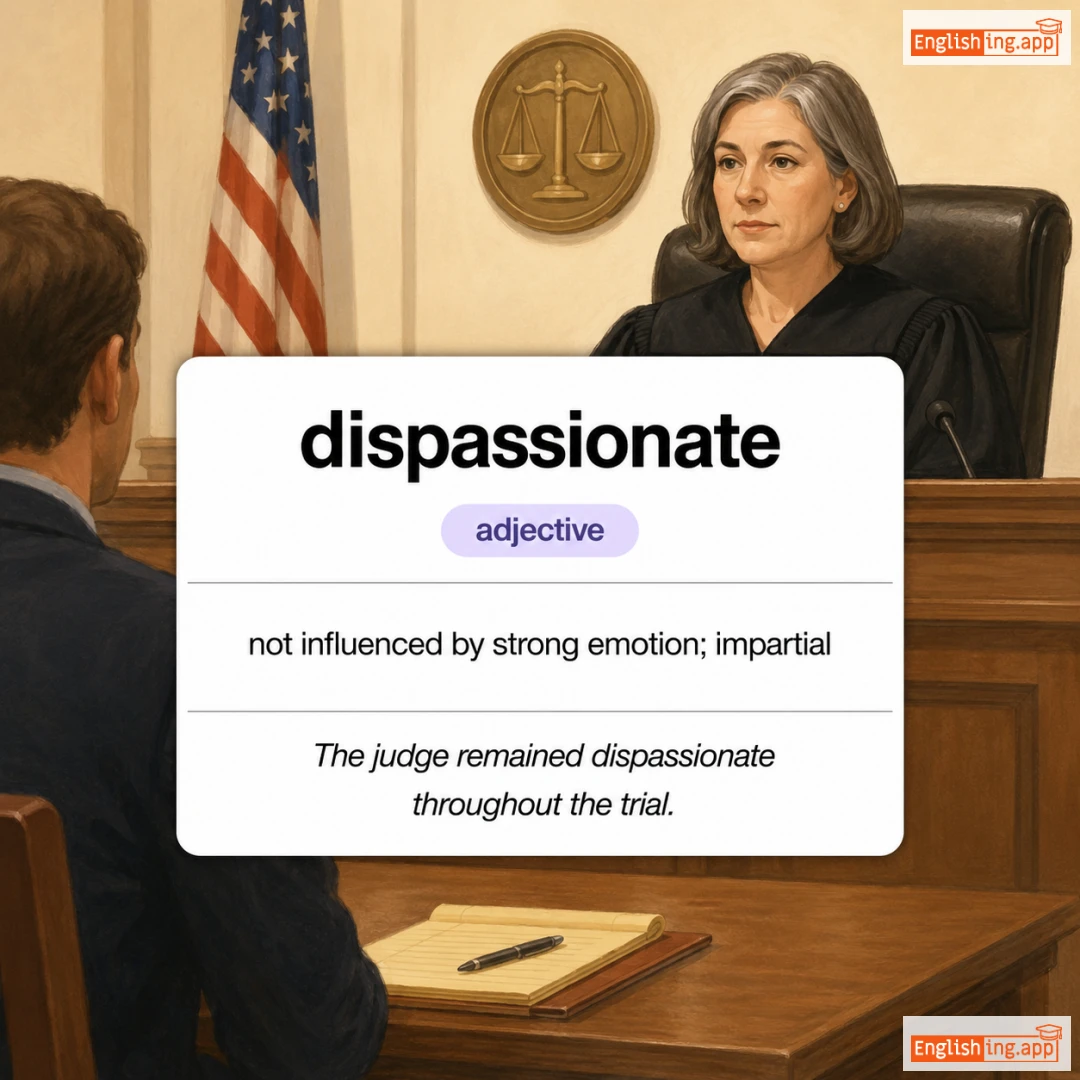
dispassionate definition card — visual illustration of the meaning
adjective C1
/dɪsˈpæʃənət/
беспристрастный (bespristrastnyy)

not influenced by strong emotion; impartial

"The judge remained dispassionate throughout the trial."

"Судья оставался беспристрастным на протяжении всего процесса." (Sud'ya ostavalsya bespristrastnym na protyazhenii vsego protsessa.)
verb C1
/dɪˈspɛl/
рассеивать (rasseivat)

to make a doubt, feeling, or belief disappear

"The teacher's explanation dispelled the students' confusion."

"Объяснение учителя развеяло путаницу у студентов." (Obyasnenie uchitelya razveyalo putanitsu u studentov.)
noun C1
/ˌdɪspɛnˈseɪʃən/
исключение (dispenseyshn)

An exemption from a rule or usual requirement; a system of order, government, or control.

"The school granted him a special dispensation to skip the exam due to illness."

"Школа предоставила ему особое разрешение пропустить экзамен из-за болезни." (The school granted him a special dispensation to skip the exam due to illness.)
verb C1
/dɪˈspɛns/
распределять (raspredelyat')

To distribute or provide something, especially in portions.

"The machine dispenses clean drinking water."

"Машина диспенсирует чистую питьевую воду." (Mashina dispensiruet chistuyu pit'evuyu vodu.)
verb C1
/dɪˈspɜːrs/
распылять (raspylyat')

To scatter or spread widely in different directions.

"The police used tear gas to disperse the crowd."

"Полиция использовала слезоточивый газ для разгона толпы." (Politsiya ispol'zovala slezotochivyy gaz dlya razgona tolpy.)
adjective C1
/dɪˈspɜːrst/
распространённый (rasprostranenny)

Scattered or spread across a wide area.

"The dispersed population made it difficult to provide public services."

"Распределённое население усложнило предоставление общественных услуг." (Raspredelennoe naselenie uslozhnylo predostavlenie obshchestvennykh uslug.)
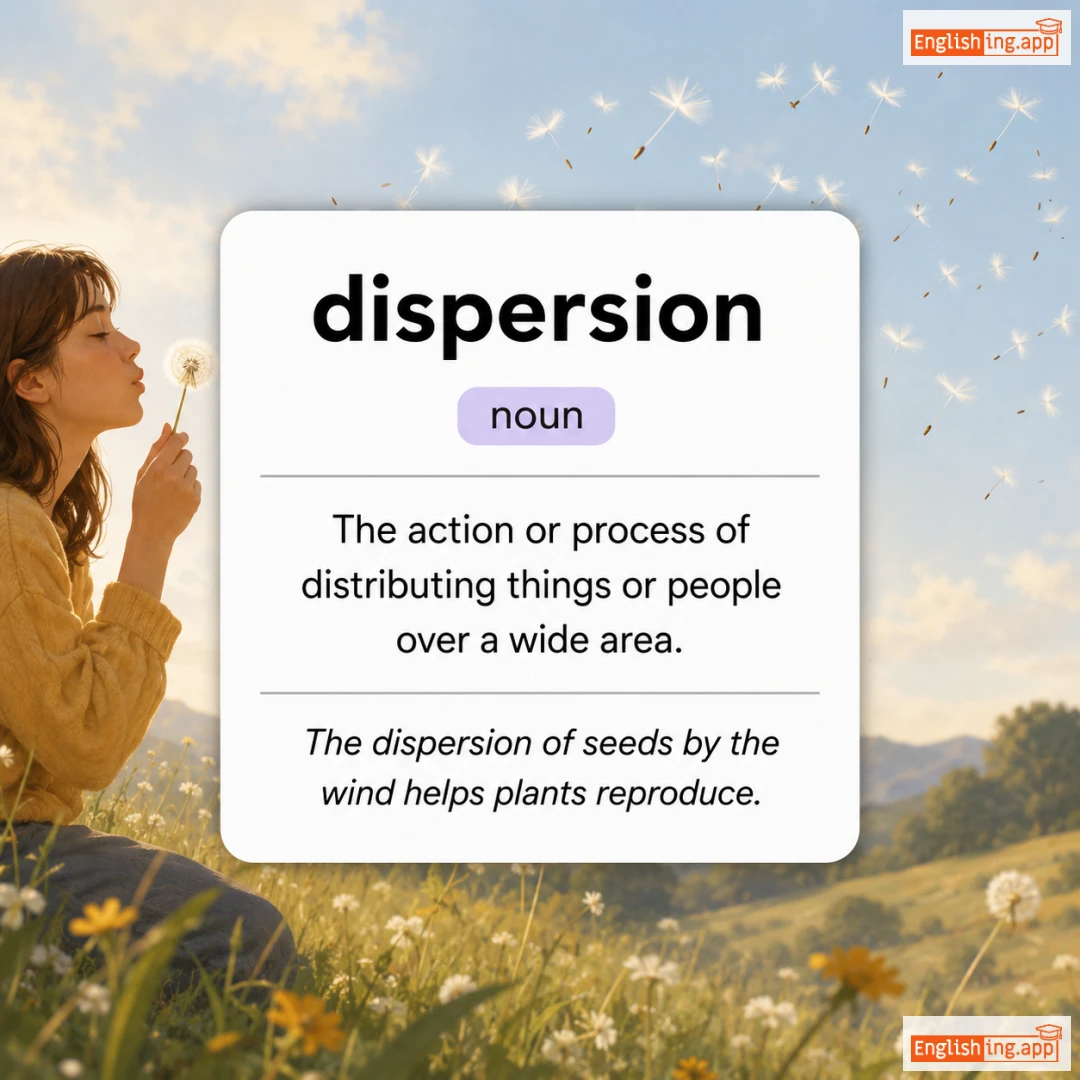
dispersion definition card — visual illustration of the meaning
noun C1
/dɪˈspɜːrʒən/
распространение (rasprostranenie)

The action or process of distributing things or people over a wide area.

"The dispersion of seeds by the wind helps plants reproduce."

"Разбрасывание семян ветром помогает растениям размножаться." (Razbrasyvaniye semyan vetrom pomogaet rasteniyam razmnozhat'sya.)
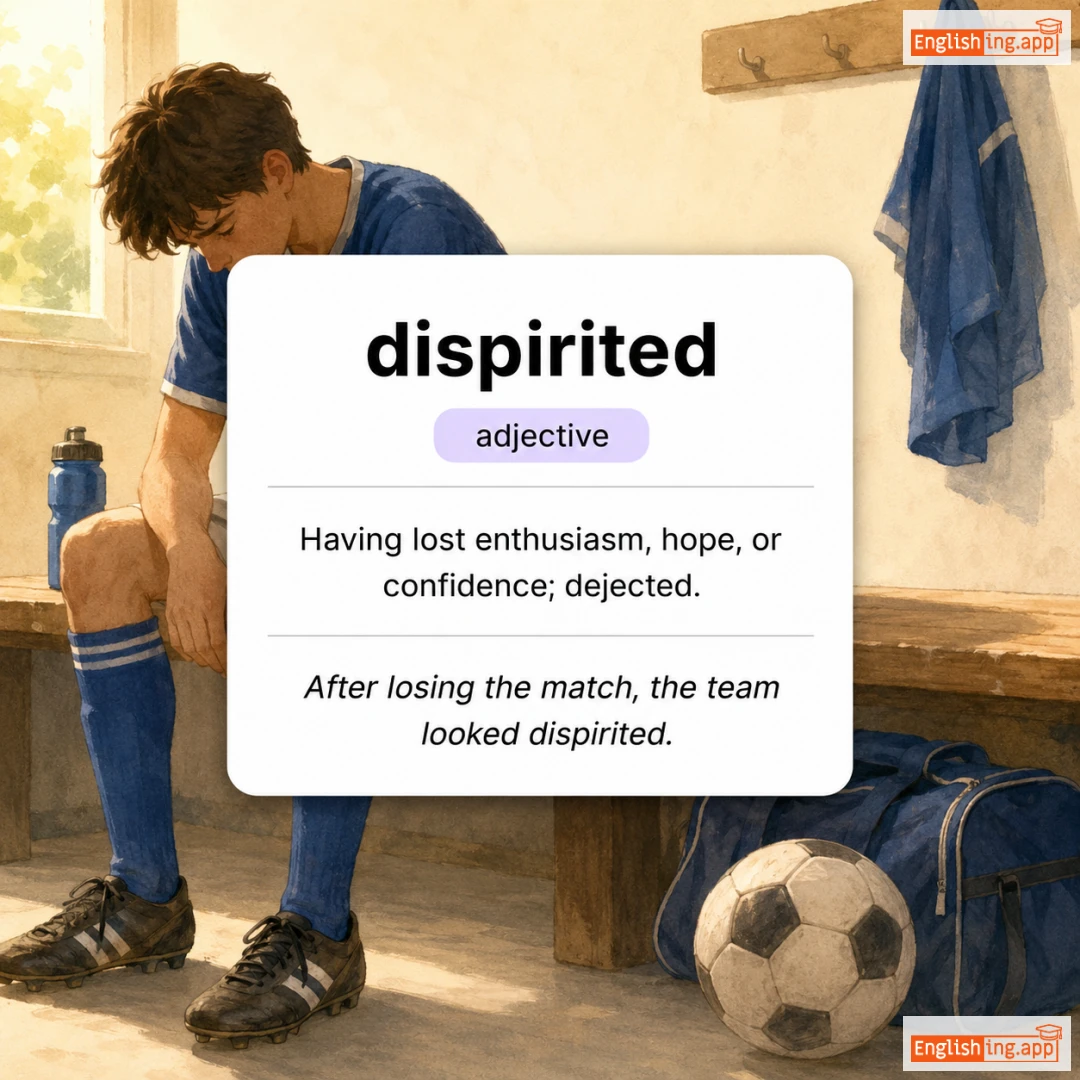
dispirited definition card — visual illustration of the meaning
adjective C1
/dɪˈspɪrɪtɪd/
удручённый (udryuchyonny)

Having lost enthusiasm, hope, or confidence; dejected.

"After losing the match, the team looked dispirited."

"После поражения команда выглядела удручённой." (Posle porazheniya komanda vyglyadela udryuchennoy.)
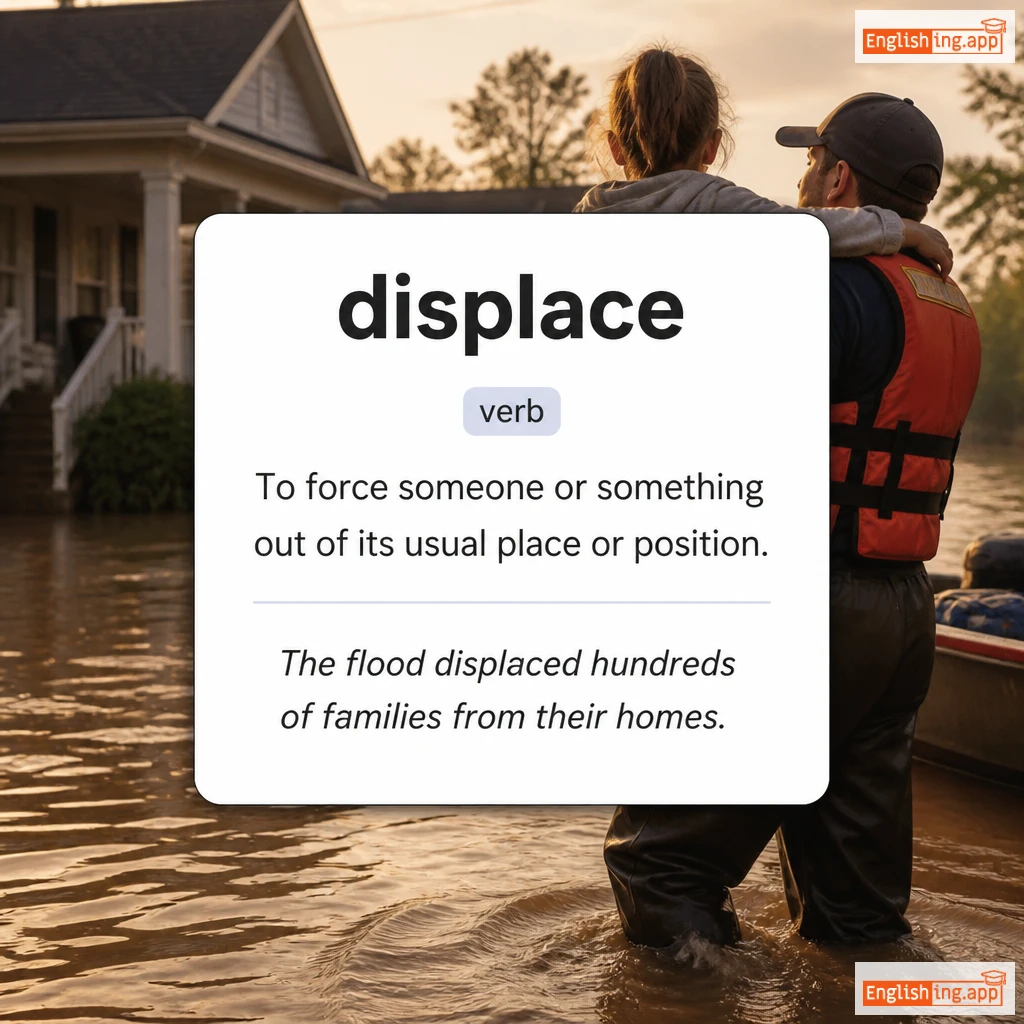
displace definition card — visual illustration of the meaning
verb C1
/dɪsˈpleɪs/
перемещать (peremeshchat)

To force someone or something out of its usual place or position.

"The flood displaced hundreds of families from their homes."

"Наводнение переместило сотни семей из их домов." (Navodnenie peremestilo sotni semej iz ikh domov.)
noun C1
/ˌdɪspəˈzɪʃən/
характер (kharakter)

A person's usual attitude or temperament; arrangement or tendency.

"She has a cheerful disposition despite the difficulties."

"У неё веселый характер, несмотря на трудности." (U neyo veselyy kharakter, nesmotrya na trudnosti.)
verb C1
/dɪsˈpruːv/
опровергать (oprovergat)

to show that something is false or wrong

"The scientist worked hard to disprove the old theory."

"Ученый усердно работал, чтобы опровергнуть старую теорию." (Uchenyi userdno rabotal, chtoby oprovergnut' staruyu teoriu.)
verb C1
/dɪsˈkwɑːlɪfaɪ/
дисквалифицировать (diskvalifitsirovat)

to officially prevent someone from participating or being eligible

"The referee decided to disqualify the player for cheating."

"Арбитр решил дисквалифицировать игрока за мошенничество." (Arbitr reshil diskvalifitsirovat igroka za moshennichestvo.)
noun/verb C1
/dɪsˈkwaɪət/

A feeling of worry or unease; to make someone feel anxious or uneasy.

"The strange silence filled the room with disquiet."

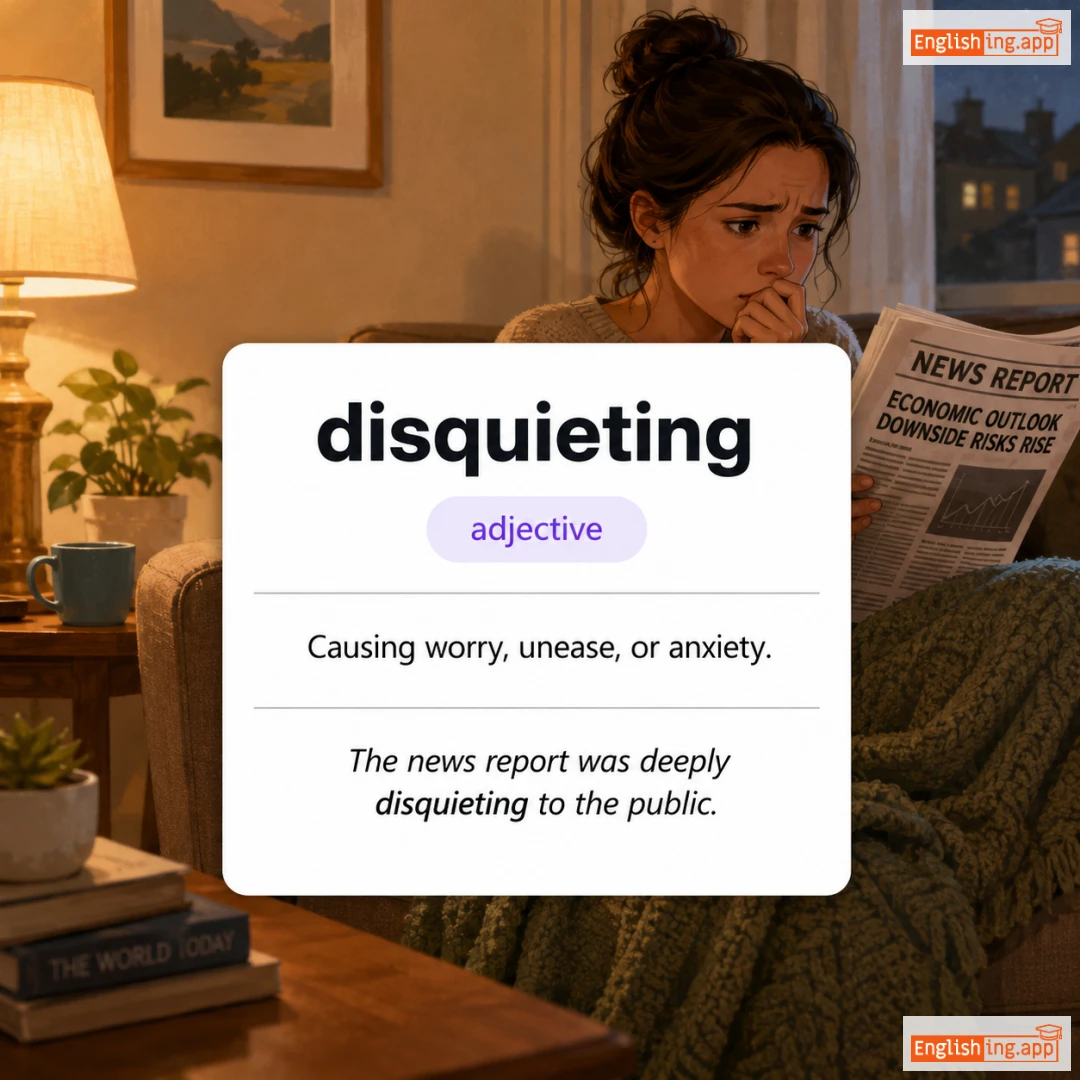
disquieting definition card — visual illustration of the meaning
adjective C1
/dɪsˈkwaɪətɪŋ/
тревожный (trevozhny)

Causing worry, unease, or anxiety.

"The news report was deeply disquieting to the public."

"Новостной репортаж был глубоко тревожным для общественности." (Novostnoy reportazh byl gluboko trevozhnym dlya obshchestvennosti.)
adjective C1
/dɪsˈrɛpjətəbl̩/
позорный (pozornyj)

having a bad reputation; not considered respectable or trustworthy

"The journalist avoided staying in the disreputable part of town."

"Журналист избегал оставаться в позорной части города." (Zhurnalist izbegal ostavat'sya v pozornoy chasti goroda.)
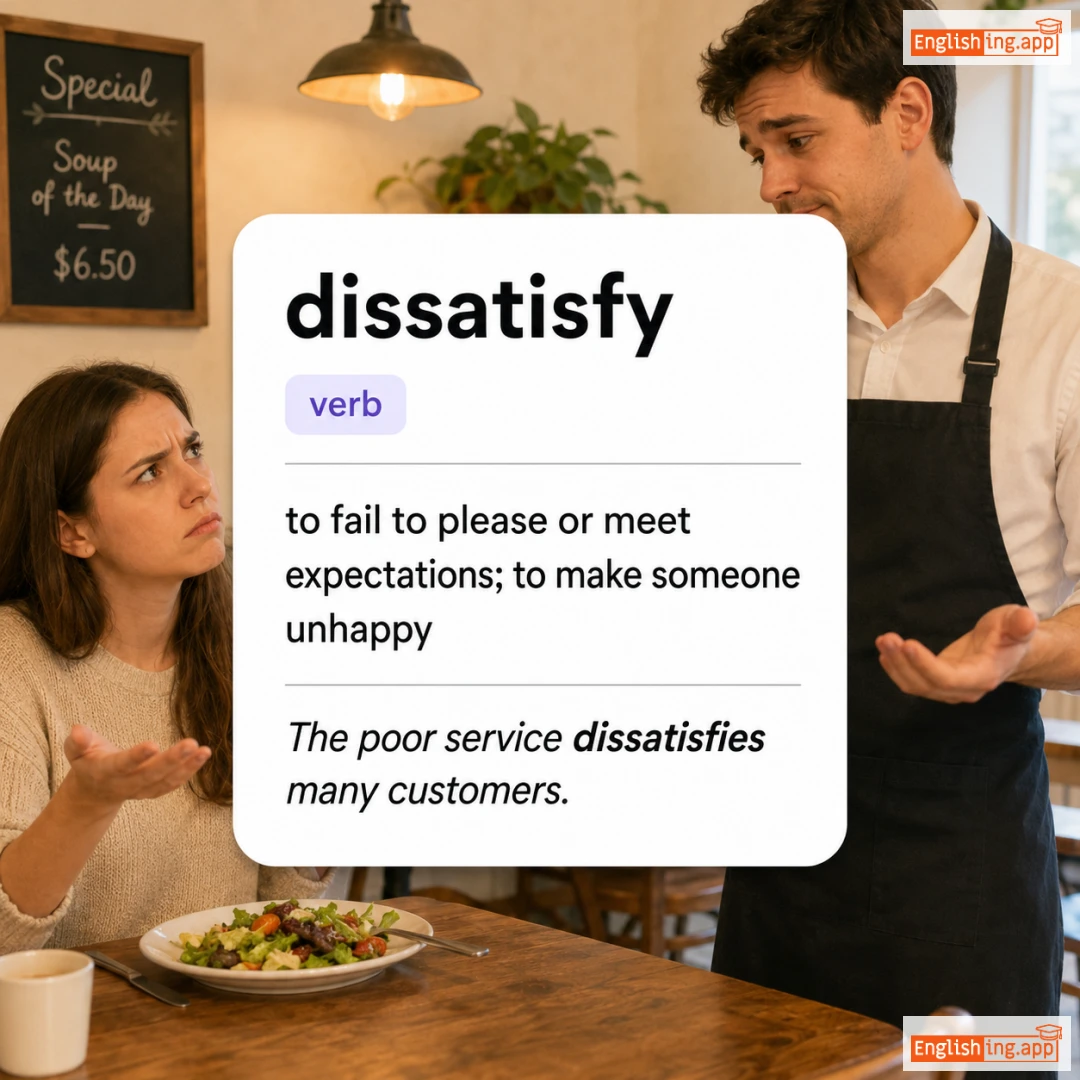
dissatisfy definition card — visual illustration of the meaning
verb C1
/dɪsˈsætɪsfaɪ/
разочаровывать (razocharovyvat)

to fail to please or meet expectations; to make someone unhappy

"The poor service dissatisfies many customers."

"Плохое обслуживание не устраивает многих клиентов." (Plokhoe obsluzhivanie ne ustraivaet mnogikh klientov.)
verb C1
/dɪˈsɛkt/

to cut apart an animal, plant, or other organism to study its internal parts; to analyze something in detail

"In biology class, students had to dissect a frog to learn about its anatomy."

noun C1
/daɪˈsɛkʃən/
диссекция (dissektsiya)

the act of cutting apart or analyzing something in detail, especially a body or structure

"The dissection of the specimen revealed important details about its structure."

"Диссекция образца выявила важные детали о его структуре." (Dissektsiya obraktsa vyyavila vazhnyye detali o yego strukture.)
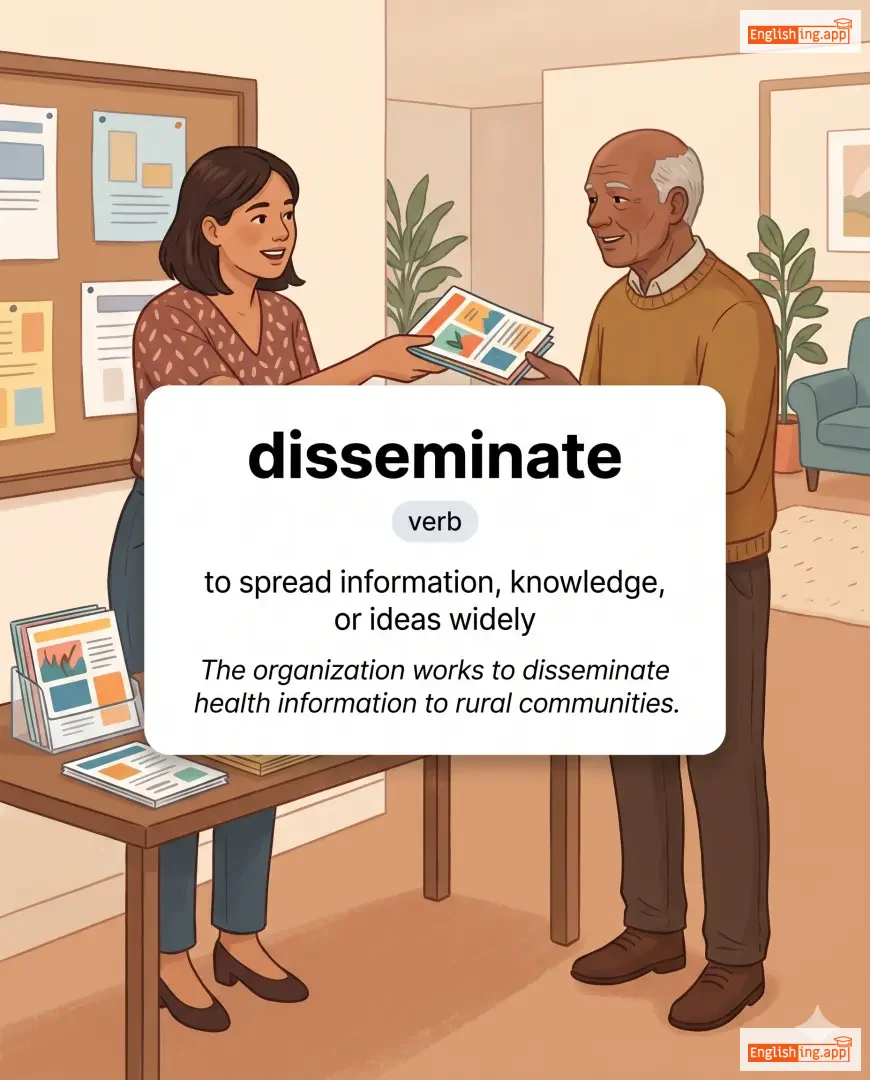
disseminate definition card — visual illustration of the meaning
verb C1
/dɪˈsɛmɪˌneɪt/
распространять (rasprostranyat')

to spread information, knowledge, or ideas widely

"The organization works to disseminate health information to rural communities."

"Организация работает над распространением информации о здоровье в сельских районах." (Organizatsiya rabotayet nad rasprostraneniem informatsii o zdorov'ye v selskih rayonah.)
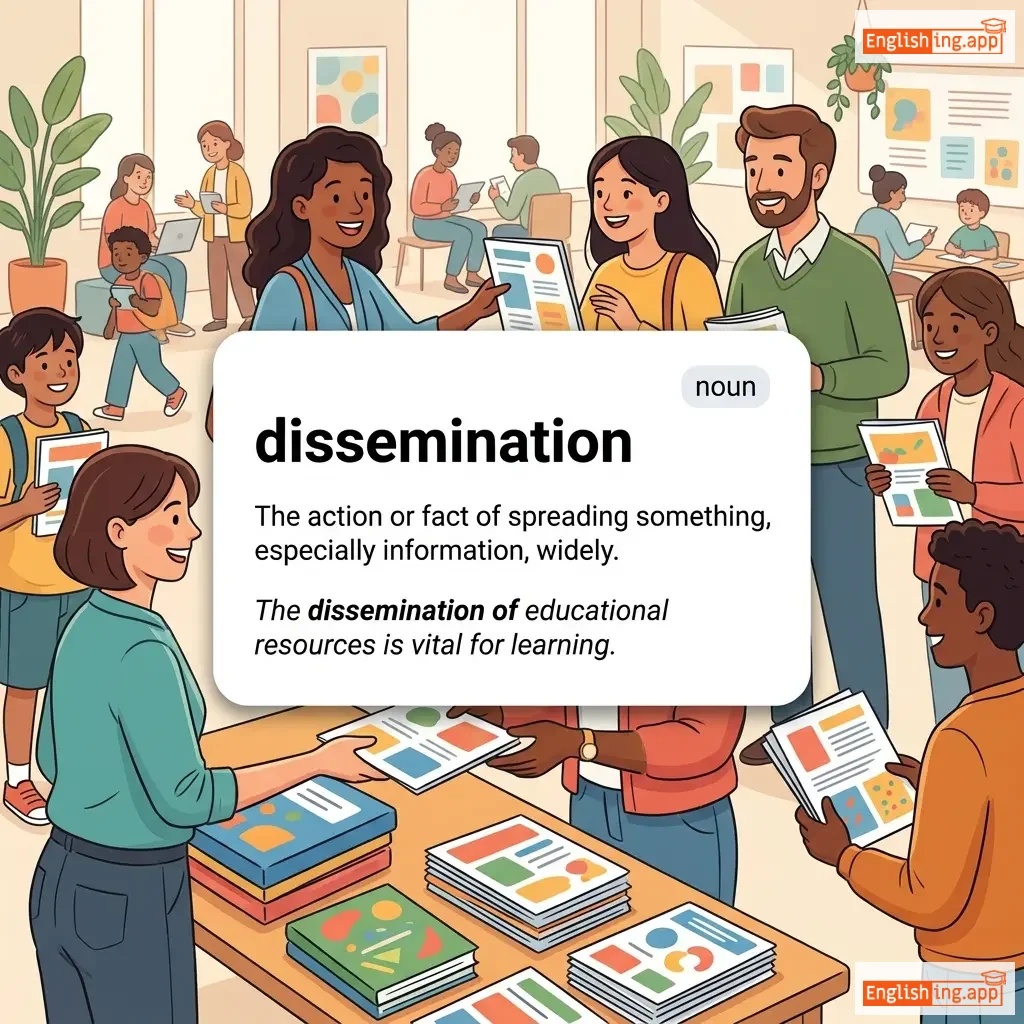
dissemination definition card — visual illustration of the meaning
noun C1
dɪˌsɛm.ɪˈneɪ.ʃən
распространение (rasprostranenie)

The action or fact of spreading something, especially information, widely.

"The dissemination of educational resources is vital for learning."

"Распределение образовательных ресурсов имеет важное значение для обучения." (Raspredeleniye obrazovatel'nykh resursov imeyet vazhnoe znacheniye dlya obucheniya.)
verb C1
/dɪˈsɛnt/
возражать (dissent)

To hold or express opinions that are different from those officially accepted.

"Several members dissented from the majority decision."

"Несколько членов не согласились с решением большинства." (Neskolko chlenov ne soglasilis s resheniem bolshinstva.)