Vocabularies

English Vocabulary Dictionary | Word Meanings, Definitions & Examples

noun C1
/ˈspɔɪlˌspɔːrt/
スポイルスポート (supoirusupoto)

A person who ruins other people's enjoyment or fun.

"Don't be a spoilsport and let us enjoy the party."

"スポイルスポートにならないで、パーティーを楽しませてください。" (Supoirusupoto ni naranai de, pātii o tanoshimase te kudasai.)
adjective C1
/ˈspʌndʒi/
スポンジ状 (suponji-jou)

soft and full of holes like a sponge; porous

"The cake had a light and spongy texture."

"ケーキは軽くてスポンジ状の質感がありました。" (Kēki wa karukute suponji-jou no shitsukan ga arimashita.)
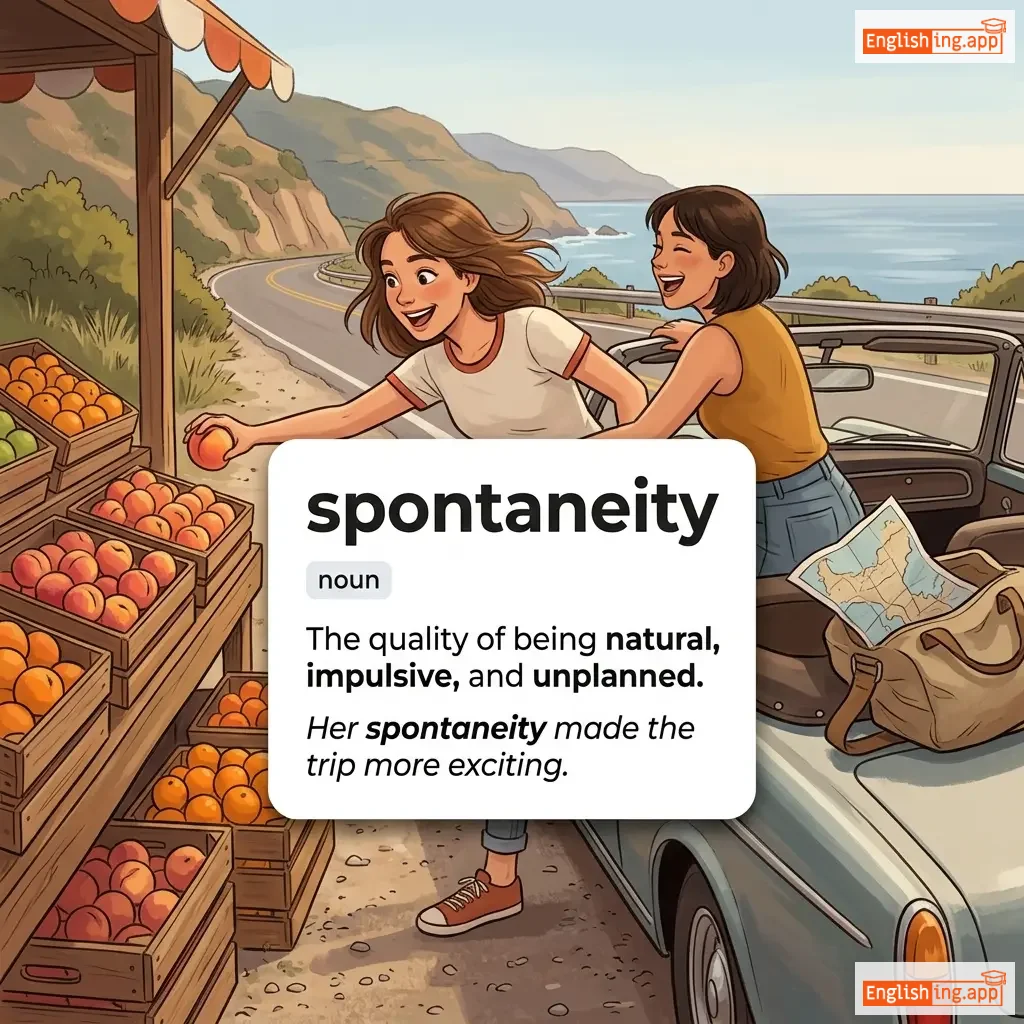
spontaneity definition card — visual illustration of the meaning
noun C1
/ˌspɑːntəˈneɪəti/
自発性 (jihatsusei)

The quality of being natural, impulsive, and unplanned.

"Her spontaneity made the trip more exciting."

"彼女の自発性は旅行をもっと刺激的にした。" (kanojo no jihatsusei wa ryokou o motto shigekiteki ni shita.)
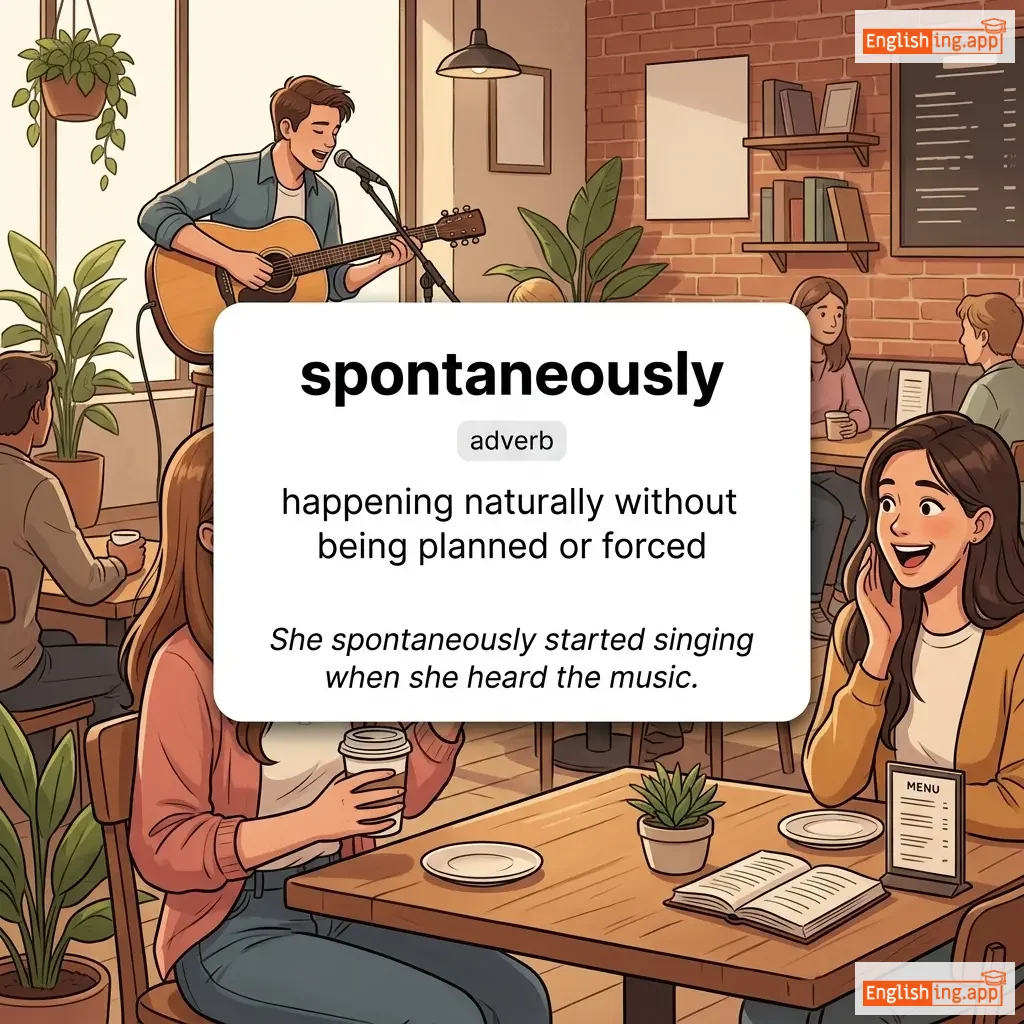
spontaneously definition card — visual illustration of the meaning
adverb C1
/spɒnˈteɪ.ni.əs.li/
自発的に (jihatsuteki ni)

happening naturally without being planned or forced

"She spontaneously started singing when she heard the music."

"彼女は音楽を聞いて自発的に歌い始めました。" (Kanojo wa ongaku o kiite jihatsuteki ni utai hajimemashita.)
noun/verb C1
/spuːf/
ユーモアのある模倣 (yūmoa no aru mohō)

A humorous imitation of something, or to trick or parody someone or something.

"The comedian spoofed the politician’s speech to entertain the audience."

"コメディアンは政治家の演説を模倣して観客を楽しませました。" (Komedian wa seijika no enzetsu o mohō shite kankyaku o tanoshimemashita.)
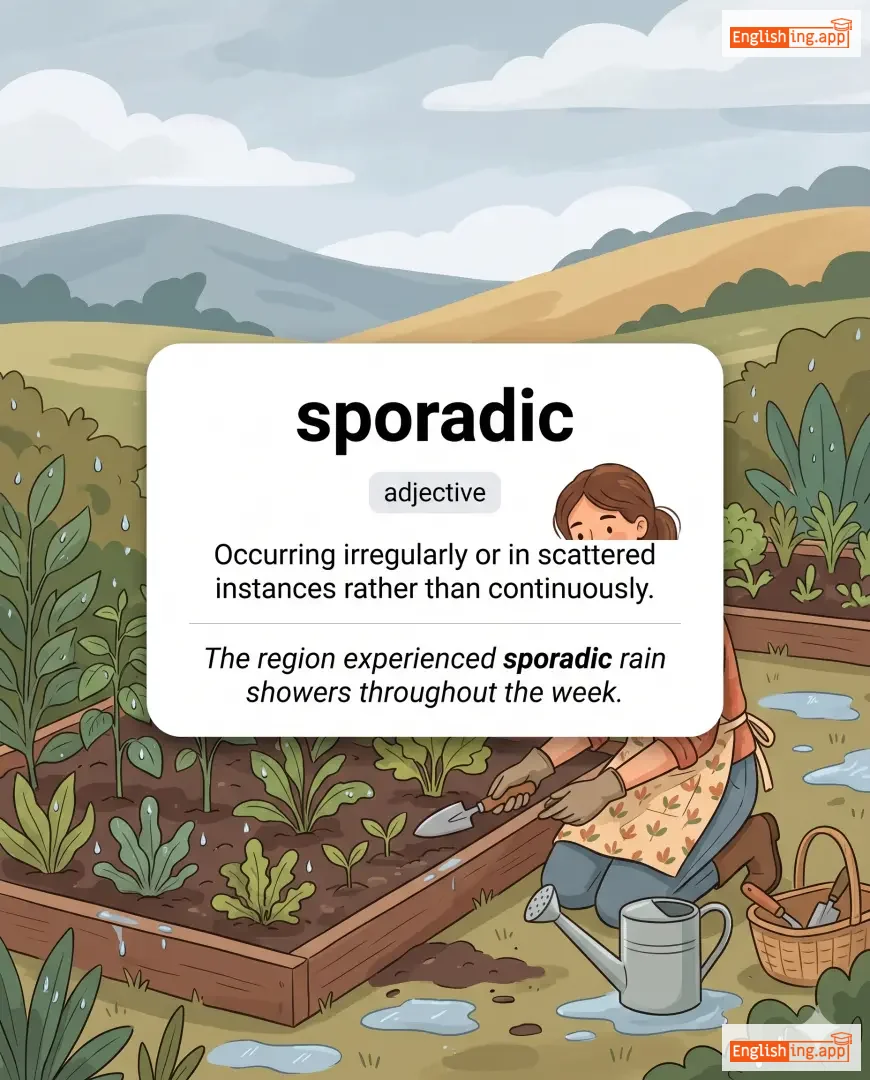
sporadic definition card — visual illustration of the meaning
adjective C1
/spəˈrædɪk/
散発的 (sanpatsuteki)

Occurring irregularly or in scattered instances rather than continuously.

"The region experienced sporadic rain showers throughout the week."

"その地域は1週間にわたって散発的な雨が降りました。" (Sono chiiki wa 1 shūkan ni watatte sanpatsuteki na ame ga furimashita.)
noun, verb C1
/spreɪn/
捻挫 (nenza)

an injury to a joint in which the ligaments are stretched or torn

"She sprained her ankle while running in the park."

"公園で走っているときに足首をねんざした。" (Kōen de hashitte iru toki ni ashi kubi o nenza shita.)
adjective C1
/ˈspraɪtli/
活発な (kappatsu na)

full of energy and life; lively

"The sprightly old man danced with joy at the wedding."

"活発な老紳士は結婚式で喜びながら踊った。" (Kappatsu na rō shinshi wa kekkonshiki de yorokobi nagara odotta.)
verb, noun C1
/spraʊt/
発芽する (hatsuga suru)

to begin to grow; to produce new leaves or shoots

"The seeds began to sprout after a few days of rain."

"種は数日間の雨の後に発芽し始めました。" (Tane wa sūjitsukan no ame no ato ni hatsuga shi hajimemashita.)
verb, adjective, noun C1
/spruːs/
整える / 一種の木 (tonoeru / isshu no ki)

to make neat or tidy in appearance; also refers to an evergreen tree

"He spruced up his room before the guests arrived."

"彼はゲストが到着する前に部屋を整えました。" (Kare wa gesuto ga tōchaku suru mae ni heya o totonoemashita.)
verb C1
/spɜːr/
促す / 奨励する (unagasu / shōrei suru)

To encourage or motivate someone to take action.

"The teacher's praise spurred him to study harder."

"教師の賞賛は彼にもっと一生懸命勉強するように促した。" (Kyōshi no shōsan wa kare ni motto isshōkenmei benkyō suru yō ni unagashita.)
adjective C1
/ˈspjʊəriəs/
偽の / 虚偽の (nise no / kyogi no)

Not genuine, authentic, or true; false or fake.

"The report was based on spurious claims."

"その報告書は偽の主張に基づいていた。" (Sono houkokusho wa nise no shuchou ni motozuite ita.)
verb C1
/spɜːrn/
軽蔑して拒絶する (keibetsu shite kyozetsu suru)

To reject something or someone with disdain or contempt.

"She spurned his offer of help."

"彼女は軽蔑の気持ちで彼の助けの申し出を拒絶した。" (Kanojo wa keibetsu no kimochi de kare no tasuke no mōshide o kyozetsu shita.)
verb C1
/ˈskwɒbəl/
些細なことで口論する (sasai na koto de kōron suru)

To argue noisily over something small or unimportant.

"The children squabbled over the last piece of cake."

"子供たちはケーキの最後の一切れを巡って争っていました。" (Kodomotachi wa kēki no saigo no hitokire o megutte arasotte imashita.)
adjective C1
/ˈskwɒlɪd/
非常に汚い (hijō ni kitanai)

extremely dirty and unpleasant, often due to poverty or neglect

"He lived in a squalid room with broken furniture."

"彼は壊れた家具のある汚い部屋に住んでいた。" (Kare wa kowareta kagu no aru kitanai heya ni sunde ita.)
noun C1
/skwɔːl/
突風 (toppu)

a sudden violent gust of wind, often accompanied by rain, snow, or sleet

"A sudden squall caught the sailors off guard."

"突然の突風が船員たちを驚かせた。" (Totsuzen no toppu ga sen'in tachi wo odorokaseta.)
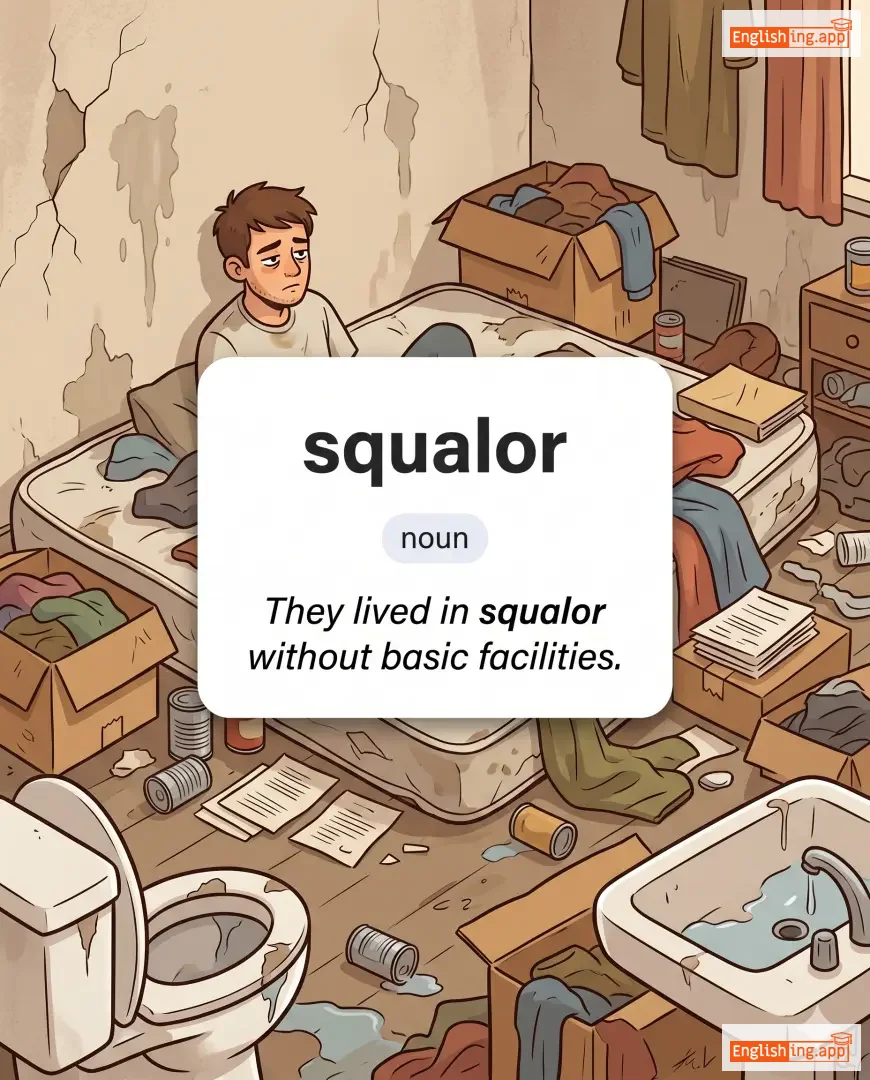
squalor definition card — visual illustration of the meaning
noun C1
/ˈskwɒlər/
貧困 (hinkon)

the state of being extremely dirty and unpleasant, especially due to poverty or neglect

"They lived in squalor without basic facilities."

"彼らは基本的な施設なしで貧困に住んでいました。" (Karera wa kihonteki na shisetsu nashi de hinkon ni sundeimashita.)
squander definition card — visual illustration of the meaning
verb C1
/ˈskwɒndər/
浪費する (rouhi suru)

to waste something, especially money or time, in a reckless or foolish manner

"He squandered all his savings on gambling."

"彼はギャンブルに全ての貯金を浪費した。" (Kare wa gyanburu ni subete no chokin o rouhi shita.)
/skwɒt/
しゃがむ (shagamu)

to crouch or sit with knees bent and body close to the ground

"He squatted down to tie his shoes."

"彼は靴を結ぶためにしゃがんだ。" (Kare wa kutsu o musubu tame ni shaganda.)
noun C1
/ˈskwɒtər/
不法占拠者 (fuhō senkyo-sha)

a person who unlawfully occupies an uninhabited building or unused land

"The police removed the squatters from the abandoned house."

"警察は廃墟から不法占拠者を追い出しました。" (Keisatsu wa haikyo kara fuhō senkyo-sha o oidasimashita.)
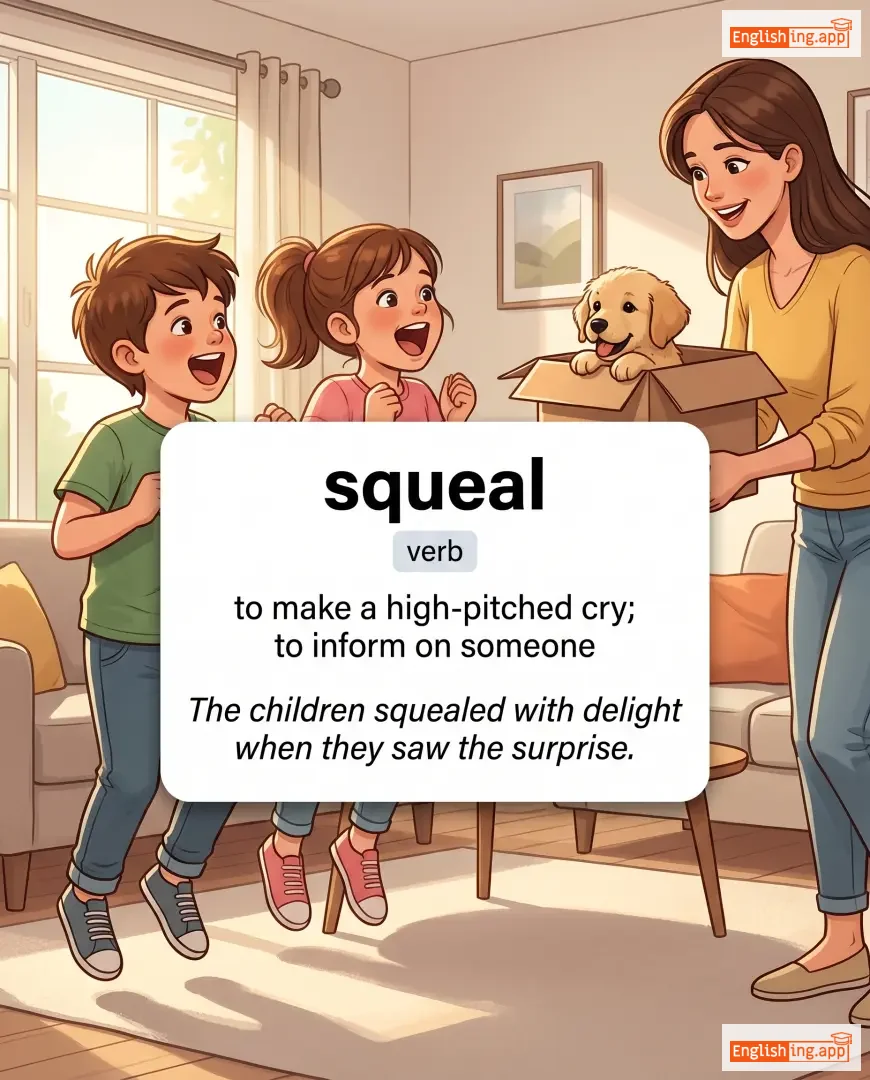
squeal definition card — visual illustration of the meaning
verb C1
/skwiːl/
叫ぶ (sakebu)

to make a high-pitched cry; to inform on someone

"The children squealed with delight when they saw the surprise."

"子供たちはサプライズを見て喜んで叫びました。" (Kodomotachi wa sapuraizu o mite yorokonde sakebimashita.)
adjective C1
/ˈskwiːmɪʃ/
簡単に気分が悪くなったり、吐き気を催したり、嫌悪感を抱いたりする (kantan ni kibun ga warukunattari, hakike o moyōshitari, ken'okan o idaishitari suru)

easily made to feel sick, faint, or disgusted

"She felt squeamish at the sight of blood."

"彼女は血を見て気分が悪くなった。" (Kanojo wa chi o mite kibun ga warukunatta.)
verb C1
/skwɪnt/
目を細める (me wo hosomeru)

to look with partly closed eyes

"She squinted at the bright sunlight."

"彼女は明るい日差しで目を細めた。" (Kanojo wa akarui hizashi de me wo hosometa.)
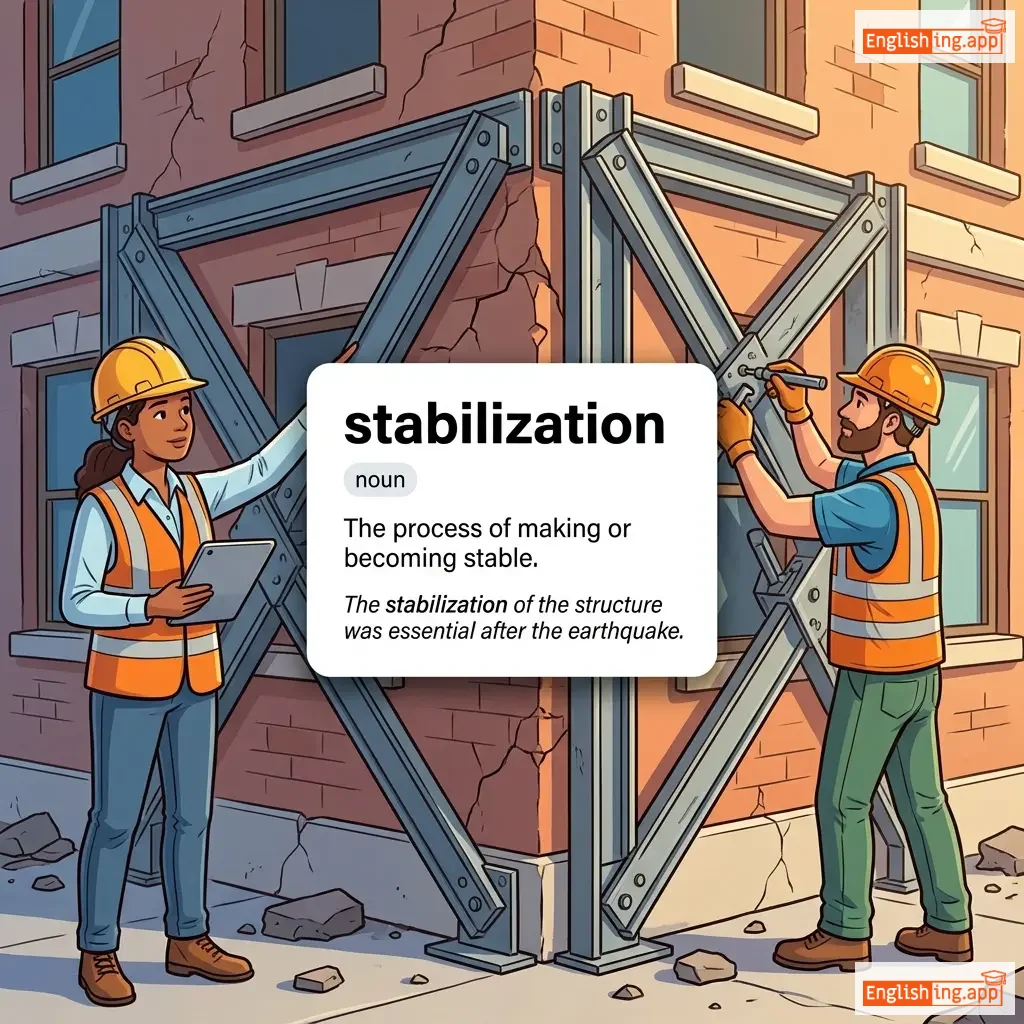
stabilization definition card — visual illustration of the meaning
noun C1
ˌsteɪbəlaɪˈzeɪʃən
安定化 (anteika)

The process of making or becoming stable.

"The stabilization of the structure was essential after the earthquake."

"地震後、構造の安定化が不可欠でした。" (Jishin go, kouzou no anteika ga fukaketsu deshita.)
adjective C1
/ˈstæɡ.nənt/
停滞 (teitai)

not moving, changing, or developing; inactive

"The company’s growth remained stagnant for several years."

"会社の成長は数年間停滞していました。" (Kaisha no seichō wa suunenkan teitai shite imashita.)
verb C1
/ˈstæɡ.neɪt/
停滞する (teitai suru)

to stop developing, progressing, or moving

"Without innovation, the business will stagnate."

"革新がなければ、ビジネスは停滞する。" (kakushin ga nakereba, bijinesu wa teitai suru.)
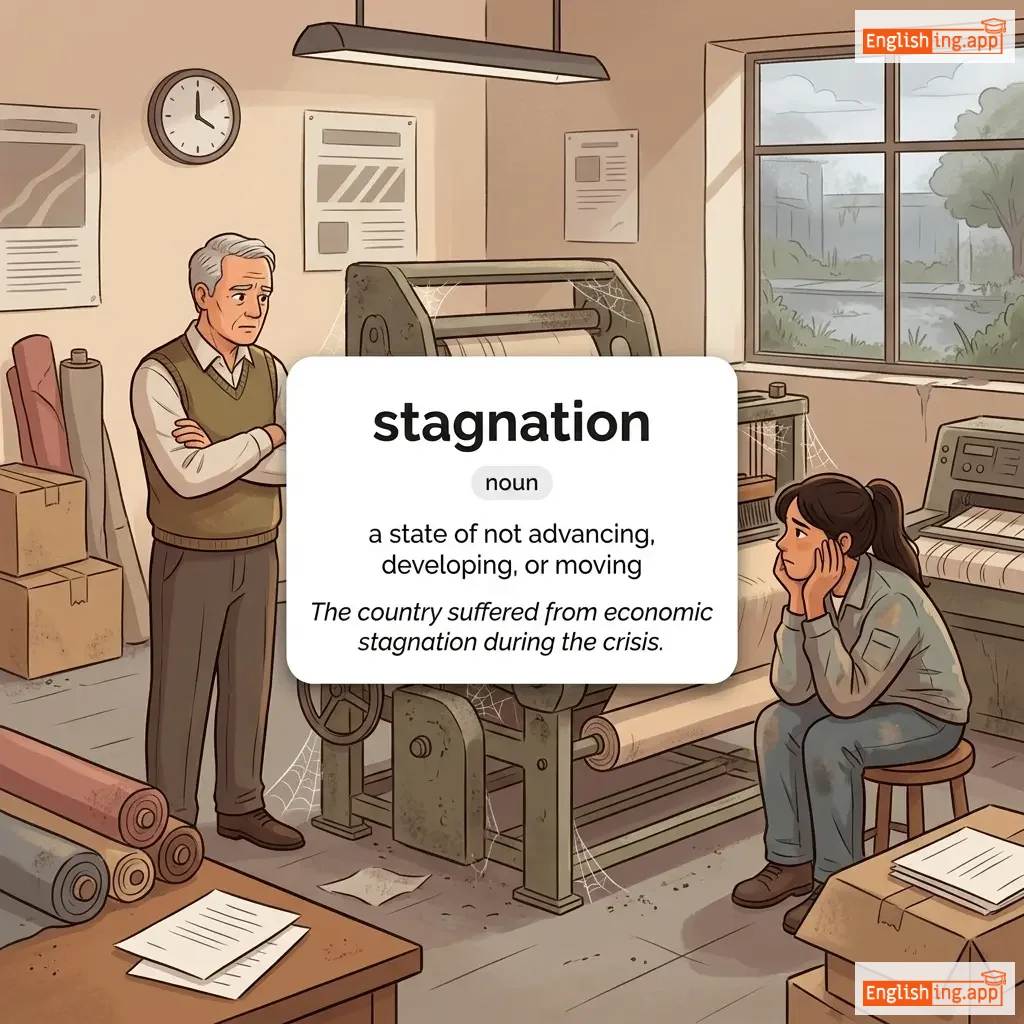
stagnation definition card — visual illustration of the meaning
noun C1
/stæɡˈneɪ.ʃən/
停滞 (teitai)

a state of not advancing, developing, or moving

"The country suffered from economic stagnation during the crisis."

"その国は危機の間、経済的停滞に苦しんでいました。" (Sono kuni wa kiki no aida, keizaiteki teitai ni kurushinde imashita.)
adjective C1
/steɪd/
堅実、尊敬される (kenjitsu, sonkei sareru)

Serious, respectable, and unadventurous.

"He came from a staid family background."

"彼は堅実な家庭から来た。" (Kare wa kenjitsu na katei kara kita.)
noun C1
/ˈsteɪl.meɪt/
行き詰まり (ikizumari)

A situation in which no progress can be made or no party can win.

"Negotiations ended in a stalemate."

"交渉は行き詰まりました。" (Kōshō wa ikizumarimashita.)
noun C1
/ˈstæl.i.ən/
繁殖用の牡馬 (han shokuyou no osuma)

An adult male horse that is not castrated, often used for breeding.

"The farm owns a powerful stallion for breeding purposes."

"その農場は繁殖用の強力なスタリオンを所有しています。" (Sono noujou wa hanshoku you no kyouryoku na sutarion wo shoyuu shiteimasu.)
adjective C1
/ˈstɔːlwərt/
忠実, 頑強 (chuujitsu, gankyō)

Loyal, reliable, and hardworking; strongly built or sturdy.

"She has always been a stalwart supporter of the community."

"彼女は常にコミュニティの忠実な支持者でした。" (Kanojo wa tsuneni komyuniti no chuujitsuna shijisha deshita.)
verb C1
/ˈstæmər/
どもる (domoru)

To speak with sudden involuntary pauses and a tendency to repeat the initial letters of words.

"The nervous student began to stammer during his speech."

"緊張した学生はスピーチ中にどもり始めた。" (Kinchou shita gakusei wa supīchi chū ni domori hajimeta.)
noun/verb C1
/stæmˈpiːd/
パニック状態の群衆 (panikku joutai no gunshuu)

A sudden, uncontrolled rush of people or animals; to cause a mass movement.

"The loud noise caused a stampede of the crowd."

"大きな音が群衆の中でスタンピードを引き起こしました。" (Ookina oto ga gunshuu no naka de sutampiido o hikiokoshimashita.)
noun C1
/ˈstændˌstɪl/
停滞 (teitai)

a situation in which all movement or activity stops

"The traffic came to a standstill after the accident."

"事故後、交通は停滞しました。" (Jiko go, koutsuu wa teitai shimashita.)
noun C1
/ˈstænzə/
スタンザ (sutanza)

a group of lines forming a unit in a poem or song

"The poem begins with a stanza describing nature."

"その詩は自然を描写するスタンザで始まります。" (Sono shi wa shizen o byousha suru sutanza de hajimarimasu.)
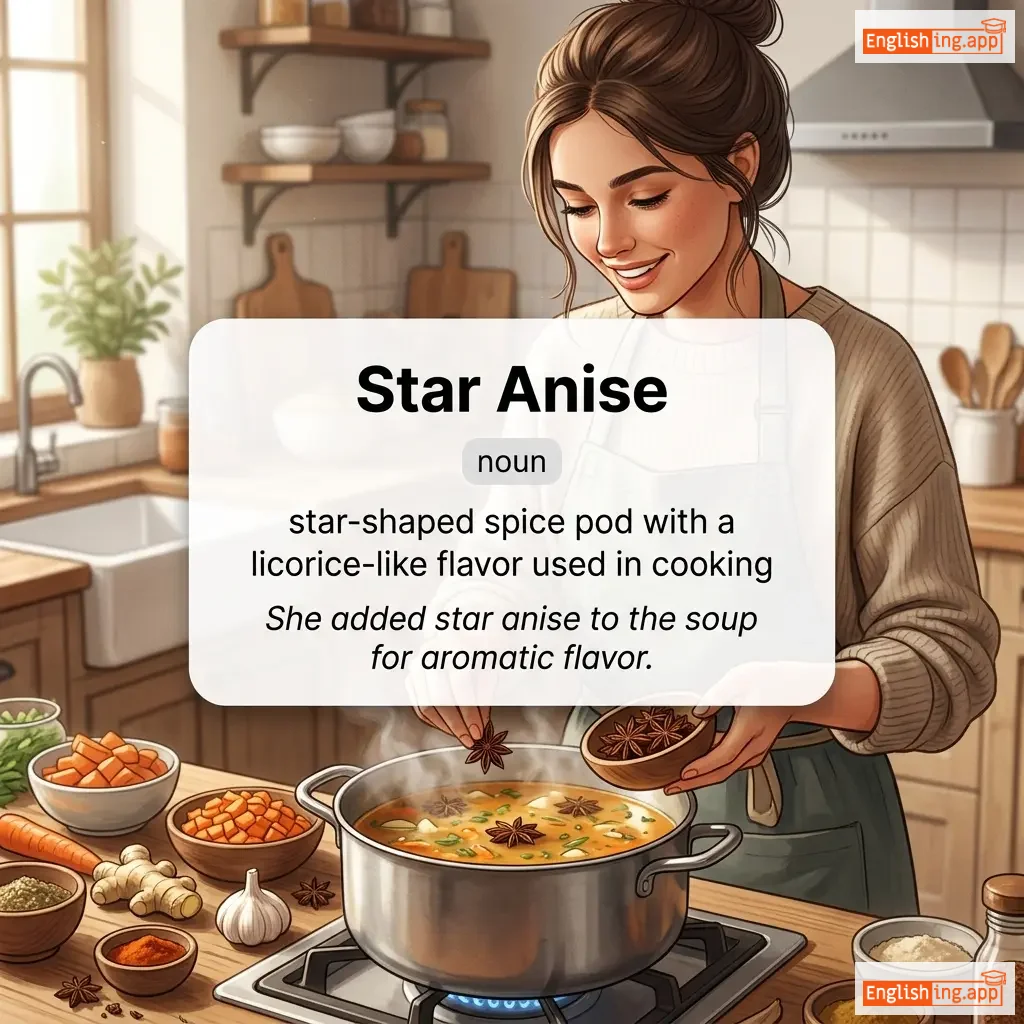
Star Anise definition card — visual illustration of the meaning
noun C1
/stɑːr ˈæn.ɪs/
スターアニス (sutā anis)

star-shaped spice pod with a licorice-like flavor used in cooking

"She added star anise to the soup for aromatic flavor."

"彼女はスープに香り豊かな風味を加えるためにスターアニスを入れました。" (Kanojo wa sūpu ni kaori yutakana fūmi o kuwaeru tame ni sutā anis o iremashita.)
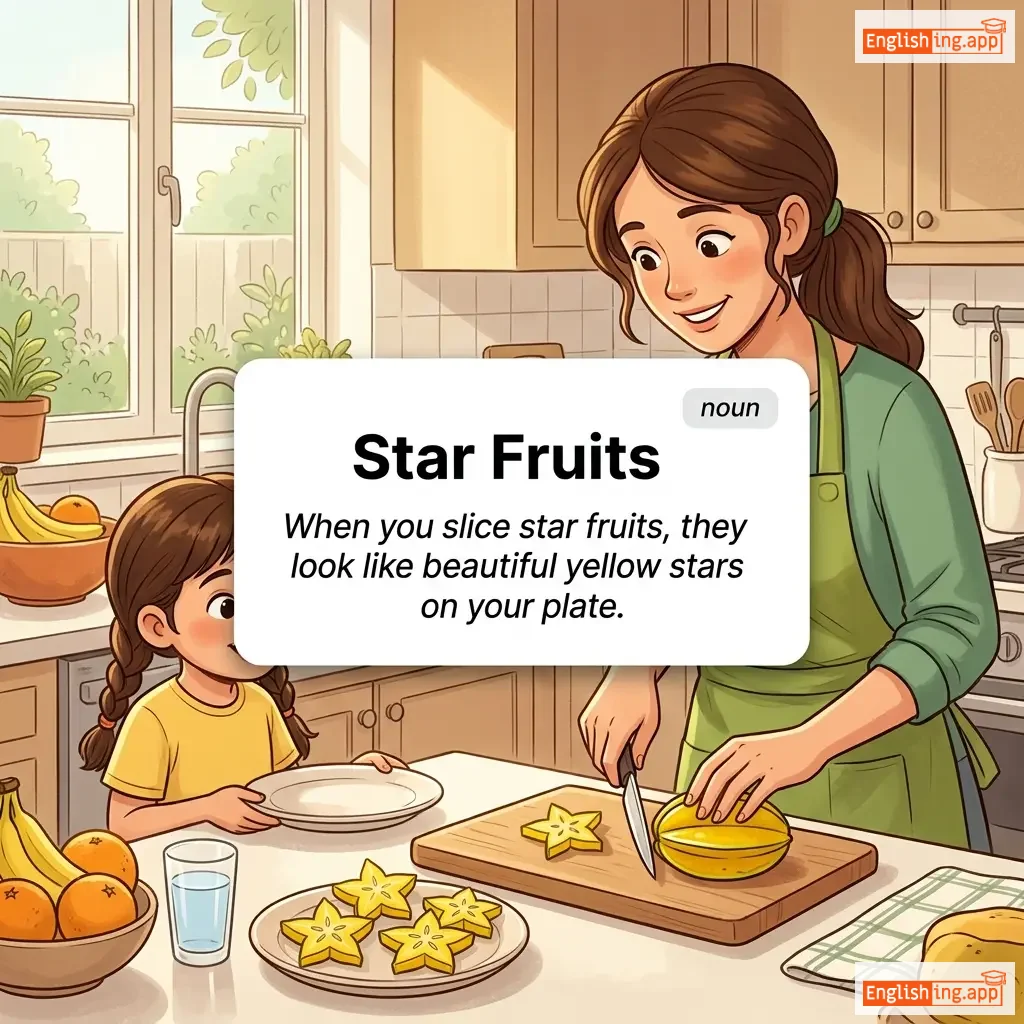
Star Fruits definition card — visual illustration of the meaning
noun C1
/stɑːr fruːts/
スターフルーツ (sutā furūtsu)

yellow tropical fruits that form a star shape when sliced crosswise; tangy and crisp taste

"When you slice star fruits, they look like beautiful yellow stars on your plate."

"スターフルーツを切ると、プレートの上に美しい黄色い星のように見えます。" (sutā furūtsu o kiru to, purēto no ue ni utsukushī kiiroi hoshi no yō ni miemasu.)
adjective C1
/ˈsteɪtli/
威厳と壮大 (igen to soudai)

Having a dignified, majestic, and impressive appearance or manner.

"The stately mansion stood at the end of the long driveway."

"その威厳ある邸宅は長いドライブウェイの終わりに立っていました。" (Sono igen aru teitaku wa nagai doraibuwei no owari ni tatte imashita.)
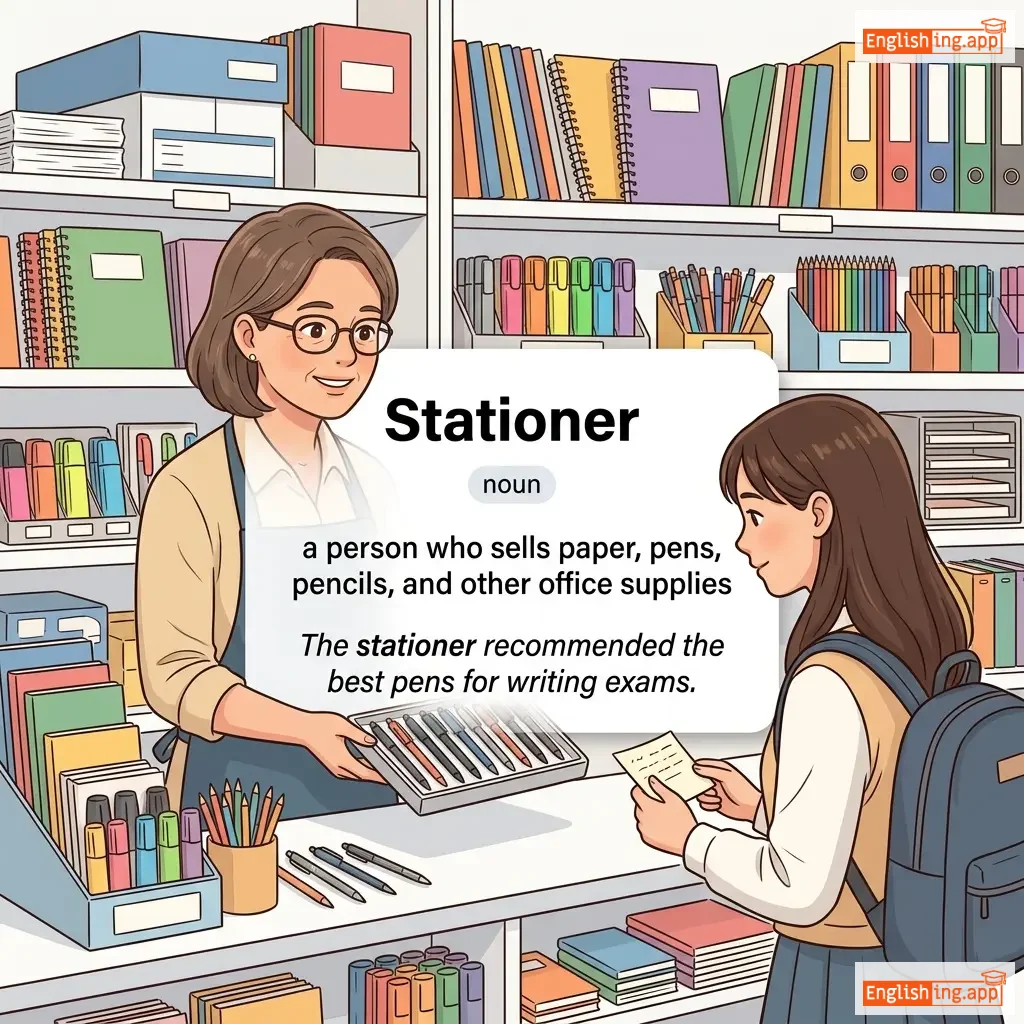
Stationer definition card — visual illustration of the meaning
noun C1
/ˈsteɪ.ʃən.ər/
文房具店 (bunbouguten)

a person who sells paper, pens, pencils, and other office supplies

"The stationer recommended the best pens for writing exams."

"文房具屋は試験のための最適なペンを推薦しました。" (Bunbouguten wa shiken no tame no saiteki na pen wo suisen shimashita.)
noun C1
/ˌstætɪˈstɪʃən/
統計学者 (tōkeigakusha)

A person who specializes in collecting, analyzing, and interpreting numerical data.

"The statistician presented the survey results with great clarity."

"統計学者は調査結果を明確に示しました。" (Tōkeigakusha wa chōsa kekka o meikaku ni shimeshimashita.)
noun C1
/ˌstætʃuˈɛt/
小さな像 (chiisana zou)

A small statue, usually decorative or artistic.

"The artist won a gold statuette for his work."

"アーティストは彼の作品で金の小さな像を受賞しました。" (Aatisuto wa kare no sakuhin de kin no chiisana zou wo jushou shimashita.)
noun C1
/ˈstætʃər/
名声、身長 (meisei, shinchou)

A person's natural height or their reputation and importance.

"Her intellectual stature made her a respected figure in academia."

"彼女の知的名声は、彼女を学界で尊敬される人物にしました。" (kanojo no chiteki meisei wa, kanojo o gakkai de sonkei sareru jinbutsu ni shimashita.)
noun C1
/ˈsteɪtəs kwoʊ/
現状 (genjō)

The existing state of affairs, especially regarding social or political issues.

"The government decided to maintain the status quo until further review."

"政府はさらなるレビューまで現状を維持することを決定しました。" (seifu wa sarana ru byū made genjō o iji suru koto o kettei shimashita.)
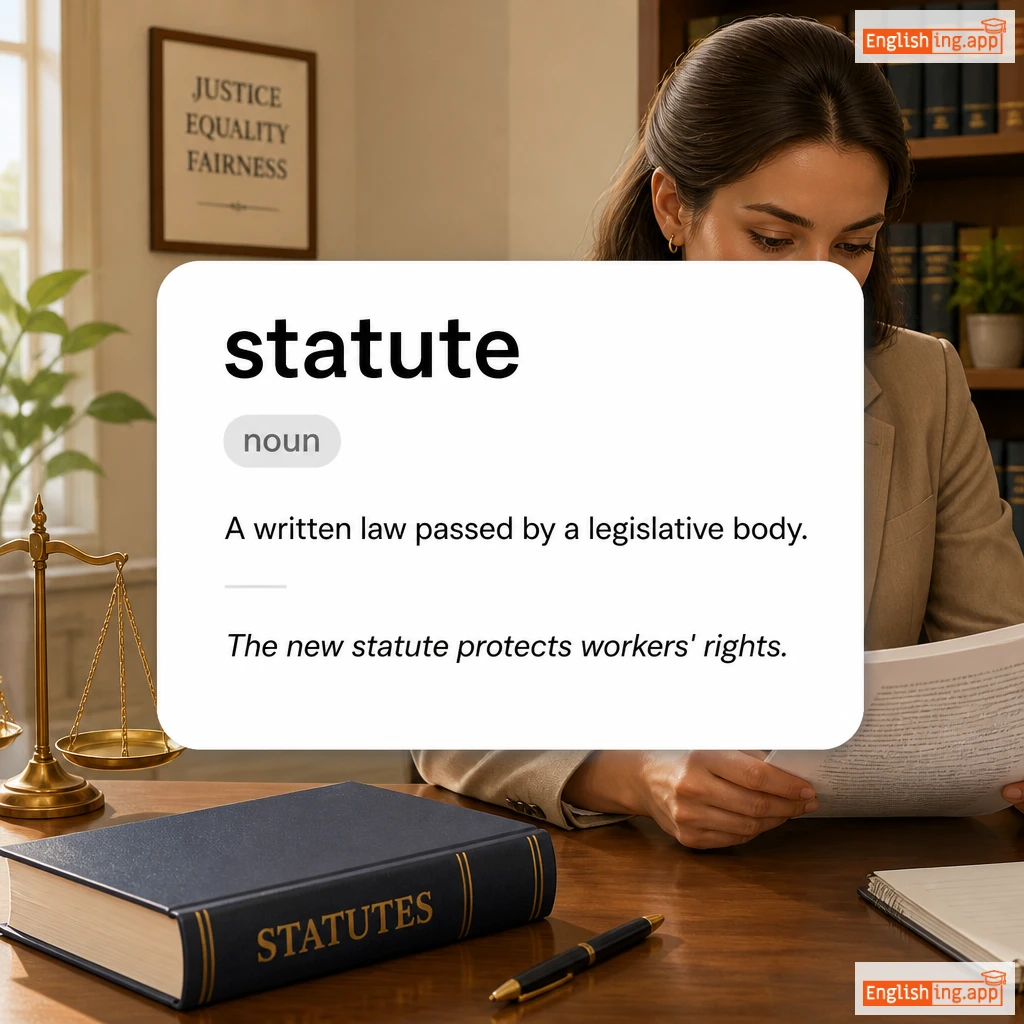
statute definition card — visual illustration of the meaning
noun C1
/ˈstætʃuːt/
法律 (hōritsu)

A written law passed by a legislative body.

"The new statute protects workers' rights."

"新しい法律は労働者の権利を保護します。" (Atarashī hōritsu wa rōdōsha no kenri o hogo shimasu.)
adjective C1
/ˈstætʃətɔːri/
法定 (hōtei)

Required, permitted, or enacted by law.

"The company must comply with all statutory regulations."

"会社はすべての法定規制に従わなければならない。" (Kaisha wa subete no hōtei kisei ni shitagawanakereba naranai.)
adjective C1
/stɔːntʃ/
堅固な, 忠実な (kengona, chuujitsuna)

Loyal, committed, and firm in support.

"She is a staunch supporter of environmental protection."

"彼女は環境保護の強固な支持者です。" (Kanojo wa kankyō hogo no kyōko na shijisha desu.)
adjective C1
/ˈstɛdfæst/
不動の, 忠実な (fudō no, chūjitsuna)

Firm, loyal, and unwavering in purpose or support.

"He remained steadfast in his determination to succeed."

"彼は成功への決意において不動のままでした。" (Kare wa seikou e no ketsui ni oite fudou no mamadeshita.)
noun C1
/stɛlθ/
隠密、静かに動く (onmitsu, shizukani ugoku)

The act of moving, doing, or achieving something quietly and secretly.

"The cat moved with stealth towards its prey."

"猫は静かに獲物に向かって動いた。" (Neko wa shizukani emono ni mukatte ugoita.)
adjective C1
/stiːpt/
浸透した (shintō shita)

Completely surrounded by or filled with a particular quality, influence, or experience.

"The town is steeped in history and tradition."

"町は歴史と伝統に浸透している。" (Machi wa rekishi to dentō ni shintō shite iru.)
adjective C1
/ˈstɛlər/
素晴らしい (subarashii)

Relating to stars; outstanding or excellent.

"She gave a stellar performance in the play."

"彼女は劇中で素晴らしいパフォーマンスを披露しました。" (Kanojo wa gekichu de subarashii pafomansu o hirou shimashita.)