Vocabularies

English Vocabulary Dictionary | Word Meanings, Definitions & Examples

adjective C1
/ˈræb.ɪd/
безумный (bezumnyj)

Having extreme or fanatical support for something; relating to or suffering from rabies.

"He was a rabid fan of the football team."

"Он был безумным фанатом футбольной команды." (On byl bezumnym fanatom futbol'noy komandy.)
noun C1
/ˈreɪ.biːz/
бешенство (beshens-tvo)

A viral disease that causes inflammation of the brain in humans and other mammals, usually transmitted through animal bites.

"The dog was vaccinated against rabies."

"Собака была вакцинирована от бешенства." (Sobaka byla vaktsinirovana ot beshenstva.)
adjective C1
/ˈreɪ.si/
пикантный (pikantnyy)

Lively, entertaining, or slightly shocking (especially in a sexual way).

"The novel was full of racy dialogues."

"Роман был полон пикантных диалогов." (Roman byl polon pikantnykh dialogov.)
noun C1
/ˈreɪdiəns/
сияние (siyanie)

the quality of shining with bright light; a glowing or beaming quality

"Her face was filled with radiance after hearing the good news."

"Ее лицо было наполнено сиянием после того, как она услышала хорошие новости." (Eye litso bylo napolneno siyaniem posle togo, kak ona uslyshala khoroshie novosti.)
adjective C1
/ˈreɪdiənt/
сияющий / сияющая (siyayushchiy / siyayushchaya)

Shining brightly; expressing great happiness.

"She looked radiant in her wedding dress."

"Она выглядела сияющей в своем свадебном платье." (Ona vyhlyadela siyayushchey v svoem svadebnom plat'ye.)
verb C1
/ˈreɪdieɪt/
излучать (izluchat')

to emit energy or light; to spread out from a center

"The fireplace radiates warmth throughout the room."

"Камин излучает тепло по всей комнате." (Kamin izluchayet teplo po vsey komnate.)
noun/verb C1
/ˈræfəl/
продажа лотерейных билетов (prodazha lotereinykh biletov)

A means of raising money by selling numbered tickets, one or more of which are drawn at random for a prize; to sell something in such a lottery.

"The charity decided to raffle a bicycle to raise funds."

"Благотворительная организация решила разыграть велосипед для сбора средств." (Blagotvoritel'naya organizatsiya reshila razygrat' velosiped dlya sbora sredstv.)
noun C1
/ˈræftər/
кровельная балка (krovel'naya balka)

One of the sloping beams that supports a roof.

"The old barn’s rafters were exposed."

"Кровельные балки старого сарая были открыты." (Krovel'nye balki starogo saraya byli otkryty.)
adjective C1
/ˈræɡɪd/
порванный (porvanniy)

torn, worn out, or in poor condition

"The homeless man wore a ragged coat."

"Бездомный человек носил порванное пальто." (Bezdomnyy chelovek nosil porvannoye pal'to.)
adjective C1
/ˈreɪ.kɪʃ/
стильный, уверенный и слегка сомнительный в своем виде (stilyj, uverennyj i slezga somnitel'nyj v svoem vide)

having a stylish, confident, and slightly disreputable appearance

"He walked in with a rakish smile and tilted hat."

"Он вошел с улыбкой рэйкиш и наклоненной шляпой." (On voshel s ulybkoy reykish i naklonennoy shlyapoy.)
adjective C1
/ræmˈbʌŋk.ʃəs/
непослушный (neposlushnyj)

boisterous, energetic, and difficult to control.

"The rambunctious children filled the house with noise."

"Шумные дети заполнили дом шумом." (Shumnye deti zapolnili dom shumom.)
Rambutan definition card — visual illustration of the meaning
noun C1
/ræmˈbuːtən/
рамбутан (rambutan)

a tropical fruit with red spiky skin and white translucent sweet flesh similar to litchi

"The rambutan looks scary with its hairy skin but tastes very sweet inside."

"Рамбутан выглядит страшно с его волосистой кожей, но внутри он очень сладкий." (Rambutan vyglyadit strashno s yego volosistoy kozhey, no vnutri on ochen' sladkiy.)
noun C1
/ˌræm.ɪ.fɪˈkeɪ.ʃən/
последствие (posledstvie)

a consequence of an action or event, often complex or unwelcome.

"The new law has serious social ramifications."

"Новый закон имеет серьезные социальные последствия." (Novyy zakon imeyet seryoznye sotsial'nyye posledstviya.)
adjective C1
/ˈræmpənt/
необузданный (neobuzdanny)

existing or spreading unchecked, often in an undesirable way

"Corruption was rampant in the city administration."

"Коррупция была в разгаре в городской администрации." (Korruptsiya byla v razgare v gorodskoy administratsii.)
noun C1
/ˈræmpɑːrt/
бастион (bastion)

a defensive wall of a castle or fort

"The soldiers stood on the rampart, watching the enemy approach."

"Солдаты стояли на бастионе, наблюдая, как враг приближается." (Soldaty stoyali na bastione, nablyudaya, kak vrag priblizhayetsya.)
adjective C1
/ˈræmʃækəl/
ветхий (vethij)

poorly built or maintained; in a state of disrepair

"They lived in a ramshackle old house on the edge of town."

"Они жили в старом ветхом доме на окраине города." (Oni zhili v starom vethom dome na okraine goroda.)
adjective C1
/ˈrænsɪd/
прогорклый (progorklyi)

having a bad taste or smell due to being old or spoiled (especially fats or oils)

"The butter had gone rancid after being left out too long."

"Масло стало прогорклым после того, как оно лежало слишком долго на воздухе." (Maslo stalo progorklym posle togo, kak ono lezhalo slishkom dolgo na vozdukhe.)
verb C1
/ˈræn.də.maɪz/
рандомизировать (randomizirovat)

To make something happen in a random order or manner.

"The software can randomize the order of questions."

"Программное обеспечение может случайным образом переставить порядок вопросов." (Programmnoye obespecheniye mozhet sluchaynym obrazom perestavit' poryadok voprosov.)
verb C1
/ˈræn.sæk/
грабить (grabit)

to search a place roughly and steal or damage things

"Burglars ransacked the house while the family was away."

"Грабители обыскали дом, пока семья была в отъезде." (Grabiteli obyskali dom, poka sem'ya byla v otyezde.)
verb C1
/rænt/
кричать (krichat)

to speak or shout in an angry, uncontrolled way

"He ranted about the unfair treatment at work."

"Он кричал по поводу несправедливого отношения на работе." (On krichal po povodu nespravedlivogo otnosheniya na rabote.)
noun C1
/rəˈpɪdəti/
быстрота (bystrota)

The quality of moving or happening quickly; swiftness or speed.

"The rapidity of technological change is astonishing."

"Быстрота технологических изменений потрясающе." (Bystrota tekhnologicheskikh izmeneniy potryasayushche.)
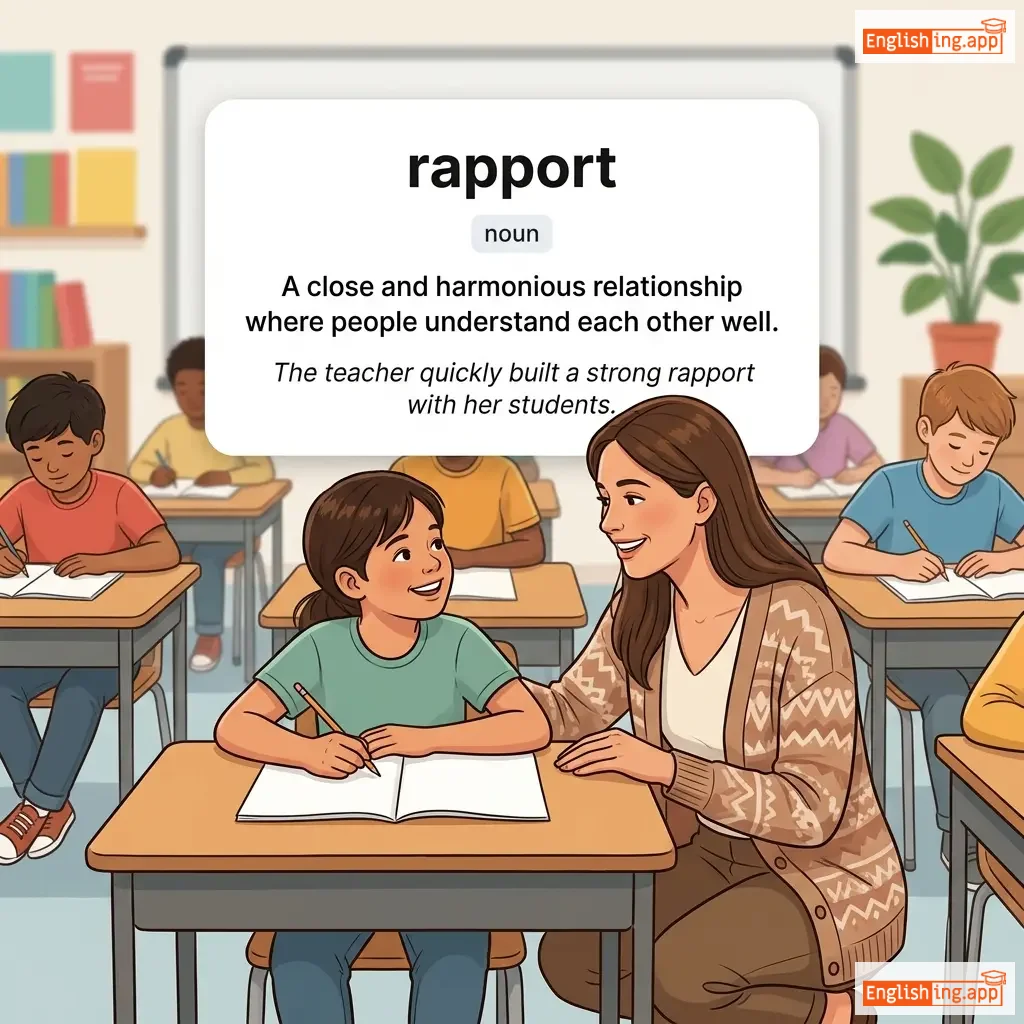
rapport definition card — visual illustration of the meaning
noun C1
/ræˈpɔːr/
отношения (otnosheniya)

A close and harmonious relationship where people understand each other well.

"The teacher quickly built a strong rapport with her students."

"Учитель быстро установил крепкие отношения с учениками." (Uchitel' bystro ustanovil krepkie otnosheniya s uchenikami.)
adjective C1
/ræpt/
заворожённый (zavorozhyonnyy)

Completely absorbed or fascinated by something.

"She listened with rapt attention to the speaker’s words."

"Она слушала слова оратора с заворожённым вниманием." (Ona slushala slova oratora s zavorozhyonnyy vnimaniem.)
noun C1
/ˈræp.tʃər/
экстаз, восторг (ekstaz, vostorg)

A feeling of intense joy, delight, or ecstasy.

"She listened to the music in rapture."

"Она слушала музыку в экстазе." (Ona slushala muzyku v ekstaze.)
verb C1
/ræsp/
говорить грубым голосом или скрежетать с грубым звуком (govorit' grubym golosom ili skrezhyatat' s grubym zvukom)

to speak in a rough, harsh voice or to scrape with a coarse sound

"He rasped out a warning before collapsing."

"Он расспел предупреждение перед тем как упасть." (On raspel preduprezhdenie pered tem kak upast'.)
adjective C1
/ˈræspi/
хриплый (khriply)

having a harsh, rough, or grating sound

"His raspy voice revealed years of smoking."

"Его хриплый голос показал годы курения." (Ego khriplyi golos pokazal gody kureniya.)
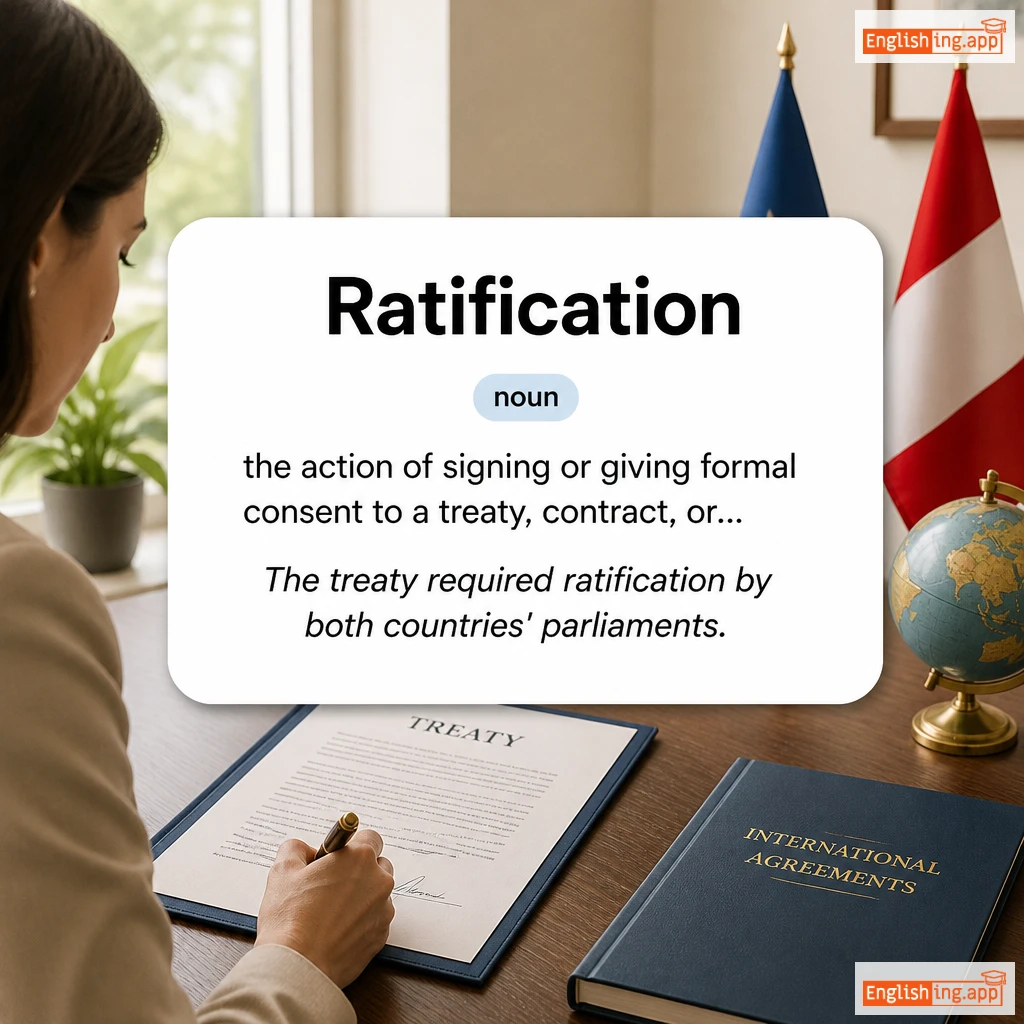
Ratification definition card — visual illustration of the meaning
noun C1
/ˌrætɪfɪˈkeɪʃən/
ратификация (ratifikaciya)

the action of signing or giving formal consent to a treaty, contract, or agreement

"The treaty required ratification by both countries' parliaments."

"Договор потребовал ратификации обоими парламентами стран." (Dogovor potreboval ratifikatsii oboimi parlamentami stran.)
verb C1
/ˈrætɪfaɪ/
ратифицировать (ratifitsirovat)

to approve or confirm something officially, usually by law or formal consent

"The government ratified the trade agreement."

"Правительство ратифицировало торговое соглашение." (Pravitel'stvo ratifitsirovalo torgovoe soglashenie.)
noun C1
/ˈræʃən/
паёк (payok)

a fixed amount of something, especially food, officially allowed to each person

"During the war, each family received a weekly ration of rice."

"Во время войны каждая семья получала еженедельный паёк риса." (Vo vremya voyny kazhdaya sem'ya poluchala ezhenedel'nyy payok risa.)
noun C1
/ˌræʃəˈnæl/
основная причина (osnovnaya prichina)

the underlying reason or explanation for something

"The rationale behind his decision was clearly explained."

"Основная причина его решения была четко объяснена." (Osnovnaya prichina yego resheniya byla chetko obyasnena.)
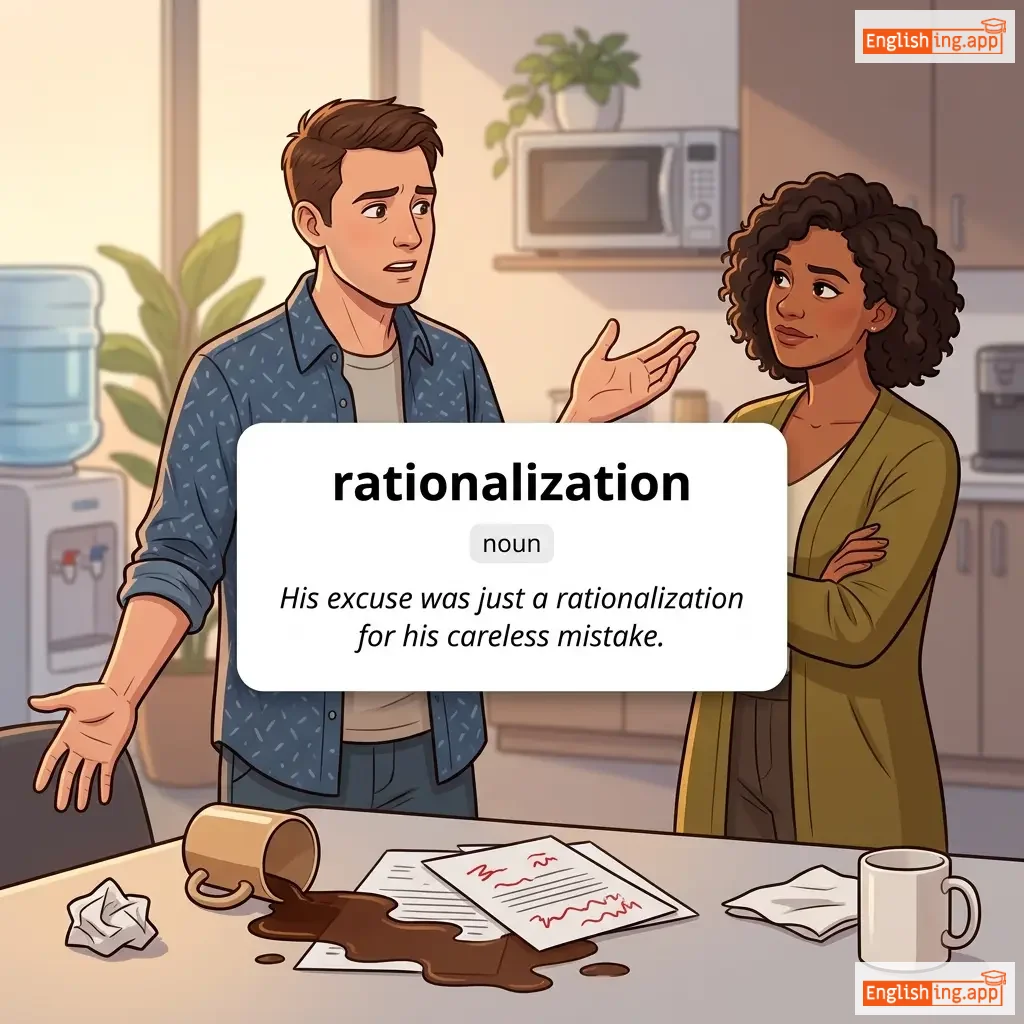
rationalization definition card — visual illustration of the meaning
noun C1
/ˌræʃənəlaɪˈzeɪʃən/
рационализация (ratsionalizatsiya)

the action of attempting to explain or justify behavior or an attitude with logical reasons, even if these are not appropriate

"His excuse was just a rationalization for his careless mistake."

"Его оправдание было просто рационализацией его небрежной ошибки." (Yego opravdaniye bylo prosto ratsionalizatsiyey yego nebrezhnoj oshibki.)
verb C1
/ˈræʃənəlaɪz/
рационализировать (ratsionalizirovat)

to attempt to explain or justify behavior or decisions with logical reasons, even if they are not true or appropriate

"She tried to rationalize her lateness by blaming the traffic."

"Она пыталась рационализировать свое опоздание, обвиняя трафик." (Ona pytalas' ratsionalizirovat' svoe opozdanie, obvinyaya trafik.)
verb C1
/ˈræʃənaɪz/
рационализировать (ratsionalizirovat)

to justify or explain something with logical reasons, even if not appropriate or true

"He tried to rationlize his mistake by blaming the system."

"Он пытался рационализировать свою ошибку, обвиняя систему." (On pytalsya ratsionalizirovat svoyu oshibku, obvinyaya sistemu.)
adjective C1
/ˈrɔːkəs/
шумный, громкий (shumny, gromky)

loud, harsh, and unpleasant sound or behavior

"The crowd became raucous after the team scored."

"Толпа стала шумной после того, как команда забила гол." (Tolpa stala shumnoi posle togo, kak komanda zabila gol.)
verb C1
/ˈrævɪdʒ/
опустошать (opustoshat)

to cause severe and extensive damage or destruction

"The hurricane ravaged the coastal villages."

"Ураган разрушил прибрежные деревни." (Uragan razrushil pribrezhnyye derevni.)
verb C1
/reɪv/
восхвалять (voshvalyat)

to speak or write about something with great enthusiasm or admiration

"Critics rave about the new movie."

"Критики восхваляют новый фильм." (Kritiki voskhvalyayut novyy film.)
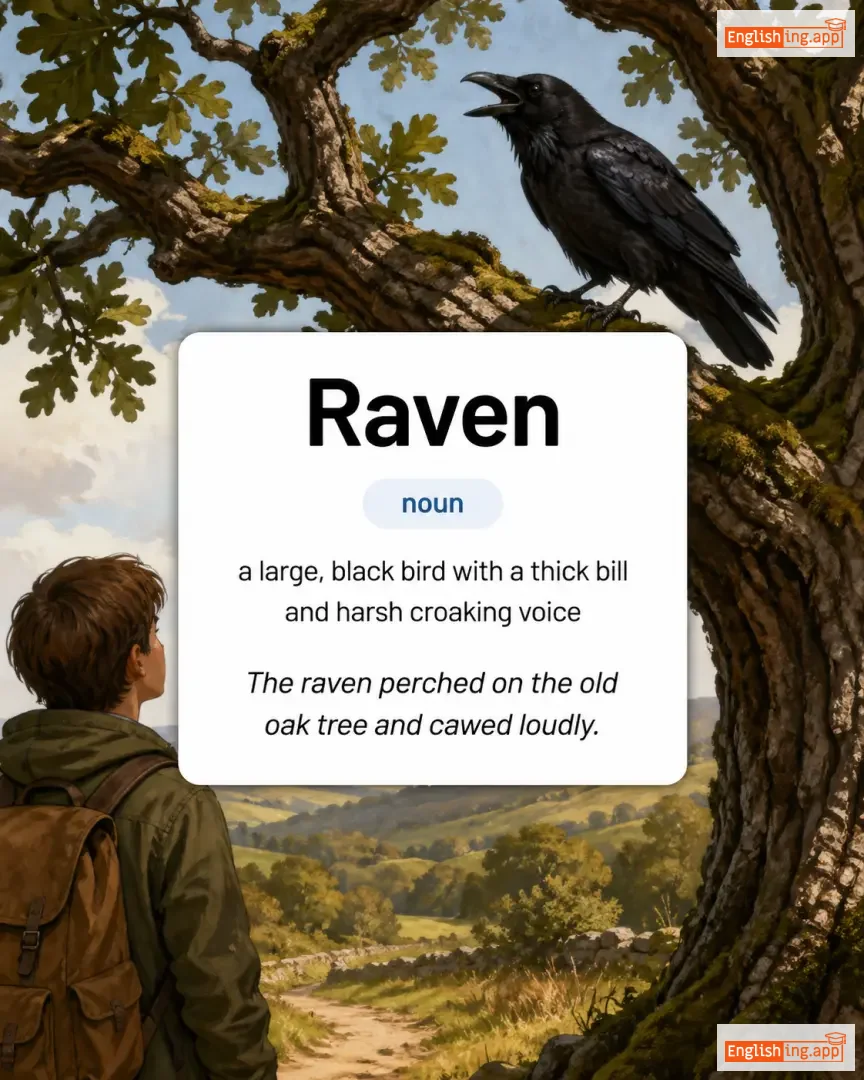
Raven definition card — visual illustration of the meaning
noun C1
/ˈreɪ.vən/
ворон (voron)

a large, black bird with a thick bill and harsh croaking voice

"The raven perched on the old oak tree and cawed loudly."

"Ворон сел на старый дуб и громко каркнул." (voron sel na stary dub i gromko karknul)
adjective C1
/ˈrævənəs/
голодный (golodny)

Extremely hungry; famished.

"After the long hike, she was ravenous and ate quickly."

"После долгого похода она была голодна и быстро поела." (Posle dolgogo pokhoda ona byla golodna i bystro poela.)
noun C1
/rəˈviːn/
овраг (ovrag)

A deep, narrow valley with steep sides.

"The river carved a deep ravine through the mountains."

"Река прорезала глубокий овраг через горы." (Reka prorezala glubokiy ovrag cherez gory.)
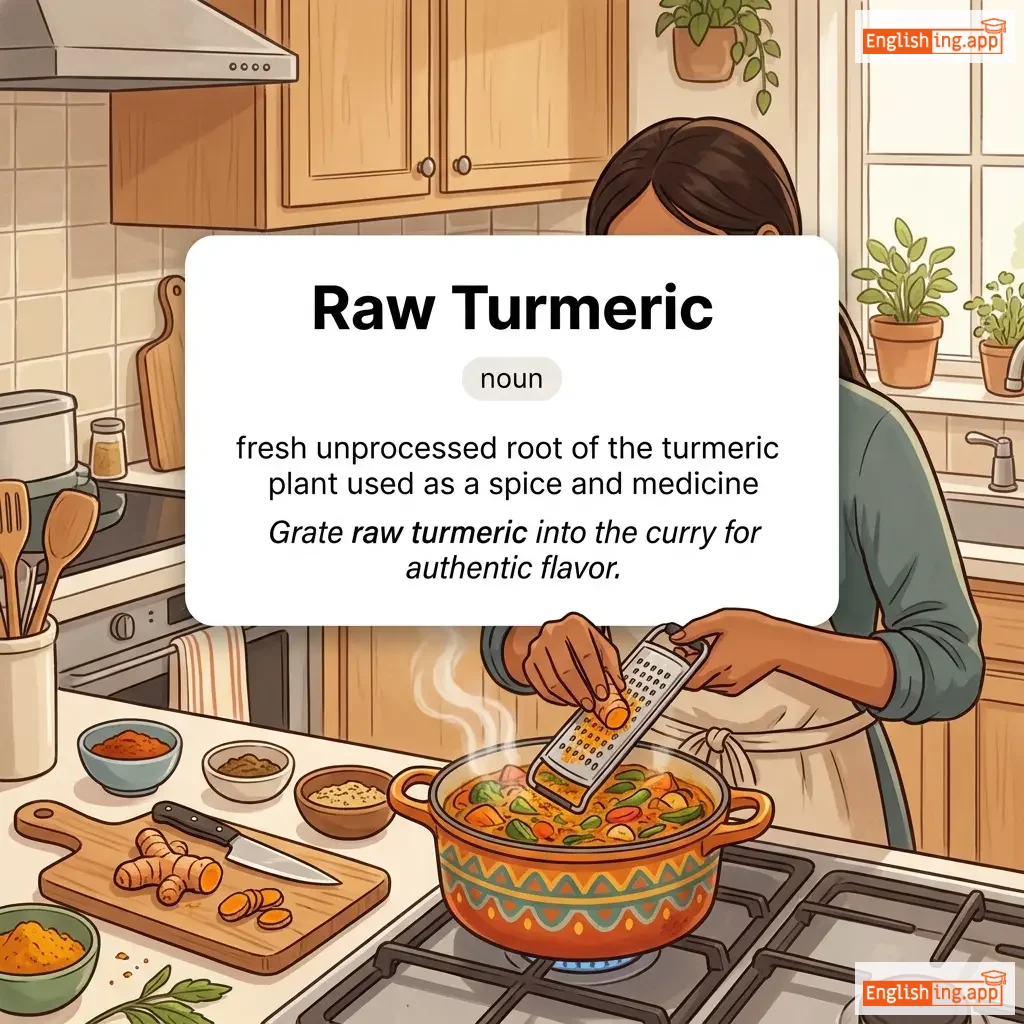
Raw Turmeric definition card — visual illustration of the meaning
noun C1
/rɔ ˈtɜrmərɪk/
сырая куркума (syaraya kurkuma)

fresh unprocessed root of the turmeric plant used as a spice and medicine

"Grate raw turmeric into the curry for authentic flavor."

"Натрите сырую куркуму в карри для аутентичного вкуса." (Natritye syruyu kurkumu v karri dlya autentichnogo vkusa)
verb C1
/reɪz/
сносить (snosit)

To completely destroy or demolish something, especially a building.

"The old factory was razed to make way for new apartments."

"Старая фабрика была снесена, чтобы освободить место для новых квартир." (Starya fabrika byla snesena, chtoby osvobodit' mesto dlya novykh kvartir.)
noun C1
/riˈæktənt/
реагент (reaktant)

A substance that takes part in and undergoes change during a chemical reaction.

"Oxygen is a reactant in the process of combustion."

"Oxygen is a reactant in the process of combustion." (Kislorod yavlyaetsya reagentom v protsesse goreniya.)
adjective C1
/riˈækʃəˌneri/
реакционный (reaktsionny)

Opposing political or social progress or reform; extremely conservative.

"The group took a reactionary stance against the new policies."

"Группа приняла реакционную позицию против новых политик." (Gruppa prinyala reaktsionnuyu pozitsiyu protiv novykh politik.)
adjective C1
/riˈæk.tɪv/
реактивный; химически активный (reaktivnyy; khimicheski aktivnyy)

responding to situations rather than initiating them; chemically active

"The company took a reactive approach to customer complaints."

"Компания приняла реактивный подход к жалобам клиентов." (Kompaniya prinяла reakтивnyy podkhod k zhalobam klientov.)
verb C1
/ˌriːəˈdʒʌst/
переставлять (perestavlyat)

To change or move something again in order to achieve a better fit, condition, or balance.

"He readjusted the chair to make it more comfortable."

"Он переустроил стул, чтобы сделать его более удобным." (On pereustroil stul, chtoby sdelat' ego bolee udobnym.)
noun C1
/ˌriː.əˈdʒʌst.mənt/
адаптация (readjustment)

The act of changing or correcting something again to make it suitable or balanced.

"After moving to a new city, he went through a period of readjustment."

"После переезда в новый город он прошёл период адаптации." (Posle pereezda v novyy gorod on proshel period adaptatsii.)
verb C1
/ˌriːəˈfɜːrm/
подтвердить снова (podtverdit snova)

To state again strongly; to confirm or strengthen a statement or belief.

"The president reaffirmed his commitment to education reform."

"Президент снова подтвердил свою приверженность реформе образования." (Prezident snova podtverdil svoyu priverzhennost reforme obrazovaniya.)
noun C1
/ˈriːpər/
человек или машина, которая срезает и собирает урожай (chelovek ili mashina, kotoraya srezayet i sobirayut urozhay)

a person or machine that cuts and gathers crops

"The reaper moved slowly through the golden fields."

"Рипер двигался медленно по золотым полям." (Riper dvigalsya medlenno po zolotym polyam.)
noun C1
/ˈriːbeɪt/
скидка/возврат денег (skidka/vozvrat deneg)

a partial refund given to someone who has paid too much money for something

"The store offered a rebate on bulk purchases."

"Магазин предложил скидку на оптовые покупки." (Magazin predlozhil skidku na optovye pokupki.)
adjective C1
/rɪˈbɛljəs/
бунтарский (buntarskiy)

resisting authority or control; showing a desire to rebel

"The rebellious teenager refused to follow the school rules."

"Ребенок-революционер отказался следовать школьным правилам." (Rebenok-revolyutsioner otkazalsya sleduyushchim shkol'nym pravilam.)