Vocabularies

English Vocabulary Dictionary | Word Meanings, Definitions & Examples

noun C1
/ˈpæs.ɪ.fɪst/
平和主義者 (heiwa shugi-sha)

a person who believes in peace and opposes war or violence

"She is a committed pacifist who campaigns against armed conflict."

"彼女は武力紛争に反対する活動を行っている熱心な平和主義者です。" (Kanojo wa buryoku funsou ni hantai suru katsudou o okonatteiru nesshinna heiwa shugi-sha desu.)
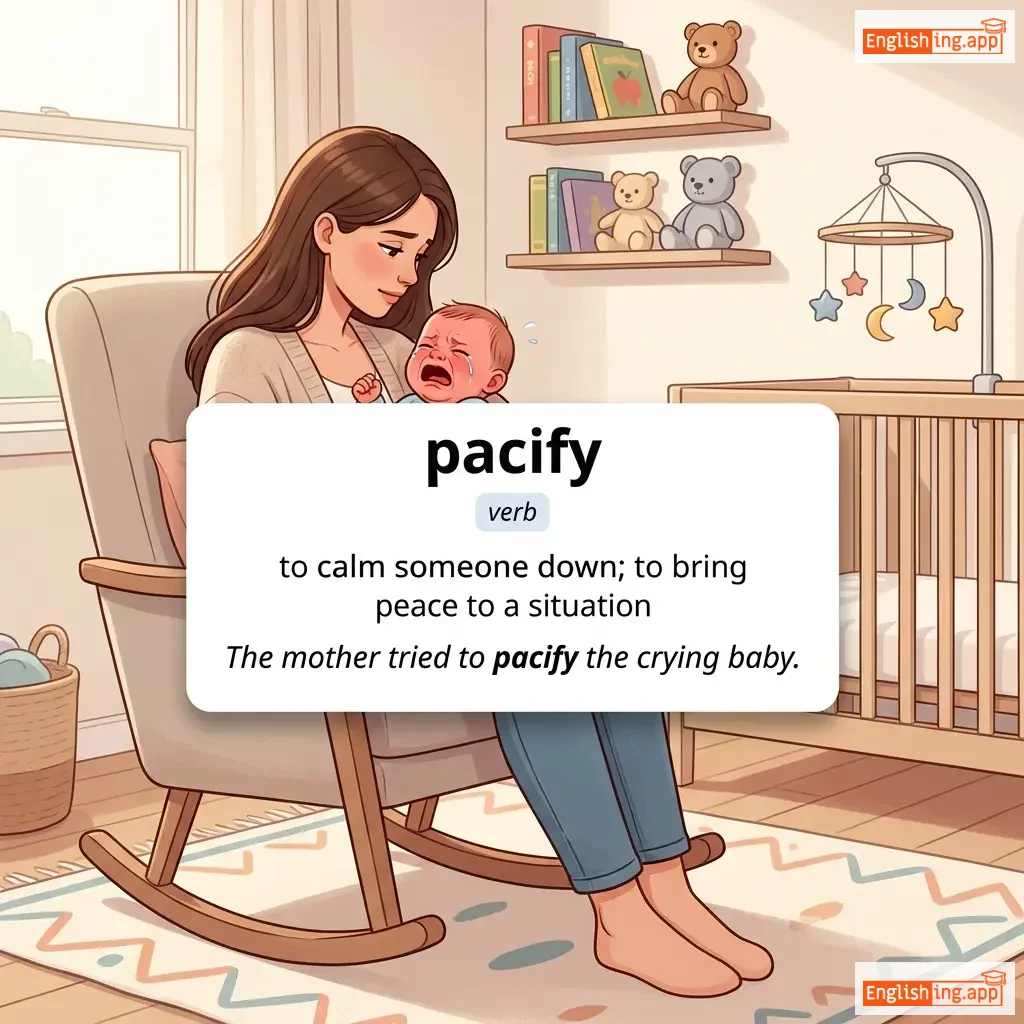
pacify definition card — visual illustration of the meaning
verb C1
/ˈpæs.ɪ.faɪ/
なだめる (nadameru)

to calm someone down; to bring peace to a situation

"The mother tried to pacify the crying baby."

"母親は泣いている赤ちゃんをなだめようとしました。" (Hahaoya wa naite iru akachan wo nadameyou to shimashita.)
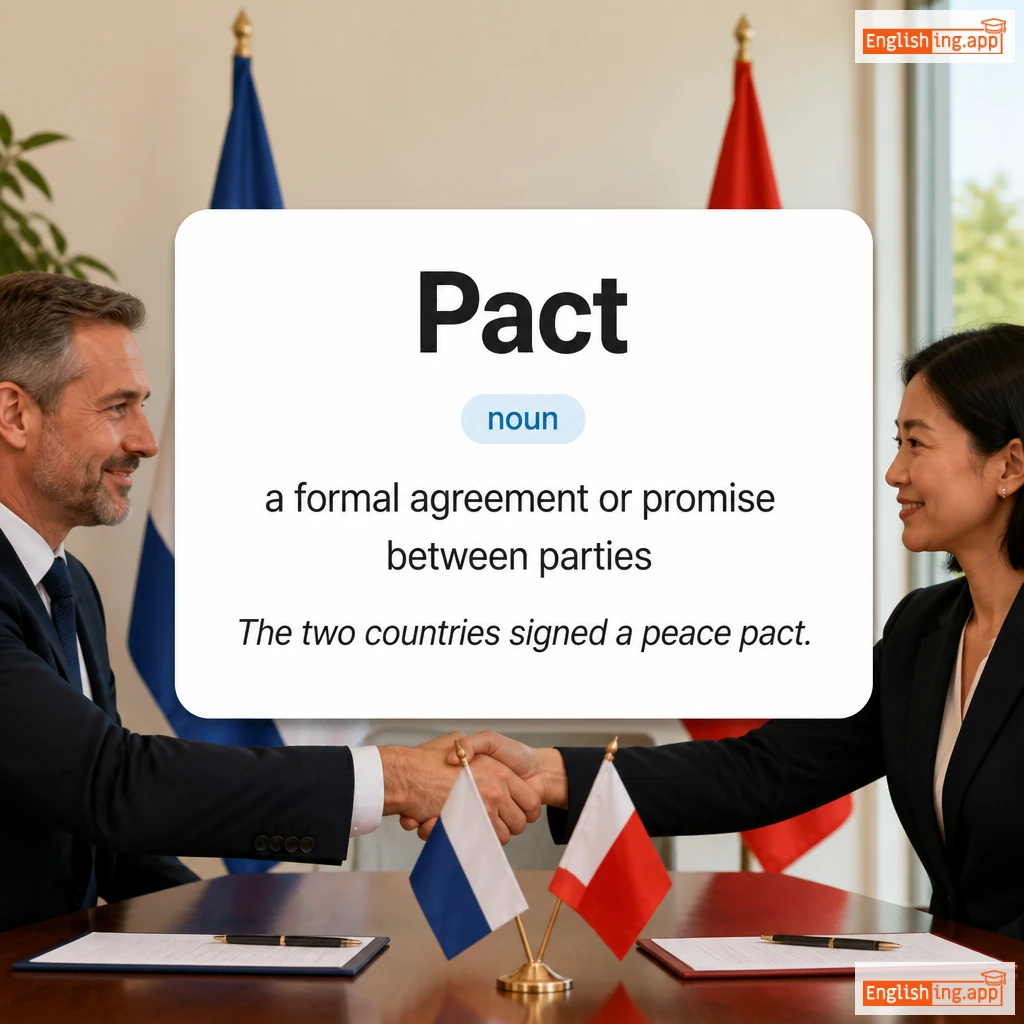
Pact definition card — visual illustration of the meaning
noun C1
/pækt/
協定 (kyoutei)

a formal agreement or promise between parties

"The two countries signed a peace pact."

"二国は平和協定に署名しました。" (Nikoku wa heiwa kyōtei ni shomei shimashita.)
noun C1
/ˈpæd.ək/
馬やその他の動物のための囲い場 (uma ya sonota no dōbutsu no tame no kakoi-ba)

a small enclosed field where horses or other animals are kept

"The horses were grazing in the paddock."

"馬たちはパドックで草を食べていた。" (Umatachi wa paddock de kusa o tabete ita.)
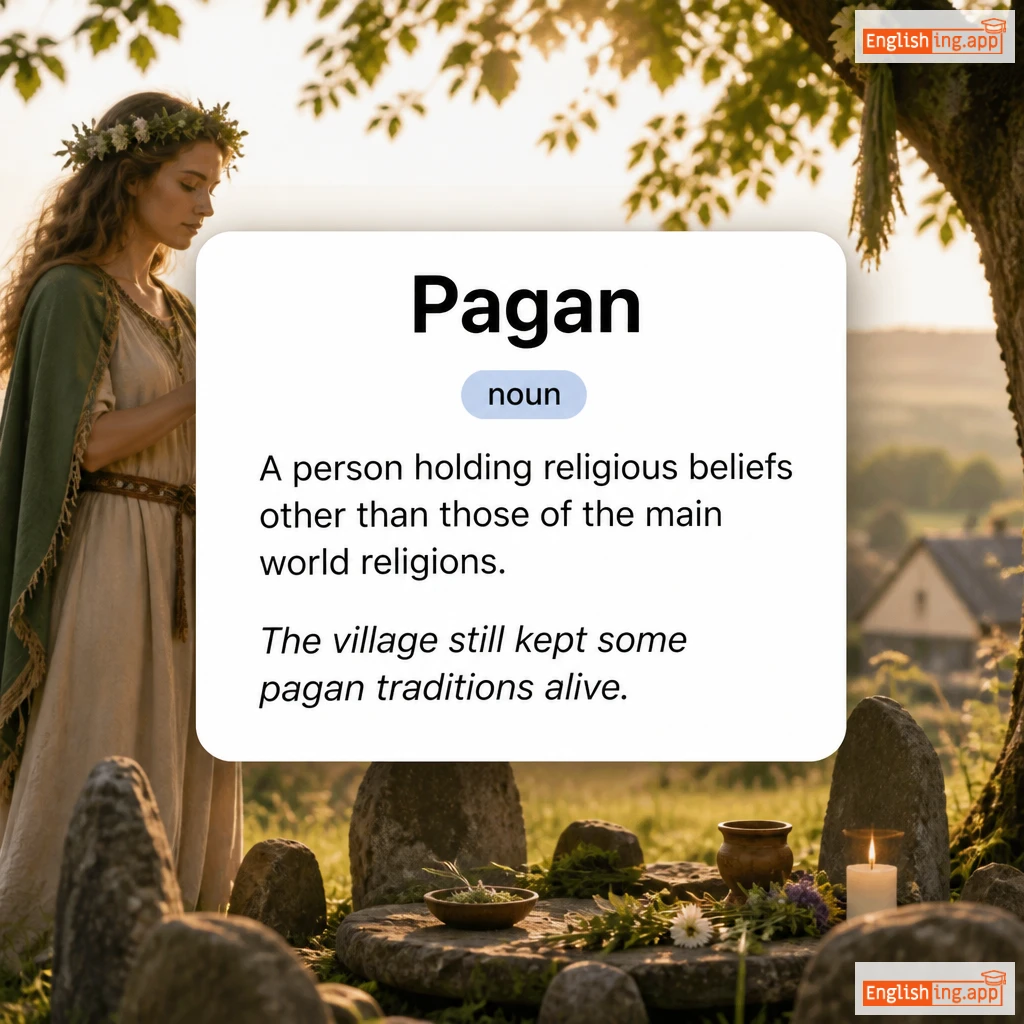
Pagan definition card — visual illustration of the meaning
noun C1
/ˈpeɪɡən/
異教徒 (ikyōto)

A person holding religious beliefs other than those of the main world religions.

"The village still kept some pagan traditions alive."

"その村は今でもいくつかの異教徒の伝統を守り続けていました。" (Sono mura wa imademo ikutsuka no ikyōto no dentō o mamoritsuzukete imashita.)
noun C1
/ˈpædʒənt/
美人コンテスト (bijin kontesuto)

A public entertainment consisting of a procession of people in elaborate costumes, or a beauty contest.

"She won first place in the beauty pageant."

"彼女は美人コンテストで一位を獲得しました" (kanojo wa bijin kontesuto de ichi-i o kaku toku shimashita)
adjective C1
/ˈpeɪnzˌteɪkɪŋ/
非常に注意深く (hijō ni chūi-bukaku)

Done with great care and thoroughness.

"The artist completed the project with painstaking detail."

"アーティストは非常に注意深くプロジェクトを完了しました。" (Ātisuto wa hijō ni chūi-bukaku purojekuto o kanryō shimashita.)
adjective C1
/ˈpæl.ə.tə.bəl/
美味しい (oishii)

pleasant or acceptable to the taste, mind, or feelings

"The meal was simple but quite palatable."

"その食事はシンプルでしたが、かなり美味しかったです。" (Sono shokuji wa shimpuru deshita ga, kanari oishikatta desu.)
Palatable meat definition card — visual illustration of the meaning
noun C1
/ˈpæl.ə.tə.bəl miːt/
美味しい肉 (oishii niku)

Meat that is pleasant to taste; appetizing meat dish

"The chef prepared palatable meat dishes for the dinner party."

"シェフはディナーパーティーのために美味しい肉料理を準備しました。" (Shefu wa dinā pātii no tame ni oishī niku ryōri o junbi shimashita.)
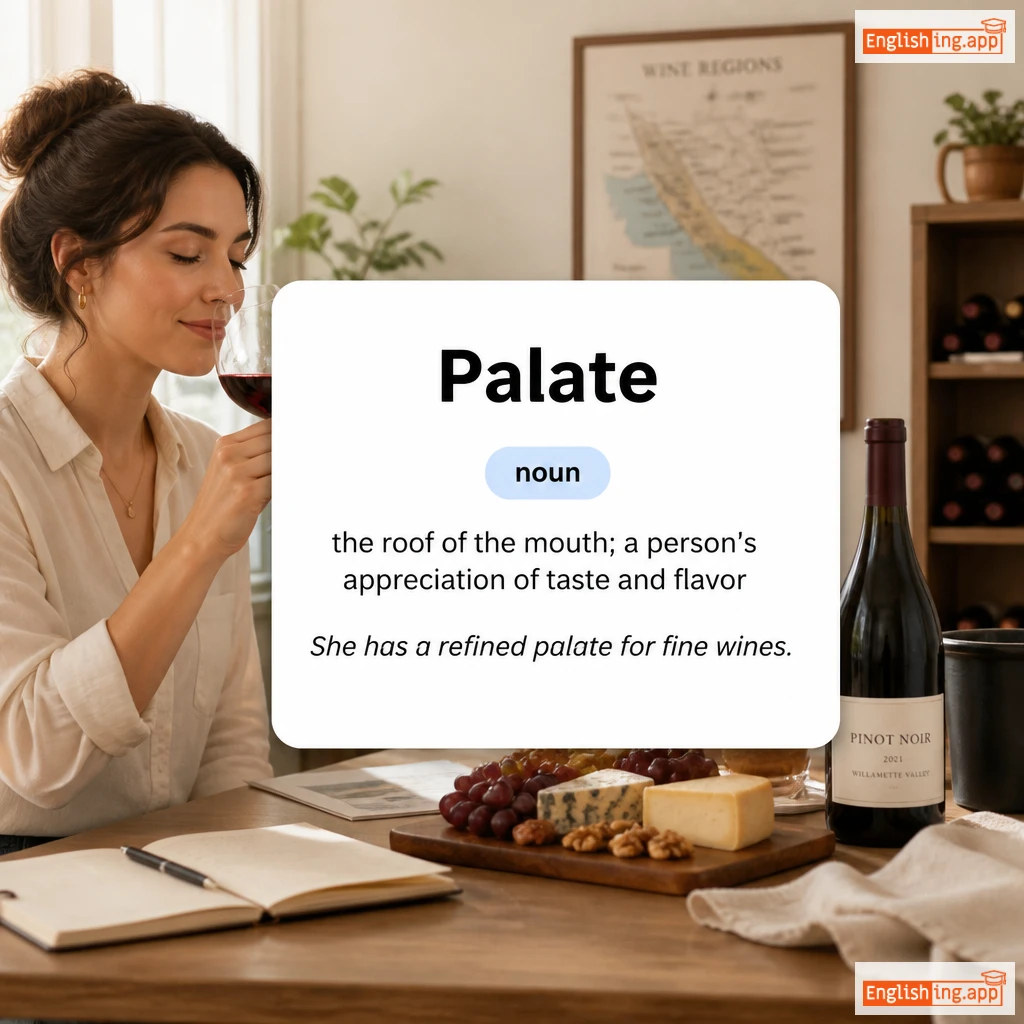
Palate definition card — visual illustration of the meaning
noun C1
/ˈpæl.ət/
口蓋 (kōgai)

the roof of the mouth; a person's appreciation of taste and flavor

"She has a refined palate for fine wines."

"彼女は上質なワインに対して洗練された味覚を持っています。" (Kanojo wa jōshitsu na wain ni taishite senren sareta mikaku o motteimasu.)
adjective C1
/pəˈleɪ.ʃəl/
宮殿のような (kyuuden no you na)

resembling a palace in being spacious and splendid

"They stayed in a palatial hotel during their vacation."

"彼らは休暇中に宮殿のようなホテルに宿泊しました。" (Karera wa kyūka-chū ni kyūden no yō na hoteru ni shukuhaku shimashita.)
noun C1
/ˌpeɪ.li.ɒnˈtɒl.ə.dʒi/
古生物学 (koseibutsugaku)

the branch of science concerned with fossil animals and plants

"She decided to study paleontology at university."

"彼女は大学で古生物学を学ぶことに決めました。" (Kanojo wa daigaku de koseibutsugaku o manabu koto ni kimemashita.)
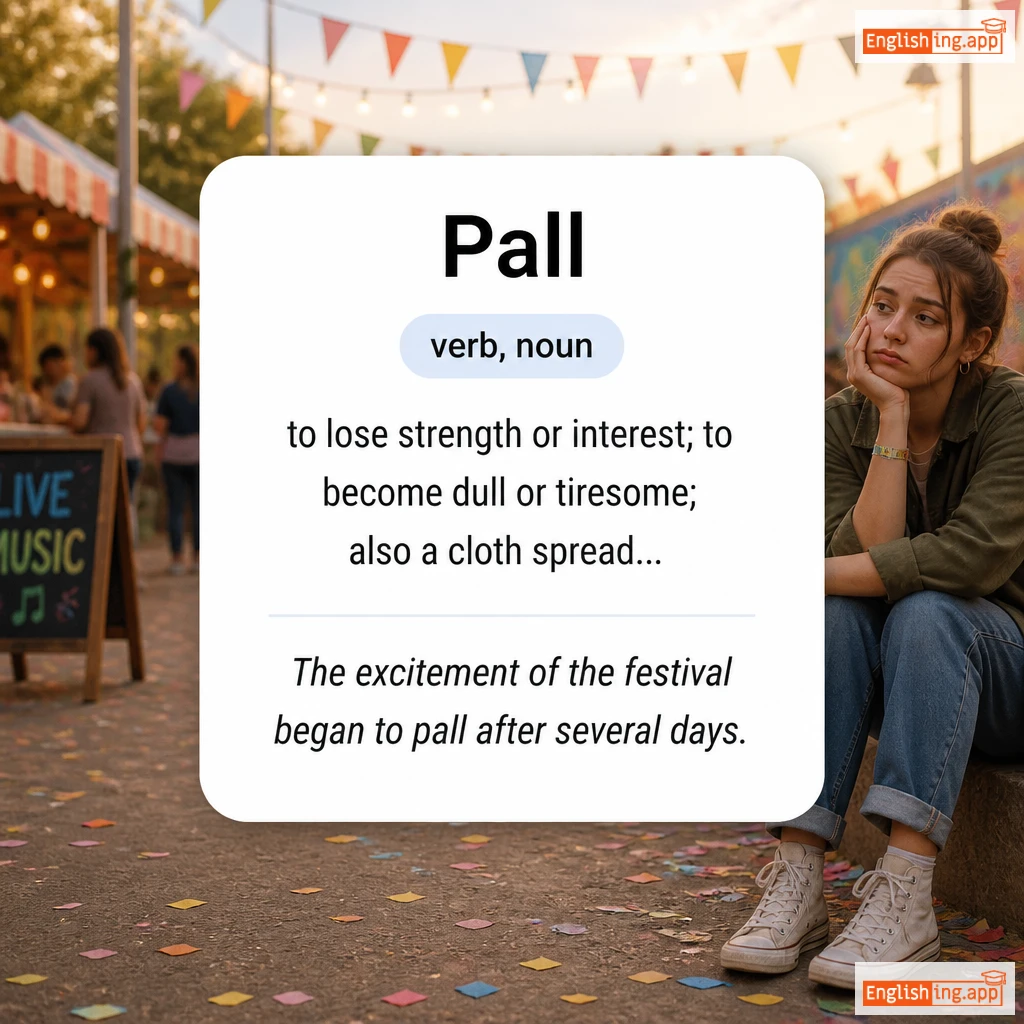
Pall definition card — visual illustration of the meaning
⚰️

Pall

verb, noun C1
/pɔːl/

to lose strength or interest; to become dull or tiresome; also a cloth spread over a coffin

"The excitement of the festival began to pall after several days."

noun C1
/ˈpælɪt/
プラットフォーム (purattofōmu)

a flat wooden platform used for moving or storing goods; also a makeshift bed

"The boxes were stacked on a wooden pallet for easy transport."

"箱は簡単に輸送できるように木製のパレットに積まれました。" (Hako wa kantan ni yusō dekiru yō ni mokusei no paretto ni tsumaremashita.)
adjective C1
/ˈpælɪd/
青白い (aoshiroi)

pale, typically because of poor health or lack of vitality

"The patient looked pallid after weeks of illness."

"患者は数週間の病気の後、顔色が悪く見えた。" (Kanja wa suushūkan no byōki no ato, kaoiro ga waruku mieta.)
adjective C1
/ˈpælpəbl̩/
幸福 (koufuku)

easily perceived or felt; so intense as to seem almost tangible

"There was a palpable sense of excitement in the room."

"賞を受け取ったとき、彼女はその幸福感を隠せなかった。" (Shou wo uketotta toki, kanojo wa sono koufukukan wo kakusenakatta.)
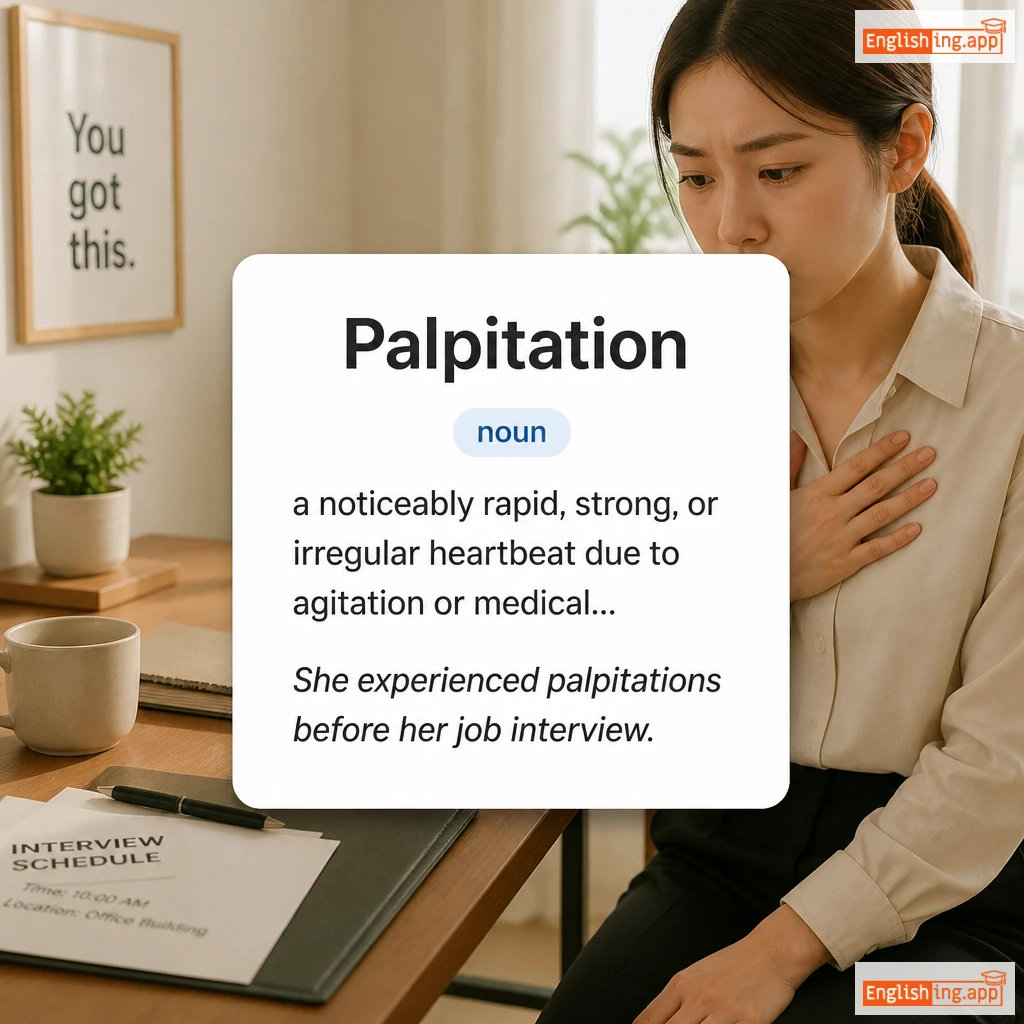
Palpitation definition card — visual illustration of the meaning
noun C1
/ˌpæl.pɪˈteɪ.ʃən/
興奮や医学的状態による顕著な速く、強い、または不規則な心拍 (koufun ya igakuteki joutai ni yoru kencho na hayaku, tsuyoi, matawa fukisoku na shinpaku)

a noticeably rapid, strong, or irregular heartbeat due to agitation or medical condition

"She experienced palpitations before her job interview."

"彼女は面接前にパルピテーションを感じました。" (Kanojo wa mensetsu mae ni parupitēshon o kanjimashita.)
adjective C1
/ˈpɔːltri/
取るに足りない, 些細な (toru ni tarinai, sasaina)

small or meager; lacking in value or importance

"They offered him a paltry sum for his work."

"彼らは彼の仕事に対して取るに足りない金額を提案した。" (Karera wa kare no shigoto ni taishite toru ni tarinai kingaku o teian shita.)
verb C1
/ˈpæmpər/
甘やかす / 大切にする (amayasasu / taisetsu ni suru)

to treat with excessive care and attention; to spoil

"Parents often pamper their first child."

"親はしばしば最初の子供を甘やかします。" (Oya wa shibashiba saisho no kodomo wo amayakashimasu.)
adjective C1
/ˌpæn.əˈmer.ɪ.kən/
パンアメリカン (pan-amerikan)

relating to all the countries of North, Central, and South America

"The Pan-American Games bring together athletes from across the continent."

"パンアメリカンゲームは大陸全体のアスリートを集めます。" (Pan-Amerikan gēmu wa tairiku zentai no asurīto o atsume masu.)
noun C1
/ˌpænəˈsiːə/
万能薬 (bannōyaku)

A solution or remedy for all difficulties or diseases.

"Education is often seen as a panacea for social problems."

"教育は社会問題の万能薬と見なされることがよくあります。" (Kyōiku wa shakai mondai no bannōyaku to minasareru koto ga yoku arimasu.)
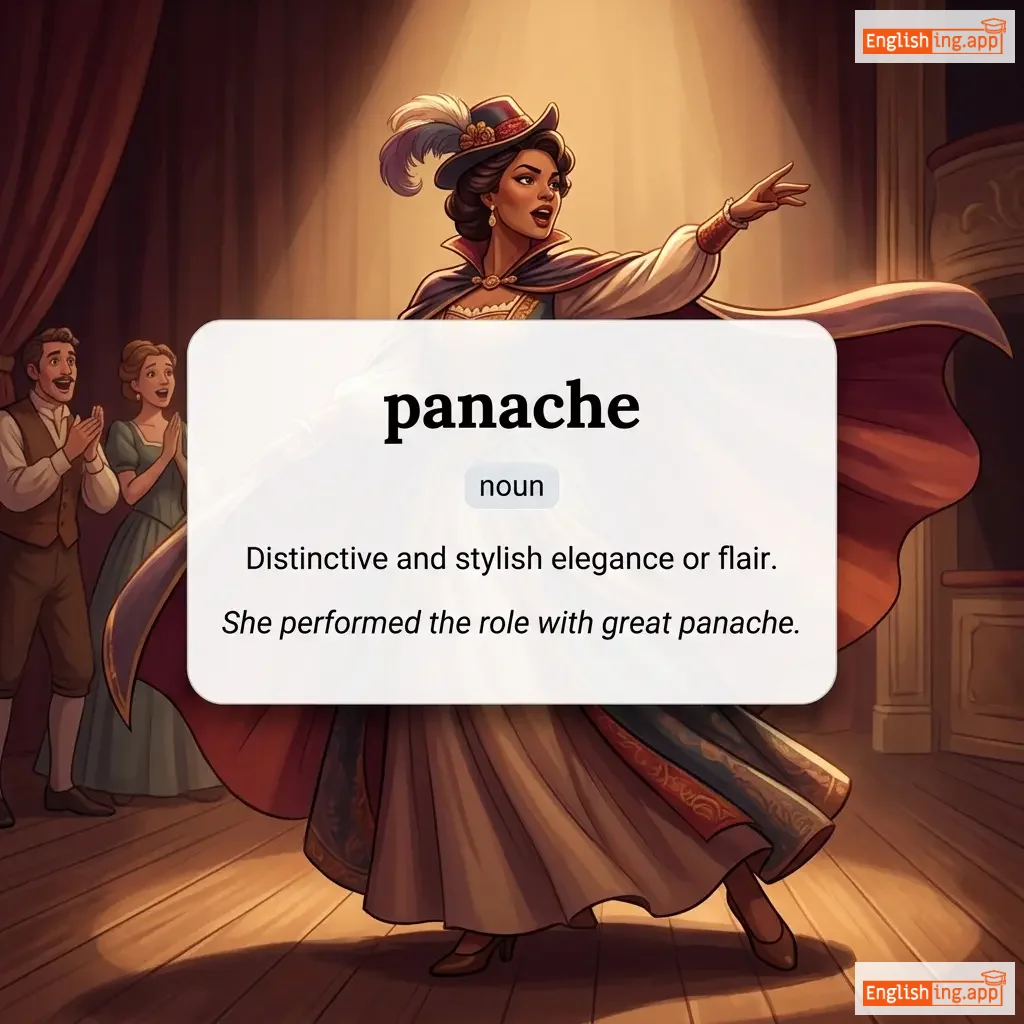
panache definition card — visual illustration of the meaning
noun C1
/pəˈnæʃ/
独特な優雅さ (dokutoku na yūgasa)

Distinctive and stylish elegance or flair.

"She performed the role with great panache."

"彼女は素晴らしいパナッシュで役を演じました。" (Kanojo wa subarashī panasshu de yaku o enjimashita.)
noun C1
/ˈpæŋkriəs/
膵臓 (suizo)

A gland in the abdomen that produces insulin and digestive enzymes.

"The pancreas plays a vital role in digestion and blood sugar regulation."

"膵臓は消化と血糖の調節に重要な役割を果たしています。" (Suizo wa shōka to kettō no chōsetsu ni jūyōna yakuwari o hatashiteimasu.)
noun C1
/ˌpændəˈmoʊniəm/
混乱 (konran)

Wild and noisy disorder or confusion; uproar.

"When the concert was canceled, pandemonium broke out among the crowd."

"コンサートがキャンセルされたとき、観客の間で混乱が起きました。" (Konsāto ga kyanseru sareta toki, kankyaku no aida de konran ga okimashita.)
verb C1
/ˈpændər/
おべっかを使う, ごますりする (obekka wo tsukau, gomasuri suru)

to indulge or exploit the weaknesses, desires, or immoral tendencies of others

"The politician was accused of pandering to voters' fears."

"その政治家は有権者の恐怖におもねっていると非難された。" (Sono seijika wa yukensha no kyoufu ni omonetteiru to hinansareta.)
noun C1
/pæŋ/
突然の鋭い痛みまたは感情的苦痛 (totsuzen no surudoi itami matawa kanjō-teki kutsū)

a sudden sharp feeling of pain or emotional distress

"She felt a pang of guilt after the argument."

"議論後、彼女は罪悪感のパンを感じた。" (Giron go, kanojo wa zaiakukan no pan o kanjita.)
noun C1
/ˌpæn.əˈræm.ə/
パノラマビュー (panorama byū)

An unbroken view of the whole region surrounding an observer.

"From the hilltop, we enjoyed a breathtaking panorama of the city."

"丘の頂上から、私たちは街の息をのむようなパノラマビューを楽しみました。" (oka no chōjō kara, watashitachi wa machi no iki o nomu yōna panorama byū o tanoshimimashita.)
adjective C1
/ˌpæn.əˈræm.ɪk/
パノラマビュー (panorama byuu)

Giving a wide view of an extensive area in all directions.

"The hotel offers panoramic views of the ocean."

"ホテルは海のパノラミックビューを提供します。" (hoteru wa umi no panoramikku byuu wo teikyoushimasu.)
noun C1
/ˈpæn.θi.ən/
すべての神々、すべての神々に捧げられた寺院 (subete no kamigami, subete no kamigami ni sasagerareta jiin)

All the gods of a religion collectively; a building dedicated to all gods.

"The Roman Pantheon is one of the best-preserved ancient temples."

"ローマのパンテオンは最もよく保存されている古代の神殿の一つです。" (Rōma no Panteon wa mottomo yoku hozon sarete iru kodai no shinden no hitotsu desu.)
noun C1
/ˈpæntəmaɪm/
パントマイム (pantomaimu)

A type of theatrical performance using gestures and movements without spoken words; in Britain, a musical comedy play for families performed at Christmas.

"The children enjoyed the Christmas pantomime at the local theater."

"子供たちは地元の劇場でクリスマスのパントマイムを楽しんだ。" (kodomotachi wa jimoto no gekijo de Kurisumasu no pantomaimu o tanoshinda.)
noun C1
/pəˈpaɪrəs/
パピルス (papirusu)

An ancient writing material made from the pith of the papyrus plant; also refers to the plant itself.

"The ancient scroll was written on papyrus."

"古代の巻物はパピルスに書かれていました。" (Kodai no kanmō wa papirusu ni kakarete imashita.)
noun C1
/ˈpærəbl/
寓話 (gūwa)

A simple story used to illustrate a moral or spiritual lesson.

"Jesus often taught using a parable to convey deeper truths."

"イエスはしばしば深い真理を伝えるために寓話を使って教えていました。" (Iesu wa shibashiba fukai shinri o tsutaeru tame ni gūwa o tsukatte oshiete imashita.)
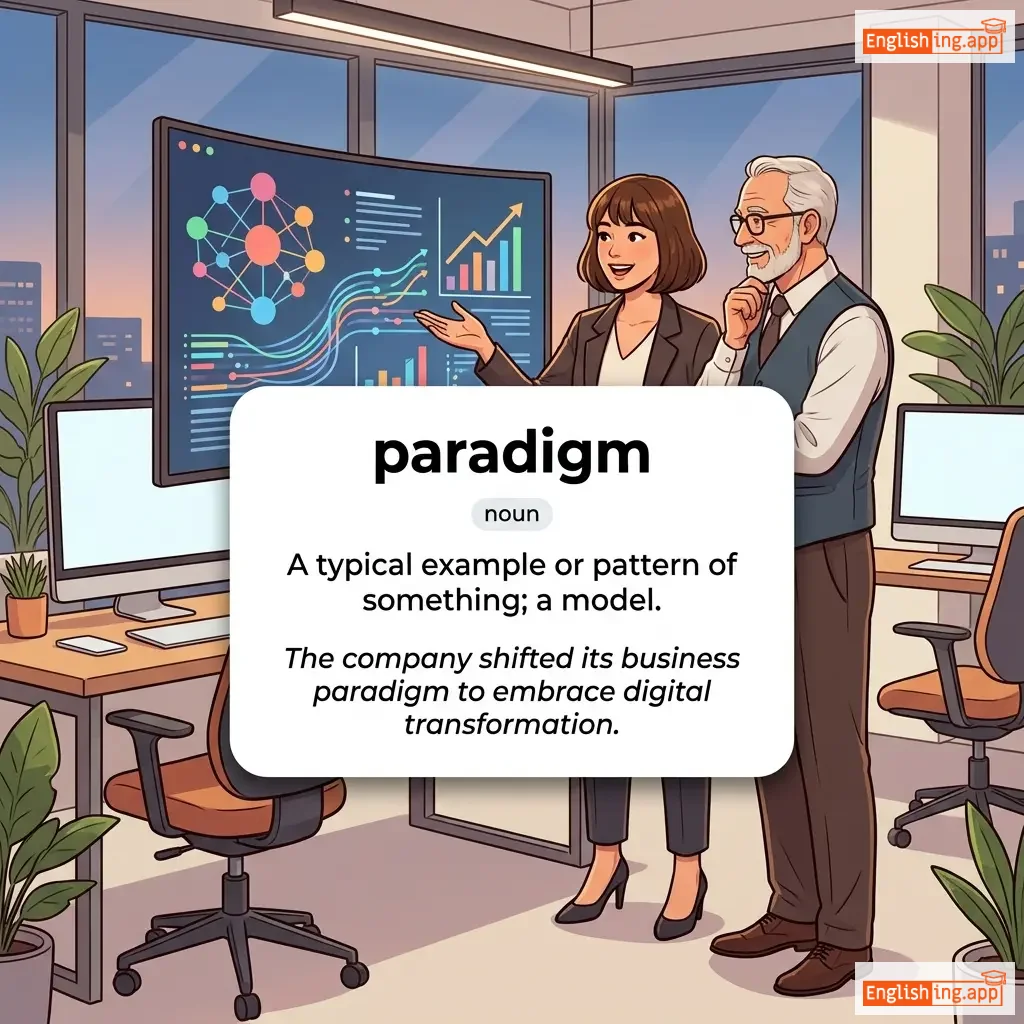
paradigm definition card — visual illustration of the meaning
noun C1
/ˈpærədaɪm/
モデル (moderu)

A typical example or pattern of something; a model.

"The company shifted its business paradigm to embrace digital transformation."

"その企業はデジタルトランスフォーメーションを受け入れるためにビジネスモデルを変更しました。" (Sono kigyō wa dejitaru toransufōmēshon o ukeireru tame ni bijinesu moderu o henkō shimashita.)
adjective C1
/ˌpærəˈdɒksɪkəl/
逆説的 (gyakusetsuteki)

Seemingly contradictory or opposed to common sense, yet possibly true.

"It is paradoxical that standing is often more tiring than walking."

"立っていることが歩くことよりも疲れるのは逆説的です。" (Tatte iru koto ga aruku koto yori mo tsukareru no wa gyakusetsuteki desu.)
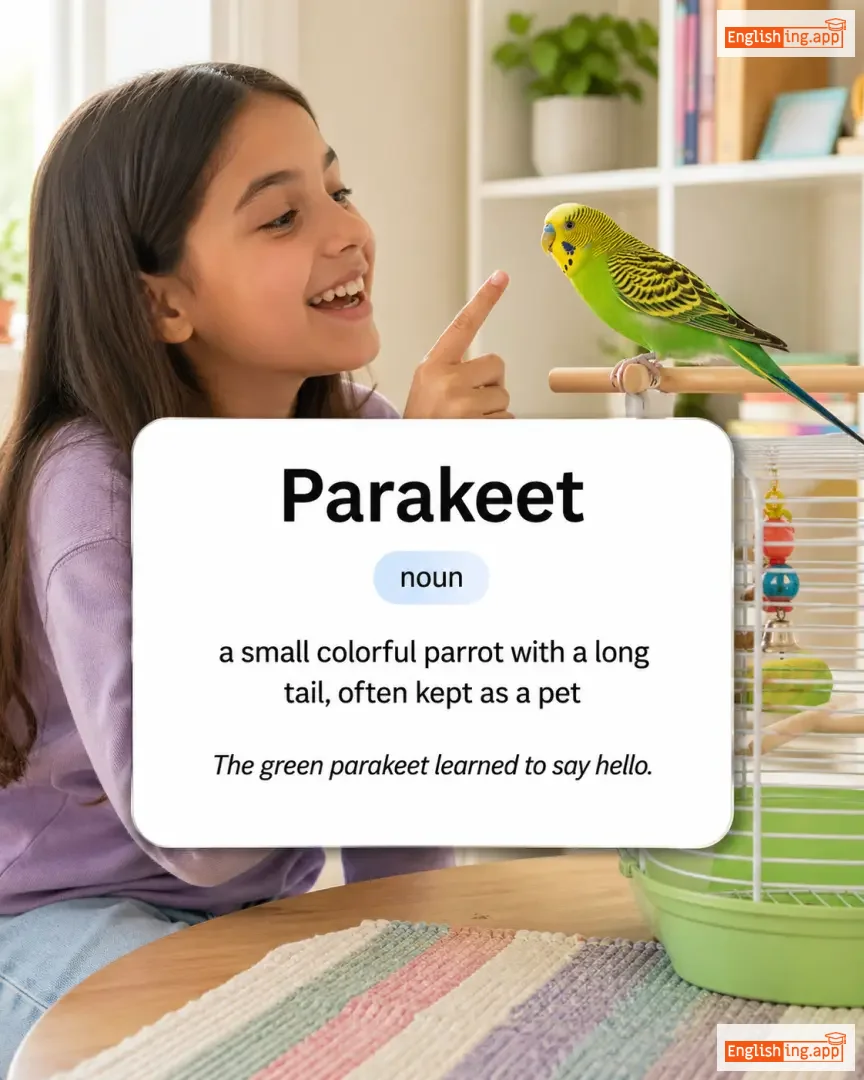
Parakeet definition card — visual illustration of the meaning
noun C1
/ˈpær.ə.kiːt/
インコ (inko)

a small colorful parrot with a long tail, often kept as a pet

"The green parakeet learned to say hello."

"緑色のインコはこんにちはを言うことを学びました。" (Midori-iro no inko wa konnichiwa wo iu koto wo manabimashita.)
noun C1
/ˈpærəˌlɛlɪzəm/
平行主義 (heikou shugi)

The state of being parallel or similar; in literature, the use of components in a sentence that are grammatically the same or similar in construction.

"The writer used parallelism to give rhythm to his prose."

"作家は自分の文章にリズムを与えるために平行主義を使用しました。" (Sakka wa jibun no bunshou ni rizumu wo ataeru tame ni heikou shugi wo shiyou shimashita.)
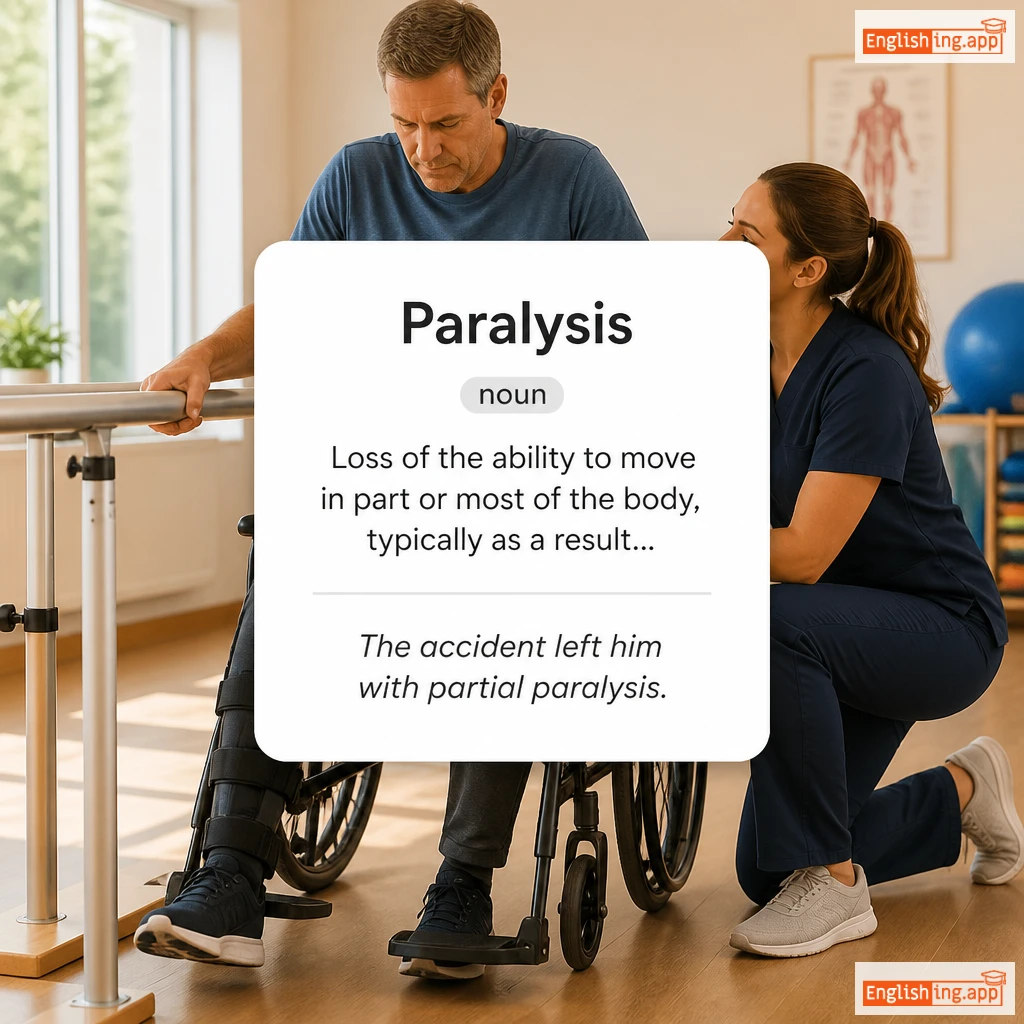
Paralysis definition card — visual illustration of the meaning
noun C1
/pəˈræləsɪs/
麻痺 (mabi)

Loss of the ability to move in part or most of the body, typically as a result of illness or injury.

"The accident left him with partial paralysis."

"事故で部分的な麻痺が残りました。" (Jiko de bubun-tekina mabi ga nokorimashita.)
verb C1
/ˈpærəlaɪz/
麻痺させる (mahi saseru)

to cause someone or something to lose the ability to move or function normally

"The sudden shock seemed to paralyze him."

"突然の衝撃が彼を麻痺させたようだった。" (Totsuzen no shōgeki ga kare o mahi saseta yō datta.)
adjective C1
/ˈpærəmaʊnt/
最も重要な (mottomo jūyōna)

more important than anything else; supreme

"Safety is of paramount importance in this factory."

"この工場では安全が最も重要です。" (Kono kōjō dewa anzen ga mottomo jūyō desu.)
noun C1
/ˌpærəˈnɔɪə/
人々があなたに害を与えようとしているか、常にあなたを監視しているという非合理的で持続的な感覚 (hitobito ga anata ni gai o atae yō to shite iru ka, jō ni anata o kanshi shite iru to iu higariteki de jizokuteki na kankaku)

an irrational and persistent feeling that people are 'out to get you' or are constantly watching you

"His constant paranoia made it hard for him to trust anyone."

"彼の絶え間ないパラノイアは、誰も信じることを難しくさせていた。" (Kare no tae manai paranoia wa, dare mo shinjiru koto o muzukashiku sasete ita.)
adjective C1
/ˈpær.ə.nɔɪd/
他人に対して不合理な恐怖や疑いを持つこと (tanin ni taishite fugōri na kyōfu ya utagai o motsu koto)

having an unreasonable fear or suspicion of others

"She became paranoid after hearing strange noises outside."

"彼女は外で奇妙な音を聞いた後、パラノイアになった。" (Kanojo wa soto de kimyō na oto o kiita ato, paranoya ni natta.)
noun C1
/ˌpærəfəˈneɪliə/
道具一式 (dougu isshiki)

Miscellaneous articles, especially equipment needed for a particular activity.

"The fisherman carried all his fishing paraphernalia in a large box."

"漁師はすべての釣り道具を大きな箱に入れて運びました。" (Ryoushi wa subete no tsuri dougu o ookina hako ni irete hakobimashita.)
verb C1
/ˈpærəfreɪz/
幸福 (kōfuku)

To express the meaning of something using different words, often to make it clearer.

"The teacher asked the students to paraphrase the poem in their own words."

"彼女は賞を受け取ったとき、自分の幸せを隠せなかった。" (Kanojo wa shō o uketotta toki, jibun no kōfuku o kakusenakatta.)
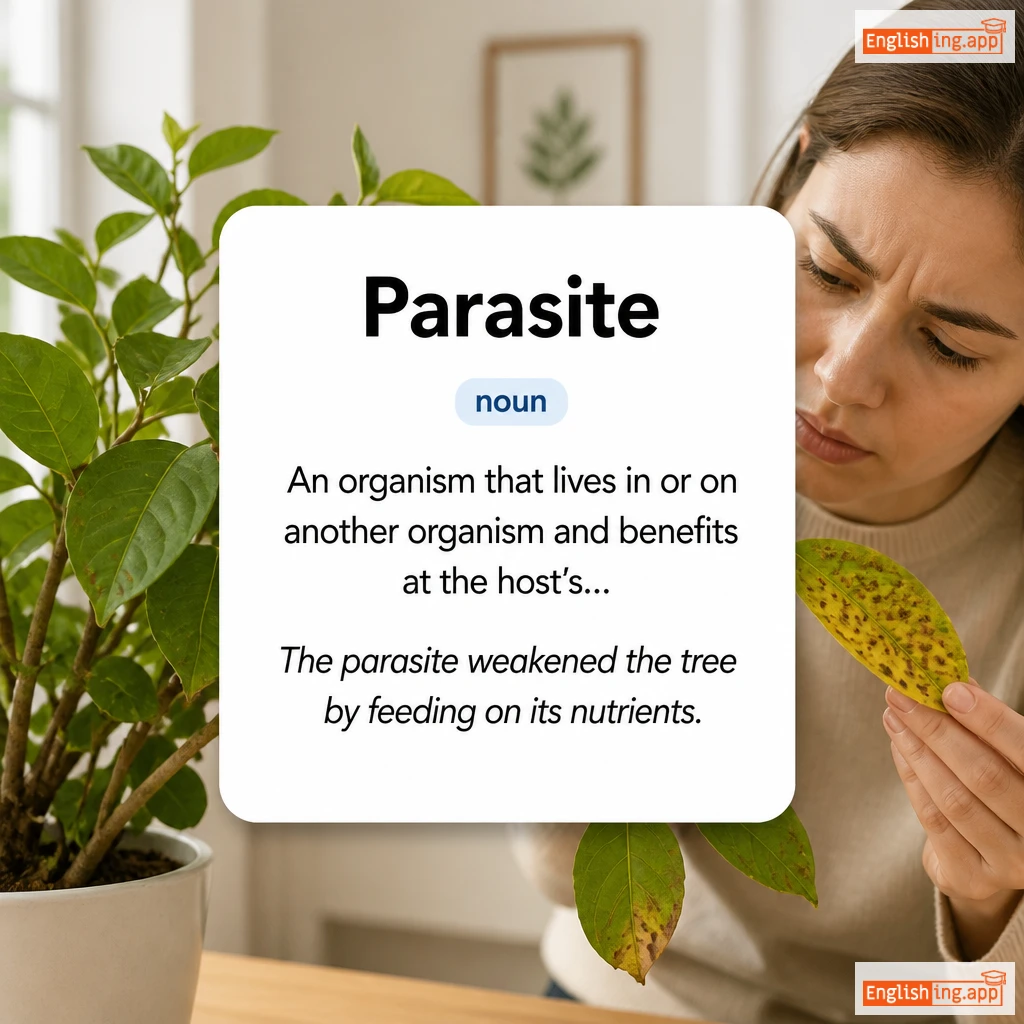
Parasite definition card — visual illustration of the meaning
noun C1
/ˈpærəsaɪt/
寄生虫 (kiseichū)

An organism that lives in or on another organism and benefits at the host’s expense.

"The parasite weakened the tree by feeding on its nutrients."

"寄生虫は栄養を吸収して木を弱らせました。" (Kiseichū wa eiyō o kyūshū shite ki o yowarasemashita.)
adjective C1
/pɑːrtʃt/
極度に喉が渇いた (kyokudo ni nodo ga kawaita)

extremely dry, especially because of heat or thirst

"After walking in the desert, he was parched with thirst."

"砂漠を歩いた後、彼は極度に喉が渇いていた。" (Sabaku o aruita ato, kare wa kyokudo ni nodo ga kawaita.)
noun C1
/ˈpɑːrtʃmənt/
羊皮紙 (yōhishi)

a thin material made from animal skin, used in the past for writing

"The ancient manuscript was written on parchment."

"古代の写本は羊皮紙に書かれていました。" (Kodai no shahon wa yōhishi ni kakarete imashita.)
adjective C1
/ˈpɑːr.dən.ə.bəl/
許容可能な (kyoryo kanno na)

able to be forgiven; excusable

"His mistake was pardonable given the difficult circumstances."

"彼の誤りは許容可能でした、困難な状況を考慮すると。" (kare no ayamari wa kyoryo kanou deshita, konnan na joukyou o kouryo suru to.)
verb C1
/per/
皮をむく (kawa wo muku)

to cut away the outer covering or reduce something gradually

"She pared the apple before eating it."

"彼女はリンゴを食べる前に皮をむいた。" (Kanojo wa ringo wo taberu mae ni kawa wo muita.)
noun C1
/ˈpɛrəntɪdʒ/
家系 (kakei)

The identity and origins of one's parents; descent or lineage.

"Her noble parentage gave her access to the royal court."

"彼女の高貴な家系は、彼女に王室へのアクセスを与えた。" (Kanojo no kōkina kakei wa, kanojo ni ōshitsu e no akusesu o ataeta.)
noun C1
/pəˈrɛnθəsɪs/
括弧 (kakko)

A pair of curved marks ( ) used to enclose words or numbers; also an interruption or digression in speech or writing.

"The explanation was given in a parenthesis within the text."

"説明はテキスト内の括弧に含まれていました。" (Setsumei wa tekisuto nai no kakko ni fukumareteimashita.)