Vocabularies

English Vocabulary Dictionary | Word Meanings, Definitions & Examples

Idealism definition card — visual illustration of the meaning
noun C1
/aɪˈdiː.ə.lɪ.zəm/
理想主义 (lǐxiǎng zhǔyì)

the pursuit of high principles and noble goals; unrealistic pursuit of perfection

"His youthful idealism motivated him to join various social justice movements."

"他的青春理想主义激励他加入了各种社会公正运动。" (Tā de qīngchūn lǐxiǎng zhǔyì jīlì tā jiārùle gè zhǒng shèhuì gōngzhèng yùndòng.)
adjective C1
/ˌaɪdiəˈlɪstɪk/
理想主义的 (lǐ xiǎng zhǔ yì de)

pursuing high principles or ideals; unrealistically optimistic

"She has an idealistic view of changing the world."

"她对改变世界有着理想主义的看法。" (Tā duì gǎi biàn shì jiè yǒu zhe lǐ xiǎng zhǔ yì de kàn fǎ.)
verb C1
/aɪˈdiː.ə.laɪz/
理想化 (lǐxiǎng huà)

To regard or represent something as perfect or better than it really is.

"Children often idealize their parents."

"孩子们常常理想化他们的父母。" (Háizimen chángcháng lǐxiǎng huà tāmen de fùmǔ.)
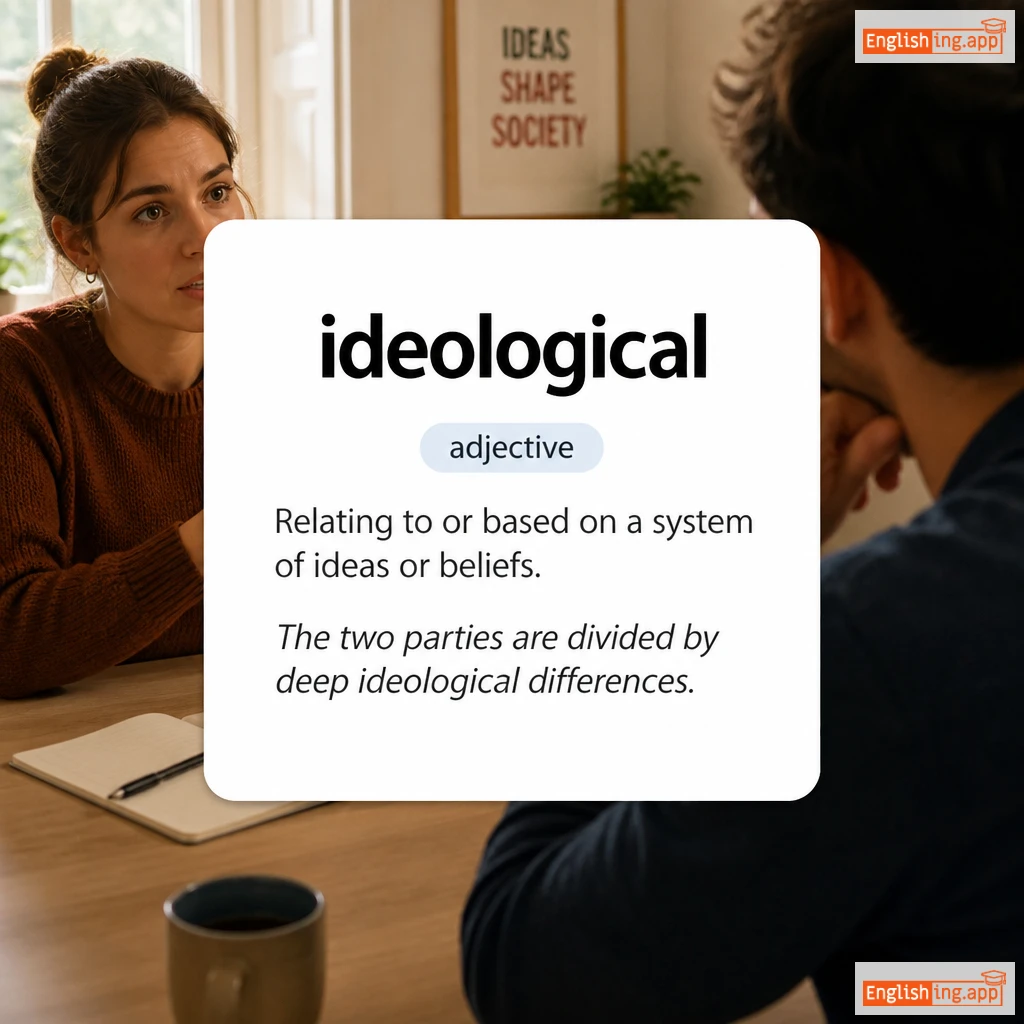
ideological definition card — visual illustration of the meaning
adjective C1
/ˌaɪ.di.əˈlɒdʒ.ɪ.kəl/
意识形态的 (yìshí xíngtài de)

Relating to or based on a system of ideas or beliefs.

"The two parties are divided by deep ideological differences."

"这两个党派由于深刻的意识形态分歧而分裂。" (Zhè liǎng gè dǎngpài yóuyú shēnkè de yìshí xíngtài fēnqí ér fēnliè.)
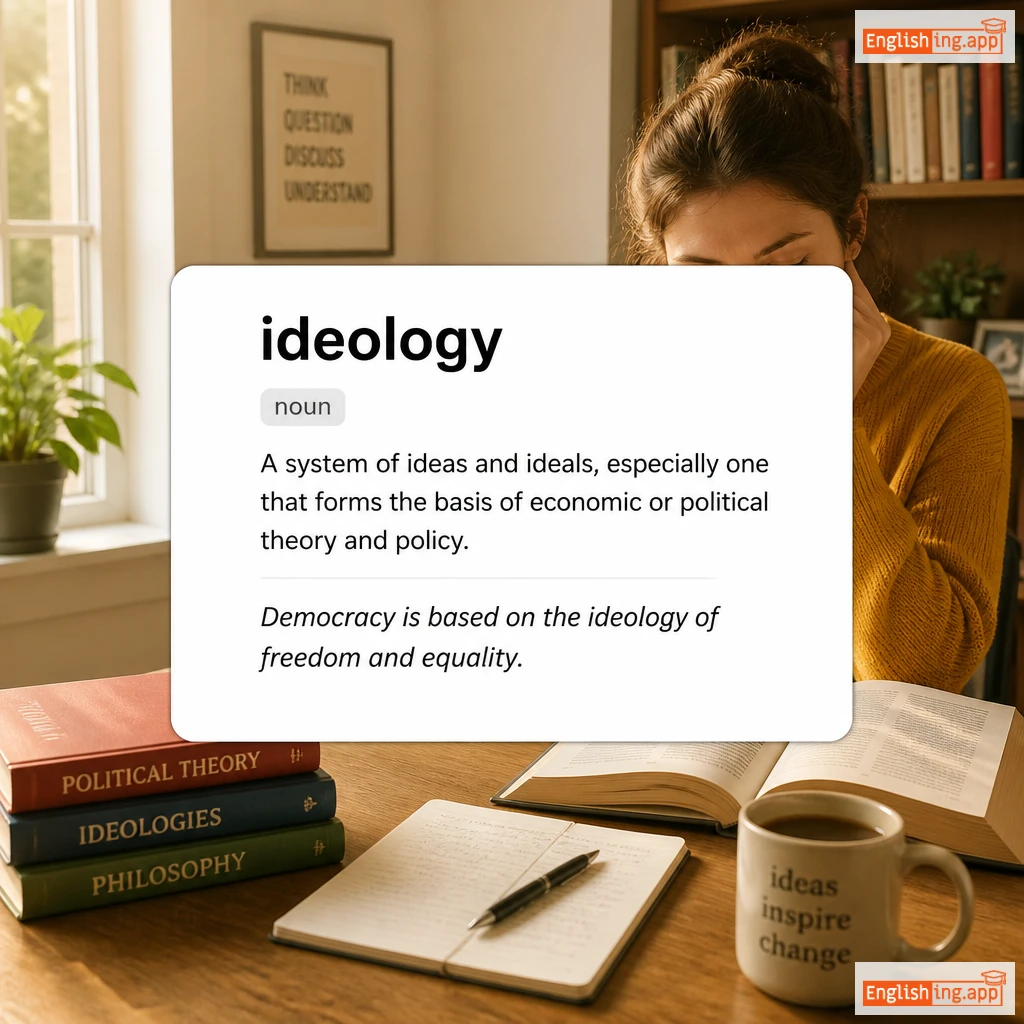
ideology definition card — visual illustration of the meaning
noun C1
/ˌaɪ.diˈɒl.ə.dʒi/
意识形态 (yishi xingtai)

A system of ideas and ideals, especially one that forms the basis of economic or political theory and policy.

"Democracy is based on the ideology of freedom and equality."

"民主基于自由和平等的意识形态。" (Minzhu jiyu ziyou he pingdeng de yishi xingtai.)
noun C1
/ˈɪd.i.əm/
习语 (xíyǔ)

A group of words whose meaning is different from the meanings of the individual words.

"The idiom 'break the ice' means to start a conversation in a friendly way."

"习语 '打破僵局' 意味着以友好的方式开始对话。" (xíyǔ 'dǎpò jiāngjú' yìwèizhe yǐ yǒuhǎo de fāngshì kāishǐ duìhuà.)
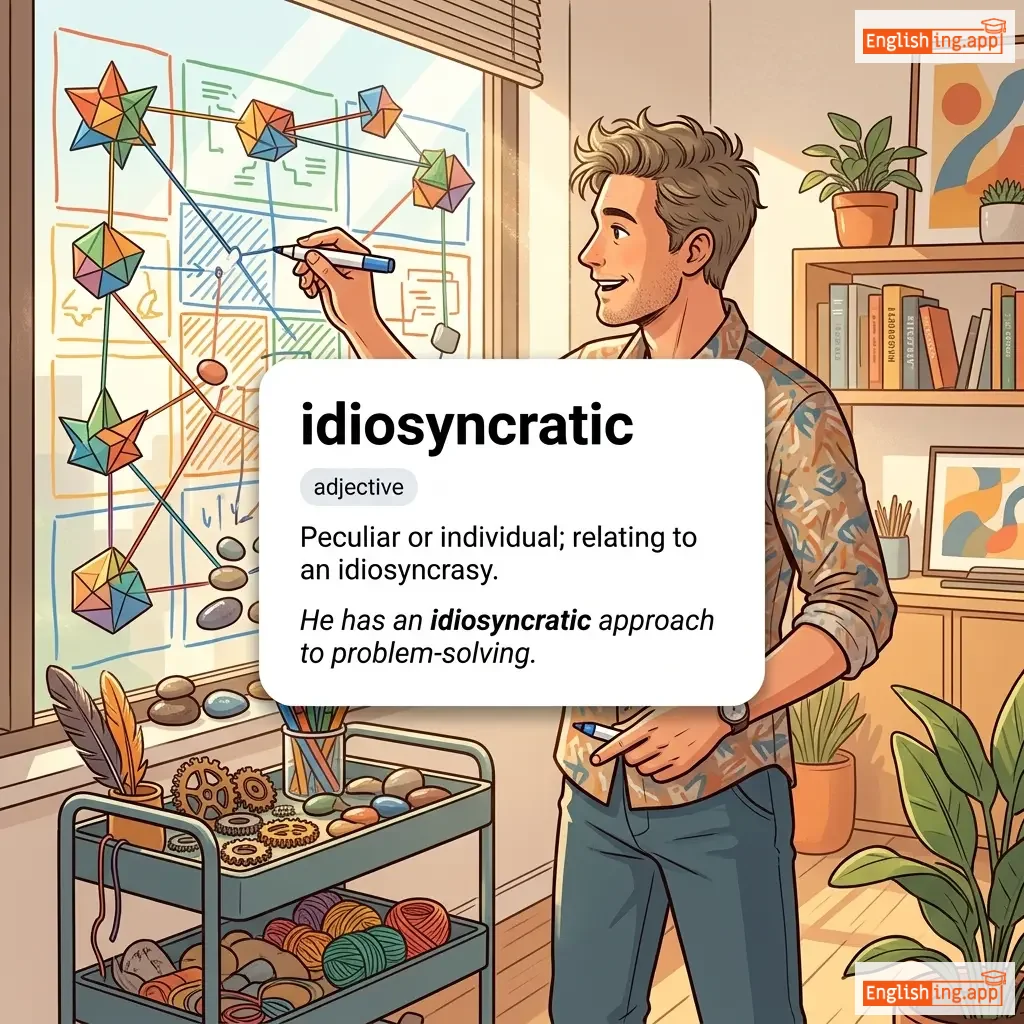
idiosyncratic definition card — visual illustration of the meaning
adjective C1
/ˌɪdiəsɪnˈkrætɪk/
特立独行的 (te li du xing de)

Peculiar or individual; relating to an idiosyncrasy.

"He has an idiosyncratic approach to problem-solving."

"他有一种特立独行的解决问题的方法。" (Ta you yizhong te li du xing de jiejue wenti de fangfa.)
verb C1
/ˈaɪdəlaɪz/
偶像崇拜 (ǒuxiàng chóngbài)

To admire or worship someone excessively.

"Fans often idolize celebrities for their talent and lifestyle."

"粉丝们常常因为他们的才华和生活方式而崇拜名人。" (Fěnsīmen chángcháng yīnwèi tāmen de cáihuá hé shēnghuó fāngshì ér chóngbài míngrén.)
adjective C1
/aɪˈdɪlɪk/
田园诗般的美丽 (tiányuánshī bān de měilì)

Like an idyll; extremely happy, peaceful, or picturesque.

"They enjoyed an idyllic vacation by the sea."

"他们享受了一个田园诗般的海边假期。" (Tāmen xiǎngshòule yīgè tiányuánshī bān de hǎibiān jiàqī.)
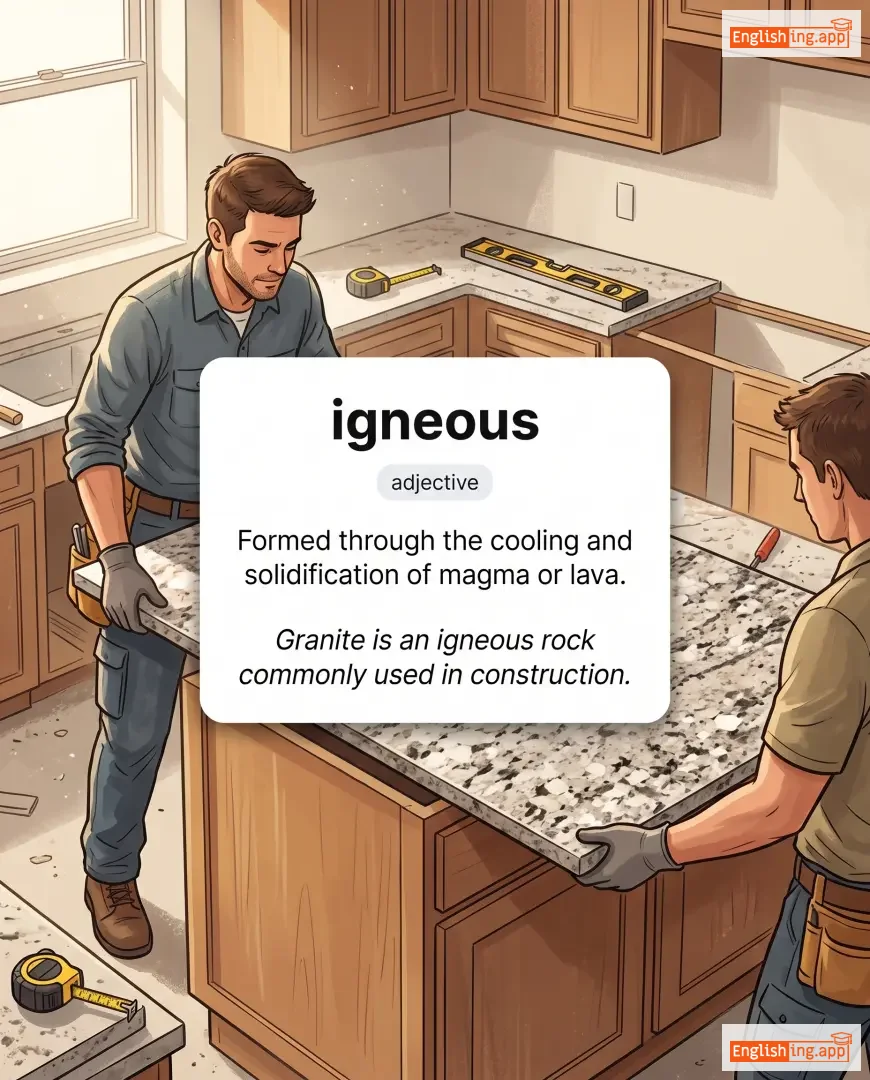
igneous definition card — visual illustration of the meaning
adjective C1
/ˈɪɡ.ni.əs/
火成 (huǒchéng)

Formed through the cooling and solidification of magma or lava.

"Granite is an igneous rock commonly used in construction."

"花岗岩是一种常用于建筑的火成岩。" (Huāgāngyán shì yī zhǒng cháng yòng yú jiànzhú de huǒchéng yán.)
verb C1
/ɪɡˈnaɪt/
点燃 (diǎnrán)

To catch fire or cause to catch fire; to start or arouse.

"The sparks ignited the dry leaves in seconds."

"火花在几秒钟内点燃了干叶。" (huǒ huā zài jǐ miǎo zhōng nèi diǎn rán le gān yè.)
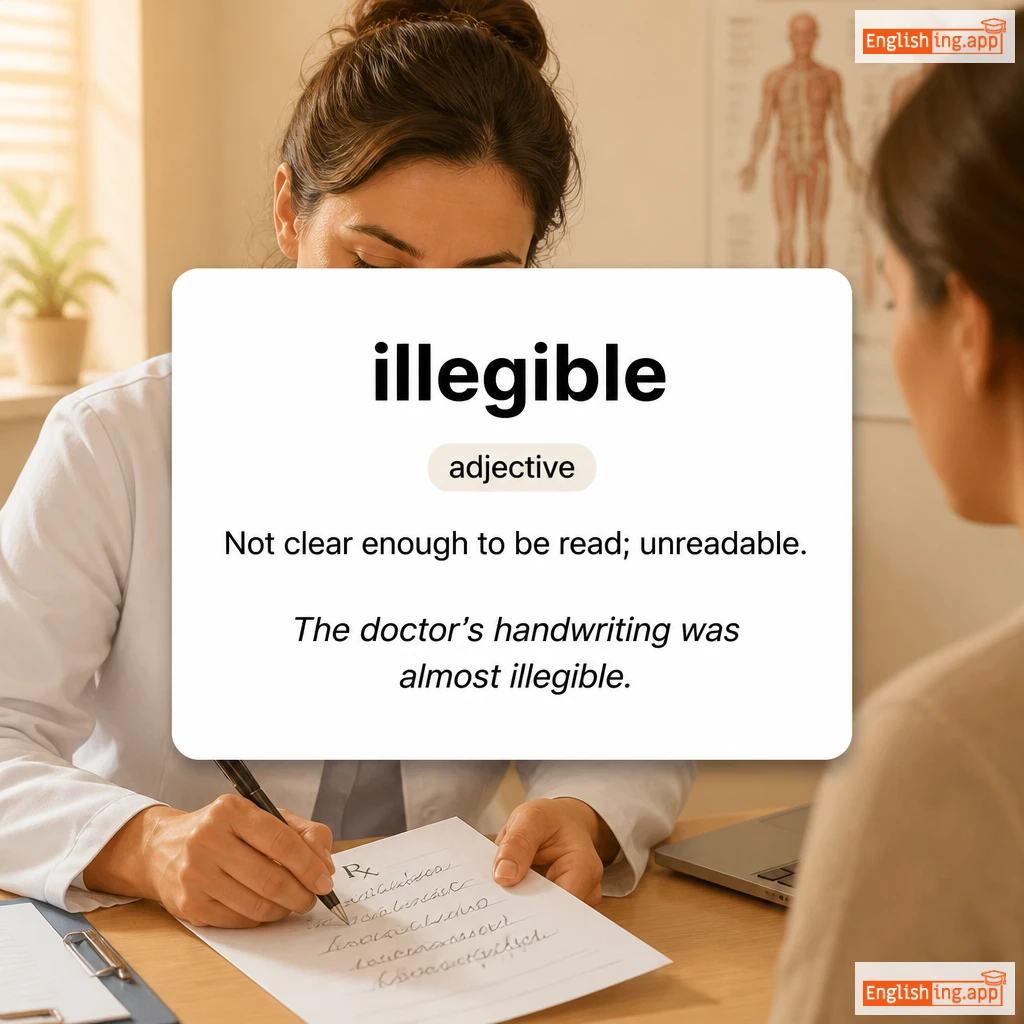
illegible definition card — visual illustration of the meaning
adjective C1
/ɪˈledʒ.ə.bəl/
难以辨认 (nán yǐ biàn rèn)

Not clear enough to be read; unreadable.

"The doctor’s handwriting was almost illegible."

"医生的字迹几乎难以辨认。" (Yīshēng de zìjì jīhū nán yǐ biàn rèn.)
adjective C1
/ˌɪlɪˈdʒɪtɪmət/
非法 (feifa)

Not authorized by law, rules, or standards; not recognized as valid.

"The court ruled the contract to be illegitimate."

"法院裁定合同是非法的。" (Fayuan caiding hetong shi feifa de.)
adjective C1
/ɪˈlɪsɪt/
非法的 (feifa de)

Forbidden by law, rules, or custom.

"The police shut down the illicit drug operation."

"警方关闭了非法毒品交易。" (Jǐngfāng guānbìle fēifǎ dúpǐn jiāoyì.)
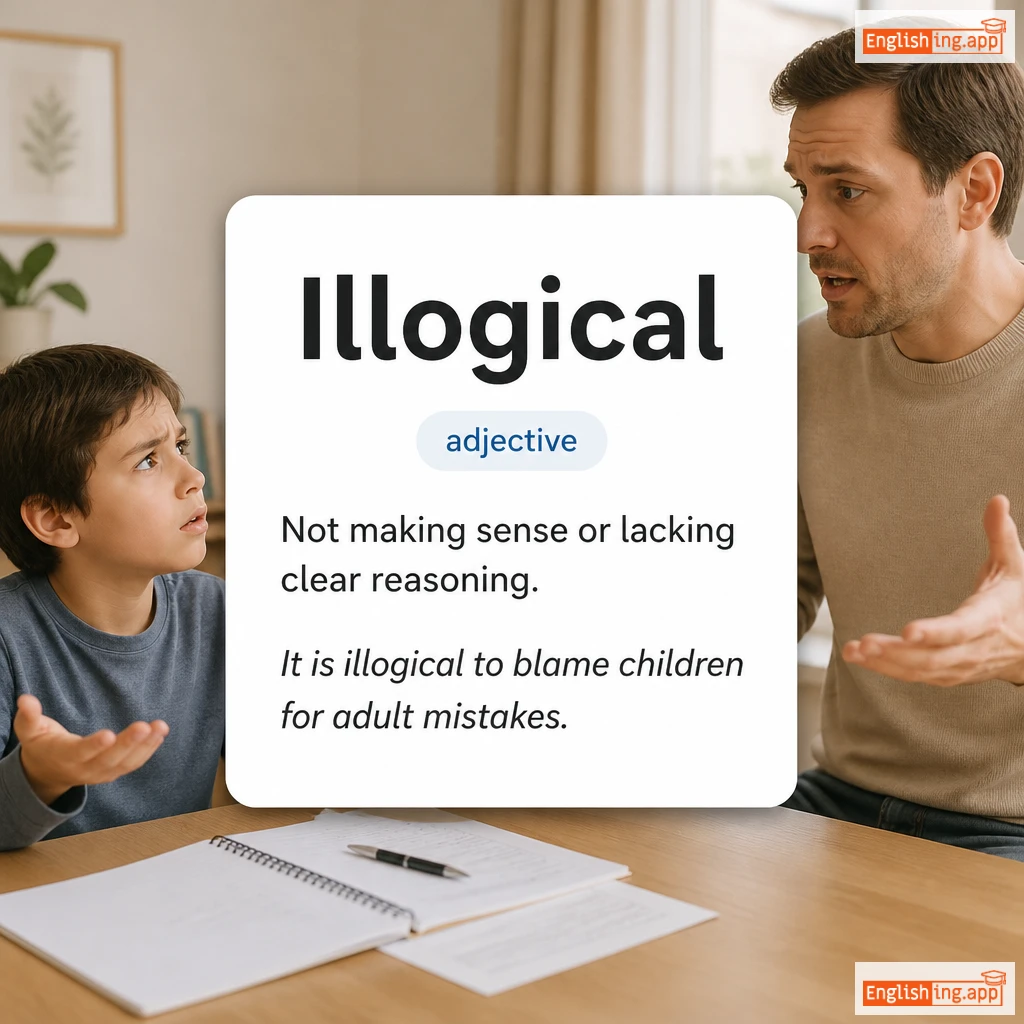
Illogical definition card — visual illustration of the meaning
adjective C1
/ɪˈlɒdʒɪkl/
不合逻辑 (bù hé luó jí)

Not making sense or lacking clear reasoning.

"It is illogical to blame children for adult mistakes."

"把儿童归咎于成年人的错误是没有道理的。" (Bǎ ér tóng guī jiù yú chéng nián rén de cuò wù shì méiyǒu dào lǐ de.)
verb C1
/ɪˈluːmɪneɪt/
照亮 (zhaoliang)

To light up or make something clearer.

"Streetlights illuminate the road at night."

"路灯在夜晚照亮了道路。" (Ludeng zai yewan zhaoliang le daolu.)
noun C1
/ɪˌluːmɪˈneɪʃən/

the act of lighting something or making something clear

"The street was filled with bright illumination from the lamps."

adjective C1
/ɪˈluːsɪv/
虚幻的 (xūhuàn de)

deceptive or misleading; based on illusion

"His hopes of sudden wealth proved to be illusive."

"他对突然财富的希望证明是虚幻的。" (Tā duì túrán cáifù de xīwàng zhèngmíng shì xūhuàn de.)
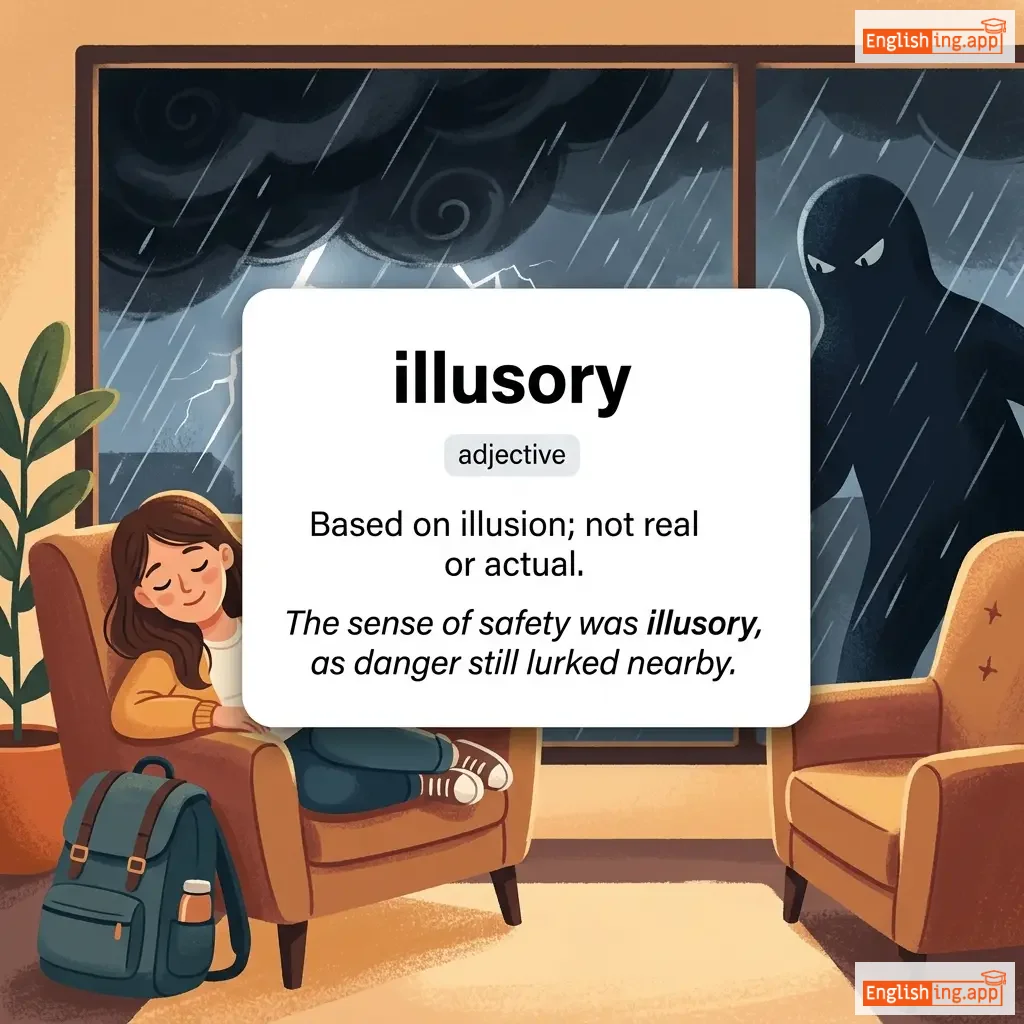
illusory definition card — visual illustration of the meaning
adjective C1
/ɪˈluːsəri/
虚幻的 (xū huàn de)

Based on illusion; not real or actual.

"The sense of safety was illusory, as danger still lurked nearby."

"安全感是虚幻的,因为危险依然潜伏在附近。" (Ānquán gǎn shì xūhuàn de, yīnwèi wēixiǎn yīrán qiánfú zài fùjìn.)
adjective C1
/ɪˈlʌstriəs/
著名 (zhuoming)

Well known, respected, and admired for past achievements.

"She had an illustrious career in medicine."

"她在医学界有着著名的事业。" (Tā zài yīxué jiè yǒuzhe zhùmíng de shìyè.)
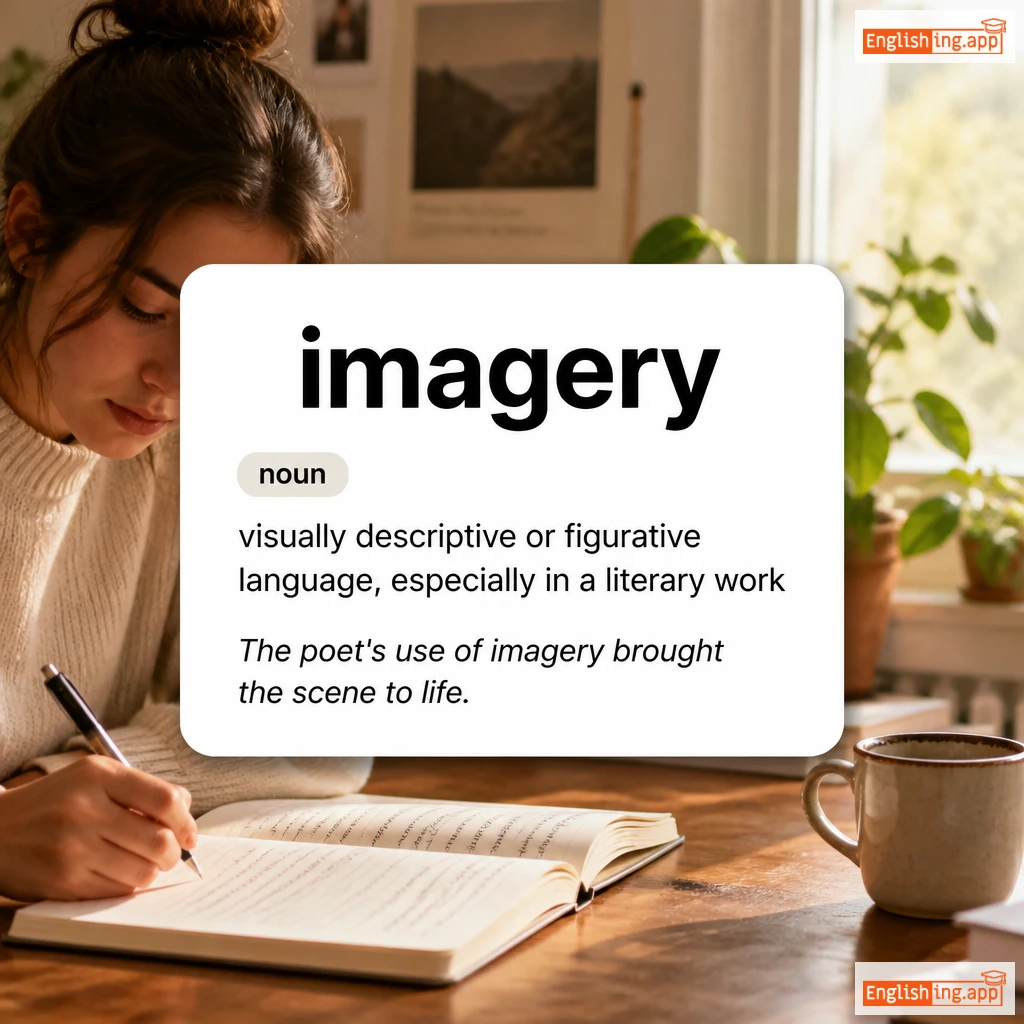
imagery definition card — visual illustration of the meaning
noun C1
/ˈɪmɪdʒəri/
意象 (yixiang)

visually descriptive or figurative language, especially in a literary work

"The poet's use of imagery brought the scene to life."

"诗人的意象使用使场景栩栩如生。" (Shīrén de yìxiàng shǐyòng shǐ chǎngjǐng xǔxǔ rúshēng.)
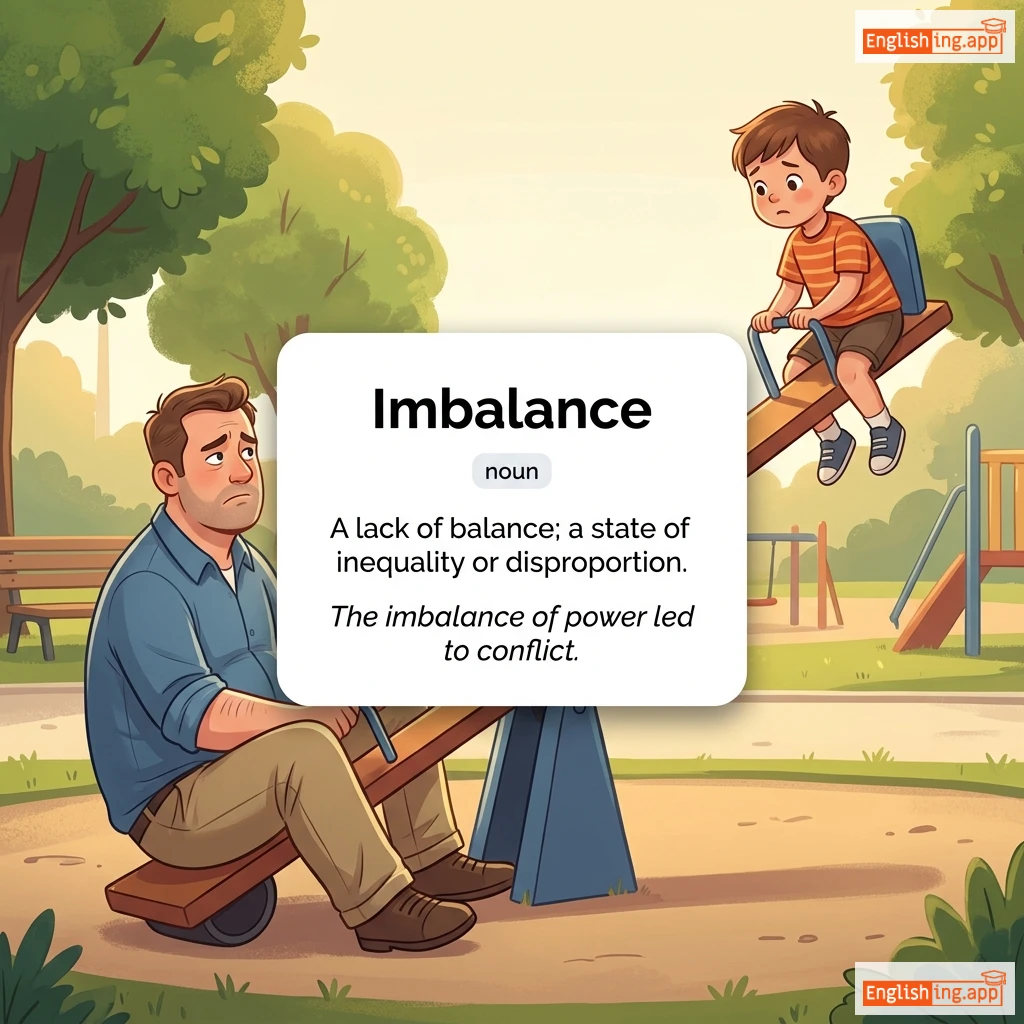
Imbalance definition card — visual illustration of the meaning
noun C1
/ɪmˈbæləns/
不平衡 (bupingheng)

A lack of balance; a state of inequality or disproportion.

"The imbalance of power led to conflict."

"权力的不平衡导致了冲突。" (Quanli de bupingheng daozhilu chongtu.)
verb C1
/ɪmˈbɛd/
嵌入 (qian ru)

To fix firmly or deeply in a surrounding mass.

"The journalist imbedded himself with the troops to report firsthand."

"记者将自己嵌入部队中以第一时间进行报道。" (Jizhe jiang ziji qian ru budui zhong yi di yi shijian jinxing baodao.)
Imbue definition card — visual illustration of the meaning
verb C1
/ɪmˈbjuː/
浸透 (jìntòu)

to inspire or permeate with a feeling or quality

"The teacher's passion for history imbued the students with curiosity."

"老师对历史的热情使学生充满了好奇心。" (Lǎoshī duì lìshǐ de rèqíng shǐ xuéshēng chōngmǎnle hàoqí xīn.)
adjective C1
/ɪˈmækjələt/
完美无瑕 (wanmei wuxia)

perfectly clean, neat, or free from flaws

"Her room was immaculate, with everything in its place."

"她的房间完美无瑕,一切都井井有条。" (Tā de fángjiān wánměi wúxiá, yīqiè dōu jǐngjǐng yǒutiáo.)
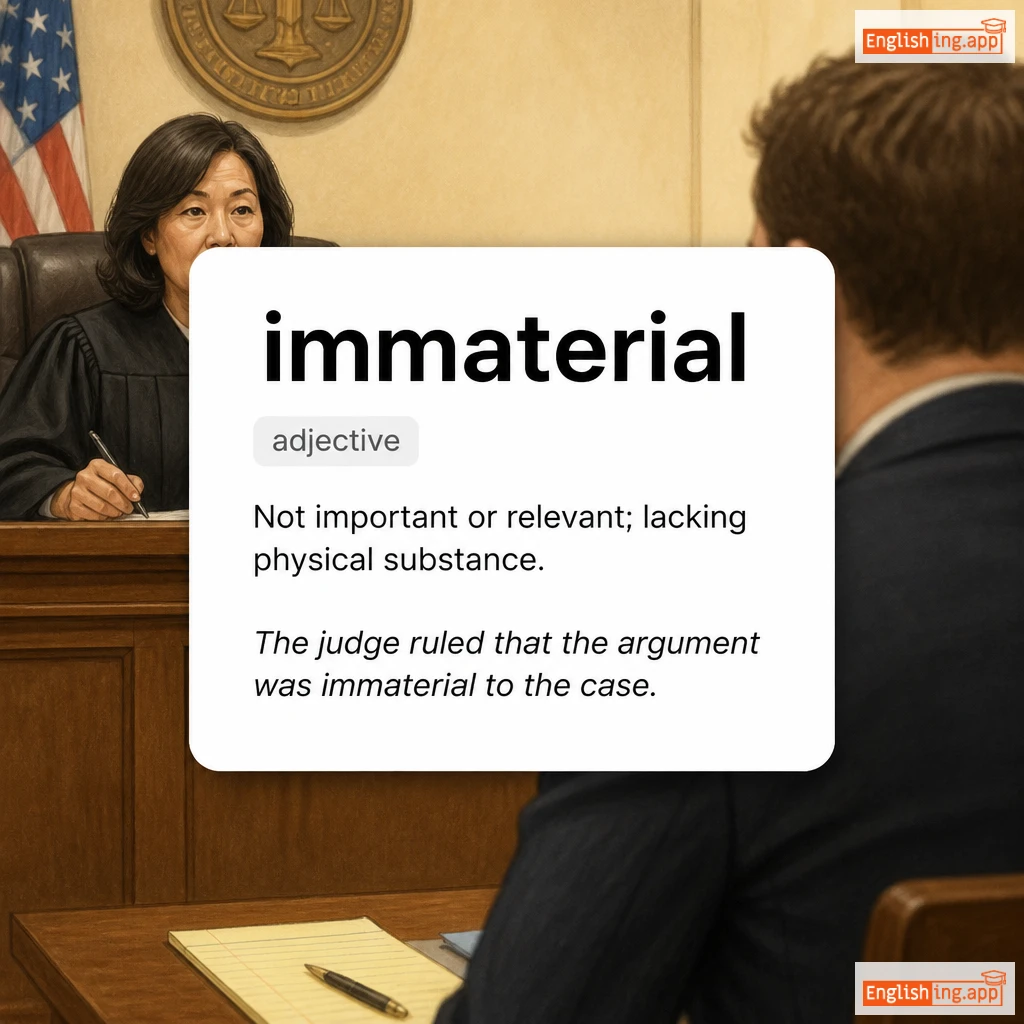
immaterial definition card — visual illustration of the meaning
adjective C1
/ˌɪməˈtɪəriəl/
无关紧要 (wuguan jinyao)

Not important or relevant; lacking physical substance.

"The judge ruled that the argument was immaterial to the case."

"法官裁定,该论点与案件无关。" (Faguancaiding, gai lundian yu anjian wuguan.)
immaturity definition card — visual illustration of the meaning
noun C1
/ˌɪməˈtjʊərəti/
不成熟 (bu chengshu)

the state of not being fully developed emotionally, mentally, or physically; lack of maturity

"His immaturity made it difficult for him to handle responsibility."

"他的不成熟让他难以承担责任。" (ta de bu chengshu rang ta nanyi chengdan zeren)
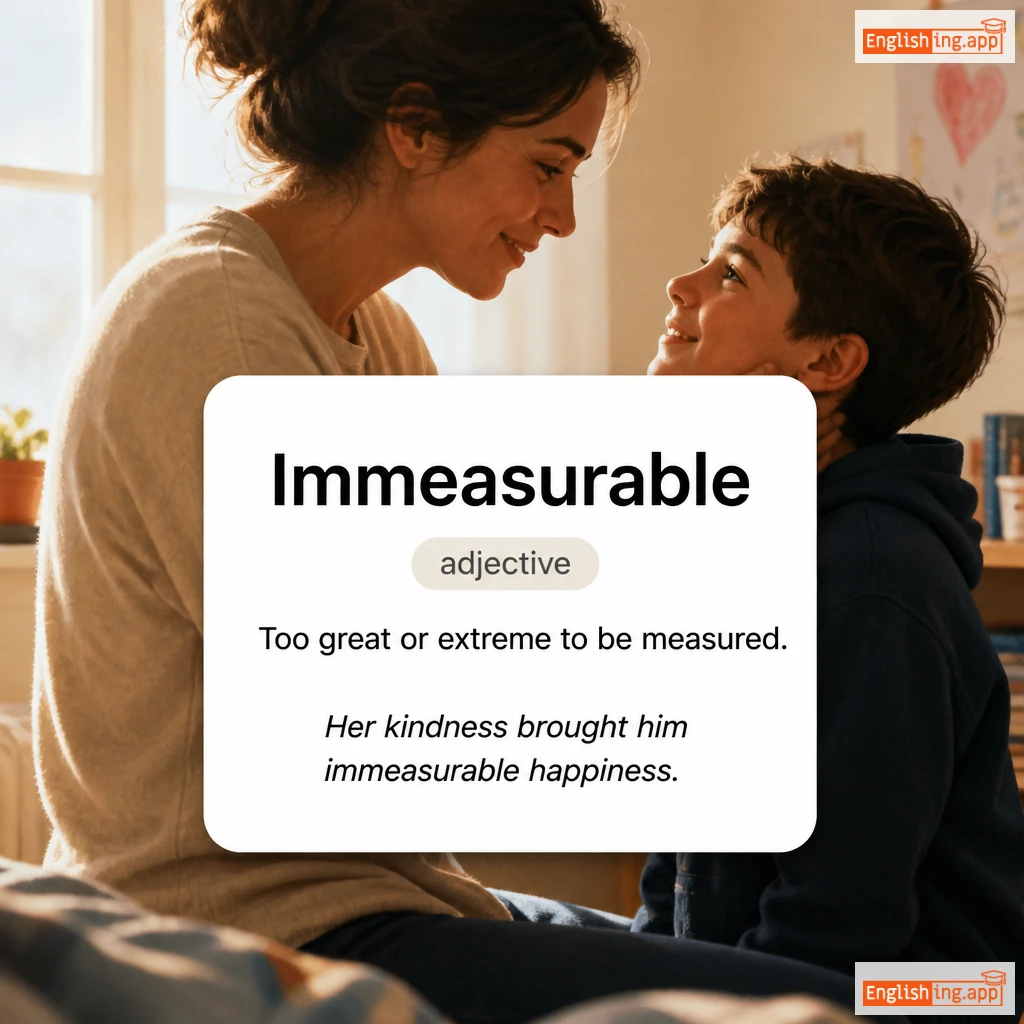
Immeasurable definition card — visual illustration of the meaning
adjective C1
/ɪˈmɛʒərəbl/
无法衡量 (wúfǎ héngliàng)

Too great or extreme to be measured.

"Her kindness brought him immeasurable happiness."

"她的善良给了他无法衡量的幸福。" (Tā de shànliáng gěi le tā wúfǎ héngliàng de xìngfú.)
immediacy definition card — visual illustration of the meaning
noun C1
/ɪˈmiːdiəsi/
即时性, 紧迫感 (jishi xing, jinpo gan)

The quality of bringing one into direct and instant involvement with something, giving rise to a sense of urgency or excitement.

"The immediacy of digital communication has reshaped business operations."

"数字通信的即时性已经改变了商业操作。" (Shuzi tongxin de jishixing yijing gaibianle shangye caozuo.)
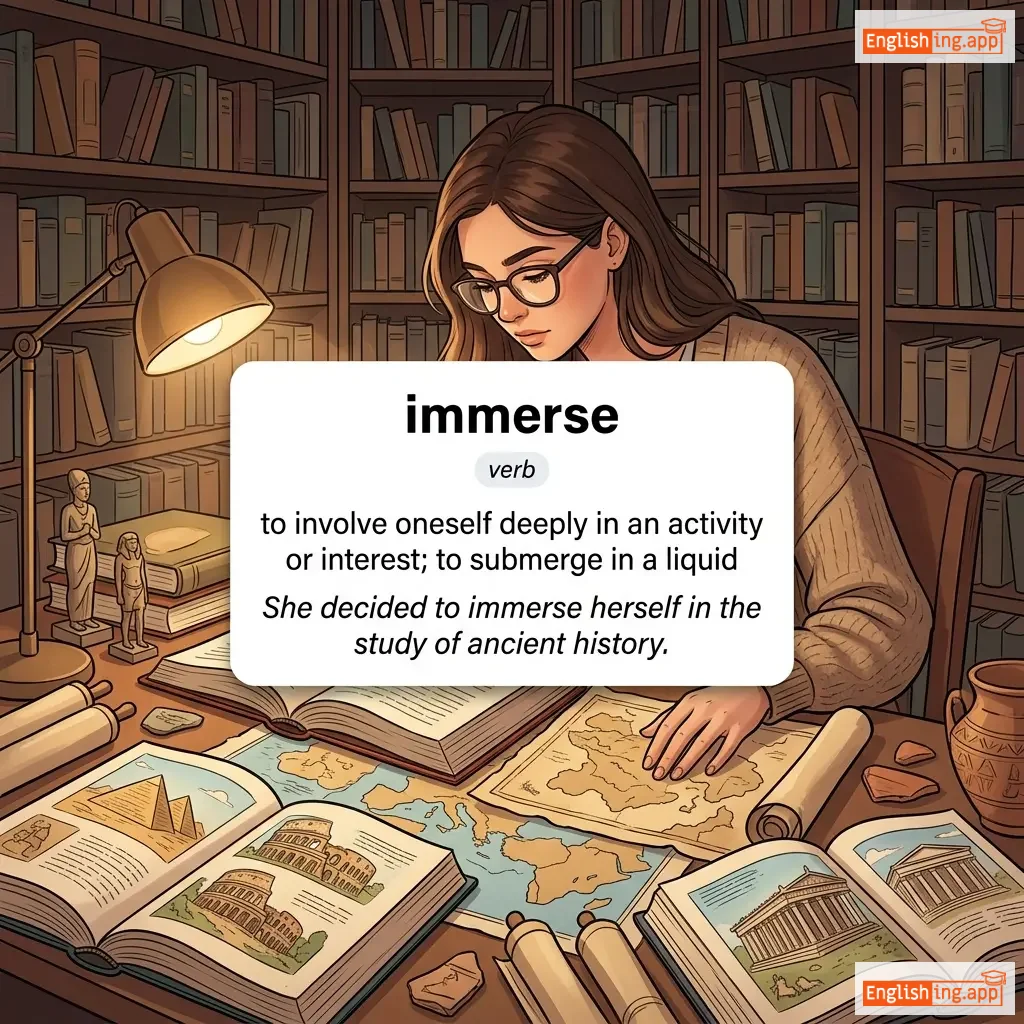
immerse definition card — visual illustration of the meaning
verb C1
/ɪˈmɜːrs/
沉浸,深入其中 (chenjin, shenru qizhong)

to involve oneself deeply in an activity or interest; to submerge in a liquid

"She decided to immerse herself in the study of ancient history."

"她决定沉浸在古代历史的研究中。" (Ta jueding chenjin zai gudai lishi de yanjiu zhong.)
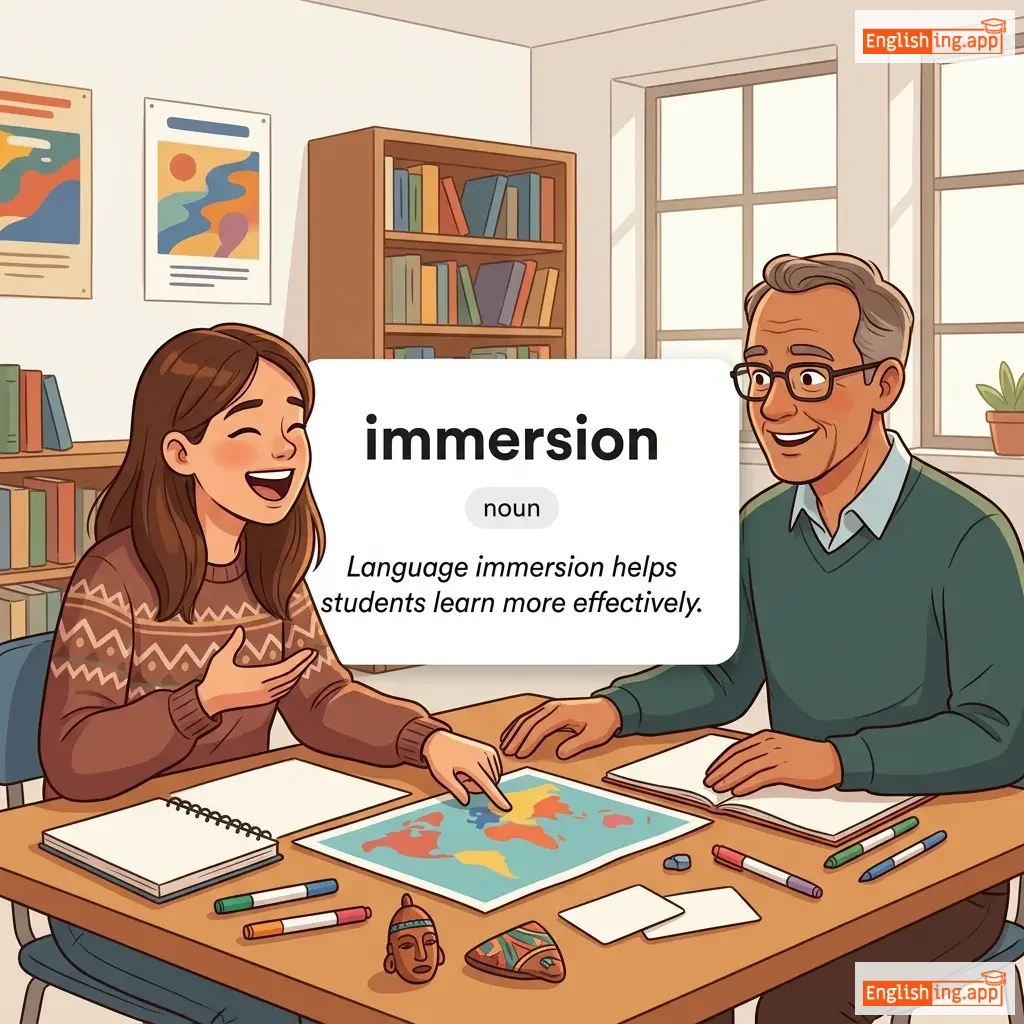
immersion definition card — visual illustration of the meaning
noun C1
/ɪˈmɜːrʒən/
沉浸 (chenjin)

the act of deeply involving oneself in something; the state of being completely surrounded by liquid

"Language immersion helps students learn more effectively."

"语言沉浸帮助学生更有效地学习。" (Yuyan chenjin bangzhu xuesheng geng youxiao de xuexi.)
noun C1
/ˈɪmɪnəns/
即将发生,临近状态 (jijiang fasheng, linjin zhuangtai)

the state of being about to happen

"The imminence of the storm forced people to take shelter."

"风暴的临近使人们不得不寻找庇护所。" (Fengbao de linjin shi renmen bude bu xunzhao bihu suo.)
immobile definition card — visual illustration of the meaning
adjective C1
/ɪˈmoʊbəl/
无法移动 (wufadian dong)

unable to move or be moved

"After the accident, he was immobile for weeks."

"事故发生后,他几周都无法移动。" (Shigu fasheng hou, ta ji zhou dou wufa yidong.)
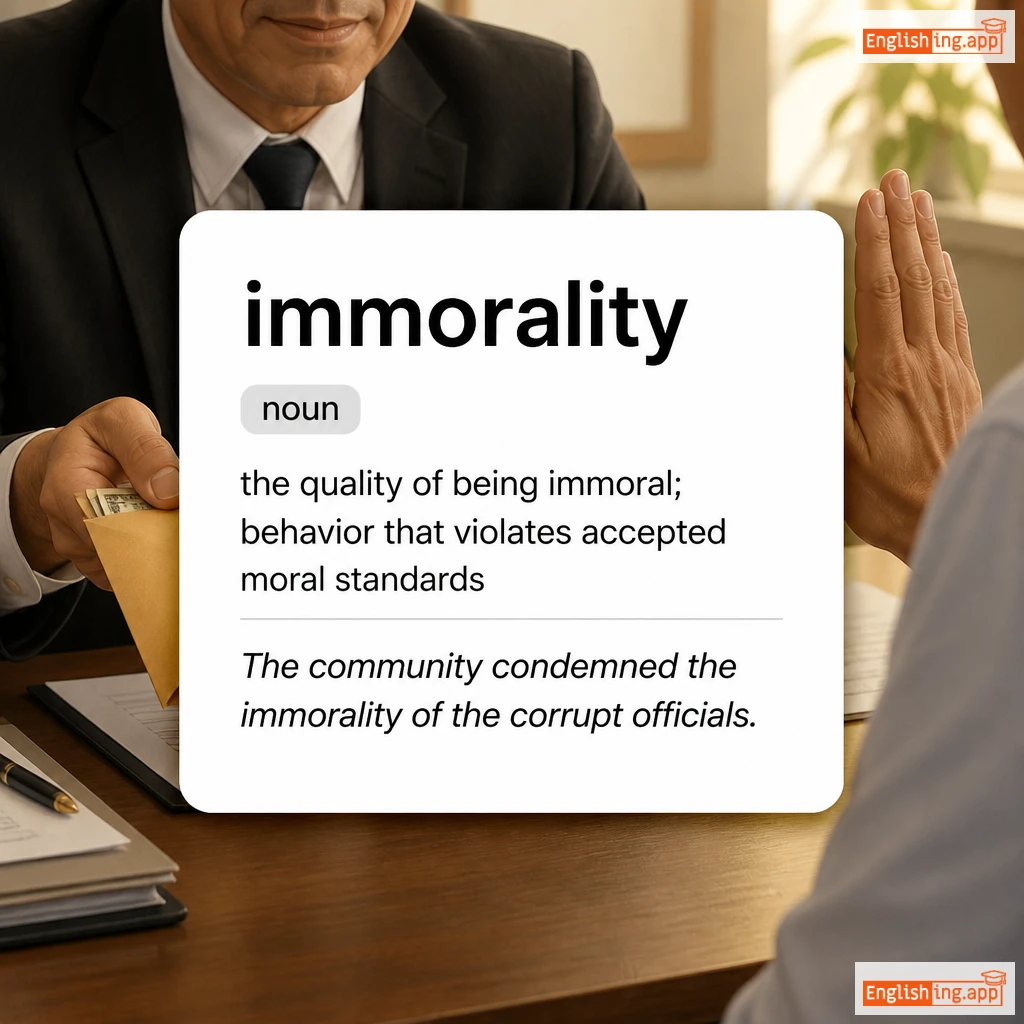
immorality definition card — visual illustration of the meaning
noun C1
/ˌɪməˈrælɪti/
不道德 (bu daode)

the quality of being immoral; behavior that violates accepted moral standards

"The community condemned the immorality of the corrupt officials."

"社会谴责了腐败官员的不道德行为。" (Shehui qianze le fubai guanyuan de bu daode xingwei)
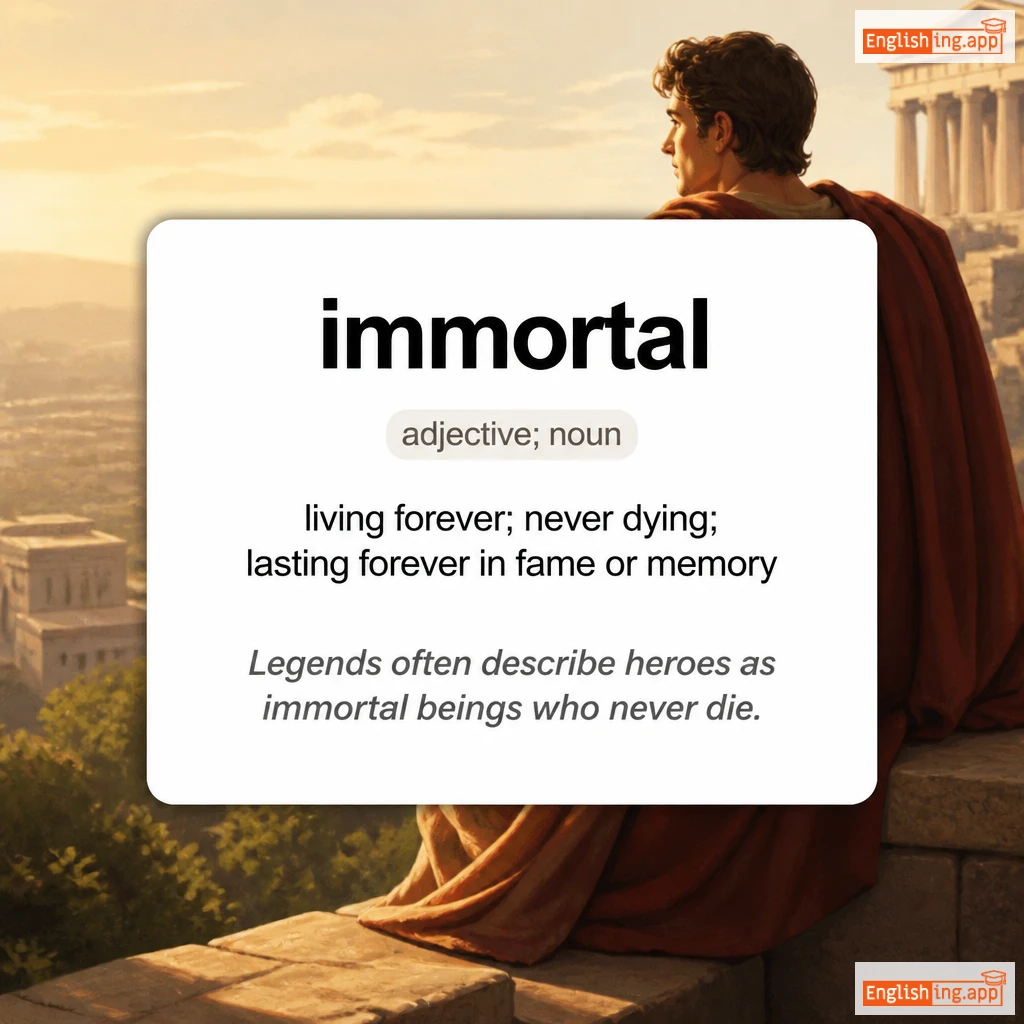
immortal definition card — visual illustration of the meaning
adjective; noun C1
/ɪˈmɔːrtl/
不朽的 (buxiu de)

living forever; never dying; lasting forever in fame or memory

"Legends often describe heroes as immortal beings who never die."

"传说中英雄是不朽的存在。" (chuanshuo zhong yingxiong shi buxiu de cunzai)
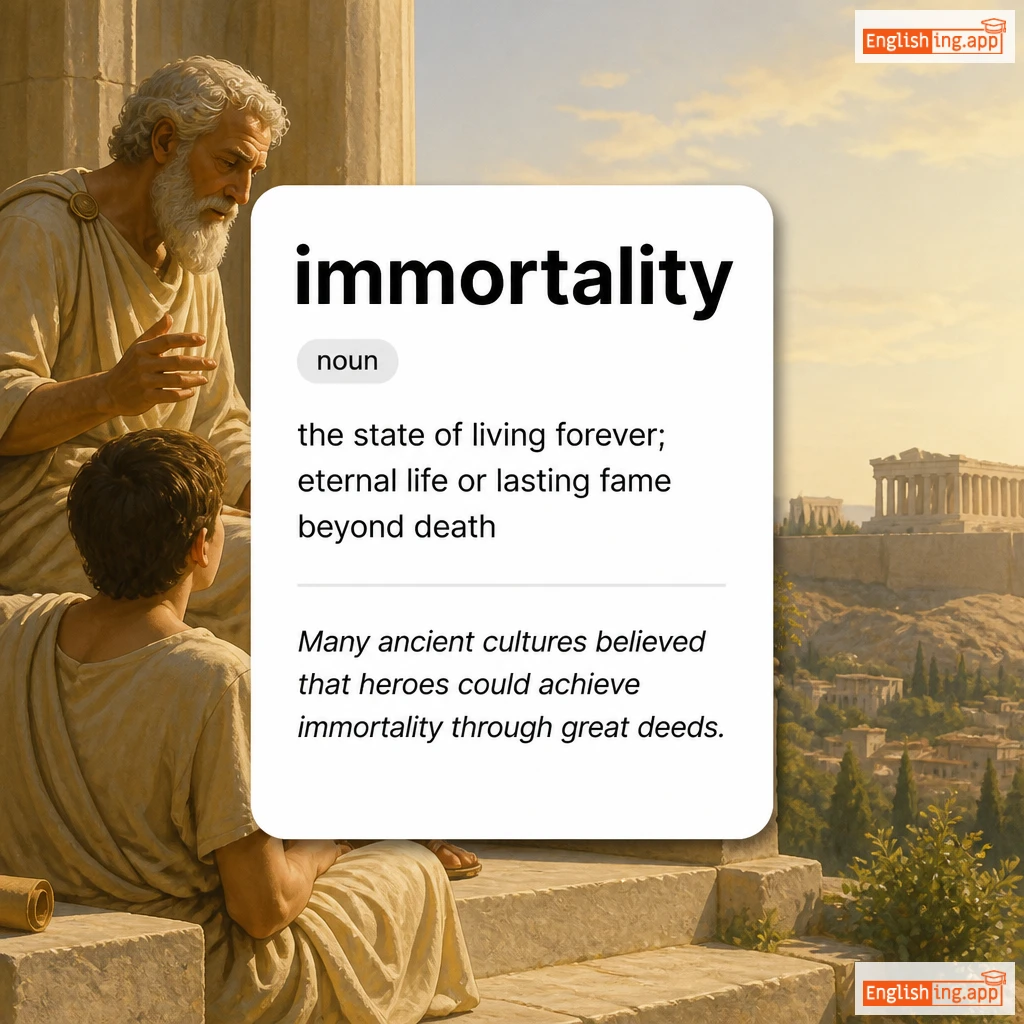
immortality definition card — visual illustration of the meaning
noun C1
/ˌɪmɔːrˈtæləti/
不朽 (buxiu)

the state of living forever; eternal life or lasting fame beyond death

"Many ancient cultures believed that heroes could achieve immortality through great deeds."

"许多古代文化相信英雄可以通过伟大的事迹获得不朽。" (xuduo gudai wenhua xiangxin yingxiong keyi tongguo weida de shiji huode buxiu)
verb C1
/ɪˈmɔːrtəlaɪz/
永生 (yǒngshēng)

to preserve the memory of someone or something forever

"The statue was built to immortalize the hero’s sacrifice."

"这座雕像是为了让英雄的牺牲永生化。" (Zhè zuò diāoxiàng shì wèile ràng yīngxióng de xīshēng yǒngshēnghuà.)
immovable definition card — visual illustration of the meaning
adjective C1
/ɪˈmuːvəbl/
不可移动 (bù kě yí dòng)

impossible to move or change

"The rock was too heavy and immovable."

"那块岩石太重,无法移动。" (Nà kuài yánshí tài zhòng, wúfǎ yí dòng.)
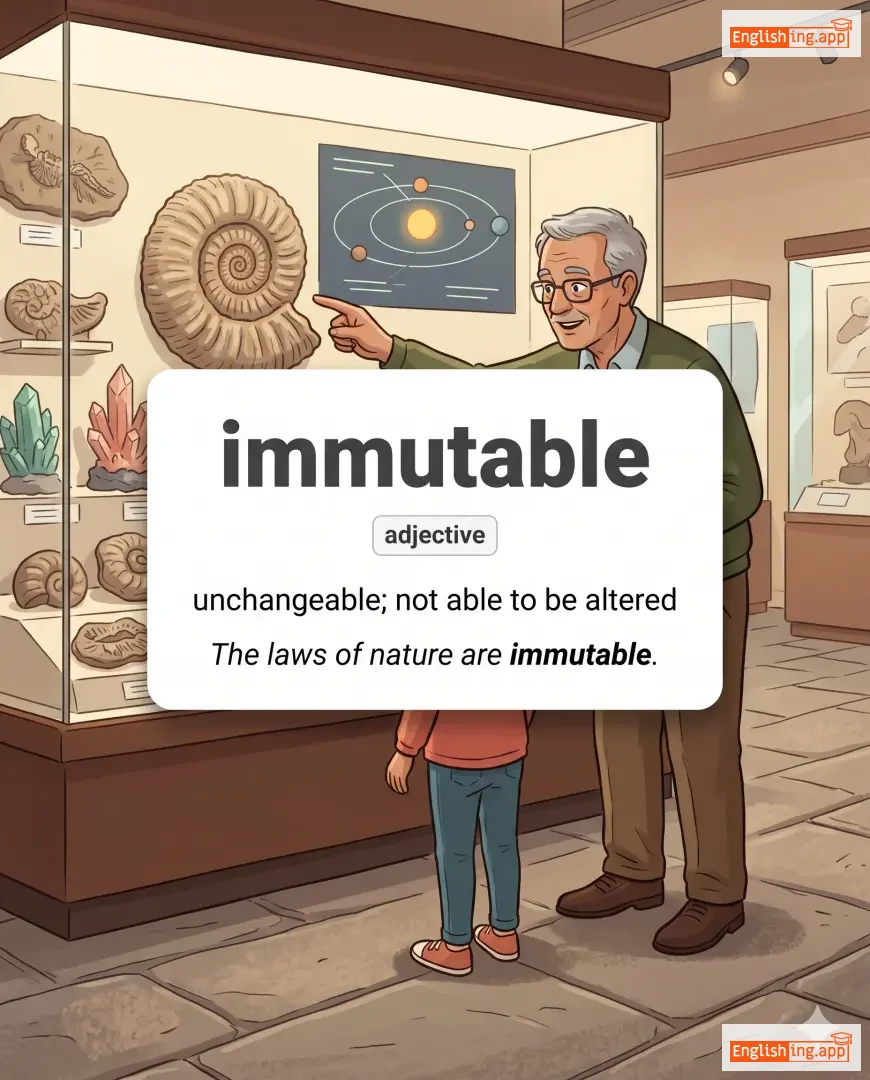
immutable definition card — visual illustration of the meaning
adjective C1
/ɪˈmjuːtəbl/
不可改变的 (bùkě gǎibiàn de)

unchangeable; not able to be altered

"The laws of nature are immutable."

"大自然的规律是不可改变的。" (Dà zìrán de guīlǜ shì bùkě gǎibiàn de.)
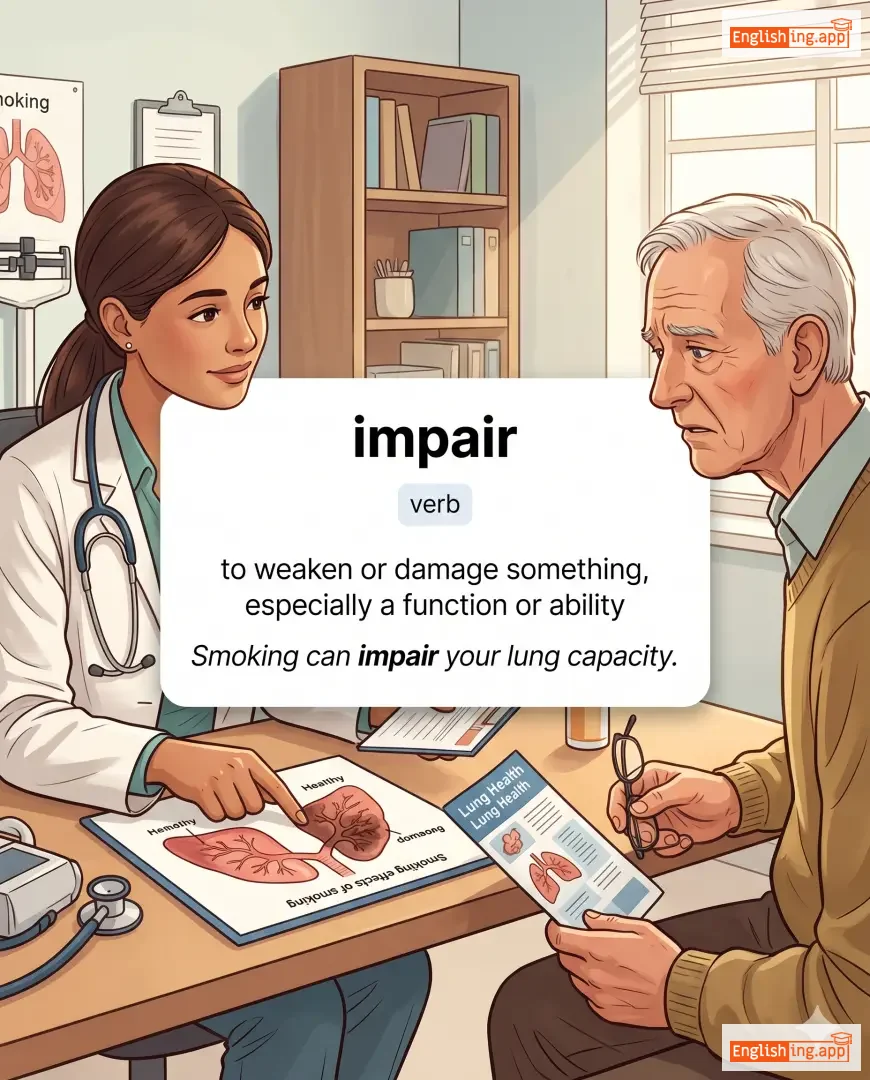
impair definition card — visual illustration of the meaning
verb C1
/ɪmˈpɛər/
损害 (sunhai)

to weaken or damage something, especially a function or ability

"Smoking can impair your lung capacity."

"吸烟可能会损害您的肺部容量。" (Xiyan keneng hui sunhai ninde feibu rongliang.)
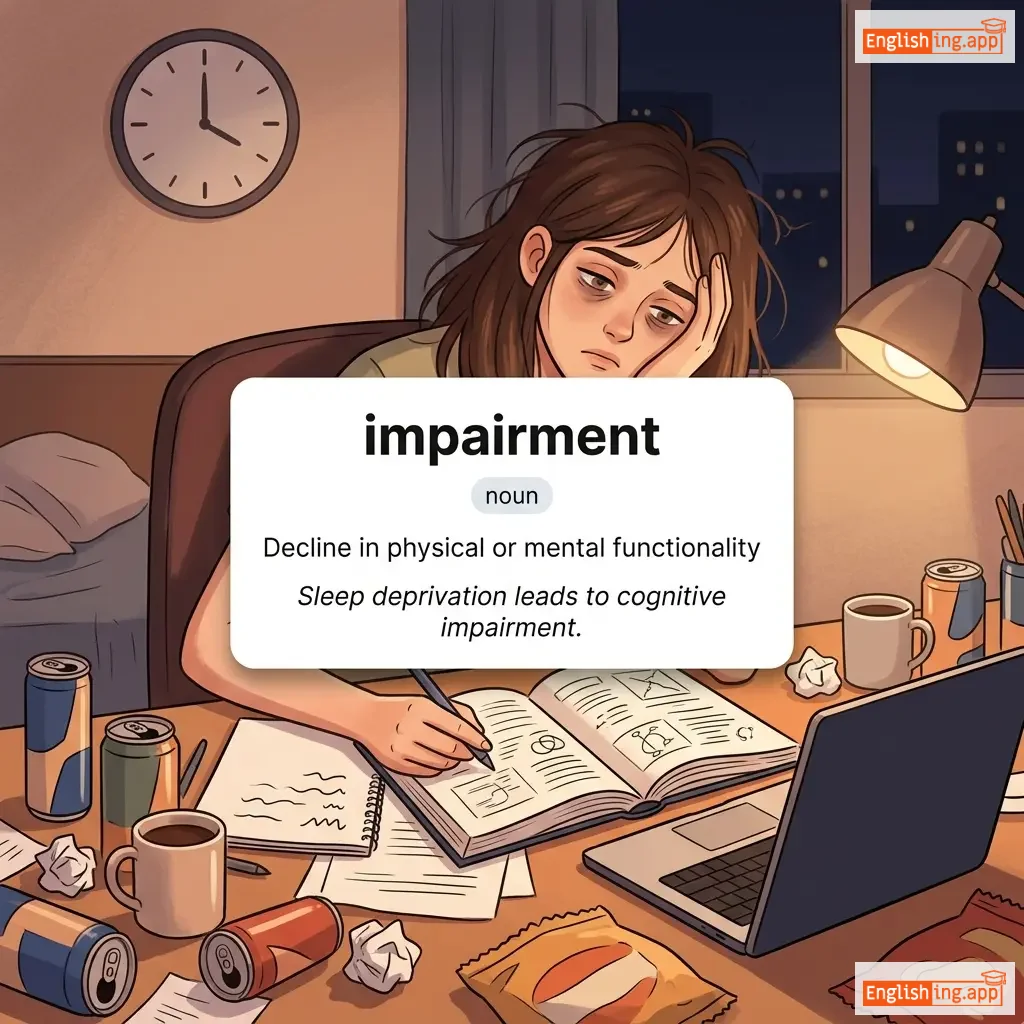
impairment definition card — visual illustration of the meaning
noun C1
ɪmˈpɛərmənt
损伤 (sǔnshāng)

Decline in physical or mental functionality

"Sleep deprivation leads to cognitive impairment."

"睡眠不足会导致认知损伤。" (Shuìmián bùzú huì dǎozhì rènzhī sǔnshāng.)
verb C1
/ɪmˈpɑːrt/
传授 (chuánshòu)

to make information known; to bestow or communicate

"The teacher imparted valuable knowledge to her students."

"老师将宝贵的知识传授给她的学生。" (Lǎoshī jiāng bǎoguì de zhīshì chuánshòu gěi tā de xuéshēng.)
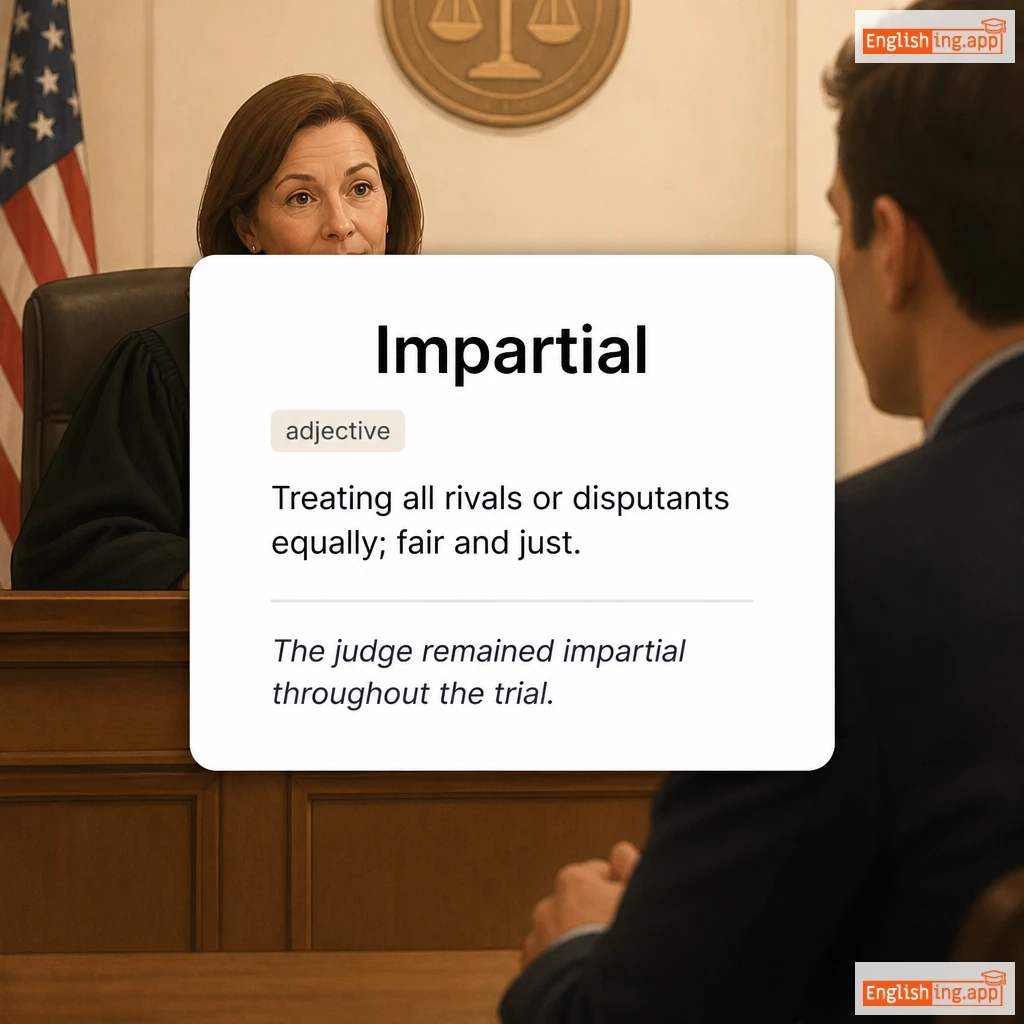
Impartial definition card — visual illustration of the meaning
adjective C1
/ɪmˈpɑːrʃəl/
公正 (gongzheng)

Treating all rivals or disputants equally; fair and just.

"The judge remained impartial throughout the trial."

"法官在整个审判过程中保持了公正。" (Fǎguān zài zhěnggè shěnpàn guòchéng zhōng bǎochíle gōngzhèng.)
adjective C1
/ɪmˈpæsəbəl/
无法通行 (wúfǎ tōngxíng)

Impossible to travel along or over.

"The road became impassable after the heavy snowfall."

"这条路在大雪过后变得无法通行。" (Zhè tiáo lù zài dà xuě guò hòu biàn dé wúfǎ tōngxíng.)
impasse definition card — visual illustration of the meaning
noun C1
/ˈɪmpæs/
僵局 (jiangju)

A situation in which no progress is possible; a deadlock.

"Negotiations reached an impasse after both sides refused to compromise."

"谈判在双方拒绝妥协后陷入了僵局。" (Tanpan zai shuāngfāng jùjué tuǒxié hòu xiànrù le jiāngjú.)
adjective C1
/ɪmˈpæʃənd/
充满激情的 (chōngmǎn jīqíng de)

Filled with or showing great emotion.

"She gave an impassioned speech about human rights."

"她发表了关于人权的充满激情的演讲。" (Tā fābiǎole guānyú rénquán de chōngmǎn jīqíng de yǎnjiǎng.)
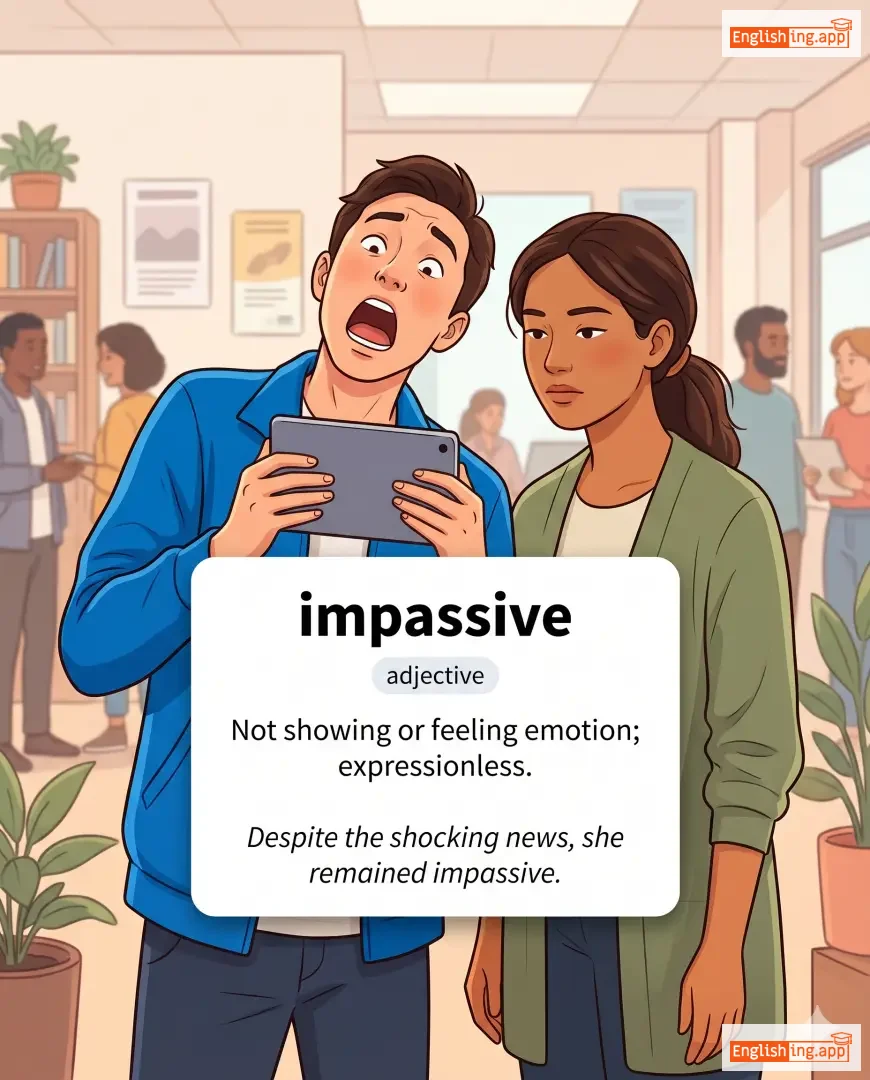
impassive definition card — visual illustration of the meaning
adjective C1
/ɪmˈpæsɪv/
冷漠 (lěngmò)

Not showing or feeling emotion; expressionless.

"Despite the shocking news, she remained impassive."

"尽管有令人震惊的消息,她依然无动于衷。" (Jǐnguǎn yǒu lìngrén zhènjīng de xiāoxī, tā yīrán wúdòng yú zhōng.)
⚖️

impeach

verb C1
/ɪmˈpiːtʃ/

To charge a public official with misconduct while in office.

"The parliament voted to impeach the president."

impeccable definition card — visual illustration of the meaning
adjective C1
/ɪmˈpɛkəbl̩/
无懈可击 (wuxiekewuji)

Perfect; without flaws or faults.

"She delivered an impeccable performance on stage."

"她在舞台上的表现无懈可击。" (Ta zai wutai shang de biaoxian wuxiekewuji.)
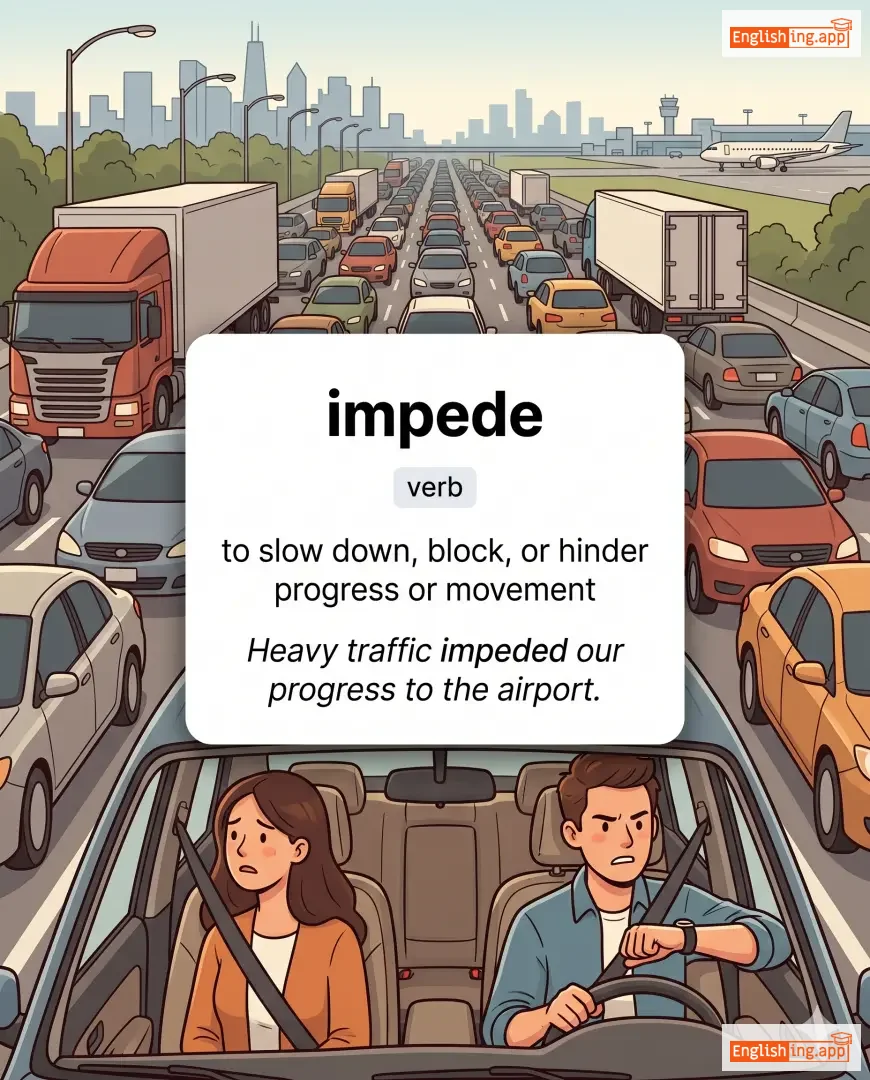
impede definition card — visual illustration of the meaning
verb C1
/ɪmˈpiːd/
阻碍 (zuhai)

to slow down, block, or hinder progress or movement

"Heavy traffic impeded our progress to the airport."

"繁忙的交通妨碍了我们前往机场的进展。" (Fanmang de jiaotong fangai le women qianwang jihang de jinzhan.)