Vocabularies

English Vocabulary Dictionary | Word Meanings, Definitions & Examples

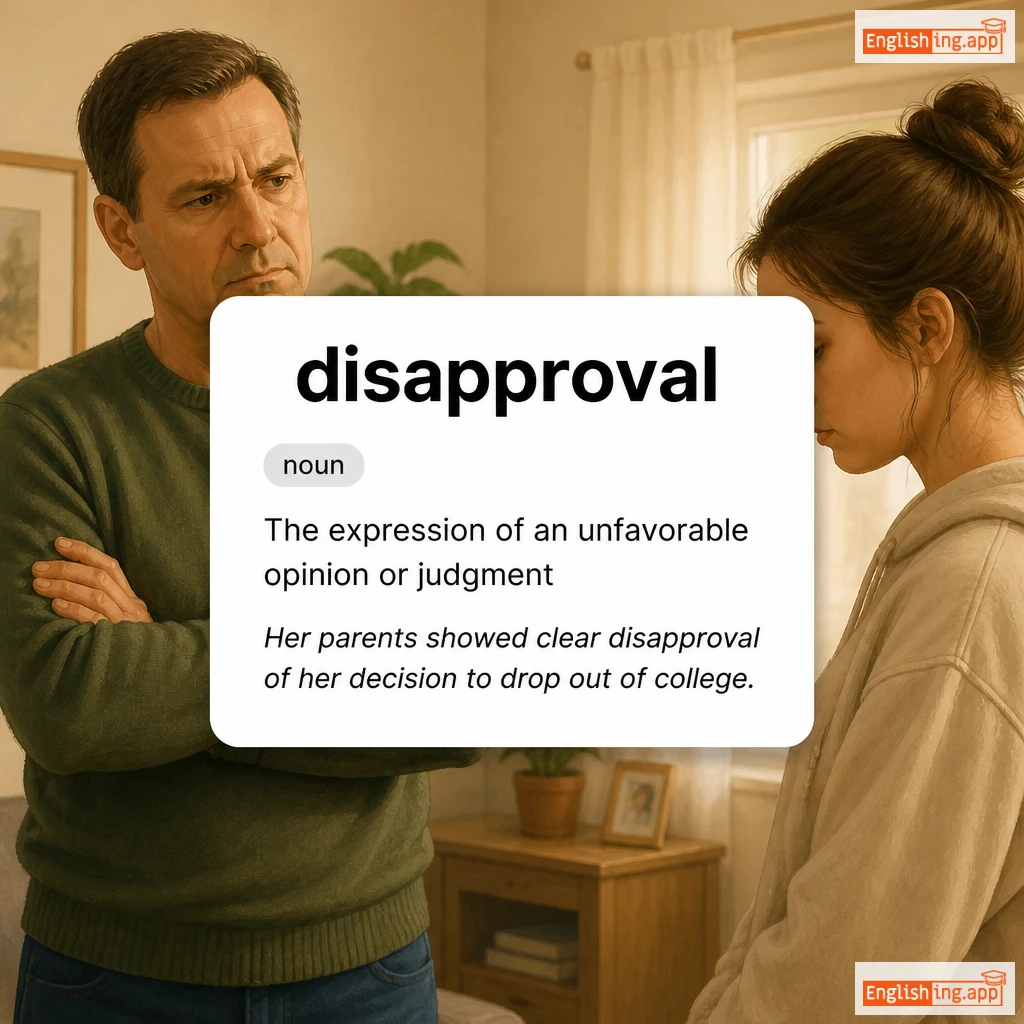
disapproval definition card — visual illustration of the meaning
noun B2
/ˌdɪsəˈpruːvəl/
不賛成 (fusansei)

The expression of an unfavorable opinion or judgment

"Her parents showed clear disapproval of her decision to drop out of college."

"彼女の両親は、大学を中退するという彼女の決定に明確な不賛成を示した。" (Kanojo no ryoushin wa, daigaku o chutai suru to iu kanojo no kettei ni meikaku na fusansei o shimeshita.)
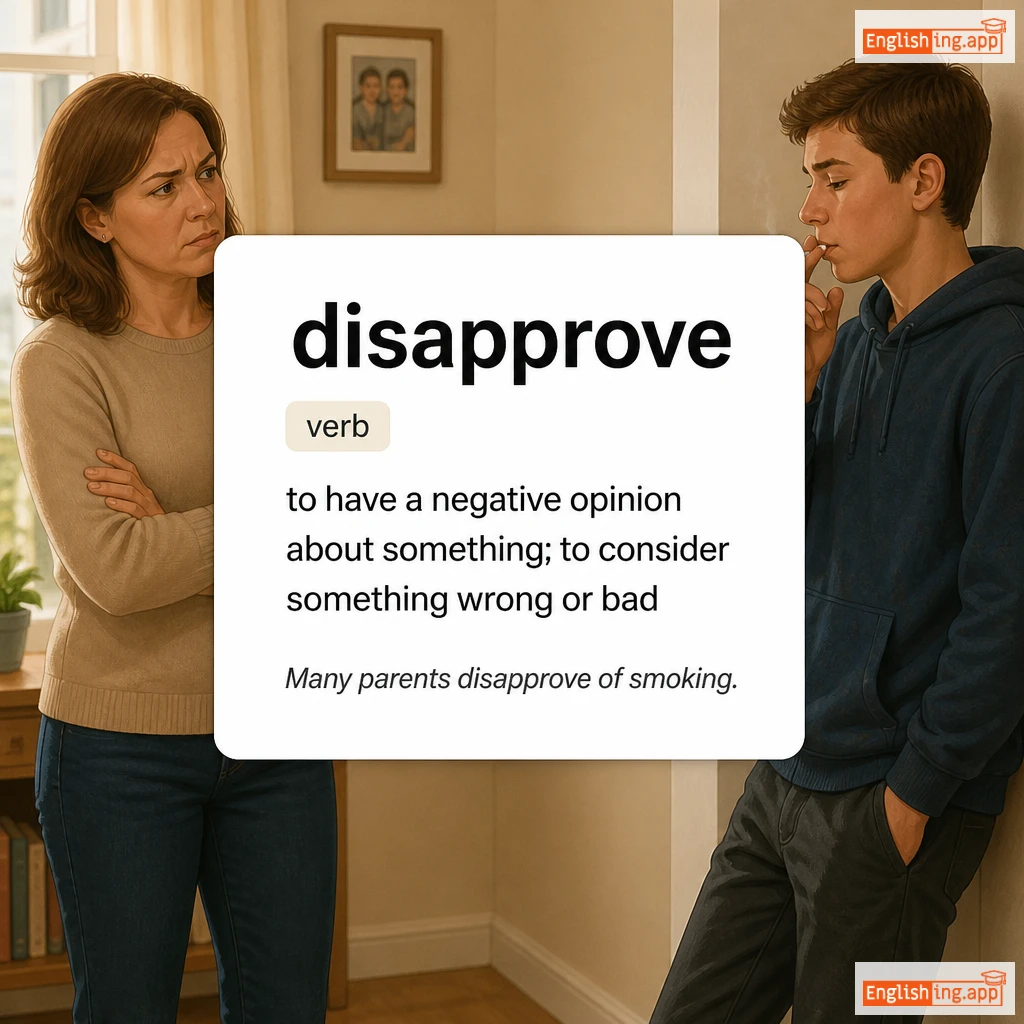
disapprove definition card — visual illustration of the meaning
verb B2
/ˌdɪsəˈpruːv/
反対する (hantai suru)

to have a negative opinion about something; to consider something wrong or bad

"Many parents disapprove of smoking."

"多くの親は喫煙を反対しています。" (Ōku no oya wa kitsuen o hantai shiteimasu.)
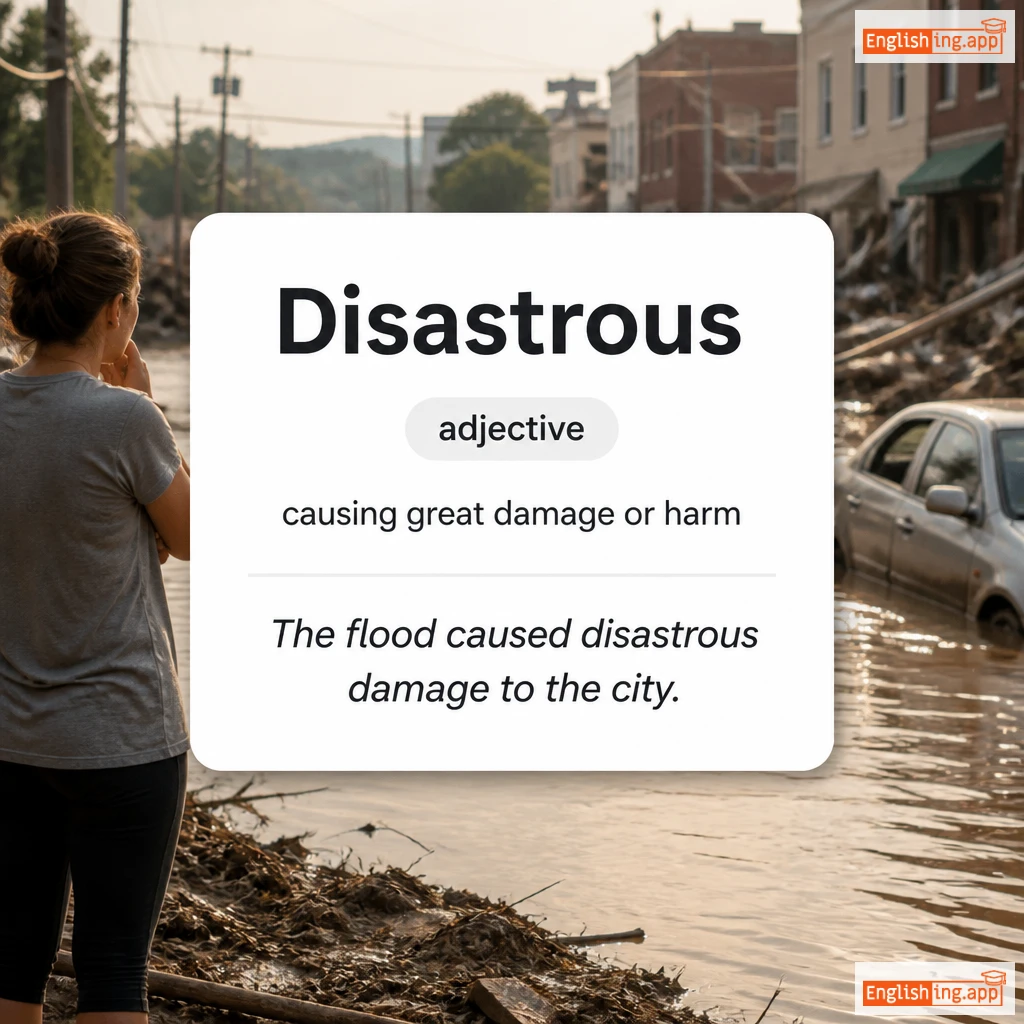
Disastrous definition card — visual illustration of the meaning
🌪️

Disastrous

adjective B2
/dɪˈzæstrəs/

causing great damage or harm

"The flood caused disastrous damage to the city."

discard definition card — visual illustration of the meaning
verb B2
/dɪsˈkɑːrd/
捨てる (suteru)

to throw away something that is no longer needed

"She decided to discard the old clothes."

"彼女は古い服を捨てることに決めました。" (Kanojo wa furui fuku wo suteru koto ni kimemashita.)
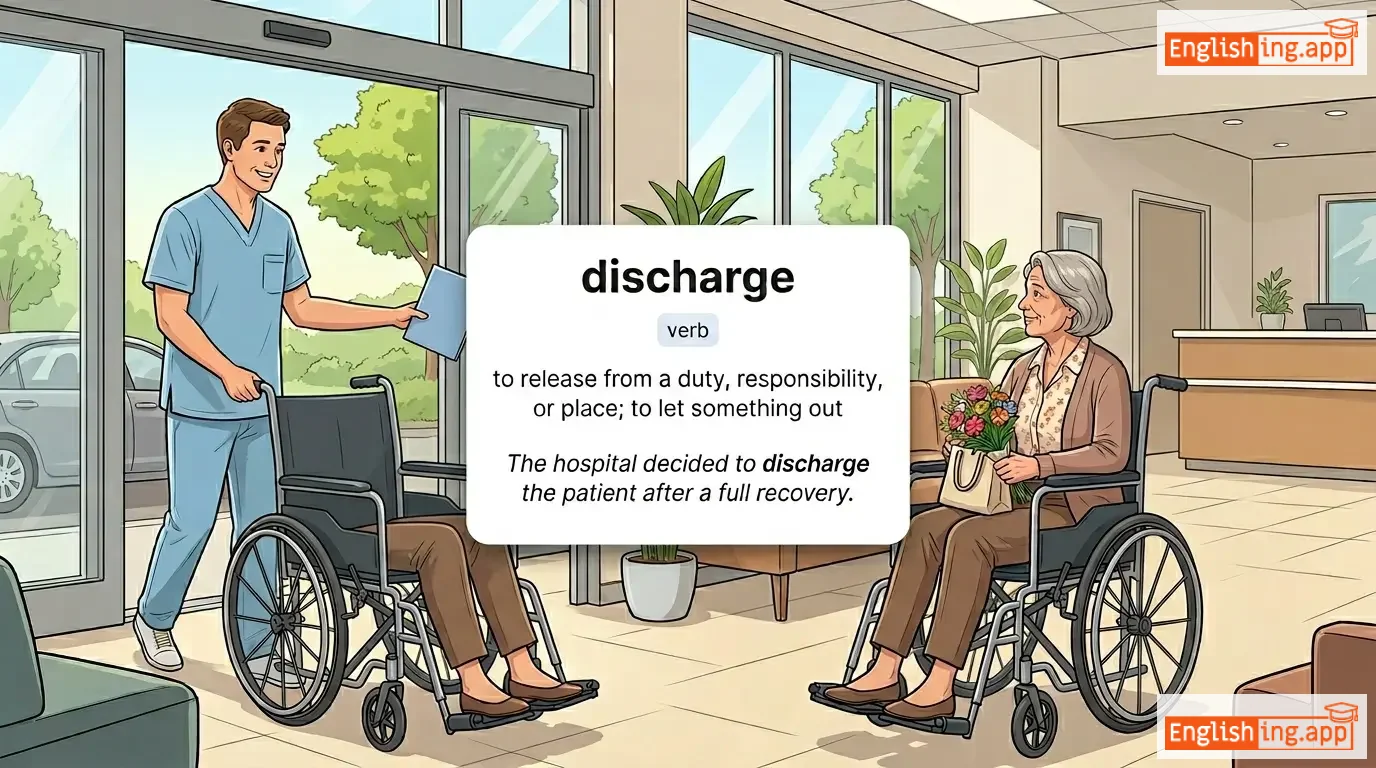
discharge definition card — visual illustration of the meaning
verb B2
/dɪsˈtʃɑːrdʒ/
解放する (kaihō suru)

to release from a duty, responsibility, or place; to let something out
"The hospital decided to discharge the patient after a full recovery."
"病院は完全回復後に患者を退院させることを決定した。" (Byōin wa kanzen kaifuku go ni kanja o taiin saseru koto o kettei shita.)
disclose definition card — visual illustration of the meaning
verb B2
/dɪsˈkloʊz/

to make something known; to reveal information that was previously secret or hidden

"The company refused to disclose details of the agreement."

disclosure definition card — visual illustration of the meaning
noun B2
/dɪsˈkloʊʒər/
開示 (kaiji)

the action of making something known or public

"The disclosure of the company's financial status was delayed."

"会社の財務状況の開示は遅れました。" (Kaisha no zaimu jōkyō no kaiji wa okuremashita.)
discomfort definition card — visual illustration of the meaning
noun B2
/dɪsˈkʌmfərt/
不快感 (fukaikan)

A feeling of slight pain, unease, or awkwardness.

"She shifted in her chair due to discomfort in her back."

"彼女は背中の不快感のために椅子で動きました。" (Kanojo wa senaka no fukaikan no tame ni isu de ugokimashita.)
verb B2
/ˌdɪskəˈnɛkt/

to detach or separate from a connection or source

"Please disconnect the charger from the power outlet."

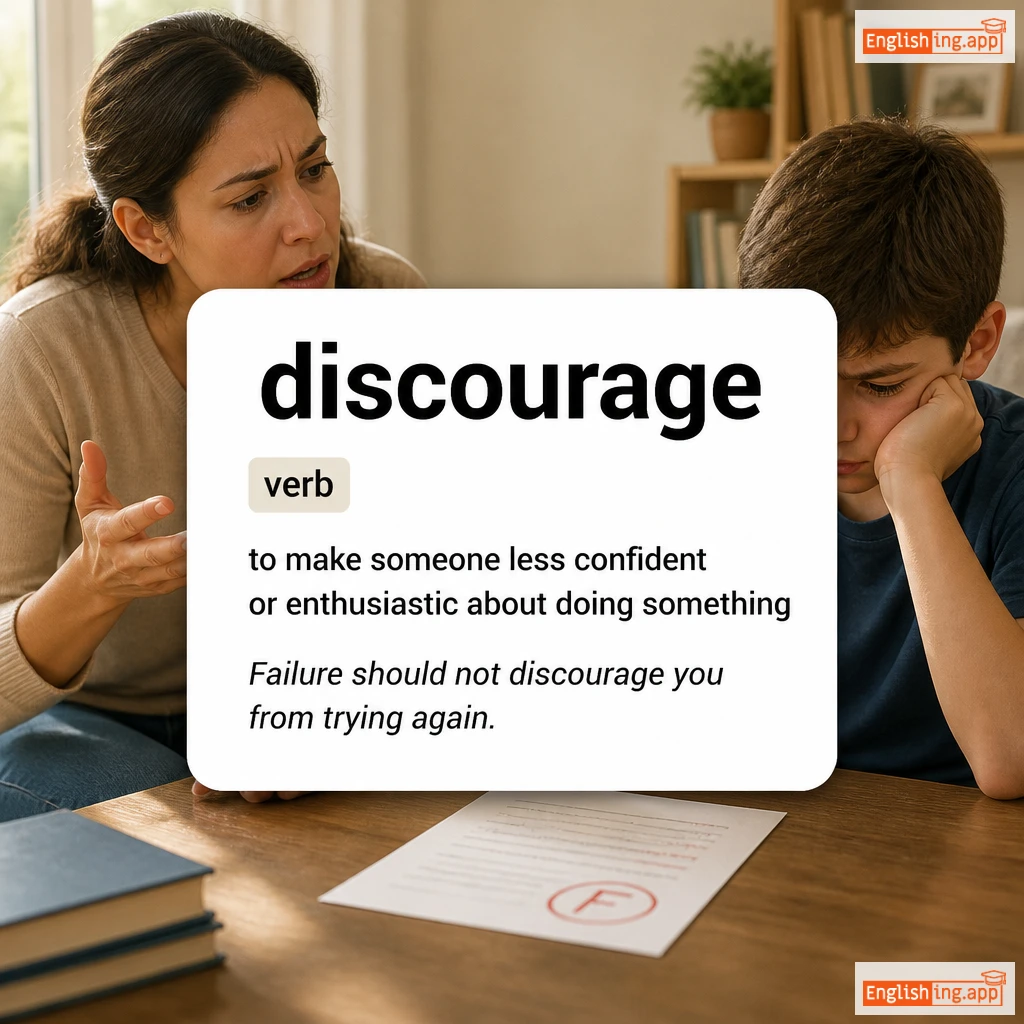
discourage definition card — visual illustration of the meaning
verb B2
/dɪsˈkʌrɪdʒ/

to make someone less confident or enthusiastic about doing something

"Failure should not discourage you from trying again."

adjective B2
/dɪˈskʌr.ɪ.dʒɪŋ/
落胆させる (rakkansaseru)

making someone feel less confident or enthusiastic about doing something

"The coach's discouraging words affected the team's morale."

"コーチの落胆させる言葉は、チームの士気に影響を与えました。" (Kōchi no rakutansaseru kotoba wa, chīmu no shiki ni eikyō o ataemashita.)
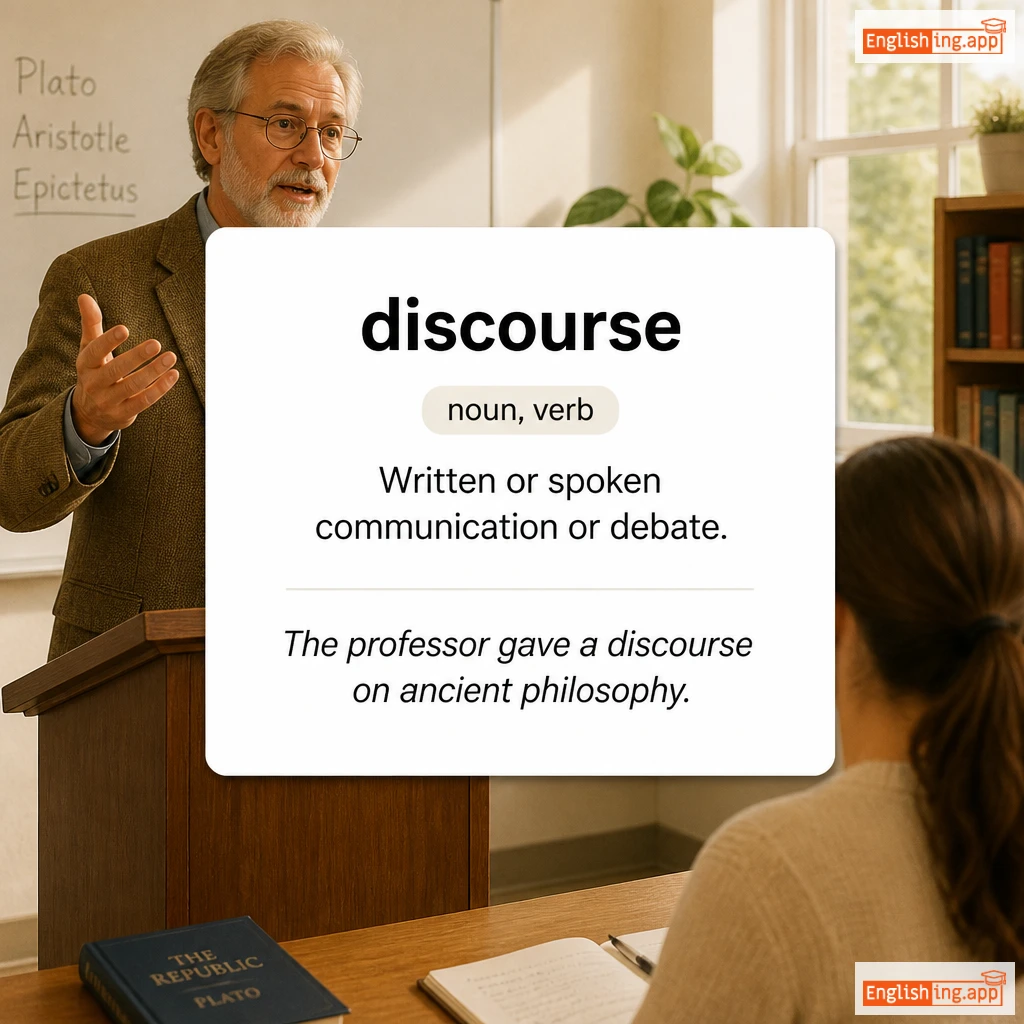
discourse definition card — visual illustration of the meaning
noun, verb B2
/ˈdɪskɔːrs/
談話, 講義 (danwa, kougi)

Written or spoken communication or debate.

"The professor gave a discourse on ancient philosophy."

"教授は古代哲学についての講義を行った。" (Kyouju wa kodai tetsugaku ni tsuite no kougi o okonatta.)
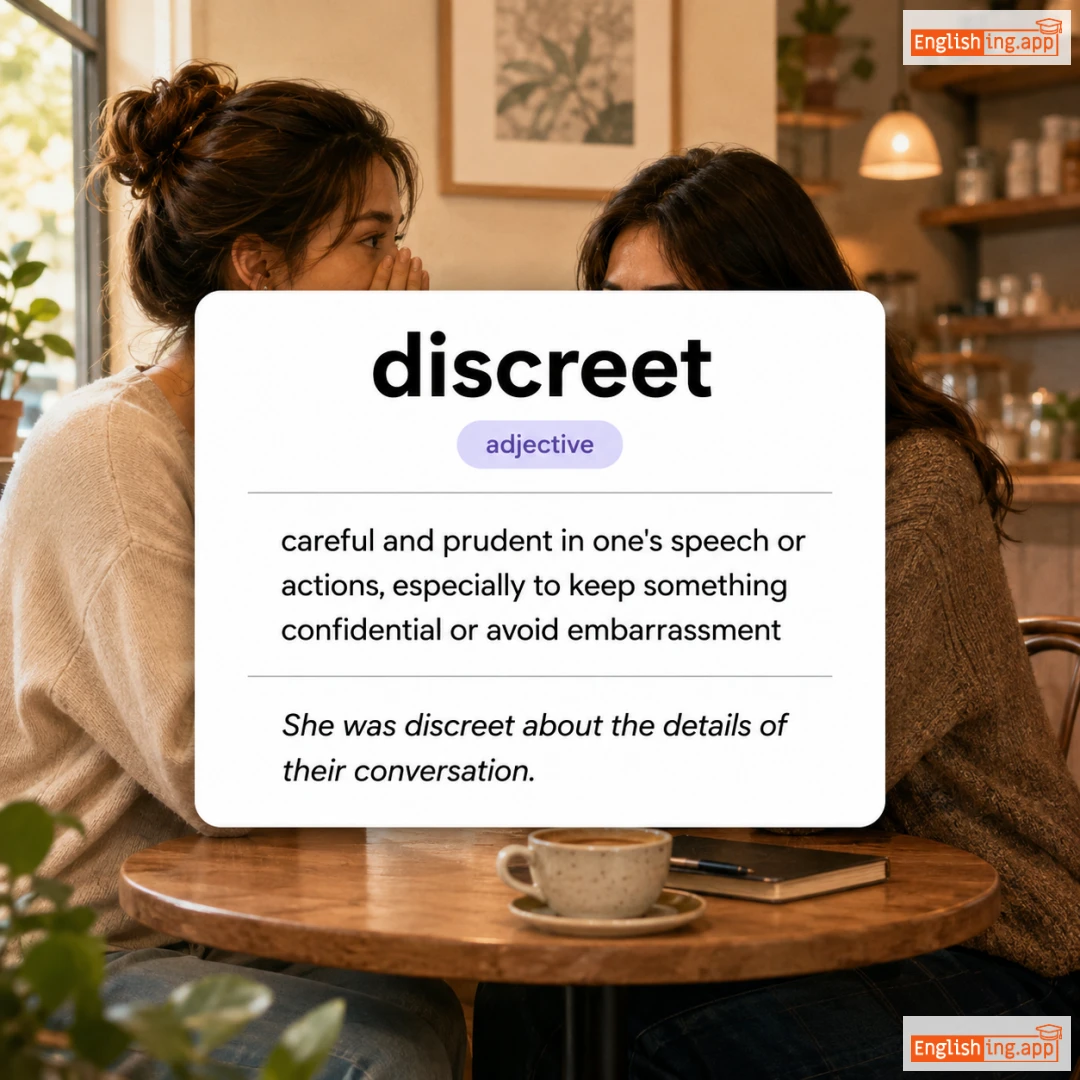
discreet definition card — visual illustration of the meaning
adjective B2
/dɪˈskriːt/
慎重な (shinchou na)

careful and prudent in one's speech or actions, especially to keep something confidential or avoid embarrassment

"She was discreet about the details of their conversation."

"彼女は彼らの会話の詳細について慎重でした。" (Kanojo wa karera no kaiwa no shousai ni tsuite shinchou deshita.)
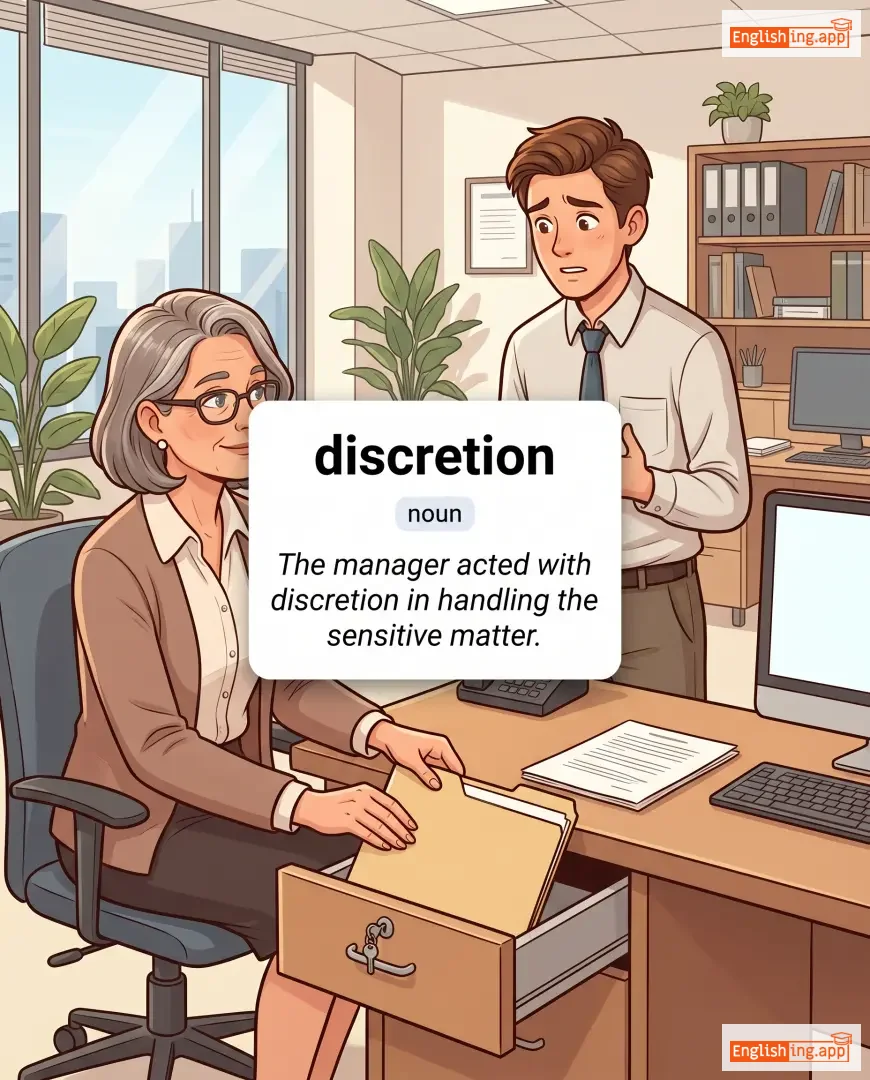
discretion definition card — visual illustration of the meaning
noun B2
/dɪˈskrɛʃən/
慎重 (shinchou)

the quality of behaving or speaking in a way to avoid causing offense or revealing private information; the freedom to decide what should be done in a particular situation

"The manager acted with discretion in handling the sensitive matter."

"マネージャーは敏感な問題を慎重に扱いました。" (Manējā wa binkan na mondai o shinchou ni atsukaimashita.)
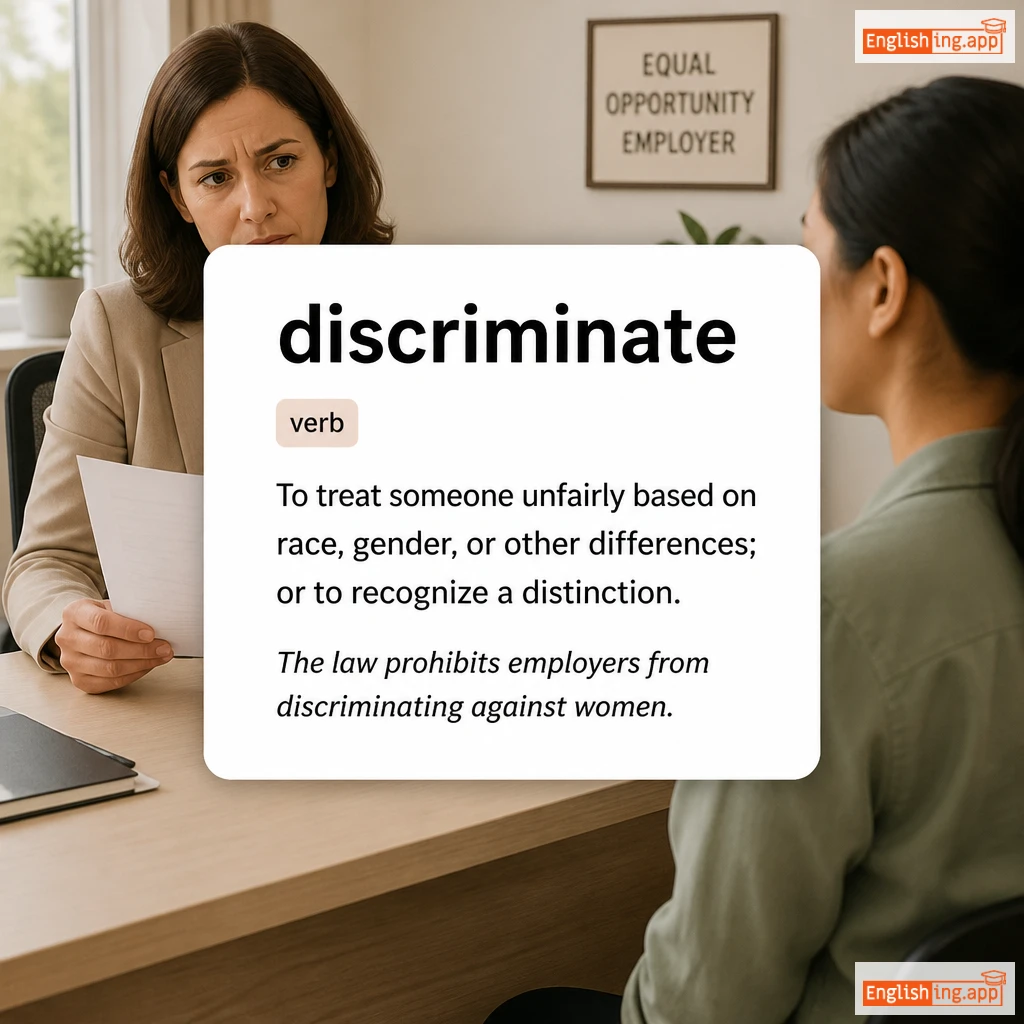
discriminate definition card — visual illustration of the meaning
verb B2
/dɪˈskrɪmɪˌneɪt/

To treat someone unfairly based on race, gender, or other differences; or to recognize a distinction.

"The law prohibits employers from discriminating against women."

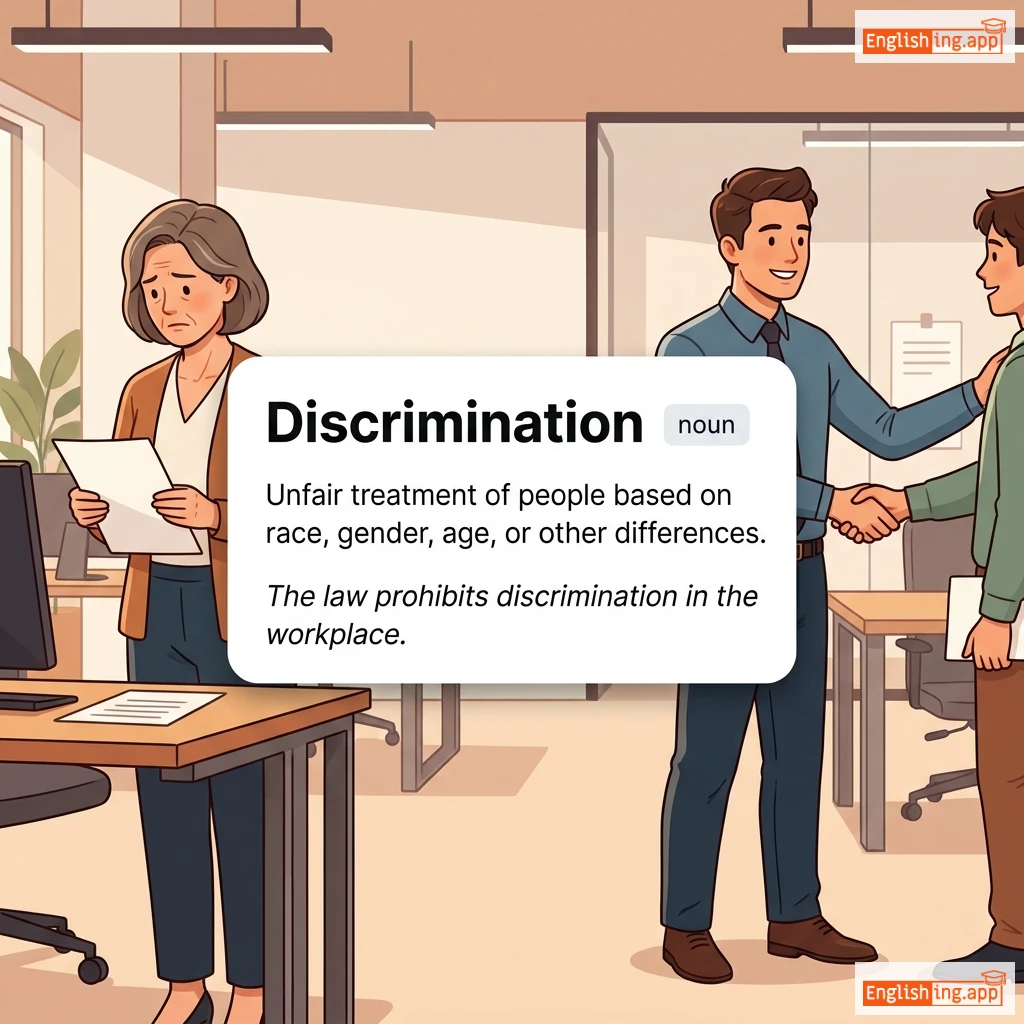
Discrimination definition card — visual illustration of the meaning
noun B2
/dɪˌskrɪmɪˈneɪʃən/
差別 (sabetsu)

Unfair treatment of people based on race, gender, age, or other differences.

"The law prohibits discrimination in the workplace."

"法律は職場での差別を禁じています。" (Hōritsu wa shokuba de no sabetsu o kinjiteimasu.)
adjective B2
/dɪˈziːzd/
病気の; 患者の (byouki no; kanja no)

affected by disease; suffering from illness; sick

"The diseased tree had to be removed from the garden."

"病気の木は庭から取り除かれなければならなかった。" (Byouki no ki wa niwa kara torinozokarenakereba naranakatta)
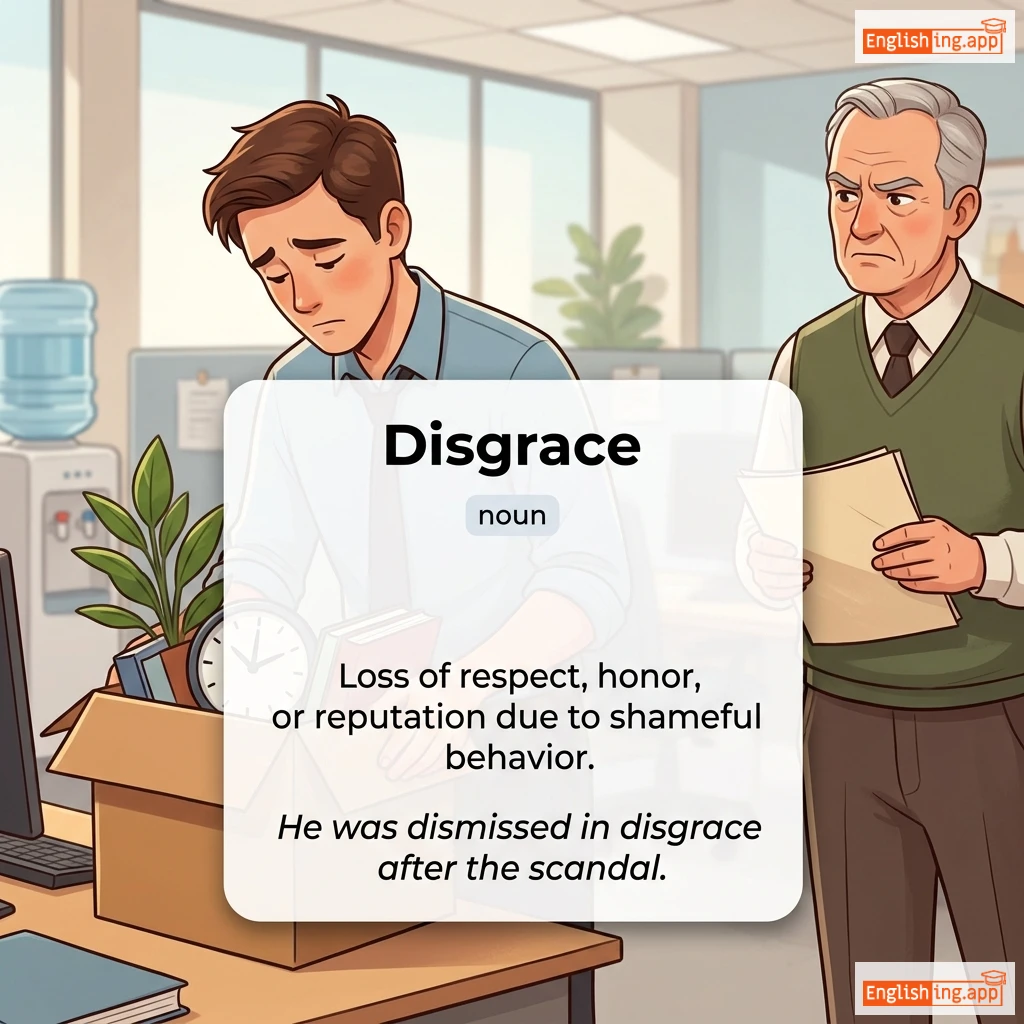
Disgrace definition card — visual illustration of the meaning
noun B2
/dɪsˈɡreɪs/
不名誉 (fumeiyo)

Loss of respect, honor, or reputation due to shameful behavior.

"He was dismissed in disgrace after the scandal."

"スキャンダル後、彼は不名誉の中で解雇されました。" (Sukyandaru go, kare wa fumeiyo no naka de kaiko saremashita.)
adjective B2
/dɪsˈɡreɪsfəl/
恥ずべき; 不名誉な; 非難に値する (hazubeki; fumyou na; hinan ni ataisuru)

shameful; bringing dishonor; worthy of condemnation

"His disgraceful behavior shocked everyone at the party."

"彼の恥ずべき行動はパーティーでみんなを驚かせました。" (kare no hazubeki koudou wa paatii de minna wo odorokasemashita)
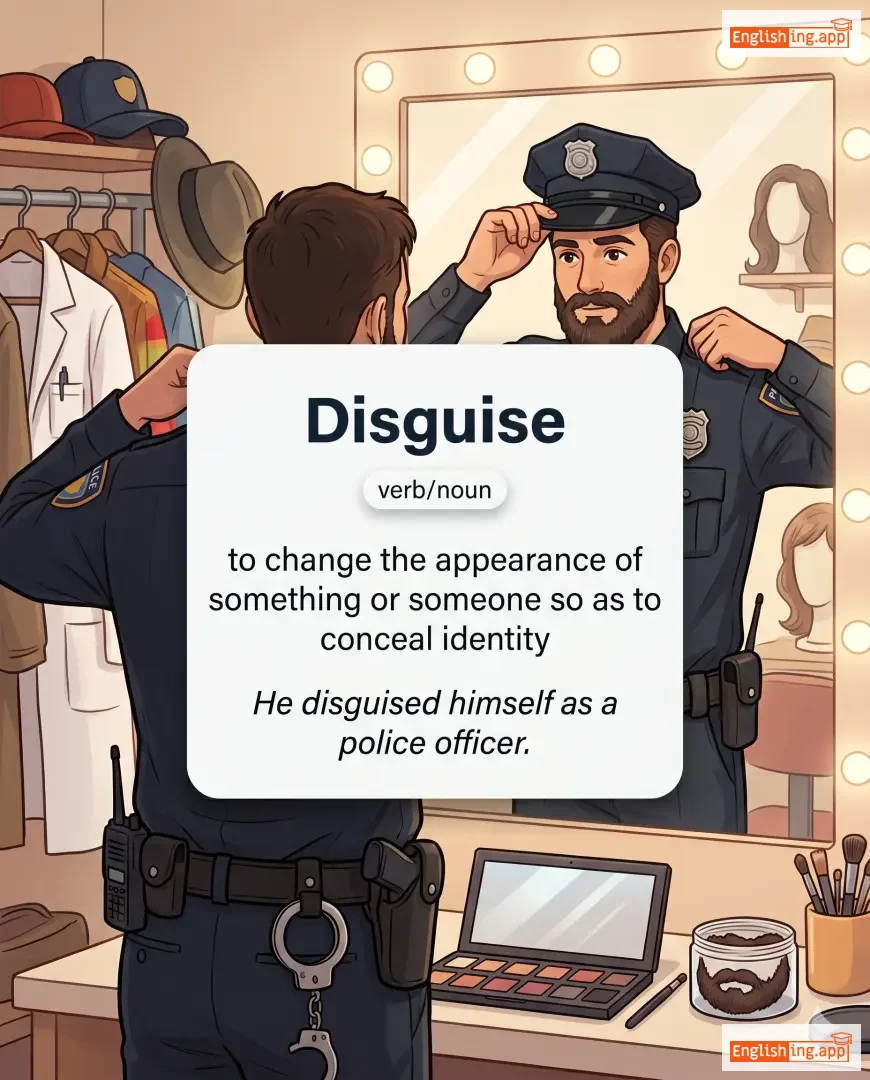
Disguise definition card — visual illustration of the meaning
verb/noun B2
/dɪsˈɡaɪz/
変装 (hensou)

to change the appearance of something or someone so as to conceal identity

"He disguised himself as a police officer."

"彼は警察官に変装した。" (Kare wa keisatsukan ni hensou shita.)
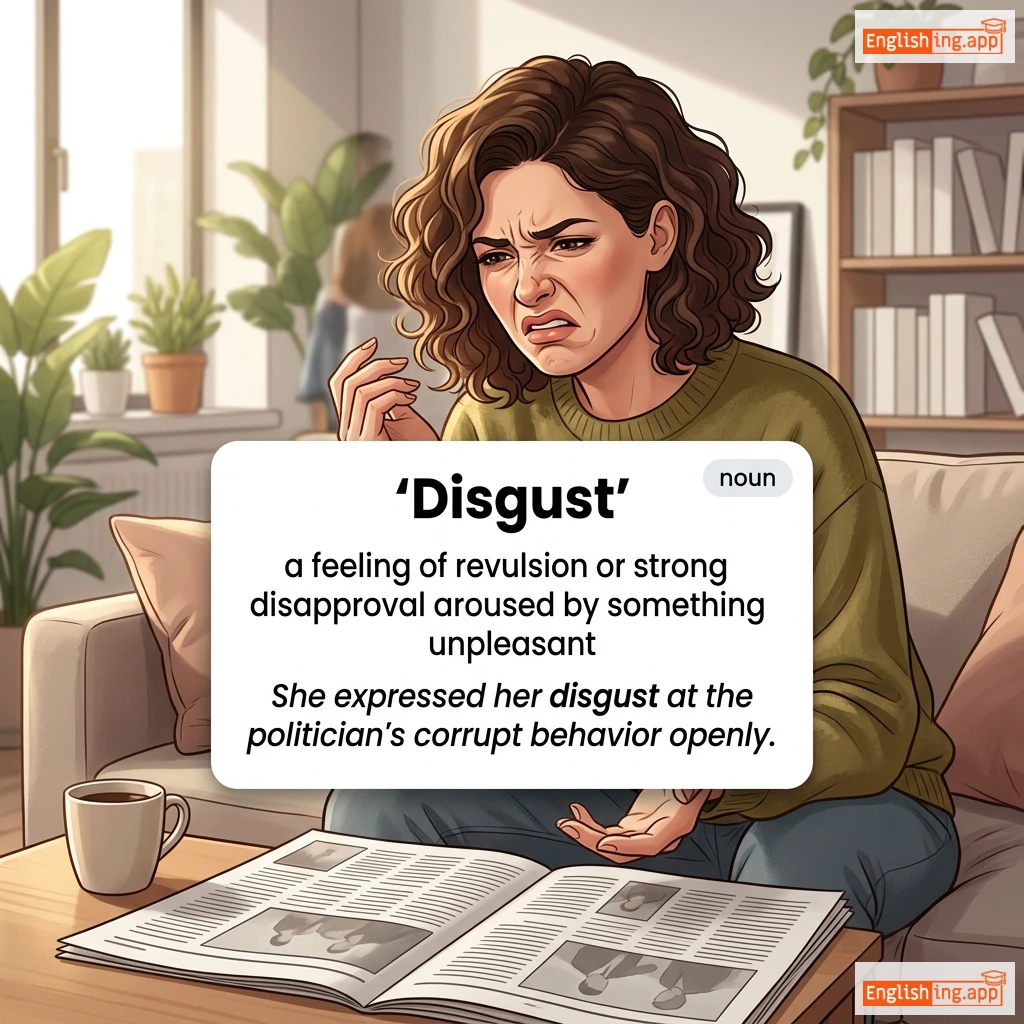
Disgust definition card — visual illustration of the meaning
noun B2
/dɪsˈɡʌst/
嫌悪 (ken'o)

a feeling of revulsion or strong disapproval aroused by something unpleasant

"She expressed her disgust at the politician's corrupt behavior openly."

"彼女は政治家の腐敗行為に対する嫌悪を公然と表現しました。" (Kanojo wa seijika no fuhai kōi ni taisuru ken'o o kōzen to hyōgen shimashita.)
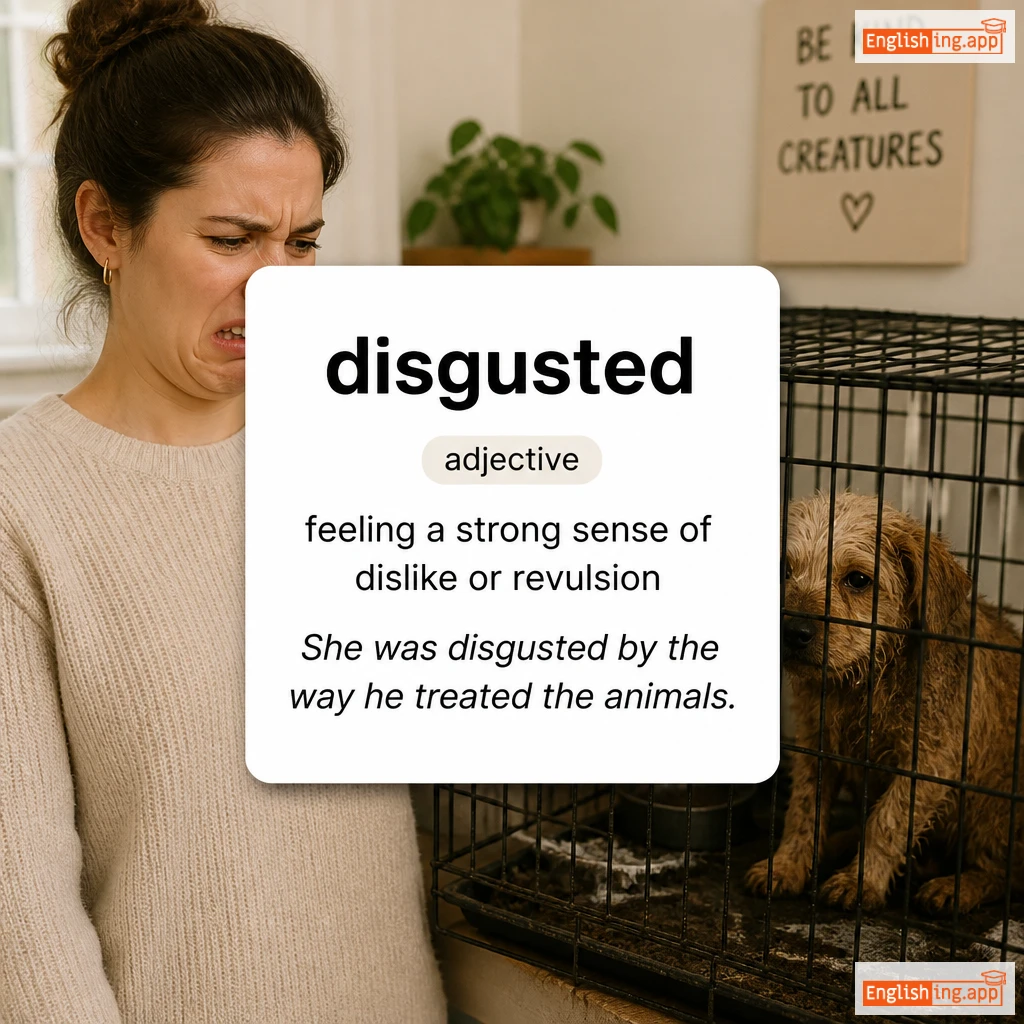
disgusted definition card — visual illustration of the meaning
adjective B2
/dɪsˈɡʌstɪd/
嫌悪している (ken'o shite iru)

feeling a strong sense of dislike or revulsion

"She was disgusted by the way he treated the animals."

"彼女は彼が動物に接する方法に嫌悪感を抱いた。" (Kanojo wa kare ga doubutsu ni sessuru houhou ni ken'o kan wo daita.)
disinfect definition card — visual illustration of the meaning
verb B2
/ˌdɪsɪnˈfɛkt/
消毒する (shoudoku suru)

to clean something thoroughly to destroy bacteria or viruses

"The nurse disinfected the wound before applying a bandage."

"看護師は包帯を巻く前に傷を消毒しました。" (Kangoshi wa houtai o maku mae ni kizu o shoudoku shimashita.)
noun B2
/ˌdɪsɪnˈfɛktənt/
消毒剤 (shoudokuzai)

a chemical substance used to kill harmful microorganisms on surfaces

"The cleaner sprayed disinfectant on the table."

"清掃員はテーブルに消毒剤を噴霧しました。" (Seisōin wa tēburu ni shōdokuzai o funmushimashita.)
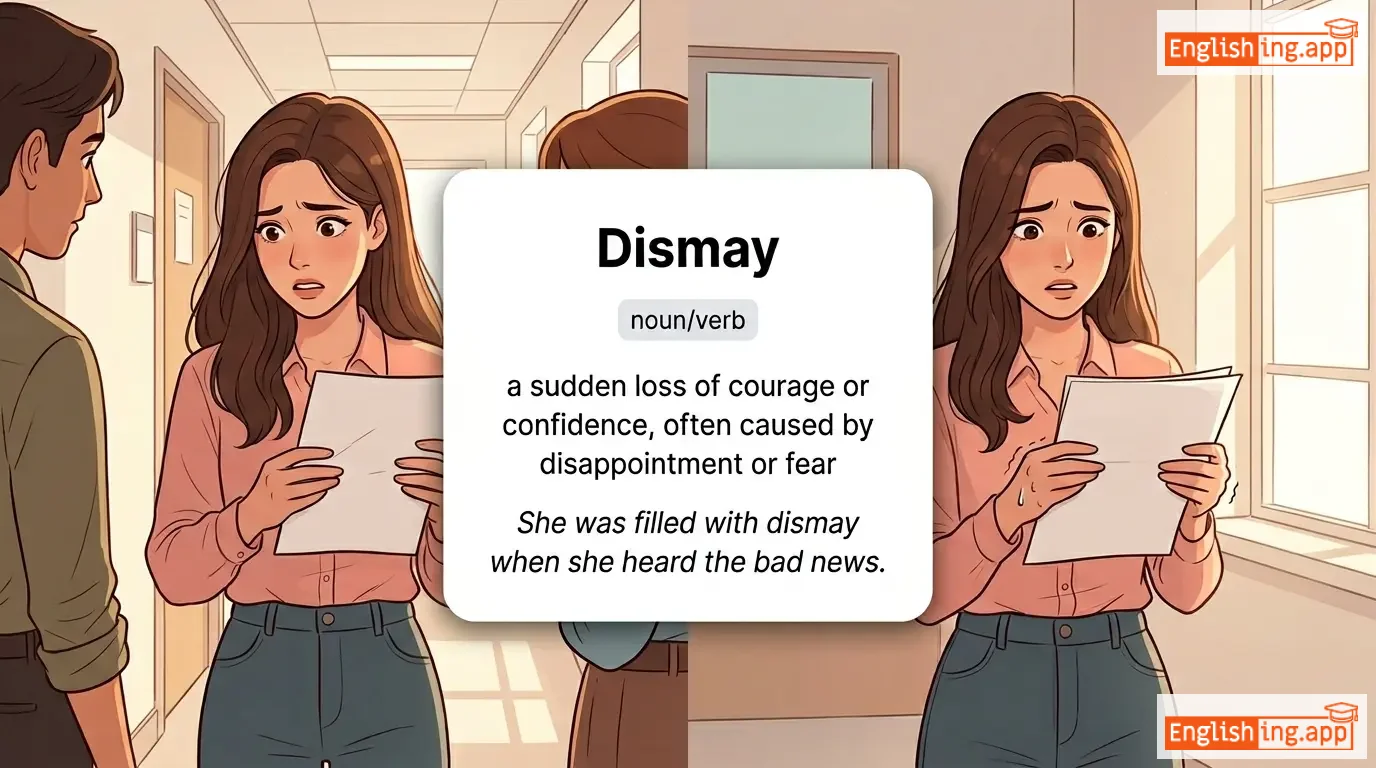
Dismay definition card — visual illustration of the meaning
noun/verb B2
/dɪsˈmeɪ/
失望や恐れ (shitsubou ya osore)

a sudden loss of courage or confidence, often caused by disappointment or fear

"She was filled with dismay when she heard the bad news."

"彼女は悪い知らせを聞いて、失望でいっぱいになった。" (kanojo wa warui shirase o kiite, shitsubou de ippai ni natta)
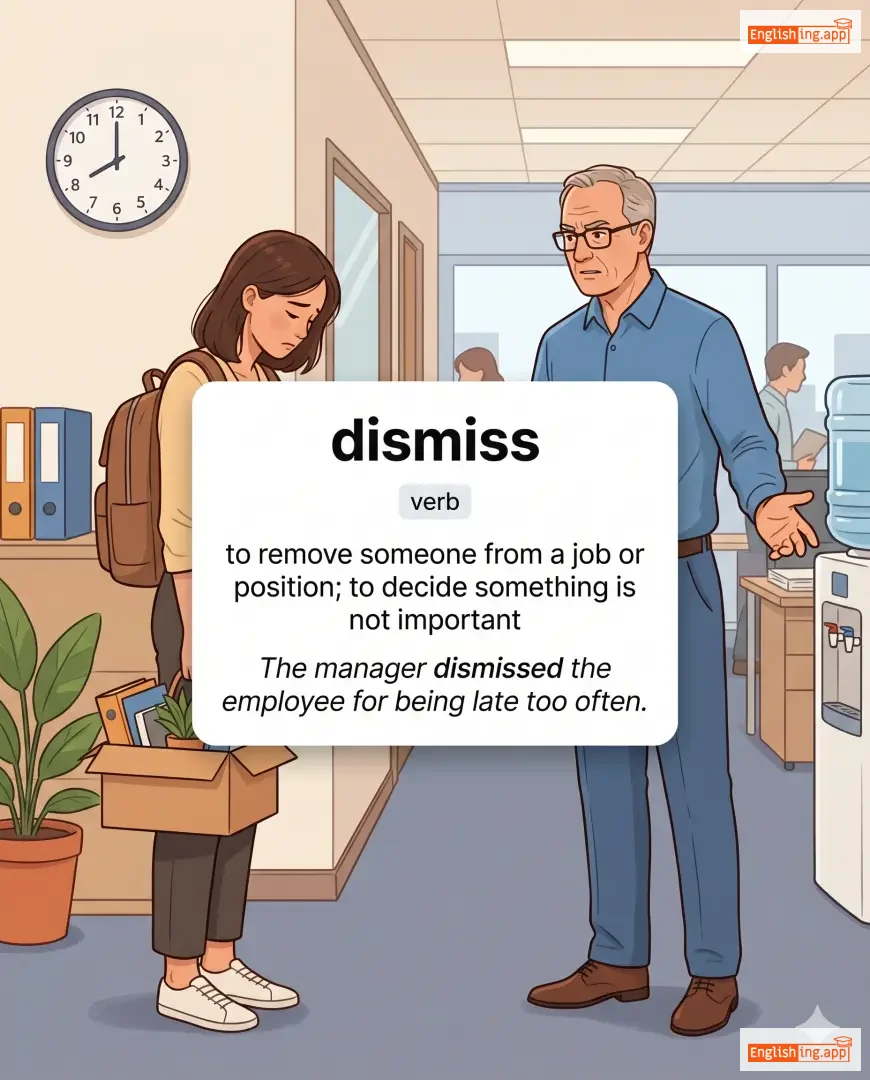
dismiss definition card — visual illustration of the meaning
verb B2
/dɪsˈmɪs/
解雇する, 却下する (kaiko suru, kyakka suru)

to remove someone from a job or position; to decide something is not important

"The manager dismissed the employee for being late too often."

"マネージャーは遅刻が多すぎるため、従業員を解雇しました。" (Manējā wa chikoku ga ōsugiru tame, jūgyōin o kaiko shimashita.)
dismissal definition card — visual illustration of the meaning
noun B2
/dɪsˈmɪsl̩/
解雇, 拒否 (kaiko, kyohi)

the act of removing someone from their job; the act of treating something as unimportant

"His unfair dismissal led to a lawsuit against the company."

"彼の不当な解雇は、会社に対する訴訟を引き起こしました。" (Kare no futōna kaiko wa, kaisha ni taisuru soshō o hikiokoshimashita.)
adjective B2
/ˌdɪsəˈbiːdiənt/
不従順な (fujōjun na)

refusing or failing to obey rules or authority

"The teacher scolded the disobedient students."

"教師は不従順な生徒を叱った。" (Kyōshi wa fujōjun na seito o shikatta.)
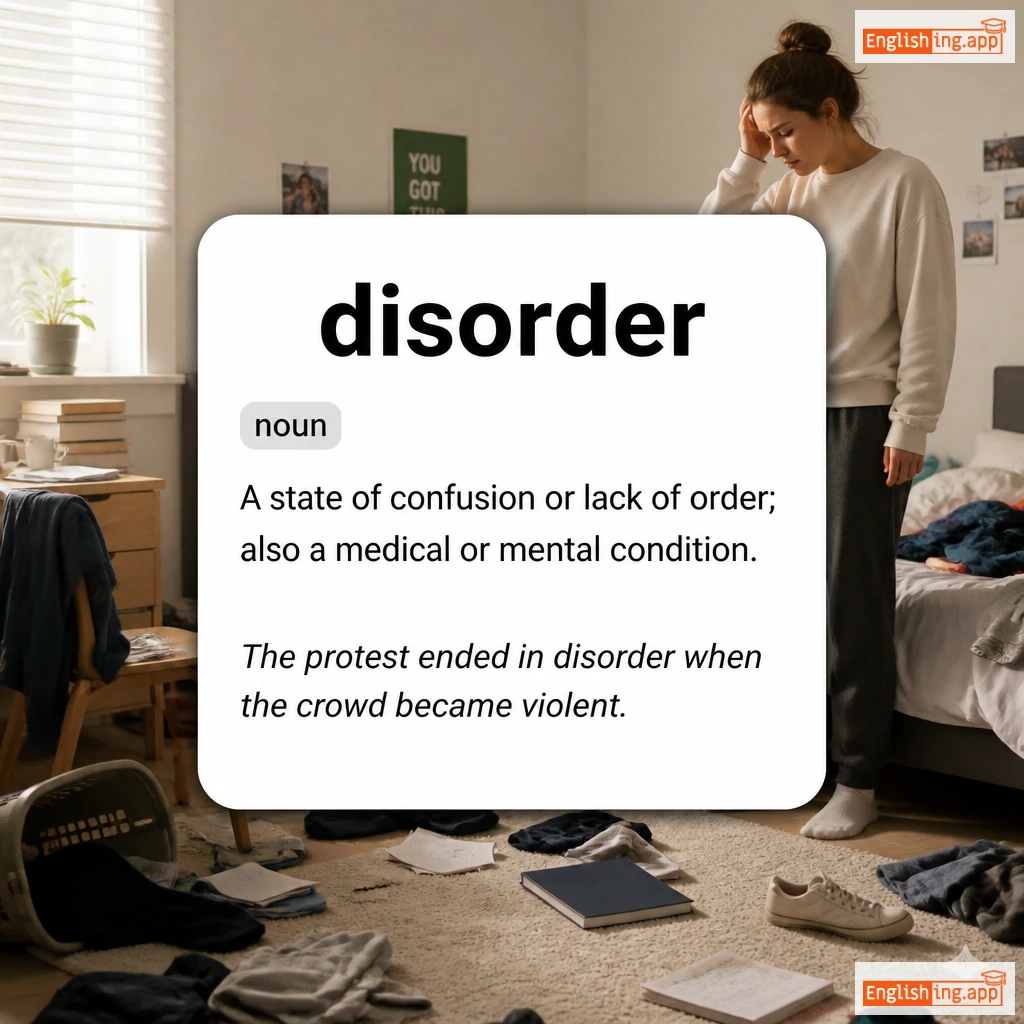
disorder definition card — visual illustration of the meaning
noun B2
/dɪsˈɔːrdər/
障害 (shōgai)

A state of confusion or lack of order; also a medical or mental condition.

"The protest ended in disorder when the crowd became violent."

"抗議は群衆が暴力的になったときに障害に終わった。" (Kōgi wa gunshū ga bōryokuteki ni natta toki ni shōgai ni owatta.)
verb B2
/dɪˈspætʃ/
送る (okuru)

to send off to a destination or for a purpose

"The company dispatched aid to the flood victims."

"その会社は洪水の被害者に援助を発送しました。" (Sono kaisha wa kouzui no higaisha ni enjo o hassou shimashita.)
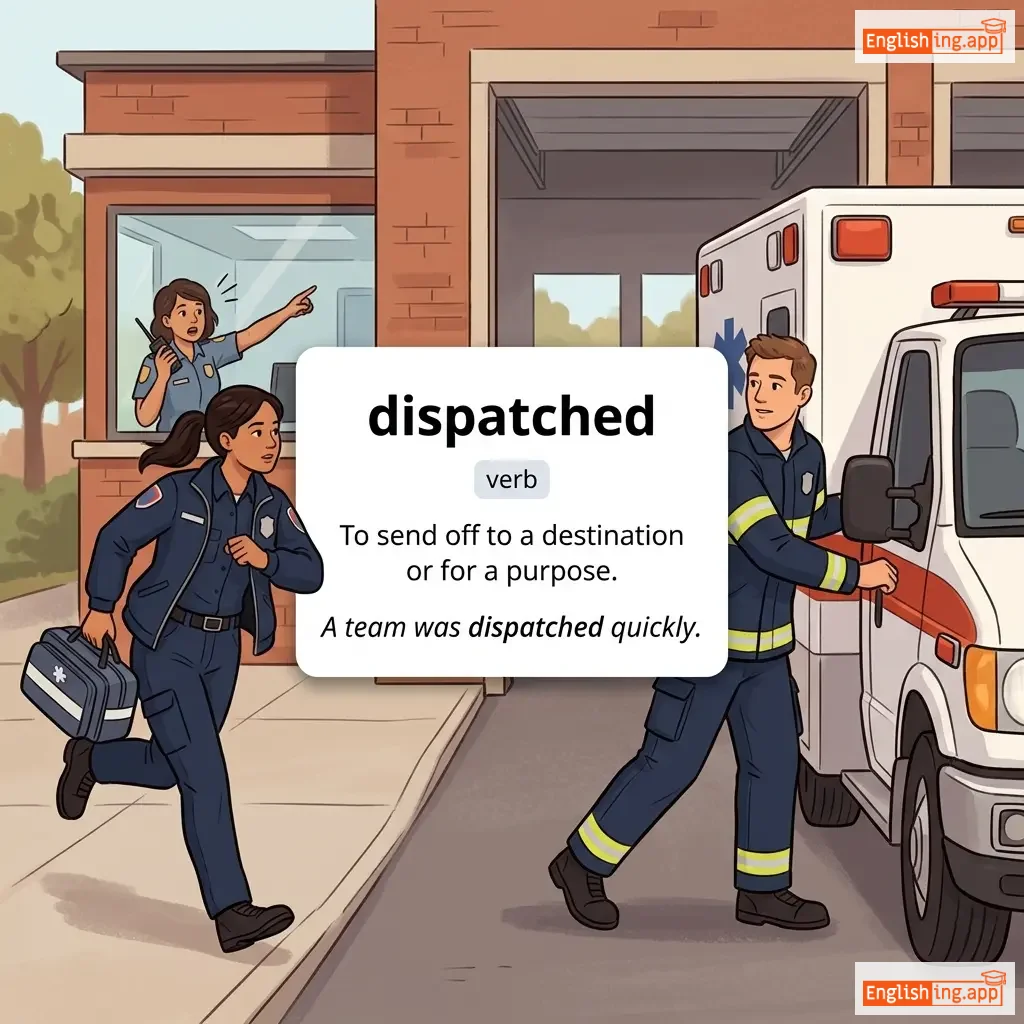
dispatched definition card — visual illustration of the meaning
verb B2
dɪˈspætʃt
派遣された (haken sareta)

To send off to a destination or for a purpose.

"A team was dispatched quickly."

"チームは迅速に派遣されました。" (Chīmu wa jinsoku ni haken saremashita.)
disposal definition card — visual illustration of the meaning
noun B2
/dɪsˈpoʊzl/
廃棄 (haiki)

the action or process of getting rid of something

"The disposal of waste is crucial for maintaining a clean environment."

"廃棄物の処理は清潔な環境を維持するために重要です。" (Haikibutsu no shori wa seiketsu na kankyou wo iji suru tame ni juuyou desu.)
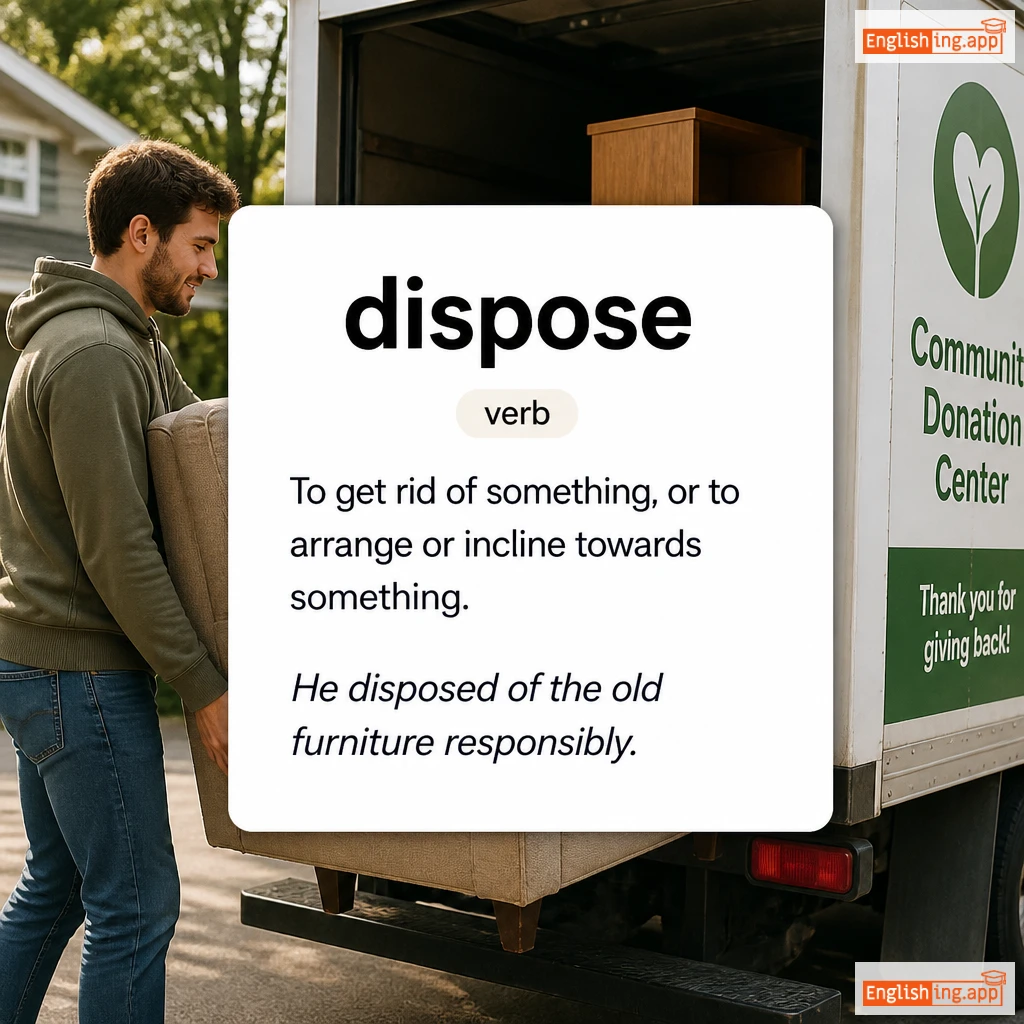
dispose definition card — visual illustration of the meaning
verb B2
/dɪˈspoʊz/
処分する (shobun suru)

To get rid of something, or to arrange or incline towards something.

"He disposed of the old furniture responsibly."

"彼は古い家具を責任を持って処分しました。" (Kare wa furui kagu o sekinin o motte shobun shimashita.)
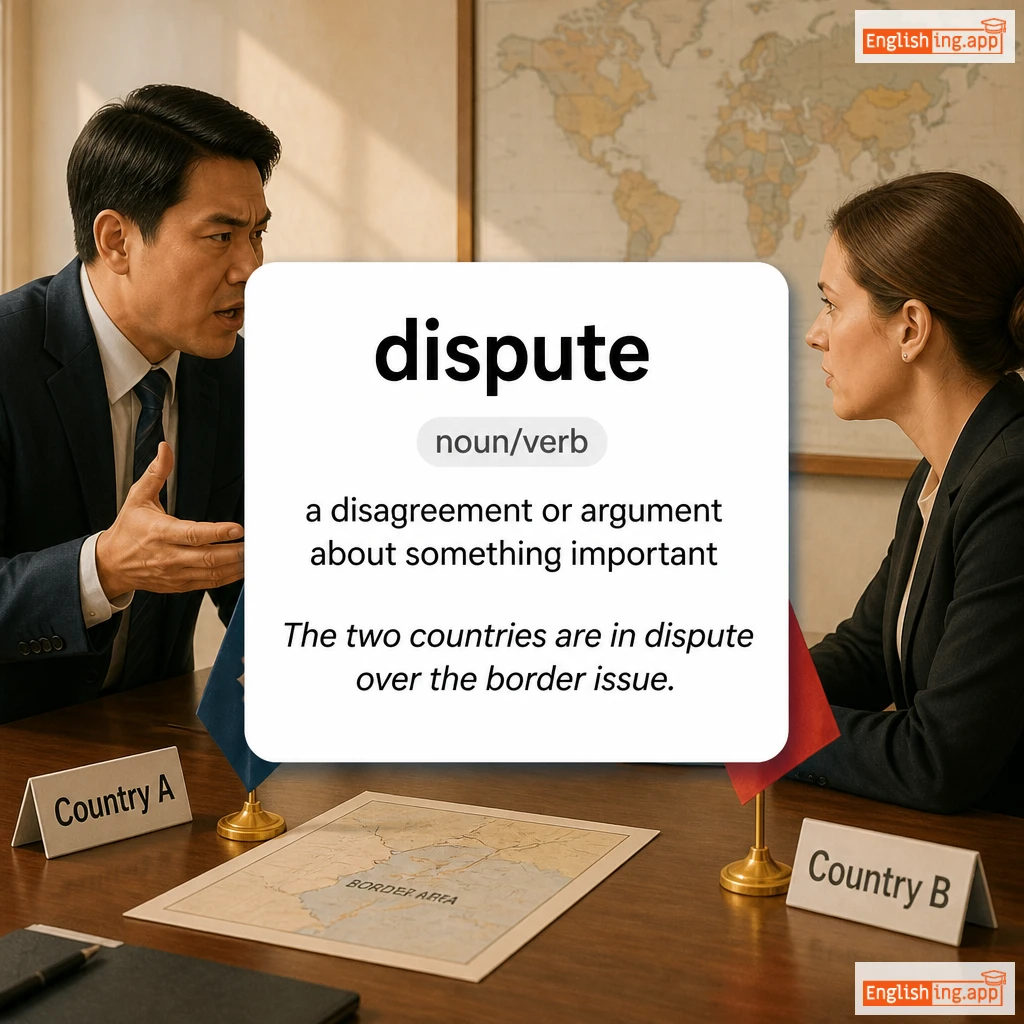
dispute definition card — visual illustration of the meaning
noun/verb B2
/dɪˈspjuːt/
争い, 論争 (arasoi, ronsou)

a disagreement or argument about something important

"The two countries are in dispute over the border issue."

"二国間で国境問題について争いが続いています。" (Nikokukan de kokkyou mondai ni tsuite arasoi ga tsuzuiteimasu.)
verb/noun B2
/ˌdɪsrɪˈɡɑːrd/
軽蔑 (keibetsu)

To ignore something; lack of consideration or respect for something.

"He disregarded the warning signs and kept driving."

"彼は警告のサインを無視して運転し続けました。" (Kare wa keikoku no sain o mushi shite unten shitsuzukemashita.)
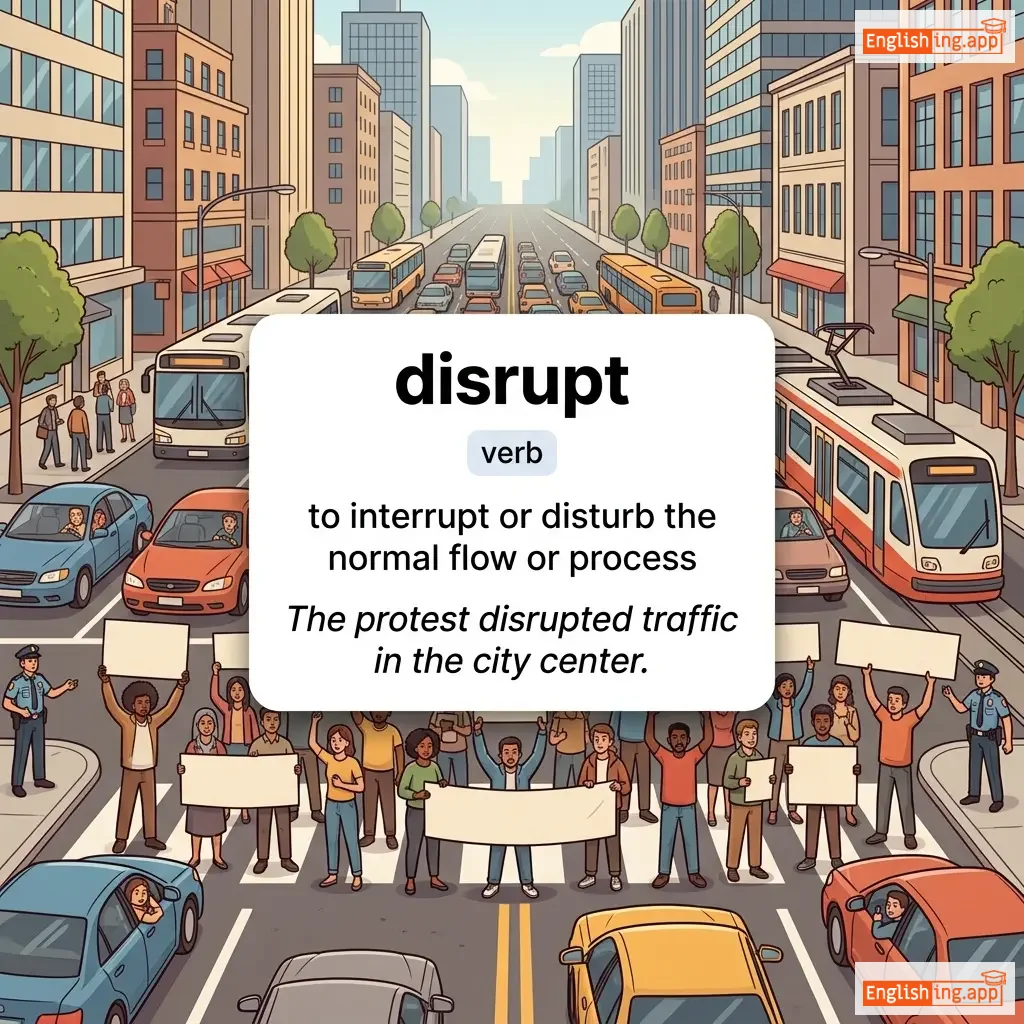
disrupt definition card — visual illustration of the meaning
verb B2
/dɪsˈrʌpt/
混乱させる (konran saseru)

to interrupt or disturb the normal flow or process

"The protest disrupted traffic in the city center."

"抗議活動は市内中心部の交通を混乱させました。" (Kōgi katsudō wa shinai chūshinbu no kōtsū o konran sasemashita.)
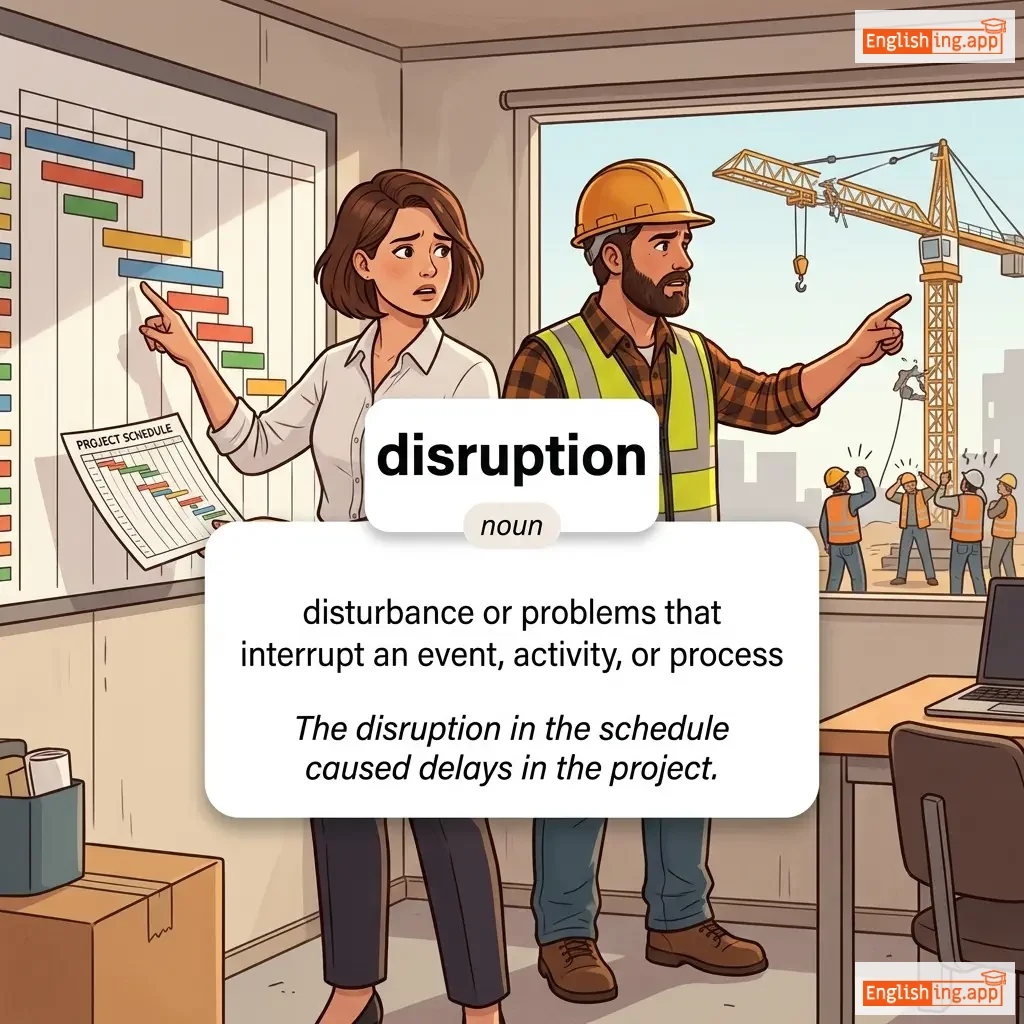
disruption definition card — visual illustration of the meaning
noun B2
/dɪsˈrʌpʃən/
混乱 (konran)

disturbance or problems that interrupt an event, activity, or process

"The disruption in the schedule caused delays in the project."

"スケジュールの混乱により、プロジェクトに遅れが生じました。" (Sukejūru no konran ni yori, purojekuto ni okure ga shōjimashita.)
disruptive definition card — visual illustration of the meaning
adjective B2
/dɪsˈrʌp.tɪv/
破壊的 (hakai-teki)

Something that brings major changes to existing markets or industries

"E-commerce has been disruptive to traditional retail businesses."

"電子商取引は従来の小売業に破壊的な影響を与えました。" (Denshi shōtorihiki wa jūrai no kōri gyō ni hakai-teki na eikyō o ataemashita.)
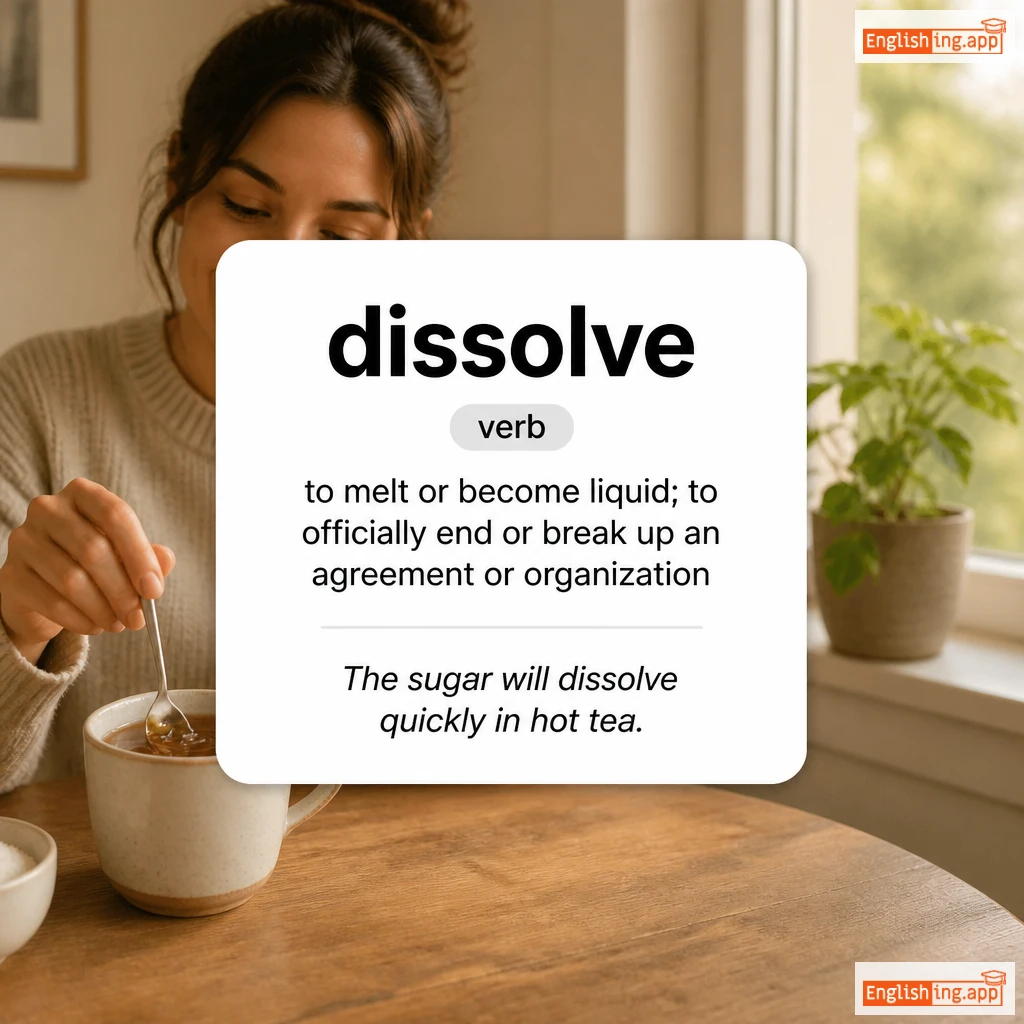
dissolve definition card — visual illustration of the meaning
verb B2
/dɪˈzɒlv/

to melt or become liquid; to officially end or break up an agreement or organization

"The sugar will dissolve quickly in hot tea."

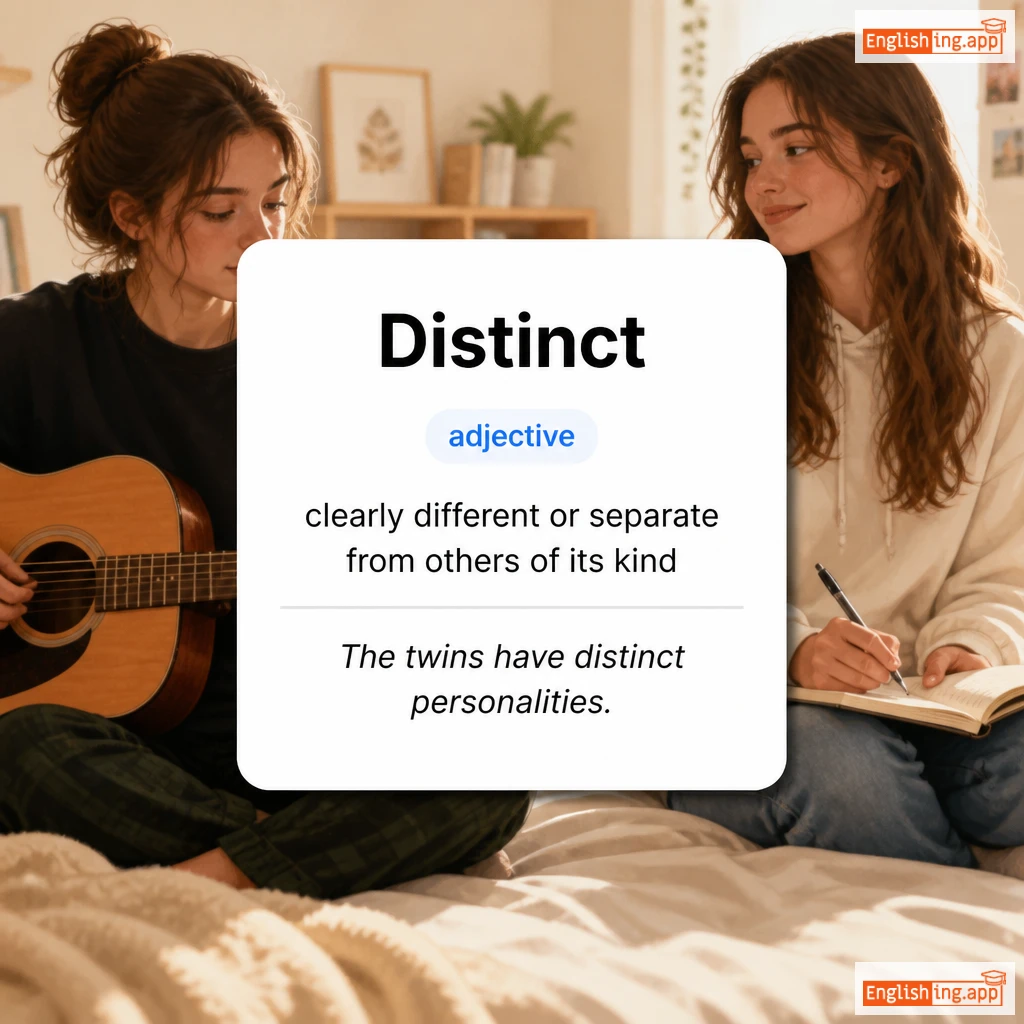
Distinct definition card — visual illustration of the meaning
adjective B2
/dɪˈstɪŋkt/
異なる (kotonaru)

clearly different or separate from others of its kind

"The twins have distinct personalities."

"双子は異なる個性を持っています。" (Futago wa kotonaru kosei o motteimasu.)
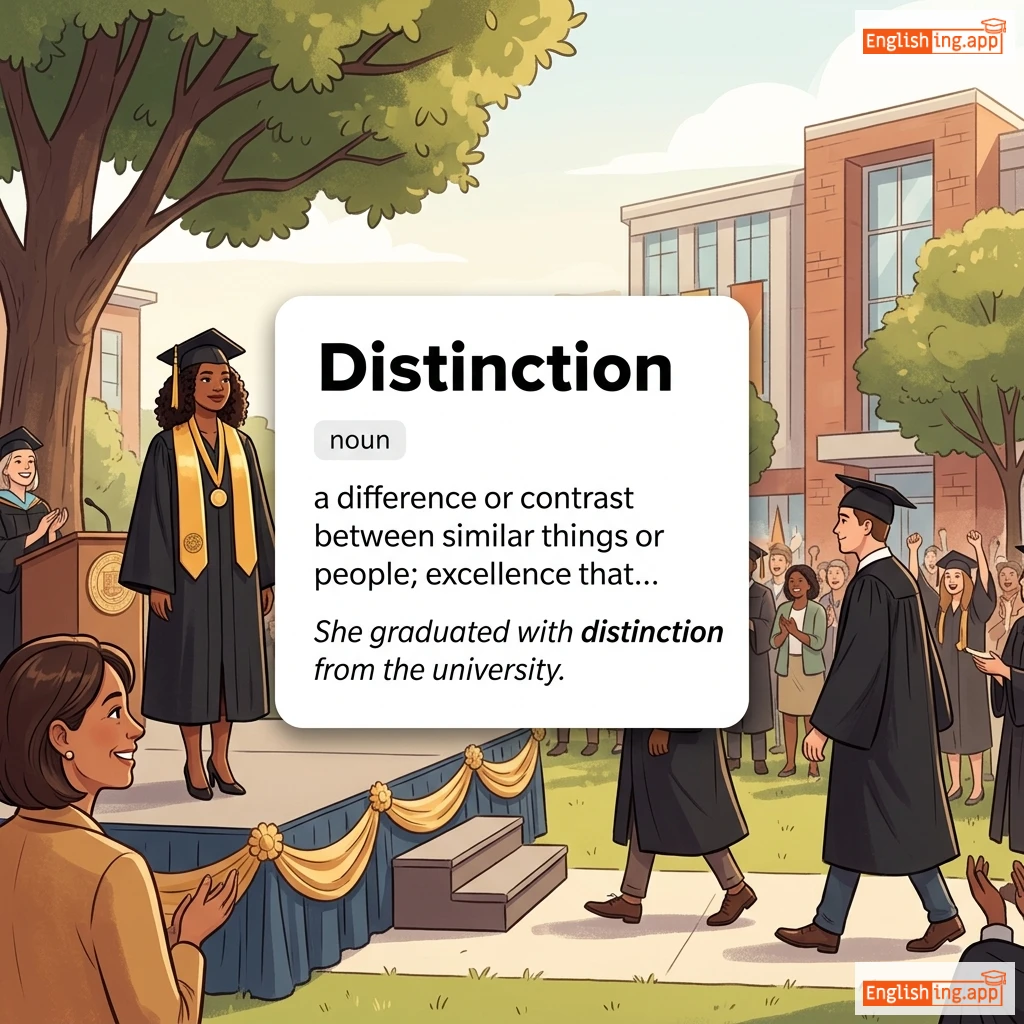
Distinction definition card — visual illustration of the meaning
noun B2
/dɪˈstɪŋkʃən/

a difference or contrast between similar things or people; excellence that sets someone apart

"She graduated with distinction from the university."

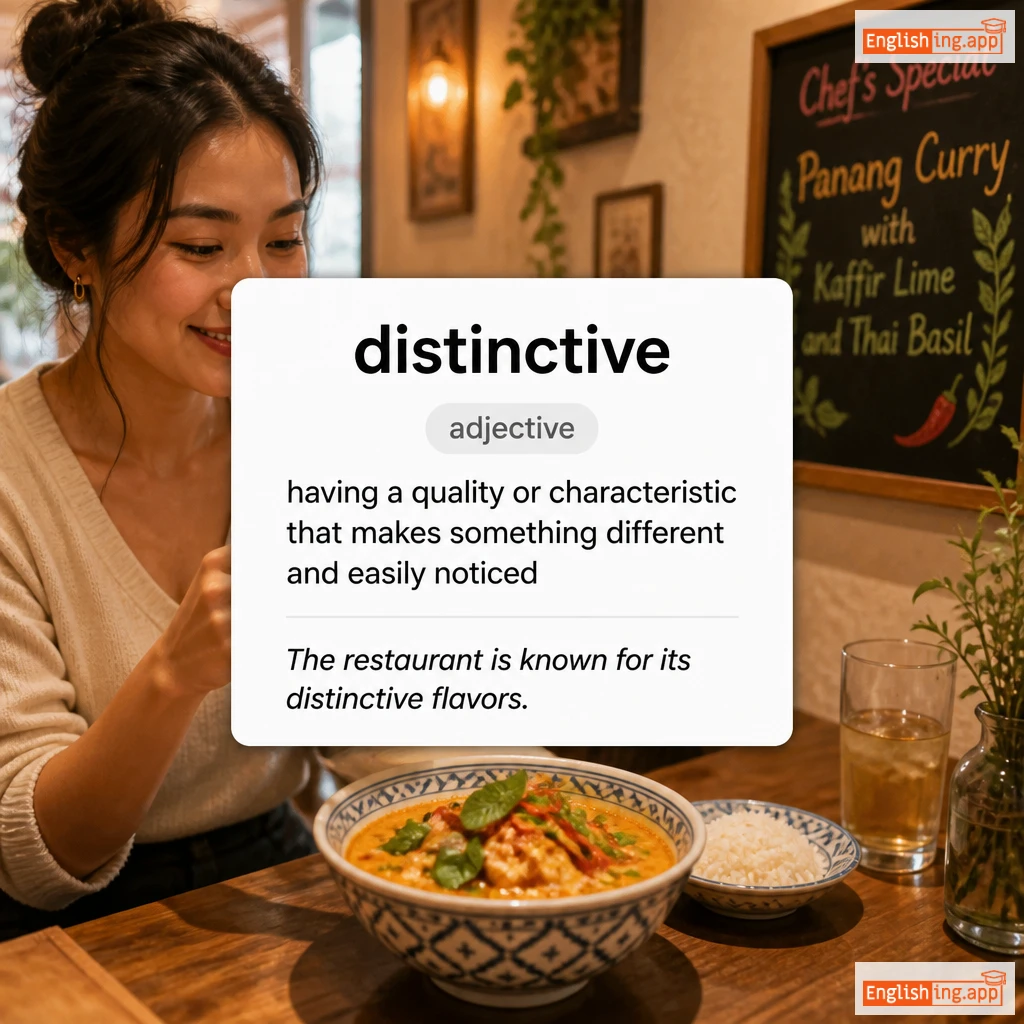
distinctive definition card — visual illustration of the meaning
adjective B2
/dɪˈstɪŋktɪv/
特徴的 (tokuchōteki)

having a quality or characteristic that makes something different and easily noticed

"The restaurant is known for its distinctive flavors."

"そのレストランは独特の風味で知られています。" (Sono resutoran wa dokutoku no fūmi de shirareteimasu.)
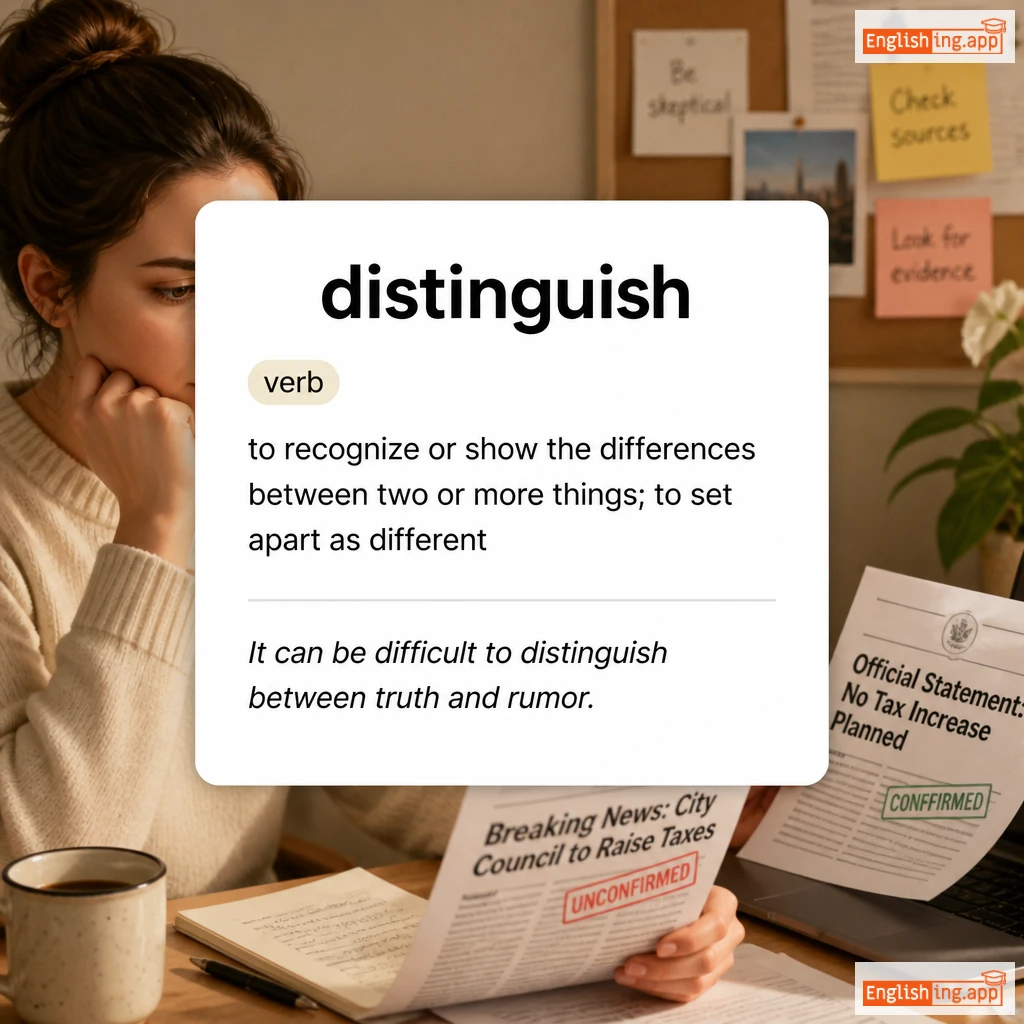
distinguish definition card — visual illustration of the meaning
verb B2
/dɪˈstɪŋɡwɪʃ/
区別する (kubetsu suru)

to recognize or show the differences between two or more things; to set apart as different

"It can be difficult to distinguish between truth and rumor."

"真実と噂を区別するのは難しいかもしれません。" (Shinjitsu to uwasa o kubetsu suru no wa muzukashī kamoshiremasen.)
adjective B2
/dɪˈstɪŋɡwɪʃt/
優れた; 名誉のある; 有名な; 尊厳のある外見または態度 (sugureta; meiyo no aru; yuumei na)

notable; honored; famous; having a dignified appearance or manner

"He is a distinguished professor at the university."

"彼は大学の優れた教授です。" (Kare wa daigaku no sugureta kyoushadesu.)
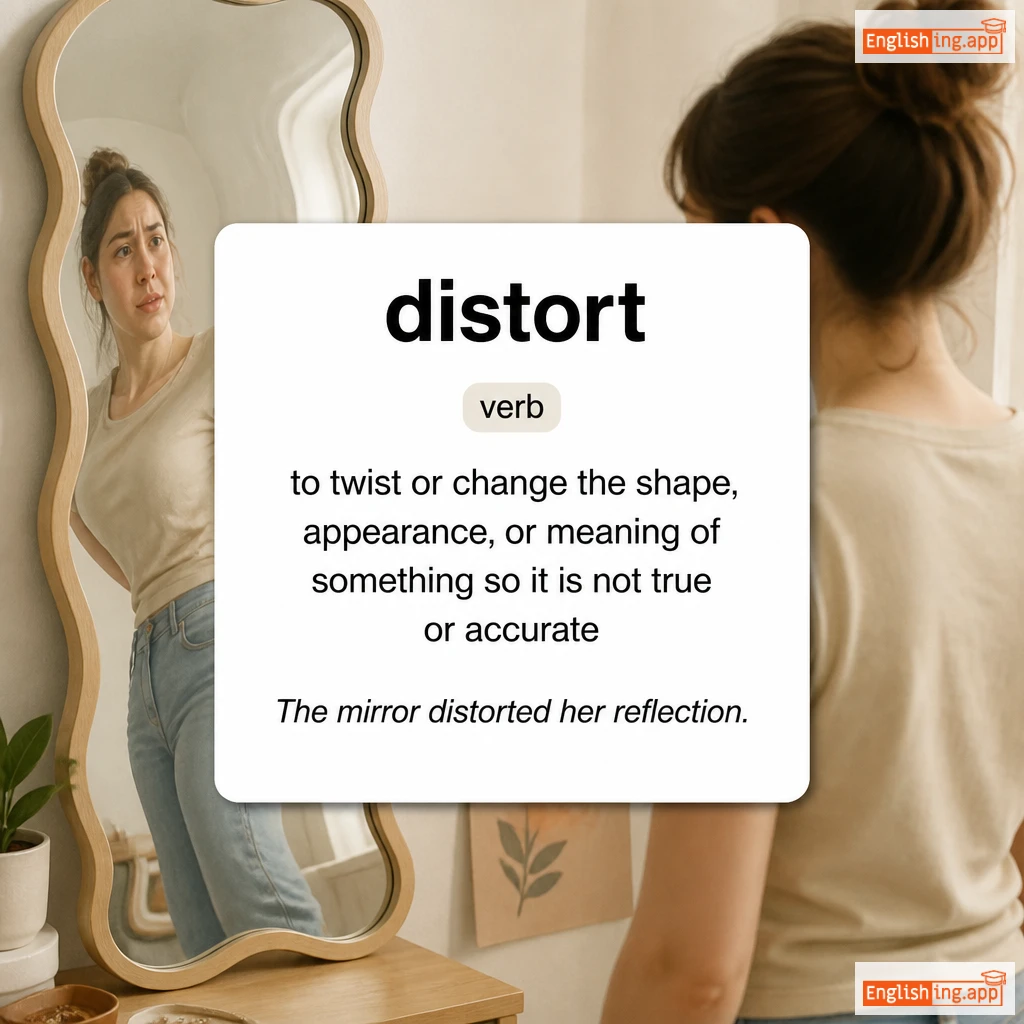
distort definition card — visual illustration of the meaning
verb B2
/dɪˈstɔːrt/

to twist or change the shape, appearance, or meaning of something so it is not true or accurate

"The mirror distorted her reflection."

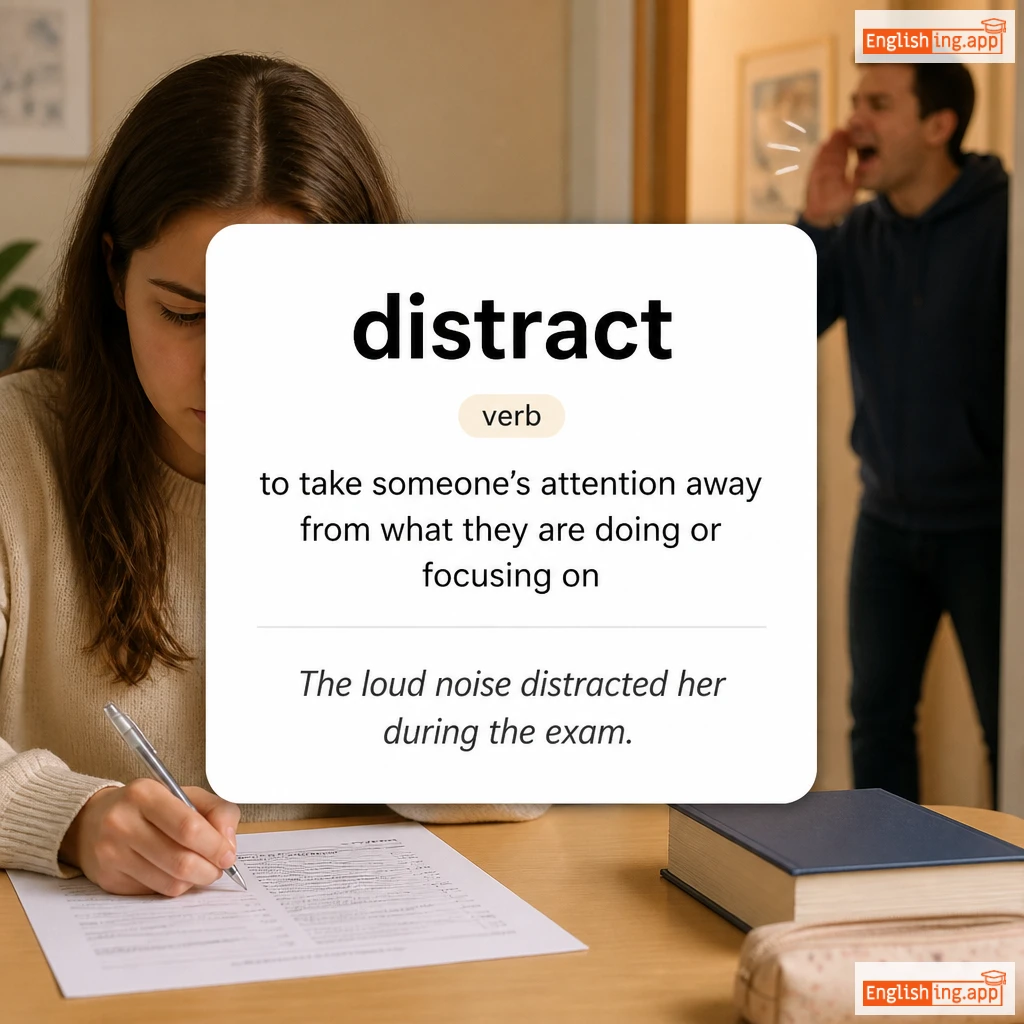
distract definition card — visual illustration of the meaning
verb B2
/dɪˈstrækt/
気を散らす (ki wo chirasu)

to take someone's attention away from what they are doing or focusing on

"The loud noise distracted her during the exam."

"大きな音が試験中に彼女をディストラクトした。" (Ōkina oto ga shiken-chū ni kanojo wo disutrakuto shita)
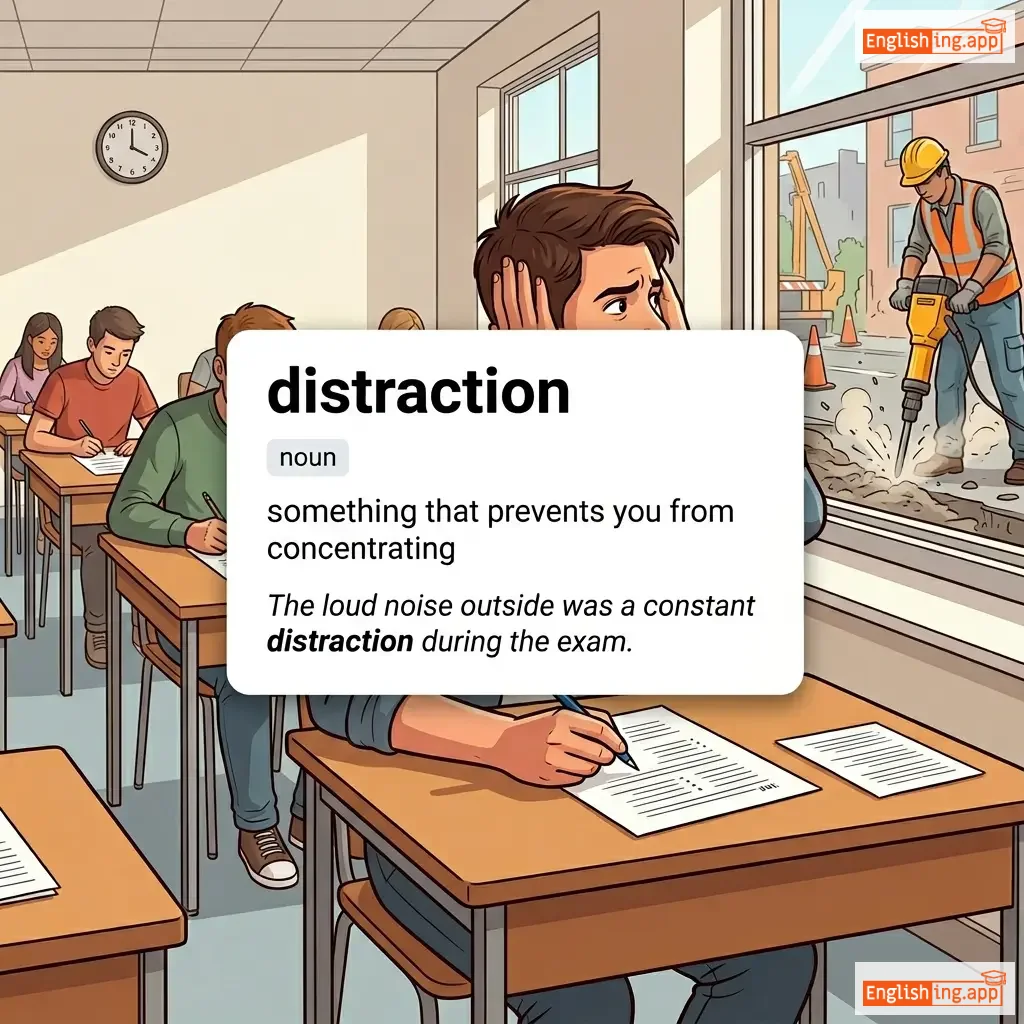
distraction definition card — visual illustration of the meaning
noun B2
/dɪˈstrækʃən/
気を散らすこと (ki wo chirasu koto)

something that prevents you from concentrating

"The loud noise outside was a constant distraction during the exam."

"試験中、外の騒音は絶え間ない気を散らす原因でした。" (Shiken chū, soto no sōon wa taemanai ki wo chirasu gen'in deshita.)
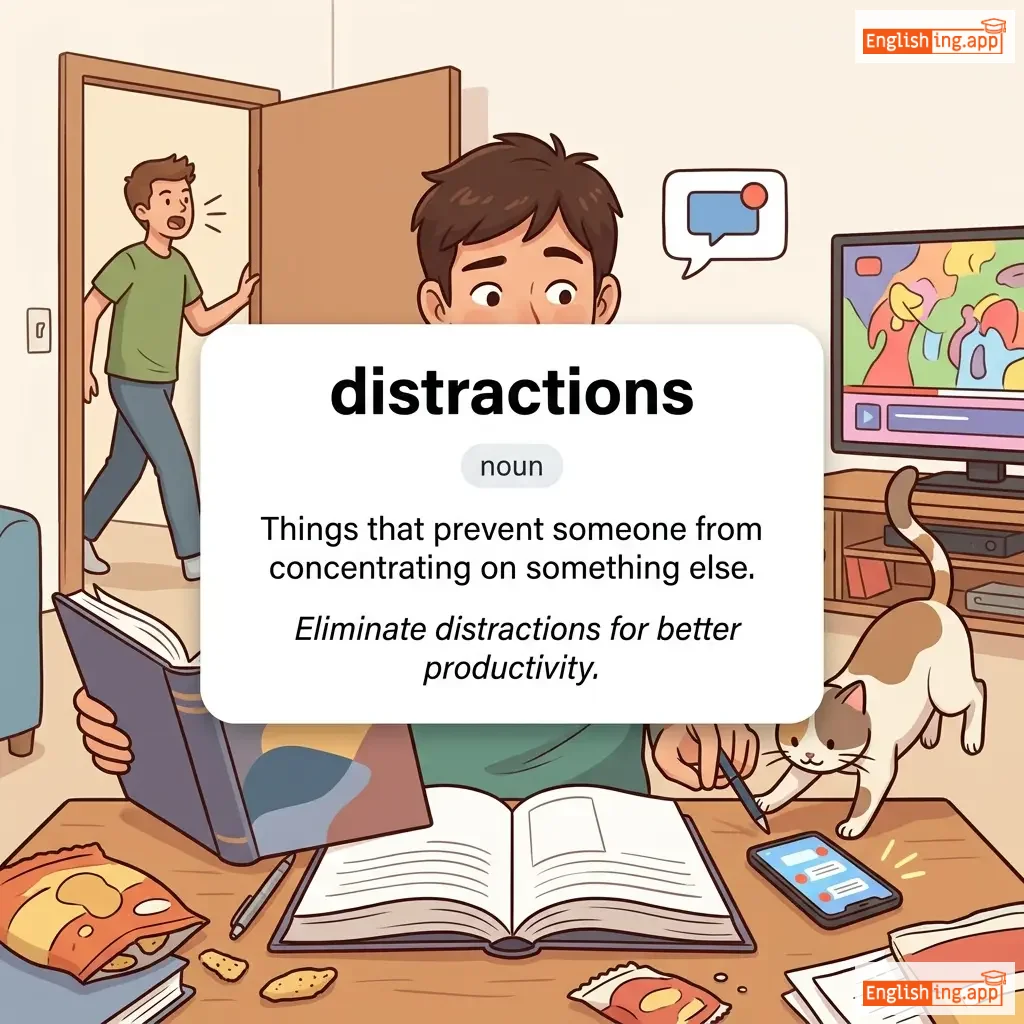
distractions definition card — visual illustration of the meaning
noun B2
/dɪˈstrækʃənz/
気を散らすもの (ki o chirasu mono)

Things that prevent someone from concentrating on something else.

"Eliminate distractions for better productivity."

"生産性を高めるために、気を散らすものを排除してください。" (Seisansei o takameru tame ni, ki o chirasu mono o haijo shite kudasai.)
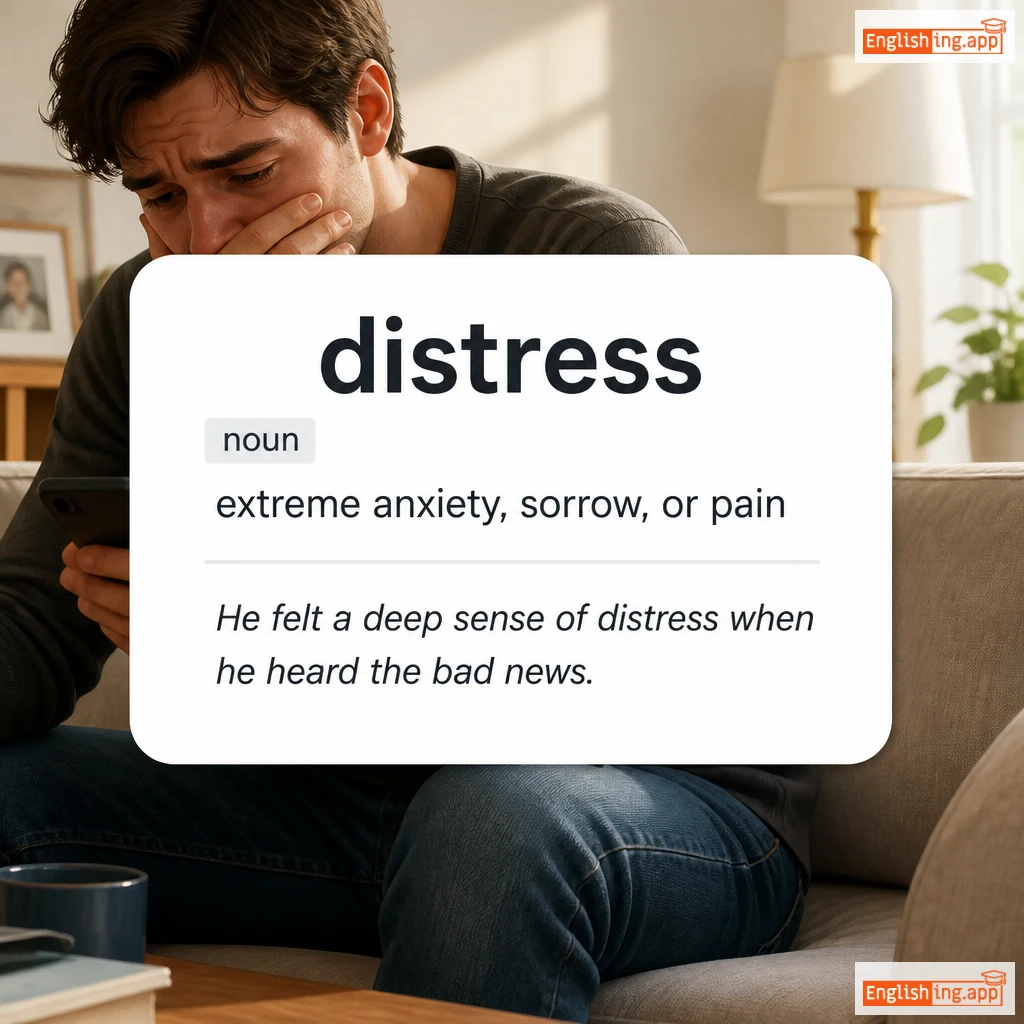
distress definition card — visual illustration of the meaning
noun B2
/dɪsˈtrɛs/
苦痛 (kutsū)

extreme anxiety, sorrow, or pain

"He felt a deep sense of distress when he heard the bad news."

"悪い知らせを聞いたとき、彼は深い苦痛を感じました。" (Warui shirase o kiita toki, kare wa fukai kutsū o kanjimashita.)
adjective B2
/dɪˈstrɛst/
苦しんでいる (kurushindeiru)

feeling or showing extreme anxiety, sorrow, or pain

"She looked distressed after hearing the bad news."

"悪い知らせを聞いた後、彼女は苦しんでいるように見えました。" (Warui shirase o kiita ato, kanojo wa kurushindeiru yō ni miemashita.)