Vocabularies

English Vocabulary Dictionary | Word Meanings, Definitions & Examples

noun C2
/pluːˈtɒkrəsi/
ধনীশাসিত সরকার (dhonishasit sarkar)

a system of government where the wealthy hold power

"The country was ruled as a plutocracy."

"দেশটি ধনীদের শাসিত ছিল।" (Desh ti dhonider shasit chilo.)
adjective C2
/njuːˈmætɪk/
বায়ু-চালিত (bayu-chalito)

operated by air or gas under pressure

"The factory uses pneumatic tools for assembly."

"কারখানায় অ্যাসেম্বলির জন্য বায়ু-চালিত সরঞ্জাম ব্যবহার করা হয়।" (Karkhanay assemblyr jonno bayu-chalito soronjam byabohar kora hoy.)
noun C2
/ˈpoʊ.ə.si/
কবিতা বা ছন্দশিল্প (kobita ba chhandoshilpo)

poetry; the art or composition of poems

"The anthology was filled with romantic poesy."

"অ্যান্থোলজিটি রোমান্টিক কবিতায় পূর্ণ ছিল।" (Anthologyti romantic kobitay purno chhilo.)
noun C2
/ˈpoʊ.ɪˌtæs.tər/
অপমানজনক বা খারাপ কবি (opomanjonok ba kharap kabi)

an inferior or trivial poet

"He was mocked as a poetaster by the literary critics."

"তিনি সাহিত্য সমালোচকদের দ্বারা খারাপ কবি হিসেবে উপহাস করা হয়েছিল।" (Tini sahitya samalochokder dvara kharap kabi hisebe upohas kora hoyechhilo.)
noun C2
/pəˈlɛmɪk/
প্রতিবাদমূলক আক্রমণ (protibadmulok akramon)

a strong verbal or written attack on someone or something

"The article was a fierce polemic against the government's policies."

"নিবন্ধটি সরকারের নীতির বিরুদ্ধে তীব্র প্রতিবাদমূলক ছিল।" (Nibondh ti sarkarer niti r biruddhe tibro protibadmulok chilo.)
adjective C2
/pəˈlɛmɪkəl/
বিতর্কমূলক (bitorkomulok)

relating to or involving strongly critical or controversial writing or speech

"She wrote a polemical article challenging traditional beliefs."

"তিনি প্রচলিত বিশ্বাসের চ্যালেঞ্জ করে একটি বিতর্কমূলক নিবন্ধ লিখেছেন।" (Tini procholit bishwasher challenge kore ekti bitorkomulok nibondh likhechen.)
noun C2
/pəˈlɛmɪks/
বিতর্ক (bitorko)

the art or practice of engaging in controversial debate or dispute

"The conference was full of polemics on economic reforms."

"সন্মেলনটি অর্থনৈতিক সংস্কার নিয়ে বিতর্কে পরিপূর্ণ ছিল।" (Sonmelon ti orthonaitik songskar niye bitorke poripurno chilo.)
noun C2
/ˈpɒlɪti/
রাজ্যব্যবস্থা, শাসনপ্রণালী (rajyobebostha, shasonpronali)

an organized society or form of government

"The ancient Greek polity had a system of city-states."

"প্রাচীন গ্রিকের পলিটিতে শহর-রাজ্যের একটি ব্যবস্থা ছিল।" (Prachin Greek er polity te shohor-rajyer ekti bebostha chhilo.)
adjective C2
/ˌpɒliˈæn.ɪ.ɪʃ/
অতিমাত্রায় আশাবাদী (otimatra asabadi)

overly or blindly optimistic

"Her pollyannaish attitude ignored the obvious problems."

"তার অতিমাত্রায় আশাবাদী মনোভাব স্পষ্ট সমস্যাগুলো উপেক্ষা করেছিল।" (Tar otimatra asabadi monovab spasto samasyagulo upeksha korechilo.)
noun C2
/pəˈtruːn/
কাপুরুষ (kapurush)

a cowardly person

"He acted like a poltroon during the crisis."

"তিনি সংকটের সময় কাপুরুষের মতো আচরণ করেছিলেন।" (Tini songkoter somoy kapurusher moto achoron korechilen.)
noun C2
/ˈpɒliˌɑːrki/
বহুল শাসন (bohul shashon)

government by many people

"Polyarchy allows multiple parties to share power."

"পলিআর্চি অনেক দলকে ক্ষমতা ভাগ করার সুযোগ দেয়।" (Poliarchy onek dalke khomota bhag korar sujog dey.)
noun C2
/ˈpɒliˌkreɪsi/
বহুশাসন (bohusashon)

rule by many; government by multiple authorities

"The nation experienced a polycracy after decentralization reforms."

"কেন্দ্রীকরণ সংস্কারের পরে দেশটি বহুশাসনের মধ্য দিয়ে গেছে।" (Kendrikoron songskarer pore deshti bohusashoner moddhe diye geche.)
noun C2
/ˈpɒlɪɡæmɪst/
একাধিক স্ত্রীর স্বামী (ekadhik strir swami)

a person who has more than one spouse at the same time

"The polygamist had three wives living in different houses."

"পলিগ্যামিস্ট তিনজন স্ত্রীকে ভিন্ন ভিন্ন বাড়িতে বাস করাতেন।" (Polygamist tinjon strike bhinno bhinno barite bas koraten.)
noun C2
/ˌpɒlɪˈhiːdrən/
বহুভুজাকার ভরের আকার (bohuhujakar bhorer akar)

a solid object with flat polygonal faces, straight edges, and vertices

"The mathematician studied a complex polyhedron model."

"গণিতবিদ একটি জটিল বহুভুজাকার ঘনবস্তু মডেল অধ্যয়ন করেছেন।" (Gonitbid ekti jotil bohuhujakar ghanobostu model odhyoyon korechhen.)
noun C2
/ˈpɒl.i.mæθ/
বহুশাস্ত্রজ্ঞ (bohusastrogyo)

a person with knowledge of many different subjects

"Leonardo da Vinci was a true polymath, excelling in art, science, and engineering."

"লিওনার্ডো দা ভিঞ্চি সত্যিকারের বহুশাস্ত্রজ্ঞ ছিলেন, শিল্প, বিজ্ঞান ও প্রকৌশলে পারদর্শিতা দেখিয়েছেন।" (Leonardo da Vinci sottyikorer bohusastrogyo chilen, shilpo, biggan o prokoushole pardorshita dekhiechen.)
noun C2
/ˌpɒl.iˈsɪl.ə.bəl/
বহু-স্বরবর্ণযুক্ত শব্দ (bohu-swarbornnojukto shobdo)

a word with more than one syllable

"The word 'elephant' is a polysyllable because it has three syllables."

"'এলিফ্যান্ট' একটি বহু-স্বরবর্ণযুক্ত শব্দ কারণ এতে তিনটি স্বরবর্ণ আছে।" ('Elephant' ekti bohu-swarbornnojukto shobdo karon ete tin ti swarborn ache.)
noun C2
/ˈpɒl.iˌθi.ɪz.əm/
বহুদেবতাবাদ (bohudevatabad)

the belief in or worship of multiple gods

"Ancient Greeks practiced polytheism, worshiping gods like Zeus and Athena."

"প্রাচীন গ্রিকরা বহুদেবতাবাদ চর্চা করতেন, জিউস এবং অ্যাথেনার মতো দেবতাদের পূজা করতেন।" (Prachin Greek ra bohudevatabad chorcha korten, Zeus ebong Athena-r moto devtader puja korten.)
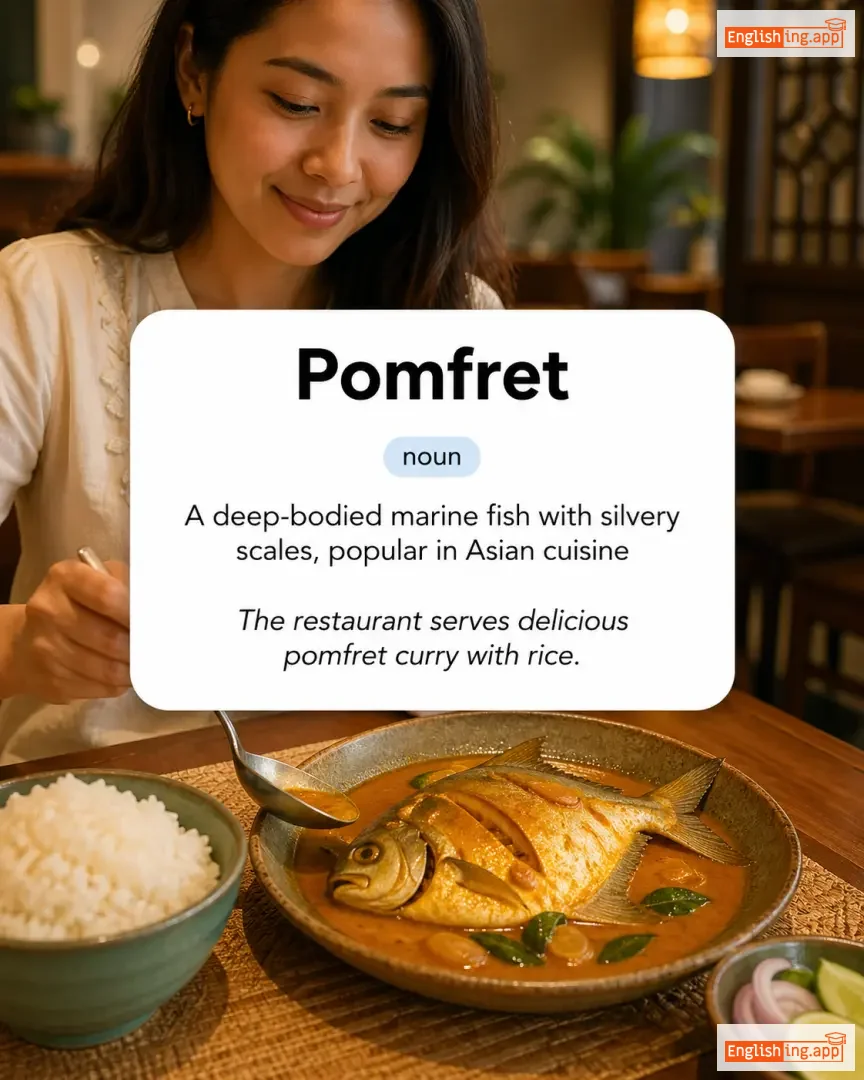
Pomfret definition card — visual illustration of the meaning
noun C2
/ˈpɒmfrɪt/
পমফ্রেট মাছ (pomfret mach)

A deep-bodied marine fish with silvery scales, popular in Asian cuisine

"The restaurant serves delicious pomfret curry with rice."

"রেস্তোরাঁটি ভাতের সাথে সুস্বাদু পমফ্রেট তরকারি পরিবেশন করে।" (restorantii bhater sathe shuswadu pomfret torkari poribeshon kore)
noun C2
/ˈpɒm.əl/
হাতল বা দণ্ডের গুল্ম অংশ (hatol ba dond-er gulmo ongsho)

the rounded knob on the handle of a sword or saddle

"He gripped the sword firmly by the pommel."

"তিনি পমেল ধরে তলোয়ারটি দৃঢ়ভাবে ধরেছিলেন।" (Tini pommel dhore tolowar-ti drirvabhabe dhorechilen.)
noun C2
/pɒmˈpɒsəti/
অহংকার, নিজেকে বড় ভাবা (ohongkar, nije ke boro bhaba)

self-important behavior or exaggerated dignity

"His speech was full of pomposity and arrogance."

"তার বক্তৃতা ছিল অহংকার এবং আত্মগরবের পূর্ণ।" (Tar boktrita chhilo ohongkar ebong atmogorber purno.)
adjective C2
/ˈpɒndərəbl/
যা বিবেচনা করা যায়, বিবেচনাযোগ্য (ja bibechan kora jay, bibechanayoggo)

able to be considered or thought about

"The evidence was substantial and ponderable."

"প্রমাণটি যথেষ্ট গুরুত্বপূর্ণ এবং বিবেচনাযোগ্য ছিল।" (Praman ti jothesto goruttopurno ebong bibechanayoggo chhilo.)
noun C2
/ˈpɒntɪf/
পোপ বা উচ্চপদস্থ বিশপ (pop ba uchchopodostho bishop)

the pope or a high-ranking bishop in the Christian church

"The pontiff addressed the nation in a televised speech."

"পোপ টেলিভিশনে জাতিকে ভাষণ দিয়েছেন।" (Pop television-e jatike bhashon diyechhen.)
adjective C2
/pɒnˈtɪfɪkəl/
পোপ বা বিশপ সম্পর্কিত; আত্মমর্যাদাশীল (pop ba bishop somprosrito; atmarjyadashil)

relating to a pope or bishop; pompous or self-important

"His pontifical manner annoyed the other members of the committee."

"তার আত্মমর্যাদাশীল আচরণ কমিটির অন্য সদস্যদের বিরক্ত করেছে।" (Tar atmarjyadashil achoron komitir onno sodosyoder birakto korechhe.)
verb C2
/ˈpɒntɪfɪkeɪt/
অহংকারমূলক বক্তৃতা দেওয়া; পোপের মতো আচরণ করা (ahongkarmulok boktrita deowa; pope-er moto achoron kora)

to speak or act in a pompous or dogmatic way; to officiate as a pontiff

"He pontificated on the importance of education for over an hour."

"তিনি এক ঘন্টা ধরে শিক্ষার গুরুত্ব নিয়ে অহংকারপূর্ণ বক্তৃতা দিয়েছেন।" (Tini ek ghonta dhore shikkhar gurutto niye ahongkarpurno boktrita diyechhen.)
noun C2
/ˈpɔːrfəri/
এক ধরনের আগ্নেয় শিলা (ek dhoroner agneya shila)

A hard igneous rock containing crystals, often used for decorative or building purposes.

"The ancient Romans used porphyry to make columns and statues."

"প্রাচীন রোমানরা স্তম্ভ ও মূর্তি তৈরিতে পর্ফিরি ব্যবহার করত।" (Prachin Romanra stombho o murti toirite porphiri byabohar korto.)
verb C2
/pɔːrˈtɛnd/
অশনি সংকেত দেওয়া (oshoni sonket deowa)

To be a sign or warning that something, especially something bad, is going to happen.

"Dark clouds portend a storm."

"কালো মেঘ ঝড়ের সংকেত দেয়।" (Kalo megh jhorer sonket dey.)
noun C2
/ˈpɔːrtɛnt/
অশনি সংকেত (oshoni sonket)

A sign or warning that something, especially something momentous or calamitous, is likely to happen.

"The sudden drop in stock prices was seen as a portent of economic trouble."

"শেয়ারবাজারে হঠাৎ পতন অর্থনৈতিক সমস্যার অশনি সংকেত হিসেবে দেখা হয়েছিল।" (Sheyarbajare hothat poton orthonitik somossar oshoni sonket hisebe dekha hoyechhilo.)
adjective C2
/pɔːrˈtɛntəs/
অশুভসূচক, ভয়ঙ্কর (oshubhosuchok, voyonkor)

Giving a sign or warning that something, often bad or serious, is going to happen; or overly solemn and pompous.

"His portentous tone made everyone nervous about the news."

"তার অশুভসূচক ভঙ্গি সবাইকে খবর নিয়ে উদ্বিগ্ন করেছিল।" (Tar oshubhosuchok bhongi sobaike khobor niye udbigno korechhilo.)
adjective C2
/ˈpɔːrtli/
মোটা-সোটা (portli)

Having a stout or somewhat fat body, often implying dignity or authority.

"The portly man entered the room with confidence."

"পোর্টলি মানুষটি আত্মবিশ্বাস নিয়ে ঘরে প্রবেশ করলেন।" (Portli manushṭi atmobishwas niye ghore probesh korlen.)
noun C2
/poʊˈzɜːr/
ভণ্ড (pojar)

A person who pretends to be something they are not, often to impress others.

"Many considered him a poseur because he exaggerated his accomplishments."

"অনেকে তাকে ভণ্ড মনে করত কারণ সে তার সাফল্যকে বাড়িয়ে বলত।" (Oneke take bhondo mone korto karon se tar safollo ke barie bolto.)
noun C2
/ˈpɒsi/
দল / বন্ধুবৃত্ত (dol / bondhubritto)

A group of people, often friends or a group organized to support or enforce the law.

"He arrived at the party with his posse of friends."

"সে তার বন্ধুদের দল নিয়ে পার্টিতে এসেছিল।" (Se tar bondhuder dol niye partite esechhilo.)
adjective C2
/ˌpəʊstˈprændɪəl/
ভোজনোত্তর (bhojonottor)

Occurring after a meal.

"He went for a postprandial walk after dinner."

"সে রাতের খাবারের পর ভোজনোত্তর হাঁটতে গিয়েছিল।" (Se rater khabarer por bhojonottor hatte giechhilo.)
noun C2
/ˈpɒtˌbɔɪlə/
সস্তা সাহিত্যকর্ম (sosta sahityokormo)

a book, play, or film produced quickly to make money rather than for artistic value

"The novel was dismissed by critics as a mere potboiler."

"সমালোচকরা উপন্যাসটিকে একটি সস্তা সাহিত্যকর্ম হিসেবে খারিজ করেছিলেন।" (Somalochokra uponyastike ekti sosta sahityokormo hisebe kharij korechilen.)
noun C2
/ˈpoʊtənˌteɪt/
শাসক (shashok)

A monarch or ruler, especially one with absolute power.

"The ancient land was ruled by a powerful potentate."

"প্রাচীন ভূমি একটি শক্তিশালী শাসক দ্বারা শাসিত ছিল।" (Prachin bhumi ekti shoktishali shashok dvara shashito chilo.)
verb C2
/poʊˈtɛnʃiˌeɪt/
ক্ষমতা বৃদ্ধি করা (khomota briddhi kora)

To increase the power, effect, or likelihood of something.

"Caffeine can potentiate the effects of some medicines."

"ক্যাফেইন কিছু ওষুধের প্রভাব বাড়াতে পারে।" (Caffeine kichu oshudher prabhav barate pare.)
noun C2
/ˌpoʊpʊˈriː/
শুকনো ফুলের মিশ্রণ (shukno fuler mishron)

a mixture of dried flowers and spices kept in a bowl to perfume a room; a miscellaneous collection

"The living room was filled with the scent of potpourri."

"লিভিং রুমটি পটপুরির সুগন্ধে ভরে গিয়েছিল।" (Living roomti potpurir sugondhe bhore giyechhilo.)
noun C2
/ˈpoʊltɪs/
গরম ভেষজ পট্টি (gorom veshaj potti)

a soft, moist mass of material applied to the body to relieve soreness and inflammation

"The nurse applied a warm poultice to his injured leg."

"নার্স তার আহত পায়ে একটি গরম পোলটিস লাগাল।" (Nars tar ahoto paye ekti gorom poultice lagalo.)
noun C2
/ˈpaʊ.waʊ/
আলোচনা সভা (alochona sobha)

an informal meeting or conference to discuss something

"The team held a quick powwow before the presentation."

"টিমটি উপস্থাপনার আগে একটি দ্রুত আলোচনা সভা করেছিল।" (Timti uposthapanar age ekti druto alochona sobha korechilo.)
verb C2
/preɪt/
অর্থহীনভাবে বকবক করা (orthhinbhabe bokbok kora)

to talk foolishly or at tedious length about something

"He would prate endlessly about his minor achievements."

"সে তার ছোট অর্জনগুলো নিয়ে অনবরত বকবক করত।" (Se tar choto orjon gulo niye onoboroto bokbok korto.)
verb C2
/ˈprætəl/
অর্থহীনভাবে গল্পগুজব করা (orthhinbhabe golpogujob kora)

to talk at length in a foolish or inconsequential way

"The children would prattle on about their games."

"শিশুরা তাদের খেলার কথা নিয়ে বকবক করত।" (Shishura tader khela kotha niye bokbok korto.)
adjective C2
/ˌprɛsɪˈdɛnʃəl/
দৃষ্টান্তমূলক (drishtantamulok)

Relating to, or serving as, a precedent; having authority as an example.

"The court’s decision has precedential value."

"আদালতের সিদ্ধান্তের দৃষ্টান্তমূলক মূল্য রয়েছে।" (Adaloter siddhantor drishtantamulok mullo royeche.)
noun C2
/ˈpriːsɛpt/
নীতিবাক্য (nitibakko)

A general rule intended to regulate behavior or thought.

"Honesty is a fundamental precept in all religions."

"সততা সব ধর্মের একটি মৌলিক নীতিবাক্য।" (Sotota shob dhormer ekti moulik nitibakko.)
noun C2
/prɪˈsɛʃən/
প্রাকচলন (prakcholon)

The slow movement of the axis of a spinning body around another axis, often referring to Earth's rotation.

"Astronomers study the precession of the equinoxes."

"জ্যোতির্বিজ্ঞানীরা বিষুবের প্রাকচলন অধ্যয়ন করেন।" (Jyotirbigganira bishuber prakcholon oddhoyon koren.)
noun C2
/ˌprɛsiˈɒsɪti/
অতিরিক্ত আড়ম্বর (otirikto arombhor)

Excessive refinement or affected elegance in language, style, or behavior.

"The author's preciosity made the novel difficult to read for some audiences."

"লেখকের অতিরিক্ত আড়ম্বর উপন্যাসটি কিছু পাঠকের জন্য পড়া কঠিন করে তুলেছিল।" (lekhoker otirikto arombhor uponnastoti kichu pathoker jonno pora kothin kore tulchilo.)
noun/adjective C2
/prɪˈsɪpɪtənt/
অবক্ষেপক পদার্থ / হঠকারী (obokepok podartho / hotkori)

As a noun: a substance that causes a substance to be deposited from a solution; as an adjective: acting hastily or impulsively.

"The chemist added a precipitant to the solution to observe the reaction."

"রাসায়নিক পদার্থবিদ দ্রবণে একটি অবক্ষেপক যোগ করলেন প্রতিক্রিয়া পর্যবেক্ষণের জন্য।" (rashayonik podarthobid drobone ekti obokepok jog korlen protikria porjobekkhoner jonno.)
verb C2
/priːˈdɛstɪn/
পূর্বনির্ধারিত করা (purbonirdharito kora)

to determine or decide something in advance, often regarded as being fixed by fate or divine will

"They believed their paths were predestined by fate."

"তারা বিশ্বাস করেছিল তাদের পথ ভাগ্যের দ্বারা পূর্বনির্ধারিত ছিল।" (Tara bishwas korechilo tader poth bhaggoyer dvara purbonirdharito chhilo.)
noun C2
/ˌpriːdɪˈlɛkʃən/
পছন্দ (pochhondo)

A strong liking or preference for something.

"She has a predilection for classical music."

"তার ক্লাসিকাল সংগীতের প্রতি বিশেষ পছন্দ রয়েছে।" (Tar classical songiter proti bishesh pochhondo royeche.)
noun C2
/priːˈɛmɪnəns/
অতুলনীয় শ্রেষ্ঠত্ব (otuloniyo shreshthotto)

The fact of surpassing all others; superiority.

"The university has gained preeminence in medical research."

"বিশ্ববিদ্যালয় চিকিৎসা গবেষণায় অতুলনীয় শ্রেষ্ঠত্ব অর্জন করেছে।" (Bishwobidyaloy chikitsa gobeshonay otuloniyo shreshthotto orjon koreche.)
noun C2
/priˈɛmpʃən/
অগ্রাধিকার অধিকার (agradhikar odhikar)

The act of taking action before someone else; the right to purchase or act before others.

"The company exercised preemption to acquire the land before competitors."

"কোম্পানি প্রতিযোগীদের আগে জমি অধিগ্রহণ করতে অগ্রাধিকার অধিকার ব্যবহার করেছে।" (Company protijogider age jomi odhigrohon korte agradhikar odhikar byabohar koreche.)
verb C2
/ˌpriːɪnˈɡeɪdʒ/
আগে থেকে নিয়োগ করা (age theke niyog kora)

To contract or engage beforehand; to arrange in advance.

"The workers were preengaged before the project officially started."

"প্রকল্প শুরু হওয়ার আগে কর্মীদের আগে থেকে নিয়োগ করা হয়েছিল।" (Prokolpo shuru howar age kormider age theke niyog kora hoyechhilo.)