Vocabularies

English Vocabulary Dictionary | Word Meanings, Definitions & Examples

noun C2
/ˈtaɪtwɒd/
कंजूस (kanjoos)

a person who is unwilling to spend money; a miser

"Everyone calls him a tightwad because he never buys gifts."

"सभी उसे कंजूस कहते हैं क्योंकि वह कभी तोहफे नहीं खरीदता।" (Sabhi use kanjoos kehte hain kyunki vah kabhi toffe nahi khareedta.)
tillage definition card — visual illustration of the meaning
noun C2
ˈtɪl.ɪdʒ
भूमि की जुताई (bhumi ki jutaai)

The preparation of land for growing crops.

"Excessive tillage can lead to soil erosion."

"अत्यधिक जुताई मिट्टी के कटाव का कारण बन सकती है।" (Atyadhik jutaai mitti ke katav ka kaaran ban sakti hai.)
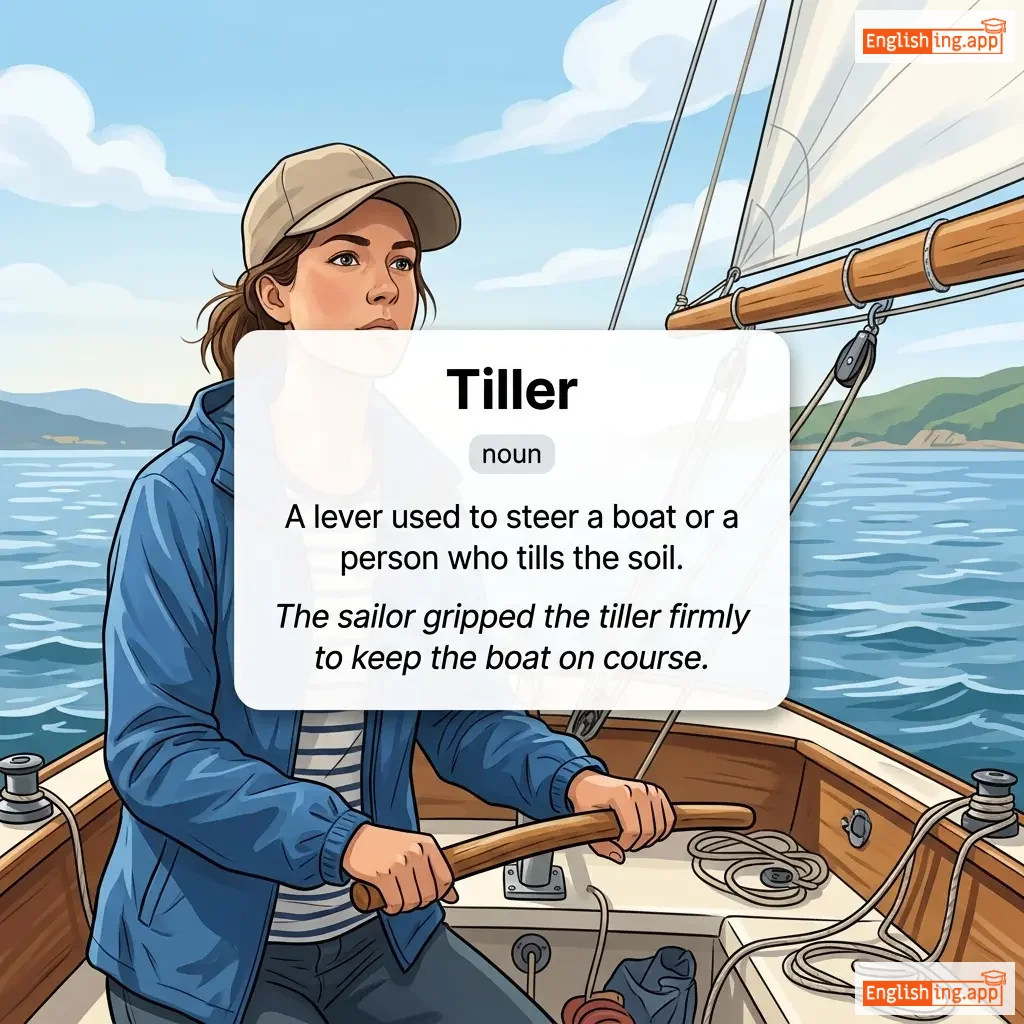
Tiller definition card — visual illustration of the meaning
noun C2
/ˈtɪlər/
चालक या नाव का स्टीयरिंग यंत्र (chalok ya naav ka steering yantr)

A lever used to steer a boat or a person who tills the soil.

"The sailor gripped the tiller firmly to keep the boat on course."

"नाविक ने नाव को सही दिशा में बनाए रखने के लिए टिलर को मजबूती से पकड़ा।" (Navik ne naav ko sahi disha mein banaye rakhne ke liye tiller ko majbooti se pakda.)
noun C2
/tɪlθ/
मिट्टी की स्थिति (फसल उगाने के लिए उपयुक्तता) (mitti ki sthiti (fasal ugane ke liye upyuktata))

The physical condition of soil in relation to its suitability for planting crops.

"The farmer checked the soil's tilth before planting the seeds."

"किसान ने बीज लगाने से पहले मिट्टी की टिल्थ की जाँच की।" (Kisan ne beej lagane se pehle mitti ki tilth ki jaanch ki.)
noun C2
/ˈtæmbər/ or /ˈtɪmbər/
ध्वनि का स्वर या गुणवत्ता (dhvani ka swar ya gunwatta)

The character or quality of a musical sound or voice as distinct from its pitch and intensity.

"Her voice had a warm timbre that soothed the audience."

"उसकी आवाज़ में एक गर्म टिम्ब्रे था जो श्रोताओं को शांति देता था।" (Uski awaaz mein ek garm timbre tha jo shrotaon ko shanti deta tha.)
adjective C2
/ˈtaɪmwɔːrn/
पुराना और उपयोग किया हुआ (purana aur upyog kiya hua)

Worn or impaired by age; old and used many times.

"The timeworn house carried a sense of history and nostalgia."

"समय के द्वारा घिसी हुई घर में इतिहास और संजीवनी का अहसास था।" (Samay ke dwara ghisi hui ghar mein itihas aur sanjeevani ka ahsas tha.)
adjective C2
/ˈtɪmərəs/
डरी हुआ (dari hua)

showing or suffering from nervousness, fear, or lack of confidence

"The timorous student hesitated to ask the teacher a question."

"डरी हुआ छात्र ने शिक्षक से सवाल पूछने में संकोच किया।" (dari hua chatra ne shikshak se sawal poochne mein sankoch kiya.)
noun C2
/ˈtɪŋktʃər/
एक हल्की छाप, एक दवा जो शराब में घोलकर बनाई जाती है (ek halki chaap, ek dawa jo sharab mein gholkar banayi jaati hai)

a slight trace of something; a medicine made by dissolving a drug in alcohol

"There was a tincture of sadness in her smile."

"उसकी मुस्कान में दुख का एक हल्का सा हिस्सा था।" (uski muskaan mein dukh ka ek halka sa hissa tha.)
verb C2
/ˈtɪpəl/
शराब पीना (sharab peena)

to drink alcohol, especially regularly or in small amounts

"He likes to tipple at the local pub after work."

"वह काम के बाद स्थानीय पब में शराब पीने का आनंद लेता है।" (Wah kaam ke baad sthaniya pub mein sharab peene ka anand leta hai.)
noun C2
/taɪð/
दशमांश (dashmangsho)

A tenth part of one’s income or produce, often given as a religious offering.

"He gave a tithe of his earnings to the church."

"उसने अपनी आय का दसवां हिस्सा चर्च को दान किया।" (Usne apni aay ka dasva hissa church ko daan kiya.)
verb C2
/ˈtɪtəleɪt/
उत्तेजित करना (uttejit karna)

To excite or amuse, especially in a slightly sexual or playful way.

"The comedian's jokes titillated the audience."

"कॉमेडियन के जोक्स ने दर्शकों को उत्तेजित किया।" (comedian ke jokes ne darshako ko uttejit kiya.)
verb C2
/ˈtɪtər/
खिलखिलाना (khilkhilana)

to laugh in a quiet, nervous, or restrained way

"The students began to titter when the projector froze."

"जब प्रक्षिप्तक रुक गया तो छात्र खिलखिलाने लगे।" (jab prakshiptak ruk gaya to chatra khilkhilane lage.)
adjective C2
/ˈtɪtjələr/
नामी (naami)

holding a title or position in name only without real power; relating to the title of a work

"She is the titular head of the committee, but decisions are made by the coordinator."

"वह समिति की नामी प्रमुख है, लेकिन निर्णय समन्वयक द्वारा लिए जाते हैं।" (vah samiti ki naami pramukh hai, lekin nirnay samnvayak dwara liye jaate hain.)
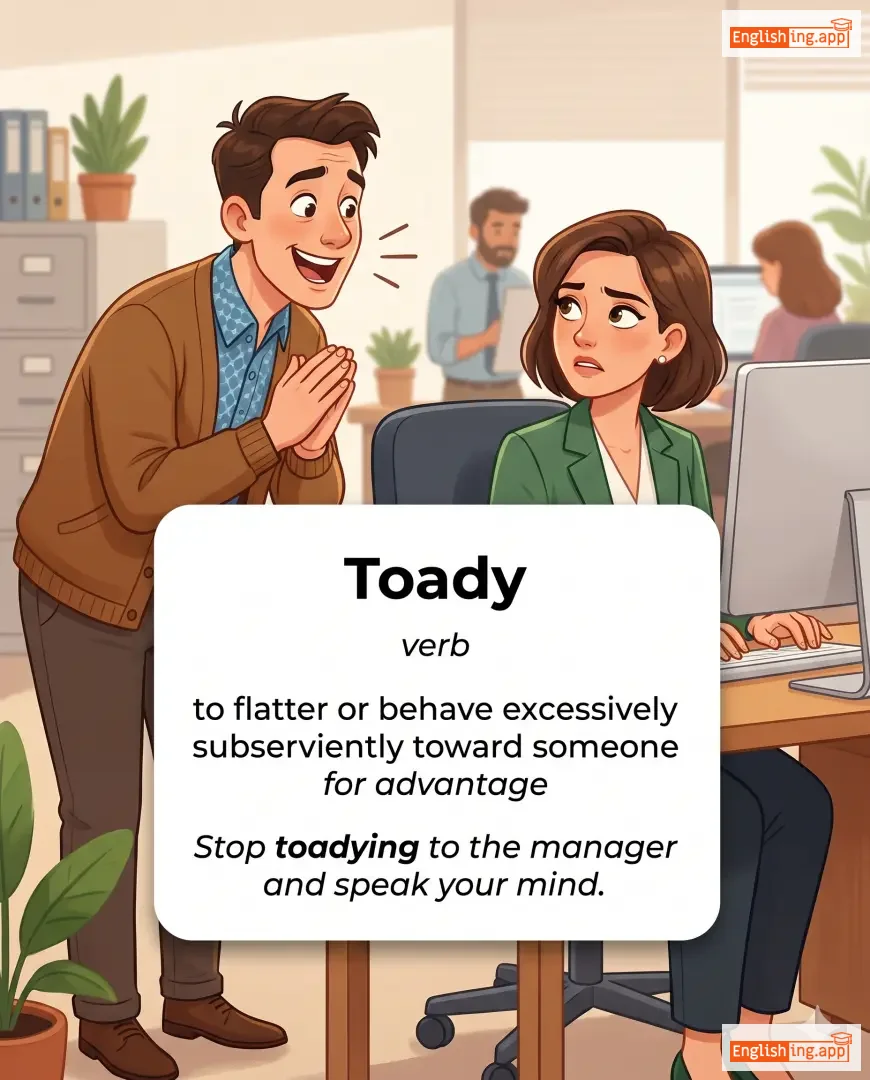
Toady definition card — visual illustration of the meaning
verb C2
/ˈtoʊdi/
चापलूसी करना (chaplusi karna)

to flatter or behave excessively subserviently toward someone for advantage

"Stop toadying to the manager and speak your mind."

"मैनेजर से चापलूसी करना बंद करो और अपनी बात कहो।" (manager se chaplusi karna band karo aur apni baat kaho.)
noun C2
/ˈtɒksɪn/
सतर्क घंटी (satark ghanti)

an alarm bell or signal; a warning that something bad is about to happen

"The data breach sounded a tocsin for stricter security."

"डेटा लीक ने सख्त सुरक्षा के लिए एक सतर्क घंटी बजाई।" (data leek ne sakht suraksha ke liye ek satark ghanti bajai.)
adjective C2
/ˈtɔɪl.səm/
कठिन (kathin)

Involving hard or exhausting work; laborious.

"The workers had a toilsome day in the hot sun."

"कामकाजी लोगों को गर्म सूरज में कठिन दिन बिताना पड़ा।" (Kaamkaji logon ko garm sooraj mein kathin din bitana pada.)
adjective C2
/tɒnˈsɔːriəl/
नापित से संबंधित (napit se sambandhit)

relating to barbers or hairdressing

"The town's new barber offered a wide range of tonsorial services."

"शहर के नए नापित ने टॉन्सोरियल सेवाओं की एक विस्तृत श्रृंखला प्रदान की।" (Sheher ke naye napit ne tonsorial sevaon ki ek vistaarit shrinkhla pradan ki.)
noun C2
/ˈtɒnʃər/
चोटी मूंडना (chhoti moondna)

the practice of shaving or cutting the hair on the scalp, especially in a religious context

"The monk received his tonsure as part of his religious initiation."

"भिक्षु ने अपनी धार्मिक दीक्षा के हिस्से के रूप में अपनी चोटी मूंडवाई।" (Bhikshu ne apni dharmik deeksha ke hisse ke roop mein apni chhoti moondwai.)
adjective C2
/ˈtɔːrpɪd/
सुस्त (torpid)

Mentally or physically inactive; sluggish or lethargic.

"After the long hike, he felt torpid and unmotivated."

"लंबी सैर के बाद, वह सुस्त और प्रेरणाहीन महसूस कर रहा था।" (Lambi sair ke baad, wah sust aur preranahin mehsoos kar raha tha.)
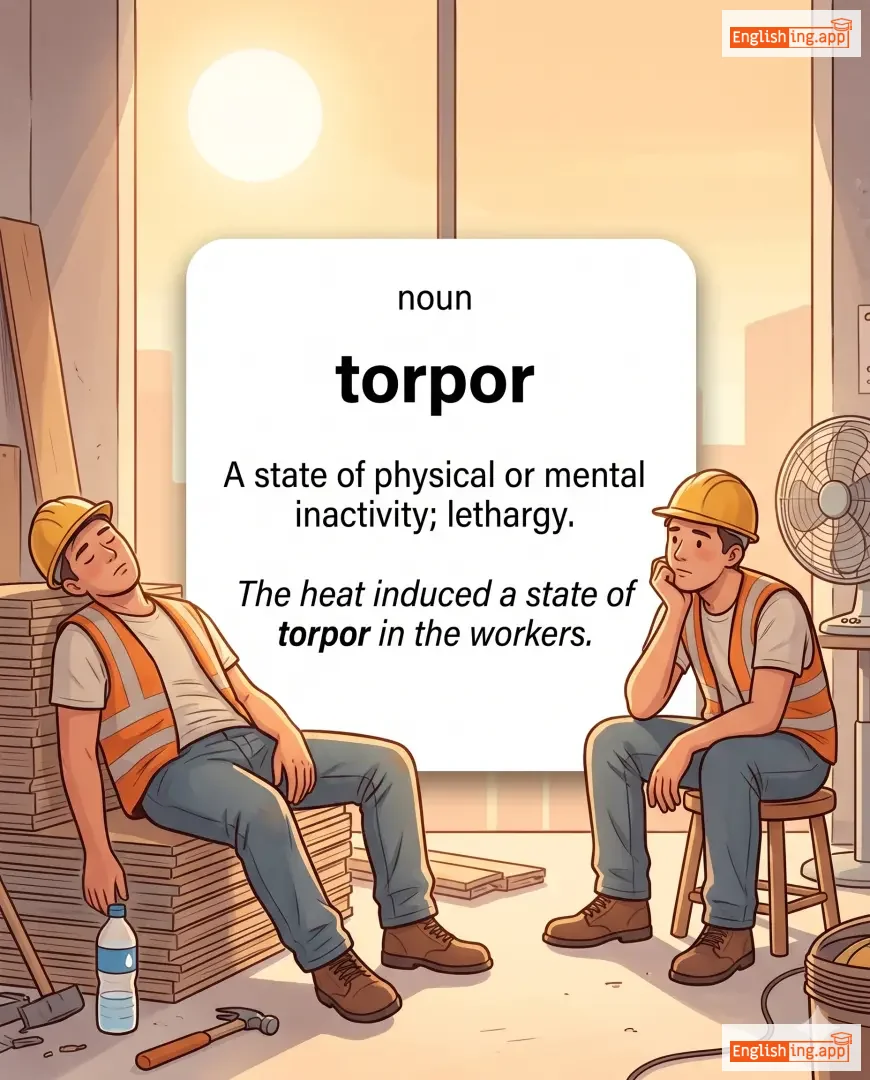
torpor definition card — visual illustration of the meaning
noun C2
/ˈtɔːrpər/
निःसक्रियता (torpor)

A state of physical or mental inactivity; lethargy.

"The heat induced a state of torpor in the workers."

"गर्मी ने श्रमिकों में निःसक्रियता की स्थिति उत्पन्न कर दी थी।" (Garmi ne shramikon mein nishkriyata ki stithi utpann kar di thi.)
adjective C2
/ˈtɔːrʃəs/
गलत कृत्य (galat kritya)

Relating to or involving a wrongful act leading to legal liability.

"The company was found guilty of tortious interference with contracts."

"कंपनी को अनुबंधों में गलत हस्तक्षेप करने के लिए दोषी पाया गया था।" (Company ko anubandhon mein galat hastakshep karne ke liye doshi paya gaya tha.)
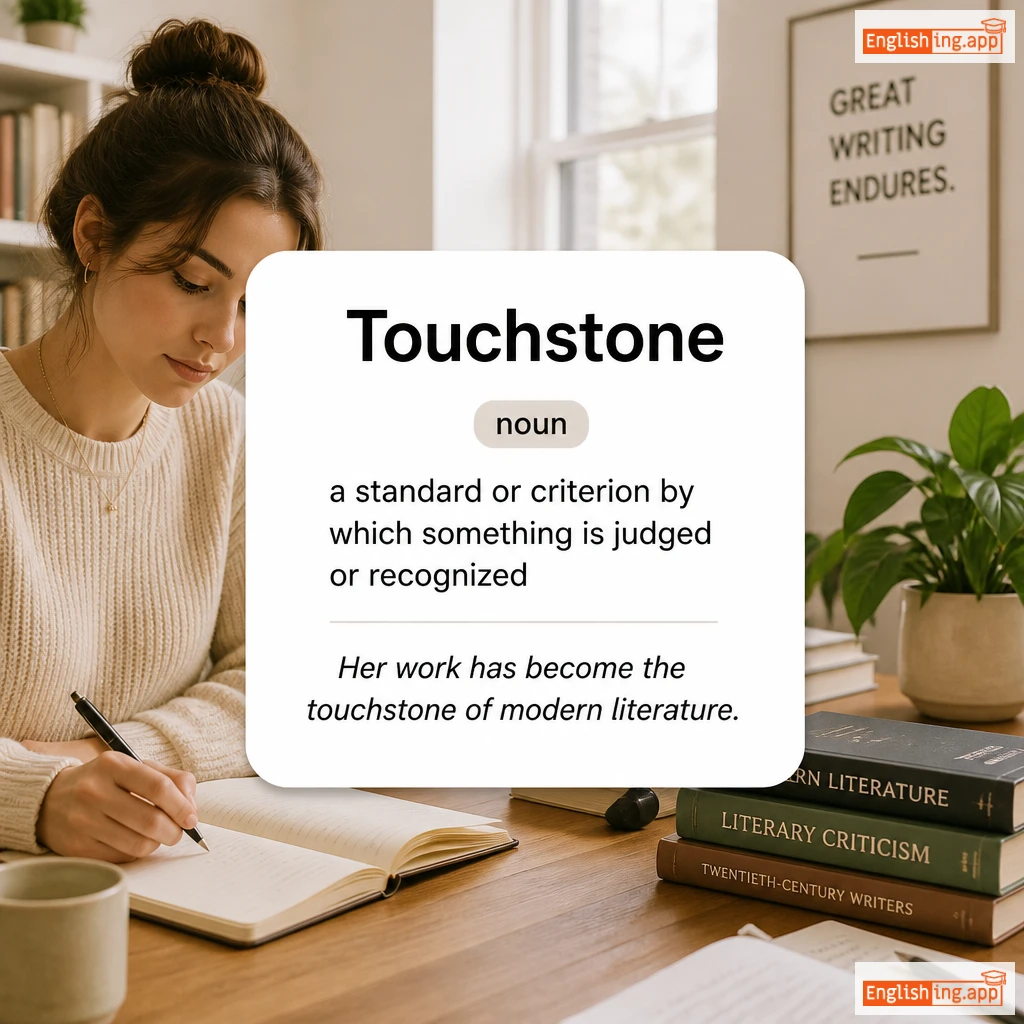
Touchstone definition card — visual illustration of the meaning
noun C2
/ˈtʌtʃstoʊn/
मानक (maanak)

a standard or criterion by which something is judged or recognized

"Her work has become the touchstone of modern literature."

"उसका काम आधुनिक साहित्य का टचस्टोन बन गया है।" (Uska kaam aadhunik sahitye ka touchstone ban gaya hai.)
noun C2
/ˈtʊrnɪkɪt/
रक्तस्राव रोधी पट्टी (raktasraav rodhi patti)

a device used to stop bleeding by compressing blood vessels

"The medic applied a tourniquet to stop the bleeding."

"मेडिकल ने रक्तस्राव रोकने के लिए टूर्निकेट लगाया।" (Medical ne raktasraav rokne ke liye tourniquet lagaya.)
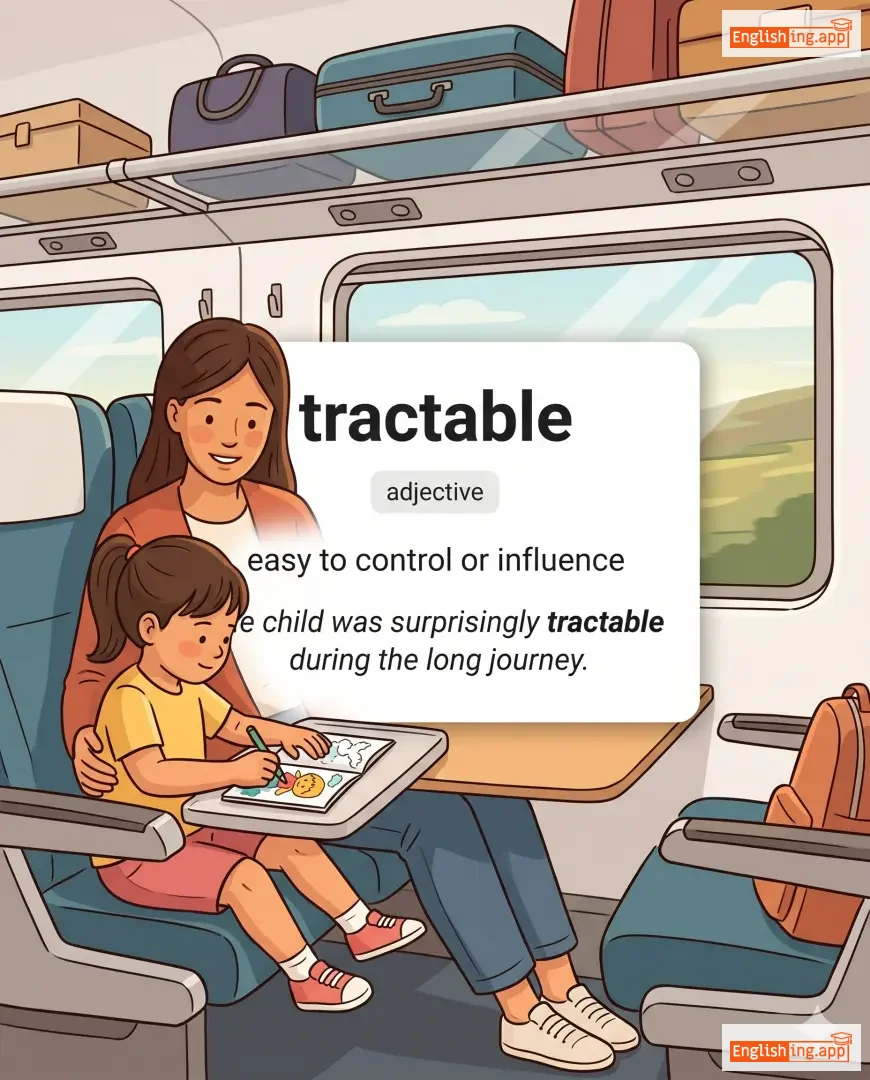
tractable definition card — visual illustration of the meaning
adjective C2
/ˈtræktəbəl/
आसान से नियंत्रित या प्रभावित करने योग्य (asaan se niyantrit ya prabhavit karne yogya)

easy to control or influence

"The child was surprisingly tractable during the long journey."

"बच्चा लंबी यात्रा के दौरान आश्चर्यजनक रूप से नियंत्रित था।" (Baccha lambi yatra ke dauran aascharyajanak roop se niyantrit tha.)
verb C2
/trəˈdjuːs/
बदनाम करना (badnaam karna)

To speak badly of someone or tell lies to damage their reputation.

"He was furious when he found out that his rivals had traduced him."

"वह गुस्से में था जब उसने पाया कि उसके प्रतिद्वंद्वियों ने उसे बदनाम किया था।" (Wah gusse mein tha jab usne paaya ki uske pratidwandviyon ne use badnaam kiya tha.)
noun, verb C2
/ˈtræməl/
बाधा (baadha)

A restriction or impediment to freedom of action; to restrict.

"The strict rules trammel the creativity of the students."

"कठोर नियम छात्रों की रचनात्मकता को बाधित करते हैं।" (Kathor niyam chhatron ki rachnatmakta ko baadhit karte hain.)
adjective C2
/trænzˈæl.paɪn/
आल्प्स के पार (alps ke paar)

situated beyond or across the Alps, especially from the viewpoint of Italy

"The Romans referred to France as Transalpine Gaul."

"रोमनों ने फ्रांस को ट्रांज़लपाइन गॉल कहा।" (Romans ne France ko Transalpine Gaul kaha.)
noun C2
/ˌtrænsfəˈriː/
प्राप्तकर्ता (prahptakarta)

A person to whom a right, property, or responsibility is transferred.

"The transferee must sign the contract before taking ownership."

"प्राप्तकर्ता को स्वामित्व प्राप्त करने से पहले अनुबंध पर हस्ताक्षर करना होगा।" (Prahptakarta ko swamitva prapt karne se pehle anubandh par hastakshar karna hoga.)
verb C2
/trænsˈfɪɡjʊər/
रूपांतरित करना (roopantarit karna)

To transform the outward appearance or form, often in a way that elevates or glorifies.

"The artist managed to transfigure simple clay into a beautiful sculpture."

"कलाकार ने साधारण मिट्टी को एक सुंदर मूर्ति में रूपांतरित कर दिया।" (Kala ke kalakar ne saadharan mitti ko ek sundar murti mein roopantarit kar diya.)
verb C2
/trænsˈfjuːz/
रक्त या अन्य तरल को नस में स्थानांतरित करना (rakt ya anya taral ko nas mein sthantarit karna)

to transfer blood or another fluid into a vein or body part; to instill a quality or idea into someone or something

"The doctor had to transfuse blood into the patient after the surgery."

"सर्जरी के बाद डॉक्टर को मरीज में रक्त ट्रांसफ्यूज़ करना पड़ा।" (Sarjari ke baad doktor ko mareez mein rakt transfuse karna pada.)
adjective C2
/trænsˈfjuːzəbl̩/
संवहन योग्य (sanvahan yogya)

capable of being transfused, especially referring to blood or fluids

"Only transfusible blood types are used in the hospital."

"केवल संवहन योग्य रक्त प्रकारों का अस्पताल में उपयोग किया जाता है।" (Keval sanvahan yogya rakt prakarom ka aspataal mein upyog kiya jaata hai.)
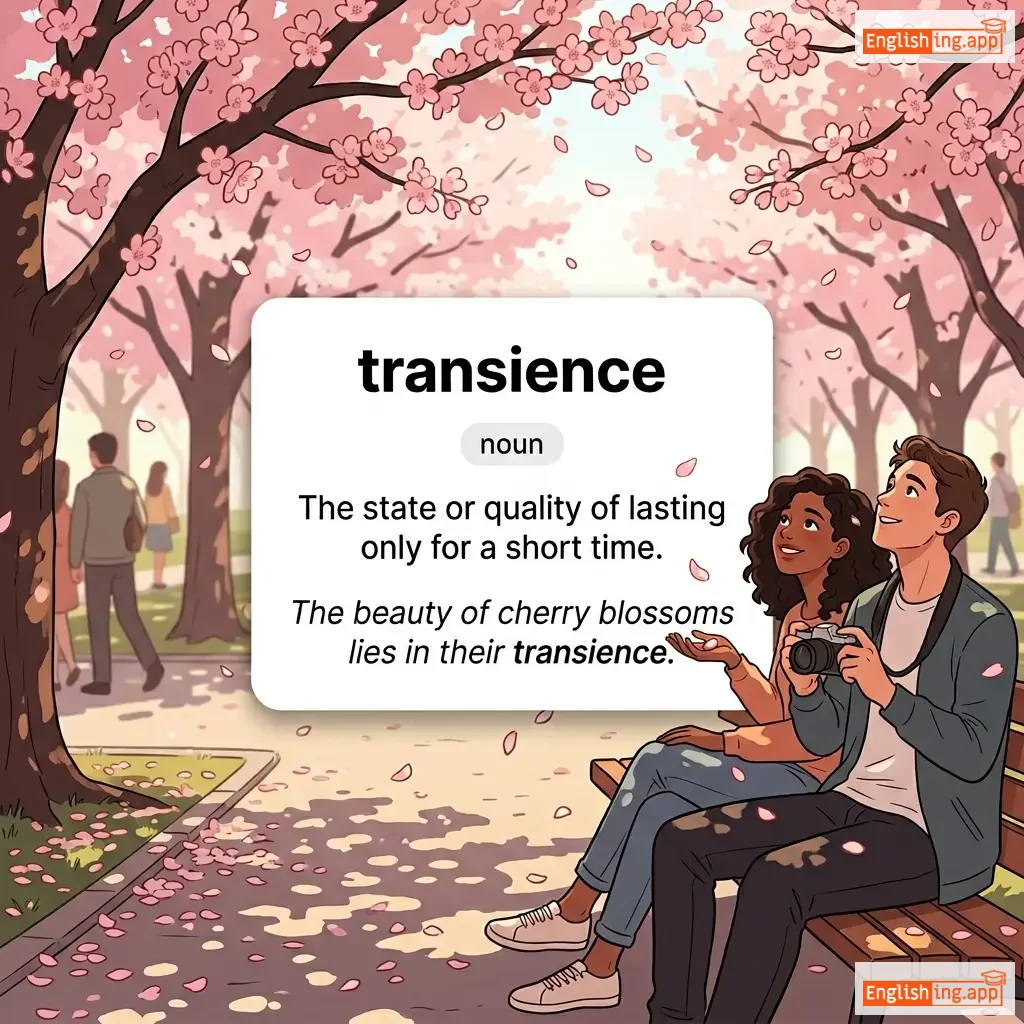
transience definition card — visual illustration of the meaning
noun C2
/ˈtrænziəns/
क्षणिकता (kshanikta)

The state or quality of lasting only for a short time.

"The beauty of cherry blossoms lies in their transience."

"चेरी के फूलों की सुंदरता उनके क्षणिकता में निहित है।" (cherry ke phoolon ki sundarta unke kshanikta mein nihit hai.)
noun C2
/trænsˈluːsəns/
आधा पारदर्शिता (aadha paardarshita)

the quality of allowing light to pass through but not detailed shapes

"The translucence of the curtains filled the room with soft light."

"परदे की आधी पारदर्शिता कमरे को मुलायम रोशनी से भर देती है।" (Parde ki aadha paardarshita kamre ko mulayam roshni se bhar deti hai.)
adjective C2
/trænzˈmɪsəbl/
संक्रामक (sankramak)

able to be passed or spread from one person or thing to another

"COVID-19 is a highly transmissible disease."

"COVID-19 एक अत्यधिक संक्रामक रोग है।" (COVID-19 ek atyadhik sankramak rog hai.)
verb C2
/trænzˈmjuːt/
रूपांतरित करना (roopantarit karna)

to change in form, nature, or substance

"Alchemy aimed to transmute lead into gold."

"अल्केमी ने सीसे को सोने में बदलने की कोशिश की।" (Alkemi ne seese ko sone mein badalne ki koshish ki.)
verb C2
/trænˈspoʊz/
स्थानांतरित करना (sthanantarit karna)

to change the order or position of something

"The editor transposed two paragraphs in the article."

"संपादक ने लेख में दो पैरेग्राफ़ स्थानांतरित किए।" (Sampadak ne lekh mein do paragraph sthanantrit kiye.)
noun C2
/ˌtrænspəˈzɪʃən/
स्थानांतरण (sthanantaran)

the act of changing the order or position of something

"The transposition of digits caused an error in the calculation."

"संख्याओं के स्थानांतरण से गणना में गलती हो गई।" (Sankhyayon ke sthanantaran se ganana mein galti ho gayi.)
travail definition card — visual illustration of the meaning
noun C2
/trəˈveɪl/
कठिन परिश्रम (kathin parishram)

Painful or laborious effort; suffering or hardship.

"After years of travail, she finally completed her degree."

"सालों की कठिनाई के बाद, उसने आखिरकार अपनी डिग्री पूरी की।" (Saalo ki kathinaai ke baad, usne aakhirkaar apni degree poori ki.)
adjective C2
/ˈtriːkli/
अत्यधिक मीठा या भावुक, जैसे ट्रैकल। (atyadhik meetha ya bhavuk, jaise trackal.)

Excessively sweet or sentimental, like treacle.

"The movie was too treacly for my taste."

"फिल्म मेरे स्वाद के लिए बहुत ज्यादा ट्रैकली थी।" (film mere swaad ke liye bahut zyada trackal thi.)
adjective C2
/ˈtriːzənəbl/
राजद्रोहपूर्ण (raajdrohopurn)

Relating to or involving the crime of treason.

"The general was accused of treasonable conduct."

"जनरल पर ट्रेज़नबल आचरण का आरोप था।" (general par trezonbal aacharan ka aarop tha.)
adverb C2
/ˈtrɛbli/
तीन गुना (trebli)

in a triple manner or to a threefold degree

"The sound was trebly distorted through the old speakers."

"आवाज़ पुराने स्पीकर्स के जरिए तीन गुना विकृत हो गई थी." (di sound vaaz trebali distorted thru di old speekars)
tremulous definition card — visual illustration of the meaning
adjective C2
/ˈtrɛmjələs/
काँपता हुआ (kaampata hua)

shaking or quivering slightly, often from nervousness or weakness

"Her voice was tremulous as she gave her speech."

"उसका आवाज़ कांपते हुए था जब उसने अपना भाषण दिया।" (Uska awaaz kaampte hue tha jab usne apna bhashan diya.)
adjective C2
/ˈtrɛntʃənt/
तीव्र (teevr)

expressed strongly, effectively, and clearly; sharp or cutting in style or expression

"Her trenchant criticism of the policy left no room for misunderstanding."

"उसकी तीव्र आलोचना ने नीतियों को लेकर कोई गलतफहमी का मौका नहीं छोड़ा।" (Uski teevr alochana ne neetiyon ko lekar koi galatfehmi ka moka nahin chhoda.)
noun C2
/ˈtrɛntʃərmən/
खाद्य प्रेमी (khadya premi)

a person who eats in a hearty or robust manner; a big eater

"The trencherman devoured the feast with great enthusiasm."

"खाद्य प्रेमी ने बड़ी उत्सााह के साथ दावत को निगल लिया।" (Khadya premi ne badi utsaah ke saath daawat ko nigal liya.)
noun C2
/ˈtrɛsəl/
ट्रेसल (tresel)

a frame or support consisting of a horizontal beam held up by two pairs of sloping legs, used especially for supporting a bridge or table

"The workers built a wooden trestle to support the temporary bridge."

"कर्मचारियों ने अस्थायी पुल को समर्थन देने के लिए एक लकड़ी का ट्रेसल बनाया।" (Karmachariyon ne asthayi pul ko samarthan dene ke liye ek lakdi ka tresel banaya.)
noun C2
/ˈtrɪbjuːn/
जनता का प्रतिनिधि (tribyoon)

a person or platform representing the people; historically, a Roman official elected to protect citizens' rights

"He was seen as a tribune of the common people."

"उसे आम जनता का प्रतिनिधि माना गया था." (use aam janta ka pratinidhi maana gaya tha.)
noun/adjective C2
/ˈtraɪkʌlər/
तिरंगा ध्वज (tiranga dhvaj)

A flag with three colors; consisting of three colors.

"The French tricolor is one of the most famous national flags in the world."

"फ्रांसीसी तिरंगा ध्वज दुनिया के सबसे प्रसिद्ध राष्ट्रीय ध्वजों में से एक है।" (Phraansisee tiranga dhvaj duniya ke sabse prasiddh rashtriya dhvajon mein se ek hai.)
noun C2
/ˈtraɪdənt/
त्रिशूल (trishul)

A three-pronged spear, often associated with Neptune or Poseidon.

"The statue of Poseidon holds a mighty trident."

"पोसीडॉन का प्रतिमा एक शक्तिशाली त्रिशूल पकड़े हुए है।" (Poseidon ka pratima ek shaktishali trishul pakde hue hai.)
adjective C2
/traɪˈɛniəl/
त्रैवार्षिक (traivarsik)

Occurring once every three years.

"The art festival is a triennial event in the city."

"कला महोत्सव शहर में एक त्रैवार्षिक कार्यक्रम है।" (Kala mahotsav shahar mein ek traivarsik karyakram hai.)
noun C2
/ˈtrɪmnəs/
साफ-सफाई (saaf-safaai)

the quality of being neat, orderly, or slender and well-proportioned

"Her room’s trimness reflected a habit of putting everything back in its place."

"उसके कमरे की साफ-सफाई इस बात को दर्शाती है कि वह हमेशा चीजों को अपनी जगह पर रखती है।" (Uske kamre ki saaf-safaai is baat ko darshaati hai ki wah hamesha cheezon ko apni jagah par rakhti hai.)