Vocabularies

English Vocabulary Dictionary | Word Meanings, Definitions & Examples

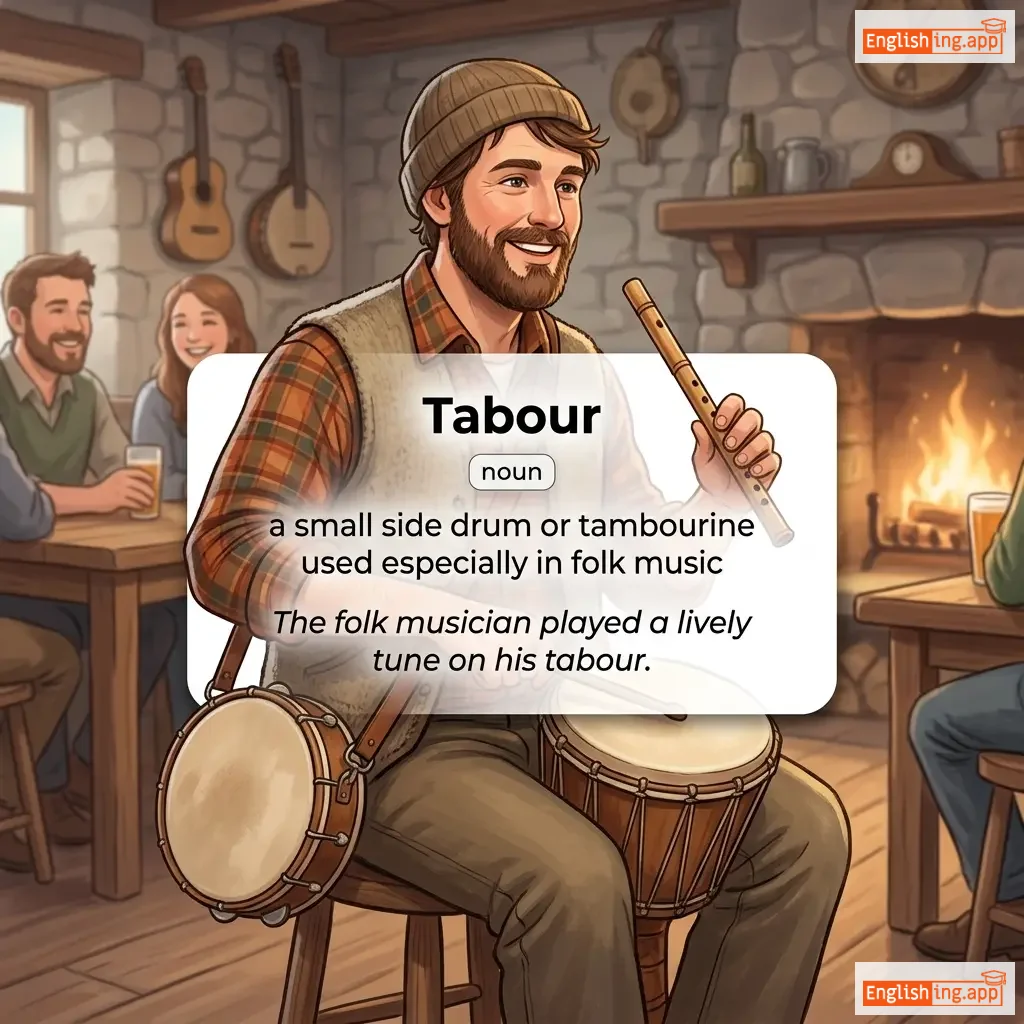
Tabour definition card — visual illustration of the meaning
noun C2
/ˈteɪbər/
барабан (baraban)

a small side drum or tambourine used especially in folk music

"The folk musician played a lively tune on his tabour."

"Народный музыкант играл живую мелодию на своем барабане." (Narodnyy muzykant igral zhivuyu melodiyu na svoem barabane.)
adjective C2
/ˈtæsɪtɜrn/
молчаливый (molchalivyy)

reserved or uncommunicative in speech; saying little

"He was a taciturn man who rarely spoke in meetings."

"Он был молчаливым человеком, который редко говорил на собраниях." (On byl molchalivym chelovekom, kotoryy redko govorit na sobraniyakh.)
talisman definition card — visual illustration of the meaning
noun C2
/ˈtælɪzmən/
талисман (talisman)

An object believed to have magical powers or bring good luck.

"He always carried a small talisman in his pocket for luck."

"Он всегда носил маленький талисман в своем кармане для удачи." (On vsegda nosil malen'kiy talisman v svoem karmane dlya udachi.)
noun C2
/ˈtælən/
коготь (kogot')

A claw, especially one belonging to a bird of prey.

"The eagle gripped the fish with its sharp talons."

"Орел схватил рыбу своими острыми когтями." (Orel skhvatil rybu svoimi ostrymi kogtyami.)
verb C2
/tæmp/
утрамбовывать (utrambovyvat)

to press down tightly by packing

"He tamped the soil around the plant to secure it."

"Он утрамбовал почву вокруг растения, чтобы закрепить её." (On utramboval pochvu vokrug rastenija, chtoby zakrepit ee.)
noun C2
/ˈtændʒənsi/
касание (kasanie)

the condition of touching but not intersecting, especially in geometry

"The circle and the line are in a state of tangency at one point."

"Круг и линия находятся в состоянии касания в одной точке." (Krug i liniya nakhodyatsya v sostoyanii kasaniya v odnoi tochke.)
noun C2
/tɑːrn/
горное озеро (gornoye ozero)

A small mountain lake or pool.

"We camped near a tranquil tarn in the highlands."

"Мы разбили лагерь рядом с тихим горным озером в высокогорье." (My razbili lager' ryadom s tikhim gornym ozerom v vysokogorye.)
verb C2
/ˈtæri/
задерживаться (zaderzhivat'sya)

To delay or linger; to stay longer than intended.

"Do not tarry, or you will miss the train."

"Не задерживайся, иначе опоздаешь на поезд." (Ne zaderzhivaysya, inache opozdaesh' na poezd.)
noun, adjective C2
/ˌtætərdɪˈmeɪliən/
человек в рваной одежде (chelovek v rvanoy odezhde)

A person dressed in ragged clothes; ragged or dilapidated in appearance.

"A tatterdemalion wandered the streets in search of food."

"Тэттердемалион бродил по улицам в поисках еды." (Tetterdemalion brodil po ulitsam v poiskakh yedy.)
adjective C2
/ˌtɔːtəˈlɒdʒɪkəl/
тавтологичный (tavtologichnyy)

expressing something by repeating the same idea in different words; redundant

"Saying 'free gift' is considered tautological."

"Сказать 'бесплатный подарок' считается тавтологией." (Skazat' 'besplatnyy podarok' schitayetsya tavtologiyey.)
tautology definition card — visual illustration of the meaning
noun C2
/tɔːˈtɒlədʒi/
ненужное повторение (nenuzhnoe povtorenie)

the unnecessary repetition of the same idea in different words

"The phrase 'it will happen or it won’t' is a tautology."

"Фраза 'это случится или не случится' — это тавтология." (Fraza 'eto sluchitsya ili ne sluchitsya' — eto tautologiya.)
adjective C2
/ˈtɔːdri/
дешевый и показной, но низкого качества (deshevyy i pokaznoy, no nizkogo kachestva)

cheap and showy but of poor quality

"She wore a tawdry necklace that broke easily."

"Она носила дешевое и показное ожерелье, которое легко сломалось." (Ona nosila deshevoye i pokaznoye ozherelye, kotoroye legko slomalos'.)
adjective C2
/ˈtɔːni/
жёлто-коричневый цвет (zhelto-korichnevyy tsvet)

A warm, sandy or golden-brown color.

"The owl's tawny feathers blended with the tree bark."

"Жёлто-коричневые перья совы сливались с корой дерева." (Zhelto-korichnevye per'ya sovy slivalis' s koroy dereva.)
noun C2
/ˈtæksɪˌdɜːrmi/
таксидермия (taksidermiya)

The art of preparing, stuffing, and mounting the skins of animals for display.

"The museum had a large collection of taxidermy animals."

"В музее была большая коллекция чучел животных." (V muzeye byla bol'shaya kollektsiya chuchel zhivotnykh.)
noun C2
/tækˈsɒnəmɪst/
таксономист (taksonomist)

A scientist who classifies organisms into groups based on their characteristics.

"The taxonomist discovered a new species of insect."

"Таксономист обнаружил новый вид насекомых." (Taksonomist obnaruzhil novyy vid nasekomykh.)
noun C2
/tɛkˈnɒɡrəfi/
технография (tekhnohrafiya)

the descriptive study or writing about the practical arts, technologies, or technical methods of a society

"The anthropologist specialized in technography to understand indigenous tool-making traditions."

"Антрополог специализировался на технографии, чтобы понять традиции создания орудий у коренных народов." (Antropolog spetsializirovalsya na tekhnografii, chtoby ponyat' traditsii sozdaniya orudiy u korennykh narodov.)
noun C2
/tiːˈtoʊtəlɪzəm/
полное воздержание от алкоголя (polnoe vozderzhanie ot alkogolya)

the practice or principle of abstaining completely from alcoholic drinks

"He practiced teetotalism throughout his life."

"Он практиковал титотализм всю свою жизнь." (On praktikovav titotalizm vsyu svoyu zhizn.)
telemetry definition card — visual illustration of the meaning
noun C2
ˈtɛlɪˌmɛtri
телеметрия (telemetriya)

The process of recording and transmitting the readings of an instrument.

"The spacecraft transmitted telemetry data back to Earth."

"Космический аппарат передал данные телеметрии на Землю." (Kosmicheskiy apparat peredal dannye telemetrii na Zemlyu.)
noun C2
/ˌtɛliˈɒlədʒi/
телеология (teleologiya)

the explanation of phenomena by the purpose they serve rather than by cause

"Aristotle is often associated with the concept of teleology in philosophy."

"Аристотель часто ассоциируется с концепцией телеологии в философии." (Aristotel' chasto assotsiirovetsya s kontseptsiey teleologii v filosofii.)
adjective C2
/ˌtɛmɪˈrɛəriəs/
безрассудный (bezrassudnyy)

Reckless or rash; showing a lack of caution.

"It was a temerarious decision to cross the river during the storm."

"Это было безрассудное решение пересечь реку во время шторма." (Eto bylo bezrassudnoe reshenie peresech' reku vo vremya shtorma.)
noun C2
/təˈmɛrɪti/
дерзость (derzost)

Excessive confidence or boldness; audacity.

"He had the temerity to challenge the professor’s argument."

"У него хватило дерзости оспорить аргумент профессора." (U nego khvatilo derzosti osporit' argument professora.)
verb C2
/ˈtɛmpəˌraɪz/
откладывать (otkladyvat)

To delay making a decision or taking action in order to gain time.

"The politician temporized when asked about the controversial issue."

"Политик откладывал, когда его спрашивали о спорном вопросе." (Politik otkladyval, kogda ego sprashivali o spornom voprose.)
adjective C2
/tɛnˈdɛnʃəs/
тенденциозный (tendentsiozny)

Expressing or promoting a particular cause or point of view, often biased.

"The article was criticized for its tendentious tone."

"Статья была раскритикована за ее тенденциозный тон." (Stat'ya byla raskritikovana za yey tendentsiozny ton.)
adjective C2
/ˈtɛnɪbrəs/
мрак (mrak)

dark, shadowy, or obscure

"The cave was damp and tenebrous, filled with eerie sounds."

"Пещера была влажной и тенисто-ужасной, наполненной странными звуками." (Peshchera byla vlazhnoy i tenistoy-uzhasnoy, napolnennoy strannymi zvukami.)
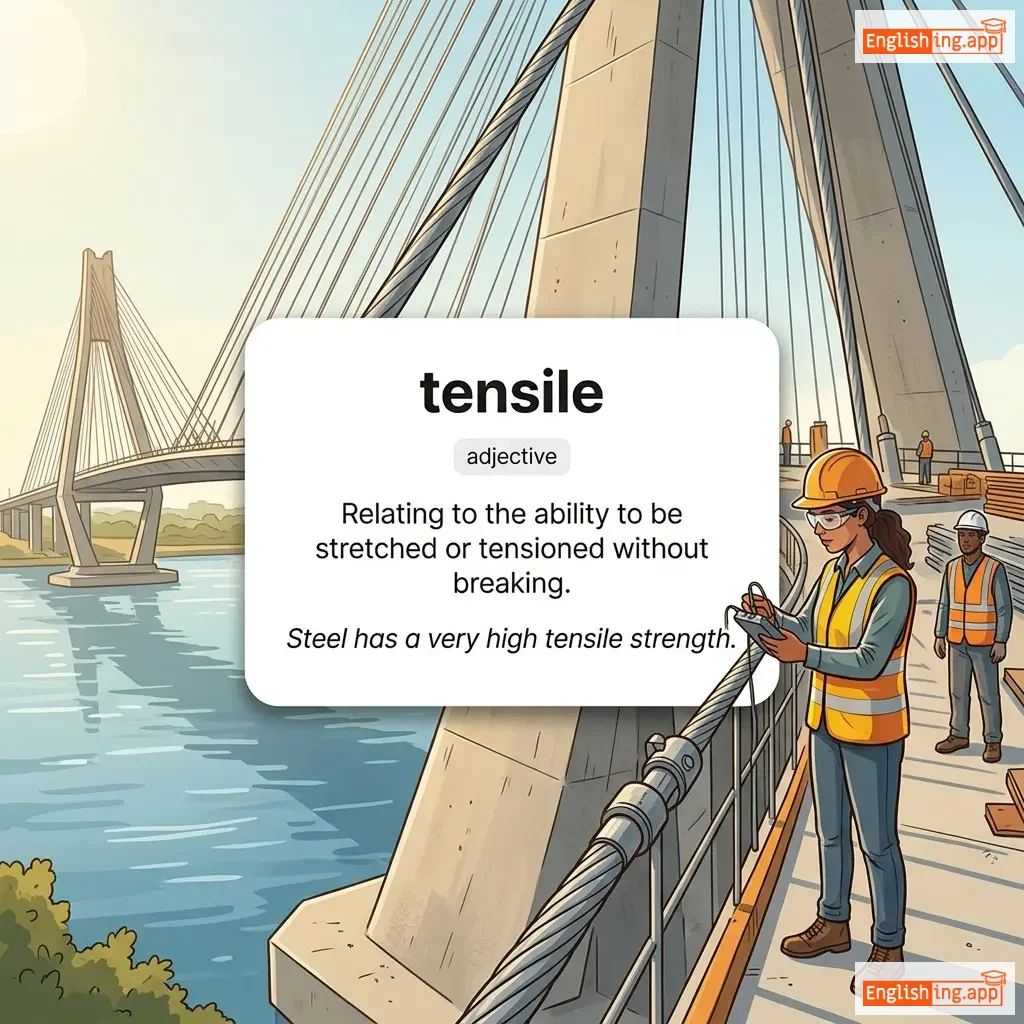
tensile definition card — visual illustration of the meaning
adjective C2
/ˈtɛn.saɪl/
растяжимый (rastjazhimyj)

Relating to the ability to be stretched or tensioned without breaking.

"Steel has a very high tensile strength."

"Сталь имеет очень высокую растяжимую прочность." (Stal' imeet ochen' vysokuyu rastjazhimuyu prochnost'.)
noun C2
/ˌtɜːsənˈtɛnəri/
терценарий (tertsenariy)

The 300th anniversary of an event.

"The city celebrated its tercentenary with a grand festival."

"Город отпраздновал свою терценарий с большим фестивалем." (Gorod otprazdnoval svoiu tertseneriy s bol'shim festivalem.)
noun C2
/ˌtɜːdʒɪvərˈseɪʃən/
увиливание, двойственная позиция (uvilivanie, dvoystvennaya pozitsiya)

Evasion of straightforward action or speech; changing sides or being inconsistent.

"The politician’s tergiversation frustrated his supporters."

"Тергиверсация политика разочаровала его сторонников." (Tergiversatsiya politika razocharovala ego storonnikov.)
noun C2
/ˈtɜːrməɡənt/
деспотичная и сварливая женщина (despotichnaya i svarlivaya zhenshchina)

A harsh-tempered or overbearing woman.

"The character was portrayed as a loud and domineering termagant."

"Персонаж был изображен как громкая и властная термагантка." (Personazh byl izobrazhen kak gromkaya i vlastnaya termagantka.)
noun C2
/ˈterəpɪn/
небольшая пресноводная черепаха (nebol'shaya presnovodnaya cherepakha)

a small freshwater turtle, especially one found in North America

"The terrapin slowly crawled into the pond."

"Тэра́пин медленно пополз в пруд." (Terapin medlenno popolz v prud.)
adjective C2
/ˈtɛsəleɪtɪd/
мозаичный (mozaichnyy)

arranged in a pattern of repeated shapes fitting together without gaps

"The tessellated floor was made of colorful tiles arranged in perfect symmetry."

"Мозаичный пол был покрыт цветными плитками, расположенными в идеальной симметрии." (Mozaichnyy pol byl pokryt tsvetnymi plitkami, raspolozhennymi v ideal'noy simmetrii.)
noun C2
/ˈtɛsteɪtər/
завещатель (zaveshchatel)

a person who has made a will

"The lawyer read the will of the deceased testator."

"Адвокат прочитал завещание умершего завещателя." (Advokat prochital zaveshchanie umershego zaveshchatelya.)
noun C2
/ˈθɔːməˌtɜrdʒɪst/
тауматург (taumaturg)

A worker of miracles or magician.

"The thaumaturgist amazed the audience with his tricks."

"Тауматург удивил публику своими трюками." (Taumaturg udivil publiku svoimi tryukami.)
noun C2
/ˈθiː.ɑːr.ki/
теархия (tearkhiya)

Rule or government by the gods; divine sovereignty.

"In ancient cultures, some societies believed in thearchy where gods directly guided human affairs."

"В древних культурах некоторые общества верили в теархи, где боги непосредственно руководили человеческими делами." (V drevnikh kul'turakh nekotorye obshchestva verili v tearkhi, gde bogi neposredstvenno rukovodili chelovecheskimi delami.)
noun C2
/ˈθiːɪzəm/
теизм (teizm)

Belief in the existence of a god or gods, especially a creator who intervenes in the universe.

"Theism is central to many world religions."

"Теизм является центральным в многих мировых религиях." (Teizm javljaetsja central'nym v mnogikh mirovykh religijakh.)
theocracy definition card — visual illustration of the meaning
noun C2
/θiˈɒkrəsi/
теократия (teokratiya)

A system of government in which priests or religious leaders rule in the name of God or a deity.

"The country was governed as a theocracy where religious leaders had supreme authority."

"Страна управлялась как теократия, где религиозные лидеры имели высшую власть." (Strana upravlyalas' kak teokratiya, gde religioznye lidery imeli vysshuyu vlast'.)
noun C2
/θiˈɒkrəsi/
теократия (teokratiya)

Government or rule by religious leaders or clergy.

"Theocrasy often merges religious authority with political power."

"Теократия часто объединяет религиозную власть с политической мощью." (Teokratiya chasto ob'edinayet religioznuyu vlast' s politicheskoy moshch'yu.)
noun C2
/ˌθiːəˈloʊdʒən/
телеолог (teleolog)

A person who studies or is an expert in theology.

"Theologians often debate complex questions of faith and morality."

"Теологи часто спорят о сложных вопросах веры и морали." (Teologi chasto sporyat o slozhnykh voprosakh very i morali.)
noun C2
/θiˈɒsəfi/
теософия (teosofiya)

A religious or philosophical belief system that seeks direct knowledge of the mysteries of life and the divine.

"Theosophy attracted people interested in mysticism and spiritual growth."

"Теософия привлекла людей, интересующихся мистицизмом и духовным ростом." (Teosofiya privlekla lyudey, interesuyushchikhsya mistitsizmom i dukhovnym rostorm.)
adverb C2
/ˌðeərˈwɪð/
с этим; (s etim)

together with that; in addition to that

"He handed me the contract and the pen therewith."

"Он передал мне контракт и ручку с этим." (On peredal mne kontrakt i ruchku s etim.)
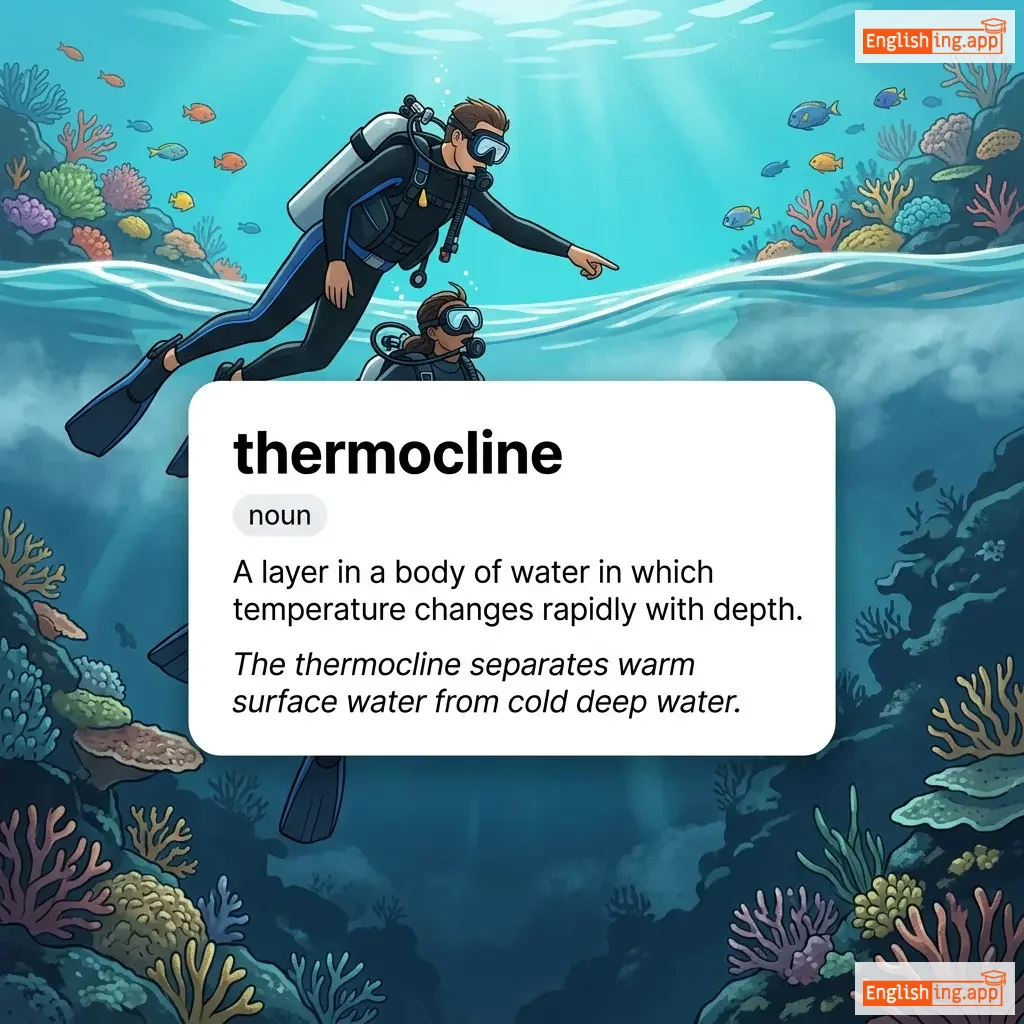
thermocline definition card — visual illustration of the meaning
noun C2
/ˈθɝː.moʊ.klaɪn/
термоклин (termoklin)

A layer in a body of water in which temperature changes rapidly with depth.

"The thermocline separates warm surface water from cold deep water."

"Термоклин разделяет тёплую поверхностную воду от холодной глубокой воды." (Termoklin razdelyayet tyopluyu poverkhnostnuyu vodu ot kholodnoy glubokoy vody.)
thermogenesis definition card — visual illustration of the meaning
noun C2
/ˌθɜː.məʊˈdʒen.ɪ.sɪs/
процесс производства тепла (process proizvodstva tepla)

The process of heat production in living organisms, often associated with burning calories and energy expenditure.

"Spicy foods can enhance thermogenesis and calorie burning."

"Острые продукты могут улучшить термогенез и сжигание калорий." (Ostrye produkty mogut uluchshit' termogenez i szhiganie kaloriy.)
thespian definition card — visual illustration of the meaning
noun C2
/ˈθɛspiən/
актер (akter)

An actor or actress; relating to drama or theater.

"The festival was filled with talented thespians from across the country."

"Фестиваль был полон талантливых актеров со всей страны." (Festival byl polon talantlivykh akterov so vsei strany.)
adjective C2
/ˈθʌroʊˌɡoʊɪŋ/
полный, абсолютный (polnyy, abslutnyy)

carried out to the full extent; absolute and complete

"She is a thoroughgoing professional in every sense."

"Она абсолютно профессионал во всех отношениях." (Ona absolyutno professional vovsekh otnosheniyakh.)
noun C2
/θrɔːl/
рабство (trell)

The state of being in someone's power or under strong influence; slavery or bondage.

"He was in thrall to the powerful leader."

"Он был во власти могущественного лидера." (On byl vo vlasti mogushchestvennogo lidera.)
adjective C2
/ˈθrɛdˌbɛr/
потрепанный и тонкий из-за чрезмерного использования (potrepyannyy i tonkiy iz-za chrezmernogho ispol'zovaniya)

Worn out and thin from too much use; shabby.

"His threadbare coat could not keep him warm in winter."

"Его потрепанное пальто не могло согреть его зимой." (Yego potrepyannoye pal'to ne moglo sogret' yego zimoy.)
noun C2
/ˈθrɛnədi/
траверс, жалобная песня (travers, zhalobnaya pesnya)

A song, poem, or speech of mourning for someone who has died; a lament.

"The poet composed a moving threnody for the fallen soldiers."

"Поэт написал трогательную жалобную песню для павших солдат." (Poet napisal trogatelnuyu zhalobnuyu pesnyu dlya pavshikh soldat.)
verb C2
/θrɛʃ/
молоти (moloti)

to separate grain from the plant by beating or by using a machine

"Farmers used machines to thresh the wheat after harvest."

"Фермеры использовали машины для обмолота пшеницы после урожая." (Fermery ispol'zovali mashiny dlya obmolota pshenitsy posle urozhaya.)
noun C2
/θroʊz/
сильная боль (sil'naya bol')

intense or violent pain and struggle, often at the beginning or end of something

"The country was in the throes of a political crisis."

"Страна была в сильной боли от политического кризиса." (Strana byla v sil'noy boli ot politicheskogo krizisa.)
Tiddley definition card — visual illustration of the meaning
adjective C2
/ˈtɪd.li/
слегка пьяный; маленький или крошечный (tiddli)

slightly drunk; small or tiny

"After a few drinks, he felt a bit tiddley."

"После нескольких напитков он почувствовал себя немного тидли." (Posle nekotorykh napitkov on pochuvstvoval sebya nemnogo tiddli.)
adjective C2
/ˌtaɪtˈfɪstɪd/
жадный (zhadnyy)

unwilling to spend money; stingy

"He is so tightfisted that he refuses to tip at restaurants."

"Он настолько жадный, что отказывается давать чаевые в ресторанах." (On nastol'ko zhadnyy, chto otkazyvayetsya davat' chayevye v restorankh.)