Vocabularies

English Vocabulary Dictionary | Word Meanings, Definitions & Examples

noun C2
/ɑːlˈfækʃən/
olfaction (olfaction)

The sense of smell; the process of detecting and perceiving odors.

"Dogs have a highly developed sense of olfaction."

"Les chiens ont un sens de l'olfaction très développé." (Les chiens ont un sens de l'olfaction très développé.)
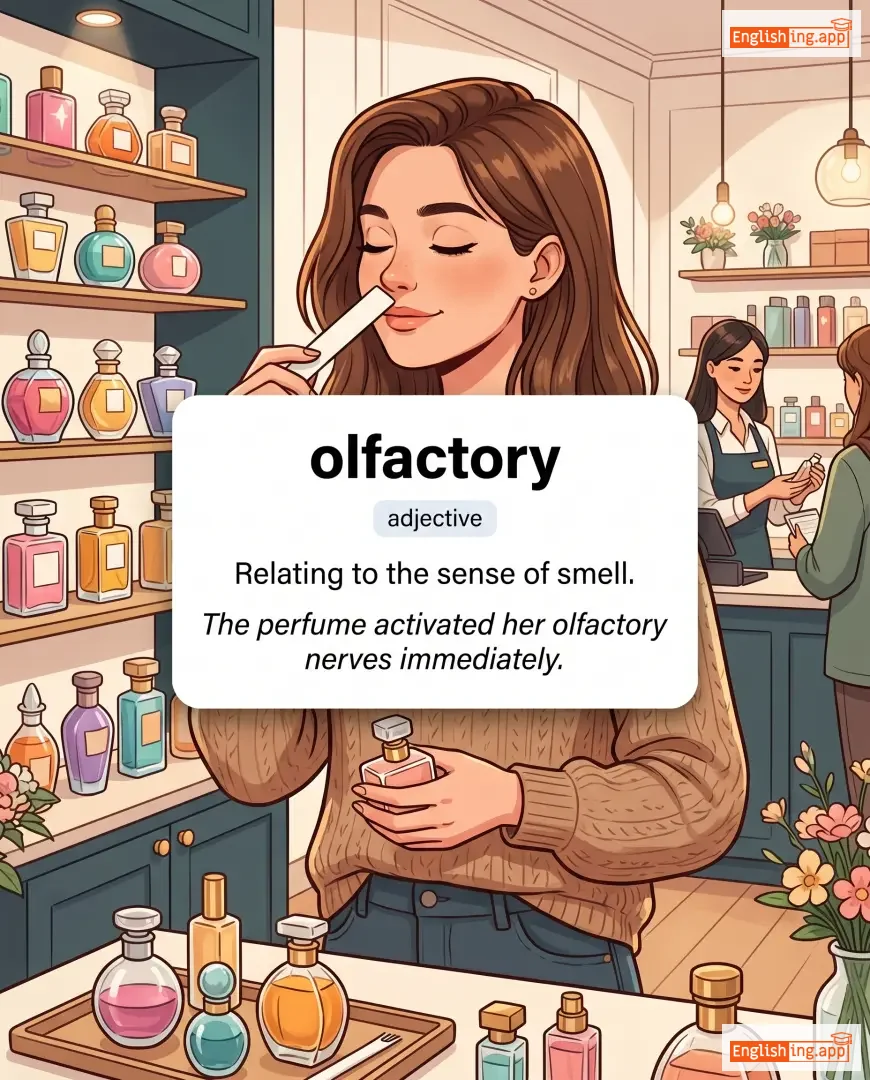
olfactory definition card — visual illustration of the meaning
adjective C2
/ɑːlˈfæktəri/
olfactif (olfactif)

Relating to the sense of smell.

"The perfume activated her olfactory nerves immediately."

"Le parfum a immédiatement activé ses nerfs olfactifs." (Le parfum a immediatement active ses nerfs olfactifs)
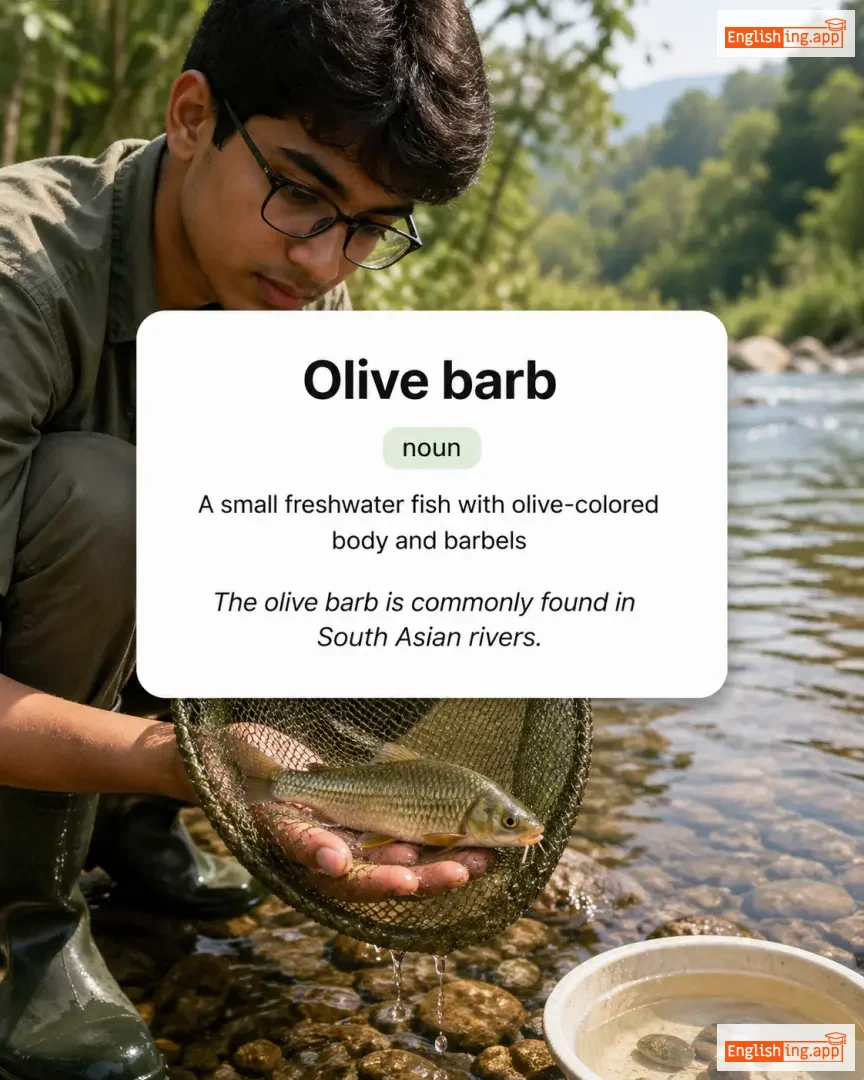
Olive barb definition card — visual illustration of the meaning
noun C2
/ˈɒlɪv bɑːb/
barbe olive (barb oliv)

A small freshwater fish with olive-colored body and barbels

"The olive barb is commonly found in South Asian rivers."

"La barbe olive se trouve couramment dans les rivières d’Asie du Sud." (la barb oliv se trouv kouramman dan le riviere dazi du sud)
noun C2
/ˈɒlɪv brɑːntʃ/
branche d'olivier (branche d'olivier)

A symbol of peace or reconciliation; an offer to end conflict.

"He extended an olive-branch to his rival after years of hostility."

"Il a tendu une branche d'olivier à son rival après des années d'hostilité." (Il a tendu une branche d'olivier à son rival après des années d'hostilité.)
noun C2
/ɒmˈnɪpətəns/
omnipotence (omnipotence)

The quality of having unlimited power or authority.

"Many religions describe God’s omnipotence as absolute."

"De nombreuses religions décrivent l'omnipotence de Dieu comme absolue." (De nombreuses religions decrivent l'omnipotence de Dieu comme absolue.)
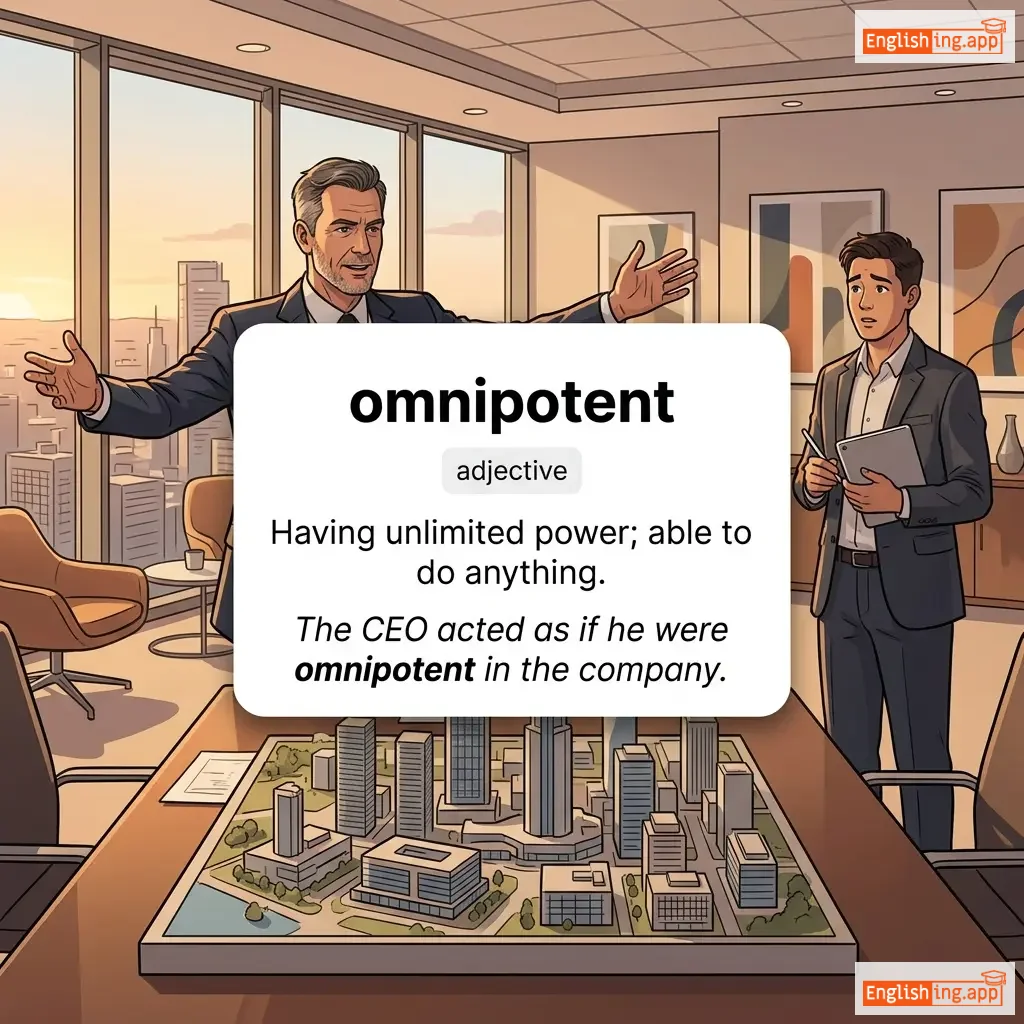
omnipotent definition card — visual illustration of the meaning
adjective C2
/ɒmˈnɪpətənt/
omnipotent (omnipotent)

Having unlimited power; able to do anything.

"The CEO acted as if he were omnipotent in the company."

"Le PDG a agi comme s'il était omnipotent dans l'entreprise." (Le PDG a agi comme s'il était omnipotent dans l'entreprise.)
noun C2
/ɒmˈnɪʃəns/
omniscience (omniscience)

the state of knowing everything

"The novel's narrator has an air of omniscience, revealing every character's thoughts."

"Le narrateur du roman a un air d'omniscience, révélant les pensées de chaque personnage." (Le narrateur du roman a un air domniscience, revelant les pensees de chaque personnage.)
adjective C2
/ɒmˈnɪʃənt/
omniscient (omniscient)

having complete or unlimited knowledge and awareness

"Some religions describe God as omniscient and all-powerful."

"Certaines religions décrivent Dieu comme omniscient et tout-puissant." (Certaines religions decrivent Dieu comme omniscient et tout-puissant.)
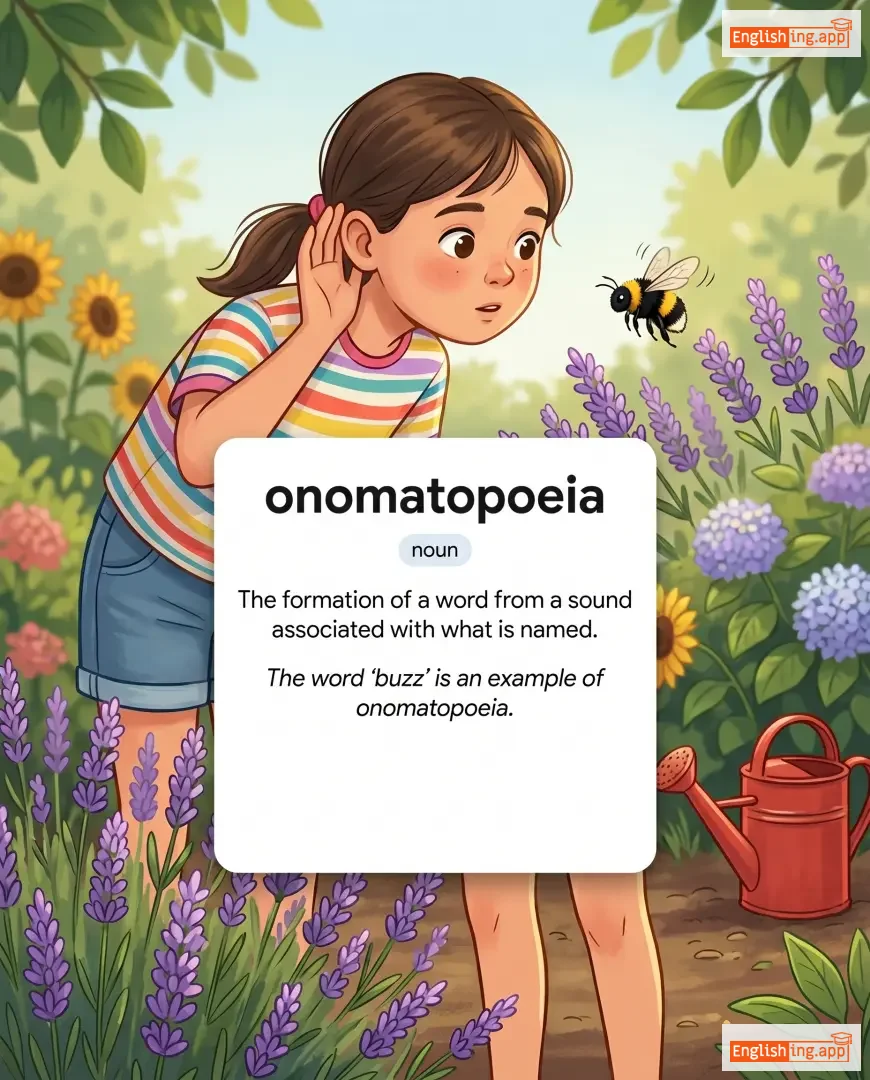
onomatopoeia definition card — visual illustration of the meaning
noun C2
/ˌɒn.əˌmæt.əˈpiː.ə/
onomatopée (onomatopee)

The formation of a word from a sound associated with what is named.

"The word 'buzz' is an example of onomatopoeia."

"Le mot 'buzz' est un exemple d'onomatopée." (Le mot 'buzz' est un exemple d'onomatopée.)
noun C2
/ˈɒn.rʌʃ/
ruée (ruee)

A sudden powerful forward or downward rush or flow.

"The onrush of water swept away the bridge."

"La ruée d'eau emporta le pont." (La ruee d'eau emporta le pont.)
noun C2
/ˌoʊpəˈlɛsəns/
opalescence (opalessence)

a milky or pearly appearance of a surface like that of an opal

"The pearl had a gentle opalescence under the light."

"La perle avait une douce opalescence sous la lumière." (La perle avait une douce opalescence sous la lumière.)
adjective C2
/ˌoʊpəˈlɛsənt/
opalescent (opalescent)

showing or reflecting a milky, iridescent light like an opal

"The opalescent sky glowed with shades of pink and blue."

"Le ciel opalescent brillait avec des nuances de rose et de bleu." (Le ciel opalescent brillait avec des nuances de rose et de bleu.)
adjective C2
/ˈoʊ.pən ˈhæn.dɪd/
généreux; libéral (genereux; liberal)

Generous; liberal; giving freely;

"He is very open-handed with his money and always helps those in need."

"Il est très généreux avec son argent et aide toujours ceux qui en ont besoin." (Il est tres genereux avec son argent et aide toujours ceux qui en ont besoin.)
adjective C2
/ˈoʊ.pən ˈhɑrt.ɪd/
chaleureux et généreux; sincère et honnête; réceptif chaleureusement; (chaleureux et genereux; sincere et honnete; receptif chaleureusement;)

Kind and generous; sincere and honest; warmly receptive;

"She welcomed the strangers with an open-hearted smile and invited them for dinner."

"Elle a accueilli les étrangers avec un sourire chaleureux et les a invités à dîner." (Elle a accueilli les etrangers avec un sourire chaleureux et les a invites a diner.)
noun C2
/ˌɒpəˈrɛtə/
opéra léger (opera léger)

a short opera with light and humorous themes

"The theater staged a famous operetta by Gilbert and Sullivan."

"Le théâtre a présenté une célèbre opérette de Gilbert et Sullivan." (Le théâtre a présenté une célèbre opérette de Gilbert et Sullivan.)
noun C2
/ˈoʊpiət/
opiacé (opyase)

a drug containing opium or its derivatives, used to relieve pain or cause sleep

"The doctor prescribed an opiate to relieve the patient's pain."

"Le docteur a prescrit un opiacé pour soulager la douleur du patient." (Le docteur a prescrit un opiace pour soulager la douleur du patient.)
verb C2
/oʊˈpaɪn/
exprimer une opinion (exprimer une opinion)

to express an opinion or belief

"The professor opined that the policy would fail."

"Le professeur a exprimé que la politique échouerait." (Le professeur a exprime que la politique echouerait.)
noun C2
/ˌɑːpərˈtuːnɪzəm/
opportunisme (opportunisme)

The practice of taking advantage of opportunities regardless of principles or ethics.

"His decision was driven by opportunism, not values."

"Sa décision a été motivée par l'opportunisme, pas par des valeurs." (Sa decision a ete motivee par l'opportunisme, pas par des valeurs.)
adjective C2
/əˈprəʊ.bri.əs/
désobligeant (desobligeant)

Expressing strong criticism or scorn.

"He made opprobrious remarks about his opponent."

"Il a fait des remarques désobligeantes sur son adversaire." (Il a fait des remarques desobligeantes sur son adversaire.)
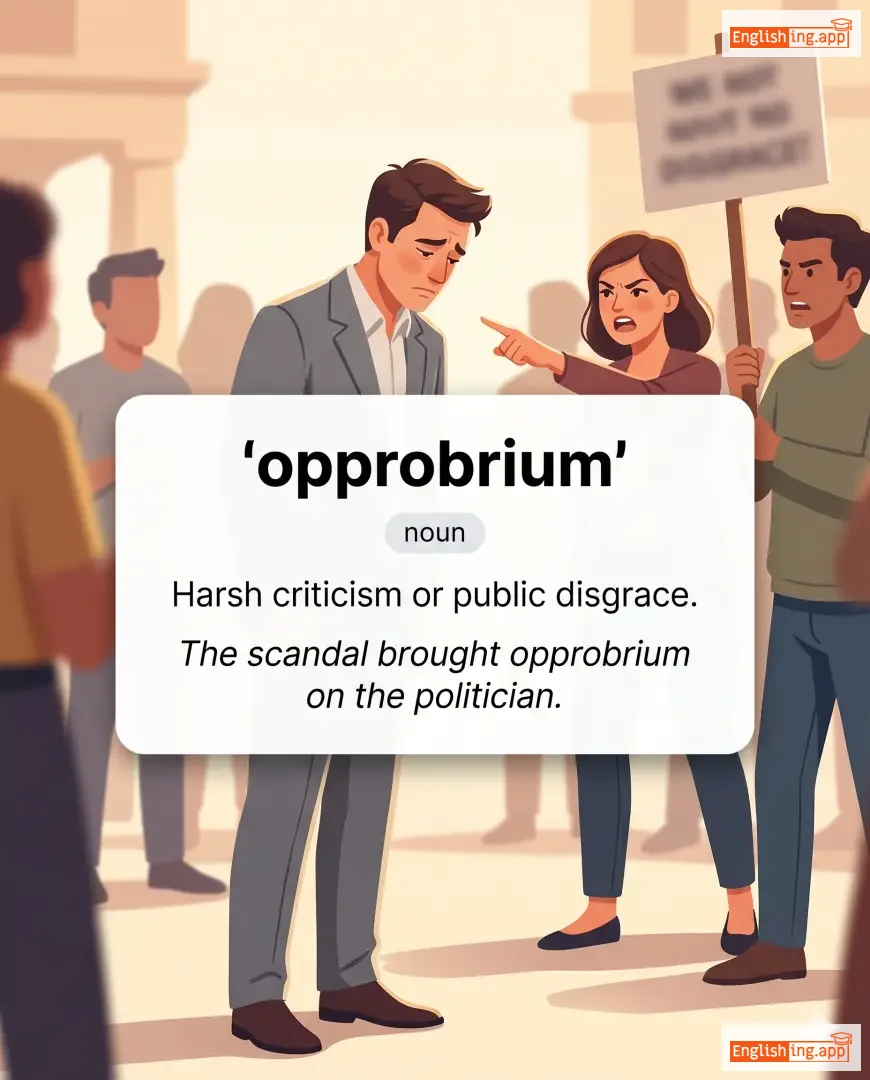
opprobrium definition card — visual illustration of the meaning
noun C2
/əˈprəʊ.bri.əm/
opprobre, déshonneur (opprobre, deshonneur)

Harsh criticism or public disgrace.

"The scandal brought opprobrium on the politician."

"Le scandale a apporté l'opprobre au politicien." (Le scandale a apporte l'opprobre au politicien.)
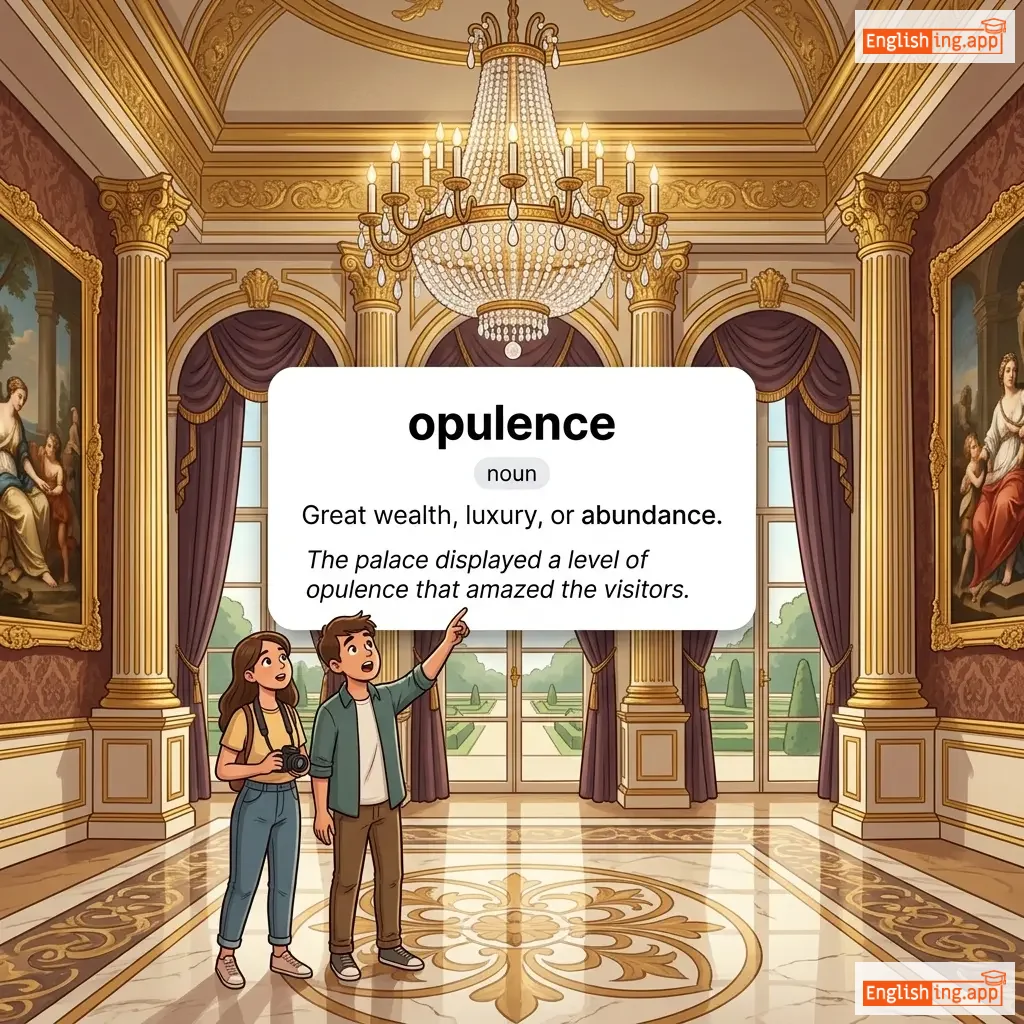
opulence definition card — visual illustration of the meaning
noun C2
/ˈɒpjʊləns/
opulence (opulence)

Great wealth, luxury, or abundance.

"The palace displayed a level of opulence that amazed the visitors."

"Le palais affichait un niveau d'opulence qui a émerveillé les visiteurs." (Le palais affichait un niveau d'opulence qui a émerveillé les visiteurs.)
adjective C2
/ˈɒpjʊlənt/
opulent (opulent)

Ostentatiously rich, luxurious, or lavish.

"They hosted an opulent wedding with gold decorations."

"Ils ont organisé un mariage opulent avec des décorations dorées." (Ils ont organisé un mariage opulent avec des décorations dorées.)
noun C2
/ˈəʊpəs/
œuvre créative (oeuvre creative)

A creative work, especially a large and important piece of music or art.

"The composer considered the symphony his greatest opus."

"Le compositeur considérait la symphonie comme sa plus grande œuvre créative." (Le compositeur considérait la symphonie comme sa plus grande œuvre créative.)
adjective C2
/əˈrækjələr/
oraculaire (oraculaire)

Resembling an oracle; giving wise, mysterious, or prophetic statements

"Her oracular words left the audience deep in thought."

"Ses paroles oraculaires ont laissé l'audience profondément pensive." (Ses paroles oraculaires ont laissé l'audience profondément pensive.)
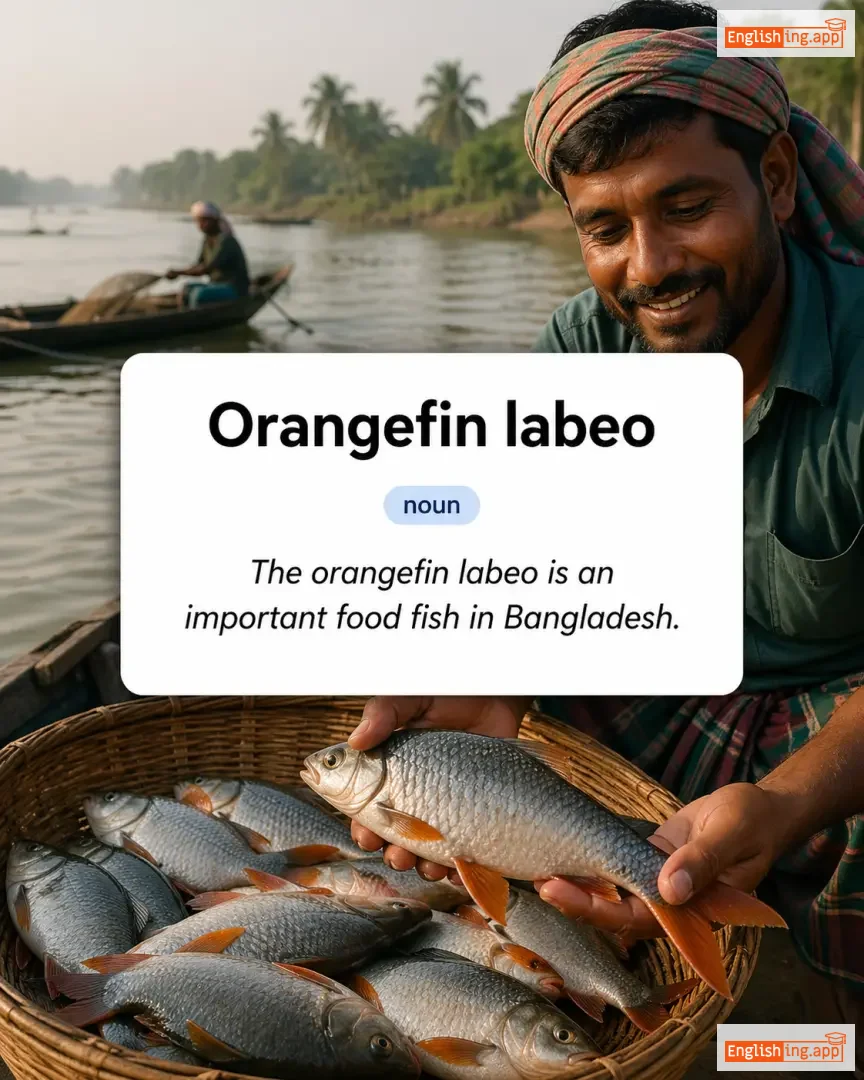
Orangefin labeo definition card — visual illustration of the meaning
noun C2
/ˈɔːrɪndʒfɪn ˈleɪbiːoʊ/
labeo à nageoires orange (labeo a nagwahr oranj)

a freshwater fish species native to South Asian rivers, commonly found in Bangladesh and India

"The orangefin labeo is an important food fish in Bangladesh."

"Le labeo à nageoires orange est un poisson alimentaire important au Bangladesh." (Le labeo a nagwahr oranj e un poisson alimontair importan o Bangladesh)
verb C2
/ˈɔːreɪt/
prêcher (prêcher)

To speak in a formal, often pompous manner

"He began to orate at the ceremony."

"Il a commencé à prêcher lors de la cérémonie." (Il a commencé à prêcher lors de la cérémonie.)
noun C2
/ɔːˈreɪʃən/
discours (discours)

A formal speech, especially one given on a ceremonial occasion

"The president delivered an inspiring oration."

"Le président a prononcé un discours inspirant." (Le président a prononcé un discours inspirant.)
noun C2
/ˌɔːrəˈtɔːri.oʊ/
composition musicale religieuse (composition musicale religieuse)

A large-scale musical composition for orchestra, choir, and soloists, usually on a sacred theme, performed without costumes or scenery.

"Handel's 'Messiah' is one of the most famous oratorios ever written."

"Le 'Messie' de Handel est l'un des oratorios les plus célèbres jamais écrits." (Le 'Messie' de Handel est l'un des oratorios les plus celebres jamais ecrits.)
noun C2
/ˌɔːrdɪˈneɪʃən/
ordination (ordination)

The ceremony of conferring holy orders or official religious authority.

"The church held a special service for the ordination of new priests."

"L'église a organisé un service spécial pour l'ordination de nouveaux prêtres." (L'eglise a organise un service special pour l'ordination de nouveaux pretres.)
noun C2
/ˈɔːrdnəns/
fournitures militaires (fournitures militaires)

Military supplies including weapons, ammunition, and combat equipment.

"The army stored ordnance in a secure facility outside the city."

"L'armée a stocké des fournitures militaires dans une installation sécurisée en dehors de la ville." (L'armée a stocké des fournitures militaires dans une installation sécurisée en dehors de la ville.)
noun (plural) C2
/ˈɔːrdʒiːz/
orgies (orgies)

Wild gatherings involving excessive indulgence in food, drink, or sexual activity.

"The ancient Romans were infamous for their lavish feasts and orgies."

"Les anciens Romains étaient infâmes pour leurs festins somptueux et leurs orgies." (Les anciens Romains étaient infâmes pour leurs festins somptueux et leurs orgies.)
noun C2
/ˈɔːrdʒi/
orgie (orgie)

A wild party involving excessive indulgence, especially of a sexual nature.

"The novel described a scandalous orgy in a wealthy mansion."

"Le roman a décrit une orgie scandaleuse dans un manoir riche." (Le roman a décrit une orgie scandaleuse dans un manoir riche.)
noun C2
/ˈɔː.rɪ.fɪs/
orifice (orifice)

an opening or hole, especially in the body or a device

"The medicine was applied through a small orifice in the device."

"Le médicament a été appliqué par un petit orifice dans l'appareil." (Le médicament a été appliqué par un petit orifice dans l'appareil.)
noun C2
/ˈɒrɪz(ə)n/
prière (priere)

a prayer, especially a devout or formal one

"He whispered a quiet orison before going to sleep."

"Il murmura une prière silencieuse avant de dormir." (Il murmura une priere silencieuse avant de dormir.)
adjective C2
/ˈɔːrnəri/
irritable (irritable)

bad-tempered and combative; stubborn

"The ornery old man refused to leave his chair."

"Le vieil homme irritable a refusé de quitter sa chaise." (Le vieil homme irritable a refusé de quitter sa chaise.)
noun C2
/ˌɔːrnɪˈθɒlədʒɪst/
ornithologue (ornithologue)

a scientist who studies birds

"The ornithologist spent years studying migratory birds."

"L'ornithologue a passé des années à étudier les oiseaux migrateurs." (L'ornithologue a passe des annees a etudier les oiseaux migrateurs.)
noun C2
/ˌɔːrnɪˈθɑːlədʒi/
ornithologie (ornithologie)

the scientific study of birds

"She pursued ornithology to understand the migration patterns of birds."

"Elle a poursuivi l'ornithologie pour comprendre les schémas de migration des oiseaux." (Elle a poursuivi l'ornithologie pour comprendre les schémas de migration des oiseaux.)
adjective C2
/ˈɔːrəˌtʌnd/
voix profonde et claire (voix profonde et claire)

full, rich, and clear in sound; pompous in style

"The actor's orotund voice filled the theater."

"La voix profonde de l'acteur a rempli le théâtre." (La voix profonde de l'acteur a rempli le théâtre.)
adjective C2
/ɔːrˈθɑːɡənl/
orthogonal (orthogonal)

at right angles; independent or unrelated

"In mathematics, two vectors are orthogonal if their dot product is zero."

"En mathématiques, deux vecteurs sont orthogonaux si leur produit scalaire est nul." (En mathematiques, deux vecteurs sont orthogonaux si leur produit scalaire est nul.)
noun C2
/ɔːrˈθɑːɡrəfi/
orthographe (orthographe)

The conventional spelling system of a language.

"English orthography can be confusing for learners."

"L'orthographe anglaise peut être déroutante pour les apprenants." (L'orthographe anglaise peut être déroutante pour les apprenants.)
verb C2
/ˈɑːskjʊleɪt/
embrasser (embrasser)

To kiss.

"They osculated under the mistletoe during the party."

"Ils se sont embrassés sous le gui pendant la fête." (Ils se sont embrassés sous le gui pendant la fête.)
adjective C2
/ˈɒsiəs/
osseux (osseux)

consisting of or turned into bone; bony

"The fossil showed osseous structures of the ancient creature."

"Le fossile a montré des structures osseuses de la créature ancienne." (Le fossile a montré des structures osseuses de la créature ancienne.)
adjective C2
/ˈɑːsɪˌfaɪd/
transformé en os, rigide (transforme en os, rigide)

Turned into bone or become rigid; unwilling to change.

"The company had an ossified management structure that resisted innovation."

"L'entreprise avait une structure de gestion rigide qui résistait à l'innovation." (L'entreprise avait une structure de gestion rigide qui résistait à l'innovation.)
verb C2
/ˈɒsɪfaɪ/
ossifier (ossifier)

to turn into bone or become rigid and inflexible

"With age, some tissues tend to ossify."

"Avec l'âge, certains tissus ont tendance à s'ossifier." (Avec l'âge, certains tissus ont tendance à s'ossifier.)
adjective C2
/ɒˈstɛnsɪv/
ostensible (ostensible)

clearly demonstrative or pointing out; explicitly shown

"The teacher gave an ostensive example to clarify the concept."

"L'enseignant a donné un exemple ostensible pour clarifier le concept." (L'enseignant a donné un exemple ostensible pour clarifier le concept.)
noun C2
/ˌɒstɛnˈteɪʃən/
ostentation (ostentation)

excessive display of wealth or knowledge intended to attract admiration or envy

"The billionaire’s party was full of ostentation and luxury."

"La fête du milliardaire était pleine d'ostentation et de luxe." (La fete du milliardaire etait pleine d'ostentation et de luxe.)
verb C2
/ˌaʊtməˈnuːvər/
surpasser habilement (surpasser habilement)

to gain an advantage over an opponent by skillful or clever action

"The smaller company managed to outmaneuver its larger rival."

"La petite entreprise a réussi à surpasser habilement son grand concurrent." (La petite entreprise a reussi a surpasser habilement son grand concurrent.)
verb C2
/aʊtˈraɪd/
dépasser (depasser)

to ride faster, farther, or better than someone else

"The young rider managed to outride his competitors in the race."

"Le jeune cavalier a réussi à dépasser ses concurrents dans la course." (Le jeune cavalier a réussi à dépasser ses concurrents dans la course.)
noun C2
/ˈaʊtˌrɪɡər/
structure de stabilisation (structure de stabilisation)

a projecting structure on a boat, used for stability, or a boat fitted with such support

"The fisherman paddled his outrigger canoe across the lagoon."

"Le pêcheur a pagayé sa pirogue avec un outrigger à travers la lagune." (Le pêcheur a pagayé sa pirogue avec un outrigger à travers la lagune.)
verb C2
/ˌoʊvərˈliːp/
sauter par-dessus (sauter par-dessus)

To jump over something; to omit or disregard something.

"He managed to overleap the fence easily."

"Il a réussi à sauter la clôture facilement." (Il a réussi à sauter la clôture facilement.)