Vocabularies

English Vocabulary Dictionary | Word Meanings, Definitions & Examples

/laɪð/
しなやかで優雅 (shinayakade yūga)

thin, supple, and graceful in movement

"The lithe dancer captivated the audience with her graceful spins."

"しなやかなダンサーはその優雅な回転で観客を魅了しました。" (Shinayakana dansā wa sono yūgana kaiten de kankyaku o miryō shimashita.)
adjective C2
/ˈlaɪðsəm/
しなやかで優雅な (shinayakade yūgana)

gracefully flexible and supple

"Her lithesome figure allowed her to move like a ballerina."

"彼女のしなやかな姿勢は、バレリーナのように動くことを可能にしました。" (Kanojo no shinayakana shisei wa, barerīna no yō ni ugoku koto o kanō ni shimashita.)
noun C2
/ˈlɪθəˌɡræf/
リトグラフ (石版印刷) (ritogurafu (sekiban insatsu))

a print made by lithography, often artistic

"The museum displayed a rare lithograph from the 19th century."

"博物館では19世紀の珍しいリトグラフが展示されていました。" (Hakubutsukan de wa 19 seiki no mezurashii ritogurafu ga tenji sarete imashita.)
noun C2
/ˈlɪθəˌtaɪp/
リトタイプ (印刷面) (ritotaipu (insatsumen))

a printing surface or type made for lithography

"The printer used a lithotype to produce multiple copies of the design."

"プリンターはデザインの複数のコピーを作成するためにリトタイプを使用しました。" (Purintā wa dezain no fukusū no kopī o sakusei suru tame ni ritotaipu o shiyō shimashita.)
noun C2
/ˈlɪtɪɡənt/
訴訟当事者 (soshō tōjisha)

a person involved in a lawsuit

"The court summoned both litigants for the hearing."

"裁判所は両方の訴訟当事者を公聴会に召喚した。" (Saibansho wa ryōhō no soshō tōjisha o kōchōkai ni shōkan shita.)
adjective C2
/lɪˈtɪdʒəs/
訴訟好き (soshōzuki)

prone to engage in lawsuits or overly inclined to argue legally

"He is known as a litigious neighbor who often sues people."

"彼はしばしば他人を訴える争い好きな隣人として知られています。" (Kare wa shibashiba tanin o utaeru arasoi suki na rinjin to shirareteimasu.)
noun C2
/ˈlaɪtoʊtiːz/
緩和表現 (kanwahyōgen)

a figure of speech in which an affirmative is expressed by the negative of its contrary

"Saying 'not bad' as a compliment is an example of litotes."

"'悪くない'と言うことは、緩和表現の一例です。" ('Warukunai' to iu koto wa, kanwahyōgen no ichirei desu.)
adjective C2
/ˈlɪtərəl/
沿岸の (engan no)

Related to or situated on the shore of the sea or a lake.

"The littoral zone is home to many unique marine species."

"沿岸地域は多くのユニークな海洋種の生息地です。" (Engan chiiki wa ōku no yunikuna kaiyō-shu no seisokuchi desu.)
noun C2
/ˈlɪtərdʒi/
典礼 (tenrei)

A form or formulary according to which public religious worship is conducted.

"The priest followed the liturgy during the Sunday mass."

"司祭は日曜日のミサで典礼に従いました。" (Shisai wa nichiyōbi no misa de tenrei ni shitagaimashita.)
noun C2
/loʊm/
肥沃な土壌 (hiwoku na dojou)

A fertile soil of clay and sand containing humus.

"The farmer used loam to improve the fertility of the field."

"農家は畑の肥沃さを改善するためにロームを使用しました。" (Nouka wa hatake no hiwokusa o kaizen suru tame ni romu o shiyou shimashita.)
adjective C2
/ˈloʊð.səm/
忌まわしい (roosamu)

causing hatred or disgust; repulsive

"The loathsome smell from the garbage made everyone leave the room."

"ゴミの耐え難い悪臭で、みんなが部屋を出ていった。" (gomi no taegatai akushuu ga minna o heya kara oidashita)
noun C2
/ˈlɒkətɪv/
ロカティブ (rokatibu)

a grammatical case indicating location or place

"In Latin, the locative case is used to indicate location."

"ラテン語では、ロカティブ格は場所を示すために使用されます。" (Raten-go de wa, rokatibu-kaku wa basho o shimesu tame ni shiyō saremasu.)
noun C2
/lɒx/
(ko)

a lake or sea inlet, especially in Scotland

"Tourists visit Loch Ness to search for the legendary monster."

"観光客はロッホ・ネスに行き、伝説の怪物を探します。" (Kankōkyaku wa Rokku-Nesu ni iki, densetsu no kaibutsu o sagashimasu.)
noun C2
/loʊd/
鉱脈 (kōmyaku)

A rich source of something, often a vein of valuable metal in the earth.

"The miners discovered a rich lode of silver."

"鉱夫たちは豊かな銀の鉱脈を発見しました。" (Kōfu-tachi wa yutakana gin no kōmyaku o hakken shimashita.)
noun C2
/ˈlɒdʒ.mənt/
仮宿 (kariyado)

The act of lodging or a place of temporary stay; also a deposit of something.

"The soldiers found lodgment in the abandoned house."

"兵士たちは廃屋で仮宿を見つけました。" (Heishi tachi wa haiko de kariyado o mitsukemashita.)
noun C2
/ləˈdʒɪʃən/
論理学者 (ronrigakusha)

A person skilled in logic and reasoning.

"Aristotle is considered one of the greatest logicians in history."

"アリストテレスは歴史上最も偉大な論理学者の一人と見なされています。" (Arisutoteresu wa rekishijou mottomo idaina ronrigakusha no hitori to minasareteimasu.)
verb C2
/ˈlɔɪtər/

To stand or wait around idly without apparent purpose.

"The teenagers were told not to loiter outside the shop."

noun C2
/ˈlɔɪtərər/
目的もなく場所にいる人 (mokuteki mo naku basho ni iru hito)

A person who lingers aimlessly in a place without purpose.

"The police questioned the loiterer outside the store."

"警察は店の外でロイタラーに尋問をした。" (Keisatsu wa mise no soto de roitara ni chinmon o shita.)
verb C2
/lɑːl/
だらりと座る (darari to suwaru)

To sit, lie, or stand in a lazy, relaxed way.

"He lolled on the sofa after a long day at work."

"長い仕事の後で、彼はソファにだらりと座った。" (Nagai shigoto no ato de, kare wa sofa ni darari to suwatta.)
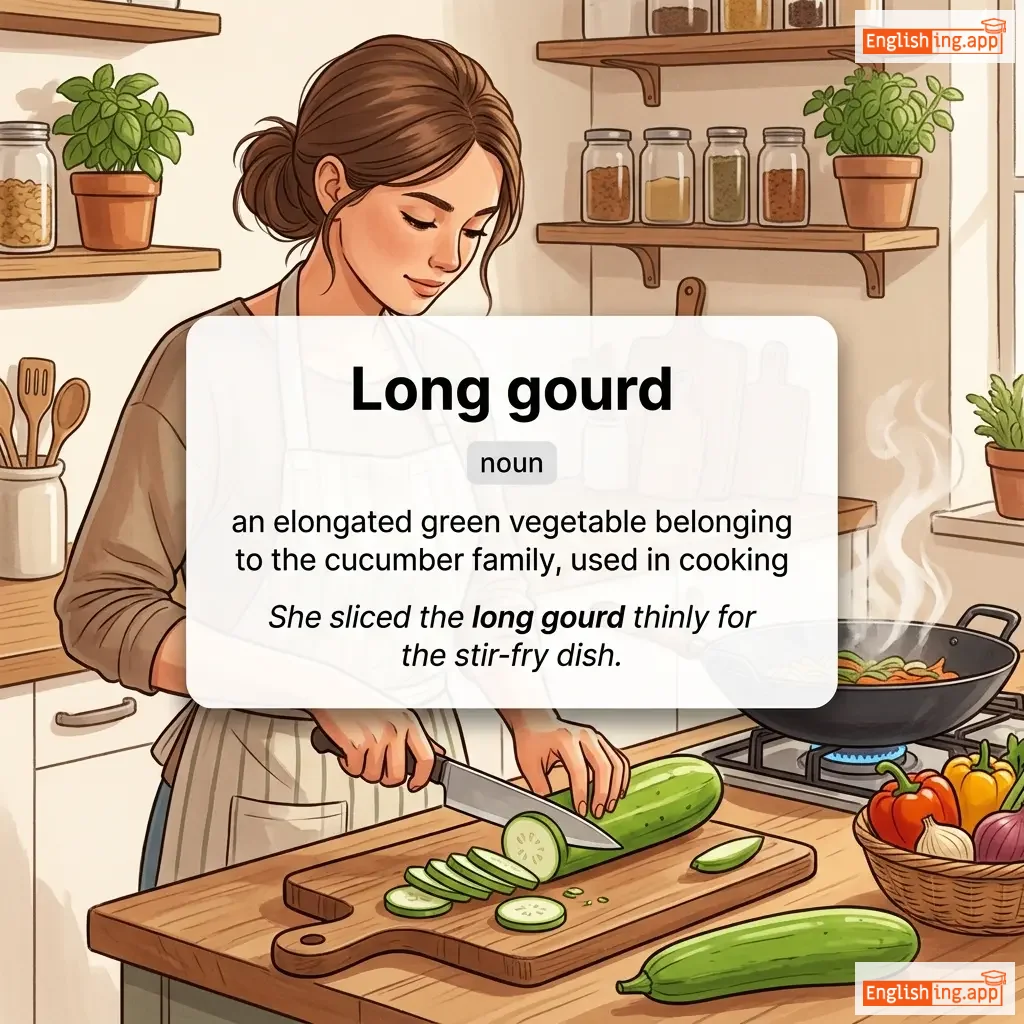
Long gourd definition card — visual illustration of the meaning
noun C2
/lɔːŋ ɡɔːrd/
長いウリ (nagai uri)

an elongated green vegetable belonging to the cucumber family, used in cooking

"She sliced the long gourd thinly for the stir-fry dish."

"彼女はその長いウリを薄切りにして、炒め物に使いました。" (Kanojo wa sono nagai uri wo usugiri ni shite, itamemono ni tsukaimashita.)
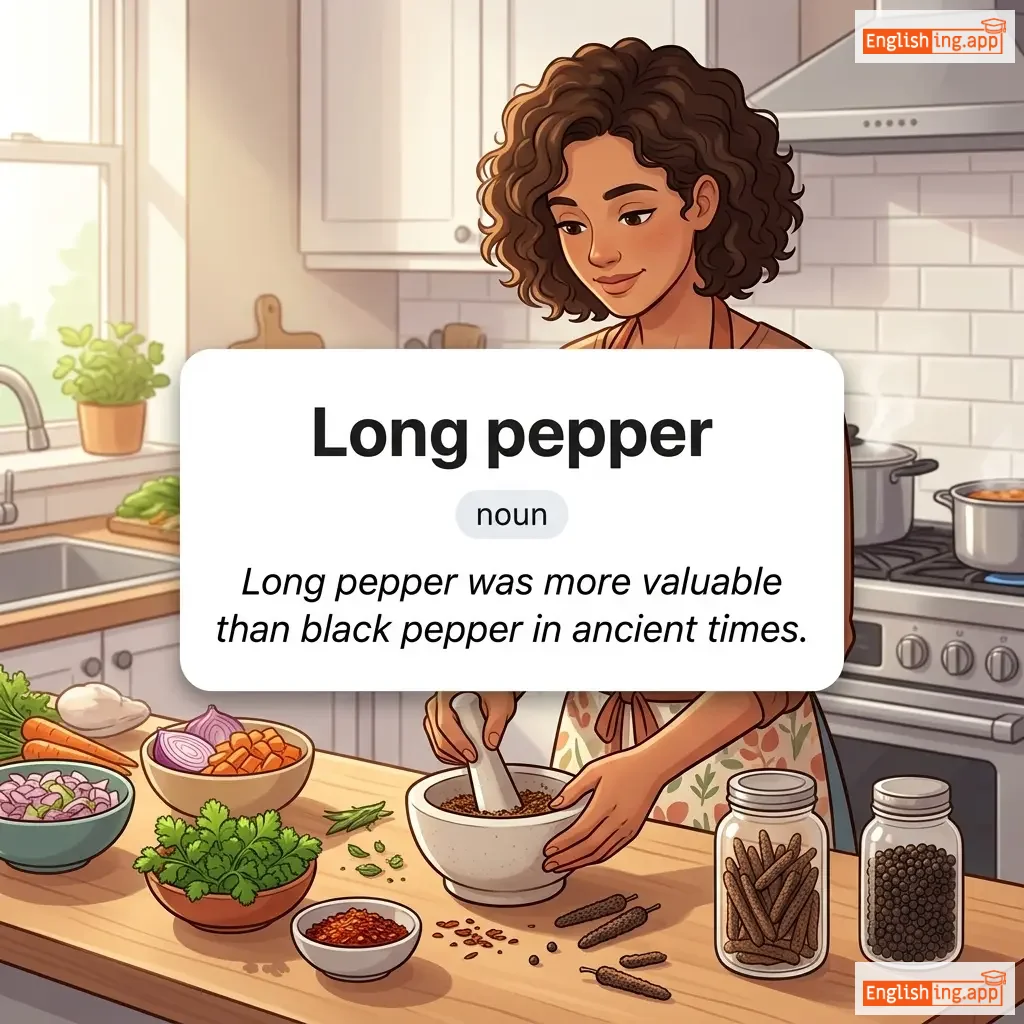
Long pepper definition card — visual illustration of the meaning
noun C2
/lɔːŋ ˈpepər/
ロングペッパー (rongu peppā)

a flowering vine in the family Piperaceae, cultivated for its fruit which is used as a spice

"Long pepper was more valuable than black pepper in ancient times."

"ロングペッパーは古代において黒胡椒よりも価値が高かった。" (Rongu peppā wa kodai ni oite kuro kosyou yori mo kachi ga takakatta.)
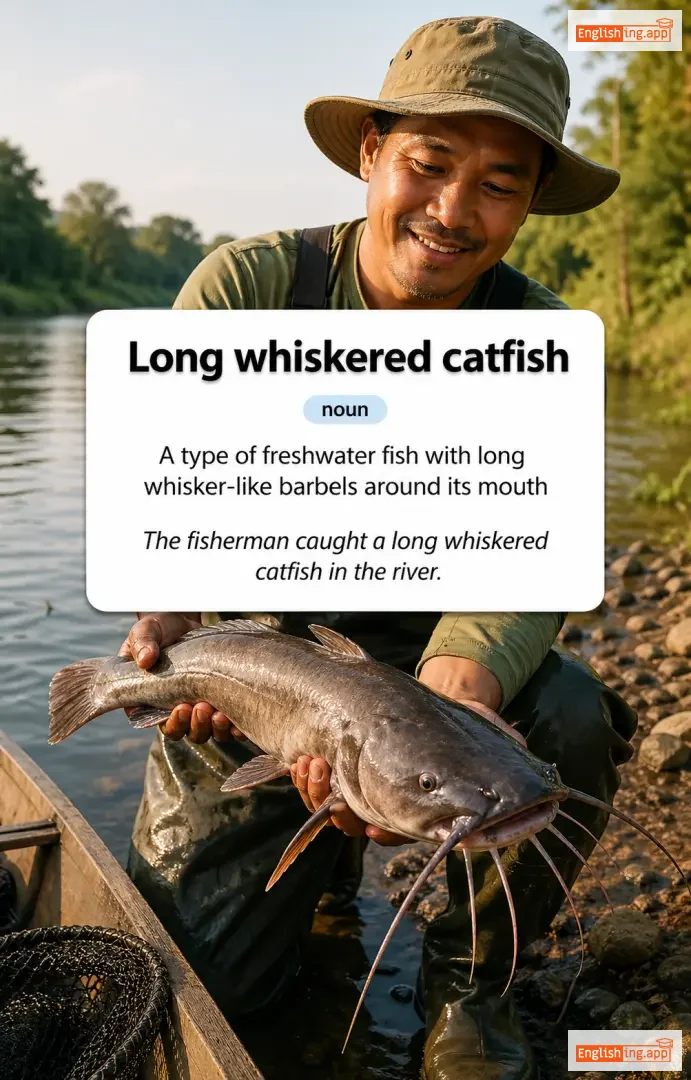
Long whiskered catfish definition card — visual illustration of the meaning
noun C2
/lɒŋ ˈwɪskəd ˈkætfɪʃ/
ナマズ (namazu)

A type of freshwater fish with long whisker-like barbels around its mouth

"The fisherman caught a long whiskered catfish in the river."

"漁師は川で長いひげのナマズを捕まえた。" (ryoshi wa kawa de nagai hige no namazu o tsukamaeta)
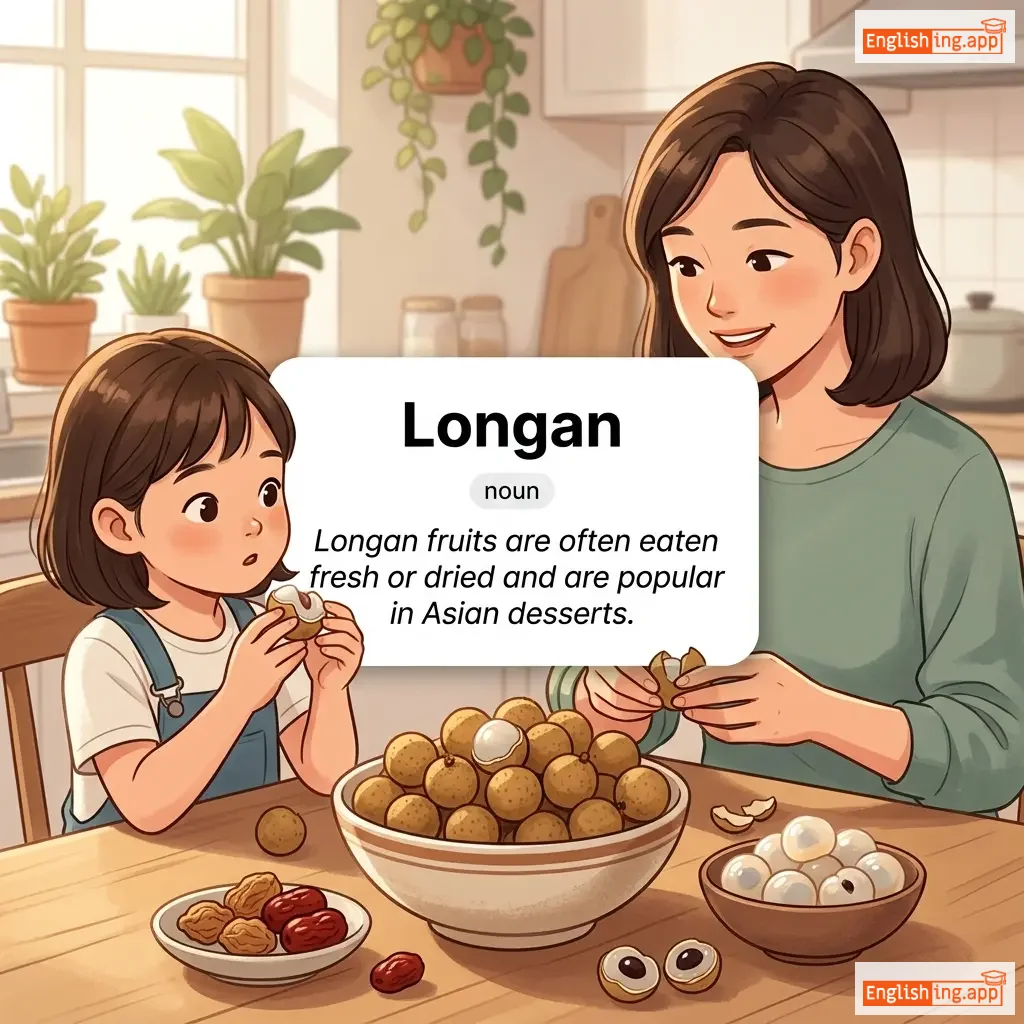
Longan definition card — visual illustration of the meaning
noun C2
/ˈlɔːŋ.ɡən/

a small round tropical fruit with translucent white flesh and sweet taste, related to lychee

"Longan fruits are often eaten fresh or dried and are popular in Asian desserts."

adjective C2
/ˈluː.ni/
クレイジー; バカ; 精神的に不安定 (kureijī; baka; seishinteki ni fuantei)

crazy; silly; mentally unstable

"His loony behavior made everyone laugh."

"彼のクレイジーな行動でみんなが笑った。" (kare no kureijī na kōdō de minna ga waratta)
adjective C2
/ˈluːpi/
おかしい (okashii)

crazy, silly, or eccentric

"After working all night, he felt a little loopy."

"一晩中働いた後、彼は少しおかしく感じました。" (Hitobanjū hataraita ato, kare wa sukoshi okashiku kanjimashita.)
verb C2
/loʊp/
大きなジャンプを伴う速歩で走る (ōkina janpu o tomonau sokuhō de hashiru)

to run or move with a long, bounding stride

"The horse loped gracefully across the field."

"馬はフィールドを優雅に走っていました。" (Uma wa fīrudo o yūga ni hashitte imashita.)
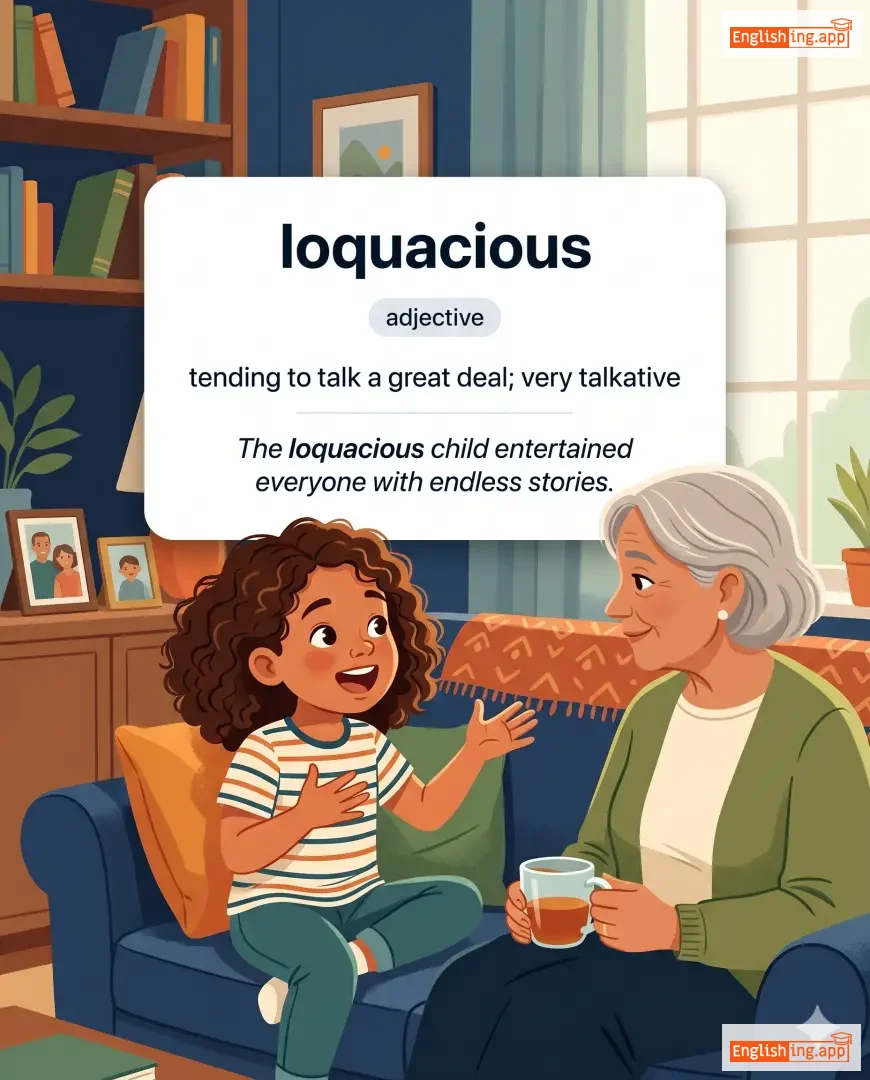
loquacious definition card — visual illustration of the meaning
adjective C2
/loʊˈkweɪʃəs/
おしゃべりな (oshaberina)

tending to talk a great deal; very talkative

"The loquacious child entertained everyone with endless stories."

"おしゃべりな子供は、終わりのない物語で皆を楽しませた。" (Oshaberina kodomo wa, owari no nai monogatari de mina wo tanoshimaseta.)
noun C2
/ˈlɔːrdlɪŋ/
小さな領主 (chiisana ryoushu)

A young or petty lord; someone of minor nobility.

"The arrogant lordling demanded respect despite his lack of experience."

"傲慢なロードリングは経験不足にもかかわらず、尊敬を要求した。" (Gouman na ro-doringu wa keiken busoku ni mo kakawarazu, sonkei wo youkyuu shita.)
noun C2
/lɒx/ or /lɒk/
(mi)

An Irish or Scottish word for a lake or sea inlet.

"The fishermen lived by the lough for generations."

"漁師たちは世代を超えて湖の近くに住んでいました。" (Ryōshitachi wa sedaio koete mizuumi no chikaku ni sundeimashita.)
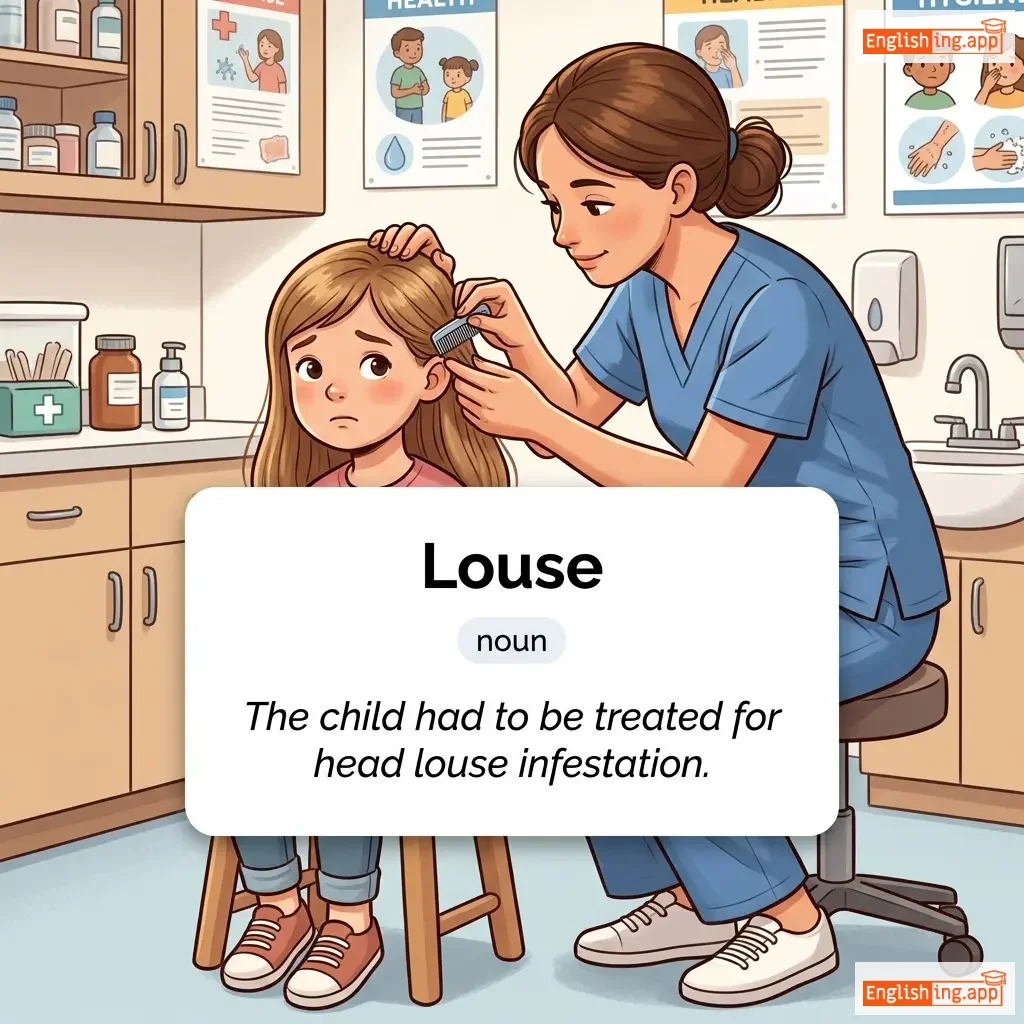
Louse definition card — visual illustration of the meaning
noun C2
/laʊs/
シラミ (shirami)

A small parasitic insect that lives on the skin of mammals and birds; also used as an insult for a contemptible person.

"The child had to be treated for head louse infestation."

"その子は頭ジラミの感染症の治療を受けなければならなかった。" (Sono ko wa atama jirami no kansen-shō no chiryo o ukenakereba naranakatta.)
noun C2
/laʊt/
粗野な人 (soya na hito)

An uncouth or aggressive man or boy.

"The drunken lout caused a scene at the party."

"酔っ払った粗野な人がパーティーで騒ぎを起こした。" (Yopparatta soya na hito ga pātī de sawagi o okoshita.)
adjective C2
/ˈlaʊtɪʃ/
無礼な (burei na)

Clumsy, rude, or aggressive in behavior.

"His loutish remarks offended everyone at the meeting."

"彼の無礼な発言は会議で皆を怒らせた。" (Kare no burei na hatsugen wa kaigi de mina o okorashita.)
noun C2
/luːˈbrɪsɪti/
滑りやすさ (suberiyasusa)

the quality of being slippery or smooth; sometimes also refers to lewdness

"The lubricity of the surface made it difficult to walk on."

"表面の滑りやすさにより、歩くのが難しくなった。" (Hyōmen no suberiyasusa ni yori, aruku no ga muzukashiku natta.)
adjective C2
/ˈluːsənt/
光輝 (koki)

shining or glowing with light

"The lucent stars brightened the night sky."

"光輝を放つ星々が夜空を明るく照らした。" (Kouki wo hanatsu hoshiboshi ga yozora wo akaruku terashita.)
lucidity definition card — visual illustration of the meaning
noun C2
/luːˈsɪd.ə.ti/
明快さ (meikasā)

Clarity of thought or style; the quality of being easily understood.

"His explanation had great lucidity, making it easy to understand."

"彼の説明は非常に明快で、理解しやすかった。" (Kare no setsumei wa hijou ni meikaku de, rikai shiyasukatta.)
lucre definition card — visual illustration of the meaning
noun C2
/ˈluːkər/
利益 (rieki)

money, especially when regarded as sordid or gained dishonorably

"He was motivated more by lucre than by duty."

"彼は義務よりも利益に動機づけられていました。" (Kare wa gimu yori mo rieki ni dōkizukerareteimashita.)
noun C2
/ˌluːkjʊˈbreɪʃən/
夜間学習 (yakan gakushuu)

study or meditation, especially at night

"His novel was the result of long lucubration."

"彼の小説は長い夜間学習の結果でした。" (Kare no shousetsu wa nagai yakan gakushuu no kekka deshita.)
🧳

lug

verb C2
/lʌɡ/

to carry or drag something heavy or cumbersome with effort

"He had to lug the suitcase up three flights of stairs."

adjective C2
/luːˈɡuːbriəs/
陰鬱な (in'utsuna)

looking or sounding sad and dismal

"His lugubrious expression made everyone feel uneasy."

"彼の陰鬱な表情は皆を不安にさせた。" (Kare no in'utsuna hyoujou wa mina o fuan ni saseta.)
noun C2
/ˈluː.mən/
ルーメン (rūmen)

A unit of luminous flux, measuring the amount of visible light emitted by a source.

"The bulb produces 800 lumens of light."

"電球は800ルーメンの光を発生させます。" (Denkyū wa 800 rūmen no hikari o hassei sasemasu.)
noun C2
/ˈluː.məˌnɛr.i/
著名人 (chomeijin)

A person who inspires or influences others, especially in a particular field.

"He is considered a luminary in the world of science."

"彼は科学の世界で著名人と見なされています。" (Kare wa kagaku no sekai de chomeijin to minasarerareteimasu.)
noun C2
/ˌluː.mɪˈnɛs.əns/
発光現象 (hakkou genshou)

The emission of light by a substance not resulting from heat; a type of cold light.

"The luminescence of the fireflies lit up the forest."

"ホタルの発光現象が森を照らしました。" (Hotaru no hakkou genshou ga mori o terashimashita.)
adjective C2
/ˌluː.mɪˈnɛs.ənt/
発光する (hakkou suru)

Emitting light without heat, glowing softly.

"The luminescent watch dial was visible in the dark."

"その発光する時計のダイヤルは暗闇の中で見えました。" (Sono hakkou suru tokei no daiyaru wa kurayami no naka de miemashita.)
noun C2
/ˈluː.nə.si/
狂気 (kyouki)

Extreme foolishness or madness; insanity.

"It was sheer lunacy to go hiking in the storm."

"嵐の中でハイキングに行くのは完全に狂気でした。" (Arashi no naka de haikingu ni iku no wa kanzen ni kyouki deshita.)
noun C2
/luːn/
三日月 (mikazuki)

A crescent-shaped figure formed by two intersecting arcs; also means 'moon' in French.

"The mathematician studied the properties of the lune."

"数学者は三日月の特性を研究しました。" (Sūgakusha wa mikazuki no tokusei o kenkyū shimashita.)
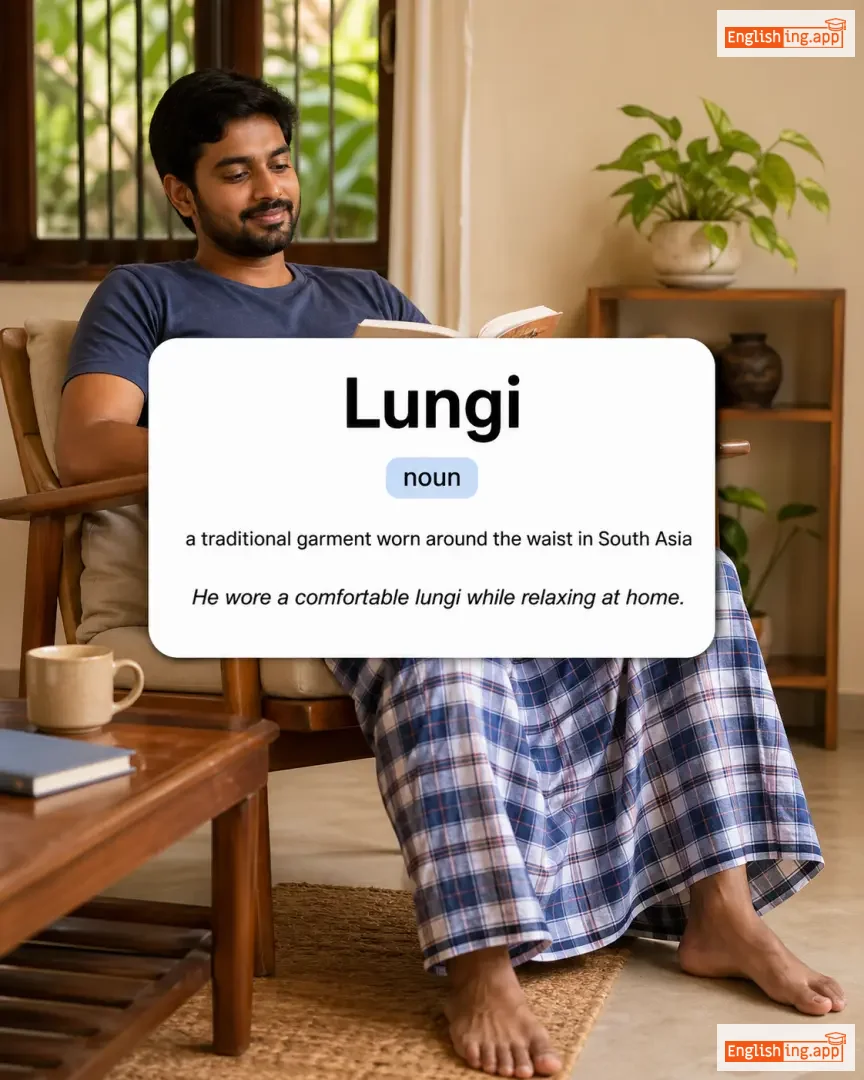
Lungi definition card — visual illustration of the meaning
noun C2
/ˈlʊŋ.gi/
ルンギ (rungi)

a traditional garment worn around the waist in South Asia

"He wore a comfortable lungi while relaxing at home."

"彼は家でくつろいでいるときに快適なルンギを着ていました。" (Kare wa ie de kutsuroide iru toki ni kaiteki na rungi o kite imashita.)
lustrous definition card — visual illustration of the meaning
adjective C2
/ˈlʌstrəs/
光沢のある (kōtaku no aru)

having a gentle sheen or soft glow

"Her hair looked smooth and lustrous."

"彼女の髪は滑らかで光沢のあるように見えた。" (Kanojo no kami wa nameraka de kōtaku no aru yō ni mieta.)
noun C2
/lʌɡˈʒʊəriəns/
贅沢 (zeitaku)

abundant growth, richness, or elegance

"The garden was filled with the luxuriance of tropical plants."

"庭は熱帯植物の贅沢で満たされていた。" (Niwa wa nettai shokubutsu no zeitaku de mitasarete ita.)
adjective C2
/lʌɡˈʒʊəriənt/
豊かな (yutakana)

abundant in growth or richly abundant

"The luxuriant forest was teeming with life."

"豊かな森は命で満ちていた。" (Yutakana mori wa inochi de michite ita.)
verb C2
/lʌɡˈʒʊrieɪt/
贅沢を楽しむ (zeitaku wo tanoshimu)

to enjoy something in a self-indulgent way; to take pleasure in great comfort

"She luxuriated in the warm bubble bath after a long day."

"長い一日の後、彼女は暖かいバブルバスで贅沢を楽しんでいた。" (Nagai ichinichi no ato, kanojo wa atatakai baburu basu de zeitaku wo tanoshinde ita.)