Vocabularies

English Vocabulary Dictionary | Word Meanings, Definitions & Examples

adjective C1
/ˈtæn.tə.laɪ.zɪŋ/
tentant (tentant)

Something that excites desire or interest, often by being just out of reach.

"She wore a tantalizing perfume that caught everyone's attention."

"Elle portait un parfum tentant qui a attiré l'attention de tout le monde." (Elle portait un parfum tentant qui a attiré l'attention de tout le monde.)
adjective C1
/ˈtæntəmaʊnt/
équivalent (equivalent)

Equivalent in seriousness or effect; virtually the same as.

"His refusal to speak was tantamount to an admission of guilt."

"Son refus de parler équivalait à une admission de culpabilité." (Son refus de parler equivalait a une admission de culpabilite.)
noun C1
/ˈtæntrəm/
colère (colère)

An uncontrolled outburst of anger and frustration, typically in a young child.

"The child threw a tantrum when he didn’t get the toy."

"L'enfant a eu une colère quand il n'a pas eu le jouet." (L'enfant a eu une colère quand il n'a pas eu le jouet.)
verb C1
/ˈteɪpər/
rétrécir (retrecir)

To gradually decrease in width, thickness, or intensity.

"The road tapers off as it reaches the mountains."

"La route se rétrécit à mesure qu'elle atteint les montagnes." (La route se rétrécit à mesure qu'elle atteint les montagnes.)
noun C1
/ˈtæpəstri/
tapisserie (tapisserie)

A piece of thick textile fabric with pictures or designs woven into it, often hung on walls.

"The museum displayed an ancient tapestry from the 15th century."

"Le musée a exposé une tapisserie ancienne du XVe siècle." (Le musée a exposé une tapisserie ancienne du XVe siècle.)
noun C1
/təˈræntjʊlə/
tarantule (tarantula)

A large hairy spider found in warm regions.

"The tarantula crawled across the desert floor."

"La tarentule rampait sur le sol du désert." (La tarentule rampait sur le sol du désert.)
adjective C1
/ˈtɑːrdi/
en retard (en retard)

Delayed; arriving or happening late.

"The student received a warning for being tardy to class."

"L'élève a reçu un avertissement pour être en retard en classe." (L'élève a reçu un avertissement pour être en retard en classe.)
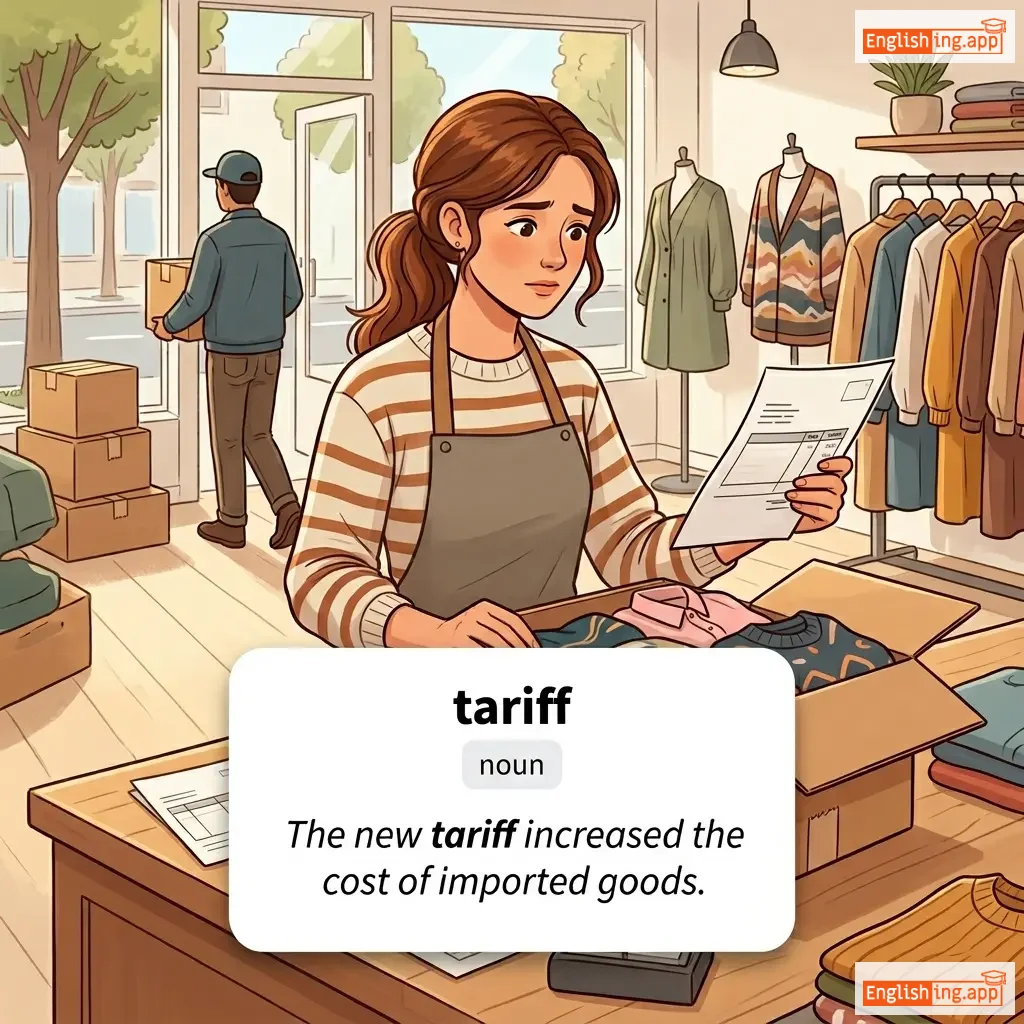
tariff definition card — visual illustration of the meaning
noun C1
/ˈtær.ɪf/
tarif (tarif)

A tax imposed by the government on imported or exported goods, also known as duty, customs tax, or levy.

"The new tariff increased the cost of imported goods."

"Le nouveau tarif a augmenté le coût des marchandises importées." (Le nouveau tarif a augmenté le coût des marchandises importées.)
verb C1
/ˈtɑːrnɪʃ/
ternir (ternir)

To lose luster, especially as a result of exposure to air or moisture; to damage reputation.

"The silver jewelry tarnished quickly when left in the open air."

"Les bijoux en argent se sont ternis rapidement lorsqu'ils ont été laissés à l'air libre." (Les bijoux en argent se sont ternis rapidement lorsqu'ils ont ete laisses a l'air libre.)
noun C1
/tɑːrˈpɔːlɪn/
bâche (tarpaulin)

A large sheet of strong, flexible, water-resistant material used for covering or protecting things.

"The workers used a tarpaulin to cover the construction materials from rain."

"Les ouvriers ont utilisé une bâche pour protéger les matériaux de construction de la pluie." (Les ouvriers ont utilise une bache pour proteger les materiaux de construction de la pluie)
noun, verb C1
/ˈtætər/
chiffon déchiré (chiffon dechire)

A torn piece of cloth or clothing; to become ragged or torn.

"The old flag hung in tatters after the storm."

"Le vieux drapeau était suspendu en morceaux après la tempête." (Le vieux drapeau était suspendu en morceaux après la tempête.)
adjective C1
/ˈtæti/
usé (use)

Worn out, shabby, or in poor condition.

"The sofa looked old and tatty after years of use."

"Le canapé semblait vieux et usé après des années d'utilisation." (Le canapé semblait vieux et usé après des années d'utilisation.)
verb C1
/tɔːnt/
moquer (moquer)

to provoke or challenge someone with insulting remarks

"The bully tried to taunt him with cruel words."

"Le bully a essayé de le provoquer avec des mots cruels." (Le bully a essayé de le provoquer avec des mots cruels.)
adjective C1
/tɔːt/
tendu (tendu)

stretched or pulled tight; tense

"The rope was pulled taut between the two poles."

"La corde était tendue entre les deux poteaux." (La corde était tendue entre les deux poteaux.)
adjective C1
/ˈtæksɪŋ/
épuisant (epuisant)

Requiring a lot of effort; physically or mentally demanding.

"Preparing for the exam was a taxing experience."

"Préparer l'examen a été une expérience épuisante." (Préparer l'examen a été une expérience épuisante.)
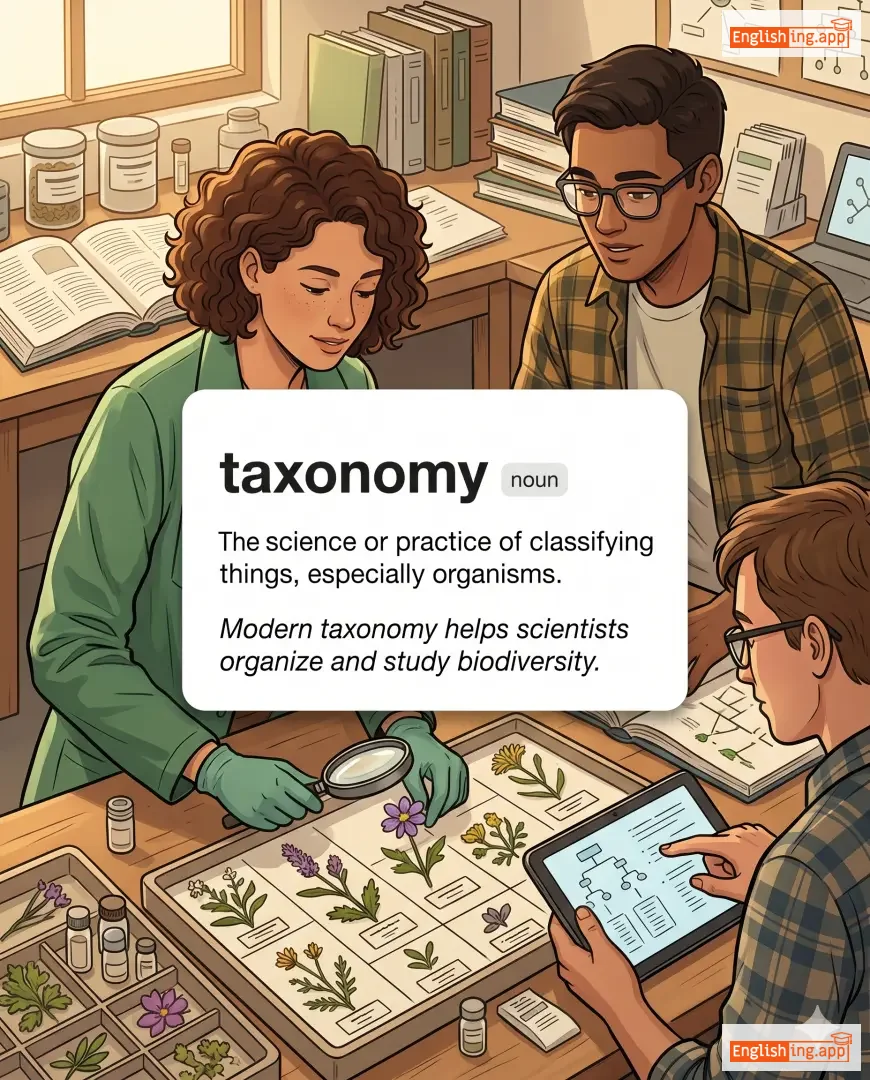
taxonomy definition card — visual illustration of the meaning
noun C1
/tækˈsɒnəmi/
science de la classification (science de la classification)

The science or practice of classifying things, especially organisms.

"Modern taxonomy helps scientists organize and study biodiversity."

"La taxonomie moderne aide les scientifiques à organiser et à étudier la biodiversité." (La taxonomie moderne aide les scientifiques à organiser et à étudier la biodiversité.)
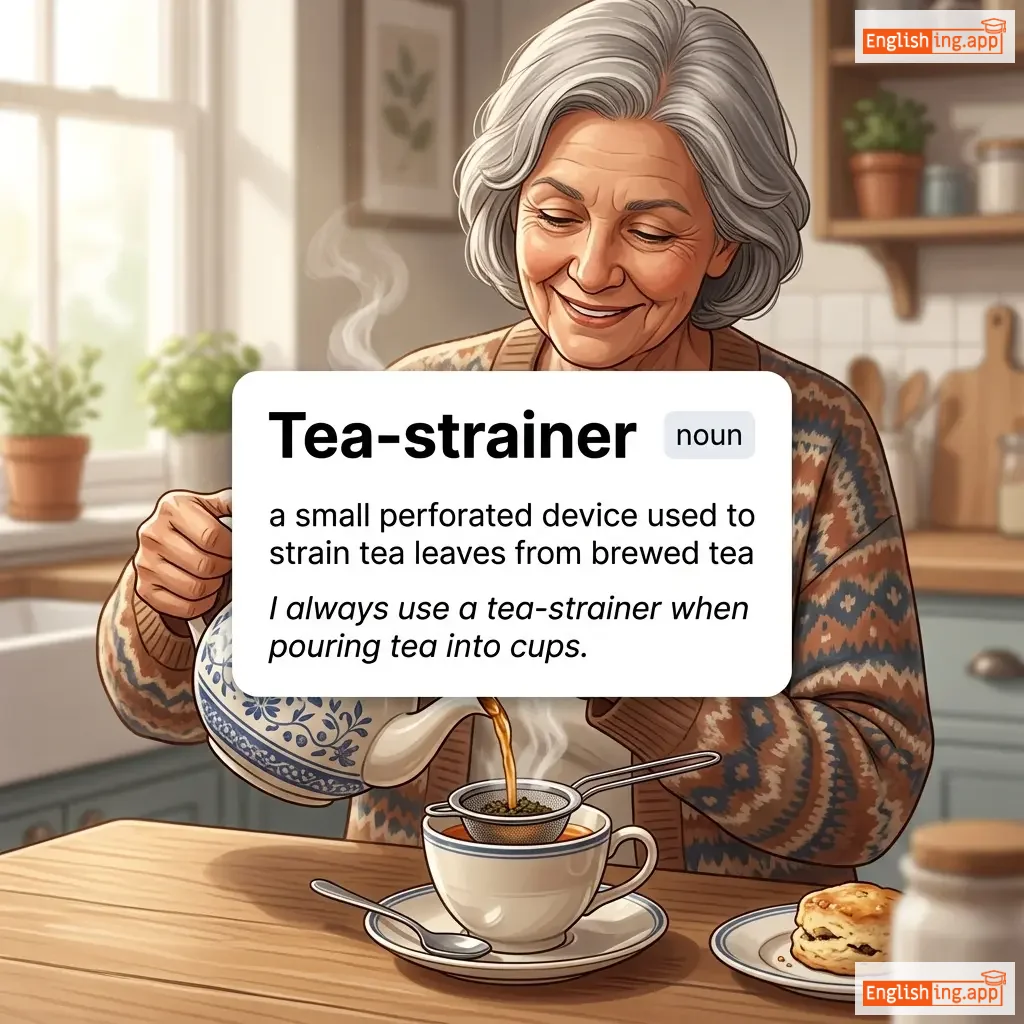
Tea-strainer definition card — visual illustration of the meaning
noun C1
/tiː ˈstreɪnər/
passoire à thé (passoire a the)

a small perforated device used to strain tea leaves from brewed tea

"I always use a tea-strainer when pouring tea into cups."

"J'utilise toujours une passoire à thé lorsque je verse le thé dans des tasses." (J'utilise toujours une passoire à thé lorsque je verse le thé dans des tasses.)
adjective C1
/ˈtɪərfəl/
en larmes; incliné à pleurer (en larmes; incline a pleurer)

expressing or showing sadness and sorrow; inclined to weep

"She gave a tearful goodbye to her friends at the airport."

"Elle a fait ses adieux en pleurant à ses amis à l'aéroport." (Elle a fait ses adieux en pleurant à ses amis à l'aéroport.)
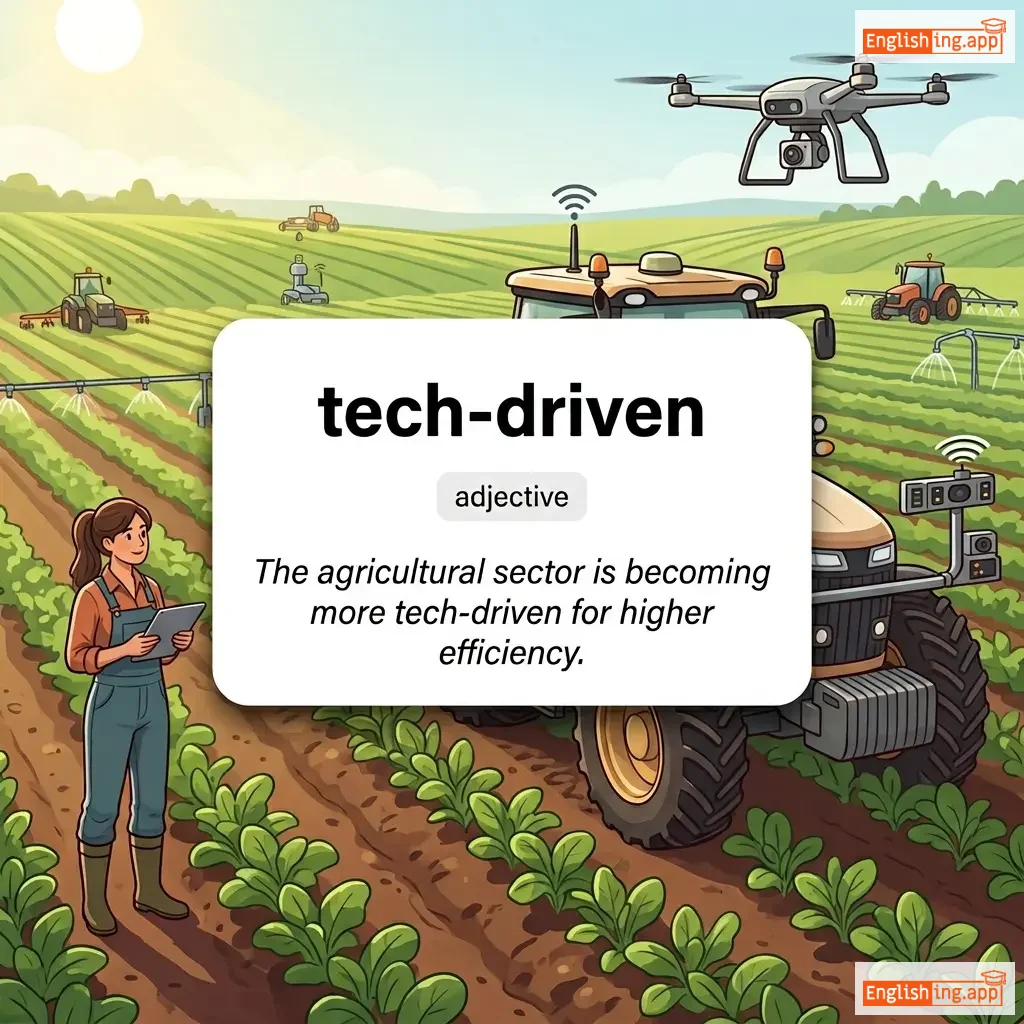
tech-driven definition card — visual illustration of the meaning
adjective C1
/tɛk ˈdrɪv.ən/
alimenté par la technologie (alimente par la technologie)

Powered or guided by technology; dependent on technological advancement for operation.

"The agricultural sector is becoming more tech-driven for higher efficiency."

"Le secteur agricole devient de plus en plus axé sur la technologie pour une efficacité accrue." (Le secteur agricole devient de plus en plus axe sur la technologie pour une efficacite accrue.)
noun C1
/ˈtɛknɪk/
technique (technique)

A method, skill, or art in a particular field, especially in the arts or sciences.

"The artist’s technic in watercolor impressed the judges."

"La technique de l'artiste en aquarelle a impressionné les juges." (La technique de l'artiste en aquarelle a impressionne les juges.)
noun C1
/ˌtɛknɪˈkæləti/
technicalité (technicalite)

A small detail of law, rule, or procedure; a minor point that affects an outcome.

"The case was dismissed on a technicality."

"L'affaire a été rejetée pour une question de technicité." (L'affaire a ete rejete pour une question de technicalite.)
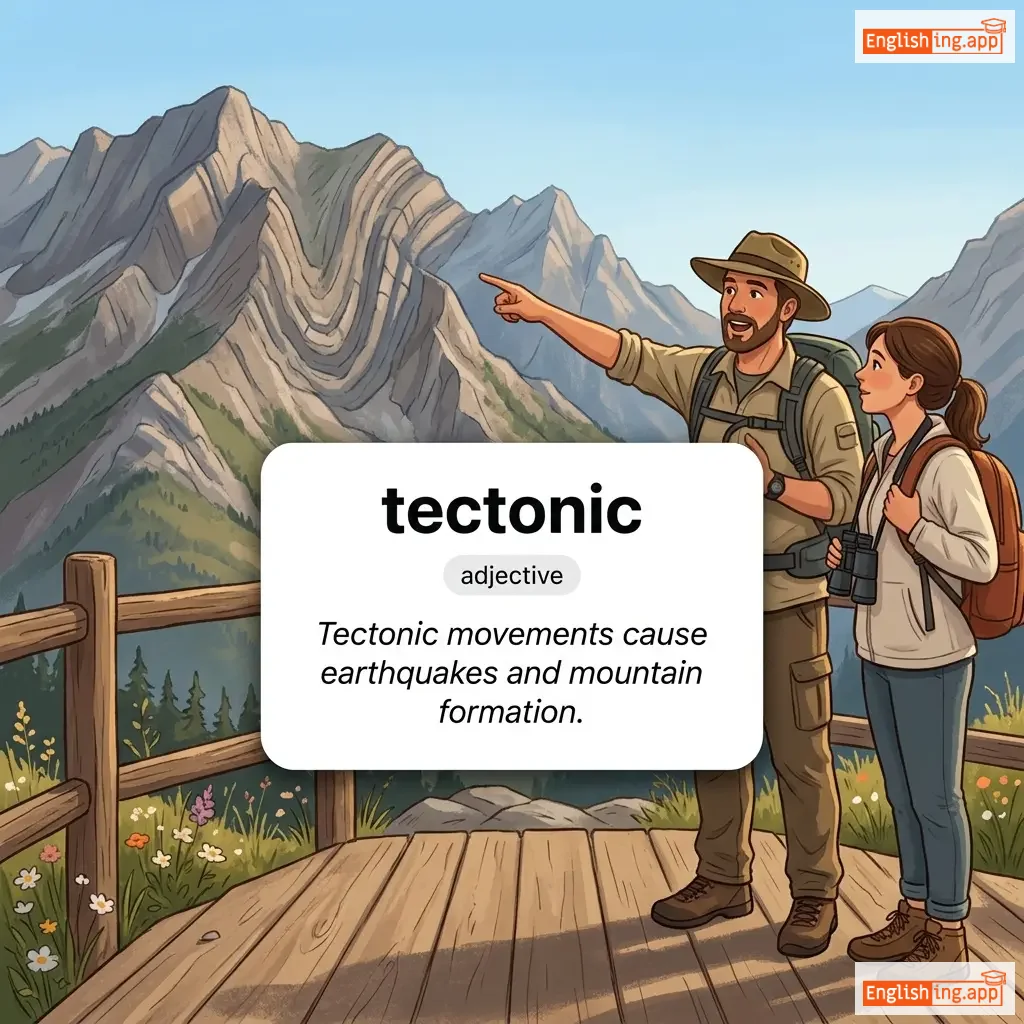
tectonic definition card — visual illustration of the meaning
adjective C1
/tɛkˈtɑː.nɪk/
tectonique (tectonique)

Relating to the structure of the earth's crust and the large-scale processes that take place within it.

"Tectonic movements cause earthquakes and mountain formation."

"Les mouvements tectoniques causent des tremblements de terre et la formation des montagnes." (Les mouvements tectoniques causent des tremblements de terre et la formation des montagnes.)
noun C1
/ˈtiːdiəm/
tedium (tedium)

the state of being tedious; monotony or boredom

"The tedium of long meetings often drains motivation."

"Le tedium des longues réunions épuise souvent la motivation." (Le tedium des longues réunions épuise souvent la motivation.)
verb C1
/tiːm/
abonder (abonder)

to be full of or swarming with

"The forest teems with wildlife."

"La forêt est pleine de faune." (La forêt est pleine de faune.)
adjective C1
/ˈtiːmɪŋ/
bondé (bonde)

full of or swarming with things or people

"The market was teeming with shoppers."

"Le marché était bondé de clients." (Le marché était bondé de clients.)
verb C1
/ˈtiːtər/
vaciller (vaciller)

to move or balance unsteadily; to wobble

"The glass began to teeter on the edge of the table."

"Le verre a commencé à vaciller sur le bord de la table." (Le verre a commence a vaciller sur le bord de la table.)
noun C1
/təˈlɛpəθi/
télépathie (telepathie)

the supposed communication of thoughts or ideas by means other than the known senses

"The twins claimed to share telepathy with each other."

"Les jumeaux ont prétendu partager une télépathie entre eux." (Les jumeaux ont pretendu partager une telepathie entre eux.)
noun C1
/təˈlɛfəni/
téléphonie (telephonie)

the technology and systems for transmitting voice over distances by telephone

"Modern telephony has evolved to include internet-based calls."

"La téléphonie moderne a évolué pour inclure les appels basés sur Internet." (La telephonie moderne a evolue pour inclure les appels bases sur Internet.)
adjective C1
/ˈtɛlˌteɪl/
révélateur (revelateur)

Revealing something that is usually hidden; giving away a secret or clue.

"The telltale signs of fatigue were visible on his face."

"Les signes révélateurs de fatigue étaient visibles sur son visage." (Les signes révélateurs de fatigue étaient visibles sur son visage.)
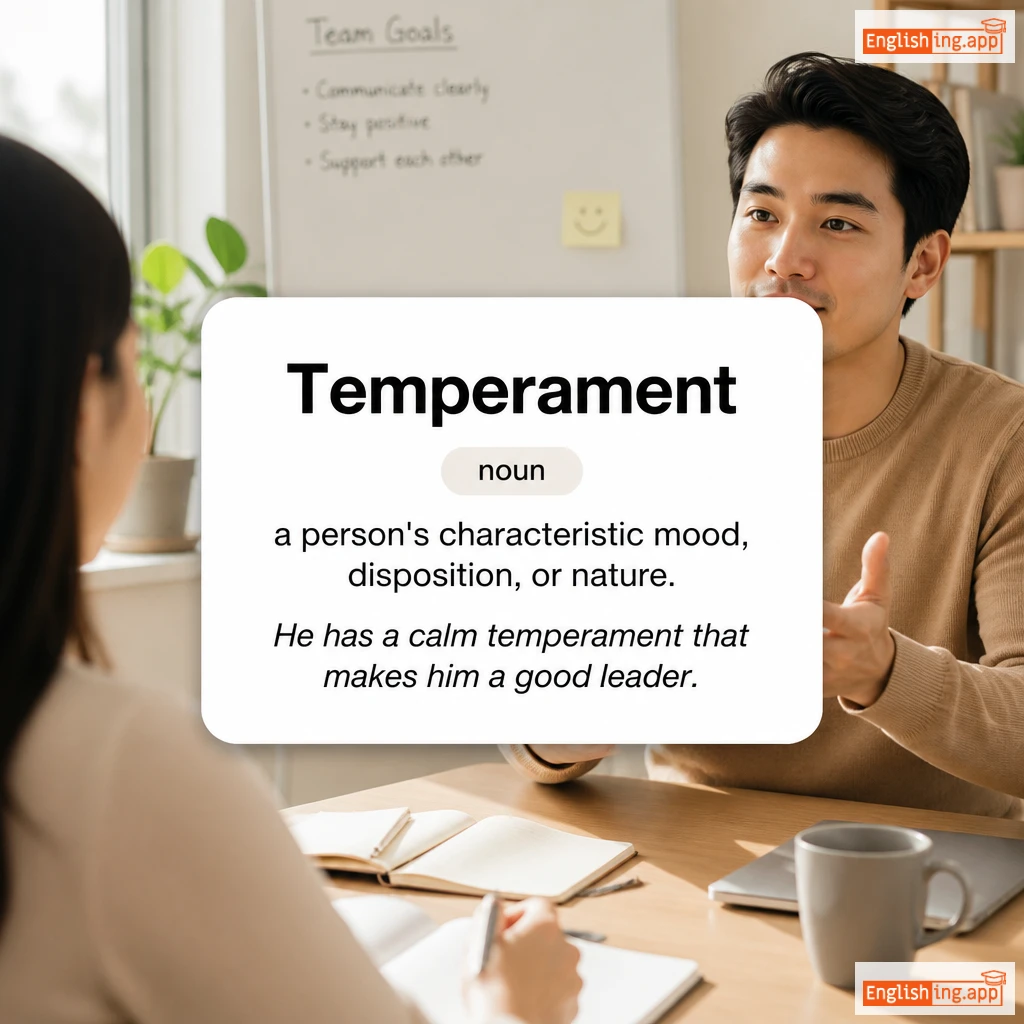
Temperament definition card — visual illustration of the meaning
noun C1
/ˈtɛmpərəmənt/
tempérament (temperament)

a person's characteristic mood, disposition, or nature.

"He has a calm temperament that makes him a good leader."

"Il a un tempérament calme qui fait de lui un bon leader." (Il a un tempérament calme qui fait de lui un bon leader.)
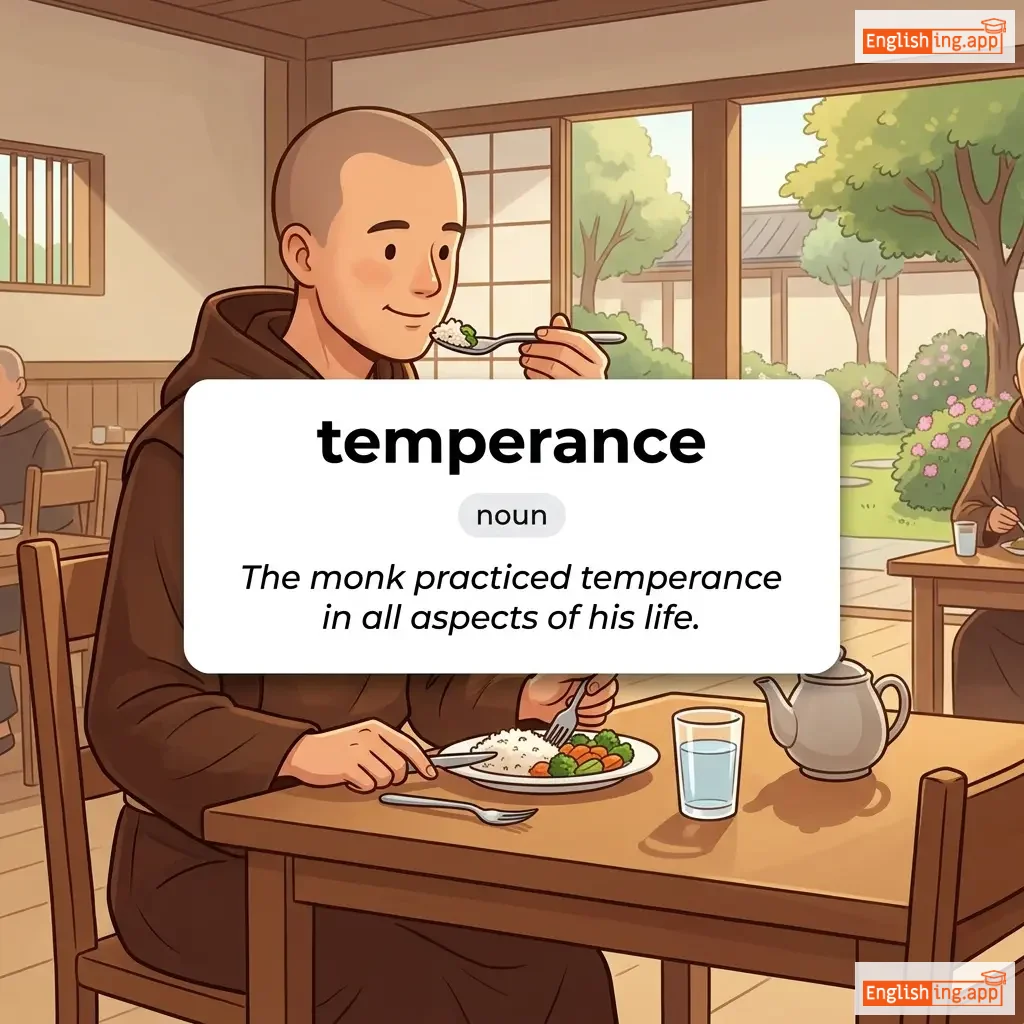
temperance definition card — visual illustration of the meaning
noun C1
/ˈtɛmpərəns/
tempérance (temprans)

moderation in action, thought, or feeling; restraint, especially regarding alcohol.

"The monk practiced temperance in all aspects of his life."

"Le moine pratiquait la tempérance dans tous les aspects de sa vie." (Le moine pratiquait la temperance dans tous les aspects de sa vie.)
adjective C1
/ˈtɛmpərət/
tempéré (tempere)

showing moderation or self-restraint; also describing mild climate.

"He is known for his temperate behavior even in stressful situations."

"Il est connu pour son comportement tempéré même dans des situations stressantes." (Il est connu pour son comportement tempéré même dans des situations stressantes.)
adjective C1
/ˈtɛmpərd/
temperé (tempere)

having a specified temper or disposition; strengthened or moderated.

"She gave a tempered response to the criticism."

"Elle a donné une réponse tempérée à la critique." (Elle a donne une reponse temperee a la critique.)
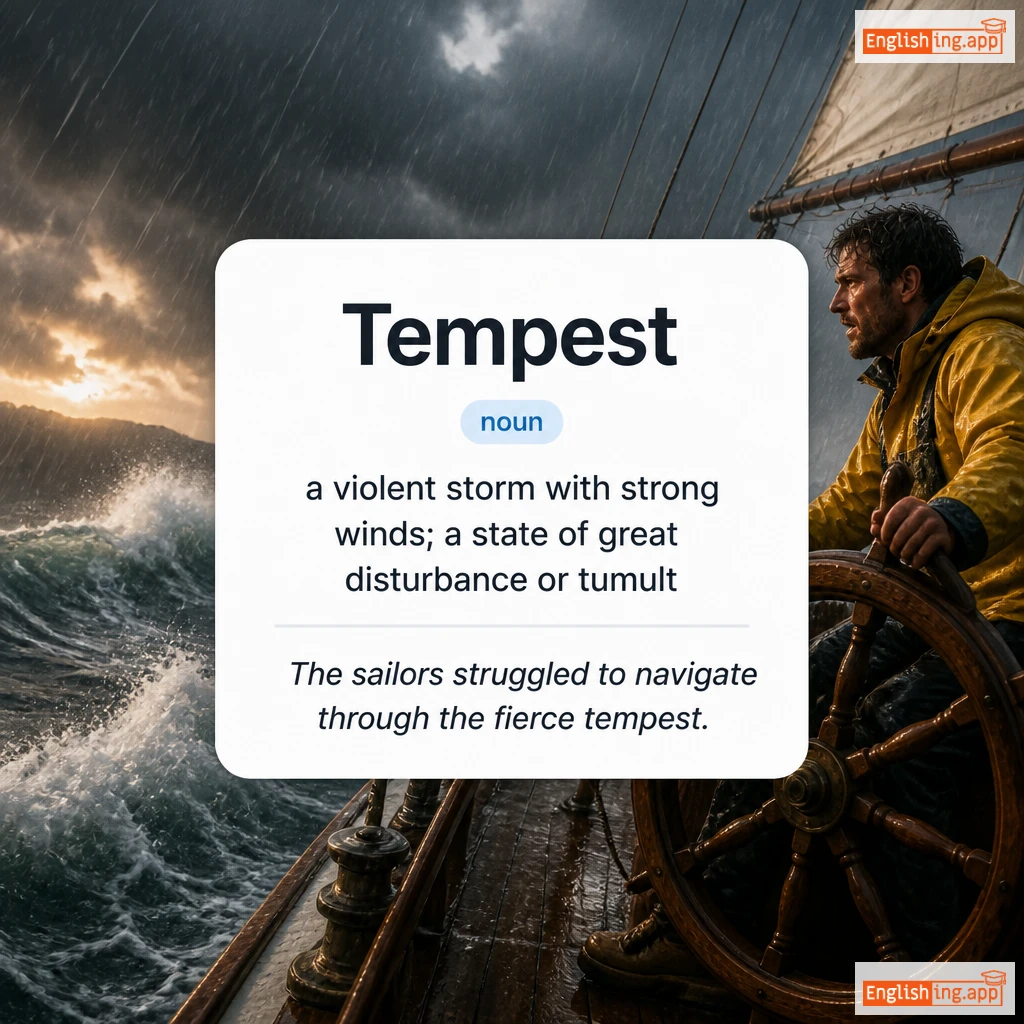
Tempest definition card — visual illustration of the meaning
noun C1
/ˈtem.pɪst/
tempête (tempete)

a violent storm with strong winds; a state of great disturbance or tumult

"The sailors struggled to navigate through the fierce tempest."

"Les marins ont lutté pour naviguer à travers la tempête furieuse." (Les marins ont lutté pour naviguer à travers la tempête furieuse.)
adjective C1
/tɛmˈpɛstjuəs/
tempétueux, agité (tempetueux, agite)

Characterized by strong and turbulent emotions or stormy conditions.

"Their tempestuous relationship often swung between love and anger."

"Leurs relations tempétueuses oscillaient souvent entre l'amour et la colère." (Leurs relations tempetueuses oscillaient souvent entre l'amour et la colere.)
adjective C1
/ˈtɛmpərəl/
temporel (temporel)

Relating to worldly affairs or to time rather than spiritual matters.

"The monk gave up his temporal possessions to live a simple life."

"Le moine a renoncé à ses possessions temporelles pour vivre une vie simple." (Le moine a renoncé à ses possessions temporelles pour vivre une vie simple.)
noun C1
/ˈtɛmptər/
tentateur (tentateur)

a person or thing that entices someone into doing something wrong

"The tempter whispered false promises into his ear."

"Le tentateur chuchota de fausses promesses à son oreille." (Le tentateur chuchota de fausses promesses à son oreille.)
adjective C1
/ˈtɛnəbl/
défendable (defendable)

able to be defended or maintained against attack or objection

"His argument was strong and tenable in court."

"Son argument était fort et défendable au tribunal." (Son argument était fort et défendable au tribunal.)
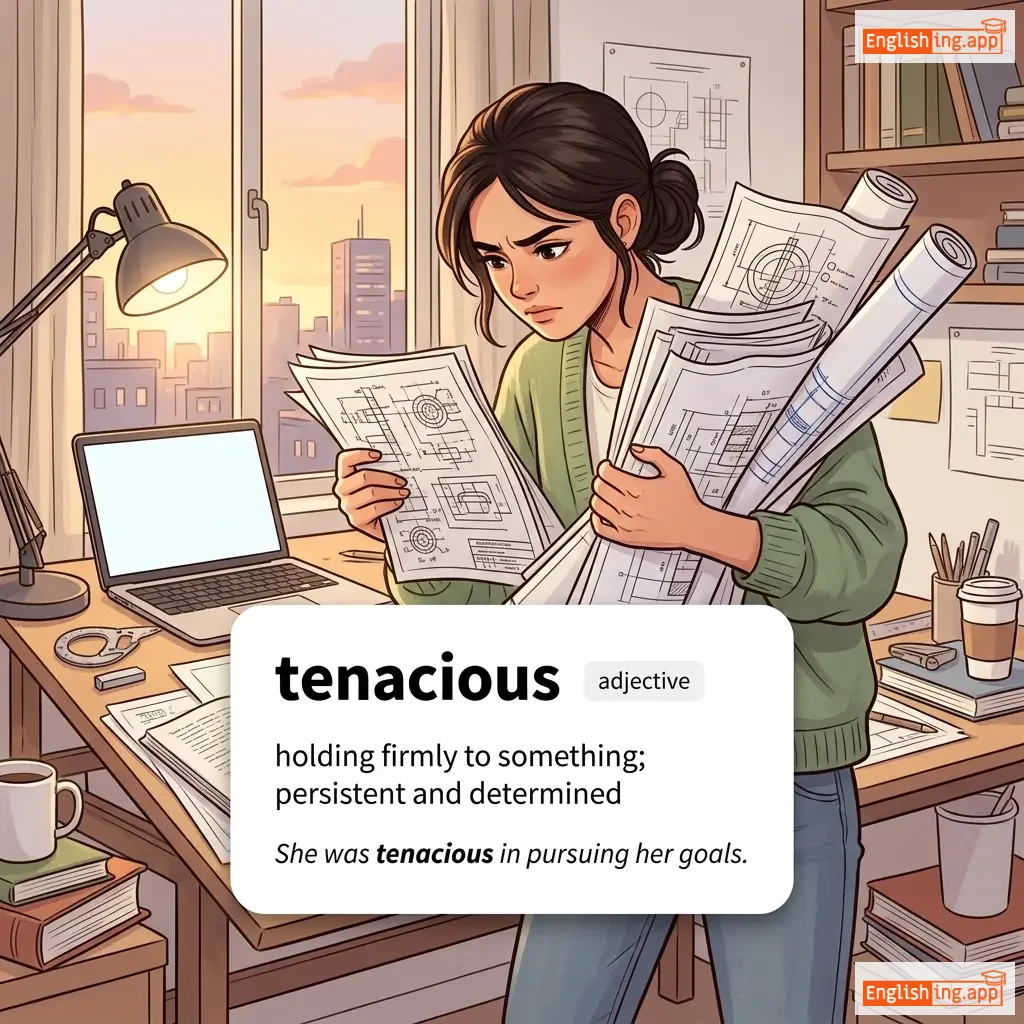
tenacious definition card — visual illustration of the meaning
adjective C1
/təˈneɪʃəs/
tenace (tenas)

holding firmly to something; persistent and determined

"She was tenacious in pursuing her goals."

"Elle était tenace dans la poursuite de ses objectifs." (Elle était tenace dans la poursuite de ses objectifs.)
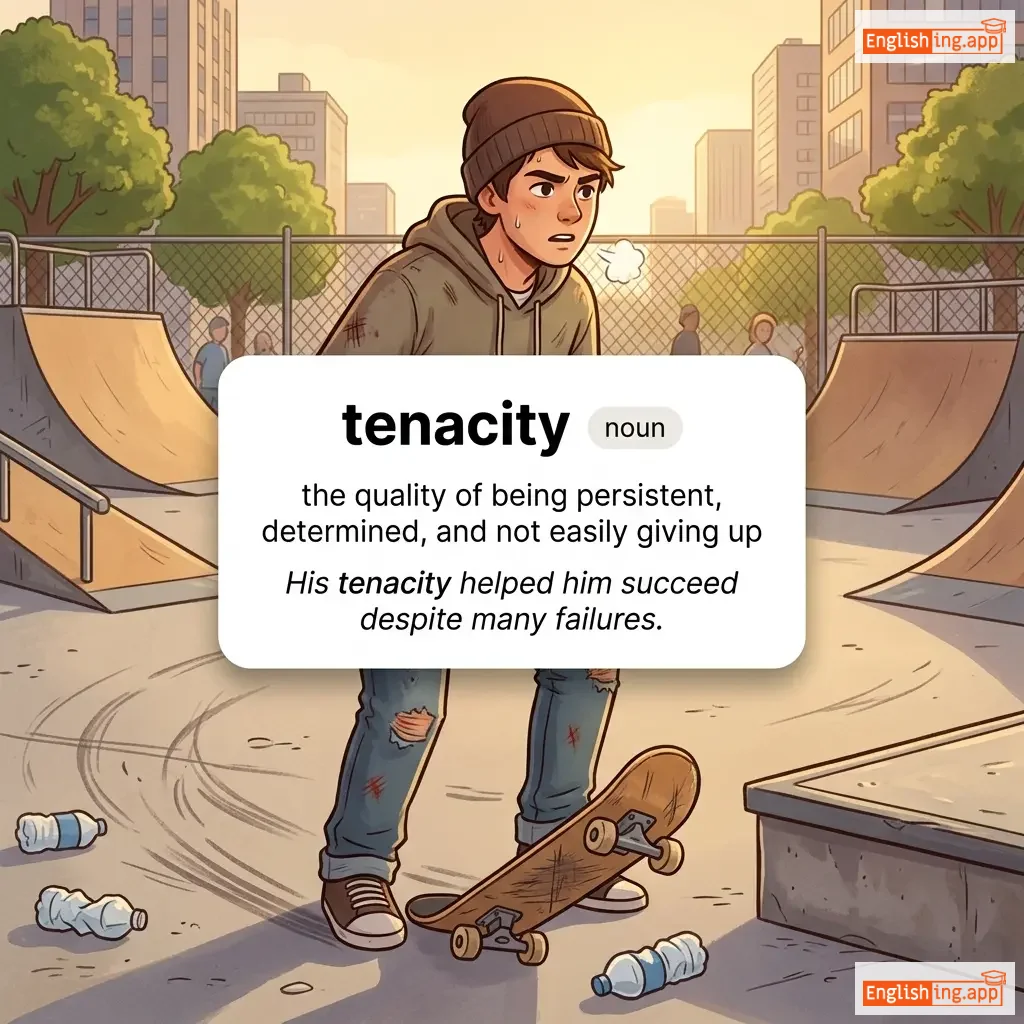
tenacity definition card — visual illustration of the meaning
noun C1
/təˈnæsəti/
tenacité (tenacite)

the quality of being persistent, determined, and not easily giving up

"His tenacity helped him succeed despite many failures."

"Sa ténacité l'a aidé à réussir malgré de nombreux échecs." (Sa tenacite l'a aide a reussir malgre de nombreux echecs.)
noun C1
/ˈtɛnəmənt/
immeuble locatif (immeuble locatif)

a large building divided into separate apartments, often in poor condition

"The family lived in a crowded tenement in the city."

"La famille vivait dans un tenement bondé en ville." (La famille vivait dans un tenement bondé en ville.)
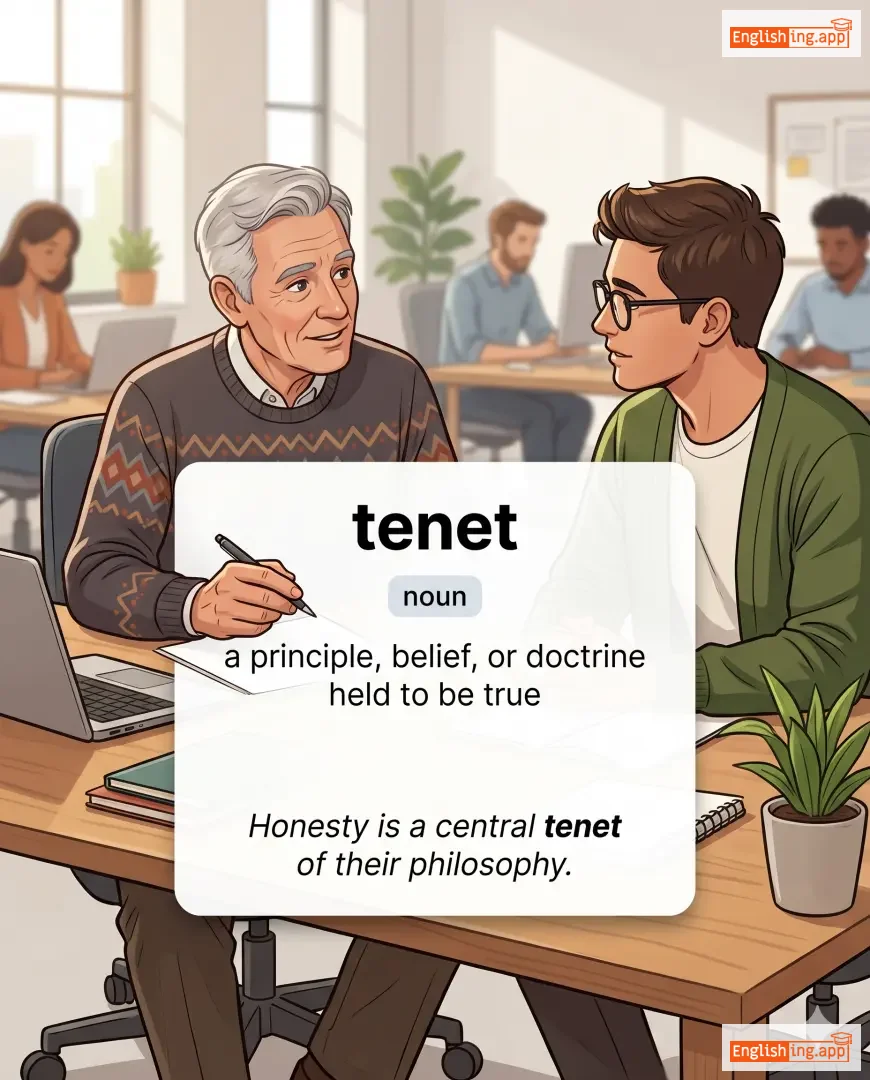
tenet definition card — visual illustration of the meaning
noun C1
/ˈtɛnɪt/
principe (principe)

a principle, belief, or doctrine held to be true

"Honesty is a central tenet of their philosophy."

"L'honnêteté est un principe central de leur philosophie." (L'honnêteté est un principe central de leur philosophie.)
noun C1
/ˈtɛnər/
ténor / ton général (tenor / ton general)

the general meaning, drift, or character of something; a male singing voice between baritone and alto

"The overall tenor of his speech was hopeful and reassuring."

"Le ton général de son discours était plein d'espoir et rassurant." (Le ton général de son discours était plein d'espoir et rassurant.)
adjective C1
/ˈtɛn.tə.tɪv/
tentatif (tentatif)

Not certain or fixed; done without confidence.

"She gave a tentative smile before agreeing."

"Elle a donné un sourire tentatif avant d'accepter." (Elle a donné un sourire tentatif avant d'accepter.)
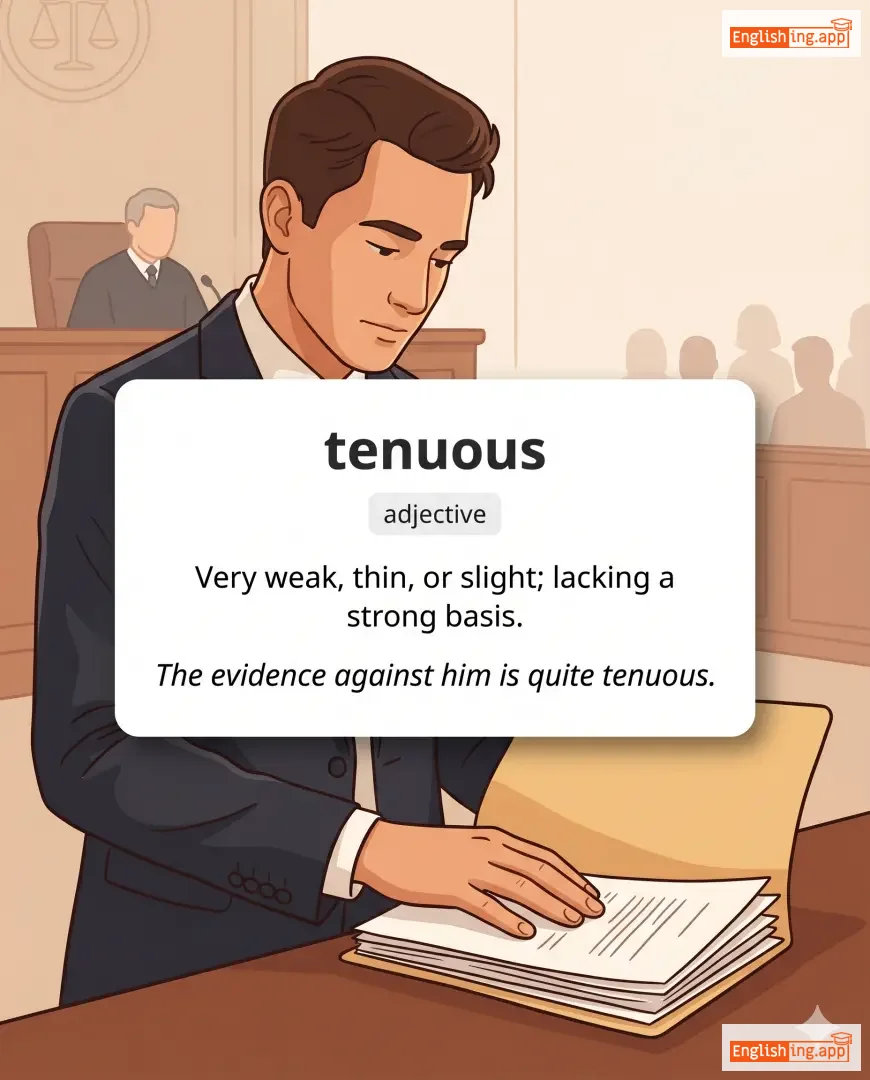
tenuous definition card — visual illustration of the meaning
adjective C1
/ˈtɛn.ju.əs/
faible / mince (faible / mince)

Very weak, thin, or slight; lacking a strong basis.

"The evidence against him is quite tenuous."

"La preuve contre lui est assez faible." (La preuve contre lui est assez faible.)
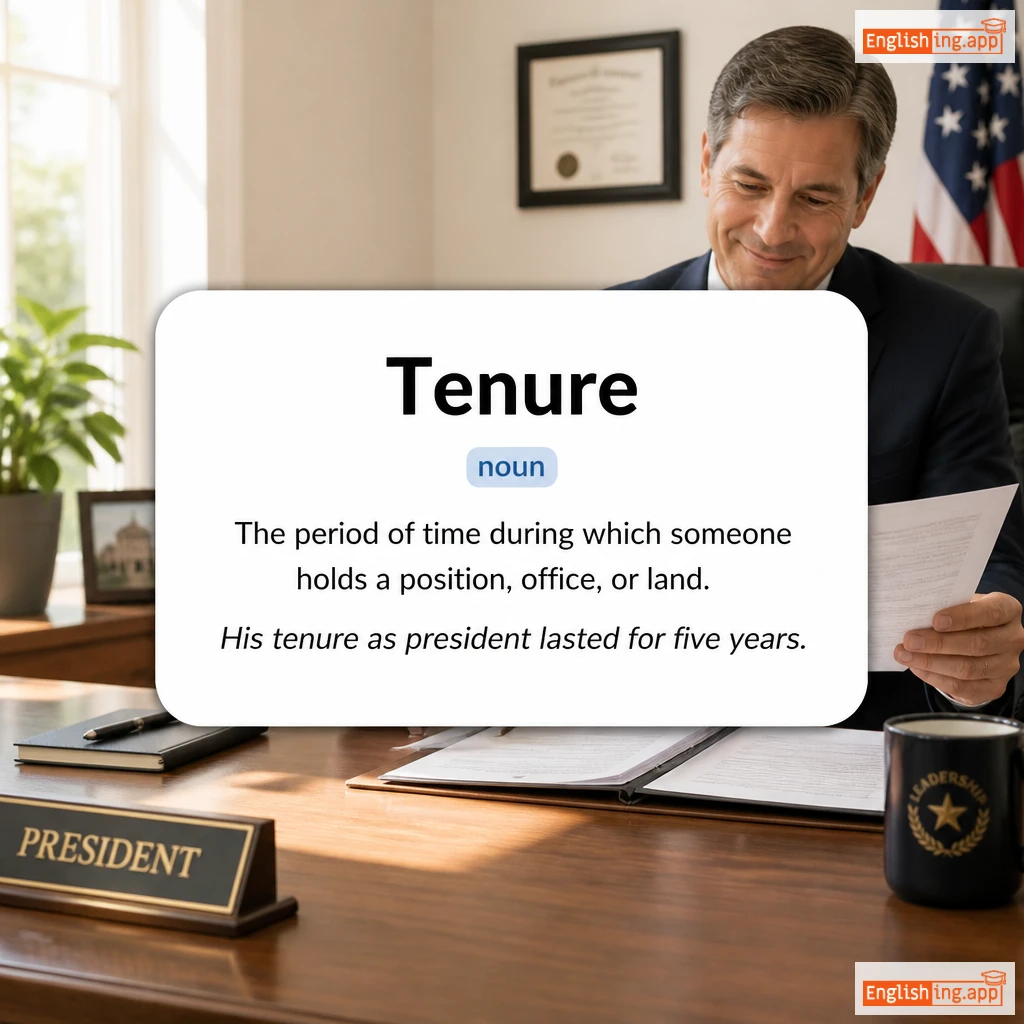
Tenure definition card — visual illustration of the meaning
noun C1
/ˈtɛnjər/
mandat (mandat)

The period of time during which someone holds a position, office, or land.

"His tenure as president lasted for five years."

"Son mandat en tant que président a duré cinq ans." (Son mandat en tant que president a dure cinq ans.)
adjective C1
/ˈtɛpɪd/
tiède, indifférent (tiede, indifferente)

Lukewarm; showing little enthusiasm or force.

"His speech received only a tepid response from the audience."

"Son discours n'a reçu qu'une réponse tiède de la part du public." (Son discours n'a reçu qu'une réponse tiède de la part du public.)
noun C1
/ˈtɜːrmɪnəs/
point final (pwan fianal)

the final point or end of something, especially the final station on a railway line

"The train finally arrived at the terminus after a long journey."

"Le train est finalement arrivé au terminus après un long voyage." (Le tran é finaleman arrivé o terminus après un long voyaj.)
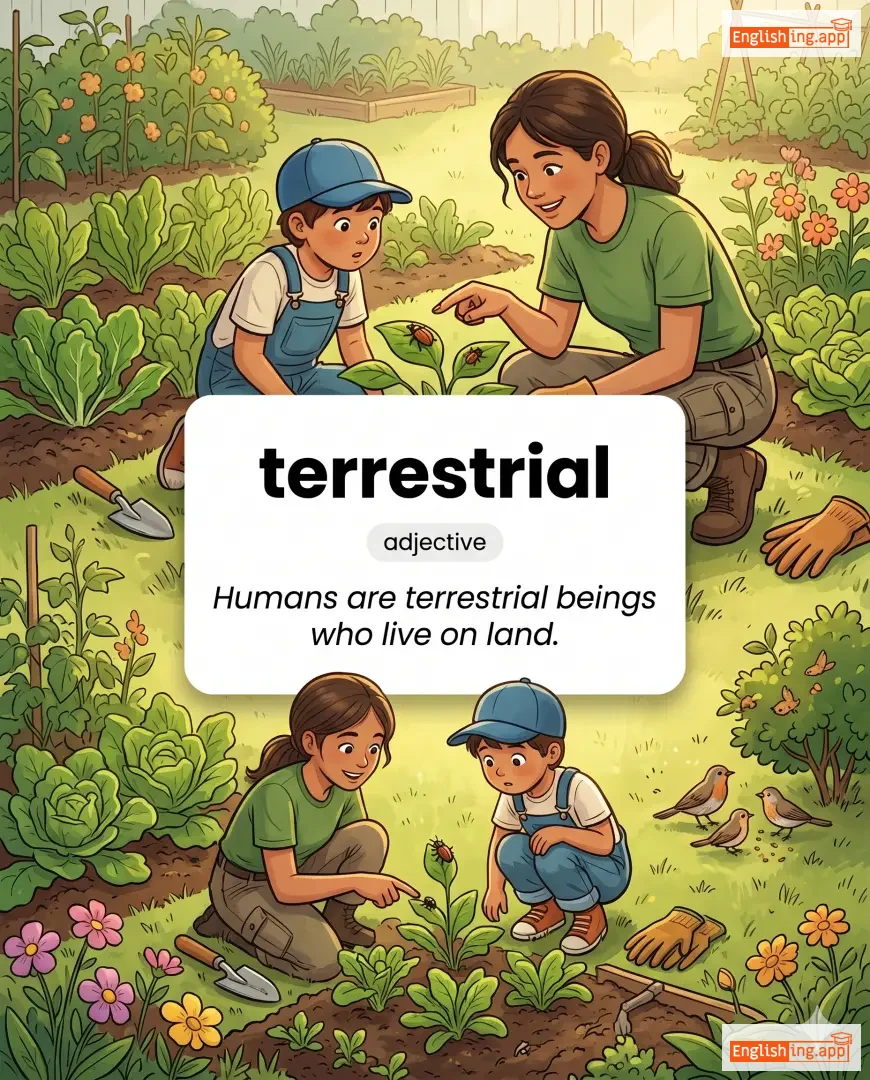
terrestrial definition card — visual illustration of the meaning
adjective C1
/təˈrɛstriəl/
terrestre (terrestre)

Relating to the Earth or land as opposed to the sea or air; living or growing on land.

"Humans are terrestrial beings who live on land."

"Les humains sont des êtres terrestres qui vivent sur la terre." (Les humains sont des êtres terrestres qui vivent sur la terre.)
adjective C1
/tɜːrs/
bref (bref)

brief and to the point; sparing in the use of words

"His reply was terse and ended the conversation quickly."

"Sa réponse était brève et a rapidement mis fin à la conversation." (sa reponse etait breve et a rapidement mis fin a la conversation.)