Vocabularies

English Vocabulary Dictionary | Word Meanings, Definitions & Examples

sensory definition card — visual illustration of the meaning
adjective C1
/ˈsɛn.sər.i/
感官的 (gǎnguān de)

Related to the five human senses (sight, hearing, taste, touch, smell).

"Sensory feedback enhances the VR experience."

"感官反馈增强了虚拟现实体验。" (Gǎnguān fǎnkuì zēngqiángle xūnǐ xiànshí tǐyàn.)
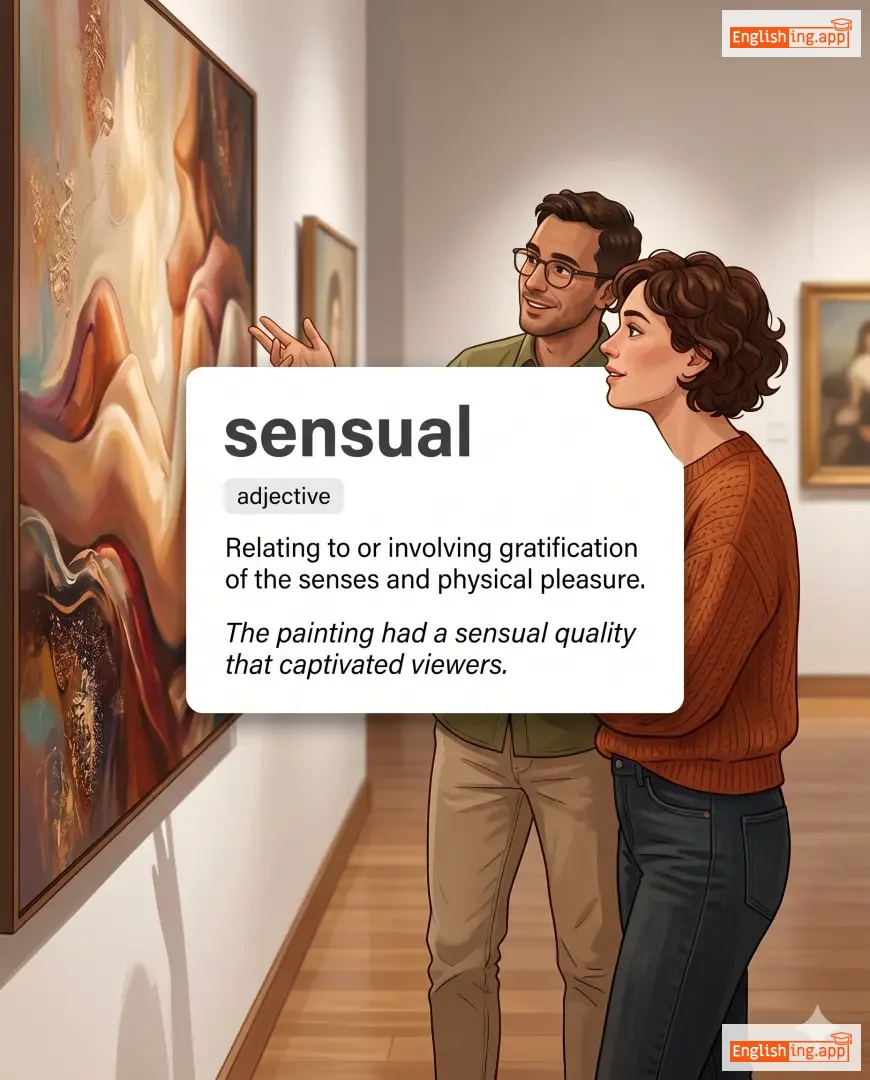
sensual definition card — visual illustration of the meaning
adjective C1
/ˈsɛnʃuəl/
性感 (xìnggǎn)

Relating to or involving gratification of the senses and physical pleasure.

"The painting had a sensual quality that captivated viewers."

"这幅画有一种性感的质量,吸引了观众。" (Zhè fú huà yǒu yī zhǒng xìnggǎn de zhìliàng, xīyǐnle guānzhòng.)
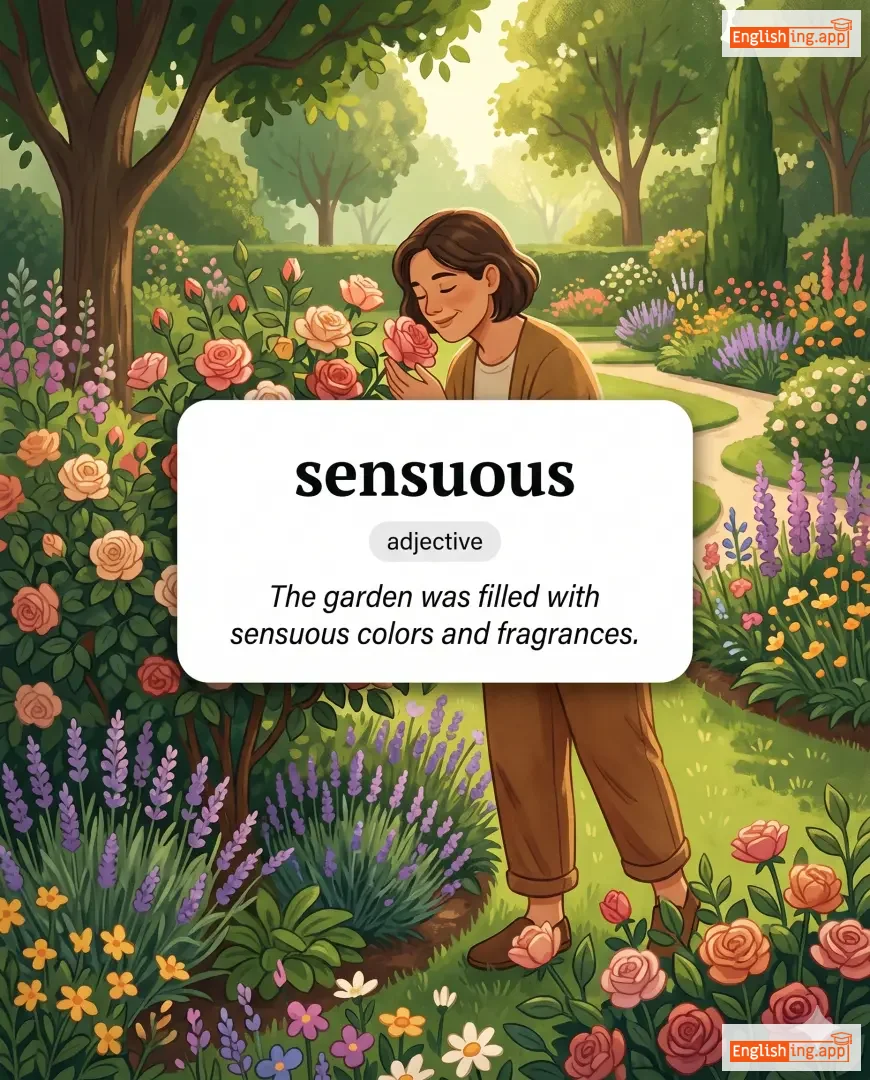
sensuous definition card — visual illustration of the meaning
adjective C1
/ˈsɛnʃuəs/
感官的 (gǎnguān de)

Relating to or affecting the senses rather than the intellect; pleasing to the senses.

"The garden was filled with sensuous colors and fragrances."

"花园里充满了感官的色彩和香气。" (Huāyuán lǐ chōngmǎnle gǎnguān de sècǎi hé xiāngqì.)
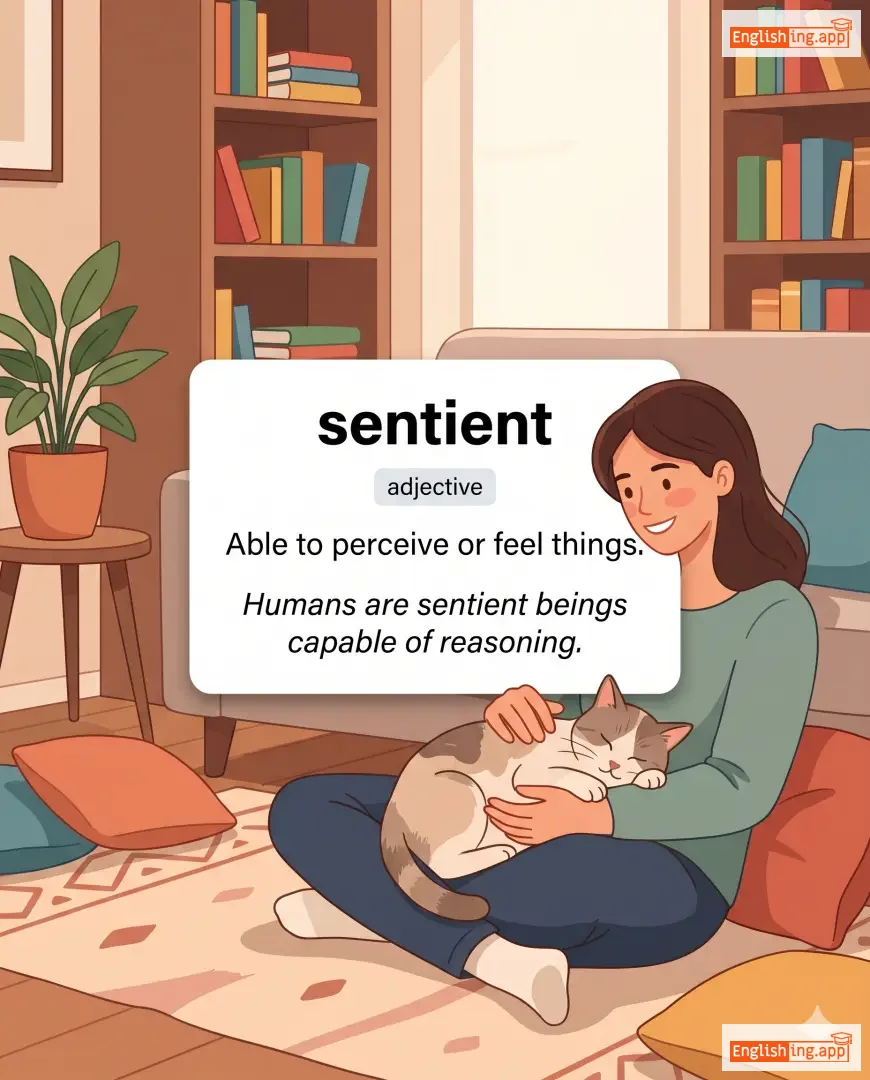
sentient definition card — visual illustration of the meaning
adjective C1
/ˈsɛnʃənt/
有感觉的 (you ganjue de)

Able to perceive or feel things.

"Humans are sentient beings capable of reasoning."

"人类是能够推理的感知生命。" (Rénlèi shì nénggòu tuīlǐ de gǎnzhī shēngmìng.)
noun C1
/ˈsɛntɪnəl/
哨兵 (shaobing)

A soldier or guard whose job is to stand and keep watch.

"A sentinel stood at the entrance of the camp."

"一个哨兵站在营地的入口处。" (Yi ge shaobing zhan zai yingdi de rukou chu.)
noun C1
/ˈsɛpərətɪst/
分裂主义者 (fenlie zhuyi zhe)

A person who supports the separation of a group from a larger body, often for political or cultural independence.

"The separatist group demanded independence from the central government."

"分裂主义者要求中央政府独立。" (Fenlie zhuyi zhe yaoqiu zhongyang zhengfu duli.)
adjective C1
/ˈsɛptɪk/
感染的 (gǎnrǎn de)

Infected with harmful bacteria; relating to or causing infection.

"The doctor treated the patient's septic wound immediately."

"医生立即处理了病人的脓毒伤口。" (Yīshēng lìjí chǔlǐle bìngrén de nóngdú shāngkǒu.)
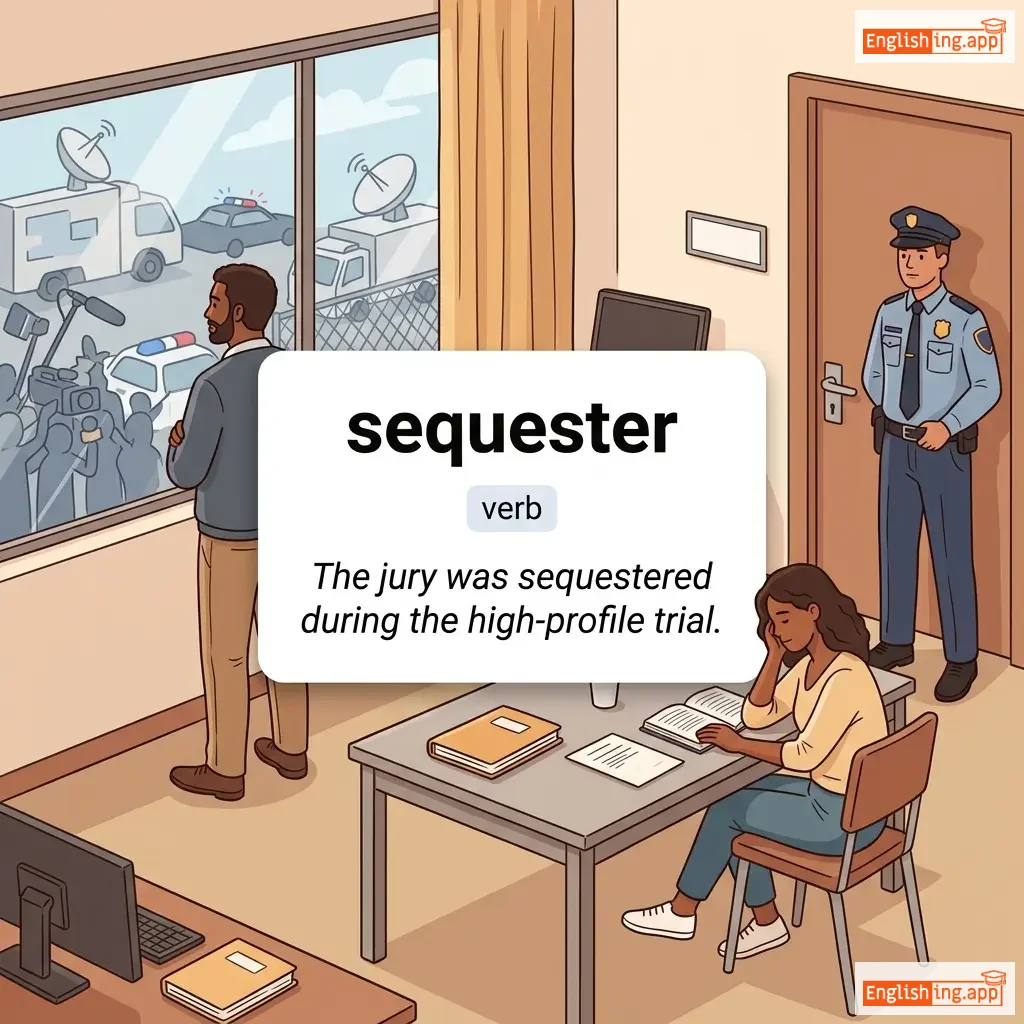
sequester definition card — visual illustration of the meaning
verb C1
/sɪˈkwɛstər/
隔离 (gélí)

To isolate or hide away; to take possession of assets until a debt has been paid.

"The jury was sequestered during the high-profile trial."

"陪审团在高调的审判期间被隔离。" (Péi shěn tuán zài gāo diào de shěnpàn qījiān bèi gélí.)
adjective C1
/ˌsɛrənˈdɪpɪtəs/
幸运的偶然 (xìngyùn de ǒurán)

Occurring or discovered by chance in a happy or beneficial way.

"Their meeting at the café was purely serendipitous."

"他们在咖啡馆的相遇完全是幸运的偶然。" (Tāmen zài kāfēi guǎn de xiāngyù wánquán shì xìngyùn de ǒurán.)
noun C1
/ˌsɛrənˈdɪpɪti/
意外的好运 (yìwài de hǎoyùn)

The occurrence of events by chance in a happy or beneficial way.

"Finding that old photo album was pure serendipity."

"找到那本旧照片集是纯粹的意外的好运。" (Zhǎodào nà běn jiù zhàopiàn jí shì chúncuì de yìwài de hǎoyùn.)
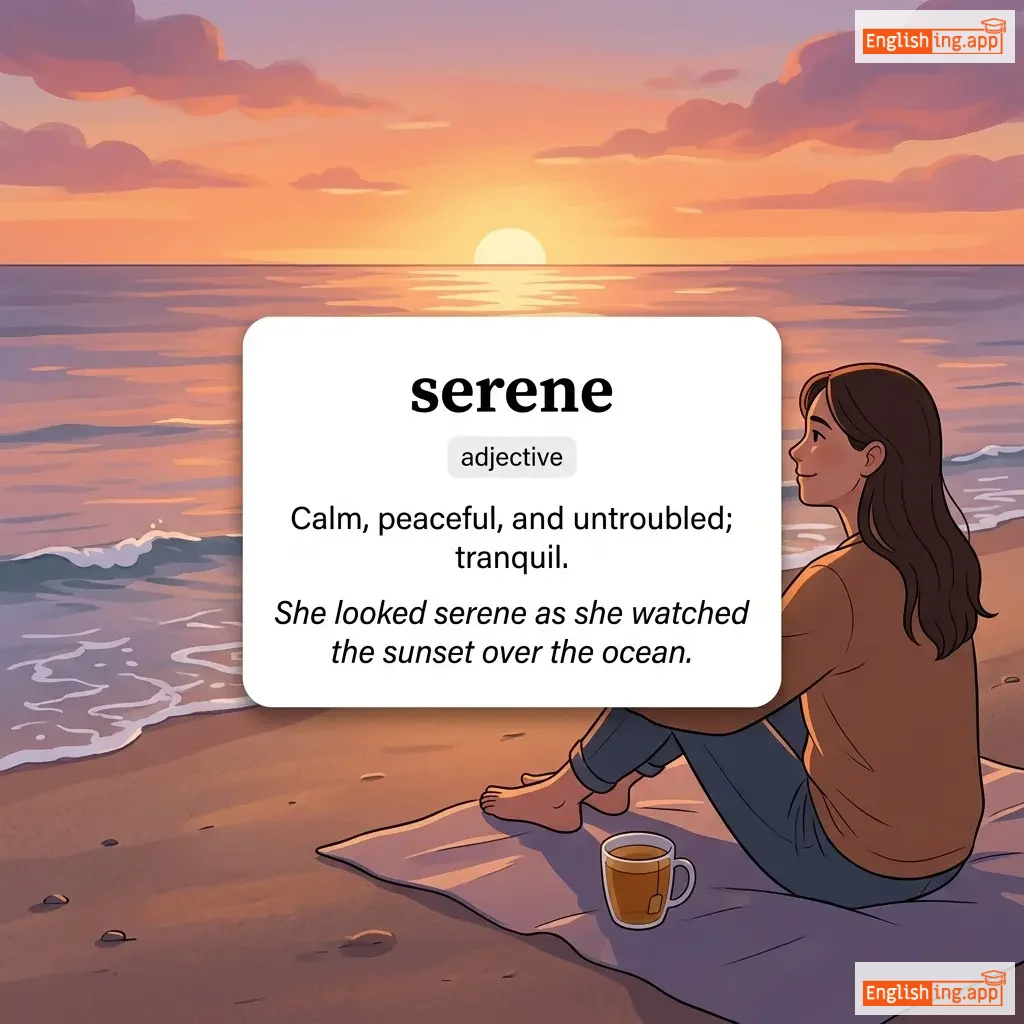
serene definition card — visual illustration of the meaning
adjective C1
/səˈriːn/
宁静 (ningjing)

Calm, peaceful, and untroubled; tranquil.

"She looked serene as she watched the sunset over the ocean."

"她在观看海上日落时看起来宁静。" (Ta zai guankan haishang riluo shi kanqilai ningjing.)
serenity definition card — visual illustration of the meaning
noun C1
/səˈrɛnɪti/
宁静 (ningjing)

The state of being calm, peaceful, and untroubled.

"Meditation brings a sense of serenity to the mind."

"冥想为大脑带来宁静的感觉。" (Míngxiǎng wèi dànǎo dàilái níngjìng de gǎnjué.)
noun C1
/ˌsɑːrdʒənt ˈmeɪdʒər/
军士长 (jūnshì zhǎng)

A senior non-commissioned officer in the army responsible for discipline and administration within a unit.

"The sergeant-major inspected the troops before the parade."

"军士长在游行前检查了部队。" (Jūnshì zhǎng zài yóuxíng qián jiǎnchále bùduì.)
noun C1
/ˈsɜːrmən/
讲道 (jiangdao)

A religious discourse delivered by a preacher, often offering moral instruction or spiritual guidance.

"The pastor gave a moving sermon about compassion and forgiveness."

"牧师做了一个关于同情和宽恕的感人讲道。" (Mùshī zuòle yīgè guānyú tóngqíng hé kuānshù de gǎnrén jiǎngdào.)
adjective C1
/ˈsɜːrpənˌtiːn/
蛇形的 (shé xíng de)

Having the shape, movement, or qualities of a serpent; winding or twisting.

"The road took a serpentine path through the mountains."

"这条路穿过山脉,呈蛇形蜿蜒。" (Zhè tiáo lù chuānguò shānmài, chéng shé xíng wān yán.)
adjective C1
/ˈsɛreɪtɪd/
锯齿状的 (jùchǐ zhuàng de)

Having a notched or saw-toothed edge.

"The bread knife had a serrated blade."

"面包刀有一把锯齿刀片。" (Miànbāo dāo yǒu yī bǎ jùchǐ dāopiàn.)
adjective C1
/ˈsɜːrvɪsəbl/
可用 (keyong)

fit for use; usable; in working order

"The old bicycle is still serviceable despite its age."

"那辆旧自行车尽管年久失修,仍然可用。" (Nà liàng jiù zìxíngchē jǐnguǎn nián jiǔ shīxiū, réngrán kěyòng.)
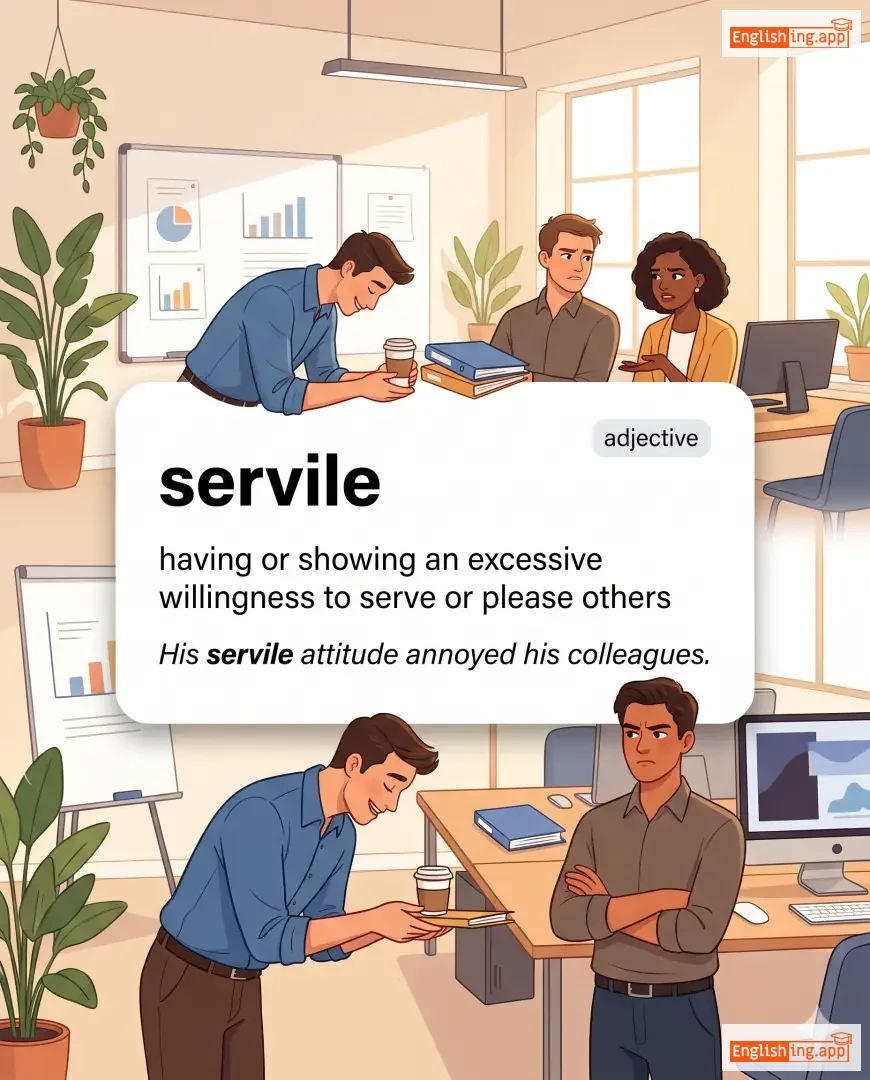
servile definition card — visual illustration of the meaning
adjective C1
/ˈsɜːrvaɪl/ or /ˈsɜːrvəl/
奴颜婢膝 (nú yán bì xī)

having or showing an excessive willingness to serve or please others

"His servile attitude annoyed his colleagues."

"他的奴颜婢膝的态度让同事们感到烦恼。" (Tā de nú yán bì xī de tàidù ràng tóngshìmen gǎndào fánnǎo.)
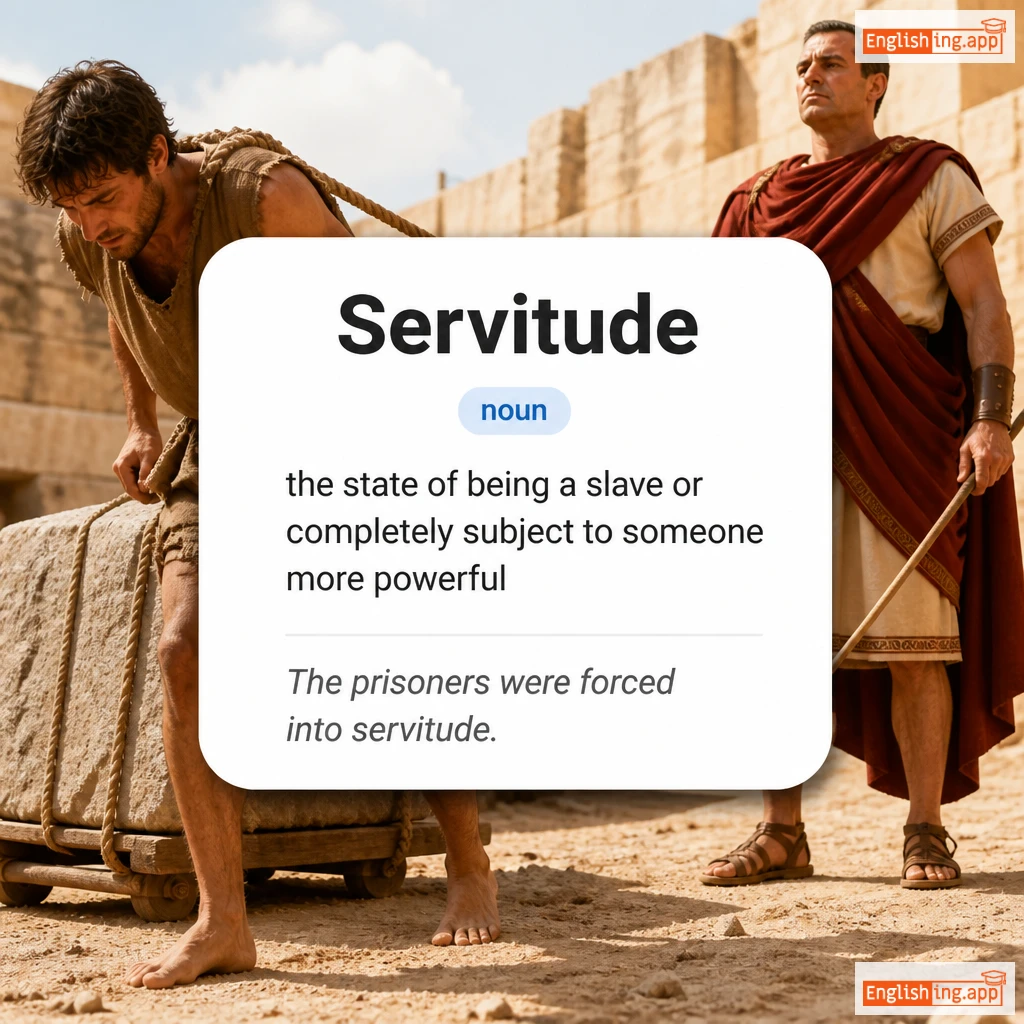
Servitude definition card — visual illustration of the meaning
noun C1
/ˈsɜːrvɪtuːd/
奴役 (nuyi)

the state of being a slave or completely subject to someone more powerful

"The prisoners were forced into servitude."

"囚犯们被迫进入了奴隶制。" (Qiufanmeng bei po jinru le nuli zhi.)
verb C1
/ˈsɛvər/
切断,断绝关系 (qiēduàn, duànjué guānxì)

to cut off or separate, especially by cutting; to end a connection or relationship

"He had to sever ties with the company after the dispute."

"在争执之后,他不得不与公司断绝关系。" (Zài zhēngzhí zhīhòu, tā bùdé bù yǔ gōngsī duànjué guānxì.)
noun C1
/ˈsɛvərəns/
离职补偿 (lízhí bǔcháng)

the act of ending something, especially a relationship or employment; compensation paid upon termination

"The company offered him severance pay after his job ended."

"公司在他工作结束后提供了离职补偿。" (Gōngsī zài tā gōngzuò jiéshù hòu tígōngle lízhí bǔcháng.)
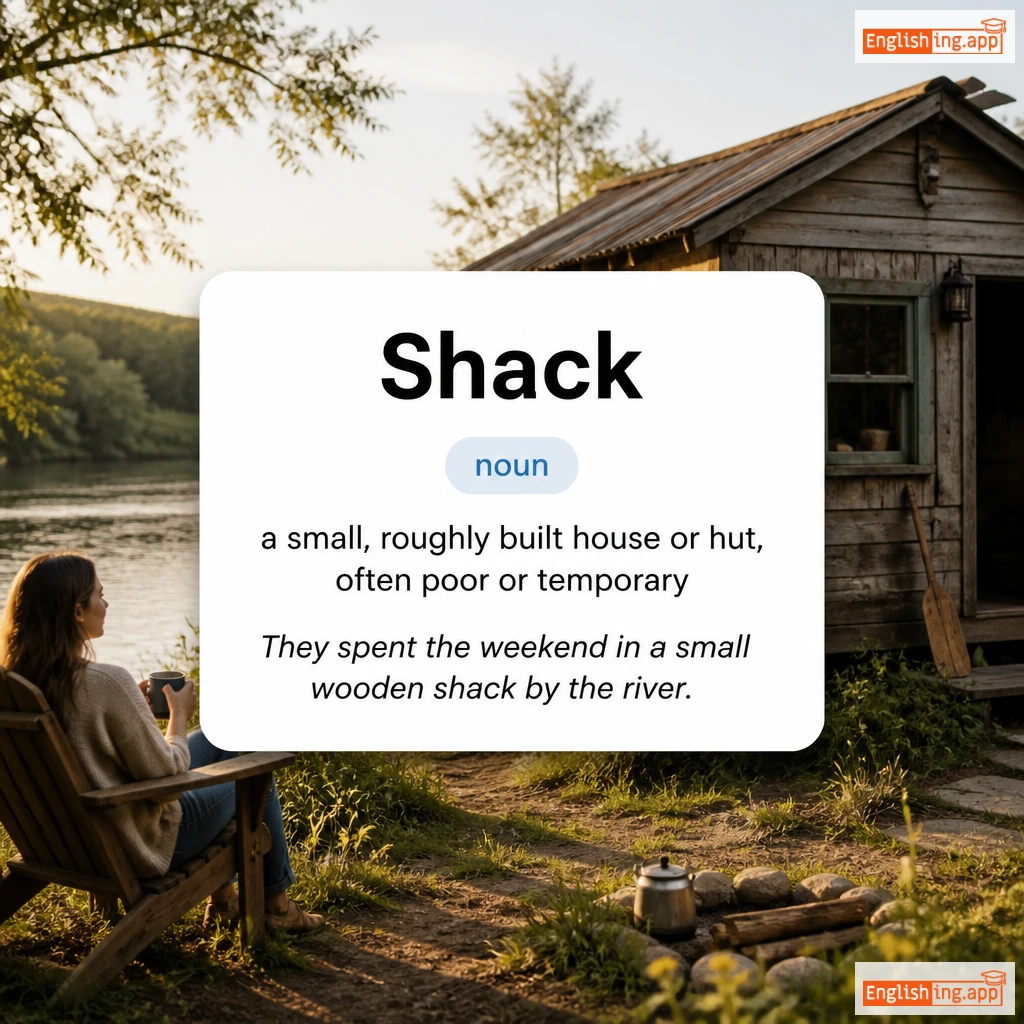
Shack definition card — visual illustration of the meaning
noun C1
/ʃæk/
简陋的小屋 (jiǎnlòu de xiǎo wū)

a small, roughly built house or hut, often poor or temporary

"They spent the weekend in a small wooden shack by the river."

"他们在河边的小木屋里度过了周末。" (Tāmen zài hé biān de xiǎo mùwū lǐ dùguòle zhōumò.)
verb C1
/ˈʃækəl/
束缚 (shùfù)

to chain or restrain; to restrict someone’s actions or freedom

"Outdated regulations shackle small businesses and slow innovation."

"过时的规定束缚了小企业并减缓了创新。" (Guòshí de guīdìng shùfùle xiǎo qǐyè bìng jiǎnhuǎnle chuàngxīn.)
noun C1
/ʃeɪl/
页岩 (yè yán)

a fine-grained sedimentary rock that can be split into thin layers

"The region is rich in shale and natural gas deposits."

"该地区富含页岩和天然气储备。" (gāi dìqū fù hán yè yán hé tiānránqì chǔbèi.)
noun, adjective, verb C1
/ʃæm/
虚假 (xujia)

something that is not what it appears to be; a false or fake thing; to pretend

"The deal turned out to be a sham."

"这笔交易被证明是虚假的。" (Zhè bǐ jiāo yì bèi zhèng míng shì xū jiǎ de.)
noun C1
/ˈʃæmbəlz/
一片混乱 (yī piàn hùnluàn)

a state of complete disorder or ruin

"After the storm, the whole town was in shambles."

"风暴过后,整个城镇陷入了一片混乱。" (Fēngbào guòhòu, zhěnggè chéngzhèn xiànrùle yī piàn hùnluàn.)
adjective C1
/ˈʃeɪm.ləs/
无耻的 (shameless)

having no shame; bold and rude; impudent

"The shameless politician refused to apologize for his mistakes."

"那个无耻的政治家拒绝为他的错误道歉。" (na ge wu chi de zheng zhi jia ju jue wei ta de cuo wu dao qian)
adjective C1
/ˈʃeɪp.ləs/
无形的 (wúxíng de)

having no definite or well-defined shape or form

"The fog created a shapeless mass in the distance."

"雾气在远处形成了无形的团块。" (Wùqì zài yuǎnchù xíngchéngle wúxíng de tuánkuài.)
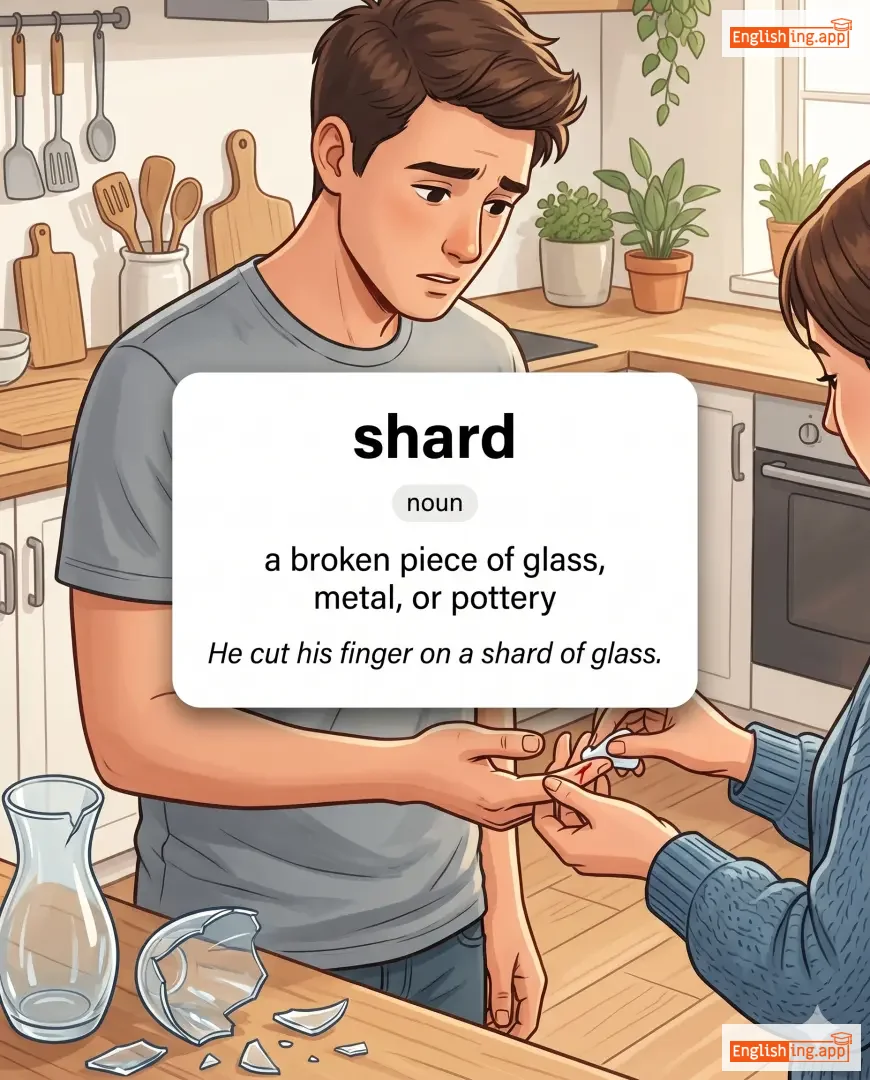
shard definition card — visual illustration of the meaning
noun C1
/ʃɑːrd/
碎片 (suipian)

a broken piece of glass, metal, or pottery

"He cut his finger on a shard of glass."

"他用玻璃碎片割伤了手指。" (Tā yòng bōli suìpiàn gē shāngle shǒuzhǐ.)
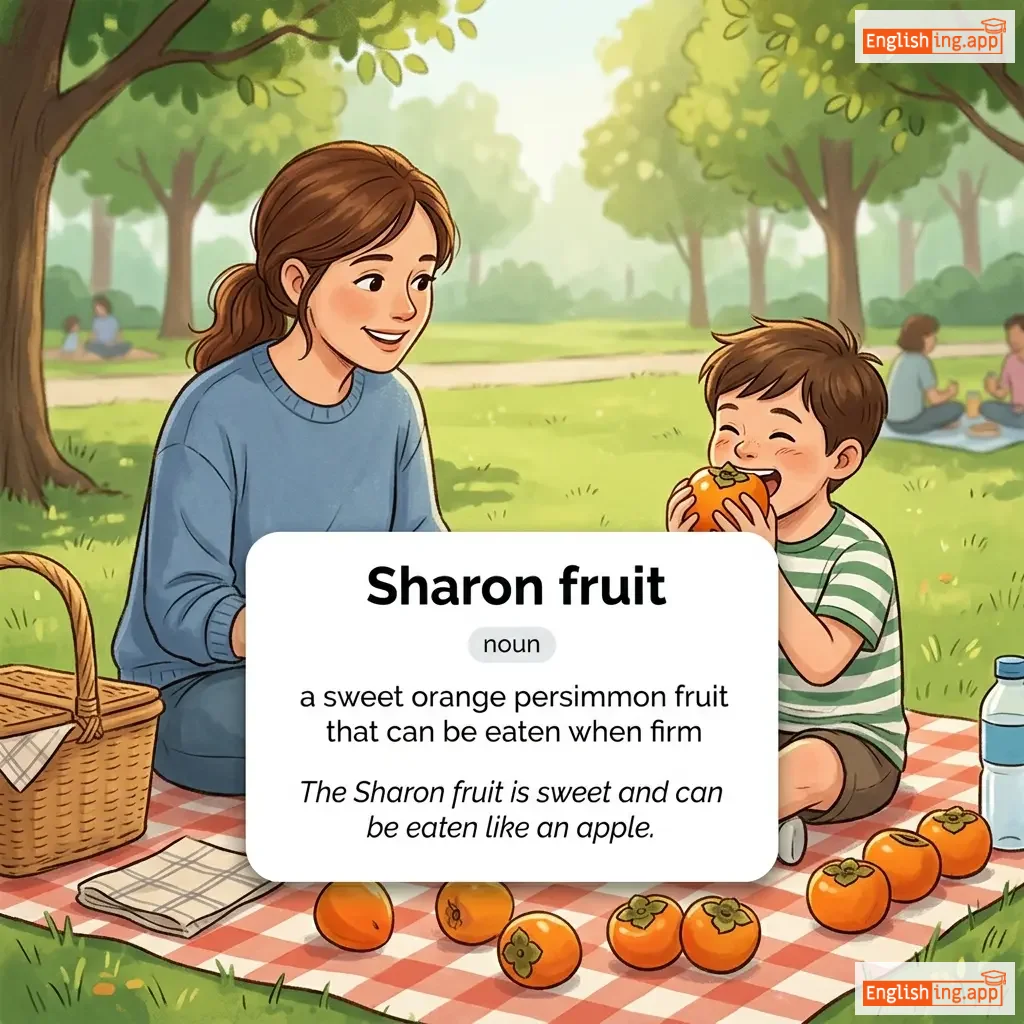
Sharon fruit definition card — visual illustration of the meaning
noun C1
/ˈʃær.ən fruːt/
沙龙水果 (Shā lóng shuǐguǒ)

a sweet orange persimmon fruit that can be eaten when firm

"The Sharon fruit is sweet and can be eaten like an apple."

"沙龙水果很甜,可以像苹果一样食用。" (Shā lóng shuǐguǒ hěn tián, kěyǐ xiàng píngguǒ yīyàng shíyòng.)
noun C1
/ˈʃeɪvɪŋ/
剃须 (tìxū)

the act of removing hair with a razor; a thin strip or piece shaved from something

"He bought a new cream for shaving."

"他买了一款新的剃须膏。" (Tā mǎile yī kuǎn xīn de tìxū gāo.)
verb C1
/ʃɪə/
修剪 (xiūjiǎn)

to cut the wool off a sheep or to cut something with sharp tools like scissors or shears

"The farmer will shear the sheep in the spring."

"农民将在春天修剪羊毛。" (Nóngmín jiāng zài chūntiān xiūjiǎn yángmáo.)
noun C1
/ˈʃɜːrbət/
雪葩 (xuě pā)

a sweet flavored drink or a frozen dessert made from sweetened fruit juice

"On hot days, she enjoys a glass of lemon sherbet."

"在炎热的日子里,她喜欢喝一杯柠檬雪葩。" (zài yánrè de rìzi lǐ, tā xǐ huān hē yī bēi níng méng xuě pā.)
verb C1
/ˈʃɪmər/
闪烁 (shan shuo)

To shine with a soft, wavering light.

"The lake shimmered under the moonlight."

"湖泊在月光下闪烁。" (Húpō zài yuèguāng xià shǎnshuò.)
adjective C1
/ˈʃɪpˌʃeɪp/
井然有序 (jǐngrán yǒuxù)

Neat, tidy, and in good order.

"She kept her office shipshape at all times."

"她总是保持办公室井然有序。" (Tā zǒng shì bǎochí bàngōngshì jǐngrán yǒuxù.)
verb C1
/ʃɜːrk/
逃避 (taobi)

to avoid or neglect a duty or responsibility

"He always tries to shirk his responsibilities at work."

"他总是尽力避免工作中的责任。" (Ta zongshi jinli taobi gongzuo zhong de zeren.)
noun C1
/ʃoʊl/
鱼群 (yu qun)

a large group of fish swimming together; a shallow place in water

"We saw a shoal of fish near the coast."

"我们在海岸附近看到了鱼群。" (Wo men zai ha'an fu jin kan dao le yu qun.)
adjective C1
/ˈʃɑːdi/
劣质 (liezhi)

badly made or done; of poor quality

"The contractor did a shoddy job on the repairs."

"承包商在修理工作中做了劣质的工作。" (Chengbaoshang zai xiuli gongzuo zhong zuo le liezhi de gongzuo.)
/ʃrɛd/
撕裂 (silie)

to tear or cut something into small pieces

"She shredded the old documents before throwing them away."

"她在扔掉之前把旧文件撕成了碎片。" (Ta zai reng diao zhiqian ba jiu wenjian sile cheng le suipian.)
noun C1
/ʃruː/
暴躁的女人 / 小鼠类动物 (bao zao de nu ren / xiao shu lei dong wu)

a small mouse-like animal; also a woman with a bad temper

"The play describes a strong-willed woman as a shrew."

"这部戏描述了一位坚强的女性,像一个暴躁的女人一样。" (Zhe bu xi miaoshu le yi wei jianqiang de nvxing, xiang yi ge baozao de nvren yiyang.)
adjective C1
/ʃruːd/
精明 (jingming)

having sharp judgment and practical intelligence

"She made a shrewd investment in real estate."

"她在房地产方面做出了精明的投资。" (Ta zai fangdichan fangmian zuo chule jingming de touzi.)
adjective C1
/ʃrɪl/
尖锐的声音 (jianrui de shengyin)

High-pitched and piercing in sound.

"The shrill whistle startled everyone in the room."

"尖锐的哨声让房间里的每个人都吓了一跳。" (Jianrui de shaosheng rang fangjian li de mei ge ren dou xià le yī tiào.)
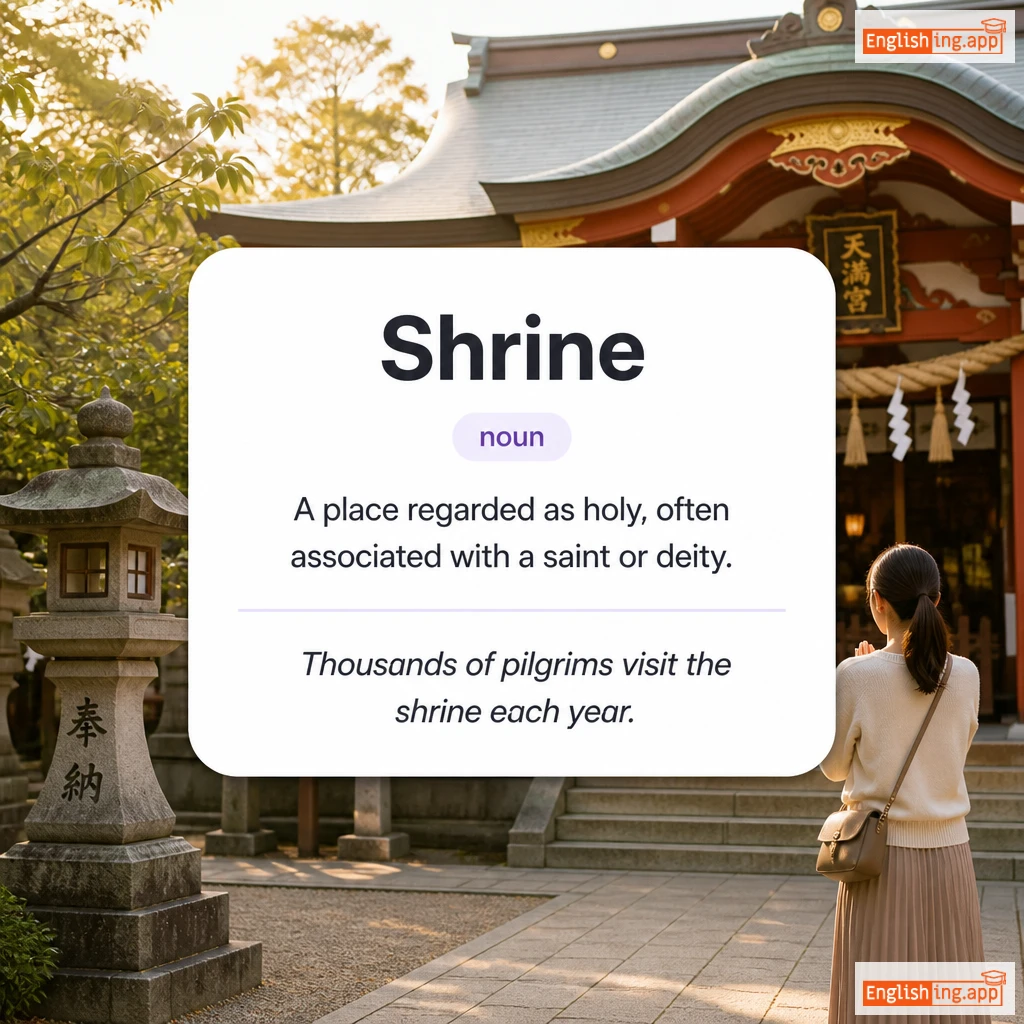
Shrine definition card — visual illustration of the meaning
noun C1
/ʃraɪn/
圣地 (shengdi)

A place regarded as holy, often associated with a saint or deity.

"Thousands of pilgrims visit the shrine each year."

"每年都有成千上万的朝圣者参观这个圣地。" (Mei nian dou you chengqian shangwan de chaoshengzhe canguan zhege shengdi.)
noun C1
/ˈʃrɪŋkɪdʒ/
收缩 (shousuo)

The process of becoming smaller in size, amount, or value.

"The company reported a shrinkage in profits this quarter."

"公司报告了本季度利润的收缩。" (Gongsi baogao le ben jidu lilun de shousuo.)
verb C1
/ˈʃrɪvəl/
枯萎 (ku wei)

To become dry, wrinkled, and smaller due to lack of moisture.

"The flowers shriveled under the hot sun."

"花朵在烈日下枯萎。" (Hua duo zai lie ri xia ku wei.)
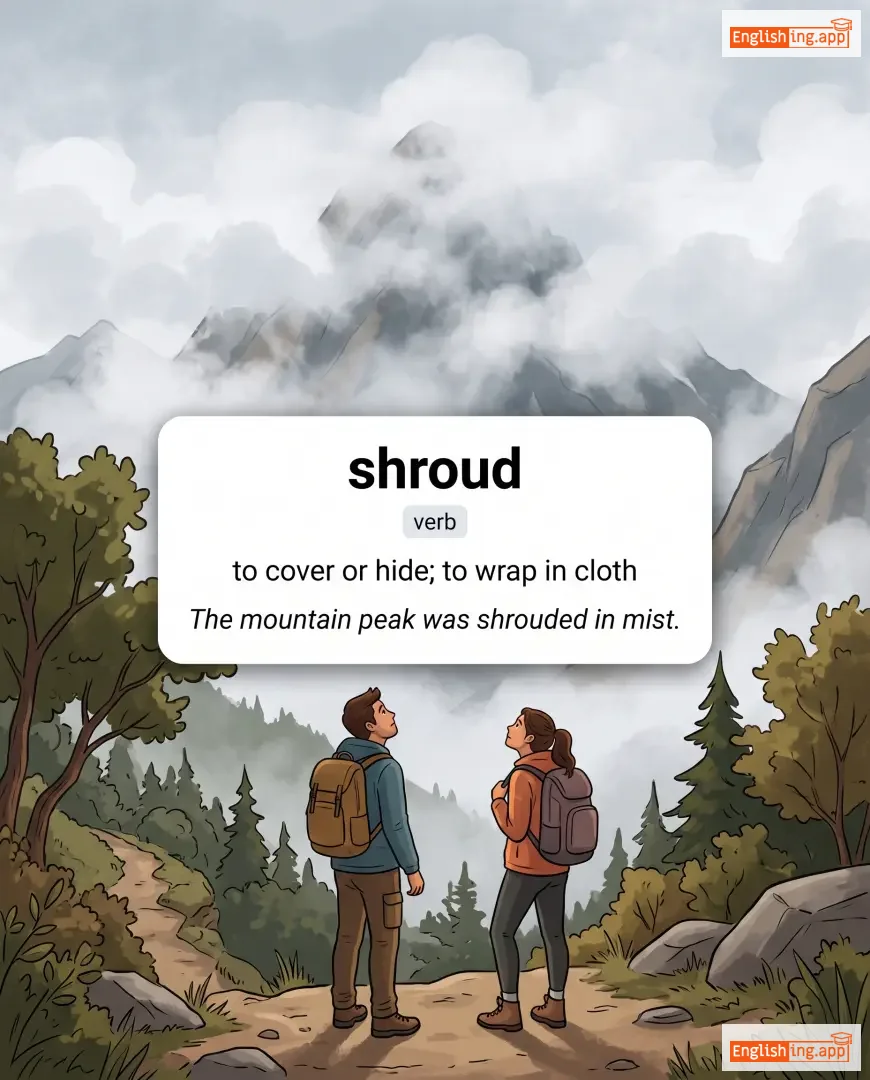
shroud definition card — visual illustration of the meaning
verb C1
/ʃraʊd/
覆盖 (fùgài)

to cover or hide; to wrap in cloth

"The mountain peak was shrouded in mist."

"山顶被雾气笼罩。" (Shāndǐng bèi wùqì lóngzhào.)
verb C1
/ˈʃʌdər/
颤抖 (chàndǒu)

to tremble or shake suddenly, often due to fear, cold, or strong emotion

"She shuddered at the thought of walking alone in the dark forest."

"她在想到独自走在黑暗森林中的时候不禁颤抖。" (Tā zài xiǎngdào dúzì zǒu zài hēi'àn sēnlín zhōng de shíhòu bùjīn chàndǒu.)
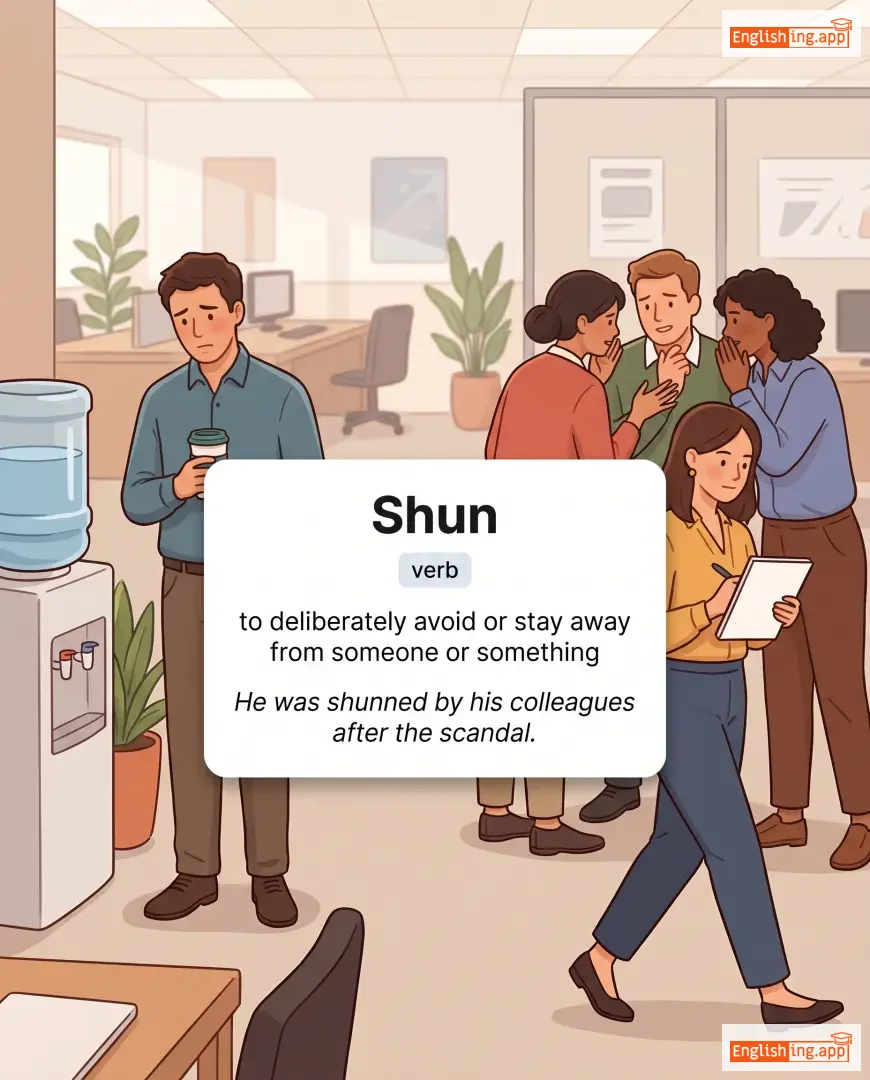
Shun definition card — visual illustration of the meaning
verb C1
/ʃʌn/
回避 (huibi)

to deliberately avoid or stay away from someone or something

"He was shunned by his colleagues after the scandal."

"他在丑闻之后被同事们回避了。" (Ta zai chouwen zhihou bei tongshimeng huibi le.)
verb C1
/ʃʌnt/
转轨 (zhuǎn guǐ)

to move or turn aside; to push or divert from one track to another

"The train was shunted onto a different track."

"火车被调到另一条轨道。" (Huǒchē bèi tiáo dào lìng yītiáo guǐdào.)
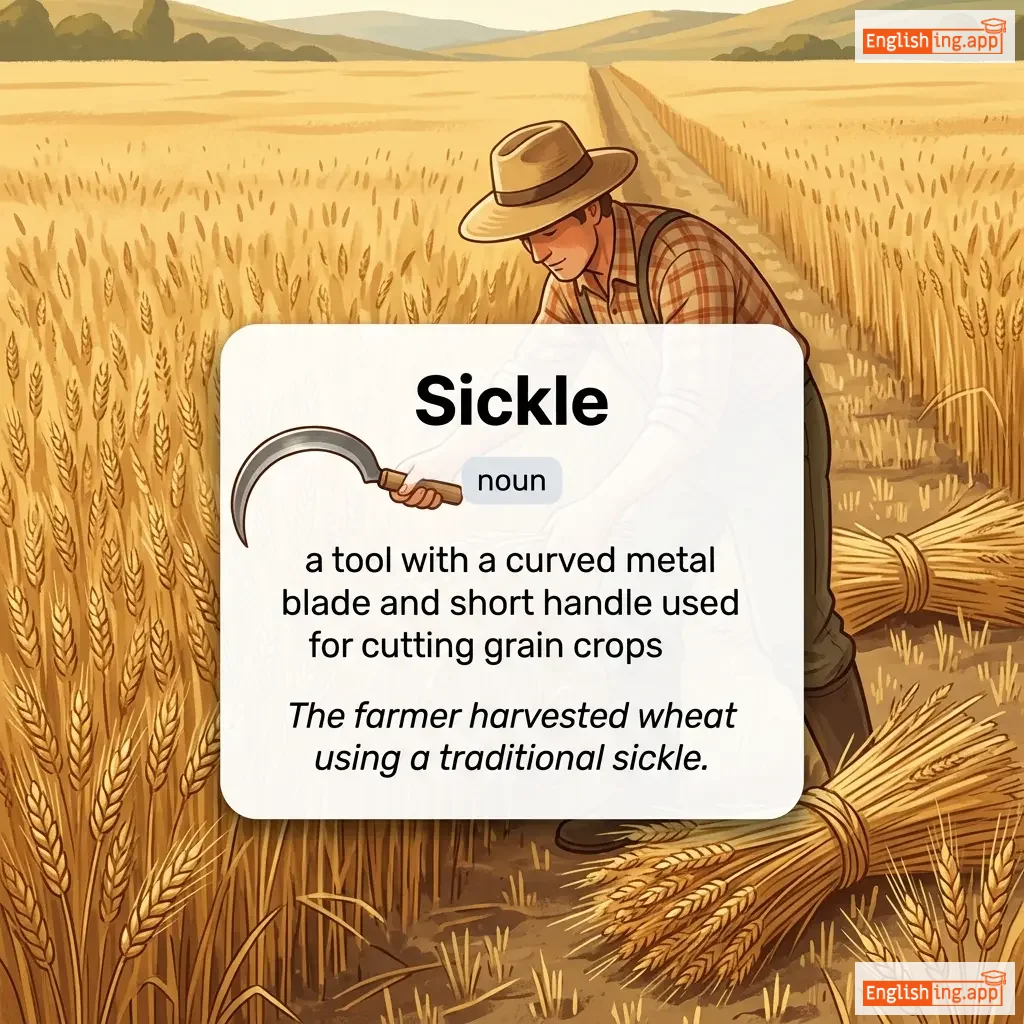
Sickle definition card — visual illustration of the meaning
noun C1
/ˈsɪk.əl/
镰刀 (liándāo)

a tool with a curved metal blade and short handle used for cutting grain crops

"The farmer harvested wheat using a traditional sickle."

"农民用传统的镰刀收割小麦。" (Nóngmín yòng chuántǒng de liándāo shōugē xiǎomài.)