Vocabularies

English Vocabulary Dictionary | Word Meanings, Definitions & Examples

noun C1
/ˈrʌbəl/
руины (ruiny)

Broken stone, bricks, or debris from a collapsed building or structure.

"The rescue team searched through the rubble after the earthquake."

"Спасательная команда искала среди обломков после землетрясения." (Spasatel'naya komanda iskala sredi oblomkov posle zemletryaseniya.)
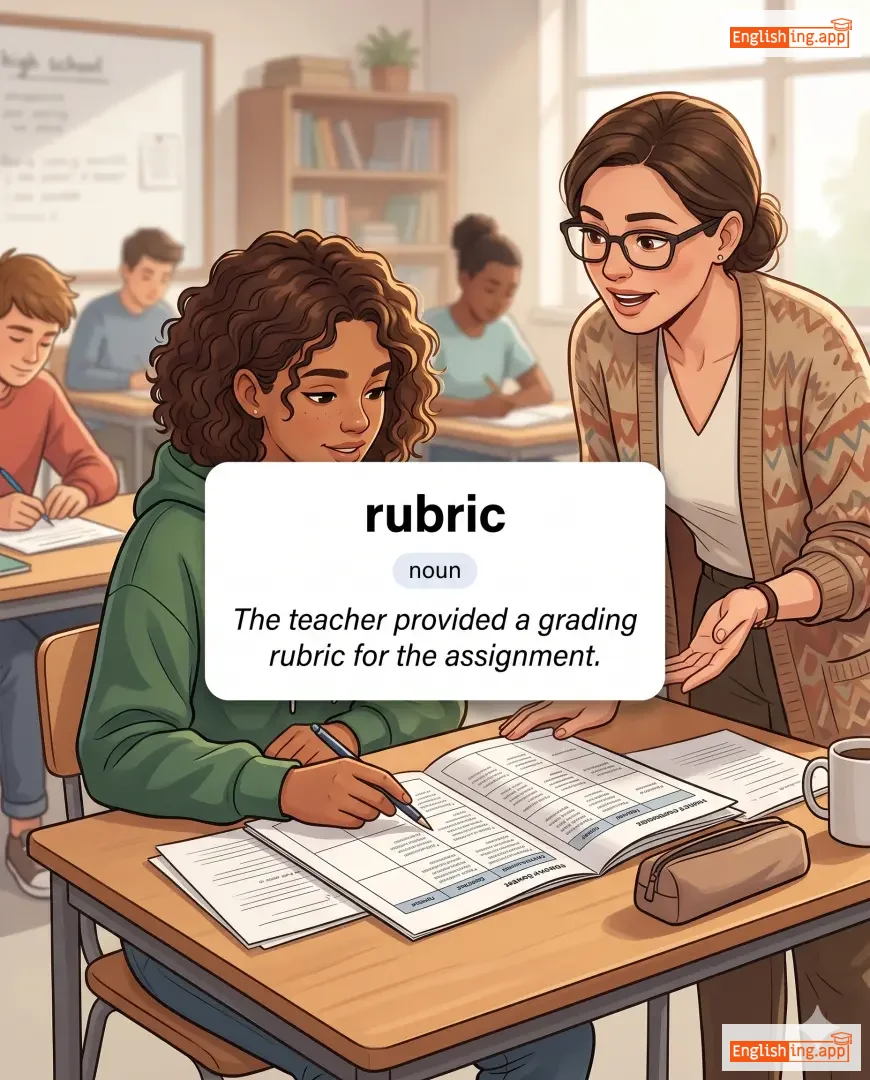
rubric definition card — visual illustration of the meaning
noun C1
/ˈruːbrɪk/
рубрика / директива (rubrik)

A set of instructions, rules, or a heading in a document, often used for grading criteria.

"The teacher provided a grading rubric for the assignment."

"Учитель предоставил рубрику для оценки задания." (Uchitel' predostavil rubriku dlya otsenki zadaniya.)
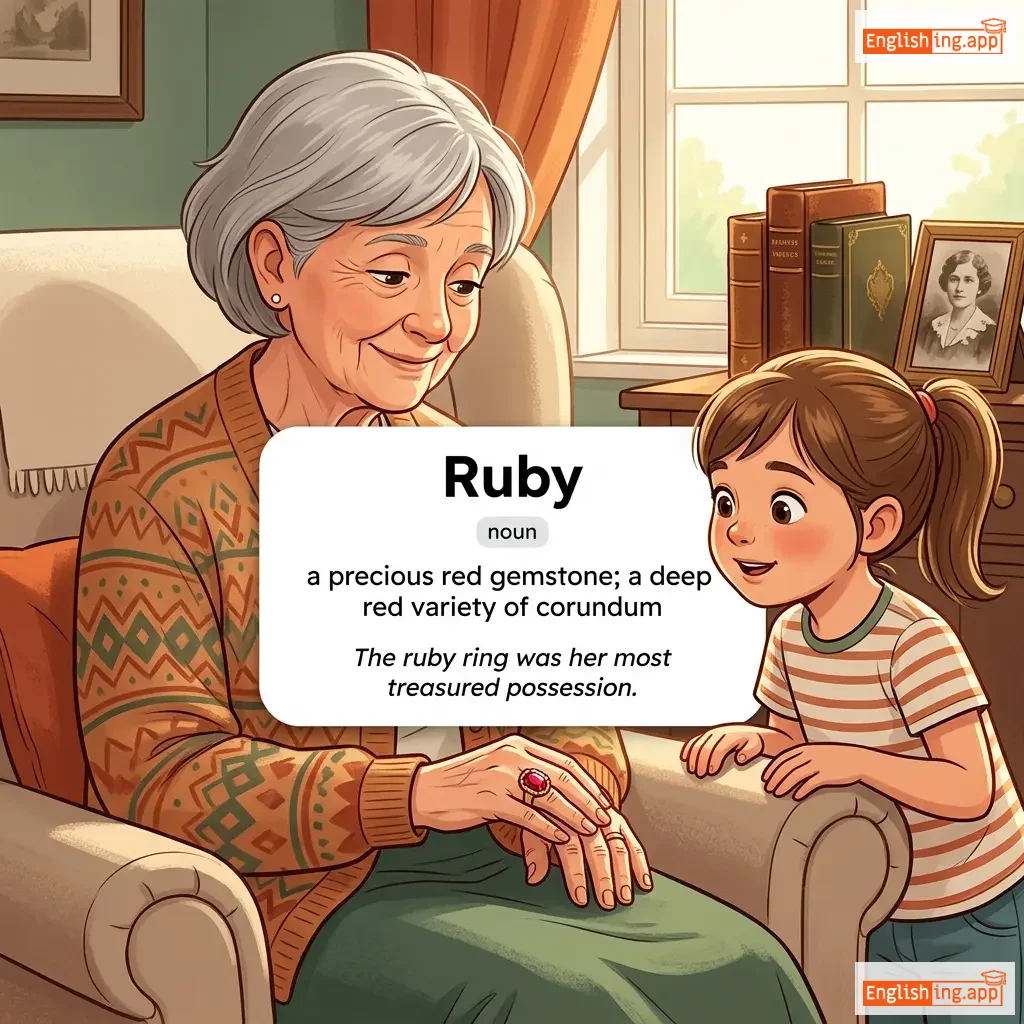
Ruby definition card — visual illustration of the meaning
noun C1
/ˈruː.bi/
рубин (Rubi)

a precious red gemstone; a deep red variety of corundum

"The ruby ring was her most treasured possession."

"Кольцо с рубином было её самым дорогим достоянием." (Koltso s rubinom bylo eyo samym dorogim dostoyaniem)
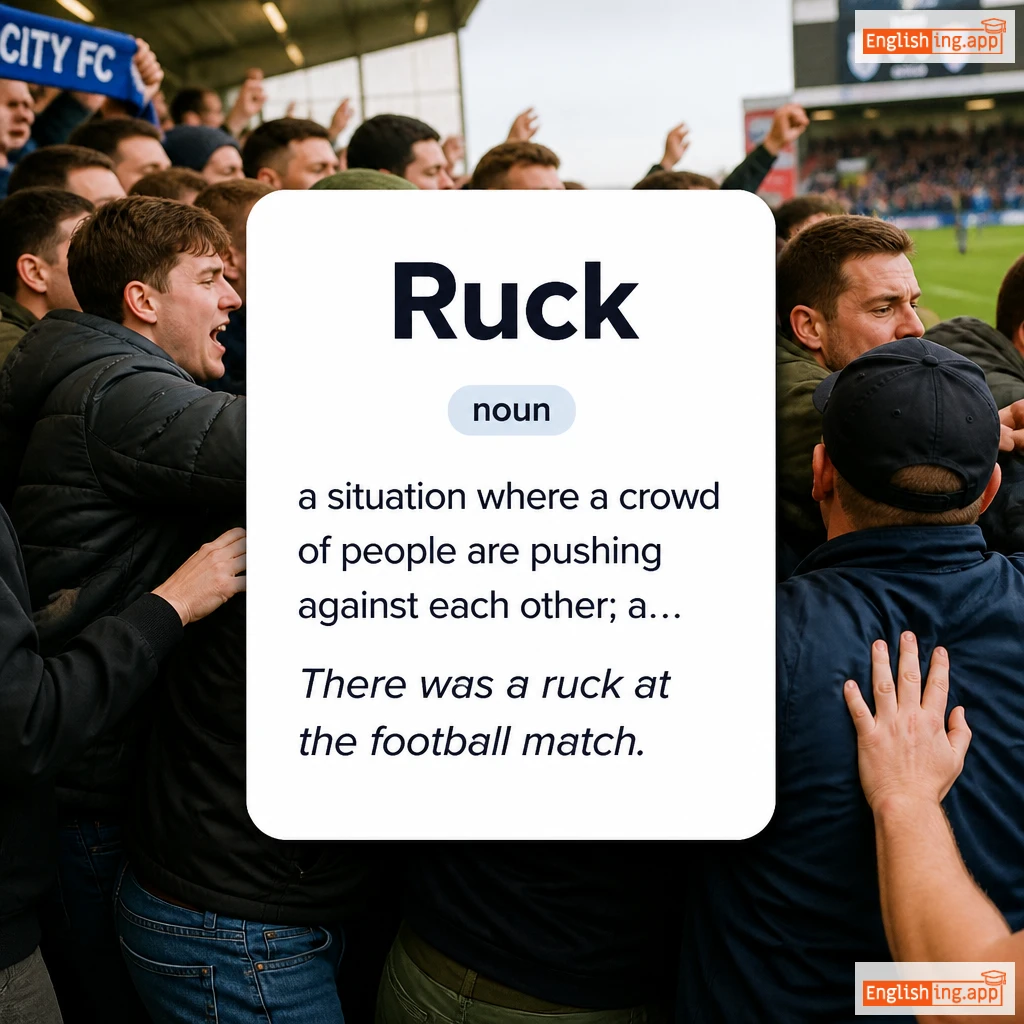
Ruck definition card — visual illustration of the meaning
noun C1
/rʌk/
толкотня; беспорядочная толпа (tolkotnya; besporyadochnaya tolpa)

a situation where a crowd of people are pushing against each other; a disorderly crowd

"There was a ruck at the football match."

"На футбольном матче была толкотня." (Na futbol'nom matche byla tolkotnya)
noun C1
/ˈruːdɪmənt/
основы (osnovy)

A basic principle, element, or fundamental part of something.

"He learned the rudiments of music before joining the band."

"Он изучил основы музыки перед тем, как присоединиться к группе." (On izuchil osnovy muzyki pered tem, kak prisoyedinit'sya k gruppe.)
adjective C1
/ˌruːdɪˈmɛntəri/
основной (osnovnoy)

Involving or limited to basic principles; elementary or simple.

"The village school provided only a rudimentary education."

"Сельская школа предоставляла только основное образование." (Selskaya shkola predostavlyala tol'ko osnovnoe obrazovanie.)
adjective C1
/ˈruːfəl/
сожаление (sozhalenie)

Expressing sorrow, regret, or pity.

"He gave a rueful smile after losing the match."

"Он улыбнулся с сожалением после того, как проиграл матч." (On ulybnulsya s sozhaleniyem posle togo, kak proigral match.)
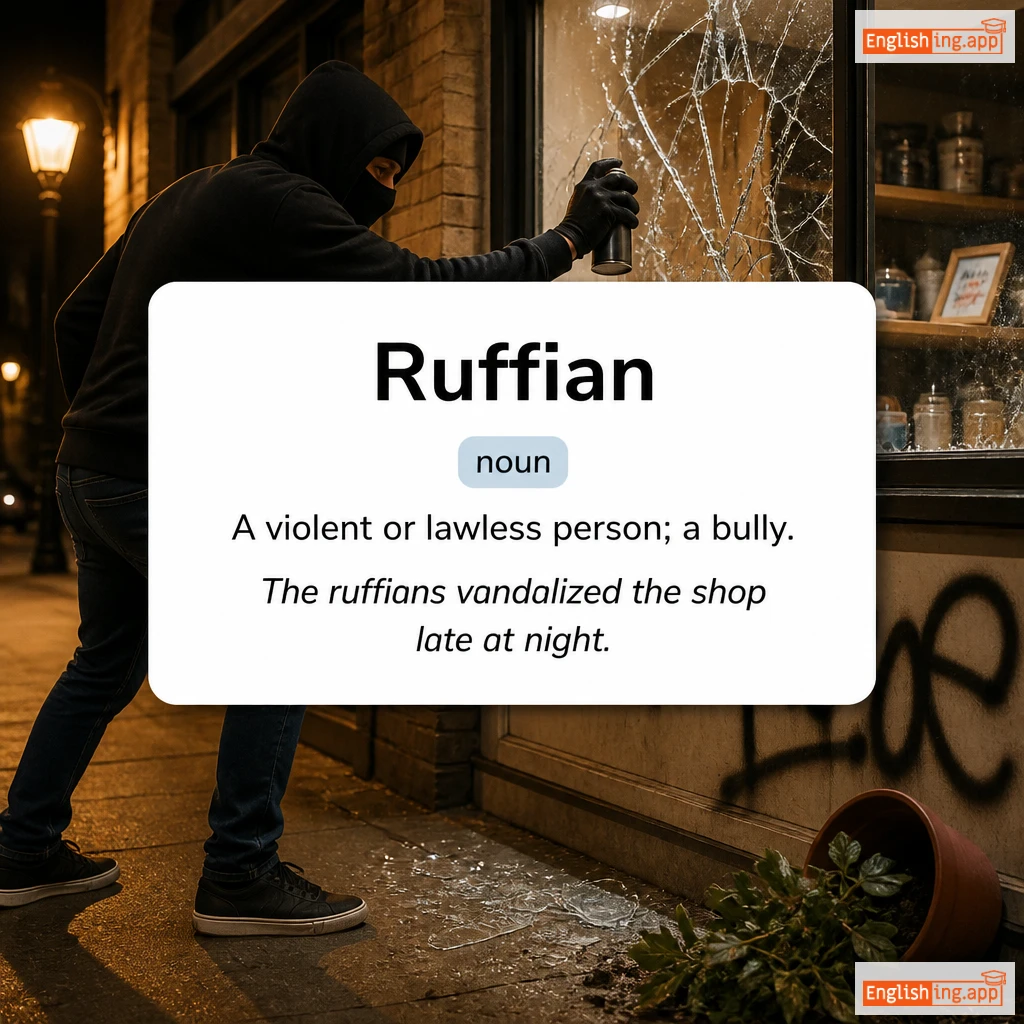
Ruffian definition card — visual illustration of the meaning
noun C1
/ˈrʌfiən/
отморозок (otmorozok)

A violent or lawless person; a bully.

"The ruffians vandalized the shop late at night."

"Отморозки вандализировали магазин поздно ночью." (Otmorozki vandalizirovali magazin pozdno noch'yu.)
verb C1
/ˈrʌf.l̩/

to disturb the smoothness of something; to annoy or upset someone

"The wind ruffled her hair."

adjective C1
/ˈrʌɡ.ɪd/
шероховатый и неровный; с неровной поверхностью; крепкий и сильный (sherokhovatyj i njerovnyj; s njerovnoj poverkhnost'yu; krepkij i sil'nyj)

rough and uneven; having a rough irregular surface; tough and strong

"The hikers crossed the rugged mountain terrain."

"Путники пересекли трудный горный ландшафт." (Putniki peresekli trudnyj gornyj landshaft.)
verb C1
/ˈruː.mɪ.neɪt/
размышлять, жевать жвачку (razmyshlyat, zhevat zhvachku)

to think deeply about something; to chew cud (for animals)

"She sat alone to ruminate on her decision."

"Она сидела одна, размышляя о своем решении." (Ona sidelа odna, razmyshlyaya o svoem reshenii.)
verb C1
/ˈrʌm.ɪdʒ/
перебирать что-то в беспорядке (perebirat' chto-to v besporyadke)

to search through something in a disorderly way

"He rummaged through the drawer for his keys."

"Он роился в ящике, ищя свои ключи." (On roilsya v yashchike, ishchya svoi klyuchi.)
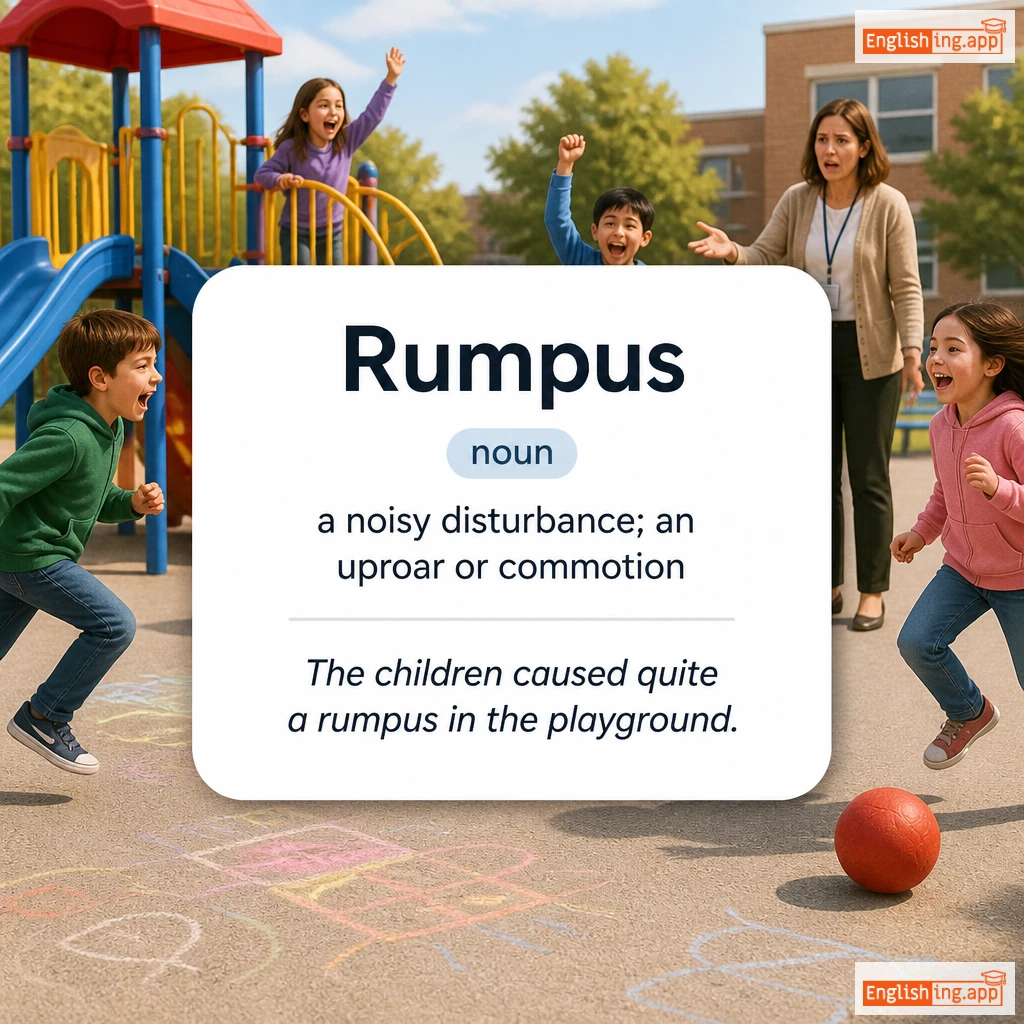
Rumpus definition card — visual illustration of the meaning
noun C1
/ˈrʌmpəs/
шум; беспорядок; суматоха (shum; besporyadok; sumatoha)

a noisy disturbance; an uproar or commotion

"The children caused quite a rumpus in the playground."

"Дети вызвали настоящий переполох на игровой площадке." (Deti vyzvali nastoyashchiy perepoloch na igrovoy ploshchadke.)
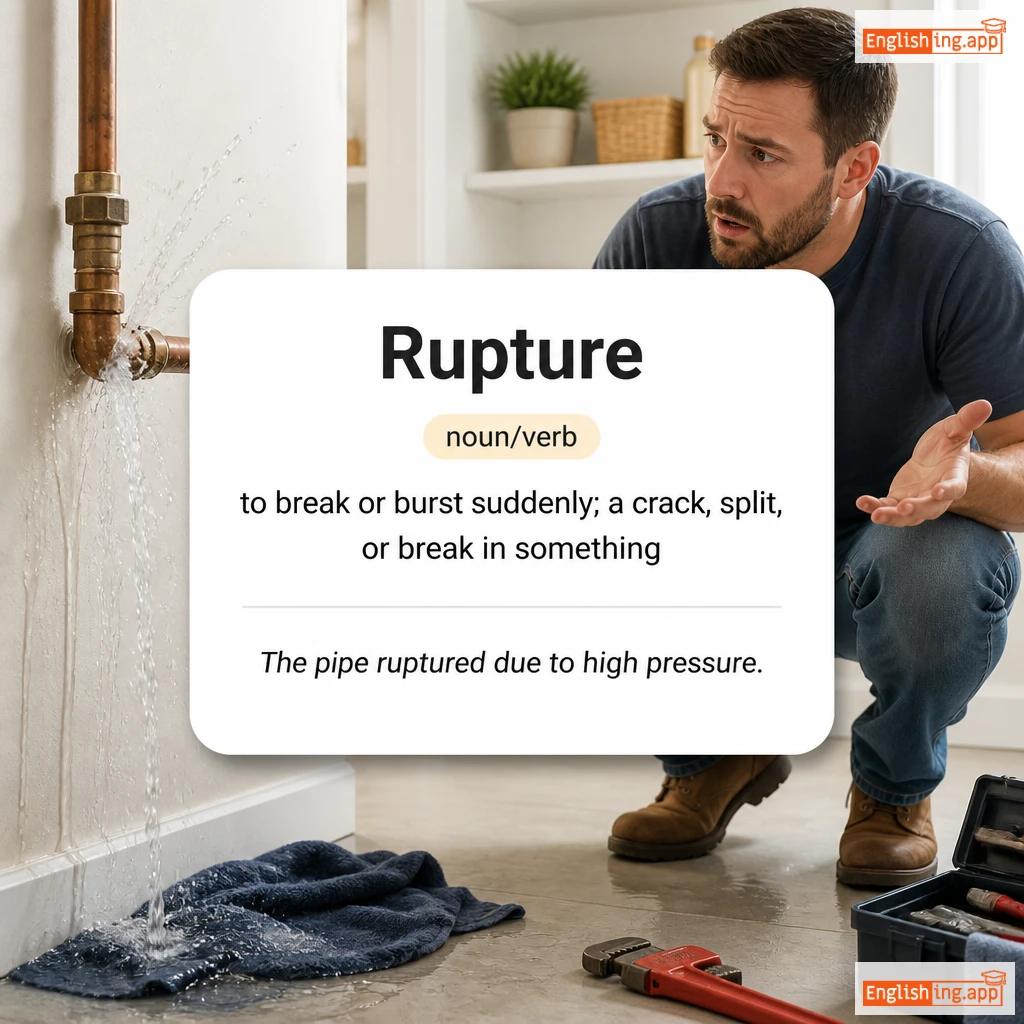
Rupture definition card — visual illustration of the meaning
noun/verb C1
/ˈrʌptʃər/
разрыв (razryv)

to break or burst suddenly; a crack, split, or break in something

"The pipe ruptured due to high pressure."

"Трубопровод лопнул из-за высокого давления." (Truboprovod lopnul iz-za vysokogo davleniya.)
Ruse definition card — visual illustration of the meaning
noun C1
/ruːz/
уловка (ulovka)

A trick or action intended to deceive someone.

"She used a clever ruse to get into the party unnoticed."

"Она использовала умную уловку, чтобы незаметно попасть на вечеринку." (Ona ispol'zovala umnuyu ulovku, chtoby nezametno popast' na vecherinku.)
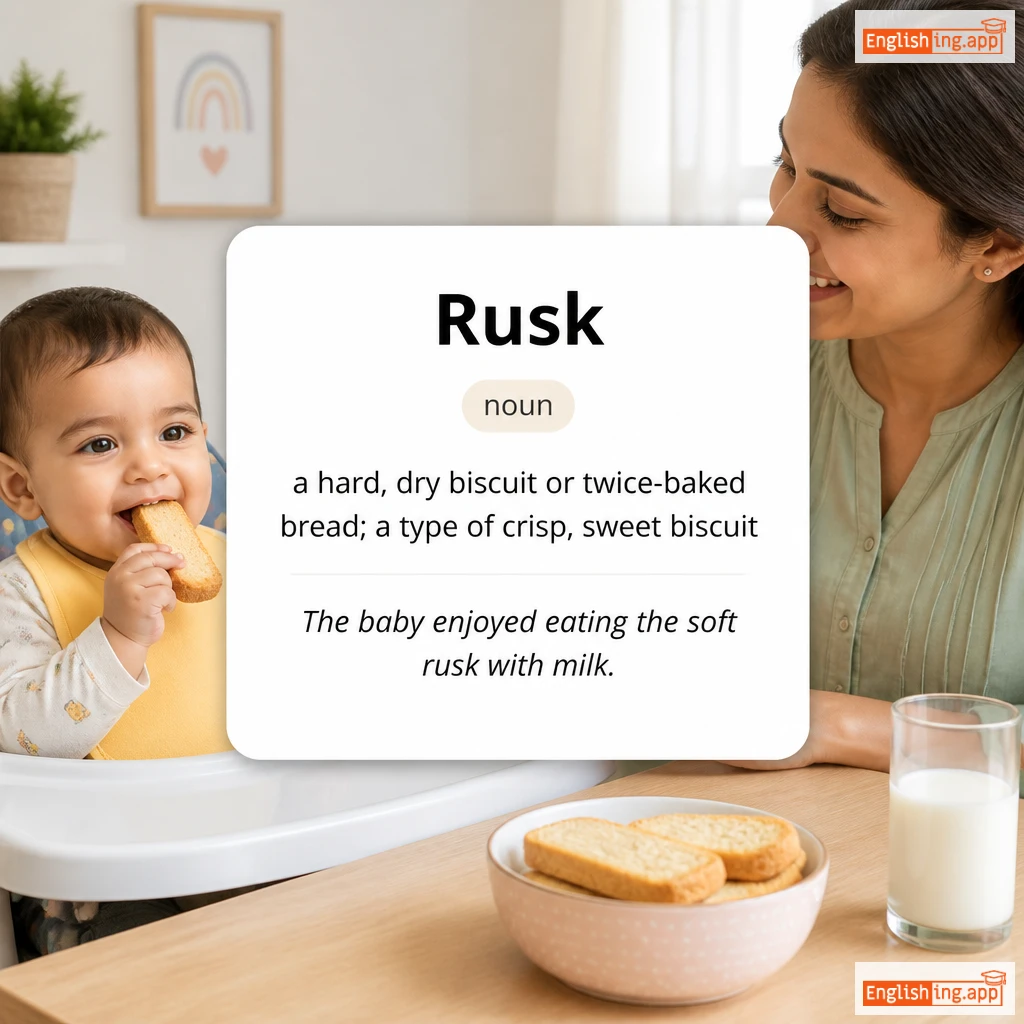
Rusk definition card — visual illustration of the meaning
noun C1
/rʌsk/
сухое печенье; дважды выпеченный хлеб (rask)

a hard, dry biscuit or twice-baked bread; a type of crisp, sweet biscuit

"The baby enjoyed eating the soft rusk with milk."

"Малыш наслаждался мягким руском с молоком." (Malysh naslazhdalsya myagkim ruskom s molokom.)
adjective C1
/ˈrʌstɪk/
деревенский (derevenskiy)

Relating to the countryside; simple and unsophisticated.

"The cottage had a rustic charm with its wooden beams and stone fireplace."

"Коттедж имел деревенский шарм с его деревянными балками и каменным камином." (Kottedzh imel derevenskiy sharm s yego derevyannymi balkami i kamennym kaminom.)
verb C1
/ˈrʌsl/
шуршать (shurshat)

To make a soft, light sound like leaves or paper moving.

"The leaves rustled gently in the evening breeze."

"Листья шуршали в легком вечернем ветре." (List'ya shurshali v legkom vechernem vetre.)
noun C1
/səˈbætɪkəl/
период отпуска для учебы или путешествий (period otpuska dlya ucheby ili puteshestviy)

A period of paid leave granted to a teacher or worker for study or travel, traditionally every seventh year.

"She took a sabbatical to research her new book."

"Она взяла саббатикал, чтобы исследовать свою новую книгу." (Ona vzyala sabbatical, chtoby issledovat' svoyu novuyu knigu.)
noun C1
/ˌsæbəˈtɜːr/
саботёр (sabotyor)

A person who engages in sabotage.

"The saboteur was arrested before he could plant the bomb."

"Саботёр был арестован до того, как он успел установить бомбу." (Sabotyor byl arestovan do togo, kak on uspel ustanovit' bombu.)
adjective C1
/ˌsækrɪˈfɪʃəl/
жертвенный (zhertvennyy)

Relating to or involving sacrifice.

"The lamb was used as a sacrificial offering in the ritual."

"Ягненок был использован как жертвенная жертва в ритуале." (Yahnenok byl ispol'zovan kak zhertvennaya zhertva v rituale.)
noun C1
/ˈsækrɪlɪdʒ/
осквернение (oskvernenie)

Violation or misuse of what is regarded as sacred.

"Stealing from the temple was considered an act of sacrilege."

"Кража из храма считалась актом осквернения." (Krazha iz khrama schitalas aktom oskverneniya.)
adjective C1
/ˌsækrəˈlɪdʒəs/
сакралигийный (sacriligijnyj)

Showing disrespect or irreverence toward something sacred.

"The painting was criticized as being sacrilegious."

"Картина была раскритикована как сакралигийная." (Kartina byla raskritikovana kak sakralignaya.)
adjective C1
/ˈsæk.rəˌsæŋkt/
неприкосновенный (neprikosnovennyy)

Regarded as too important or valuable to be interfered with; sacred.

"Freedom of speech is considered sacrosanct in democratic societies."

"Свобода слова считается неприкосновенной в демократических обществах." (Svoboda slova schitayetsya neprikosnovennoy v demokraticheskikh obshchestvakh.)
adjective C1
/səˈdɪs.tɪk/
садистский (sadistskiy)

Deriving pleasure from inflicting pain or suffering on others.

"The villain had a sadistic smile while hurting his enemies."

"Злодей улыбался садистской улыбкой, когда причинял боль своим врагам." (Zlodey ulybalsya sadistskoy ulybkoy, kogda prichinyal bol' svoim vragam.)
noun C1
/ˈsæf.rən/
шафран (shafran)

A spice derived from the flower of Crocus sativus, used for flavoring and coloring food.

"She added saffron to the rice for flavor and color."

"Она добавила шафран в рис для вкуса и цвета." (Ona dobavila shafran v ris dlya vkusa i tsveta.)
noun C1
/ˈsɑːɡə/
долгая история (dolgaya istoriya)

A long story of heroic achievement, or a long, complex series of events.

"The company's rise and fall became a corporate saga."

"Подъем и падение компании стало корпоративной сагой." (Podyom i padeniye kompanii stalo korporativnoy sagoy.)
Sage definition card — visual illustration of the meaning
noun C1
/seɪdʒ/
мудрец (mudrets)

A profoundly wise person, or wise through reflection and experience.

"The old sage was respected for his wisdom."

"Старый мудрец пользовался уважением за свою мудрость." (Staryj mudrets pol'zovalsya uvazheniyem za svoiu mudrost'.)
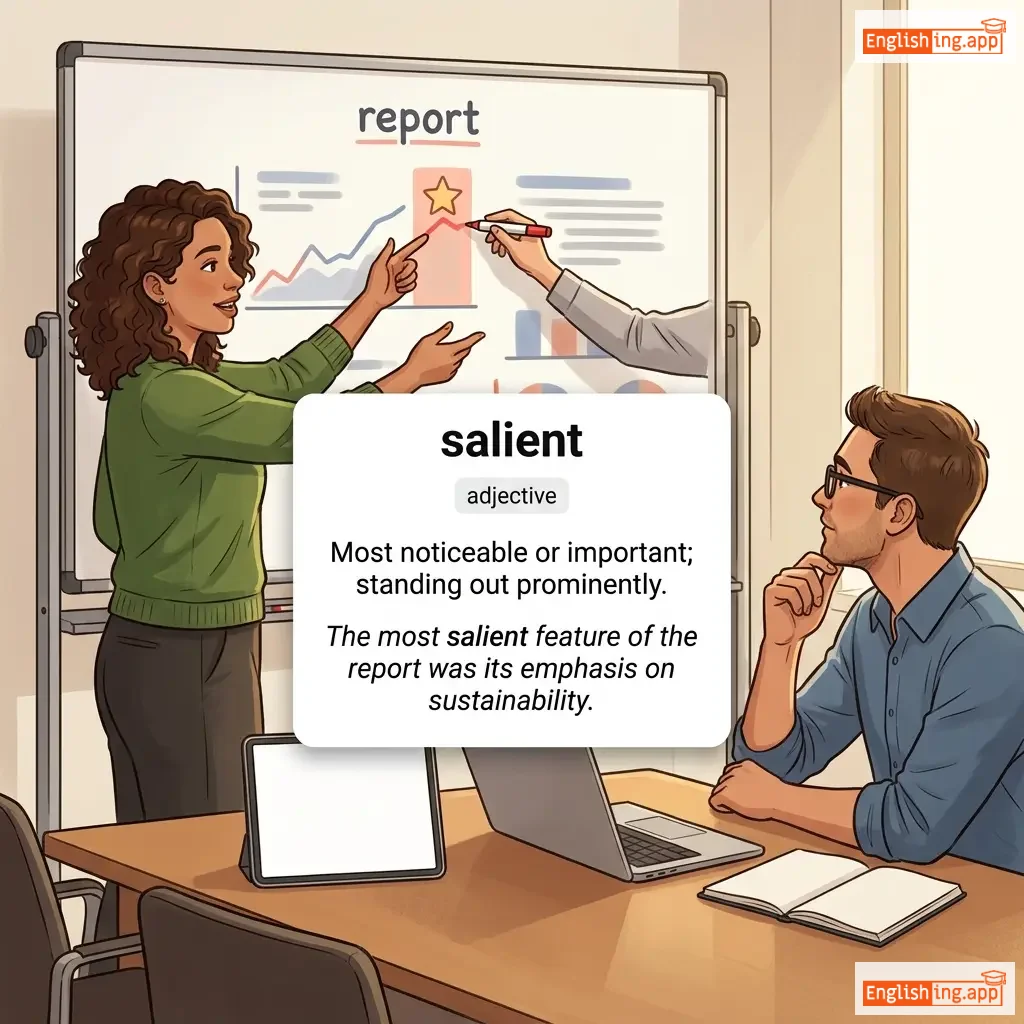
salient definition card — visual illustration of the meaning
adjective C1
/ˈseɪ.li.ənt/
основная характеристика (osnovnaya kharakteristika)

Most noticeable or important; standing out prominently.

"The most salient feature of the report was its emphasis on sustainability."

"Самая заметная особенность отчета была его акцент на устойчивости." (Samaya zametnaya osobennost' otcheta byla ego aktsent na ustoychivosti.)
adjective C1
/ˈseɪ.liːn/
солёный (solyoniy)

Containing or resembling salt; salty.

"Doctors often use saline solution to clean wounds."

"Врачи часто используют физиологический раствор для очистки ран." (Vrachi chasto ispol'zuyut fiziologicheskiy rastvor dlya ochistki ran.)
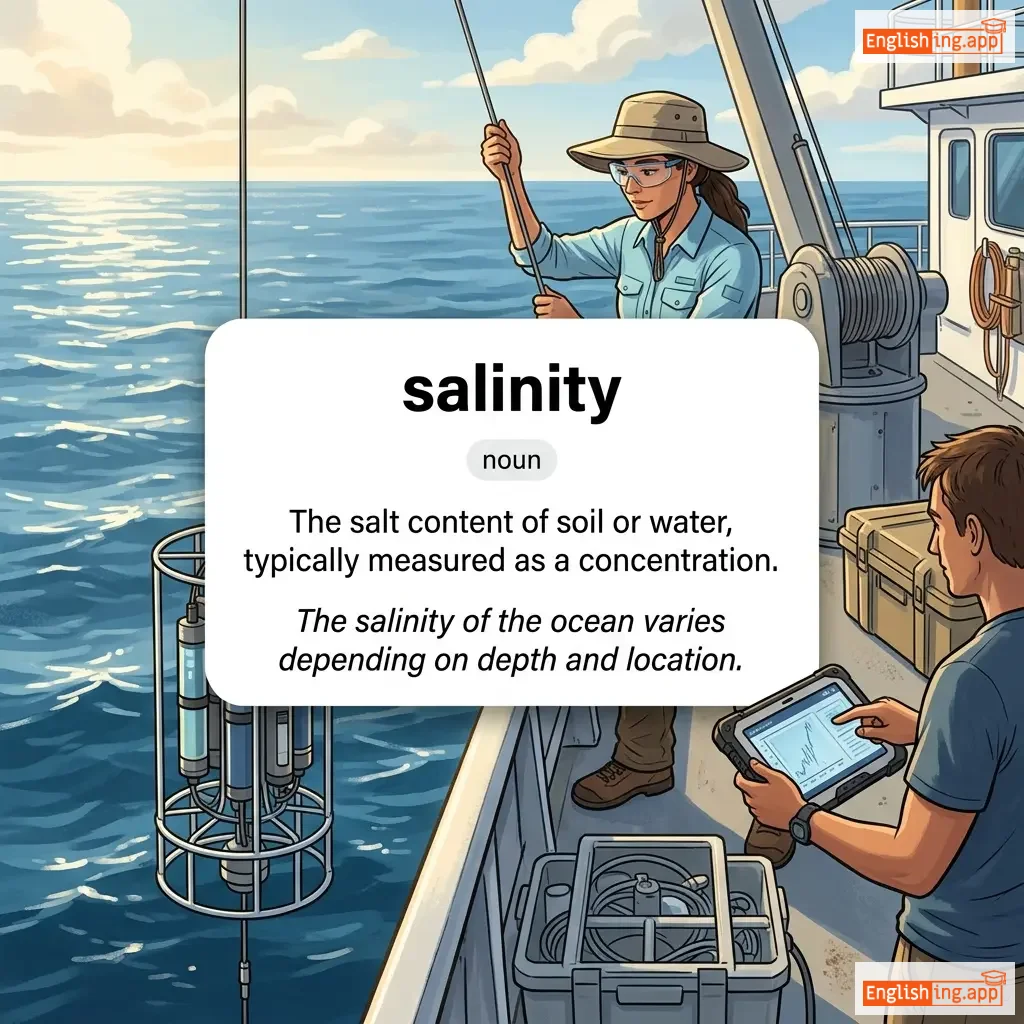
salinity definition card — visual illustration of the meaning
noun C1
/səˈlɪn.ə.t̬i/
соленость, концентрация соли (solenost, kontsentratsiya soli)

The salt content of soil or water, typically measured as a concentration.

"The salinity of the ocean varies depending on depth and location."

"Соленость океана варьируется в зависимости от глубины и местоположения." (Solenost' okeana varyiruetsya v zavisimosti ot glubiny i mestopolozheniya.)
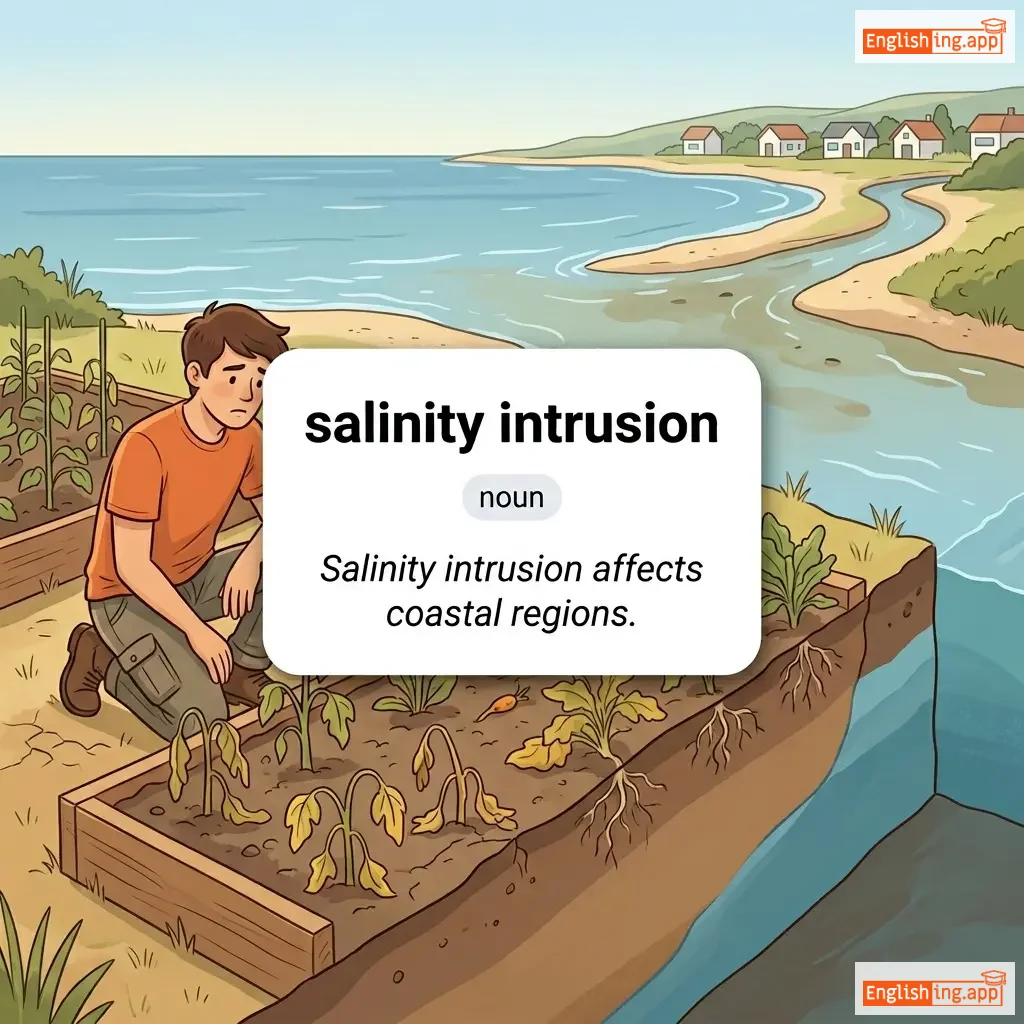
salinity intrusion definition card — visual illustration of the meaning
noun C1
səˈlɪnɪti ɪnˈtruːʒən
проникновение соли (proniknovenie soli)

The movement of salt water into freshwater areas, typically affecting coastal regions.

"Salinity intrusion affects coastal regions."

"Проникновение соли влияет на прибрежные регионы." (Proniknovenie soli vliyayet na pribrezhnye regiony.)
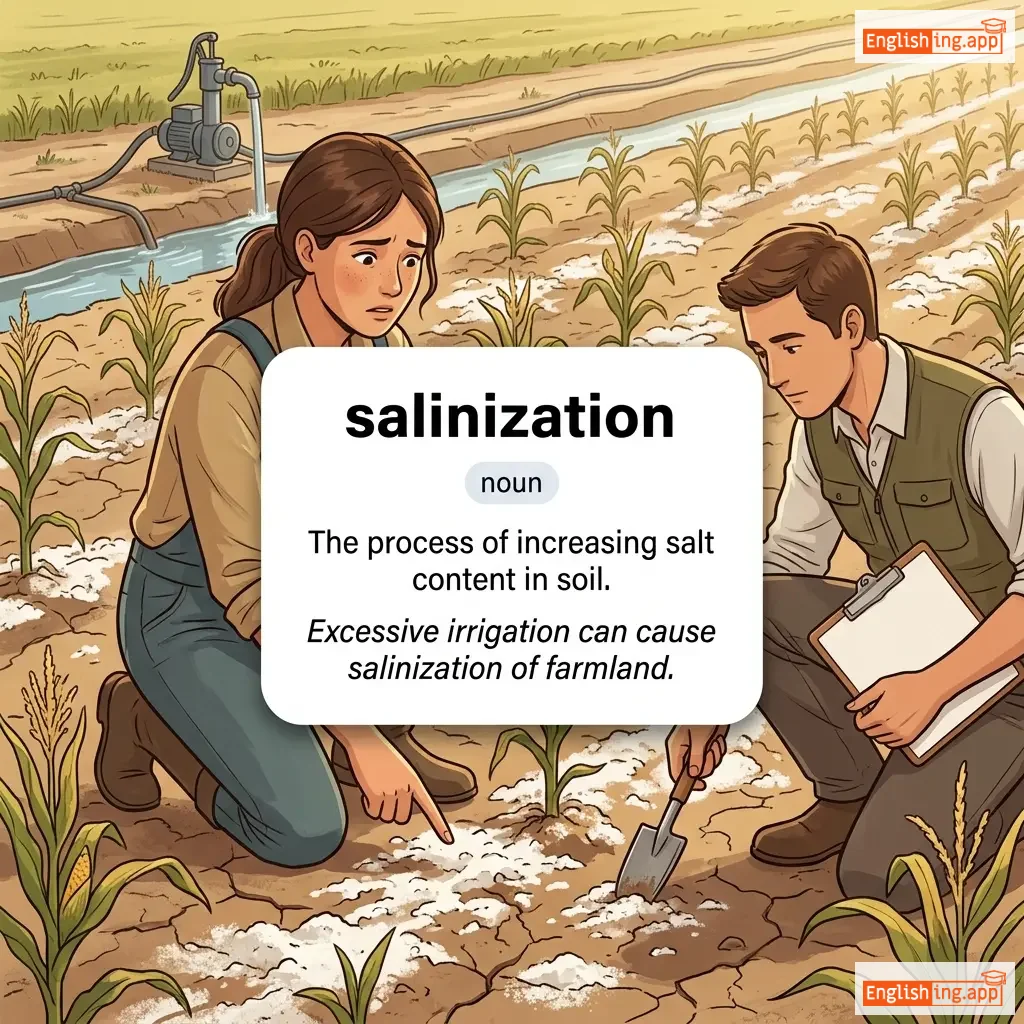
salinization definition card — visual illustration of the meaning
noun C1
/ˌsæl.ɪ.naɪˈzeɪ.ʃən/
увеличение солености (uvelichenie solenosti)

The process of increasing salt content in soil.

"Excessive irrigation can cause salinization of farmland."

"Чрезмерный полив может привести к увеличению солености сельскохозяйственных земель." (Chrezmernyy poliv mozhet privesti k uvelicheniyu solenosti selskokhozyaystvennykh zemel.)
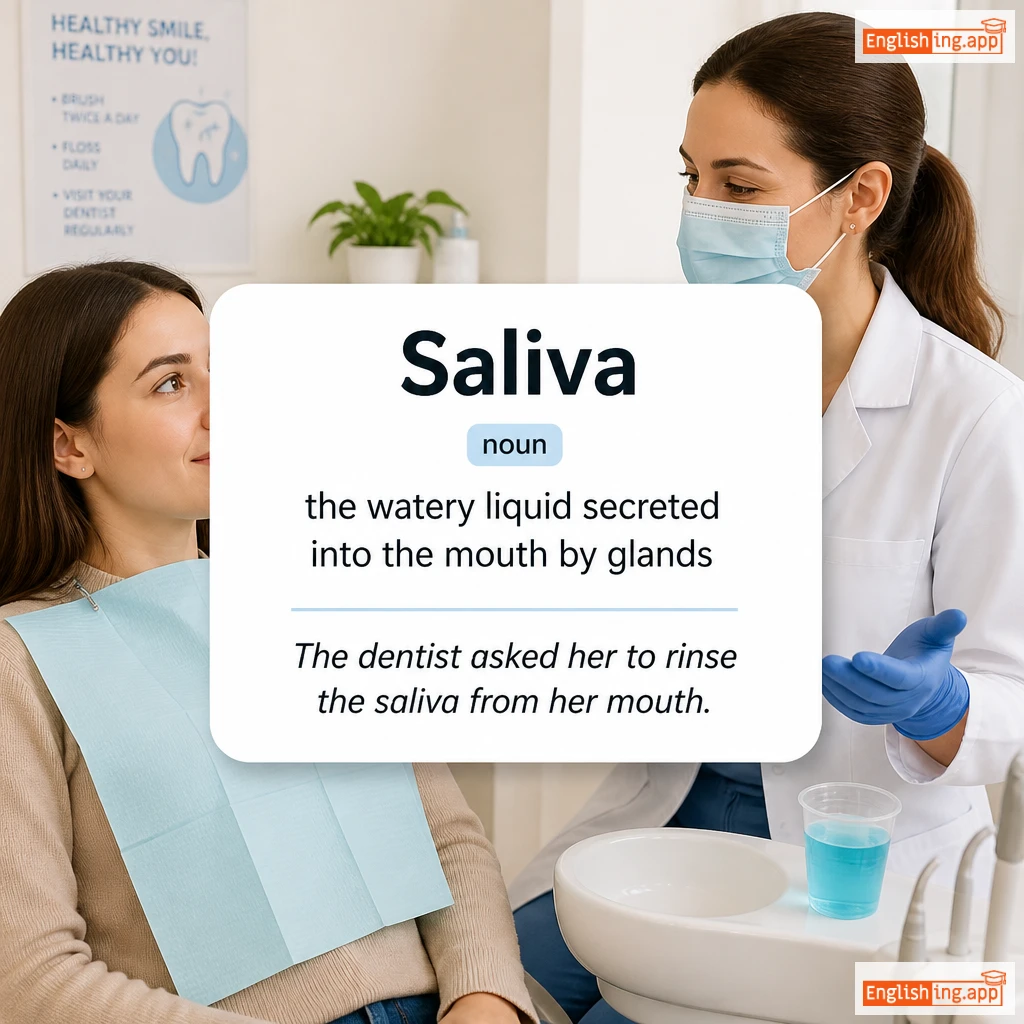
Saliva definition card — visual illustration of the meaning
noun C1
/səˈlaɪ.və/
слюна (saliva)

the watery liquid secreted into the mouth by glands

"The dentist asked her to rinse the saliva from her mouth."

"Стоматолог попросил её прополоскать слюну во рту." (Stomatolog poprosil eyo propoloskat slyunu vo rtu)
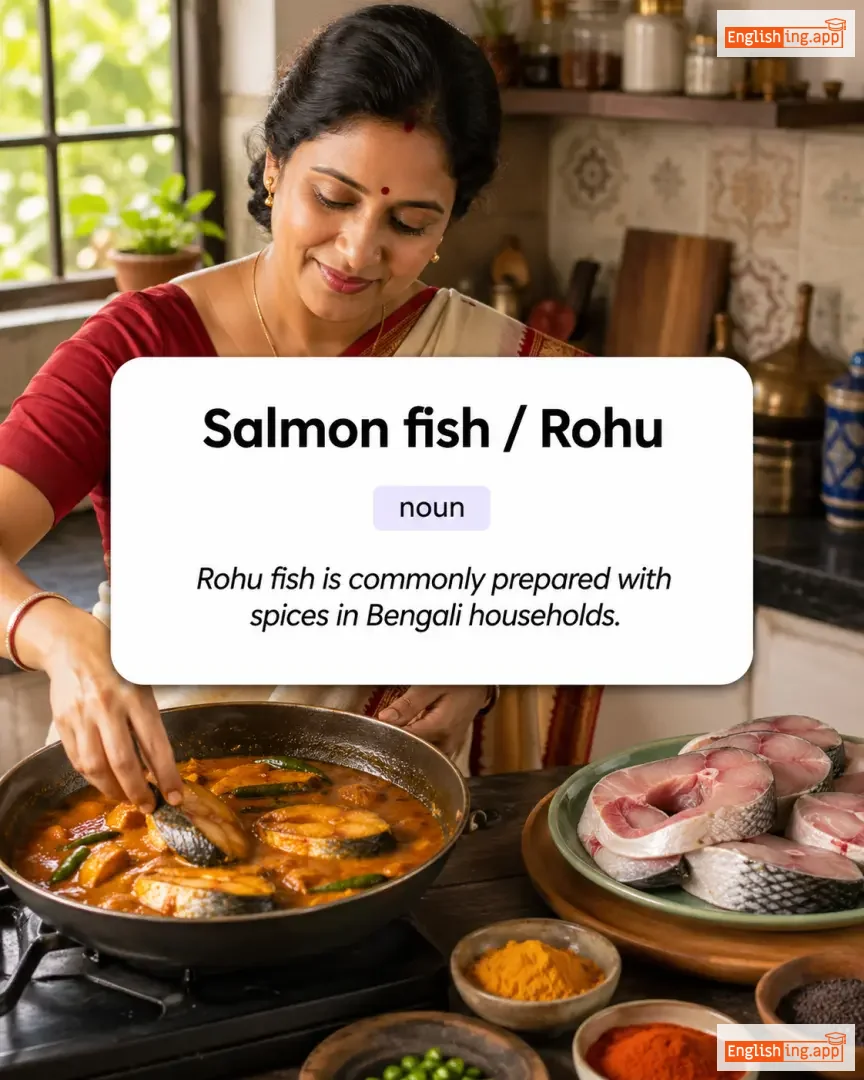
Salmon fish / Rohu definition card — visual illustration of the meaning
noun C1
/ˈsæl.mən fɪʃ / ˈroʊ.huː/
рыба Роху (ryba Rokhu)

a freshwater fish popular in South Asian cuisine; also refers to salmon which is a different species

"Rohu fish is commonly prepared with spices in Bengali households."

"Рыба Роху обычно готовится с пряностями в бенгальских домах." (Ryba Rokhu obychno gotovitsya s pryanostyami v bengalskikh domakh.)
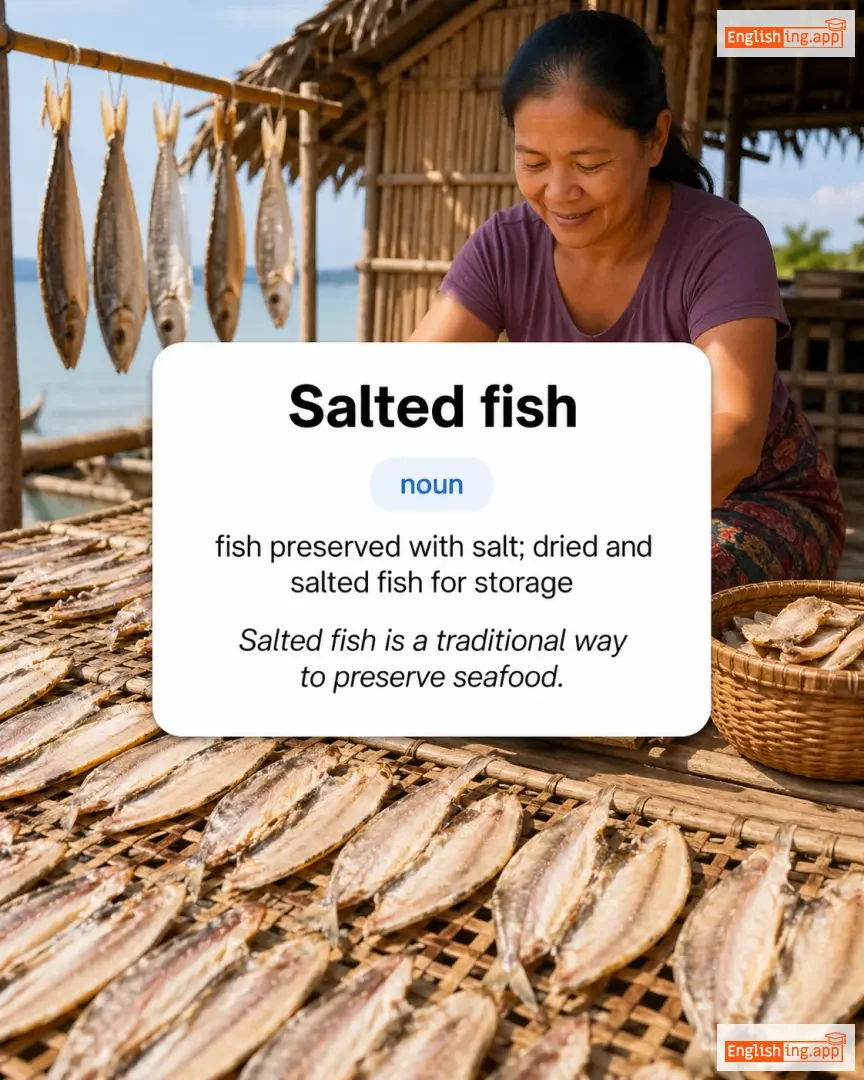
Salted fish definition card — visual illustration of the meaning
noun C1
/ˈsɔːl.tɪd fɪʃ/
солёная рыба (solyonaya ryba)

fish preserved with salt; dried and salted fish for storage

"Salted fish is a traditional way to preserve seafood."

"Солёная рыба — это традиционный способ сохранения морепродуктов." (solyonaya ryba eto traditsionnyy sposob sokhraneniya moreproduktov)
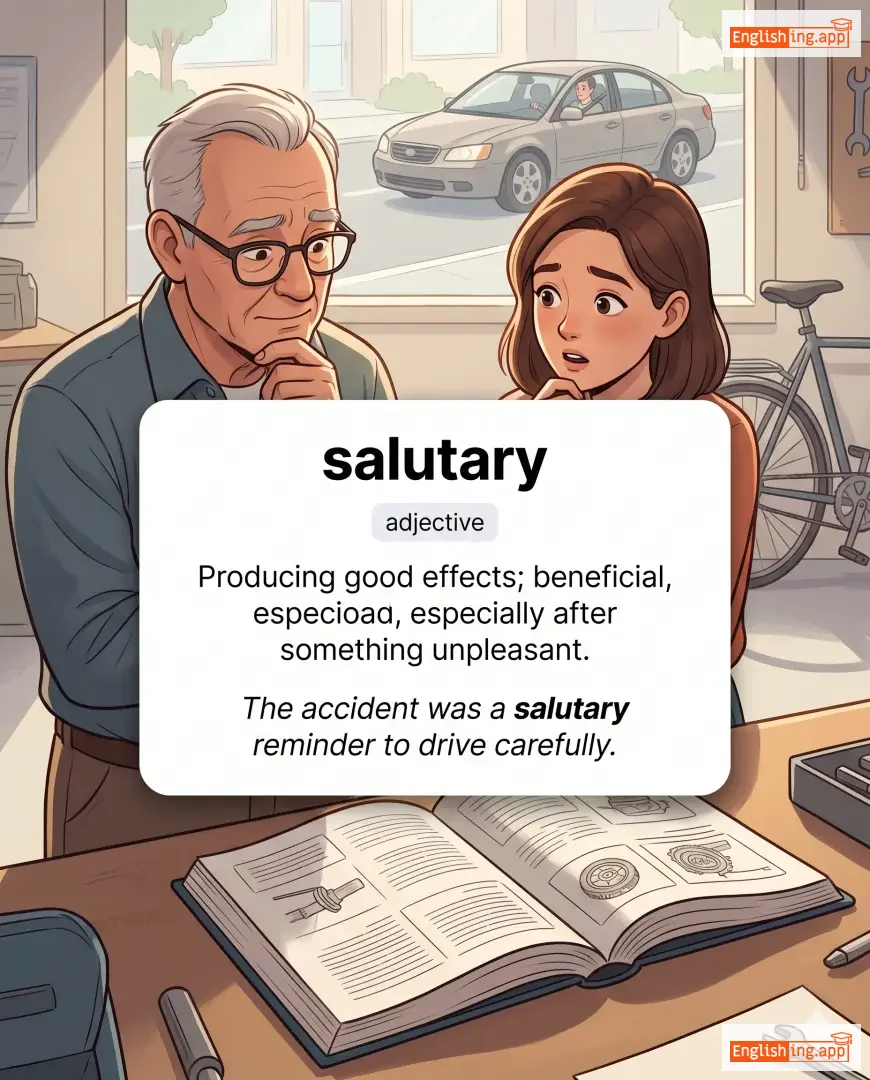
salutary definition card — visual illustration of the meaning
adjective C1
/ˈsæljʊˌtɛri/
полезный (poleznyj)

Producing good effects; beneficial, especially after something unpleasant.

"The accident was a salutary reminder to drive carefully."

"Авария стала полезным напоминанием о том, чтобы водить осторожно." (Avariya stala poleznym napominaniem o tom, chtoby vodit' ostorozhno.)
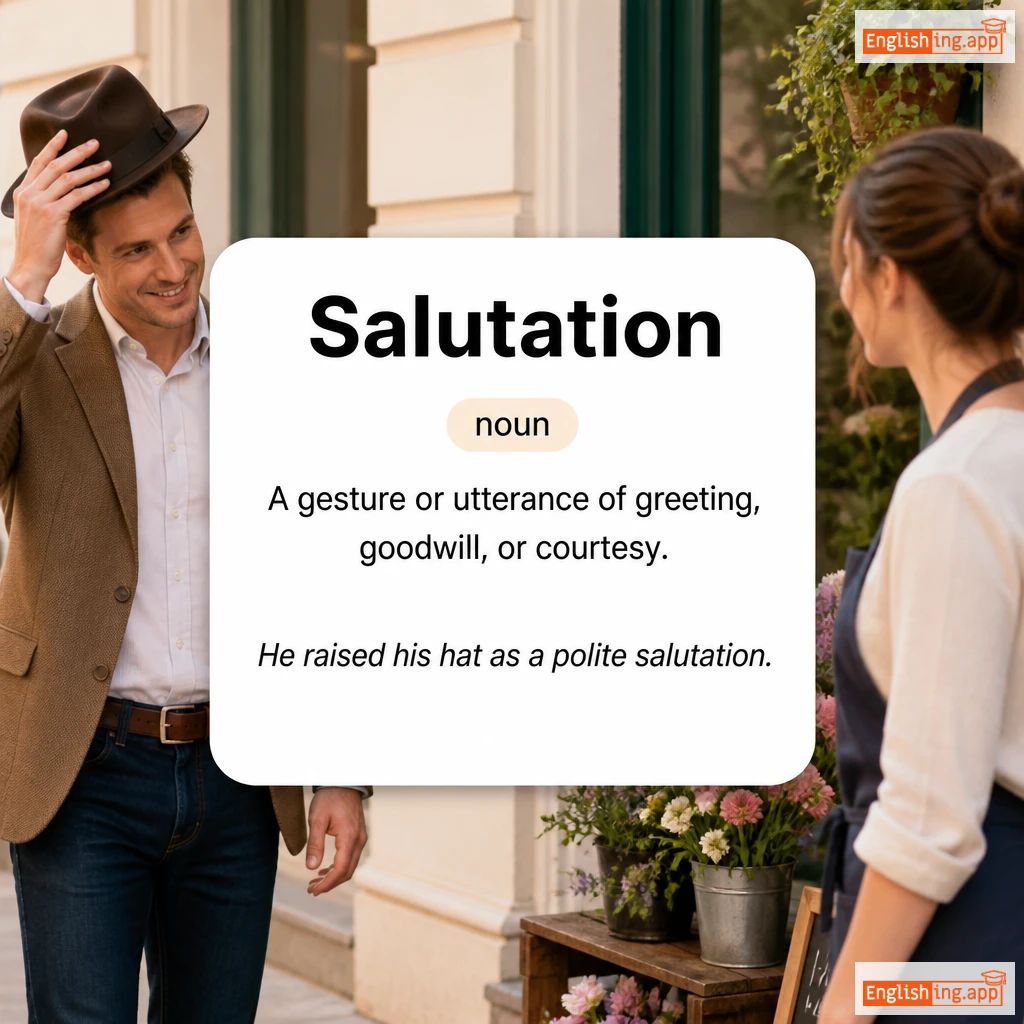
Salutation definition card — visual illustration of the meaning
noun C1
/ˌsæljʊˈteɪʃən/
приветствие (privetstvie)

A gesture or utterance of greeting, goodwill, or courtesy.

"He raised his hat as a polite salutation."

"Он поднял свою шляпу как вежливое приветствие." (On podnyal svoju shlyapu kak vezhlivoe privetstvie.)
verb C1
/ˈsælvɪdʒ/
спасти (spasti)

To save something from loss, damage, or destruction.

"They managed to salvage some goods from the fire."

"Им удалось спасти некоторые товары из огня." (Im udalos' spasti nekotorye tovaryi iz ognya.)
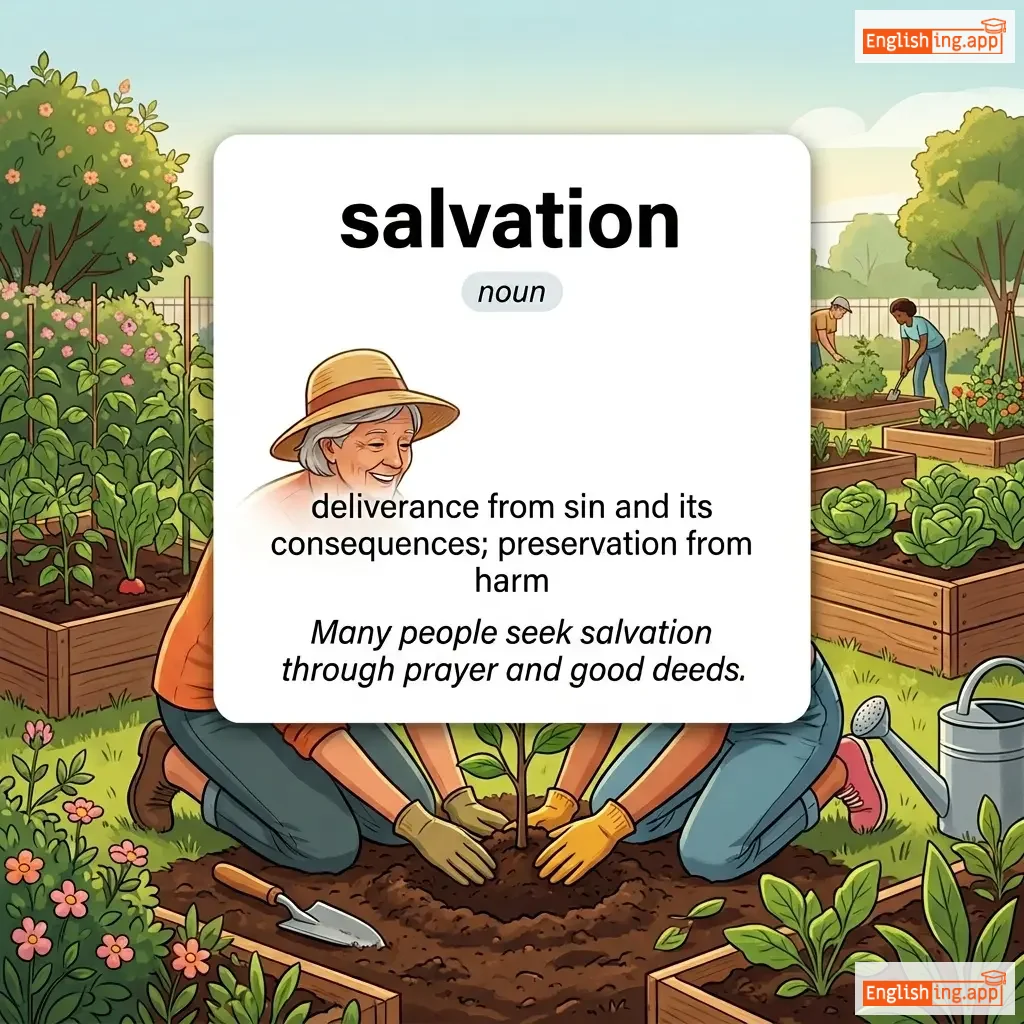
salvation definition card — visual illustration of the meaning
noun C1
/sælˈveɪ.ʃən/
спасение (spaseniye)

deliverance from sin and its consequences; preservation from harm

"Many people seek salvation through prayer and good deeds."

"Многие люди ищут спасение через молитву и добрые дела." (mnogiye lyudi ishchut spaseniye cherez molitvu i dobre dela.)
adjective C1
/ˌsæŋktɪˈmoʊniəs/
лицемерно набожный (litsemernno nabozhny)

Making a show of being morally superior to others; hypocritically pious.

"He gave a sanctimonious speech about honesty while he himself was corrupt."

"Он дал лицемерную речь о честности, хотя сам был коррумпирован." (On dal litsemernuyu rech' o chestnosti, hotya sam byl kurrumpirovannym.)
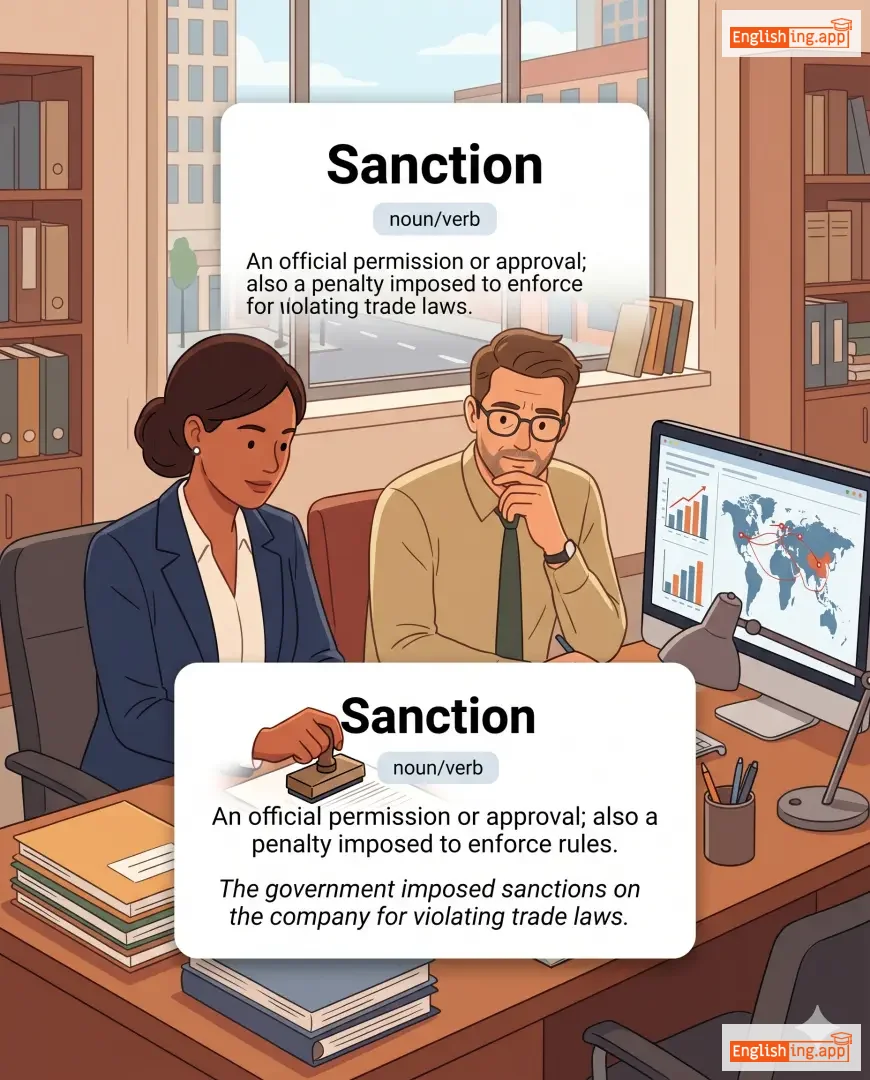
Sanction definition card — visual illustration of the meaning
⚖️

Sanction

noun/verb C1
/ˈsæŋkʃən/

An official permission or approval; also a penalty imposed to enforce rules.

"The government imposed sanctions on the company for violating trade laws."

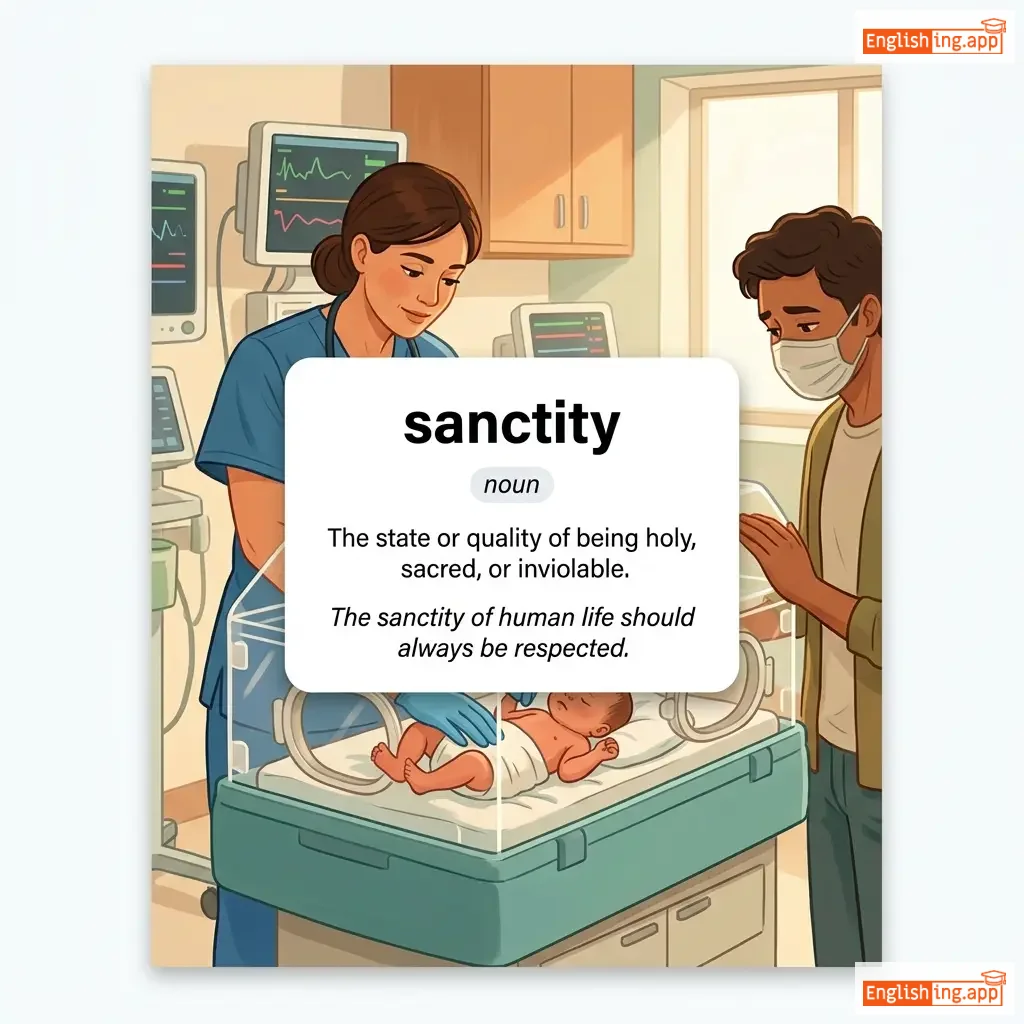
sanctity definition card — visual illustration of the meaning
noun C1
/ˈsæŋk.tə.ti/
святость (svyatost)

The state or quality of being holy, sacred, or inviolable.

"The sanctity of human life should always be respected."

"Святость человеческой жизни должна всегда уважаться." (Svyatost' chelovecheskoy zhizni dolzhna vsegda uzhazhatsya.)
adjective C1
/ˈsæŋɡwɪn/
оптимистичный (optimistichny)

Optimistic or positive, especially in a difficult situation.

"Despite the challenges, she remained sanguine about the future."

"Несмотря на трудности, она оставалась оптимистичной насчет будущего." (Nesmotrya na trudnosti, ona ostavalas' optimistichnoy naschet budushchego.)
sanitization definition card — visual illustration of the meaning
noun C1
ˌsæn.ɪ.taɪˈzeɪ.ʃən
санитарная обработка (sanitarnaya obrabotka)

The process of cleaning and disinfecting to eliminate germs and bacteria.

"Regular sanitization keeps appliances germ-free."

"Регулярная санитарная обработка сохраняет оборудование свободным от микробов." (Regulyarnaya sanitarnaya obrabotka sokhranyayet oborudovaniye svobodnym ot mikroby.)
verb, noun C1
/sæp/
сок / ослаблять (sok / oslablyat)

As a noun: the vital fluid in plants; As a verb: to gradually weaken or drain strength.

"The long journey began to sap his energy."

"Долгий путь начал ослаблять его энергию." (Dolgiy put' nachal oslablyat' ego energiyu.)
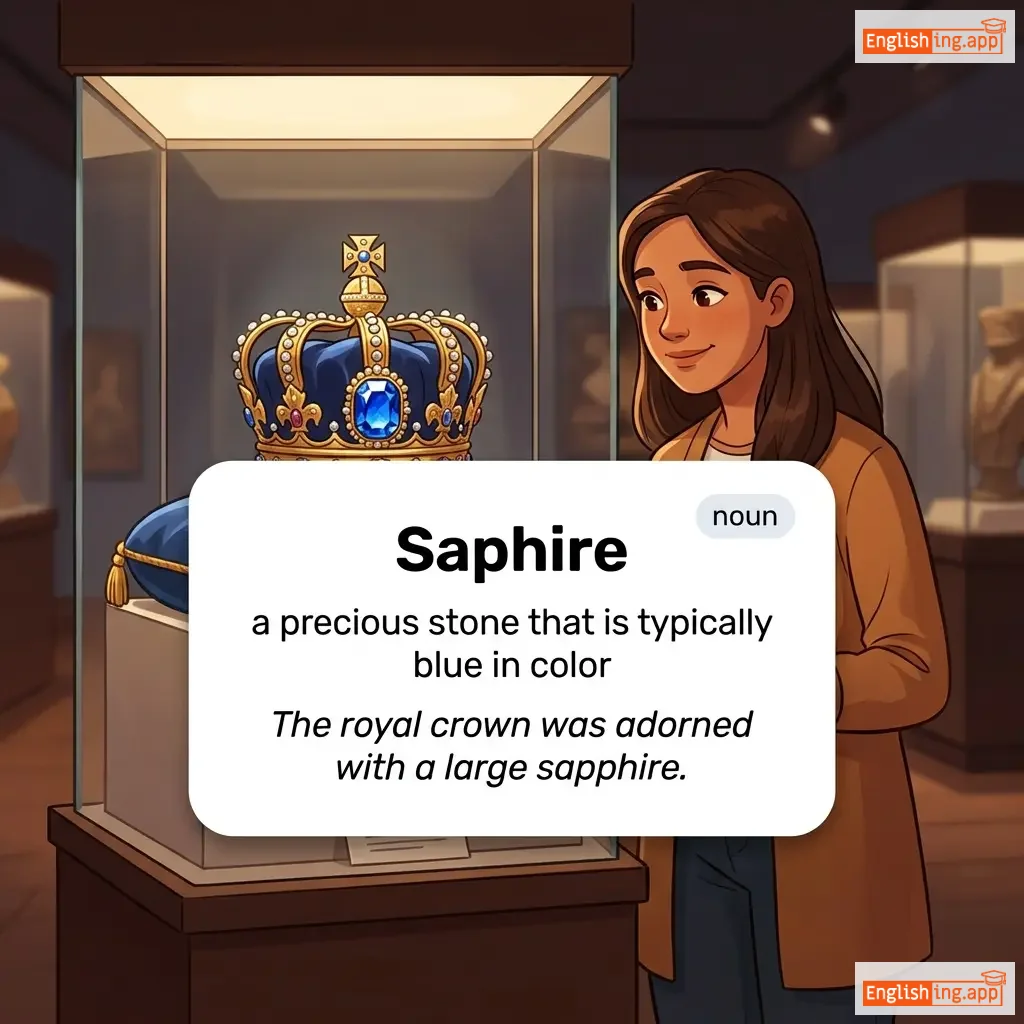
Saphire definition card — visual illustration of the meaning
noun C1
/ˈsæf.aɪər/
сапфир (safpir)

a precious stone that is typically blue in color

"The royal crown was adorned with a large sapphire."

"Корона была украшена большим сапфиром." (Korona byla ukrashena bol'shim safpirom.)
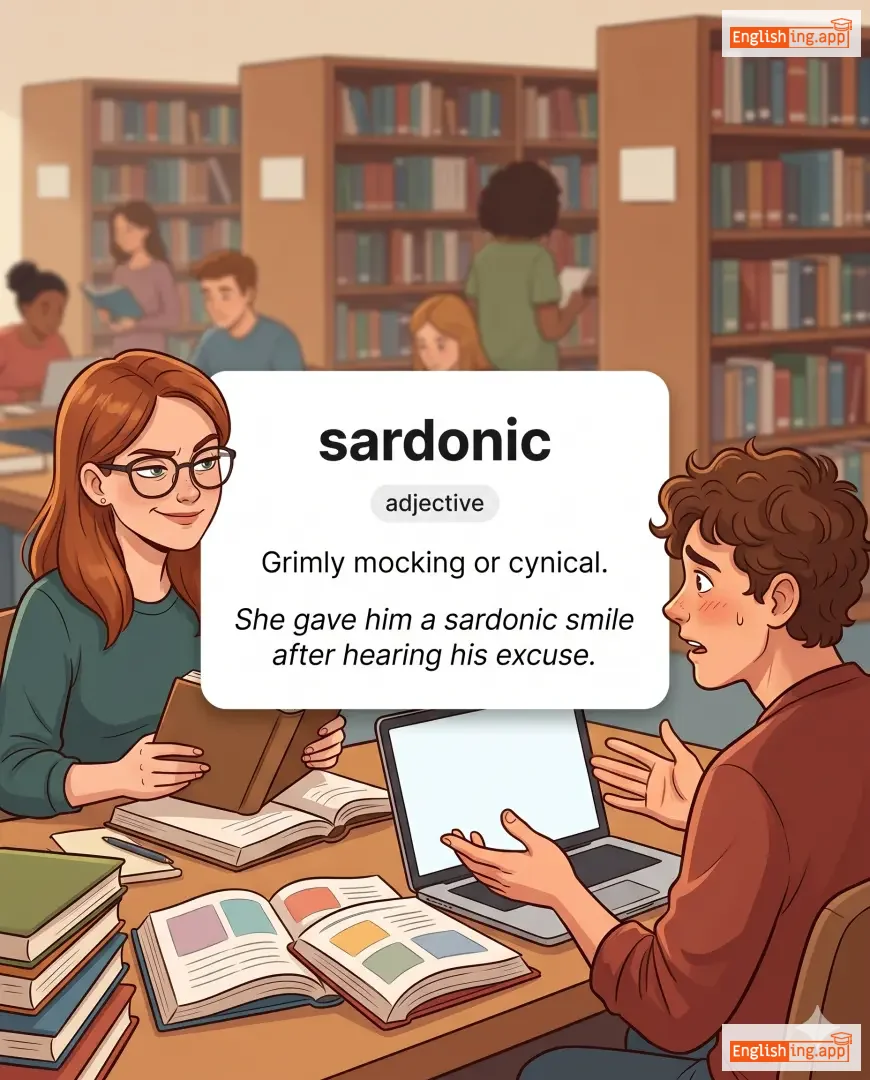
sardonic definition card — visual illustration of the meaning
adjective C1
/sɑːrˈdɒnɪk/
счастье (schast'ye)

Grimly mocking or cynical.

"She gave him a sardonic smile after hearing his excuse."

"Она не могла скрыть своего счастья, когда получила награду." (Ona ne mogla skryt' svoego schast'ya, kogda poluchila nagradu.)
noun C1
/ˈsɑːri/
сари (sari)

a garment consisting of a length of cotton or silk elaborately draped around the body, traditionally worn by women from South Asia

"She looked elegant in her red silk saree at the festival."

"Она выглядела элегантно в своём красном шелковом сари на фестивале." (Ona vyglyadela eleganto v svoem krasnom shelkovom sari na festivale.)
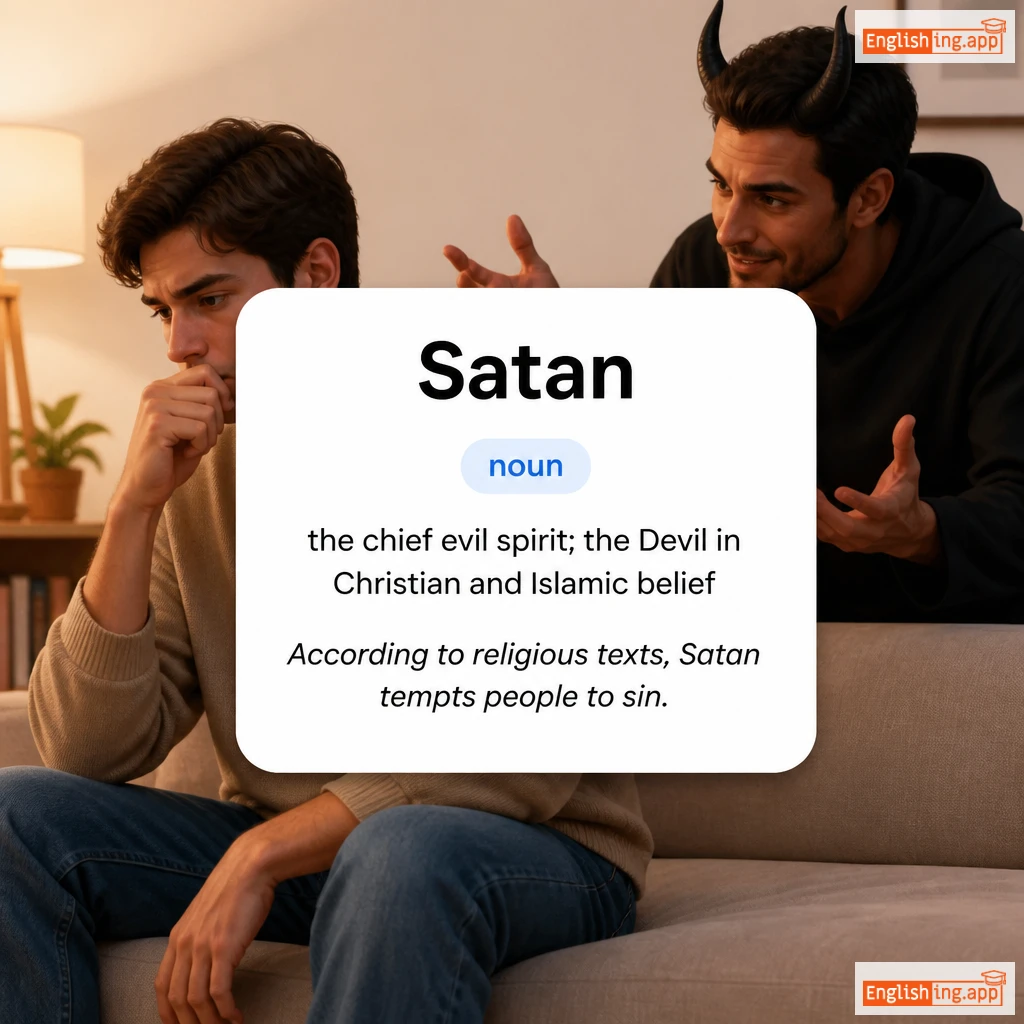
Satan definition card — visual illustration of the meaning
noun C1
/ˈseɪ.tən/
Сатана (Satana)

the chief evil spirit; the Devil in Christian and Islamic belief

"According to religious texts, Satan tempts people to sin."

"Согласно религиозным текстам, Сатана искушает людей к греху." (Soglasno religioznym tekstam, Satana iskushayet lyudey k grekhu.)