Vocabularies

English Vocabulary Dictionary | Word Meanings, Definitions & Examples

noun/verb C1
/ˈræfəl/
venta de boletos de lotería (venta de boletos de lotería)

A means of raising money by selling numbered tickets, one or more of which are drawn at random for a prize; to sell something in such a lottery.

"The charity decided to raffle a bicycle to raise funds."

"La caridad decidió rifar una bicicleta para recaudar fondos." (La caridad decidió rifar una bicicleta para recaudar fondos.)
noun C1
/ˈræftər/
viga (viga)

One of the sloping beams that supports a roof.

"The old barn’s rafters were exposed."

"Las vigas del viejo granero estaban expuestas." (Las vigas del viejo granero estaban expuestas.)
adjective C1
/ˈræɡɪd/
roto (roto)

torn, worn out, or in poor condition

"The homeless man wore a ragged coat."

"El hombre sin hogar llevaba un abrigo roto." (El hombre sin hogar llevaba un abrigo roto.)
adjective C1
/ˈreɪ.kɪʃ/
de aspecto elegante, confiado y algo desacreditado (de aspekto elegante, confiado y algo desacreditado)

having a stylish, confident, and slightly disreputable appearance

"He walked in with a rakish smile and tilted hat."

"Él entró con una sonrisa rencorosa y un sombrero inclinado." (El entro con una sonrisa rencorosa y un sombrero inclinado.)
adjective C1
/ræmˈbʌŋk.ʃəs/
alborotado (alborotado)

boisterous, energetic, and difficult to control.

"The rambunctious children filled the house with noise."

"Los niños alborotados llenaron la casa de ruido." (Los ninos alborotados llenaron la casa de ruido.)
Rambutan definition card — visual illustration of the meaning
noun C1
/ræmˈbuːtən/
rambután (rambutan)

a tropical fruit with red spiky skin and white translucent sweet flesh similar to litchi

"The rambutan looks scary with its hairy skin but tastes very sweet inside."

"El rambutan se ve aterrador con su piel peluda, pero tiene un sabor muy dulce por dentro." (El rambutan se ve aterrador con su piel peluda, pero tiene un sabor muy dulce por dentro.)
noun C1
/ˌræm.ɪ.fɪˈkeɪ.ʃən/
consecuencia (consecuencia)

a consequence of an action or event, often complex or unwelcome.

"The new law has serious social ramifications."

"La nueva ley tiene graves consecuencias sociales." (La nueva ley tiene graves consecuencias sociales.)
adjective C1
/ˈræmpənt/
rampante (rampante)

existing or spreading unchecked, often in an undesirable way

"Corruption was rampant in the city administration."

"La corrupción estaba rampante en la administración de la ciudad." (La corrupcion estaba rampante en la administracion de la ciudad.)
noun C1
/ˈræmpɑːrt/
murallas (murallas)

a defensive wall of a castle or fort

"The soldiers stood on the rampart, watching the enemy approach."

"Los soldados se pararon en la muralla, observando acercarse al enemigo." (Los soldados se pararon en la muralla, observando acercarse al enemigo.)
adjective C1
/ˈræmʃækəl/
deteriorado (deteriorado)

poorly built or maintained; in a state of disrepair

"They lived in a ramshackle old house on the edge of town."

"Vivían en una casa deteriorada en el borde de la ciudad." (Vivían en una casa deteriorada en el borde de la ciudad.)
adjective C1
/ˈrænsɪd/
rancio (rancio)

having a bad taste or smell due to being old or spoiled (especially fats or oils)

"The butter had gone rancid after being left out too long."

"La mantequilla se puso rancia después de estar demasiado tiempo fuera." (La mantequilla se puso rancia despues de estar demasiado tiempo fuera.)
verb C1
/ˈræn.də.maɪz/
aleatorizar (aleatorizar)

To make something happen in a random order or manner.

"The software can randomize the order of questions."

"El software puede aleatorizar el orden de las preguntas." (El software puede aleatorizar el orden de las preguntas.)
verb C1
/ˈræn.sæk/
saquear (saquear)

to search a place roughly and steal or damage things

"Burglars ransacked the house while the family was away."

"Los ladrones saquearon la casa mientras la familia estaba fuera." (Los ladrones saquearon la casa mientras la familia estaba fuera.)
verb C1
/rænt/
gritar (gritar)

to speak or shout in an angry, uncontrolled way

"He ranted about the unfair treatment at work."

"Él gritó acerca del trato injusto en el trabajo." (Él gritó acerca del trato injusto en el trabajo.)
noun C1
/rəˈpɪdəti/
rapidez (rapidez)

The quality of moving or happening quickly; swiftness or speed.

"The rapidity of technological change is astonishing."

"La rapidez del cambio tecnológico es asombroso." (La rapidez del cambio tecnológico es asombroso.)
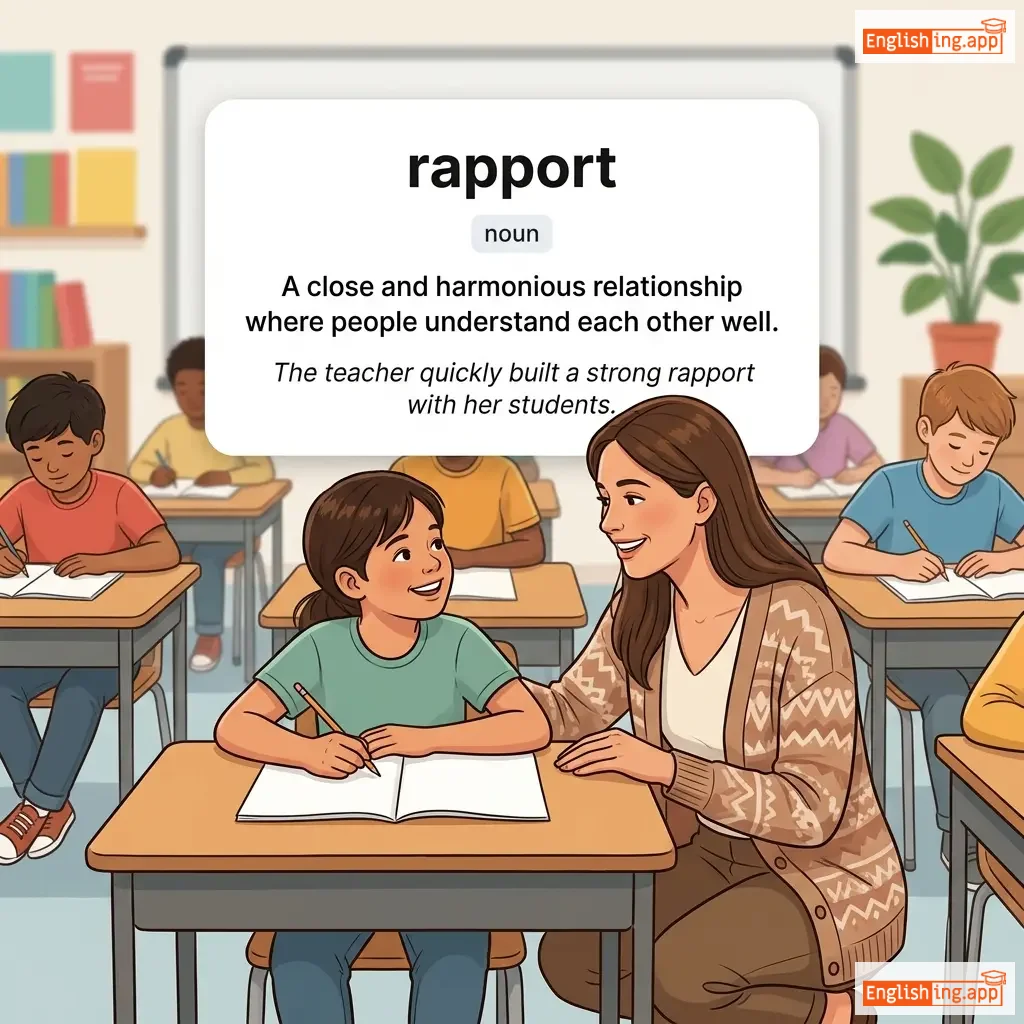
rapport definition card — visual illustration of the meaning
noun C1
/ræˈpɔːr/
relación (relacion)

A close and harmonious relationship where people understand each other well.

"The teacher quickly built a strong rapport with her students."

"La maestra rápidamente construyó una relación fuerte con sus estudiantes." (La maestra rapidamente construyo una relacion fuerte con sus estudiantes.)
adjective C1
/ræpt/
absorto (absorto)

Completely absorbed or fascinated by something.

"She listened with rapt attention to the speaker’s words."

"Ella escuchó con atención absorta las palabras del orador." (Ella escuchó con atención absorta las palabras del orador.)
noun C1
/ˈræp.tʃər/
éxtasis, rapto (extasis, rapto)

A feeling of intense joy, delight, or ecstasy.

"She listened to the music in rapture."

"Ella escuchaba la música en éxtasis." (Ella escuchaba la musica en extasis.)
verb C1
/ræsp/
hablar de forma áspera o raspar con un sonido grueso (hablar de forma aspera o raspar con un sonido grueso)

to speak in a rough, harsh voice or to scrape with a coarse sound

"He rasped out a warning before collapsing."

"él raspó una advertencia antes de desmayarse." (el raspó una advertencia antes de desmayarse.)
😮‍💨

raspy (háspi)

adjective C1
/ˈræspi/
áspero (aspero)

having a harsh, rough, or grating sound

"His raspy voice revealed years of smoking."

"Su voz áspera reveló años de fumar." (Su voz aspero reveló años de fumar.)
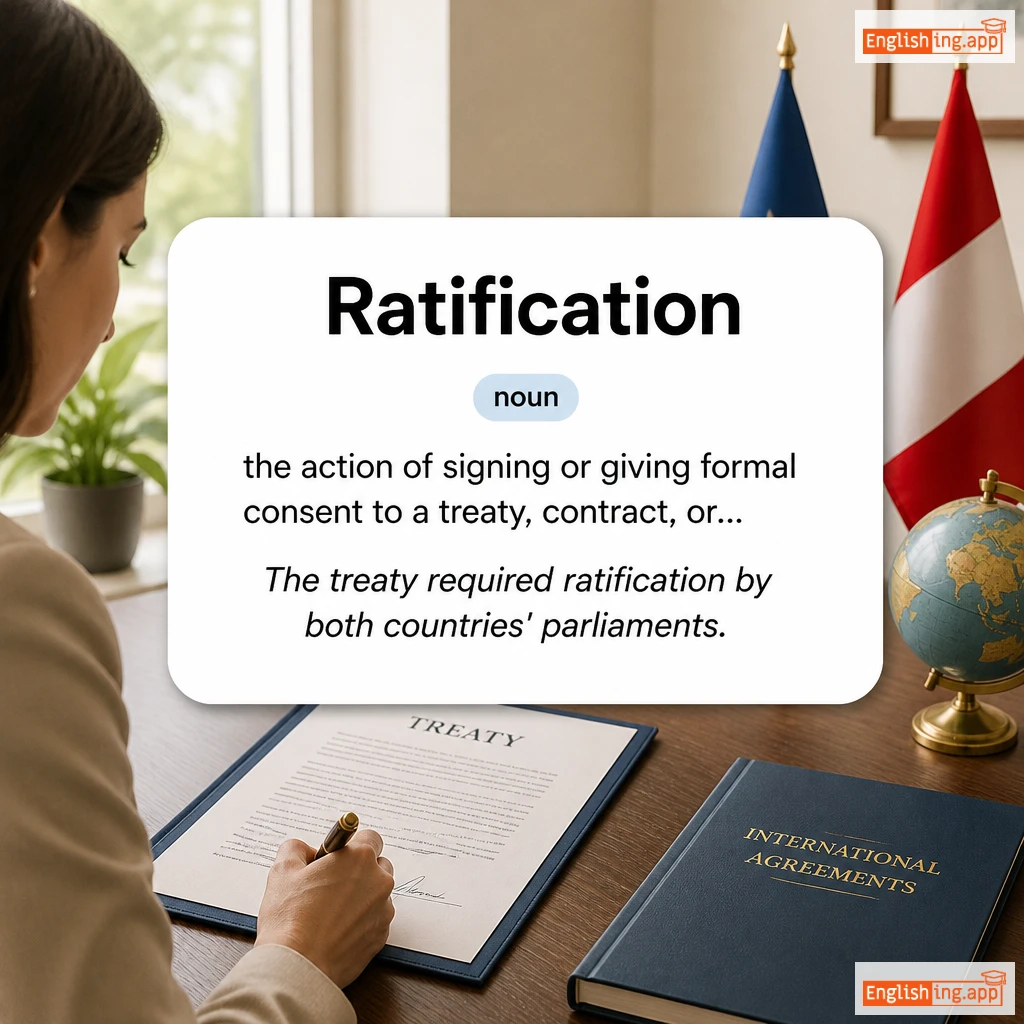
Ratification definition card — visual illustration of the meaning
noun C1
/ˌrætɪfɪˈkeɪʃən/
ratificación (ratificacion)

the action of signing or giving formal consent to a treaty, contract, or agreement

"The treaty required ratification by both countries' parliaments."

"El tratado requirió ratificación por los parlamentos de ambos países." (El tratado requirió ratificación por los parlamentos de ambos países.)
verb C1
/ˈrætɪfaɪ/
ratificar (ratificar)

to approve or confirm something officially, usually by law or formal consent

"The government ratified the trade agreement."

"El gobierno ratificó el acuerdo comercial." (El gobierno ratificó el acuerdo comercial.)
noun C1
/ˈræʃən/
ración (racion)

a fixed amount of something, especially food, officially allowed to each person

"During the war, each family received a weekly ration of rice."

"Durante la guerra, cada familia recibía una ración semanal de arroz." (Durante la guerra, cada familia recibía una ración semanal de arroz.)
noun C1
/ˌræʃəˈnæl/
razón subyacente (razon subyacente)

the underlying reason or explanation for something

"The rationale behind his decision was clearly explained."

"La razón detrás de su decisión fue claramente explicada." (La razon detras de su decision fue claramente explicada.)
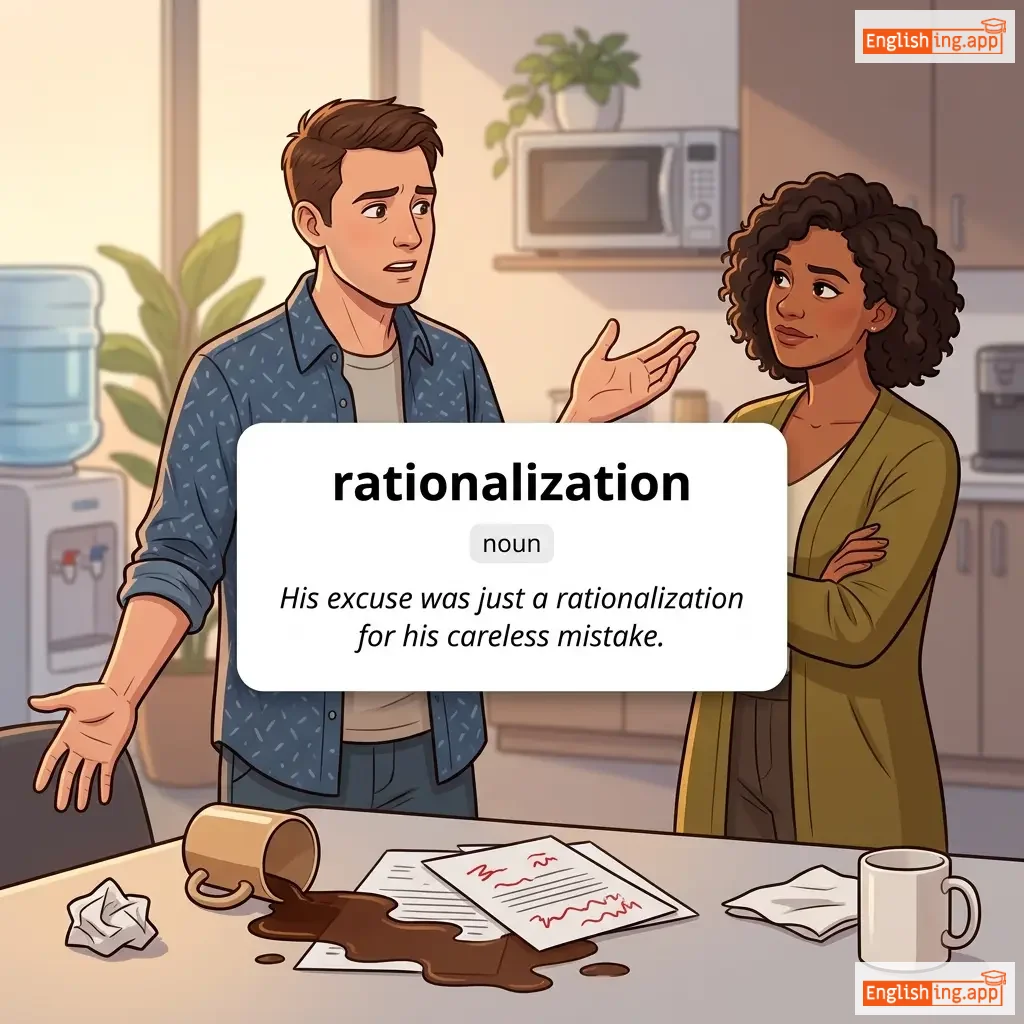
rationalization definition card — visual illustration of the meaning
noun C1
/ˌræʃənəlaɪˈzeɪʃən/
racionalización (racionalizacion)

the action of attempting to explain or justify behavior or an attitude with logical reasons, even if these are not appropriate

"His excuse was just a rationalization for his careless mistake."

"Su excusa fue solo una racionalización de su error descuidado." (Su excusa fue solo una racionalizacion de su error descuidado.)
verb C1
/ˈræʃənəlaɪz/
racionalizar (racionalizar)

to attempt to explain or justify behavior or decisions with logical reasons, even if they are not true or appropriate

"She tried to rationalize her lateness by blaming the traffic."

"Ella trató de racionalizar su retraso culpando al tráfico." (Ella trato de racionalizar su retraso culpando al tráfico.)
verb C1
/ˈræʃənaɪz/
racionalizar (racionalizar)

to justify or explain something with logical reasons, even if not appropriate or true

"He tried to rationlize his mistake by blaming the system."

"Él trató de racionalizar su error culpando al sistema." (El trato de racionalizar su error culpando al sistema.)
adjective C1
/ˈrɔːkəs/
ruidoso, estridente (ruidoso, estridente)

loud, harsh, and unpleasant sound or behavior

"The crowd became raucous after the team scored."

"La multitud se volvió ruidosa después de que el equipo anotó." (La multitud se volvio ruidosa despues de que el equipo anoto.)
verb C1
/ˈrævɪdʒ/
devastar (devastar)

to cause severe and extensive damage or destruction

"The hurricane ravaged the coastal villages."

"El huracán devastó las aldeas costeras." (El huracán devastó las aldeas costeras.)
verb C1
/reɪv/
alabar (alabar)

to speak or write about something with great enthusiasm or admiration

"Critics rave about the new movie."

"Los críticos alaban la nueva película." (Los criticos alaban la nueva pelicula.)
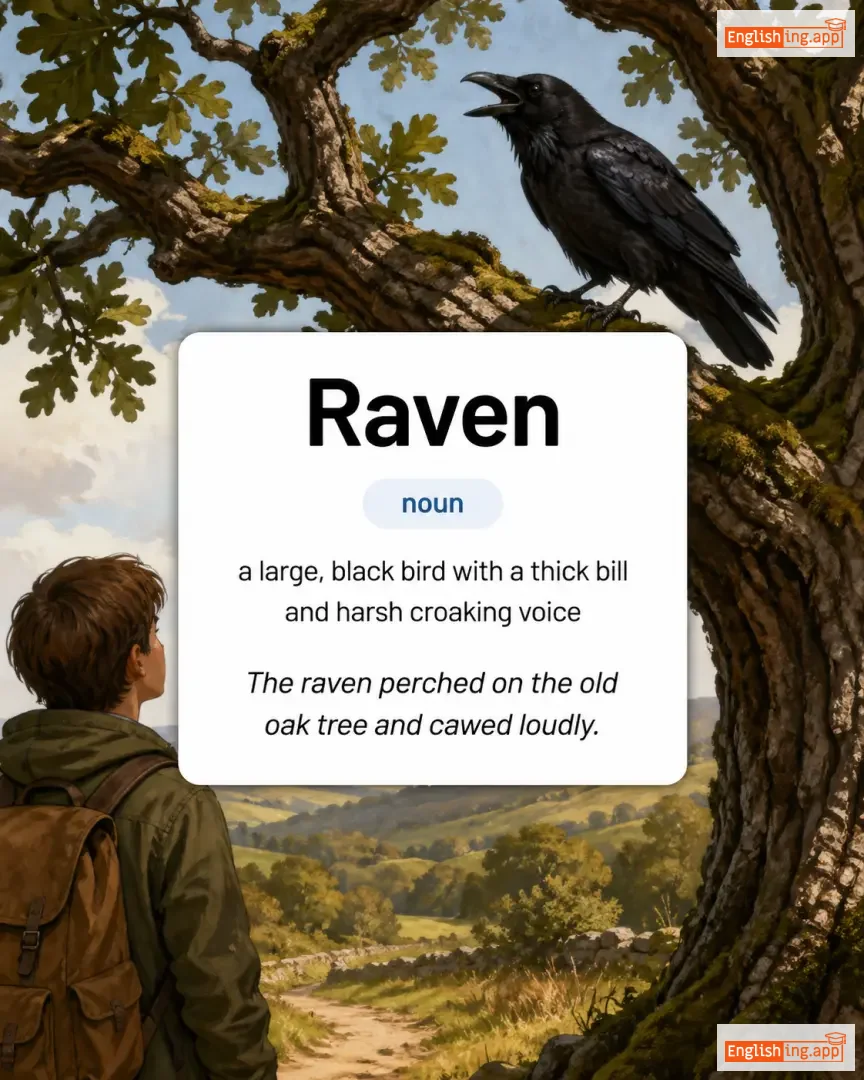
Raven definition card — visual illustration of the meaning
🐦‍⬛

Raven (réven)

noun C1
/ˈreɪ.vən/
cuervo (kwerbo)

a large, black bird with a thick bill and harsh croaking voice

"The raven perched on the old oak tree and cawed loudly."

"El cuervo se posó en el viejo roble y graznó fuerte." (el kwerbo se poso en el viejo roble i grazno fuerte)
adjective C1
/ˈrævənəs/
hambriento (hambriento)

Extremely hungry; famished.

"After the long hike, she was ravenous and ate quickly."

"Después de la larga caminata, ella estaba famélica y comió rápidamente." (Después de la larga caminata, ella estaba famélica y comió rápidamente.)
noun C1
/rəˈviːn/
desfiladero (desfiladero)

A deep, narrow valley with steep sides.

"The river carved a deep ravine through the mountains."

"El río formó un profundo desfiladero a través de las montañas." (El río formó un profundo desfiladero a través de las montañas.)
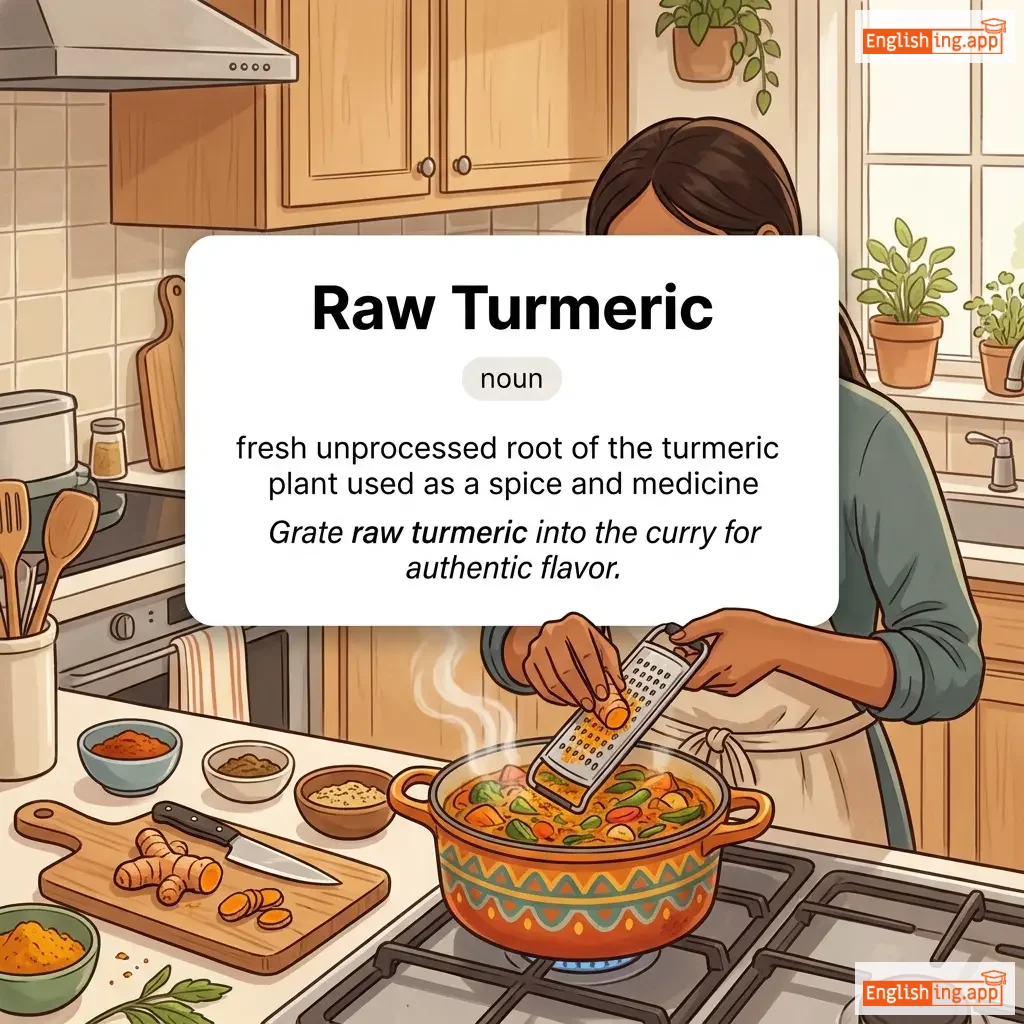
Raw Turmeric definition card — visual illustration of the meaning
noun C1
/rɔ ˈtɜrmərɪk/
cúrcuma cruda (curcuma cruda)

fresh unprocessed root of the turmeric plant used as a spice and medicine

"Grate raw turmeric into the curry for authentic flavor."

"Ralla la cúrcuma cruda en el curry para un sabor auténtico." (Ralla la curcuma cruda en el curry para un sabor autentico)
verb C1
/reɪz/
demoler (demoler)

To completely destroy or demolish something, especially a building.

"The old factory was razed to make way for new apartments."

"La vieja fábrica fue demolida para dar paso a nuevos apartamentos." (La vieja fábrica fue demolida para dar paso a nuevos apartamentos.)
noun C1
/riˈæktənt/
reactante (riaktant)

A substance that takes part in and undergoes change during a chemical reaction.

"Oxygen is a reactant in the process of combustion."

"El oxígeno es un reactante en el proceso de combustión." (El oxigeno es un reactante en el proceso de combustion)
adjective C1
/riˈækʃəˌneri/
reaccionario (reaccionario)

Opposing political or social progress or reform; extremely conservative.

"The group took a reactionary stance against the new policies."

"El grupo adoptó una postura reaccionaria contra las nuevas políticas." (El grupo adoptó una postura reaccionaria contra las nuevas políticas.)
adjective C1
/riˈæk.tɪv/
reactivo; químicamente activo (reactivo; quimicamente activo)

responding to situations rather than initiating them; chemically active

"The company took a reactive approach to customer complaints."

"La empresa adoptó un enfoque reactivo hacia las quejas de los clientes." (La empresa adoptó un enfoque reactivo hacia las quejas de los clientes.)
verb C1
/ˌriːəˈdʒʌst/
reajustar (reajustar)

To change or move something again in order to achieve a better fit, condition, or balance.

"He readjusted the chair to make it more comfortable."

"Él reajustó la silla para que fuera más cómoda." (El reajustó la silla para que fuera más cómoda.)
noun C1
/ˌriː.əˈdʒʌst.mənt/
reajuste (reeuhjuhstment)

The act of changing or correcting something again to make it suitable or balanced.

"After moving to a new city, he went through a period of readjustment."

"Después de mudarse a una nueva ciudad, él pasó por un periodo de reajuste." (Despues de mudarse a una nueva ciudad, el paso por un periodo de reajuste.)
verb C1
/ˌriːəˈfɜːrm/
reafirmar (reafirmar)

To state again strongly; to confirm or strengthen a statement or belief.

"The president reaffirmed his commitment to education reform."

"El presidente reafirmó su compromiso con la reforma educativa." (El presidente reafirmo su compromiso kon la reforma educativa.)
noun C1
/ˈriːpər/
una persona o máquina que corta y recoge cultivos (una persona o maquina que corta y recoge cultivos)

a person or machine that cuts and gathers crops

"The reaper moved slowly through the golden fields."

"El ríper se movió lentamente a través de los campos dorados." (El riper se movio lentamente a traves de los campos dorados.)
noun C1
/ˈriːbeɪt/
descuento/reembolso (descuento/reembolso)

a partial refund given to someone who has paid too much money for something

"The store offered a rebate on bulk purchases."

"La tienda ofreció un descuento en compras al por mayor." (La tienda ofreció un descuento en compras al por mayor.)
adjective C1
/rɪˈbɛljəs/
rebelde (rebelde)

resisting authority or control; showing a desire to rebel

"The rebellious teenager refused to follow the school rules."

"El adolescente rebelde se negó a seguir las reglas de la escuela." (El adolescente rebelde se negó a seguir las reglas de la escuela.)
verb C1
/rɪˈbʌf/
rechazar (rechazar)

to reject or refuse in a sharp or abrupt way

"She rebuffed his invitation to dinner."

"Ella rechazó su invitación a cenar." (Ella rechazó su invitación a cenar.)
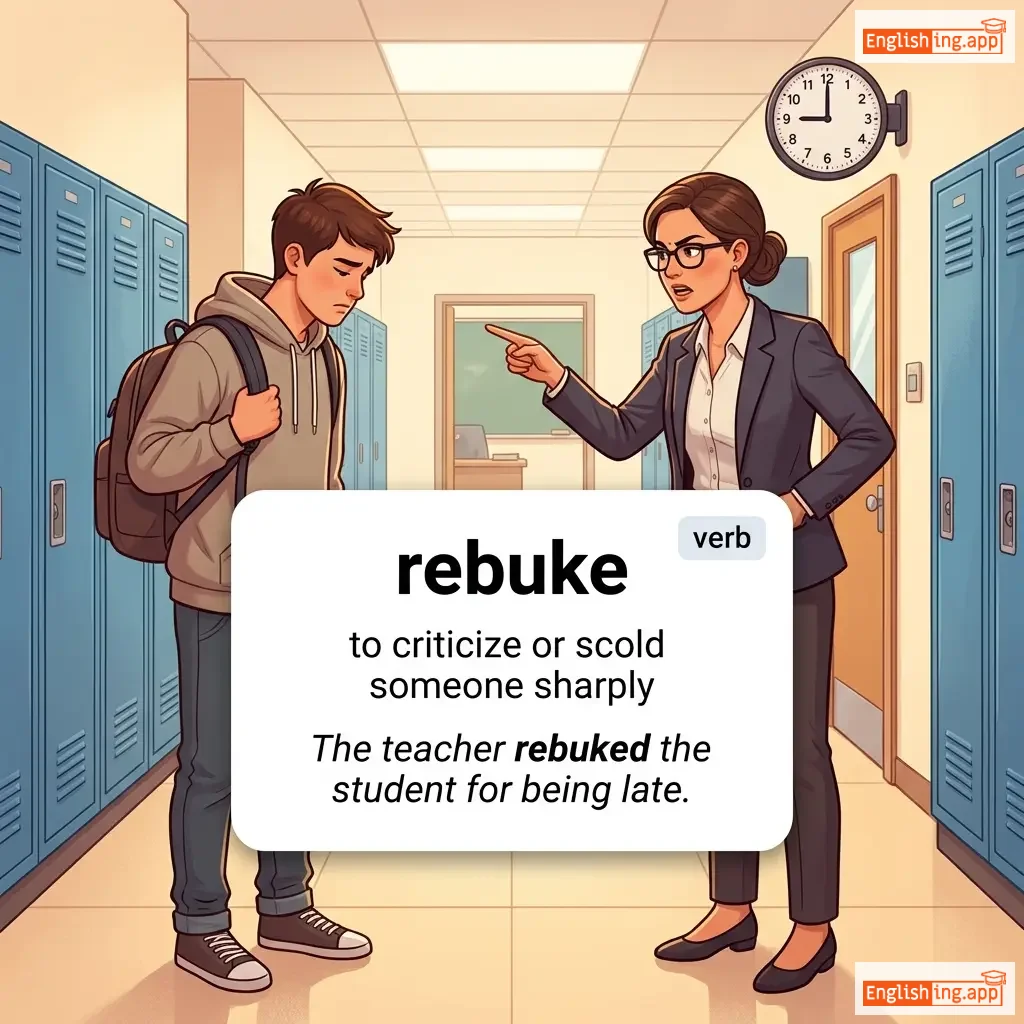
rebuke definition card — visual illustration of the meaning
verb C1
/rɪˈbjuːk/
reprender (reprender)

to criticize or scold someone sharply

"The teacher rebuked the student for being late."

"El maestro reprendió al estudiante por llegar tarde." (El maestro reprendió al estudiante por llegar tarde.)
verb C1
/rɪˈbʌt/
refutar (refutar)

to argue against or prove wrong; to refute

"The lawyer rebutted the false accusations with strong evidence."

"El abogado refutó las falsas acusaciones con pruebas contundentes." (El abogado refutó las falsas acusaciones con pruebas contundentes.)
noun C1
/rɪˈbʌtəl/
refutación (refutacion)

a statement or argument made to oppose or disprove another

"Her rebuttal was clear and convincing."

"Su refutación fue clara y convincente." (Su refutacion fue clara y convincente.)
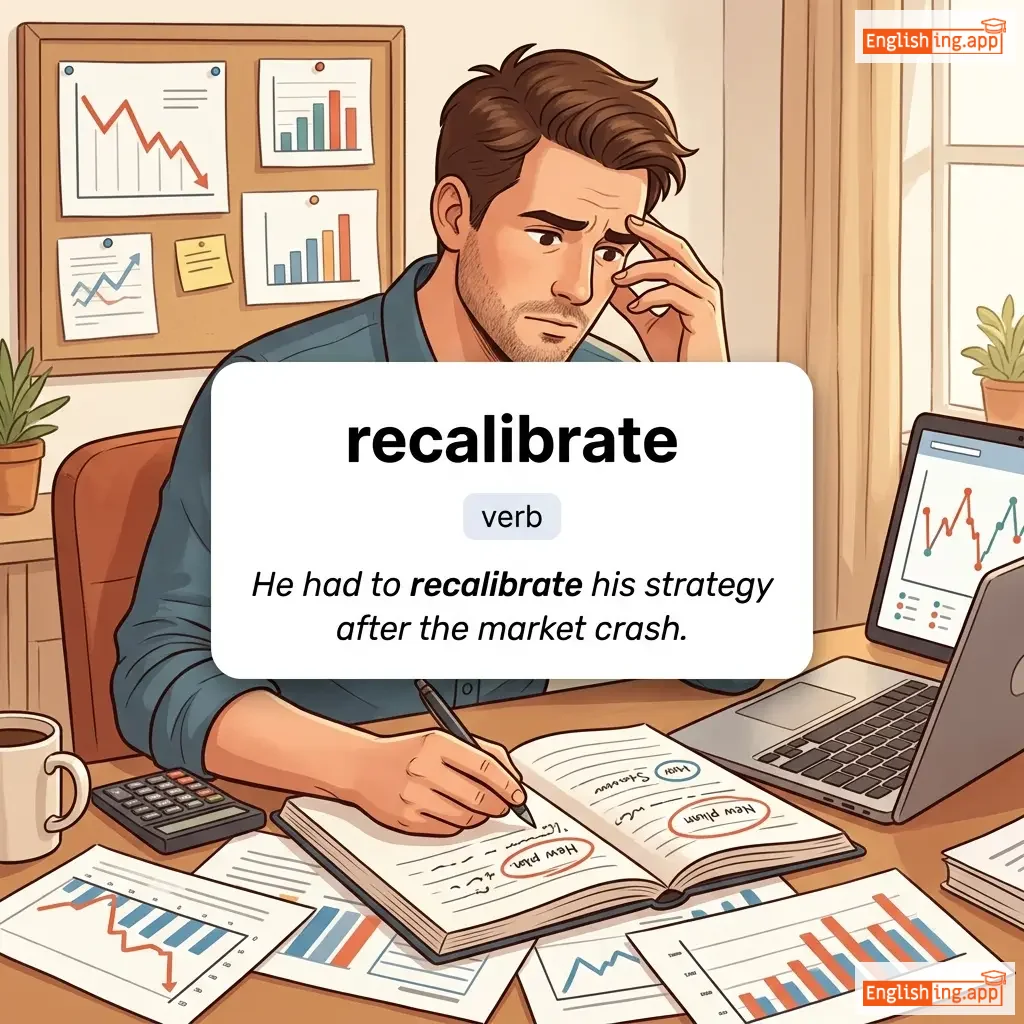
recalibrate definition card — visual illustration of the meaning
verb C1
ˌriːˈkæl.ɪ.breɪt
recalibrar (recalibrar)

To adjust or modify according to a new standard or plan; to reassess and realign.

"He had to recalibrate his strategy after the market crash."

"Él tuvo que recalibrar su estrategia después del colapso del mercado." (Él tuvo que recalibrar su estrategia después del colapso del mercado.)
verb C1
/riːˈkæptʃər/
recapturar (recapturar)

To take back or regain possession of something.

"The army managed to recapture the lost territory."

"El ejército logró recapturar el territorio perdido." (El ejérciro logró recapturar el territorio perdido.)