Vocabularies

English Vocabulary Dictionary | Word Meanings, Definitions & Examples

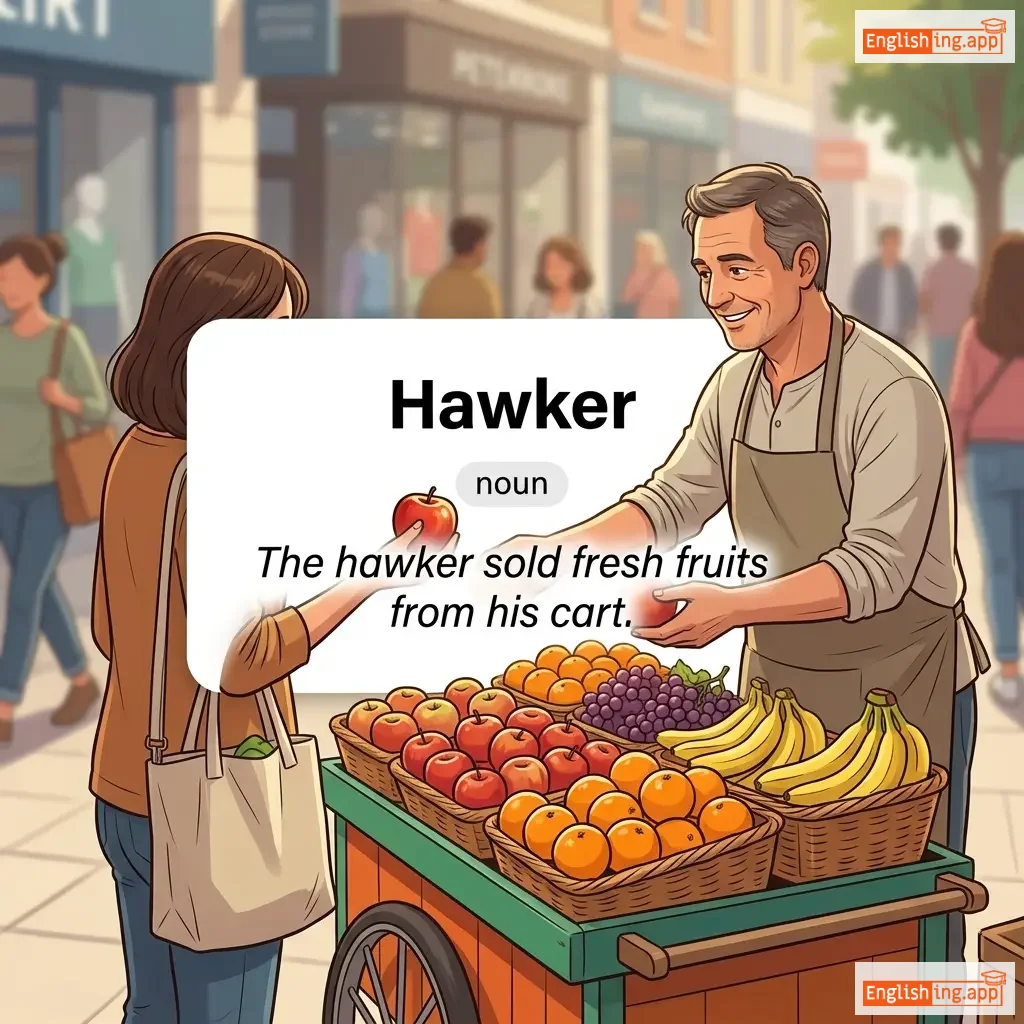
Hawker definition card — visual illustration of the meaning
noun C1
/ˈhɔː.kər/
уличный продавец (ulichnyy prodavets)

a person who travels about selling goods, typically from door to door or on the street

"The hawker sold fresh fruits from his cart."

"Уличный продавец продавал свежие фрукты со своего тележки." (Ulichnyy prodavets prodaval svezhiye frukty so svoego telezhki.)
🌫️

Haze (hez)

noun C1
/heɪz/
туман (tuman)

a slight obscuration of the lower atmosphere, typically caused by fine suspended particles; confusion

"The morning haze lifted gradually as the sun rose higher in the sky."

"Утренний туман постепенно исчез, когда солнце поднималось выше в небе." (Utrenny tuman postepenno ischez, kogda solntse podnimalos' vyshe v nebe.)
adjective C1
/ˈheɪzi/
туманный (tumanny)

Unclear, misty, or not easy to see; also vague or uncertain.

"The mountains looked hazy in the morning light."

"Горы выглядели туманными при утреннем свете." (Gory viglyadeli tumannymi pri utrevnem svete.)
adverb C1
/ˈhed ɑn/
лоб в лоб (lob v lob)

directly facing; in direct confrontation or collision

"The two cars collided head-on at the intersection."

"Два автомобиля столкнулись лоб в лоб на перекрестке." (Dva avto mobilia stolknulis' lob v lob na perekrestke.)
adverb C1
/ˌhɛdˈfɜrst/
головой вперёд (golovoy vperyod)

With the head leading; in a reckless or hasty manner.

"He dived headfirst into the pool."

"Он нырнул головой вперёд в бассейн." (On nyrnul golovoy vperyod v basseyn.)
adverb C1
/ˈhɛdˌlɔŋ/
в слепую (v slepuyu)

With the head leading; in a rush or without thinking.

"She rushed headlong into the new project."

"Она в слепую бросилась в новый проект." (Ona v slepuyu brosilas' v novyy proyekt.)
adjective C1
/ˈhɛdˌstrɔŋ/
упрямый (upryamy)

Determined to do what one wants, even if it is not sensible.

"The headstrong child refused to listen to anyone."

"Упрямый ребенок отказался слушать кого-либо." (Upryamy rebenok otkazalsya slushat' kogo-libo.)
noun C1
/ˈhed.weɪ/
прогресс; продвижение; успех (progress, prodvizhenie, uspekh)

forward movement or progress, especially when this is slow or difficult

"Despite the challenges, the research team made significant headway in developing the new vaccine."

"Несмотря на трудности, исследовательская группа достигла значительного прогресса в разработке новой вакцины." (Nesmotrya na trudnosti, issledovatelskaya gruppa dostigla znachitelnogo progressa v razrabotke novoy vaktsiny.)
adjective C1
/ˈhɛlθfəl/
оздоровительный (ozdorovitel'nyy)

Promoting good health; beneficial to health.

"A healthful diet includes fresh fruits and vegetables."

"Оздоровительная диета включает свежие фрукты и овощи." (Ozdorovitel'naya dieta vklyuchayet svezhiye frukty i ovoshchi.)
noun C1
/ˈhɪərseɪ/
слух (slukh)

Information received from other people that cannot be substantiated; rumor.

"The decision was based on hearsay, not evidence."

"Решение было основано на слухах, а не на доказательствах." (Reshenie bylo osnovano na slukhakh, a ne na dokazaetel'stvakh.)
adverb C1
/ˈhɑr.tɪ.li/
от всей души; искренне (ot vsei dushi; iskrenne)

in a sincere and enthusiastic manner; wholeheartedly

"She heartily welcomed her guests to the party."

"Она с радостью поприветствовала своих гостей на вечеринке." (O-na s ra-do-st'yu po-priv-jet-stvo-va-la svo-ikh gos-tei na ve-che-rin-ke.)
adjective C1
/ˈhɑːrtˌrɛndɪŋ/
душераздирающий (dusherazdiraushchiy)

Causing great sadness or distress; very moving emotionally.

"The documentary showed heartrending scenes of war victims."

"Документальный фильм показал душераздирающие сцены жертв войны." (Dokumental'nyy film pokazal dusherazdyirayushchiye stseny zhertv voyny.)
noun C1
/ˈhiːdəˌnɪzəm/
гедонизм (gedonizm)

The pursuit of pleasure and self-indulgence as the highest goal.

"The lifestyle of the rich is often criticized as pure hedonism."

"Образ жизни богатых часто критикуется как чистый гедонизм." (Obraz zhizni bogatykh chasto kritikuetsya kak chisty gedonizm.)
noun C1
/ˈhiːdənɪst/
гедонист (gedonist)

A person who believes that the pursuit of pleasure is the most important thing in life.

"She was called a hedonist because she always prioritized enjoyment over duty."

"Ее называли гедонистом, потому что она всегда ставила удовольствие выше долга." (Eyo nazyvali gedonistom, potomu chto ona vsegda stavila udovol'stviye vyshe dolga.)
verb C1
/hiːd/
обратить внимание (obratit vnimanie)

to pay attention to; to take notice of

"You should heed the teacher's advice."

"Ты должен обратить внимание на советы учителя." (Ty dolzhen obratit vnimanie na sovety uchitelya.)
adjective C1
/ˈhiːdləs/
беспечный (bespechnyy)

showing a reckless lack of care or attention

"He drove with heedless disregard for the rules."

"Он ехал с беспечным пренебрежением к правилам." (On yekhal s bespechnym prenebrazheniyem k pravilam.)
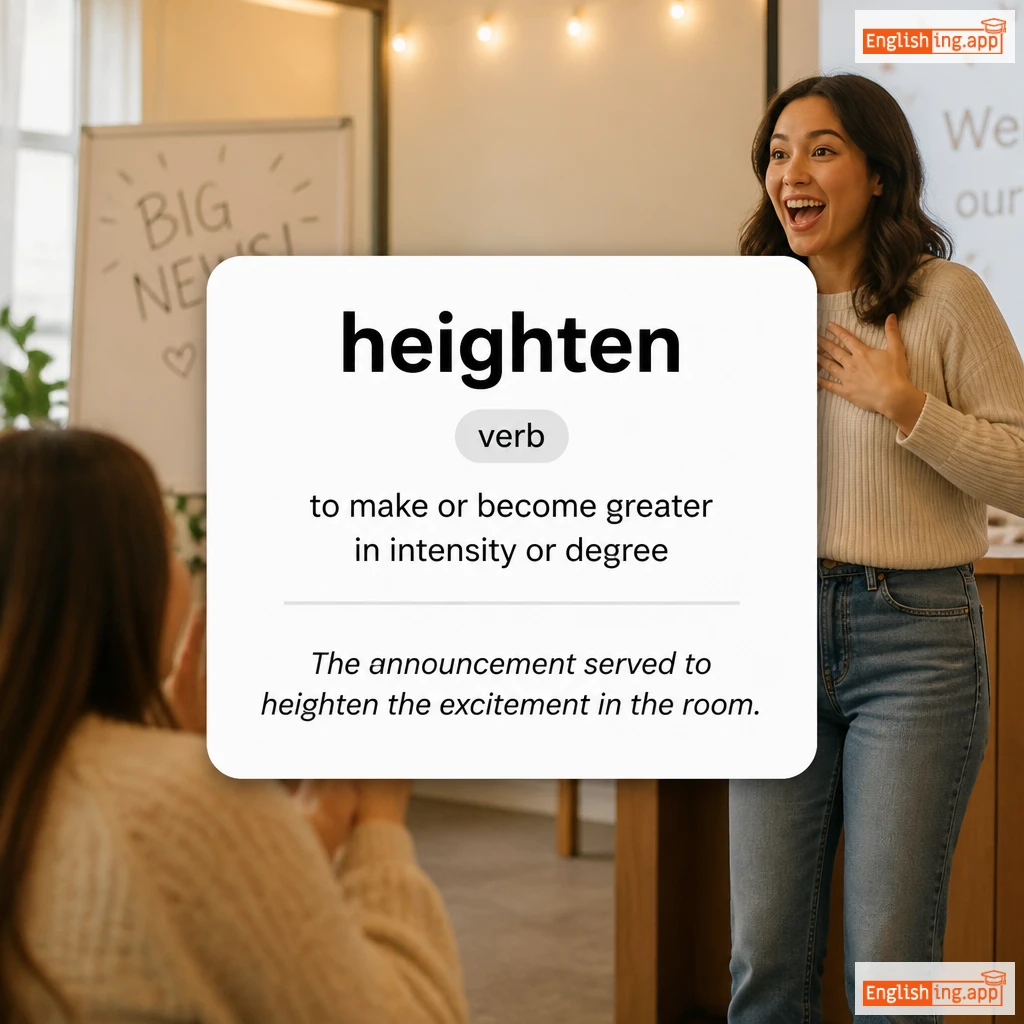
heighten definition card — visual illustration of the meaning
verb C1
/ˈhaɪtən/
повышать (povyshat')

to make or become greater in intensity or degree

"The announcement served to heighten the excitement in the room."

"Объявление помогло повысить волнение в комнате." (Ob'yavlenie pomoglo povysit' volnenie v komnate.)
adjective C1
/ˈheɪ.nəs/
мерзкий (merzkiy)

extremely wicked, deeply offensive, or shockingly evil

"The dictator was condemned for his heinous crimes against humanity."

"Диктатор был осуждён за свои мерзкие преступления против человечности." (Diktator byl osuzhdyon za svoi merzkiye prestupleniya protiv chelovechnosti.)
noun C1
/ˈɛər.luːm/
наследие (naslediye)

a valuable object that has belonged to a family for several generations

"The ring is a family heirloom passed down from her grandmother."

"Кольцо — это семейное наследие, переданное от бабушки." (Kol'tso — eto semeynoye naslediye, peredannoye ot babushki.)
Helm definition card — visual illustration of the meaning
noun C1
/hɛlm/
руководство, штурвал (rukovodstvo, shturval)

a position of leadership or the steering apparatus of a ship

"After years of service, she finally took the helm of the company."

"После многих лет службы, она наконец взяла на себя руководство компанией." (Posle mnogikh let sluzhby, ona nakonec vzyala na sebya rukovodstvo kompaniy.)
noun/verb C1
/hɛm/
подгибка ткани (podgibka tkani)

the edge of a piece of cloth that is folded and sewn; to fold and sew the edge of cloth

"She hemmed the dress to make it shorter."

"Она обработала край платья, чтобы укоротить его." (Ona obrabotala kraj plat'ya, chtoby ukorotit' ego.)
noun/verb C1
/ˈhɛmərɪdʒ/
геморрагия (gemorragija)

A significant loss of blood from a ruptured blood vessel, or to lose blood heavily.

"The patient suffered a severe brain hemorrhage."

"Пациент перенёс тяжёлую мозговую геморрагию." (Patsijent perenjos' tjazhëluju mozgovuju gemorragiju.)
noun/verb C1
/ˈhɛrəld/
глашатай (glashatay)

A person or thing that announces or signals the approach of something; to announce or signal.

"The blooming flowers herald the arrival of spring."

"Цветущие цветы предвещают приход весны." (Tsvetushchie tsvety predveshchayut prikhod vesny.)
noun C1
/ˈhɜːrbɪsaɪd/
гербицид (gerbitsid)

A chemical substance used to kill unwanted plants, especially weeds.

"Farmers used herbicide to protect their crops from invasive weeds."

"Фермеры использовали гербициды, чтобы защитить свои культуры от вторгающихся сорняков." (Fermery ispol'zovali gerbitsidy, chtoby zashchitit' svoi kul'tury ot vtorzhayushchikhsya sornyakov.)
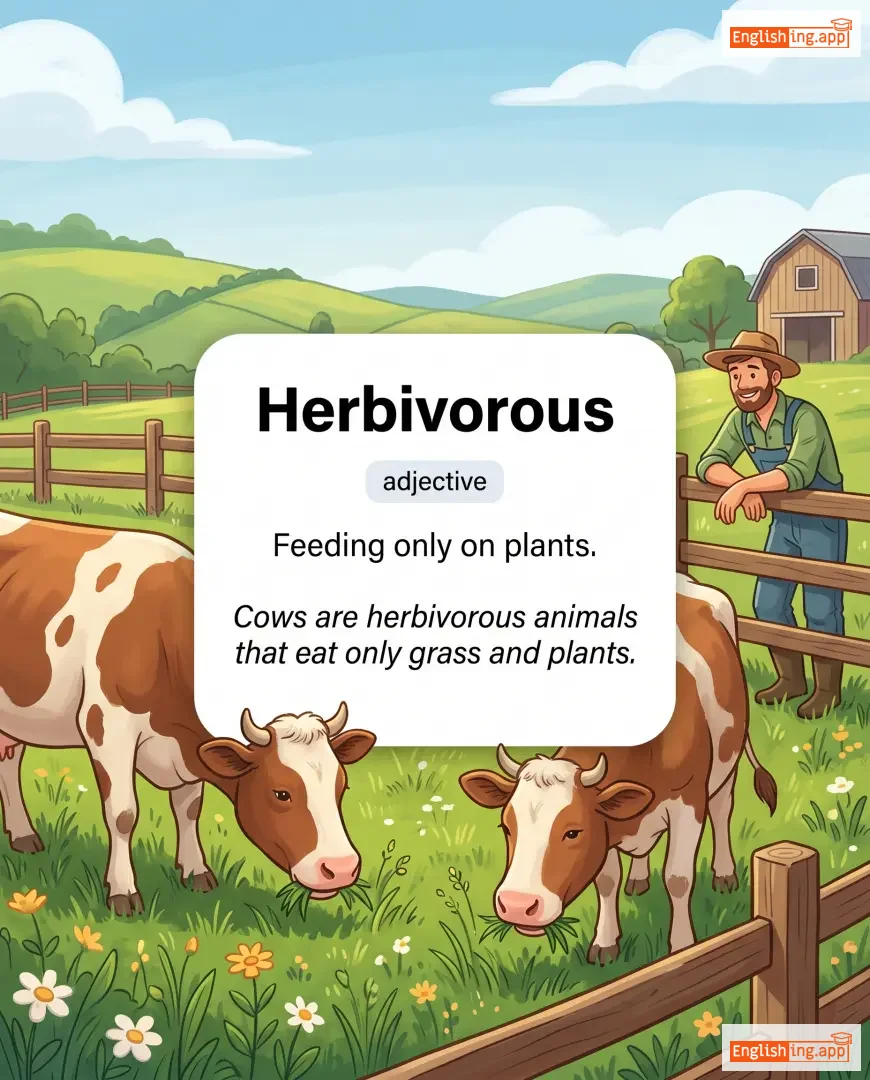
Herbivorous definition card — visual illustration of the meaning
adjective C1
/hɜːrˈbɪvərəs/
травоядное (travyodnoe)

Feeding only on plants.

"Cows are herbivorous animals that eat only grass and plants."

"Коровы — травоядные животные, которые едят только траву и растения." (Korovy — travyodnye zhivotnye, kotorye edyat tol'ko travu i rastenija.)
adverb/noun C1
/ˌhɪərˈæftər/
с этого момента / загробная жизнь (s etogo momenta / zagrobnaya zhizn)

from now on; in the future; also refers to life after death.

"Hereafter, all reports must be submitted electronically."

"С этого момента все отчеты должны быть отправлены электронным способом." (S etogo momenta vse otchety dolzhny byt' otpravleny elektronnyim sposobom.)
adjective C1
/həˈrɛdəˌtɛri/
наследственный (nasledstvenny)

passed from parents to their children through genes or by inheritance.

"Diabetes can be a hereditary condition."

"Диабет может быть наследственным заболеванием." (Diabet mozhet byt' nasledstvennym zabolevaniem.)
noun C1
/ˈhɛrəsi/
ересь (yeres)

belief or opinion that goes against established religious doctrine or accepted beliefs.

"In medieval times, heresy was often punished severely."

"В Средние века ересь часто строго наказывалась." (V Srednie veka eres' chasto strogo nakazyvalas'.)
noun C1
/ˈhɛrətɪk/
еретик (yeretik)

a person who holds beliefs that go against established religious teachings or accepted beliefs.

"The church declared him a heretic for his radical ideas."

"Церковь объявила его еретиком за его радикальные идеи." (Tserkov' ob'yavila ego yeretikom za ego radikal'nye idei.)
noun C1
/ˈhɜːrmɪt/
отшельник (otshelnik)

A person who lives alone and apart from society, often for religious or spiritual reasons.

"The old hermit lived in a cave for decades."

"Старый отшельник жил в пещере десятилетиями." (staryi otshelnik zhil v peshchere desyatiletiyami.)
noun C1
/ˈhɜːrniə/
грыжа (gryzha)

A medical condition where an organ pushes through the muscle or tissue holding it in place.

"The doctor diagnosed him with an inguinal hernia."

"Доктор диагностировал у него паховую грыжу." (Doktor diagnostiroval u nego pakhovuyu gryzhyu.)
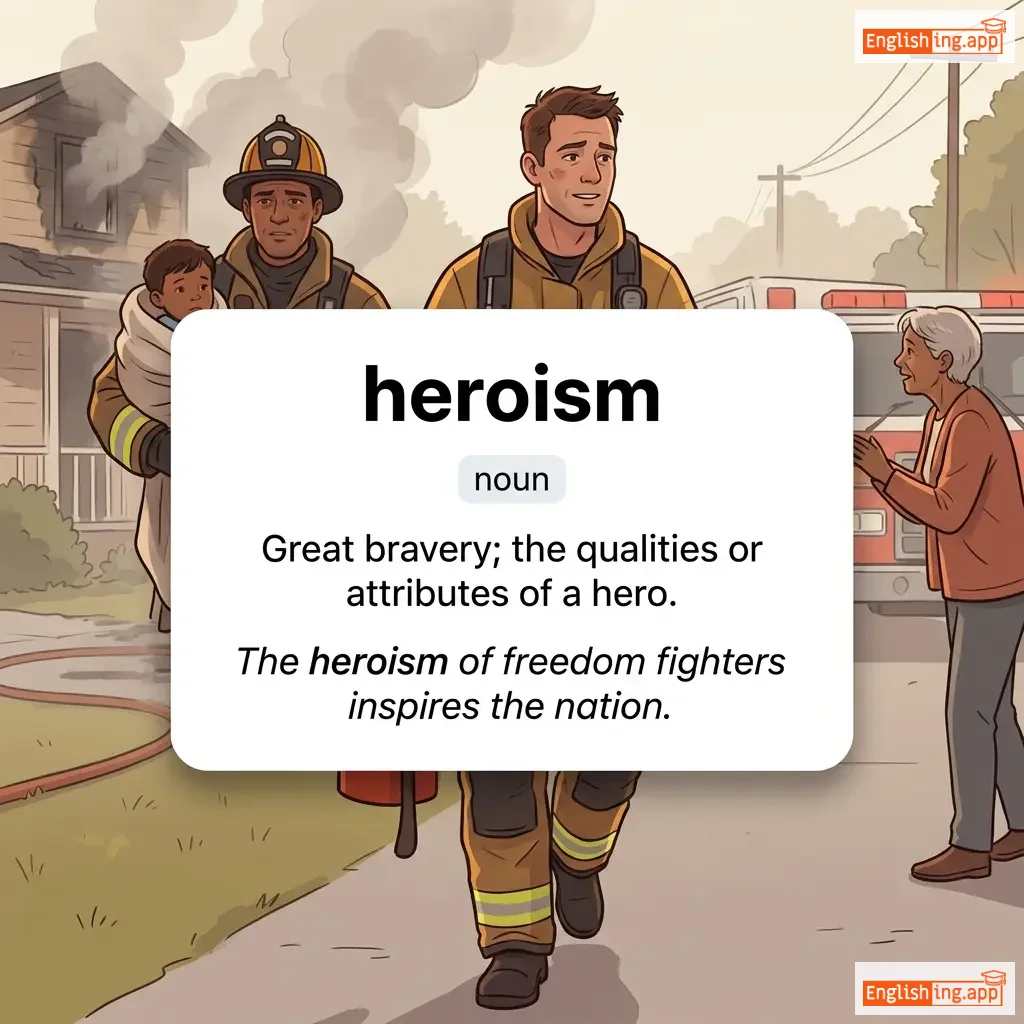
heroism definition card — visual illustration of the meaning
noun C1
ˈhɛroʊˌɪzəm
героизм (geroizm)

Great bravery; the qualities or attributes of a hero.

"The heroism of freedom fighters inspires the nation."

"Героизм борцов за свободу вдохновляет нацию." (Geroizm borcov za svobodu vdokhnovliaet natsiiu.)
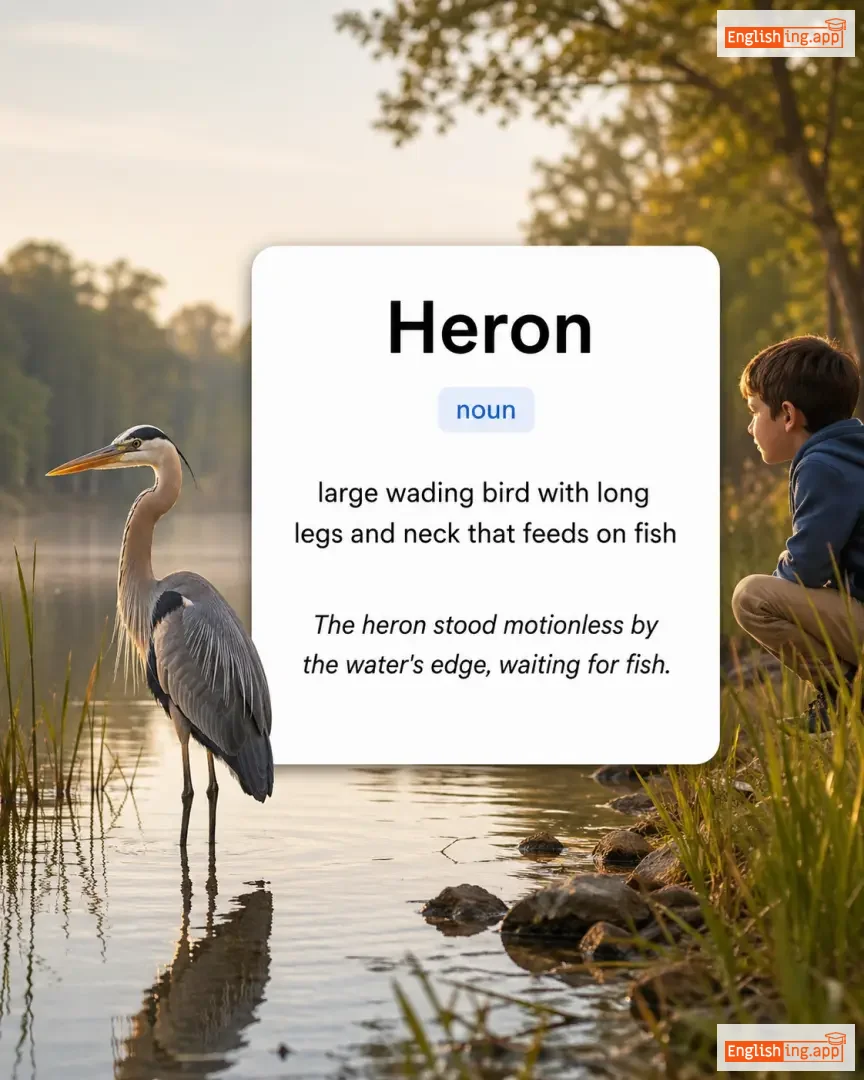
Heron definition card — visual illustration of the meaning
noun C1
/ˈherən/
цуцикан (tsutsikan)

large wading bird with long legs and neck that feeds on fish

"The heron stood motionless by the water's edge, waiting for fish."

"Цуцикан стоял неподвижно у воды, ожидая рыбу." (Tsutsikan stoyal nepodvizhno u vody, ozhidaya rybu.)
noun C1
/ˈhɛzɪtəns/
колебание (kolebanie)

The quality or state of being reluctant or uncertain.

"Her hesitance to speak up delayed the decision."

"Её колебания по поводу выступления задержали решение." (Eyo kolebaniya po povodu vystupleniya zaderzhali reshenie.)
noun C1
/ˈhɛzɪtənsi/
нерешительность (nereshitel'nost)

The tendency to pause or delay due to uncertainty or fear.

"His hesitancy in answering made everyone doubt his confidence."

"Его нерешительность при ответе заставила всех сомневаться в его уверенности." (Ego nereshel'nost' pri otvete zastavila vsekh somnevatsya v ego uverennosti.)
adjective C1
/ˌhɛtərəˈʤiːniəs/
гетерогенный (heterogennyy)

consisting of different kinds or diverse elements

"The classroom was filled with a heterogeneous group of students."

"Класс был наполнен гетерогенной группой студентов." (Klass byl napolnen heterogennoy gruppoy studentov.)
noun C1
/ˈhɛksəˌɡɒn/
шестигранник (shestigrannik)

A six-sided polygon.

"A honeycomb cell is shaped like a hexagon."

"Ячейка в улье имеет форму шестиугольника." (Yacheyka v ul'e imeyet formu shestiugol'nika.)
noun C1
/ˈheɪˌdeɪ/
золотой век (zolotoy vek)

The period of greatest success, popularity, or power.

"In its heyday, the company dominated the market."

"На своем золотом веке компания доминировала на рынке." (Na svoem zolotom veke kompaniya dominirovala na rynke.)
noun C1
/haɪˈeɪtəs/
перерыв (pereryv)

A pause or break in continuity of a process or activity.

"The show returned after a long hiatus."

"Шоу вернулось после долгого перерыва." (Shou vernulos posle dolgogo pereryva.)
verb C1
/ˈhaɪbərˌneɪt/
зимовать (zimovat)

To spend the winter in a dormant state, as some animals do.

"Bears hibernate in caves during the winter."

"Медведи зимуют в пещерах зимой." (Medvedi zimuyut v peshcherakh zimoy.)
noun C1
/ˈhaɪdəweɪ/
убежище (ubezhishche)

A place used as a retreat or a place to hide.

"The cabin in the woods was their secret hideaway."

"Хижина в лесу была их секретным укрытием." (Khizhina v lesu byla ikh sekretным ukrytiyem.)
adjective C1
/ˈhɪd.i.əs/
ужасный (uzhasnyy)

extremely ugly or unpleasant

"The crime was so hideous that it shocked the whole town."

"Преступление было настолько ужасным, что оно шокировало весь город." (Prestuplenie bylo nastol'ko uzhasnym, chto ono shokirovalo ves' gorod.)
adjective C1
/ˌhaɪəˈrɑː.kɪ.kəl/
иерархический (ierarkhicheskij)

arranged in order of rank or authority

"The company has a strict hierarchical structure."

"Компания имеет строгую иерархическую структуру." (Kompaniya imeet stroguju ierarkhicheskuyu strukturu.)
hieroglyphics definition card — visual illustration of the meaning
noun C1
/ˌhaɪ.roʊˈɡlɪf.ɪks/
иероглифы (ieroglify)

a system of writing using pictures or symbols, used especially by ancient Egyptians

"The tomb walls were covered with Egyptian hieroglyphics."

"Стены гробницы были покрыты египетскими иероглифами." (Steny grobnitsy byli pokryty egipetskymi ieroglifami.)
noun C1
/ˈhaɪ.nəs/
Высочество; королевский титул (vysochectvo, korolevskiy titul)

a title given to a person of royal rank; the quality or state of being high or elevated

"Your Highness, the royal carriage is ready to take you to the state banquet this evening."

"Ваше Высочество, королевская карета готова отвезти вас на государственный банкет сегодня вечером." (Vashe Vysochectvo, korolevskaya karet is ready to take you to the state banquet tonight.)
hijack definition card — visual illustration of the meaning
verb C1
/ˈhaɪdʒæk/
угон (ugon)

to take control of a vehicle or situation illegally or by force

"The criminals attempted to hijack the airplane."

"Преступники пытались угнать самолет." (Prestuplniki pytalis' ugnat' samolet.)
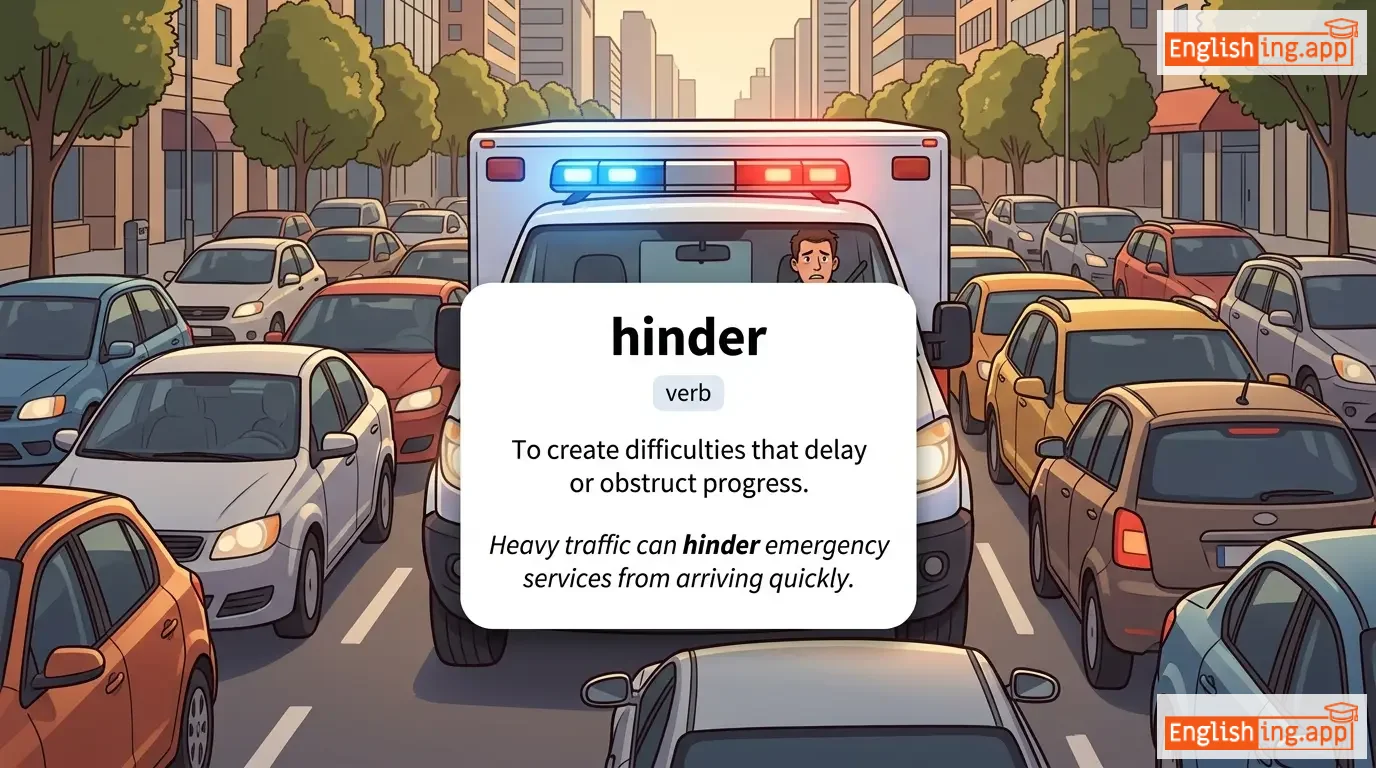
hinder definition card — visual illustration of the meaning
verb C1
/ˈhɪndər/
мешать (meshchat)

To create difficulties that delay or obstruct progress.

"Heavy traffic can hinder emergency services from arriving quickly."

"Тяжелое движение может помешать экстренным службам прибыть быстро." (Tyazheloe dvizhene mozhet pomesat' ekstreemnym sluzhbam pribyit' bystro.)
hindrance definition card — visual illustration of the meaning
noun C1
/ˈhɪndrəns/

Something that delays or obstructs progress or action.

"Lack of funds was a major hindrance to the project."

noun C1
/ˈhaɪndsaɪt/
задним числом (zadnim chislom)

Understanding of a situation only after it has happened.

"With the benefit of hindsight, we realized the decision was a mistake."

"Имея в виду задним числом, мы поняли, что решение было ошибкой." (Imei v vidu zadnim chislom, my ponyali, chto reshenie bylo oshibkoy.)
noun C1
/ˈhɪntərlænd/
внутренние районы (vnutrennie rayony)

The remote or less developed areas away from the coast or a city.

"The farmers came from the rural hinterland to sell their produce in the city."

"Фермеры приехали из сельских внутренних районов, чтобы продать свою продукцию в городе." (Fermery priekhali iz sel'skikh vnutrennikh raionov, chtoby prodat' svoiu produktsiiu v gorode.)