Vocabularies

English Vocabulary Dictionary | Word Meanings, Definitions & Examples

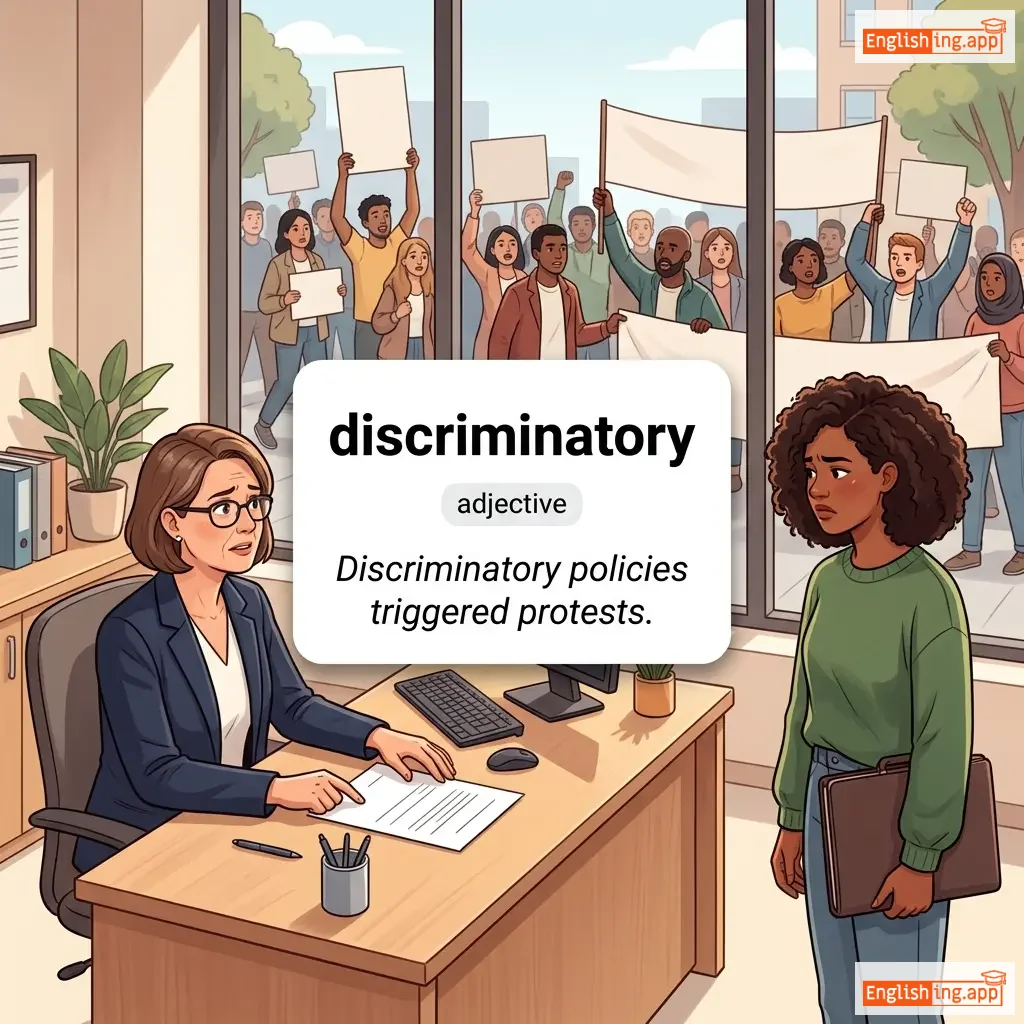
discriminatory definition card — visual illustration of the meaning
adjective C1
dɪˈskrɪmɪnətɔːri
歧视性 (qishi xing)

Making or showing an unfair or prejudicial distinction between different categories of people or things.

"Discriminatory policies triggered protests."

"歧视性政策引发了抗议。" (Qishi xing zhengce yinfa le kangyi.)
noun/verb C1
/dɪsˈdeɪn/

The feeling that someone or something is unworthy of respect; to regard with contempt.

"She looked at the messy room with open disdain."

verb C1
/ˌdɪsɪmˈbɑːrk/
下船/下飞机 (xia chuan/xia feiji)

To leave a ship, aircraft, or other vehicle.

"The passengers disembarked from the plane after landing."

"乘客在着陆后从飞机上下来。" (Chengke zai zhuolu hou cong feiji shang xiala.)
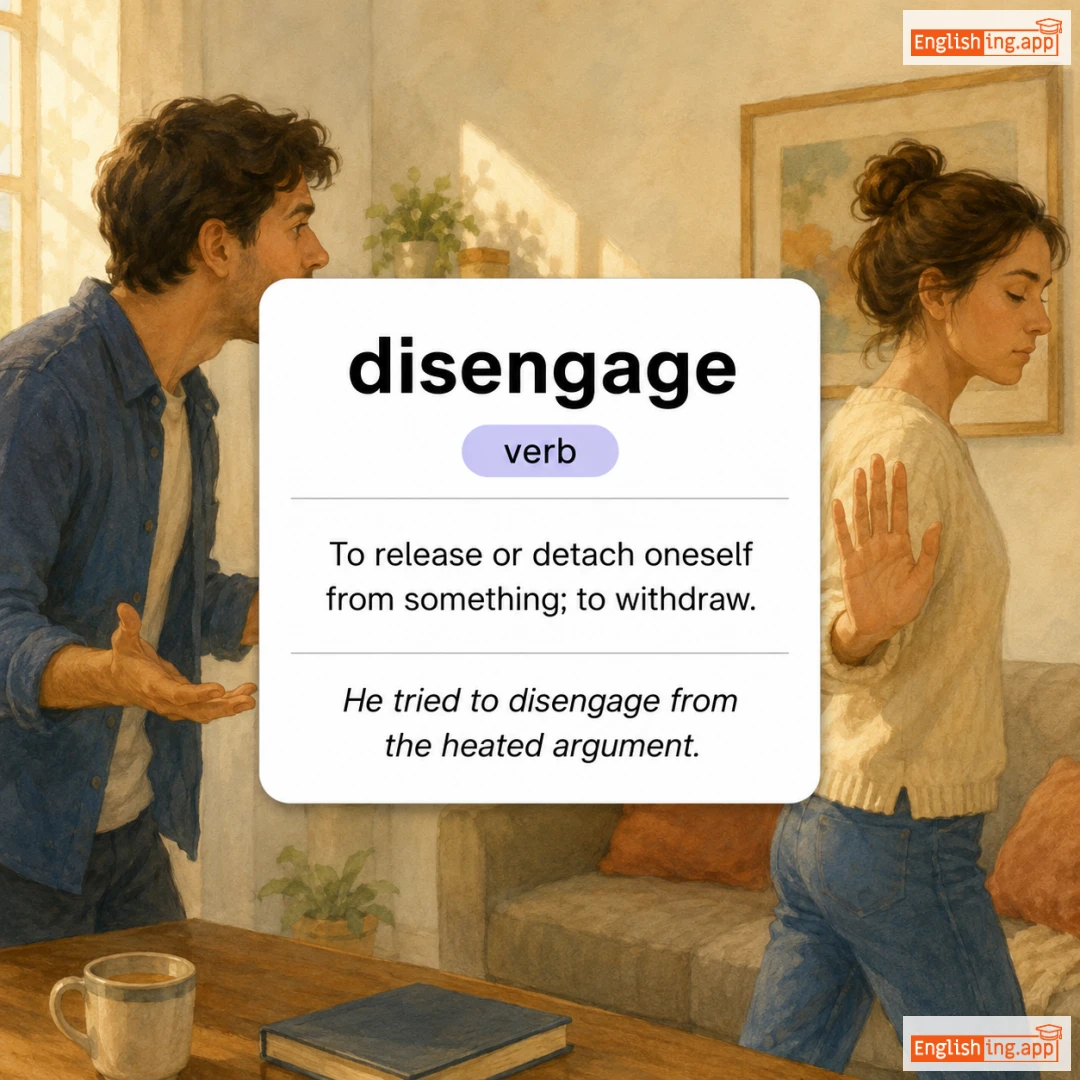
disengage definition card — visual illustration of the meaning
verb C1
/ˌdɪsɪnˈɡeɪdʒ/
脱离 (tuōlí)

To release or detach oneself from something; to withdraw.

"He tried to disengage from the heated argument."

"他试图从激烈的争论中脱离。" (Tā shìtú cóng jīliè de zhēnglùn zhōng tuōlí.)
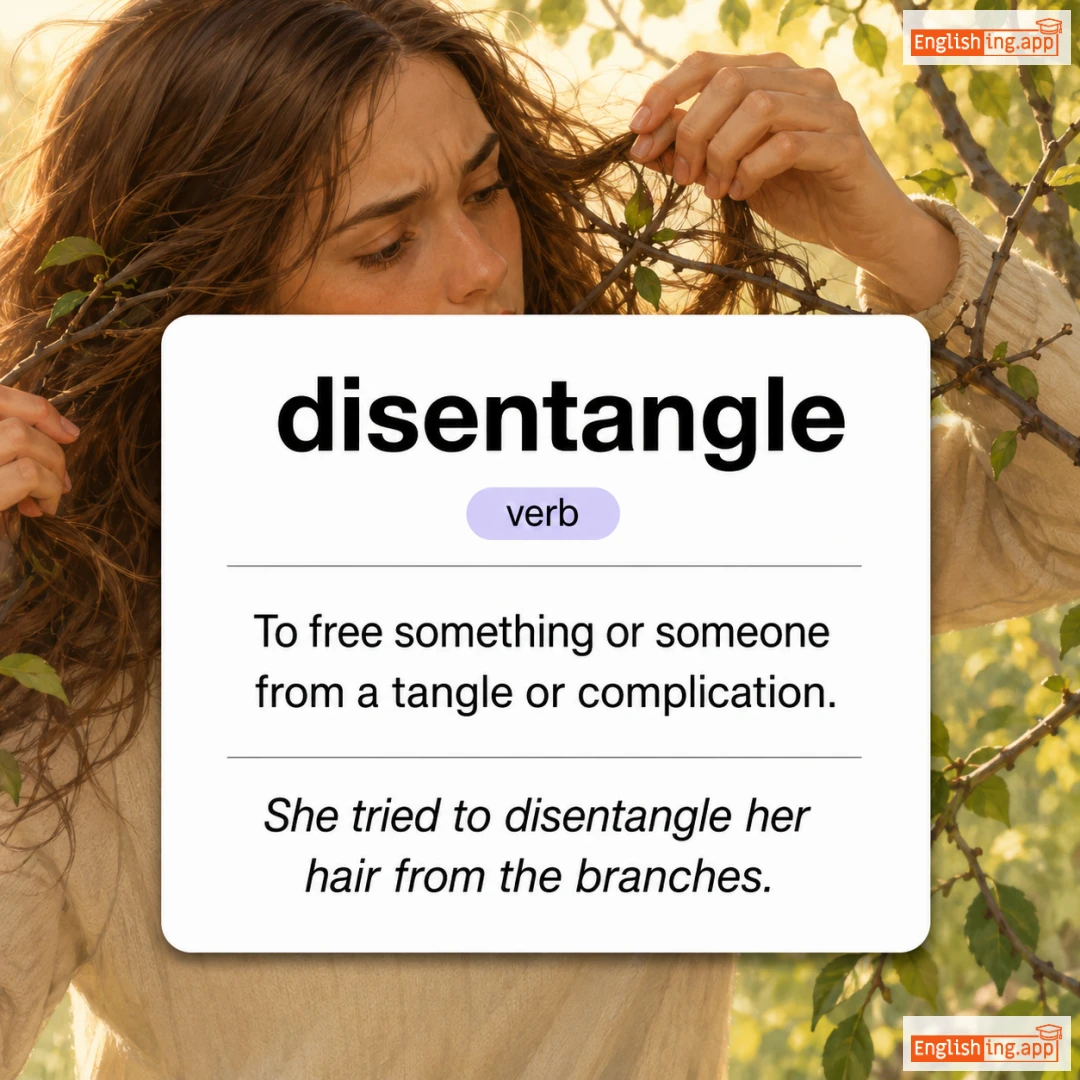
disentangle definition card — visual illustration of the meaning
verb C1
/ˌdɪsɪnˈtæŋɡl/
解开 (jiě kāi)

To free something or someone from a tangle or complication.

"She tried to disentangle her hair from the branches."

"她试图把头发从树枝上解开。" (Tā shìtú bǎ tóufà cóng shùzhī shàng jiě kāi.)
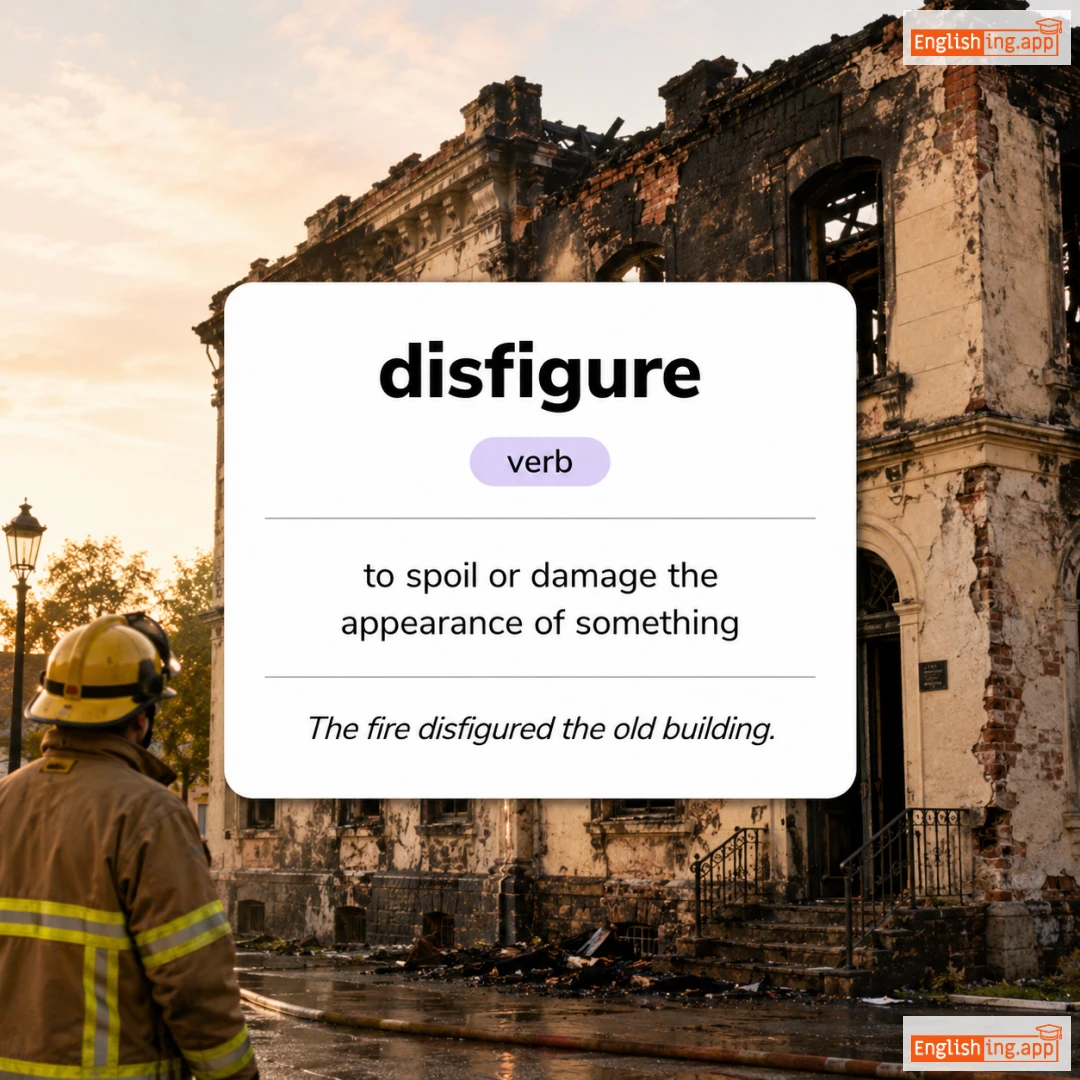
disfigure definition card — visual illustration of the meaning
verb C1
/dɪsˈfɪɡjər/
毁容 (huirong)

to spoil or damage the appearance of something

"The fire disfigured the old building."

"火灾毁容了那座老建筑。" (Huozai huirongle na zuo lao jianzhu.)
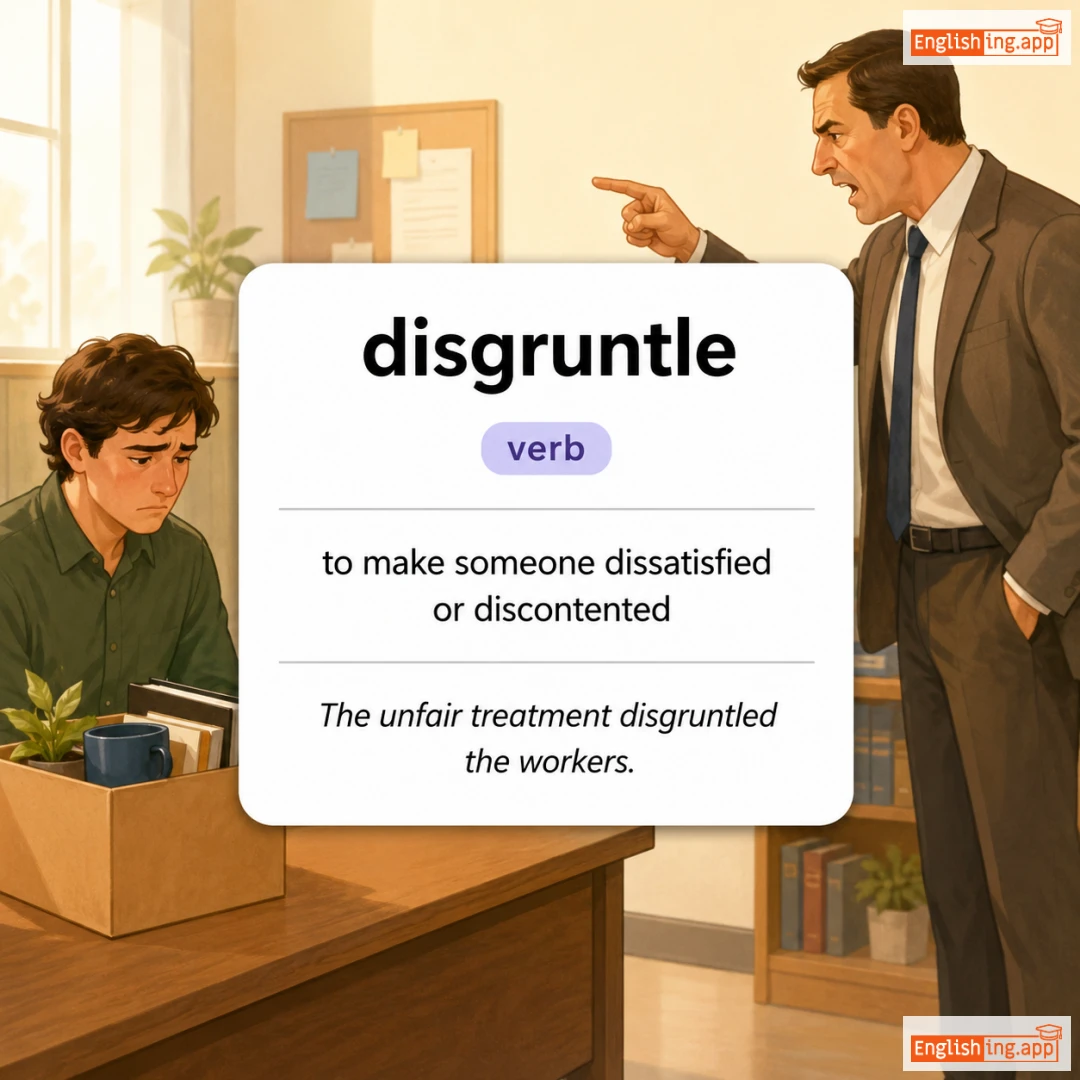
disgruntle definition card — visual illustration of the meaning
verb C1
/dɪsˈɡrʌntl/
使不满 (shǐ bùmǎn)

to make someone dissatisfied or discontented

"The unfair treatment disgruntled the workers."

"不公平的待遇使工人感到不满。" (Bù gōngpíng de dàiyù shǐ gōngrén gǎndào bùmǎn.)
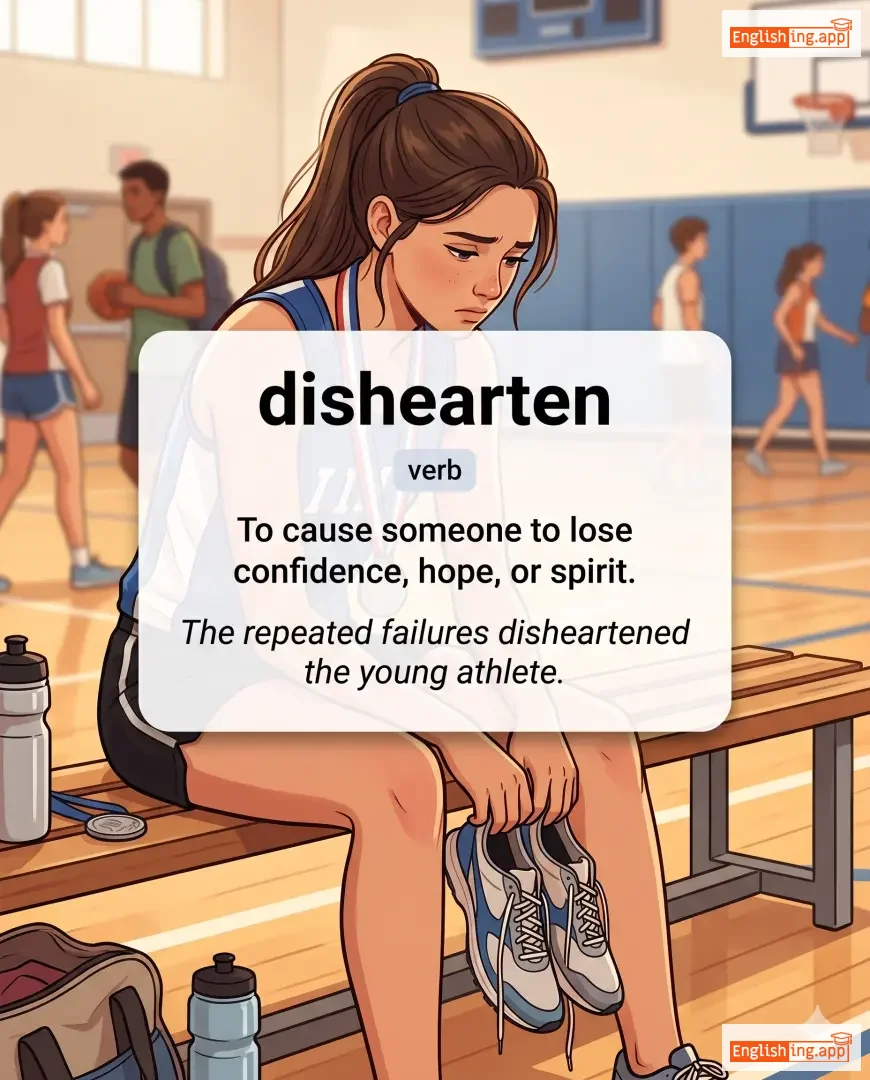
dishearten definition card — visual illustration of the meaning
verb C1
/dɪsˈhɑːrtən/
使灰心 (shǐ huīxīn)

To cause someone to lose confidence, hope, or spirit.

"The repeated failures disheartened the young athlete."

"反复的失败使年轻的运动员灰心丧气。" (Fǎnfù de shībài shǐ niánqīng de yùndòngyuán huīxīn sàngqì.)
adjective C1
/dɪsˈhɑːrtənd/
沮丧 (jǔsàng)

Having lost confidence, hope, or spirit; discouraged.

"She looked disheartened after receiving the bad news."

"她收到坏消息后看起来很沮丧。" (Tā shōudào huài xiāoxī hòu kàn qǐlái hěn jǔsàng.)
adjective C1
/dɪˈʃɛvəld/
凌乱 (língluàn)

Untidy, messy, or in disorder, especially of hair or clothing.

"He arrived with disheveled hair and wrinkled clothes."

"他带着凌乱的头发和皱巴巴的衣服来了。" (Tā dàizhe língluàn de tóufǎ hé zhòu bābā de yīfú lái le.)
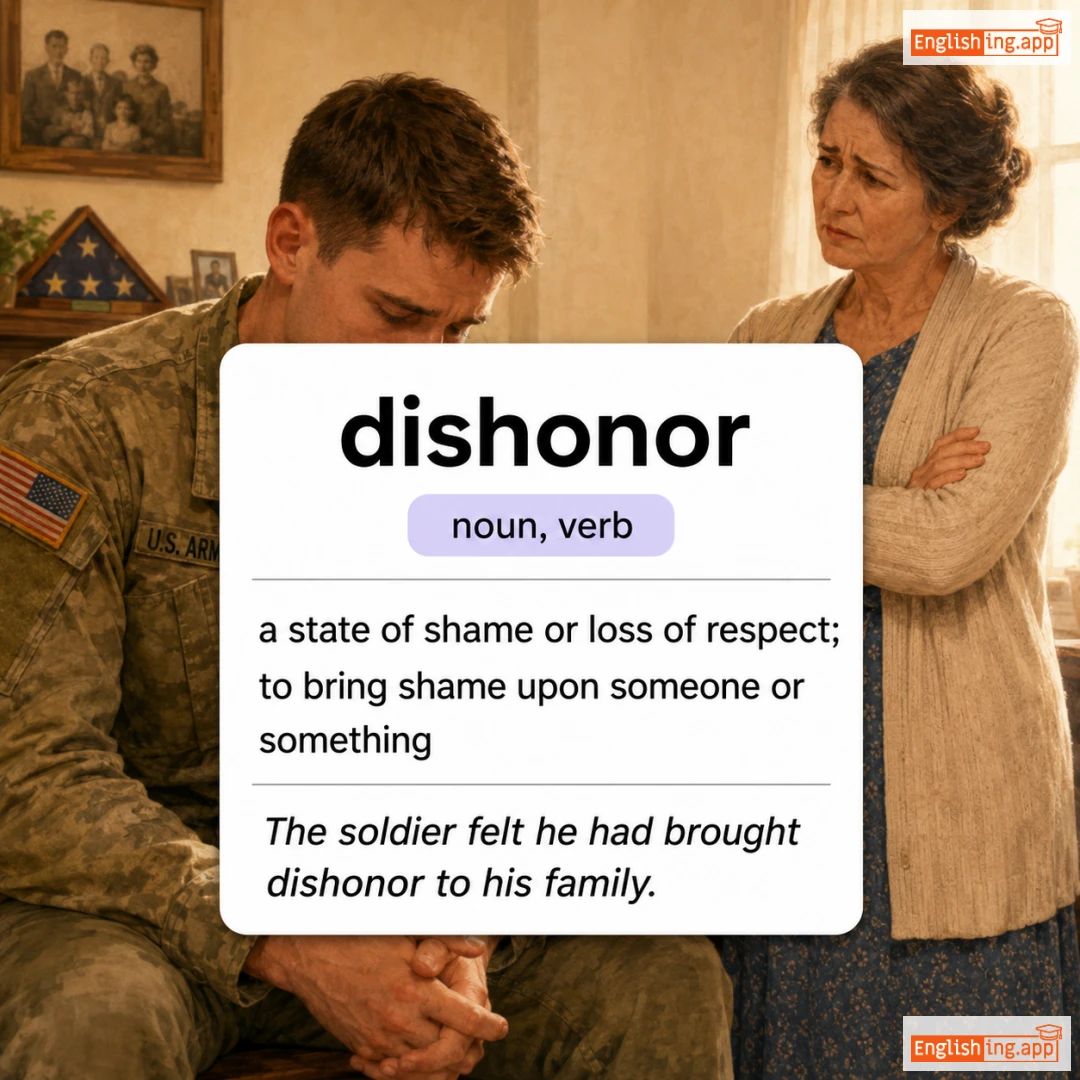
dishonor definition card — visual illustration of the meaning
noun, verb C1
/dɪsˈɑːnər/

a state of shame or loss of respect; to bring shame upon someone or something

"The soldier felt he had brought dishonor to his family."

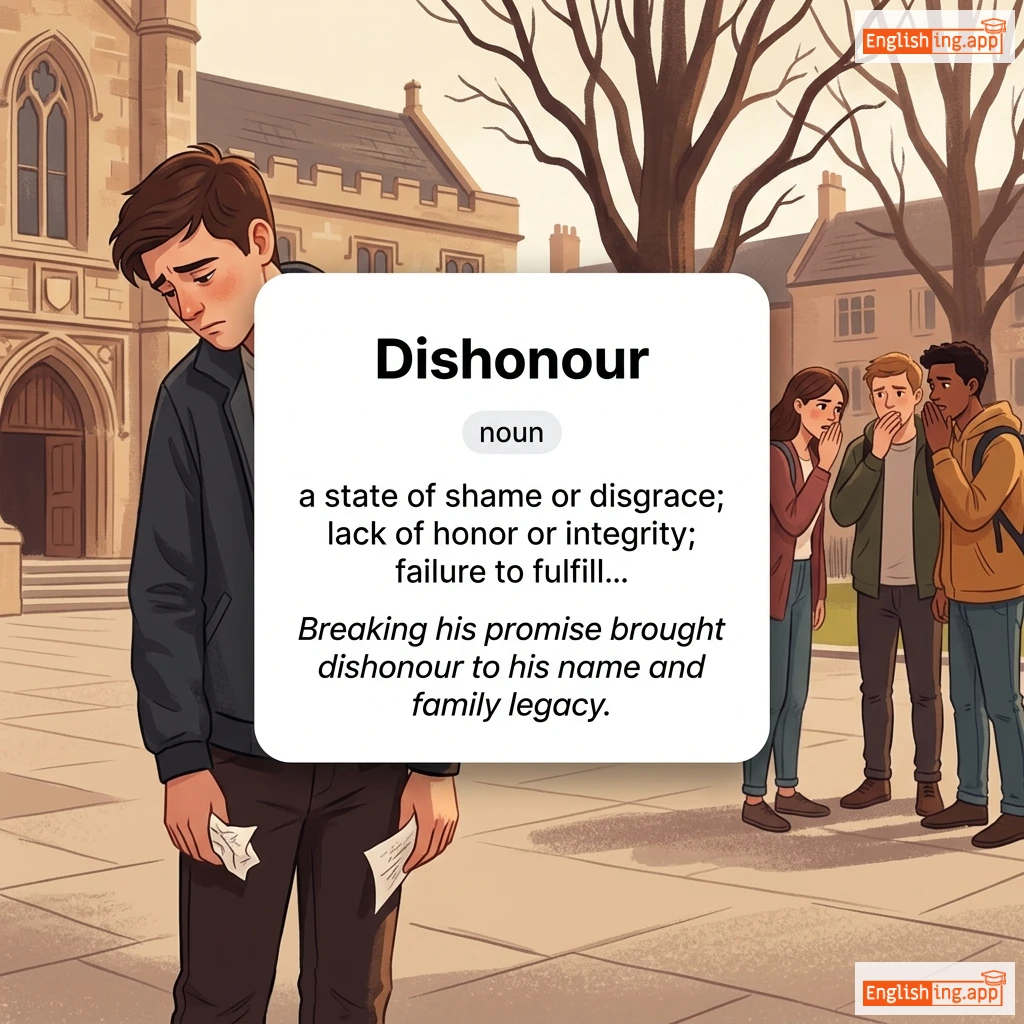
Dishonour definition card — visual illustration of the meaning
noun C1
/dɪsˈɒn.ər/
耻辱 (chiru)

a state of shame or disgrace; lack of honor or integrity; failure to fulfill obligations

"Breaking his promise brought dishonour to his name and family legacy."

"打破诺言给他的名字和家族遗产带来了耻辱。" (Dapo nuoyan gei tade mingzi he jiazhu yichan dailaile chiru.)
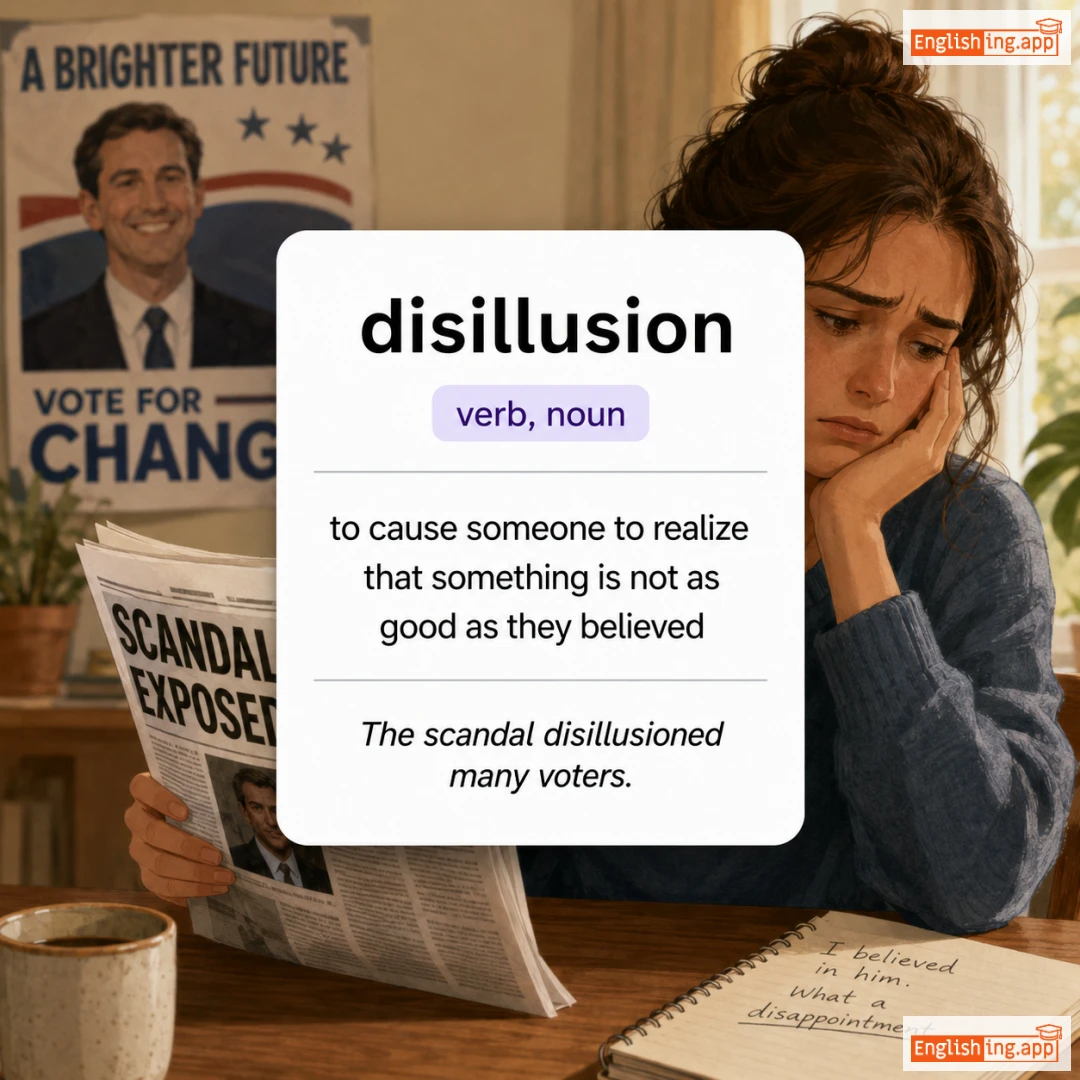
disillusion definition card — visual illustration of the meaning
verb, noun C1
/ˌdɪsɪˈluːʒən/
失望 (shīwàng)

to cause someone to realize that something is not as good as they believed

"The scandal disillusioned many voters."

"丑闻让许多选民失望。" (Chouwen rang xu duo xuanmin shi wang.)
disillusionment definition card — visual illustration of the meaning
noun C1
/ˌdɪs.ɪˈluː.ʒən.mənt/
幻灭 (huànmiè)

A feeling of disappointment resulting from the discovery that something is not as good as one believed it to be.

"His disillusionment with politics made him withdraw from activism."

"他对政治的幻灭让他退出了激进主义。" (Ta dui zhengzhi de huànmiè rang ta tuìchū le jījìn zhǔyì.)
disinfection definition card — visual illustration of the meaning
noun C1
ˌdɪs.ɪnˈfek.ʃən
消毒 (xiaodu)

The process of destroying harmful microorganisms to prevent infection.

"Kitchen appliances require frequent disinfection."

"厨房电器需要频繁消毒。" (Chufang dianqi xuyao pinfan xiaodu.)
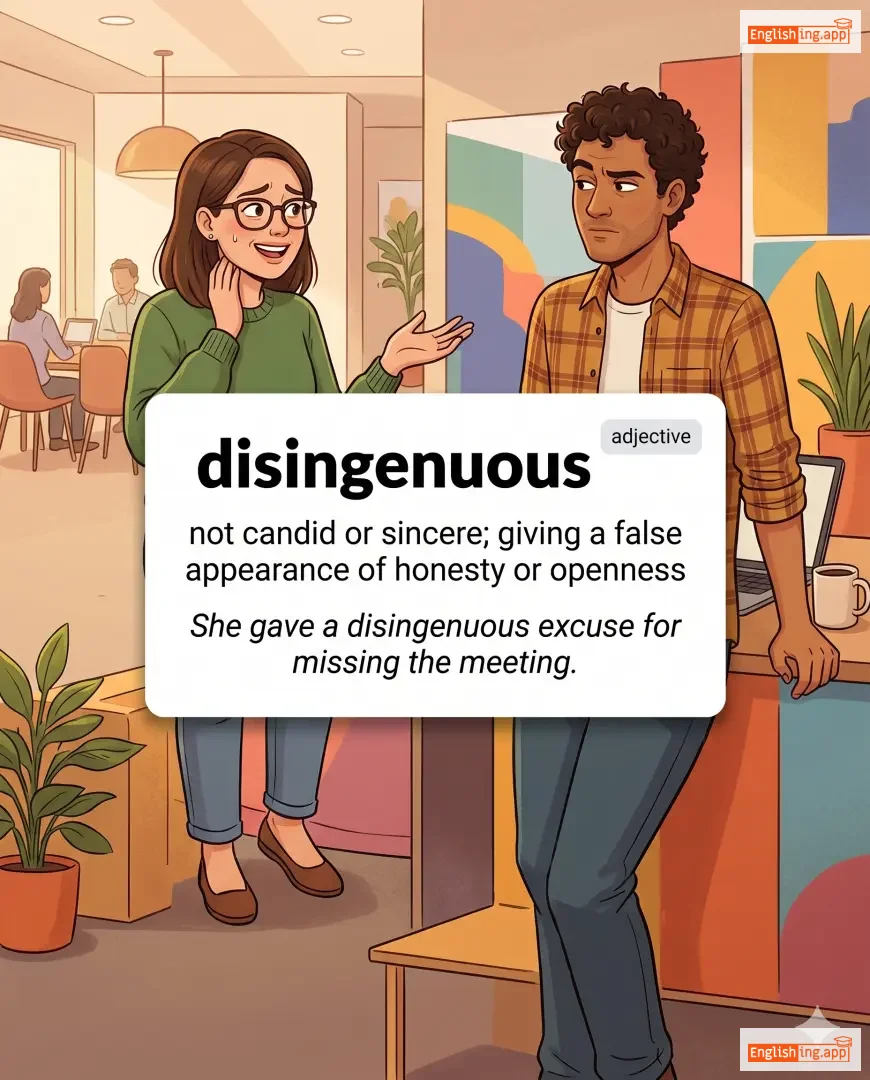
disingenuous definition card — visual illustration of the meaning
adjective C1
/ˌdɪsɪnˈdʒɛnjʊəs/
虚伪的 (xū wèi de)

not candid or sincere; giving a false appearance of honesty or openness

"She gave a disingenuous excuse for missing the meeting."

"她给出了一个虚伪的借口来错过会议。" (Tā gěi chūle yīgè xūwèi de jièkǒu lái cuòguò huìyì.)
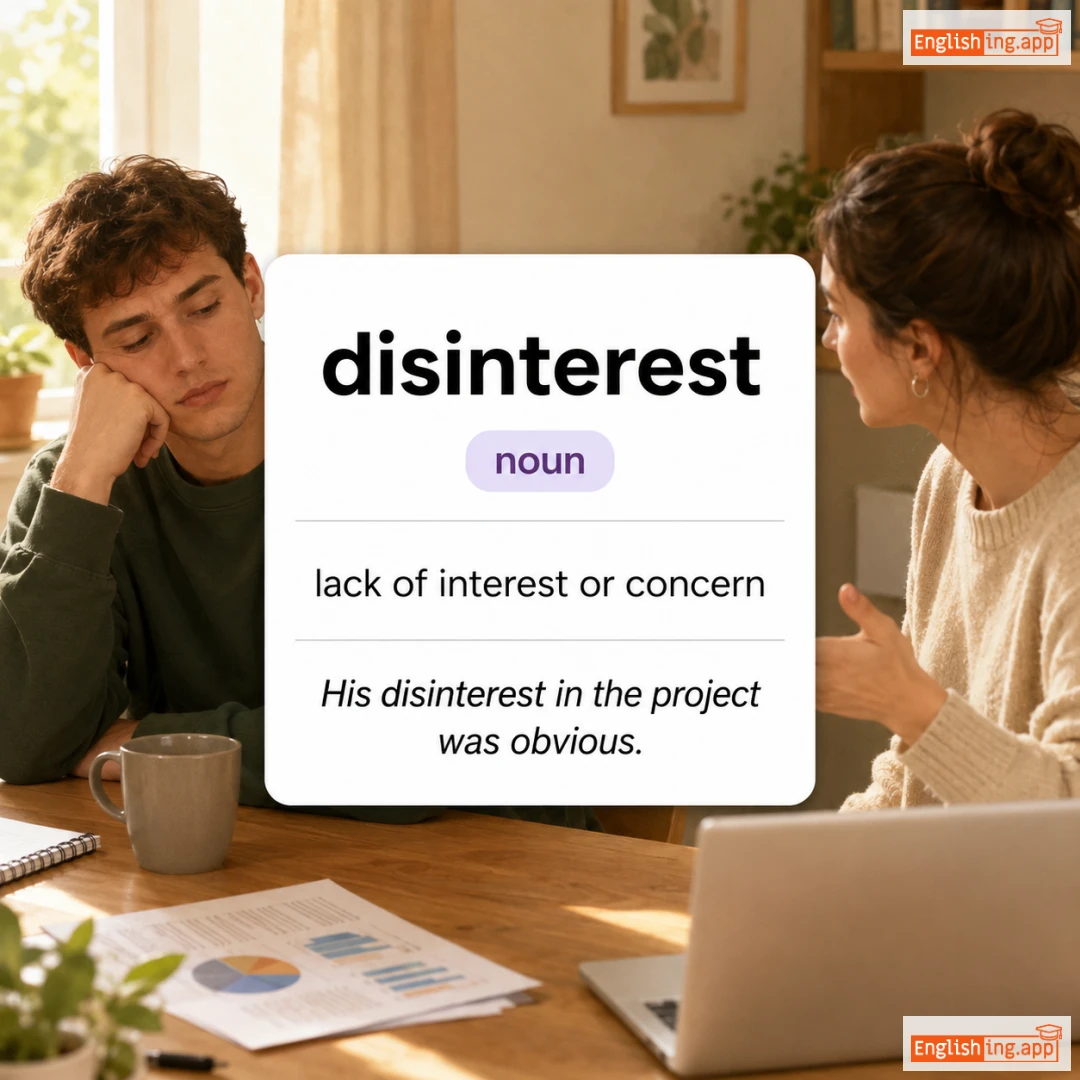
disinterest definition card — visual illustration of the meaning
noun C1
/dɪsˈɪntrəst/
冷漠 (lengmo)

lack of interest or concern

"His disinterest in the project was obvious."

"他对这个项目的冷漠是显而易见的。" (Tā duì zhège xiàngmù de lengmò shì xiǎn'ér yìjiàn de.)
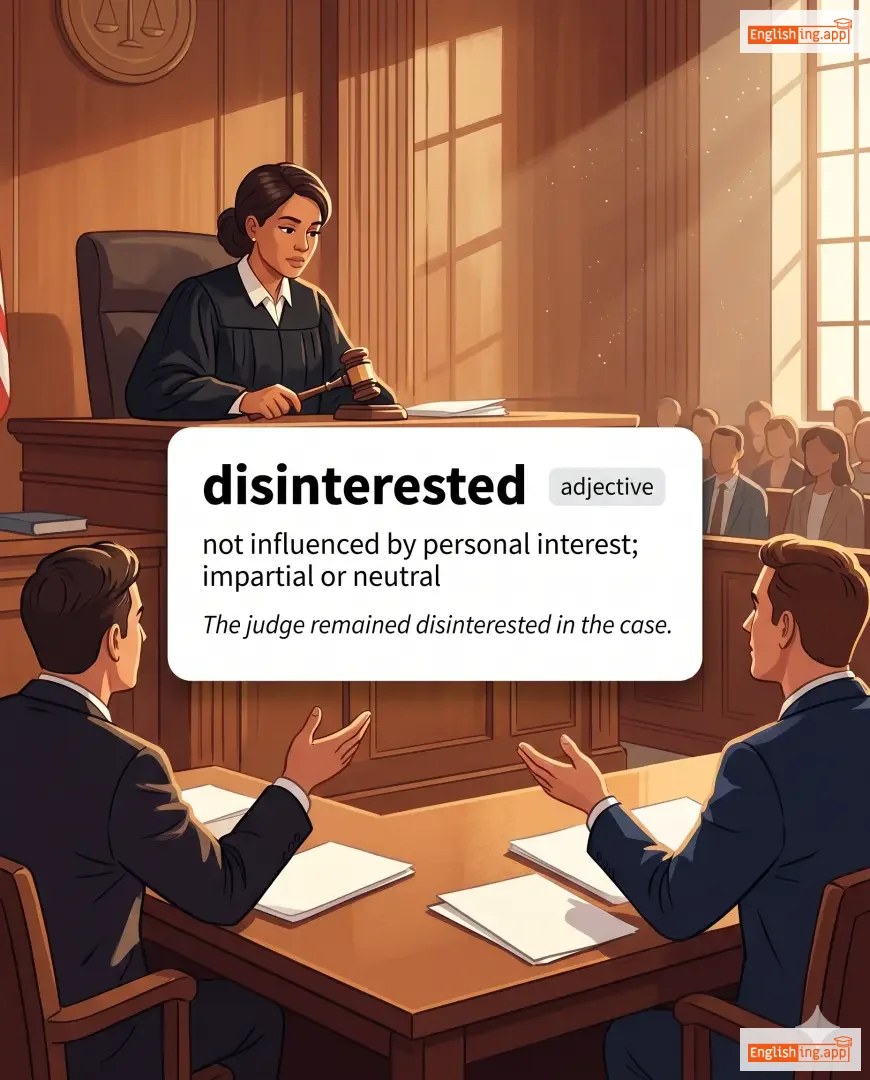
disinterested definition card — visual illustration of the meaning
adjective C1
/dɪsˈɪntrəstɪd/
无私 (wusi)

not influenced by personal interest; impartial or neutral

"The judge remained disinterested in the case."

"法官在案件中保持无私。" (Faguang zai anjian zhong baochi wusi.)
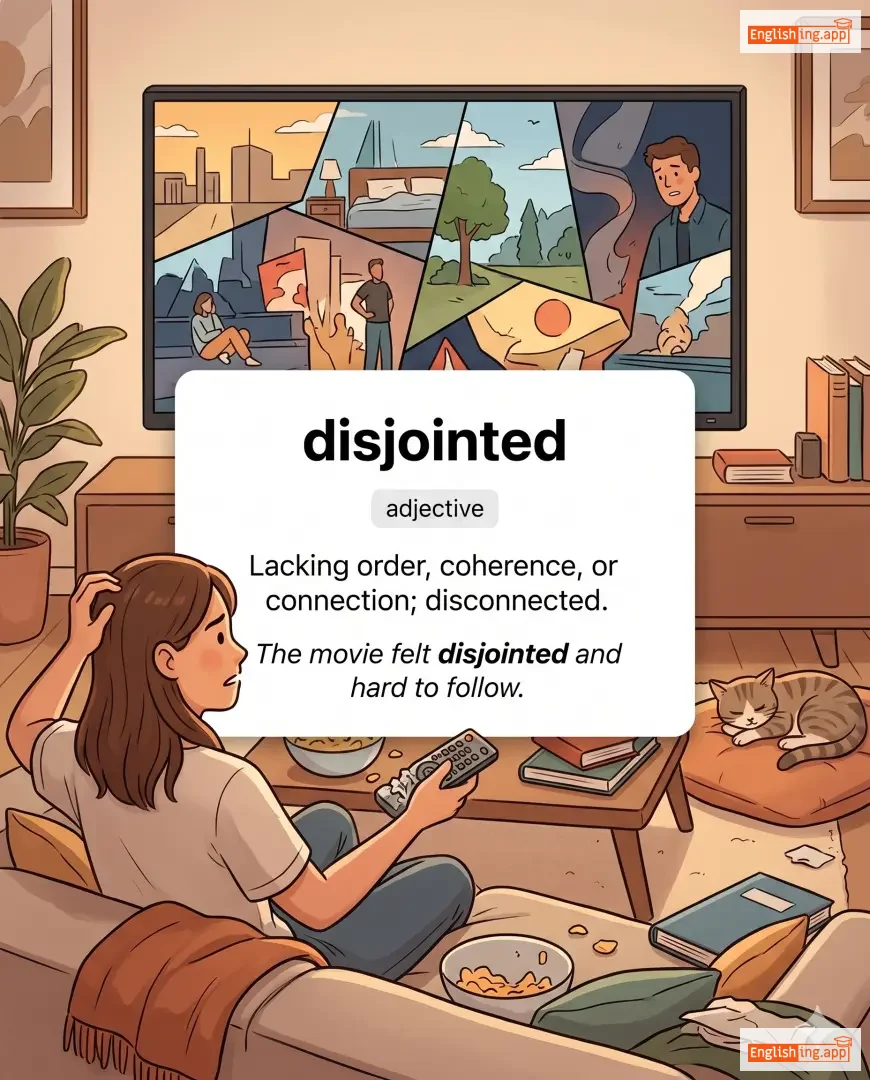
disjointed definition card — visual illustration of the meaning
adjective C1
/dɪsˈdʒɔɪntɪd/
支离破碎 (zhī lí pò suì)

Lacking order, coherence, or connection; disconnected.

"The movie felt disjointed and hard to follow."

"这部电影感觉支离破碎,很难跟上。" (Zhè bù diànyǐng gǎnjué zhī lí pò suì, hěn nán gēn shàng.)
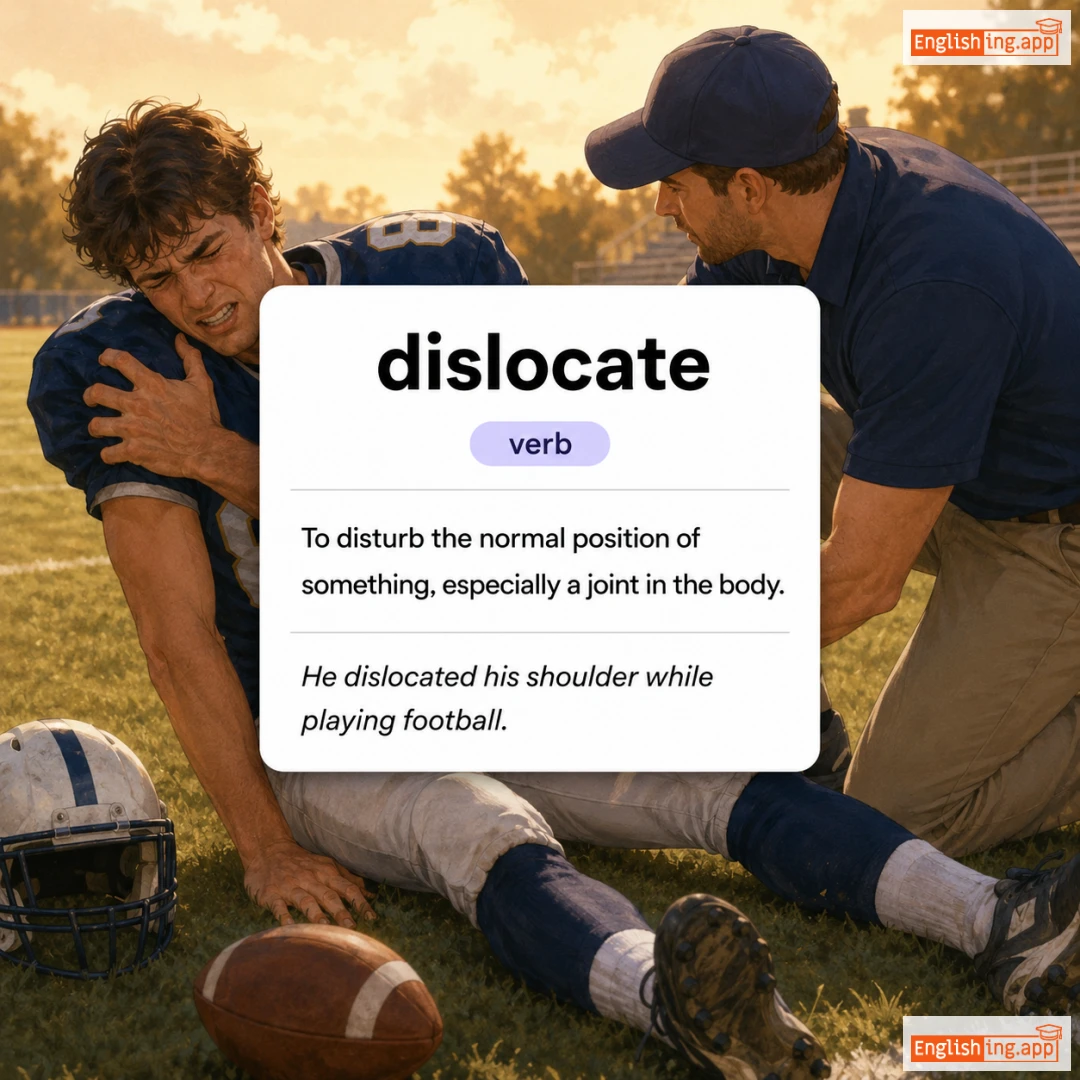
dislocate definition card — visual illustration of the meaning
verb C1
/ˈdɪsləkeɪt/
脱臼 (tuōjiù)

To disturb the normal position of something, especially a joint in the body.

"He dislocated his shoulder while playing football."

"他在踢足球时脱臼了肩膀。" (Tā zài tī zúqiú shí tuōjiù le jiānbǎng.)
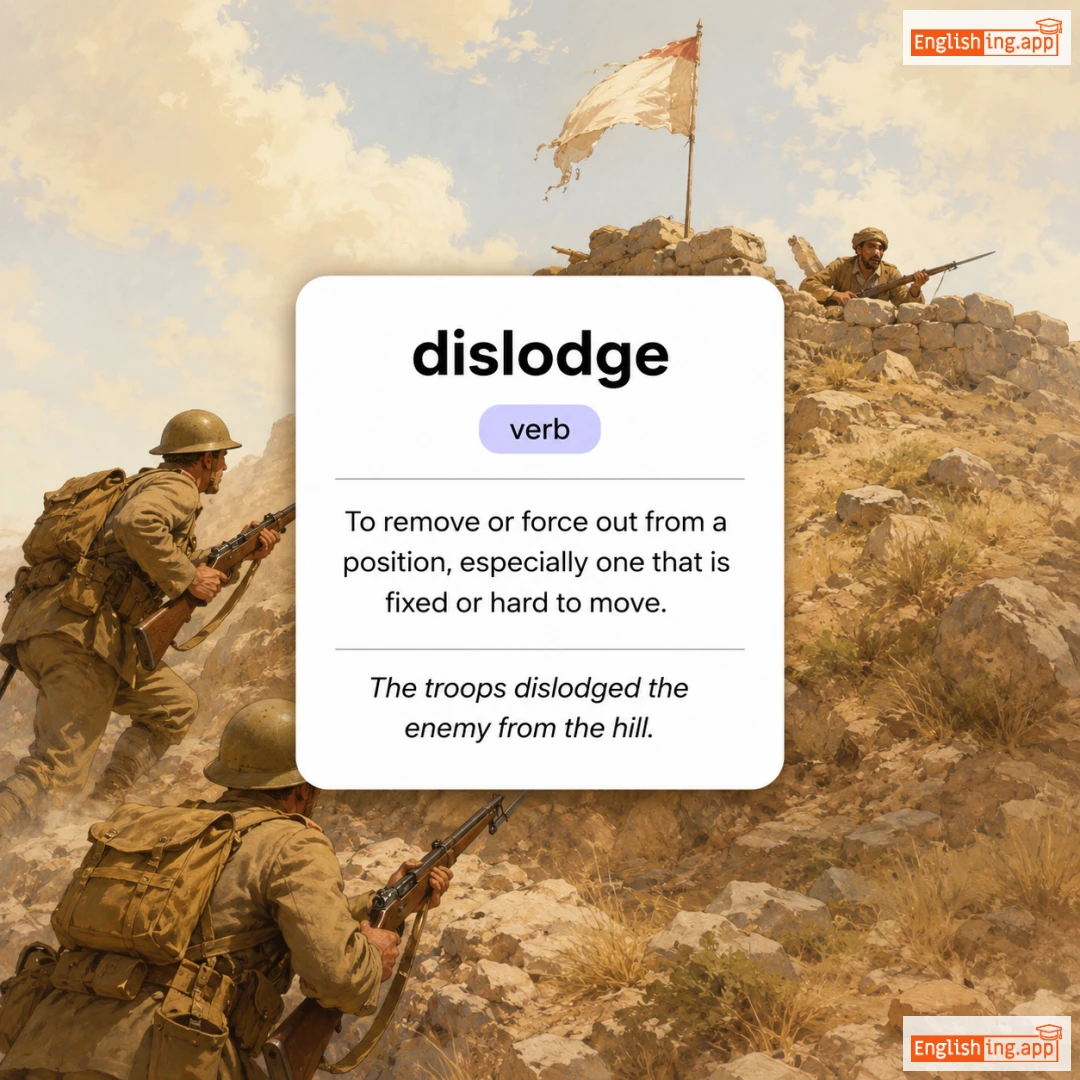
dislodge definition card — visual illustration of the meaning
verb C1
/dɪsˈlɒdʒ/
赶走 (gan zou)

To remove or force out from a position, especially one that is fixed or hard to move.

"The troops dislodged the enemy from the hill."

"部队把敌人从山丘上赶了下去。" (Budui ba diren cong shanqiu shang ganle xiaqu.)
adjective C1
/ˈdɪzməl/
阴沉的; 沮丧的; 令人悲伤的 (yīnchén de; jǔsàng de; lìng rén bēishāng de)

gloomy; depressing; causing sadness or despair

"The weather was dismal with heavy rain and dark clouds."

"天气阴沉,伴随大雨和黑暗的云层。" (Tiānqì yīnchén, bànsuí dàyǔ hé hēi'àn de yúncéng.)
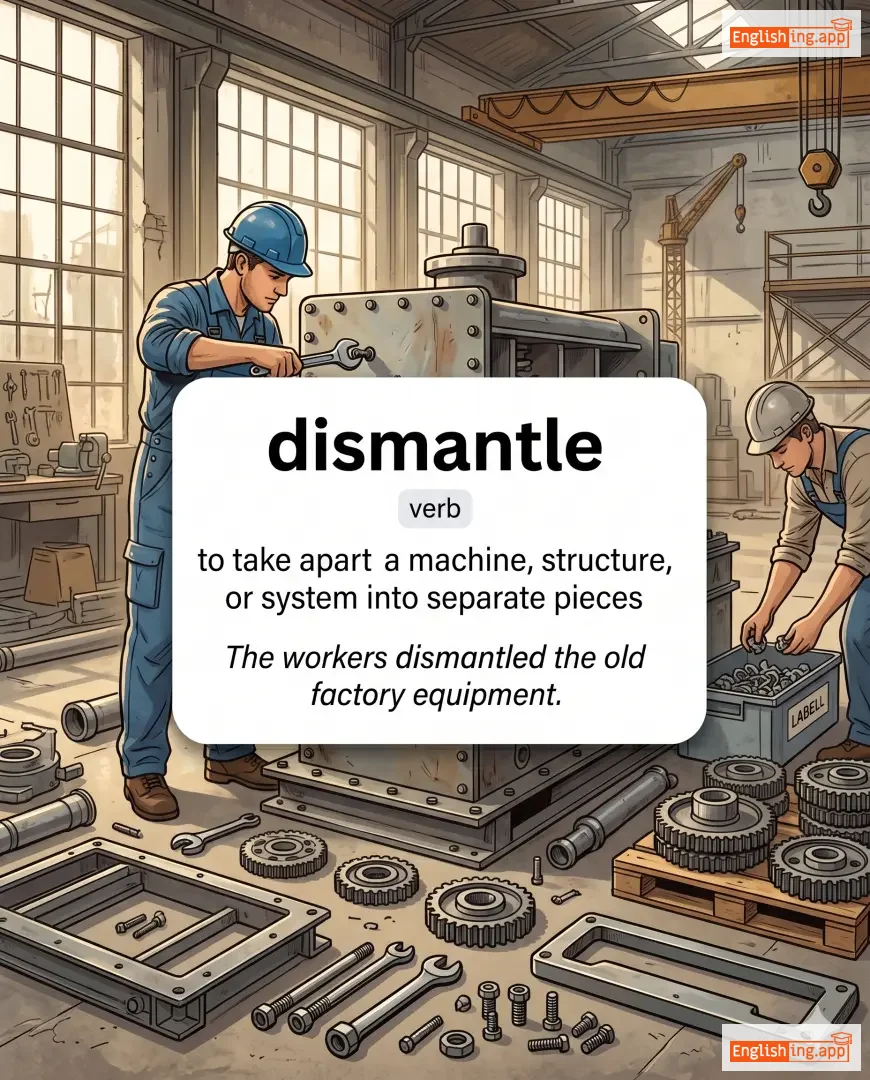
dismantle definition card — visual illustration of the meaning
verb C1
/dɪsˈmæntl̩/
拆解 (chāijiě)

to take apart a machine, structure, or system into separate pieces

"The workers dismantled the old factory equipment."

"工人们拆除了旧工厂的设备。" (Gōngrénmen chāichúle jiù gōngchǎng de shèbèi.)
verb C1
/ˌdɪsˈmaʊnt/
下马 (xià mǎ)

to get off or down from something, especially a horse, bicycle, or motorcycle

"The rider dismounted from the horse after a long journey."

"骑手在长途旅行后下马。" (Qíshǒu zài chángtú lǚxíng hòu xià mǎ.)
noun C1
/ˌdɪsəˈbiːdiəns/
不服从 (bù fúcóng)

failure or refusal to obey rules, laws, or authority

"The child's disobedience worried his parents."

"孩子的不服从让父母感到担忧。" (Hái zi de bù fúcóng ràng fù mǔ gǎn dào dān yōu.)
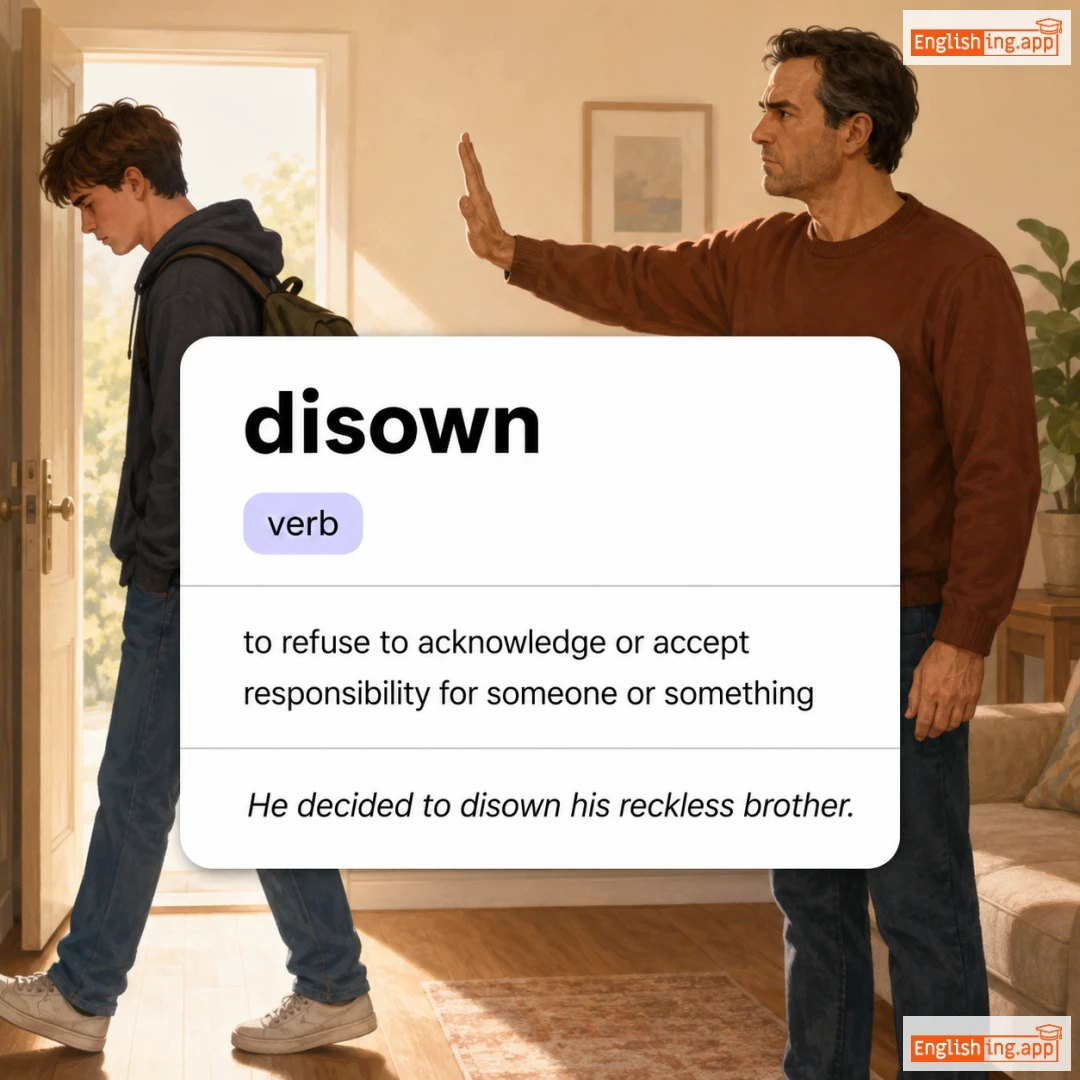
disown definition card — visual illustration of the meaning
verb C1
/dɪsˈoʊn/
放弃关系 (fangqi guanxi)

to refuse to acknowledge or accept responsibility for someone or something

"He decided to disown his reckless brother."

"他决定与他的鲁莽兄弟断绝关系。" (Ta jueding yu tade lumang xiongdi duanjue guanxi.)
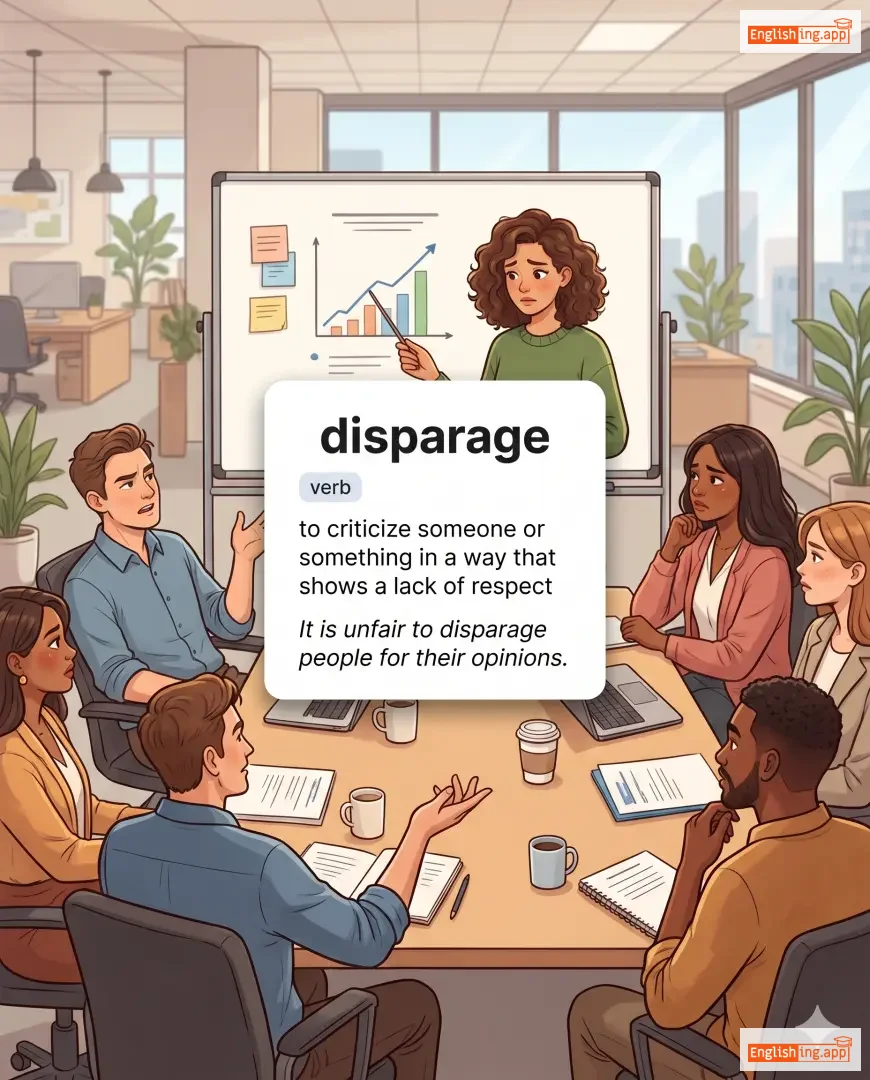
disparage definition card — visual illustration of the meaning
🗣️

disparage

verb C1
/dɪsˈpærɪdʒ/

to criticize someone or something in a way that shows a lack of respect

"It is unfair to disparage people for their opinions."

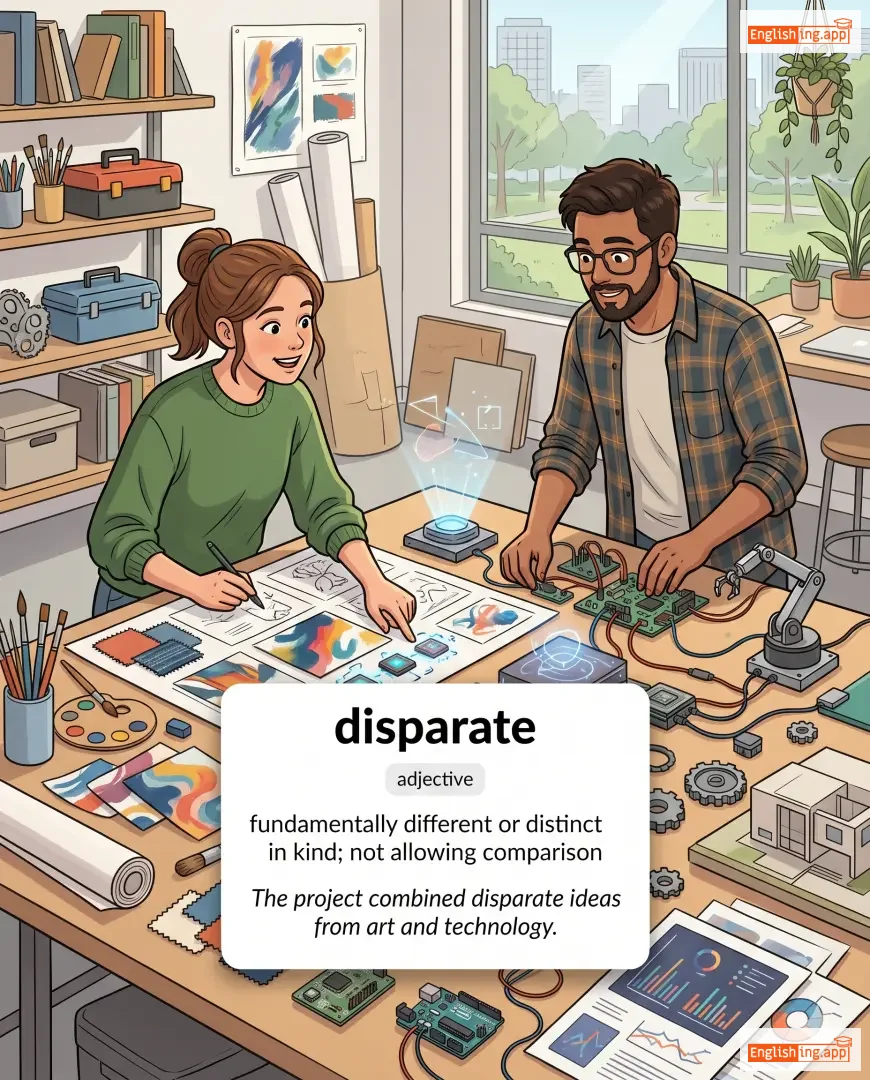
disparate definition card — visual illustration of the meaning
adjective C1
/ˈdɪspərət/
不同 (butong)

fundamentally different or distinct in kind; not allowing comparison

"The project combined disparate ideas from art and technology."

"该项目结合了来自艺术和技术的不同观点。" (Gai xiangmu jiehe le laizi yishu he jishu de butong guandian.)
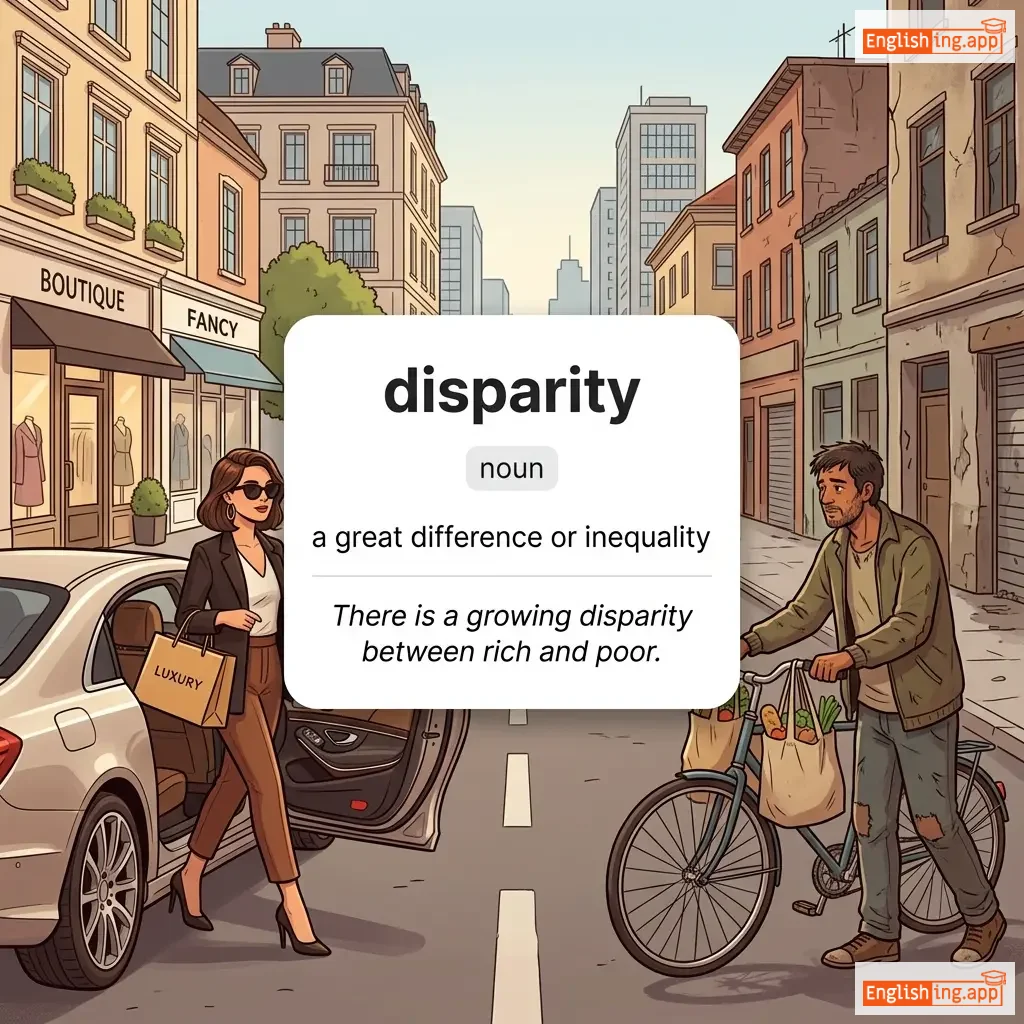
disparity definition card — visual illustration of the meaning
noun C1
/dɪˈspærəti/
差异 (chayi)

a great difference or inequality

"There is a growing disparity between rich and poor."

"富人和穷人之间存在日益加剧的差异。" (Fùrén hé qióngrén zhījiān cúnzài rìyì jiājù de chāyì.)
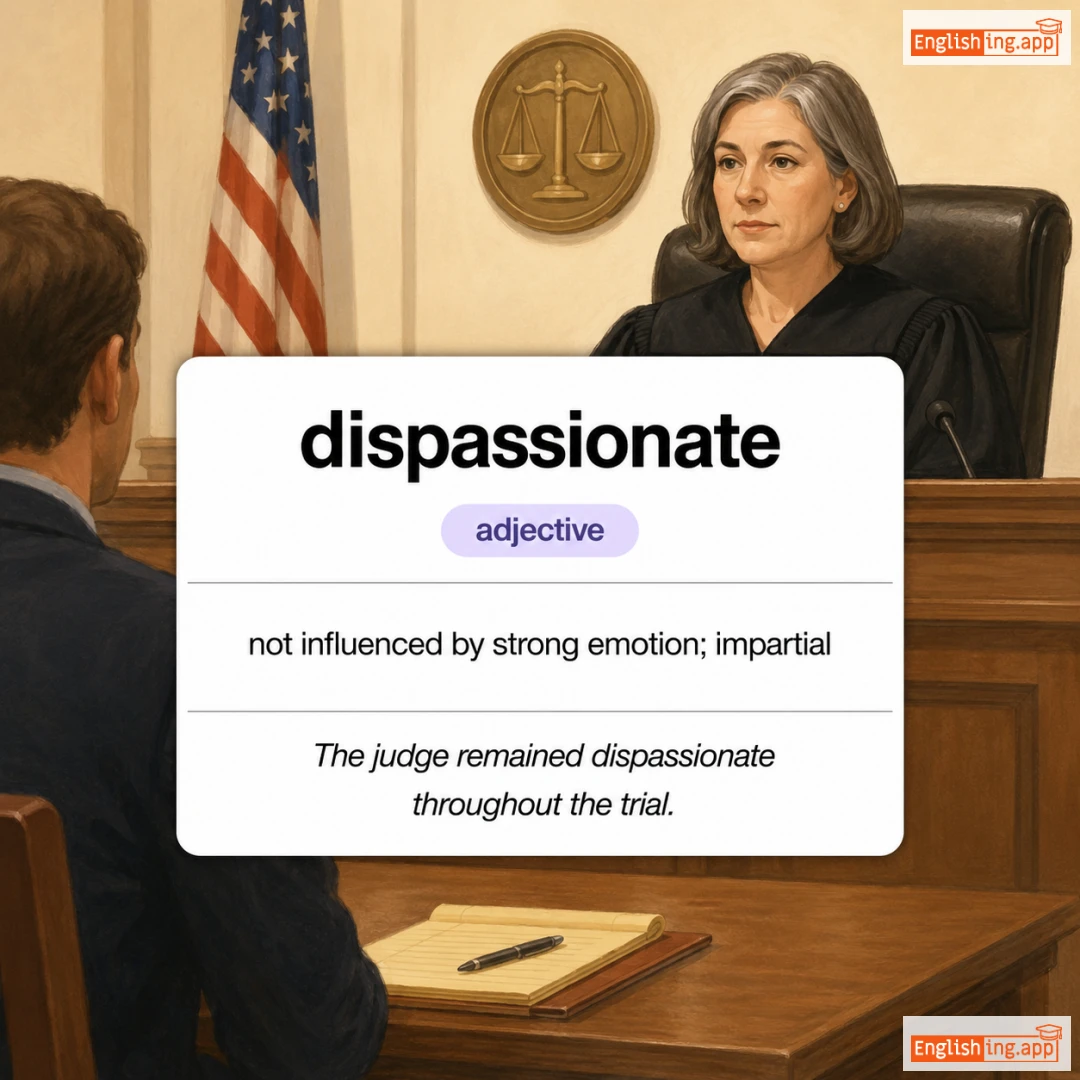
dispassionate definition card — visual illustration of the meaning
adjective C1
/dɪsˈpæʃənət/
冷静的 (lěngjìng de)

not influenced by strong emotion; impartial

"The judge remained dispassionate throughout the trial."

"法官在整个审判过程中保持冷静。" (Fǎguān zài zhěnggè shěnpàn guòchéng zhōng bǎochí lěngjìng.)
verb C1
/dɪˈspɛl/
驱散 (qusan)

to make a doubt, feeling, or belief disappear

"The teacher's explanation dispelled the students' confusion."

"老师的解释消除了学生们的困惑。" (Laoshi de jiexie xiaochule xueshengmen de kunhuo.)
noun C1
/ˌdɪspɛnˈseɪʃən/

An exemption from a rule or usual requirement; a system of order, government, or control.

"The school granted him a special dispensation to skip the exam due to illness."

verb C1
/dɪˈspɛns/
分配 (fēnpèi)

To distribute or provide something, especially in portions.

"The machine dispenses clean drinking water."

"机器分配干净的饮用水。" (Jīqì fēnpèi gānjìng de yǐnyòng shuǐ.)
verb C1
/dɪˈspɜːrs/
驱散 (qūsàn)

To scatter or spread widely in different directions.

"The police used tear gas to disperse the crowd."

"警方使用催泪瓦斯驱散人群。" (Jǐngfāng shǐyòng cuīlèiwǎsī qūsàn rénqún.)
adjective C1
/dɪˈspɜːrst/
分散的 (fēnsàn de)

Scattered or spread across a wide area.

"The dispersed population made it difficult to provide public services."

"分散的人口使得提供公共服务变得困难。" (Fēnsàn de rénkǒu shǐdé tígōng gōnggòng fúwù biàndé kùnnán.)
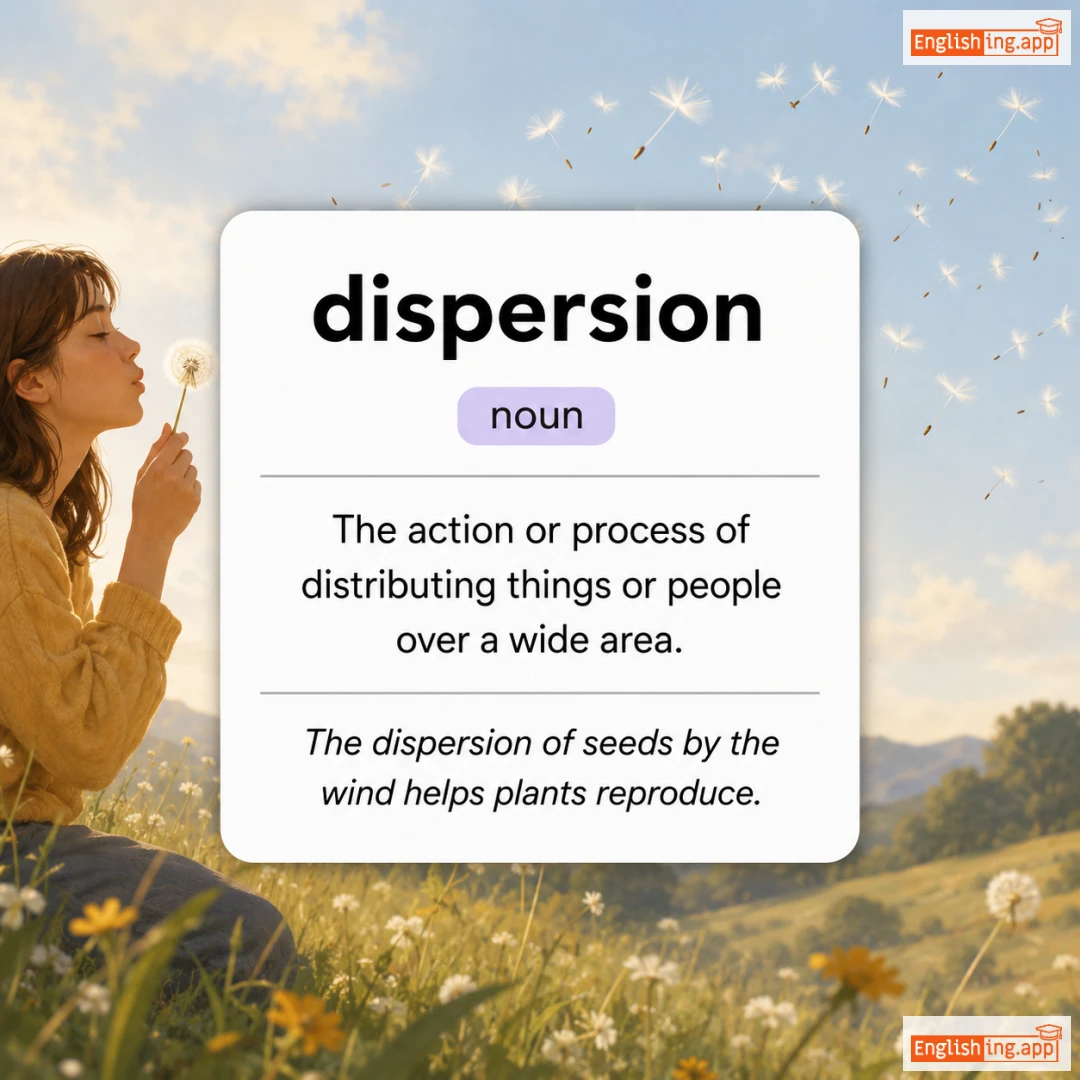
dispersion definition card — visual illustration of the meaning
noun C1
/dɪˈspɜːrʒən/
分散 (fensan)

The action or process of distributing things or people over a wide area.

"The dispersion of seeds by the wind helps plants reproduce."

"风的种子散布有助于植物繁殖。" (Feng de zhongzi sanbu you zhu yu zhiwu fanzhi.)
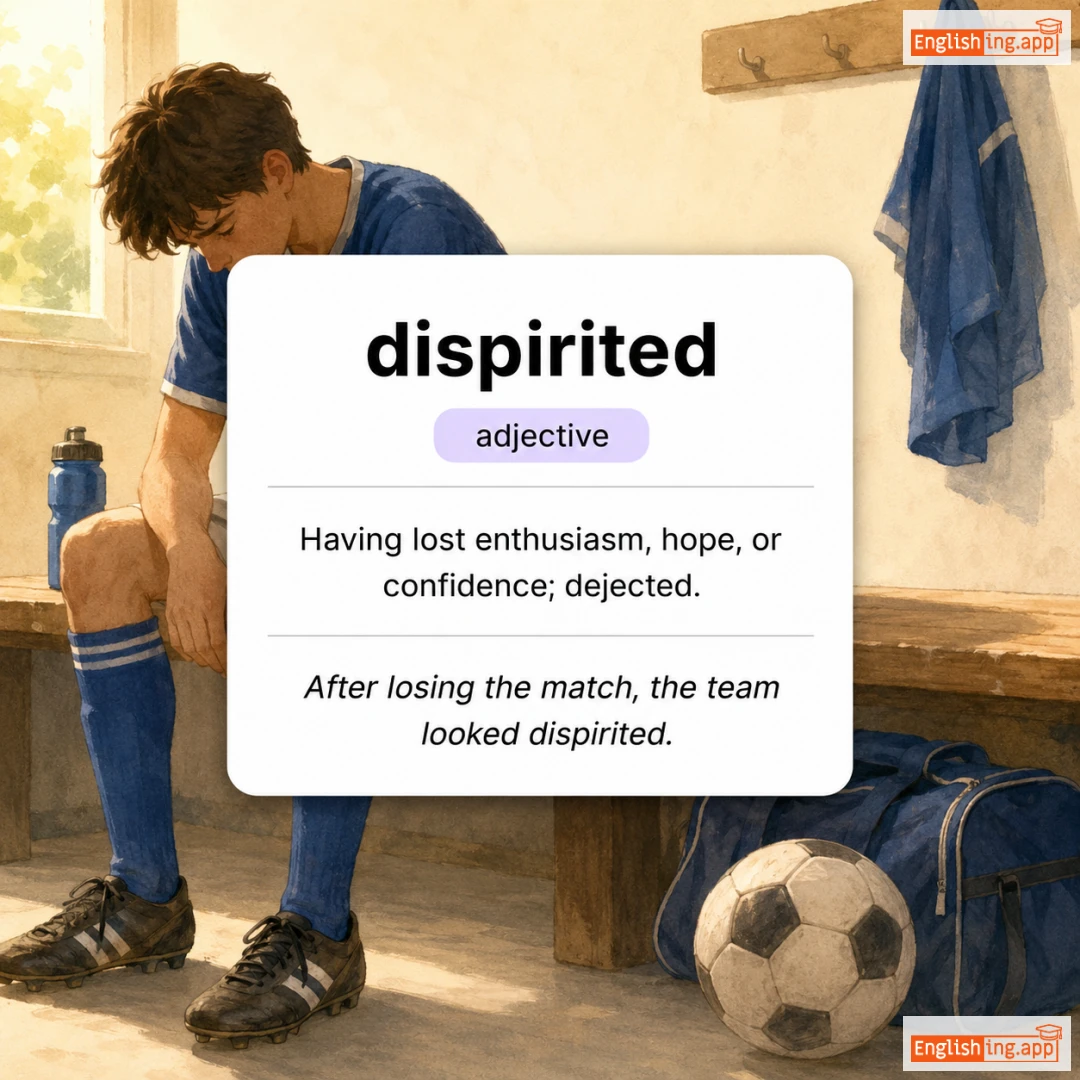
dispirited definition card — visual illustration of the meaning
adjective C1
/dɪˈspɪrɪtɪd/
沮喪 (jǔsàng)

Having lost enthusiasm, hope, or confidence; dejected.

"After losing the match, the team looked dispirited."

"比赛失利后,团队看起来沮丧。" (Bǐsài shīlì hòu, tuánduì kàn qǐlái jǔsàng.)
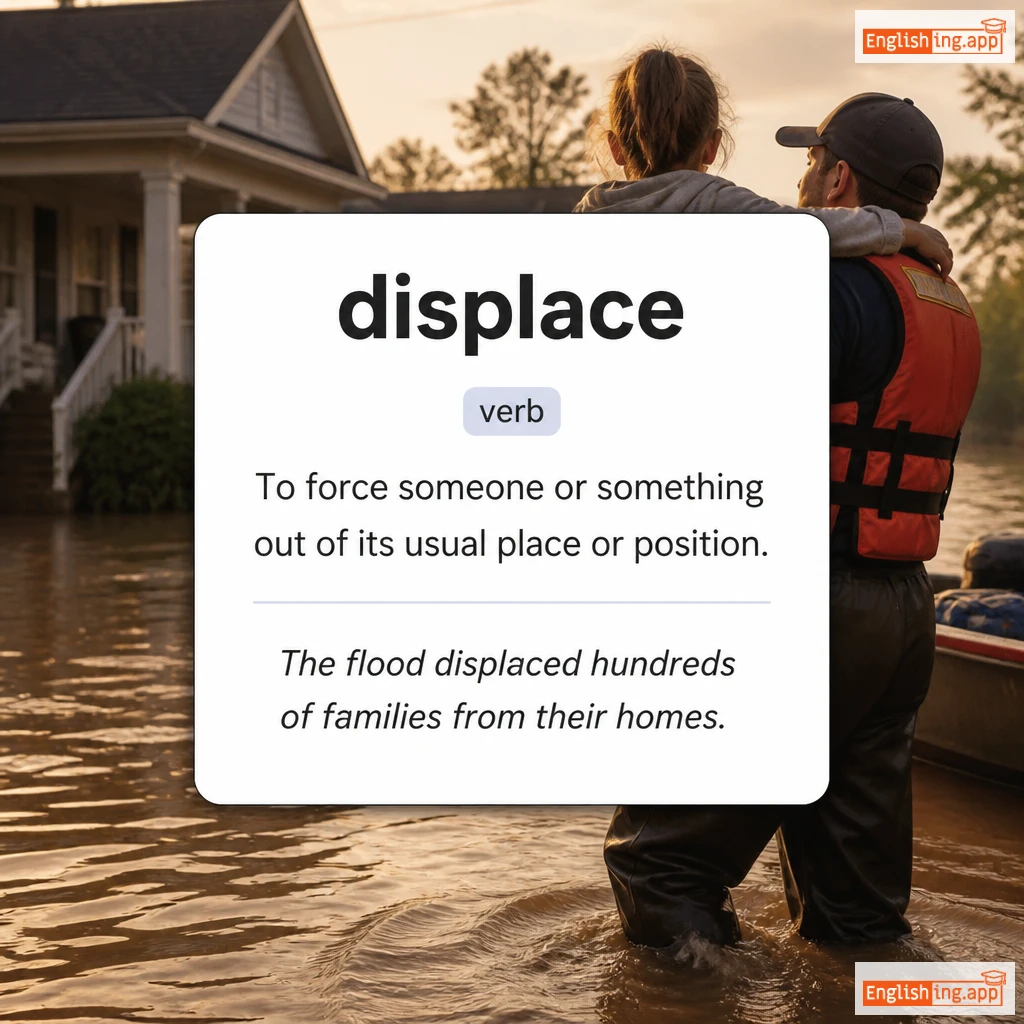
displace definition card — visual illustration of the meaning
verb C1
/dɪsˈpleɪs/
驱逐 (qūzhú)

To force someone or something out of its usual place or position.

"The flood displaced hundreds of families from their homes."

"洪水将数百个家庭从他们的家中驱逐。" (Hóngshuǐ jiāng shù bǎi gè jiātíng cóng tāmen de jiā zhōng qūzhú.)
noun C1
/ˌdɪspəˈzɪʃən/

A person's usual attitude or temperament; arrangement or tendency.

"She has a cheerful disposition despite the difficulties."

verb C1
/dɪsˈpruːv/
反驳 (fǎnbó)

to show that something is false or wrong

"The scientist worked hard to disprove the old theory."

"科学家努力工作以反驳旧理论。" (Kēxuéjiā nǔlì gōngzuò yǐ fǎnbó jiù lǐlùn.)
verb C1
/dɪsˈkwɑːlɪfaɪ/
取消资格 (qǔxiāo zīgé)

to officially prevent someone from participating or being eligible

"The referee decided to disqualify the player for cheating."

"裁判决定因作弊而取消球员资格。" (Cáipàn juédìng yīn zhòubì ér qǔxiāo qiúyuán zīgé.)
noun/verb C1
/dɪsˈkwaɪət/

A feeling of worry or unease; to make someone feel anxious or uneasy.

"The strange silence filled the room with disquiet."

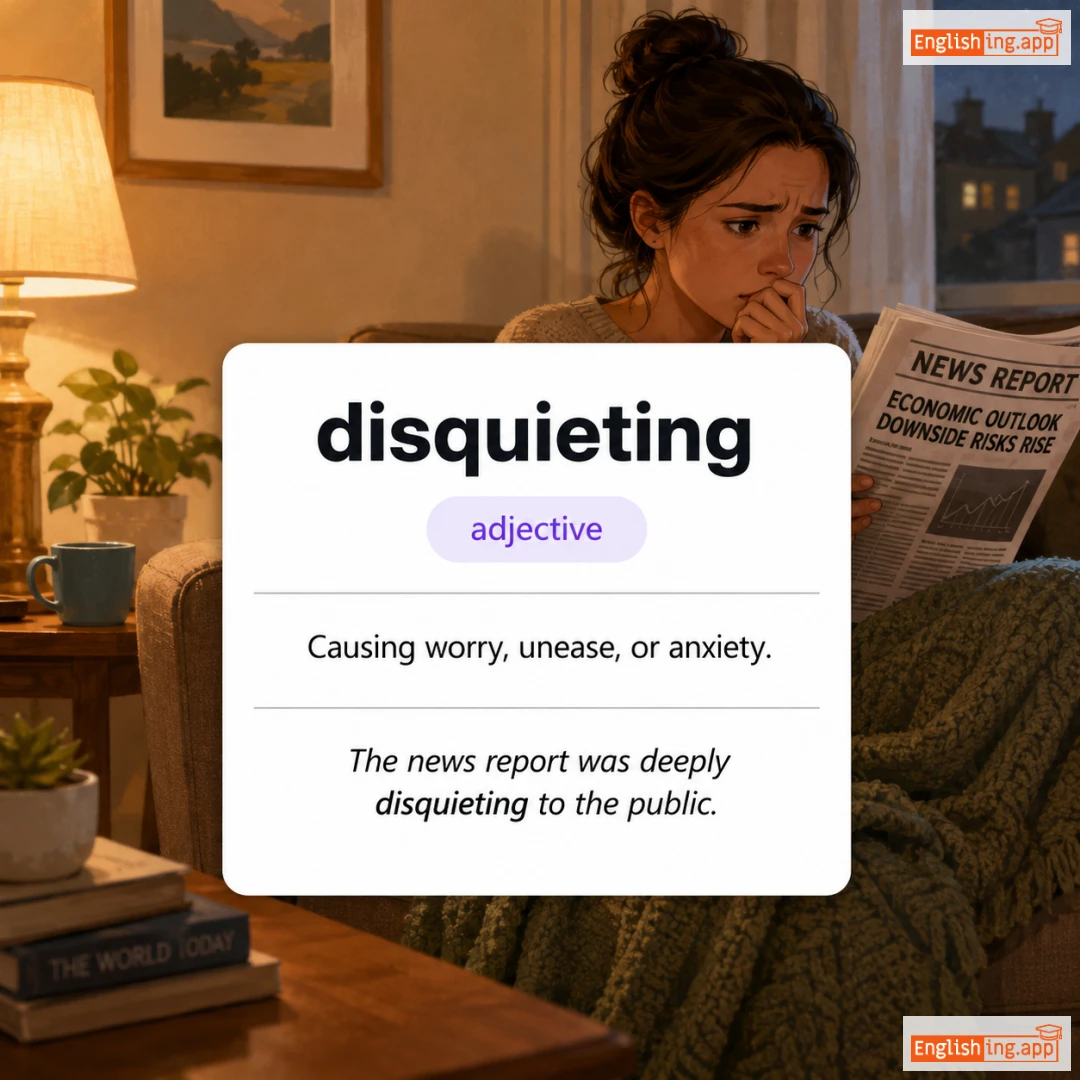
disquieting definition card — visual illustration of the meaning
adjective C1
/dɪsˈkwaɪətɪŋ/
令人不安 (ling ren bu an)

Causing worry, unease, or anxiety.

"The news report was deeply disquieting to the public."

"新闻报道对公众来说是深感不安的。" (Xinwen baodao dui gongzhong lai shì shen gan bu an de.)
adjective C1
/dɪsˈrɛpjətəbl̩/
声名狼藉 (shengminglangji)

having a bad reputation; not considered respectable or trustworthy

"The journalist avoided staying in the disreputable part of town."

"记者避免住在城市的声名狼藉地区。" (Jizhe bimi zhu zai chengshi de shengminglangji diqu.)
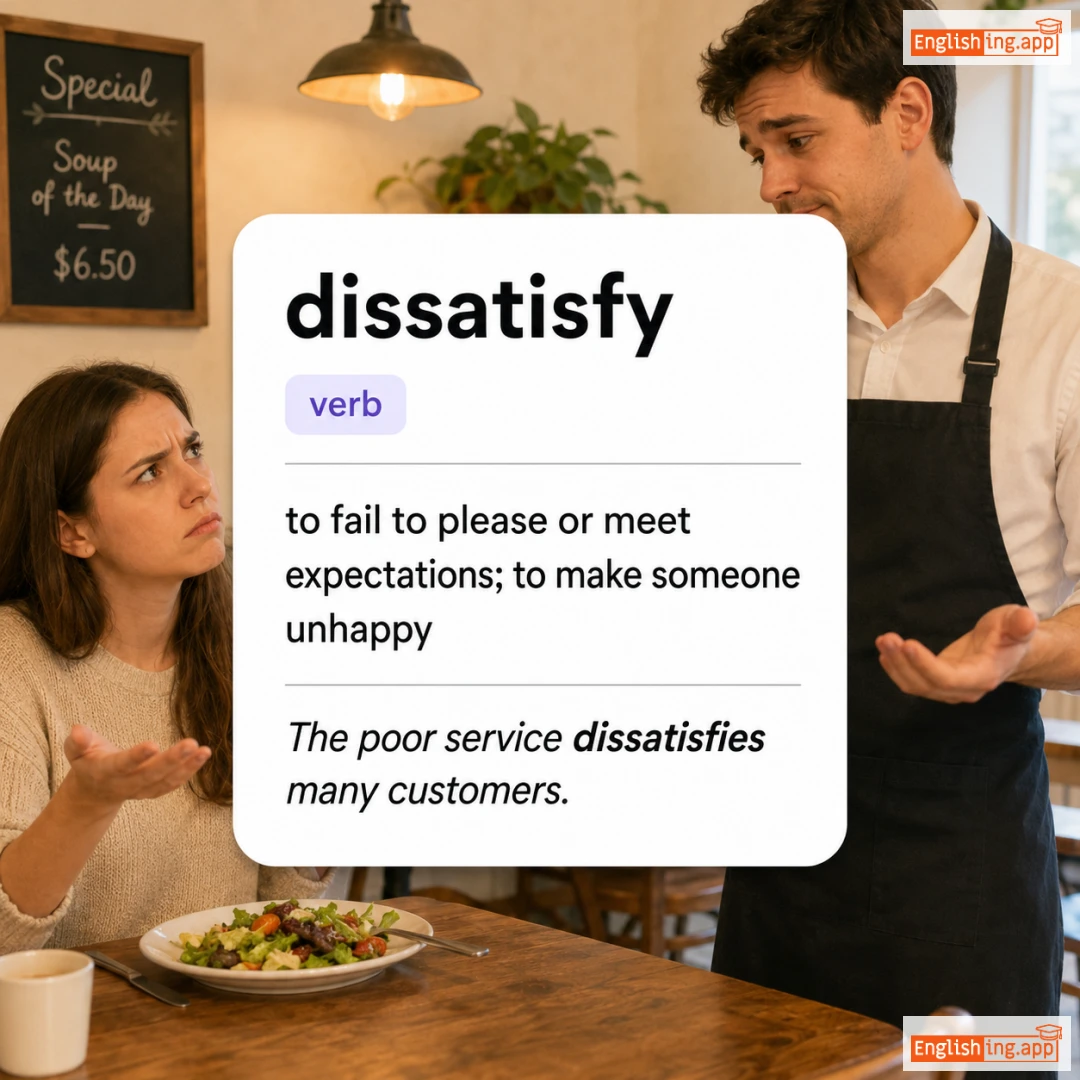
dissatisfy definition card — visual illustration of the meaning
verb C1
/dɪsˈsætɪsfaɪ/
使不满 (shi bumai)

to fail to please or meet expectations; to make someone unhappy

"The poor service dissatisfies many customers."

"糟糕的服务让许多顾客不满意。" (Zaogao de fuwu rang xuduo guke bu manyi.)
verb C1
/dɪˈsɛkt/

to cut apart an animal, plant, or other organism to study its internal parts; to analyze something in detail

"In biology class, students had to dissect a frog to learn about its anatomy."

noun C1
/daɪˈsɛkʃən/
解剖 (jie po)

the act of cutting apart or analyzing something in detail, especially a body or structure

"The dissection of the specimen revealed important details about its structure."

"样本的解剖揭示了关于其结构的重要细节。" (Yangben de jiepo jieshi le guanyu qi jiegou de zhongyao xijie.)
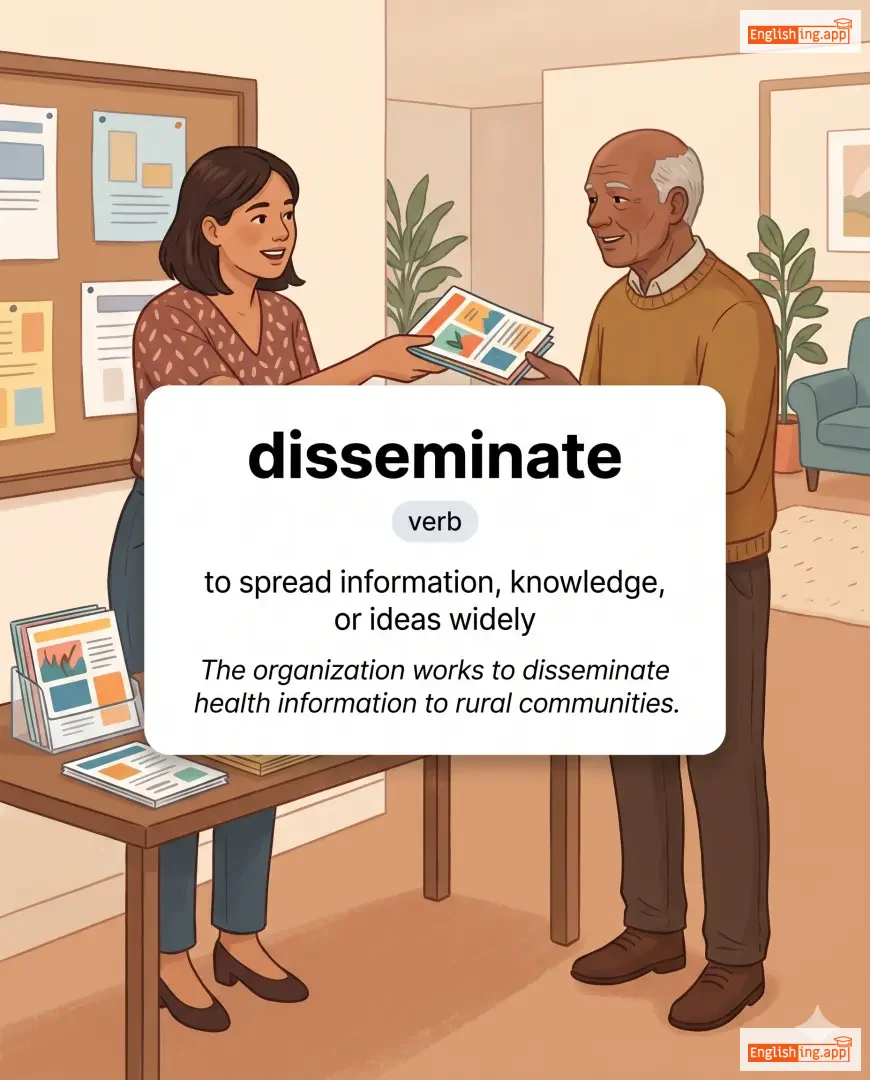
disseminate definition card — visual illustration of the meaning
verb C1
/dɪˈsɛmɪˌneɪt/
传播 (chuanbo)

to spread information, knowledge, or ideas widely

"The organization works to disseminate health information to rural communities."

"该组织致力于向农村社区传播健康信息。" (Gai zuzhi zhiliyu xiang nongcun shequ chuanbo jiankang xinxi.)
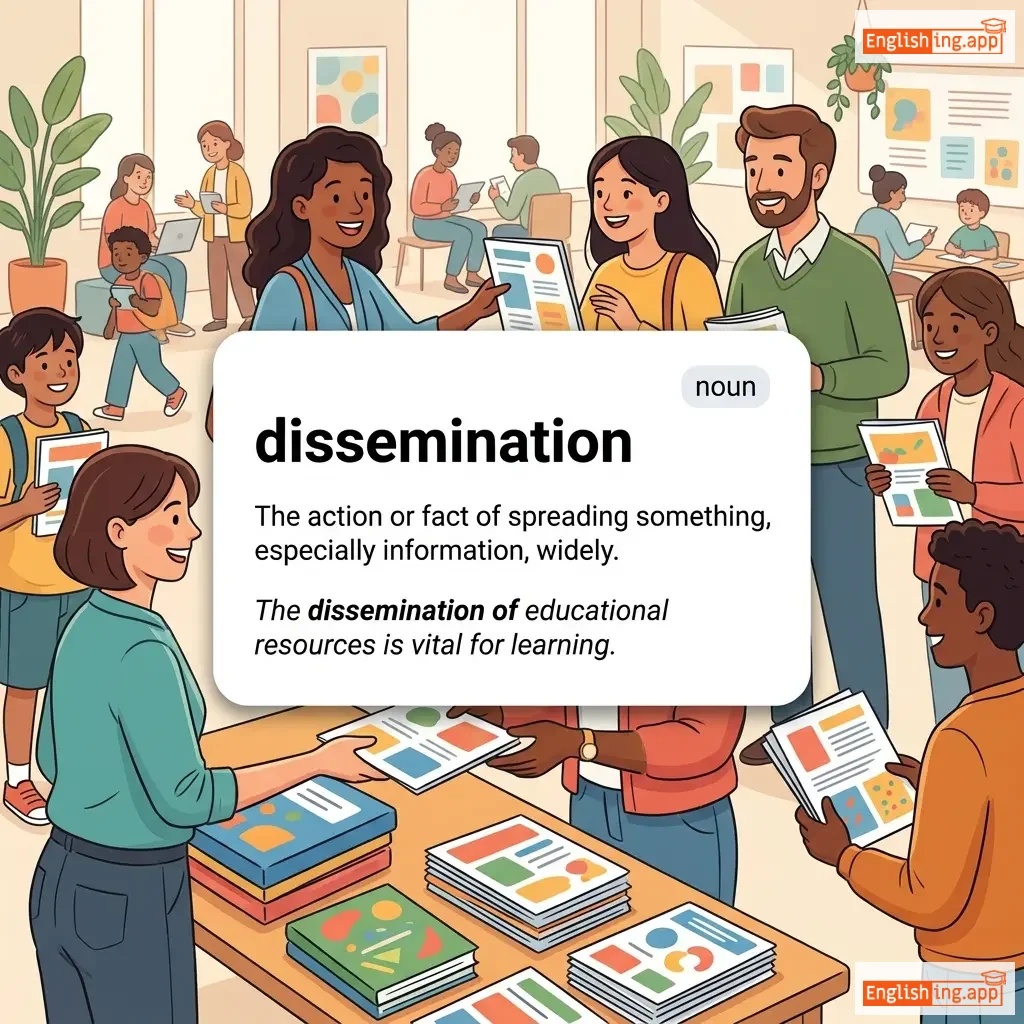
dissemination definition card — visual illustration of the meaning
noun C1
dɪˌsɛm.ɪˈneɪ.ʃən
传播 (chuanbo)

The action or fact of spreading something, especially information, widely.

"The dissemination of educational resources is vital for learning."

"教育资源的传播对学习至关重要。" (Jiaoyu ziyuande chuanbo dui xuexi zhiguan zhongyao.)
verb C1
/dɪˈsɛnt/

To hold or express opinions that are different from those officially accepted.

"Several members dissented from the majority decision."