Vocabularies

English Vocabulary Dictionary | Word Meanings, Definitions & Examples

noun C1
/təˈlɛpəθi/

the supposed communication of thoughts or ideas by means other than the known senses

"The twins claimed to share telepathy with each other."

noun C1
/təˈlɛfəni/
电话系统 (dianhua xitong)

the technology and systems for transmitting voice over distances by telephone

"Modern telephony has evolved to include internet-based calls."

"现代的电话技术已经发展到包括基于互联网的通话。" (Xiandai de dianhua jishu yijing fazhan dao baokuo jiyu huliwang de tonghua.)
adjective C1
/ˈtɛlˌteɪl/
揭示性 (jie shì xìng)

Revealing something that is usually hidden; giving away a secret or clue.

"The telltale signs of fatigue were visible on his face."

"疲劳的揭示性迹象在他脸上显而易见。" (Píláo de jiēshìxìng jìxiàng zài tā liǎn shàng xiǎn ér yì jiàn.)
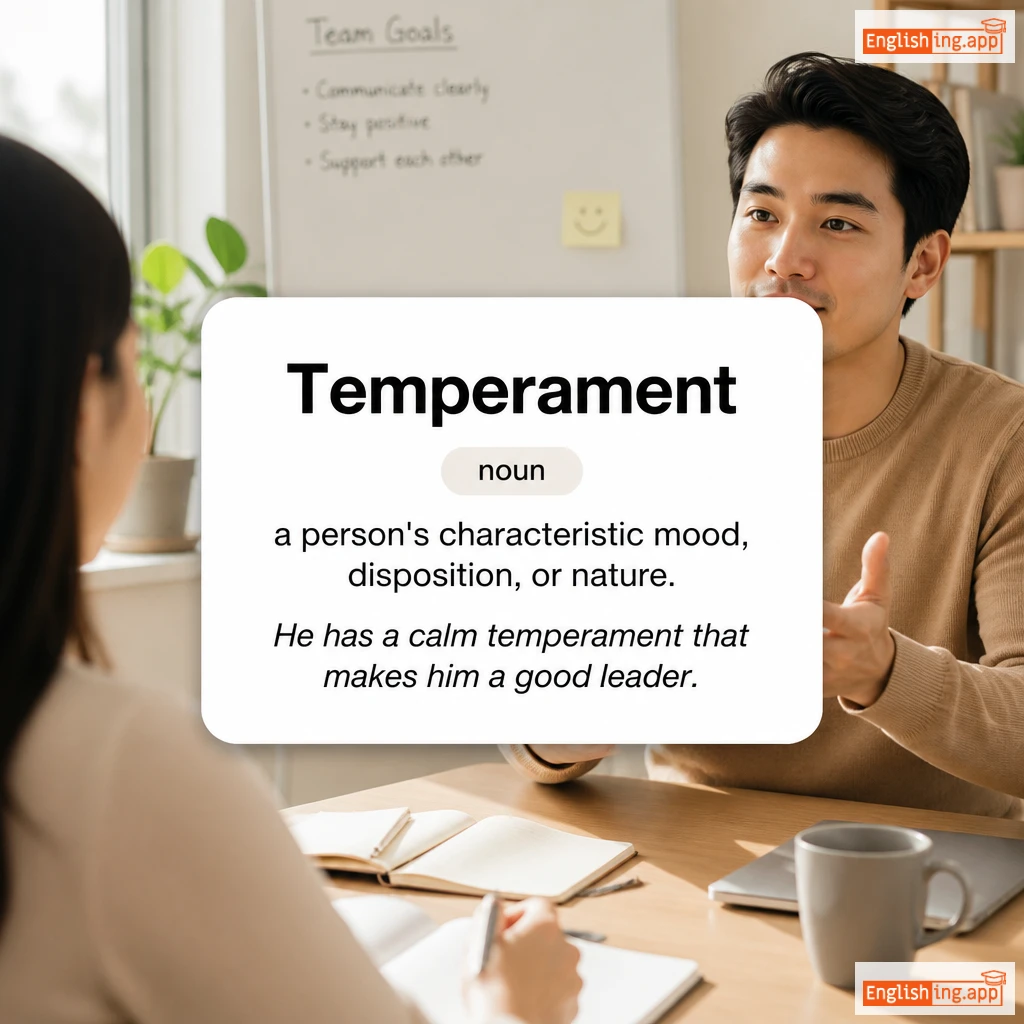
Temperament definition card — visual illustration of the meaning
noun C1
/ˈtɛmpərəmənt/
气质 (qìzhì)

a person's characteristic mood, disposition, or nature.

"He has a calm temperament that makes him a good leader."

"他有着平和的性格,这使他成为一个优秀的领导者。" (Tā yǒu zhe pínghé de xìnggé, zhè shǐ tā chéngwéi yī gè yōuxiù de lǐngdǎo zhě.)
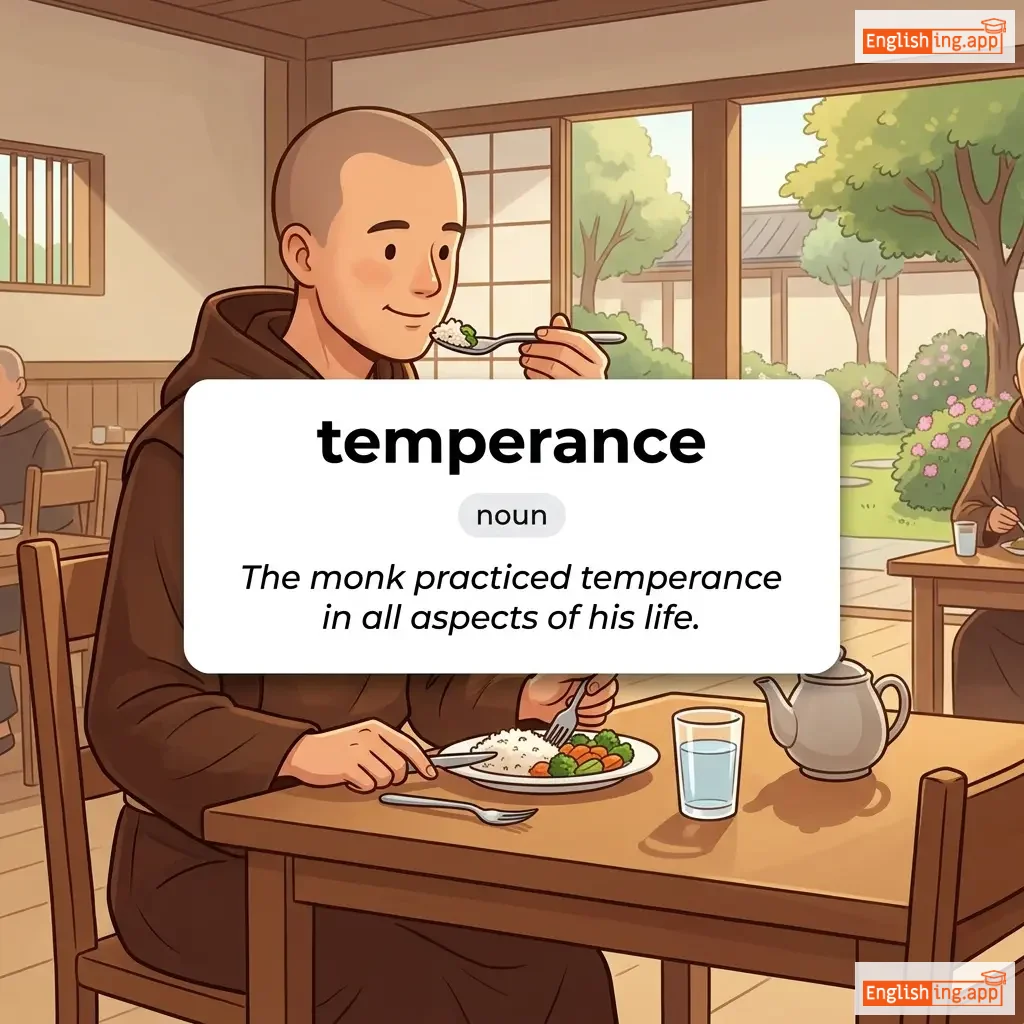
temperance definition card — visual illustration of the meaning
noun C1
/ˈtɛmpərəns/
节制 (jie zhi)

moderation in action, thought, or feeling; restraint, especially regarding alcohol.

"The monk practiced temperance in all aspects of his life."

"那位僧侣在生活的各个方面都实践节制。" (Na wei seng lü zai sheng huo de ge ge fang mian dou shi xian jie zhi.)
adjective C1
/ˈtɛmpərət/
温和的 (wenhe de)

showing moderation or self-restraint; also describing mild climate.

"He is known for his temperate behavior even in stressful situations."

"即使在压力大的情况下,他也以温和的行为而闻名。" (Jishi zai yali da de qingkuang xia, ta ye yi wenhe de xingwei er wenming.)
adjective C1
/ˈtɛmpərd/
调和 (tiaohe)

having a specified temper or disposition; strengthened or moderated.

"She gave a tempered response to the criticism."

"她对批评做出了调和的回应。" (Tā duì pīpíng zuòchūle tiáohé de huíyìng.)
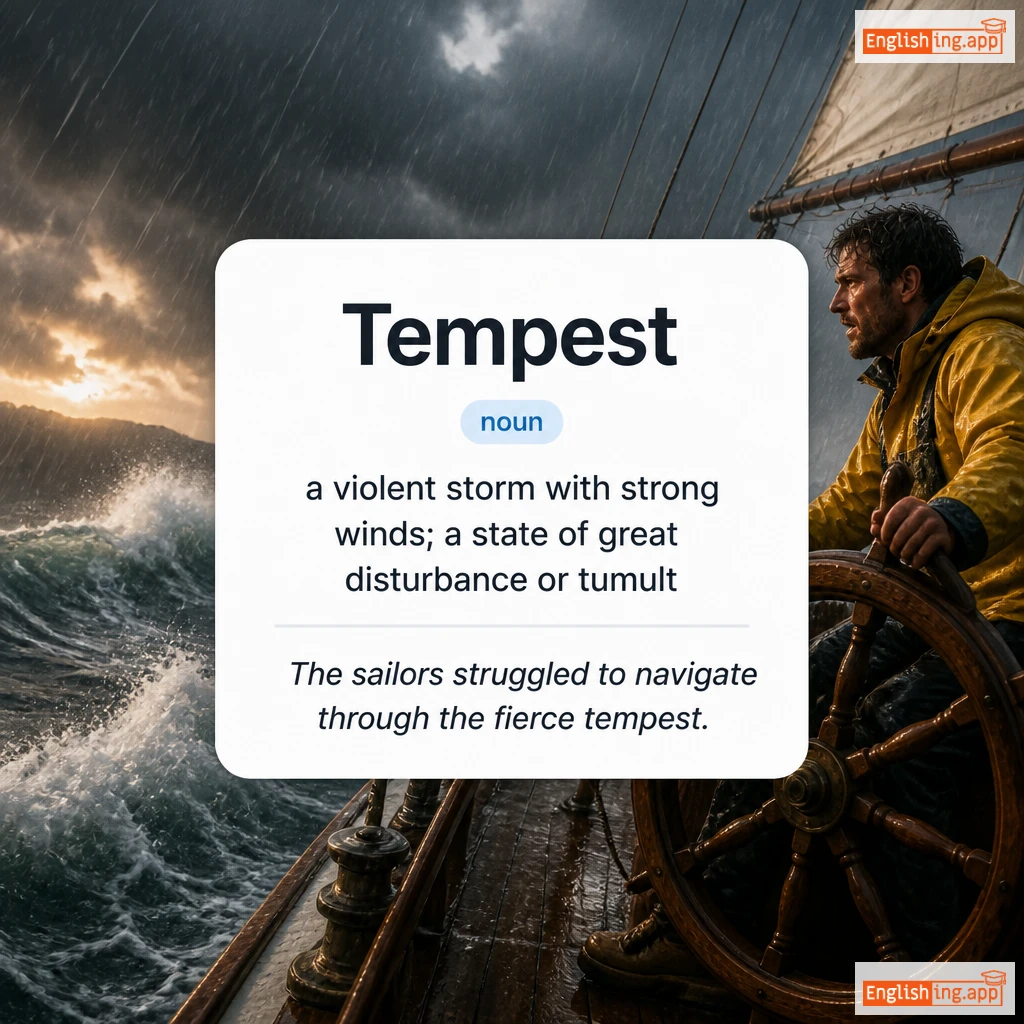
Tempest definition card — visual illustration of the meaning
noun C1
/ˈtem.pɪst/
暴风雨 (baofengyu)

a violent storm with strong winds; a state of great disturbance or tumult

"The sailors struggled to navigate through the fierce tempest."

"水手们努力在猛烈的暴风雨中航行。" (Shuǐshǒumen nǔlì zài měngliè de bào fēngyǔ zhōng hángxíng.)
adjective C1
/tɛmˈpɛstjuəs/

Characterized by strong and turbulent emotions or stormy conditions.

"Their tempestuous relationship often swung between love and anger."

adjective C1
/ˈtɛmpərəl/
世俗的,时间的 (shìsú de, shíjiān de)

Relating to worldly affairs or to time rather than spiritual matters.

"The monk gave up his temporal possessions to live a simple life."

"僧侣放弃了他的世俗财产,选择过简单的生活。" (sēnglǚ fàngqìle tā de shìsú cáichǎn, xuǎnzé guò jiǎndān de shēnghuó.)
noun C1
/ˈtɛmptər/
引诱者 (yǐn yòu zhě)

a person or thing that entices someone into doing something wrong

"The tempter whispered false promises into his ear."

"引诱者在他耳边低声许下虚假的承诺。" (Yǐn yòu zhě zài tā ěr biān dī shēng xǔ xià xū jiǎ de chéng nuò.)
adjective C1
/ˈtɛnəbl/
可防御的 (kě fángyù de)

able to be defended or maintained against attack or objection

"His argument was strong and tenable in court."

"他的论点在法庭上既强大又可防守。" (Tā de lùndiǎn zài fǎtíng shàng jì qiángdà yòu kě fángshǒu.)
tenacious definition card — visual illustration of the meaning
adjective C1
/təˈneɪʃəs/
顽强 (wanqiang)

holding firmly to something; persistent and determined

"She was tenacious in pursuing her goals."

"她在追求目标时非常顽强。" (Ta zai zhuiqiu mubiao shi feichang wanqiang.)
tenacity definition card — visual illustration of the meaning
noun C1
/təˈnæsəti/
韧性 (renxing)

the quality of being persistent, determined, and not easily giving up

"His tenacity helped him succeed despite many failures."

"他的韧性帮助他在多次失败后成功了。" (Tā de rènxìng bāngzhù tā zài duō cì shībài hòu chénggōngle.)
noun C1
/ˈtɛnəmənt/
廉租房 (liánzūfáng)

a large building divided into separate apartments, often in poor condition

"The family lived in a crowded tenement in the city."

"这个家庭住在城市里一个拥挤的廉租房里。" (Zhège jiātíng zhù zài chéngshì lǐ yīgè yōngjǐ de liánzūfáng lǐ.)
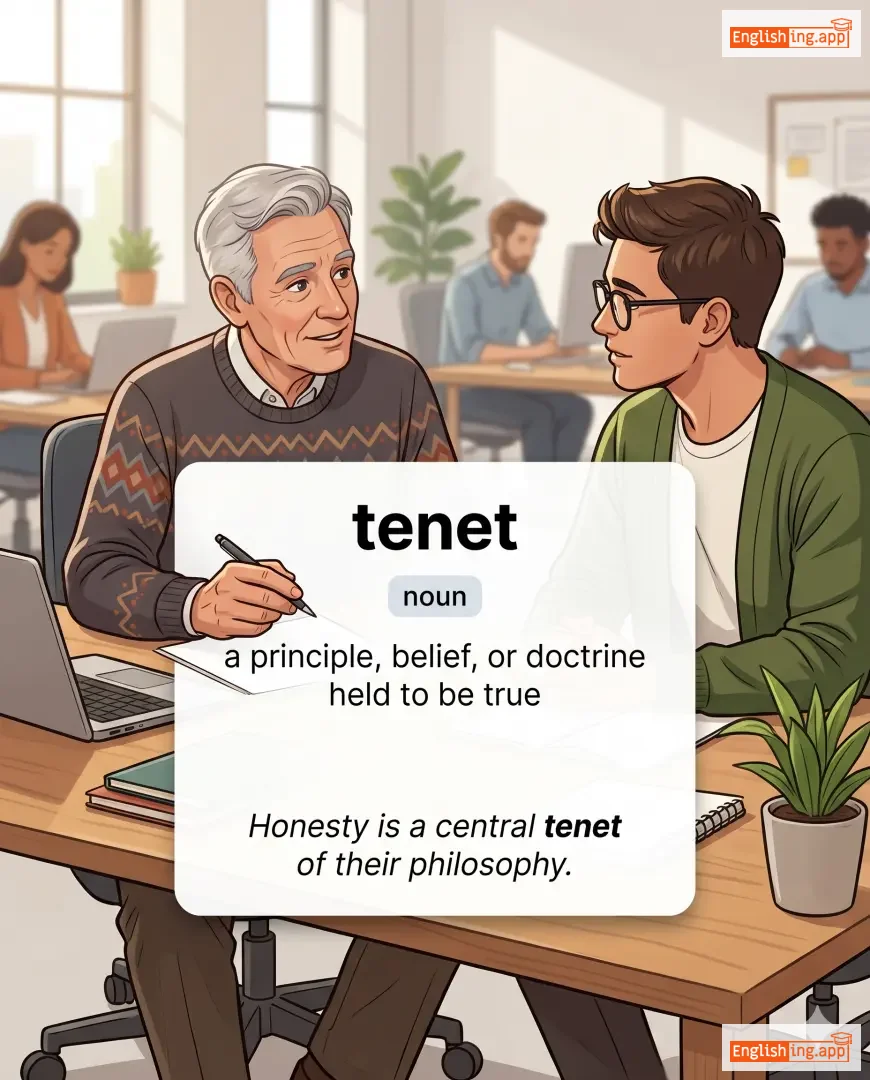
tenet definition card — visual illustration of the meaning
noun C1
/ˈtɛnɪt/
原则 (yuánzé)

a principle, belief, or doctrine held to be true

"Honesty is a central tenet of their philosophy."

"诚实是他们哲学的核心原则。" (Chéngshí shì tāmen zhéxué de héxīn yuánzé.)
noun C1
/ˈtɛnər/
男高音 / 一般基调 (nán gāo yīn / yī bān jī diào)

the general meaning, drift, or character of something; a male singing voice between baritone and alto

"The overall tenor of his speech was hopeful and reassuring."

"他演讲的总体基调是充满希望和安慰的。" (Tā yǎnjiǎng de zǒngtǐ jīdiào shì chōngmǎn xīwàng hé ānwèi de.)
adjective C1
/ˈtɛn.tə.tɪv/
试探性的 (shì tàn xìng de)

Not certain or fixed; done without confidence.

"She gave a tentative smile before agreeing."

"她在同意之前露出了试探性的微笑。" (Tā zài tóngyì zhīqián lùchūle shì tàn xìng de wēixiào.)
tenuous definition card — visual illustration of the meaning
adjective C1
/ˈtɛn.ju.əs/
薄弱 / 稀薄 (bó ruò / xī bó)

Very weak, thin, or slight; lacking a strong basis.

"The evidence against him is quite tenuous."

"对他不利的证据相当薄弱。" (Duì tā bù lì de zhèngjù xiāngdāng bó ruò.)
Tenure definition card — visual illustration of the meaning
noun C1
/ˈtɛnjər/
任期 (renqi)

The period of time during which someone holds a position, office, or land.

"His tenure as president lasted for five years."

"他作为总统的任期持续了五年。" (Tā zuòwéi zǒngtǒng de rènqī chíxù le wǔ nián.)
adjective C1
/ˈtɛpɪd/
温热, 不热衷 (wēn rè, bù rèzhōng)

Lukewarm; showing little enthusiasm or force.

"His speech received only a tepid response from the audience."

"他的演讲只收到听众的温热反应。" (Tā de yǎnjiǎng zhǐ shōu dào tīngzhòng de wēn rè fǎnyìng.)
noun C1
/ˈtɜːrmɪnəs/
终点站 (zhong dian zhan)

the final point or end of something, especially the final station on a railway line

"The train finally arrived at the terminus after a long journey."

"火车经过长时间的旅行后,终于到达了终点站。" (Huoche jingguo chang shijian de lvxing hou, zhongyu daoda le zhongdian zhan.)
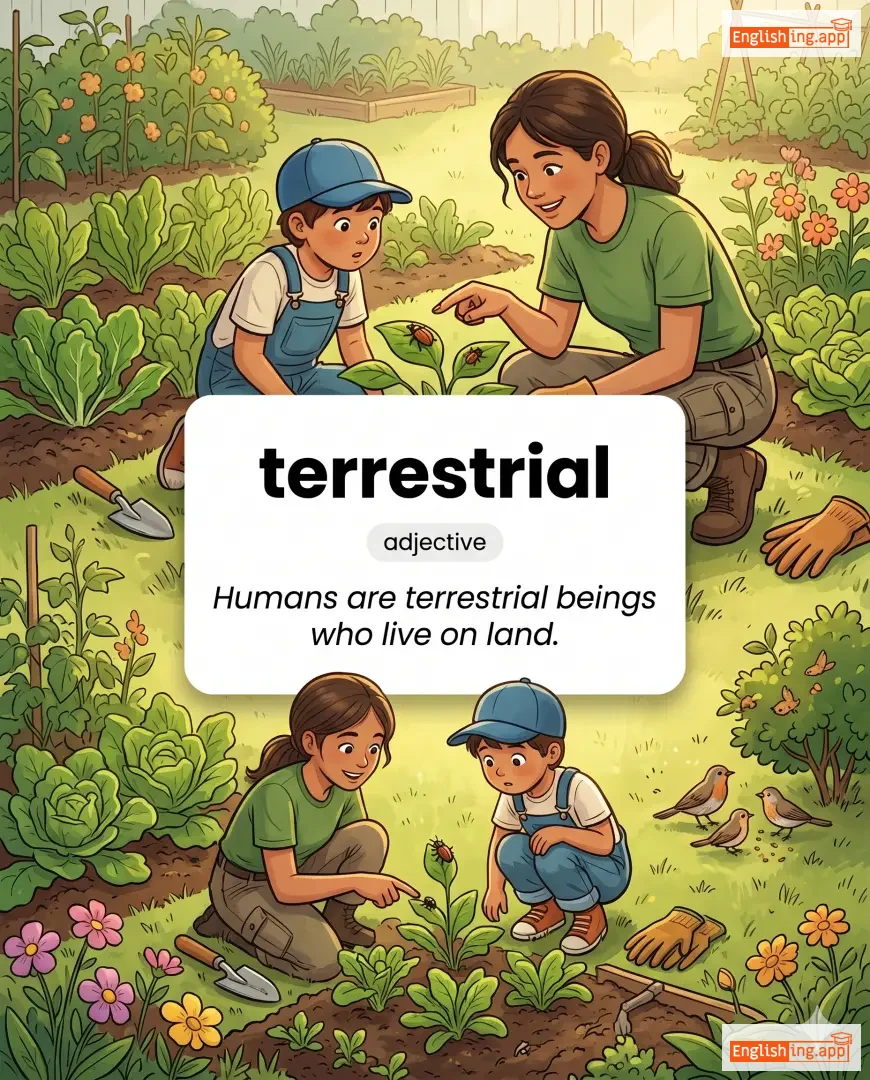
terrestrial definition card — visual illustration of the meaning
adjective C1
/təˈrɛstriəl/
陆生 (lù shēng)

Relating to the Earth or land as opposed to the sea or air; living or growing on land.

"Humans are terrestrial beings who live on land."

"人类是生活在陆地上的陆生生物。" (Rénlèi shì shēnghuó zài lùdì shàng de lùshēng shēngwù.)
adjective C1
/tɜːrs/
简洁 (jianjie)

brief and to the point; sparing in the use of words

"His reply was terse and ended the conversation quickly."

"他的回答简洁,迅速结束了对话。" (tade huida jianjie, xunxu jieshu le duihua.)
3️⃣

tertiary

adjective C1
/ˈtɜːrʃieri/

third in order, rank, or level

"He is pursuing his tertiary education at the university."

noun C1
/ˈtɛstəmənt/
遗嘱 / 证明 (yízhǔ / zhèngmíng)

a person's will; or strong evidence of something

"His success is a testament to his hard work and dedication."

"他的成功是他辛勤工作和奉献精神的证明。" (tā de chénggōng shì tā xīnqín gōngzuò hé fèngxiàn jīngshén de zhèngmíng.)
Testimonial definition card — visual illustration of the meaning
noun C1
/ˌtɛstɪˈmoʊniəl/
推荐信 (tuījiànxìn)

A formal statement testifying to someone's character, qualifications, or the quality of a product or service.

"The company shared a glowing testimonial from a satisfied customer."

"公司分享了来自满意客户的热情推荐信。" (Gōngsī fēnxiǎngle láizì mǎnyì kèhù de rèqíng tuījiànxìn.)
testimonials definition card — visual illustration of the meaning
noun C1
/ˌtɛstɪˈməʊnɪəlz/
见证, 推荐信 (jianzheng, tuijianshin)

Written or spoken statements of praise or recommendation from clients or customers.

"Positive testimonials can enhance a company's reputation."

"积极的见证可以提升公司的声誉。" (Jījí de jiànzhèng kěyǐ tíshēng gōngsī de shēngyù.)
adjective C1
/ˈtɛsti/
暴躁 (bàozào)

Easily irritated or annoyed.

"He became testy when asked the same question repeatedly."

"当他一再被问到相同的问题时,他变得易怒。" (Dāng tā yīzài bèi wèn dào xiāngtóng de wèntí shí, tā biàn dé yìnù.)
verb C1
/ˈtɛðər/
绑住 (bang zhu)

To tie an animal with a rope or chain so it cannot move far.

"The farmer tethered the goat to a post."

"农民把山羊绑在柱子上。" (Nóngmín bǎ shānyáng bǎng zài zhùzi shàng.)
adjective C1
/θiːˈmætɪk/
主题的 (zhutide)

Relating to or based on a theme.

"The book is organized into thematic chapters."

"这本书按主题章节组织。" (Zhe ben shu an zhuti zhangjie zuzhi.)
theological definition card — visual illustration of the meaning
adjective C1
/ˌθiːəˈlɒdʒɪkl/
神学的 (shénxué de)

Relating to the study of theology or religious belief.

"He wrote a theological paper on the concept of divine justice."

"他写了一篇关于神圣正义概念的神学论文。" (Tā xiěle yī piān guānyú shénshèng zhèngyì gàiniàn de shénxué lùnwén.)
theology definition card — visual illustration of the meaning
noun C1
/θiˈɒlədʒi/
神学 (shenxue)

The study of the nature of God and religious beliefs.

"She is pursuing a degree in theology at the university."

"她正在大学攻读神学学位。" (Ta zhengzai daxue gongdu shenxue xuewei.)
verb C1
/ˈθiːəraɪz/
理论化 (lilunhua)

To form a theory or set of ideas to explain something.

"Scientists often theorize about the origins of the universe."

"科学家们经常推测宇宙的起源。" (Kexuejiamen jingchang tuice yuzhou de qiyuan.)
adverb C1
/ˌðɛrəˈbaʊt/
大约 (dayue)

Approximately or around that place, amount, or time.

"The repairs will cost five hundred dollars or thereabout."

"修理费用大约五百美元。" (Xiuli feiyong dayue wu bai meiyuan.)
adverb C1
/ˈðɛərfɔːr/
为此 (wei ci)

For that or for it.

"He received payment and gave a receipt therefor."

"他收到了付款,并为此给出了收据。" (Ta shoudao le fukuan, bing wei ci gei chu le shouju.)
adverb C1
/ˌðɛərˈɪn/
其中; (qízhōng)

in that place; in that respect

"The box contains many treasures, and therein lies its value."

"盒子里有许多宝藏,而其中包含着它的价值。" (Hézi lǐ yǒu xǔduō bǎozàng, ér qízhōng bāohán zhe tā de jiàzhí.)
adverb C1
/ˌðɛərˈʌv/
因此 (yīncǐ)

of that; from that

"The contract and all amendments thereof must be signed."

"合同和所有的修正案因此必须签署。" (Hétóng hé suǒyǒu de xiūzhèng àn yīncǐ bìxū qiānshǔ.)
adverb C1
/ˌðɛərˈtu/
与此一起; (yǔ cǐ yīqǐ)

to that; in addition to that

"The house and the garden attached thereto were sold."

"房子和附带的花园已被出售。" (Fángzi hé fùdài de huāyuán yǐ bèi chūshòu.)
adverb C1
/ˌðeərəˈpɒn/
随即; (suiji)

immediately after that; following that event

"He finished his speech and thereupon left the stage."

"他结束了演讲,随即离开了舞台。" (Ta jie shu le yanjiang, suiji likai le wutai.)
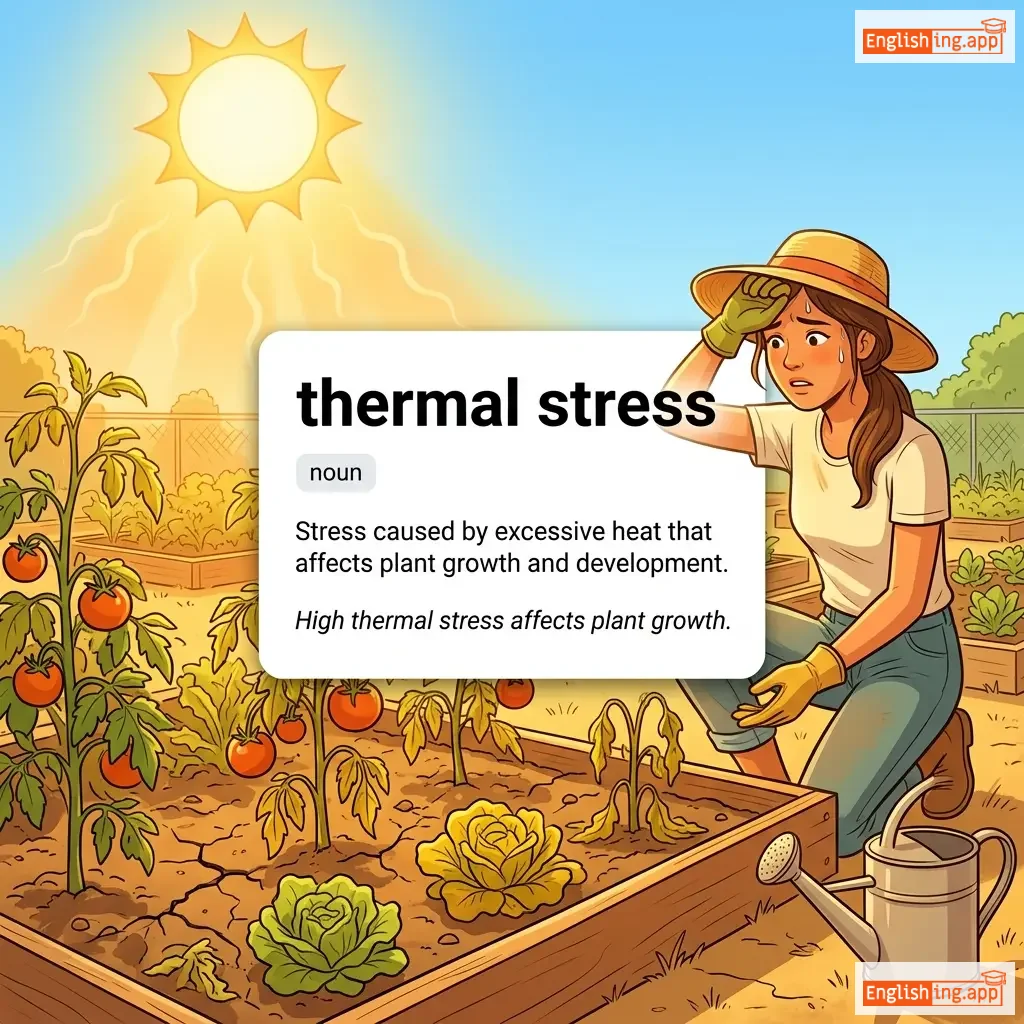
thermal stress definition card — visual illustration of the meaning
noun C1
ˈθɜː.məl stres
热应力 (rè yìnglì)

Stress caused by excessive heat that affects plant growth and development.

"High thermal stress affects plant growth."

"高温应力影响植物的生长。" (Gāowēn yìnglì yǐngxiǎng zhíwù de shēngzhǎng.)
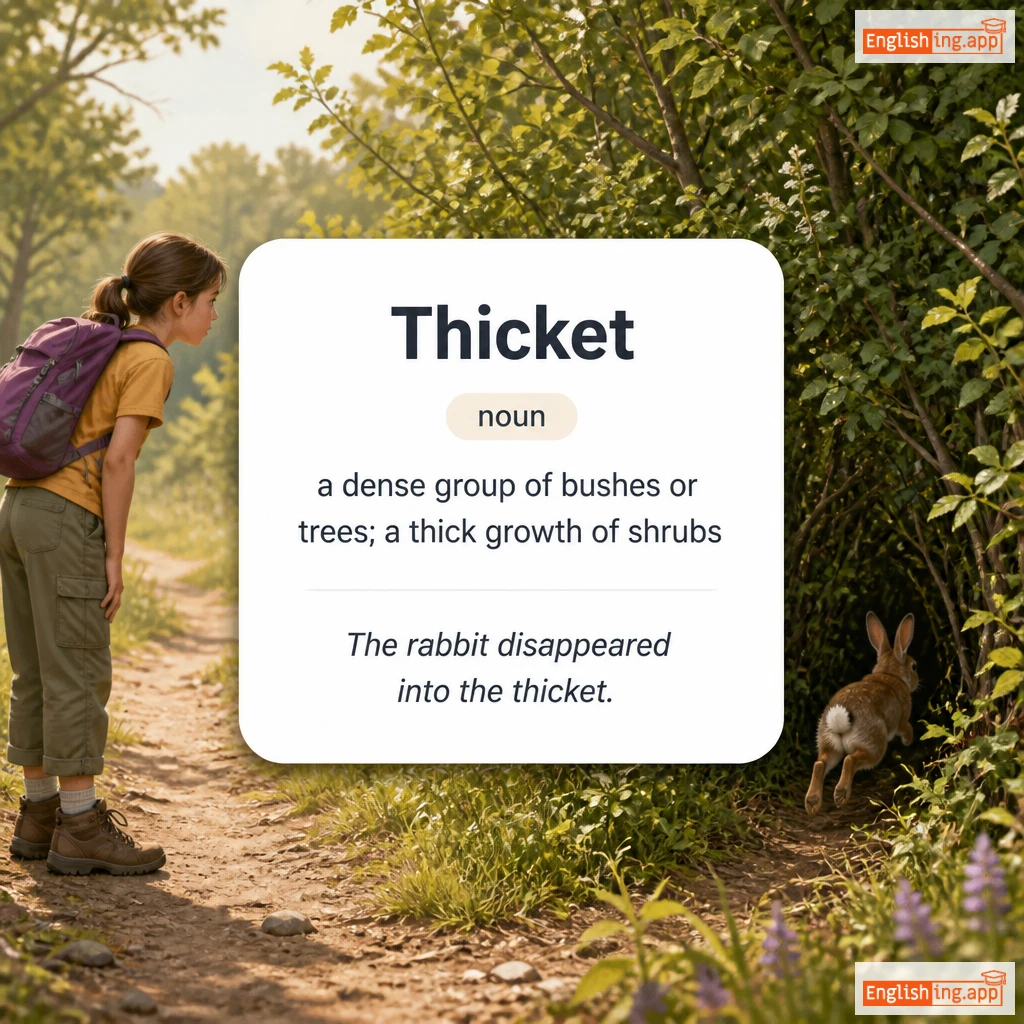
Thicket definition card — visual illustration of the meaning
noun C1
/ˈθɪk.ɪt/
灌木丛; 茂密的灌木生长 (thiket)

a dense group of bushes or trees; a thick growth of shrubs

"The rabbit disappeared into the thicket."

"兔子消失在灌木丛中。" (Tùzǐ xiāoshī zài guànmù cóng zhōng.)
thinkable definition card — visual illustration of the meaning
adjective C1
/ˈθɪŋ.kə.bəl/
可想的 (kexiang de)

Capable of being imagined or conceived; possible to consider or believe

"It is hard to believe that such an outcome is even thinkable."

"很难相信这样的结果甚至是可以想象的。" (Hen nan xiangxin zheyang de jieguo shenzhi shi keyi xiangxiang de)
noun C1
/ˈθʌroʊˌbrɛd/
纯种马 (chún zhǒng mǎ)

a horse of pure and recognized breed; a person of good breeding or education

"The jockey rode a fast thoroughbred in the race."

"骑师在比赛中骑了一匹快速的纯种马。" (qí shī zài bǐ sài zhōng qí le yī pǐ kuài sù de chún zhǒng mǎ.)
noun C1
/ˈθʌroʊˌfɛr/
主要街道 (zhuyao jiedao)

a main road or public highway that goes through a place

"The new mall is located along the main thoroughfare."

"新购物中心位于主要街道旁。" (xin gouwu zhongxin weiyu zhuyao jiedao pang)
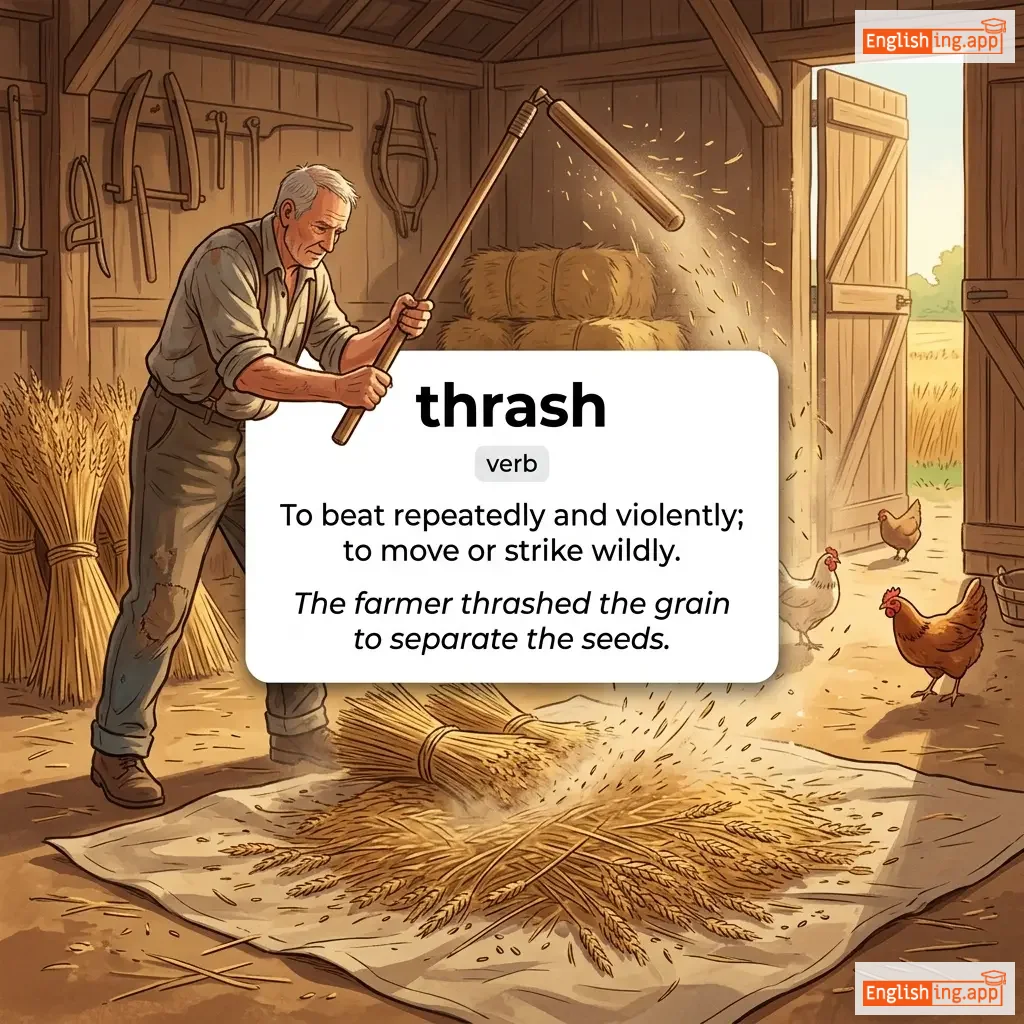
thrash definition card — visual illustration of the meaning
verb C1
/θræʃ/
猛烈打击, 猛击 (měngliè dǎjí, měngjī)

To beat repeatedly and violently; to move or strike wildly.

"The farmer thrashed the grain to separate the seeds."

"农民用力打谷子来分离种子。" (Nóngmín yònglì dǎ gǔzi lái fēnlí zhǒngzi.)
adjective C1
/ˈθrɪfti/
节俭 (jie jian)

using money and resources carefully and not wastefully

"She is very thrifty and always saves money for the future."

"她非常节俭,总是为未来存钱。" (Ta feichang jie jian, zong shi wei weilai cun qian.)
verb C1
/θrɒb/
跳动 (tiaodong)

to beat or pulse strongly, often with pain

"His head began to throb after the long day."

"他的一天结束后,头开始跳动。" (Ta de yitian jie shu hou, tou kaishi tiaodong.)
noun/verb C1
/θrɒŋ/

A large, densely packed crowd of people or animals; to fill or be present in a place in large numbers.

"Tourists thronged the streets during the festival."

verb/noun C1
/ˈθrɒt.əl/
限制/控制速度 (xian zhi/kong zhi su du)

To choke or strangle; to control the flow of fuel or power in an engine.

"The driver throttled the engine to slow down the car."

"司机将发动机调速以减慢汽车速度。" (Si ji jiang fa dong ji tiao su yi jian man qi che su du.)