Vocabularies

English Vocabulary Dictionary | Word Meanings, Definitions & Examples

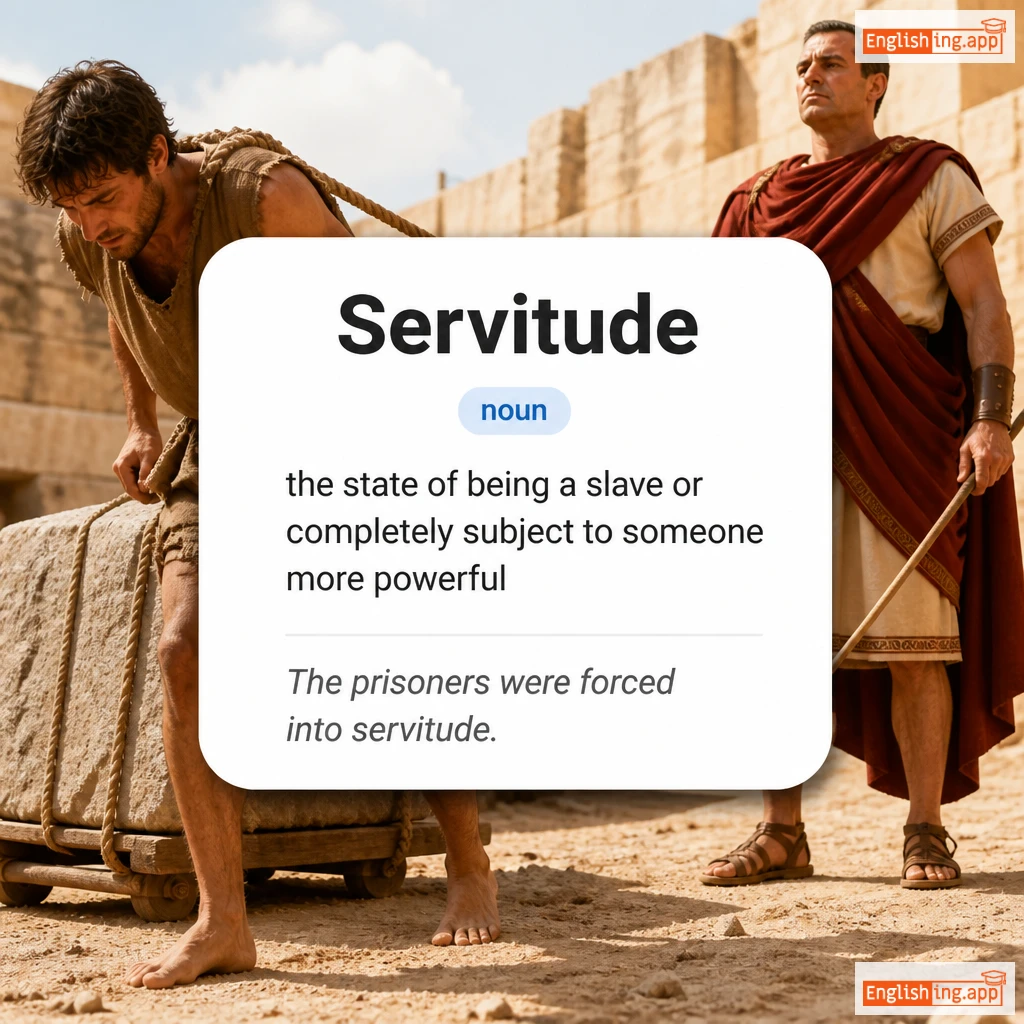
Servitude definition card — visual illustration of the meaning
noun C1
/ˈsɜːrvɪtuːd/
隷属 (reisoku)

the state of being a slave or completely subject to someone more powerful

"The prisoners were forced into servitude."

"囚人たちは強制的に隷属させられました。" (Shūjin-tachi wa kyōseiteki ni reisoku saseraremashita.)
verb C1
/ˈsɛvər/
切る、関係を断つ (kiru, kankei wo tatsu)

to cut off or separate, especially by cutting; to end a connection or relationship

"He had to sever ties with the company after the dispute."

"彼は争いの後、会社との関係を断たなければならなかった。" (Kare wa arasoi no ato, kaisha to no kankei wo tatanakereba naranakatta.)
noun C1
/ˈsɛvərəns/
退職金 (taishokukin)

the act of ending something, especially a relationship or employment; compensation paid upon termination

"The company offered him severance pay after his job ended."

"会社は彼の仕事が終了した後、退職金を提供しました。" (Kaisha wa kare no shigoto ga shūryō shita ato, taishokukin o teikyō shimashita.)
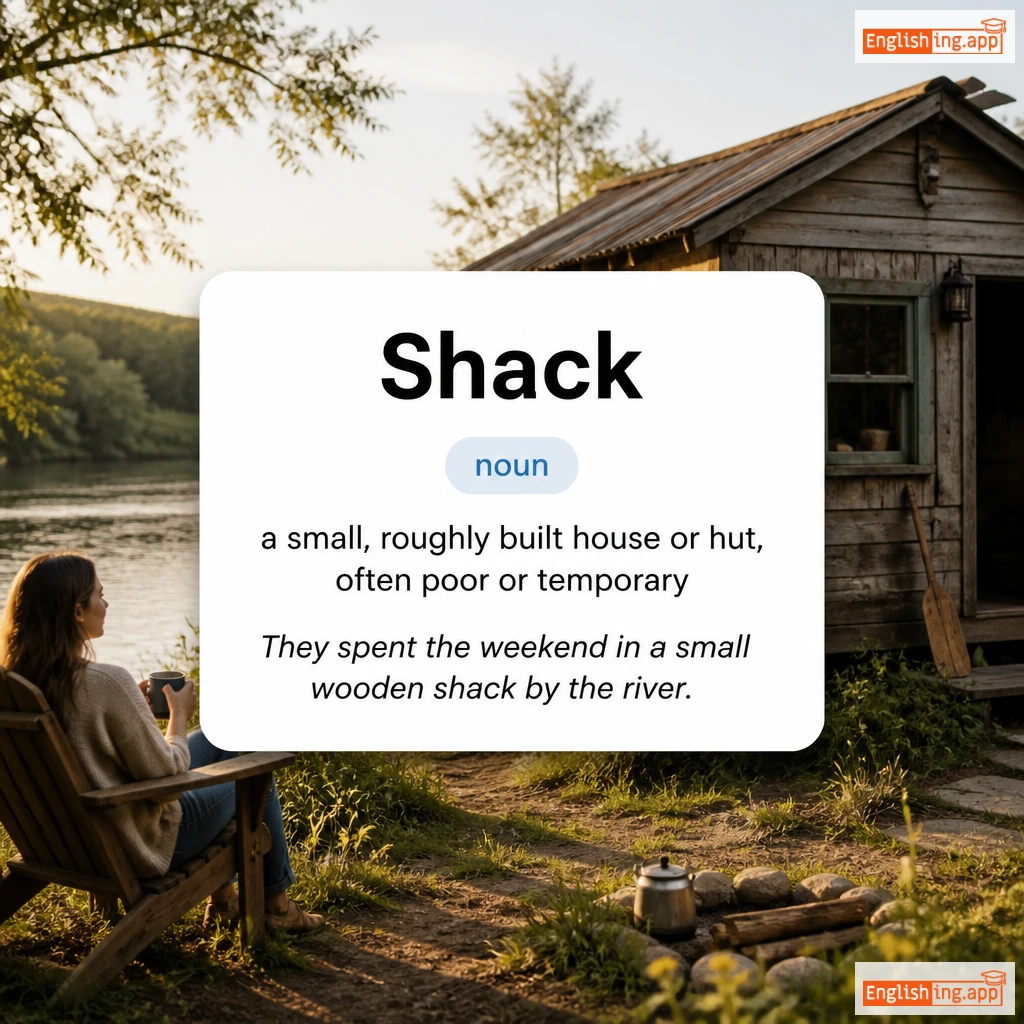
Shack definition card — visual illustration of the meaning
noun C1
/ʃæk/
小屋 (koya)

a small, roughly built house or hut, often poor or temporary

"They spent the weekend in a small wooden shack by the river."

"彼らは川沿いの小さな木製の小屋で週末を過ごしました。" (Karera wa kawa-zoi no chiisana mokusei no koya de shūmatsu o sugoshimashita.)
verb C1
/ˈʃækəl/
足かせ (ashikase)

to chain or restrain; to restrict someone’s actions or freedom

"Outdated regulations shackle small businesses and slow innovation."

"古い規制は小規模なビジネスを足かせし、革新を遅らせます。" (Furui kisei wa shōkibo na bijinesu o asikase shi, kakushin o okurasemasu.)
noun C1
/ʃeɪl/
頁岩 (yegane)

a fine-grained sedimentary rock that can be split into thin layers

"The region is rich in shale and natural gas deposits."

"その地域は頁岩と天然ガスの埋蔵量が豊富です。" (sono chiiki wa yegane to tennen gasu no maizōryō ga hōfu desu.)
noun, adjective, verb C1
/ʃæm/
偽り (itsuwari)

something that is not what it appears to be; a false or fake thing; to pretend

"The deal turned out to be a sham."

"その取引は偽りであることが判明しました。" (Sono torihiki wa itsuwari de aru koto ga hanmei shimashita.)
noun C1
/ˈʃæmbəlz/
大混乱 (daikonran)

a state of complete disorder or ruin

"After the storm, the whole town was in shambles."

"嵐の後、町全体が大混乱に陥った。" (Arashi no ato, machi zentai ga daikonran ni ochītta.)
adjective C1
/ˈʃeɪm.ləs/
恥知らず (hajishirazu)

having no shame; bold and rude; impudent

"The shameless politician refused to apologize for his mistakes."

"恥知らずな政治家は自分の過ちを謝罪することを拒んだ。" (hajishirazuna seijika wa jibun no ayamachi o shazai suru koto o kobanda)
adjective C1
/ˈʃeɪp.ləs/
形のない (katachi no nai)

having no definite or well-defined shape or form

"The fog created a shapeless mass in the distance."

"霧は遠くに形のない塊を作り出しました。" (Kiri wa tōku ni katachi no nai katamari o tsukuridashimashita.)
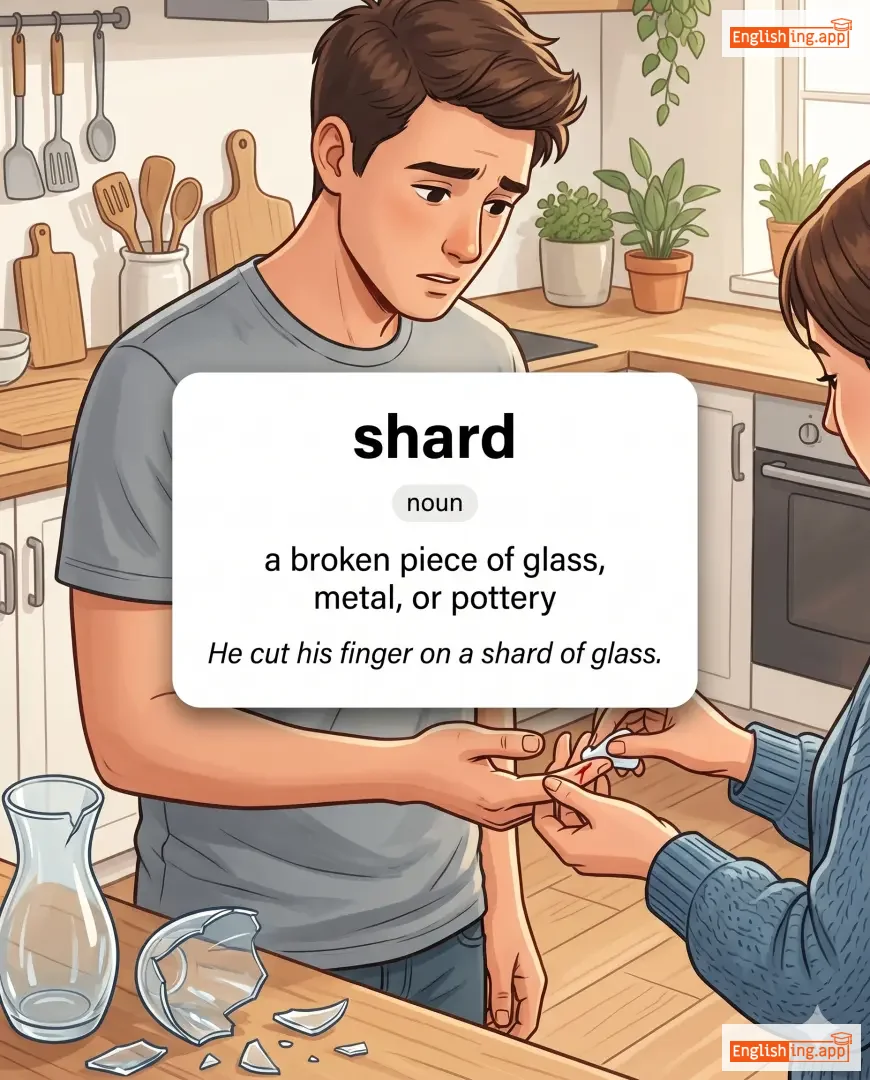
shard definition card — visual illustration of the meaning
noun C1
/ʃɑːrd/
破片 (hapen)

a broken piece of glass, metal, or pottery

"He cut his finger on a shard of glass."

"彼はガラスの破片で指を切った。" (Kare wa garasu no hapen de yubi o kitta.)
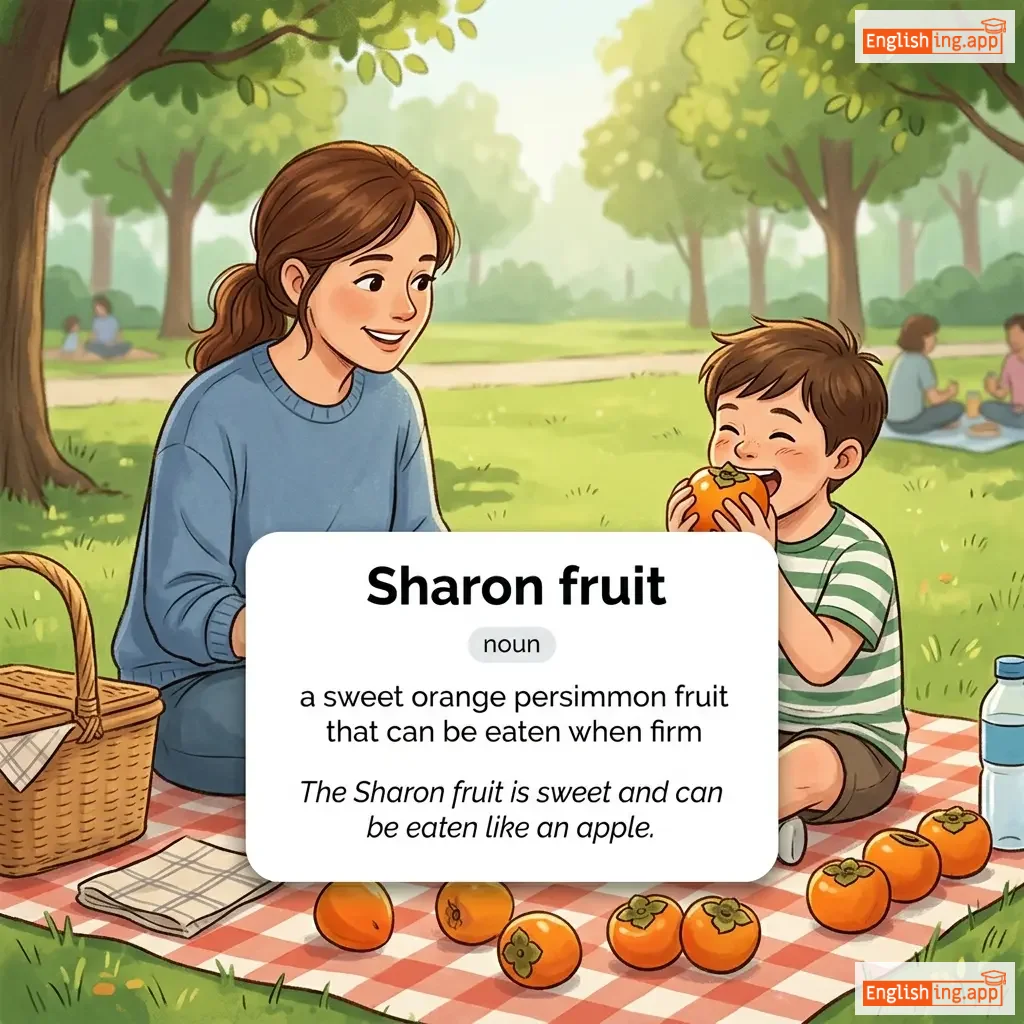
Sharon fruit definition card — visual illustration of the meaning
noun C1
/ˈʃær.ən fruːt/
シャロンフルーツ (Sharón furu-tsu)

a sweet orange persimmon fruit that can be eaten when firm

"The Sharon fruit is sweet and can be eaten like an apple."

"シャロンフルーツは甘く、リンゴのように食べることができます。" (Sharón furu-tsu wa amakute, ringo no yō ni taberu koto ga dekimasu.)
noun C1
/ˈʃeɪvɪŋ/
ひげ剃り (higesori)

the act of removing hair with a razor; a thin strip or piece shaved from something

"He bought a new cream for shaving."

"彼は新しいひげ剃りクリームを買いました。" (Kare wa atarashī higesori kurīmu o kaimashita.)
verb C1
/ʃɪə/
刈る (karu)

to cut the wool off a sheep or to cut something with sharp tools like scissors or shears

"The farmer will shear the sheep in the spring."

"農夫は春に羊の毛を刈ります。" (Nōfu wa haru ni hitsuji no ke o karimasu.)
noun C1
/ˈʃɜːrbət/
シャーベット (shaabetto)

a sweet flavored drink or a frozen dessert made from sweetened fruit juice

"On hot days, she enjoys a glass of lemon sherbet."

"暑い日には、彼女はレモンシャーベットを一杯楽しんでいます。" (Atsui hi ni wa, kanojo wa remon shaabetto o ippai tanoshindeimasu.)
verb C1
/ˈʃɪmər/
きらめく (kirameku)

To shine with a soft, wavering light.

"The lake shimmered under the moonlight."

"湖は月光の下で輝いていました。" (Mizuumi wa gekkō no shita de kagayaite imashita.)
adjective C1
/ˈʃɪpˌʃeɪp/
整理整頓 (seiri seiton)

Neat, tidy, and in good order.

"She kept her office shipshape at all times."

"彼女はいつもオフィスを整理整頓していた。" (Kanojo wa itsumo ofisu o seiri seiton shite ita.)
verb C1
/ʃɜːrk/
避ける (sakeru)

to avoid or neglect a duty or responsibility

"He always tries to shirk his responsibilities at work."

"彼は仕事で責任を避けようといつも試みます。" (Kare wa shigoto de sekinin o sakeyou to itsumo kokoromimasu.)
noun C1
/ʃoʊl/
魚の群れ (uo no mure)

a large group of fish swimming together; a shallow place in water

"We saw a shoal of fish near the coast."

"私たちは海岸近くで魚の群れを見ました。" (Watashitachi wa kaigan chikaku de sakana no mure o mimashita.)
adjective C1
/ˈʃɑːdi/
粗末な (somotsu na)

badly made or done; of poor quality

"The contractor did a shoddy job on the repairs."

"契約者は修理作業で粗末な仕事をしました。" (Keiyakusha wa shūri sagyō de somotsu na shigoto o shimashita.)
/ʃrɛd/
引き裂く (hikisaku)

to tear or cut something into small pieces

"She shredded the old documents before throwing them away."

"彼女は古い書類を捨てる前にシュレッドした。" (Kanojo wa furui shorui o suteru mae ni shred shita.)
noun C1
/ʃruː/
怒りっぽい女性 / 小さなネズミのような動物 (ikari ppoi josei / chiisana nezumi no you na doubutsu)

a small mouse-like animal; also a woman with a bad temper

"The play describes a strong-willed woman as a shrew."

"この劇は強い意志を持った女性を怒りっぽい女性として描いています。" (Kono geki wa tsuyoi ishi o motta josei o ikarippoi josei to shite kakuiteimasu.)
adjective C1
/ʃruːd/
抜け目のない (nukeme no nai)

having sharp judgment and practical intelligence

"She made a shrewd investment in real estate."

"彼女は不動産に抜け目のない投資をした。" (Kanojo wa fudōsan ni nukeme no nai tōshi o shita.)
adjective C1
/ʃrɪl/
鋭い音 (surudoi oto)

High-pitched and piercing in sound.

"The shrill whistle startled everyone in the room."

"鋭い口笛の音が部屋の中の全員を驚かせた。" (Surudoi kuchibue no oto ga heya no naka no zen'in o odorokaseta.)
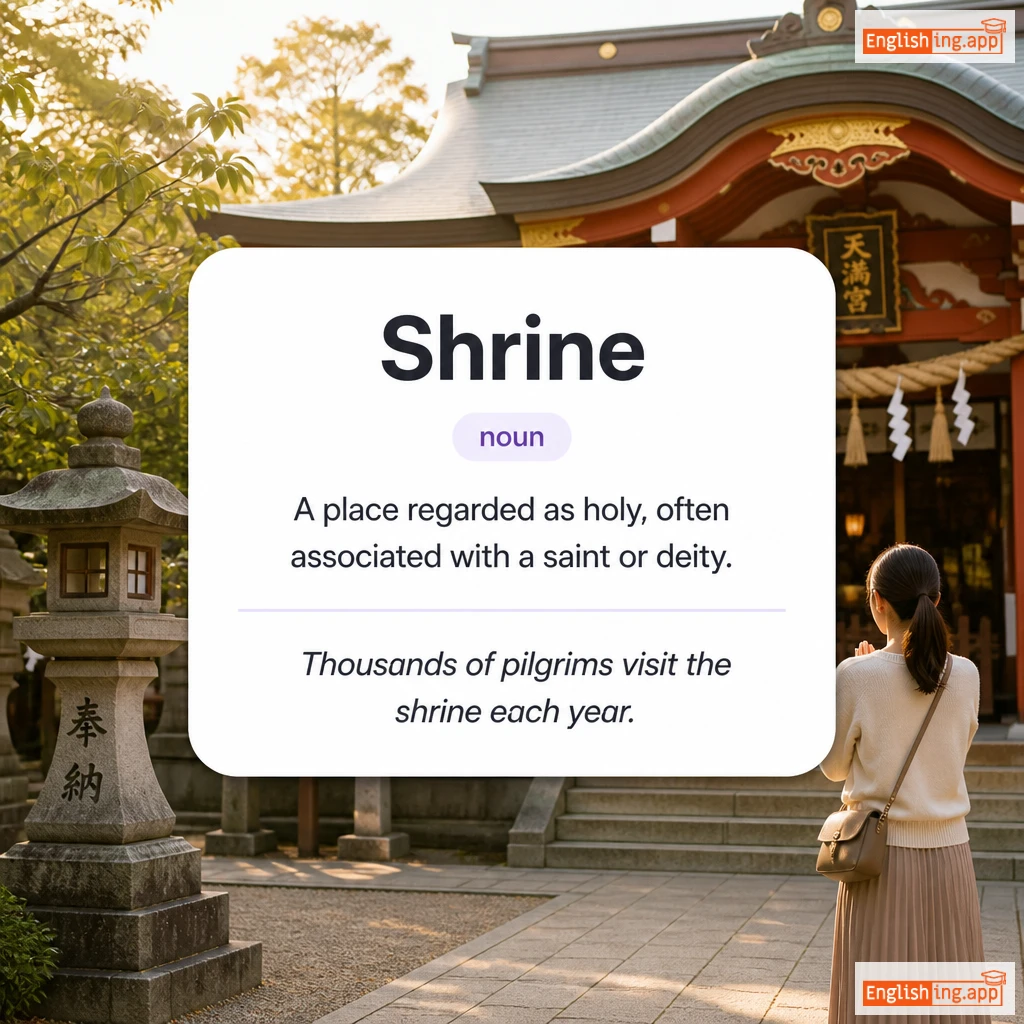
Shrine definition card — visual illustration of the meaning
noun C1
/ʃraɪn/
聖地 (seichi)

A place regarded as holy, often associated with a saint or deity.

"Thousands of pilgrims visit the shrine each year."

"毎年、何千人もの巡礼者がその聖地を訪れます。" (Mainen, nan-sen nin mo no junrei-sha ga sono seichi o otozuremasu.)
noun C1
/ˈʃrɪŋkɪdʒ/
収縮 (shūshuku)

The process of becoming smaller in size, amount, or value.

"The company reported a shrinkage in profits this quarter."

"その会社は今四半期の利益の収縮を報告しました。" (Sono kaisha wa ima shihanki no rieki no shūshuku o hōkoku shimashita.)
verb C1
/ˈʃrɪvəl/
しわになる (shiwa ni naru)

To become dry, wrinkled, and smaller due to lack of moisture.

"The flowers shriveled under the hot sun."

"花は暑い太陽の下でしわになった。" (Hana wa atsui taiyou no moto de shiwa ni natta.)
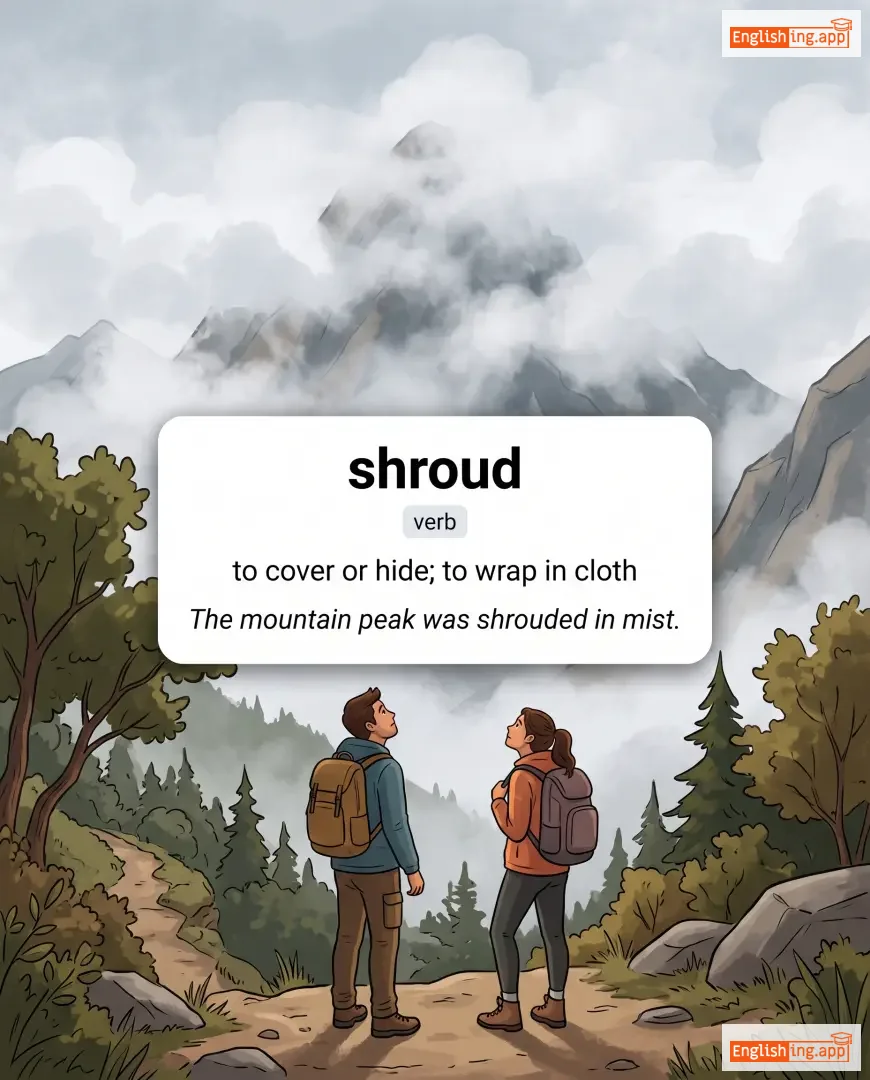
shroud definition card — visual illustration of the meaning
verb C1
/ʃraʊd/
覆う (ōu)

to cover or hide; to wrap in cloth

"The mountain peak was shrouded in mist."

"山頂は霧に包まれていました。" (Sanchō wa kiri ni tsutsumarete imashita.)
verb C1
/ˈʃʌdər/
震える (furueru)

to tremble or shake suddenly, often due to fear, cold, or strong emotion

"She shuddered at the thought of walking alone in the dark forest."

"彼女は暗い森を一人で歩くことを考えただけで震えた。" (Kanojo wa kurai mori o hitori de aruku koto o kangaeta dake de furueta.)
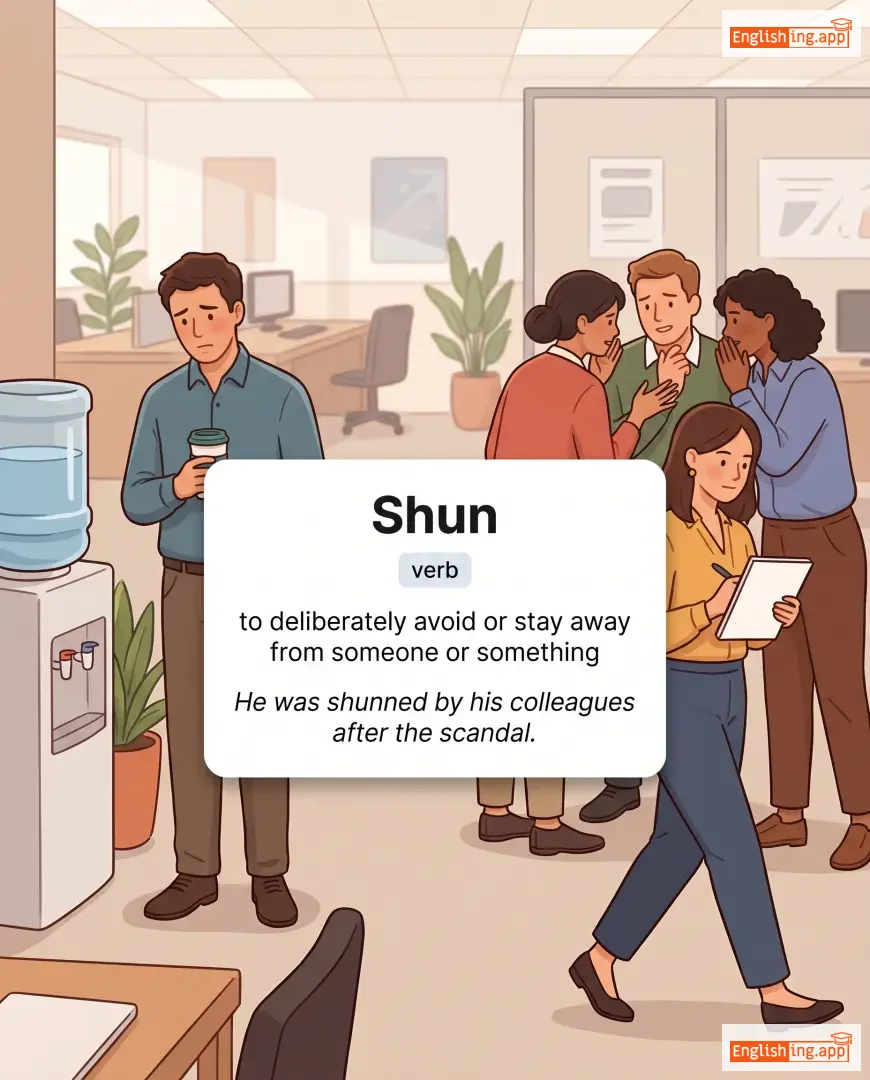
Shun definition card — visual illustration of the meaning
verb C1
/ʃʌn/
避ける (sakeru)

to deliberately avoid or stay away from someone or something

"He was shunned by his colleagues after the scandal."

"彼はスキャンダルの後、同僚から避けられました。" (Kare wa sukyandaru no ato, dōryō kara sakeraremashita.)
verb C1
/ʃʌnt/
切り替える (kirikaeru)

to move or turn aside; to push or divert from one track to another

"The train was shunted onto a different track."

"列車は別の線路に切り替えられました。" (Ressha wa betsu no senro ni kirikaeraremashita.)
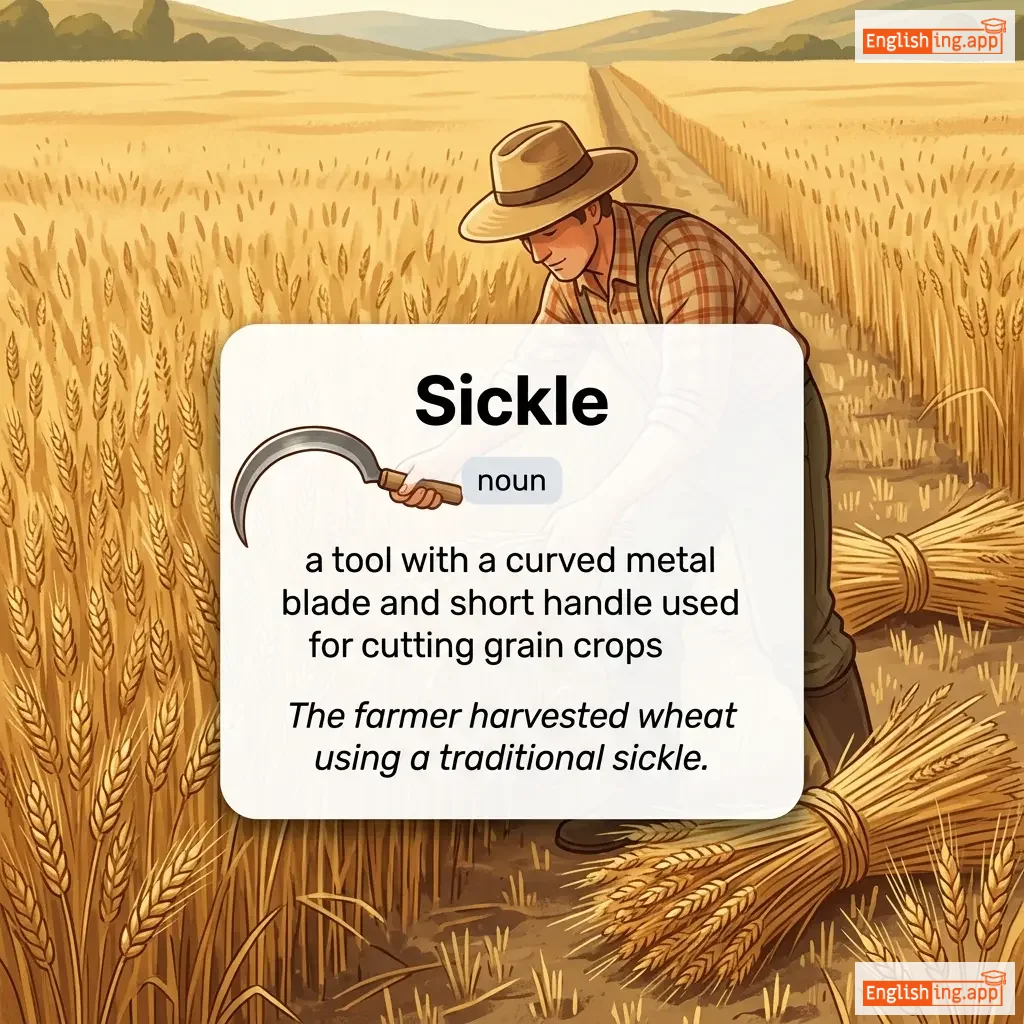
Sickle definition card — visual illustration of the meaning
noun C1
/ˈsɪk.əl/
(kama)

a tool with a curved metal blade and short handle used for cutting grain crops

"The farmer harvested wheat using a traditional sickle."

"農夫は伝統的な鎌を使って小麦を収穫しました。" (Nōfu wa dentō-teki na kama o tsukatte komugi o shūkaku shimashita.)
sideline discussions definition card — visual illustration of the meaning
noun C1
/ˈsaɪd.laɪn dɪˈskʌʃənz/
サイドラインの議論 (saidrain no giron)

Informal or secondary conversations that occur outside the main agenda of a formal meeting.

"Sideline discussions often lead to agreements."

"サイドラインの議論はしばしば合意に至ります。" (Saidrain no giron wa shibashiba gōi ni itarimasu.)
verb C1
/ˈsaɪdˌstɛp/
回避する (kaihi suru)

To avoid something by stepping aside; to evade a problem or question indirectly.

"The politician tried to sidestep the difficult question."

"政治家はその難しい質問を避けようとした。" (Seijika wa sono muzukashii shitsumon wo sakeyou to shita.)
verb C1
/ˈsaɪdˌtræk/
気を散らす (ki o chirasu)

To distract from the main subject or activity.

"She was sidetracked by an unexpected phone call."

"彼女は予期しない電話で気を取られた。" (Kanojo wa yokishinai denwa de ki o torareta.)
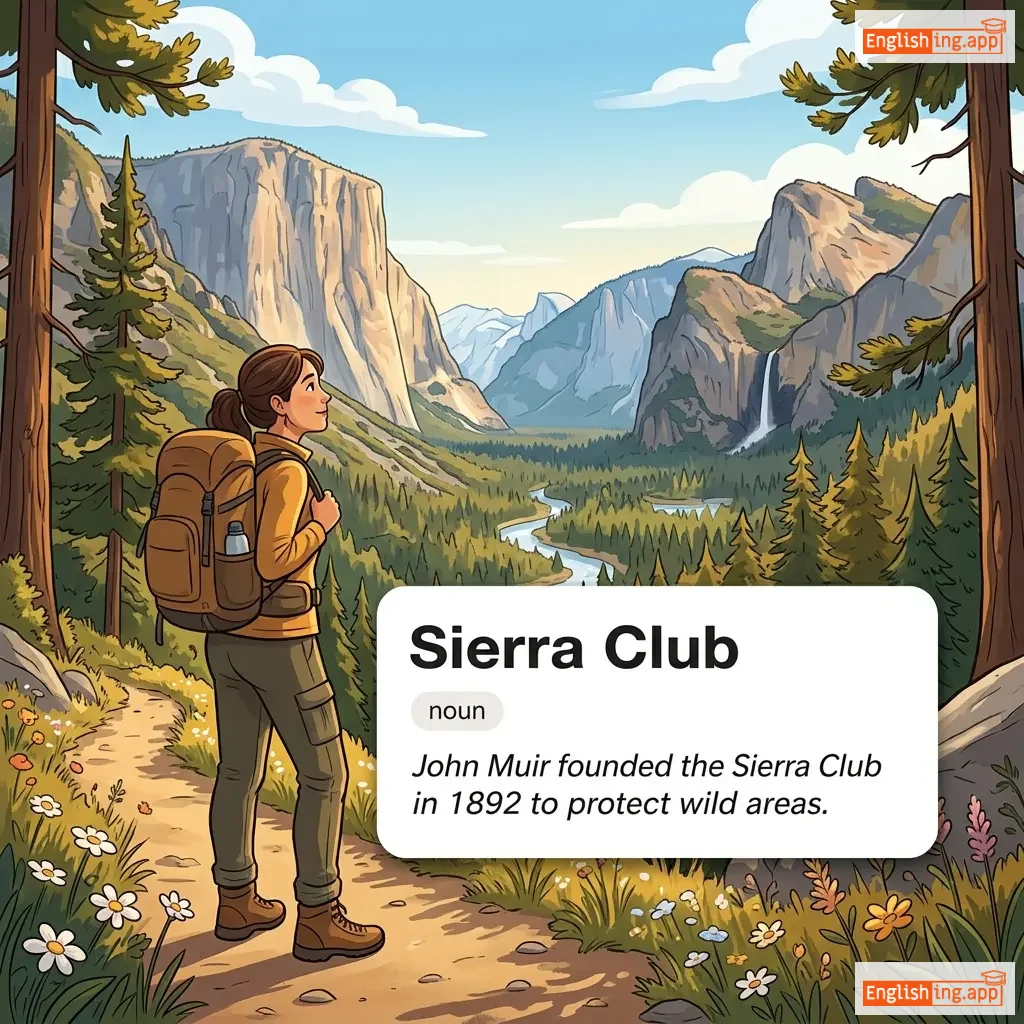
Sierra Club definition card — visual illustration of the meaning
noun C1
/siˈɛrə klʌb/
シエラクラブ (Shiera Kurabu)

An American environmental organization founded in 1892 by John Muir, focused on promoting conservation of the natural environment by influencing public policy decisions.

"John Muir founded the Sierra Club in 1892 to protect wild areas."

"ジョン・ミューアは1892年にシエラクラブを設立し、野生地帯を保護しました。" (Jon Myua wa 1892-nen ni Shiera Kurabu o setsuritsu shi, yasei chitai o hogo shimashita.)
noun C1
/sɪv/
ふるい (furui)

a utensil with a mesh or perforated bottom, used for straining or sifting

"She used a sieve to strain the pasta."

"彼女はパスタをこすためにふるいを使いました。" (Kanojo wa pasuta o kosu tame ni furui o tsukaimashita.)
verb C1
/sɪft/
ふるいにかける / 注意深く調べる (furui ni kakeru / chuui-bukaku shiraberu)

to separate or sort through carefully, often using a sieve or by examining closely

"She sifted the flour before adding it to the cake mixture."

"ケーキのミックスに加える前に、小麦粉をふるいにかけました。" (Kēki no mikkusu ni kuwaeru mae ni, komugiko o furui ni kakemashita.)
👁️‍🗨️

Sightless (saitoresu)

adjective C1
/ˈsaɪt.ləs/
盲目; 視力なし (moumoku; shiryoku nashi)

unable to see; blind; lacking vision

"The sightless man navigated the street with his guide dog."

"盲目の男性はガイド犬と一緒に通りを歩きました。" (Moumoku no dansei wa gaido inu to issho ni toori o arukimashita)
noun C1
/sɪlk klɔːθ/
シルクの布 (shiruku no nuno)

fabric made from natural fibers produced by silkworms

"The bride wore a beautiful dress made of silk cloth."

"花嫁はシルクの布で作られた美しいドレスを着ていました。" (hanayome wa shiruku no nuno de tsukurareta utsukushī doresu o kiteimashita.)
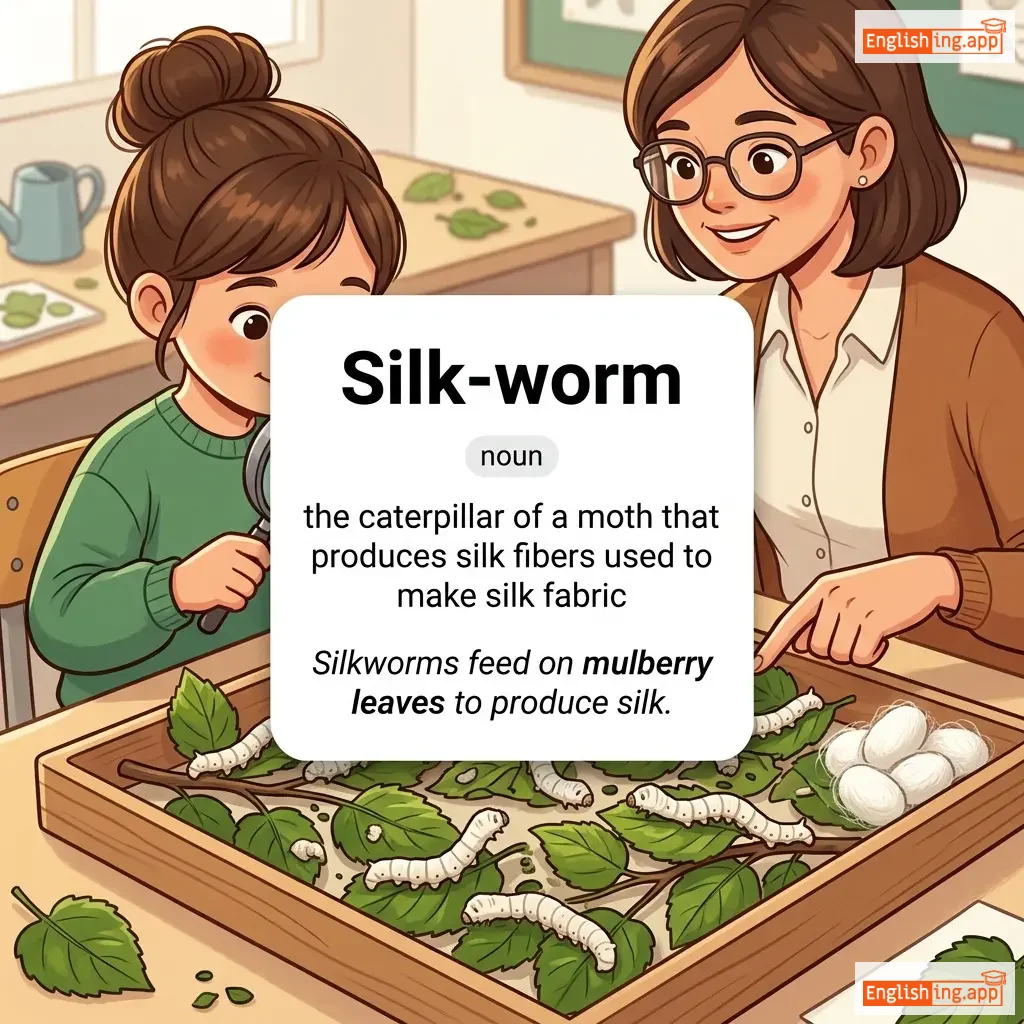
Silk-worm definition card — visual illustration of the meaning
noun C1
/ˈsɪlk.wɜːrm/
かいこ (kaiko)

the caterpillar of a moth that produces silk fibers used to make silk fabric

"Silkworms feed on mulberry leaves to produce silk."

"カイコは桑の葉を食べて、絹を生産します。" (Kaiko wa kuwa no ha o tabete, kinu o seisan shimasu.)
adjective C1
/ˈsɪlkən/
絹の; 柔らかい; 滑らか; (kinu no)

made of silk; smooth and soft like silk

"She wore a beautiful silken dress to the party."

"彼女はパーティーに美しい絹のドレスを着ていきました。" (Kanojo wa pātī ni utsukushī kinu no doresu o kite ikimashita.)
noun C1
/sɪlt/
シルト (shiruto)

Fine sand, clay, or other material carried by running water and deposited as a sediment.

"The river deposited layers of silt along its banks."

"川はその岸にシルトの層を堆積させた。" (Kawa wa sono kishi ni shiruto no sō o taiseki saseta.)
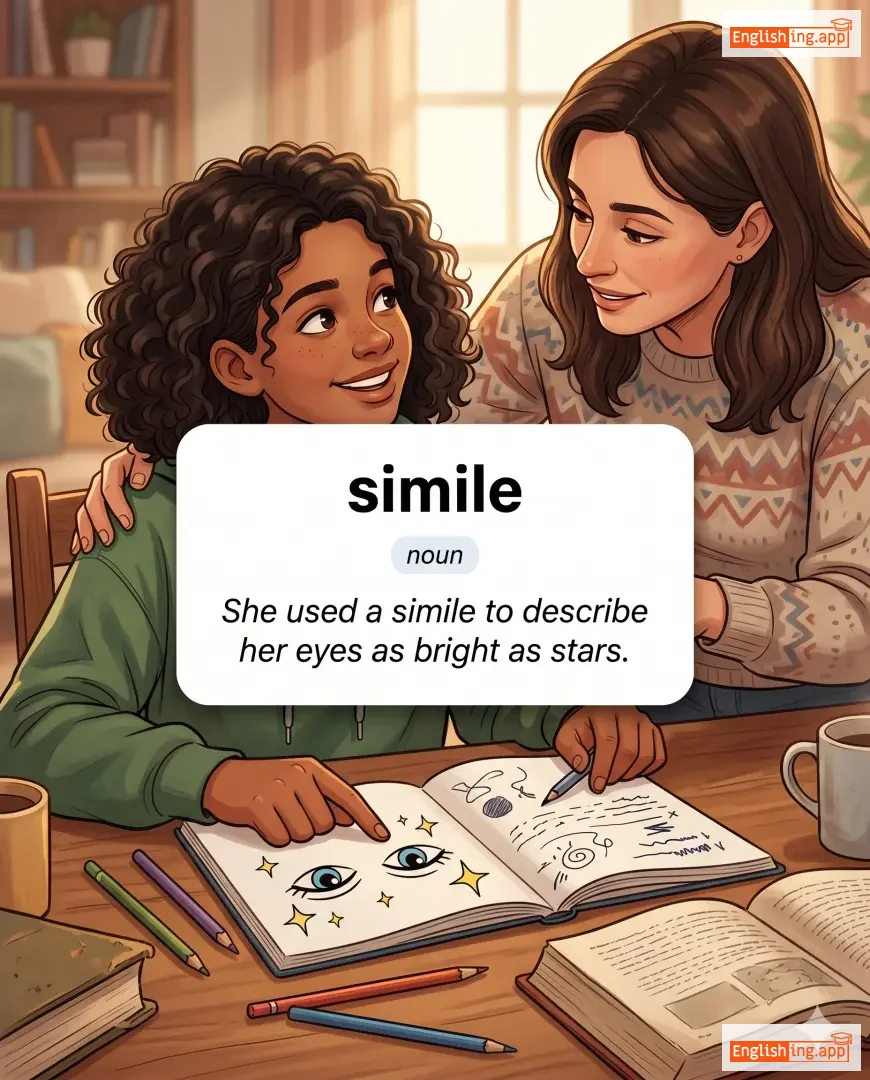
simile definition card — visual illustration of the meaning
noun C1
/ˈsɪməli/
直喩 (chokuyu)

A figure of speech involving the comparison of one thing with another using 'like' or 'as'.

"She used a simile to describe her eyes as bright as stars."

"彼女は自分の目を星のように明るいと表現するために直喩を使いました。" (Kanojo wa jibun no me o hoshi no yō ni akarui to hyōgen suru tame ni chokuyu o tsukaimashita.)
adjective C1
/sɪmˈplɪstɪk/
過度に単純化された (kado ni tanjunkan sareta)

treating complex issues as if they were much simpler than they really are

"His explanation was too simplistic and ignored key details."

"彼の説明は過度に単純化されており、重要な詳細を無視していました。" (Kare no setsumei wa kado ni tanjunkan sarete ori, jūyōna shōsai o mushi shite imashita.)
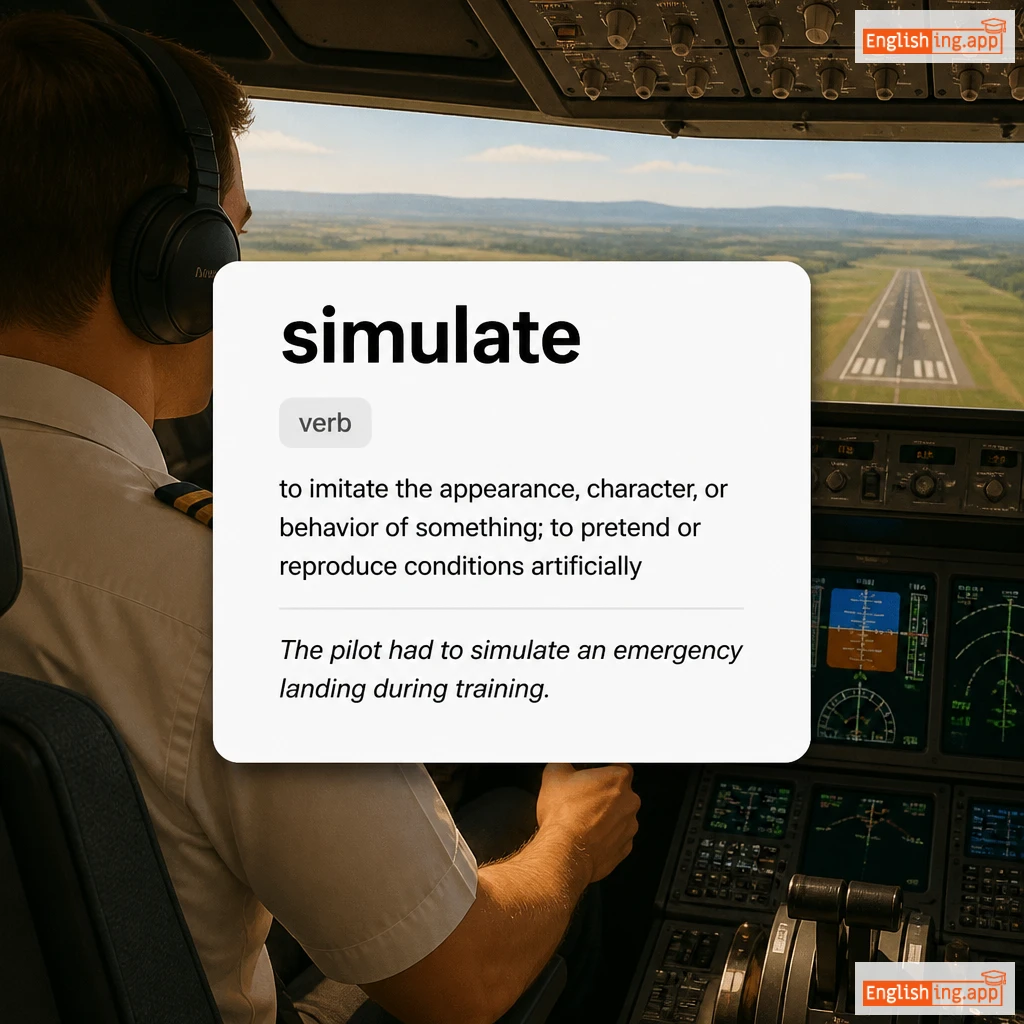
simulate definition card — visual illustration of the meaning
verb C1
/ˈsɪmjʊˌleɪt/
シミュレート (shimyurēto)

to imitate the appearance, character, or behavior of something; to pretend or reproduce conditions artificially

"The pilot had to simulate an emergency landing during training."

"パイロットは訓練中に緊急着陸をシミュレートしなければならなかった。" (Pairotto wa kunrenchū ni kinkyū chakuriku o shimyurēto shinakereba naranakatta.)
simulated definition card — visual illustration of the meaning
adjective C1
/ˈsɪm.jʊ.leɪ.tɪd/
シミュレートされた (shimyureetoresareta)

Artificially created to look real but not actually real.

"The pilot trained in a simulated flight environment."

"パイロットはシミュレートされた飛行環境で訓練しました。" (Pairotto wa shimyureetoresareta hikō kankyō de kunren shimashita.)
verb C1
/sɪndʒ/
軽く焼く (karuku yaku)

To burn something superficially or lightly, especially at the edges.

"The fire singed his eyebrows."

"火が彼の眉毛を焼きました。" (Hi ga kare no mayuge o yakimashita.)
adjective C1
/ˈsɪnləs/
無罪; 無邪気; 純粋 (muzai; mujakki; junsui)

free from sin; pure and innocent; without moral fault

"The innocent child appeared sinless in her pure white dress."

"無邪気な子供は純白のドレスで罪のないように見えた。" (Mujakki na kodomo wa junpaku no doresu de tsumi no nai yō ni mieta.)
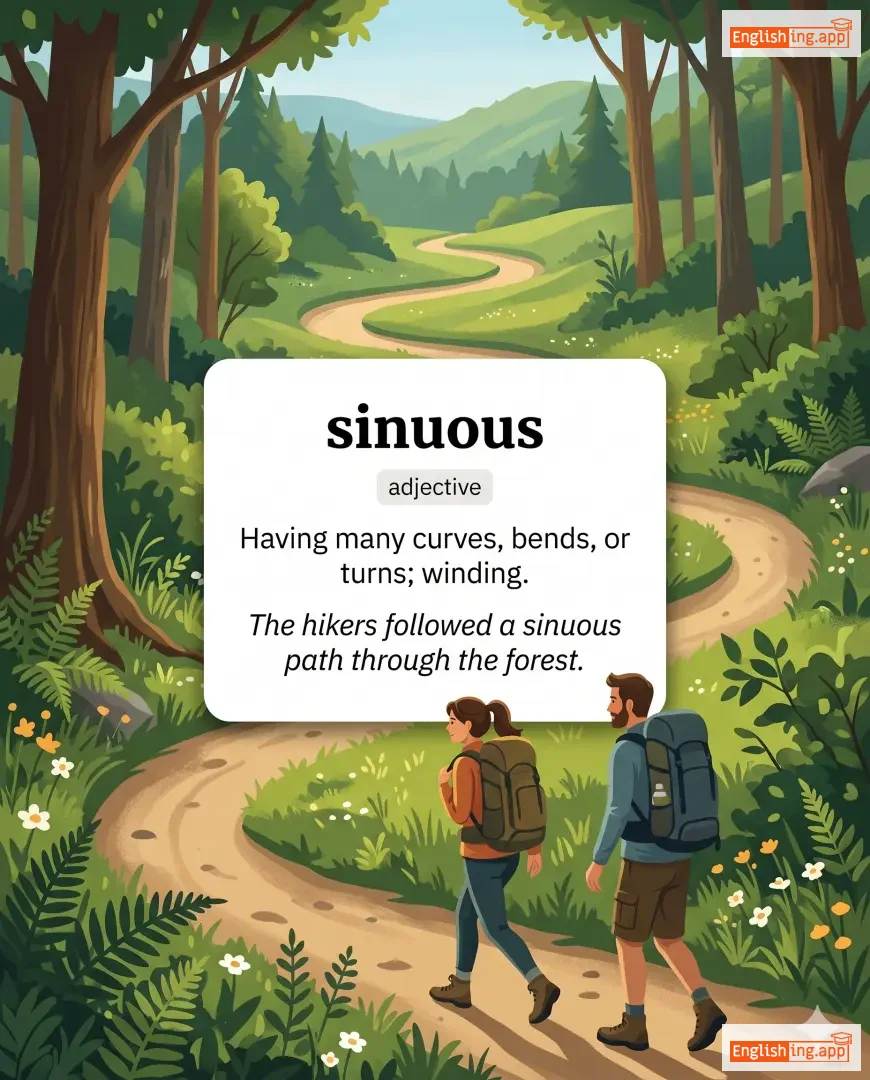
sinuous definition card — visual illustration of the meaning
adjective C1
/ˈsɪnjuəs/
曲がりくねった (magarikunetta)

Having many curves, bends, or turns; winding.

"The hikers followed a sinuous path through the forest."

"ハイカーたちは森を通る曲がりくねった道を進んだ。" (Haikaa-tachi wa mori wo tooru magarikunetta michi wo sunda.)