Vocabularies

English Vocabulary Dictionary | Word Meanings, Definitions & Examples

noun C1
/səˈbætɪkəl/
学習や旅行のための休暇 (gakushuu ya ryokou no tame no kyuuka)

A period of paid leave granted to a teacher or worker for study or travel, traditionally every seventh year.

"She took a sabbatical to research her new book."

"彼女は新しい本を研究するためにサバティカルを取った。" (Kanojo wa atarashī hon o kenkyū suru tame ni sabatikaru o totta.)
noun C1
/ˌsæbəˈtɜːr/
破壊工作員 (hakai kōsakuin)

A person who engages in sabotage.

"The saboteur was arrested before he could plant the bomb."

"破壊工作員は爆弾を設置する前に逮捕されました。" (Hakai kōsakuin wa bakudan o secchi suru mae ni taiho saremashita.)
adjective C1
/ˌsækrɪˈfɪʃəl/
犠牲的な (giseiteki na)

Relating to or involving sacrifice.

"The lamb was used as a sacrificial offering in the ritual."

"その羊は儀式で犠牲的な捧げ物として使われました。" (Sono hitsuji wa gishiki de giseiteki na sasagemono toshite tsukawaremashita.)
noun C1
/ˈsækrɪlɪdʒ/
冒涜 (bōtoku)

Violation or misuse of what is regarded as sacred.

"Stealing from the temple was considered an act of sacrilege."

"寺院から盗むことは冒涜と見なされていました。" (jiin kara nusumu koto wa bōtoku to minasarete imashita.)
adjective C1
/ˌsækrəˈlɪdʒəs/
冒涜的 (bōtoku teki)

Showing disrespect or irreverence toward something sacred.

"The painting was criticized as being sacrilegious."

"その絵画は冒涜的だと批判されました。" (sono kaiga wa bōtoku teki da to hihan saremashita.)
adjective C1
/ˈsæk.rəˌsæŋkt/
神聖不可侵 (shinsei fukashin)

Regarded as too important or valuable to be interfered with; sacred.

"Freedom of speech is considered sacrosanct in democratic societies."

"言論の自由は民主主義社会では神聖不可侵と見なされています。" (Genron no jiyuu wa minshushugi shakai dewa shinsei fukashin to minasareteimasu.)
adjective C1
/səˈdɪs.tɪk/
サディスティック (sadesutikku)

Deriving pleasure from inflicting pain or suffering on others.

"The villain had a sadistic smile while hurting his enemies."

"悪党は敵に痛みを与えている間、サディスティックな笑顔を浮かべていた。" (Akutō wa teki ni itami o ataete iru aida, sadesutikku na egao o ukabete ita.)
noun C1
/ˈsæf.rən/
サフラン (safuran)

A spice derived from the flower of Crocus sativus, used for flavoring and coloring food.

"She added saffron to the rice for flavor and color."

"彼女は味と色のためにご飯にサフランを加えました。" (Kanojo wa aji to iro no tame ni gohan ni safuran o kuwaemashita.)
noun C1
/ˈsɑːɡə/
長い物語 (nagai monogatari)

A long story of heroic achievement, or a long, complex series of events.

"The company's rise and fall became a corporate saga."

"会社の興隆と衰退は企業のサガとなった。" (Kaisha no kōryū to suitai wa kigyō no saga to natta.)
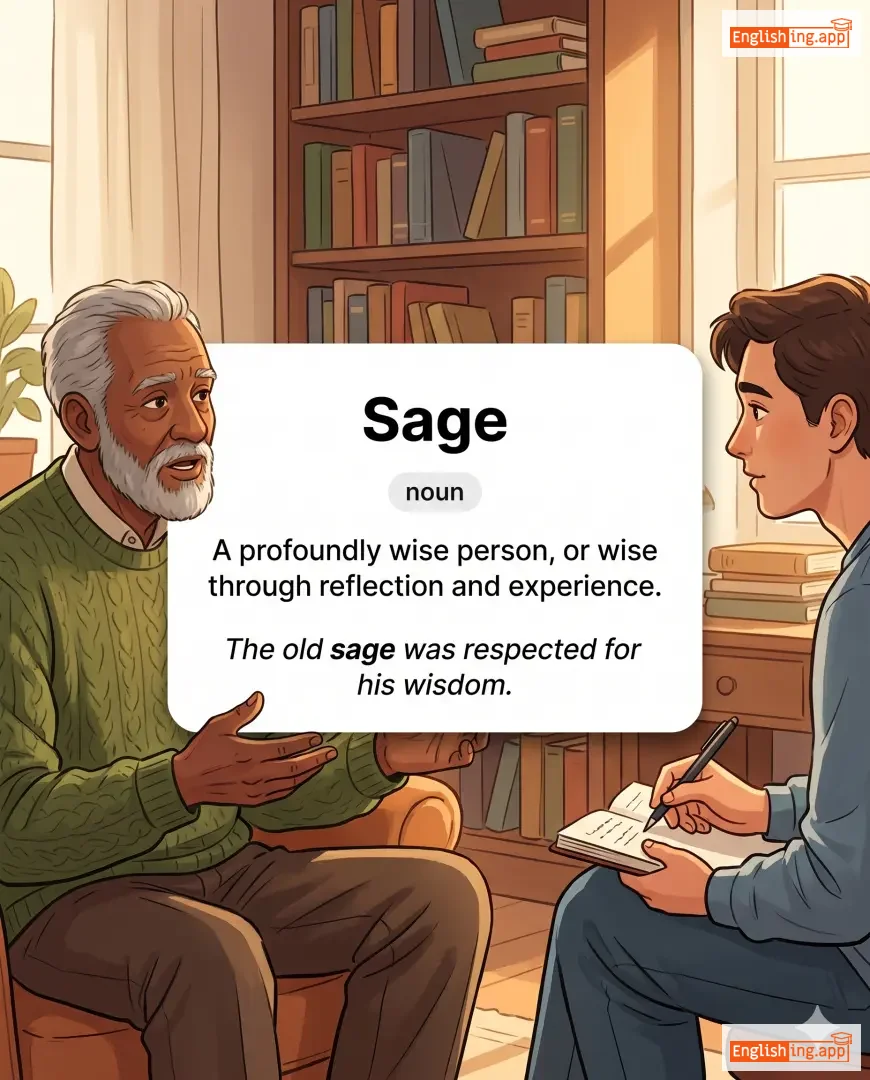
Sage definition card — visual illustration of the meaning
noun C1
/seɪdʒ/
賢者 (kenja)

A profoundly wise person, or wise through reflection and experience.

"The old sage was respected for his wisdom."

"その古い賢者はその知恵で尊敬されていました。" (Sono furui kenja wa sono chie de sonkei sarete imashita.)
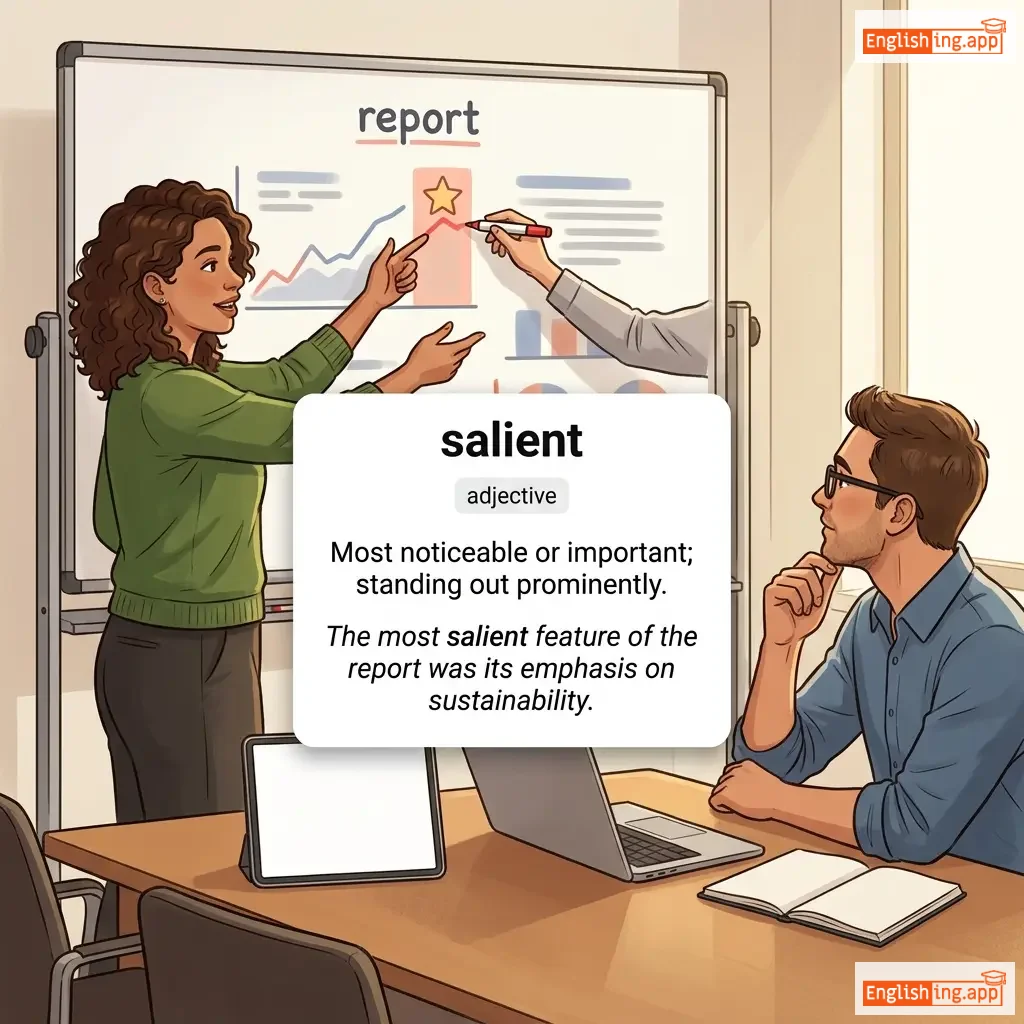
salient definition card — visual illustration of the meaning
adjective C1
/ˈseɪ.li.ənt/
顕著な特徴 (kenchona tokuchou)

Most noticeable or important; standing out prominently.

"The most salient feature of the report was its emphasis on sustainability."

"報告書で最も顕著な特徴は、持続可能性に重点を置いたことでした。" (Houkokusho de mottomo kenchona tokuchou wa, jizoku kanousei ni juuten wo oita koto deshita.)
adjective C1
/ˈseɪ.liːn/
生理食塩水 (seirishien-sui)

Containing or resembling salt; salty.

"Doctors often use saline solution to clean wounds."

"医師は傷をきれいにするために生理食塩水をよく使用します。" (Ishi wa kizu o kirei ni suru tame ni seirishien-sui o yoku shiyou shimasu.)
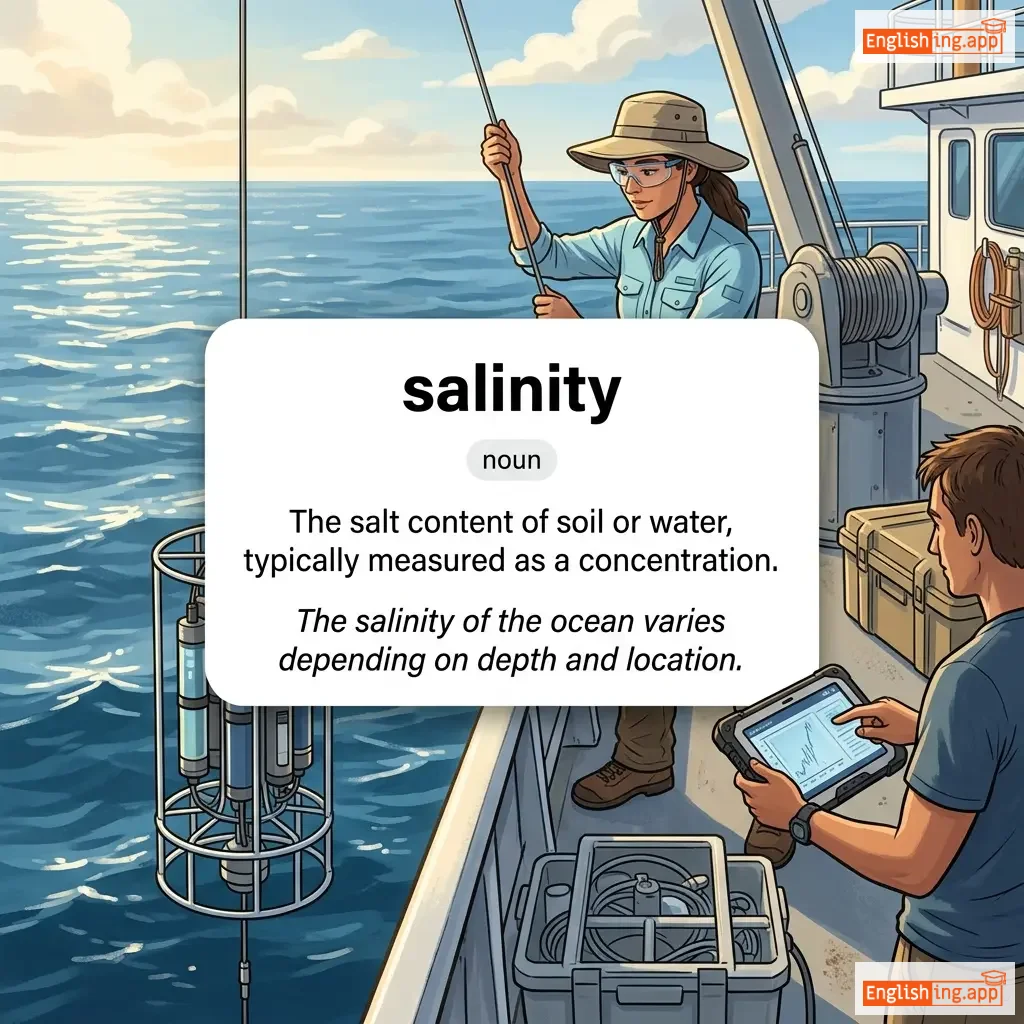
salinity definition card — visual illustration of the meaning
noun C1
/səˈlɪn.ə.t̬i/
塩分, 塩濃度 (enbun, en nōdo)

The salt content of soil or water, typically measured as a concentration.

"The salinity of the ocean varies depending on depth and location."

"海洋の塩分は深さと場所によって異なります。" (Kaiyō no enbun wa fukasa to basho ni yotte kotonarimasu.)
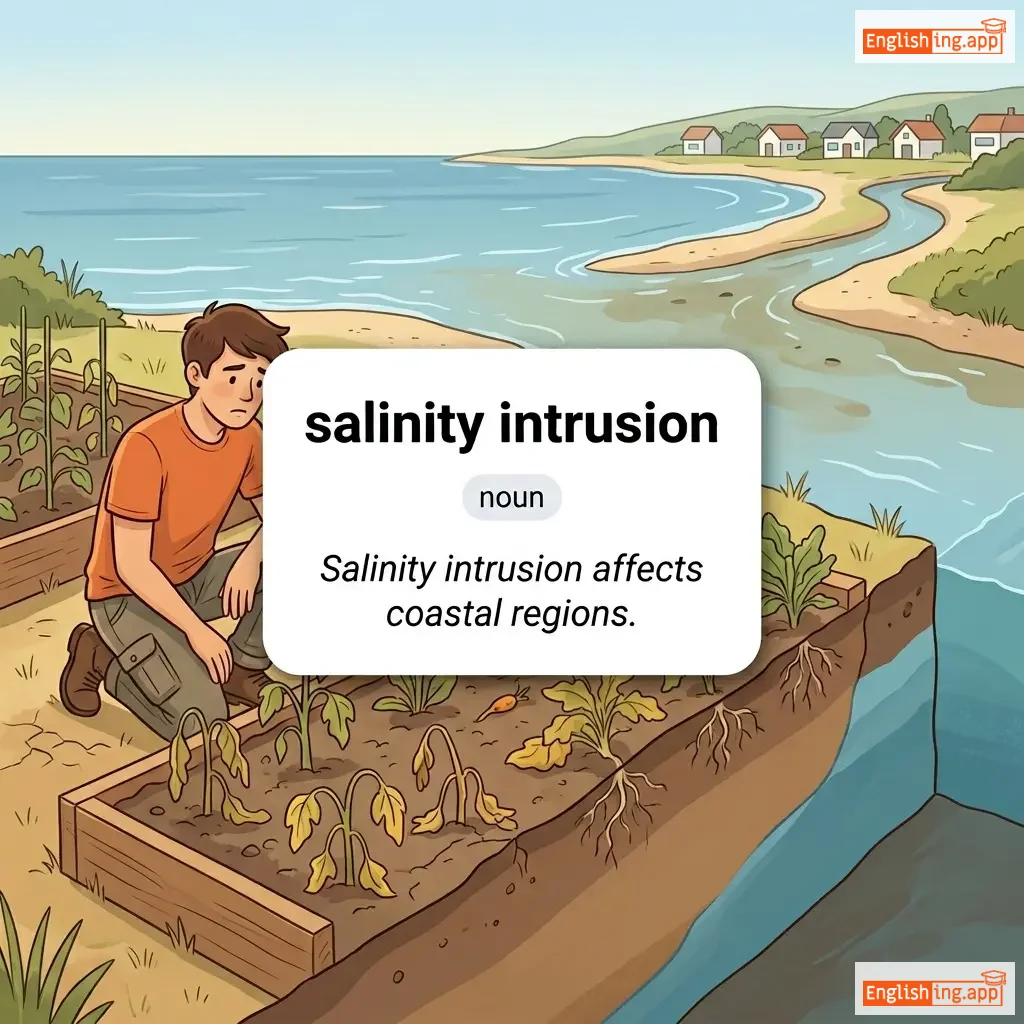
salinity intrusion definition card — visual illustration of the meaning
noun C1
səˈlɪnɪti ɪnˈtruːʒən
塩分侵入 (enbun shin'nyū)

The movement of salt water into freshwater areas, typically affecting coastal regions.

"Salinity intrusion affects coastal regions."

"塩分侵入は沿岸地域に影響を与える。" (Enbun shin'nyū wa engan chiiki ni eikyō o ataeru.)
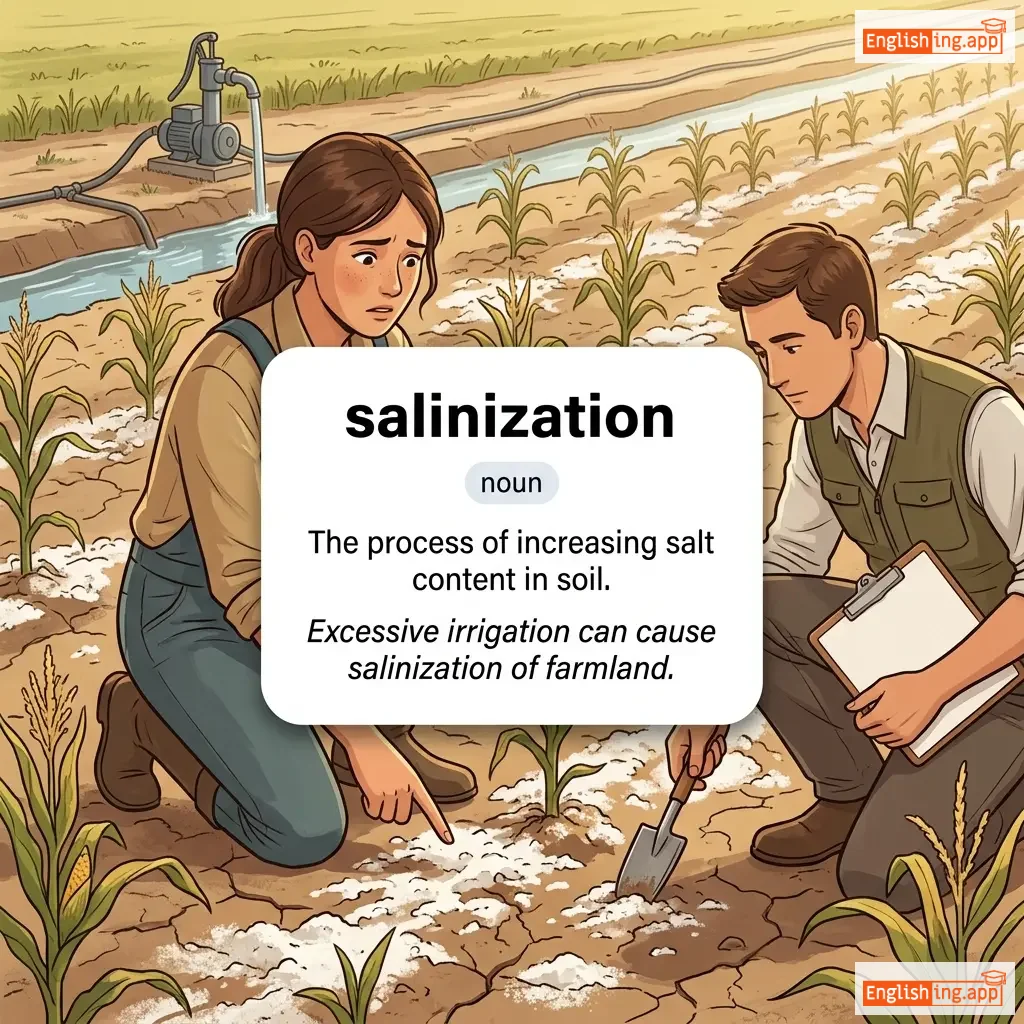
salinization definition card — visual illustration of the meaning
noun C1
/ˌsæl.ɪ.naɪˈzeɪ.ʃən/
塩分増加 (enbun zouka)

The process of increasing salt content in soil.

"Excessive irrigation can cause salinization of farmland."

"過剰な灌漑は農地の塩分増加を引き起こす可能性があります。" (Kajou na kangai wa nouchi no enbun zouka wo hikiokosu kanousei ga arimasu.)
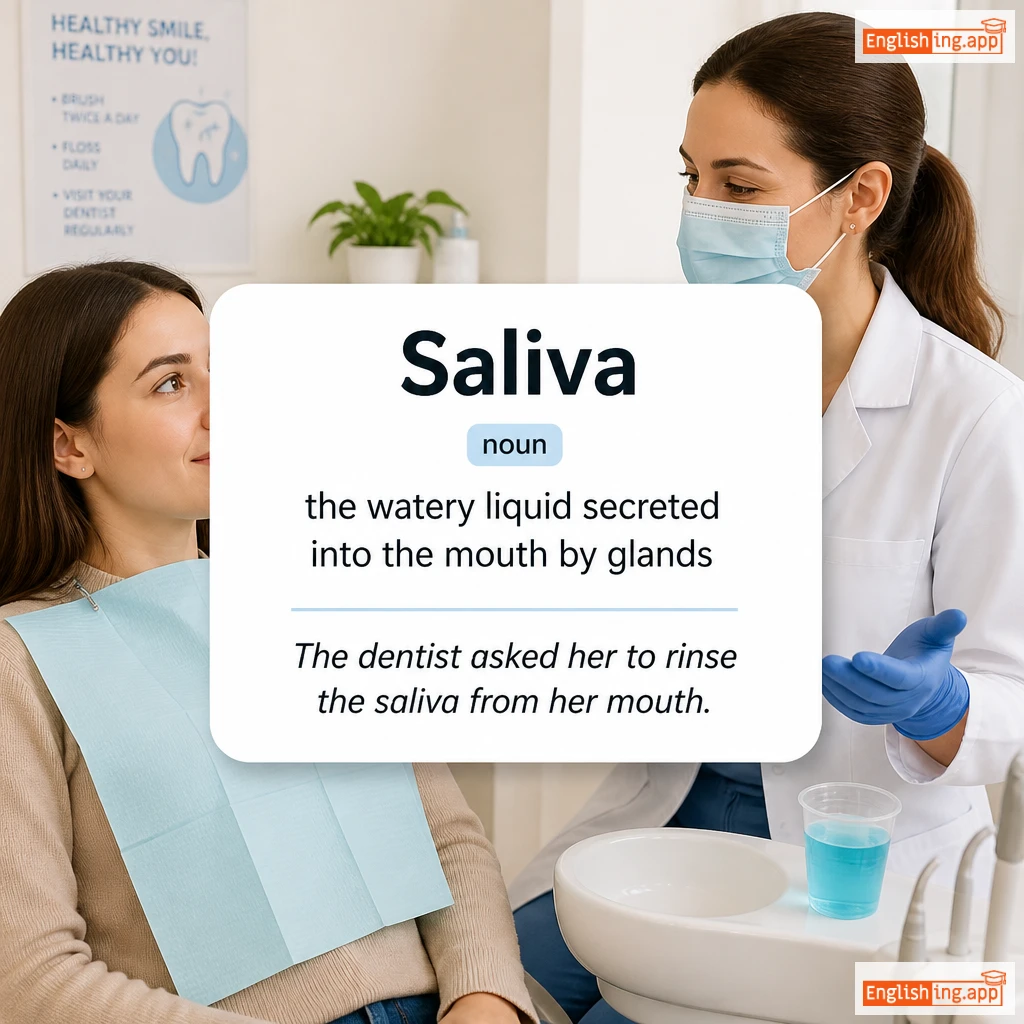
Saliva definition card — visual illustration of the meaning
noun C1
/səˈlaɪ.və/
唾液 (sariva)

the watery liquid secreted into the mouth by glands

"The dentist asked her to rinse the saliva from her mouth."

"歯科医は彼女に口の中の唾液をすすぐように言った。" (shikai wa kanojo ni kuchi no naka no daeki o susugu you ni itta)
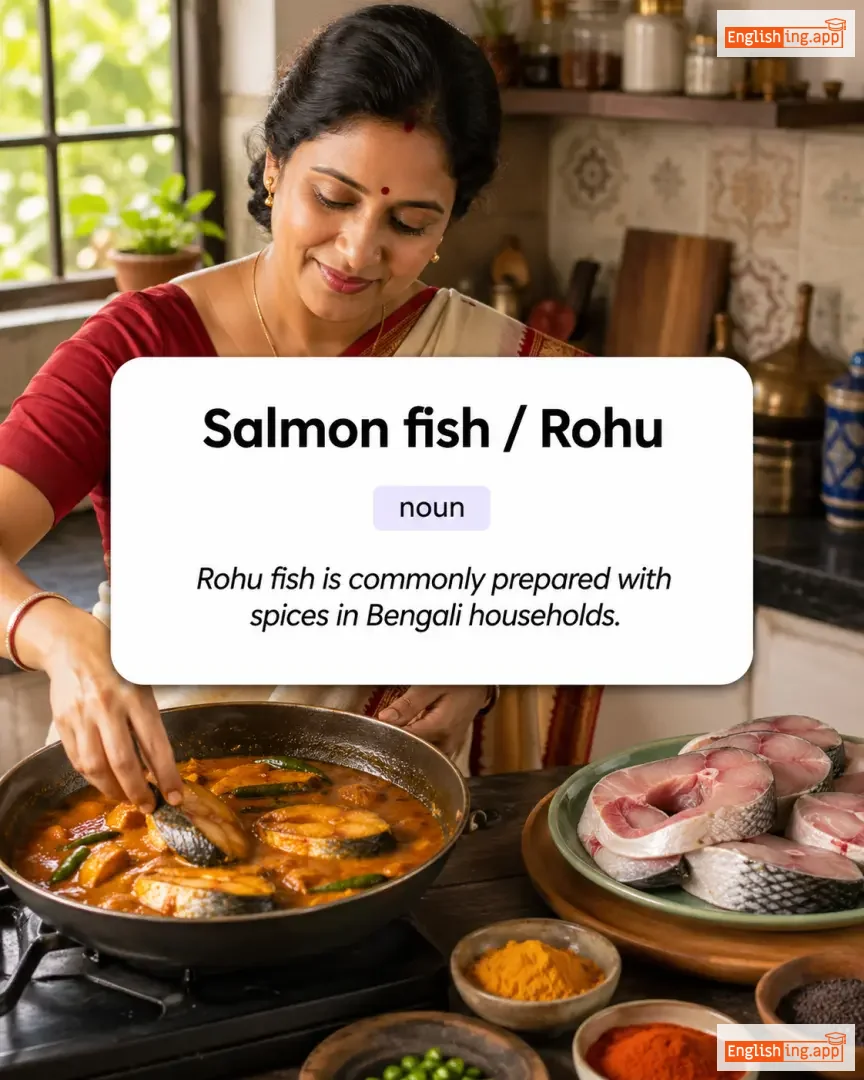
Salmon fish / Rohu definition card — visual illustration of the meaning
noun C1
/ˈsæl.mən fɪʃ / ˈroʊ.huː/
ロフ魚 (Rofu uo)

a freshwater fish popular in South Asian cuisine; also refers to salmon which is a different species

"Rohu fish is commonly prepared with spices in Bengali households."

"ロフ魚はベンガルの家庭でよく香辛料と一緒に調理されます。" (Rofu uo wa Bengaru no katei de yoku koshinryo to issho ni chori saremasu.)
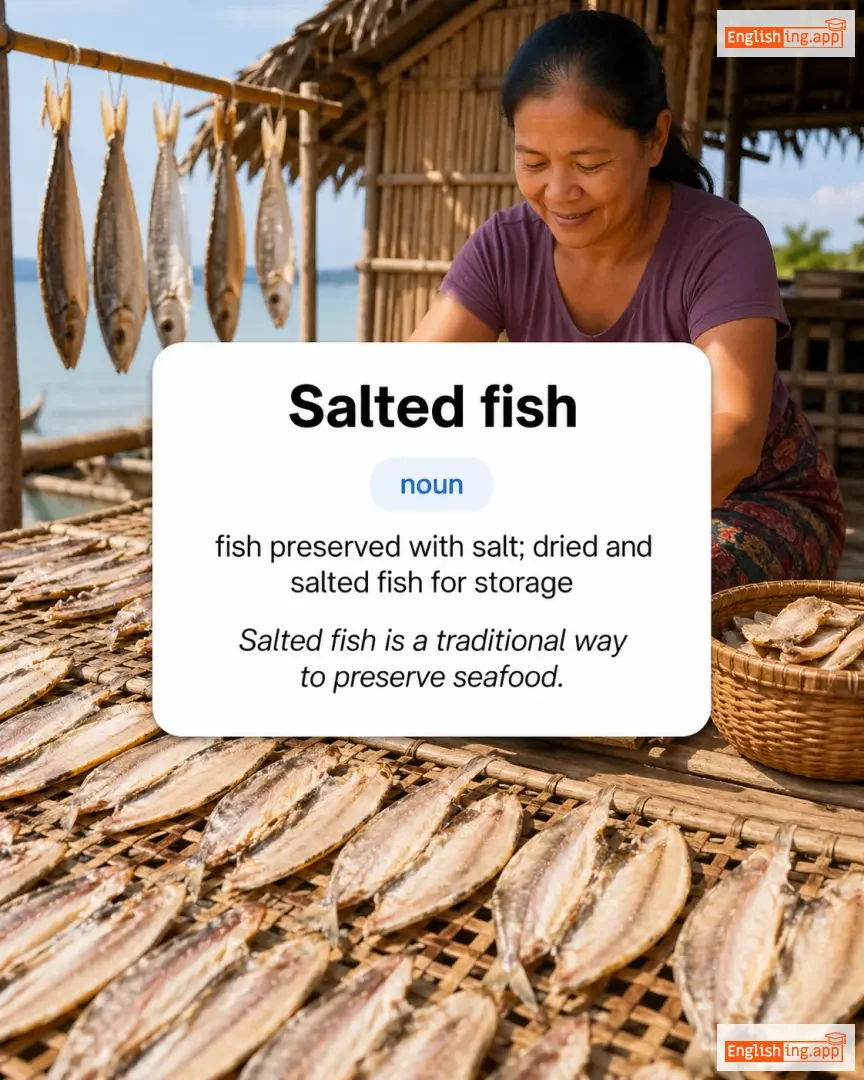
Salted fish definition card — visual illustration of the meaning
noun C1
/ˈsɔːl.tɪd fɪʃ/
塩漬けの魚 (shiozuke no sakana)

fish preserved with salt; dried and salted fish for storage

"Salted fish is a traditional way to preserve seafood."

"塩漬けの魚はシーフードを保存する伝統的な方法です。" (shiozuke no sakana wa shiifudo o hozon suru dentoteki na hoho desu)
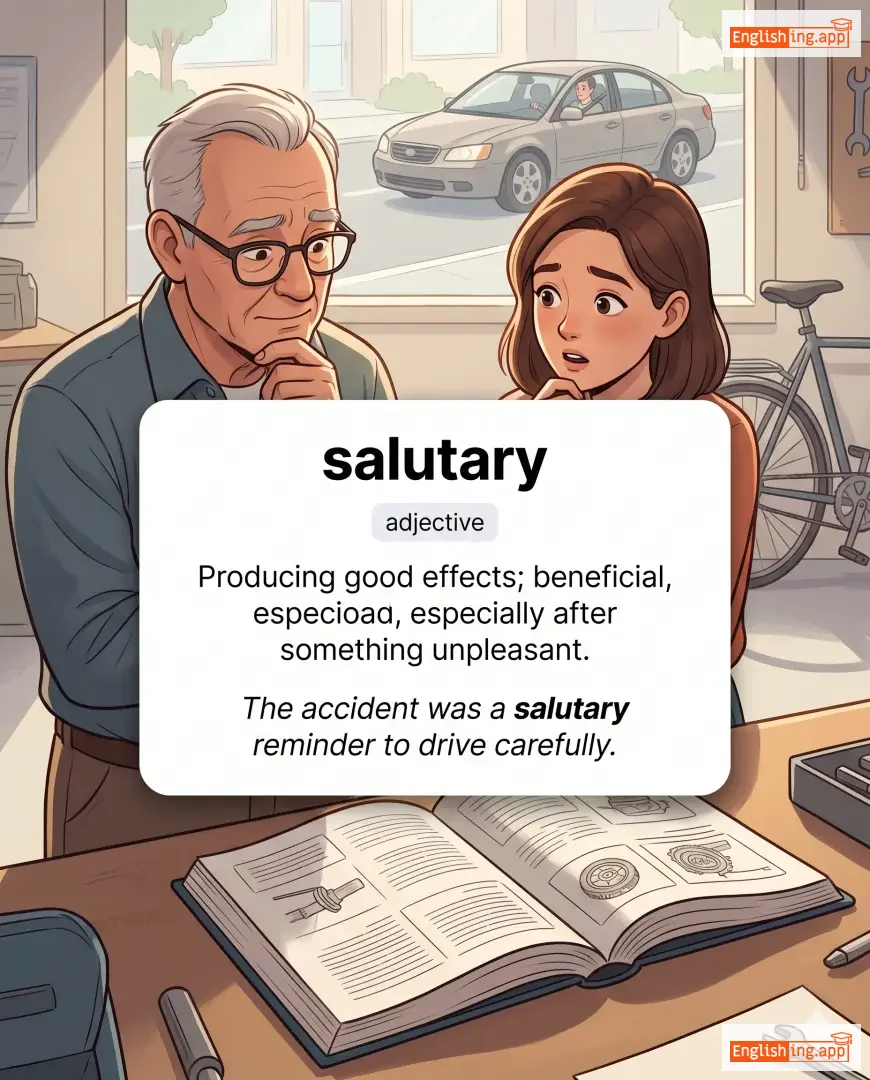
salutary definition card — visual illustration of the meaning
adjective C1
/ˈsæljʊˌtɛri/
有益な (yūeki na)

Producing good effects; beneficial, especially after something unpleasant.

"The accident was a salutary reminder to drive carefully."

"その事故は、慎重に運転することを思い出させる有益な教訓でした。" (Sono jiko wa, shinchou ni unten suru koto o omoidasa seru yūeki na kyōkun deshita.)
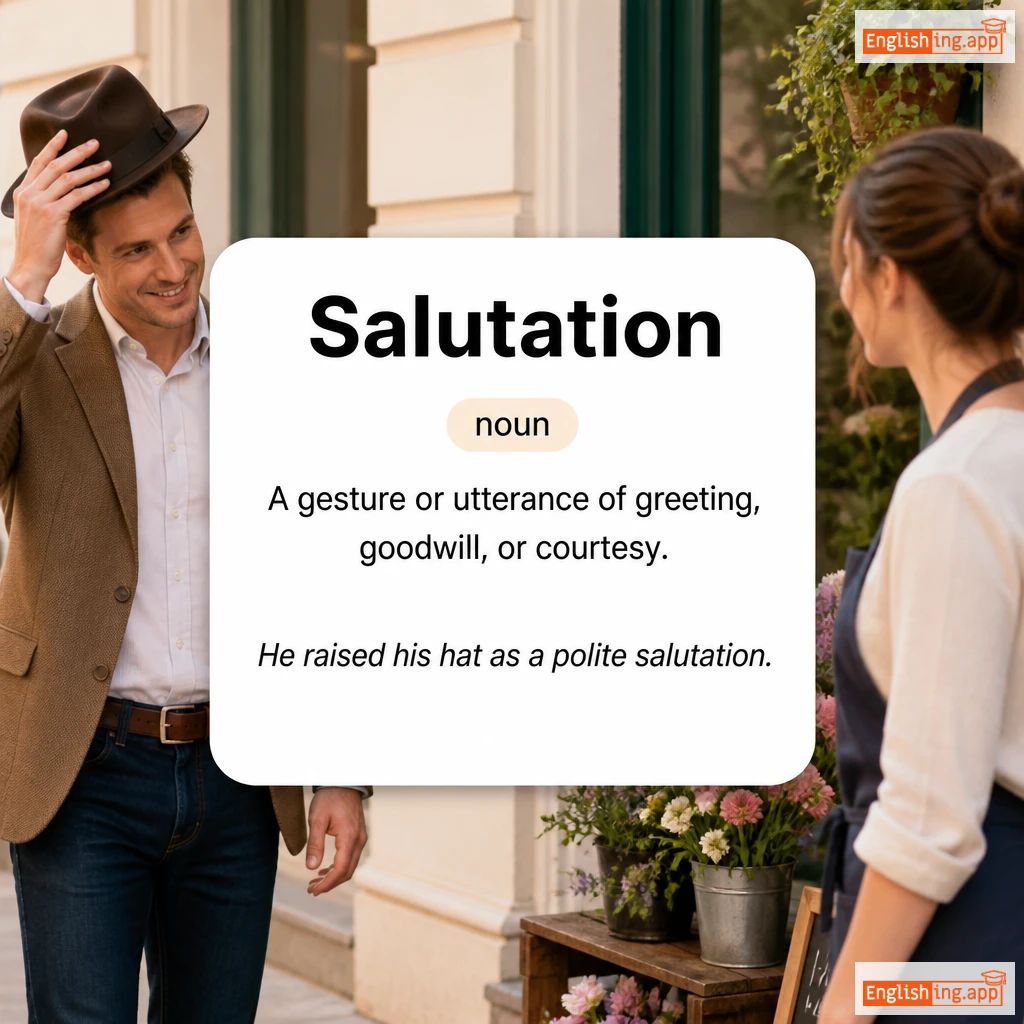
Salutation definition card — visual illustration of the meaning
noun C1
/ˌsæljʊˈteɪʃən/
挨拶 (aisatsu)

A gesture or utterance of greeting, goodwill, or courtesy.

"He raised his hat as a polite salutation."

"彼は礼儀正しい挨拶として帽子を上げた。" (Kare wa reigi tadashī aisatsu toshite bōshi o ageta.)
verb C1
/ˈsælvɪdʒ/
救助 (kyūjo)

To save something from loss, damage, or destruction.

"They managed to salvage some goods from the fire."

"彼らは火事からいくつかの物を救出することに成功した。" (Karera wa kaji kara ikutsuka no mono o kyūshutsu suru koto ni seikō shita.)
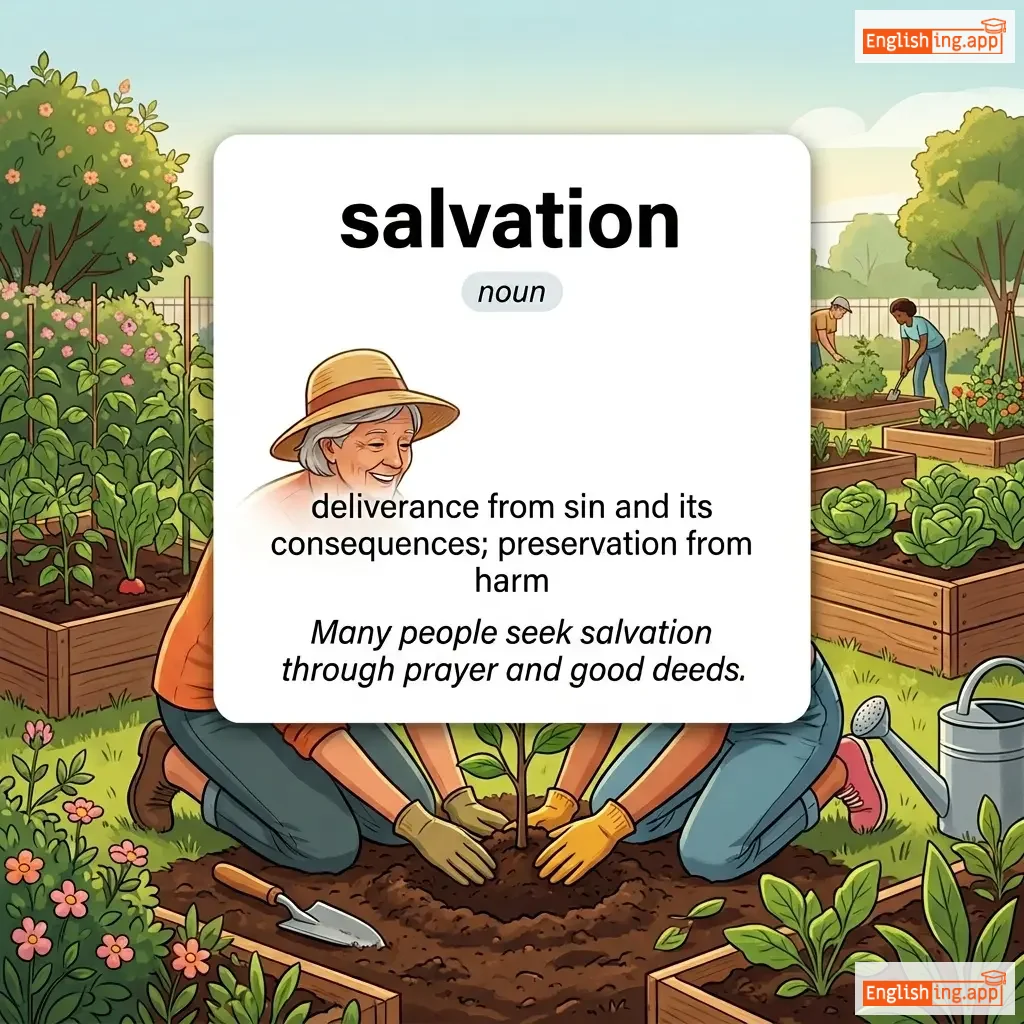
salvation definition card — visual illustration of the meaning
noun C1
/sælˈveɪ.ʃən/
救済 (kyūsai)

deliverance from sin and its consequences; preservation from harm

"Many people seek salvation through prayer and good deeds."

"多くの人々は祈りと善行を通じて救済を求めます。" (ōku no hitobito wa inori to zen kō o tsūjite kyūsai o motomemasu.)
adjective C1
/ˌsæŋktɪˈmoʊniəs/
偽善的な敬虔 (gizen-teki na keiken)

Making a show of being morally superior to others; hypocritically pious.

"He gave a sanctimonious speech about honesty while he himself was corrupt."

"彼は自分が腐敗していたにもかかわらず、正直について偽善的なスピーチをしました。" (Kare wa jibun ga fuhai shite ita nimo kakawarazu, shoujiki ni tsuite gizen-teki na supīchi o shimashita.)
Sanction definition card — visual illustration of the meaning
⚖️

Sanction

noun/verb C1
/ˈsæŋkʃən/

An official permission or approval; also a penalty imposed to enforce rules.

"The government imposed sanctions on the company for violating trade laws."

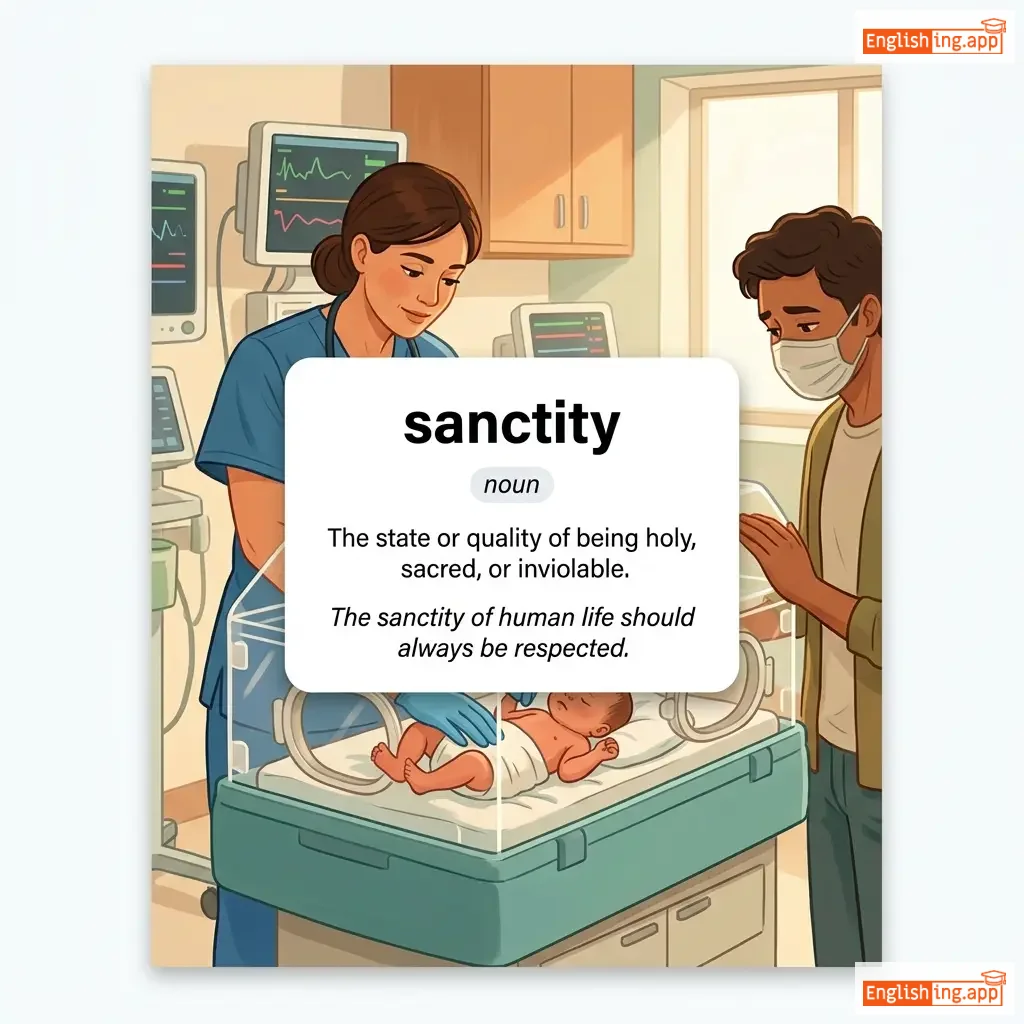
sanctity definition card — visual illustration of the meaning
noun C1
/ˈsæŋk.tə.ti/
神聖さ (shinseisa)

The state or quality of being holy, sacred, or inviolable.

"The sanctity of human life should always be respected."

"人間の命の神聖さは常に尊重されるべきです。" (Ningen no inochi no shinseisa wa tsuneni sonchou sareru beki desu.)
adjective C1
/ˈsæŋɡwɪn/
楽観的 (rakkanteki)

Optimistic or positive, especially in a difficult situation.

"Despite the challenges, she remained sanguine about the future."

"困難にもかかわらず、彼女は未来に対して楽観的な姿勢を保ち続けた。" (Konnan ni mo kakawarazu, kanojo wa mirai ni taishite rakkanteki na shisei o tamotsu tsudzuketa.)
sanitization definition card — visual illustration of the meaning
noun C1
ˌsæn.ɪ.taɪˈzeɪ.ʃən
衛生管理 (eisei kanri)

The process of cleaning and disinfecting to eliminate germs and bacteria.

"Regular sanitization keeps appliances germ-free."

"定期的な衛生管理により、機器が無菌状態に保たれます。" (Teikiteki na eisei kanri ni yori, kiki ga mukin joutai ni tamarimasu.)
verb, noun C1
/sæp/
樹液 / 弱める (jueki / yowameru)

As a noun: the vital fluid in plants; As a verb: to gradually weaken or drain strength.

"The long journey began to sap his energy."

"長い旅が彼のエネルギーを弱め始めた。" (Nagai tabi ga kare no enerugi- o yowame hajimeta.)
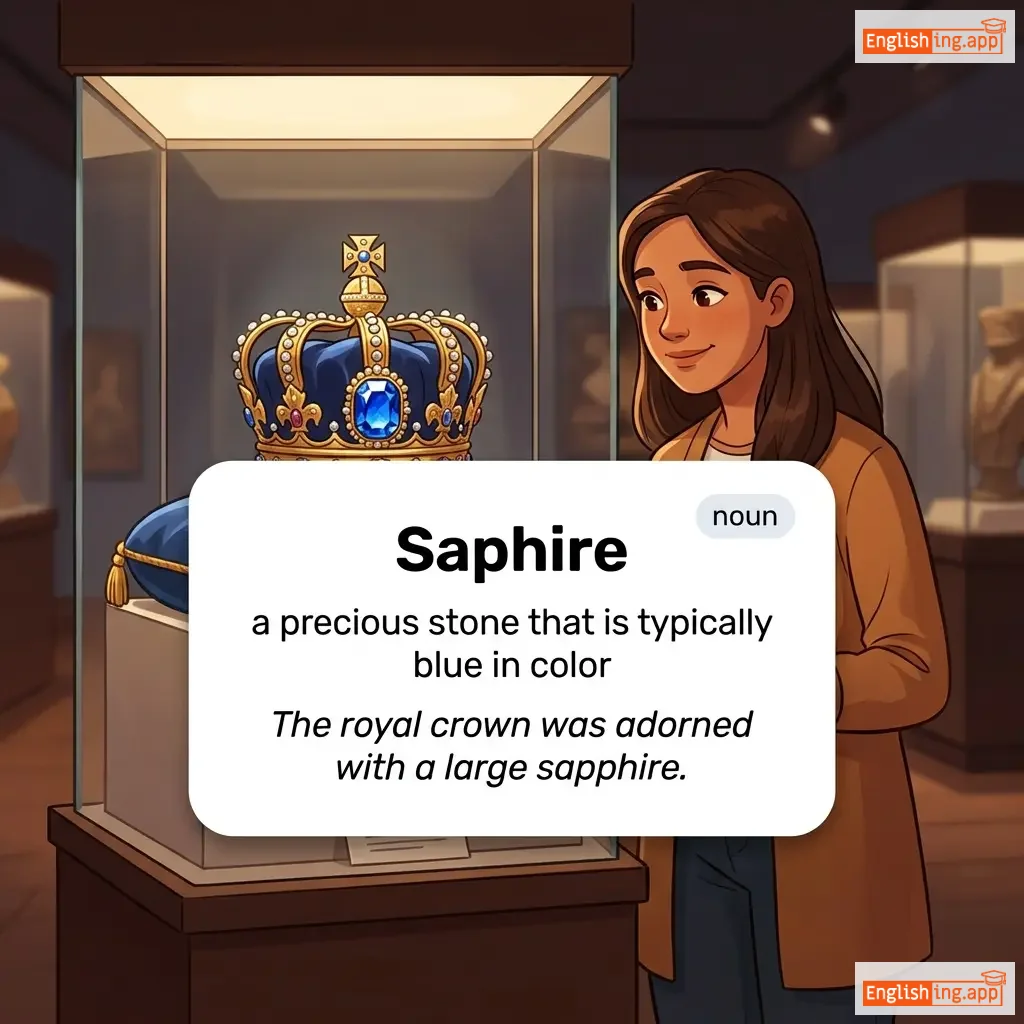
Saphire definition card — visual illustration of the meaning
noun C1
/ˈsæf.aɪər/
サファイア (safaia)

a precious stone that is typically blue in color

"The royal crown was adorned with a large sapphire."

"ロイヤルクラウンは大きなサファイアで飾られていました。" (Roiyaru kuraun wa ookina safaia de kazararete imashita.)
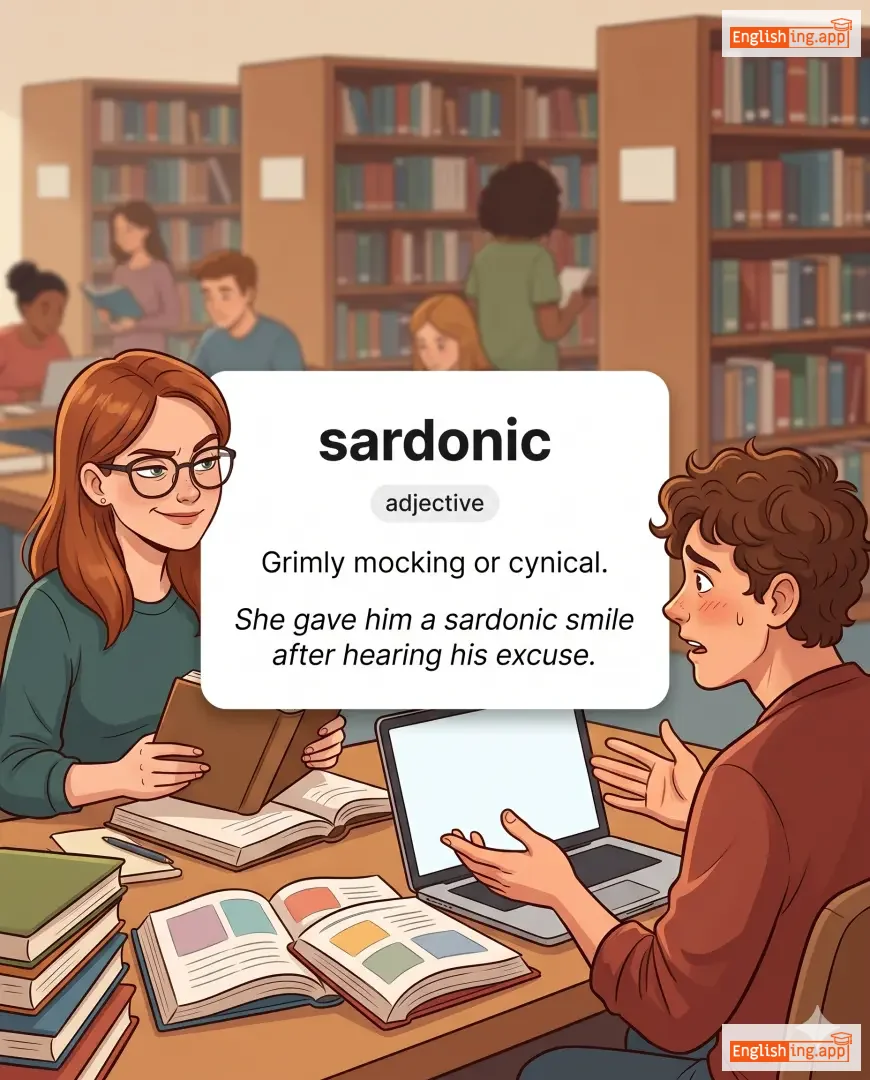
sardonic definition card — visual illustration of the meaning
adjective C1
/sɑːrˈdɒnɪk/
幸福 (koufuku)

Grimly mocking or cynical.

"She gave him a sardonic smile after hearing his excuse."

"彼女は賞を受け取ったとき、自分の幸福を隠すことができませんでした。" (Kanojo wa shō o uketotta toki, jibun no kōfuku o kakusu koto ga dekimasen deshita.)
noun C1
/ˈsɑːri/
サリー (sari)

a garment consisting of a length of cotton or silk elaborately draped around the body, traditionally worn by women from South Asia

"She looked elegant in her red silk saree at the festival."

"彼女は祭りで赤い絹のサリーを着てとてもエレガントに見えました。" (Kanojo wa matsuri de akai kinu no sari o kite totemo ereganto ni miemashita.)
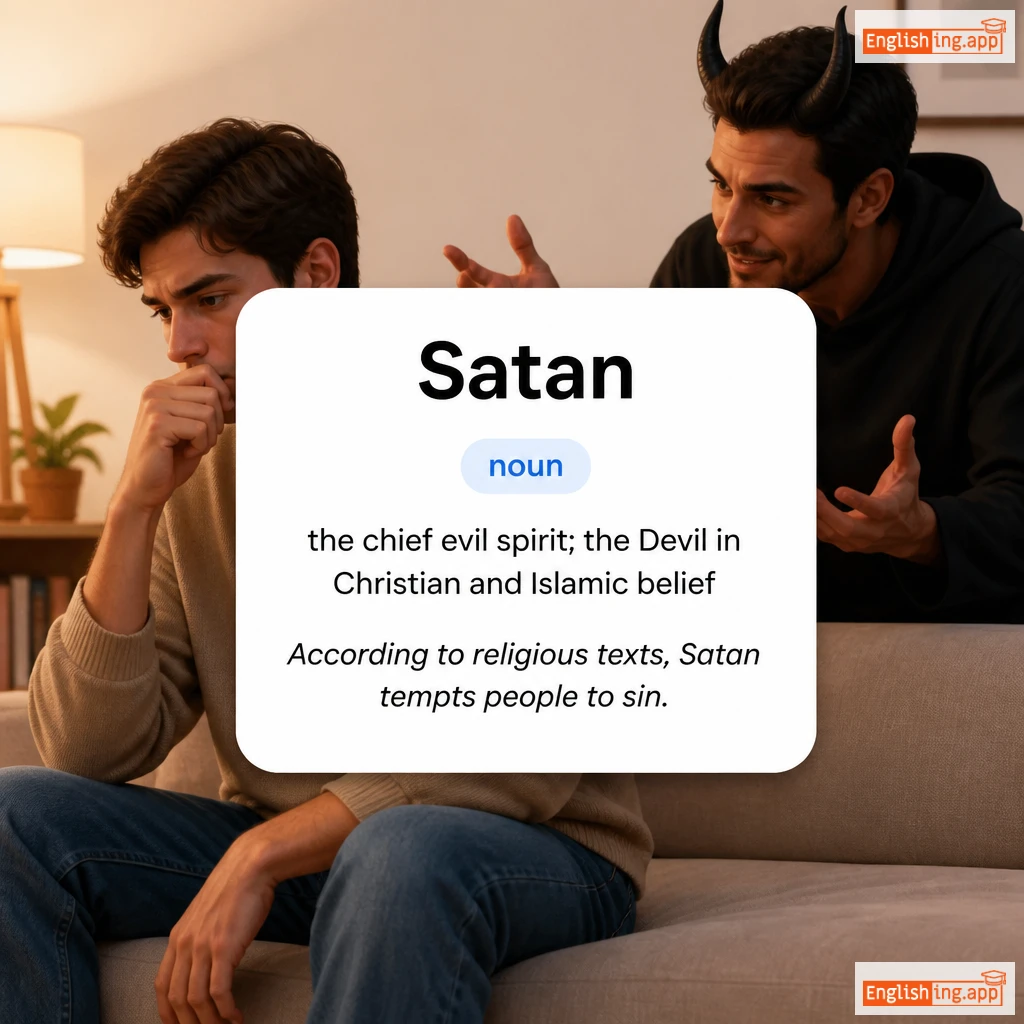
Satan definition card — visual illustration of the meaning
noun C1
/ˈseɪ.tən/
サタン (Satan)

the chief evil spirit; the Devil in Christian and Islamic belief

"According to religious texts, Satan tempts people to sin."

"宗教的な文献によると、サタンは人々を罪に導く。" (Shūkyō-teki na bunken ni yoru to, Satan wa hitobito o tsumi ni michibiku.)
adjective C1
/səˈtɪrɪk/
皮肉な (hinikuna)

Relating to or using satire.

"The novel takes a satiric view of urban life."

"その小説は都市生活を皮肉な視点で描いています。" (Sono shōsetsu wa toshi seikatsu o hinikuna shiten de egaiteimasu.)
adjective C1
/səˈtɪrɪkəl/
風刺的 (fūshiteki)

containing or using satire to criticize or mock

"The satirical cartoon mocked the government's new policy."

"その風刺的な漫画は政府の新しい政策を嘲笑しました。" (Sono fūshiteki na manga wa seifu no atarashī seisaku o chōshō shimashita.)
verb C1
/ˈsætəˌraɪz/
風刺する (fūshi suru)

to mock or criticize something using satire

"The play satirizes the greed of modern corporations."

"その劇は現代の企業の貪欲さを風刺しています。" (Sono geki wa gendai no kigyō no dōyoku-sa o fūshi shiteimasu.)
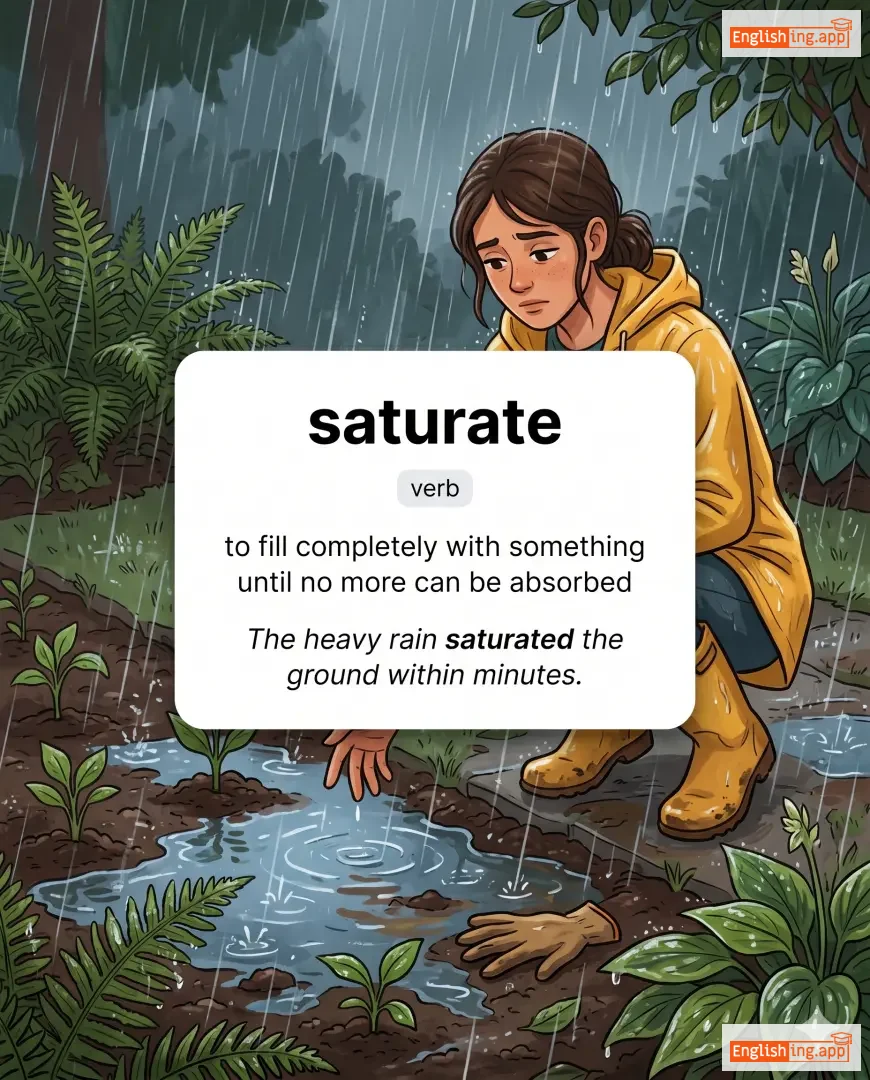
saturate definition card — visual illustration of the meaning
verb C1
/ˈsætʃəˌreɪt/

to fill completely with something until no more can be absorbed

"The heavy rain saturated the ground within minutes."

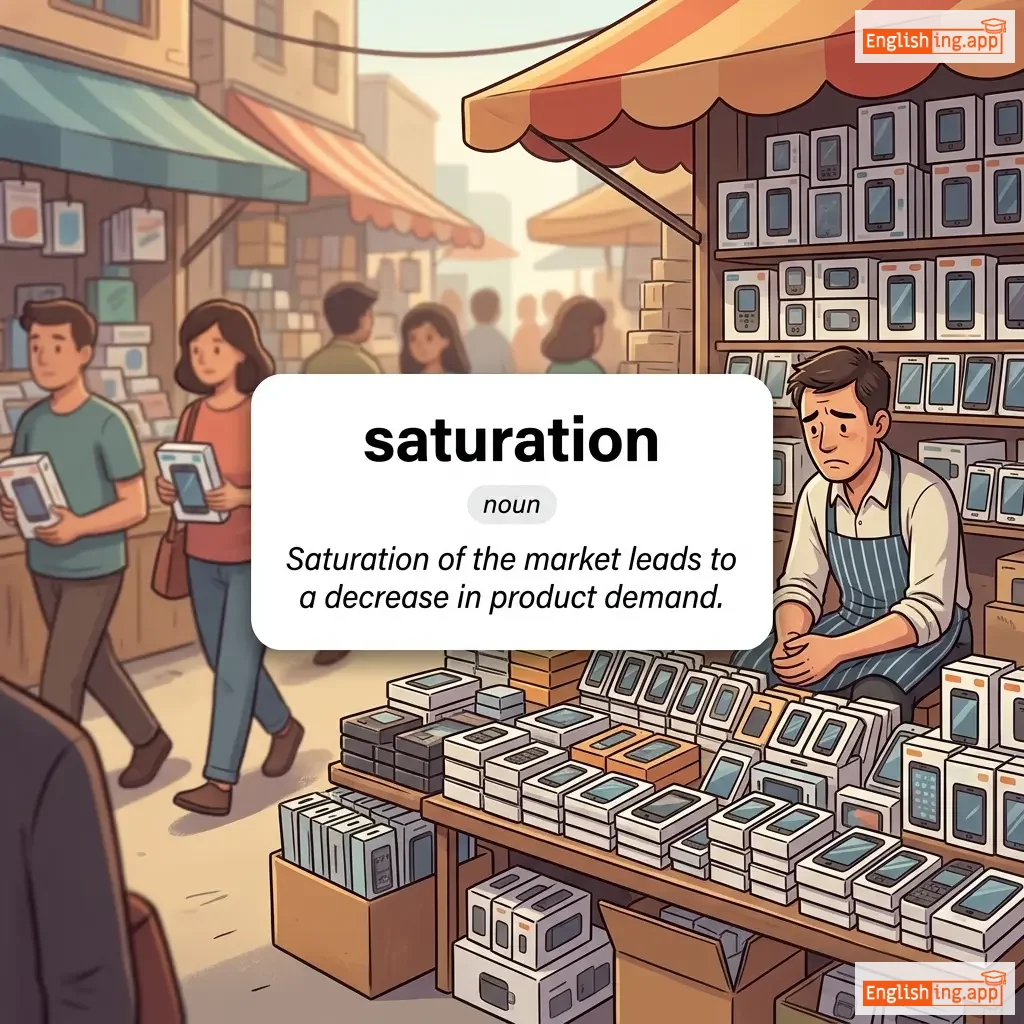
saturation definition card — visual illustration of the meaning
noun C1
/ˌsætʃəˈreɪʃən/
飽和 (hōwa)

The state or process that occurs when no more of something can be absorbed, combined with, or added.

"Saturation of the market leads to a decrease in product demand."

"市場の飽和は製品の需要の減少を引き起こします。" (Shijō no hōwa wa seihin no juyō no genshō o hikiokoshimasu.)
adjective C1
/ˈsɔːsi/
生意気な (namaiki na)

Boldly rude, cheeky, or playfully disrespectful.

"The child gave a saucy reply to his teacher."

"その子は先生に生意気な返事をした。" (Sono ko wa sensei ni namaiki na henji o shita.)
verb C1
/ˈsɔːntər/

to walk in a slow, relaxed manner without hurry or effort

"We sauntered along the riverside, stopping now and then to watch the boats."

noun C1
/səˈvænə/
サバンナ(散在する木々がある草原) (saban'na (sanzai suru kigi ga aru sōgen))

a grassy plain with scattered trees, typical of tropical and subtropical regions

"Giraffes browsed on acacia trees across the wide savanna."

"キリンは広いサバンナでアカシアの木の葉を食べていました。" (Kirin wa hiroi sabanna de akashia no ki no ha o tabete imashita.)
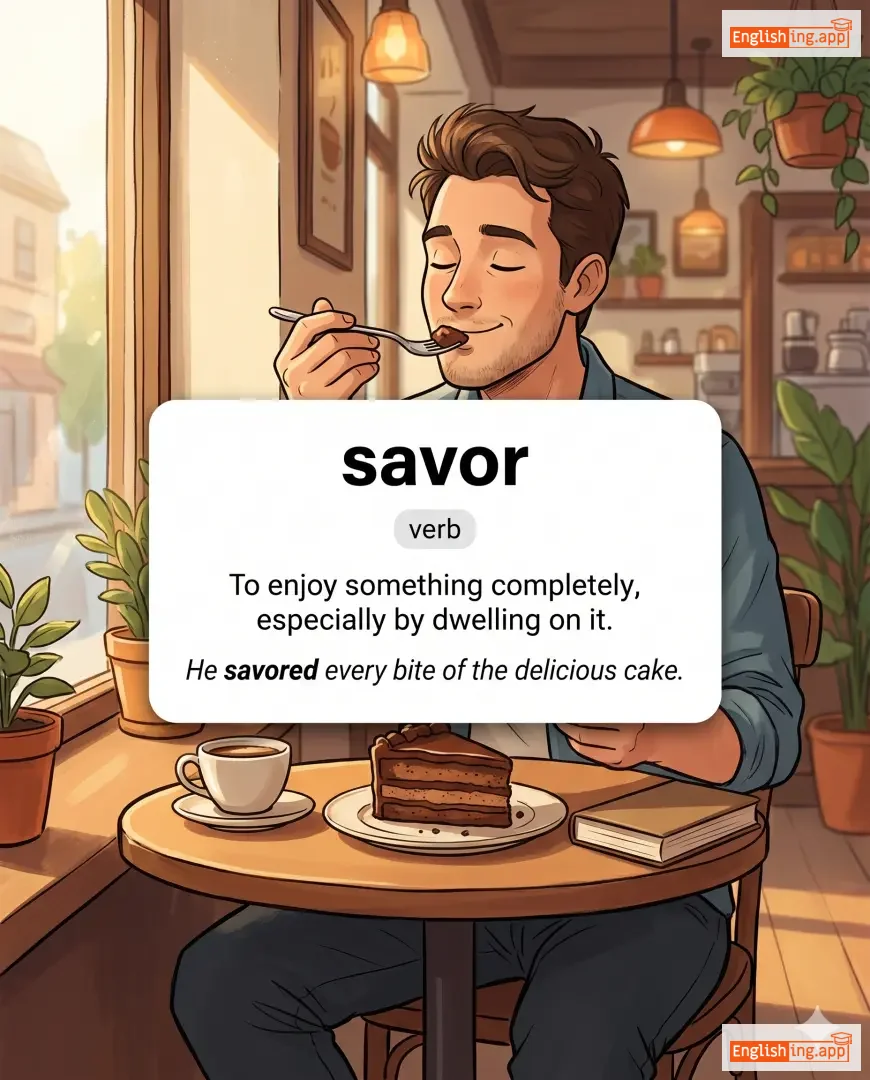
savor definition card — visual illustration of the meaning
verb C1
/ˈseɪ.vər/
味わう (ajiwau)

To enjoy something completely, especially by dwelling on it.

"He savored every bite of the delicious cake."

"彼はおいしいケーキの一口一口を味わった。" (Kare wa oishii kēki no hitokuchi hitokuchi o ajiwatta.)
adjective C1
/ˈseɪ.vər.i/
風味のある(塩辛いまたは辛い) (fūmi no aru (shiokarai mata wa karai))

Having a pleasant salty or spicy taste; morally acceptable.

"The restaurant serves a variety of savory dishes."

"そのレストランはさまざまな風味のある料理を提供しています。" (Sono resutoran wa samazama na fūmi no aru ryōri o teikyō shiteimasu.)
adjective C1
/ˈsæv.i/
賢い, 熟練した (kashikoi, jukuren shita)

Having practical knowledge and the ability to make good judgments.

"She is a tech-savvy entrepreneur."

"彼女はテクノロジーに詳しい起業家です。" (Kanojo wa tekunorojī ni kuwashī kigyōka desu.)
noun C1
/ˈsɔː.dʌst/
木屑 (mokusesu)

The tiny particles of wood produced by sawing or sanding.

"The floor was covered with sawdust from the carpentry work."

"床は大工仕事からの木屑で覆われていました。" (Yuka wa daiku shigoto kara no mokusesu de ōwarete imashita.)
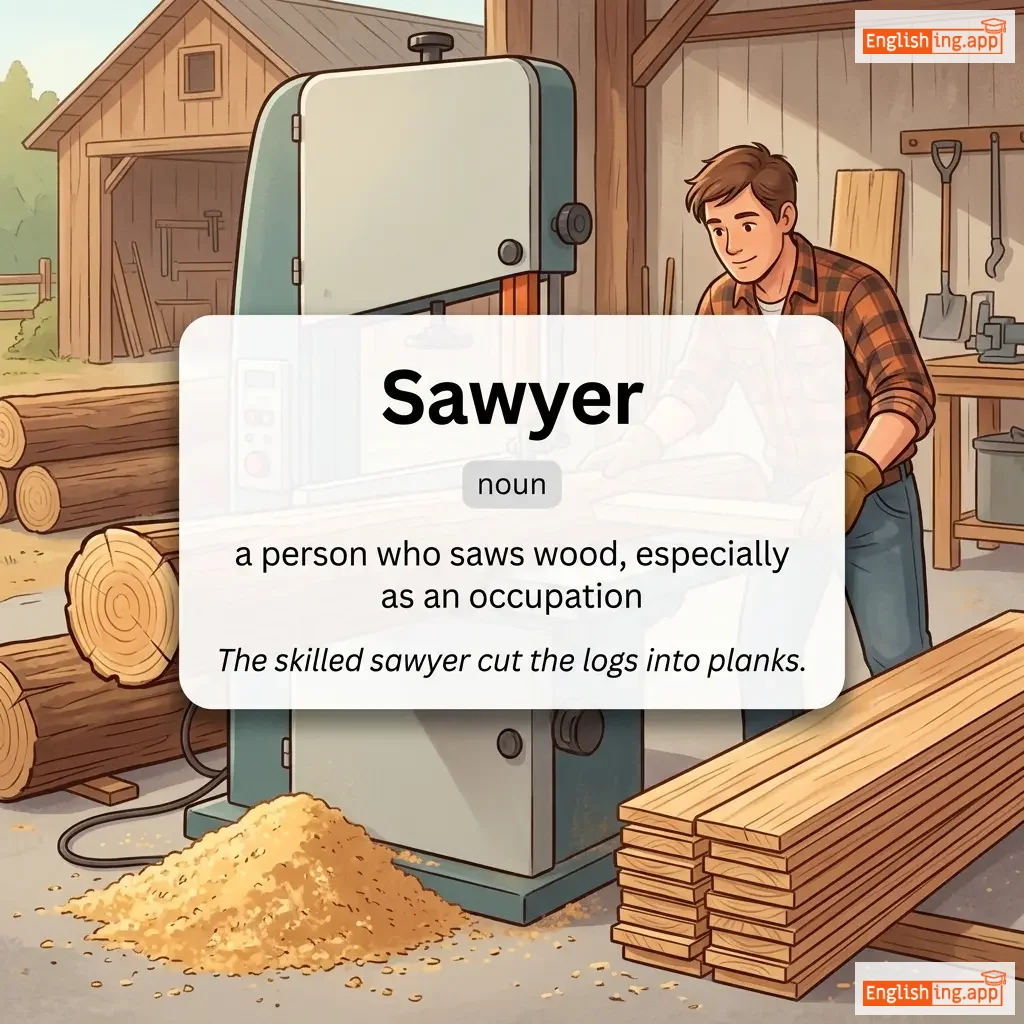
Sawyer definition card — visual illustration of the meaning
noun C1
/ˈsɔːjər/
材木職人 (zaimoku shokunin)

a person who saws wood, especially as an occupation

"The skilled sawyer cut the logs into planks."

"熟練した材木職人は丸太を板に切りました。" (Jukuren shita zaimoku shokunin wa maruta wo ita ni kirimashita)
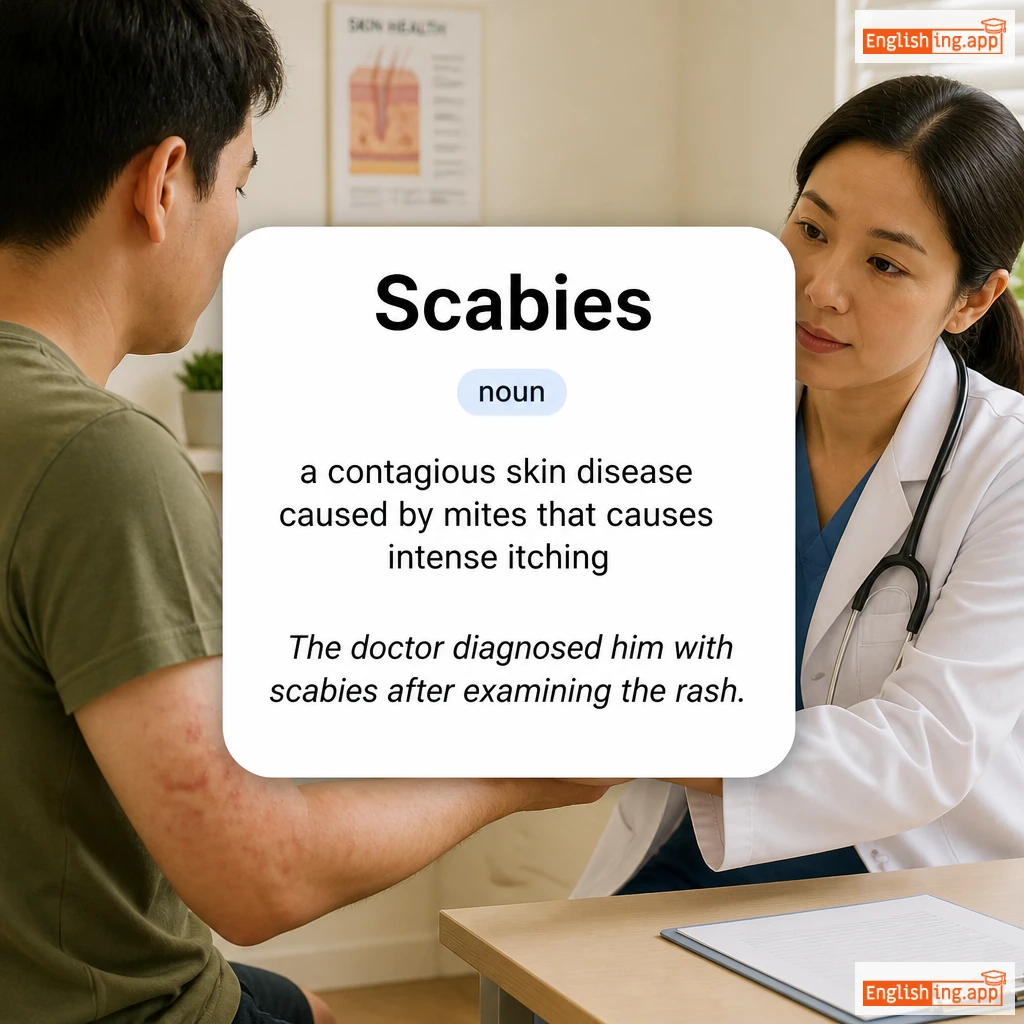
Scabies definition card — visual illustration of the meaning
noun C1
/ˈskeɪ.biːz/
疥癬 (kaisen)

a contagious skin disease caused by mites that causes intense itching

"The doctor diagnosed him with scabies after examining the rash."

"医師は発疹を調べた後、彼に疥癬と診断した。" (Ishi wa hasshin o shirabeta ato, kare ni kaisen to shindan shita.)
Scaffold definition card — visual illustration of the meaning
noun C1
/ˈskæf.əʊld/
足場 (ashiba)

A temporary platform used to support workers and materials during the construction or repair of a building.

"The workers stood on the scaffold to paint the building."

"作業員は建物を塗装するために足場に立っていました。" (Sagyō-in wa tatemono o tosō suru tame ni ashiba ni tatte imashita.)
scalability definition card — visual illustration of the meaning
noun C1
/ˌskeɪ.ləˈbɪl.ə.ti/
スケーラビリティ (sukearabiriti)

The ability to expand to larger scales while maintaining efficiency

"The startup focused on scalability to handle future growth."

"スタートアップは、将来の成長を処理するためにスケーラビリティに注力しました。" (Sutaatappu wa, shourai no seichou wo shori suru tame ni sukeerabiriti ni chūryoku shimashita.)
noun C1
/ˈskælpəl/
メス (mesu)

A small and extremely sharp bladed instrument used for surgery and dissection.

"The surgeon carefully used a scalpel to make the first incision."

"外科医は慎重にメスを使って最初の切開を行いました。" (Geka-i wa shinchō ni mesu o tsukatte saisho no sekkai o okonaimashita.)
adjective C1
/ˈskeɪ.li/
鱗状の (uroko-jou no)

covered with scales; having a rough surface like scales

"The fish has scaly skin."

"その魚はうろこ状の皮膚を持っています。" (Sono sakana wa urokogata no hifu o motteimasu.)