Vocabularies

English Vocabulary Dictionary | Word Meanings, Definitions & Examples

Quack definition card — visual illustration of the meaning
noun C1
/kwæk/
詐欺師医師 (sagishi ishi)

a fraudulent or ignorant pretender to medical skill; a charlatan

"Beware of the quack who promises miracle cures online."

"オンラインで奇跡的な治療法を約束する詐欺師医師には気をつけてください。" (onrain de kiseki-teki na chiryouhou wo yakusoku suru sagishi ishi ni wa ki wo tsukete kudasai)
verb C1
/kwɒˈdruːpəl/
四倍にする (shibai ni suru)

to increase or make something four times as much or as many

"Within a year, the startup quadrupled its user base through aggressive partnerships."

"1年以内に、スタートアップは積極的なパートナーシップを通じてユーザーベースを4倍にしました。" (1-nen inai ni, sutaatappu wa sekkyokuteki na paatonaashippu o tōjite yūzā bēsu o 4-bai ni shimashita.)
noun C1
/ˈkwæɡˌmaɪər/
沼地、困難な状況 (numachi, konnan na joukyou)

a soft, wet area of land that gives way underfoot; a complex or dangerous situation

"The hikers were trapped in a political quagmire."

"ハイカーたちは政治的な沼地に閉じ込められた。" (Haikaa-tachi wa seijiteki na numachi ni tojikomerareta.)
verb, noun C1
/kweɪl/
恐怖を感じる; 小さくて短い尾の鳥 (kyōfu o kanjiru; chiisakute mijikai o no tori)

verb: to feel or show fear; noun: a small, short-tailed bird

"She quailed at the sight of the approaching storm."

"彼女は迫り来る嵐の光景に恐怖を感じた。" (Kanojo wa semari kuru arashi no kōkei ni kyōfu o kanjita.)
adjective C1
/kweɪnt/
古風で魅力的な (kofu de miryokuteki na)

attractively unusual or old-fashioned

"They stayed in a quaint little cottage by the sea."

"彼らは海の近くの趣のある小さな小屋に泊まりました。" (Karera wa umi no chikaku no omomuki no aru chiisana koya ni tomarimashita.)
noun C1
/kwɑːm/
疑念 (ginen)

a feeling of doubt, worry, or fear about something

"She had no qualm about speaking her mind."

"彼女は自分の考えを言うことに疑念を持っていなかった。" (Kanojo wa jibun no kangae o iu koto ni ginen o motte inakatta.)
noun (plural) C1
/kwɑːmz/
疑念 (ginen)

feelings of doubt, worry, or uneasiness

"He had serious qualms about accepting the offer."

"彼はそのオファーを受け入れることに深刻な疑念を抱いていた。" (Kare wa sono ofā o ukeireru koto ni shinkoku na ginen o daite ita.)
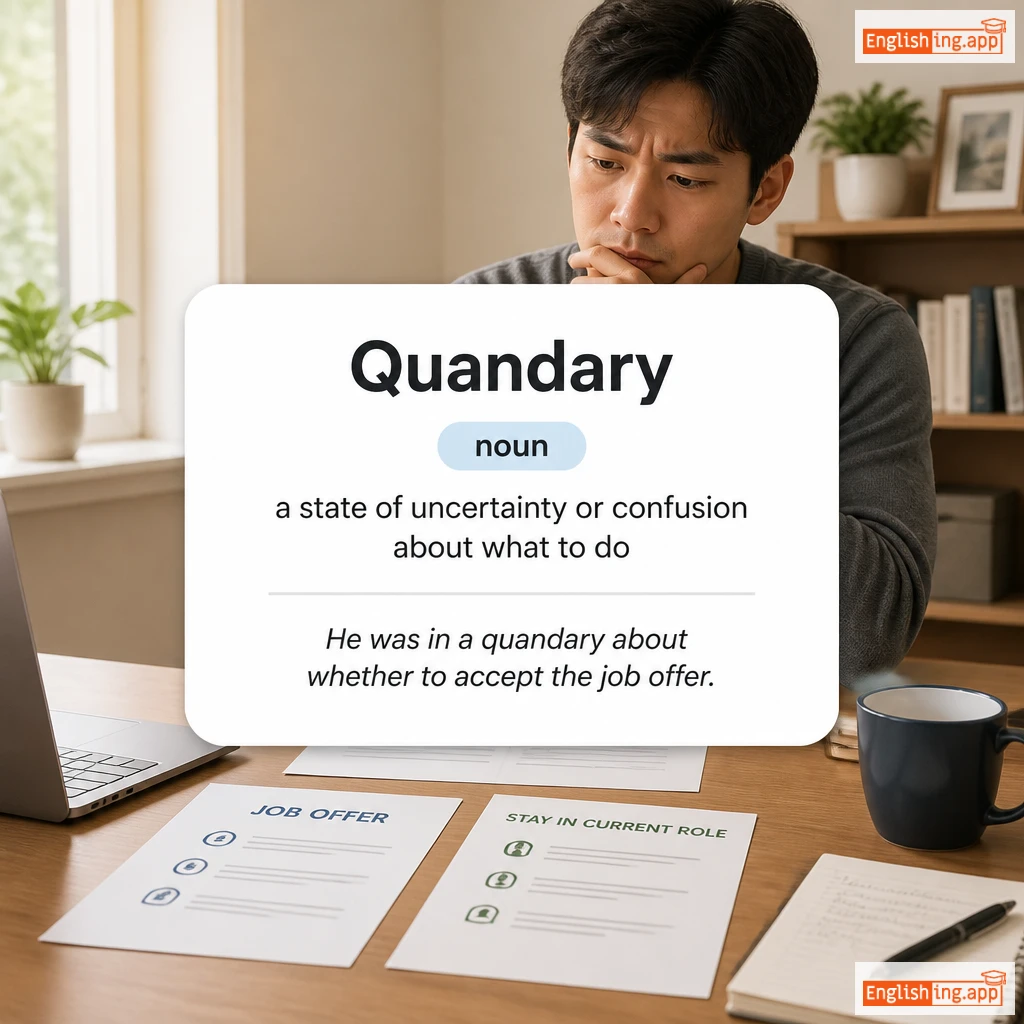
Quandary definition card — visual illustration of the meaning
noun C1
/ˈkwɒndəri/

a state of uncertainty or confusion about what to do

"He was in a quandary about whether to accept the job offer."

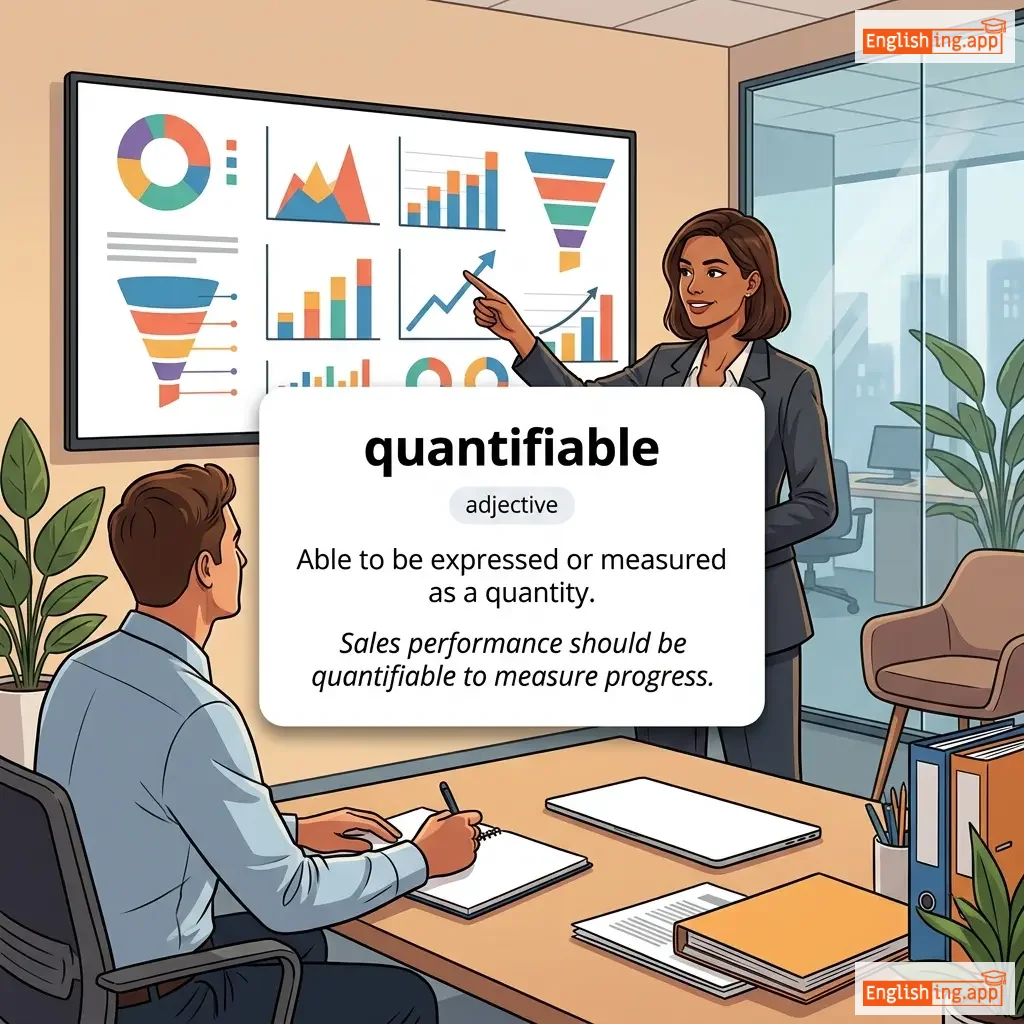
quantifiable definition card — visual illustration of the meaning
adjective C1
ˈkwɒn.tɪ.faɪ.ə.bəl
定量化可能 (kuontifaiaburu)

Able to be expressed or measured as a quantity.

"Sales performance should be quantifiable to measure progress."

"売上成績は進捗を測るために定量化可能であるべきだ。" (uriage seiseki wa shinchoku wo hakaru tame ni teiryouka kanou de aru beki da)
adjective C1
/ˈkwɒr.əl.səm/
口論好き (kōron-zuki)

Inclined to argue or fight.

"He became quarrelsome after losing the game."

"彼はゲームに負けた後、口論好きになった。" (Kare wa gēmu ni maketa ato, kōron-zuki ni natta.)
noun/verb C1
/ˈkwɒr.i/
採石場 / 獲物 (saisekiba / emono)

A place where stone or minerals are extracted; also means prey when hunted.

"The workers quarried limestone from the hill."

"作業員は丘から石灰岩を採掘しました。" (Sagyouin wa oka kara sekkaigan o saikutsu shimashita.)
noun C1
/kwɔːrˈtɛt/
カルテット (karutetto)

A group of four people playing music or singing together.

"The string quartet performed beautifully at the concert."

"弦楽四重奏団はコンサートで素晴らしい演奏をしました。" (Gen-gaku shijū-sōdan wa konsāto de subarashī ensō o shimashita.)
verb C1
/kwɑːʃ/
取り消す (torikesu)

To reject or void something legally or to put an end to something forcefully.

"The court quashed the decision due to lack of evidence."

"裁判所は証拠不十分のため、その決定を取り消しました。" (Saibansho wa shōko fujūbun no tame, sono kettei o torikeshimashita.)
noun C1
/kiː/
桟橋 (sanbashi)

A platform lying alongside or projecting into water for loading and unloading ships.

"The cargo was unloaded at the quay."

"貨物は桟橋で荷降ろしされました。" (Kamon wa sanbashi de ni oroshi saremashita.)
adjective C1
/ˈkwiːzi/
気分が悪い (kibun ga warui)

Feeling sick to one's stomach; nauseated.

"She felt queasy after the long boat ride."

"彼女は長いボートの旅の後、気分が悪くなった。" (Kanojo wa nagai booto no tabi no ato, kibun ga waruku natta.)
adjective C1
/kwɪər/
奇妙 (kimyou)

Strange, odd, or unusual.

"He had a queer feeling that something was wrong."

"彼は何かが違うと感じて奇妙な気分だった。" (Kare wa nanika ga chigau to kanjite kimyou na kibun datta.)
verb C1
/kwɛl/
鎮圧する (chin'atsu suru)

To suppress or put an end to something, usually by force.

"The police were called to quell the violent protest."

"警察は暴力的な抗議を鎮圧するために呼ばれました。" (Keisatsu wa bōryokuteki na kōgi o chin'atsu suru tame ni yoba remashita.)
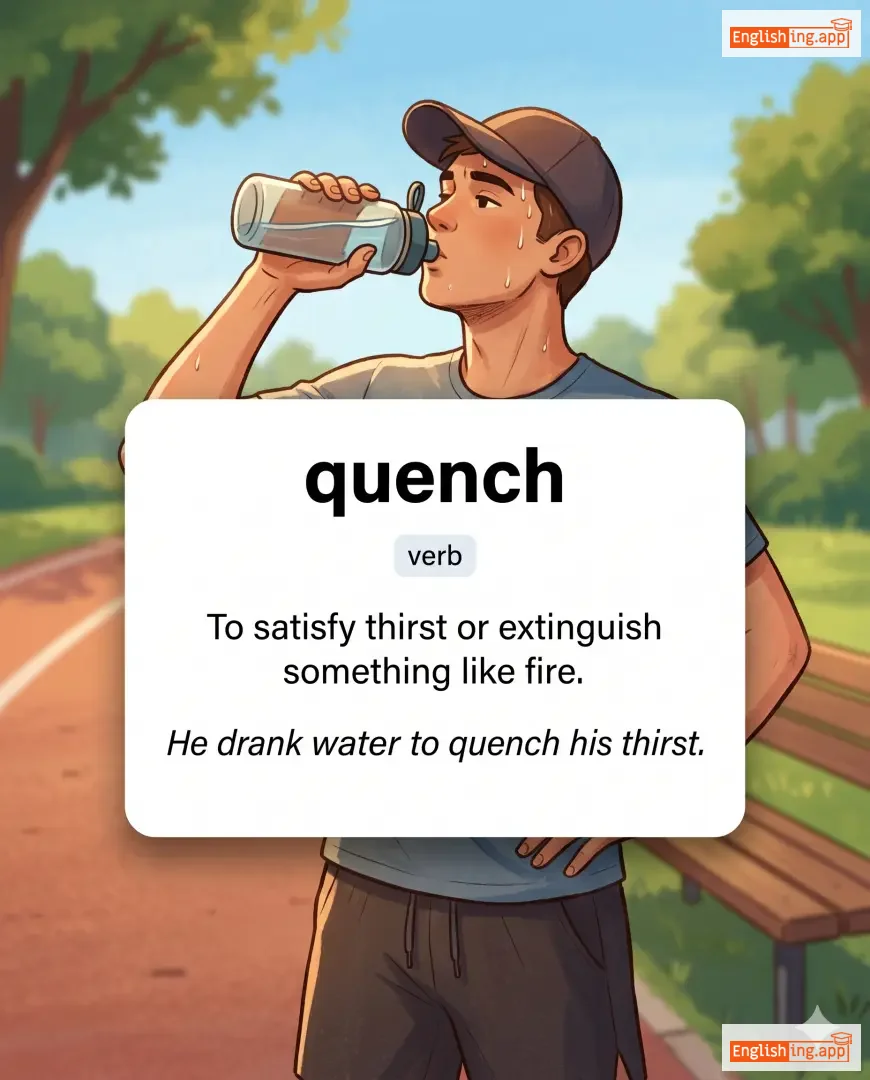
quench definition card — visual illustration of the meaning
verb C1
/kwɛntʃ/
渇きを癒す (kawaki wo iyasu)

To satisfy thirst or extinguish something like fire.

"He drank water to quench his thirst."

"彼は喉の渇きを癒すために水を飲んだ。" (Kare wa nodo no kawaki wo iyasu tame ni mizu wo nonda.)
verb C1
/ˈkwentʃɪŋ/
渇きを癒す / 火を消す (kawaki o iyasu / hi o kesu)

The act of satisfying thirst or extinguishing something like fire.

"Drinking cold water was quenching her thirst."

"冷たい水を飲むことが彼女の渇きを癒していました。" (Tsumetai mizu o nomu koto ga kanojo no kawaki o iyashiteimashita.)
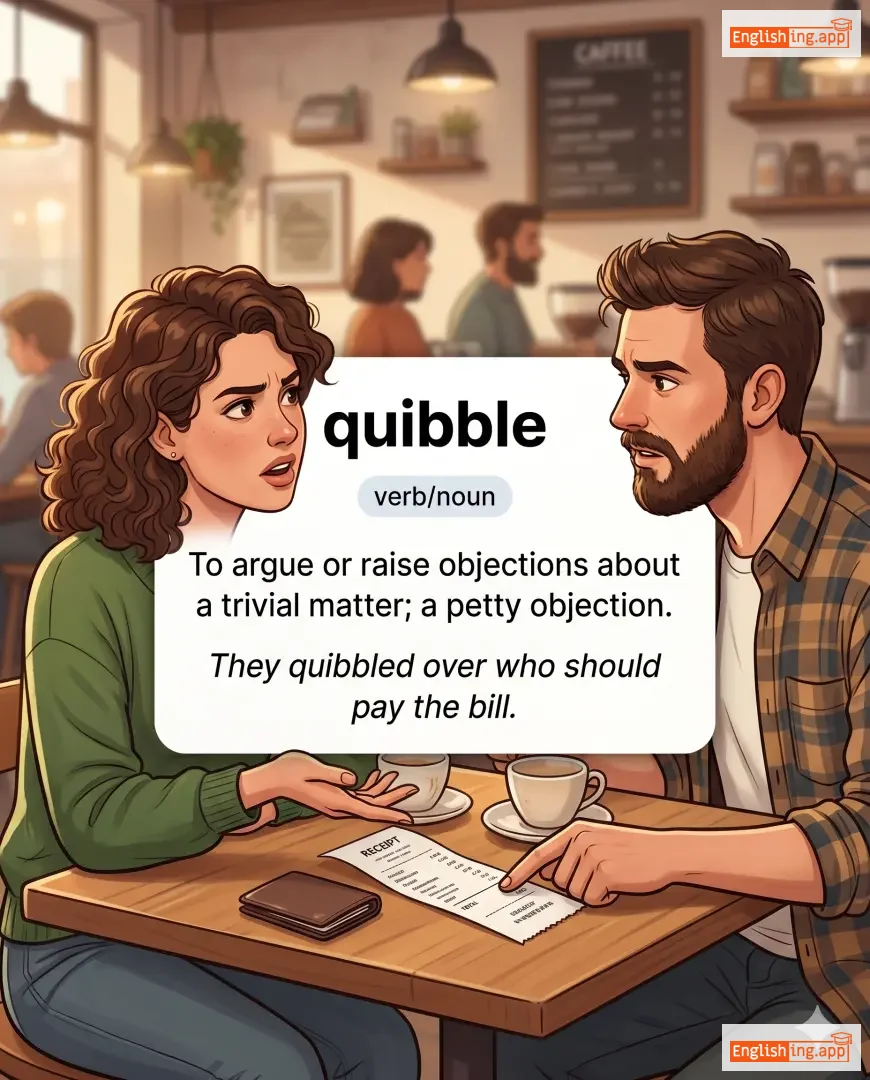
quibble definition card — visual illustration of the meaning
🗣️

quibble

verb/noun C1
/ˈkwɪbəl/

To argue or raise objections about a trivial matter; a petty objection.

"They quibbled over who should pay the bill."

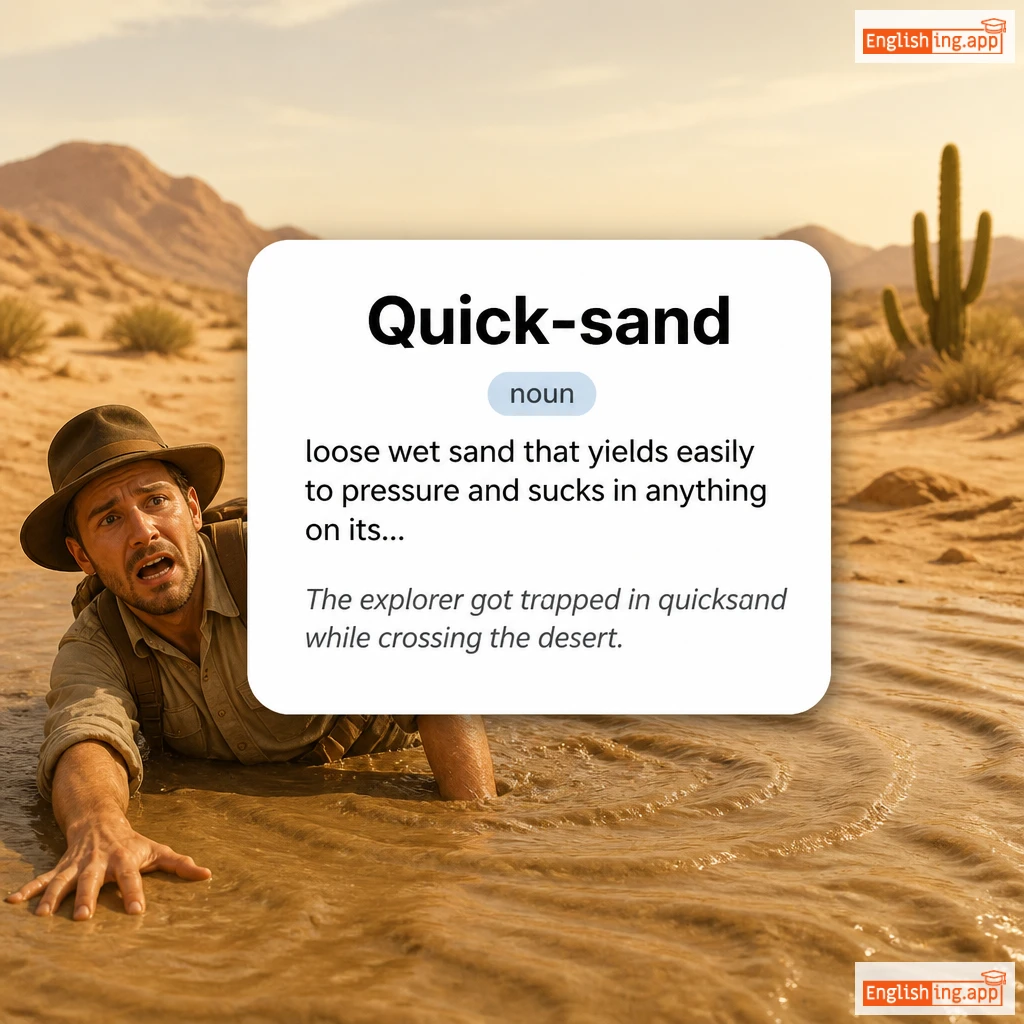
Quick-sand definition card — visual illustration of the meaning
noun C1
/ˈkwɪk.sænd/
クイックサンド (quicksand)

loose wet sand that yields easily to pressure and sucks in anything on its surface

"The explorer got trapped in quicksand while crossing the desert."

"探検家は砂漠を横断中にクイックサンドに捕まりました。" (tankenka wa sabaku o ōdan chū ni quicksand ni tsukamari mashita)
verb C1
/ˈkwɪkən/
加速する (kasoku suru)

to make or become faster; to accelerate

"His pulse began to quicken as he approached the finish line."

"彼の脈拍はゴールラインに近づくにつれて速くなり始めた。" (Kare no myakuhaku wa gōru rain ni chikaduku ni tsurete hayaku nari hajimeta.)
noun C1
/kwɪnˈtɛsəns/
エッセンス (essensu)

The purest or most perfect example of something.

"She is the quintessence of elegance."

"彼女は優雅さのエッセンスです。" (Kanojo wa yūgasa no essensu desu.)
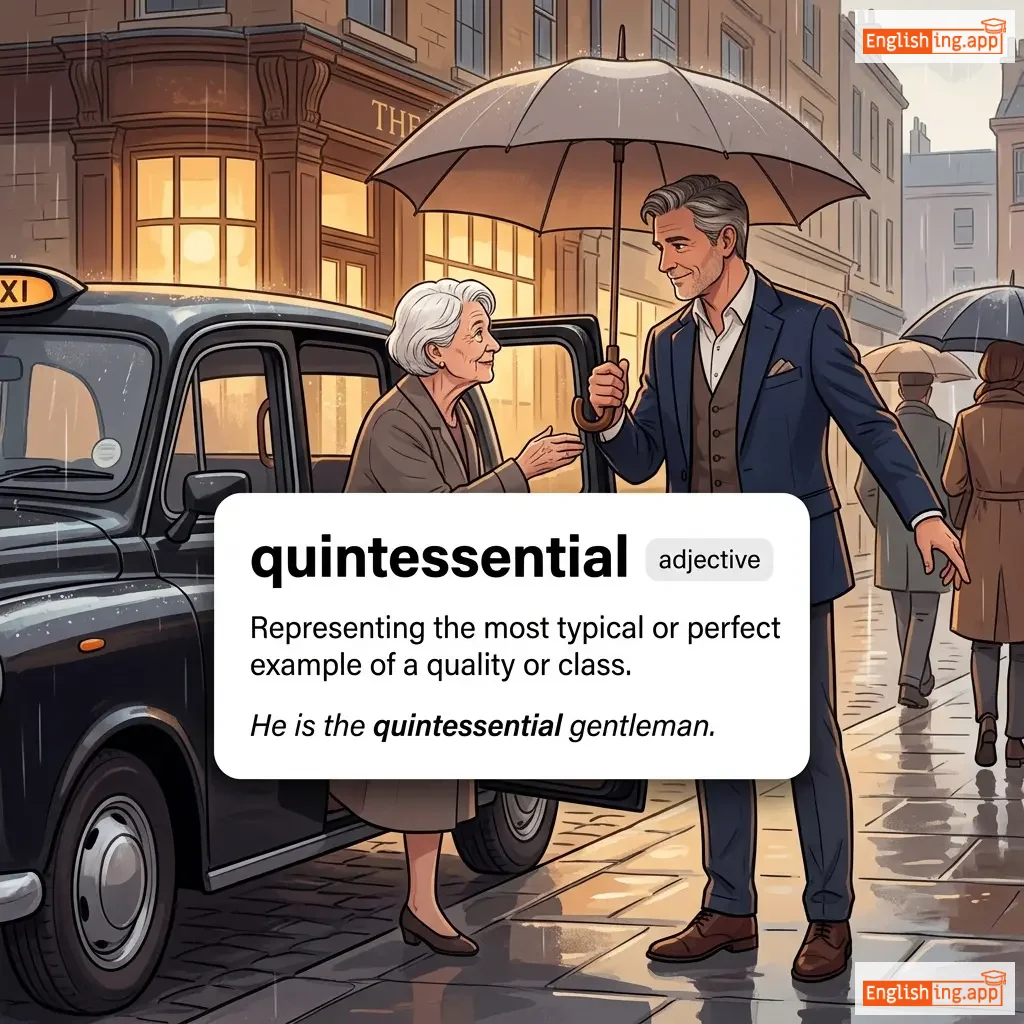
quintessential definition card — visual illustration of the meaning
adjective C1
/ˌkwɪntɪˈsɛnʃəl/
典型的な例 (tenkeiteki na rei)

Representing the most typical or perfect example of a quality or class.

"He is the quintessential gentleman."

"彼は典型的な紳士です。" (Kare wa tenkeiteki na shinshi desu.)
noun C1
/kwɪnˈtɛt/
クインテット (kuintetto)

A group of five people or things, especially musicians.

"The jazz quintet performed beautifully."

"ジャズのクインテットは見事に演奏しました。" (Jazu no kuintetto wa migoto ni ensō shimashita.)
noun/verb C1
/kwɪp/
巧妙なコメント (koumyou na komento)

A witty remark; to make a witty or clever comment.

"She quipped about the weather during the meeting."

"会議中に天気について冗談を言いました。" (Kaigi chuu ni tenki ni tsuite joudan o iimashita.)
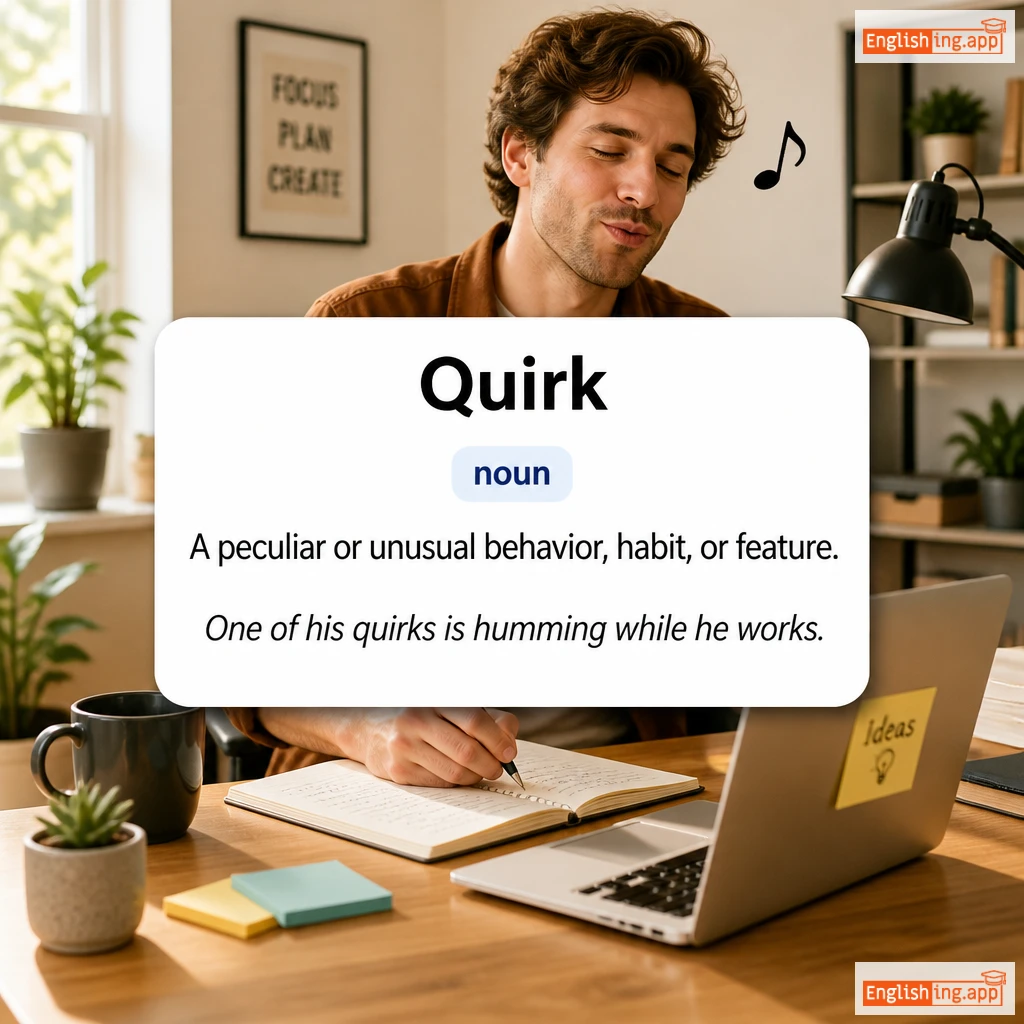
Quirk definition card — visual illustration of the meaning
noun C1
/kwɜːrk/
(kuse)

A peculiar or unusual behavior, habit, or feature.

"One of his quirks is humming while he works."

"彼の癖の一つは、働いているときに歌を口ずさむことです。" (Kare no kuse no hitotsu wa, hataraite iru toki ni uta o kuchizusamu koto desu.)
verb C1
/ˈkwɪvər/
震える (furu eru)

To tremble or shake with slight but rapid motion.

"Her lips began to quiver as she tried not to cry."

"彼女は泣かないように努力しながら唇が震え始めました。" (Kanojo wa nakanai you ni doryoku shinagara kuchibiru ga furu e hajimemashita.)
adjective C1
/ˈkwɪzɪkəl/
困惑した, 質問のような (konwaku shita, shitsumon no yōna)

Expressing mild or amused puzzlement.

"She gave him a quizzical look when he made the strange comment."

"彼が奇妙なコメントをしたとき、彼女は困惑した表情を彼に向けました。" (Kare ga kimyō na komento o shita toki, kanojo wa konwaku shita hyōjō o kare ni mukemashita.)
noun C1
/kwoʊ/
現状 (genjou)

The existing state of affairs or situation, often used in the phrase 'status quo'.

"He wanted to maintain the status quo at work."

"彼は職場で現状を維持したかった。" (Kare wa shokuba de genjou o iji shitakatta.)
noun C1
/ˈkwɔːrəm/
定足数 (teizokusu)

The minimum number of members needed to conduct official business in a meeting.

"The board meeting was postponed because there was no quorum."

"クォーラムがなかったため、理事会の会議は延期されました。" (Kwōramu ga nakatta tame, rijikai no kaigi wa enki sare mashita.)