Vocabularies

English Vocabulary Dictionary | Word Meanings, Definitions & Examples

noun C1
/ˈpæs.ɪ.fɪst/
অহিংসাবাদী (ohingsabadi)

a person who believes in peace and opposes war or violence

"She is a committed pacifist who campaigns against armed conflict."

"তিনি একজন প্রতিশ্রুত অহিংসাবাদী যিনি সশস্ত্র সংঘাতের বিরুদ্ধে প্রচারণা চালান।" (Tini ekjon protishruto ohingsabadi jini soshotro songhoter biruddhe procharona chalan.)
pacify definition card — visual illustration of the meaning
verb C1
/ˈpæs.ɪ.faɪ/
শান্ত করা (shanto kora)

to calm someone down; to bring peace to a situation

"The mother tried to pacify the crying baby."

"মা কান্নারত শিশুটিকে শান্ত করার চেষ্টা করেছিলেন।" (Ma kannarot shishutike shanto korar cheshta korechilen.)
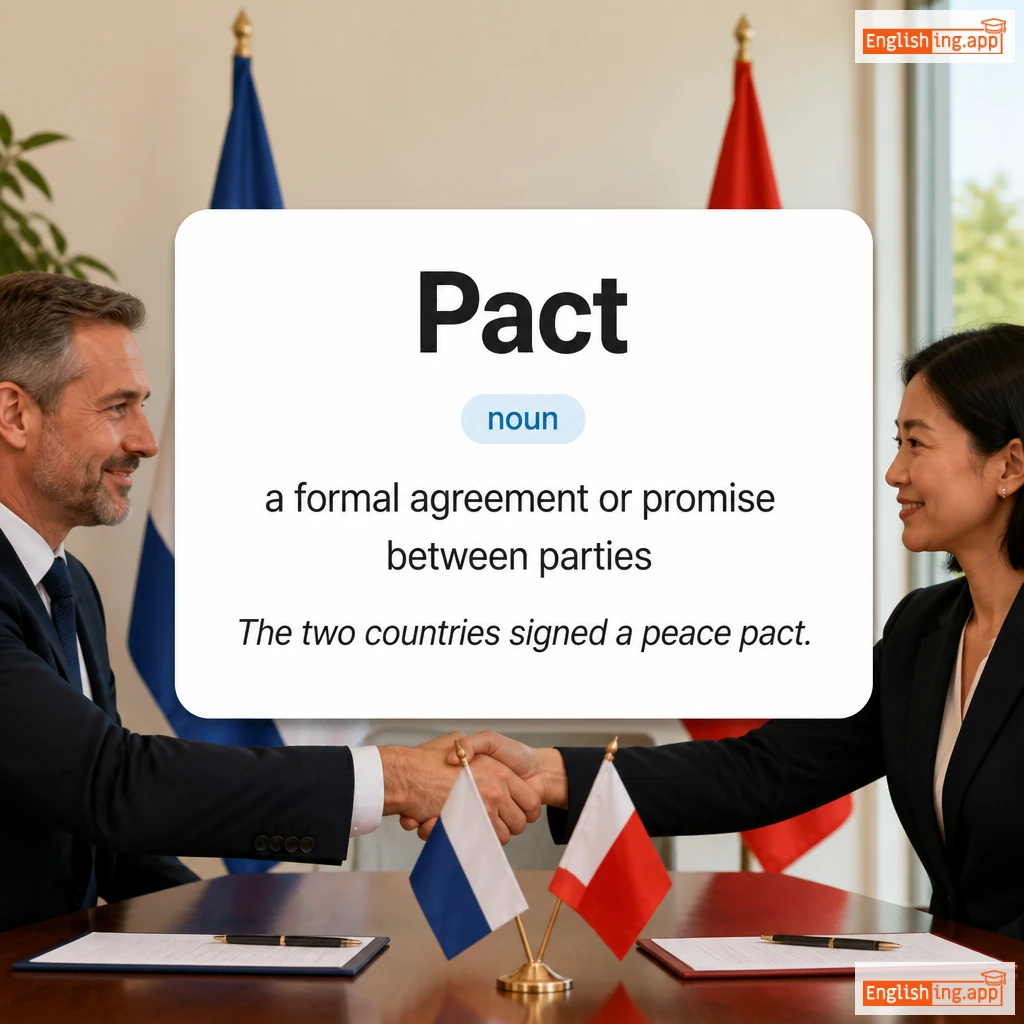
Pact definition card — visual illustration of the meaning
noun C1
/pækt/
চুক্তি (chukti)

a formal agreement or promise between parties

"The two countries signed a peace pact."

"দুই দেশ একটি শান্তি চুক্তি স্বাক্ষর করল।" (Dui desh ekti shanti chukti shakkhor korlo.)
noun C1
/ˈpæd.ək/
পশুর খামার ক্ষেত্র (poshur khamar khetr)

a small enclosed field where horses or other animals are kept

"The horses were grazing in the paddock."

"ঘোড়াগুলো প্যাডকে ঘাস খাচ্ছিল।" (Ghoragulo paddock e ghash khachchhilo.)
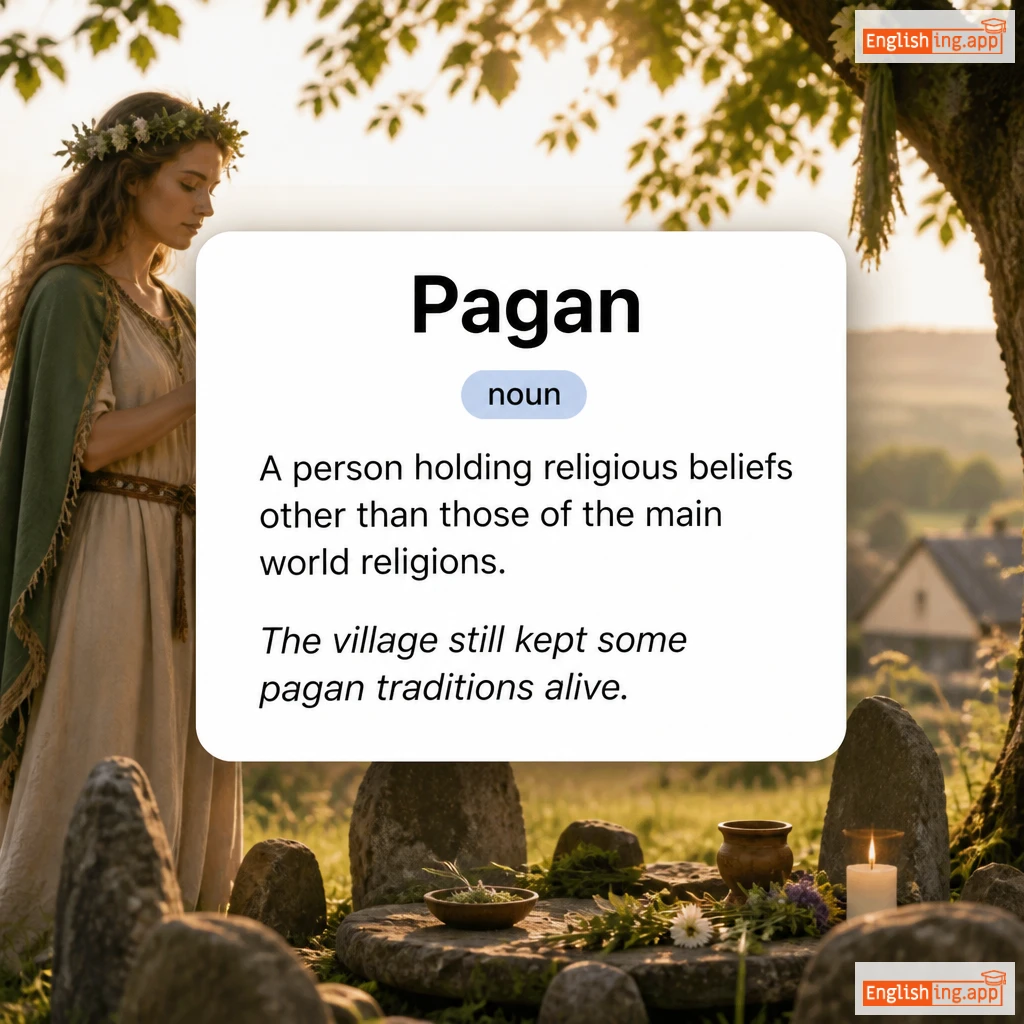
Pagan definition card — visual illustration of the meaning
noun C1
/ˈpeɪɡən/
অমুসলিম ধর্মাবলম্বী (omuslim dhormabolombi)

A person holding religious beliefs other than those of the main world religions.

"The village still kept some pagan traditions alive."

"গ্রামটি এখনও কিছু পেগান প্রথা বজায় রেখেছিল।" (gramti ekhono kichu pagan protha bajay rekhechilo.)
noun C1
/ˈpædʒənt/
সৌন্দর্য প্রতিযোগিতা (soundorjo protijogita)

A public entertainment consisting of a procession of people in elaborate costumes, or a beauty contest.

"She won first place in the beauty pageant."

"সে সৌন্দর্য প্রতিযোগিতায় প্রথম স্থান অর্জন করেছিল।" (se soundorjo protijogitay prothom sthan arjon korechilo.)
adjective C1
/ˈpeɪnzˌteɪkɪŋ/
অত্যন্ত যত্নসহকারে (otonto jotnosohokare)

Done with great care and thoroughness.

"The artist completed the project with painstaking detail."

"শিল্পী প্রকল্পটি অত্যন্ত যত্ন সহকারে সম্পন্ন করেছিলেন।" (shilpi projoktoti otonto jotno sohokaare somponno korechilen.)
adjective C1
/ˈpæl.ə.tə.bəl/
রুচিকর (ruchikor)

pleasant or acceptable to the taste, mind, or feelings

"The meal was simple but quite palatable."

"খাবারটি সাধারণ হলেও বেশ রুচিকর ছিল।" (Khabarti shadharon holeo besh ruchikor chilo.)
Palatable meat definition card — visual illustration of the meaning
noun C1
/ˈpæl.ə.tə.bəl miːt/
কাবাব (kabab)

Meat that is pleasant to taste; appetizing meat dish

"The chef prepared palatable meat dishes for the dinner party."

"শেফ রাতের খাবারের পার্টির জন্য সুস্বাদু মাংসের পদ তৈরি করেছিলেন।" (chef rater khabarer partyr jonno shuswadu mangsher pod toiri korechilen)
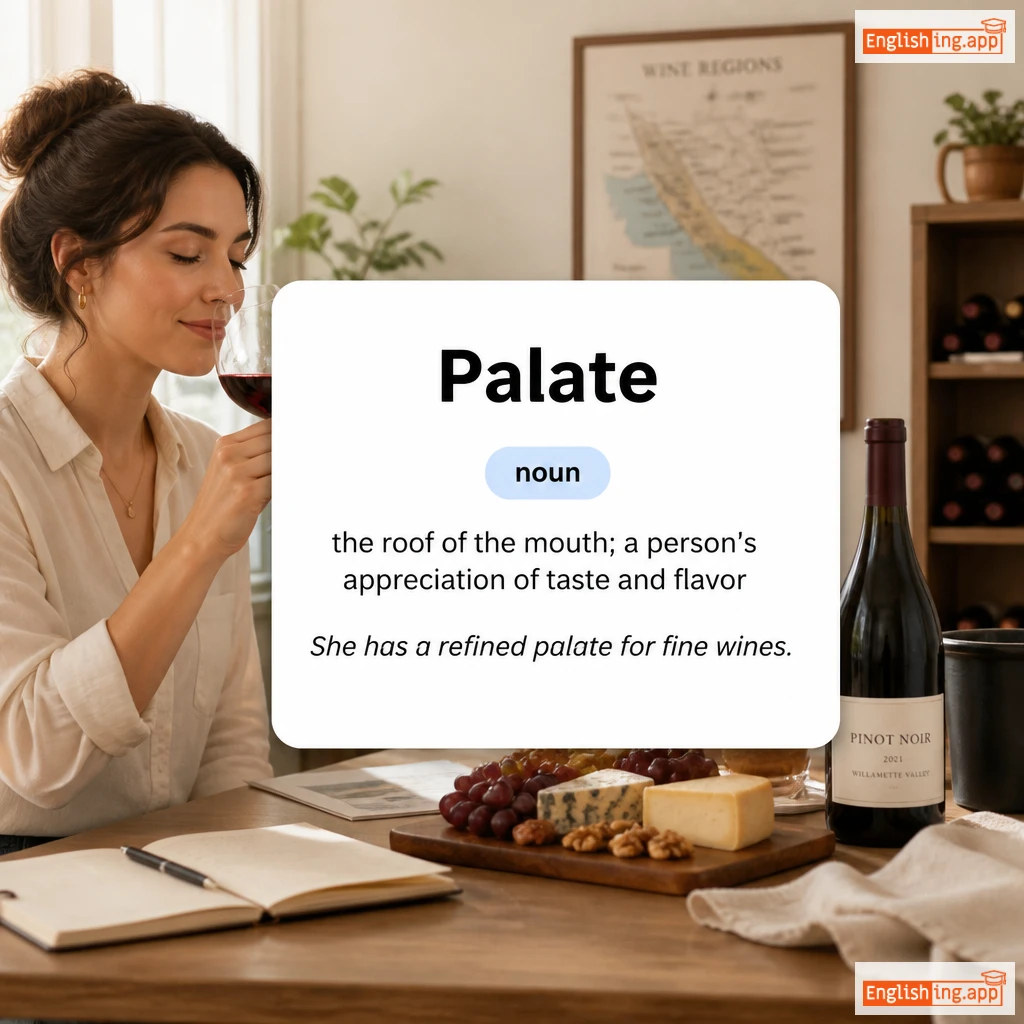
Palate definition card — visual illustration of the meaning
noun C1
/ˈpæl.ət/
স্বাদগ্রহণ ক্ষমতা / তালু (swadgrohon khomota / talu)

the roof of the mouth; a person's appreciation of taste and flavor

"She has a refined palate for fine wines."

"তার উৎকৃষ্ট মদের জন্য একটি সূক্ষ্ম রুচি আছে।" (Tar utkrisht mod-er jonno ekti sukshmo ruchi ache.)
adjective C1
/pəˈleɪ.ʃəl/
প্রাসাদোপম (prasadopom)

resembling a palace in being spacious and splendid

"They stayed in a palatial hotel during their vacation."

"তারা ছুটির সময় একটি প্রাসাদোপম হোটেলে ছিলেন।" (Tara chhutir shomoy ekti prasadopom hotel-e chhilen.)
noun C1
/ˌpeɪ.li.ɒnˈtɒl.ə.dʒi/
জীবাশ্মবিদ্যা (jibashmobidya)

the branch of science concerned with fossil animals and plants

"She decided to study paleontology at university."

"সে বিশ্ববিদ্যালয়ে জীবাশ্মবিদ্যা অধ্যয়ন করার সিদ্ধান্ত নিল।" (Se bishwobidyaloye jibashmobidya odhyayon korar shiddhanto nilo.)
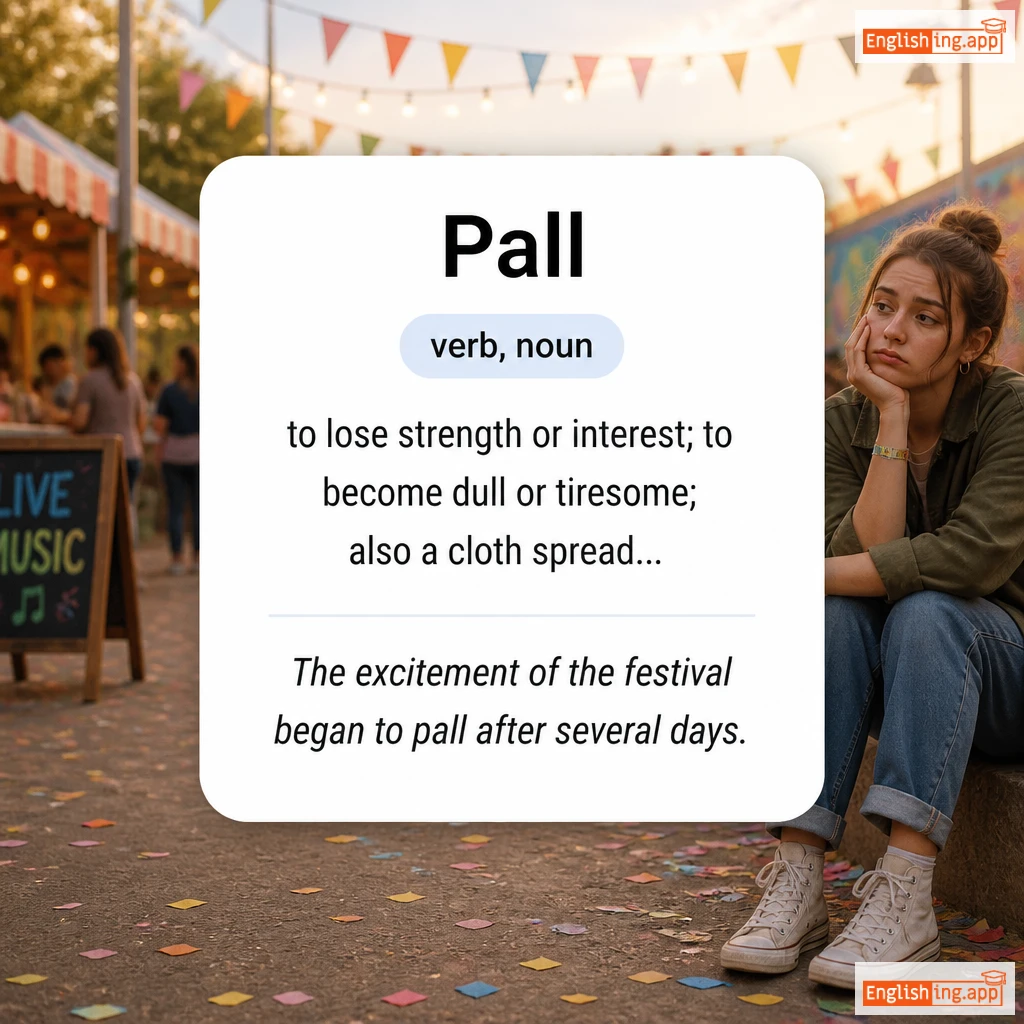
Pall definition card — visual illustration of the meaning
verb, noun C1
/pɔːl/
অবসাদ, কফিনের কাপড় (obsad, kofiner kapor)

to lose strength or interest; to become dull or tiresome; also a cloth spread over a coffin

"The excitement of the festival began to pall after several days."

"উৎসবের উত্তেজনা কয়েক দিনের পর ম্লান হয়ে গেল।" (Utsober uttejana koyek diner por mlan hoye gelo.)
noun C1
/ˈpælɪt/
পণ্য বহনের প্ল্যাটফর্ম (ponno bahoner platform)

a flat wooden platform used for moving or storing goods; also a makeshift bed

"The boxes were stacked on a wooden pallet for easy transport."

"বাক্সগুলো সহজ পরিবহনের জন্য একটি কাঠের প্যালেটে রাখা হয়েছিল।" (Baks gulo sohoj poribohner jonno ekti kather pallet e rakha hoyechhilo.)
adjective C1
/ˈpælɪd/
ফ্যাকাশে (fakasha)

pale, typically because of poor health or lack of vitality

"The patient looked pallid after weeks of illness."

"রোগী কয়েক সপ্তাহ অসুস্থ থাকার পর ফ্যাকাশে দেখাচ্ছিল।" (Rogi koyek soptaho oshustho thakar por fakasha dekhachhilo.)
adjective C1
/ˈpælpəbl̩/
স্পষ্টভাবে অনুভূত (spostho vabe onuvut)

easily perceived or felt; so intense as to seem almost tangible

"There was a palpable sense of excitement in the room."

"ঘরে একটি স্পষ্ট উত্তেজনার অনুভূতি ছিল।" (Ghoro ekti spostho uttejanar onubhuti chhilo.)
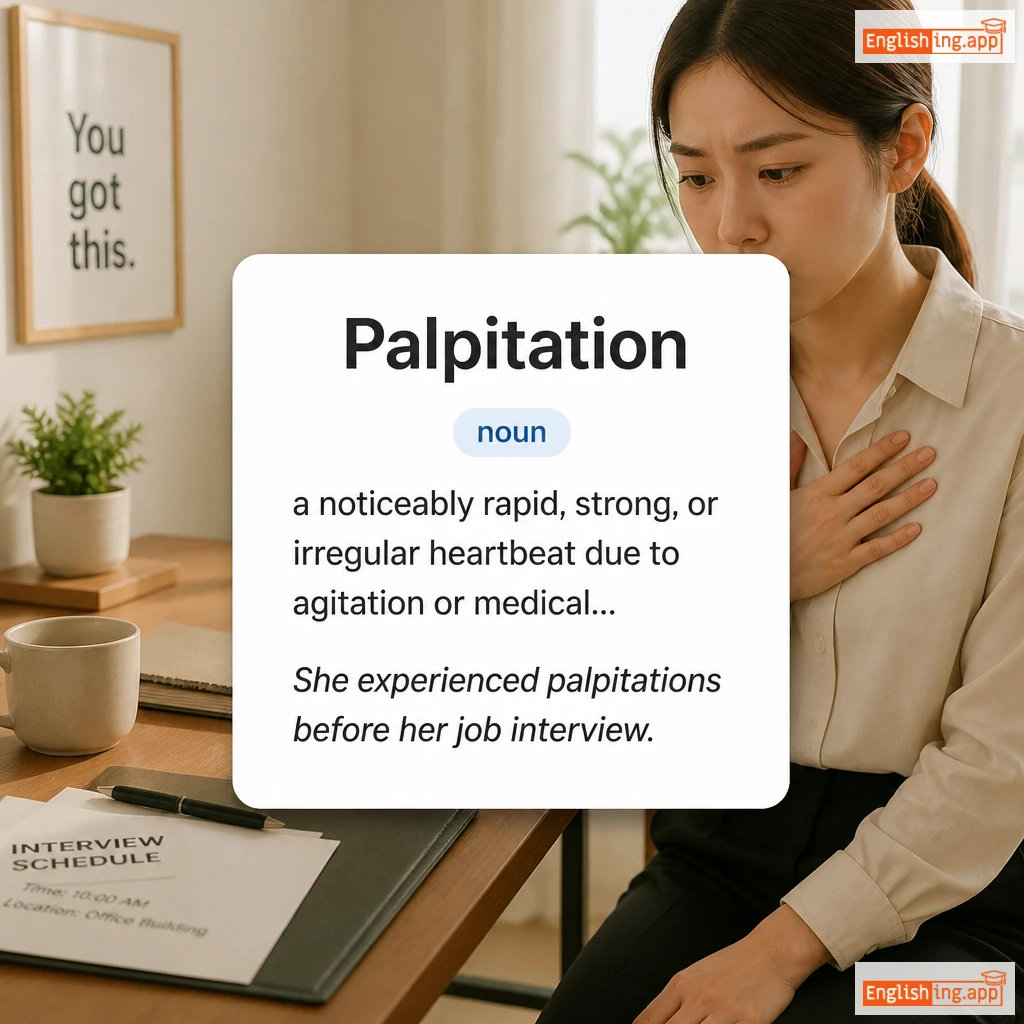
Palpitation definition card — visual illustration of the meaning
noun C1
/ˌpæl.pɪˈteɪ.ʃən/
হৃদস্পন্দন দ্রুত; ধড়ফড়ানি; (hridspondo druto)

a noticeably rapid, strong, or irregular heartbeat due to agitation or medical condition

"She experienced palpitations before her job interview."

"চাকরির ইন্টারভিউর আগে তিনি হৃদস্পন্দনের দ্রুততা অনুভব করেছেন।" (chakrir interviewer age tini hridspandoner druttota onubhob korechhen.)
adjective C1
/ˈpɔːltri/
তুচ্ছ, নগণ্য (tuchcho, nogonno)

small or meager; lacking in value or importance

"They offered him a paltry sum for his work."

"তারা তার কাজের জন্য নগণ্য পরিমাণ অর্থ প্রস্তাব করেছিল।" (Tara tar kajer jonno nogonno poriman ortho prostab korechhilo.)
verb C1
/ˈpæmpər/
আদর করা / লালন করা (ador kora / lalon kora)

to treat with excessive care and attention; to spoil

"Parents often pamper their first child."

"অভিভাবকেরা প্রায়ই তাদের প্রথম সন্তানকে অতিরিক্ত আদর করেন।" (Abhibhabokera prayoi tader prothom shontanke otirikto ador koren.)
adjective C1
/ˌpæn.əˈmer.ɪ.kən/
সমস্ত আমেরিকা সম্পর্কিত (somosto amerika somporkito)

relating to all the countries of North, Central, and South America

"The Pan-American Games bring together athletes from across the continent."

"প্যান-আমেরিকান গেমস পুরো মহাদেশের খেলোয়াড়দের একত্র করে।" (Pan-American Games puro mohadesher khelowarderder ekotro kore.)
noun C1
/ˌpænəˈsiːə/
সর্ব রোগের ওষুধ (sarbo roger oshudh)

A solution or remedy for all difficulties or diseases.

"Education is often seen as a panacea for social problems."

"শিক্ষাকে প্রায়ই সামাজিক সমস্যার সর্বজনীন প্রতিকার হিসেবে দেখা হয়।" (Shikkhake prai somajik somossar sarbojonin protikar hisebe dekha hoy.)
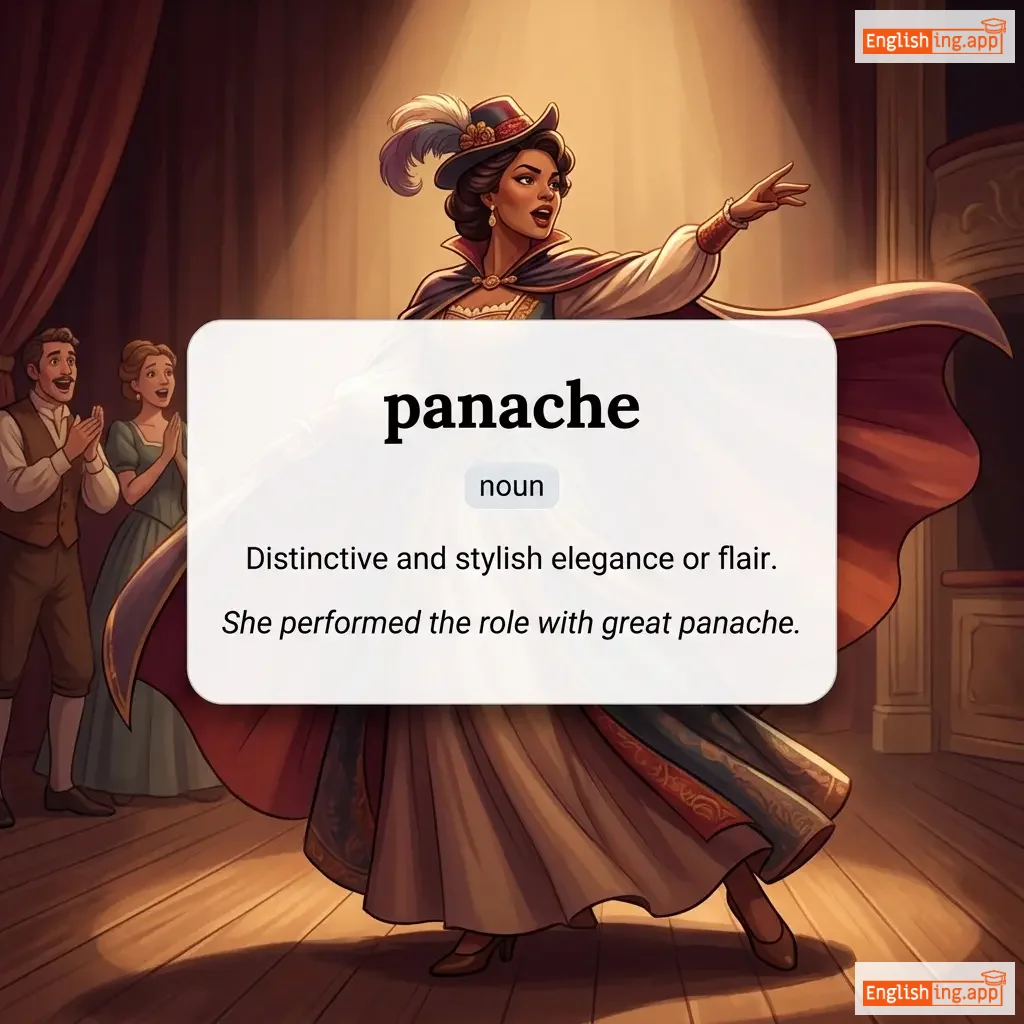
panache definition card — visual illustration of the meaning
noun C1
/pəˈnæʃ/
অভিজাত ভঙ্গি (obhijat bhongi)

Distinctive and stylish elegance or flair.

"She performed the role with great panache."

"সে ভূমিকাটি মহান ভঙ্গিমায় সম্পাদন করেছিল।" (Se bhumikati mohan bhongimay sompadon korechilo.)
noun C1
/ˈpæŋkriəs/
অগ্ন্যাশয় (agnyashoy)

A gland in the abdomen that produces insulin and digestive enzymes.

"The pancreas plays a vital role in digestion and blood sugar regulation."

"অগ্ন্যাশয় হজম ও রক্তে শর্করা নিয়ন্ত্রণে গুরুত্বপূর্ণ ভূমিকা পালন করে।" (Agnyashoy hojom o rokter shorkora niyontrone guruttopurno vumikay palon kore.)
noun C1
/ˌpændəˈmoʊniəm/
হট্টগোল (hottogol)

Wild and noisy disorder or confusion; uproar.

"When the concert was canceled, pandemonium broke out among the crowd."

"কনসার্ট বাতিল হওয়ার পর ভিড়ের মধ্যে হট্টগোল ছড়িয়ে পড়ে।" (Concert batil howar por bhirer moddhe hottogol choriye pore.)
verb C1
/ˈpændər/
তুষ্ট করা, চাটুকারিতা করা (tushto kora, chatukarita kora)

to indulge or exploit the weaknesses, desires, or immoral tendencies of others

"The politician was accused of pandering to voters' fears."

"রাজনীতিবিদকে ভোটারদের ভয়ের প্রতি তুষ্ট করার অভিযোগ আনা হয়েছিল।" (Rajnaitibidke votarder bhoyer proti tushto korar obhijog ana hoyechilo.)
noun C1
/pæŋ/
যন্ত্রণার তীক্ষ্ণ অনুভূতি (jotnar tikshno onubhuti)

a sudden sharp feeling of pain or emotional distress

"She felt a pang of guilt after the argument."

"বিতর্কের পর সে হঠাৎ অপরাধবোধের যন্ত্রণা অনুভব করল।" (Bitorker por se hothat oprodhabodher jotna onubhob korlo.)
noun C1
/ˌpæn.əˈræm.ə/
সুন্দর দৃশ্য (shundor drishsho)

An unbroken view of the whole region surrounding an observer.

"From the hilltop, we enjoyed a breathtaking panorama of the city."

"পাহাড়ের চূড়া থেকে আমরা শহরের মনোমুগ্ধকর দৃশ্য উপভোগ করেছিলাম।" (paharer chura theke amra shohorer monomughdhokor drishsho upobhog korechhilam.)
adjective C1
/ˌpæn.əˈræm.ɪk/
বিস্তৃত দৃশ্যমান (bistrito drishshoman)

Giving a wide view of an extensive area in all directions.

"The hotel offers panoramic views of the ocean."

"হোটেলটি সমুদ্রের বিস্তৃত দৃশ্য প্রদান করে।" (hotelti somudrer bistrito drishsho prodan kore.)
noun C1
/ˈpæn.θi.ən/
সকল দেবদেবী, দেবমন্দির (sokol debdebi, debmondir)

All the gods of a religion collectively; a building dedicated to all gods.

"The Roman Pantheon is one of the best-preserved ancient temples."

"রোমান প্যানথিয়ন প্রাচীনতম সংরক্ষিত মন্দিরগুলির একটি।" (Roman Pantheon prachintomo songrokkhito mondirgulir ekti.)
noun C1
/ˈpæntəmaɪm/
অভিনয়ের মাধ্যমে গল্প বলা (abhinoyer maddhome golpo bola)

A type of theatrical performance using gestures and movements without spoken words; in Britain, a musical comedy play for families performed at Christmas.

"The children enjoyed the Christmas pantomime at the local theater."

"শিশুরা স্থানীয় থিয়েটারে ক্রিসমাস প্যান্টোমাইম উপভোগ করেছিল।" (Shishura sthaniyo theatere Christmas pantomime upovog korechilo.)
noun C1
/pəˈpaɪrəs/
প্রাচীন লেখার কাগজ (prachin lekhar kagoj)

An ancient writing material made from the pith of the papyrus plant; also refers to the plant itself.

"The ancient scroll was written on papyrus."

"প্রাচীন পাণ্ডুলিপিটি প্যাপিরাসে লেখা ছিল।" (Prachin pandulipiti papyruse lekha chilo.)
noun C1
/ˈpærəbl/
দৃষ্টান্ত (drishtanto)

A simple story used to illustrate a moral or spiritual lesson.

"Jesus often taught using a parable to convey deeper truths."

"যীশু প্রায়শই গভীর সত্য প্রকাশ করতে একটি দৃষ্টান্ত ব্যবহার করতেন।" (Jishu prayoshoi gobhir sotti prokash korte ekti drishtanto byabohar korten.)
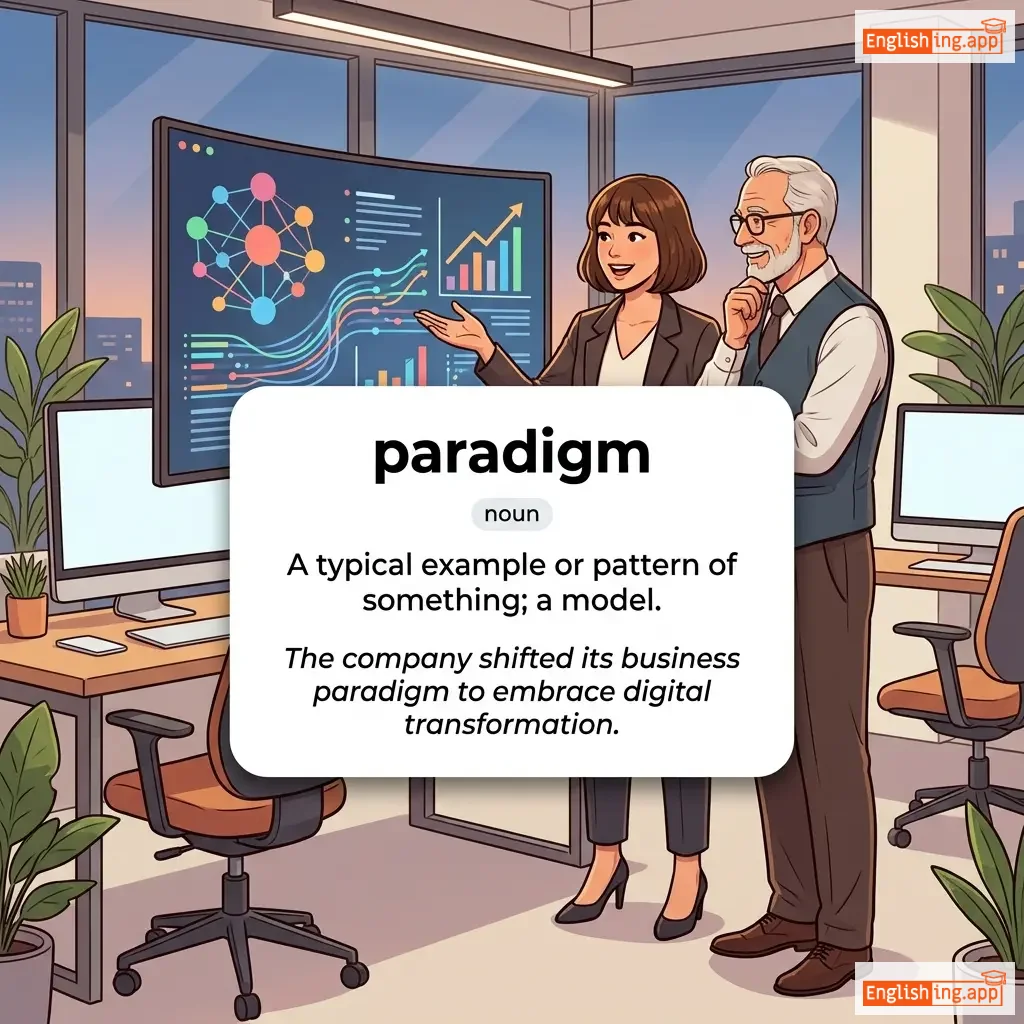
paradigm definition card — visual illustration of the meaning
noun C1
/ˈpærədaɪm/
নমুনা (namuna)

A typical example or pattern of something; a model.

"The company shifted its business paradigm to embrace digital transformation."

"কোম্পানিটি ডিজিটাল রূপান্তর গ্রহণ করতে তার ব্যবসার ধারা পরিবর্তন করেছে।" (Companiti digital rupantor grohon korte tar byabshar dhara poriborton koreche.)
adjective C1
/ˌpærəˈdɒksɪkəl/
বিরোধপূর্ণ (birodhpurno)

Seemingly contradictory or opposed to common sense, yet possibly true.

"It is paradoxical that standing is often more tiring than walking."

"এটি বিরোধপূর্ণ যে দাঁড়ানো প্রায়ই হাঁটার চেয়ে বেশি ক্লান্তিকর।" (Eti birodhpurno je darano prayoi hatar cheye beshi klantikor.)
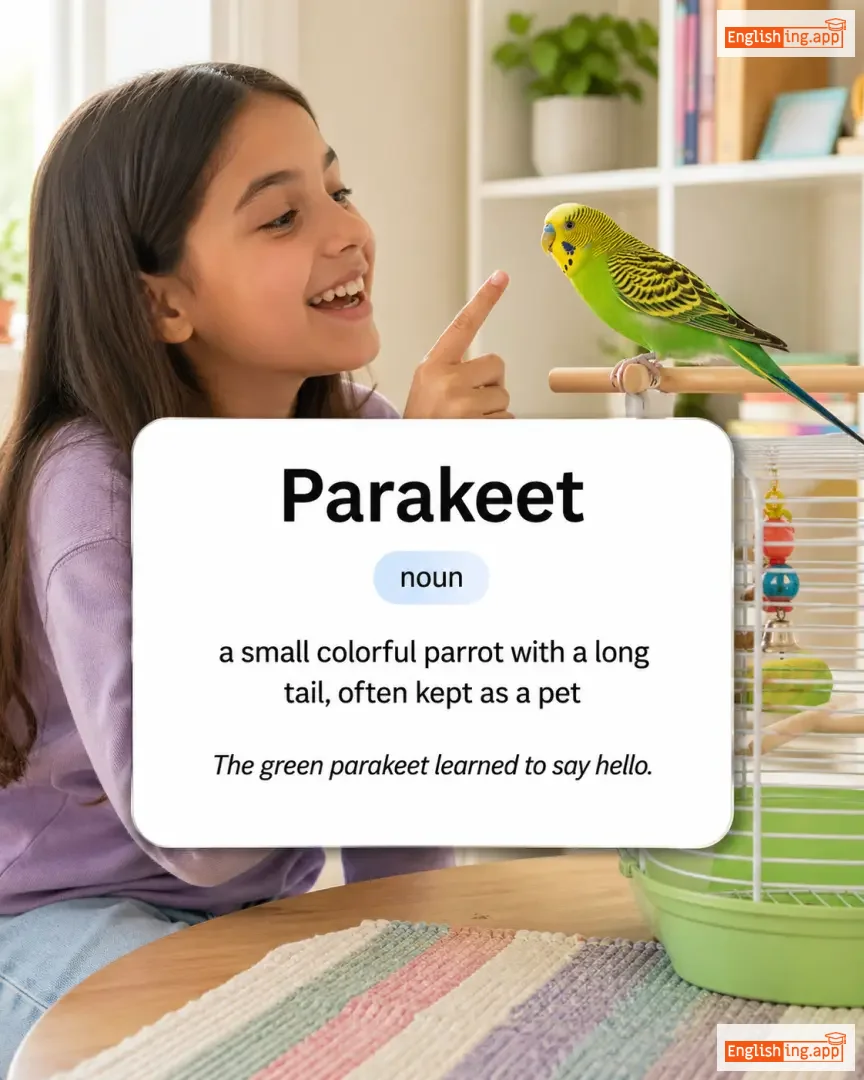
Parakeet definition card — visual illustration of the meaning
noun C1
/ˈpær.ə.kiːt/
টিয়াপাখি (tiyapakhi)

a small colorful parrot with a long tail, often kept as a pet

"The green parakeet learned to say hello."

"সবুজ টিয়াপাখিটি হ্যালো বলতে শিখল।" (sobuj tiyapakhiti hello bolte shikhlo)
noun C1
/ˈpærəˌlɛlɪzəm/
সমান্তরালতা (somantoralota)

The state of being parallel or similar; in literature, the use of components in a sentence that are grammatically the same or similar in construction.

"The writer used parallelism to give rhythm to his prose."

"লেখক তার গদ্যে ছন্দ আনতে সমান্তরালতা ব্যবহার করেছেন।" (Lekhok tar goddye chhondo ante somantoralota byabohar korechen.)
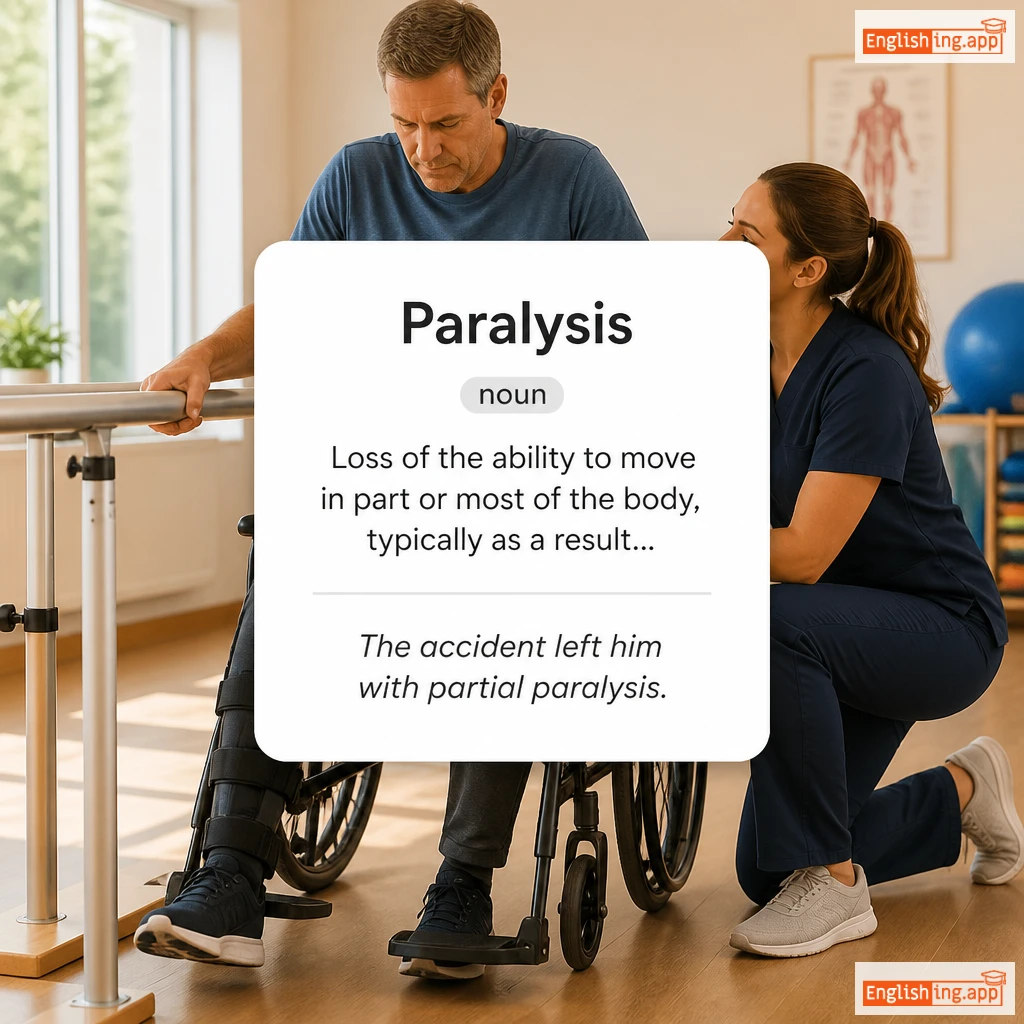
Paralysis definition card — visual illustration of the meaning
noun C1
/pəˈræləsɪs/
পক্ষাঘাত (pokkhaghat)

Loss of the ability to move in part or most of the body, typically as a result of illness or injury.

"The accident left him with partial paralysis."

"দুর্ঘটনায় তার আংশিক পক্ষাঘাত হয়েছিল।" (Durghotonay tar angshik pokkhaghat hoyechilo.)
verb C1
/ˈpærəlaɪz/
অচল করে দেওয়া (ochol kore dewa)

to cause someone or something to lose the ability to move or function normally

"The sudden shock seemed to paralyze him."

"হঠাৎ ধাক্কাটি তাকে অচল করে দিয়েছিল।" (Hothat dhakkati take ochol kore diyechilo.)
adjective C1
/ˈpærəmaʊnt/
অত্যন্ত গুরুত্বপূর্ণ (ottonto guruttopurno)

more important than anything else; supreme

"Safety is of paramount importance in this factory."

"এই কারখানায় নিরাপত্তা অত্যন্ত গুরুত্বপূর্ণ।" (Ei karkhanay nirapotta ottonto guruttopurno.)
noun C1
/ˌpærəˈnɔɪə/
অকারণ ভয় বা সন্দেহ (okaron bhoy ba sondheho)

an irrational and persistent feeling that people are 'out to get you' or are constantly watching you

"His constant paranoia made it hard for him to trust anyone."

"তার ক্রমাগত ভয় তাকে কারো উপর বিশ্বাস রাখতে দেয়নি।" (Tar kromogoto bhoy take karo upor bishash rakhte dayni.)
adjective C1
/ˈpær.ə.nɔɪd/
অযৌক্তিক সন্দেহপ্রবণ (oyojktik shondehoprobono)

having an unreasonable fear or suspicion of others

"She became paranoid after hearing strange noises outside."

"অদ্ভুত শব্দ শোনার পর সে সন্দেহপ্রবণ হয়ে উঠল।" (Odbhut shobdo shonar por se shondehoprobono hoye uthlo.)
noun C1
/ˌpærəfəˈneɪliə/
সরঞ্জামাদী (shorongamadi)

Miscellaneous articles, especially equipment needed for a particular activity.

"The fisherman carried all his fishing paraphernalia in a large box."

"জেলেটি তার সব মাছ ধরার সরঞ্জাম একটি বড় বাক্সে বহন করেছিল।" (Jeleti tar sob mach dhorar shorongam ekti boro bakse bohon korechilo.)
verb C1
/ˈpærəfreɪz/
অন্যভাবে বলা (onnobhabe bola)

To express the meaning of something using different words, often to make it clearer.

"The teacher asked the students to paraphrase the poem in their own words."

"শিক্ষক শিক্ষার্থীদের কবিতাটি নিজেদের ভাষায় অন্যভাবে বলার জন্য বলেছিলেন।" (Shikkhok shikkharthider kobitati nijeder vashay onnobhabe bolar jonno bolechilen.)
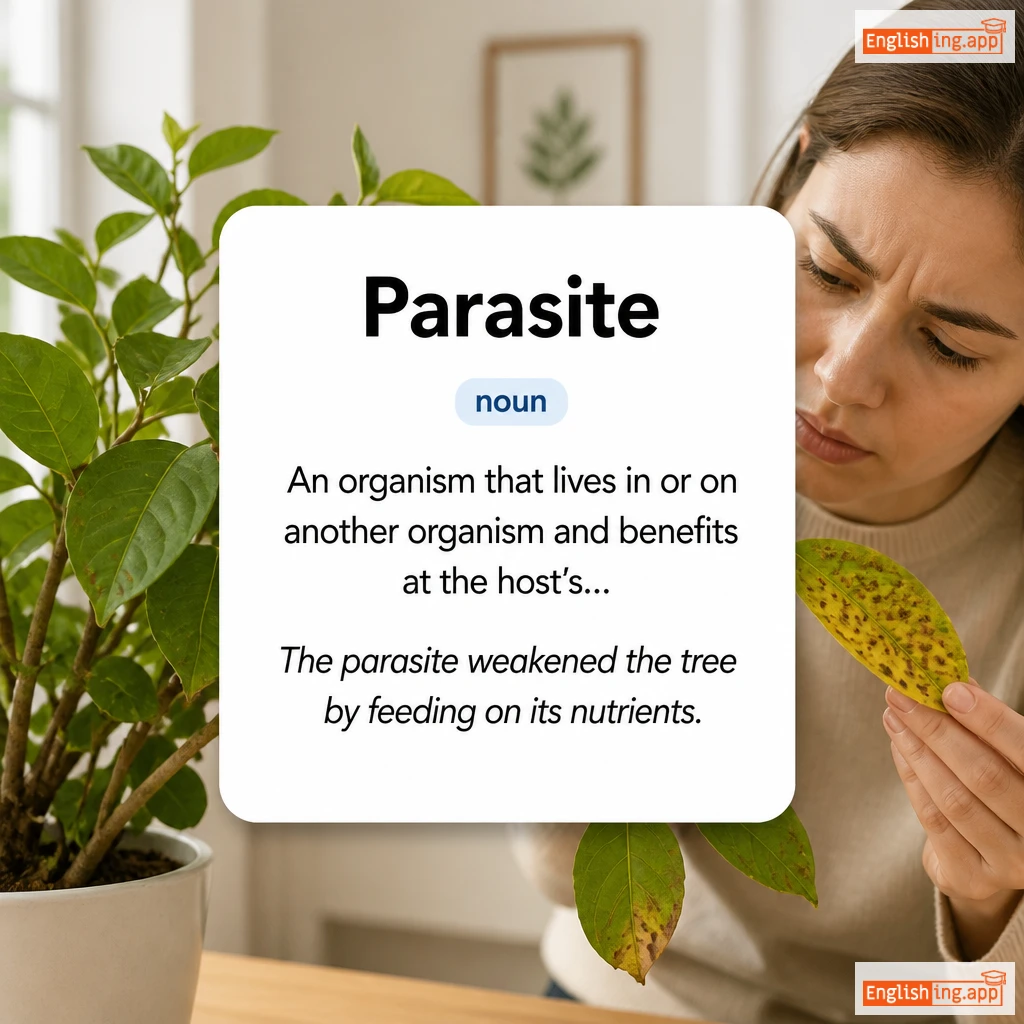
Parasite definition card — visual illustration of the meaning
noun C1
/ˈpærəsaɪt/
পরজীবী (porojibi)

An organism that lives in or on another organism and benefits at the host’s expense.

"The parasite weakened the tree by feeding on its nutrients."

"গাছটির পুষ্টি খেয়ে পরজীবী সেটিকে দুর্বল করে ফেলেছিল।" (Gachti pusti kheye porojibi setike durbol kore phelechilo.)
adjective C1
/pɑːrtʃt/
অত্যন্ত তৃষ্ণার্ত (otonto trishnarto)

extremely dry, especially because of heat or thirst

"After walking in the desert, he was parched with thirst."

"মরুভূমিতে হাঁটার পর সে তৃষ্ণায় শুকিয়ে গিয়েছিল।" (Moruvumite hantar por se trishnay shukie giyechhilo.)
noun C1
/ˈpɑːrtʃmənt/
চর্মলিপি (chormolipi)

a thin material made from animal skin, used in the past for writing

"The ancient manuscript was written on parchment."

"প্রাচীন পাণ্ডুলিপি চর্মলিপির উপর লেখা ছিল।" (Prachin pandulipi chormolipir upar lekha chhilo.)
adjective C1
/ˈpɑːr.dən.ə.bəl/
ক্ষমার যোগ্য; (pardonebol)

able to be forgiven; excusable

"His mistake was pardonable given the difficult circumstances."

"কঠিন পরিস্থিতির কারণে তার ভুলটি ক্ষমাযোগ্য ছিল।" (kothin poristhitir karone tar vulti kkhomajoggo chhilo)
verb C1
/per/
ছেঁটে ফেলা (chhete fela)

to cut away the outer covering or reduce something gradually

"She pared the apple before eating it."

"সে আপেল খাওয়ার আগে খোসা ছেঁটে ফেলল।" (Se apel khawar age khosa chhete felllo.)
noun C1
/ˈpɛrəntɪdʒ/
বংশধারা (bongshodhara)

The identity and origins of one's parents; descent or lineage.

"Her noble parentage gave her access to the royal court."

"তার মহৎ বংশধারা তাকে রাজদরবারে প্রবেশের সুযোগ দিয়েছিল।" (tar mohot bongshodhara take rajdorbare probesher sujog diyechhilo.)
noun C1
/pəˈrɛnθəsɪs/
ব্র্যাকেট (bracket)

A pair of curved marks ( ) used to enclose words or numbers; also an interruption or digression in speech or writing.

"The explanation was given in a parenthesis within the text."

"ব্যাখ্যাটি পাঠ্যের মধ্যে একটি ব্র্যাকেটের মধ্যে দেওয়া হয়েছিল।" (byakhyati pathyer modhye ekti bracket er modhye deowa hoyechhilo.)