Vocabularies

English Vocabulary Dictionary | Word Meanings, Definitions & Examples

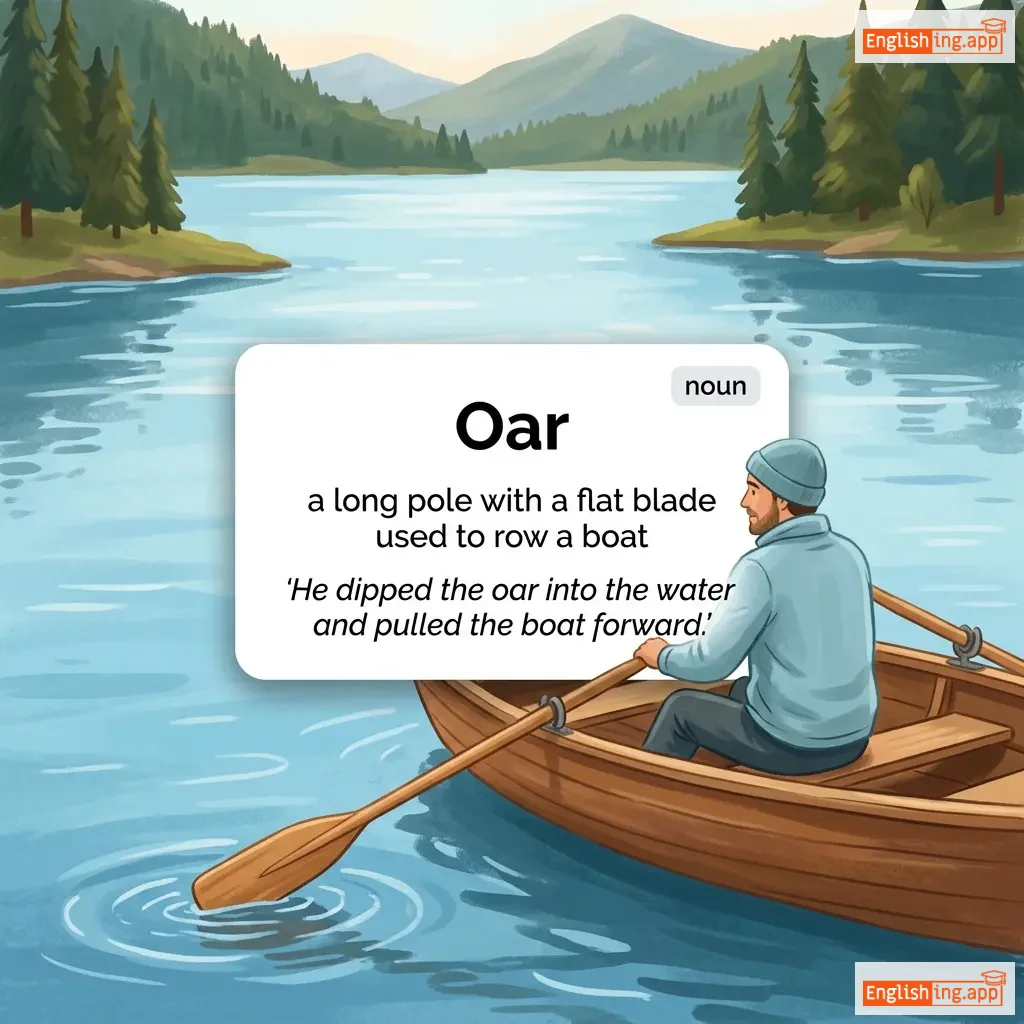
Oar definition card — visual illustration of the meaning
noun C1
/ɔːr/
aviron (aviron)

a long pole with a flat blade used to row a boat

"He dipped the oar into the water and pulled the boat forward."

"Il plongea l'aviron dans l'eau et tira le bateau en avant." (Il plongea l'aviron dans l'eau et tira le bateau en avant.)
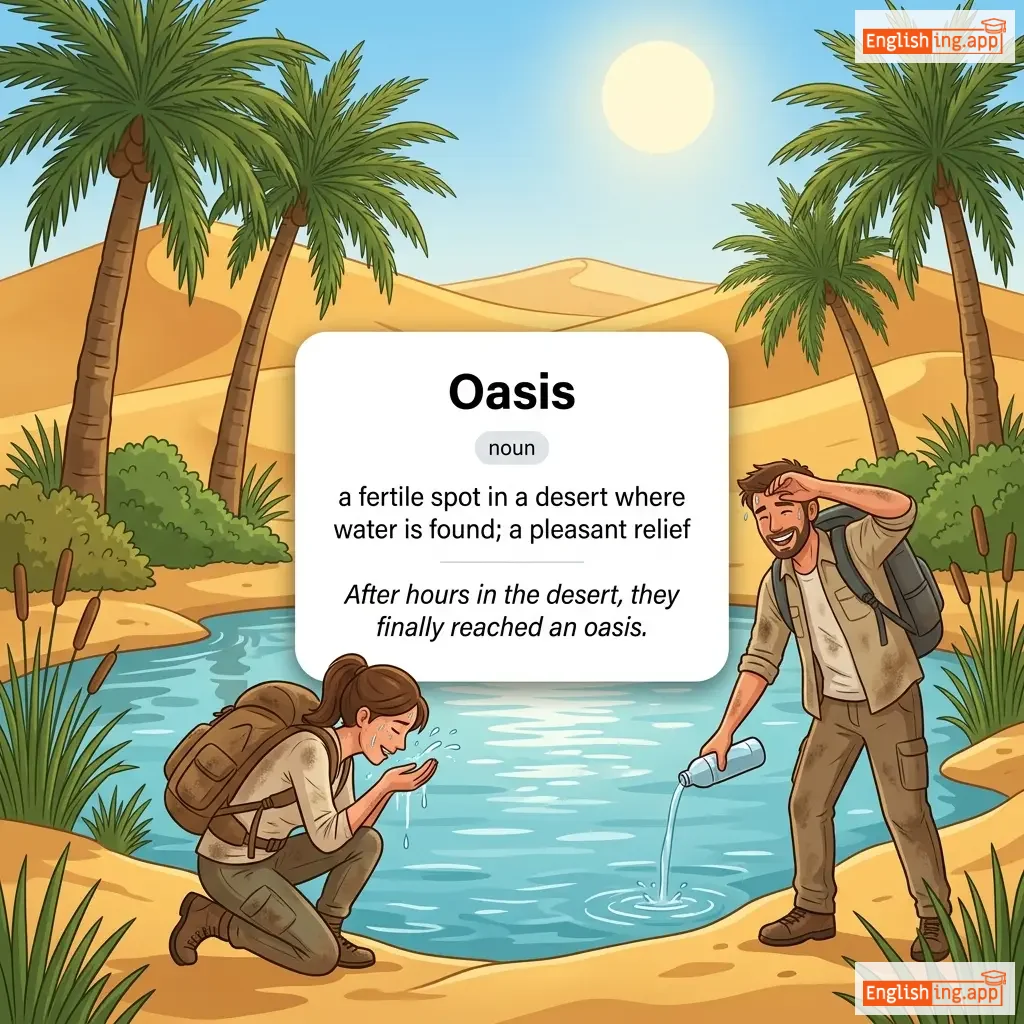
Oasis definition card — visual illustration of the meaning
noun C1
/oʊˈeɪ.sɪs/
oasis (oasis)

a fertile spot in a desert where water is found; a pleasant relief

"After hours in the desert, they finally reached an oasis."

"Après des heures dans le désert, ils ont enfin atteint un oasis." (Apres des heures dans le desert, ils ont enfin atteint un oasis.)
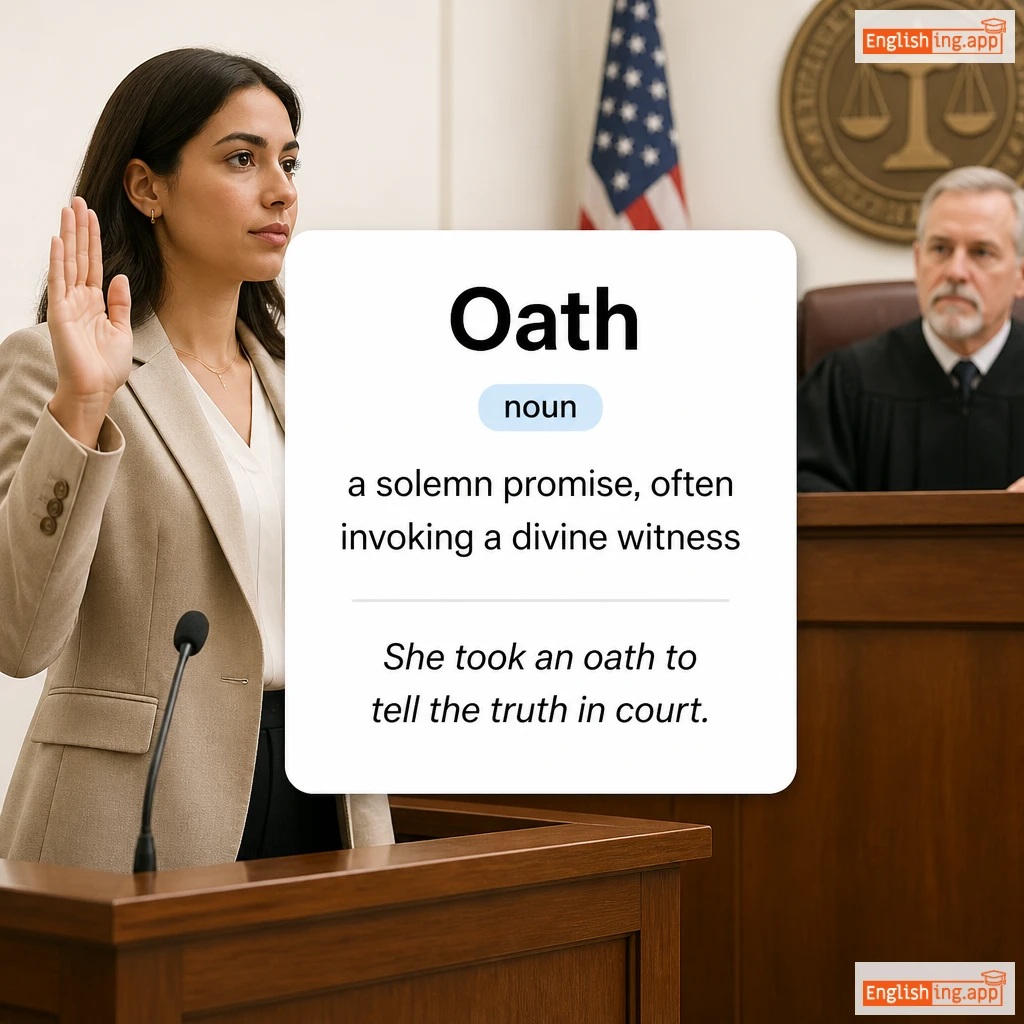
Oath definition card — visual illustration of the meaning
noun C1
/oʊθ/
serment (serment)

a solemn promise, often invoking a divine witness

"She took an oath to tell the truth in court."

"Elle a prêté serment de dire la vérité au tribunal." (Elle a prêté serment de dire la vérité au tribunal.)
adjective C1
/oʊˈbiːs/
obèse (obese)

Extremely overweight; having an excessive amount of body fat.

"The doctor advised the obese patient to adopt a healthier lifestyle."

"Le médecin a conseillé au patient obèse d'adopter un mode de vie plus sain." (Le medecin a conseille au patient obese d'adopter un mode de vie plus sain.)
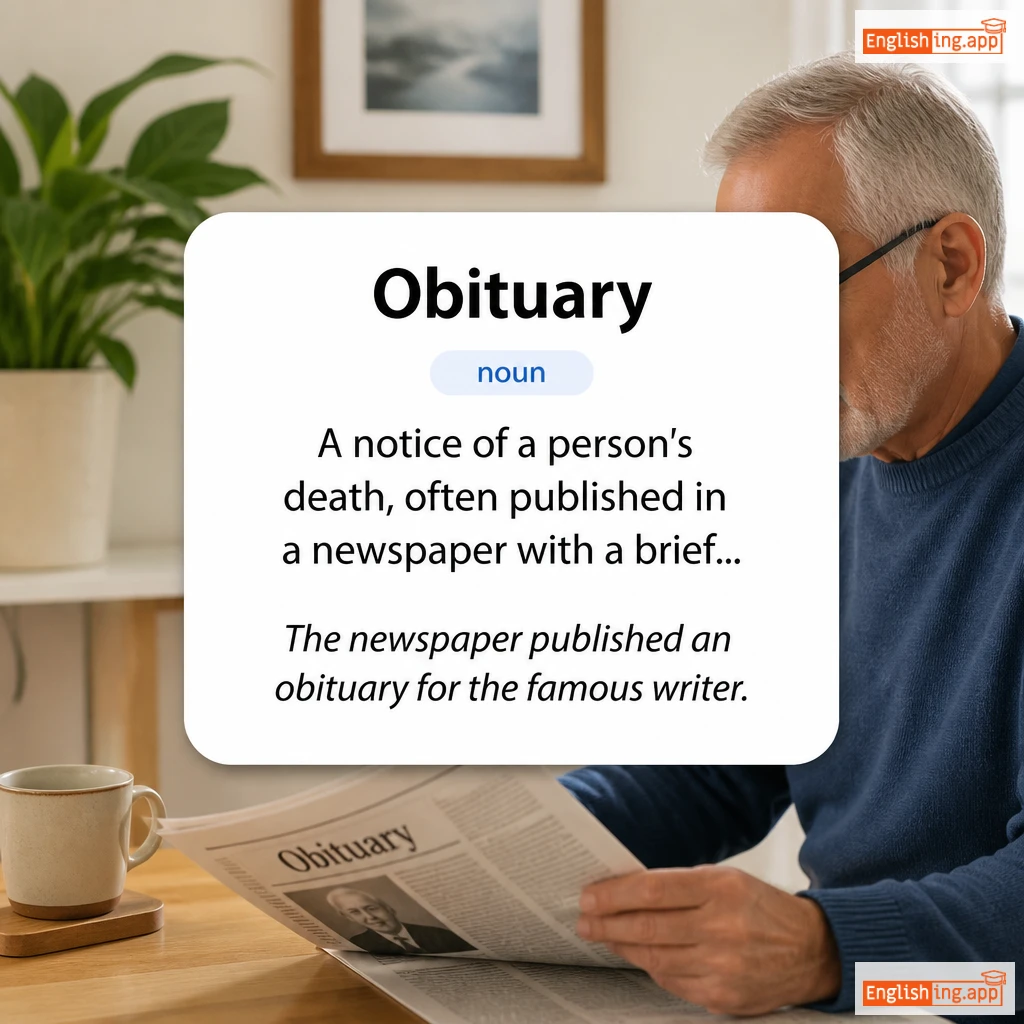
Obituary definition card — visual illustration of the meaning
noun C1
/əˈbɪtʃueri/
nécrologie (necroloji)

A notice of a person's death, often published in a newspaper with a brief biography.

"The newspaper published an obituary for the famous writer."

"Le journal a publié une nécrologie pour l'écrivain célèbre." (Le journal a publié une nécrologie pour l'écrivain célèbre.)
adjective C1
/əbˈdʒek.ʃən.ə.bəl/
objectionnable (objectionnable)

arousing distaste or opposition; unpleasant or offensive

"His objectionable behavior made everyone uncomfortable."

"Son comportement objectionnable a rendu tout le monde mal à l'aise." (Son comportement objectionnable a rendu tout le monde mal à l'aise.)
noun C1
/əbˈdʒɛktər/
opposant (opposant)

a person who expresses opposition or disapproval to something

"The objector raised his concerns during the town meeting."

"L'opposant a exprimé ses préoccupations lors de la réunion municipale." (L'opposant a exprime ses preoccupations lors de la reunion municipale.)
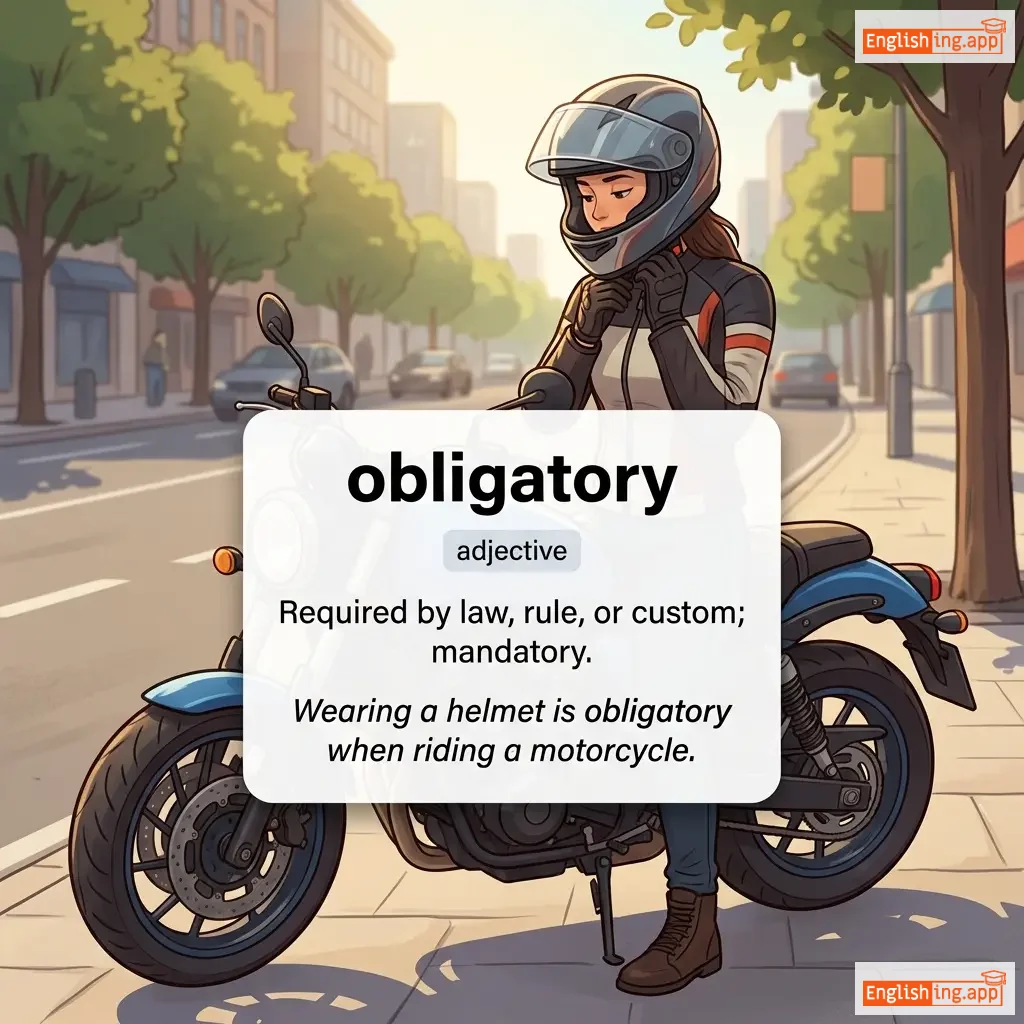
obligatory definition card — visual illustration of the meaning
adjective C1
/əˈblɪɡətɔːri/
obligatoire (obligatoire)

Required by law, rule, or custom; mandatory.

"Wearing a helmet is obligatory when riding a motorcycle."

"Le port du casque est obligatoire lorsque vous roulez à moto." (Le port du casque est obligatoire lorsque vous roulez a moto.)
adjective C1
/əˈblaɪdʒɪŋ/
serviable (serviable)

Willing to help or do favors; accommodating.

"The staff at the hotel were very obliging and friendly."

"Le personnel de l'hôtel était très serviable et amical." (Le personnel de l'hôtel était très serviable et amical.)
adjective C1
/əˈbliːk/ or /oʊˈbliːk/
oblique (oblik)

Not explicit or direct in addressing a point; slanting or indirect.

"She made an oblique reference to his past mistakes."

"Elle a fait une référence oblique à ses erreurs passées." (Elle a fait une référence oblique à ses erreurs passées.)
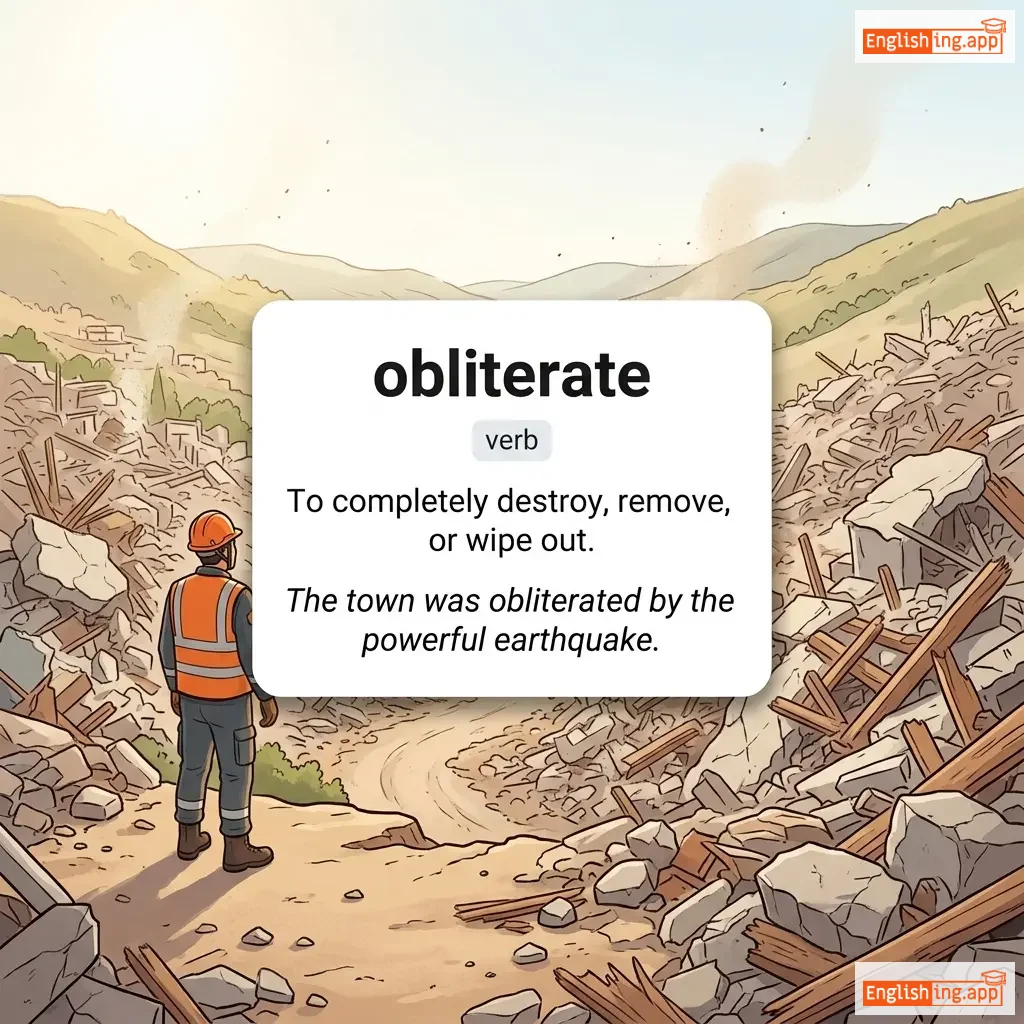
obliterate definition card — visual illustration of the meaning
verb C1
/əˈblɪtəreɪt/
détruire complètement (detruire completement)

To completely destroy, remove, or wipe out.

"The town was obliterated by the powerful earthquake."

"La ville a été détruite par le puissant tremblement de terre." (La ville a été détruite par le puissant tremblement de terre.)
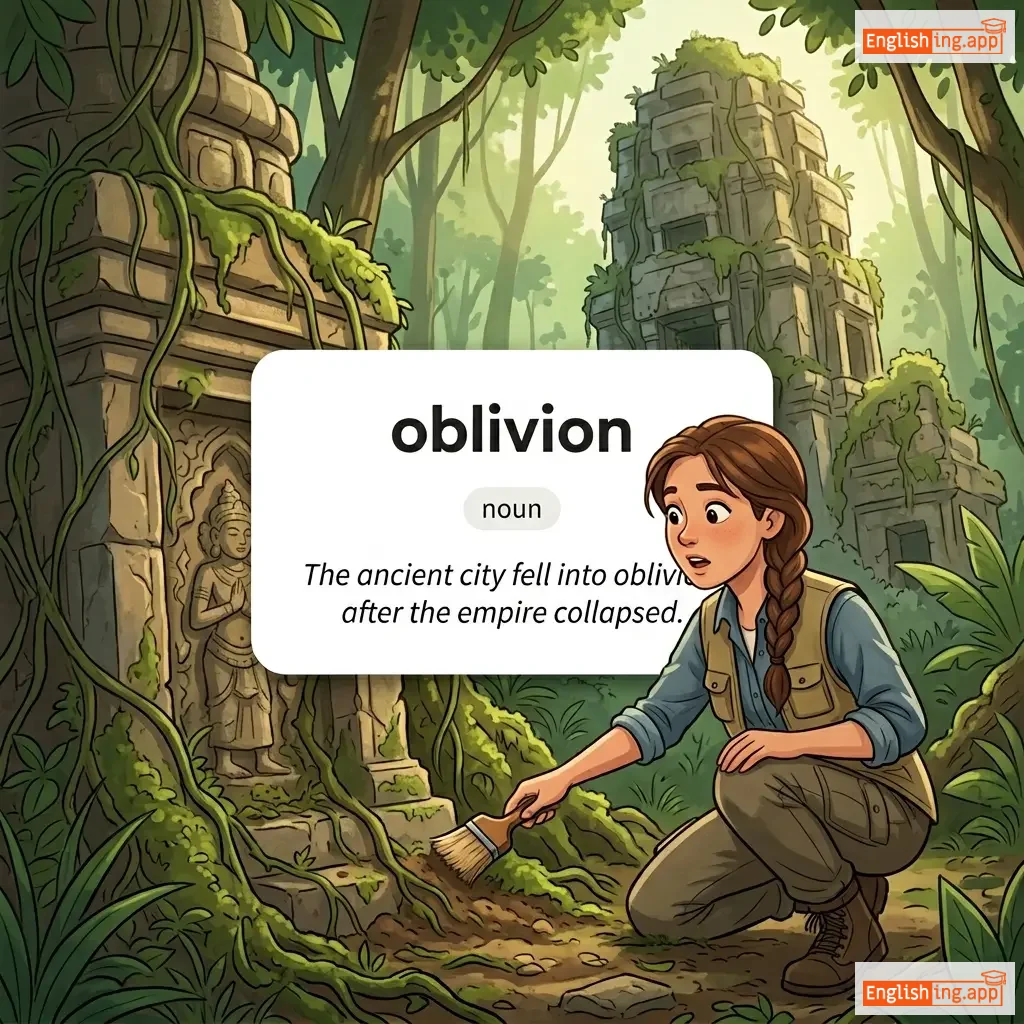
oblivion definition card — visual illustration of the meaning
noun C1
/əˈblɪviən/
oubli (oubli)

The state of being completely forgotten or unknown; the state of being unconscious or unaware.

"The ancient city fell into oblivion after the empire collapsed."

"La ville antique est tombée dans l'oubli après l'effondrement de l'empire." (La ville antique est tombée dans l'oubli après l'effondrement de l'empire.)
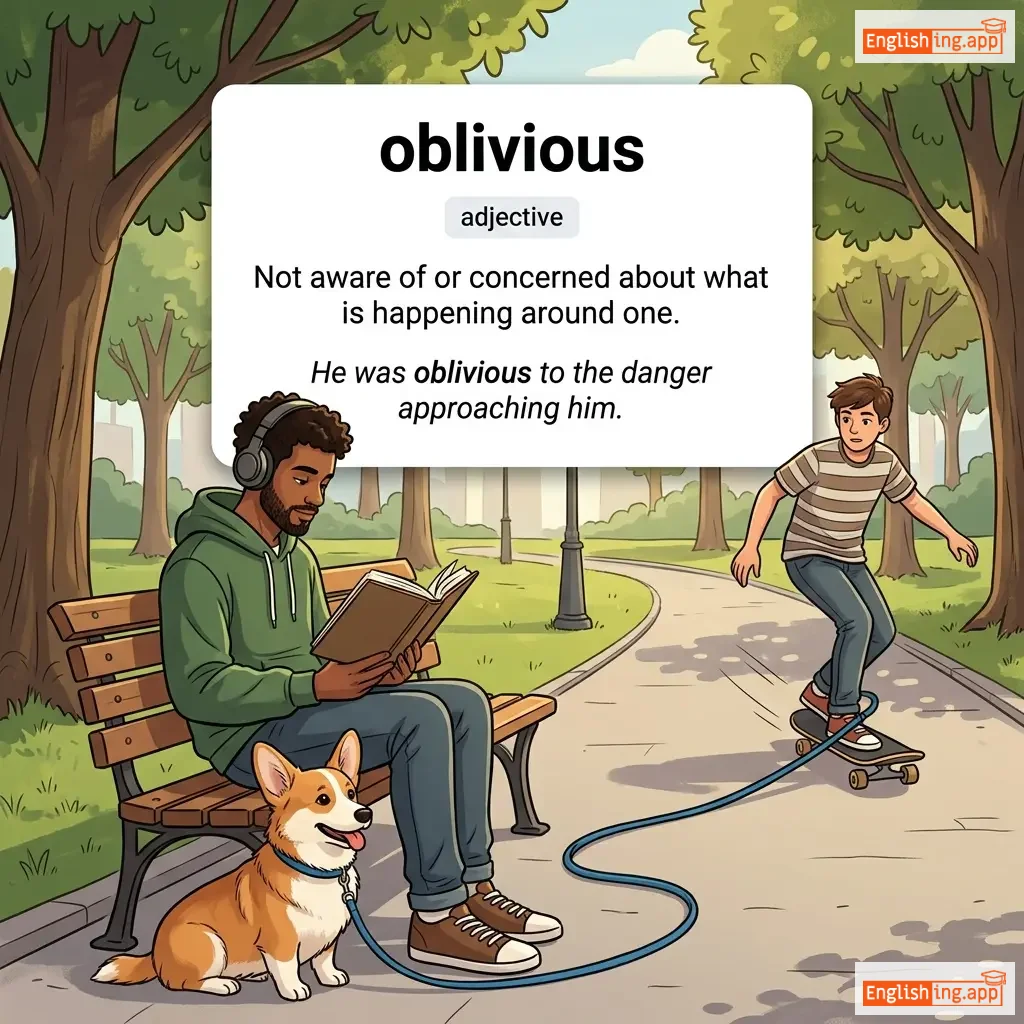
oblivious definition card — visual illustration of the meaning
adjective C1
/əˈblɪviəs/
inconscient (uhbliviyuhs)

Not aware of or concerned about what is happening around one.

"He was oblivious to the danger approaching him."

"Il ne se rendait pas compte du danger qui approchait de lui." (Il ne se rendait pas compte du danger qui approchait de lui)
adjective C1
/əbˈnɒkʃəs/
désagréable (desagreable)

Extremely unpleasant, offensive, or annoying.

"The obnoxious behavior of the guest ruined the party."

"Le comportement désagréable de l'invité a ruiné la fête." (Le comportement desagreable de l'invité a ruiné la fête.)
noun C1
/əbˈzɜːvəns/
observance (observance)

The practice of following a custom, rule, or religious law.

"The festival is held in observance of a centuries-old tradition."

"Le festival est organisé en observance d'une tradition séculaire." (Le festival est organise en observance d'une tradition seculaire.)
adjective C1
/əbˈzɜːvənt/
observateur (observateur)

Quick to notice details or attentive to rules and customs.

"She is very observant and rarely misses any detail."

"Elle est très observatrice et manque rarement un détail." (Elle est tres observatrice et manque rarement un detail.)
noun C1
/əbˈzɜːrvətɔːri/
observatoire (observatoire)

A building equipped for observing astronomical or meteorological events.

"The observatory is open to the public on weekends."

"L'observatoire est ouvert au public le week-end." (L'observatoire est ouvert au public le week-end.)
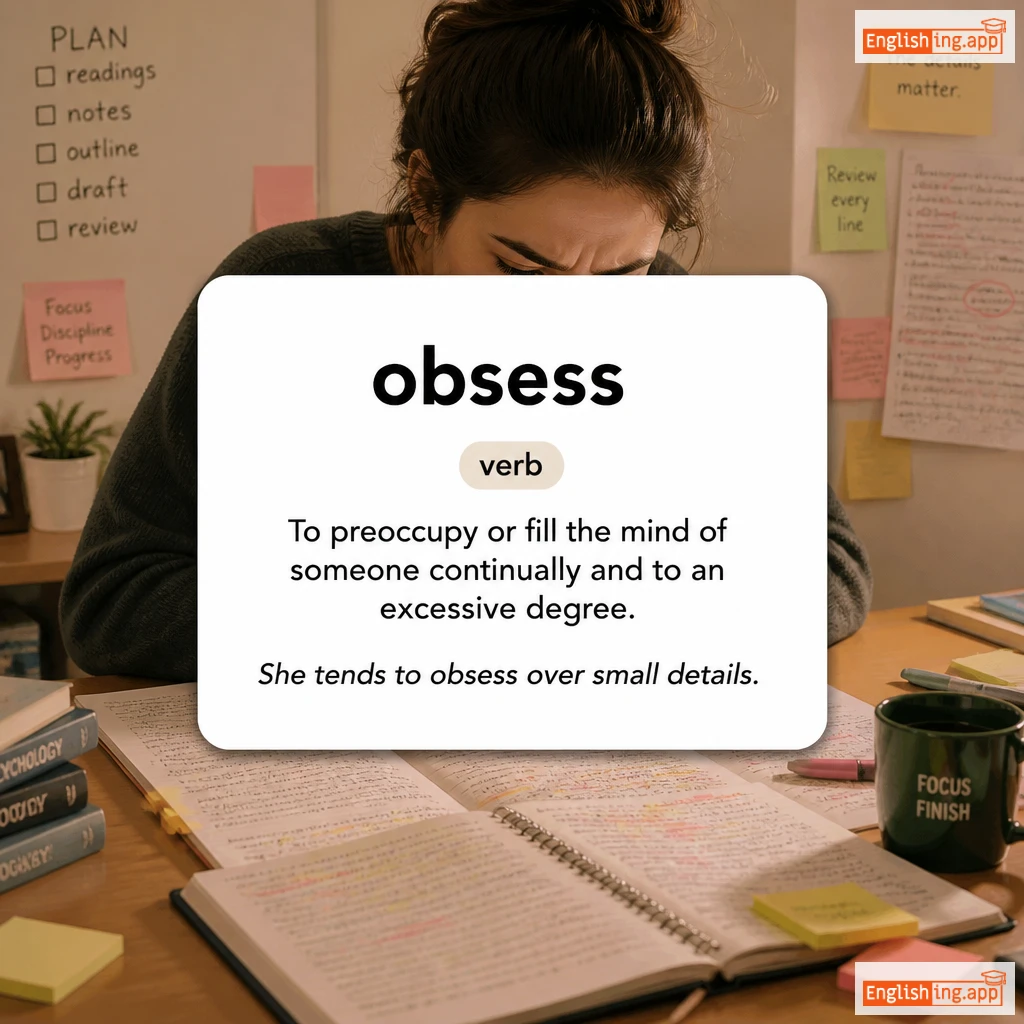
obsess definition card — visual illustration of the meaning
verb C1
/əbˈsɛs/
obséder (obseder)

To preoccupy or fill the mind of someone continually and to an excessive degree.

"She tends to obsess over small details."

"Elle a tendance à s'obséder sur de petits détails." (Elle a tendance à s'obséder sur de petits détails.)
adjective C1
/əbˈsɛsɪv/
obsessionnel (obsessionnel)

Relating to or characterized by an obsession; thinking about something too much.

"He has an obsessive interest in cleanliness."

"Il a un intérêt obsessionnel pour la propreté." (Il a un intérêt obsessionnel pour la propreté.)
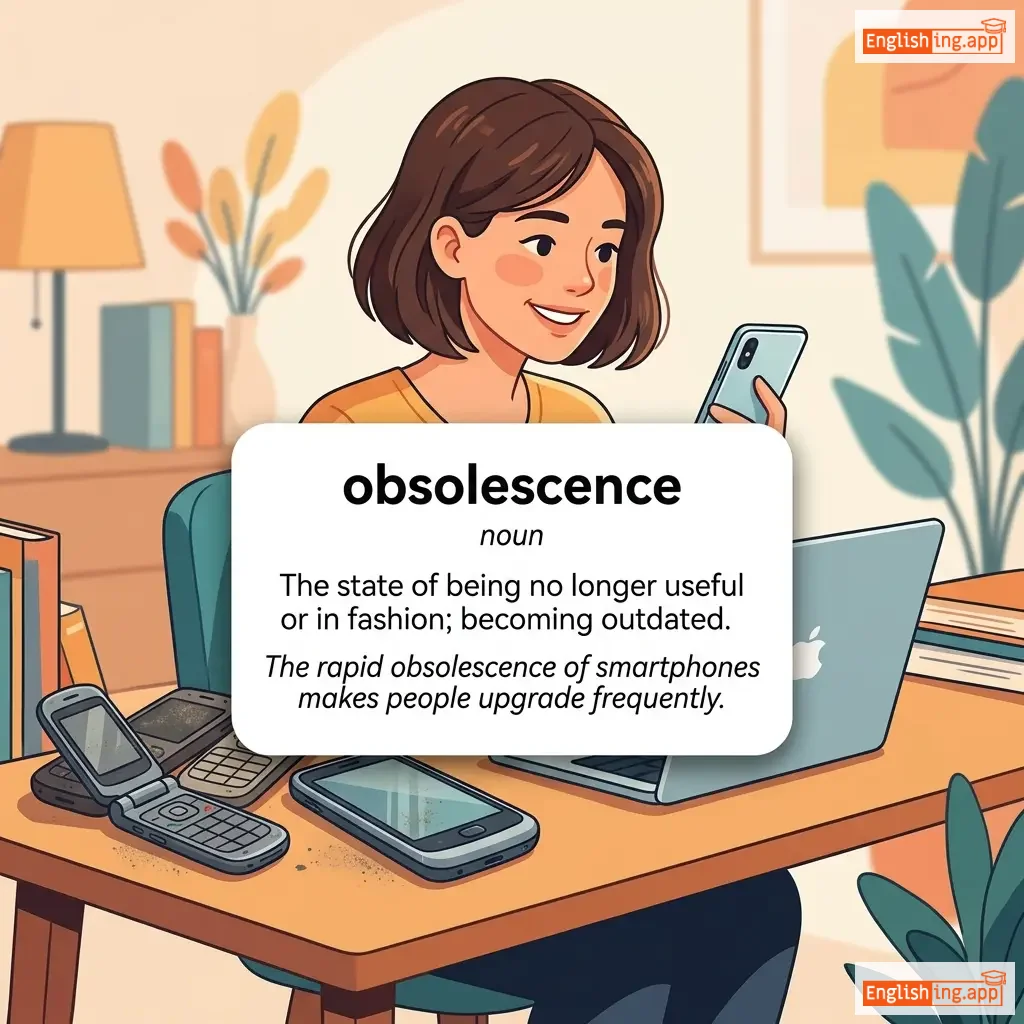
obsolescence definition card — visual illustration of the meaning
noun C1
/ˌɒbsəˈlɛsəns/
obsolescence (obsolescence)

The state of being no longer useful or in fashion; becoming outdated.

"The rapid obsolescence of smartphones makes people upgrade frequently."

"La rapide obsolescence des smartphones pousse les gens à mettre à jour fréquemment." (La rapide obsolescence des smartphones pousse les gens à mettre à jour fréquemment.)
adjective C1
/ˌɒbsəˈliːt/
obsolète (obsolete)

No longer in use or out of date.

"Floppy disks are now completely obsolete."

"Les disquettes sont maintenant complètement obsolètes." (Les disquettes sont maintenant complètement obsolètes.)
noun C1
/ˌɒbstəˈtrɪʃən/
obstétricien (obstetricien)

A doctor specializing in pregnancy, childbirth, and women's reproductive health.

"The obstetrician monitored the mother’s health throughout the pregnancy."

"L'obstétricien a surveillé la santé de la mère tout au long de la grossesse." (L'obstetricien a surveille la sante de la mere tout au long de la grossesse.)
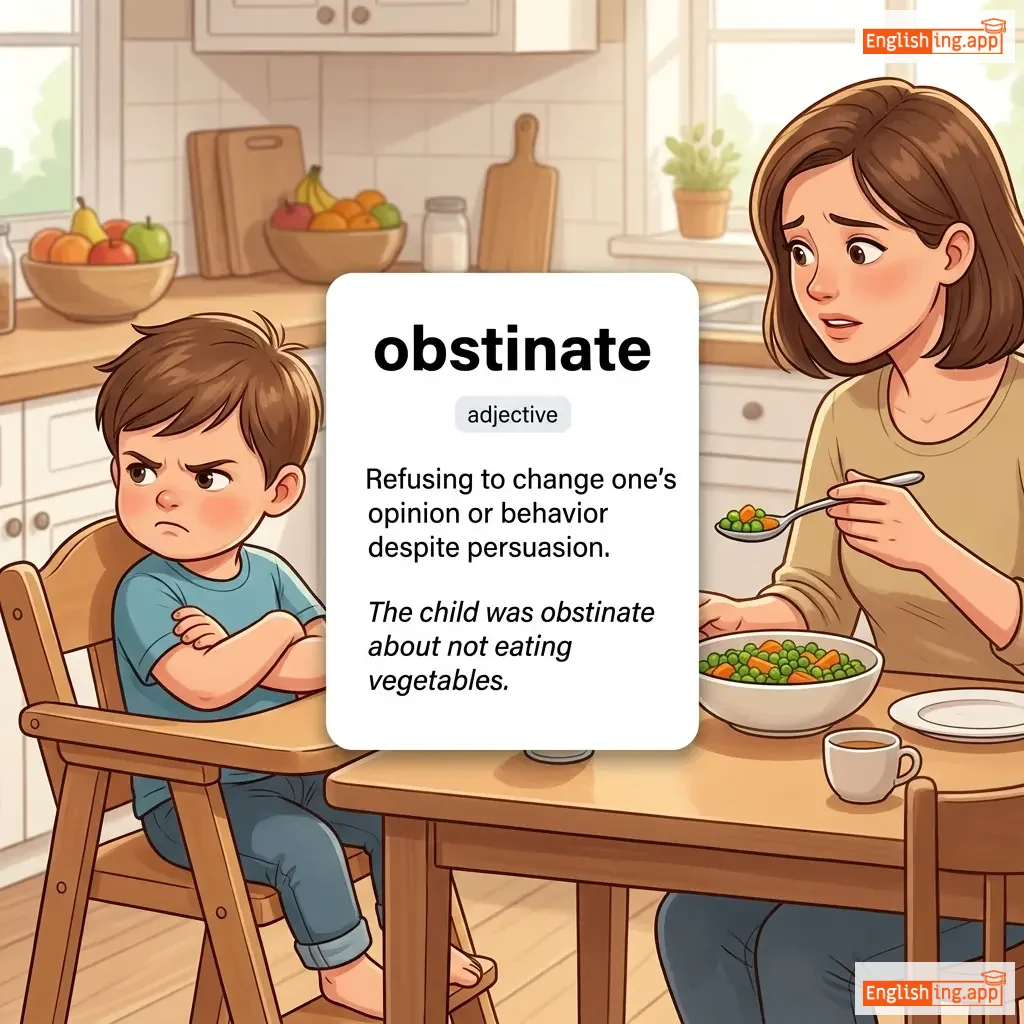
obstinate definition card — visual illustration of the meaning
adjective C1
/ˈɒbstɪnət/
têtu (tetu)

Refusing to change one’s opinion or behavior despite persuasion.

"The child was obstinate about not eating vegetables."

"L'enfant était têtu à ne pas manger de légumes." (L'enfant était têtu à ne pas manger de légumes.)
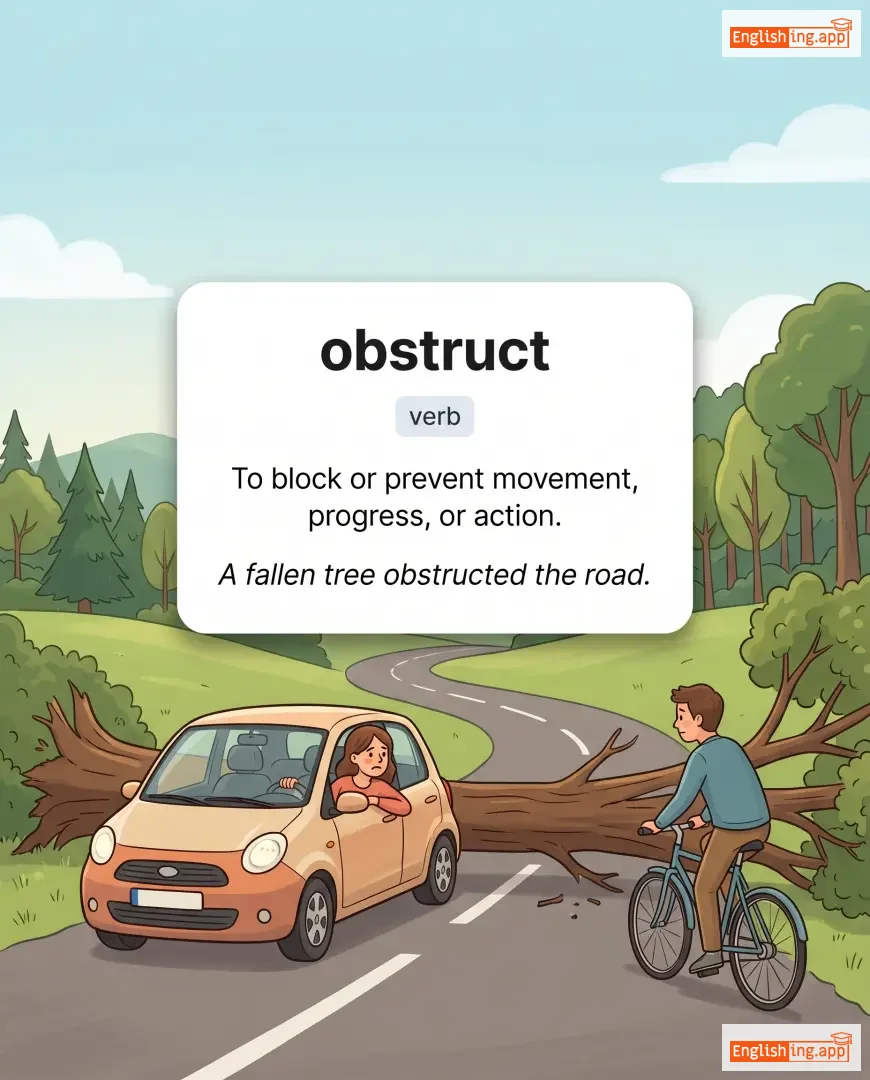
obstruct definition card — visual illustration of the meaning
verb C1
/əbˈstrʌkt/
obstruer (obstruer)

To block or prevent movement, progress, or action.

"A fallen tree obstructed the road."

"Un arbre tombé a obstrué la route." (Un arbre tombé a obstrué la route.)
noun C1
/əbˈstrʌkʃən/
obstacle (obstacle)

Something that blocks or gets in the way; the action of obstructing.

"There was an obstruction on the railway track."

"Il y avait un obstacle sur la voie ferrée." (Il y avait un obstacle sur la voie ferrée.)
adjective C1
/əbˈstrʌk.tɪv/
obstructif (Obstruktif)

deliberately creating difficulties or preventing progress; hindering or blocking something

"The obstructive policies hindered economic growth."

"Les politiques obstructives ont entravé la croissance économique." (Les politiques obstructives ont entrave la croissance economique.)
adjective C1
/əbˈtjuːs/
obtus (obtus)

slow to understand; annoyingly insensitive; also refers to an angle greater than 90° and less than 180°

"He was too obtuse to realize the insult."

"Il était trop obtus pour comprendre l'insulte." (Il était trop obtus pour comprendre l'insulte.)
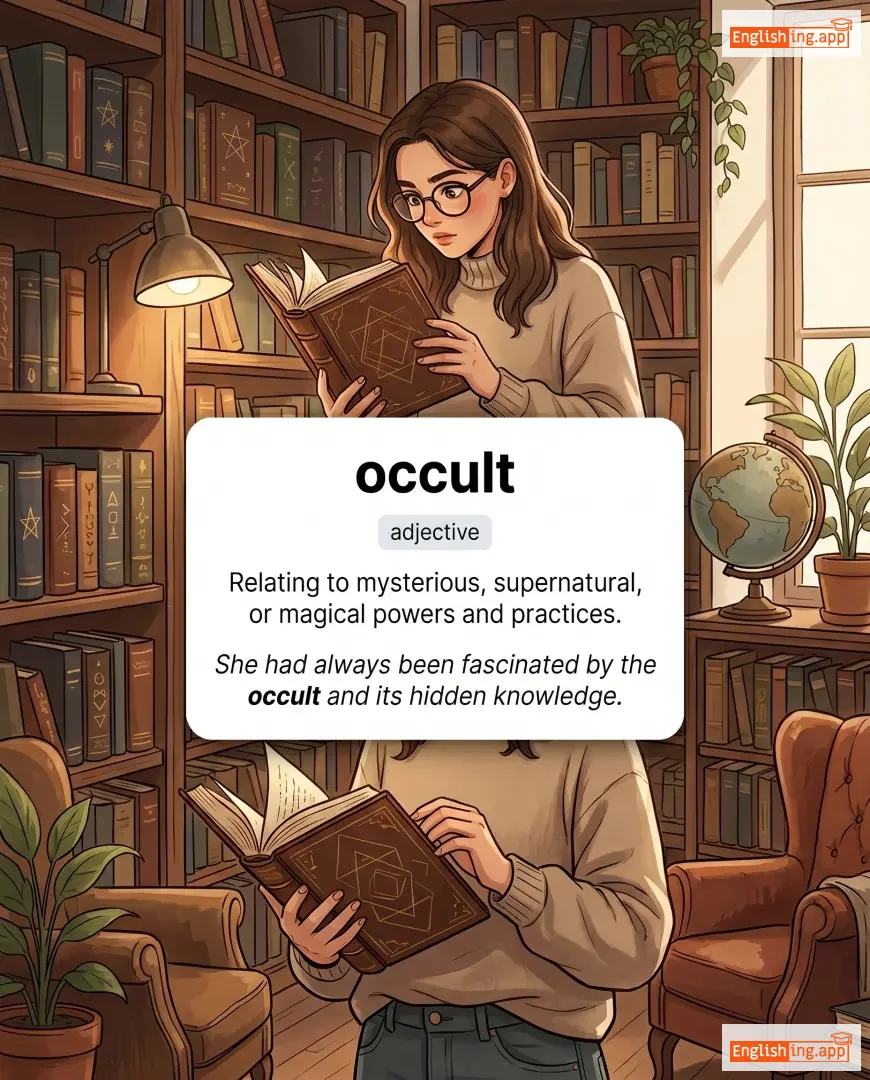
occult definition card — visual illustration of the meaning
adjective C1
/əˈkʌlt/
occultes (occultes)

Relating to mysterious, supernatural, or magical powers and practices.

"She had always been fascinated by the occult and its hidden knowledge."

"Elle a toujours été fascinée par l'occulte et sa connaissance cachée." (Elle a toujours été fascinée par l'occulte et sa connaissance cachée.)
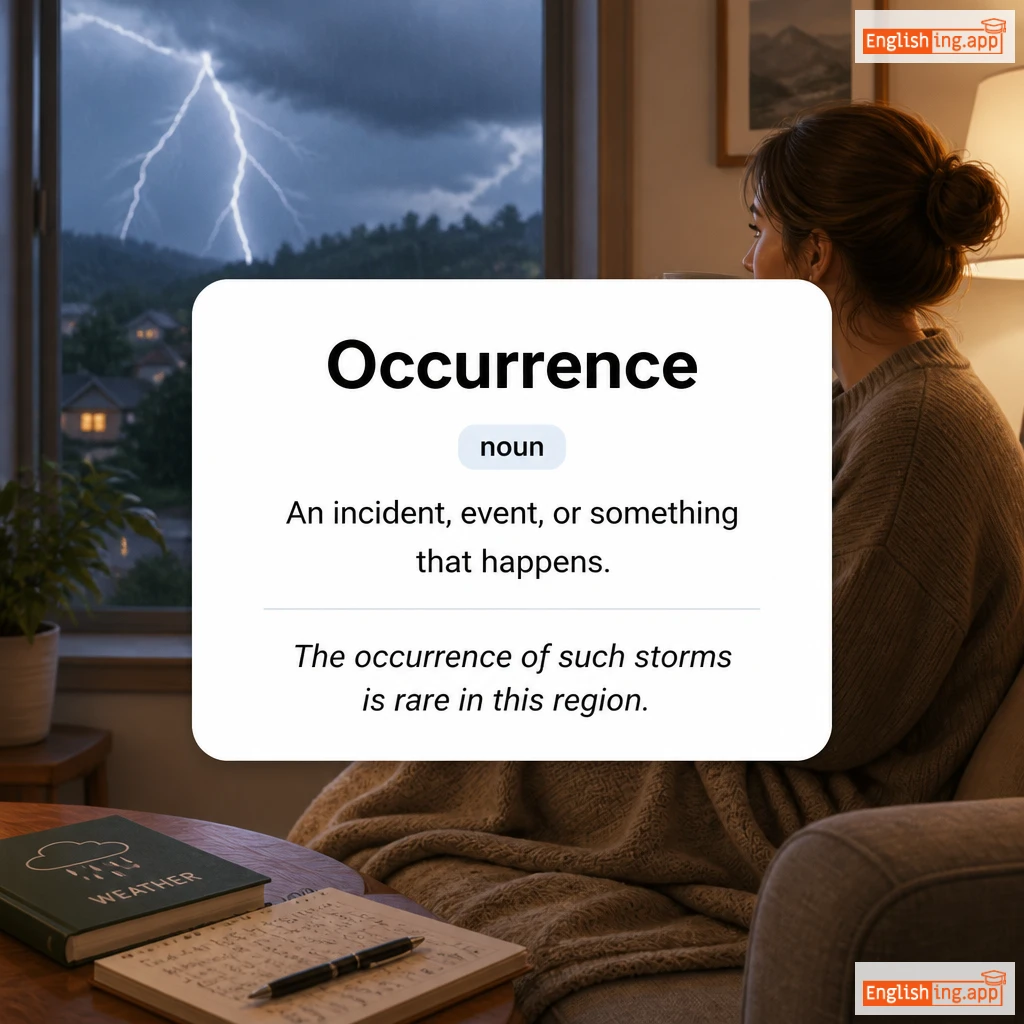
Occurrence definition card — visual illustration of the meaning
noun C1
/əˈkʌrəns/
apparition (apparition)

An incident, event, or something that happens.

"The occurrence of such storms is rare in this region."

"L'apparition de telles tempêtes est rare dans cette région." (Lapparition de telles tempetes est rare dans cette region.)
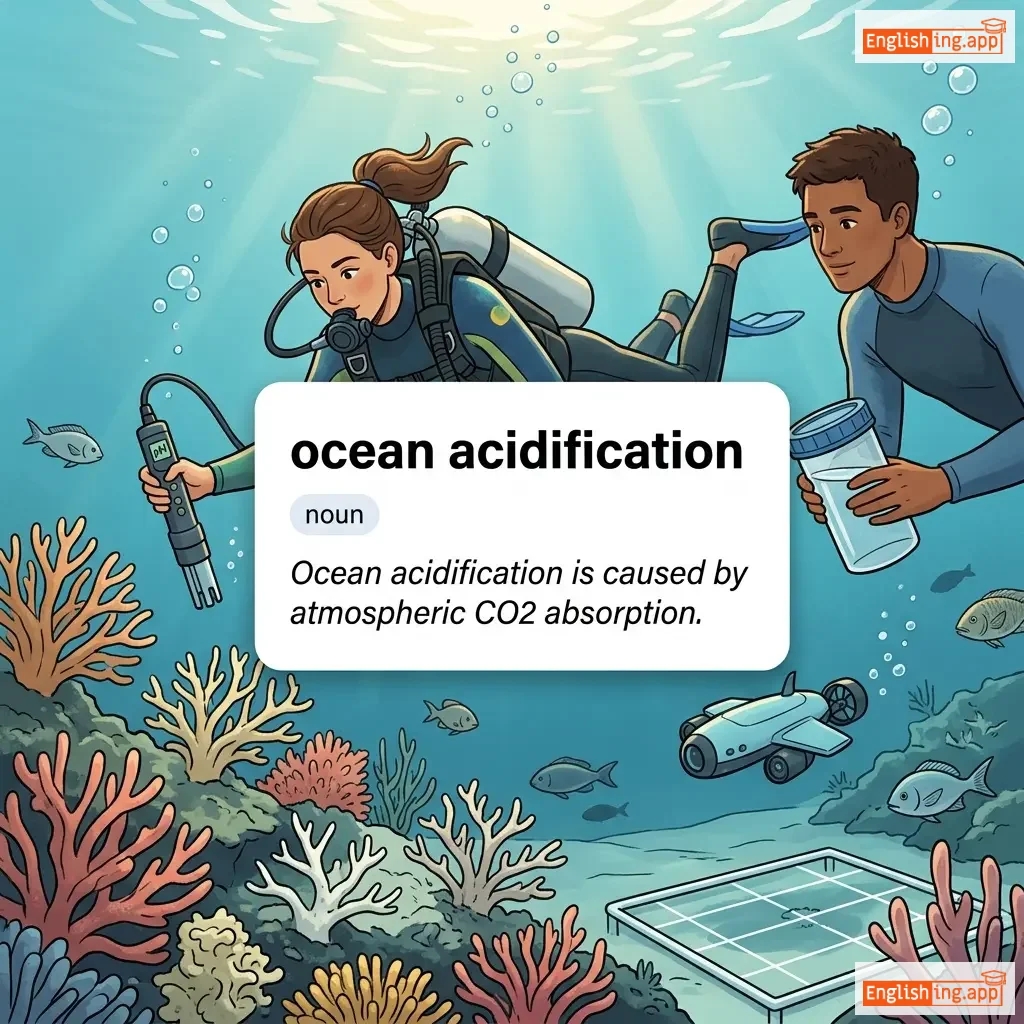
ocean acidification definition card — visual illustration of the meaning
noun C1
ˈoʊʃən əˌsɪdɪfɪˈkeɪʃən
acidification océanique (acidification oceanique)

The ongoing decrease in the pH of the Earth's oceans, caused by the absorption of carbon dioxide from the atmosphere.

"Ocean acidification is caused by atmospheric CO2 absorption."

"L'acidification océanique est causée par l'absorption du CO2 atmosphérique." (L'acidification oceanique est causee par l'absorption du CO2 atmospherique.)
noun C1
/ˈɒktəɡən/
octogone (octogone)

A polygon with eight sides and eight angles.

"The stop sign is shaped like an octagon."

"Le panneau stop a la forme d'un octogone." (Le panneau stop a la forme d'un octogone.)
noun C1
/ˈɒktɪv/
octave (oktav)

A series of eight musical notes, or the interval between one musical pitch and another with double its frequency.

"The singer's voice could easily reach the higher octave."

"La voix du chanteur pourrait facilement atteindre l'octave supérieure." (La voix du chanteur pourrait facilement atteindre l octave superieure.)
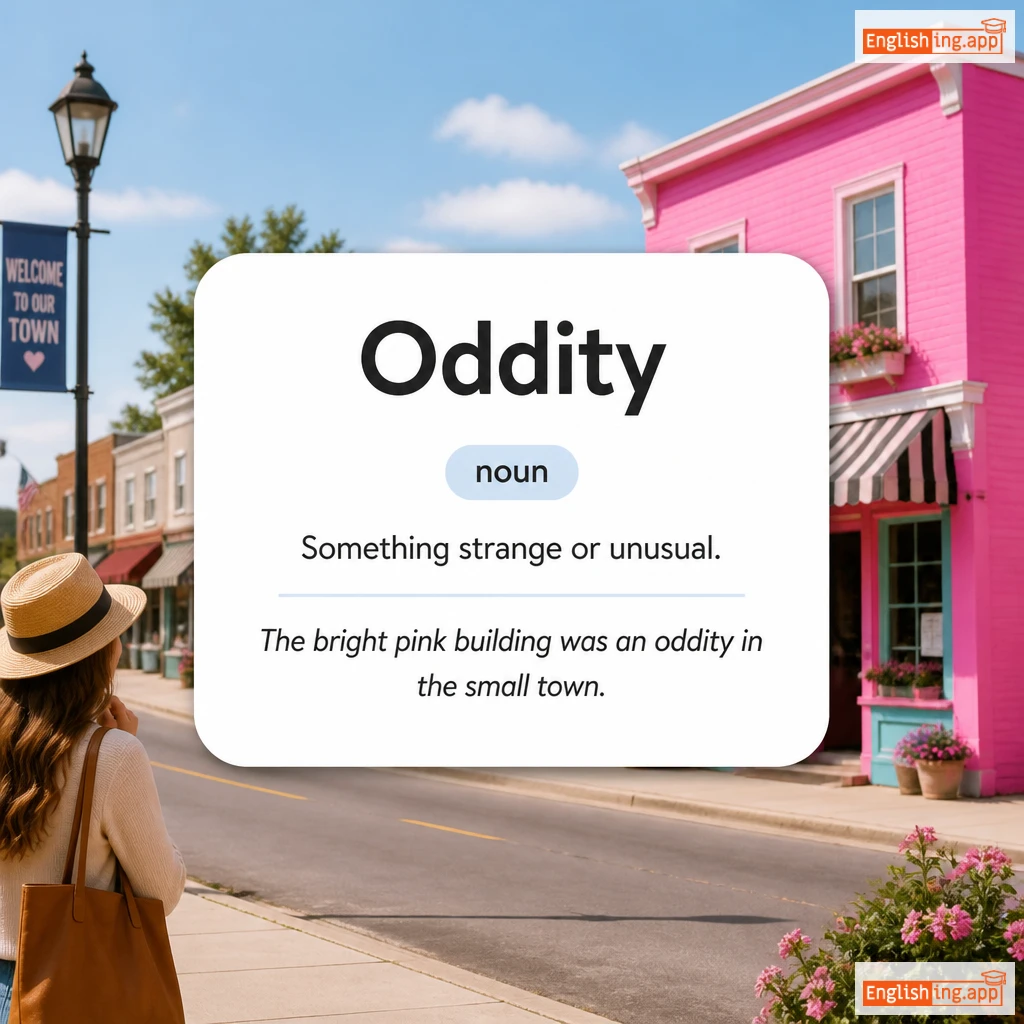
Oddity definition card — visual illustration of the meaning
noun C1
/ˈɒdəti/
bizarrerie (bizarrerie)

Something strange or unusual.

"The bright pink building was an oddity in the small town."

"Le bâtiment rose vif était une bizarrerie dans la petite ville." (Le bâtiment rose vif était une bizarrerie dans la petite ville.)
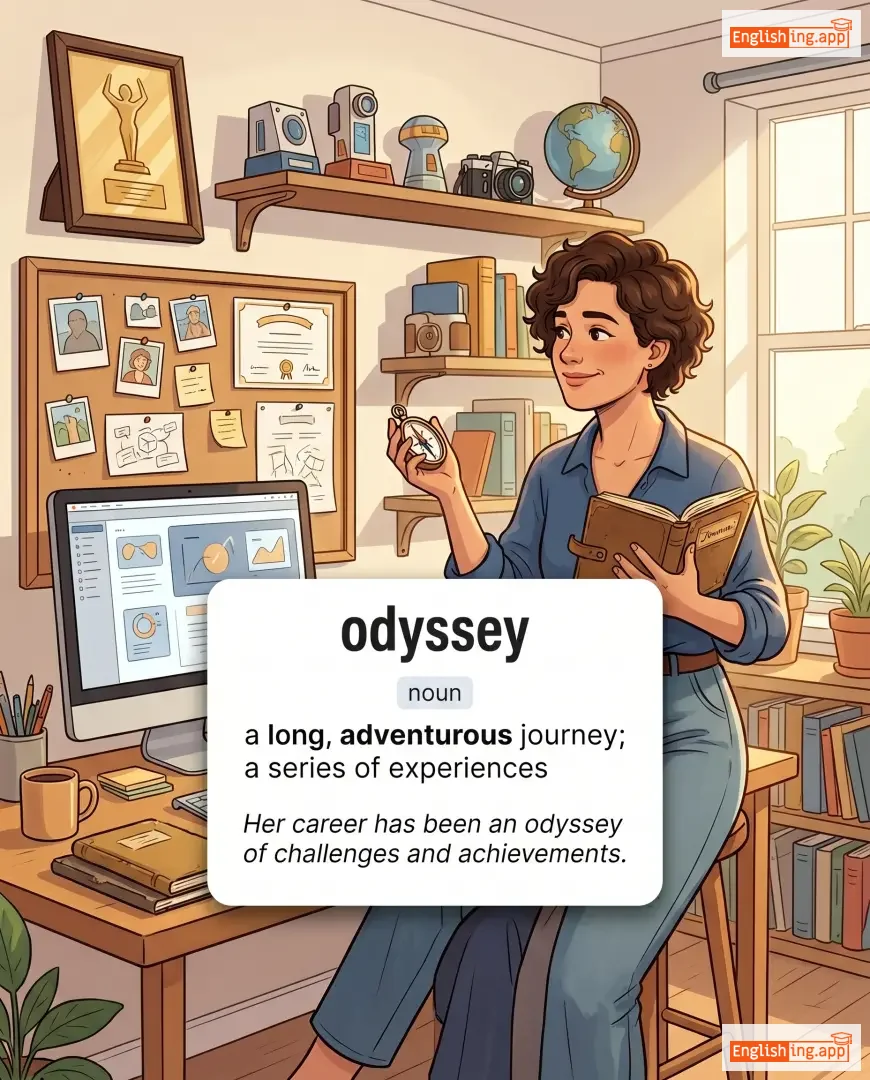
odyssey definition card — visual illustration of the meaning
noun C1
/ˈɑːdəsi/
long voyage (long voyage)

a long, adventurous journey; a series of experiences

"Her career has been an odyssey of challenges and achievements."

"Sa carrière a été une odyssée de défis et de réussites." (Sa carrière a été une odyssée de défis et de réussites.)
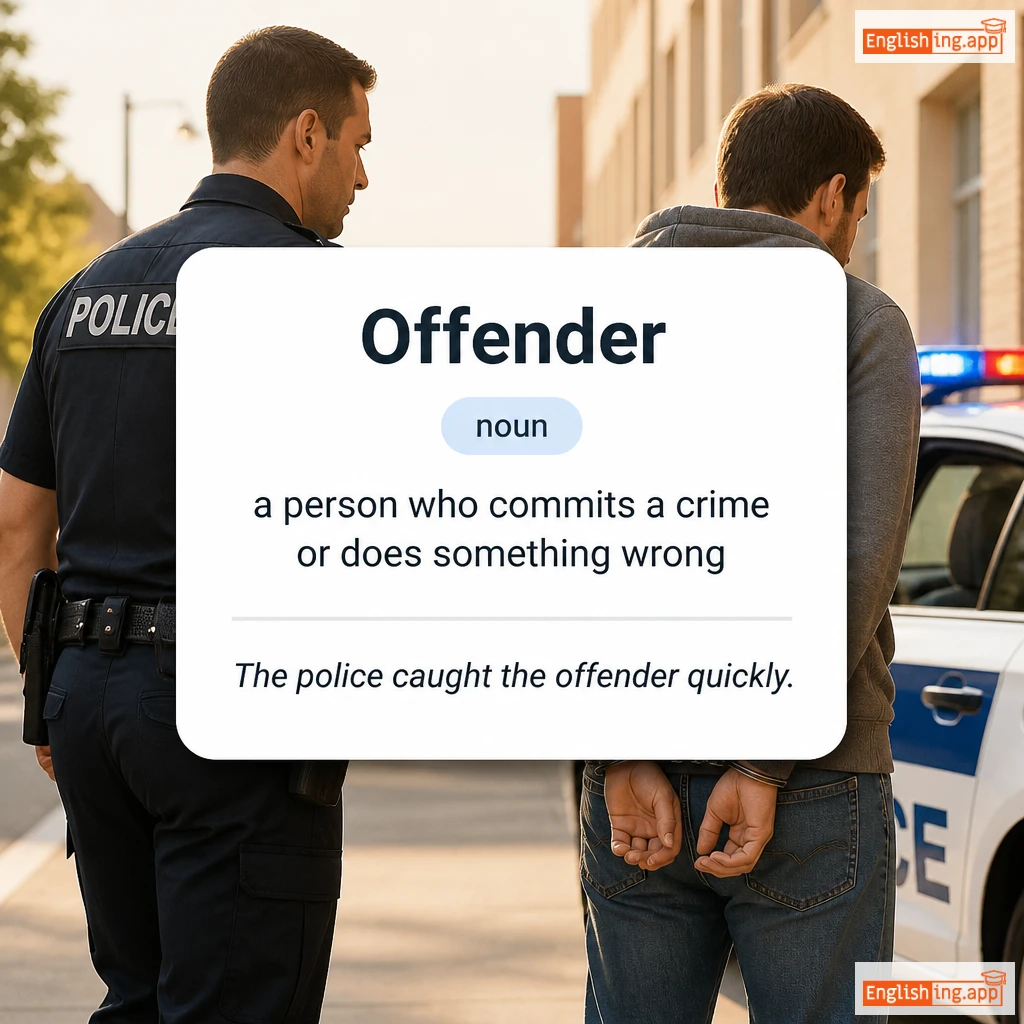
Offender definition card — visual illustration of the meaning
noun C1
/əˈfɛndər/
délinquant (delinkwɑ̃)

a person who commits a crime or does something wrong

"The police caught the offender quickly."

"La police a attrapé le délinquant rapidement." (La police a attrapé le délinquant rapidement.)
adjective/adverb C1
/ˌɒfˈhænd/
sans réflexion (sans reflexion)

Without previous thought or preparation; casual and sometimes dismissive.

"She gave an offhand reply to his serious question."

"Elle a donné une réponse sans réfléchir à sa question sérieuse." (Elle a donne une reponse sans reflechir a sa question serieuse.)
verb C1
/əˈfɪʃieɪt/
officier (officier)

To perform official duties, especially in a ceremony or as a referee.

"The priest will officiate the wedding ceremony."

"Le prêtre officiera la cérémonie de mariage." (Le prêtre officiera la cérémonie de mariage.)
verb C1
/ˈɒfsɛt/
compenser (compenser)

To counterbalance or compensate for something.

"The company's losses were offset by gains in other departments."

"Les pertes de l'entreprise ont été compensées par des gains dans d'autres départements." (Les pertes de l'entreprise ont été compensées par des gains dans d'autres départements.)
noun C1
/ˈɒfʃuːt/
dérivé (derive)

A branch or result that develops from something larger or more important.

"The startup was an offshoot of a major tech company."

"La startup était un dérivé d'une grande entreprise technologique." (La startup etait un derive d'une grande entreprise technologique.)
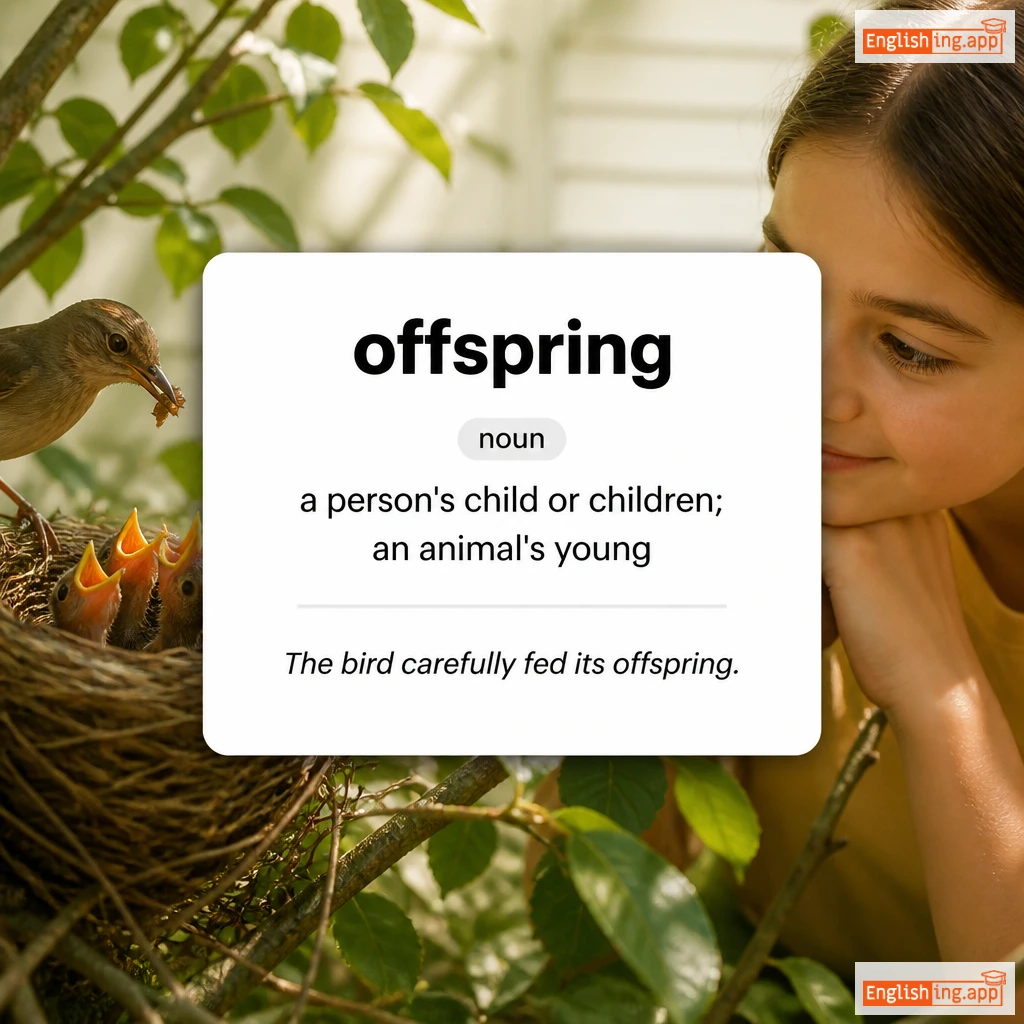
offspring definition card — visual illustration of the meaning
noun C1
/ˈɒf.sprɪŋ/
progéniture (progeniture)

a person's child or children; an animal's young

"The bird carefully fed its offspring."

"L'oiseau a nourri soigneusement sa progéniture." (L'oiseau a nourri soigneusement sa progéniture.)
noun C1
/ˈɔɪntmənt/
onguent (onguent)

A smooth, oily substance applied to the skin for healing or soothing.

"The doctor prescribed an ointment for the burn on his arm."

"Le médecin a prescrit un onguent pour la brûlure sur son bras." (Le médecin a prescrit un onguent pour la brûlure sur son bras.)
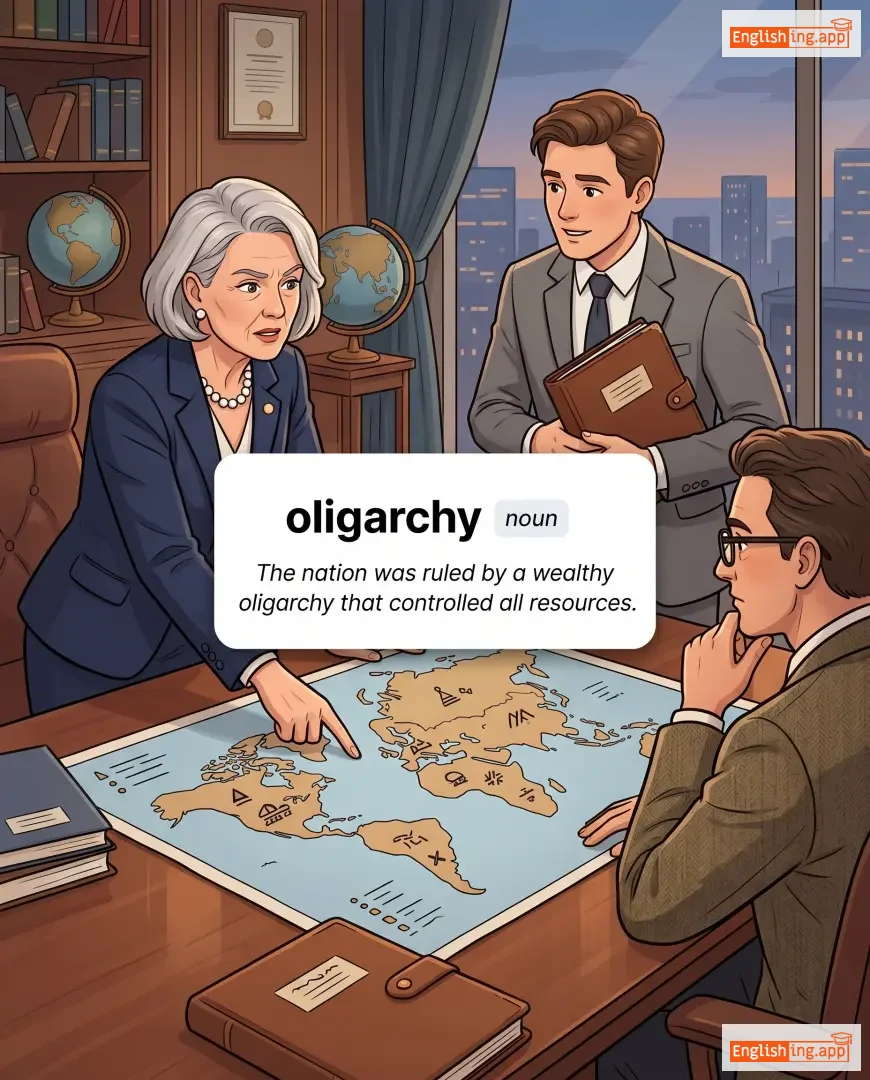
oligarchy definition card — visual illustration of the meaning
noun C1
/ˈɑːlɪˌɡɑːrki/
oligarchie (oligarchie)

A small group of people having control of a country, organization, or institution.

"The nation was ruled by a wealthy oligarchy that controlled all resources."

"La nation était dirigée par une oligarchie riche qui contrôlait toutes les ressources." (La nation etait dirigee par une oligarchie riche qui controllait toutes les ressources.)
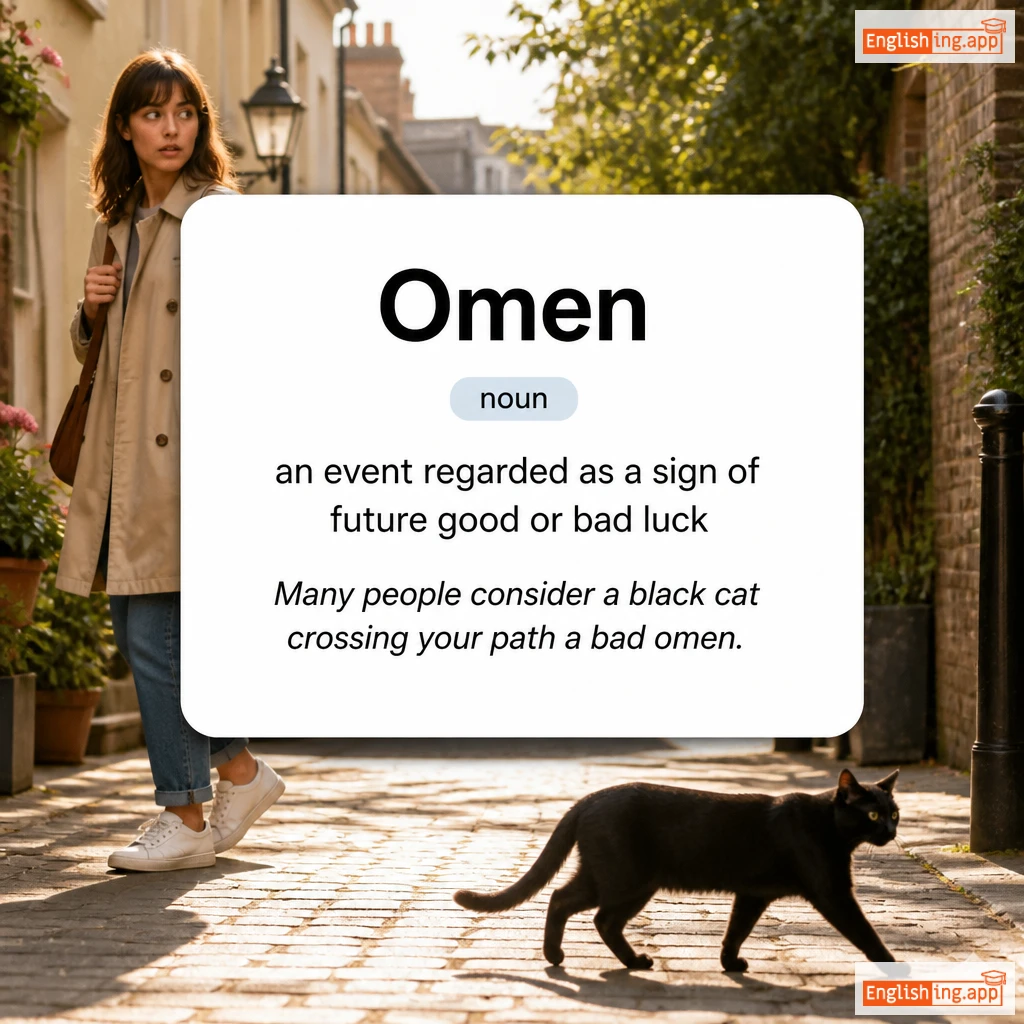
Omen definition card — visual illustration of the meaning
noun C1
/ˈoʊ.mən/
un signe de bonne ou mauvaise chance future (un signe de bonne ou mauvaise chance future)

an event regarded as a sign of future good or bad luck

"Many people consider a black cat crossing your path a bad omen."

"Beaucoup de gens considèrent qu'un chat noir traversant votre chemin est un mauvais présage." (Beaucoup de gens considèrent qu'un chat noir traversant votre chemin est un mauvais présage.)
adjective C1
/ˈɒmɪnəs/
menaçant (menasant)

Giving the impression that something bad or unpleasant is going to happen.

"Dark clouds gave an ominous sign of an approaching storm."

"Les nuages sombres ont donné un signe menaçant d'une tempête approchante." (Les nuages sombres ont donné un signe menaçant d'une tempête approchante.)
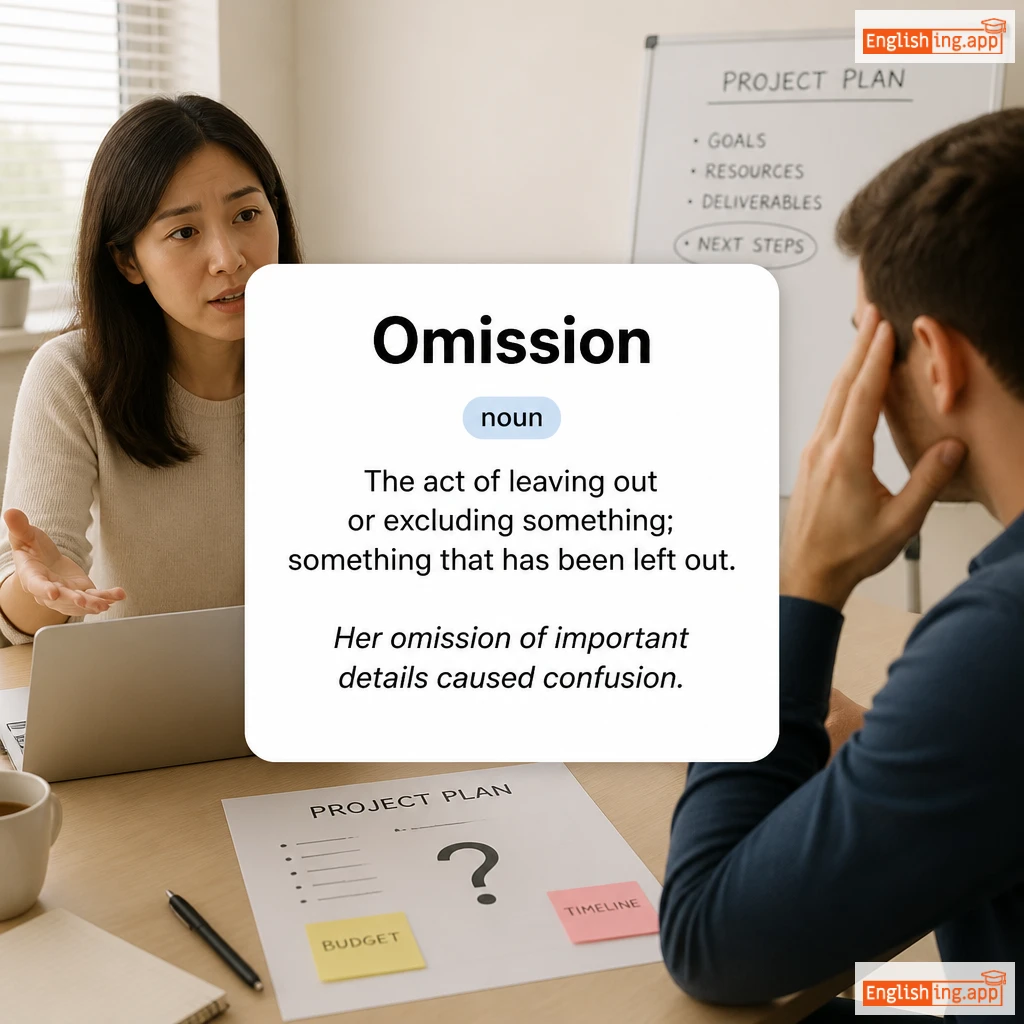
Omission definition card — visual illustration of the meaning
noun C1
/əˈmɪʃən/
omission (omission)

The act of leaving out or excluding something; something that has been left out.

"Her omission of important details caused confusion."

"Son omission de détails importants a causé de la confusion." (Son omission de détails importants a causé de la confusion.)
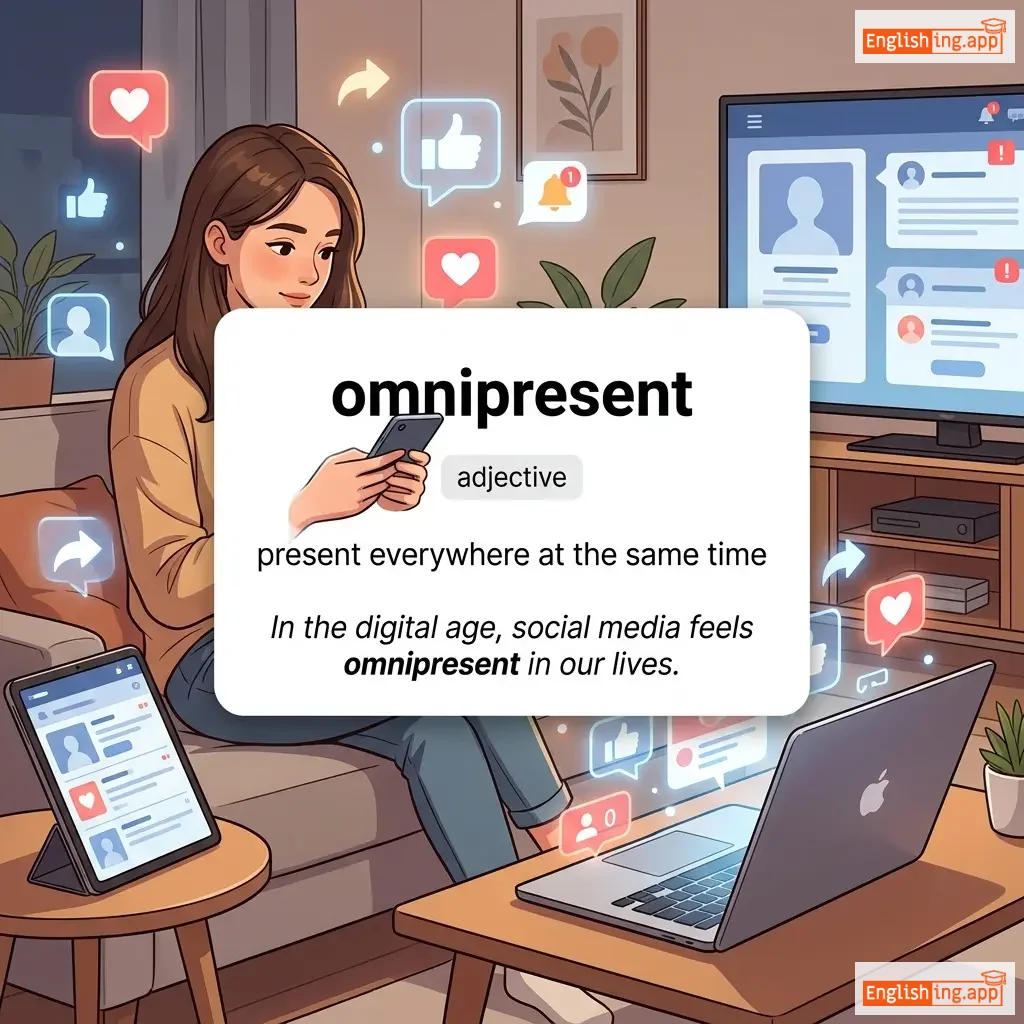
omnipresent definition card — visual illustration of the meaning
adjective C1
/ˌɒmnɪˈprɛzənt/
omniprésent (omnipresent)

present everywhere at the same time

"In the digital age, social media feels omnipresent in our lives."

"À l'ère numérique, les réseaux sociaux se sentent omniprésents dans nos vies." (A l'ere numerique, les reseaux sociaux se sentent omnipresents dans nos vies.)
adjective C1
/ɒmˈnɪvərəs/
omnivore (omnivore)

eating both plants and animals

"Humans are generally considered omnivorous creatures."

"Les humains sont généralement considérés comme des créatures omnivores." (Les humains sont généralement considérés comme des créatures omnivores.)
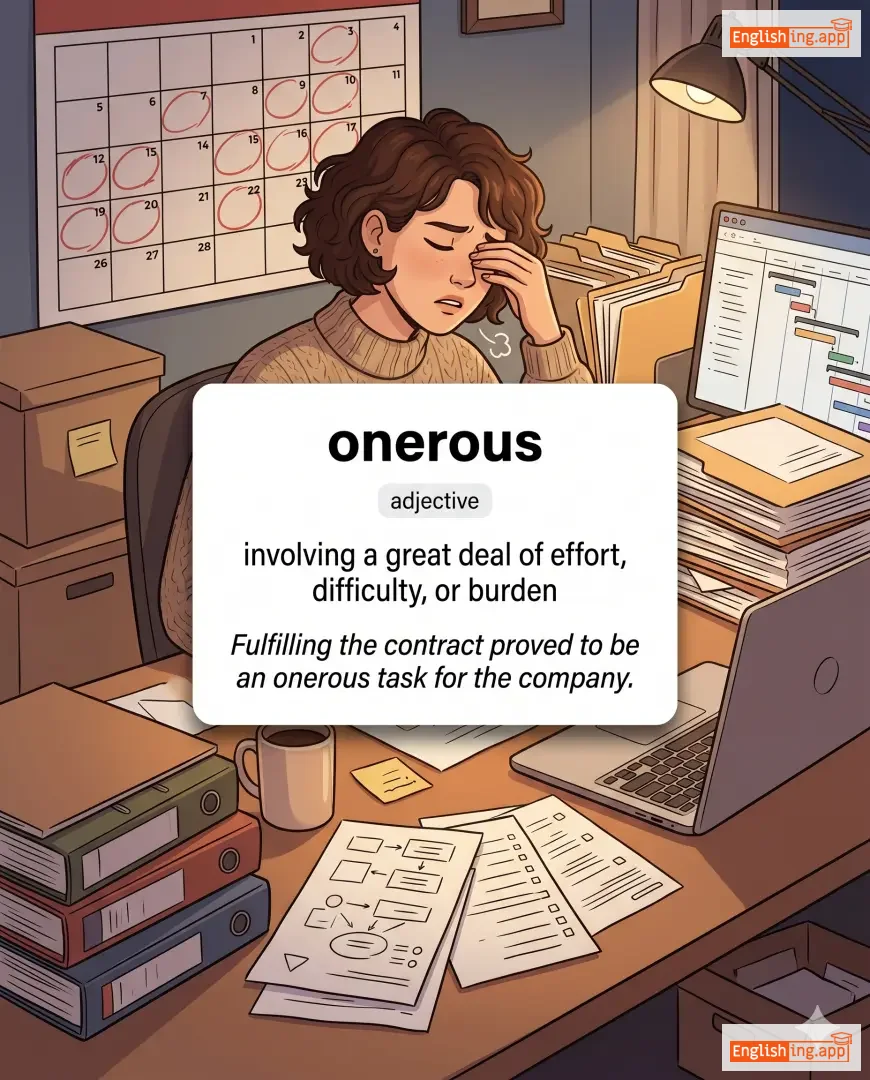
onerous definition card — visual illustration of the meaning
adjective C1
/ˈəʊnərəs/
ardu (ardu)

involving a great deal of effort, difficulty, or burden

"Fulfilling the contract proved to be an onerous task for the company."

"Accomplir le contrat s'est avéré être une tâche ardue pour l'entreprise." (Accomplir le contrat s'est avéré être une tâche ardue pour l'entreprise.)
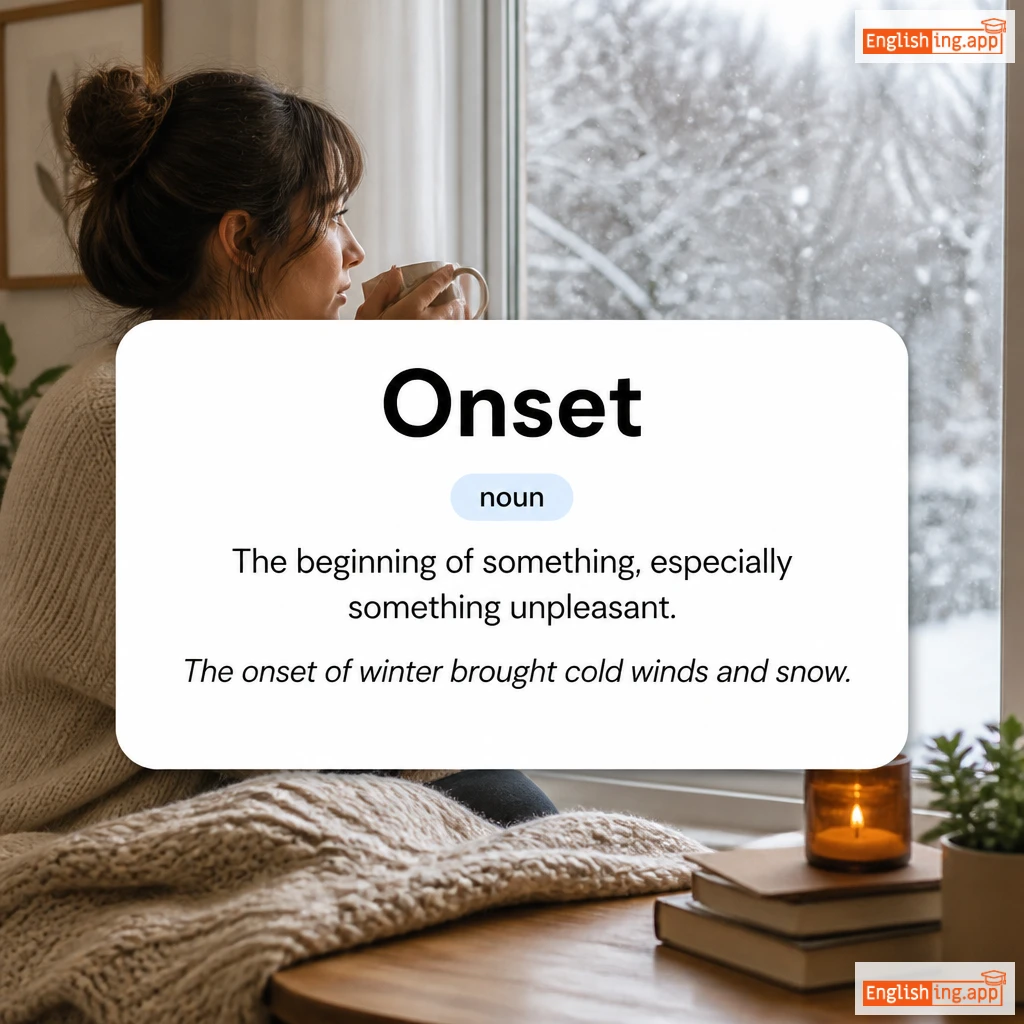
Onset definition card — visual illustration of the meaning
noun C1
/ˈɒn.sɛt/
début (debut)

The beginning of something, especially something unpleasant.

"The onset of winter brought cold winds and snow."

"Le début de l'hiver a apporté des vents froids et de la neige." (Le début de l'hiver a apporté des vents froids et de la neige.)
noun C1
/ˈɒn.slɔːt/
assaut (assaut)

A fierce or destructive attack.

"The village faced an onslaught of enemy forces."

"Le village a fait face à un assaut des forces ennemies." (Le village a fait face à un assaut des forces ennemies.)