Vocabularies

English Vocabulary Dictionary | Word Meanings, Definitions & Examples

adjective C1
/ˈhæbɪtəbl/
住める (sumeru)

Suitable to live in; capable of sustaining life.

"Scientists are searching for habitable planets beyond our solar system."

"科学者たちは私たちの太陽系を超えた住める惑星を探しています。" (Kagakusha-tachi wa watashitachi no taiyōkei o koeta sumeru wakusei o sagashiteimasu.)
adjective C1
/həˈbɪtʃuəl/
習慣的な (shūkantēkina)

Done or doing constantly or as a habit; customary.

"He was a habitual latecomer to class."

"彼は授業に習慣的に遅刻していた。" (Kare wa jugyō ni shūkantēni chikoku shite ita.)
adjective C1
/ˈhæk.nid/
使い古された (tsukai furusareta)

Used too often and therefore lacking originality or freshness.

"The speech was filled with hackneyed phrases that failed to inspire the audience."

"そのスピーチは使い古されたフレーズでいっぱいで、聴衆を鼓舞することはなかった。" (Sono supīchi wa tsukai furusareta furēzu de ippai de, chōshū o kobu suru koto wa nakatta.)
adjective C1
/ˈhæɡ.ərd/
疲れ切った (tsukare kitta)

Looking exhausted, unwell, or worn out, especially from fatigue or suffering.

"After working all night, she looked pale and haggard."

"一晩中働いた後、彼女は青白くて疲れきった様子だった。" (Hitobanjuu hataraita ato, kanojo wa aoshirakute tsukare kitta yousu datta.)
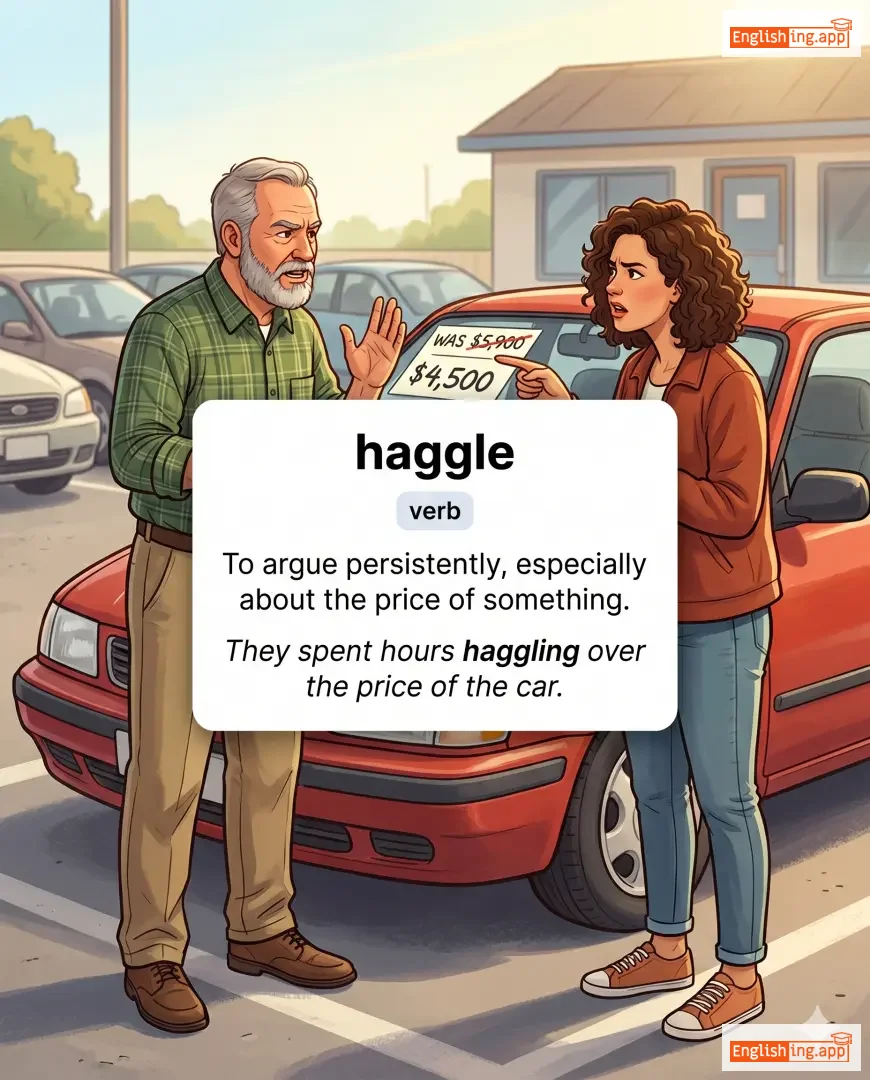
haggle definition card — visual illustration of the meaning
verb C1
/ˈhæɡ.l̩/
値段交渉する (nedan kōshō suru)

To argue persistently, especially about the price of something.

"They spent hours haggling over the price of the car."

"彼らは車の価格について何時間も値段交渉をしました。" (Karera wa kuruma no kakaku ni tsuite nan-jikan mo nedan kōshō o shimashita.)
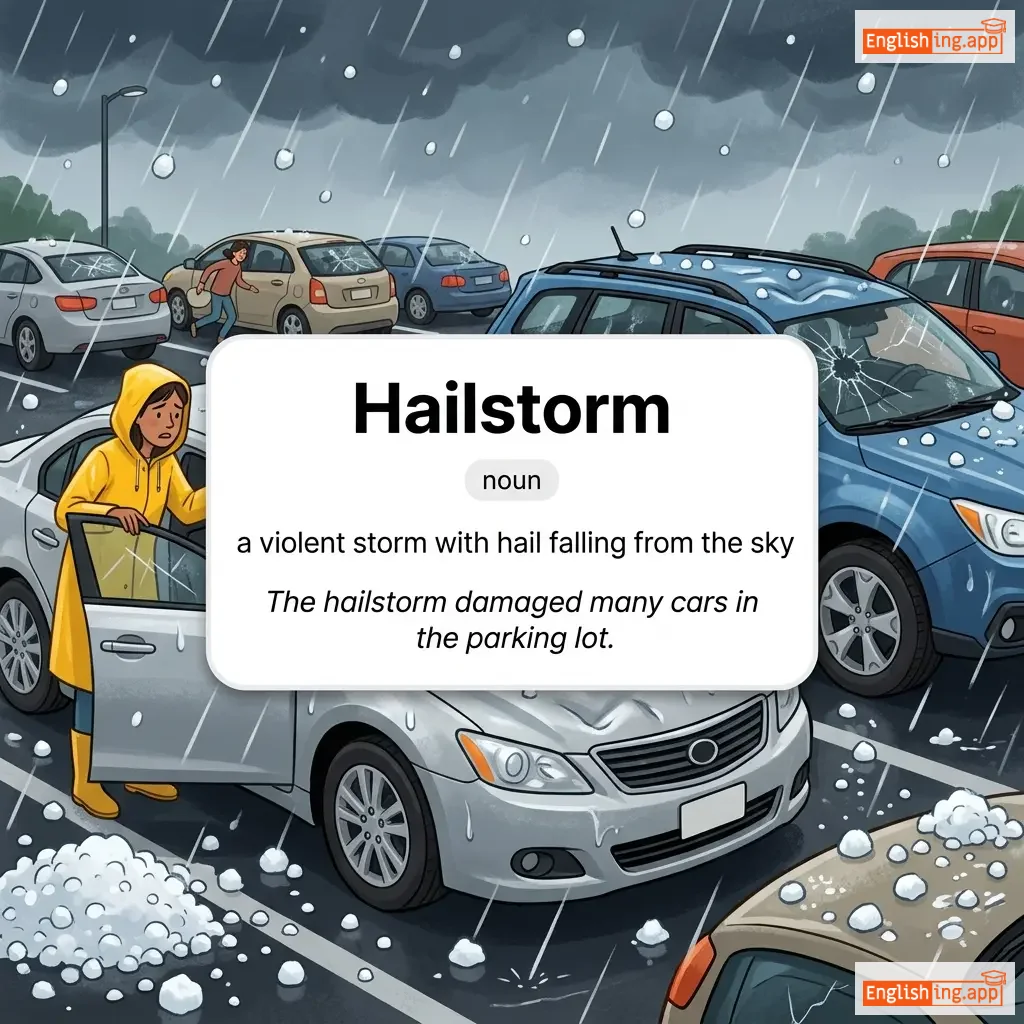
Hailstorm definition card — visual illustration of the meaning
noun C1
/ˈheɪl.stɔːrm/
ひょうの嵐 (hyō no arashi)

a violent storm with hail falling from the sky

"The hailstorm damaged many cars in the parking lot."

"ヘイルストームは駐車場の多くの車に損害を与えました。" (Heirusutōmu wa chūshajō no ōku no kuruma ni songai o ataemashita.)
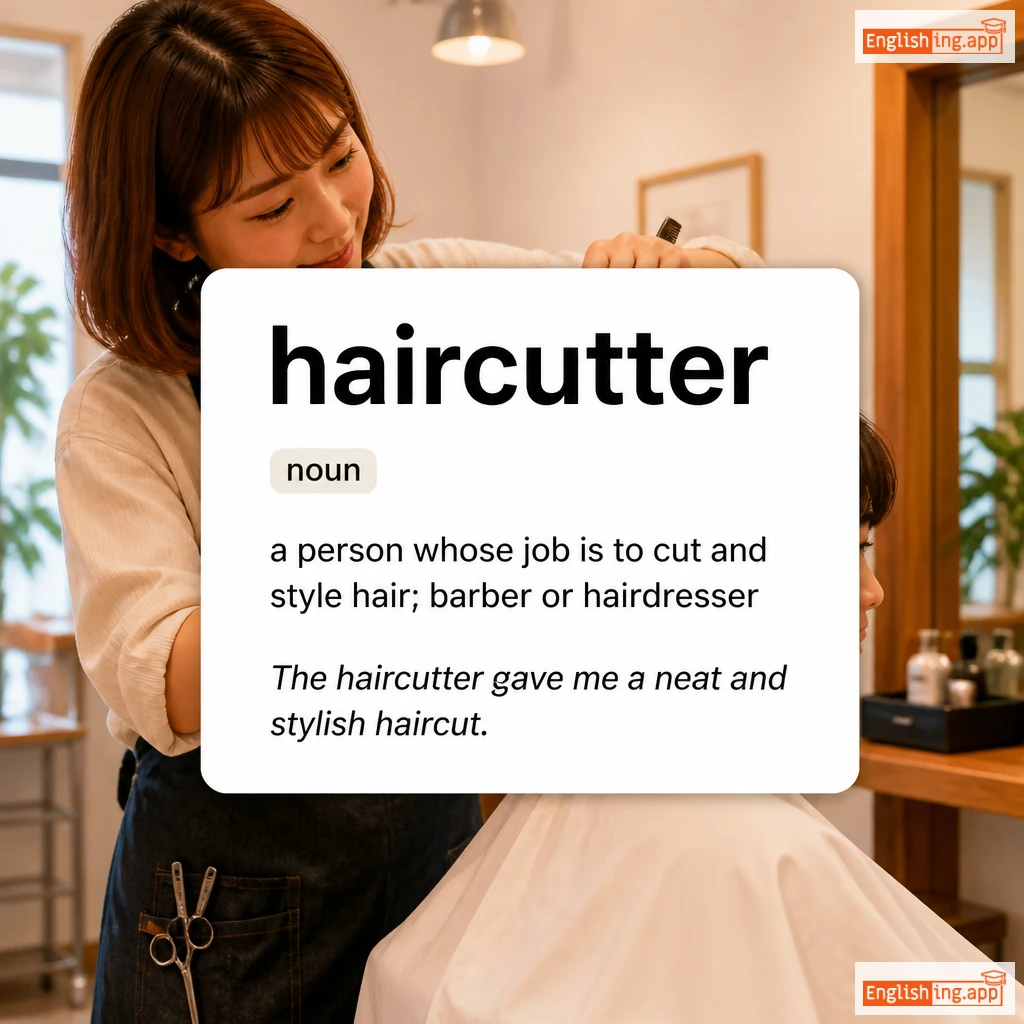
haircutter definition card — visual illustration of the meaning
noun C1
/ˈheəˌkʌtər/
理髪師 (rihatsushi)

a person whose job is to cut and style hair; barber or hairdresser

"The haircutter gave me a neat and stylish haircut."

"理髪師がきれいに髪を切ってくれた。" (rihatsushi ga kirei ni kami o kitte kureta)
noun C1
/ˈhɔːl.mɑːrk/
象徴的な特徴 (shouchou-teki na tokuchou)

a typical characteristic or feature of someone or something

"Honesty is the hallmark of a good leader."

"誠実さは良いリーダーの象徴的な特徴です。" (Seijitsusa wa yoi riidaa no shouchou-teki na tokuchou desu.)
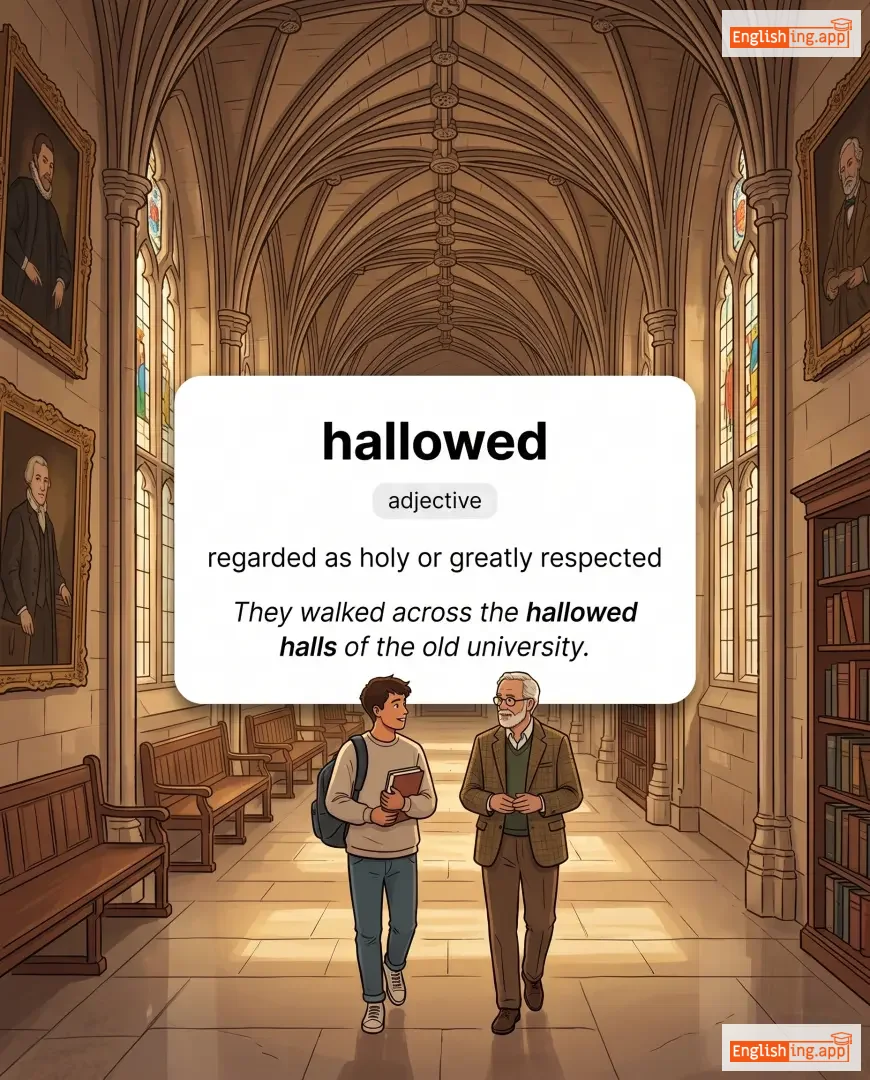
hallowed definition card — visual illustration of the meaning
adjective C1
/ˈhæloʊd/
神聖 (shinsei)

regarded as holy or greatly respected

"They walked across the hallowed halls of the old university."

"彼らは古い大学の神聖な廊下を歩いた。" (Karera wa furui daigaku no shinsei na rouka o aruita.)
verb C1
/həˈluːsɪneɪt/
幻覚を見る (genkaku wo miru)

to see, hear, or sense things that are not actually present, often due to illness or drugs

"After taking the medicine, he began to hallucinate strange shapes."

"薬を飲んだ後、彼は奇妙な形をハルシネイトし始めた。" (Kusuri wo nonda ato, kare wa kimyō na katachi wo harushineito shi hajimeta.)
noun C1
/həˌluːsɪˈneɪʃən/
幻覚 (genkaku)

a false perception of objects or events, usually caused by mental illness or drugs

"After the medication, he began to experience vivid hallucinations."

"薬を飲んだ後、彼は生き生きとした幻覚を体験し始めた。" (Kusuri o nonda ato, kare wa ikikito shita genkaku o taiken shi hajimeta.)
adjective C1
/ˈhɔːltɪŋ/
ためらい (tamerai)

slow and hesitant, especially due to lack of confidence

"She gave a halting reply during the interview."

"彼女は面接中にためらいながら答えました。" (Kanojo wa mensetsu-chū ni tamerai nagara kotaemashita.)
noun C1
/ˈhæm.lət/
小さな村 (chiisana mura)

a small rural settlement, smaller than a village; a small community

"The tiny hamlet nestled in the valley had only a dozen houses and one small church."

"谷間にある小さな村には、家が12軒と小さな教会が1つだけあった。" (Tanimani aru chiisana mura ni wa, ie ga juuni ken to chiisana kyōkai ga hitotsu dake atta.)
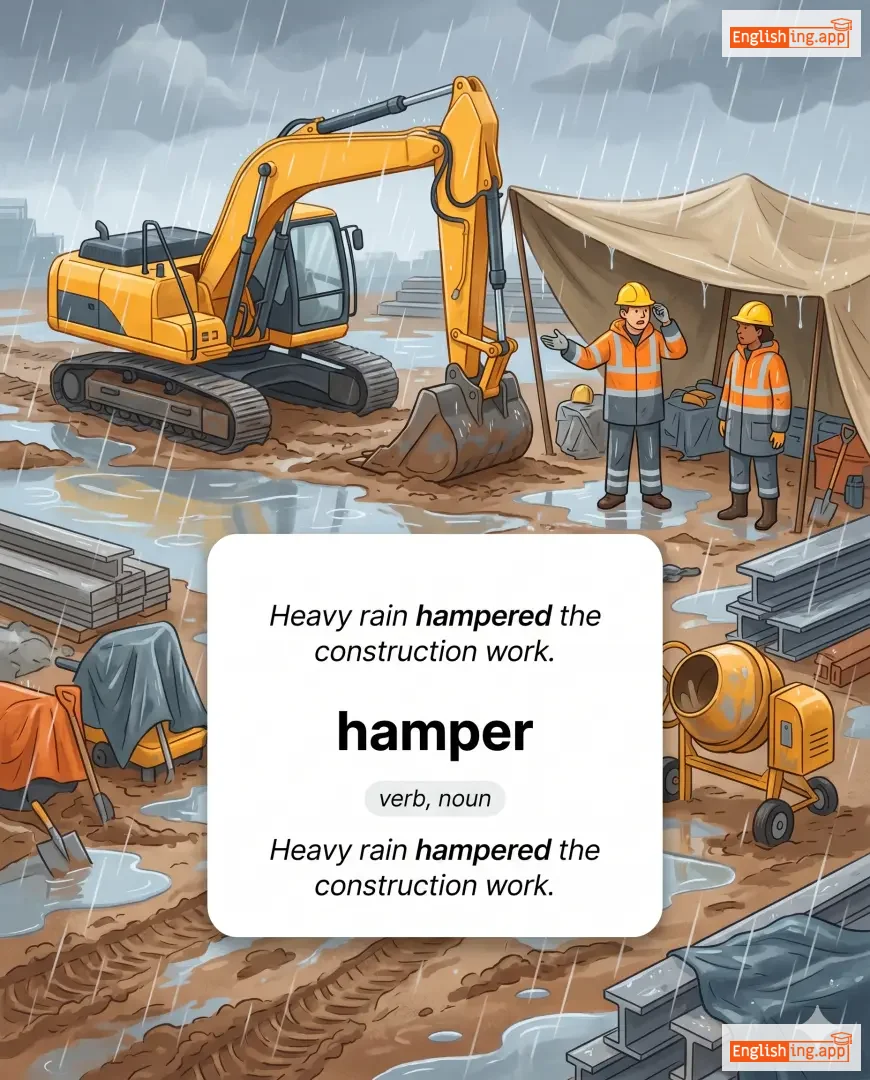
hamper definition card — visual illustration of the meaning
verb, noun C1
/ˈhæmpər/
妨げる、洗濯かご (samata-geru, sentaku kago)

to prevent or slow down the progress of something; also, a basket with a lid, typically for laundry.

"Heavy rain hampered the construction work."

"大雨が建設作業を妨げました。" (Ōame ga kensetsu sagyō o samatagemashita.)
noun C1
/ˈhæŋ.ər/
ハンガー (hangā)

a large building with extensive floor area, typically for housing aircraft; an aircraft shelter

"The airplane was stored safely in the hangar during the severe thunderstorm."

"飛行機は激しい雷雨の間、安全にハンガーに保管されていました。" (Hikōki wa hageshī raiu no aida, anzen ni hangā ni hokan sarete imashita.)
Hanger definition card — visual illustration of the meaning
noun C1
/ˈhæŋ.ər/
ハンガー (hangā)

a shaped piece of wood, plastic, or metal with a hook at the top, used to hang up clothes

"She hung her dress on a wooden hanger to prevent it from getting wrinkled."

"彼女はドレスがしわにならないように木のハンガーに掛けました。" (Kanojo wa doresu ga shiwa ni naranai yō ni ki no hangā ni kakemashita.)
adjective C1
/hæpˈhæzərd/
でたらめな、無秩序な (detarame na, muchitsujona)

lacking any obvious order or organization; random

"The books were stacked in a haphazard way on the table."

"本はテーブルにでたらめに積まれていた。" (Hon wa tēburu ni detarame ni tsumarete ita.)
adjective C1
/ˈhæpləs/
不運な, 不幸な (fuun na, fukou na)

unfortunate, unlucky, deserving pity

"The hapless traveler lost his passport on the very first day."

"不運な旅行者は、初日にパスポートを失くしました。" (Fuun na ryokousha wa, shonichi ni pasupooto wo nakushimashita.)
adjective C1
/ˌhæpi ɡoʊ ˈlʌki/
おおらかで、気楽な、無頓着な (ōraka de, kirakuna, mutōchakuna)

cheerfully unconcerned about the future; carefree

"She has a happy-go-lucky attitude and never worries about tomorrow."

"彼女はハピゴーラッキーな態度を持っており、明日のことを心配することはありません。" (Kanojo wa hapigōrakkī na taido o motte ori, ashita no koto o shinpai suru koto wa arimasen.)
adjective C1
/ˌhɑːrdˈhɑːrtɪd/
冷徹 (reitetu)

showing no kindness or sympathy; cruel

"The landlord was hard-hearted and refused to help the poor family."

"家主は冷徹で、貧しい家族を助けることを拒否しました。" (Yaju wa reitetu de, mazushī kazoku o tasukeru koto o kyohi shimashita.)
adjective C1
/ˈhɑːrdi/
頑丈, 強健 (ganjou, kyouken)

Strong, robust, and capable of enduring difficult conditions.

"Hardy plants can survive the harsh winter."

"頑丈な植物は厳しい冬を生き抜くことができます。" (Ganjou na shokubutsu wa kibishii fuyu wo ikinuku koto ga dekimasu.)
harmonization definition card — visual illustration of the meaning
noun C1
/ˌhɑːmənaɪˈzeɪʃən/
調和、統一 (chouwa, touitsu)

The process of making things compatible or consistent with one another.

"The harmonization of different policies ensures consistent results."

"異なる方針の調和は一貫した結果を保証します。" (Kotonaru houshin no chouwa wa ikkanshita kekka wo hoshou shimasu.)
Harp definition card — visual illustration of the meaning
verb C1
/hɑːrp/
繰り返し言う、文句を言う (kurikaeshi iu, monku wo iu)

To dwell on or complain about something persistently.

"He kept harping on the same mistake over and over."

"彼は同じ間違いについて繰り返し言っていた。" (Kare wa onaji machigai ni tsuite kurikaeshi itte ita.)
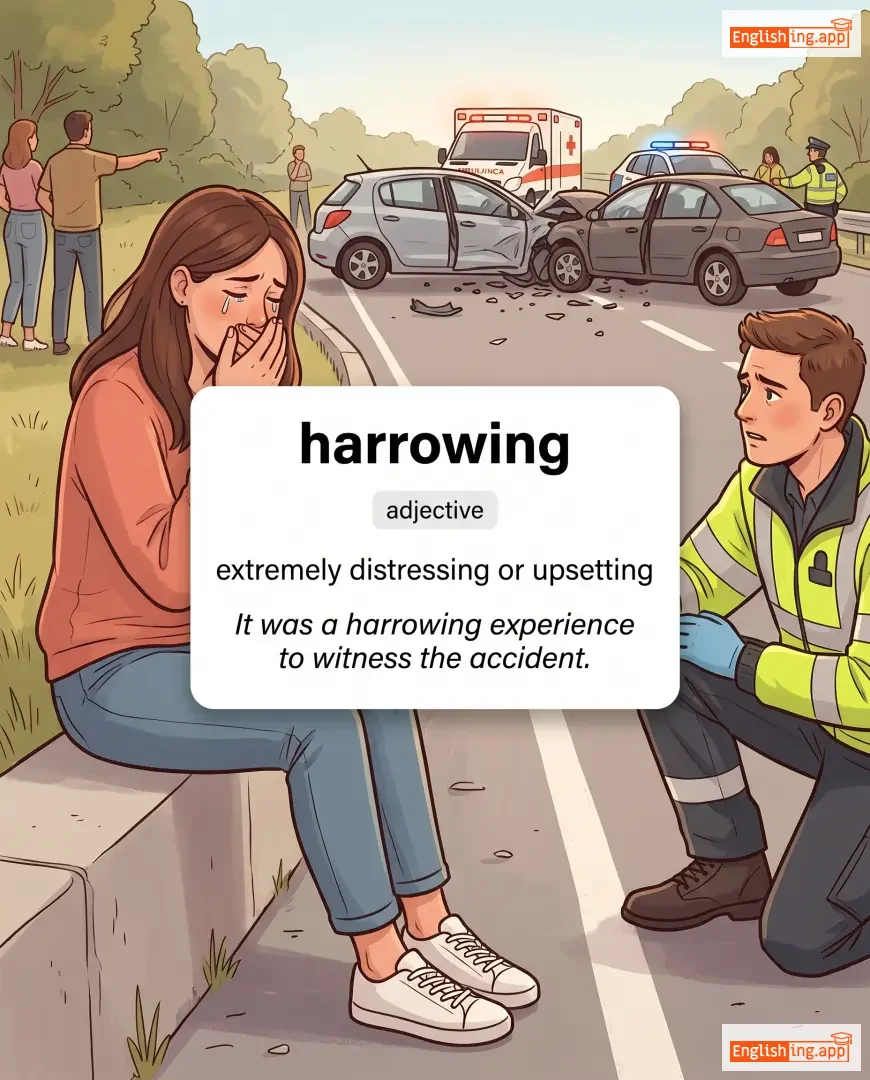
harrowing definition card — visual illustration of the meaning
adjective C1
/ˈhær.oʊ.ɪŋ/
恐ろしいと苦しみを伴う (osoroshii to kurushimi o tomonau)

extremely distressing or upsetting

"It was a harrowing experience to witness the accident."

"事故を目撃することは恐ろしい経験だった。" (Jiko o mokugeki suru koto wa osoroshii keiken datta.)
verb C1
/ˈheɪsən/
急ぐ (isogu)

To move or act quickly; to cause something to happen sooner.

"He hastened to finish his work before the deadline."

"彼は締め切り前に仕事を終わらせるために急いだ。" (Kare wa shimekiri mae ni shigoto o owaraseru tame ni isoida.)
adverb C1
/ˈheɪs.tɪ.li/
急いで (isoide)

in a hurried or rushed manner; quickly and carelessly

"She hastily packed her bags before leaving for the airport."

"彼女は空港に行く前に急いでバッグを詰めた。" (Kanojo wa kūkō ni iku mae ni isoide baggu o tsumeta.)
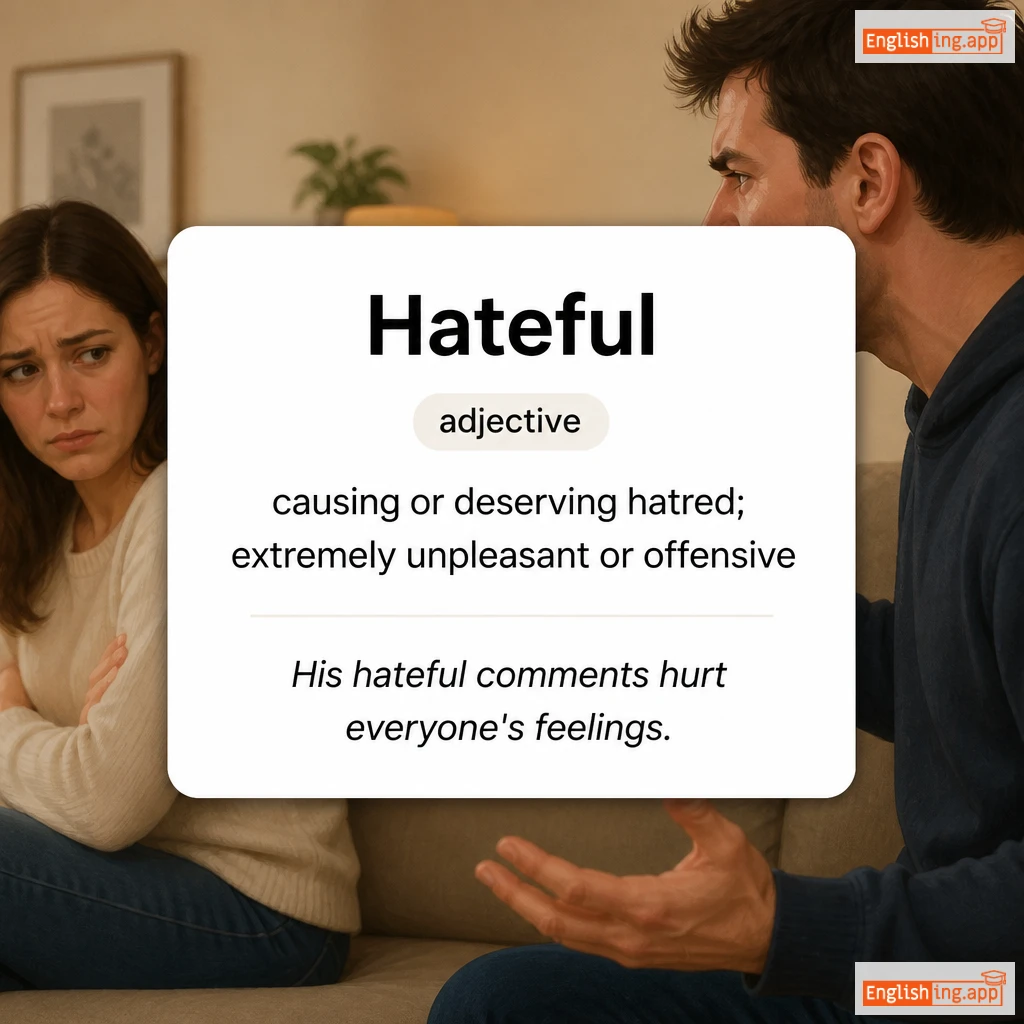
Hateful definition card — visual illustration of the meaning
adjective C1
/ˈheɪt.fəl/
憎しみの (nikushimi no)

causing or deserving hatred; extremely unpleasant or offensive

"His hateful comments hurt everyone's feelings."

"彼の憎しみを込めたコメントは皆の感情を傷つけました。" (Kare no nikushimi wo kometa komento wa minna no kanjou wo kizutsukemashita.)
adjective C1
/ˈhɔːti/
高慢 (kōman)

arrogantly superior and disdainful

"She gave him a haughty look and walked away."

"彼女は彼に高慢な目を向けて、歩いて行った。" (Kanojo wa kare ni kōman na me wo mukete, aruite itta.)
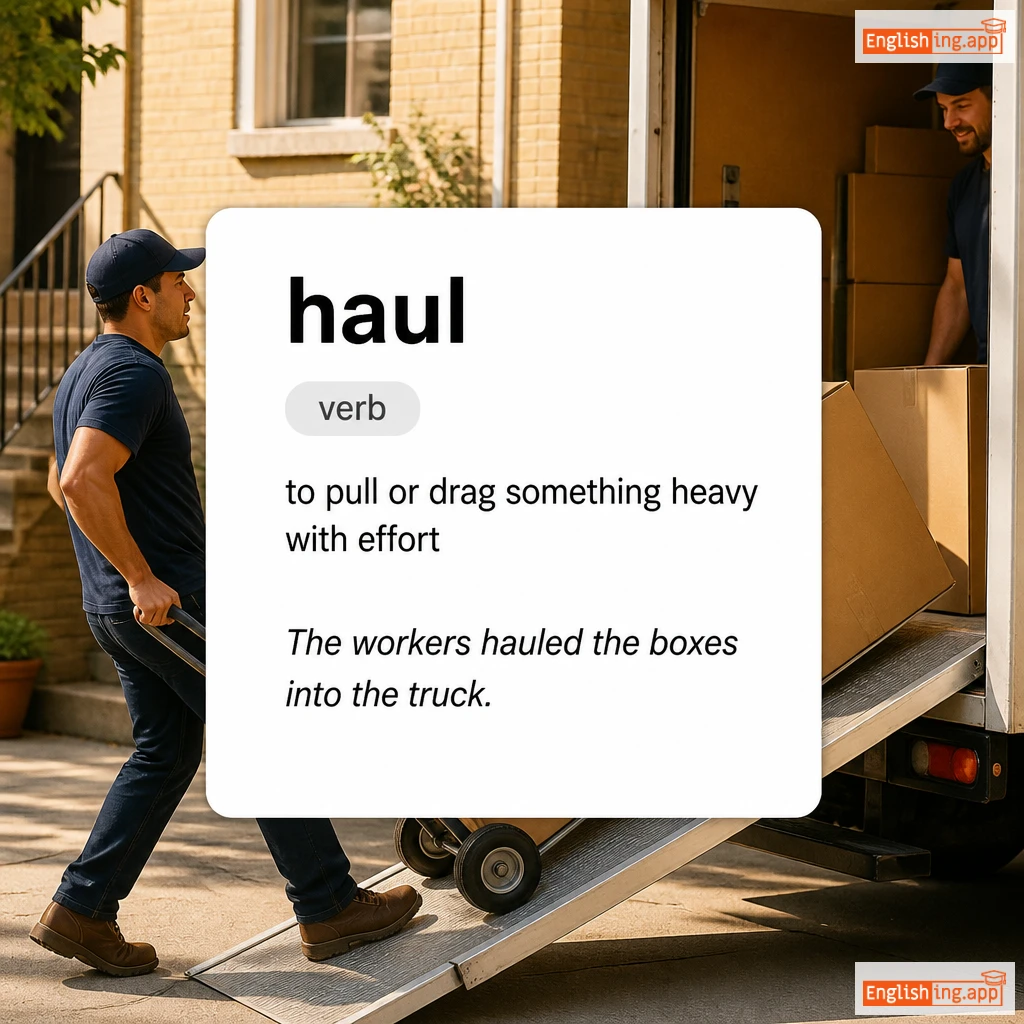
haul definition card — visual illustration of the meaning
verb C1
/hɔːl/
引っ張る (hipparu)

to pull or drag something heavy with effort

"The workers hauled the boxes into the truck."

"作業員たちは箱をトラックに引きずり込んだ。" (Sagyouin-tachi wa hako o torakku ni hikizurikonda.)
noun C1
/ˈheɪvən/
避難所 (hinanjo)

a safe place or shelter

"The library became a haven for students during exams."

"試験中、図書館は学生たちの避難所となった。" (Shiken-chū, toshokan wa gakusei-tachi no hinanjo to natta.)
noun C1
/ˈhævək/
大混乱 (daikonran)

widespread destruction or disorder

"The storm caused havoc in the coastal villages."

"嵐は沿岸の村々に大混乱を引き起こしました。" (Arashi wa engan no muramura ni daikonran o hikiokoshimashita.)
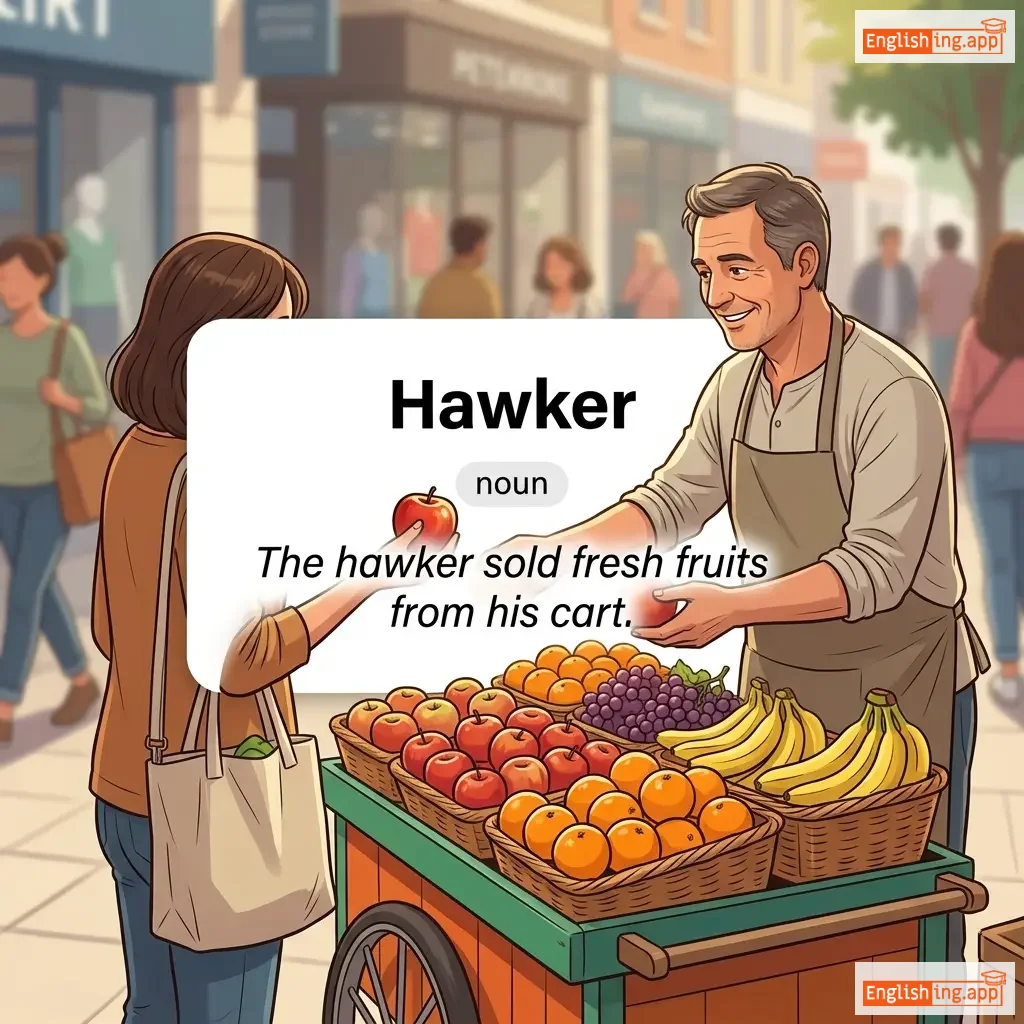
Hawker definition card — visual illustration of the meaning
noun C1
/ˈhɔː.kər/
屋台販売者 (yatai hanbaisha)

a person who travels about selling goods, typically from door to door or on the street

"The hawker sold fresh fruits from his cart."

"屋台販売者は彼のカートから新鮮な果物を売っていた。" (yatai hanbaisha wa kare no kāto kara shinsen na kudamono o utte ita.)
noun C1
/heɪz/
(kasa)

a slight obscuration of the lower atmosphere, typically caused by fine suspended particles; confusion

"The morning haze lifted gradually as the sun rose higher in the sky."

"朝の霞は徐々に晴れ、太陽が空高く昇るにつれて明らかになった。" (Asa no kasa wa jojoni hare, taiyō ga sora takaku noboru ni tsurete akiraka ni natta.)
adjective C1
/ˈheɪzi/
かすんだ (kasunda)

Unclear, misty, or not easy to see; also vague or uncertain.

"The mountains looked hazy in the morning light."

"朝の光の中で山々はかすんで見えた。" (Asa no hikari no naka de yamayama wa kasunde mieta.)
adverb C1
/ˈhed ɑn/
正面衝突 (seimen shōtotsu)

directly facing; in direct confrontation or collision

"The two cars collided head-on at the intersection."

"二台の車は交差点で正面衝突しました。" (Nidai no kuruma wa kōsaten de seimen shōtotsu shimashita.)
adverb C1
/ˌhɛdˈfɜrst/
頭から (atama kara)

With the head leading; in a reckless or hasty manner.

"He dived headfirst into the pool."

"彼は頭から飛び込んだ。" (Kare wa atama kara tobikonda.)
adverb C1
/ˈhɛdˌlɔŋ/
無鉄砲に (mutappou ni)

With the head leading; in a rush or without thinking.

"She rushed headlong into the new project."

"彼女は無鉄砲に新しいプロジェクトに飛び込んだ。" (Kanojo wa mutappou ni atarashii purojekuto ni tobikonda.)
adjective C1
/ˈhɛdˌstrɔŋ/
頑固 (ganko)

Determined to do what one wants, even if it is not sensible.

"The headstrong child refused to listen to anyone."

"頑固な子供は誰の話も聞こうとしませんでした。" (Ganko na kodomo wa dare no hanashi mo kiko to shimasen deshita.)
noun C1
/ˈhed.weɪ/
進展; 前進; 発展 (shinten, zenshin, hatten)

forward movement or progress, especially when this is slow or difficult

"Despite the challenges, the research team made significant headway in developing the new vaccine."

"挑戦にもかかわらず、研究チームは新しいワクチンの開発において重要な進展を遂げました。" (Chousen ni mo kakawarazu, kenkyuu chiimu wa atarashii wakuchin no kaihatsu ni oite juuyou na shinten o togemashita.)
adjective C1
/ˈhɛlθfəl/
健康的な (kenkōtekina)

Promoting good health; beneficial to health.

"A healthful diet includes fresh fruits and vegetables."

"健康的な食事には新鮮な果物と野菜が含まれています。" (Kenkōtekina shokuji ni wa shinsen na kudamono to yasai ga fukumareteimasu.)
noun C1
/ˈhɪərseɪ/
(uwasa)

Information received from other people that cannot be substantiated; rumor.

"The decision was based on hearsay, not evidence."

"その決定は証拠ではなく、噂に基づいていました。" (Sono kettei wa shouko dewa naku, uwasa ni motozuite imashita.)
adverb C1
/ˈhɑr.tɪ.li/
心から; 熱心に (kokoro kara; nesshin ni)

in a sincere and enthusiastic manner; wholeheartedly

"She heartily welcomed her guests to the party."

"彼女は心からゲストをパーティーに迎えました。" (kanojo wa kokoro kara gesuto o pātii ni mukaemashita.)
adjective C1
/ˈhɑːrtˌrɛndɪŋ/
胸が張り裂けるような (mune ga harisakeru you na)

Causing great sadness or distress; very moving emotionally.

"The documentary showed heartrending scenes of war victims."

"ドキュメンタリーは戦争の犠牲者たちの胸が張り裂けるような場面を見せました。" (Dokyumentarī wa sensō no gisei-sha-tachi no mune ga harisakeru yō na bamen o misemashita.)
noun C1
/ˈhiːdəˌnɪzəm/
快楽主義 (kairakushugi)

The pursuit of pleasure and self-indulgence as the highest goal.

"The lifestyle of the rich is often criticized as pure hedonism."

"金持ちのライフスタイルはしばしば純粋な快楽主義として批判されます。" (Kanemochi no raifusutairu wa shibashiba junsuina kairakushugi to shite hihansaremasu.)
noun C1
/ˈhiːdənɪst/
快楽主義者 (kairakushugisha)

A person who believes that the pursuit of pleasure is the most important thing in life.

"She was called a hedonist because she always prioritized enjoyment over duty."

"彼女は常に義務よりも楽しみを優先していたため、快楽主義者と呼ばれました。" (Kanojo wa tsuneni gimu yori mo tanoshimi o yūsen shite ita tame, kairaku shugisha to yobaremashita.)
verb C1
/hiːd/
注意を払う (chuui wo harau)

to pay attention to; to take notice of

"You should heed the teacher's advice."

"あなたは先生のアドバイスに耳を傾けるべきです。" (Anata wa sensei no adobaisu ni mimi wo katamukeru beki desu.)
adjective C1
/ˈhiːdləs/
無頓着 (mutonchaku)

showing a reckless lack of care or attention

"He drove with heedless disregard for the rules."

"彼はルールを無視して運転した。" (Kare wa rūru o mushi shite unten shita.)
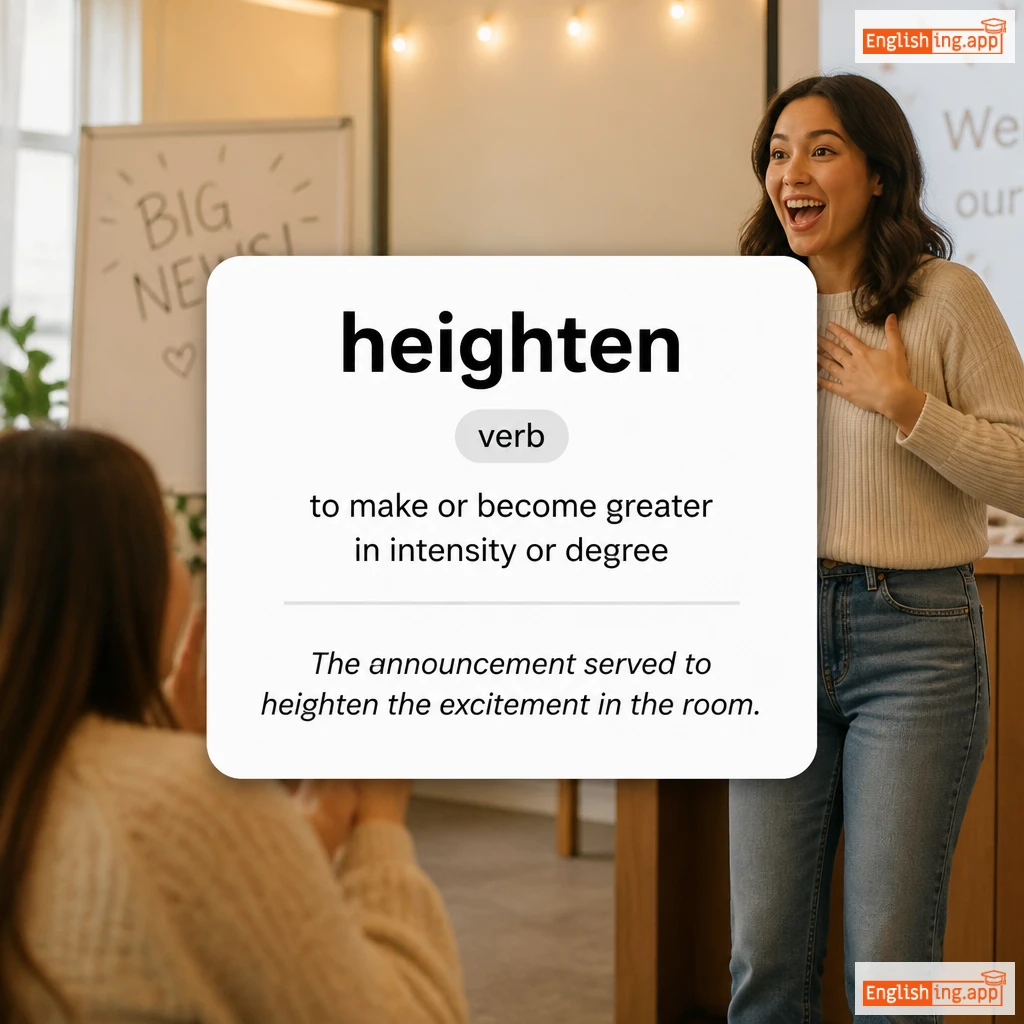
heighten definition card — visual illustration of the meaning
verb C1
/ˈhaɪtən/
高める (takameru)

to make or become greater in intensity or degree

"The announcement served to heighten the excitement in the room."

"その発表は部屋の興奮を高めるために役立ちました。" (Sono happyō wa heya no kōfun o takameru tame ni yakudachimashita.)
adjective C1
/ˈheɪ.nəs/
凶悪 (kyōaku)

extremely wicked, deeply offensive, or shockingly evil

"The dictator was condemned for his heinous crimes against humanity."

"独裁者は人道に対する凶悪な犯罪で非難された。" (Dokusai-sha wa jindō ni taisuru kyōaku na hanzai de hinan sareta.)
noun C1
/ˈɛər.luːm/
遺産 (isan)

a valuable object that has belonged to a family for several generations

"The ring is a family heirloom passed down from her grandmother."

"その指輪は祖母から受け継がれた家族の遺産です。" (Sono yubiwa wa sobo kara uketsugareta kazoku no isan desu.)