Vocabularies

English Vocabulary Dictionary | Word Meanings, Definitions & Examples

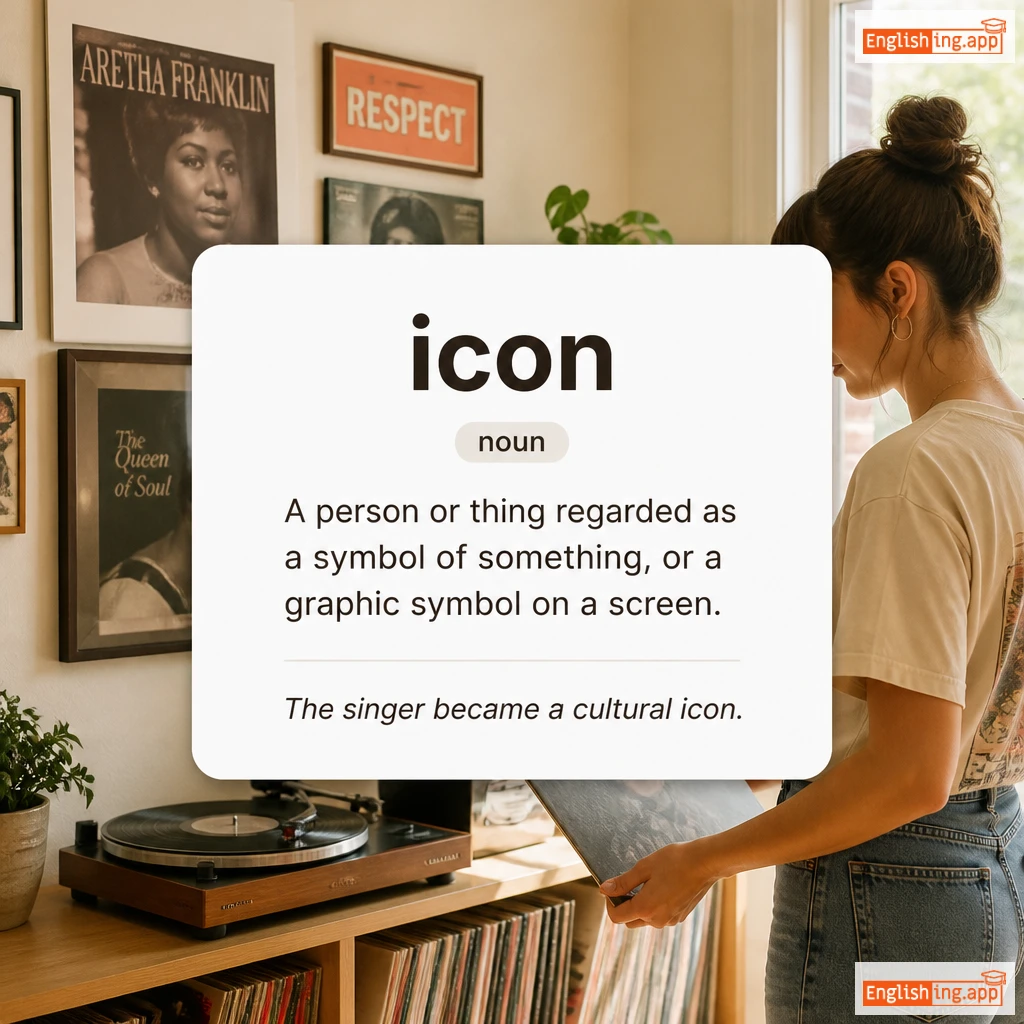
icon definition card — visual illustration of the meaning
noun B2
/ˈaɪkɒn/
アイコン, 象徴 (aikon, shouchou)

A person or thing regarded as a symbol of something, or a graphic symbol on a screen.

"The singer became a cultural icon."

"その歌手は文化的なアイコンとなった。" (Sono kashu wa bunkateki na aikon to natta.)
iconic definition card — visual illustration of the meaning
adjective B2
aɪˈkɒn.ɪk
象徴的 (shōchō-teki)

Symbolic, legendary, famous, representing something significant or characteristic.

"The Eiffel Tower is an iconic landmark of France."

"エッフェル塔はフランスの象徴的なランドマークです。" (Efferu tō wa Furansu no shōchō-teki na randomāku desu.)
adjective B2
/ˈaɪsi/
氷のような; 非常に冷たい; 敵対的 (kōri no yō na; hijō ni tsumetai; tekitaiteki)

extremely cold; covered with ice; unfriendly or hostile

"The icy wind made everyone shiver."

"氷のような風が皆を震えさせた。" (Kōri no yō na kaze ga mina o furueta.)
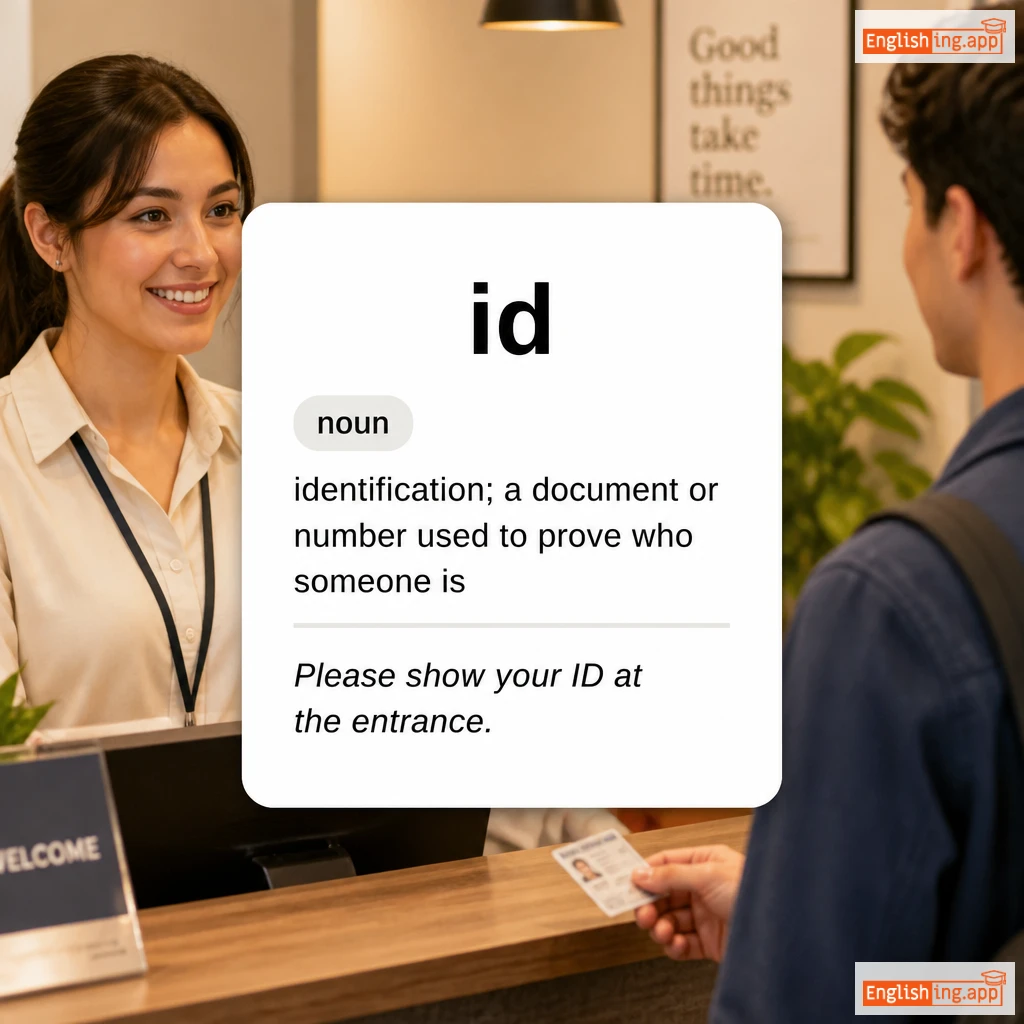
id definition card — visual illustration of the meaning
noun B2
/aɪˈdiː/
身分証明書 (mibun shomeisho)

identification; a document or number used to prove who someone is

"Please show your ID at the entrance."

"入口で身分証明書を提示してください。" (iriguchi de mibun shomeisho o teiji shite kudasai)
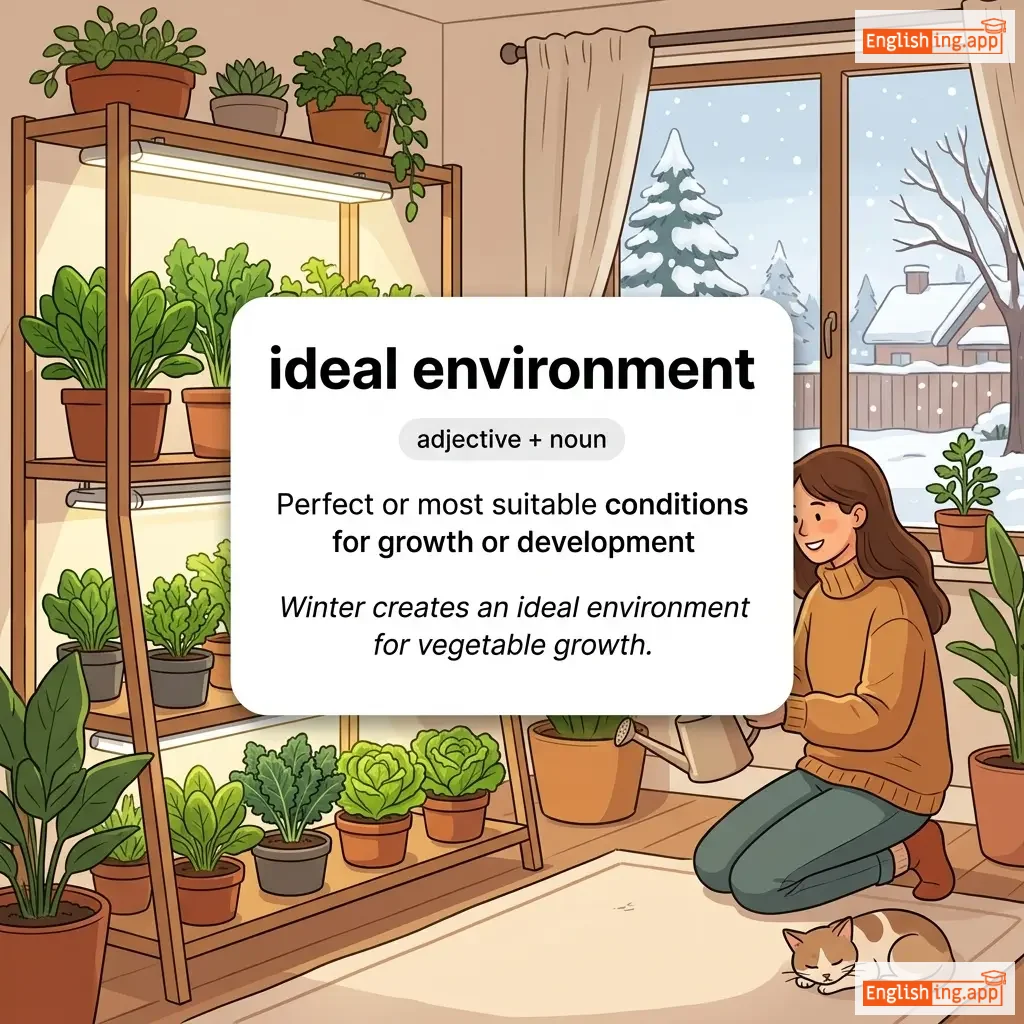
ideal environment definition card — visual illustration of the meaning
adjective + noun B2
aɪˈdiːəl ɪnˈvaɪrənmənt
理想的な環境 (risō-teki na kankyō)

Perfect or most suitable conditions for growth or development

"Winter creates an ideal environment for vegetable growth."

"冬は野菜の成長に理想的な環境を作り出します。" (Fuyu wa yasai no seichō ni risō-teki na kankyō o tsukuridashimasu.)
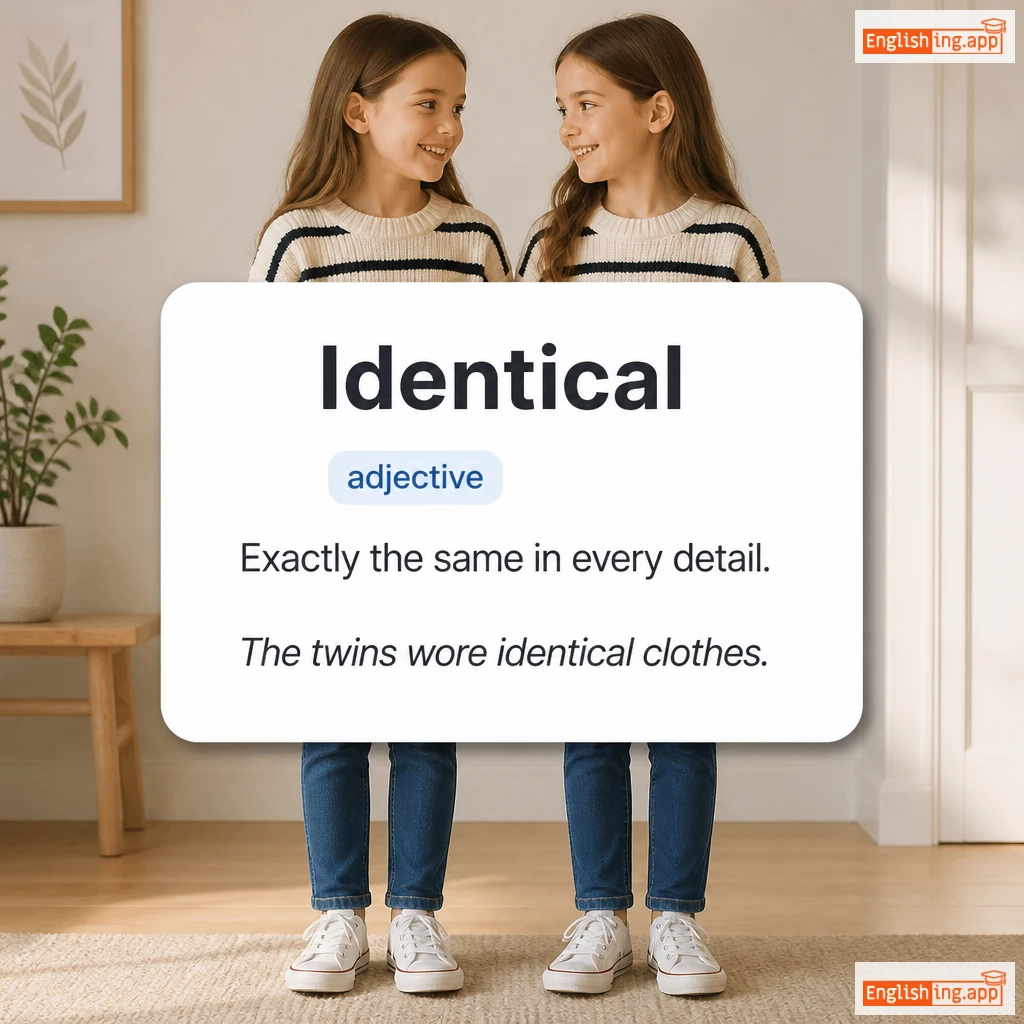
Identical definition card — visual illustration of the meaning
adjective B2
/aɪˈdentɪkl/
同一の (dōitsu no)

Exactly the same in every detail.

"The twins wore identical clothes."

"双子は同一の服を着ていた。" (Futago wa dōitsu no fuku o kite ita.)
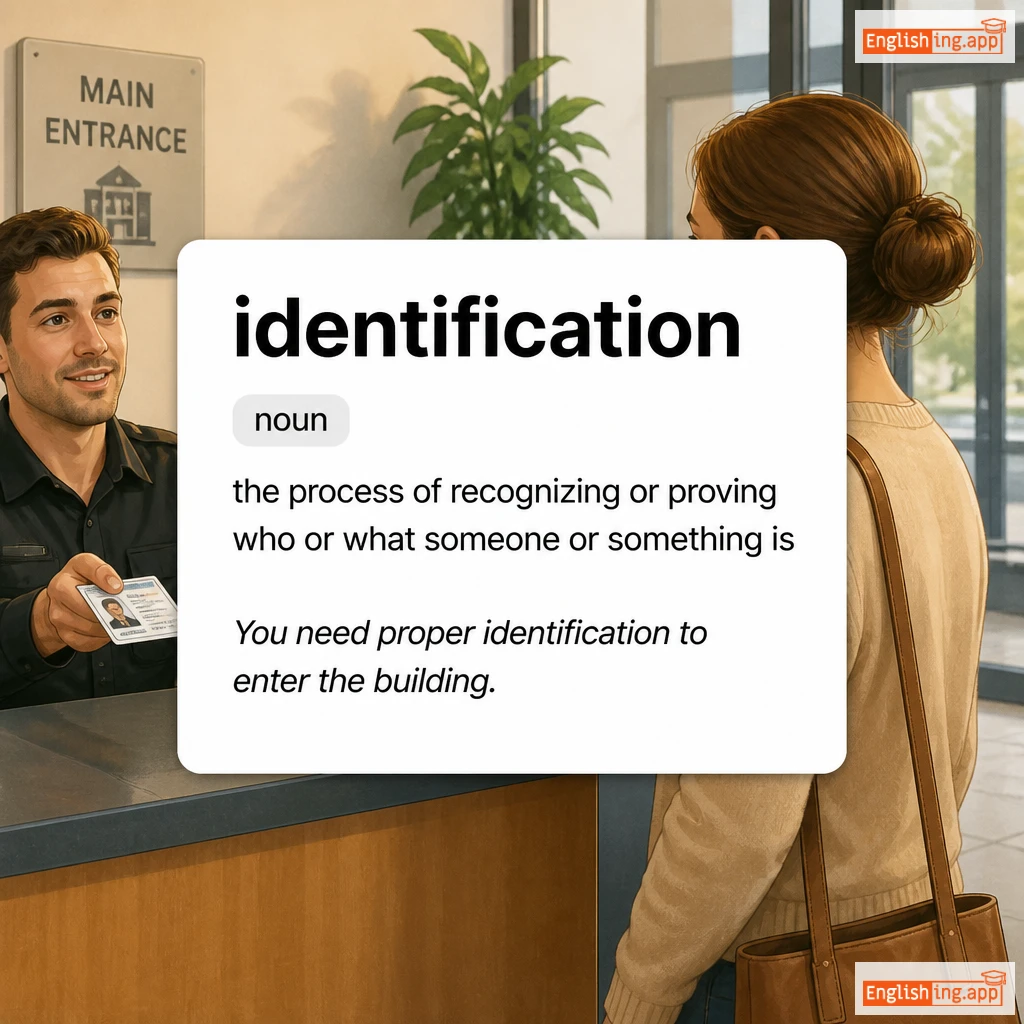
identification definition card — visual illustration of the meaning
noun B2
/aɪˌdɛntɪfɪˈkeɪʃən/
身分証明 (minbun shoumei)

the process of recognizing or proving who or what someone or something is

"You need proper identification to enter the building."

"ビルに入るには適切な身分証明が必要です。" (Biru ni hairu ni wa tekisetsu na minbun shoumei ga hitsuyou desu.)
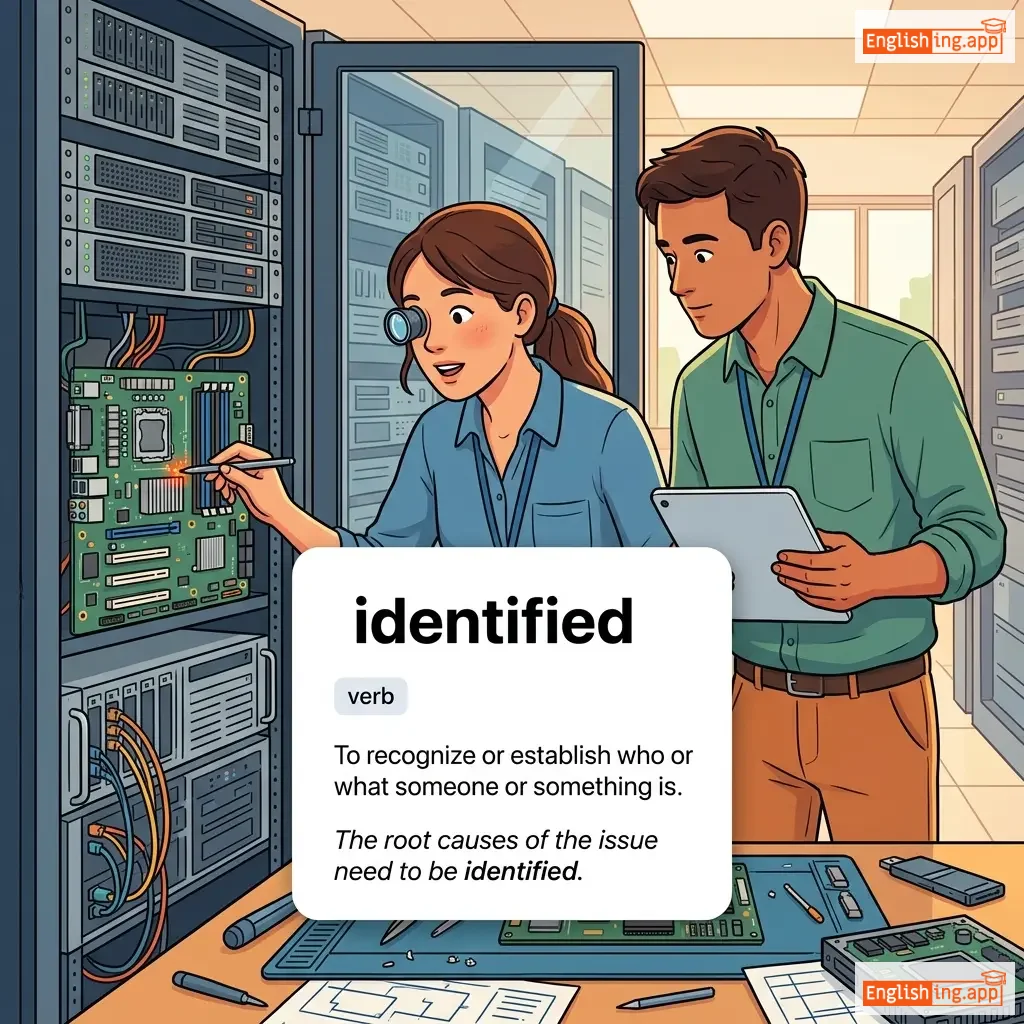
identified definition card — visual illustration of the meaning
verb B2
aɪˈdɛntɪfaɪd
特定された (tokutei sareta)

To recognize or establish who or what someone or something is.

"The root causes of the issue need to be identified."

"問題の根本的な原因は特定される必要があります。" (Mondai no konpon-teki na gen'in wa tokutei sareru hitsuyou ga arimasu.)
idiot definition card — visual illustration of the meaning
noun B2
/ˈɪdɪət/
バカ (baka)

a person who acts in a way that is considered very stupid or foolish

"He acted like an idiot at the party last night."

"彼は昨晩のパーティーでイディオットのように振る舞った。" (Kare wa sakuban no pātī de idotto no yō ni furumatta.)
adjective B2
/ˌɪd.iˈɒt.ɪk/
愚か (oroka)

extremely stupid; foolish; senseless

"His idiotic behavior embarrassed everyone at the meeting."

"彼の愚かな行動は会議でみんなを困らせた。" (kare no oroka na kōdō wa kaigi de minna o komarase ta)
adjective, verb B2
/ˈaɪd(ə)l/
アイドル (aidoru)

Adjective: not active or in use; lazy. Verb: to spend time doing nothing.

"The workers sat idle during the power outage."

"停電中、作業員たちはアイドル状態で座っていました。" (teidenchuu, sagyouin tachi wa aidoru joutai de suwatte imashita.)
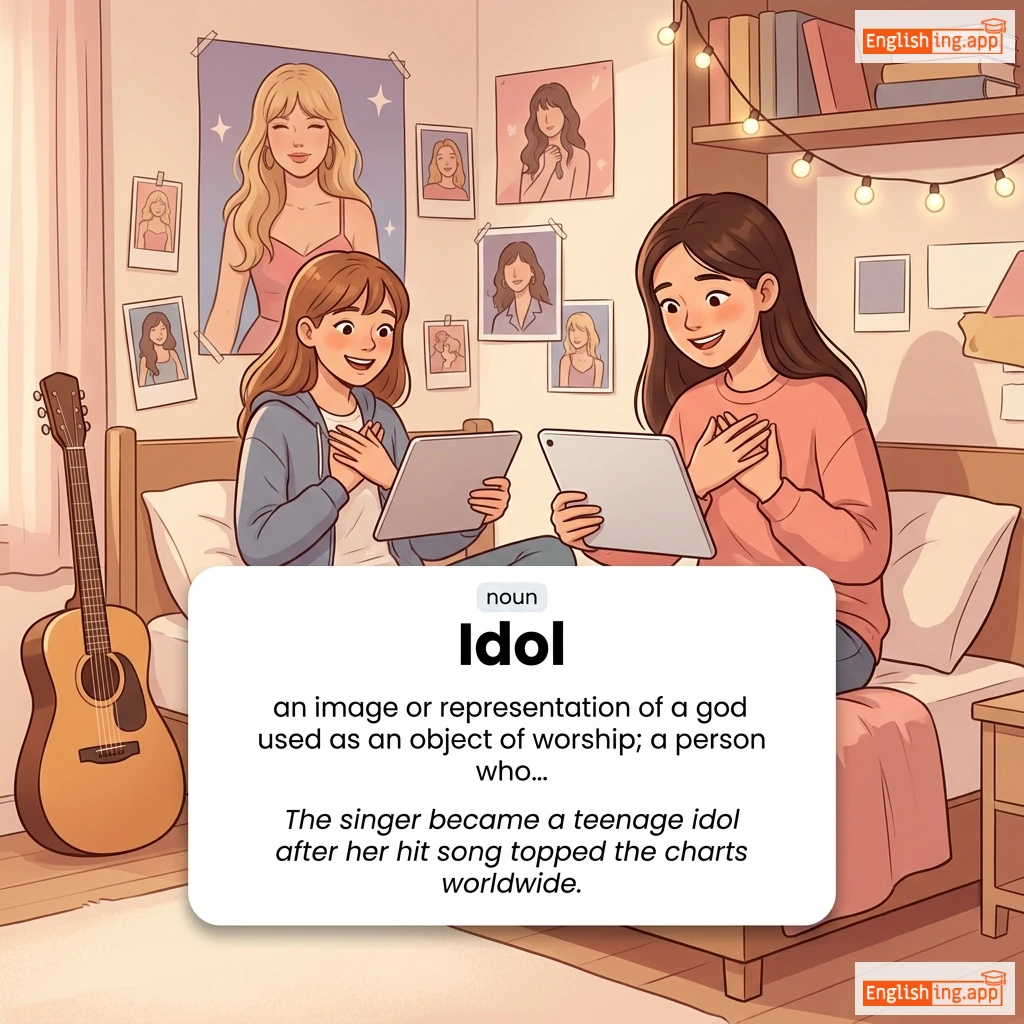
Idol definition card — visual illustration of the meaning
noun B2
/ˈaɪ.dəl/
偶像; 崇拝される人物 (gūzō, sūhai sareru jinbutsu)

an image or representation of a god used as an object of worship; a person who is greatly admired

"The singer became a teenage idol after her hit song topped the charts worldwide."

"その歌手はヒットソングが世界中のチャートで1位に達した後、ティーンエイジャーのアイドルとなった。" (sono kashu wa hitto songu ga sekaijū no chāto de 1-ii ni tasshita ato, tīneijā no aidoru to natta.)
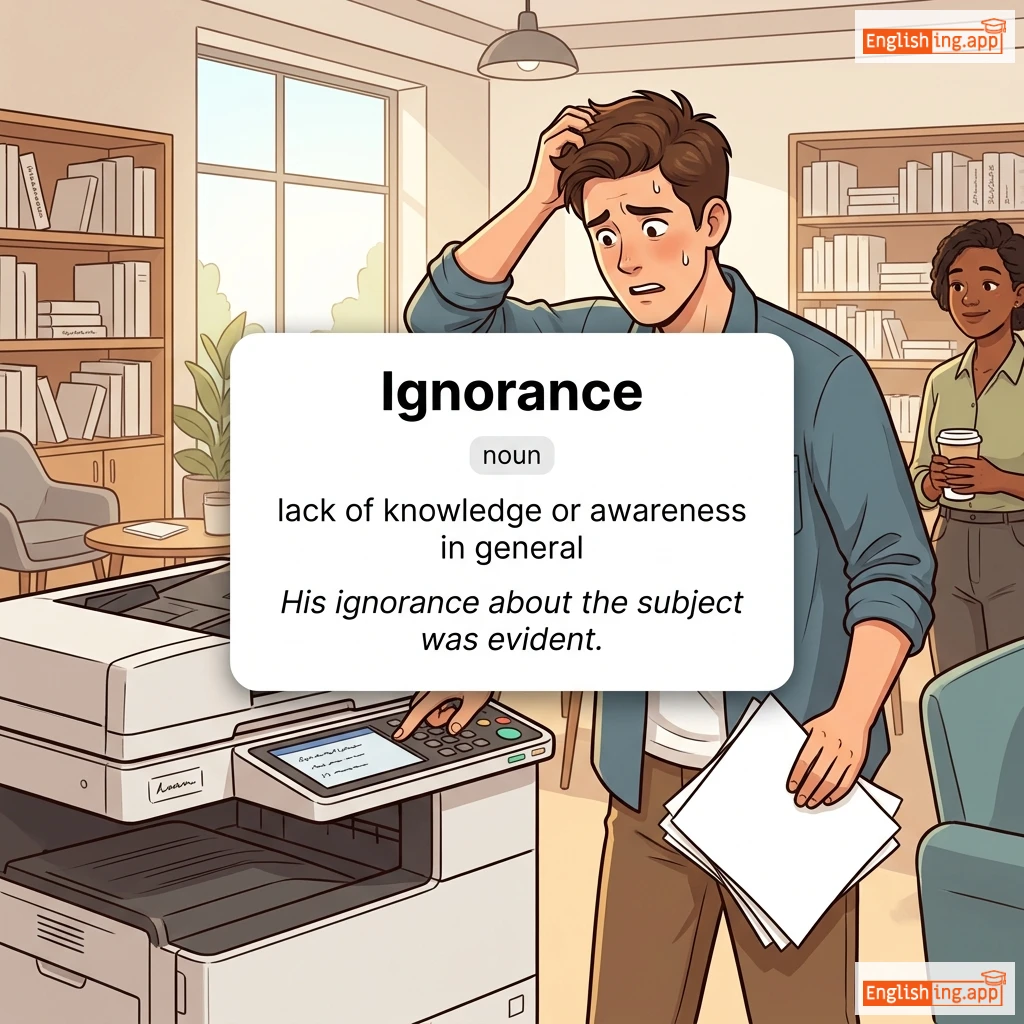
Ignorance definition card — visual illustration of the meaning
noun B2
/ˈɪɡnərəns/
無知 (muchi)

lack of knowledge or awareness in general

"His ignorance about the subject was evident."

"その主題に対する彼の無知は明らかだった。" (Sono shudai ni taisuru kare no muchi wa akiraka datta.)
adjective B2
/ˈɪɡ.nər.ənt/
無知 (muchi)

lacking knowledge, awareness, or education

"He made an ignorant comment about the culture."

"彼は文化について無知なコメントをした。" (Kare wa bunka ni tsuite muchi na komento o shita.)
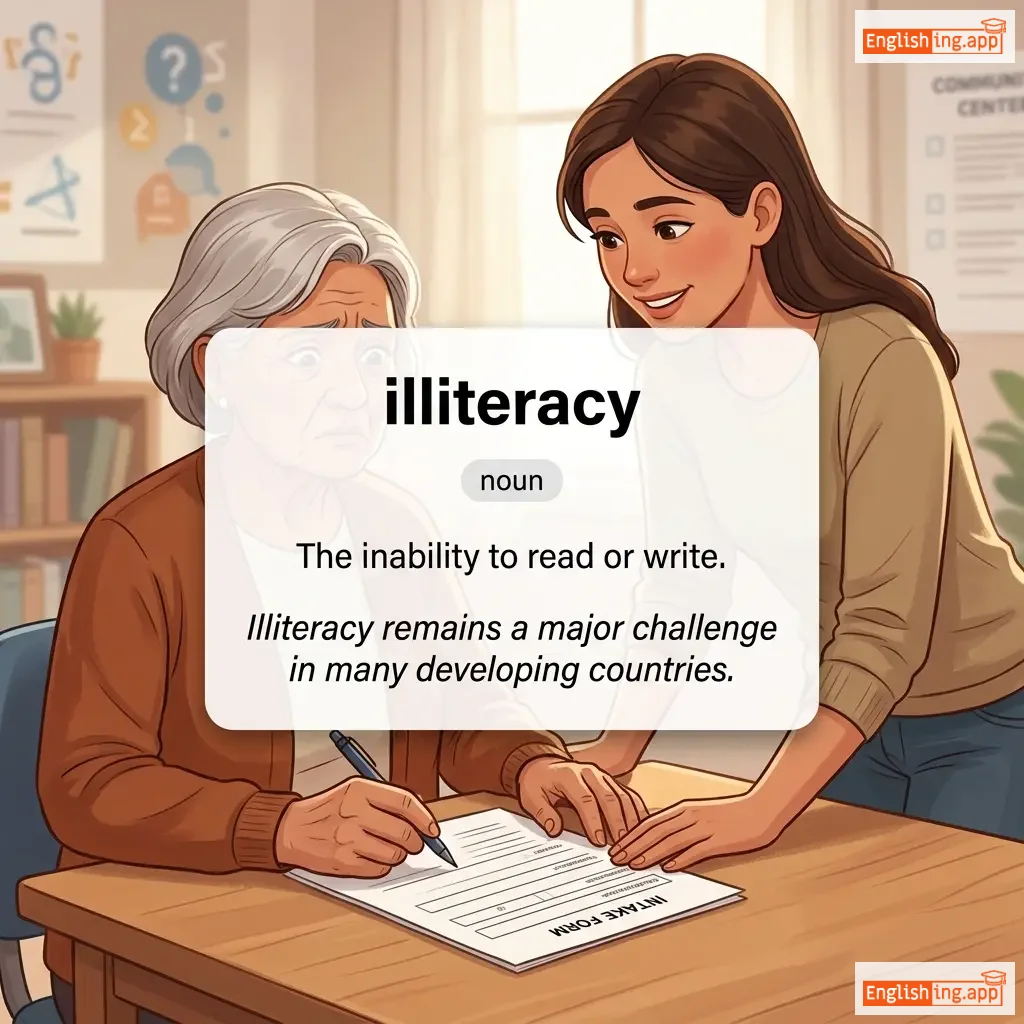
illiteracy definition card — visual illustration of the meaning
noun B2
/ɪˈlɪtərəsi/
識字率の低さ (shikijiritsu no hikusa)

The inability to read or write.

"Illiteracy remains a major challenge in many developing countries."

"識字率の低さは、多くの発展途上国において重要な課題のままである。" (Shikijiritsu no hikusa wa, ooku no hatten tojoukoku ni oite juuyou na kadai no mama de aru.)
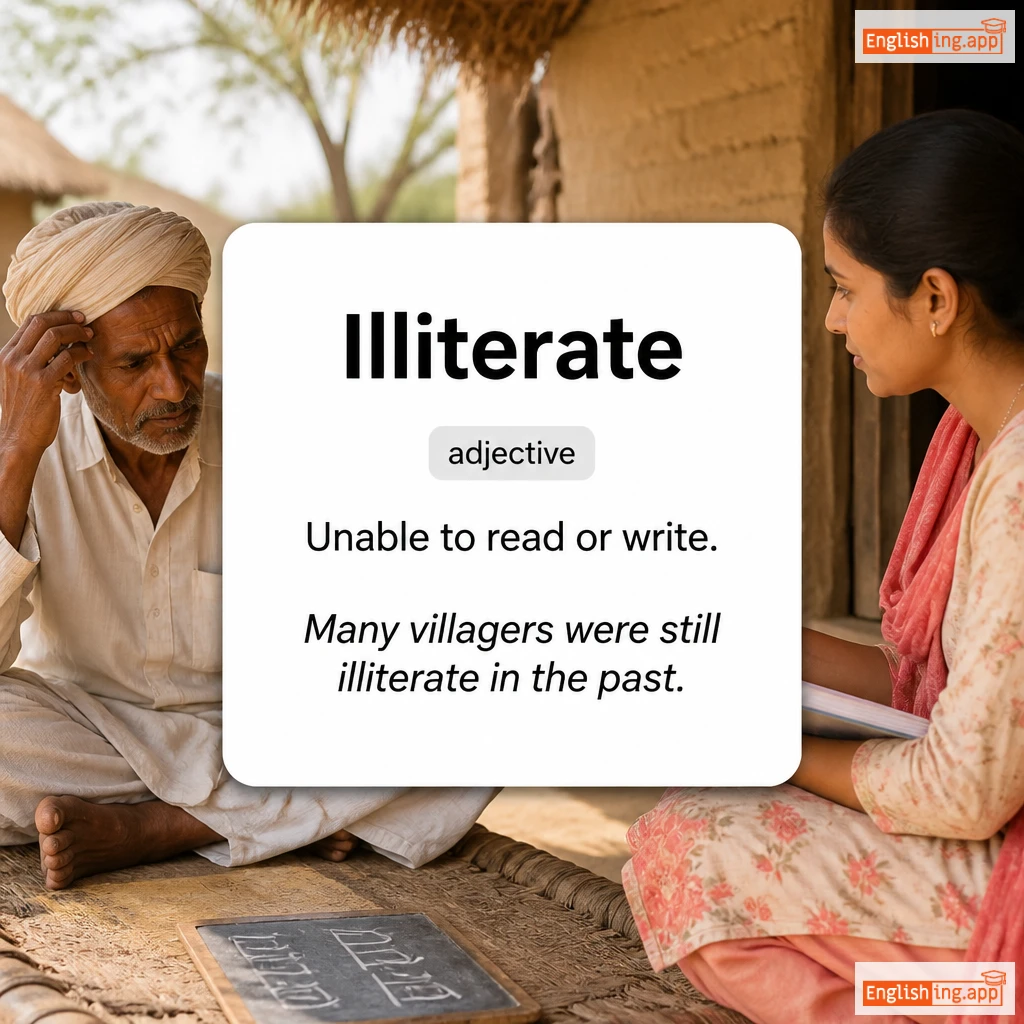
Illiterate definition card — visual illustration of the meaning
adjective B2
/ɪˈlɪtərət/
読み書きできない (yomikaki dekinai)

Unable to read or write.

"Many villagers were still illiterate in the past."

"多くの村人たちは過去に読み書きできないままでした。" (Ooku no murabito tachi wa kako ni yomikaki dekinai mamadeshita.)
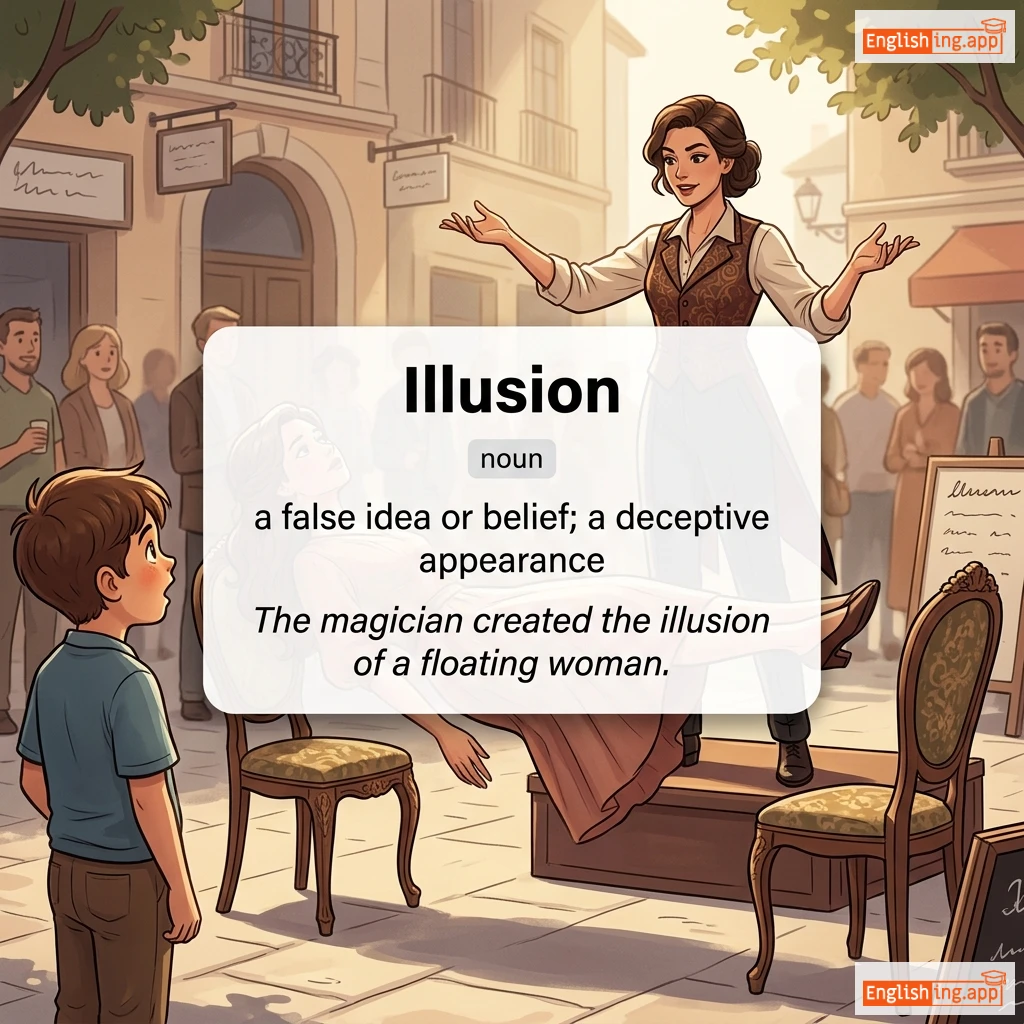
Illusion definition card — visual illustration of the meaning
noun B2
/ɪˈluːʒən/
錯覚 (sakkaku)

a false idea or belief; a deceptive appearance

"The magician created the illusion of a floating woman."

"魔法使いは浮かぶ女性の錯覚を作り出しました。" (Mahōtsukai wa ukabu josei no sakkaku o tsukuridashimashita.)
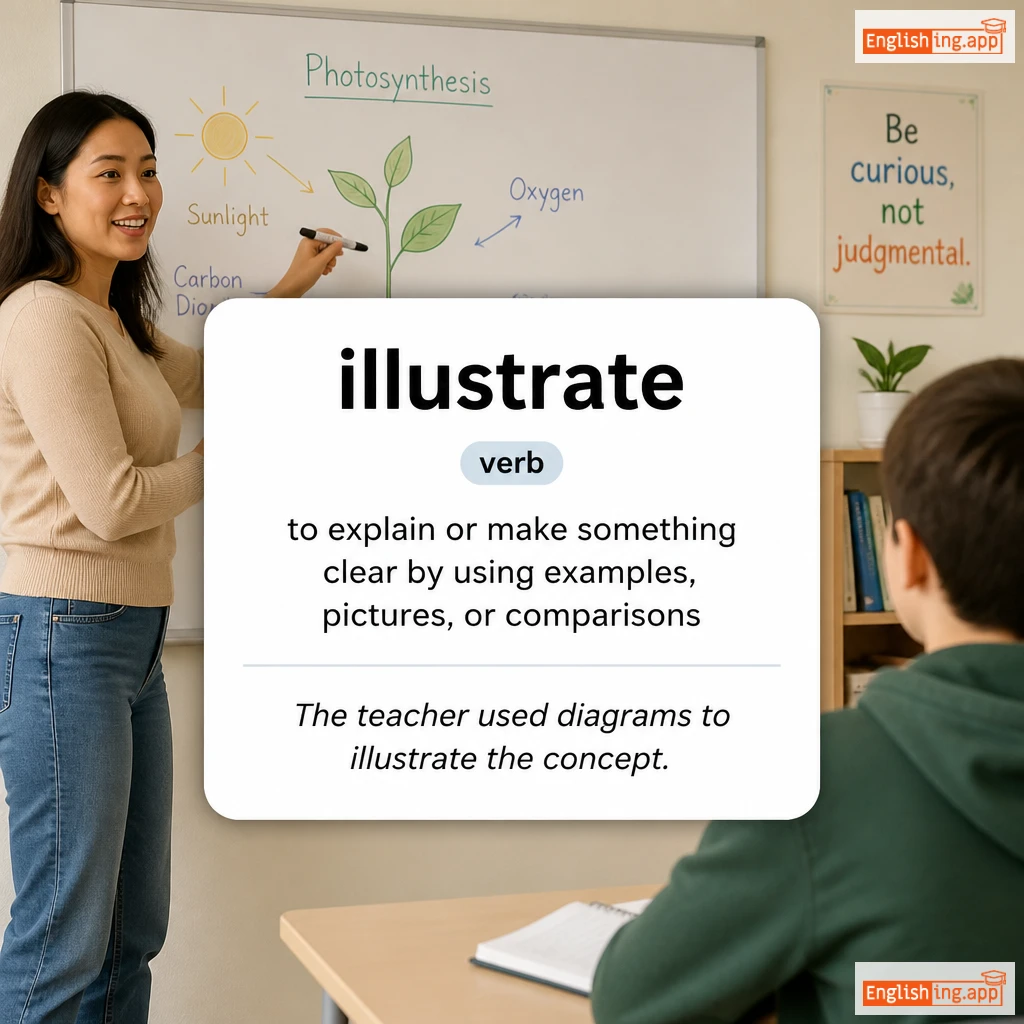
illustrate definition card — visual illustration of the meaning
verb B2
/ˈɪl.ə.streɪt/
説明する (setsumei suru)

to explain or make something clear by using examples, pictures, or comparisons

"The teacher used diagrams to illustrate the concept."

"先生はその概念を説明するために図を使いました。" (Sensei wa sono gainen o setsumei suru tame ni zu o tsukaimashita.)
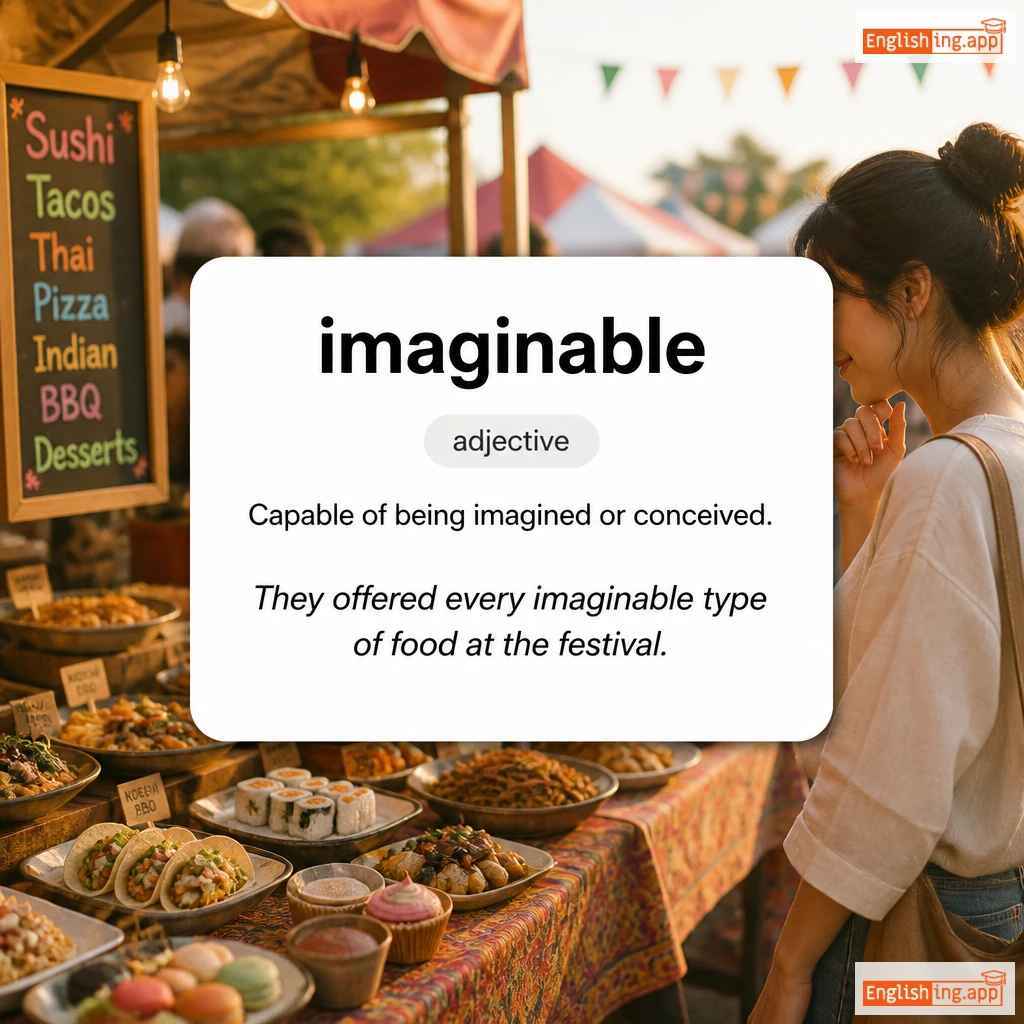
imaginable definition card — visual illustration of the meaning
adjective B2
/ɪˈmædʒɪnəbl/
想像できる (souzou dekiru)

Capable of being imagined or conceived.

"They offered every imaginable type of food at the festival."

"彼らはフェスティバルであらゆる想像できるタイプの食べ物を提供しました。" (Karera wa fesutibaru de arayuru souzou dekiru taipu no tabemono wo teikyou shimashita.)
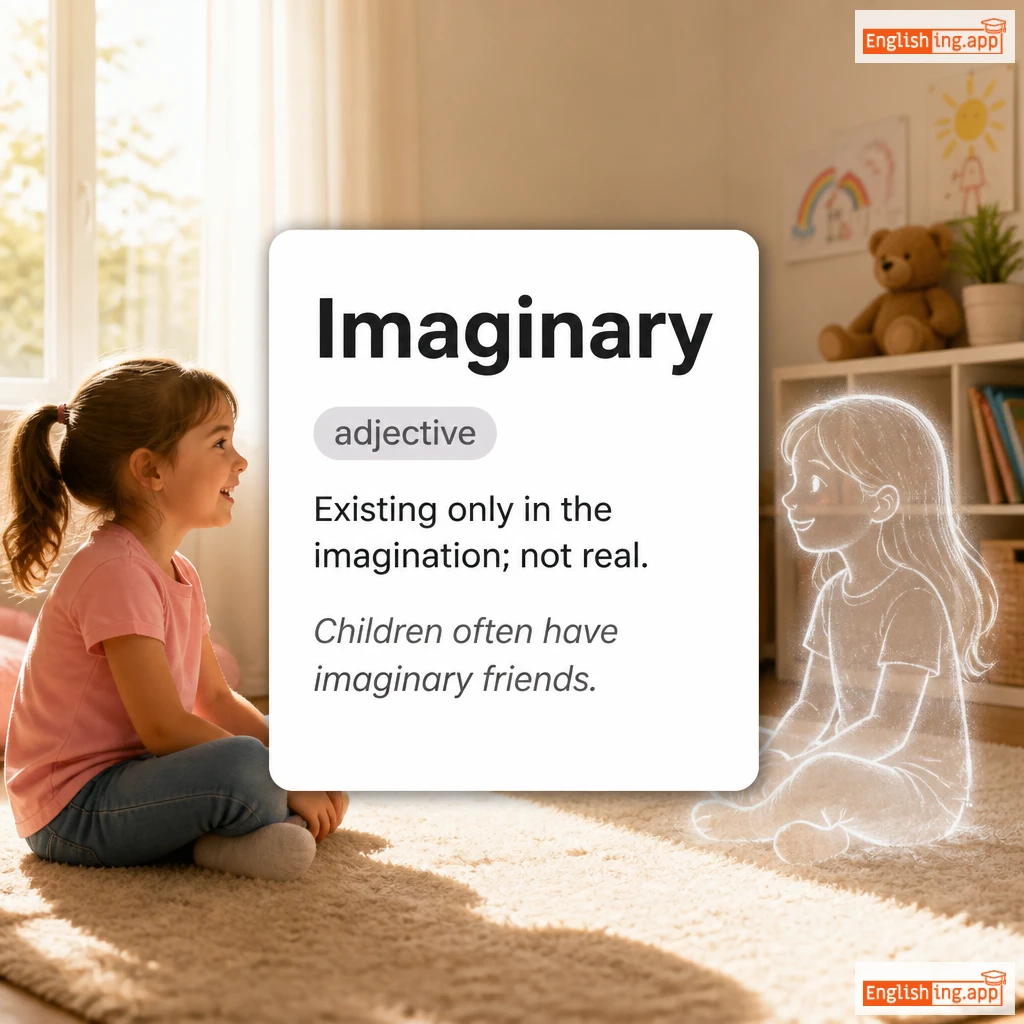
Imaginary definition card — visual illustration of the meaning
adjective B2
/ɪˈmædʒɪnəri/
架空の (kakuu no)

Existing only in the imagination; not real.

"Children often have imaginary friends."

"子供たちはしばしば架空の友達を持っています。" (Kodomotachi wa shibashiba kakū no tomodachi o motteimasu.)
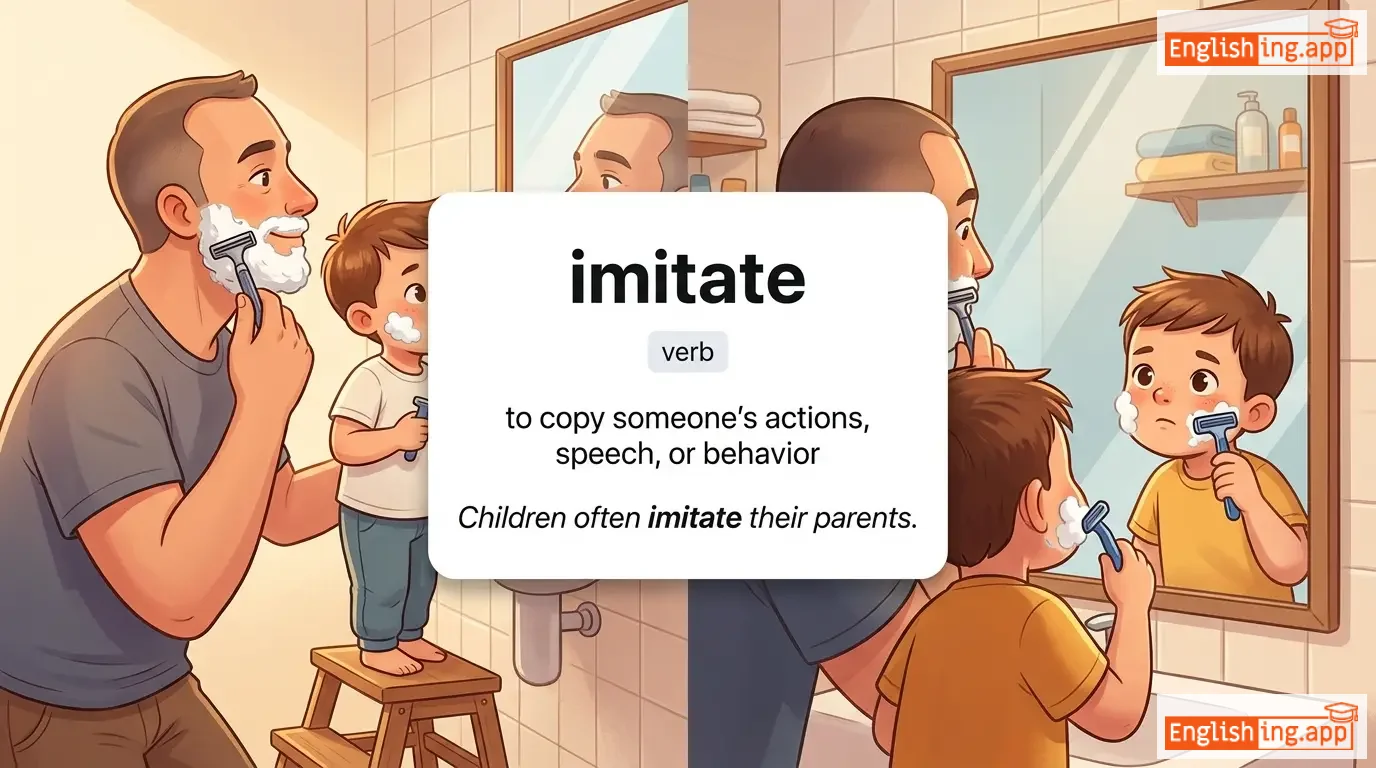
imitate definition card — visual illustration of the meaning
verb B2
/ˈɪmɪteɪt/
模倣する (mohō suru)

to copy someone's actions, speech, or behavior

"Children often imitate their parents."

"子供たちはしばしば親を真似ます。" (Kodomo-tachi wa shibashiba oya o manemasu.)
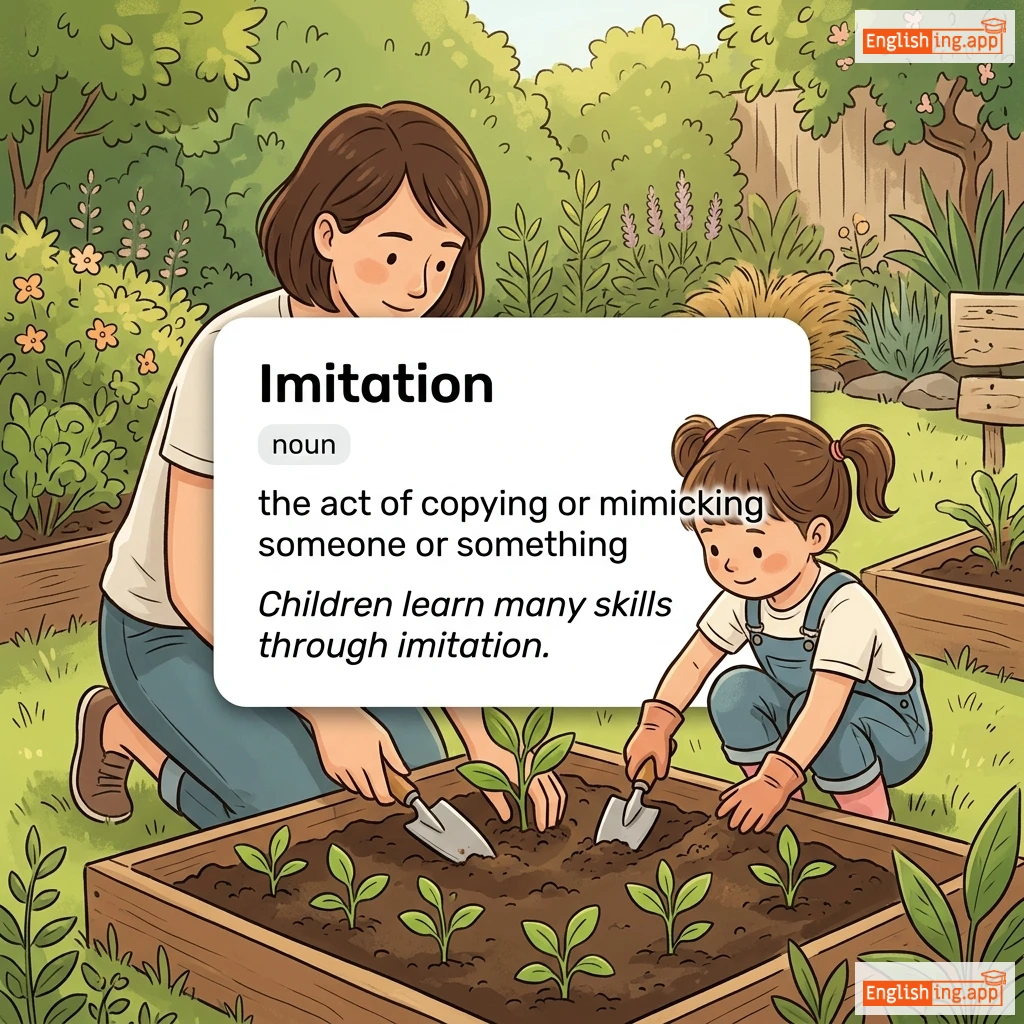
Imitation definition card — visual illustration of the meaning
noun B2
/ˌɪmɪˈteɪʃən/
模倣 (mohō)

the act of copying or mimicking someone or something

"Children learn many skills through imitation."

"子供たちは模倣を通じて多くのスキルを学びます。" (Kodomotachi wa mohō o tōjite ōku no sukiru o manabimasu.)
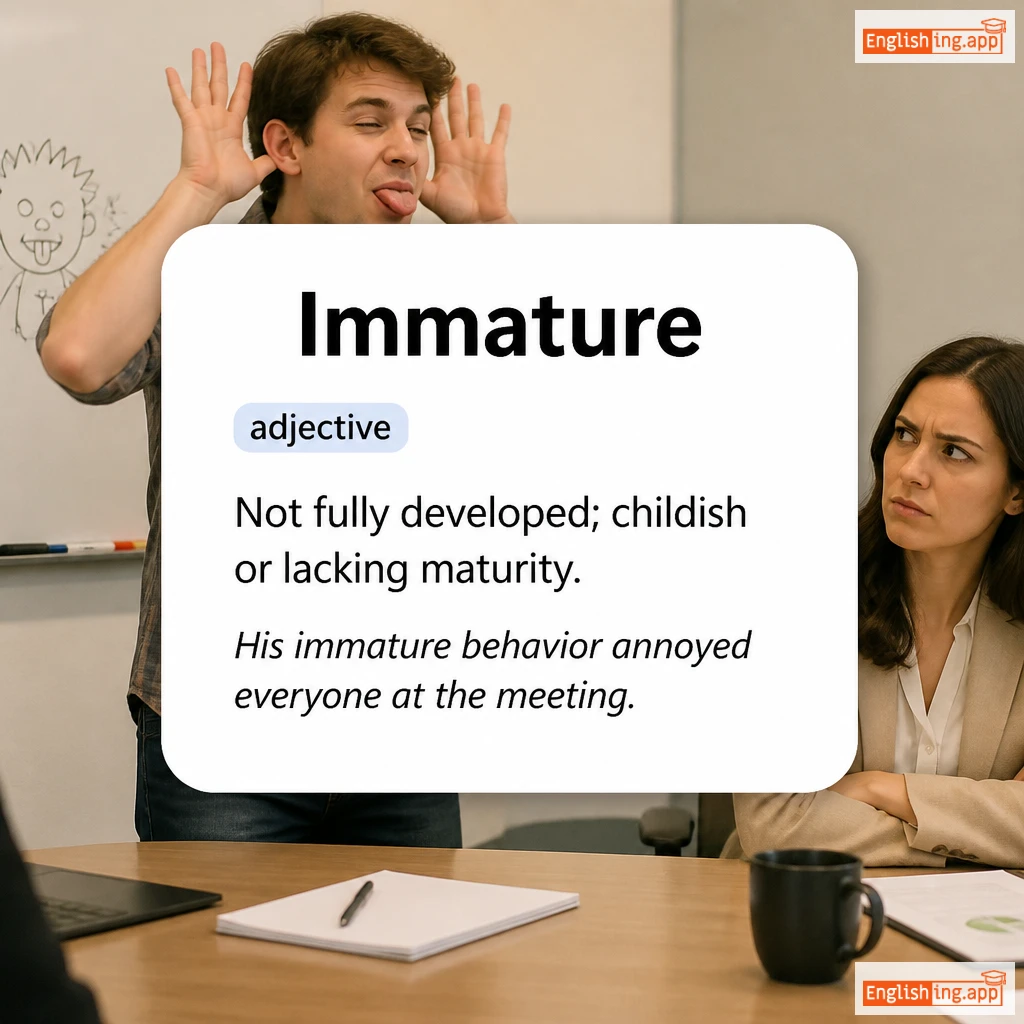
Immature definition card — visual illustration of the meaning
adjective B2
/ˌɪməˈtjʊər/
未熟 (mijuku)

Not fully developed; childish or lacking maturity.

"His immature behavior annoyed everyone at the meeting."

"彼の未熟な振る舞いは会議で皆をイライラさせた。" (Kare no mijuku na furumai wa kaigi de mina o iraira saseta.)
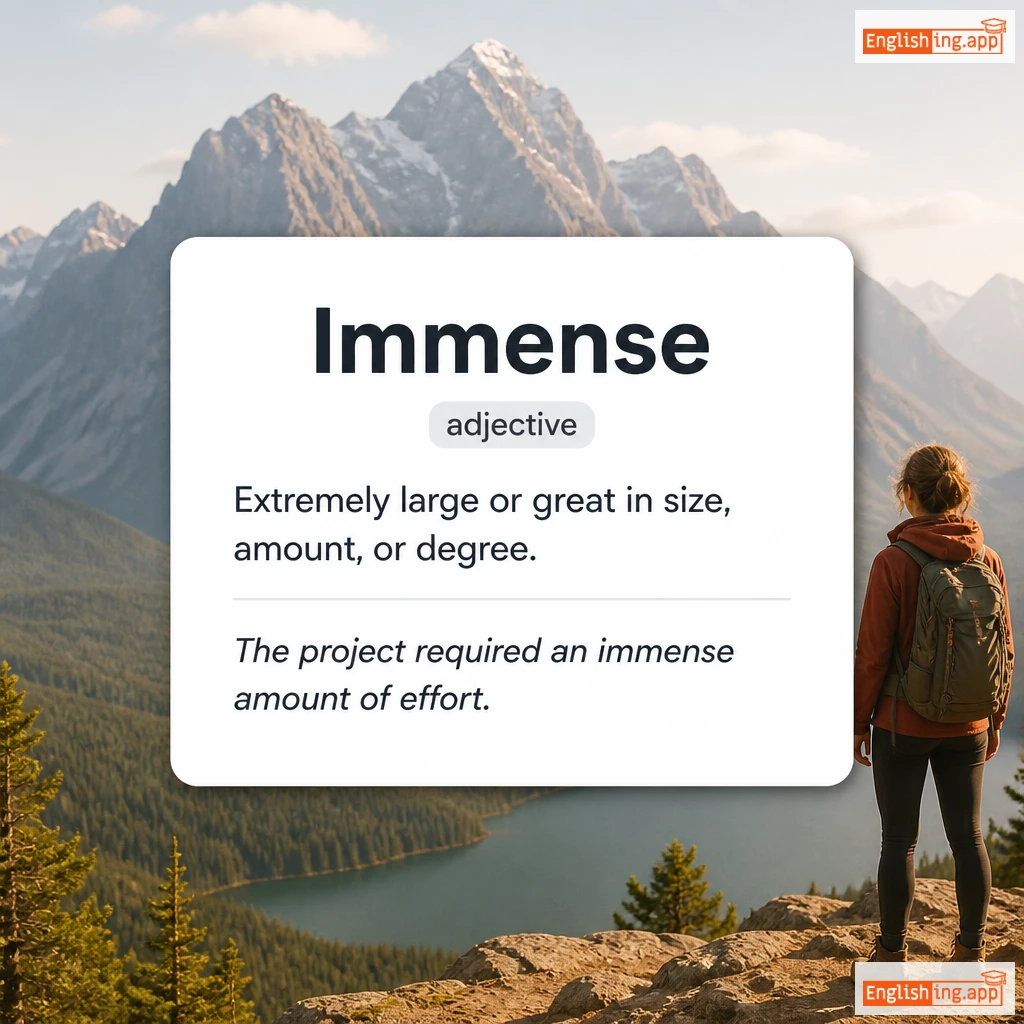
Immense definition card — visual illustration of the meaning
adjective B2
/ɪˈmɛns/
巨大な (kyodaina)

Extremely large or great in size, amount, or degree.

"The project required an immense amount of effort."

"そのプロジェクトには膨大な努力が必要でした。" (Sono purojekuto ni wa boudaina doryoku ga hitsuyou deshita.)
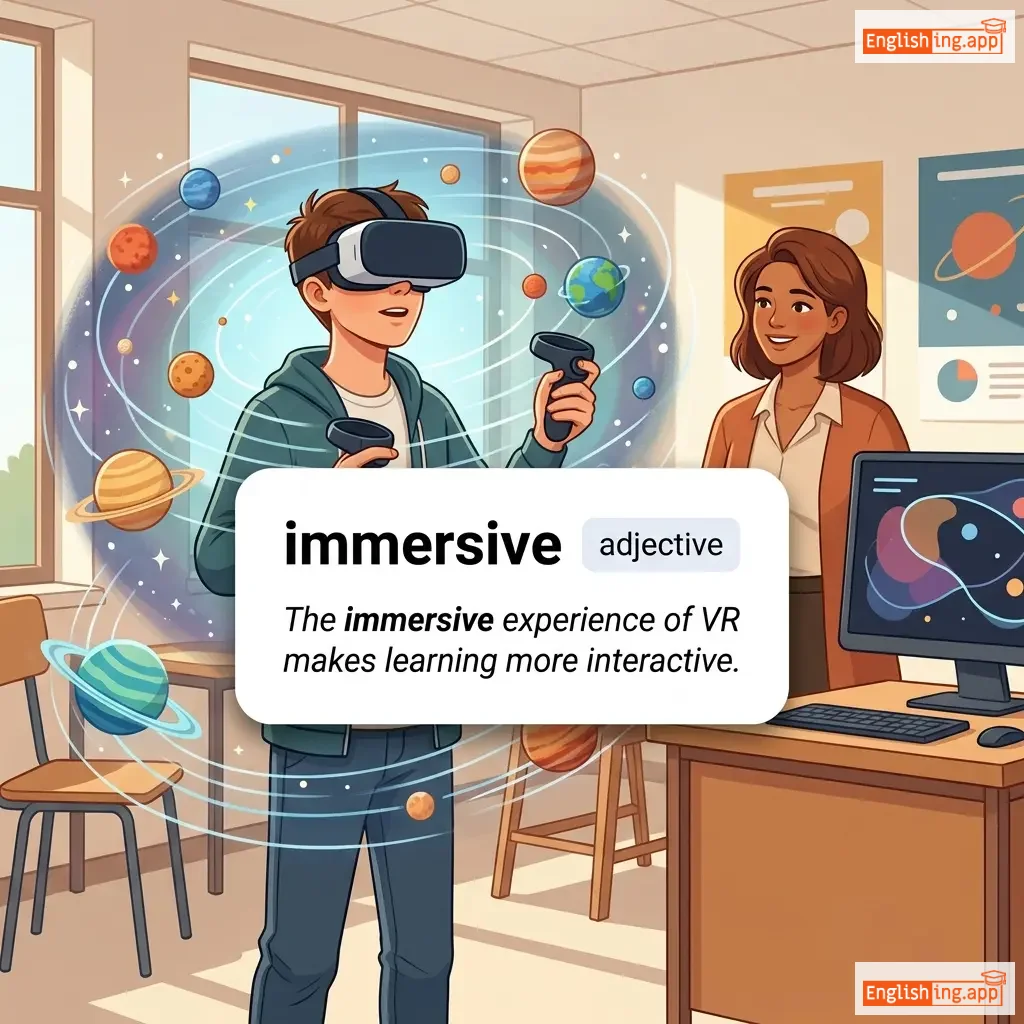
immersive definition card — visual illustration of the meaning
adjective B2
ɪˈmɜː.sɪv
イマーシブ (imashibu)

Providing, involving, or characterized by deep absorption or immersion in something.

"The immersive experience of VR makes learning more interactive."

"VRのイマーシブ体験は、学習をよりインタラクティブにします。" (VR no imāshibu taiken wa, gakushū o yori intarakutibu ni shimasu.)
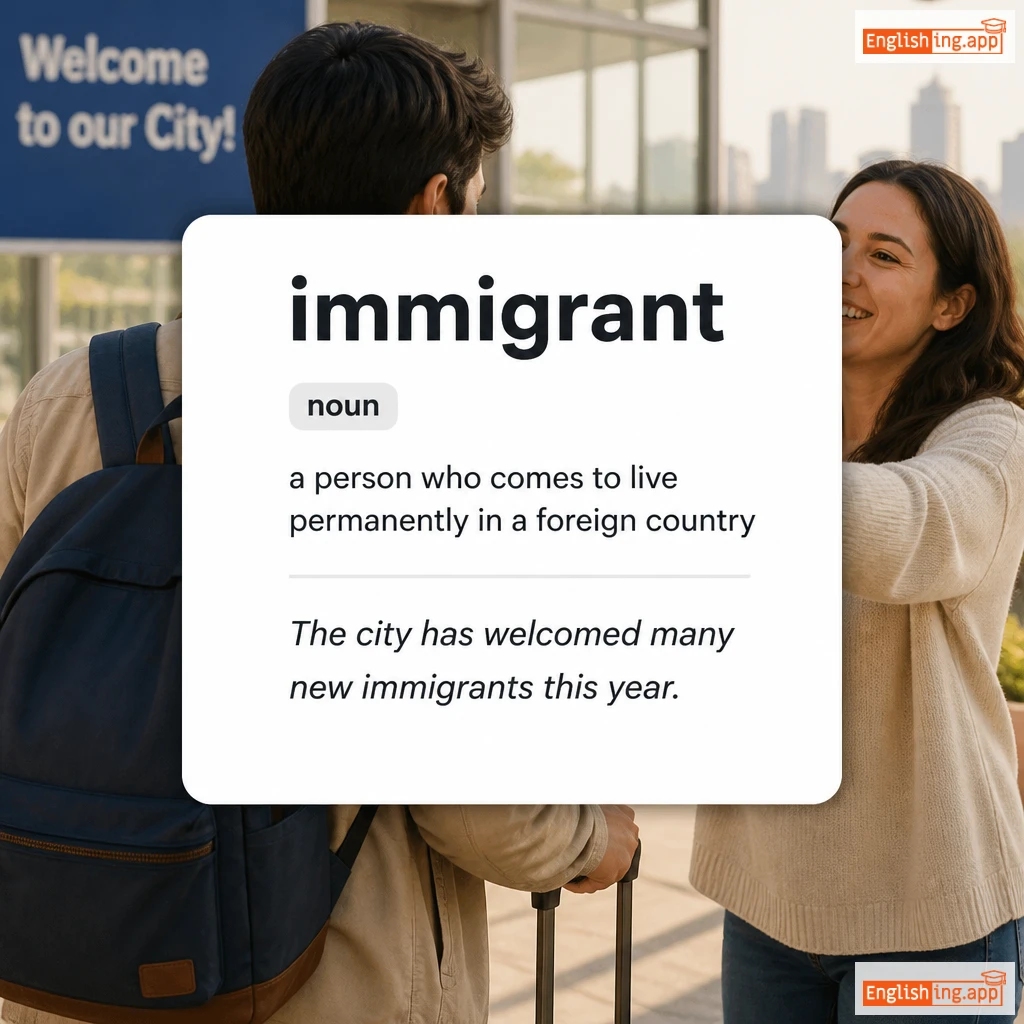
immigrant definition card — visual illustration of the meaning
noun B2
/ˈɪmɪɡrənt/
移民 (imin)

a person who comes to live permanently in a foreign country

"The city has welcomed many new immigrants this year."

"今年、市は多くの新しい移民を迎えました。" (Kotoshi, shi wa ōku no atarashī imin o mukaemashita.)
verb B2
/ˈɪmɪɡreɪt/
移住する (ijyuu suru)

to come to live permanently in a foreign country

"He immigrated to Canada five years ago."

"彼は5年前にカナダに移住しました。" (Kare wa go-nen mae ni Kanada ni ijyuu shimashita.)
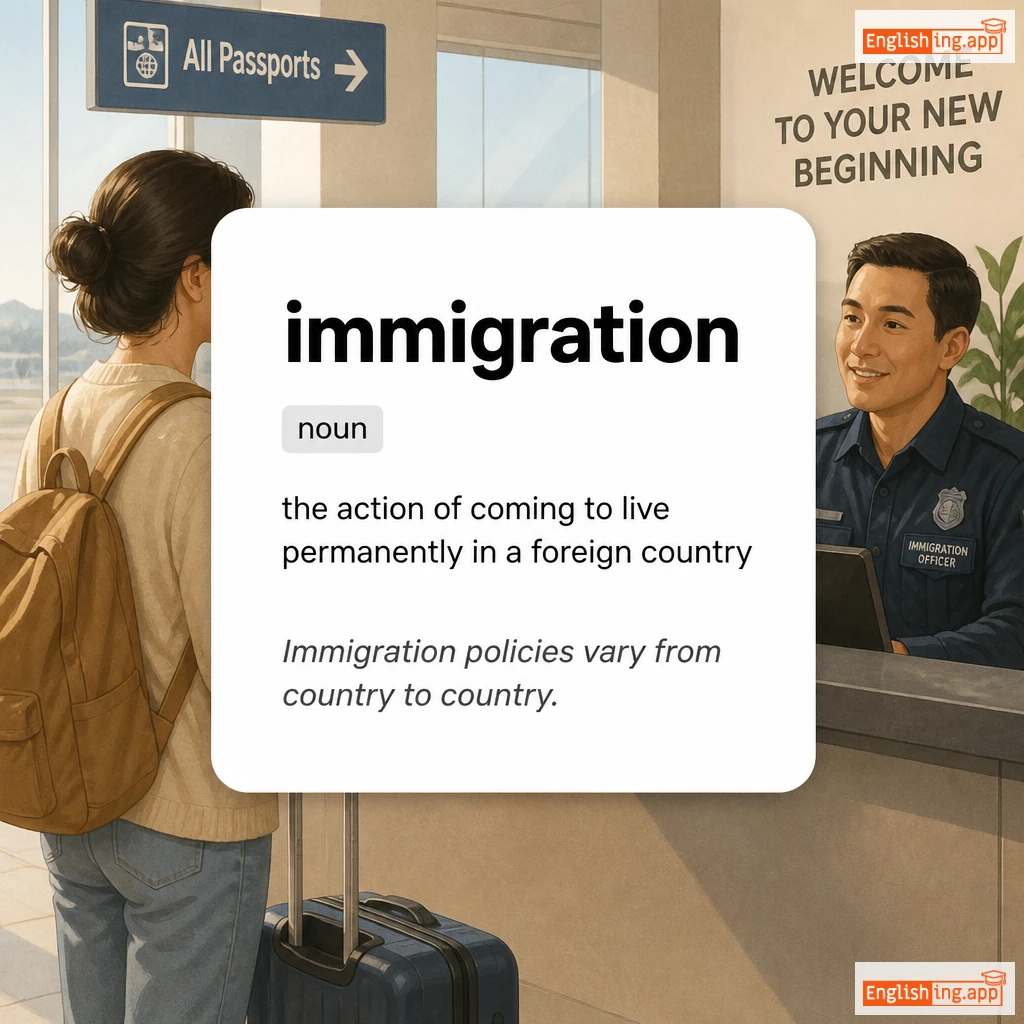
immigration definition card — visual illustration of the meaning
noun B2
/ˌɪmɪˈɡreɪʃən/
移民 (imin)

the action of coming to live permanently in a foreign country

"Immigration policies vary from country to country."

"移民政策は国によって異なります。" (Imin seisaku wa kuni ni yotte kotonari masu.)
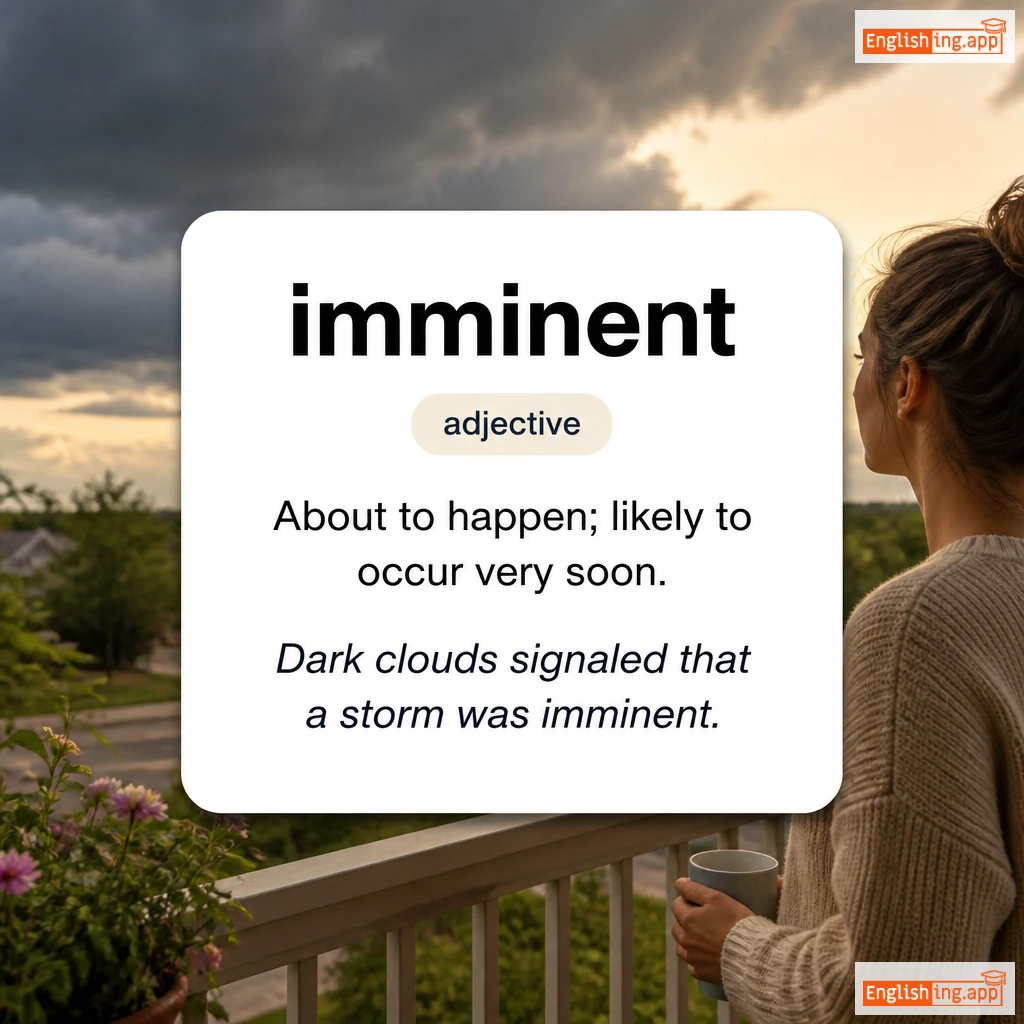
imminent definition card — visual illustration of the meaning
adjective B2
/ˈɪmɪnənt/
差し迫った (さしせまった)

About to happen; likely to occur very soon.

"Dark clouds signaled that a storm was imminent."

"暗い雲は嵐が迫っていることを示していた。" (Kurai kumo wa arashi ga sematte iru koto o shimeshite ita.)
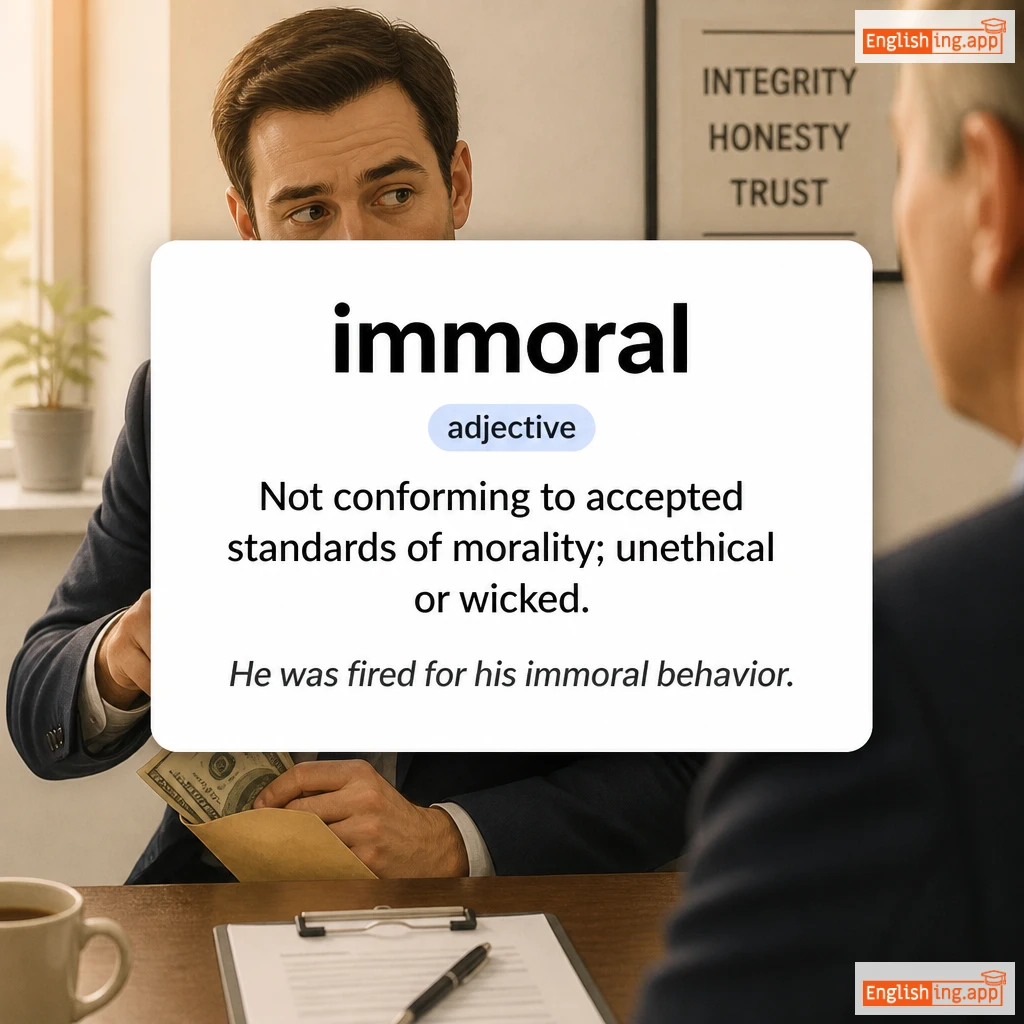
immoral definition card — visual illustration of the meaning
adjective B2
/ɪˈmɒrəl/
不道徳な (fudōtoku na)

Not conforming to accepted standards of morality; unethical or wicked.

"He was fired for his immoral behavior."

"彼は不道徳な行動で解雇されました。" (Kare wa fudōtoku na kōdō de kaiko saremashita.)
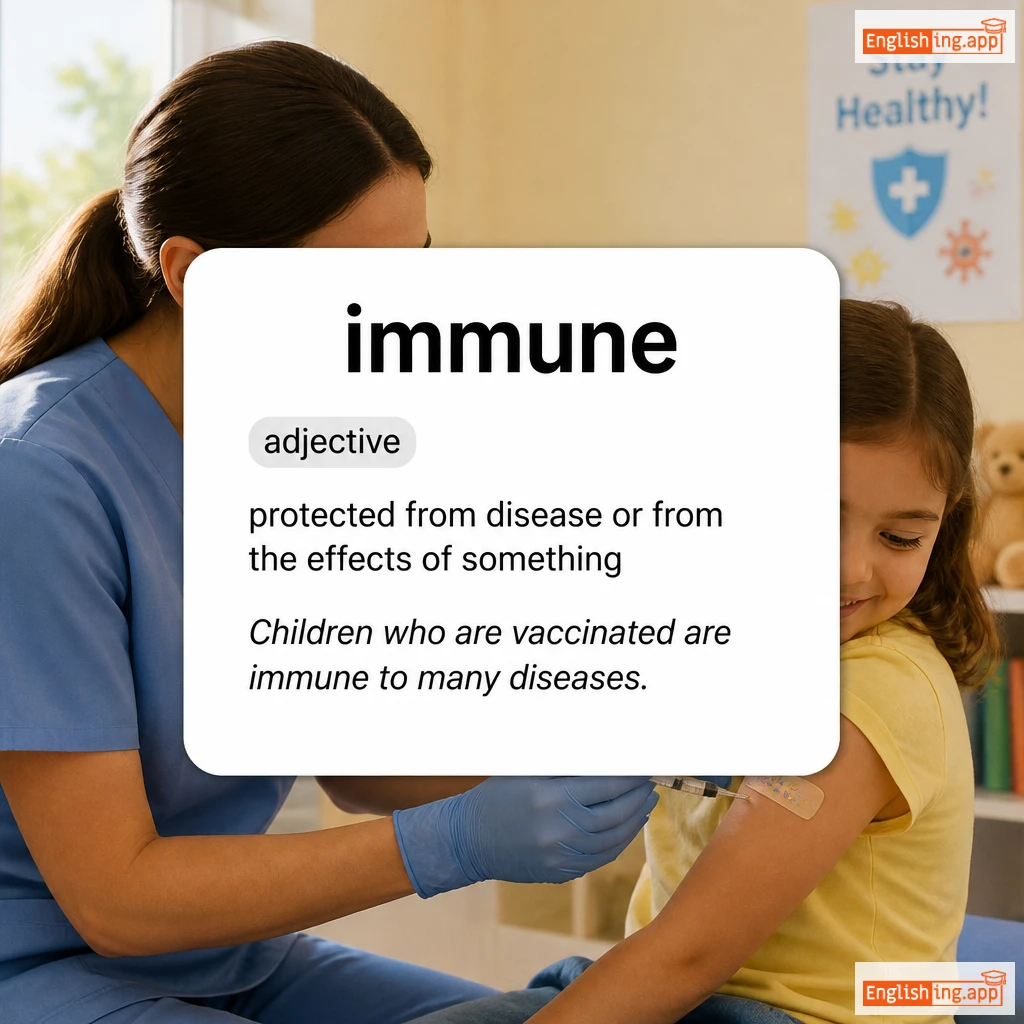
immune definition card — visual illustration of the meaning
adjective B2
/ɪˈmjuːn/
免疫の (men'eki no)

protected from disease or from the effects of something

"Children who are vaccinated are immune to many diseases."

"予防接種を受けた子供たちは多くの病気に免疫があります。" (Yobou sesshu wo uketa kodomotachi wa ooku no byouki ni men'eki ga arimasu.)
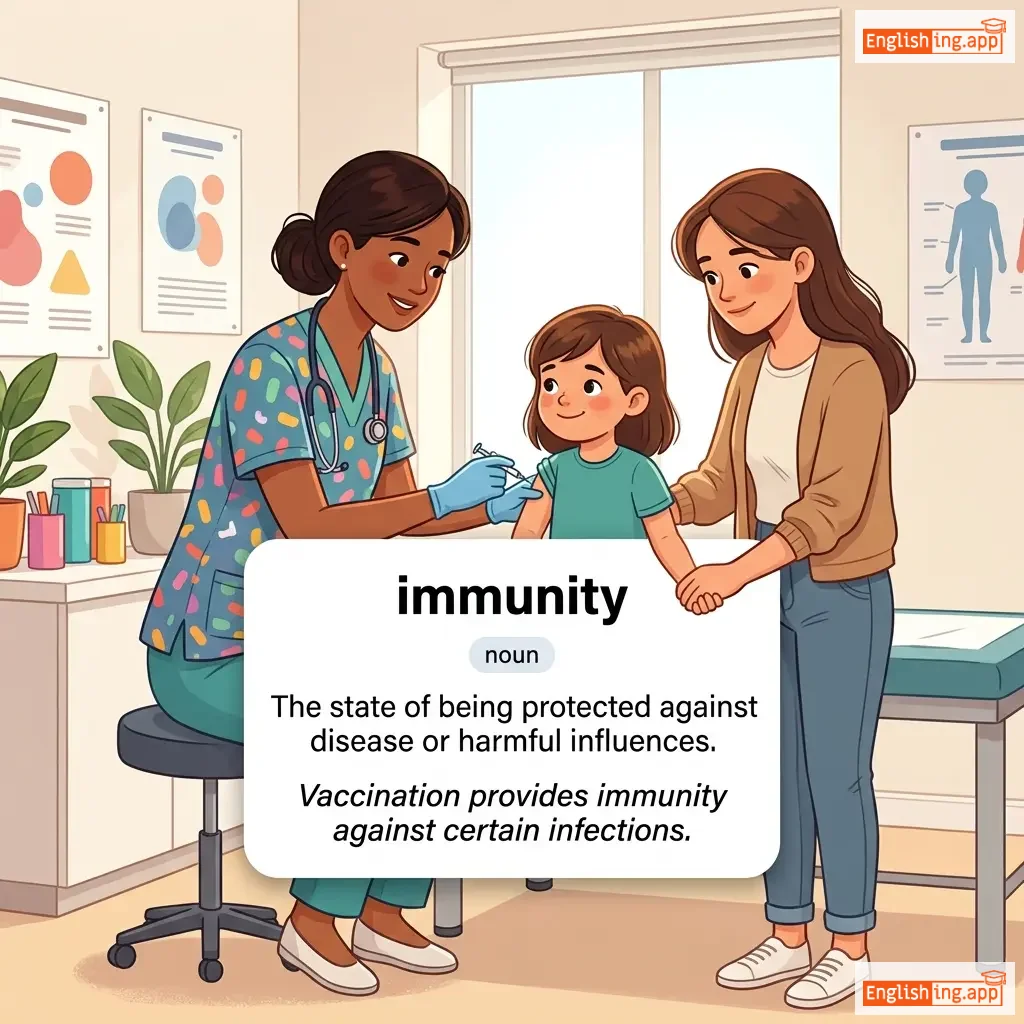
immunity definition card — visual illustration of the meaning
noun B2
/ɪˈmjuːnɪti/
免疫 (men'eki)

The state of being protected against disease or harmful influences.

"Vaccination provides immunity against certain infections."

"ワクチン接種は特定の感染症に対する免疫を提供します。" (Wakuchin sesshu wa tokutei no kansenshou ni taisuru men'eki wo teikyou shimasu.)
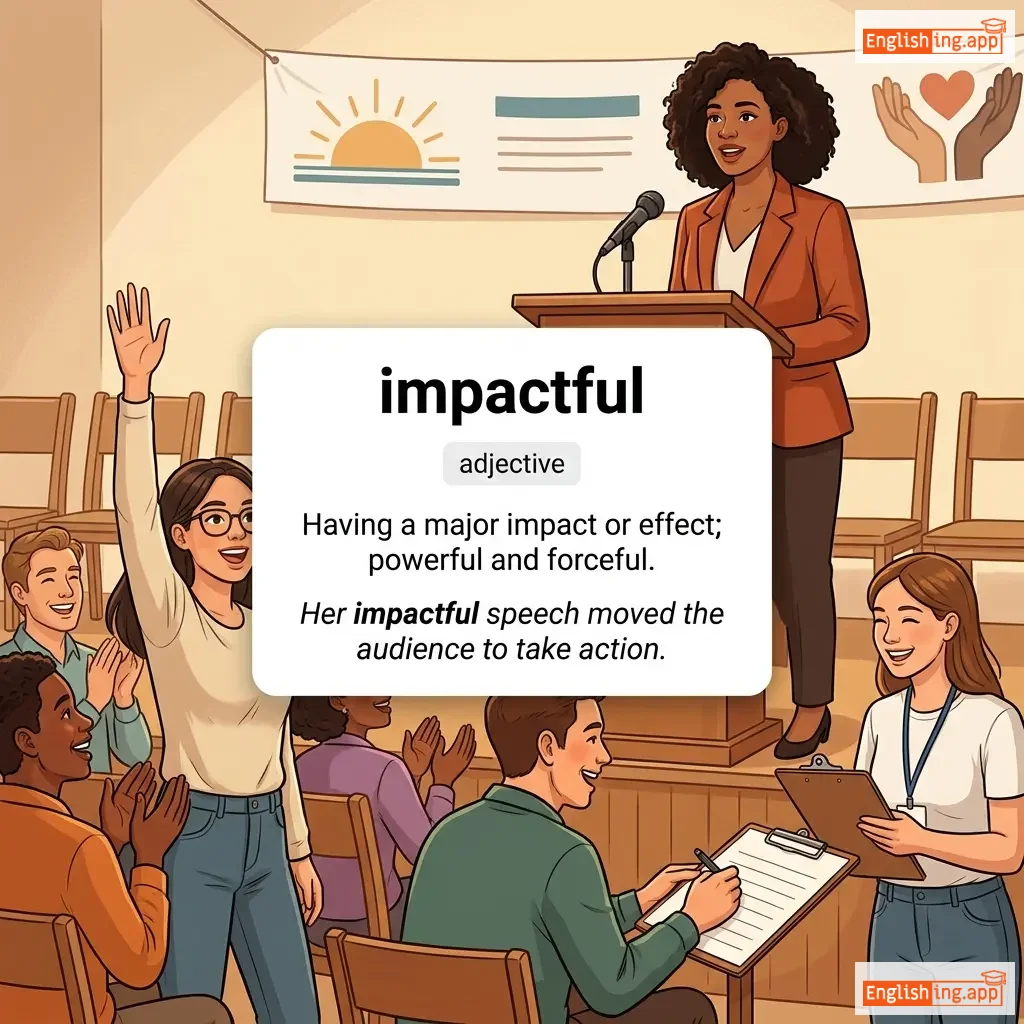
impactful definition card — visual illustration of the meaning
adjective B2
/ˈɪmpæktfʊl/
インパクトがある (inpakuto ga aru)

Having a major impact or effect; powerful and forceful.

"Her impactful speech moved the audience to take action."

"彼女のインパクトのあるスピーチは、聴衆を行動に駆り立てた。" (Kanojo no inpakuto no aru supīchi wa, chōshū o kōdō ni karitate ta.)
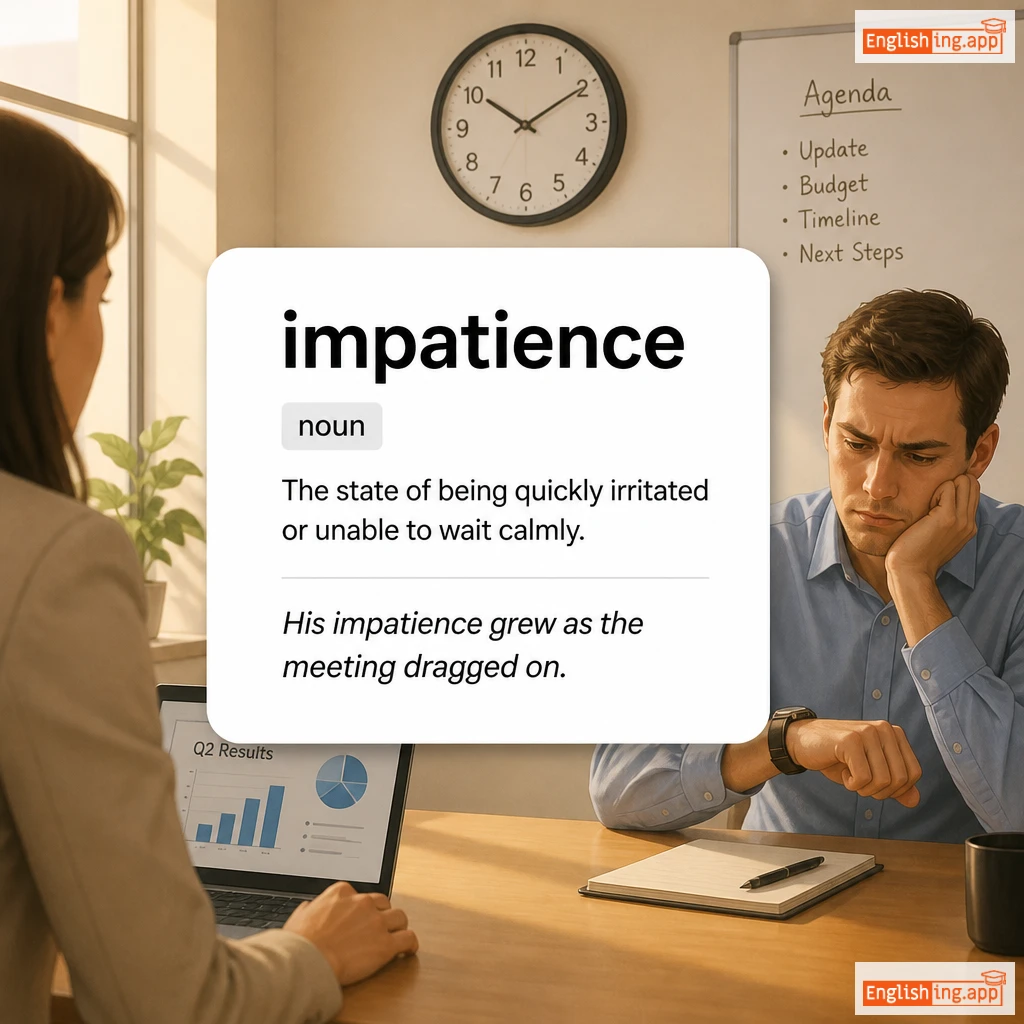
impatience definition card — visual illustration of the meaning
noun B2
/ɪmˈpeɪʃəns/
忍耐力不足 (nintairyoku fusoku)

The state of being quickly irritated or unable to wait calmly.

"His impatience grew as the meeting dragged on."

"会議が長引くにつれて、彼の忍耐力不足が増しました。" (Kaigi ga nagabiku ni tsurete, kare no nintairyoku fusoku ga mashimashita.)
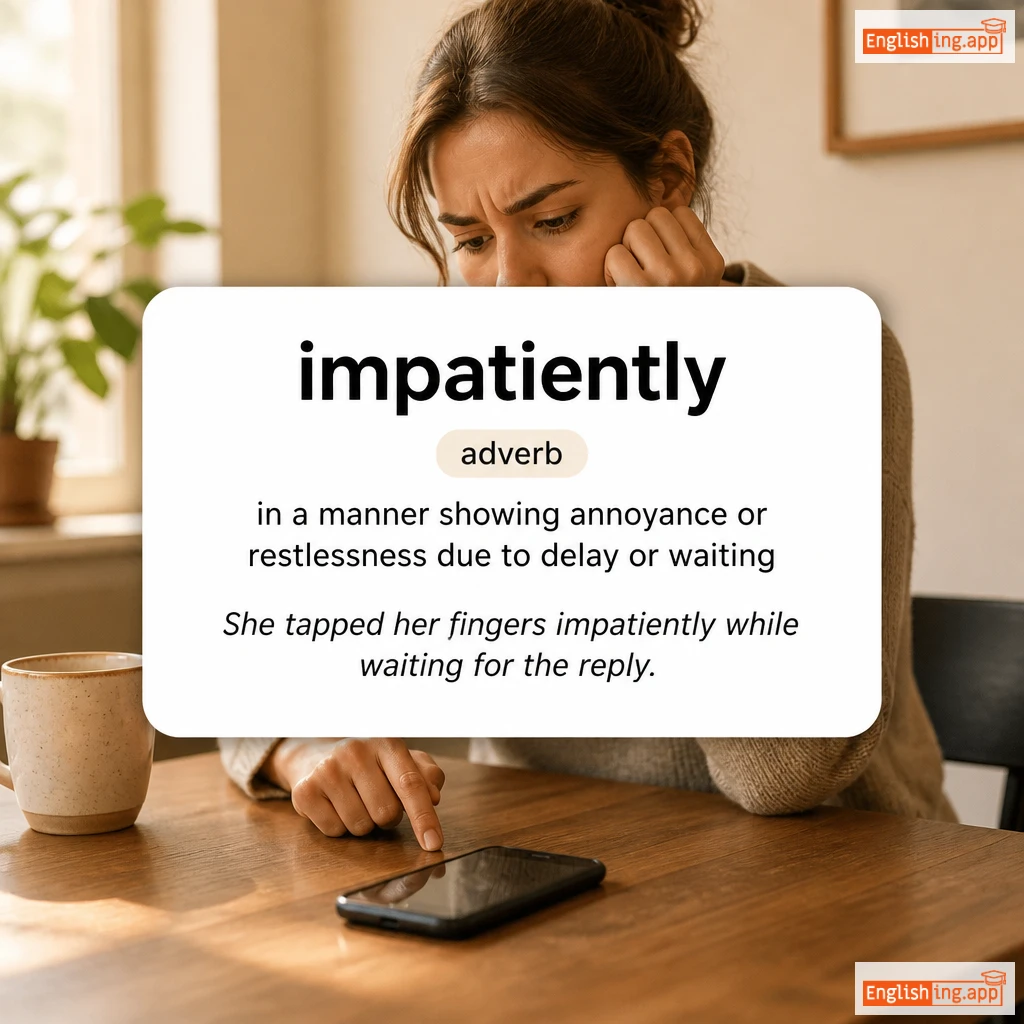
impatiently definition card — visual illustration of the meaning
adverb B2
/ɪmˈpeɪʃəntli/
いらいらして (iraira shite)

in a manner showing annoyance or restlessness due to delay or waiting

"She tapped her fingers impatiently while waiting for the reply."

"彼女は返事を待ちながらいらいらして指を叩いていた。" (kanojo wa henji o machinagara iraira shite yubi o tataite ita)
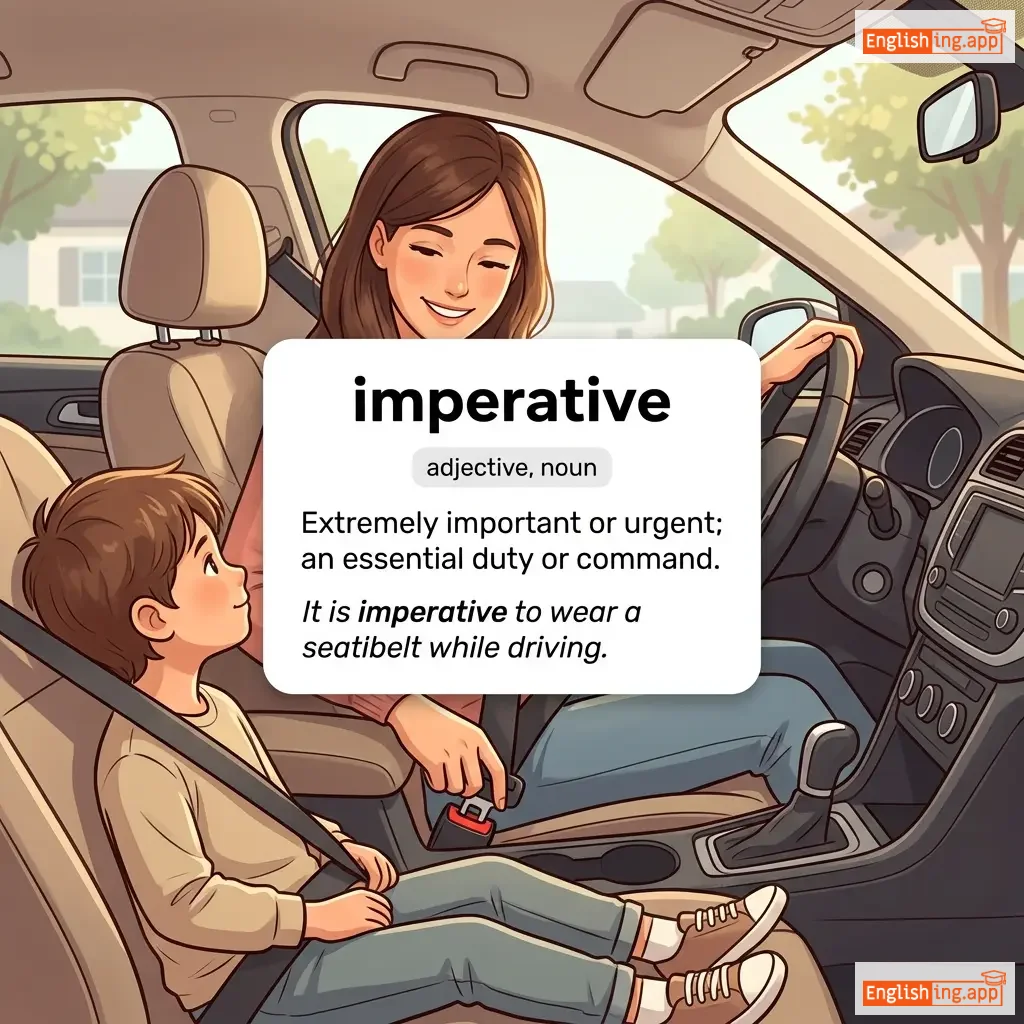
imperative definition card — visual illustration of the meaning
adjective, noun B2
/ɪmˈpɛr.ə.tɪv/
必須 (hissu)

Extremely important or urgent; an essential duty or command.

"It is imperative to wear a seatbelt while driving."

"運転中はシートベルトを着用することが必須です。" (Untenchū wa shīto beruto o chakuyō suru koto ga hissu desu.)
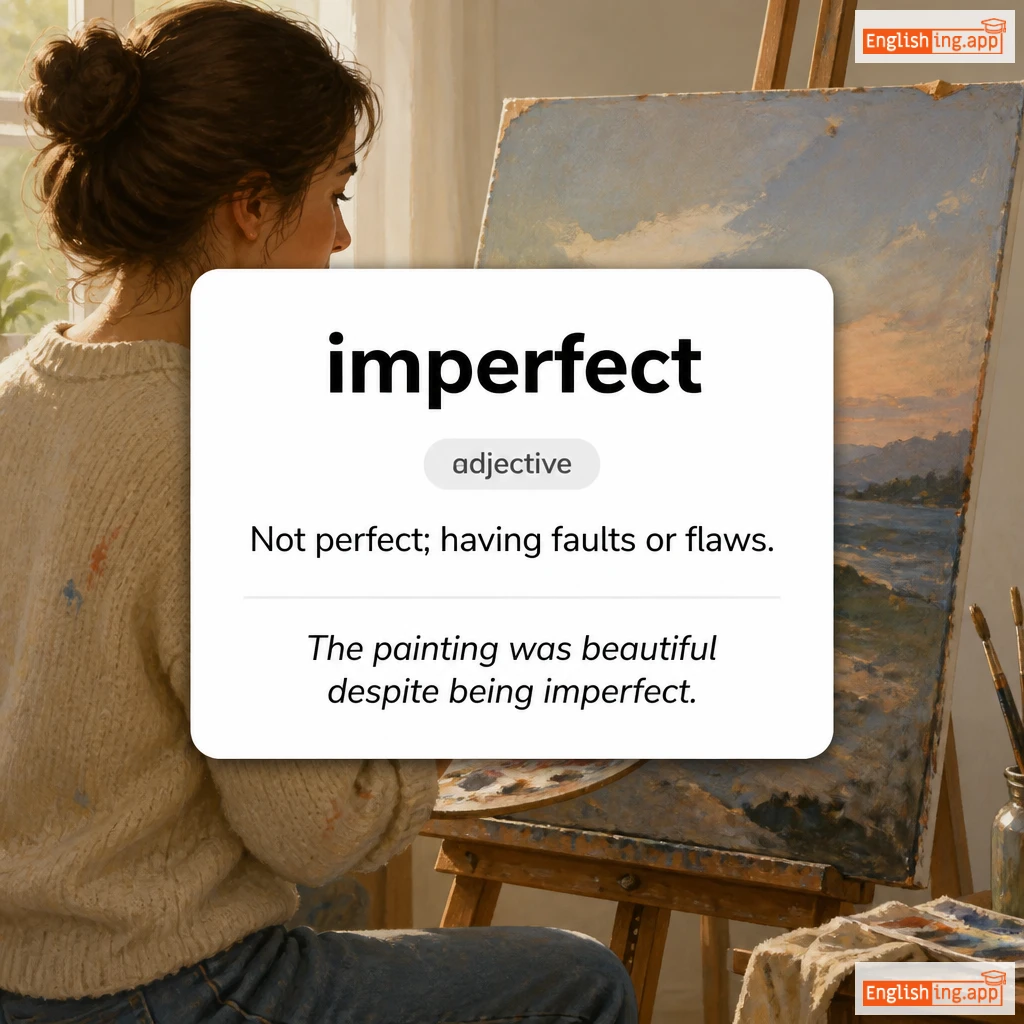
imperfect definition card — visual illustration of the meaning
adjective B2
/ɪmˈpɜːrfɪkt/
不完全 (fukanzen)

Not perfect; having faults or flaws.

"The painting was beautiful despite being imperfect."

"その絵は美しかったが、完璧ではなかった。" (Sono e wa utsukushikatta ga, kanpeki dewa nakatta.)
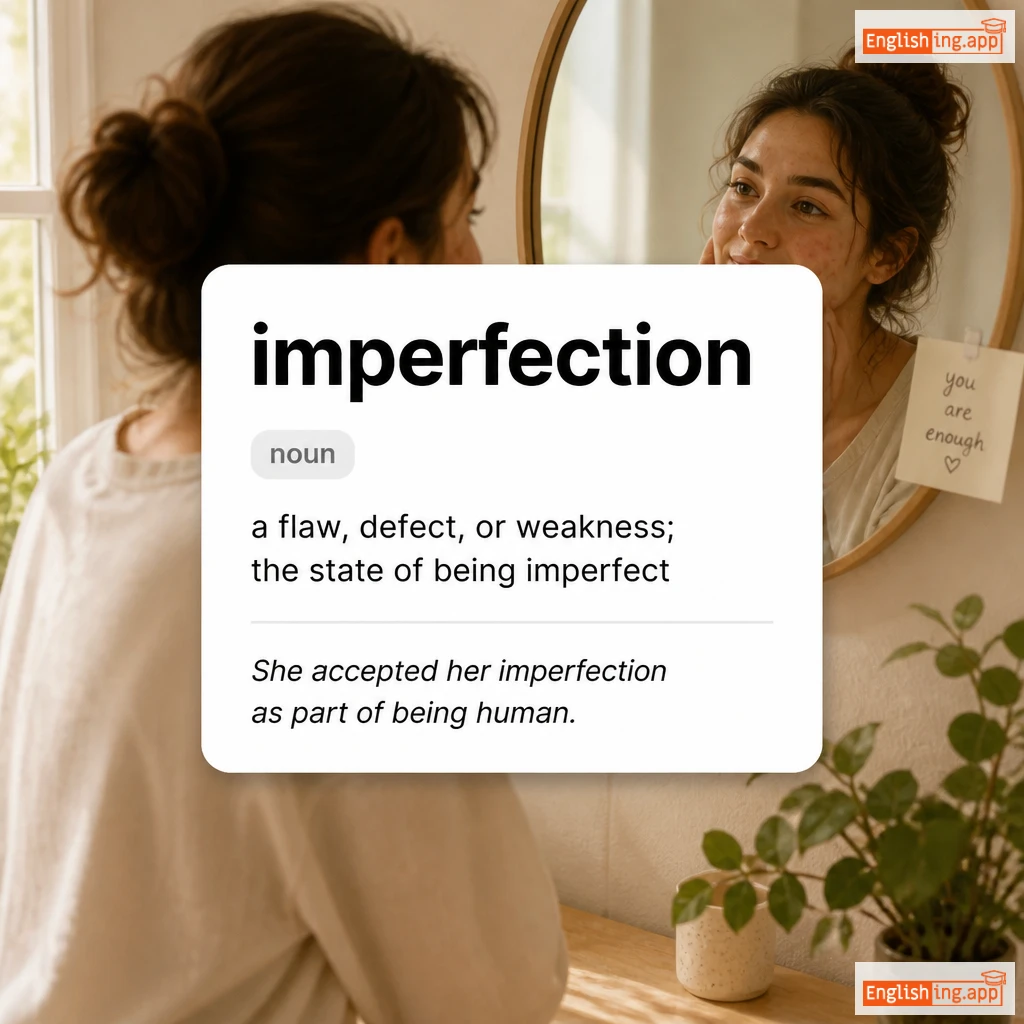
imperfection definition card — visual illustration of the meaning
noun B2
/ˌɪmpərˈfɛkʃən/
不完全 (fukanzen)

a flaw, defect, or weakness; the state of being imperfect

"She accepted her imperfection as part of being human."

"彼女は人間であることの一部として自分の不完全さを受け入れた。" (kanojo wa ningen de aru koto no ichibu to shite jibun no fukanzensa o ukeireta)
adjective B2
/ɪmˈpɪəriəl/
帝国の (teikoku no)

Relating to an empire or emperor; having supreme authority.

"The imperial palace was a symbol of the emperor's power."

"インペリアル宮殿は皇帝の力の象徴でした。" (Inperiaru kyūden wa kōtei no chikara no shōchō deshita.)
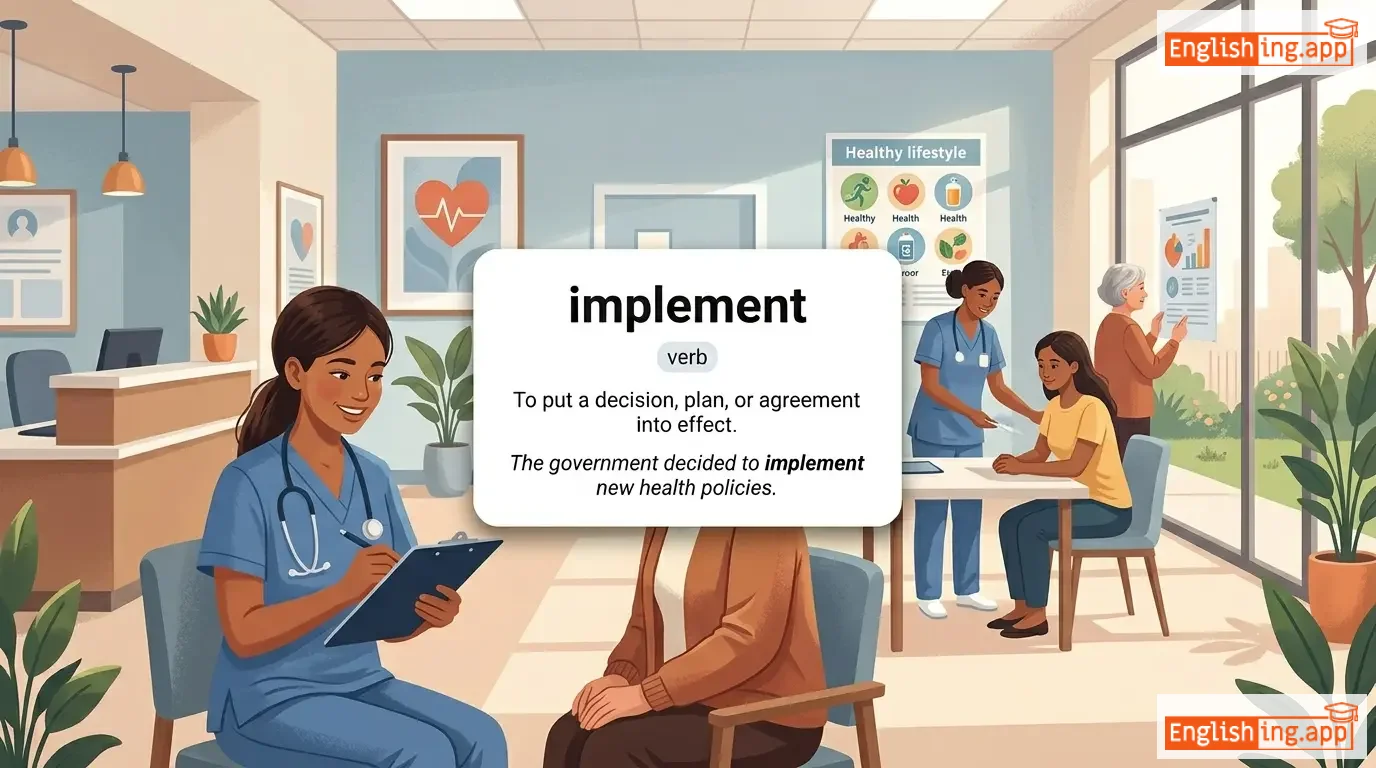
implement definition card — visual illustration of the meaning
verb B2
/ˈɪmplɪˌmɛnt/
実施する (jisshi suru)

To put a decision, plan, or agreement into effect.

"The government decided to implement new health policies."

"政府は新しい健康政策を実施することに決定しました。" (Seifu wa atarashii kenko seisaku wo jisshi suru koto ni kettei shimashita.)
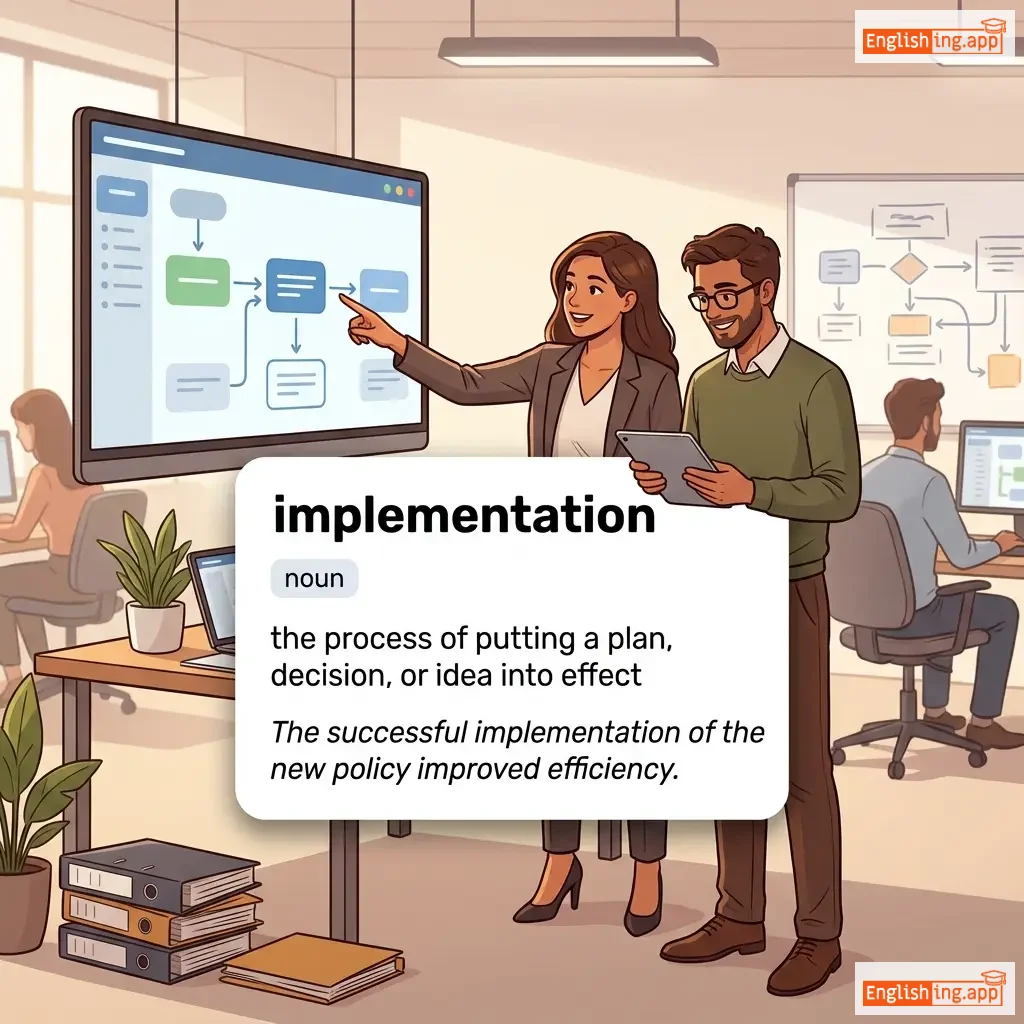
implementation definition card — visual illustration of the meaning
noun B2
/ˌɪmplɪmenˈteɪʃən/
実施 (jisshi)

the process of putting a plan, decision, or idea into effect

"The successful implementation of the new policy improved efficiency."

"新しい方針の実施が効率を向上させました。" (Atarashii houshin no jisshi ga kōritsu o kōjō sasenomashita.)
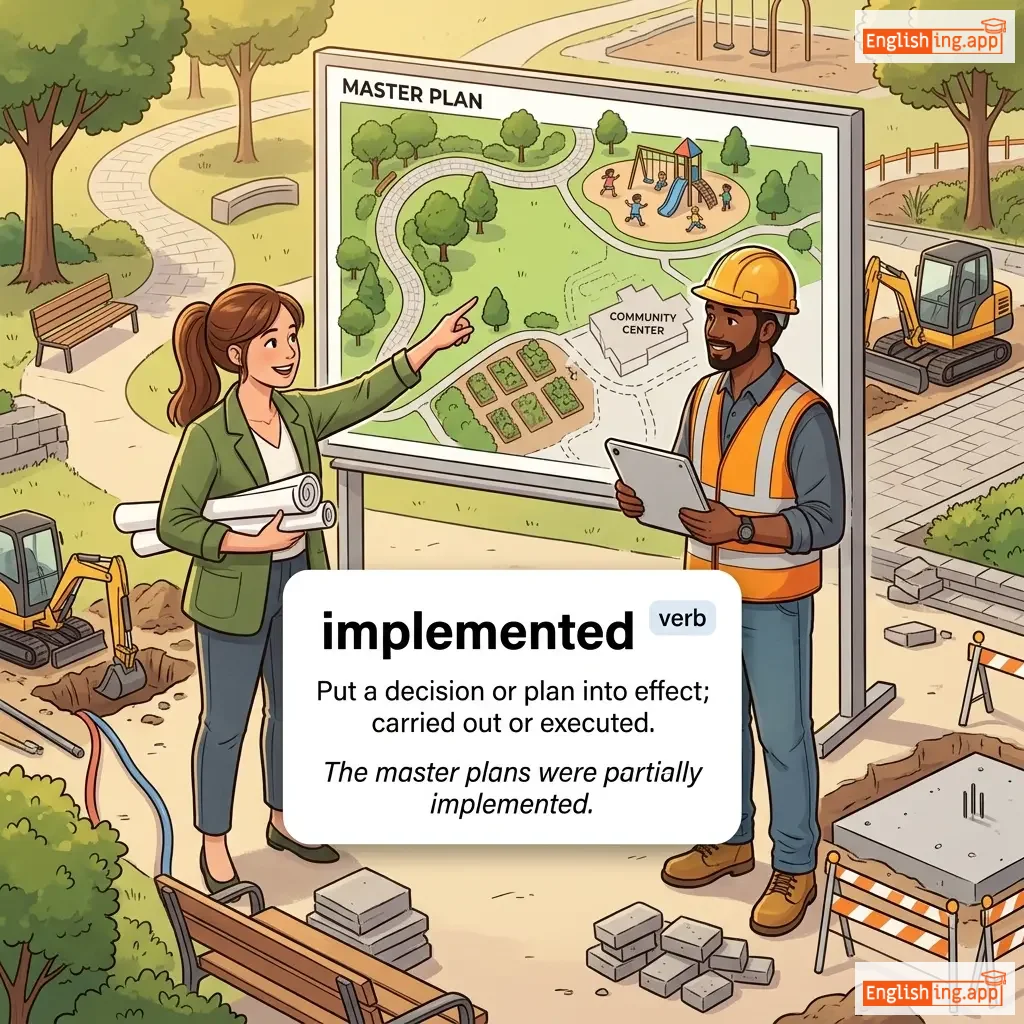
implemented definition card — visual illustration of the meaning
verb B2
ˈɪmplɪmentɪd
実施された (jisshi sareta)

Put a decision or plan into effect; carried out or executed.

"The master plans were partially implemented."

"マスタープランは部分的に実施されました。" (Masutā puran wa bubun-teki ni jisshi saremashita.)
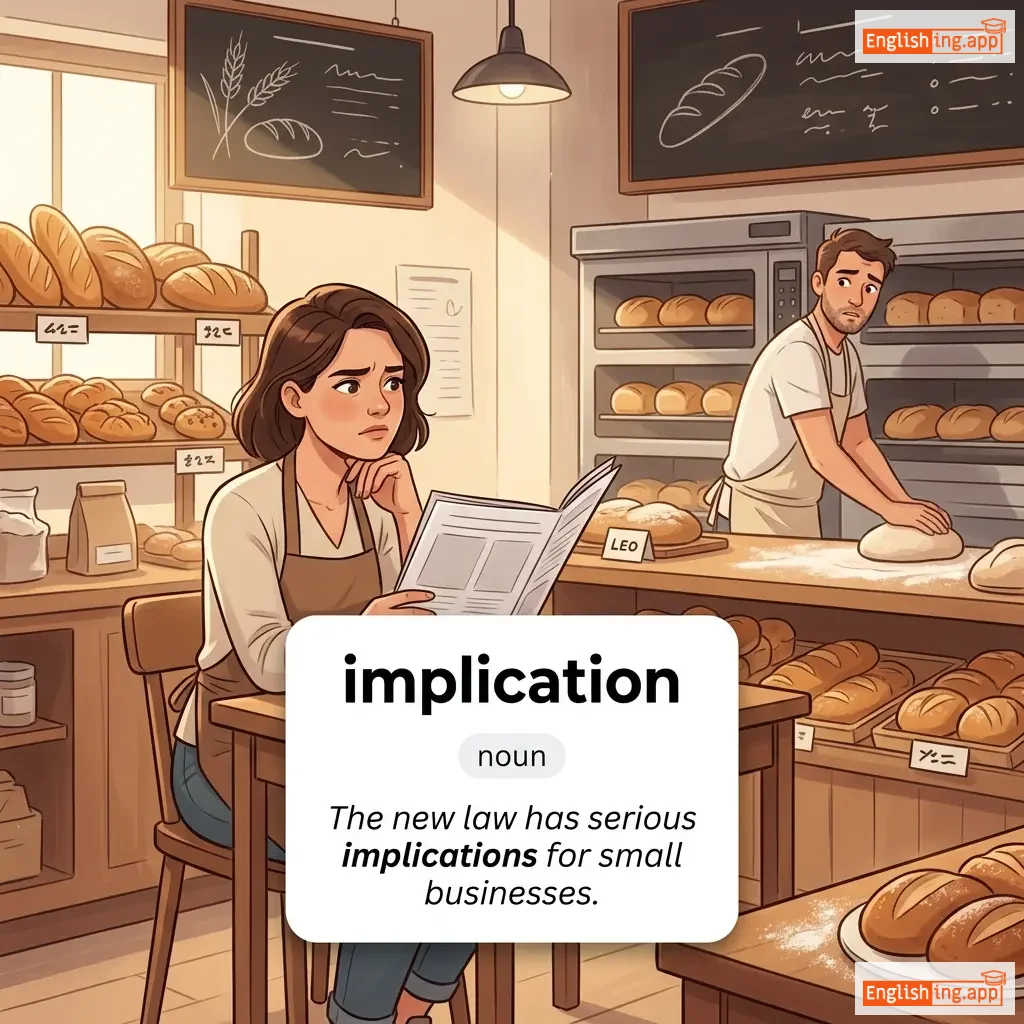
implication definition card — visual illustration of the meaning
noun B2
/ˌɪmplɪˈkeɪʃən/
含意, 影響 (gani, eikyō)

A possible effect or result of an action or decision; something suggested without being stated directly.

"The new law has serious implications for small businesses."

"新しい法律は小規模企業に重大な影響を及ぼしています。" (Atarashī hōritsu wa shōkibo kigyō ni jūdaina eikyō o oyoboshiteimasu.)
implicit definition card — visual illustration of the meaning
adjective B2
/ɪmˈplɪsɪt/
暗黙の (anmoku no)

Suggested or understood without being directly stated.

"Her trust in him was implicit."

"彼女の彼に対する信頼は暗黙のものでした。" (kanojo no kare ni taisuru shinrai wa anmoku no mono deshita)
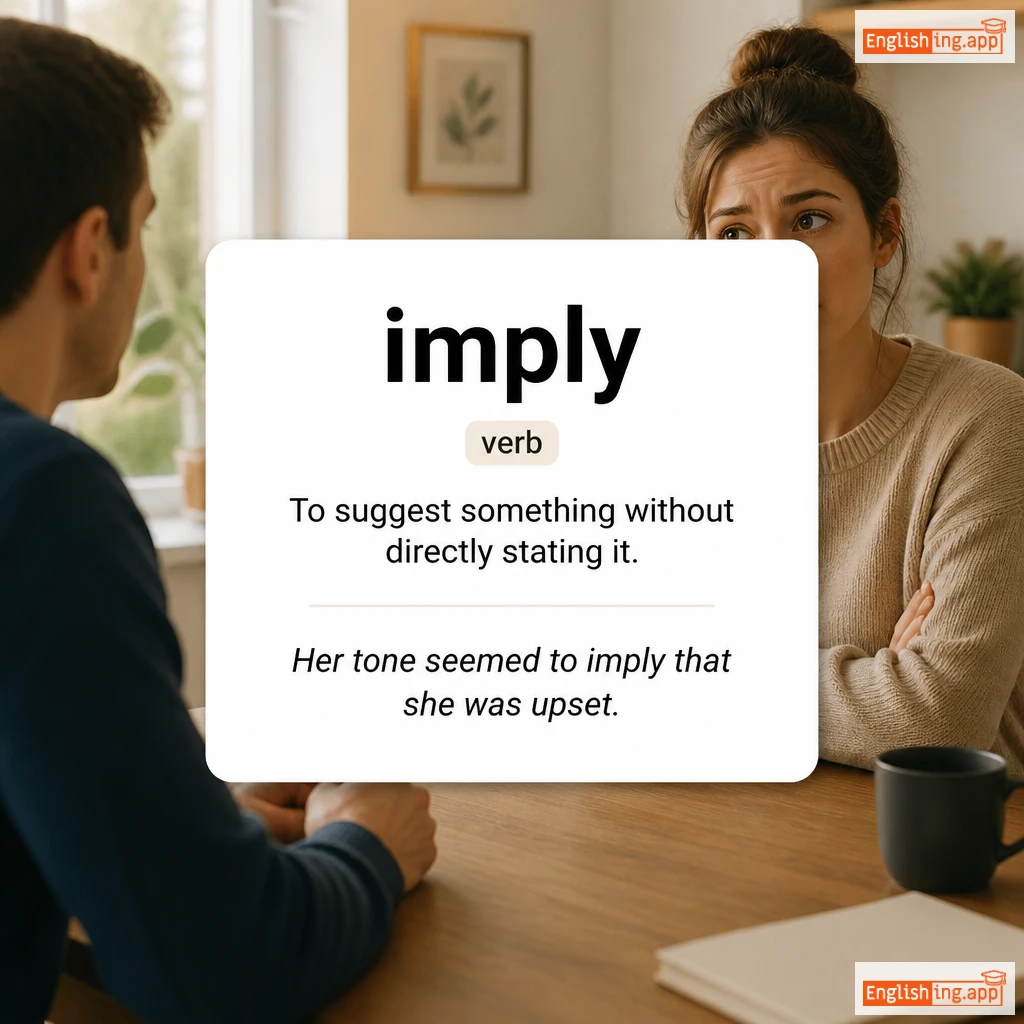
imply definition card — visual illustration of the meaning
verb B2
/ɪmˈplaɪ/
暗示する (anshi suru)

To suggest something without directly stating it.

"Her tone seemed to imply that she was upset."

"彼女の口調は、彼女が怒っていることを示唆しているようでした。" (Kanojo no kuchou wa, kanojo ga okotte iru koto o shisa shite iru you deshita.)
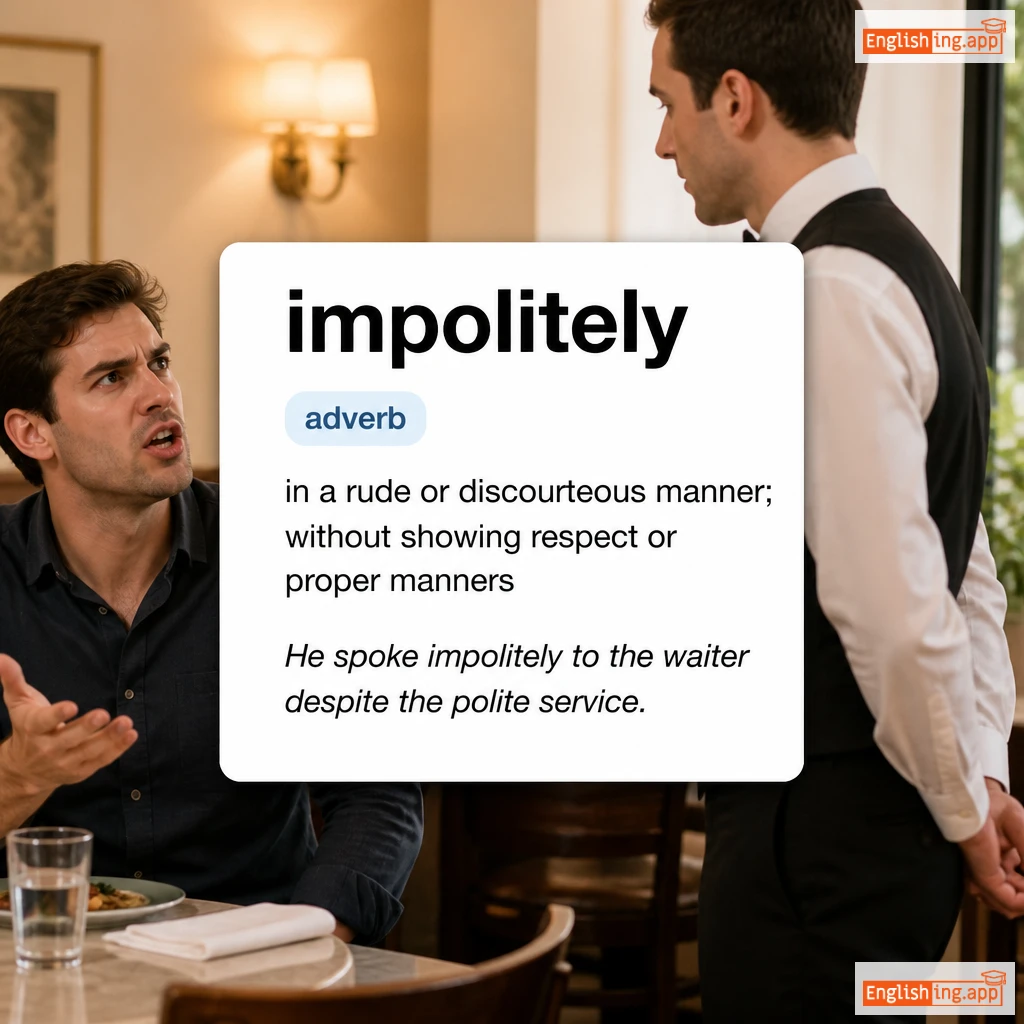
impolitely definition card — visual illustration of the meaning
adverb B2
/ɪmˈpɒlɪtli/
無礼に (burei ni)

in a rude or discourteous manner; without showing respect or proper manners

"He spoke impolitely to the waiter despite the polite service."

"丁寧なサービスにもかかわらず、彼は無礼にウェイターに話した。" (teinei na saabisu ni mo kakawarazu kare wa burei ni weitaa ni hanashita)
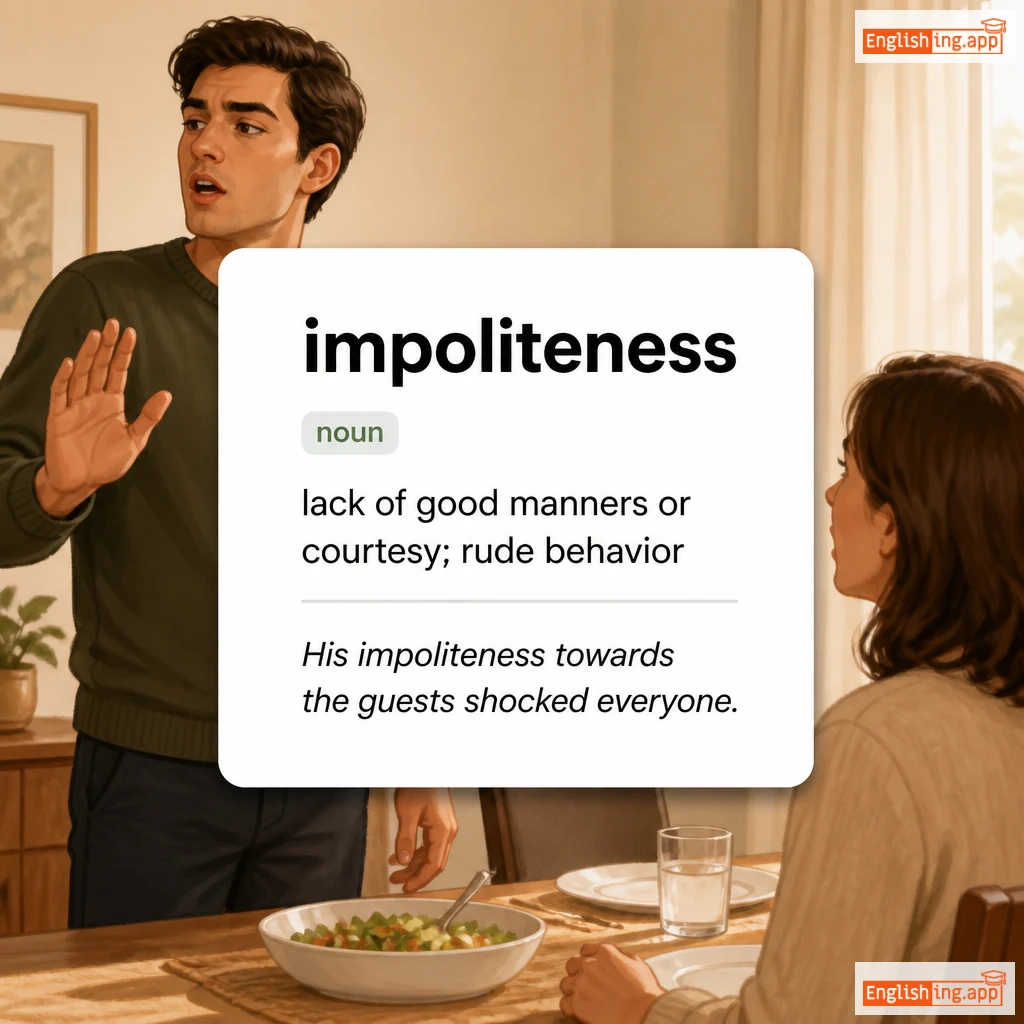
impoliteness definition card — visual illustration of the meaning
noun B2
/ɪmˈpɒlɪtnəs/
無礼さ (bureisa)

lack of good manners or courtesy; rude behavior

"His impoliteness towards the guests shocked everyone."

"彼の客に対する無礼さは皆を驚かせた。" (kare no kyaku ni taisuru bureisa wa mina o odorokaseta)
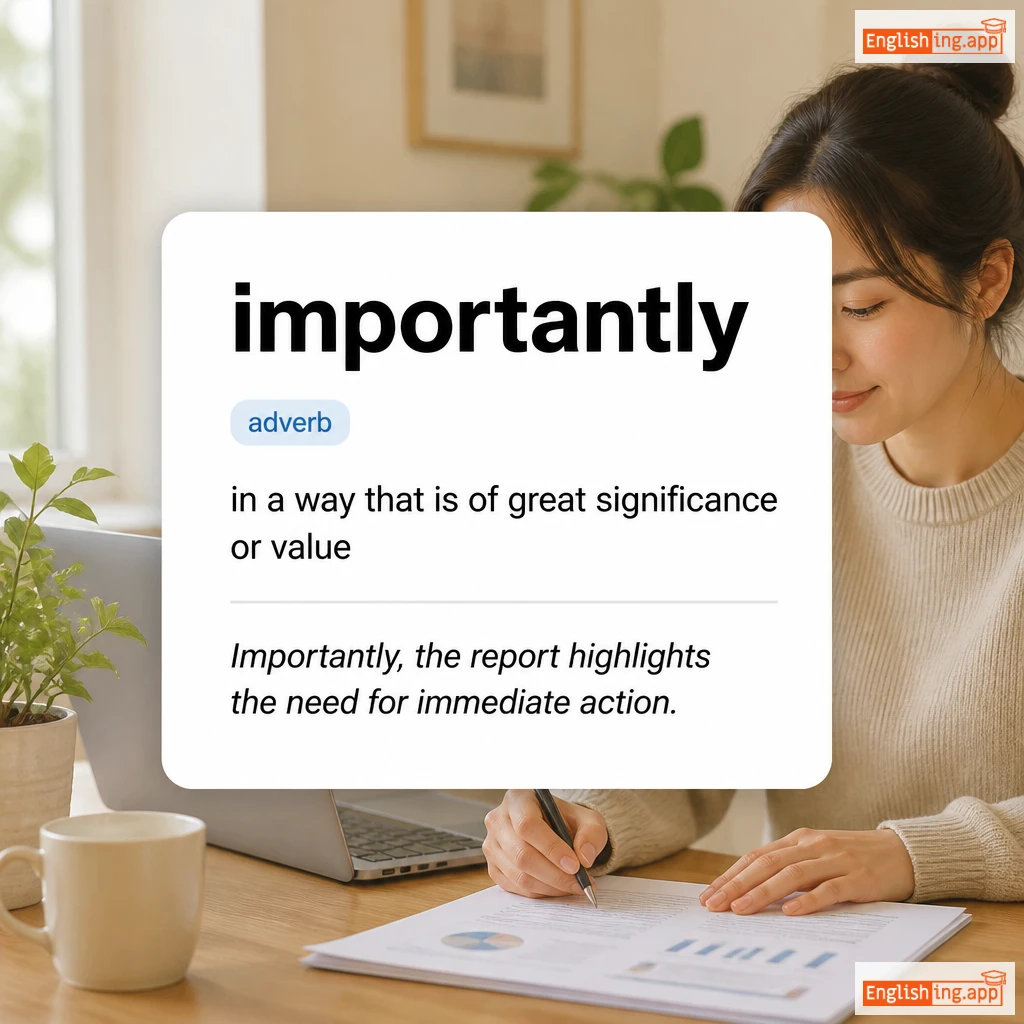
importantly definition card — visual illustration of the meaning
adverb B2
/ɪmˈpɔːtəntli/
重要な方法で (jūyōna hōhō de)

in a way that is of great significance or value

"Importantly, the report highlights the need for immediate action."

"重要な方法で、報告書は即時の行動の必要性を強調しました。" (Jūyōna hōhō de, hōkokusho wa sokujitsu no kōdō no hitsuyō-sei o kyōchō shimashita.)
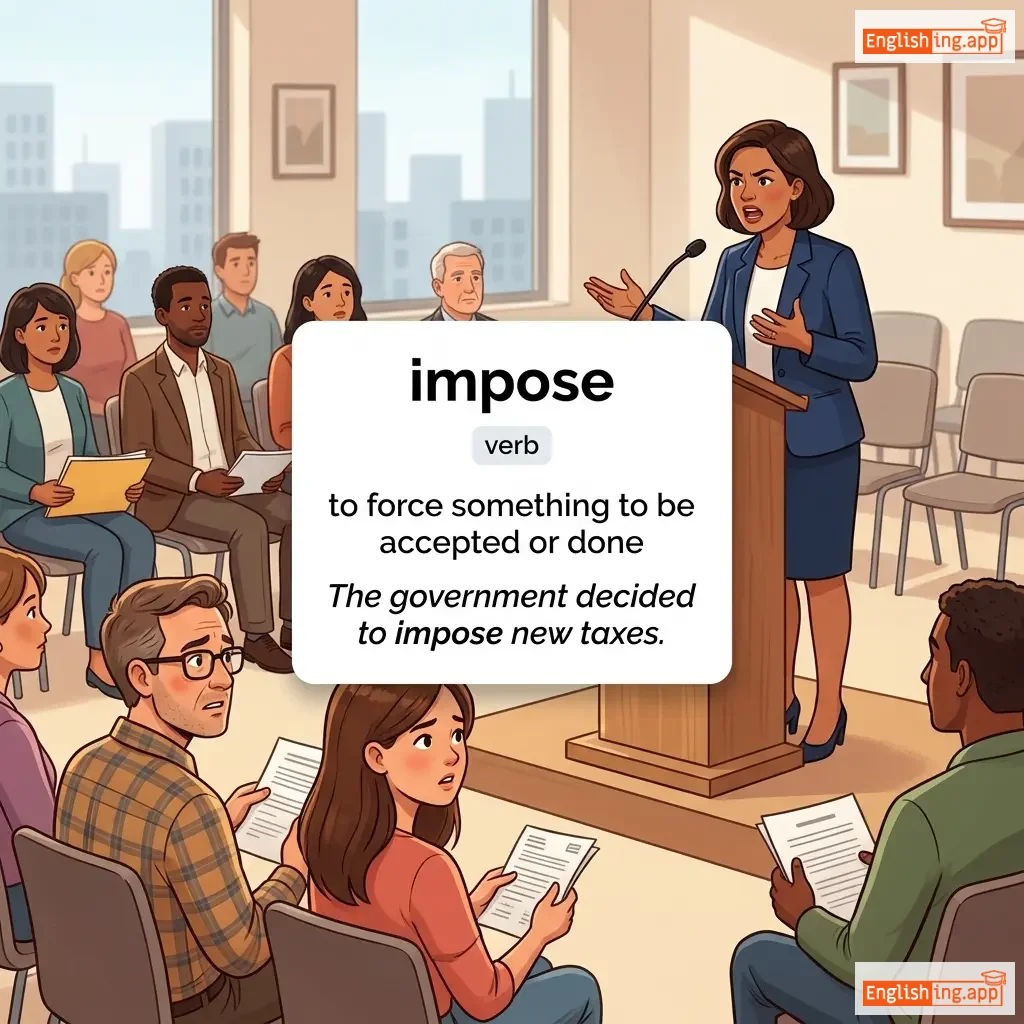
impose definition card — visual illustration of the meaning
verb B2
/ɪmˈpoʊz/
課す (kasu)

to force something to be accepted or done

"The government decided to impose new taxes."

"政府は新しい税金を課すことを決定した。" (Seifu wa atarashī zeikin o kasu koto o kettei shita.)
verb B2
/ɪmˈpoʊzd/
課す (kasu)

forced something to be accepted or put in place

"The government imposed new regulations on the industry."

"政府は産業に新しい規制を課した。" (Seifu wa sangyō ni atarashī kisē o kasa shita.)