Vocabulary Videos
129 videos available.
 de
de
Exacerbate: English vocabulary meaning and example
Learn the English word "Exacerbate".
Meaning: Exacerbate, verb. It means to make a bad situation, problem, or feeling worse. Synonyms: worsen, aggravate.
Example: Skipping sleep can exacerbate stress and make you feel overwhelmed.
German: Exacerbate bedeutet, eine schlechte Situation schlimmer zu machen.
German example: Schlafmangel kann Stress verschlimmern und dich überwältigt fühlen lassen.
#LearnEnglish #EnglishVocabulary #Englishing
 de
de
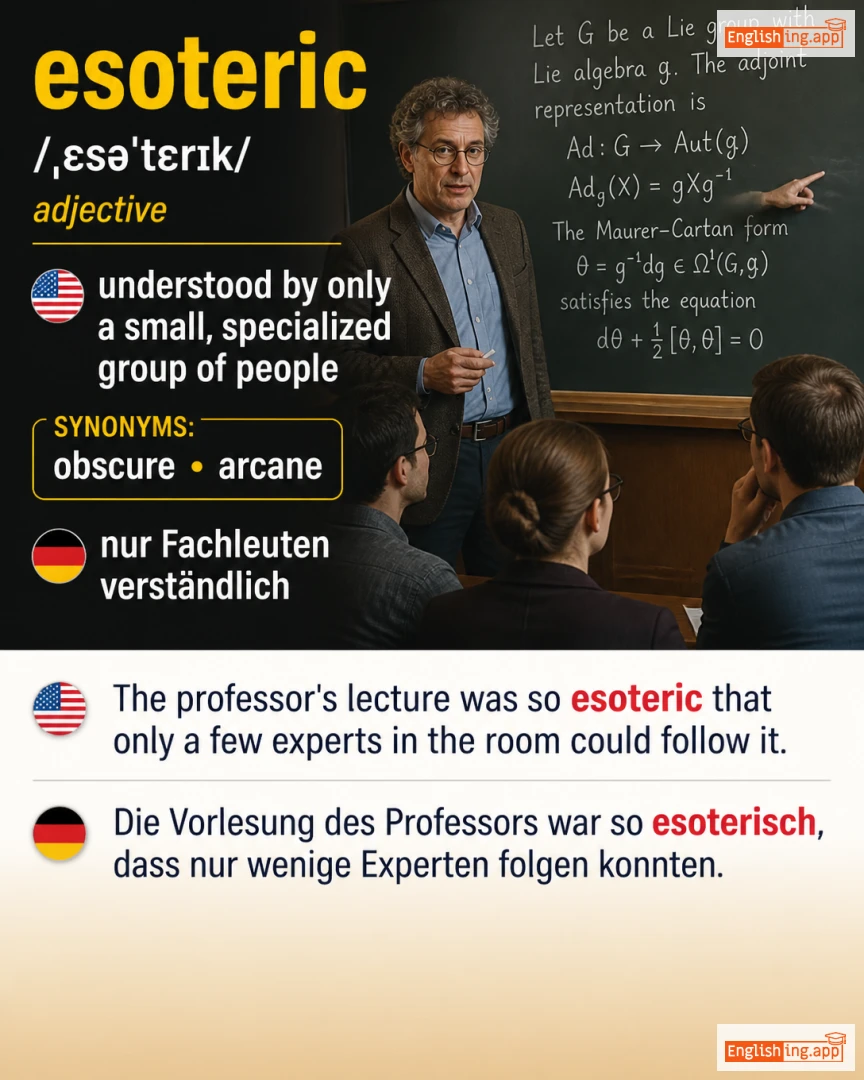
Esoteric: English vocabulary meaning and example
Learn the English word "Esoteric".
Meaning: Esoteric, adjective. It means understood by only a small, specialized group of people. Synonyms: obscure, arcane.
Example: The professor's lecture was so esoteric that only a few experts in the room could follow it.
German: Esoteric bedeutet nur für eine kleine spezialisierte Gruppe verständlich.
German example: Die Vorlesung des Professors war so esoterisch, dass nur wenige Experten folgen konnten.
#LearnEnglish #EnglishVocabulary #Englishing
 de
de
Erudite: English vocabulary meaning and example
Learn the English word "Erudite".
Meaning: Erudite, adjective. It means having or showing deep, wide knowledge from study. Synonyms: scholarly, learned.
Example: The erudite professor could discuss ancient history, physics, and poetry with equal ease.
German: Erudite bedeutet gelehrt, mit tiefem und breitem Wissen.
German example: Der gelehrte Professor konnte ebenso leicht über alte Geschichte, Physik und Poesie sprechen.
#LearnEnglish #EnglishVocabulary #Englishing
 de
de
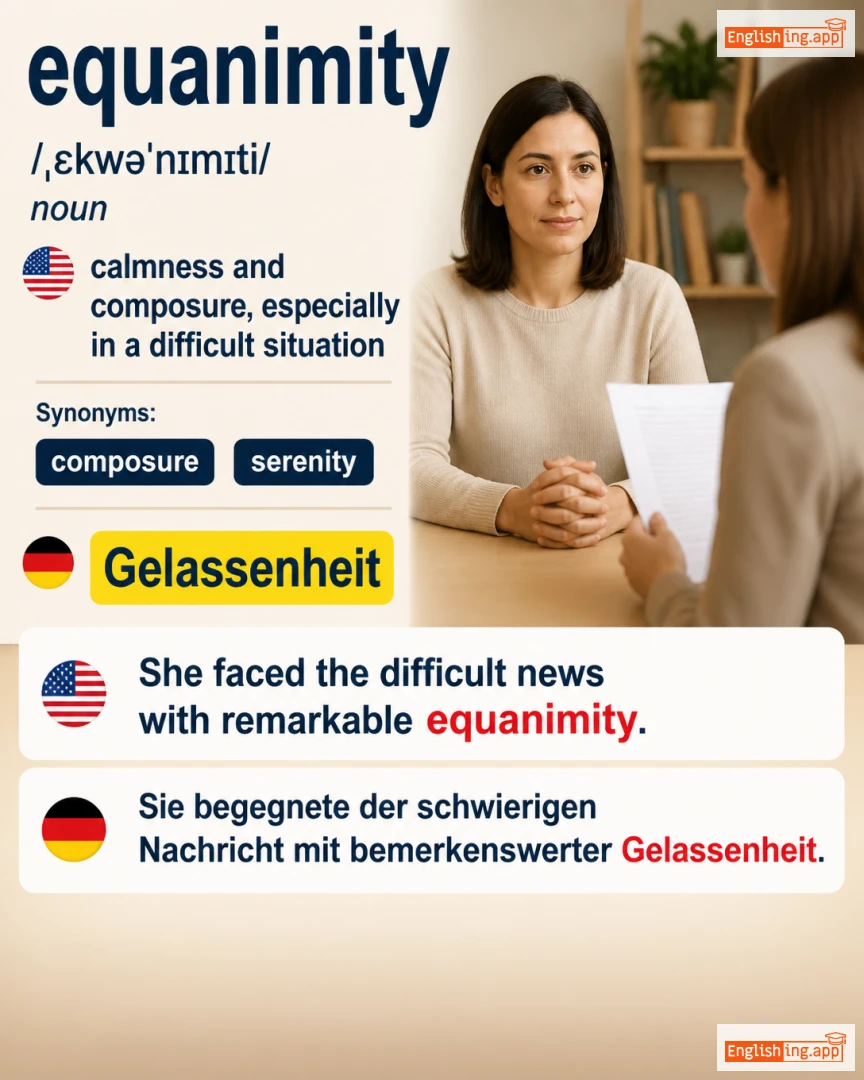
Equanimity: English vocabulary meaning and example
Learn the English word "Equanimity".
Meaning: Equanimity, noun. It means calmness and composure, especially in a difficult situation. Synonyms: composure, serenity.
Example: She faced the difficult news with remarkable equanimity.
German: Equanimity bedeutet Ruhe und Fassung, besonders unter Druck.
German example: Sie begegnete der schwierigen Nachricht mit bemerkenswerter Gelassenheit.
#LearnEnglish #EnglishVocabulary #Englishing
 de
de
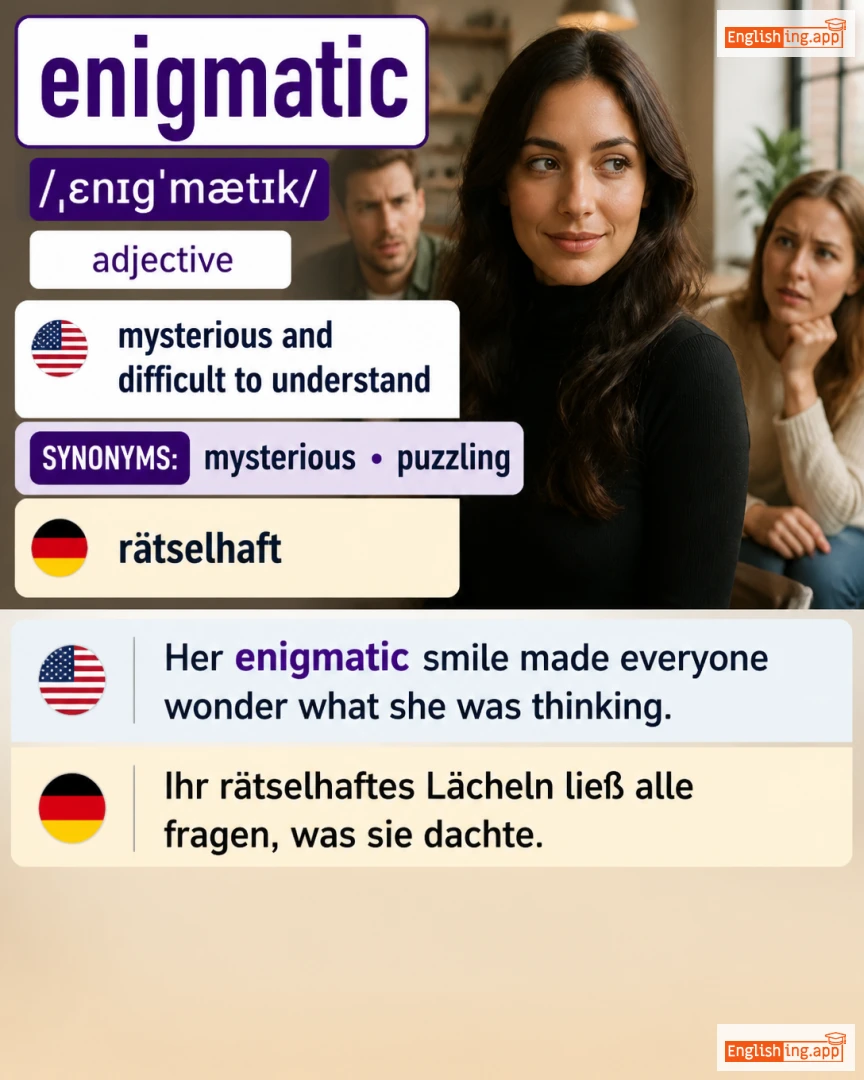
Enigmatic: English vocabulary meaning and example
Learn the English word "Enigmatic".
Meaning: Enigmatic, adjective. It means mysterious and difficult to understand. Synonyms: mysterious, puzzling.
Example: Her enigmatic smile made everyone wonder what she was thinking.
German: Enigmatic bedeutet geheimnisvoll und schwer zu verstehen.
German example: Ihr rätselhaftes Lächeln ließ alle fragen, was sie dachte.
#LearnEnglish #EnglishVocabulary #Englishing
 de
de
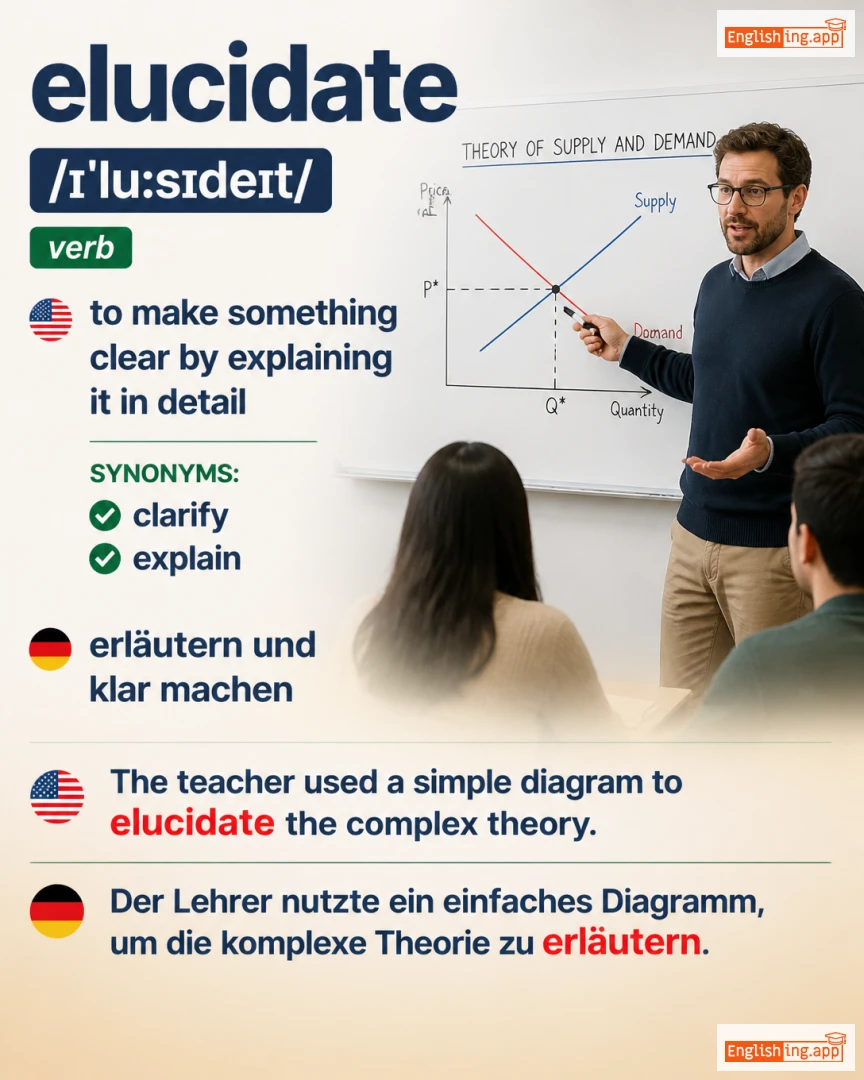
Elucidate: English vocabulary meaning and example
Learn the English word "Elucidate".
Meaning: Elucidate, verb. It means to make something clear by explaining it in detail. Synonyms: clarify, explain.
Example: The teacher used a simple diagram to elucidate the complex theory.
German: Elucidate bedeutet, etwas durch Erklärung klar zu machen.
German example: Der Lehrer nutzte ein einfaches Diagramm, um die komplexe Theorie zu erläutern.
#LearnEnglish #EnglishVocabulary #Englishing
 de
de
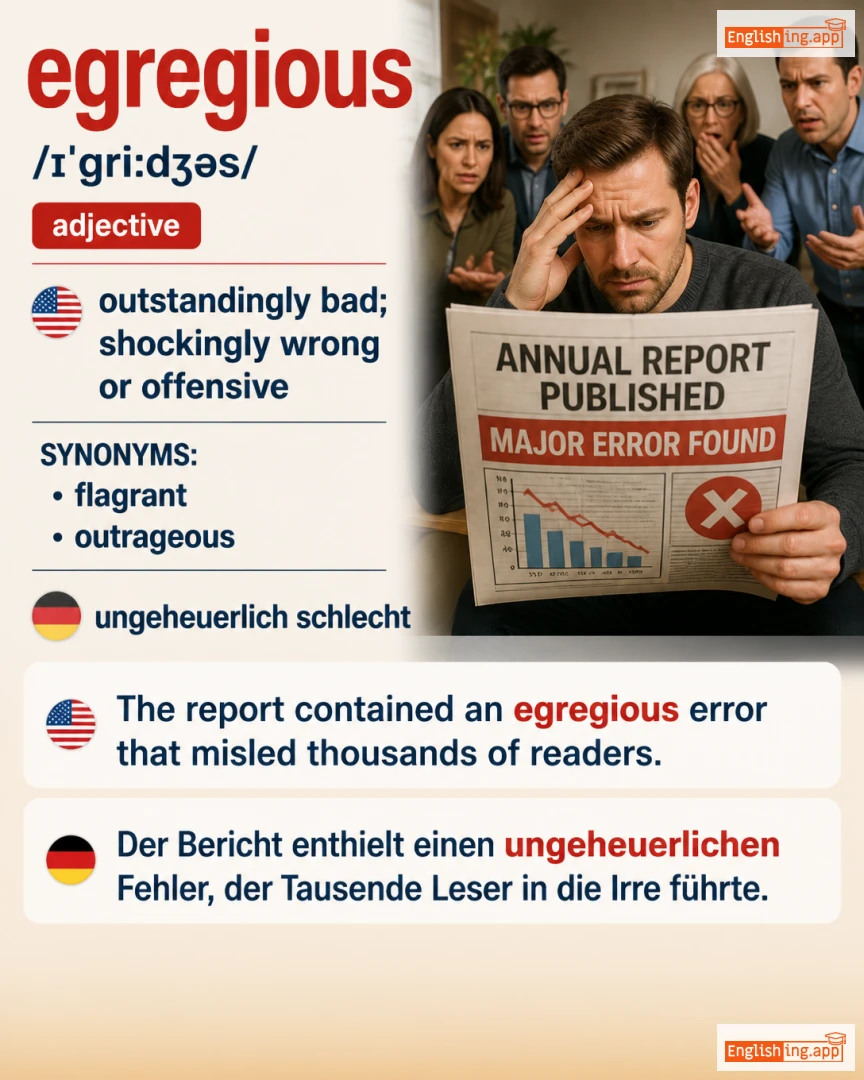
Egregious: English vocabulary meaning and example
Learn the English word "Egregious".
Meaning: Egregious, adjective. It means outstandingly bad; shockingly wrong or offensive. Synonyms: flagrant, outrageous.
Example: The report contained an egregious error that misled thousands of readers.
German: Egregious bedeutet auffallend schlecht oder schockierend falsch.
German example: Der Bericht enthielt einen ungeheuerlichen Fehler, der Tausende Leser in die Irre führte.
#LearnEnglish #EnglishVocabulary #Englishing
 de
de
Ebullient: English vocabulary meaning and example
Learn the English word "Ebullient".
Meaning: Ebullient, adjective. It means cheerful and full of lively, overflowing energy. Synonyms: exuberant, bubbly.
Example: The ebullient host greeted every guest with a huge smile and contagious laughter.
German: Ebullient bedeutet fröhlich, lebhaft und voller Energie.
German example: Der überschwängliche Gastgeber begrüßte jeden Gast mit einem breiten Lächeln und ansteckendem Lachen.
#LearnEnglish #EnglishVocabulary #Englishing
 de
de
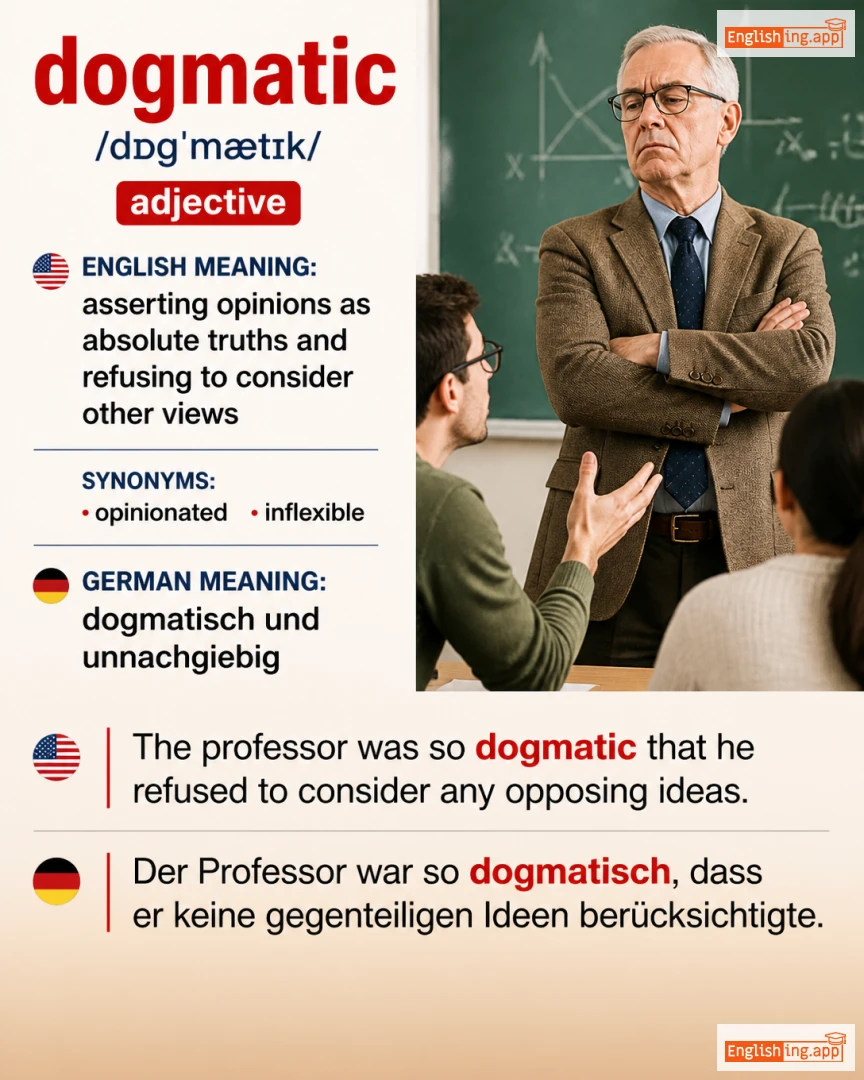
Dogmatic: English vocabulary meaning and example
Learn the English word "Dogmatic".
Meaning: Dogmatic, adjective. It means asserting opinions as absolute truths and refusing to consider other views. Synonyms: opinionated, inflexible.
Example: The professor was so dogmatic that he refused to consider any opposing ideas.
German: Dogmatic bedeutet, Meinungen als absolute Wahrheiten zu behaupten.
German example: Der Professor war so dogmatisch, dass er keine gegenteiligen Ideen berücksichtigte.
#LearnEnglish #EnglishVocabulary #Englishing
 de
de
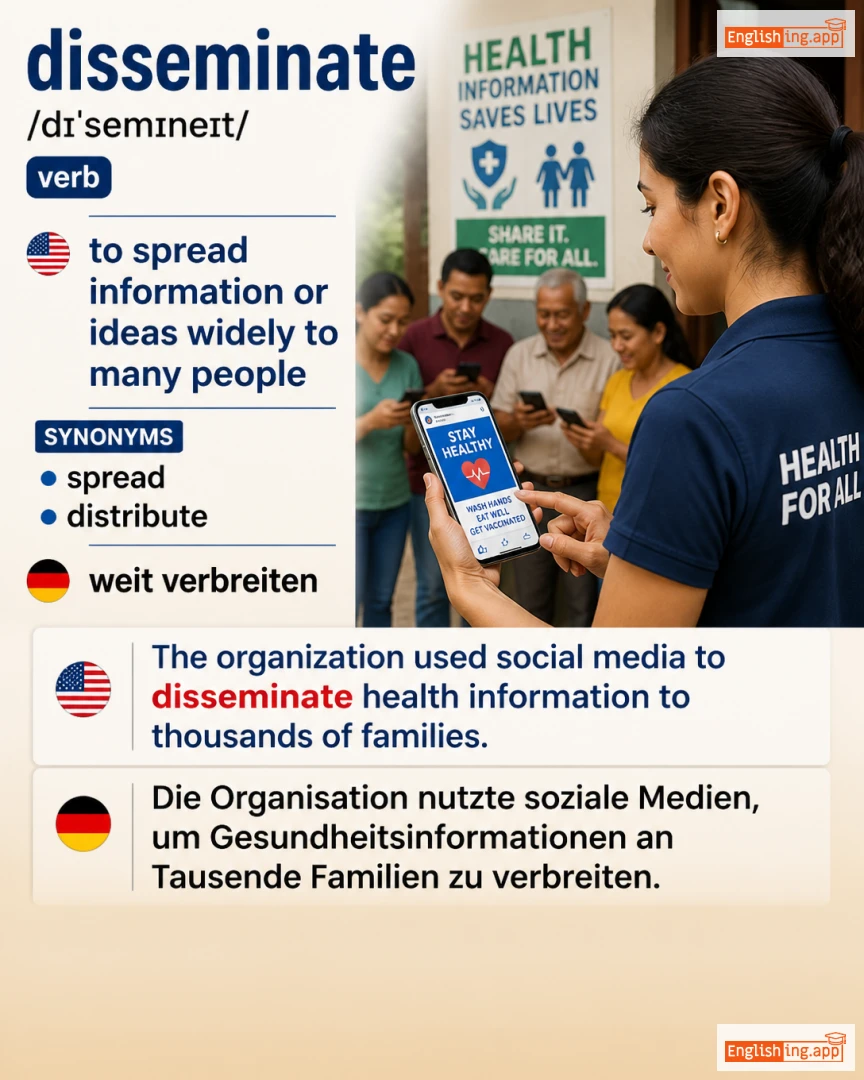
Disseminate: English vocabulary meaning and example
Learn the English word "Disseminate".
Meaning: Disseminate, verb. It means to spread information or ideas widely to many people. Synonyms: spread, distribute.
Example: The organization used social media to disseminate health information to thousands of families.
German: Disseminate bedeutet, Informationen oder Ideen weit zu verbreiten.
German example: Die Organisation nutzte soziale Medien, um Gesundheitsinformationen an Tausende Familien zu verbreiten.
#LearnEnglish #EnglishVocabulary #Englishing
 de
de
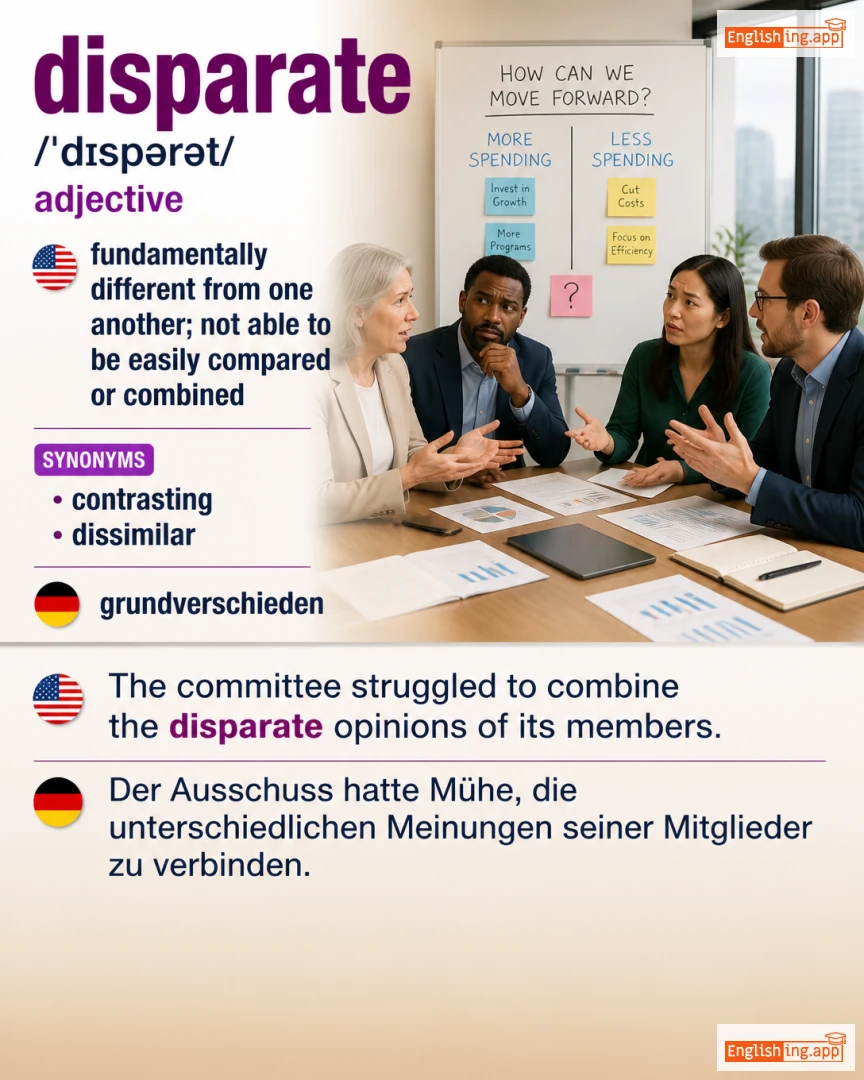
Disparate: English vocabulary meaning and example
Learn the English word "Disparate".
Meaning: Disparate, adjective. It means fundamentally different from one another; not able to be easily compared or combined. Synonyms: contrasting, dissimilar.
Example: The committee struggled to combine the disparate opinions of its members.
German: Disparate bedeutet grundlegend verschieden und schwer vergleichbar.
German example: Der Ausschuss hatte Mühe, die unterschiedlichen Meinungen seiner Mitglieder zu verbinden.
#LearnEnglish #EnglishVocabulary #Englishing
 de
de
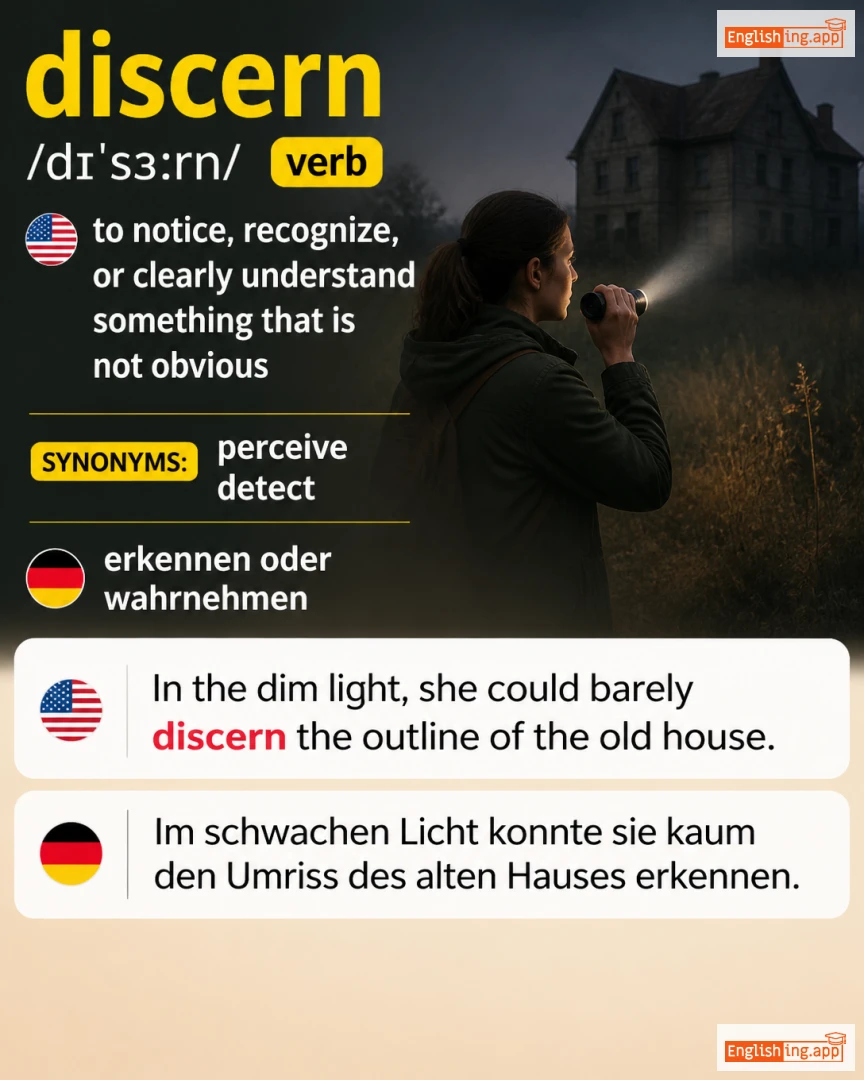
Discern: English vocabulary meaning and example
Learn the English word "Discern".
Meaning: Discern, verb. It means to notice, recognize, or clearly understand something that is not obvious. Synonyms: perceive, detect.
Example: In the dim light, she could barely discern the outline of the old house.
German: Discern bedeutet, etwas nicht Offensichtliches zu erkennen oder wahrzunehmen.
German example: Im schwachen Licht konnte sie kaum den Umriss des alten Hauses erkennen.
#LearnEnglish #EnglishVocabulary #Englishing
 de
de
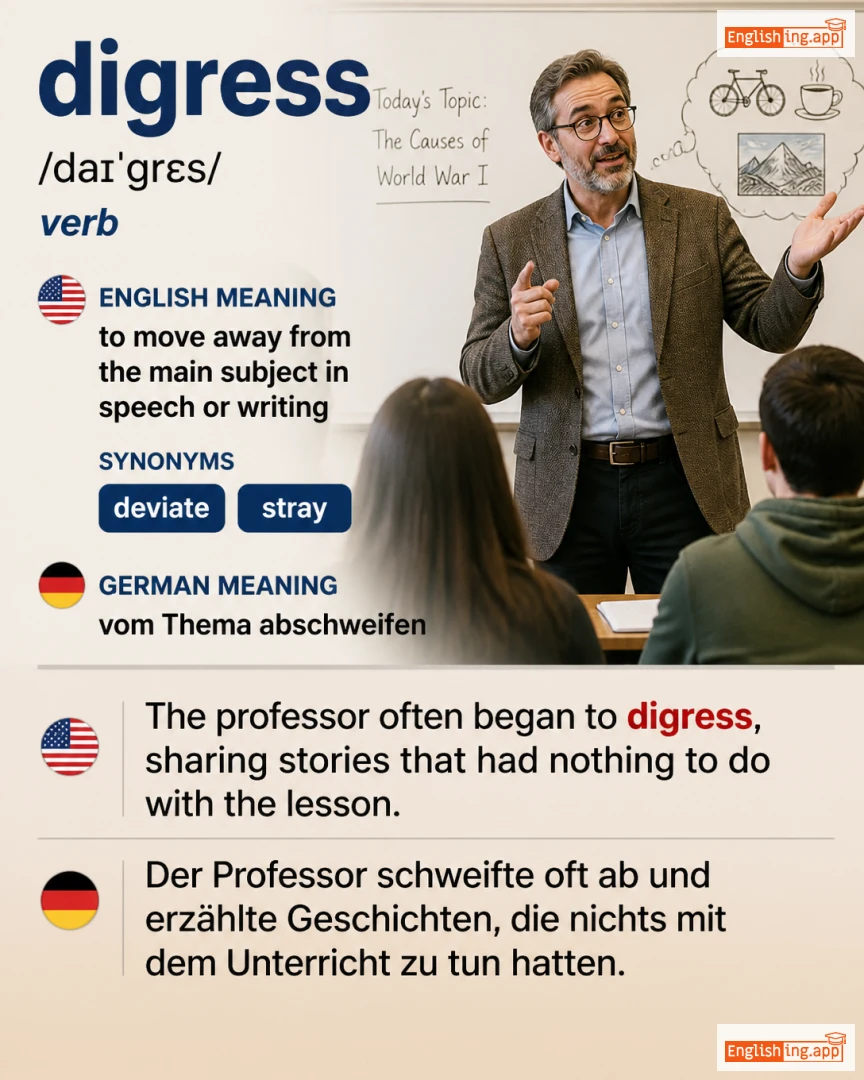
Digress: English vocabulary meaning and example
Learn the English word "Digress".
Meaning: Digress, verb. It means to move away from the main subject in speech or writing. Synonyms: deviate, stray.
Example: The professor often began to digress, sharing stories that had nothing to do with the lesson.
German: Digress bedeutet, beim Sprechen oder Schreiben vom Hauptthema abzuweichen.
German example: Der Professor schweifte oft ab und erzählte Geschichten, die nichts mit dem Unterricht zu tun hatten.
#LearnEnglish #EnglishVocabulary #Englishing
 de
de
Diffident: English vocabulary meaning and example
Learn the English word "Diffident".
Meaning: Diffident, adjective. It means lacking self-confidence; shy and hesitant. Synonyms: timid, self-doubting.
Example: The diffident intern hesitated before sharing her brilliant idea.
German: Diffident bedeutet schüchtern, zögerlich und ohne Selbstvertrauen.
German example: Die unsichere Praktikantin zögerte, bevor sie ihre brillante Idee teilte.
#LearnEnglish #EnglishVocabulary #Englishing
 de
de
Derivative: English vocabulary meaning and example
Learn the English word "Derivative".
Meaning: Derivative, adjective / noun. It means copied or borrowed from something else; not original. Synonyms: unoriginal, imitative.
Example: Critics called the new film derivative of older superhero movies.
German: Derivative bedeutet von etwas anderem übernommen und nicht originell.
German example: Kritiker nannten den neuen Film abgeleitet von älteren Superheldenfilmen.
#LearnEnglish #EnglishVocabulary #Englishing
 de
de
Denigrate: English vocabulary meaning and example
Learn the English word "Denigrate".
Meaning: Denigrate, verb. It means to criticize unfairly and make someone or something seem worthless. Synonyms: belittle, disparage.
Example: He tried to denigrate her achievements in front of the whole team.
German: Denigrate bedeutet unfair kritisieren und jemanden gering erscheinen lassen.
German example: Er versuchte, ihre Leistungen vor dem ganzen Team herabzusetzen.
#LearnEnglish #EnglishVocabulary #Englishing
 de
de
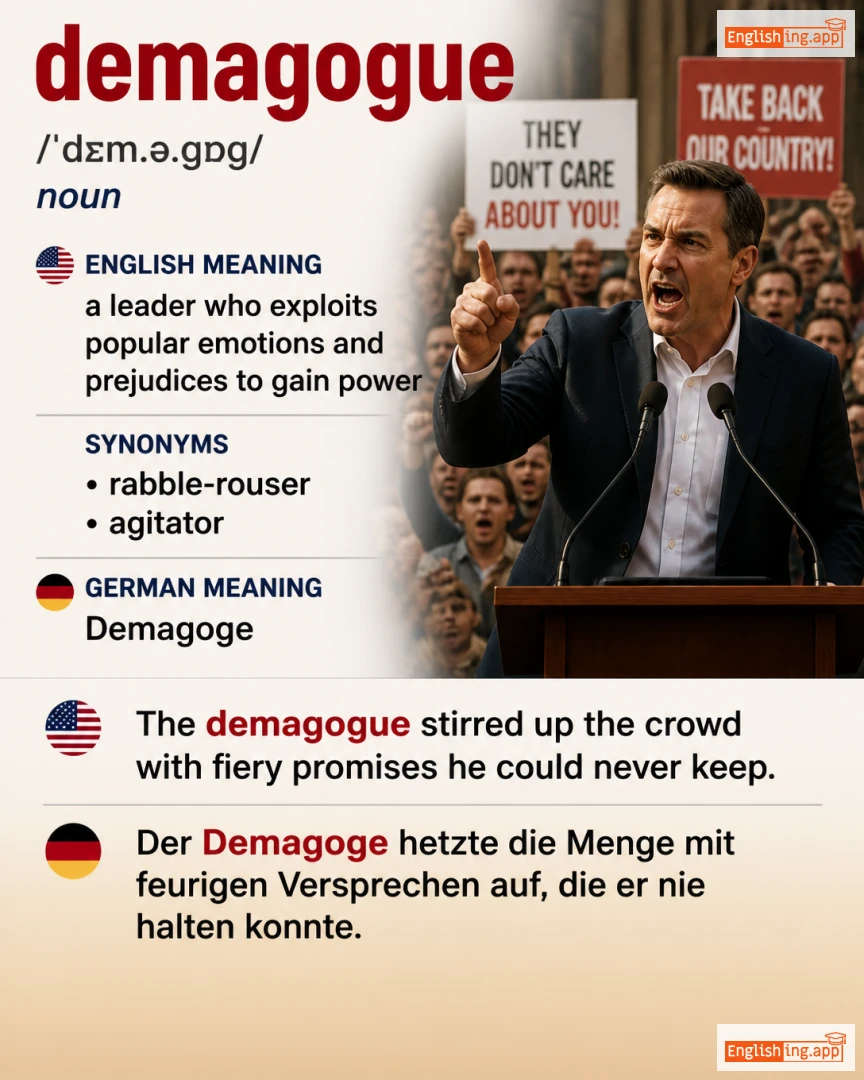
Demagogue: English vocabulary meaning and example
Learn the English word "Demagogue".
Meaning: Demagogue, noun. It means a leader who exploits popular emotions and prejudices to gain power. Synonyms: rabble-rouser, agitator.
Example: The demagogue stirred up the crowd with fiery promises he could never keep.
German: Demagogue ist ein Führer, der Gefühle und Vorurteile nutzt, um Macht zu gewinnen.
German example: Der Demagoge hetzte die Menge mit feurigen Versprechen auf, die er nie halten konnte.
#LearnEnglish #EnglishVocabulary #Englishing
 de
de
Deleterious: English vocabulary meaning and example
Learn the English word "Deleterious".
Meaning: Deleterious, adjective. It means causing harm or damage, often gradually. Synonyms: harmful, damaging.
Example: Years of smoking had a deleterious effect on his lungs.
German: Deleterious bedeutet schädlich oder beschädigend, oft langsam.
German example: Jahrelanges Rauchen hatte eine schädliche Wirkung auf seine Lungen.
#LearnEnglish #EnglishVocabulary #Englishing
 de
de
Decorum: English vocabulary meaning and example
Learn the English word "Decorum".
Meaning: Decorum, noun. It means polite, proper, dignified behavior suited to the occasion. Synonyms: propriety, etiquette.
Example: The guests maintained perfect decorum throughout the ceremony.
German: Decorum bedeutet korrektes, höfliches und würdevolles Verhalten.
German example: Die Gäste bewahrten während der ganzen Zeremonie vollkommene Würde.
#LearnEnglish #EnglishVocabulary #Englishing
 de
de
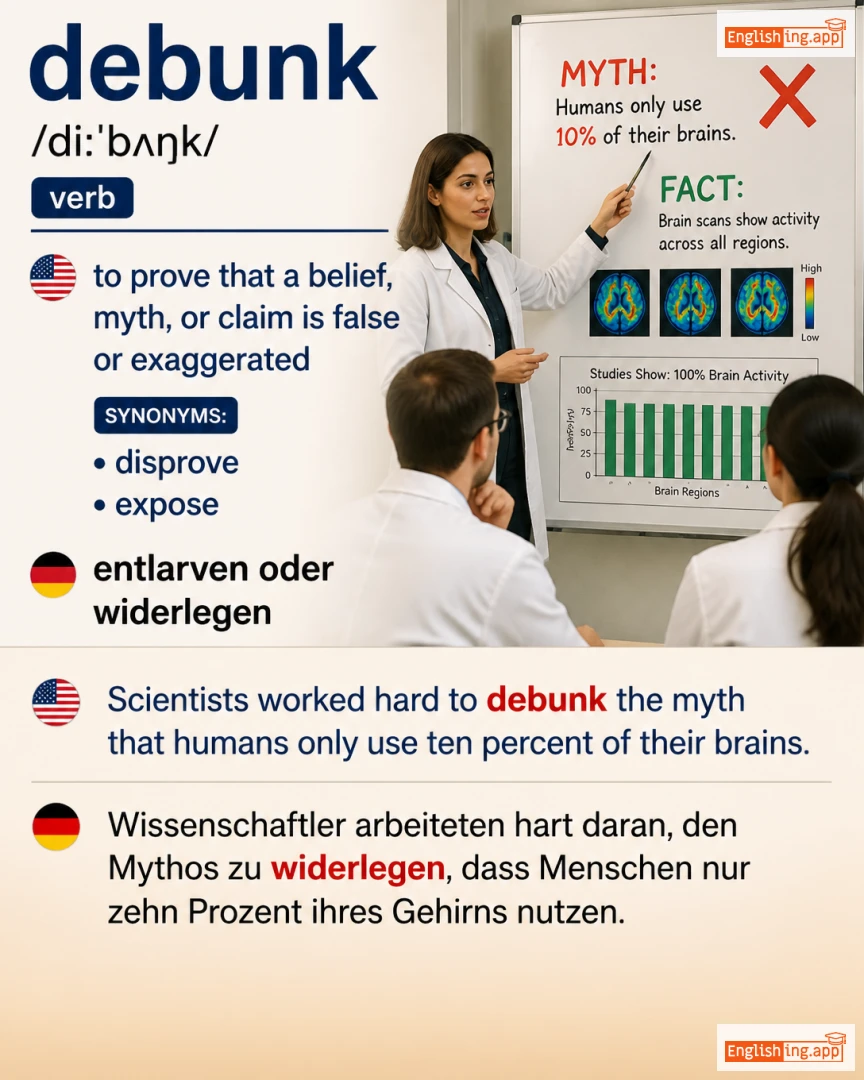
Debunk: English vocabulary meaning and example
Learn the English word "Debunk".
Meaning: Debunk, verb. It means to prove that a belief, myth, or claim is false or exaggerated. Synonyms: disprove, expose.
Example: Scientists worked hard to debunk the myth that humans only use ten percent of their brains.
German: Debunk bedeutet, einen Mythos oder eine Behauptung als falsch zu entlarven.
German example: Wissenschaftler arbeiteten hart daran, den Mythos zu widerlegen, dass Menschen nur zehn Prozent ihres Gehirns nutzen.
#LearnEnglish #EnglishVocabulary #Englishing
 de
de
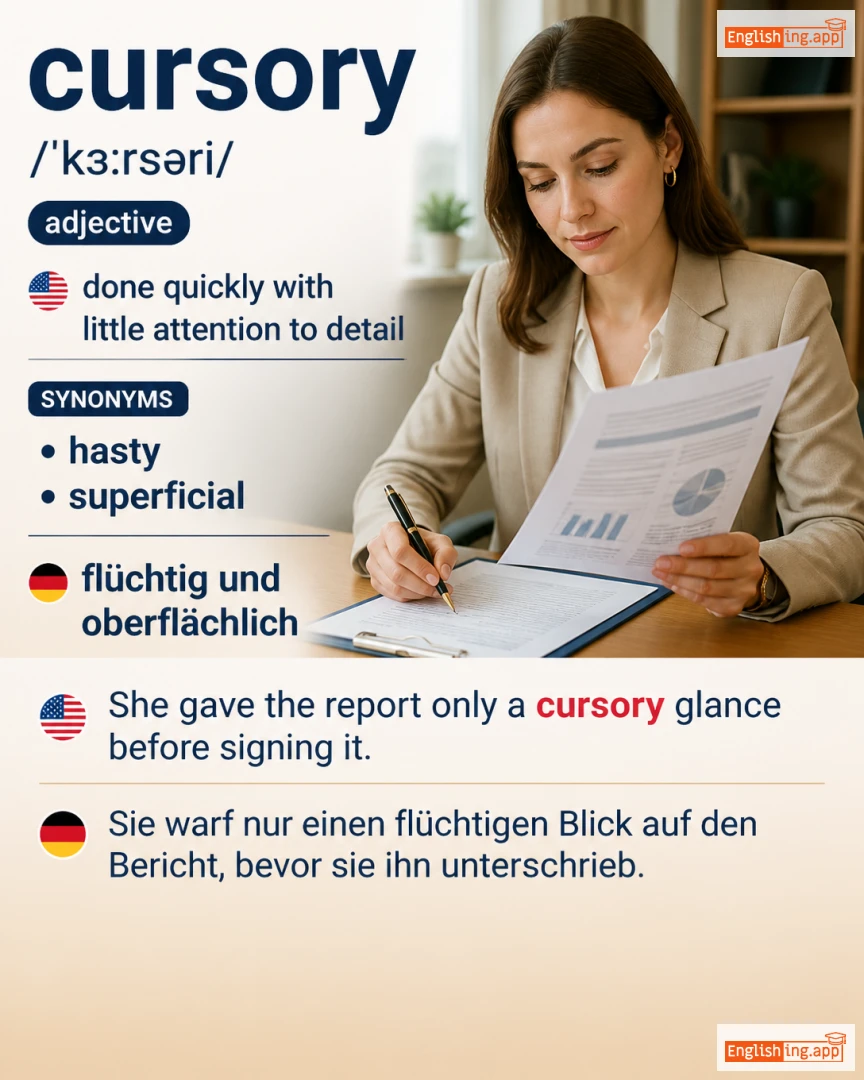
Cursory: English vocabulary meaning and example
Learn the English word "Cursory".
Meaning: Cursory, adjective. It means done quickly with little attention to detail. Synonyms: hasty, superficial.
Example: She gave the report only a cursory glance before signing it.
German: Cursory bedeutet schnell und ohne viel Aufmerksamkeit für Details.
German example: Sie warf nur einen flüchtigen Blick auf den Bericht, bevor sie ihn unterschrieb.
#LearnEnglish #EnglishVocabulary #Englishing
 de
de
Credulous: English vocabulary meaning and example
Learn the English word "Credulous".
Meaning: Credulous, adjective. It means too ready to believe things without real proof; easily fooled. Synonyms: gullible, naive.
Example: The credulous investor handed over his savings after hearing one smooth promise.
German: Credulous bedeutet leichtgläubig, zu schnell bereit zu glauben.
German example: Der leichtgläubige Investor gab seine Ersparnisse nach einem glatten Versprechen her.
#LearnEnglish #EnglishVocabulary #Englishing
 de
de
Convoluted: English vocabulary meaning and example
Learn the English word "Convoluted".
Meaning: Convoluted, adjective. It means extremely complex, twisted, and hard to follow. Synonyms: complicated, tangled.
Example: The instructions were so convoluted that nobody could finish the assignment.
German: Convoluted bedeutet sehr kompliziert, verschlungen und schwer nachvollziehbar.
German example: Die Anweisungen waren so verworren, dass niemand die Aufgabe beenden konnte.
#LearnEnglish #EnglishVocabulary #Englishing
 de
de
Contrite: English vocabulary meaning and example
Learn the English word "Contrite".
Meaning: Contrite, adjective. It means feeling deep, sincere regret for doing something wrong. Synonyms: remorseful, repentant.
Example: She gave a contrite apology after forgetting her friend's birthday.
German: Contrite bedeutet tief und aufrichtig reuig.
German example: Sie entschuldigte sich reumütig, nachdem sie den Geburtstag ihrer Freundin vergessen hatte.
#LearnEnglish #EnglishVocabulary #Englishing