The Professor Who Discovered Ancient Fossils

Professor Ali was a geologist who enrolled his students in field research. His passion was fossil hunting, and he believed Bangladesh had ancient treasures. One day from a nearby village, he heard a rumor about strange rocks. Namely, some farmers had found unusual formations. Ali decided to investigate myself. His journey was challenging, but he hardly thought it would change his life. Reaching the site, he saw a number of rocks that were nearly millions of years old. His research permit's validity was about to expire, but he was determined. The length of the rocks was impressive, and the patterns were linear. He gently started digging because the object was delicate. His heart was moving fast with excitement. Mostly, he would find only ordinary stones, but one day a big discovery happened. The ancient fossil was of a prehistoric creature. In motion, he carefully cleaned the entire area. News spread throughout the nation, and Ali became famous. Local native people were proud that such a discovery happened in their area. Universities wanted to give excess funding for more research. Ali proved that patience and dedication can change everything.

The Professor Who Discovered Ancient Fossils
/
/

The Professor Who Discovered Ancient Fossils - Mask Toggle

Emoji
Word Images Past Past Participle Third Person Singular Gerund Meaning Example Sentence Example Expression Example Expression Meaning Synonyms Antonyms Collocations
🧾
••••••
/ɪnˈroʊl/
verb
••••••
- ••••••
enrolled
••••••
enrolled
••••••
enrolls
••••••
enrolling
••••••
to officially join or register in a school, course, or organization
••••••

He decided to enroll in a computer programming course.

••••••

enroll in

••••••
to sign up or register for something
••••••
register, join, sign up, enlist, admit
••••••
withdraw, leave, exclude
••••••
enroll in school, enroll students, enroll participants, enroll for a course
••••••
••••••
/ɪkˈsɛs/
noun
••••••
- •••••• - •••••• - •••••• - •••••• - ••••••
An amount more than necessary, permitted, or desirable.
••••••

Too much sugar can lead to excess weight gain.

••••••

in excess of

••••••
more than a particular amount
••••••
surplus, overflow, overabundance, superfluity
••••••
shortage, lack, insufficiency
••••••
excess weight, excess baggage, excess demand, in excess of
••••••
••••••
/ɪkˈspaɪər/
verb
••••••
- ••••••
expired
••••••
expired
••••••
expires
••••••
expiring
••••••
to come to an end, especially a period of validity or life
••••••

My passport will expire next month.

••••••

expire soon

••••••
to end or become invalid in the near future
••••••
end, terminate, lapse, cease, conclude
••••••
continue, persist, last
••••••
passport expire, contract expire, lease expire, expire date
••••••
🦖
••••••
/ˈfɒsɪl/
noun
••••••
- •••••• - •••••• - •••••• - •••••• - ••••••
the remains or impression of a prehistoric plant or animal embedded in rock
••••••

The fossil of a dinosaur was discovered in the mountains.

••••••
- •••••• - ••••••
remains, artifact, relic
••••••
modern, new
••••••
dinosaur fossil, ancient fossil, fossil record
••••••
🌸
••••••
/ˈdʒɛntli/
adverb
••••••
- •••••• - •••••• - •••••• - •••••• - ••••••
in a kind, careful, or soft way
••••••

She gently placed the baby in the crib.

••••••

gently does it

••••••
a reminder to do something slowly and carefully
••••••
softly, tenderly, lightly, calmly
••••••
harshly, roughly
••••••
speak gently, touch gently, gently smiling, gently place
••••••
😅
••••••
/ˈhɑːd.li/
adverb
••••••
- •••••• - •••••• - •••••• - •••••• - ••••••
scarcely; barely; almost not at all
••••••

I could hardly believe what I was seeing.

••••••
- •••••• - ••••••
barely, scarcely, rarely, seldom
••••••
easily, completely, fully, certainly
••••••
hardly ever, hardly any, hardly believe, hardly possible
••••••
📏
••••••
/lɛŋkθ/
noun
••••••
- •••••• - •••••• - •••••• - •••••• - ••••••
The measurement or extent of something from end to end.
••••••

The length of the bridge is two kilometers.

••••••

at length

••••••
in detail; thoroughly
••••••
extent, distance, measurement, span, stretch
••••••
shortness, brevity
••••••
length of time, full length, hair length, considerable length
••••••
📏
••••••
/ˈlɪniər/
adjective
••••••
- •••••• - •••••• - •••••• - •••••• - ••••••
Arranged in or extending along a straight line.
••••••

The artist used linear perspective in his drawings.

••••••

linear thinking

••••••
A step-by-step way of reasoning in a straight sequence.
••••••
straight, direct, sequential, aligned
••••••
circular, random, nonlinear
••••••
linear perspective, linear function, linear equation
••••••
📊
••••••
/ˈmoʊstli/
adverb
••••••
- •••••• - •••••• - •••••• - •••••• - ••••••
mainly; for the most part; usually
••••••

The students are mostly from local schools.

••••••
- •••••• - ••••••
mainly, primarily, chiefly, largely, generally
••••••
rarely, seldom, minority
••••••
mostly used, mostly made, mostly because, mostly from
••••••
🏃
••••••
/ˈmoʊʃən/
noun
••••••
- •••••• - •••••• - •••••• - •••••• - ••••••
the act or process of moving; a change of place or position
••••••

The motion of the car made her sleepy.

••••••

set in motion

••••••
to start something happening
••••••
movement, gesture, action, shift, change
••••••
stillness, rest, immobility
••••••
in motion, slow motion, motion picture, set in motion
••••••
😭
••••••
/ˈmuːvɪŋ/
adjective
••••••
- •••••• - •••••• - •••••• - •••••• - ••••••
causing strong feelings, especially of sympathy or sadness
••••••

Her speech was so moving that everyone cried.

••••••
- •••••• - ••••••
touching, emotional, poignant, stirring
••••••
unemotional, indifferent, cold
••••••
moving speech, moving story, moving moment
••••••
🙋‍♂️
••••••
/maɪˈsɛlf/
pronoun
••••••
- •••••• - •••••• - •••••• - •••••• - ••••••
used for emphasis or to refer to oneself
••••••

I will do it myself.

••••••
- •••••• - ••••••
me, personally
••••••
someone else
••••••
do it myself, I taught myself, look after myself
••••••
👉
••••••
/ˈneɪmli/
adverb
••••••
- •••••• - •••••• - •••••• - •••••• - ••••••
that is to say; specifically; to be precise
••••••

Three cities, namely Paris, London, and Rome, were visited.

••••••
- •••••• - ••••••
specifically, particularly, that is, to wit, viz
••••••
generally, broadly, vaguely
••••••
namely that, namely the, namely these, namely those
••••••
🌍
••••••
/ˈneɪʃən/
noun
••••••
- •••••• - •••••• - •••••• - •••••• - ••••••
a large group of people united by common descent, history, culture, or language
••••••

The nation celebrated its independence day with pride.

••••••
- •••••• - ••••••
country, state, land, realm
••••••
individual, province, territory
••••••
nation state, powerful nation, united nation, proud nation
••••••
🌍
••••••
/ˈneɪtɪv/
adjective
••••••
- •••••• - •••••• - •••••• - •••••• - ••••••
Belonging to a person by birth; originating in a particular place.
••••••

He is a native speaker of Bengali.

••••••

native land

••••••
the country where a person was born
••••••
indigenous, local, original, natural
••••••
foreign, alien
••••••
native speaker, native language, native culture, native people
••••••
📍
••••••
/ˈnɪəˌbaɪ/
adjective
••••••
- •••••• - •••••• - •••••• - •••••• - ••••••
close to a particular place or person
••••••

The nearest gas station is nearby.

••••••
- •••••• - ••••••
close, adjacent, near, neighboring
••••••
distant, far, remote
••••••
nearby area, nearby place, nearby town
••••••
🔄
••••••
/ˈnɪərli/
adverb
••••••
- •••••• - •••••• - •••••• - •••••• - ••••••
almost; not quite; very close to
••••••

I nearly missed the bus this morning.

••••••
- •••••• - ••••••
almost, practically, virtually, approximately
••••••
completely, entirely, fully
••••••
nearly finished, nearly impossible, nearly ready
••••••
🔢
••••••
/ˈnʌmbər/
noun
••••••
- •••••• - •••••• - •••••• - •••••• - ••••••
a mathematical value used to count, measure, or label
••••••

She gave me her phone number.

••••••
- •••••• - ••••••
digit, figure, numeral
••••••
letter, word
••••••
phone number, lucky number, large number
••••••
📦
••••••
/ˈɒbdʒɪkt/
noun
••••••
- •••••• - •••••• - •••••• - •••••• - ••••••
a thing that can be seen and touched
••••••

The table is an object in the room.

••••••
- •••••• - ••••••
item, thing, article, entity
••••••
subject, person
••••••
inanimate object, physical object, move object, object to
••••••
••••••
/pərˈmɪt/
verb
••••••
••••••
permitted
••••••
permitted
••••••
permits
••••••
permitting
••••••
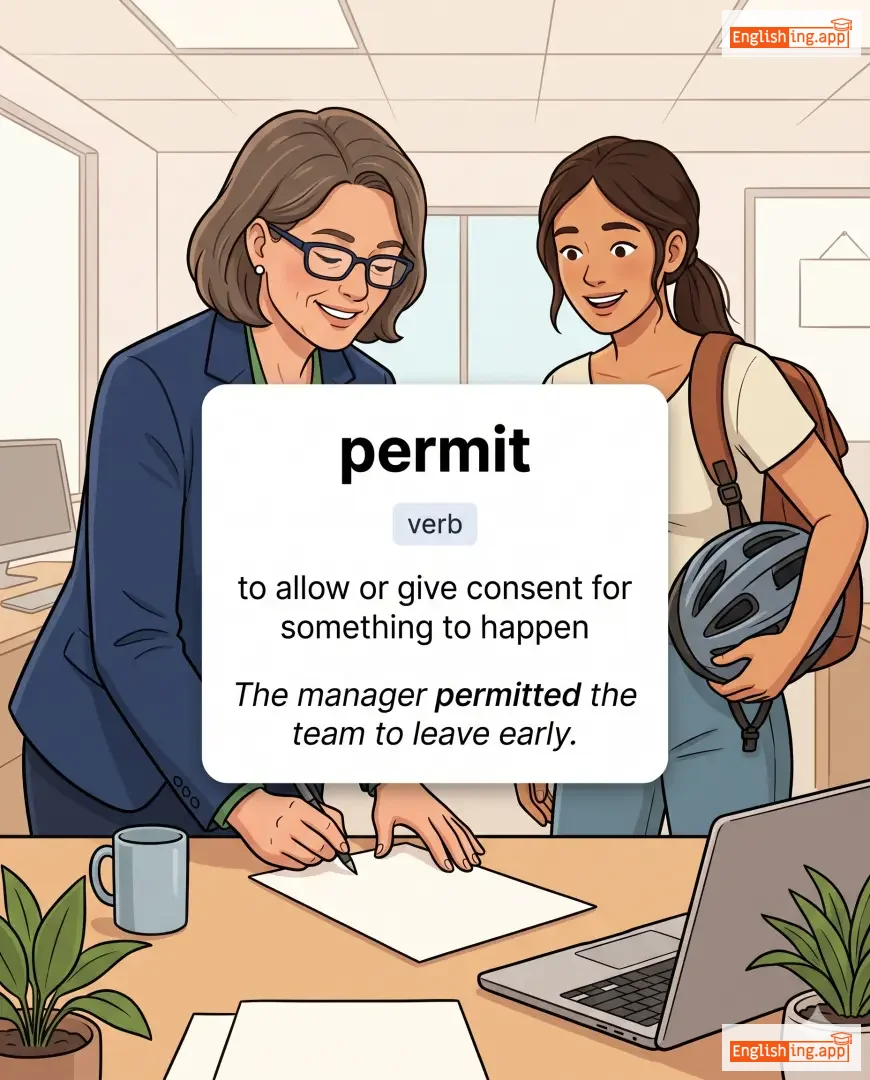
to allow or give permission; to make possible
••••••

The teacher permits students to use calculators during the exam.

••••••
- •••••• - ••••••
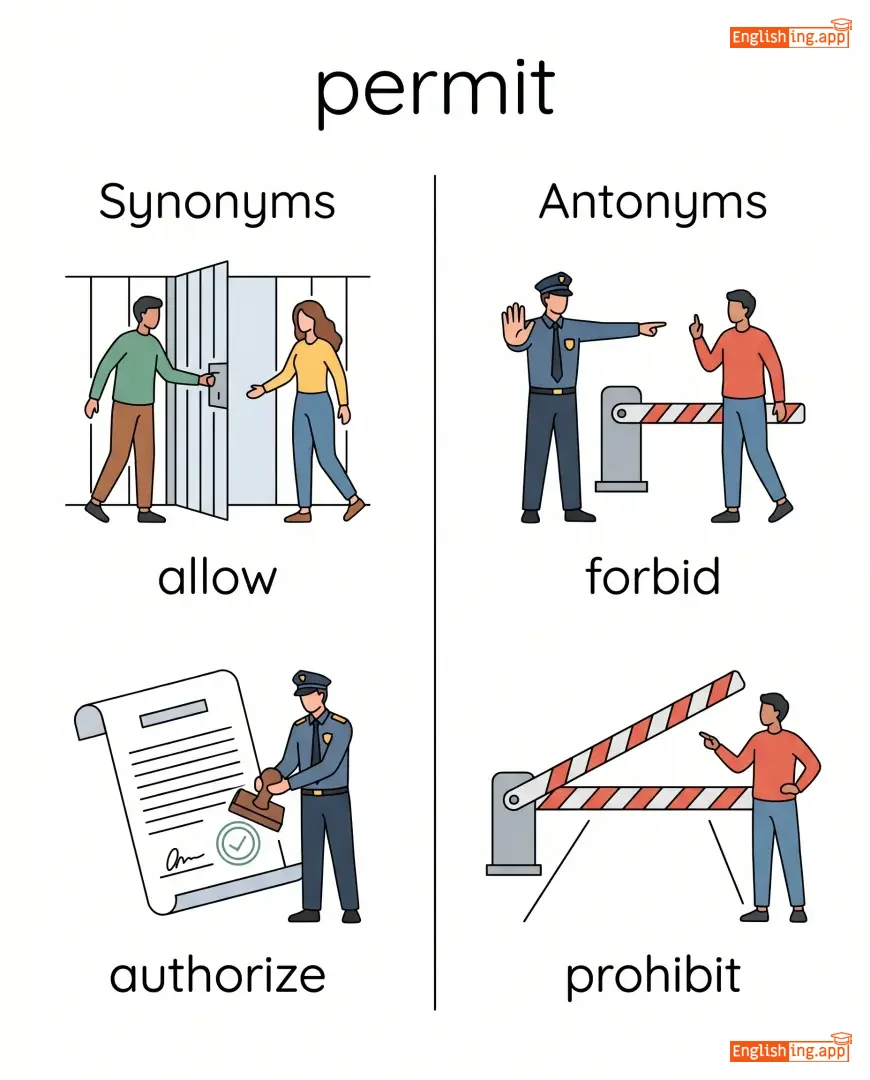
allow, authorize, enable, consent
••••••
forbid, prohibit, deny, ban
••••••
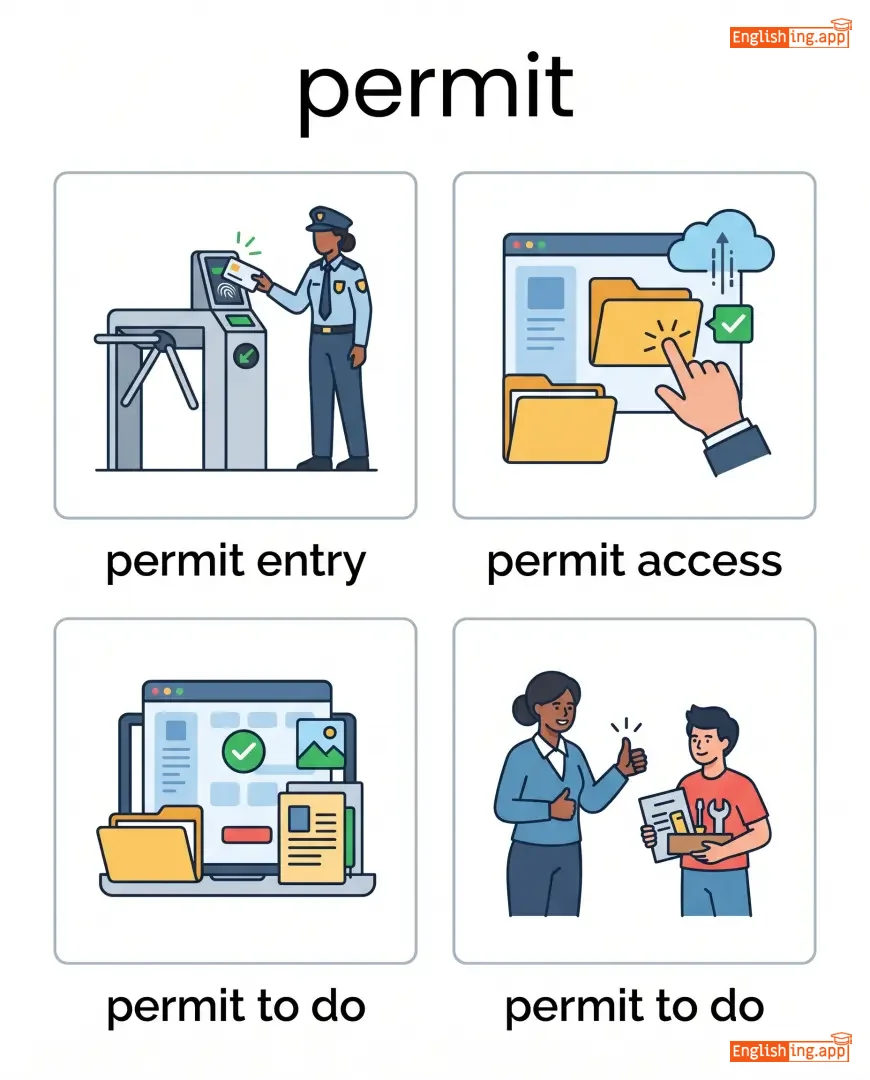
permit access, permit entry, legally permit, rarely permit
••••••