Vocabularies

English Vocabulary Dictionary | Word Meanings, Definitions & Examples

🌿

Henna

noun
/ˈhen.ə/

a reddish-brown dye made from the powdered leaves of a tropical shrub, used to color hair and decorate skin

"The bride's hands were beautifully decorated with intricate henna patterns for her wedding ceremony."

verb
/ˈhɛnˌpɛk/

To continually criticize, nag, or dominate (especially a husband).

"He felt henpecked by his overly controlling wife."

noun
/ˈhɛptəˌɡɒn/

A polygon with seven sides and seven angles.

"The math teacher drew a heptagon on the board."

noun
/ˈhɛptɑːrki/

A group of seven rulers or governments, especially the seven Anglo-Saxon kingdoms in early England.

"The history book described the heptarchy of Anglo-Saxon England."

👩

her

pronoun
/hɜːr/

used to refer to a female person or animal already mentioned or easily identified

"I saw her at the park yesterday."

noun/verb
/ˈhɛrəld/

A person or thing that announces or signals the approach of something; to announce or signal.

"The blooming flowers herald the arrival of spring."

🌿

herb

noun
/hɜːb/ (US) /hɜːb/ or /ɜːb/

a plant used for flavoring food, medicine, or perfume

"Basil is a popular herb used in Italian cuisine."

adjective
/hɜːrˈbeɪʃəs/

Relating to or resembling herbs; plants with soft, non-woody stems.

"The garden was filled with herbaceous plants that thrived in the summer."

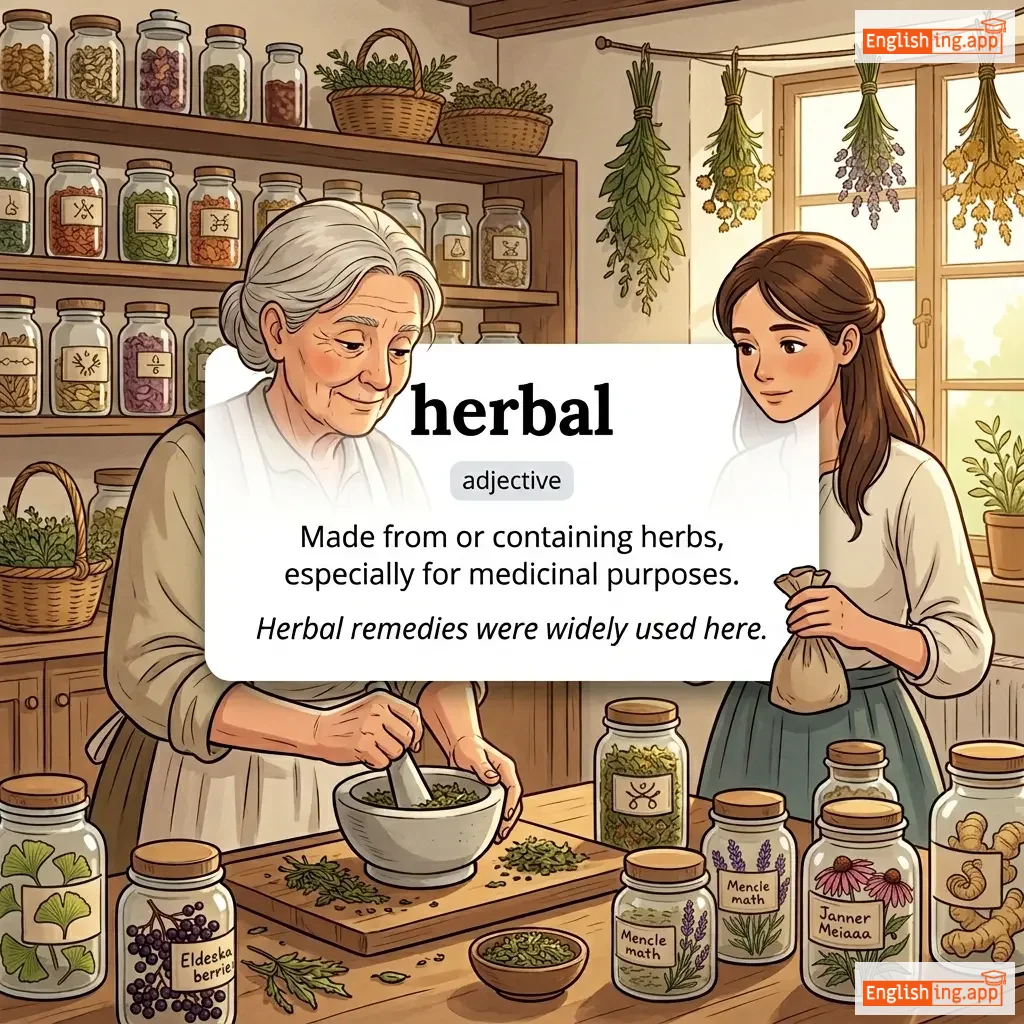
herbal definition card — visual illustration of the meaning
adjective
/ˈhɜː.bəl/

Made from or containing herbs, especially for medicinal purposes.

"Herbal remedies were widely used here."

noun
/hɜːrˈbɛəriəm/

A collection of preserved plant specimens and associated data used for scientific study.

"The university maintains a large herbarium for research and education."

noun
/ˈhɜːrbɪsaɪd/

A chemical substance used to kill unwanted plants, especially weeds.

"Farmers used herbicide to protect their crops from invasive weeds."

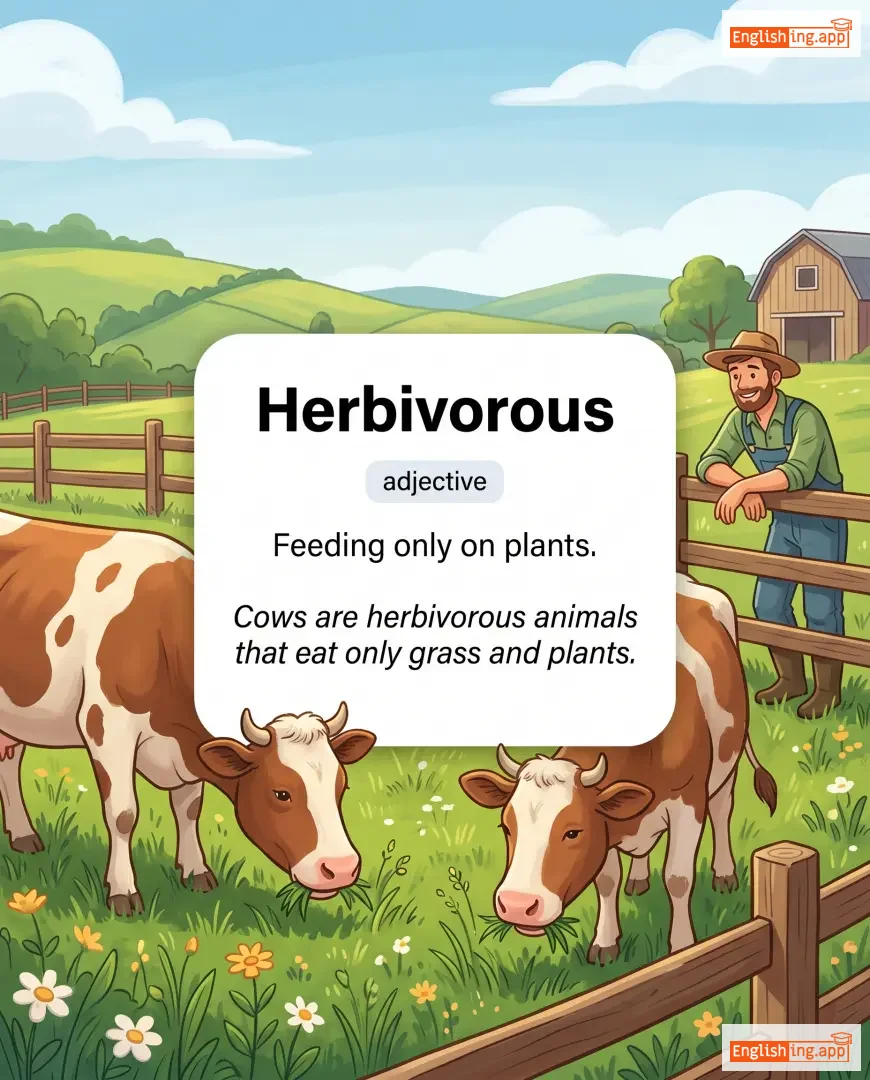
Herbivorous definition card — visual illustration of the meaning
adjective
/hɜːrˈbɪvərəs/

Feeding only on plants.

"Cows are herbivorous animals that eat only grass and plants."

adjective
/ˌhɜːrkjʊˈliːən/

Requiring great strength or effort; very difficult to perform.

"It was a herculean task to rebuild the city after the disaster."

🐑

herd

noun/verb
/hɜːrd/

a large group of animals of the same type that live and feed together; or to gather animals into a group.

"The shepherd herded the sheep into the pen."

📍

here

adverb
/hɪr/

in, at, or to this place

"Please come here quickly."

adverb/noun
/ˌhɪərˈæftər/

from now on; in the future; also refers to life after death.

"Hereafter, all reports must be submitted electronically."

adjective
/həˈrɛdəˌtɛri/

passed from parents to their children through genes or by inheritance.

"Diabetes can be a hereditary condition."

noun
/ˈhɛrəsi/

belief or opinion that goes against established religious doctrine or accepted beliefs.

"In medieval times, heresy was often punished severely."

noun
/ˈhɛrətɪk/

a person who holds beliefs that go against established religious teachings or accepted beliefs.

"The church declared him a heretic for his radical ideas."

adjective
/həˈrɛtɪkəl/

Relating to or characterized by departure from accepted beliefs or standards, especially in religion.

"The priest condemned the book as heretical."

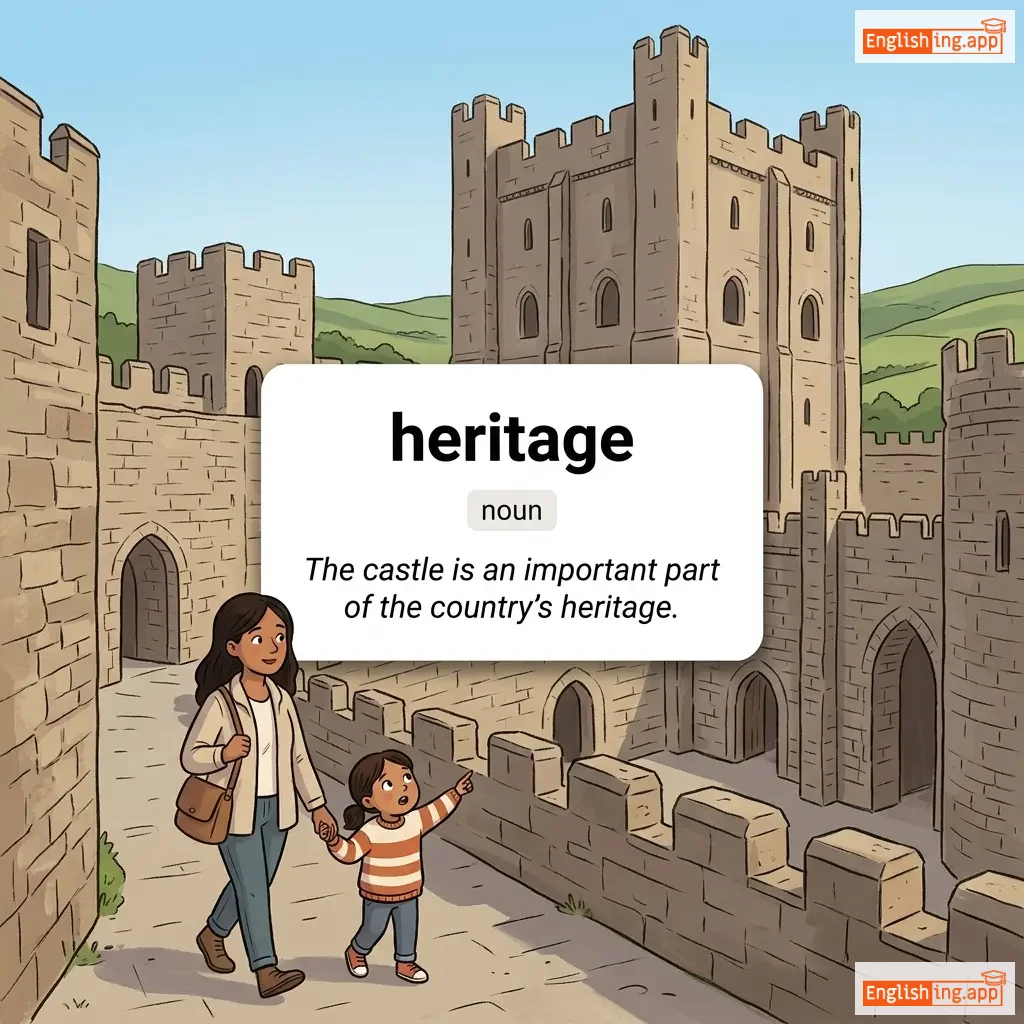
heritage definition card — visual illustration of the meaning
noun
/ˈhɛrɪtɪdʒ/

Valued objects and qualities such as historic buildings and cultural traditions passed down from previous generations.

"The castle is an important part of the country's heritage."

hermetic definition card — visual illustration of the meaning
adjective
/hərˈmɛtɪk/

Completely sealed, especially so that no air can enter or escape.

"The medicine was kept in a hermetic container."

adverb
/hərˈmɛtɪkli/

In a way that is completely airtight or sealed off.

"The jars were hermetically sealed to preserve freshness."

noun
/ˈhɜːrmɪt/

A person who lives alone and apart from society, often for religious or spiritual reasons.

"The old hermit lived in a cave for decades."

🏞️

hermitage

noun
/ˈhɜːrmɪtɪdʒ/

A secluded residence or retreat, often for a hermit or religious recluse.

"The monk spent years in a hermitage deep in the forest."

⚕️

hernia

noun
/ˈhɜːrniə/

A medical condition where an organ pushes through the muscle or tissue holding it in place.

"The doctor diagnosed him with an inguinal hernia."

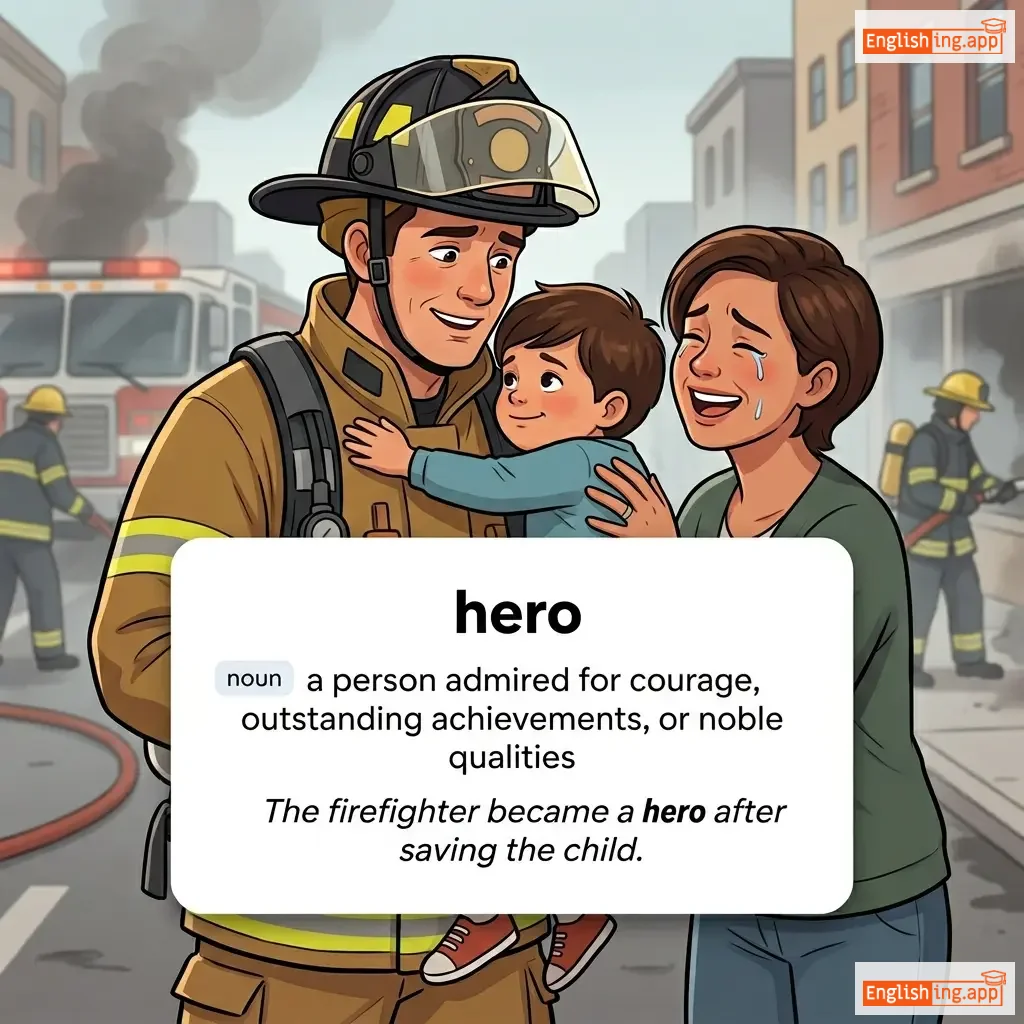
hero definition card — visual illustration of the meaning
🦸

hero

noun
/ˈhɪəroʊ/

a person admired for courage, outstanding achievements, or noble qualities

"The firefighter became a hero after saving the child."

adjective
/hɪˈroʊɪk/

showing great bravery or courage; relating to a hero or heroes

"The firefighter made a heroic effort to save the child."

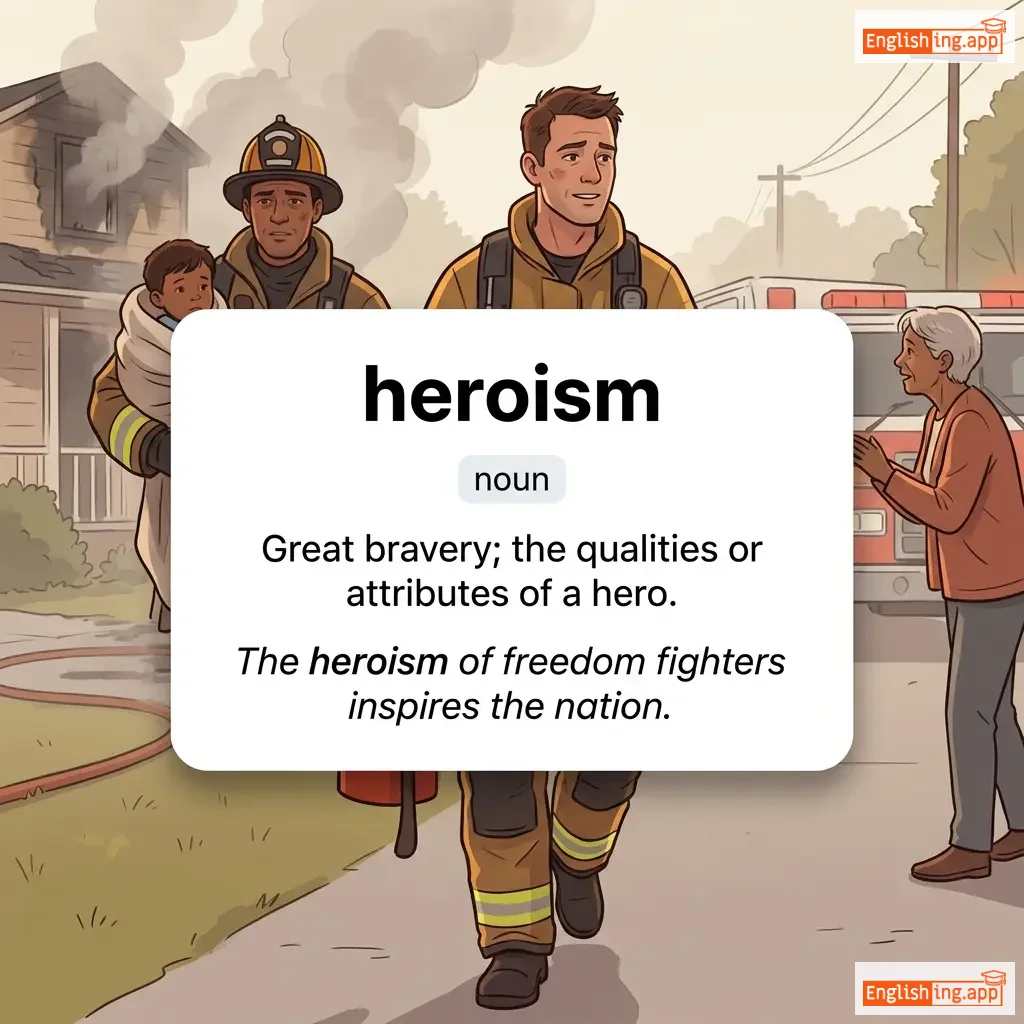
heroism definition card — visual illustration of the meaning
noun
ˈhɛroʊˌɪzəm

Great bravery; the qualities or attributes of a hero.

"The heroism of freedom fighters inspires the nation."

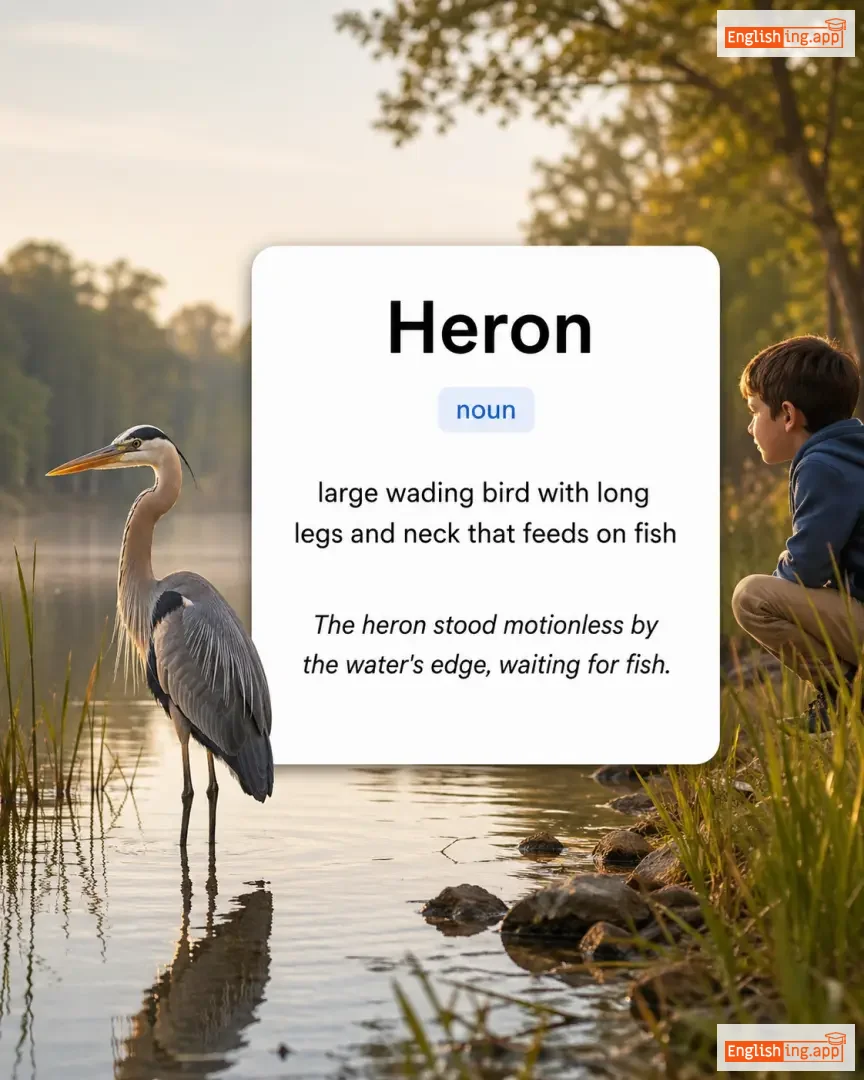
Heron definition card — visual illustration of the meaning
🦩

Heron

noun
/ˈherən/

large wading bird with long legs and neck that feeds on fish

"The heron stood motionless by the water's edge, waiting for fish."

noun
/ˌhɜːrpəˈtɒlədʒɪst/

A scientist who studies reptiles and amphibians.

"The herpetologist discovered a new species of frog in the rainforest."

👩‍👜

hers

pronoun
/hɜːrz/

used to refer to something that belongs to or is associated with a female person previously mentioned or easily identified.

"That blue bag is hers."

pronoun
/hɜːrˈsɛlf/

used to refer to a female person as the object of a verb or preposition when she is the subject

"She prepared the meal all by herself."

noun
/ˈhɛzɪtəns/

The quality or state of being reluctant or uncertain.

"Her hesitance to speak up delayed the decision."

noun
/ˈhɛzɪtənsi/

The tendency to pause or delay due to uncertainty or fear.

"His hesitancy in answering made everyone doubt his confidence."

adjective
/ˈhɛzɪtənt/

uncertain or unwilling to do something quickly; showing doubt or reluctance

"She was hesitant to accept the job offer without more information."

verb
/ˈhezɪteɪt/

to pause before saying or doing something because you are uncertain or nervous.

"She hesitated before answering the question."

noun
/ˌhɛzɪˈteɪʃən/

the act of pausing or being uncertain before doing something

"After a moment’s hesitation, he answered the question."

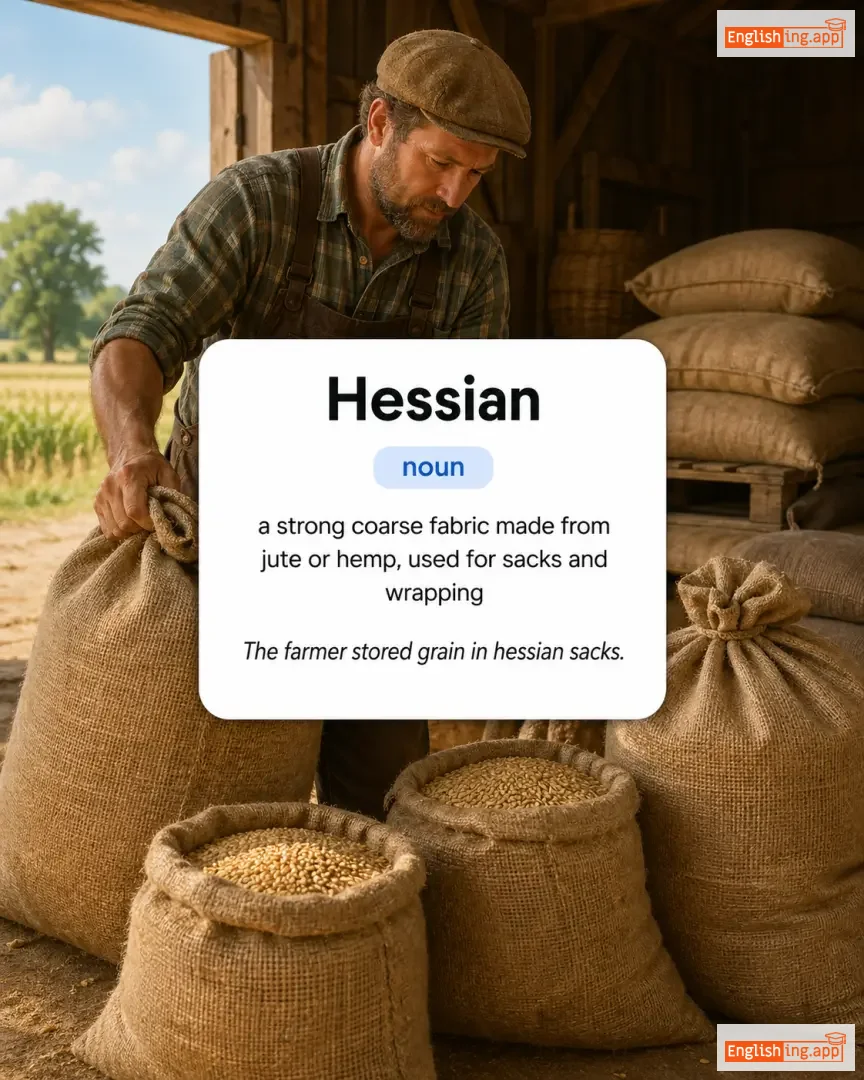
Hessian definition card — visual illustration of the meaning
noun
/ˈhɛʃ.ən/

a strong coarse fabric made from jute or hemp, used for sacks and wrapping

"The farmer stored grain in hessian sacks."

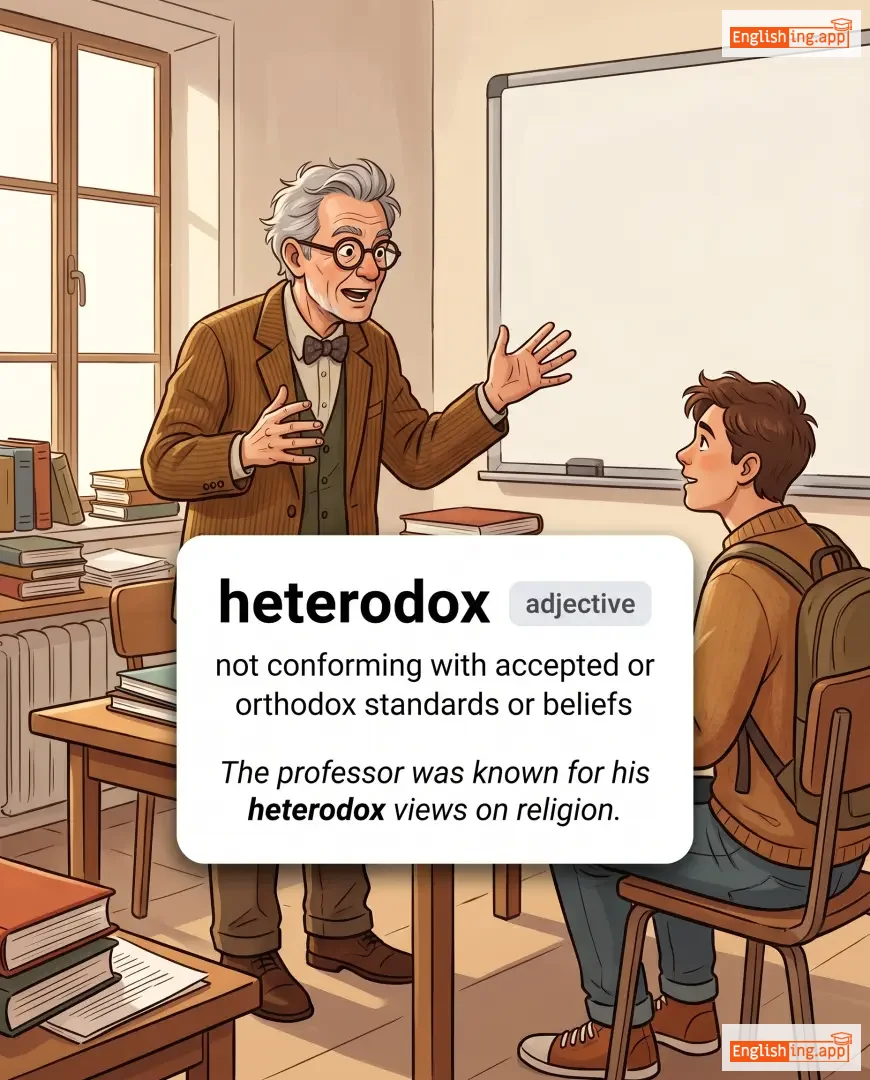
heterodox definition card — visual illustration of the meaning
adjective
/ˈhɛtərəˌdɒks/

not conforming with accepted or orthodox standards or beliefs

"The professor was known for his heterodox views on religion."

noun
/ˌhɛtərəʤəˈniːɪti/

the quality or state of being diverse in character or content

"The cultural heterogeneity of the city makes it vibrant and unique."

adjective
/ˌhɛtərəˈʤiːniəs/

consisting of different kinds or diverse elements

"The classroom was filled with a heterogeneous group of students."

adjective
/ˌhɛtərəʊˈmɔːrfɪk/

Having different forms or shapes, especially in the same species or organism.

"Butterflies are heteromorphic during their life cycle, changing forms from larva to adult."

heuristic definition card — visual illustration of the meaning
adjective
hjʊəˈrɪs.tɪk

Enabling a person to discover or learn something for themselves; using practical experience rather than theory.

"The scientist used a heuristic approach to solve the problem."

🪓

hew

verb
/hjuː/

To chop or cut something, especially wood or stone, with a tool.

"The workers hewed logs to build the cabin."

noun
/ˈhɛksəˌɡɒn/

A six-sided polygon.

"A honeycomb cell is shaped like a hexagon."

adjective
/hɛkˈsæŋɡjələr/

Having six angles or corners.

"The artist designed a hexangular frame for the mirror."

noun
/ˈhɛksəˌpɒd/

An insect or other organism with six legs.

"The scientist observed a hexapod crawling on the leaf."

👋

hey

interjection
/heɪ/

used to attract attention, express surprise, or greet someone

"Hey, how are you doing today?"

noun
/ˈheɪ.deɪ/

the period of a person's or thing's greatest success, popularity, or vigor; prime time

"During her heyday as a singer, she performed in sold-out concerts around the world."