Vocabularies

English Vocabulary Dictionary | Word Meanings, Definitions & Examples

🐈

rear

noun, verb
/rɪər/

the back part of something; to bring up or raise children or animals

"The mother cat reared her kittens in a quiet corner."

verb
/ˌriːəˈreɪndʒ/

to change the order or position of something

"She decided to rearrange the furniture in her living room."

noun, verb
/ˈriːzən/

A cause, explanation, or justification for an action or event; to think or argue logically.

"There is no reason to be upset."

adjective
/ˈriːzənəbl/

Fair and sensible; having sound judgment; not extreme or excessive.

"The price of the meal was quite reasonable."

adverb
/ˈriːzənəbli/

in a fair, sensible, or logical manner

"The price was reasonably low compared to other products."

noun
/ˈriːzənɪŋ/

the process of thinking about something in a logical way in order to form a conclusion or judgment

"Her reasoning for leaving was clear and logical."

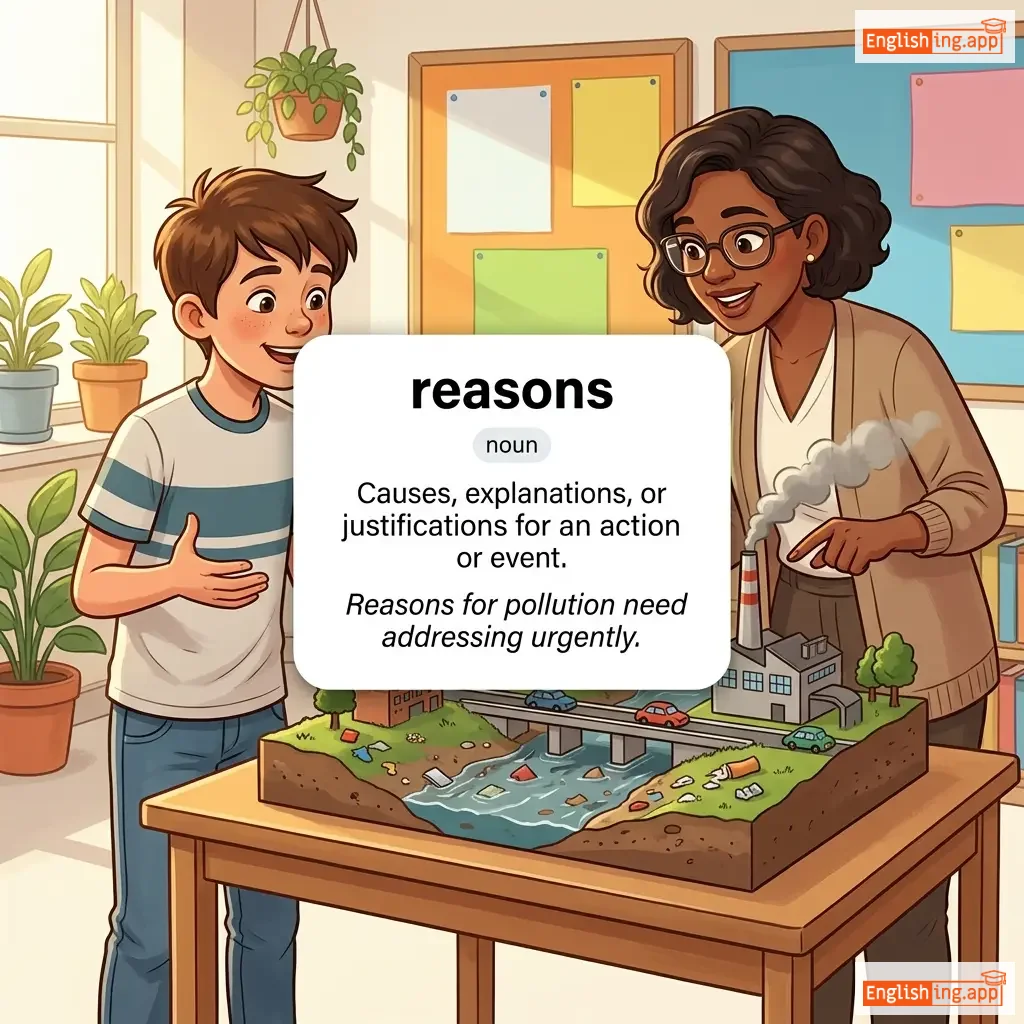
reasons definition card — visual illustration of the meaning
noun
/ˈriː.zənz/

Causes, explanations, or justifications for an action or event.

"Reasons for pollution need addressing urgently."

noun
/ˌriː.əˈʃʊr.əns/

comfort or confidence given to someone to remove their fears or doubts

"She needed reassurance that everything would be okay."

verb
/ˌriːəˈʃʊr/

to say or do something to remove someone's doubts or fears

"The teacher reassured the students before the exam."

noun
/ˈriːbeɪt/

a partial refund given to someone who has paid too much money for something

"The store offered a rebate on bulk purchases."

noun, verb
/ˈreb.əl/

a person who resists authority or control; to resist or fight against authority

"The students rebelled against the new dress code."

noun
/rɪˈbɛljən/

an act of violent or open resistance to an established government or ruler

"The rebellion was crushed by the army after a few months."

adjective
/rɪˈbɛljəs/

resisting authority or control; showing a desire to rebel

"The rebellious teenager refused to follow the school rules."

verb
/rɪˈbʌf/

to reject or refuse in a sharp or abrupt way

"She rebuffed his invitation to dinner."

🏗️

rebuild

verb
/ˌriːˈbɪld/

to build something again after it has been damaged or destroyed

"The villagers worked together to rebuild the bridge after the flood."

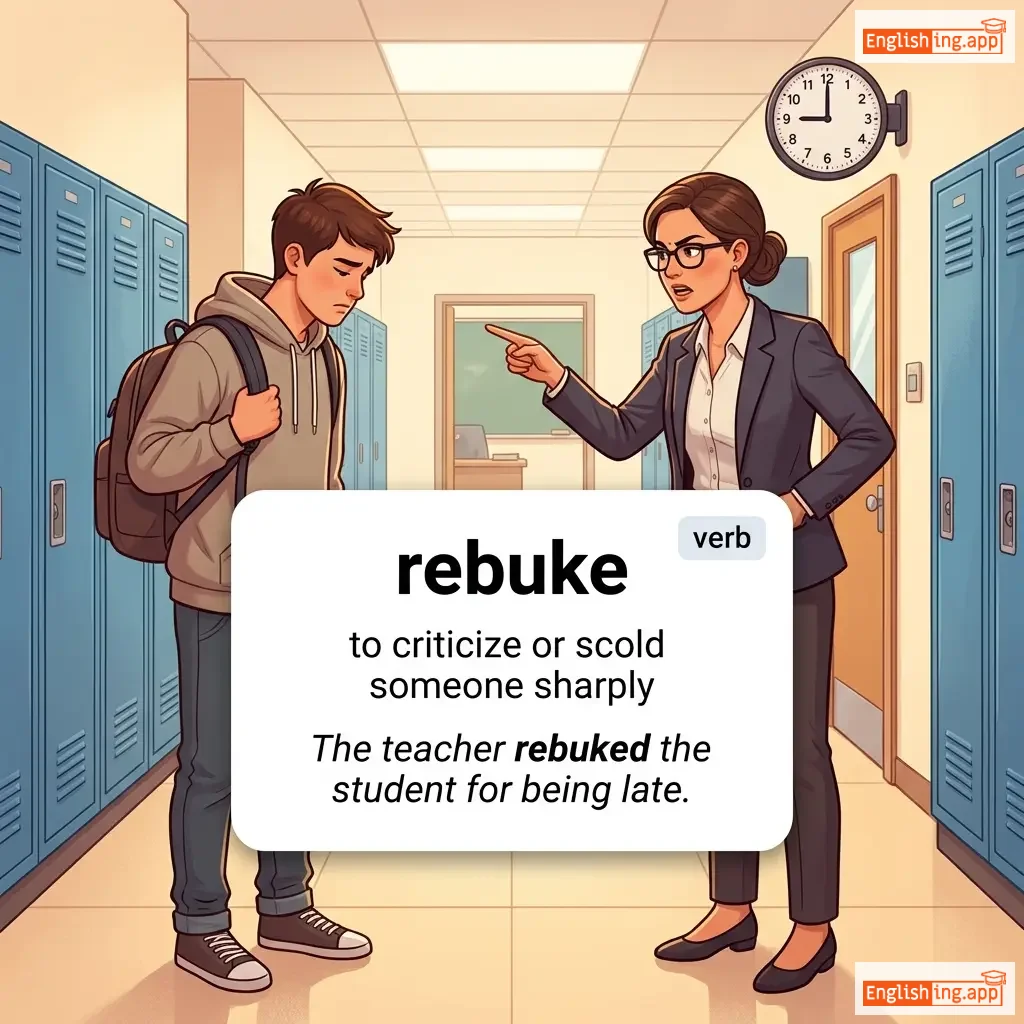
rebuke definition card — visual illustration of the meaning
verb
/rɪˈbjuːk/

to criticize or scold someone sharply

"The teacher rebuked the student for being late."

🧩

rebus

noun
/ˈriːbəs/

a puzzle in which words are represented by pictures, symbols, or letters

"The children enjoyed solving the rebus puzzles in the magazine."

⚖️

rebut

verb
/rɪˈbʌt/

to argue against or prove wrong; to refute

"The lawyer rebutted the false accusations with strong evidence."

noun
/rɪˈbʌtəl/

a statement or argument made to oppose or disprove another

"Her rebuttal was clear and convincing."

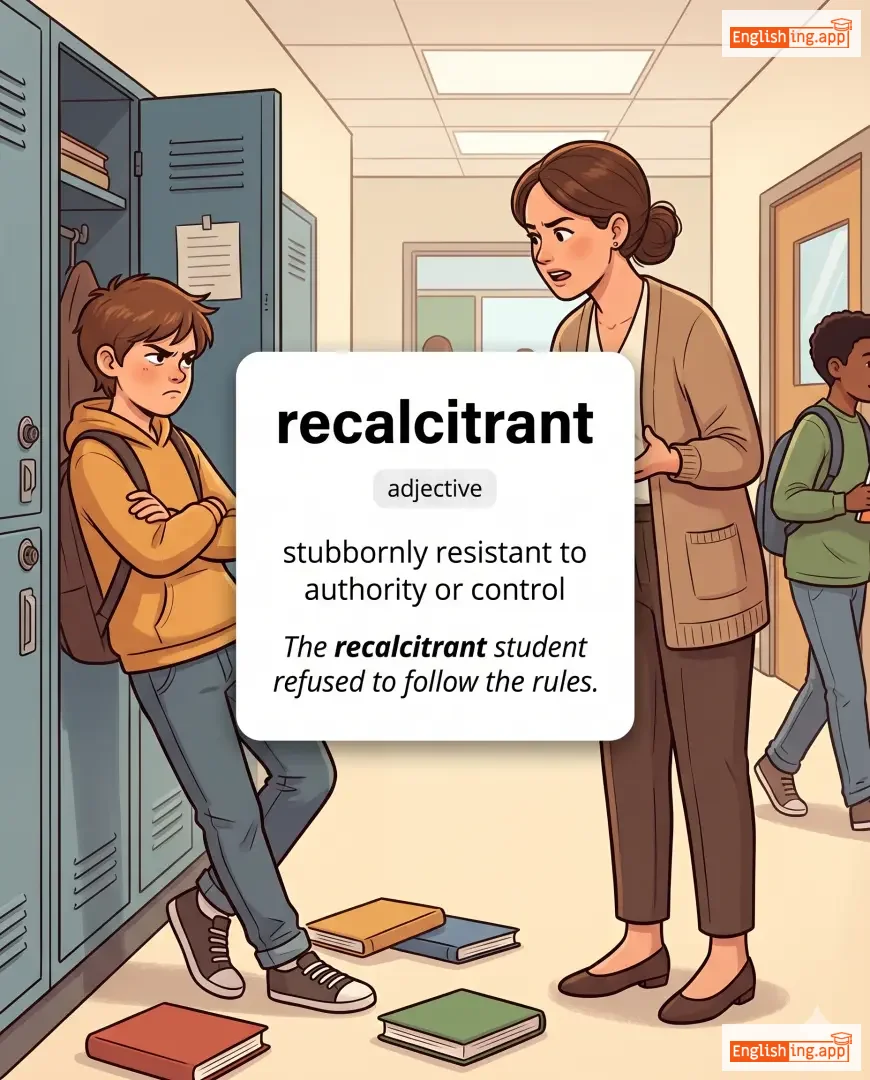
recalcitrant definition card — visual illustration of the meaning
adjective
/rɪˈkælsɪtrənt/

stubbornly resistant to authority or control

"The recalcitrant student refused to follow the rules."

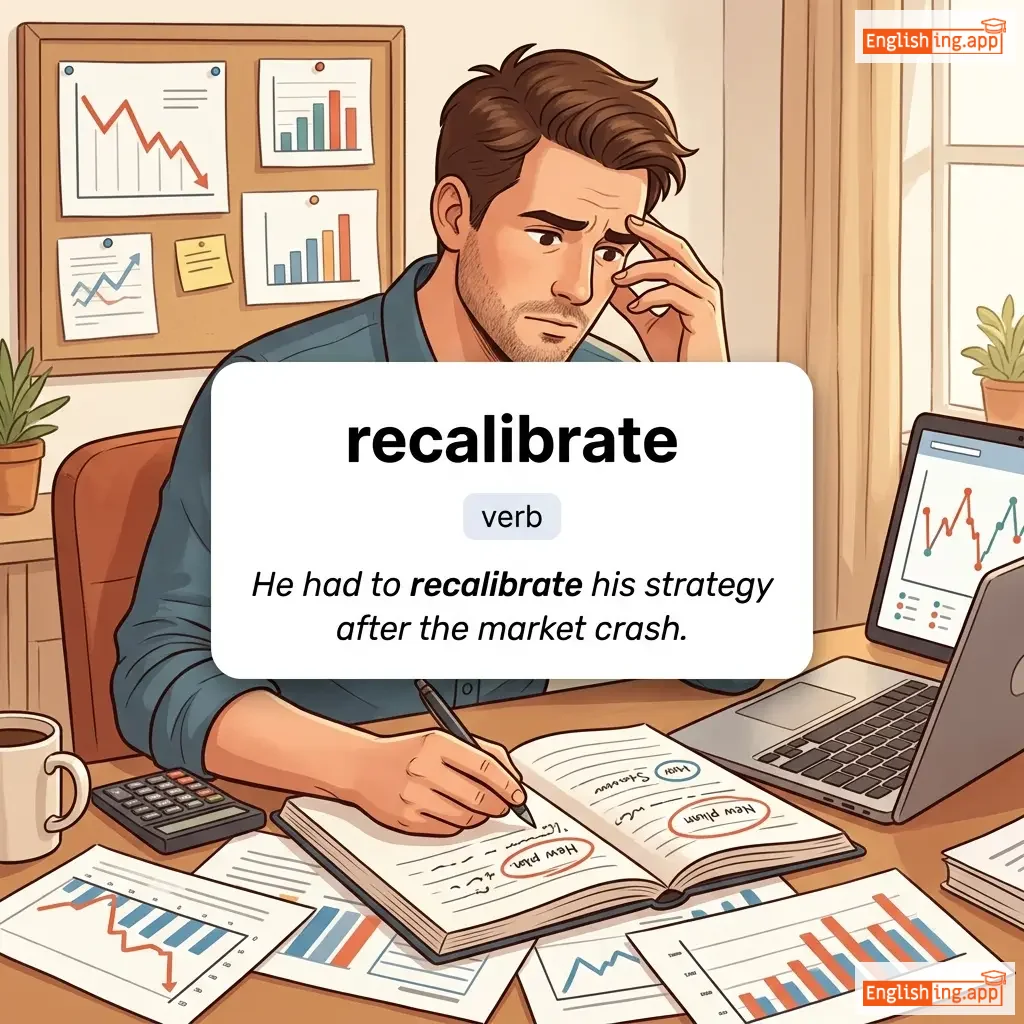
recalibrate definition card — visual illustration of the meaning
verb
ˌriːˈkæl.ɪ.breɪt

To adjust or modify according to a new standard or plan; to reassess and realign.

"He had to recalibrate his strategy after the market crash."

verb
/rɪˈkɔːl/

to bring (a memory, fact, or situation) back into one's mind

"I can't recall the last time we met."

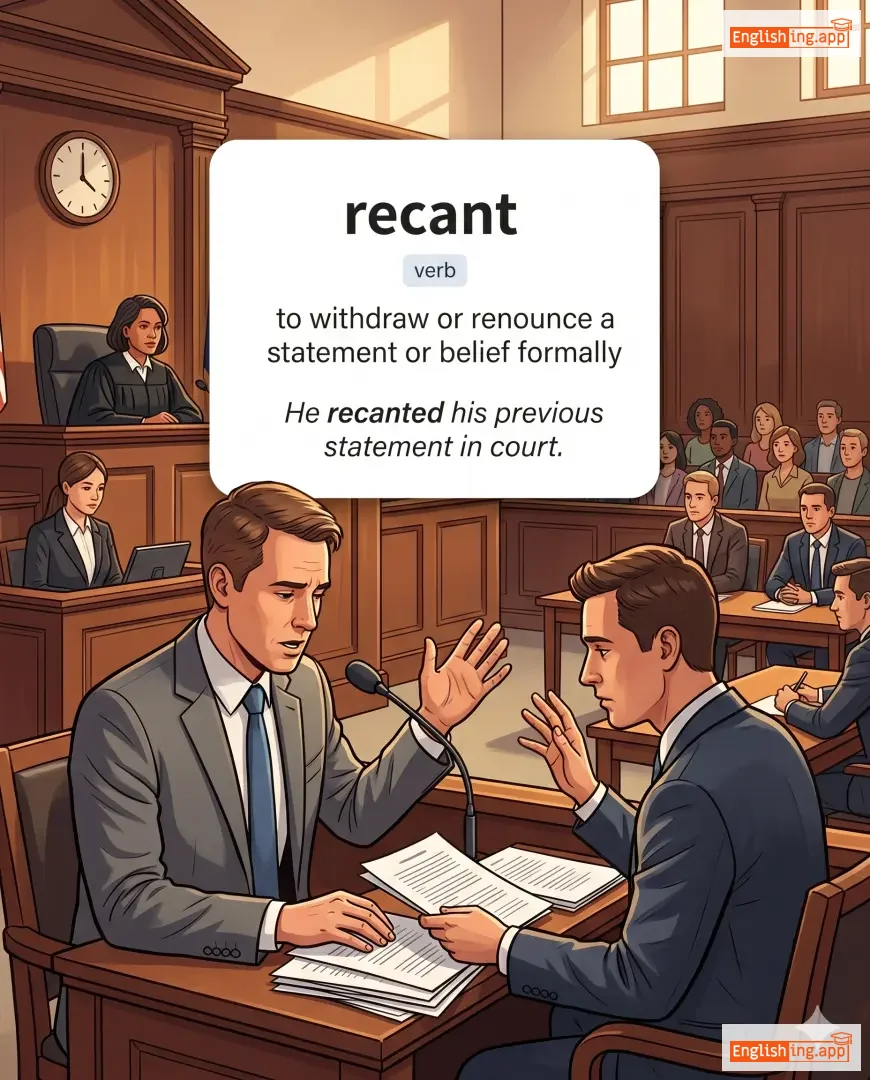
recant definition card — visual illustration of the meaning
🗣️

recant

verb
/rɪˈkænt/

to withdraw or renounce a statement or belief formally

"He recanted his previous statement in court."

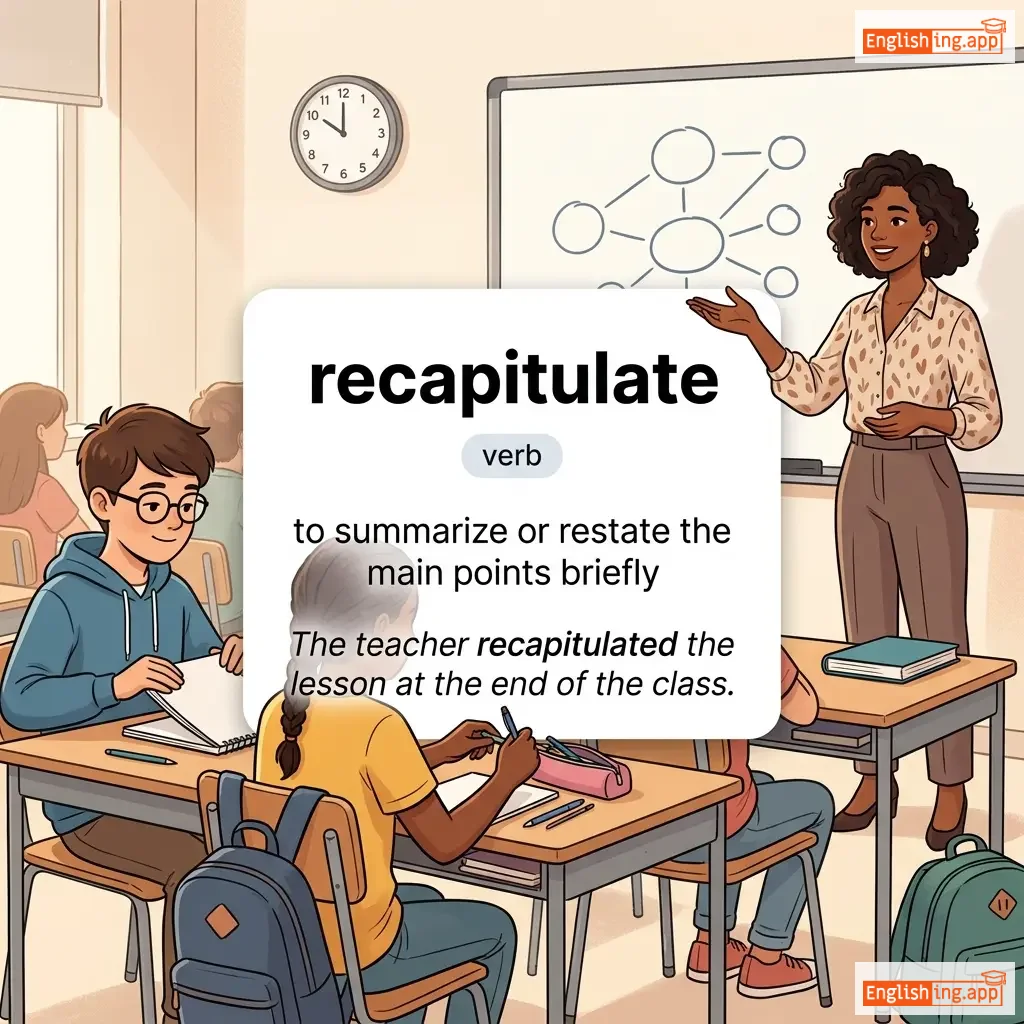
recapitulate definition card — visual illustration of the meaning
verb
/ˌriːkəˈpɪtjʊleɪt/

to summarize or restate the main points briefly

"The teacher recapitulated the lesson at the end of the class."

noun
/ˌriːkəˌpɪtjʊˈleɪʃən/

The act of summarizing or repeating the main points of something.

"The professor gave a brief recapitulation of the lecture before ending the class."

verb
/riːˈkæptʃər/

To take back or regain possession of something.

"The army managed to recapture the lost territory."

verb
/ˌriːˈkæst/

To present or change something in a different form or style.

"The director decided to recast the role with a younger actor."

verb
/rɪˈsiːd/

To move back or further away from a previous position.

"The floodwaters began to recede after the heavy rain stopped."

adjective, noun
/rɪˈsiːvəbl/

Money that is owed to a company and is expected to be paid.

"The company's receivables increased significantly this quarter."

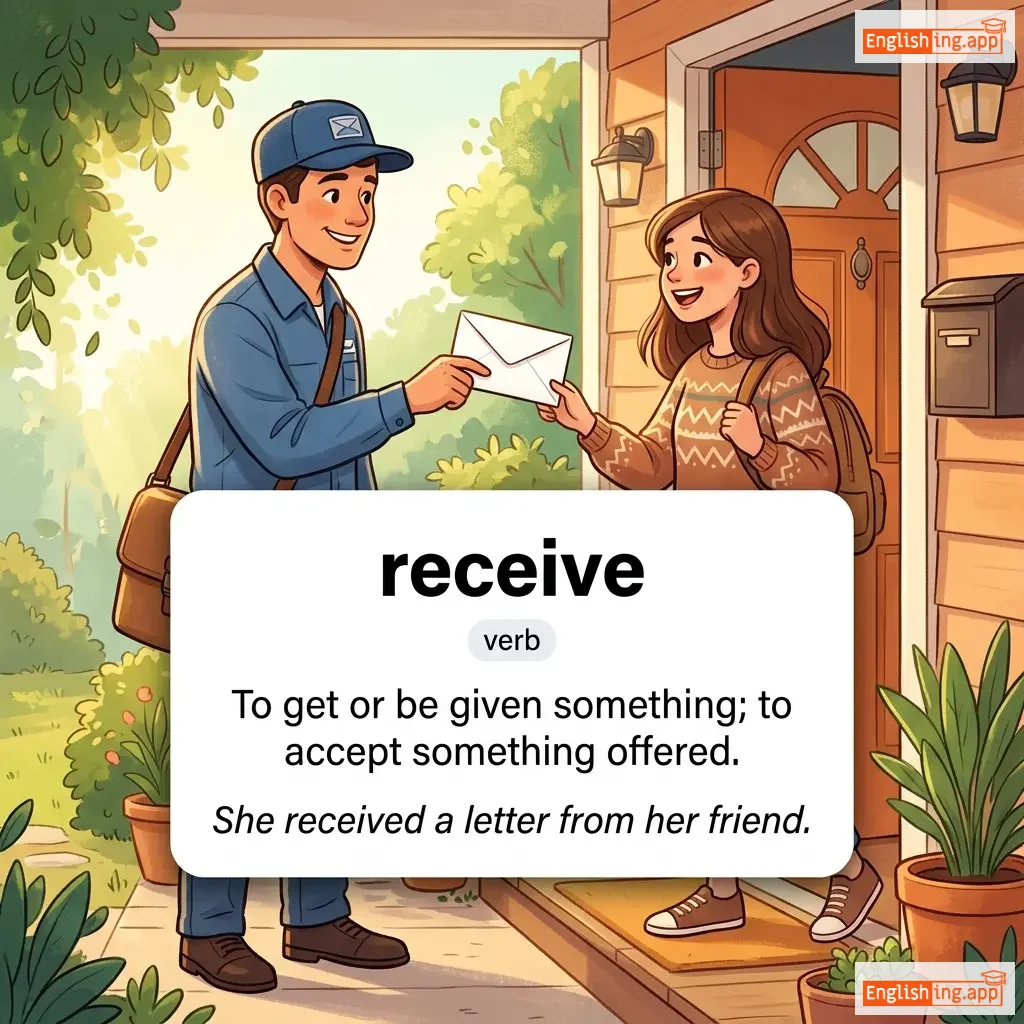
receive definition card — visual illustration of the meaning
verb
/rɪˈsiːv/

To get or be given something; to accept something offered.

"She received a letter from her friend."

noun
/rɪˈsiːvər/

a person or device that receives something such as a signal, message, or object

"The radio receiver picks up signals from distant stations."

adjective
/ˈriːsənt/

having happened or started only a short time ago

"The recent developments have been quite exciting."

adverb
/ˈriːsəntli/

in the recent past; not long ago

"I recently visited the museum."

noun
/rɪˈsepʃən/

the act of receiving something or someone; a formal social gathering

"We attended a wedding reception at the hotel."

adjective
/rɪˈsɛptɪv/

Willing to listen to or accept new ideas, suggestions, or experiences.

"She was receptive to feedback from her colleagues."

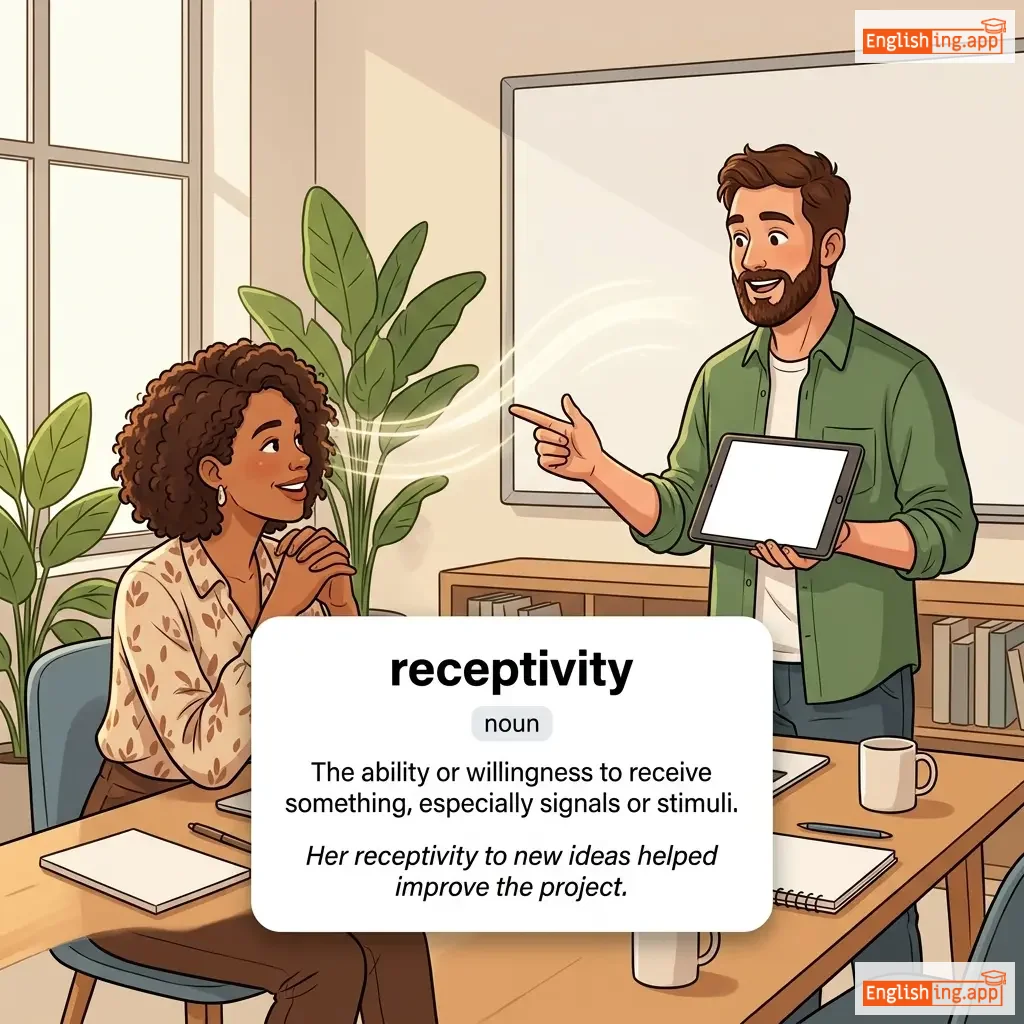
receptivity definition card — visual illustration of the meaning
noun
/rɪˌsɛptɪˈvɪti/

The ability or willingness to receive something, especially signals or stimuli.

"Her receptivity to new ideas helped improve the project."

noun
/rɪˈsɛs/

A short break from work or school; also a small space set back in a wall.

"The children played outside during recess."

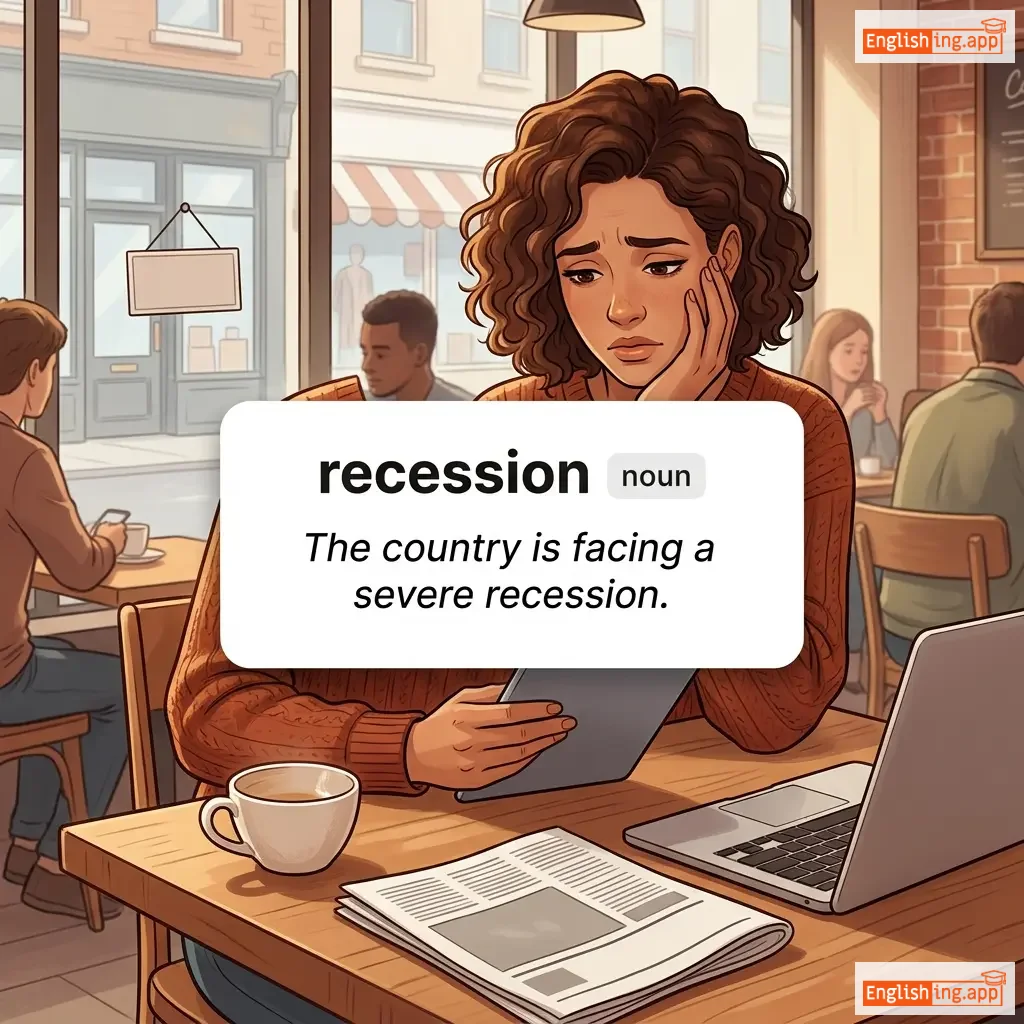
recession definition card — visual illustration of the meaning
noun
/rɪˈsɛʃən/

A period of temporary economic decline during which trade and industrial activity are reduced.

"The country is facing a severe recession."

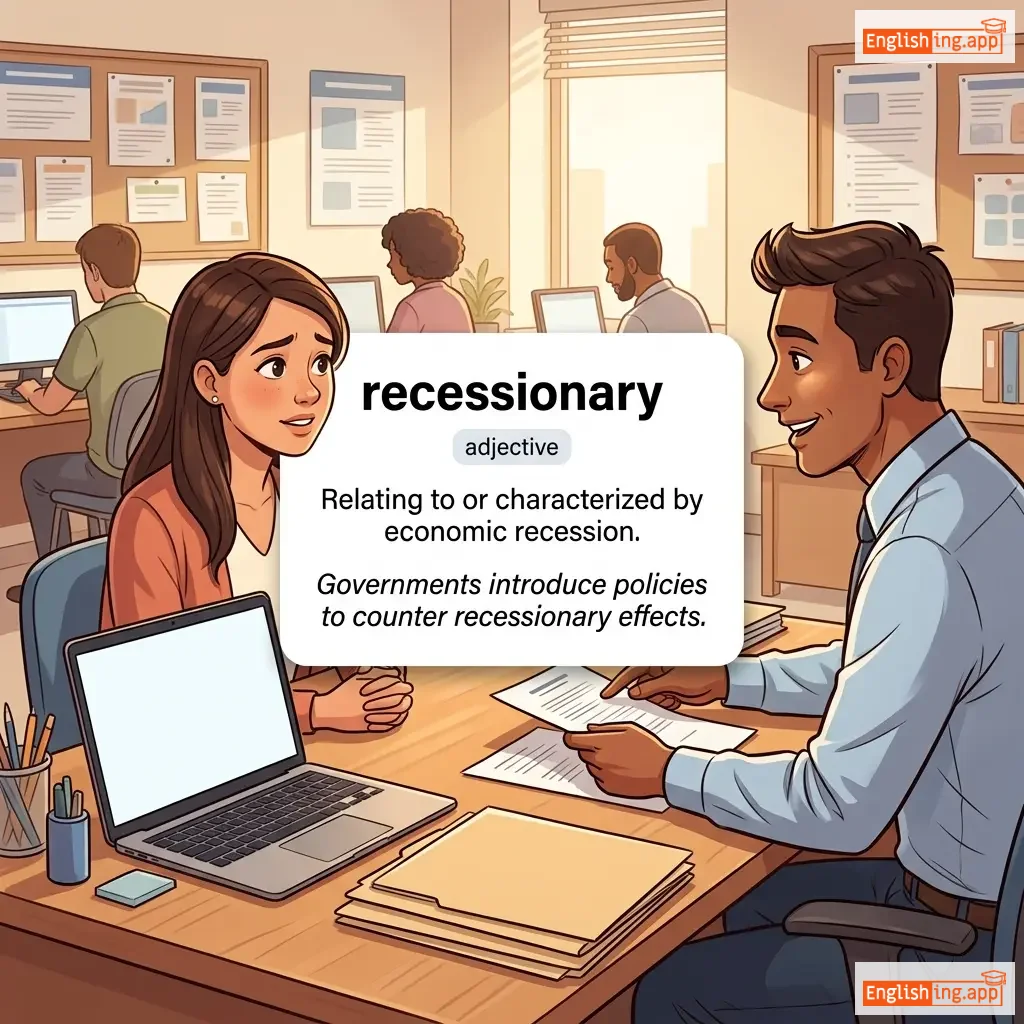
recessionary definition card — visual illustration of the meaning
adjective
rɪˈsɛʃ.ən.er.i

Relating to or characterized by economic recession.

"Governments introduce policies to counter recessionary effects."

adjective
/rɪˈsɛsɪv/

In genetics, relating to a trait that is expressed only when two copies of the gene are present.

"Blue eye color is often a recessive trait."

adjective
/rəˈʃɛrʃ/

Rare, exotic, or obscure, often in a sophisticated or refined way.

"The gallery displayed many recherche artworks from unknown artists."

noun
/rɪˈsɪdɪˌvɪzəm/

The tendency of a convicted criminal to reoffend or relapse into criminal behavior.

"The government introduced new programs to reduce recidivism among former inmates."

noun
/rɪˈsɪdɪvɪst/

A person who repeatedly commits crimes, especially after having been punished.

"The police identified him as a recidivist who had been arrested several times before."

noun
/ˈrɛsɪpi/

a set of instructions for preparing a particular dish, including a list of the ingredients required

"I found a great recipe for chocolate cake."

noun
/rɪˈsɪpiənt/

A person who receives something, such as an award, gift, or message.

"She was the recipient of the award for best performance."

adjective
/rɪˈsɪprəkəl/

Given, felt, or done in return; mutual.

"Their relationship is based on reciprocal respect and trust."

verb
/rɪˈsɪprəˌkeɪt/

To respond to an action or gesture by making a corresponding one.

"She smiled at him, and he reciprocated with a warm hug."

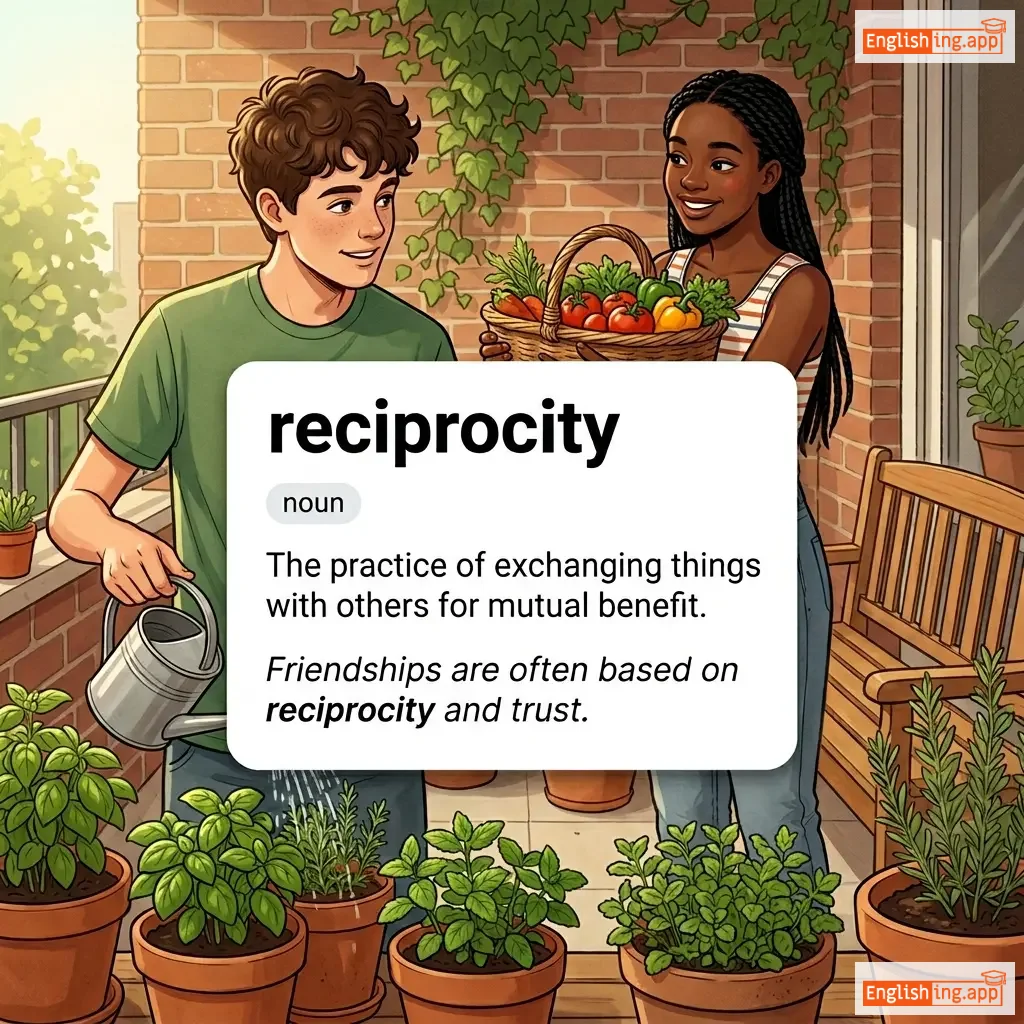
reciprocity definition card — visual illustration of the meaning
noun
/ˌrɛsɪˈprɒsɪti/

The practice of exchanging things with others for mutual benefit.

"Friendships are often based on reciprocity and trust."

noun
/rɪˈsaɪtl/

A performance of music, dance, or poetry, usually by a soloist.

"She gave a piano recital at the concert hall."

noun
/ˌrɛsɪˈteɪʃən/

The act of reading or repeating something aloud, especially poetry or passages.

"The student won the prize for her poetry recitation."