Vocabularies

English Vocabulary Dictionary | Word Meanings, Definitions & Examples

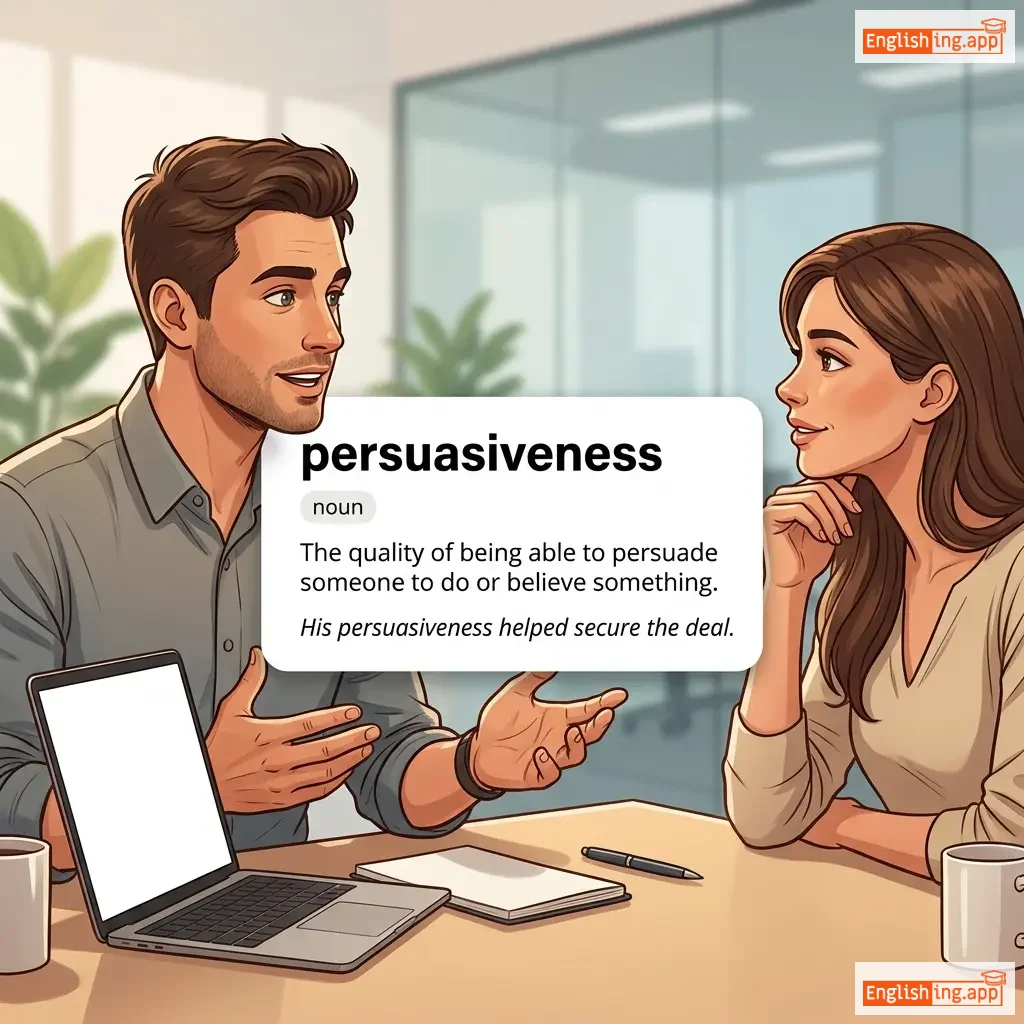
persuasiveness definition card — visual illustration of the meaning
noun
/pərˈsweɪ.sɪv.nəs/

The quality of being able to persuade someone to do or believe something.

"His persuasiveness helped secure the deal."

😉

pert

adjective
/pɜːrt/

attractively lively or cheeky in manner or style

"She gave a pert reply that made everyone laugh."

verb
/pərˈteɪn/

to relate or have reference to something

"The rules pertain to all students in the school."

adjective
/ˌpɜːrtɪˈneɪʃəs/

holding firmly to an opinion, purpose, or course of action; stubbornly persistent

"The pertinacious lawyer refused to give up the case."

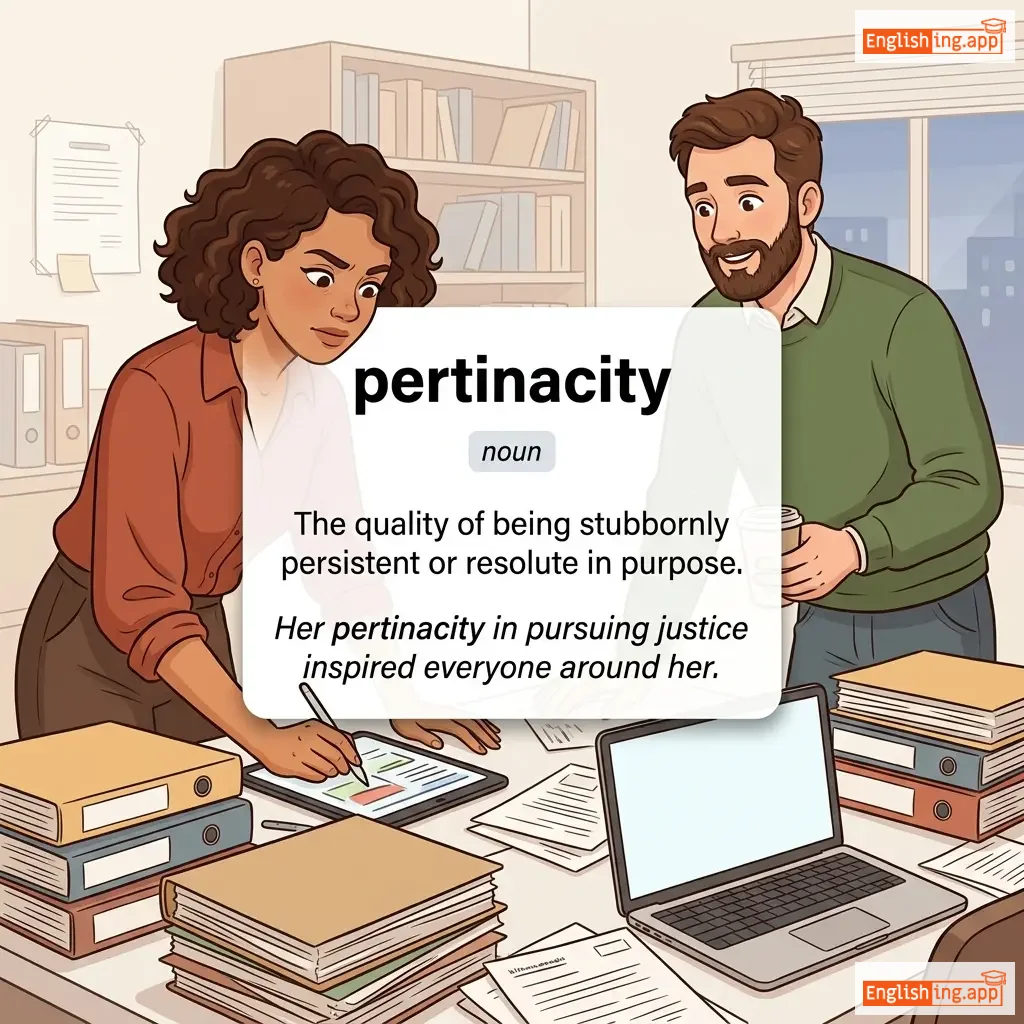
pertinacity definition card — visual illustration of the meaning
noun
/ˌpɜːrtɪˈnæsɪti/

The quality of being stubbornly persistent or resolute in purpose.

"Her pertinacity in pursuing justice inspired everyone around her."

adjective
/ˈpɜːrtɪnənt/

Relevant or applicable to a particular matter.

"She asked a pertinent question during the meeting."

noun
/ˈpɜːrtnəs/

boldness or forwardness in speech or behavior; sauciness

"Her pertness during the meeting surprised everyone."

verb
/pərˈtɜːrb/

To disturb or unsettle greatly in mind.

"The sudden noise perturbed the students during the exam."

noun
/ˌpɜːrtərˈbeɪʃn/

A state of anxiety, disturbance, or disorder.

"The announcement caused a perturbation in the financial markets."

adjective
/pərˈtɜːrbd/

feeling anxious, unsettled, or disturbed

"He looked perturbed after hearing the bad news."

noun
/pəˈruːzl/

The action of reading or examining something carefully.

"The contract was given to the lawyer for perusal."

verb
/pəˈruːz/

to read something carefully and thoroughly; sometimes used to mean to browse casually

"She sat down to peruse the contract before signing it."

verb
/pəˈveɪd/

to spread through and be present in every part of something

"The smell of fresh flowers pervaded the entire room."

noun
/pəˈveɪʒən/

the act of spreading through or being present everywhere in something

"There was a pervasion of hope throughout the community."

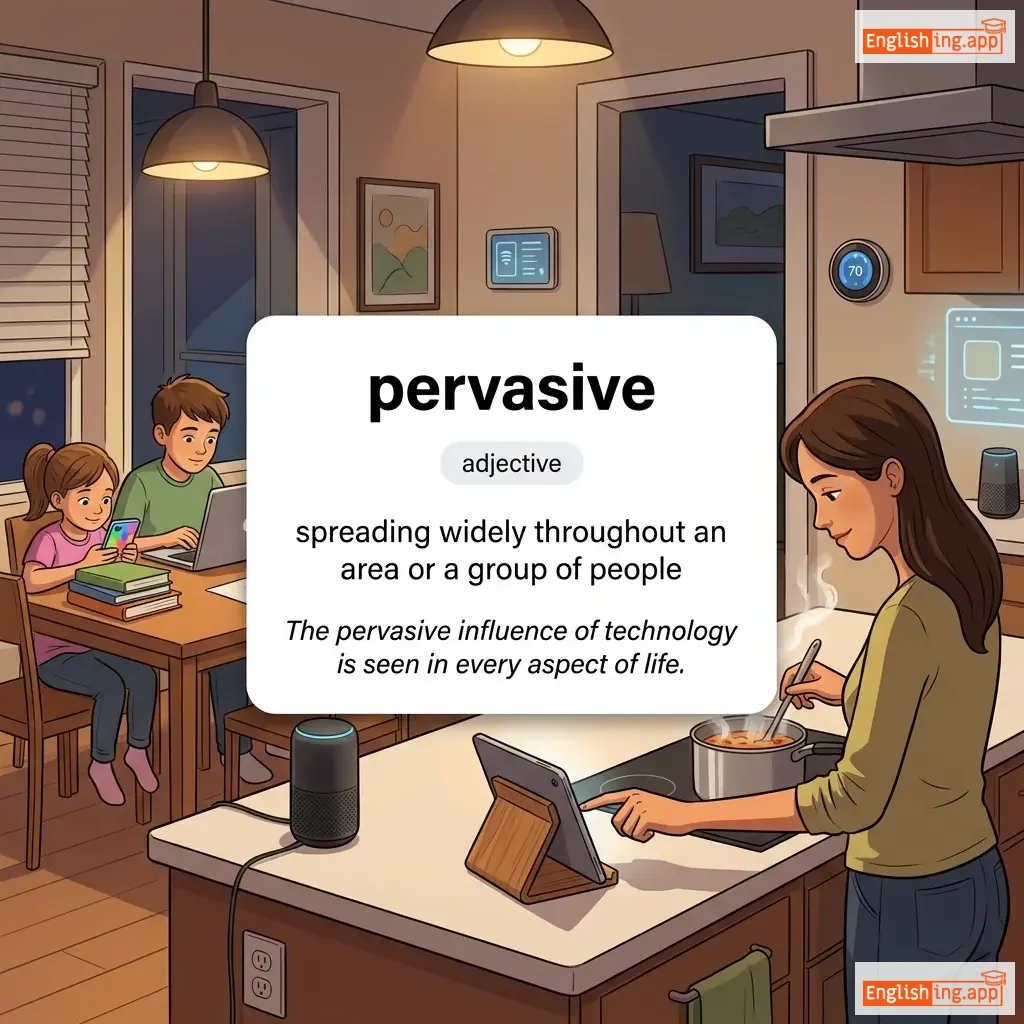
pervasive definition card — visual illustration of the meaning
adjective
/pərˈveɪsɪv/

spreading widely throughout an area or a group of people

"The pervasive influence of technology is seen in every aspect of life."

adjective
/pərˈvɜːrs/

showing a deliberate desire to behave in a way that is unreasonable, contrary, or unacceptable

"He took a perverse pleasure in upsetting his colleagues."

noun
/pərˈvɜːrʒən/

The act of distorting or corrupting the original meaning, purpose, or state of something.

"The regime’s censorship was seen as a perversion of free speech."

noun
/pərˈvɜːrsəti/

A deliberate and obstinate desire to behave in an unreasonable or unacceptable way.

"Out of sheer perversity, he refused to follow the simple instructions."

verb/noun
/pərˈvɜːrt/

As a verb: to distort the meaning or purpose of something; as a noun: a person with abnormal or immoral sexual behavior.

"He tried to pervert the truth to escape punishment."

adjective
/ˈpɜːrviəs/

Allowing water, air, or other substances to pass through; permeable.

"The soil here is pervious to rainwater."

noun
/ˈpesɪˌmɪzəm/

A tendency to see the worst aspect of things or believe the worst will happen.

"Her constant pessimism made it hard to stay optimistic."

noun
/ˈpes.ə.mɪst/

a person who tends to see the worst aspect of things or believes that the worst will happen; someone who lacks hope or confidence in the future

"Being a pessimist, he always expected the worst outcome."

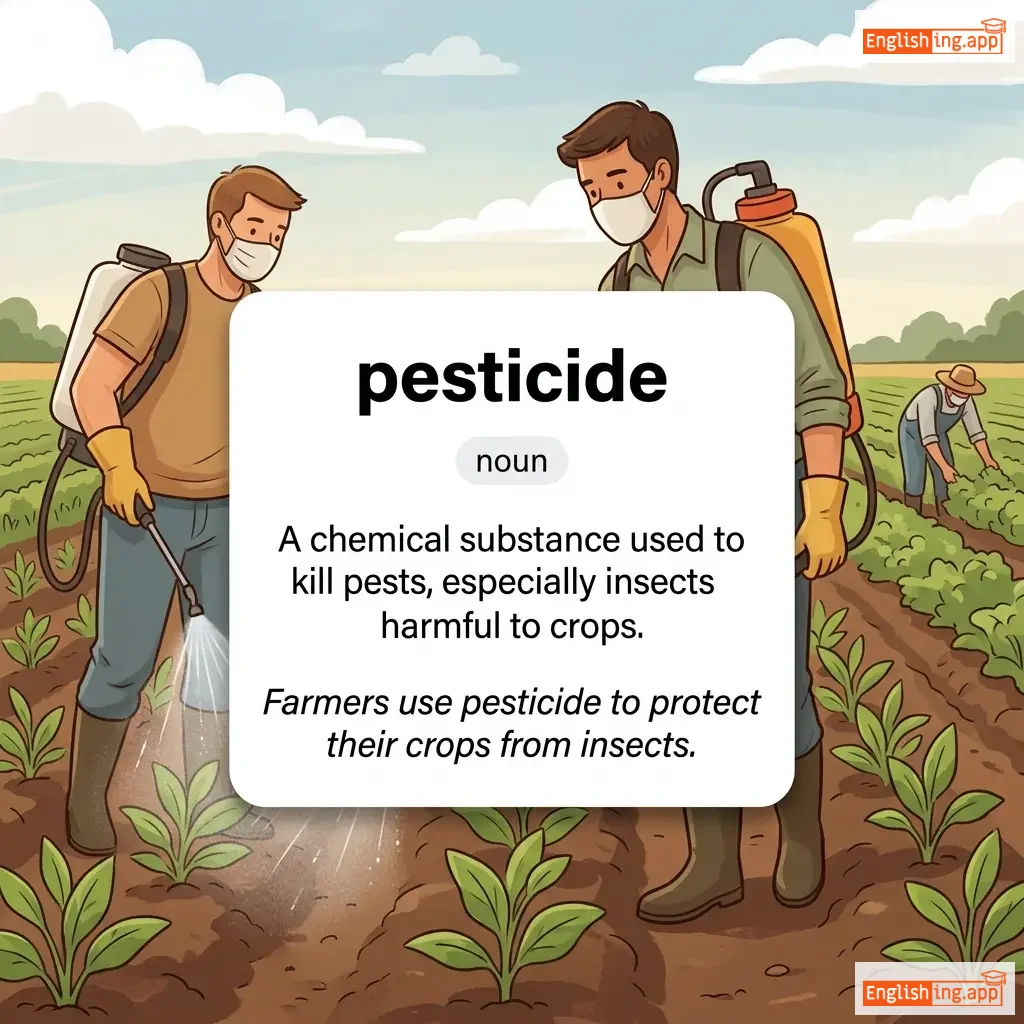
pesticide definition card — visual illustration of the meaning
noun
/ˈpɛstɪsaɪd/

A chemical substance used to kill pests, especially insects harmful to crops.

"Farmers use pesticide to protect their crops from insects."

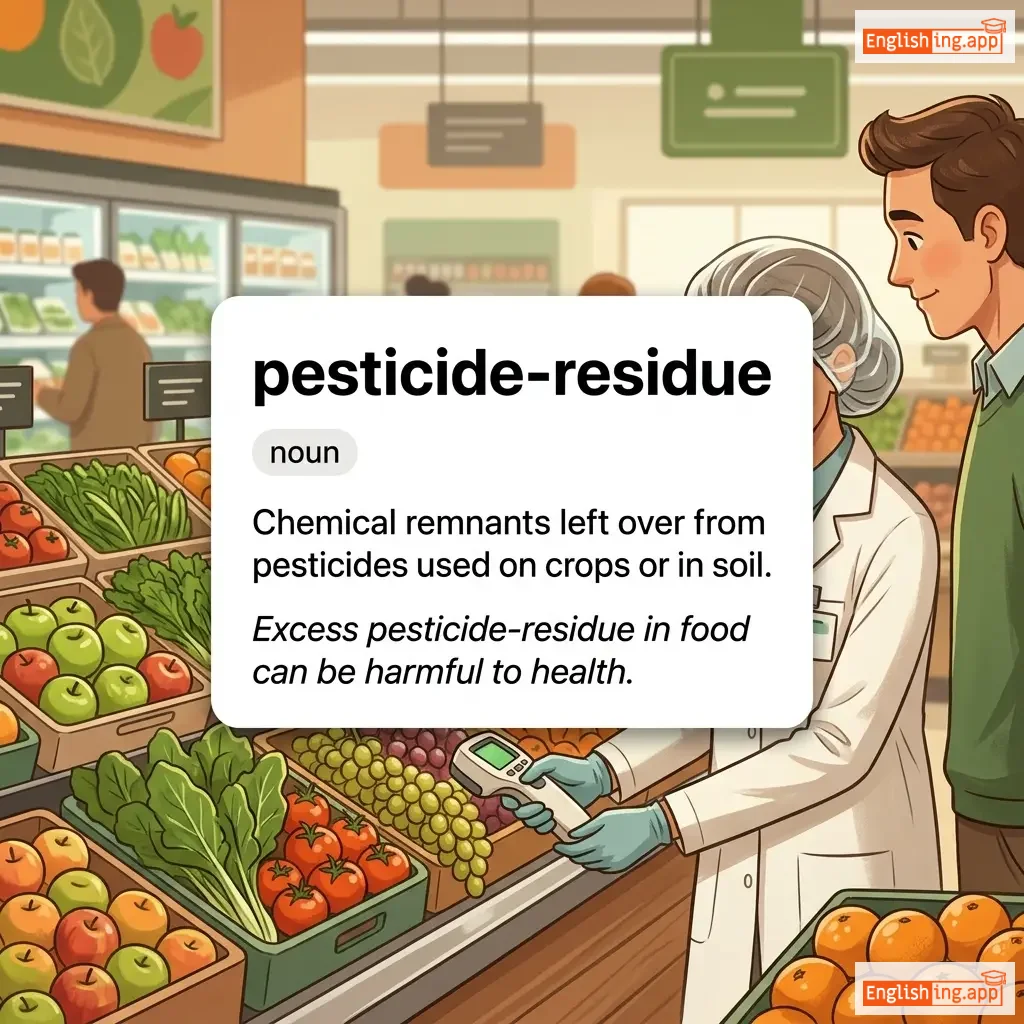
pesticide-residue definition card — visual illustration of the meaning
noun
/ˈpɛs.tɪ.saɪd ˈrɛz.ɪ.djuː/

Chemical remnants left over from pesticides used on crops or in soil.

"Excess pesticide-residue in food can be harmful to health."

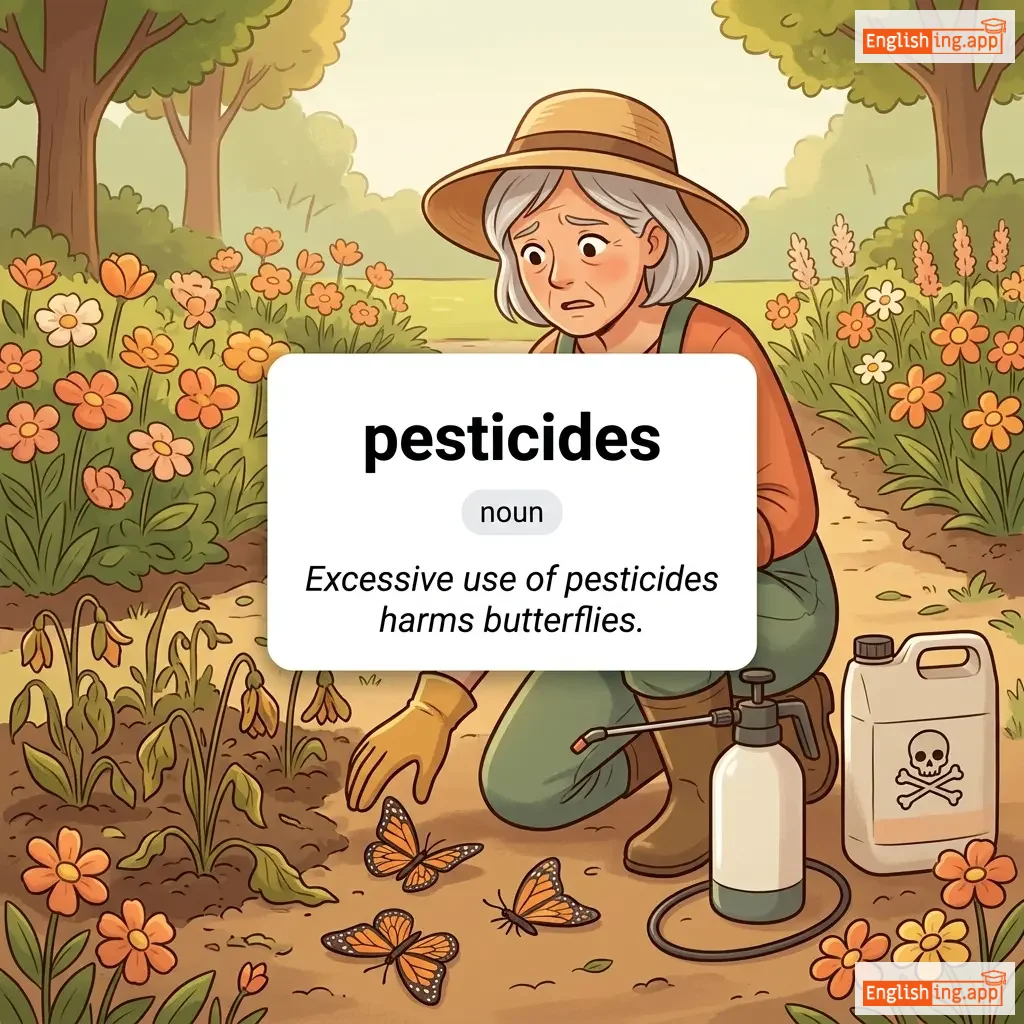
pesticides definition card — visual illustration of the meaning
noun
ˈpɛstɪsaɪdz

Chemical substances used to kill pests, but harmful to beneficial insects like butterflies.

"Excessive use of pesticides harms butterflies."

noun
/ˈpɛstɪləns/

A deadly or virulent epidemic disease that spreads rapidly.

"The medieval city was devastated by a pestilence."

adjective
/ˈpɛstɪlənt/

Causing or tending to cause death or destruction; harmful or pernicious.

"The pestilent atmosphere of the swamp made people sick."

adjective
/ˌpɛstɪˈlɛnʃəl/

Relating to or causing pestilence; very harmful, troublesome, or dangerous.

"The pestilential smell of the garbage filled the street."

noun
/ˈpɛsəl/

A heavy tool with a rounded end used for crushing or grinding substances in a mortar.

"She used a pestle to grind the spices."

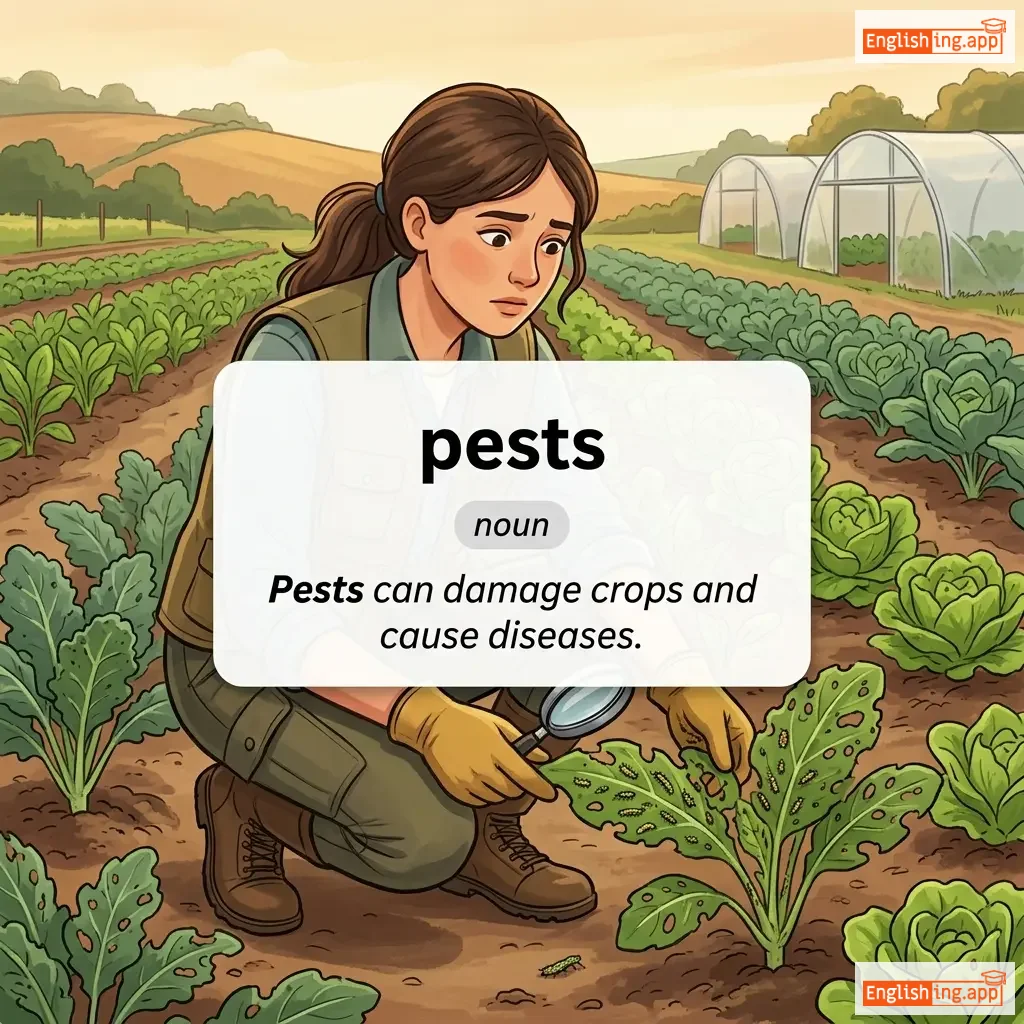
pests definition card — visual illustration of the meaning
🐛

pests

noun
pɛsts

Harmful or troublesome creatures, especially insects or small animals that damage crops, food, or living spaces.

"Pests can damage crops and cause diseases."

🐶

pet

noun
/pɛt/

a domesticated animal kept for companionship or pleasure

"My dog is my favorite pet."

🌼

Petal

noun
/ˈpetəl/

One of the colored segments of a flower that forms the corolla

"Each petal of the daisy was white with a yellow center."

📉

peter

verb
/ˈpiːtər/

to diminish gradually and come to an end; to fade or dwindle away

"The excitement of the event began to peter out after a few hours."

noun
/pəˈtɪʃən/

a formal written request, typically signed by many people, appealing to authority about a cause

"They signed a petition to improve road safety in the area."

verb
/ˈpɛtrɪfaɪ/

to make someone so frightened that they are unable to move or think; to turn into stone

"The loud noise petrified the little child."

noun
/ˈpɛtrəˌɡræf/

a description or representation of rocks, especially in detailed scientific writing

"The scientist studied the petrograph to understand the rock composition."

noun
/ˈpetɪkoʊt/

an undergarment worn by women under a dress or skirt

"She wore a white petticoat under her dress."

⚖️

pettifog

verb
/ˈpɛtɪˌfɒɡ/

to argue or quibble over trivial matters; to engage in petty, dishonest practices

"The lawyer was accused of trying to pettifog instead of addressing the real issue."

🪙

petty

adjective
/ˈpɛti/

Of little importance or trivial; also describes a person overly concerned with small or unimportant matters.

"She often gets upset over the most petty things."

noun
/ˈpɛtjʊləns/

The quality of being childishly sulky or bad-tempered.

"His petulance during the meeting annoyed everyone."

adjective
/ˈpɛtjʊlənt/

Childishly sulky or bad-tempered.

"The child became petulant when denied more candy."

🛡️

phalanx

noun
/ˈfeɪlæŋks/

A group of people or things arranged in a compact, close formation; also an ancient Greek military formation.

"A phalanx of reporters waited outside the courthouse."

noun
/ˈfænˌtæzəm/

an illusion, ghost, or figment of the imagination

"The child claimed to see a phantasm in the old house."

adjective
/ˌfæntæzməˈɡɒrɪkəl/

Having a fantastic, dreamlike, or surreal appearance, often shifting or illusory.

"The movie created a phantasmagorical vision of another world."

adjective
/ˌfærɪˈseɪɪkəl/

Excessively concerned with formal rules or outward show of morality, often in a hypocritical way.

"His pharisaical behavior made people doubt his sincerity."

noun
/ˈfærɪsiː/

A member of an ancient Jewish sect; by extension, a self-righteous or hypocritical person.

"He acted like a pharisee, judging others while ignoring his own faults."

noun
/ˌfɑːrməkəˈpiːə/

An official book listing medicinal drugs, their effects, and directions for use.

"The doctor referred to the pharmacopoeia to check the drug's proper dosage."

noun
/ˈfɑːrməsi/

A place where medicinal drugs are prepared and sold.

"I went to the pharmacy to buy antibiotics."

🔄

Phase

noun
/feɪz/

a distinct period or stage in a process of development

"We are in the final phase of the project."

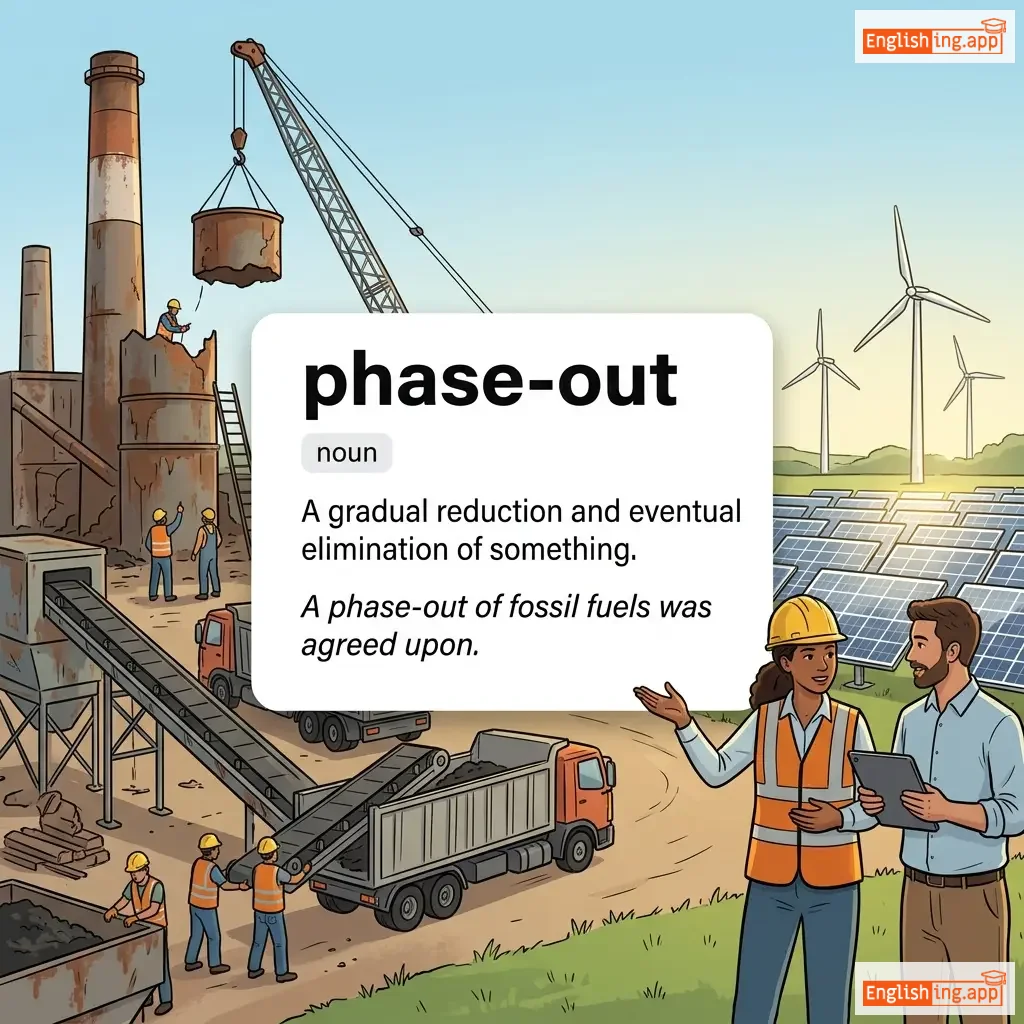
phase-out definition card — visual illustration of the meaning
noun
ˈfeɪz.aʊt

A gradual reduction and eventual elimination of something.

"A phase-out of fossil fuels was agreed upon."