Vocabularies

English Vocabulary Dictionary | Word Meanings, Definitions & Examples

adjective
/ˌɪməˈtɪəriəl/

Not important or relevant; lacking physical substance.

"The judge ruled that the argument was immaterial to the case."

adjective
/ˌɪməˈtjʊər/

Not fully developed; childish or lacking maturity.

"His immature behavior annoyed everyone at the meeting."

noun
/ˌɪməˈtjʊərəti/

the state of not being fully developed emotionally, mentally, or physically; lack of maturity

"His immaturity made it difficult for him to handle responsibility."

adjective
/ɪˈmɛʒərəbl/

Too great or extreme to be measured.

"Her kindness brought him immeasurable happiness."

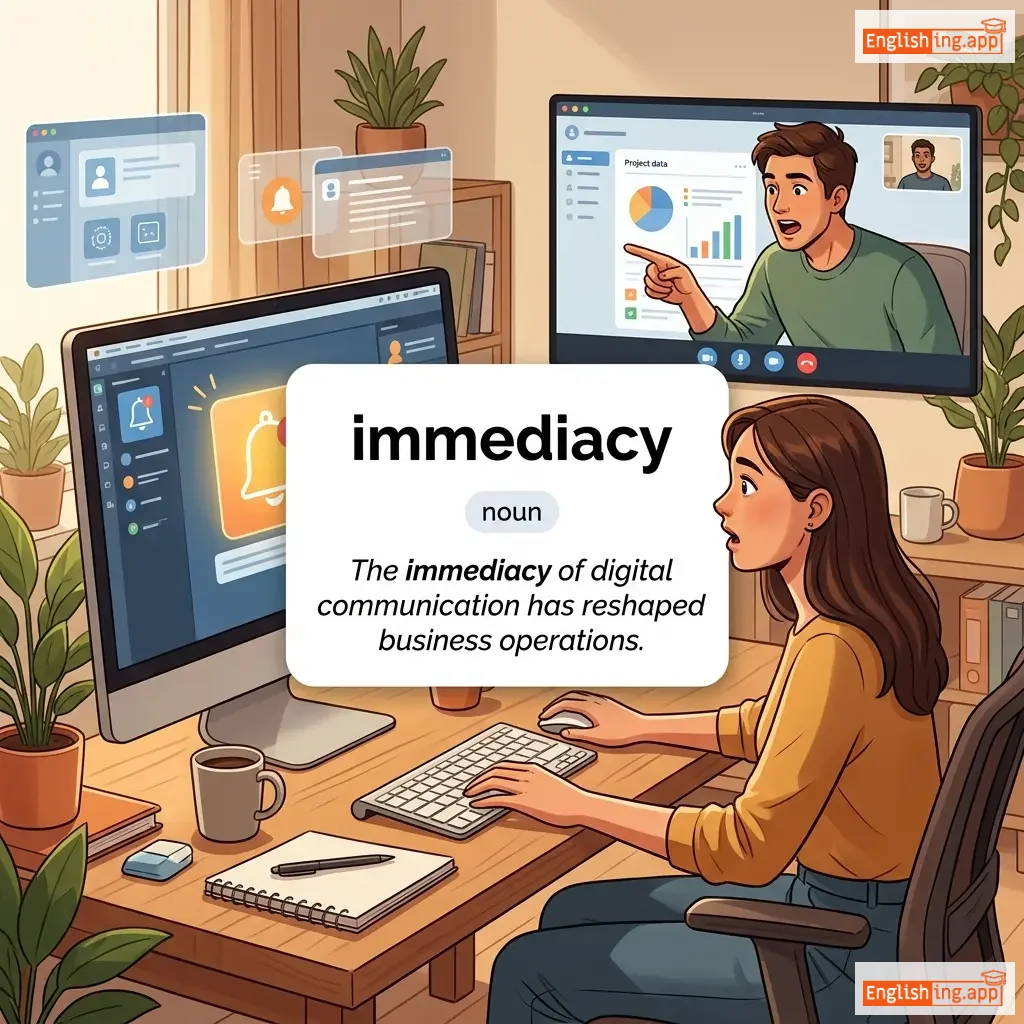
immediacy definition card — visual illustration of the meaning
noun
/ɪˈmiːdiəsi/

The quality of bringing one into direct and instant involvement with something, giving rise to a sense of urgency or excitement.

"The immediacy of digital communication has reshaped business operations."

adjective
/ɪˈmiːdiət/

happening or done without delay

"The doctor gave her immediate attention."

adverb
/ɪˈmiːdiətli/

at once; without delay

"She responded immediately to the emergency call."

adjective
/ˌɪməˈmɔːriəl/

Extending back beyond memory or record; ancient.

"The tradition has been followed since time immemorial."

adjective
/ɪˈmɛns/

Extremely large or great in size, amount, or degree.

"The project required an immense amount of effort."

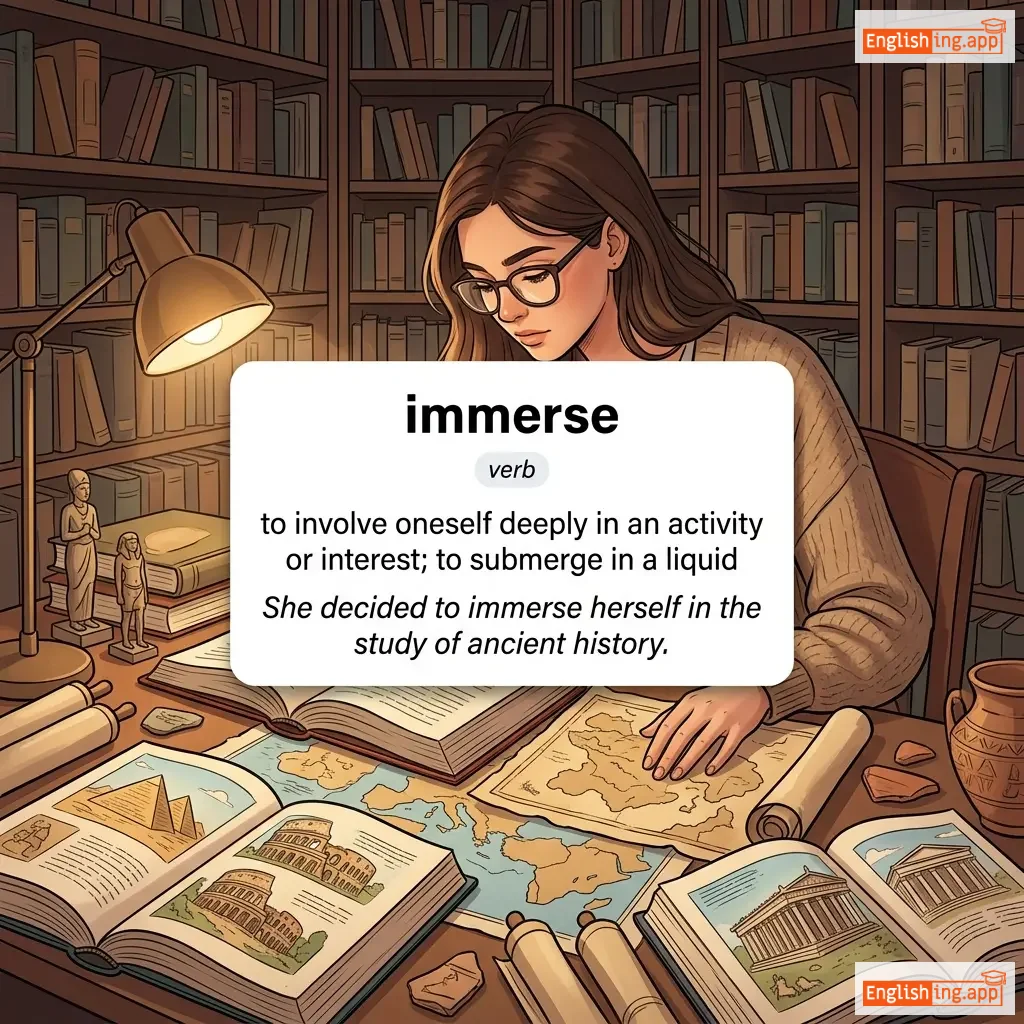
immerse definition card — visual illustration of the meaning
verb
/ɪˈmɜːrs/

to involve oneself deeply in an activity or interest; to submerge in a liquid

"She decided to immerse herself in the study of ancient history."

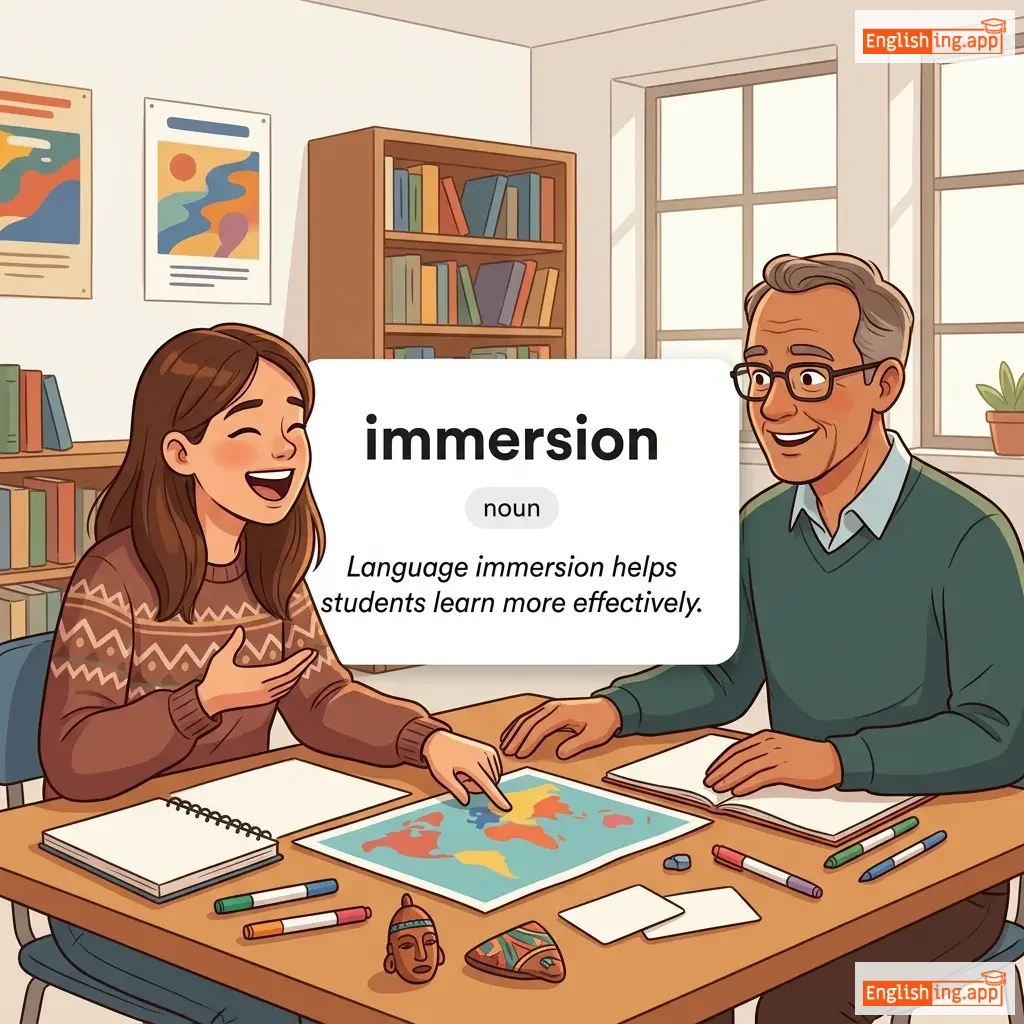
immersion definition card — visual illustration of the meaning
noun
/ɪˈmɜːrʒən/

the act of deeply involving oneself in something; the state of being completely surrounded by liquid

"Language immersion helps students learn more effectively."

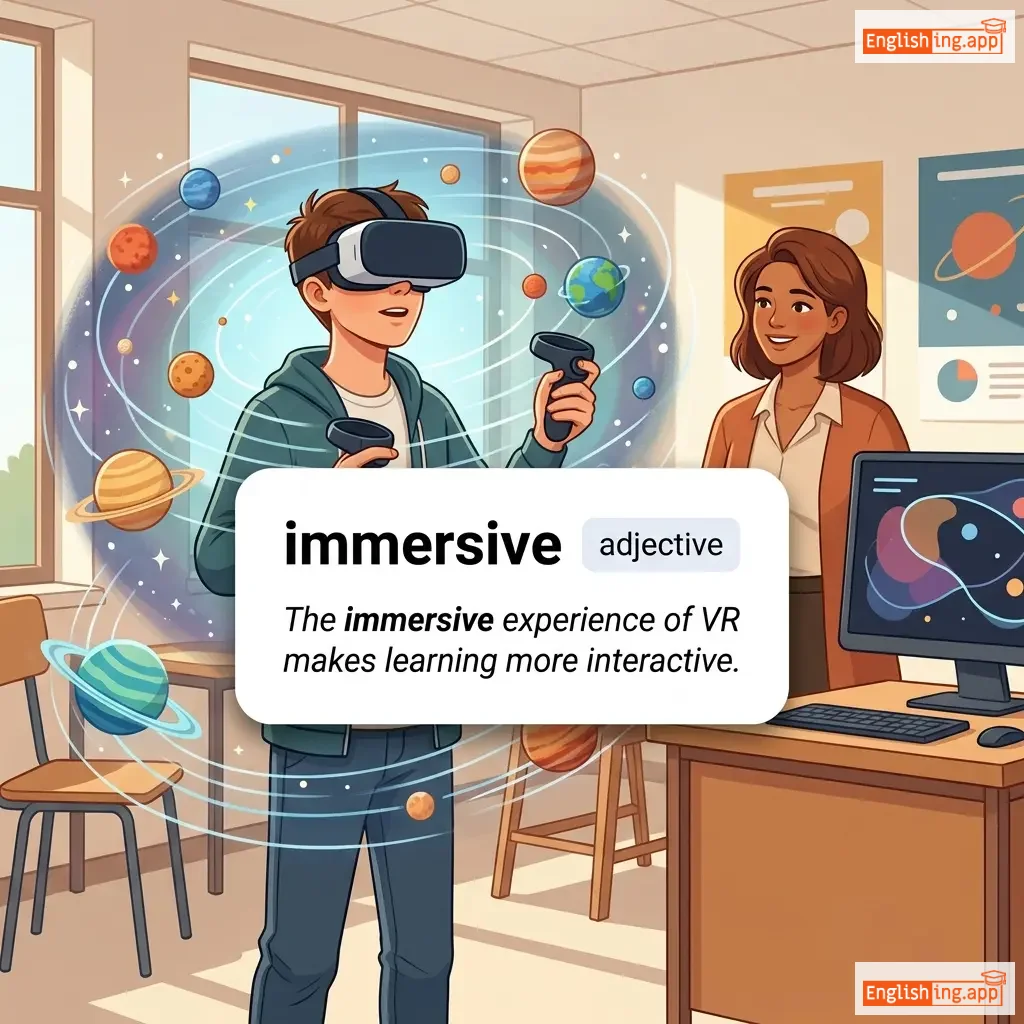
immersive definition card — visual illustration of the meaning
adjective
ɪˈmɜː.sɪv

Providing, involving, or characterized by deep absorption or immersion in something.

"The immersive experience of VR makes learning more interactive."

noun
/ˈɪmɪɡrənt/

a person who comes to live permanently in a foreign country

"The city has welcomed many new immigrants this year."

verb
/ˈɪmɪɡreɪt/

to come to live permanently in a foreign country

"He immigrated to Canada five years ago."

noun
/ˌɪmɪˈɡreɪʃən/

the action of coming to live permanently in a foreign country

"Immigration policies vary from country to country."

noun
/ˈɪmɪnəns/

the state of being about to happen

"The imminence of the storm forced people to take shelter."

adjective
/ˈɪmɪnənt/

About to happen; likely to occur very soon.

"Dark clouds signaled that a storm was imminent."

🛢️

immiscible

adjective
/ɪˈmɪsəbl/

Describes liquids that do not mix together.

"Oil and water are immiscible liquids."

adjective
/ɪˈmoʊbəl/

unable to move or be moved

"After the accident, he was immobile for weeks."

noun
/ˌɪməʊˈbɪləti/

The state of being unable to move.

"After the accident, she suffered from immobility in her legs."

adjective
/ɪˈmɒdərət/

excessive; beyond reasonable limits

"He has an immoderate love for sweets."

adjective
/ɪˈmɒdɪst/

lacking humility or decency; excessively proud or improper

"His immodest remarks offended the audience."

noun
/ɪˈmɒdəsti/

lack of modesty or decency; behavior or attitude that is overly bold or improper

"The article was criticized for its tone of immodesty."

verb
/ˈɪməleɪt/

To kill or sacrifice, especially by burning.

"The protesters threatened to immolate themselves in front of the building."

adjective
/ɪˈmɒrəl/

Not conforming to accepted standards of morality; unethical or wicked.

"He was fired for his immoral behavior."

noun
/ˌɪməˈrælɪti/

the quality of being immoral; behavior that violates accepted moral standards

"The community condemned the immorality of the corrupt officials."

♾️

immortal

adjective; noun
/ɪˈmɔːrtl/

living forever; never dying; lasting forever in fame or memory

"Legends often describe heroes as immortal beings who never die."

noun
/ˌɪmɔːrˈtæləti/

the state of living forever; eternal life or lasting fame beyond death

"Many ancient cultures believed that heroes could achieve immortality through great deeds."

verb
/ɪˈmɔːrtəlaɪz/

to preserve the memory of someone or something forever

"The statue was built to immortalize the hero’s sacrifice."

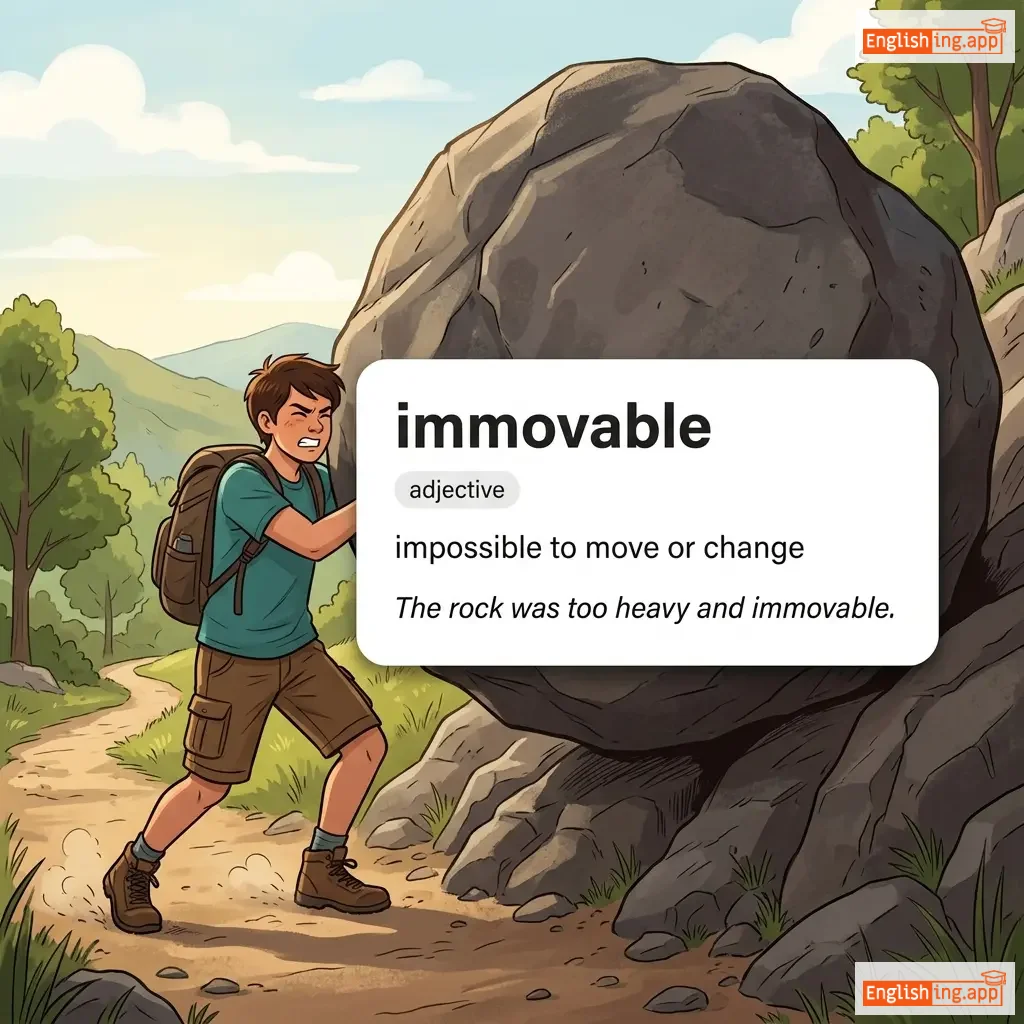
immovable definition card — visual illustration of the meaning
adjective
/ɪˈmuːvəbl/

impossible to move or change

"The rock was too heavy and immovable."

🛡️

immune

adjective
/ɪˈmjuːn/

protected from disease or from the effects of something

"Children who are vaccinated are immune to many diseases."

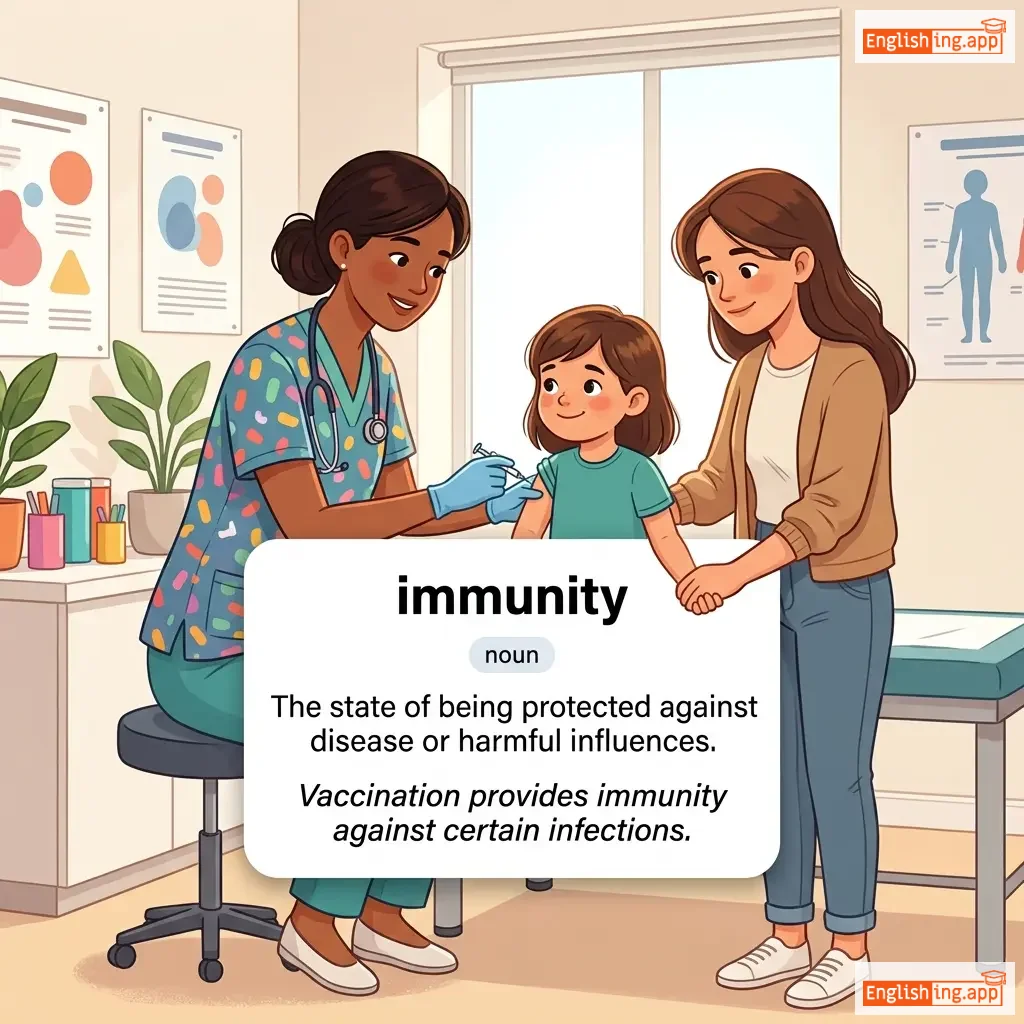
immunity definition card — visual illustration of the meaning
🛡️

immunity

noun
/ɪˈmjuːnɪti/

The state of being protected against disease or harmful influences.

"Vaccination provides immunity against certain infections."

verb
/ɪˈmjʊər/

to confine or enclose someone against their will

"The prisoner was immured in a dark cell."

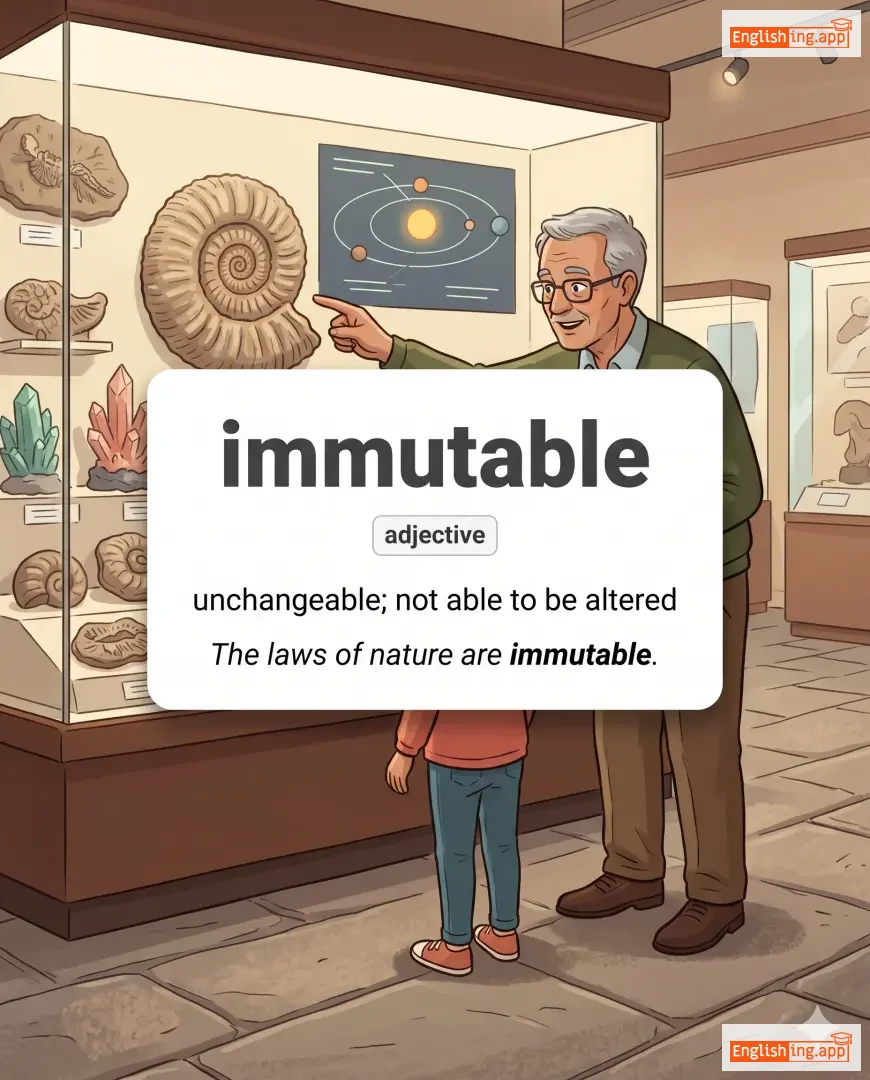
immutable definition card — visual illustration of the meaning
adjective
/ɪˈmjuːtəbl/

unchangeable; not able to be altered

"The laws of nature are immutable."

😈

imp

noun
/ɪmp/

a small mischievous devil or sprite; a playful troublemaker

"The child was acting like a little imp, hiding his toys everywhere."

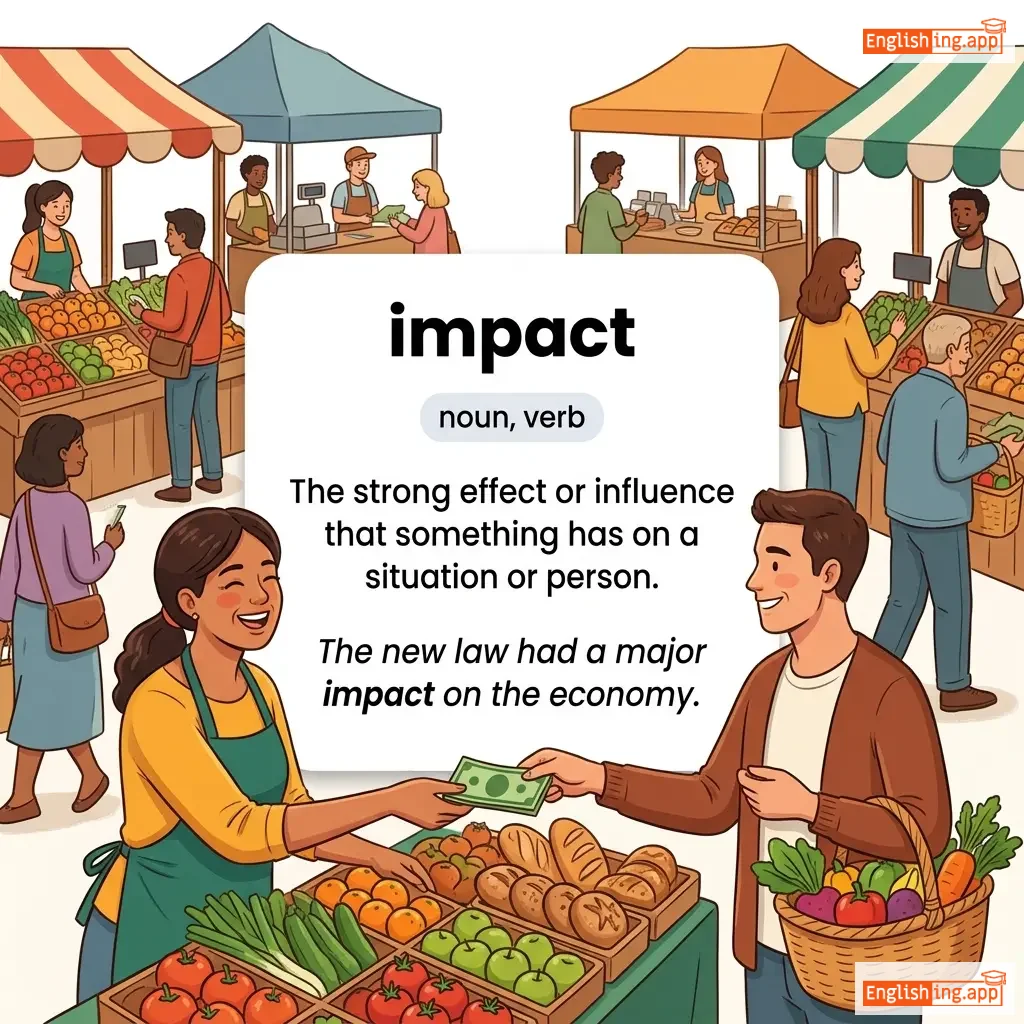
impact definition card — visual illustration of the meaning
noun, verb
/ˈɪmpækt/

The strong effect or influence that something has on a situation or person.

"The new law had a major impact on the economy."

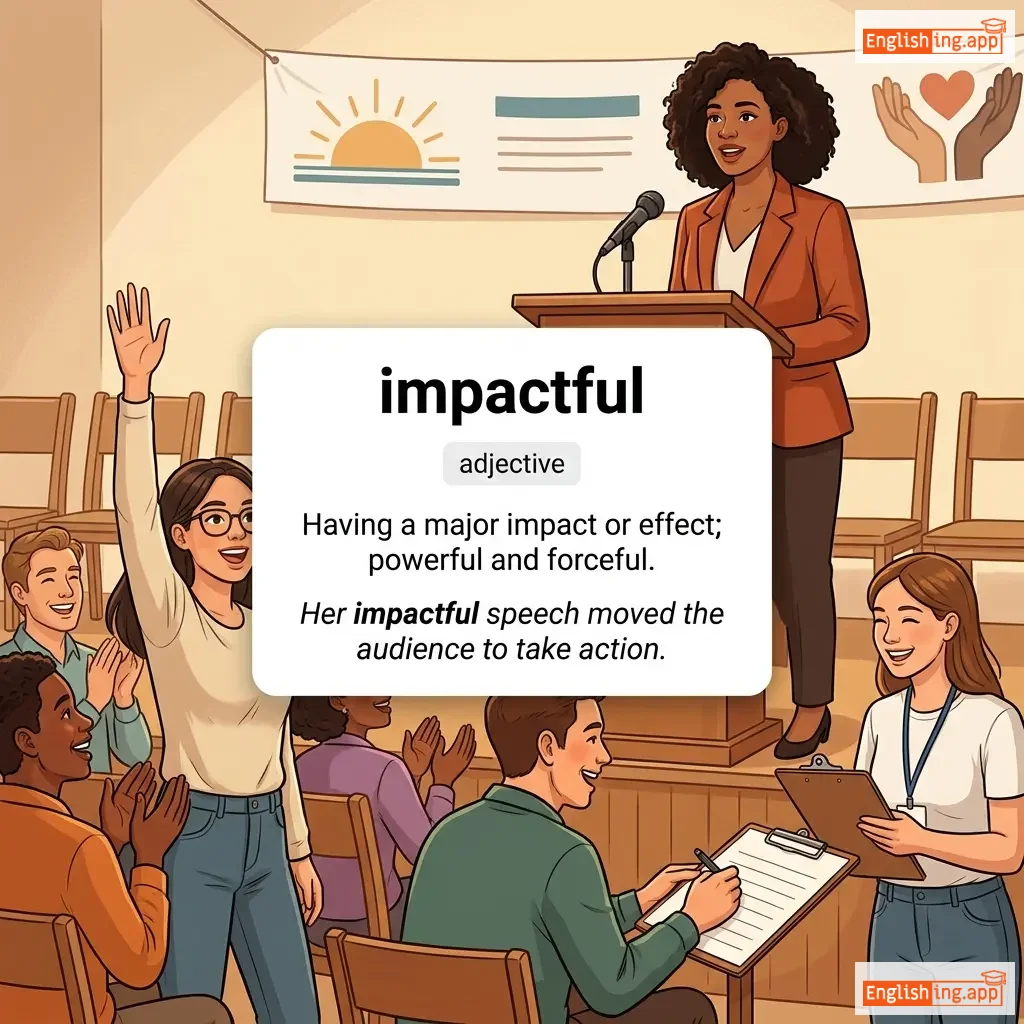
impactful definition card — visual illustration of the meaning
adjective
/ˈɪmpæktfʊl/

Having a major impact or effect; powerful and forceful.

"Her impactful speech moved the audience to take action."

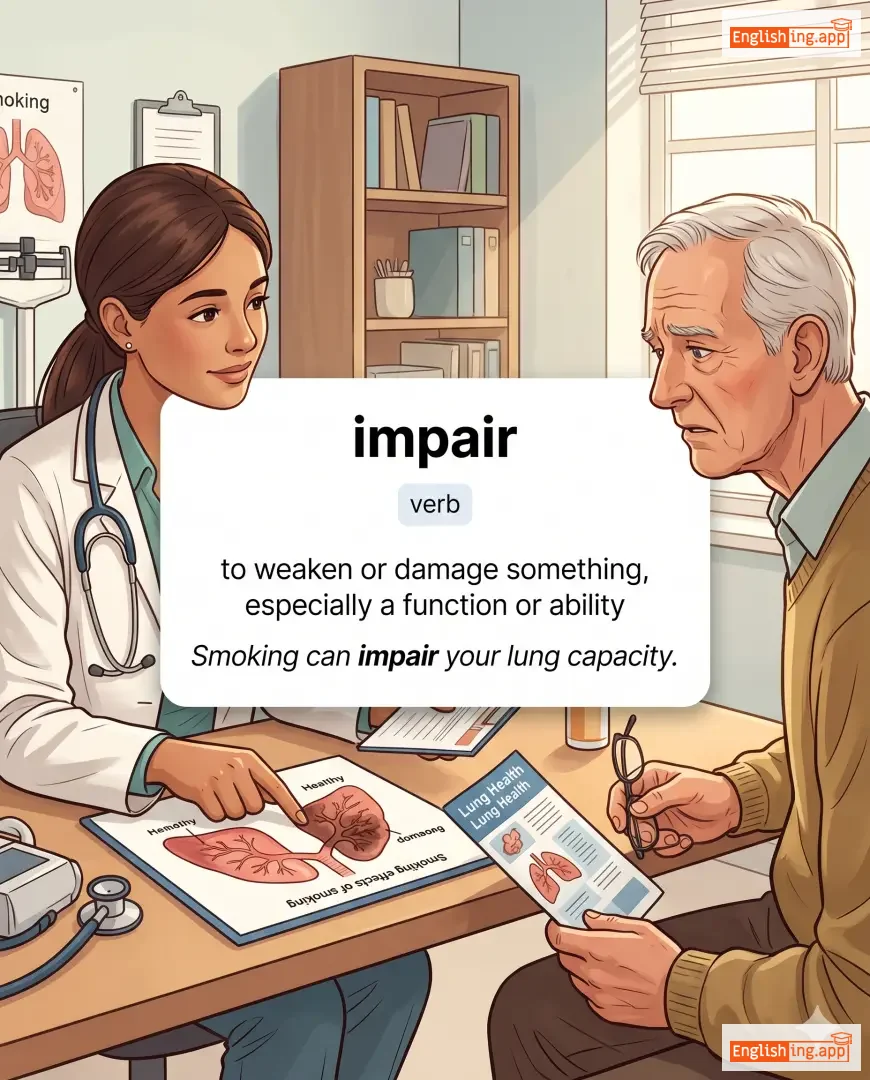
impair definition card — visual illustration of the meaning
verb
/ɪmˈpɛər/

to weaken or damage something, especially a function or ability

"Smoking can impair your lung capacity."

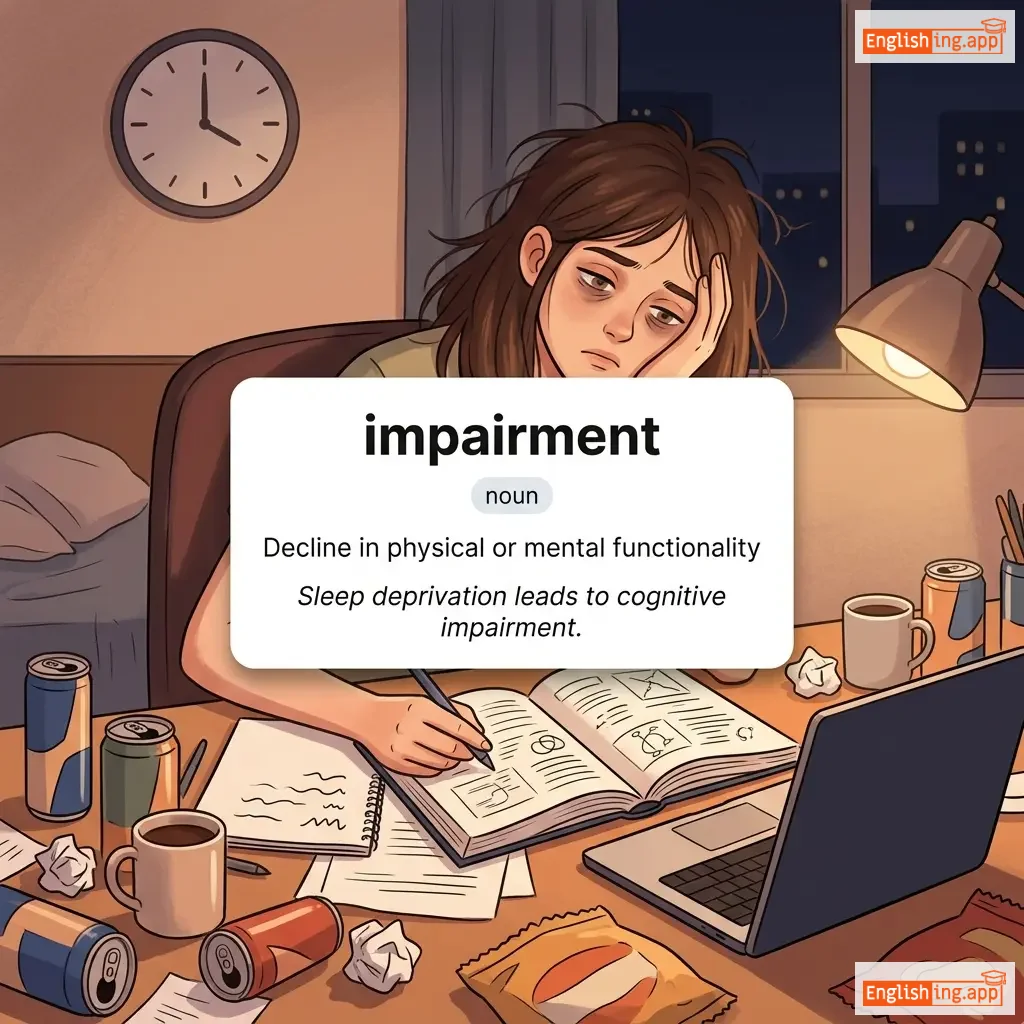
impairment definition card — visual illustration of the meaning
noun
ɪmˈpɛərmənt

Decline in physical or mental functionality

"Sleep deprivation leads to cognitive impairment."

🗡️

impale

verb
/ɪmˈpeɪl/

to pierce or fix something with a sharp object

"The knight was impaled by the enemy’s spear."

🌫️

impalpable

adjective
/ɪmˈpælpəbəl/

unable to be felt by touch; difficult to grasp or understand

"There was an impalpable sense of fear in the room."

verb
/ɪmˈpɑːrt/

to make information known; to bestow or communicate

"The teacher imparted valuable knowledge to her students."

adjective
/ɪmˈpɑːrʃəl/

Treating all rivals or disputants equally; fair and just.

"The judge remained impartial throughout the trial."

adjective
/ɪmˈpæsəbəl/

Impossible to travel along or over.

"The road became impassable after the heavy snowfall."

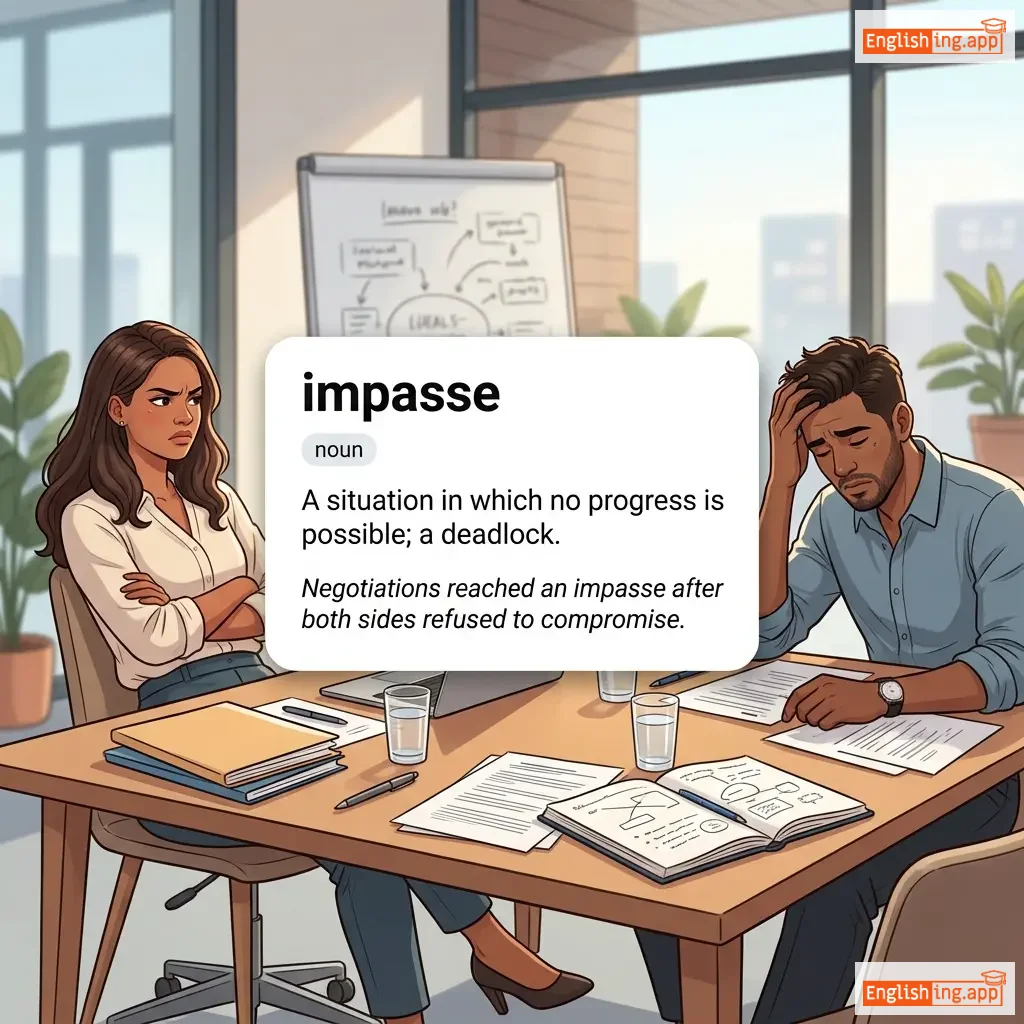
impasse definition card — visual illustration of the meaning
noun
/ˈɪmpæs/

A situation in which no progress is possible; a deadlock.

"Negotiations reached an impasse after both sides refused to compromise."

adjective
/ɪmˈpæsɪbəl/

Incapable of suffering or feeling pain (used mainly in theological or philosophical contexts).

"Some philosophers argue that God is impassible and cannot experience human emotions."

adjective
/ɪmˈpæʃənd/

Filled with or showing great emotion.

"She gave an impassioned speech about human rights."

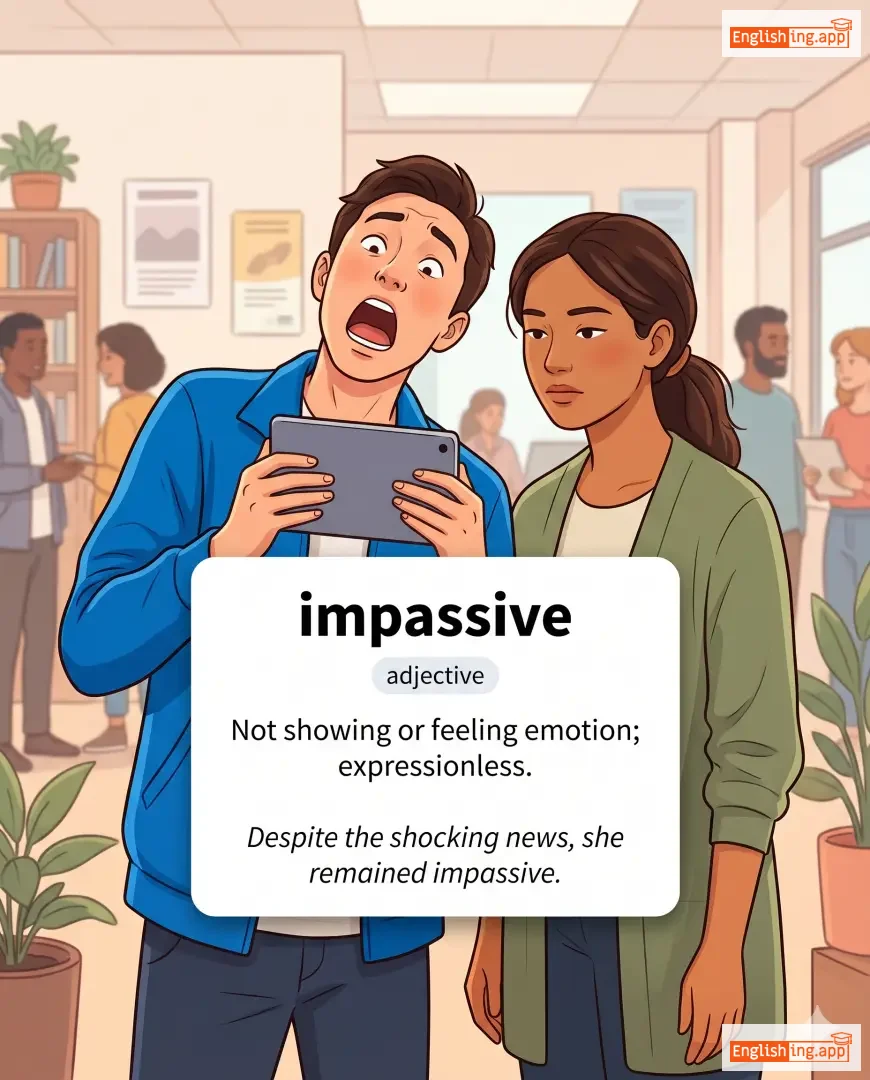
impassive definition card — visual illustration of the meaning
adjective
/ɪmˈpæsɪv/

Not showing or feeling emotion; expressionless.

"Despite the shocking news, she remained impassive."

noun
/ɪmˈpeɪʃəns/

The state of being quickly irritated or unable to wait calmly.

"His impatience grew as the meeting dragged on."

adjective
/ɪmˈpeɪʃənt/

Not able to wait calmly; restless and eager for something to happen.

"She grew impatient while waiting in the long queue."