Vocabularies

English Vocabulary Dictionary | Word Meanings, Definitions & Examples

verb
/diːˈkoʊd/

to convert a coded message into a readable form; to interpret meaning

"The software can decode the hidden message within seconds."

adjective
/ˌdeɪ.kɒlˈteɪ/

of a woman's dress or top, cut low so as to reveal the neck and upper chest

"She wore a decollete gown to the party."

noun
/ˌdiː.kɒmpəˈzɪʃən/

the process of decaying or breaking down into simpler parts

"The decomposition of leaves enriches the soil."

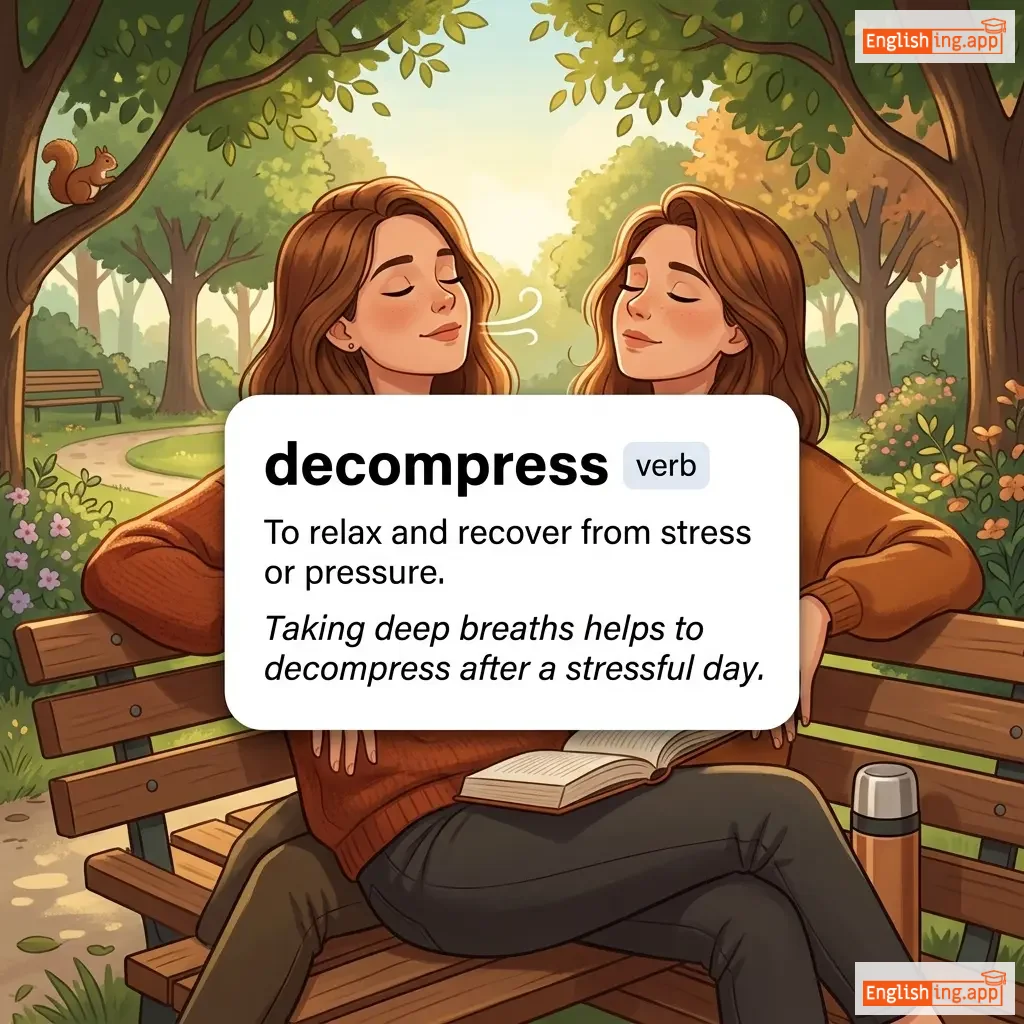
decompress definition card — visual illustration of the meaning
verb
/ˌdiː.kəmˈprɛs/

To relax and recover from stress or pressure.

"Taking deep breaths helps to decompress after a stressful day."

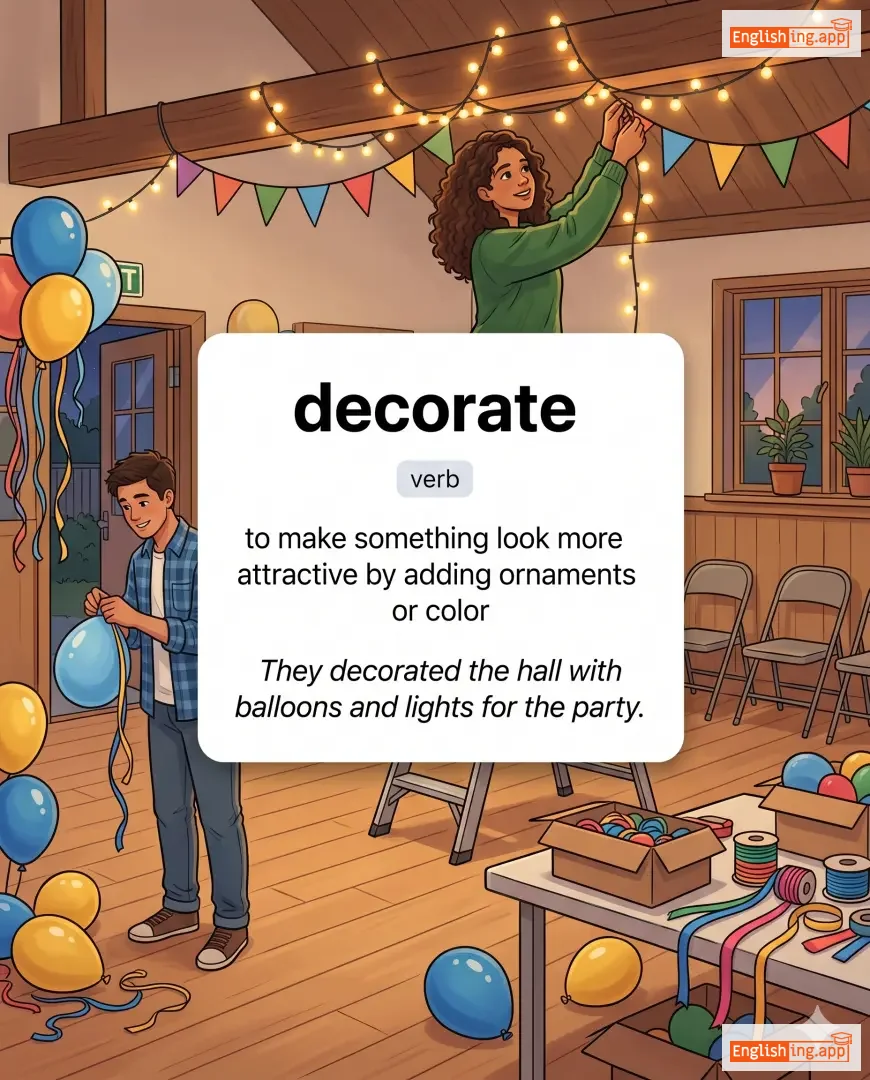
decorate definition card — visual illustration of the meaning
verb
/ˈdɛkəreɪt/

to make something look more attractive by adding ornaments or color

"They decorated the hall with balloons and lights for the party."

noun
/ˌdek.əˈreɪ.ʃən/

the process or art of decorating something; ornamental items used to beautify

"The Christmas decoration transformed the ordinary room into a festive wonderland."

adjective
/ˈdekərəs/

showing proper and polite behavior; marked by good taste

"The audience gave a decorous applause after the performance."

Decorum definition card — visual illustration of the meaning
noun
/dɪˈkɔːrəm/

behavior in keeping with good taste and propriety

"The students maintained decorum during the ceremony."

adjective
/dɪˈkɔːrəs/

characterized by propriety, good taste, and proper manners

"She maintained a decourous silence during the ceremony."

🦆

decoy

noun/verb
/ˈdiːkɔɪ/

something or someone used to lure or mislead

"The hunters used a wooden duck as a decoy."

⬇️

decrease

verb/noun
/ˈdiːkriːs/ (noun), /dɪˈkriːs/ (verb)

To become or make something smaller or fewer in number, amount, or degree.

"The population of the town has decreased over the years."

noun/verb
/dɪˈkriː/

an official order or command, often by authority

"The king issued a decree banning hunting in the forest."

🏚️

decrepit

adjective
/dɪˈkrɛpɪt/

worn out or weakened by age or neglect

"The decrepit old house was on the verge of collapse."

noun
/dɪˈkrɛpɪˌtjuːd/

the state of being old, weak, and worn out

"The once-great empire fell into decrepitude."

📢

decry

verb
/dɪˈkraɪ/

to publicly criticize or express strong disapproval of something

"Many activists decry the destruction of the rainforest."

decryption definition card — visual illustration of the meaning
noun
/dɪˈkrɪp.ʃən/

The process of converting encrypted information back to its original form

"Decryption of sensitive files requires a secure key."

verb
/ˈdɛdɪkeɪt/

to devote time, effort, or oneself to a particular purpose or person

"She dedicated her life to helping the poor."

adjective
/ˈdɛdɪˌkeɪtɪd/

devoted to a cause, task, or purpose

"She is a dedicated teacher who goes above and beyond for her students."

dedication definition card — visual illustration of the meaning
noun
/ˌdɛdɪˈkeɪʃən/

the quality of being committed to a task or purpose

"Her dedication to her studies earned her top grades."

🕵️

deduce

verb
/dɪˈdjuːs/

to reach a conclusion by reasoning or inference

"From the evidence, the detective deduced that the suspect was lying."

adjective
/dɪˈdjuːsəbl/

able to be deduced; possible to be inferred

"The solution is deducible from the data provided."

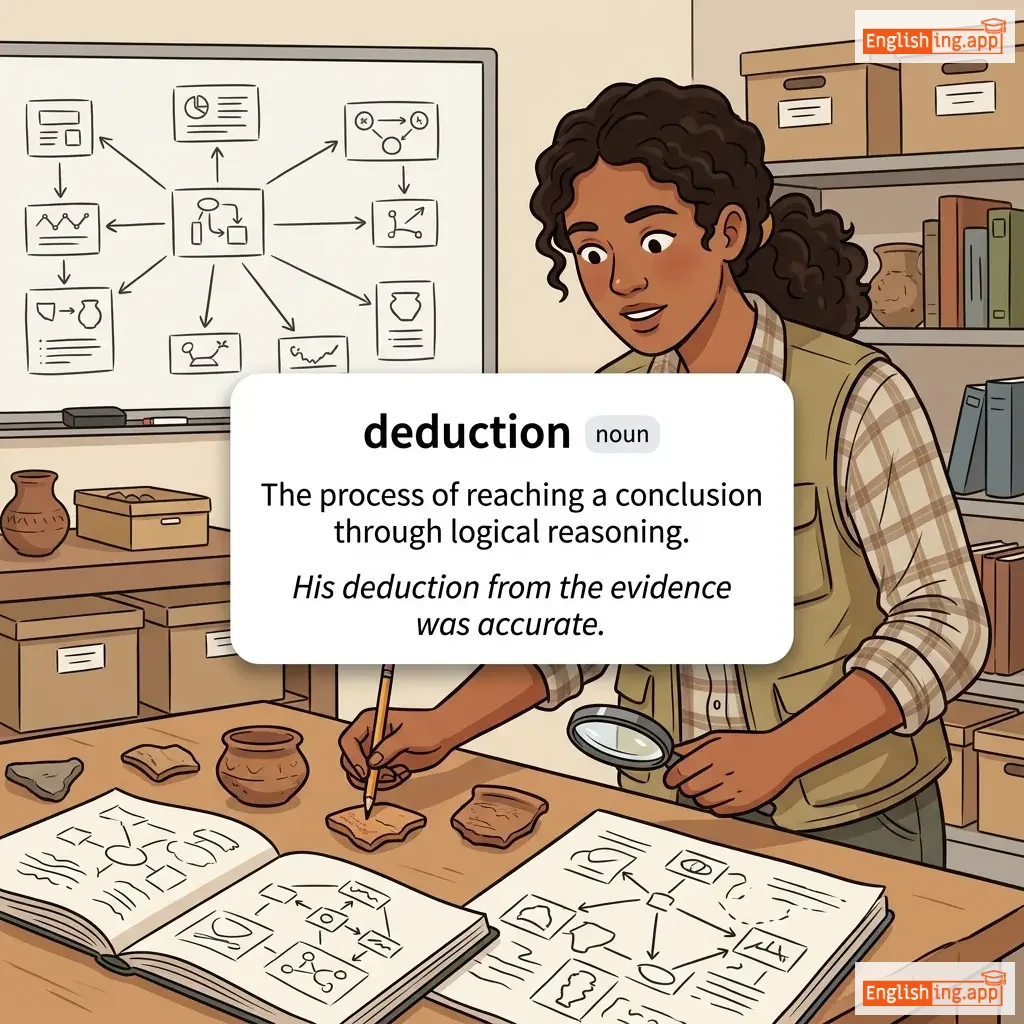
deduction definition card — visual illustration of the meaning
noun
/dɪˈdʌk.ʃən/

The process of reaching a conclusion through logical reasoning.

"His deduction from the evidence was accurate."

🤝

Deed

noun
/diːd/

an action, especially a good or evil one

"His deed of kindness will never be forgotten."

⚖️

deem

verb
/diːm/

to regard or consider in a specified way

"The project was deemed a success by the board."

🌊

deep

adjective
/diːp/

extending far down from the top or surface; profound or intense

"The lake is very deep in the middle."

noun
/diːp ˈkʌlər/

a rich, intense, or dark shade of any color

"The artist used deep colours to create a dramatic effect."

deep sea definition card — visual illustration of the meaning
noun
/diːp siː/

The deep parts of the sea or ocean, typically beyond the continental shelf.

"Many deep-sea creatures produce bioluminescence for survival."

❤️

Deeply

adverb
/ˈdiːpli/

to a great depth, extent, or intensity

"She was deeply moved by the speech."

🦌

Deer

noun
/dɪr/

a graceful wild animal with long legs and antlers, often living in forests

"A deer ran across the road suddenly."

🖊️

deface

verb
/dɪˈfeɪs/

to spoil the surface or appearance of something, especially by writing or drawing on it

"The vandals defaced the wall with graffiti."

verb
/ˈdiːfælˌkeɪt/

to misuse or embezzle money that one is responsible for

"The accountant was accused of defalcating company funds."

noun
/ˌdɛfəˈmeɪʃən/

the act of damaging someone's reputation by making false statements

"The newspaper was sued for defamation of character."

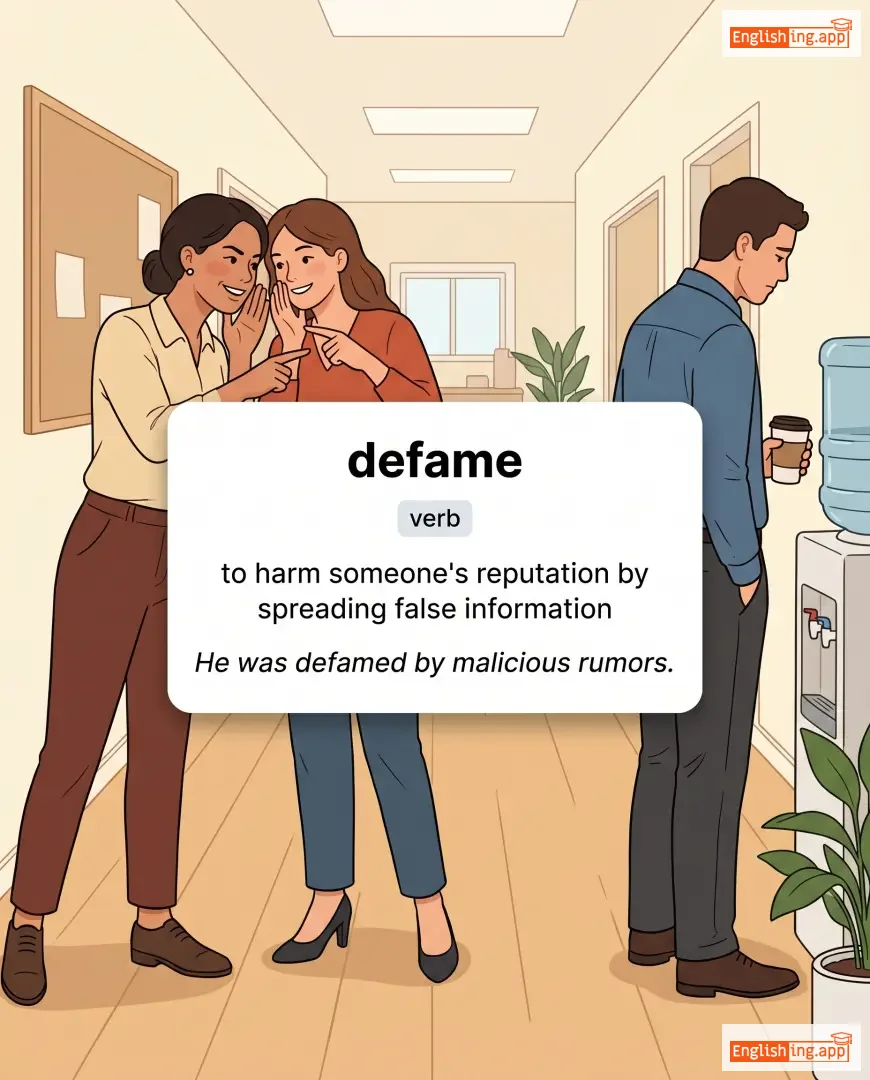
defame definition card — visual illustration of the meaning
verb
/dɪˈfeɪm/

to harm someone's reputation by spreading false information

"He was defamed by malicious rumors."

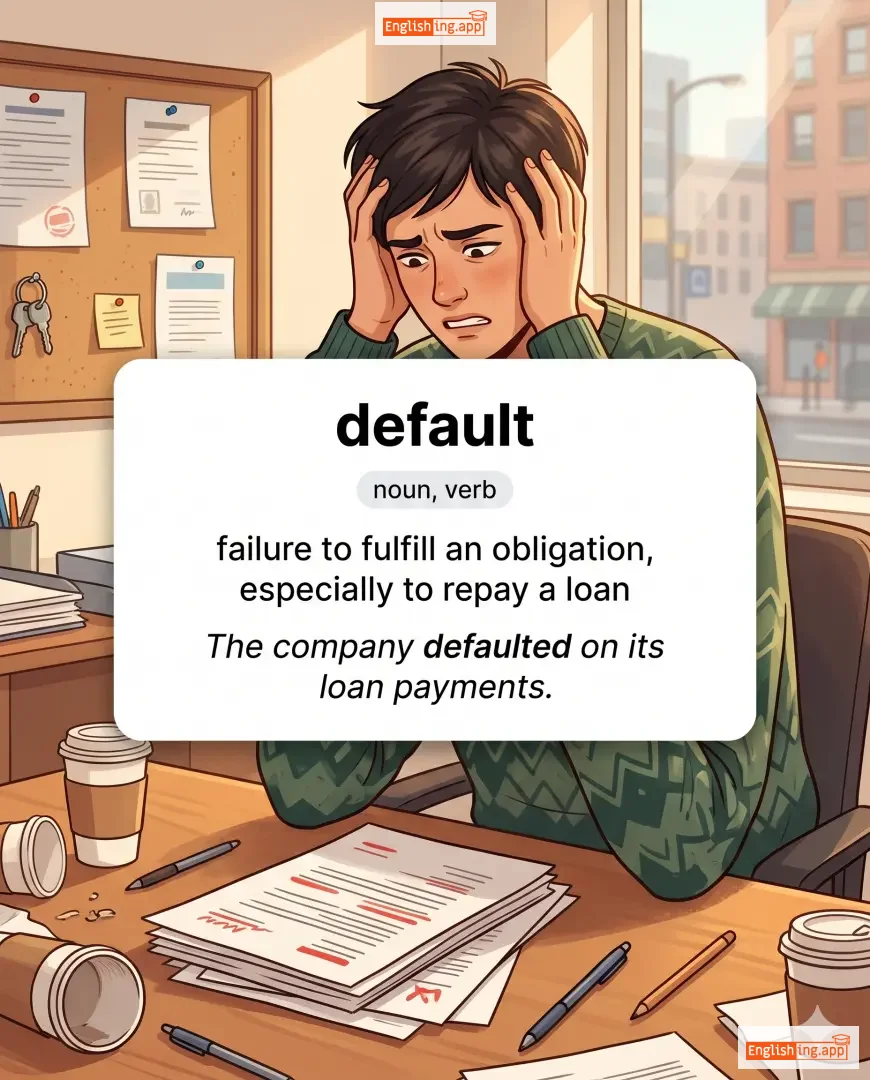
default definition card — visual illustration of the meaning
⚠️

default

noun, verb
/dɪˈfɔːlt/

failure to fulfill an obligation, especially to repay a loan

"The company defaulted on its loan payments."

verb
/dɪˈfiːt/

to win a victory over someone or something in a competition or battle

"Our team defeated their rivals in the final match."

noun, adjective
/dɪˈfiːtɪst/

A person who expects or is excessively ready to accept failure; showing a tendency to expect defeat.

"His defeatist attitude discouraged the rest of the team."

⚠️

Defect

noun, verb
/ˈdiːfɛkt/ (noun), /dɪˈfɛkt/ (verb)

A shortcoming, imperfection, or flaw; or to abandon a cause or group for another.

"The engineer found a defect in the software code."

🏃‍♂️

defection

noun
/dɪˈfɛkʃən/

The act of abandoning one’s country, cause, or group in favor of another.

"The politician’s defection shocked his supporters."

adjective
/dɪˈfektɪv/

having faults or defects; imperfect

"The defective product was returned to the store."

🛡️

Defence

noun
/dɪˈfɛns/

The act of protecting or guarding against attack, harm, or criticism.

"The castle walls were built for defence against invaders."

⚔️

defend

verb
/dɪˈfɛnd/

To protect someone or something from harm or attack.

"The lawyer worked hard to defend her client."

noun
/dɪˈfɛndənt/

An individual, company, or institution sued or accused in a court of law.

"The defendant pleaded not guilty to the charges."

🛡️

defender

noun
/dɪˈfɛndər/

a person who protects someone or something from harm or attack

"The defender blocked the shot and saved the goal."

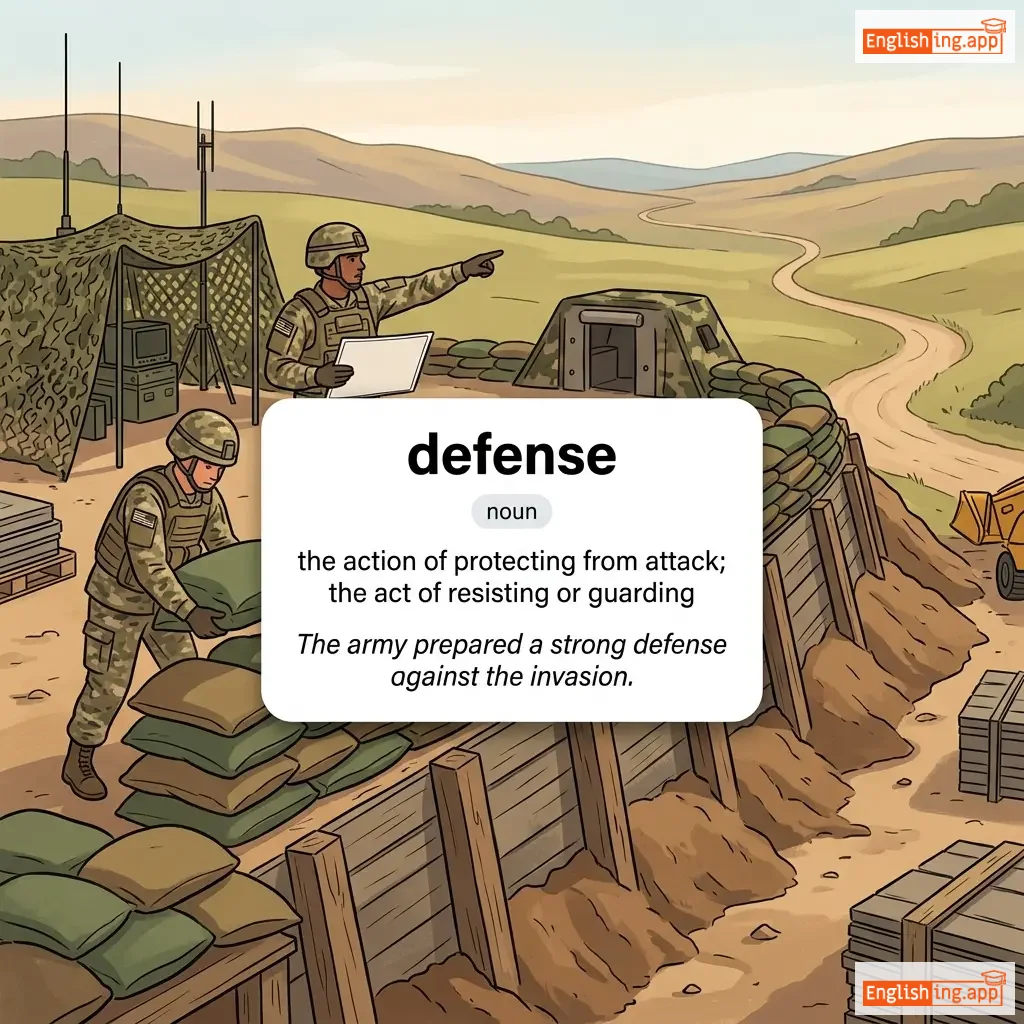
defense definition card — visual illustration of the meaning
🛡️

defense

noun
/dɪˈfɛns/

the action of protecting from attack; the act of resisting or guarding

"The army prepared a strong defense against the invasion."

🛡️

defensible

adjective
/dɪˈfɛnsəbəl/

Capable of being protected against attack or criticism; justifiable.

"Her decision was legally defensible."

🛡️

Defensive

adjective
/dɪˈfɛnsɪv/

Intended to protect or defend; behaving in a way to guard against criticism or attack.

"He became defensive when asked about his mistake."

verb
/dɪˈfɜːr/

To postpone or delay; to yield to someone else's judgment or opinion.

"The meeting was deferred until next week."

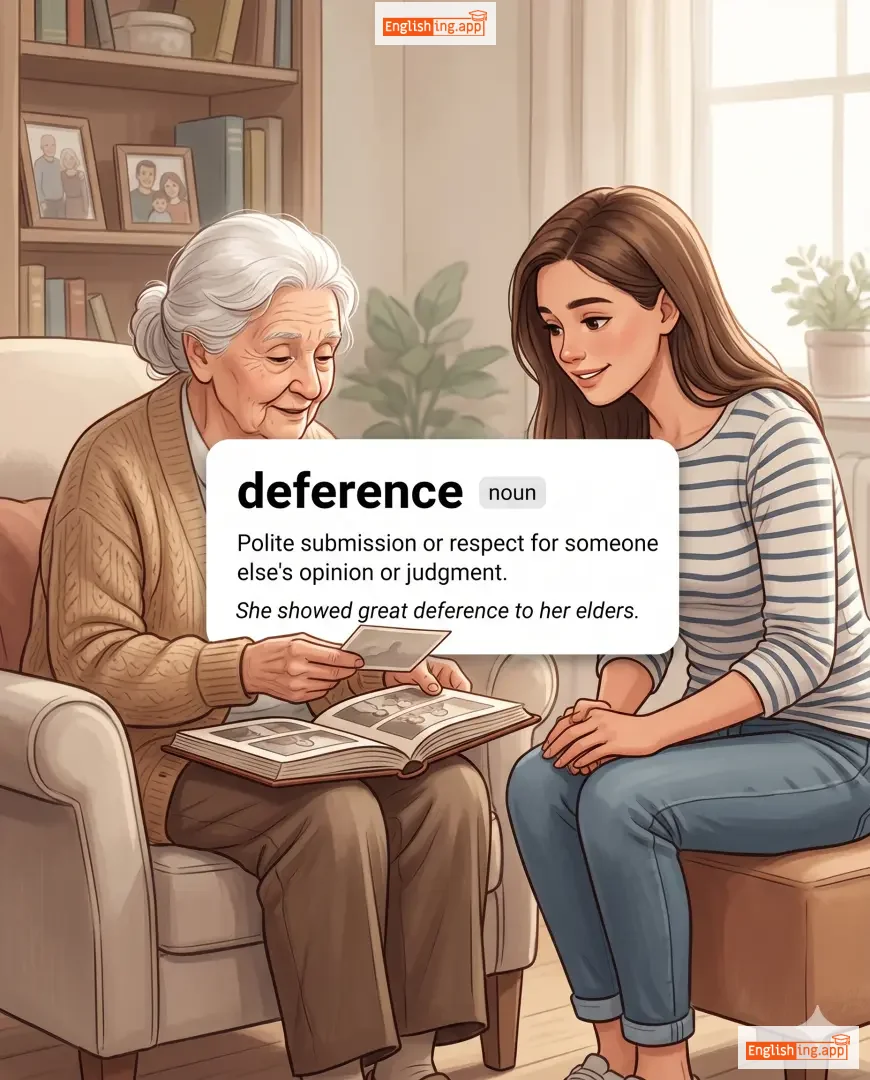
deference definition card — visual illustration of the meaning
noun
/ˈdɛfərəns/

Polite submission or respect for someone else's opinion or judgment.

"She showed great deference to her elders."

adjective
/ˌdɛfəˈrɛnʃəl/

Showing or expressing respect and high regard.

"He was always deferential toward his teachers."

noun
/dɪˈfaɪəns/

Open resistance or bold disobedience.

"The protest was an act of defiance against injustice."