English Vocabulary Dictionary | Word Meanings, Definitions & Examples
gloomy; depressing; causing sadness or despair
"The weather was dismal with heavy rain and dark clouds."
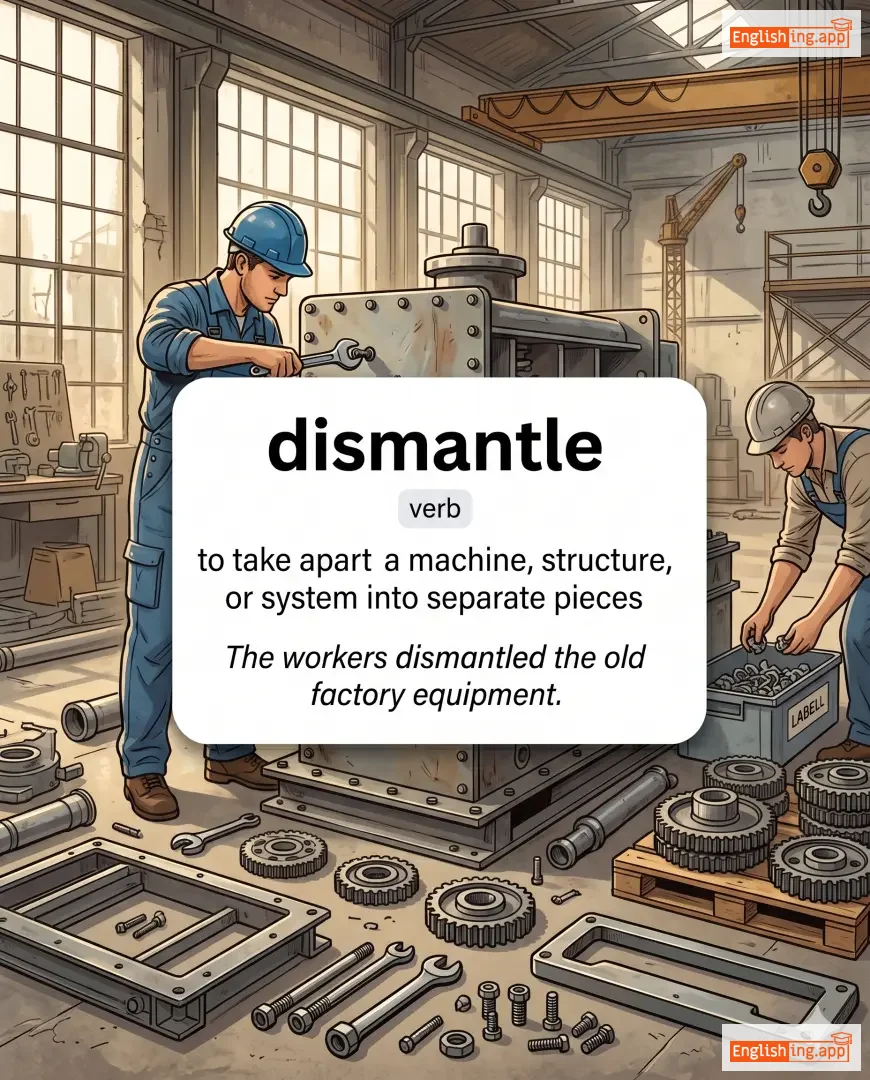
to take apart a machine, structure, or system into separate pieces
"The workers dismantled the old factory equipment."
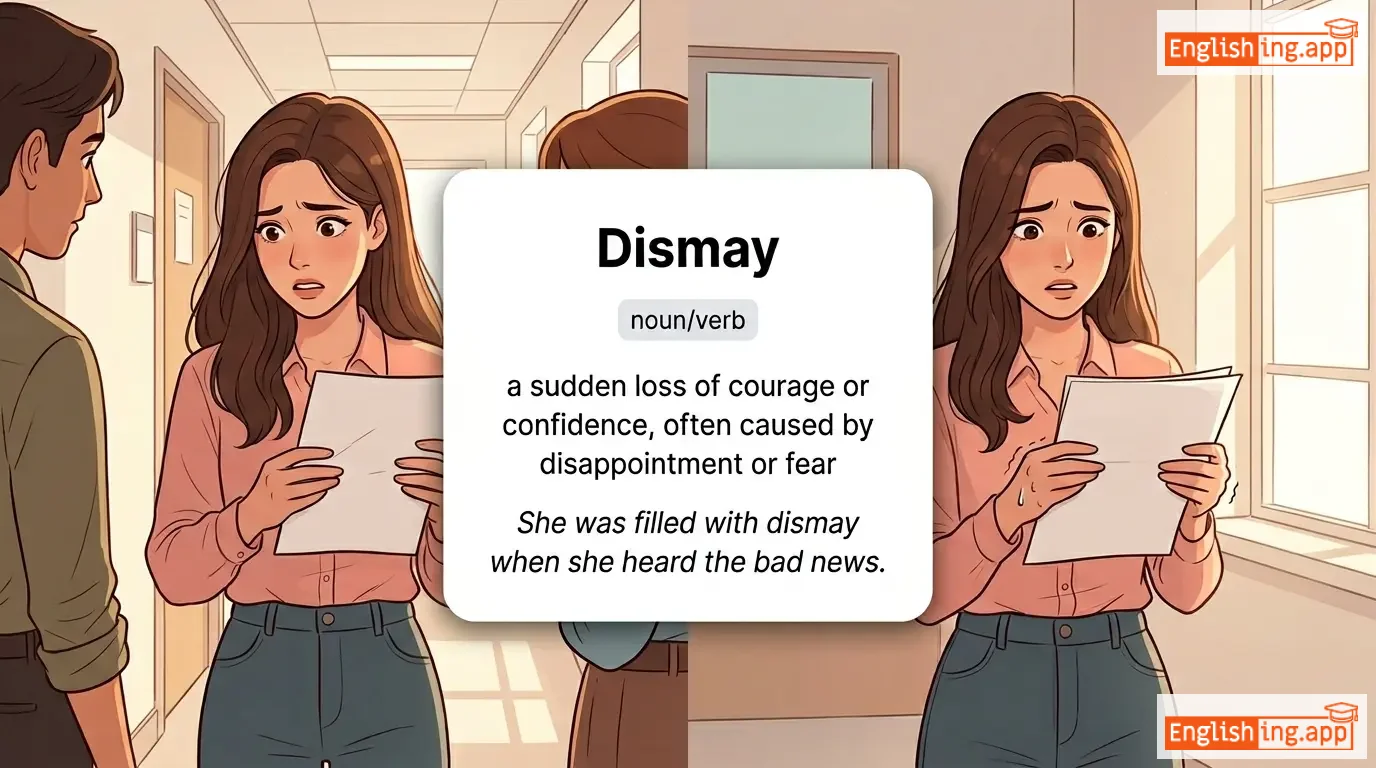
a sudden loss of courage or confidence, often caused by disappointment or fear
"She was filled with dismay when she heard the bad news."
to cut or tear the limbs from a body; to divide into separate parts
"The king ordered his enemies to be dismembered."
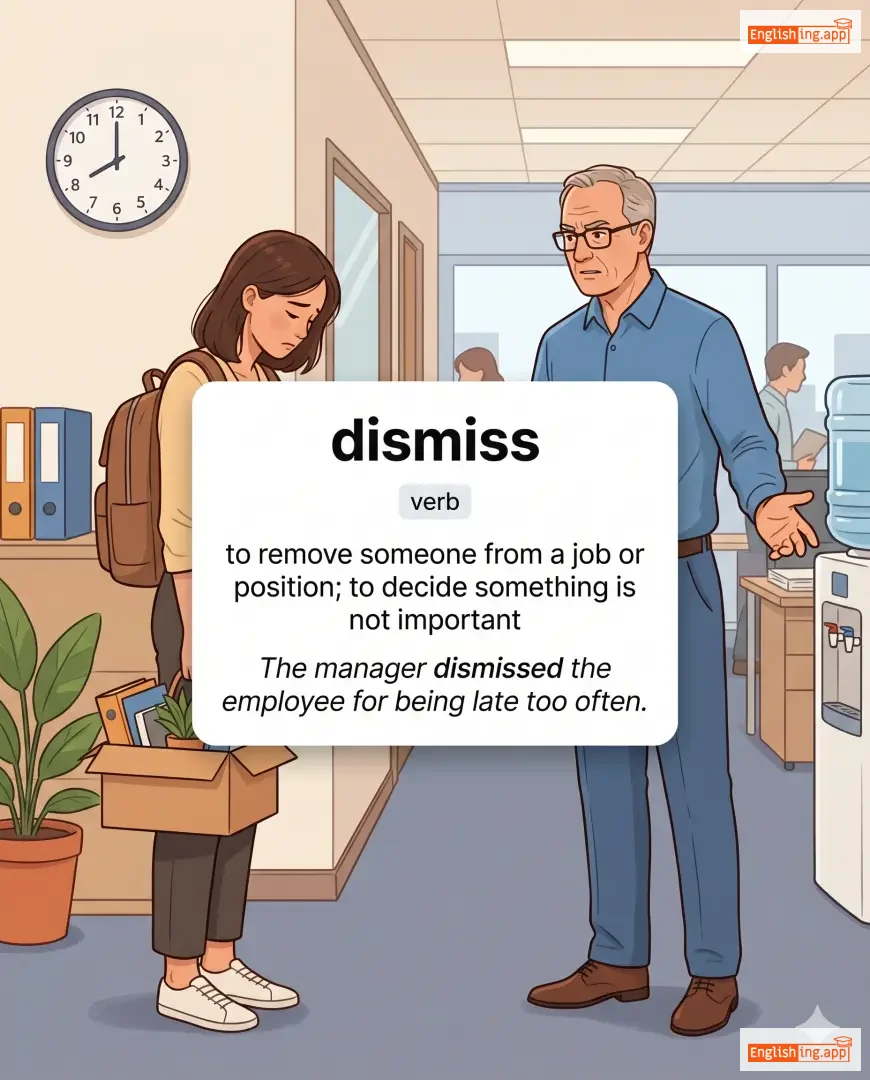
to remove someone from a job or position; to decide something is not important
"The manager dismissed the employee for being late too often."
the act of removing someone from their job; the act of treating something as unimportant
"His unfair dismissal led to a lawsuit against the company."
to get off or down from something, especially a horse, bicycle, or motorcycle
"The rider dismounted from the horse after a long journey."
failure or refusal to obey rules, laws, or authority
"The child's disobedience worried his parents."
refusing or failing to obey rules or authority
"The teacher scolded the disobedient students."
A state of confusion or lack of order; also a medical or mental condition.
"The protest ended in disorder when the crowd became violent."
to refuse to acknowledge or accept responsibility for someone or something
"He decided to disown his reckless brother."
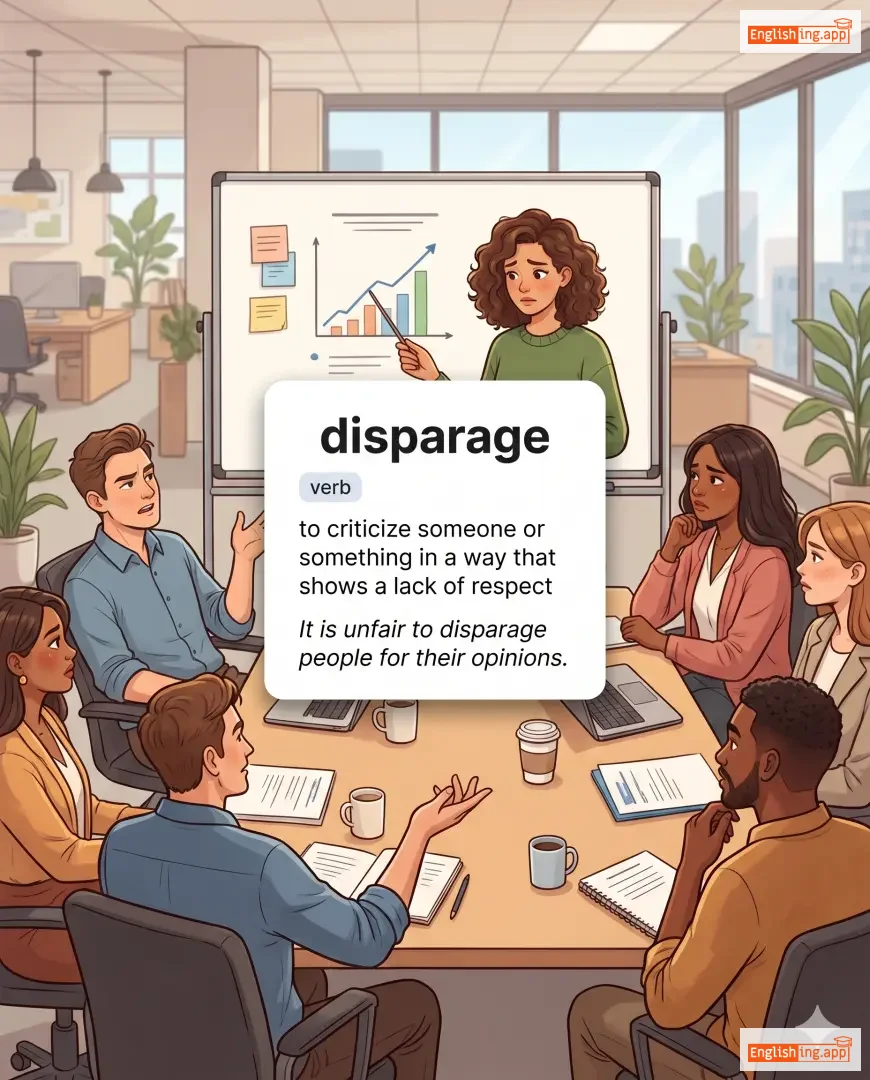
to criticize someone or something in a way that shows a lack of respect
"It is unfair to disparage people for their opinions."
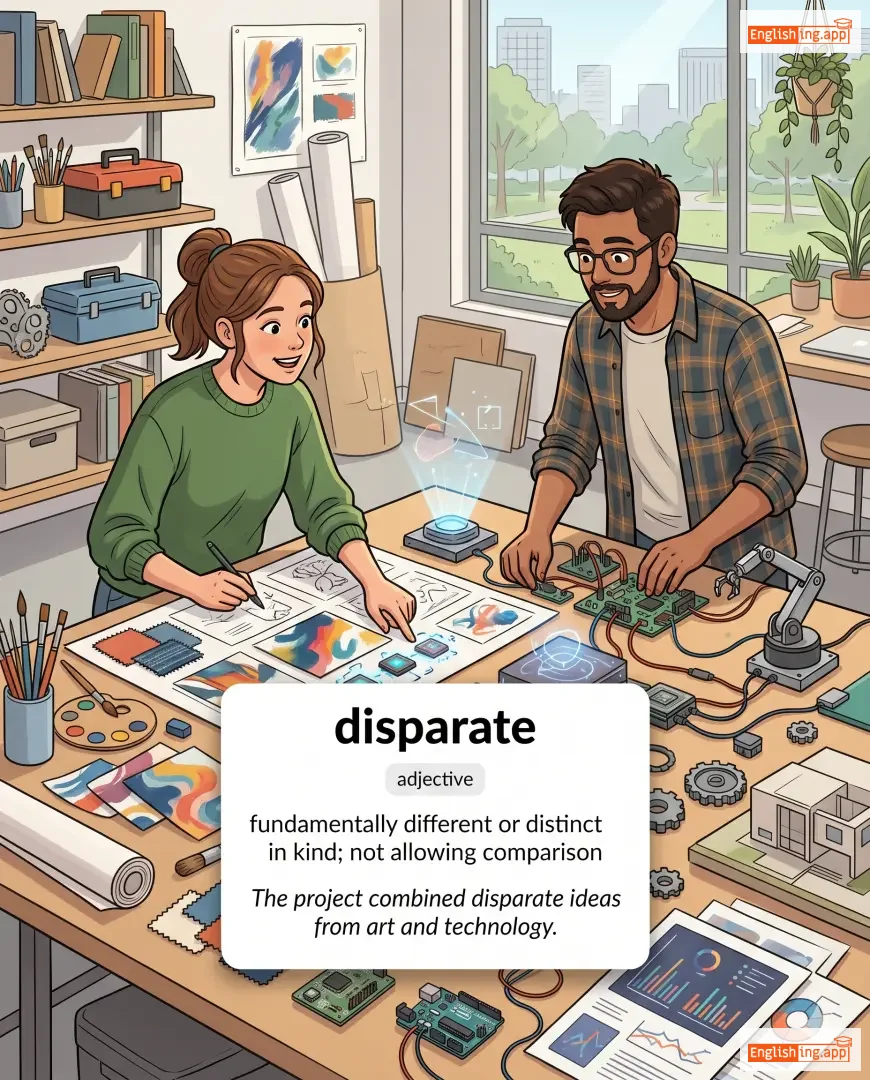
fundamentally different or distinct in kind; not allowing comparison
"The project combined disparate ideas from art and technology."
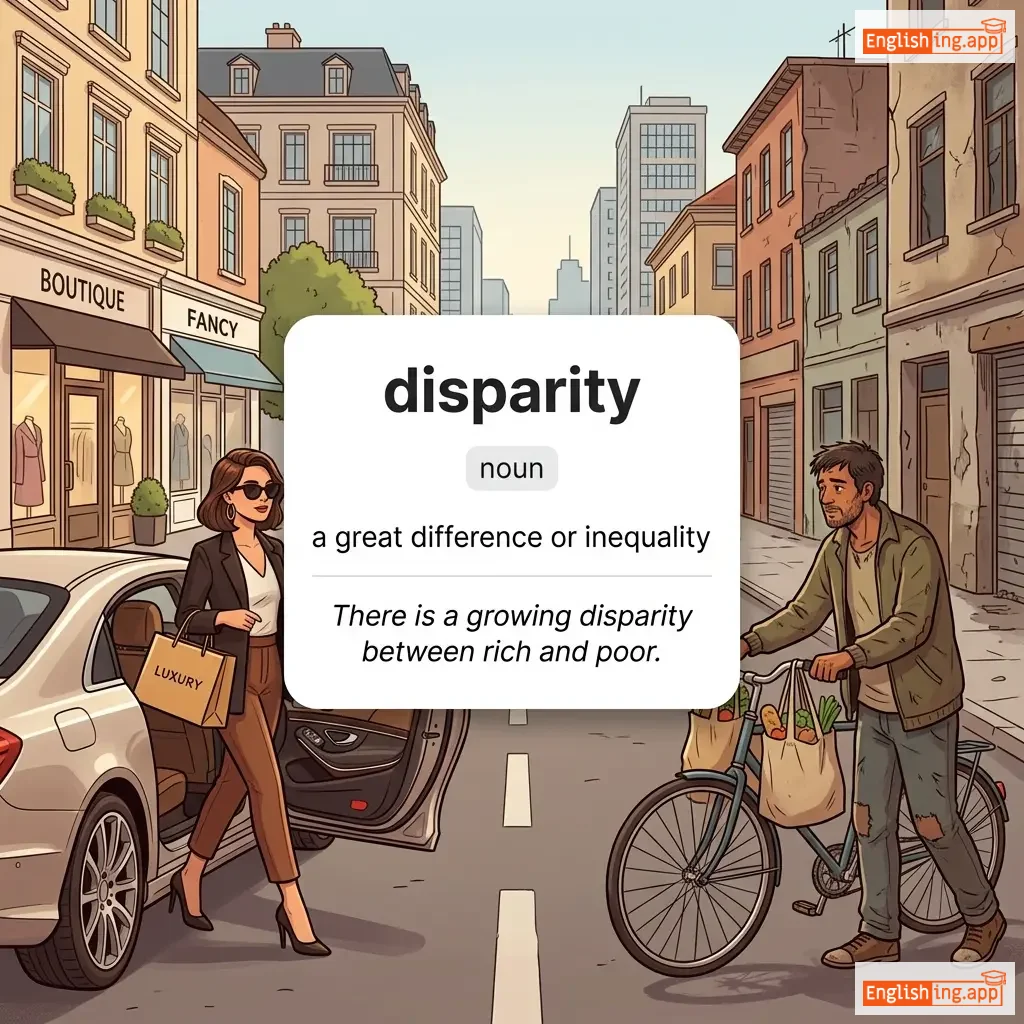
a great difference or inequality
"There is a growing disparity between rich and poor."
not influenced by strong emotion; impartial
"The judge remained dispassionate throughout the trial."
to send off to a destination or for a purpose
"The company dispatched aid to the flood victims."
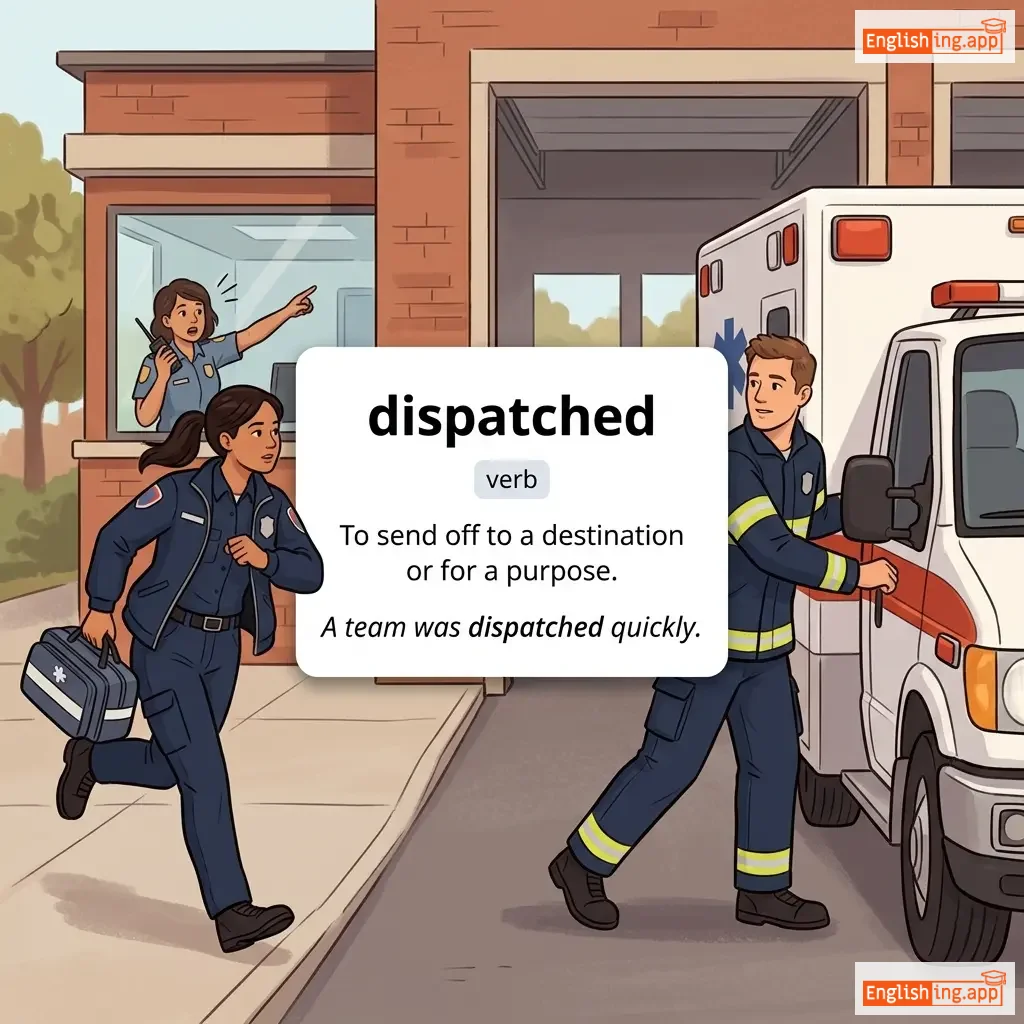
To send off to a destination or for a purpose.
"A team was dispatched quickly."
to make a doubt, feeling, or belief disappear
"The teacher's explanation dispelled the students' confusion."
An exemption from a rule or usual requirement; a system of order, government, or control.
"The school granted him a special dispensation to skip the exam due to illness."
To distribute or provide something, especially in portions.
"The machine dispenses clean drinking water."
To scatter or spread widely in different directions.
"The police used tear gas to disperse the crowd."
Scattered or spread across a wide area.
"The dispersed population made it difficult to provide public services."
The action or process of distributing things or people over a wide area.
"The dispersion of seeds by the wind helps plants reproduce."
Having lost enthusiasm, hope, or confidence; dejected.
"After losing the match, the team looked dispirited."
To force someone or something out of its usual place or position.
"The flood displaced hundreds of families from their homes."
To show or exhibit something to be seen.
"The shop displayed its new products in the window."
To amuse oneself in a lively or playful way.
"The children disported themselves in the garden."
the action or process of getting rid of something
"The disposal of waste is crucial for maintaining a clean environment."
To get rid of something, or to arrange or incline towards something.
"He disposed of the old furniture responsibly."
A person's usual attitude or temperament; arrangement or tendency.
"She has a cheerful disposition despite the difficulties."
to deprive someone of land, property, or other possessions
"The new law threatened to dispossess many farmers of their land."
a lack of balance or symmetry; an inequality
"There is a clear disproportion between rich and poor in many societies."
to show that something is false or wrong
"The scientist worked hard to disprove the old theory."
open to debate or argument; questionable
"The facts in the case are disputable and need further investigation."
a formal debate or argument
"The disputation between the two scholars lasted for hours."
fond of or given to argument and debate
"His disputatious nature often led to heated conversations."
a disagreement or argument about something important
"The two countries are in dispute over the border issue."
to officially prevent someone from participating or being eligible
"The referee decided to disqualify the player for cheating."
A feeling of worry or unease; to make someone feel anxious or uneasy.
"The strange silence filled the room with disquiet."
Causing worry, unease, or anxiety.
"The news report was deeply disquieting to the public."
A state of uneasiness, anxiety, or restlessness.
"His constant pacing showed his inner disquietude."
A long or elaborate discussion or written essay on a particular subject.
"The professor gave a lengthy disquisition on ancient philosophy."
To ignore something; lack of consideration or respect for something.
"He disregarded the warning signs and kept driving."
having a bad reputation; not considered respectable or trustworthy
"The journalist avoided staying in the disreputable part of town."
the state of being held in low esteem or having a bad reputation
"The scandal brought the politician into disrepute."
to remove one's clothes
"The monk disrobed before entering the river."
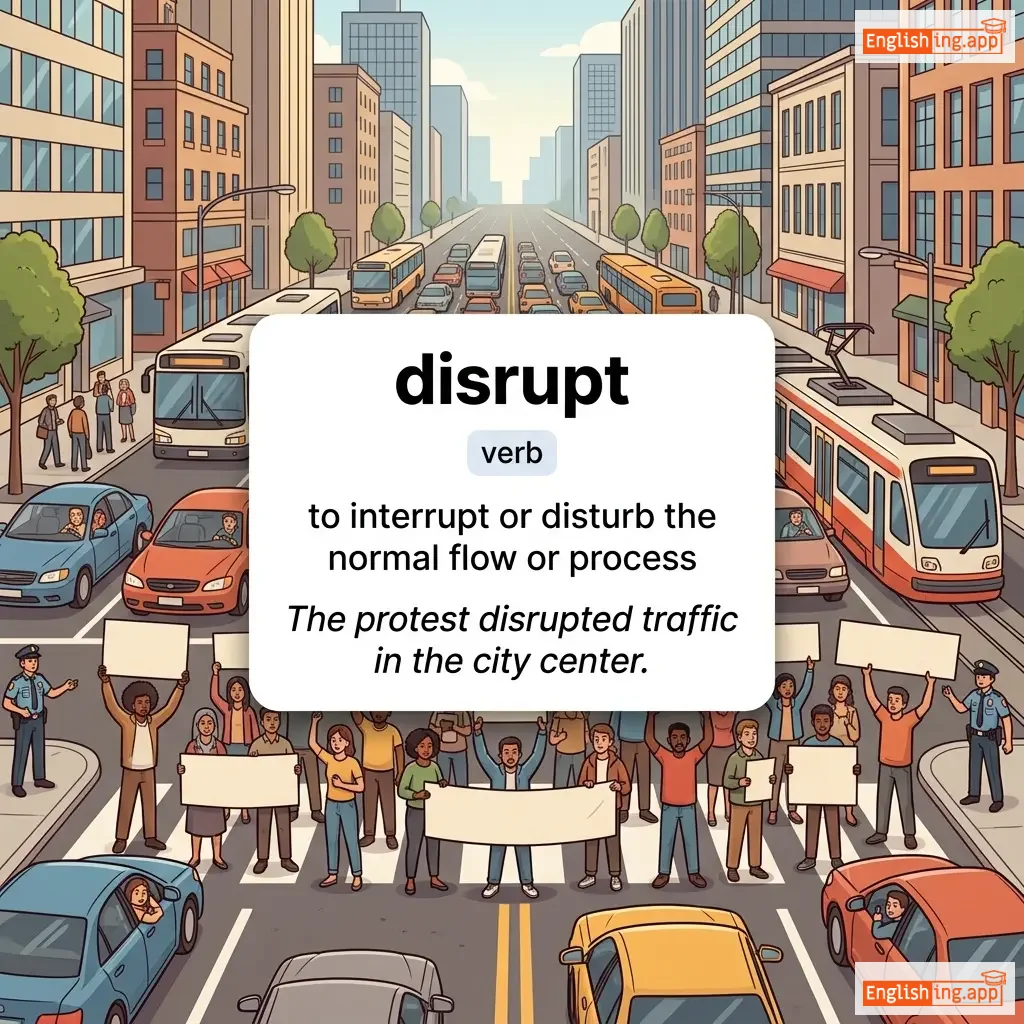
to interrupt or disturb the normal flow or process
"The protest disrupted traffic in the city center."
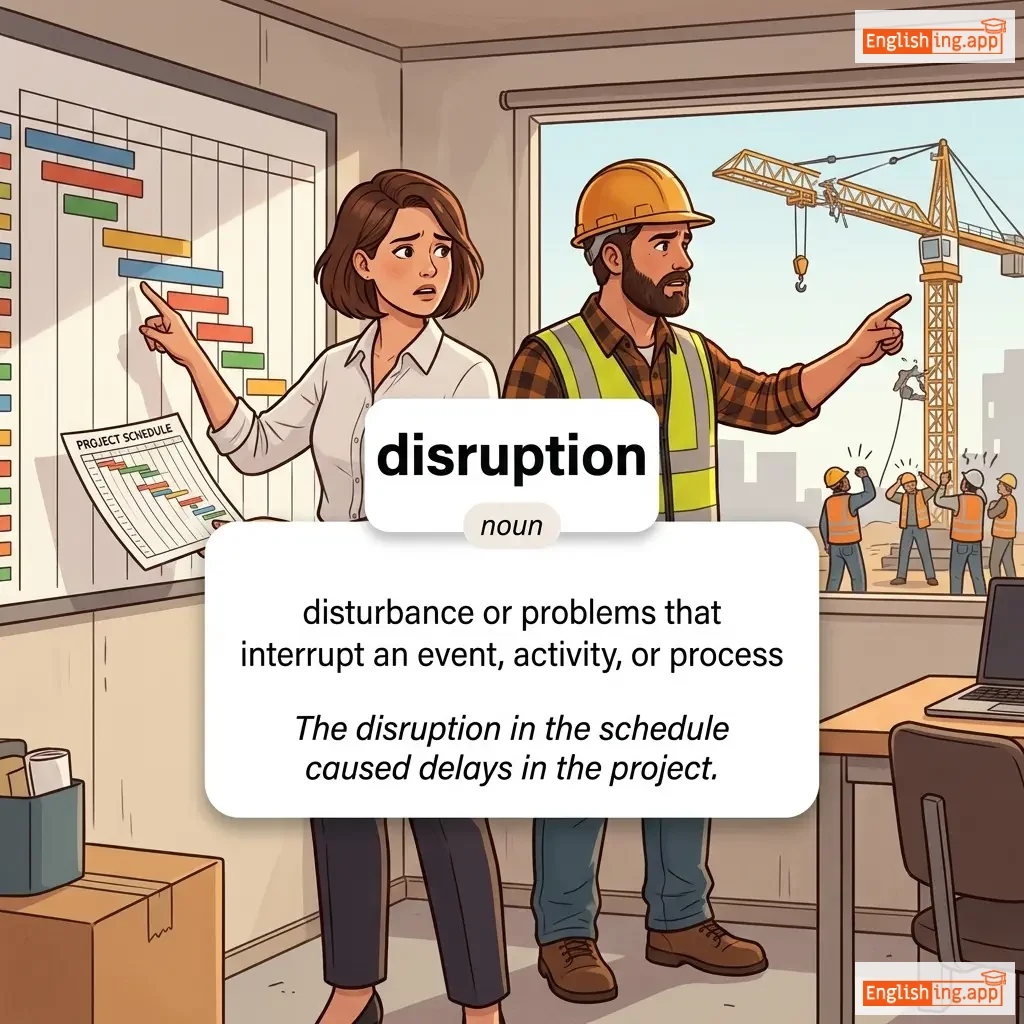
disturbance or problems that interrupt an event, activity, or process
"The disruption in the schedule caused delays in the project."
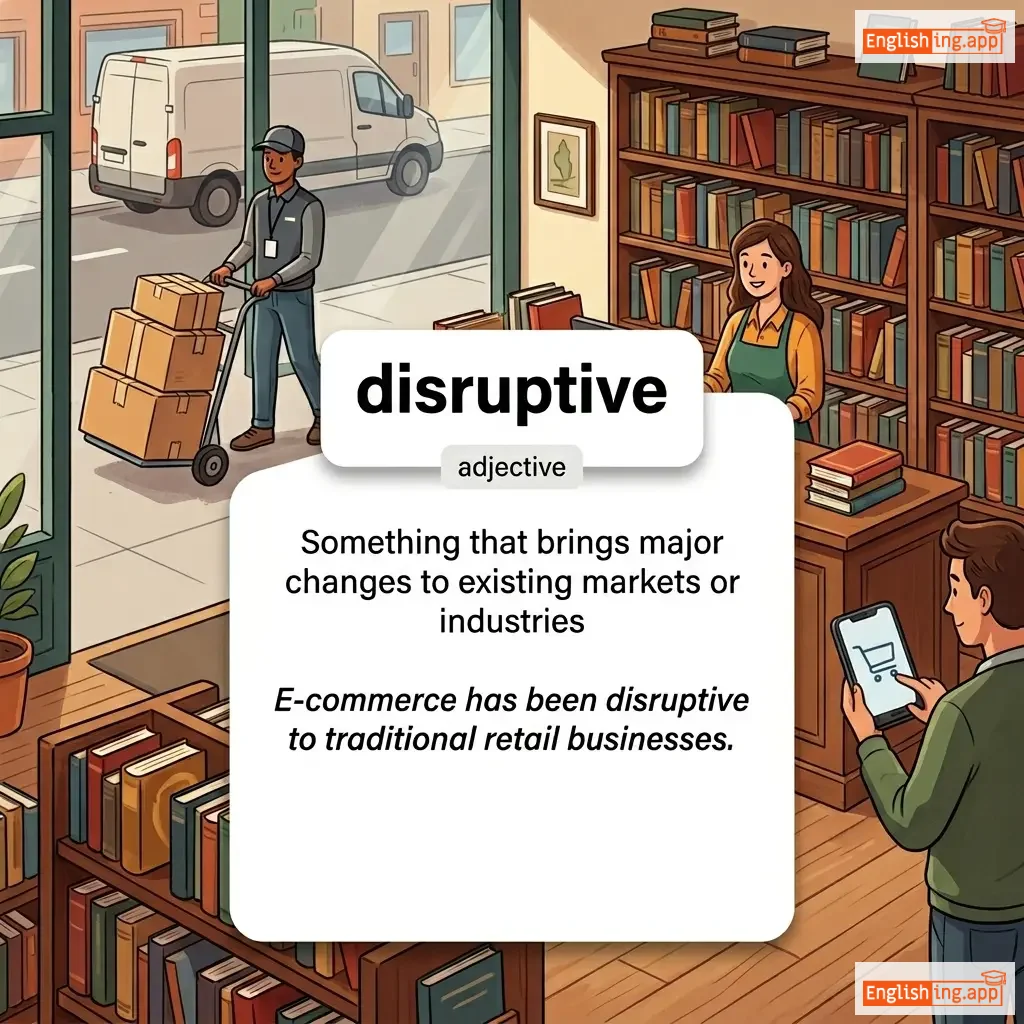
Something that brings major changes to existing markets or industries
"E-commerce has been disruptive to traditional retail businesses."
to fail to please or meet expectations; to make someone unhappy
"The poor service dissatisfies many customers."