Словари

Словарь английского языка | Значения слов, определения и примеры

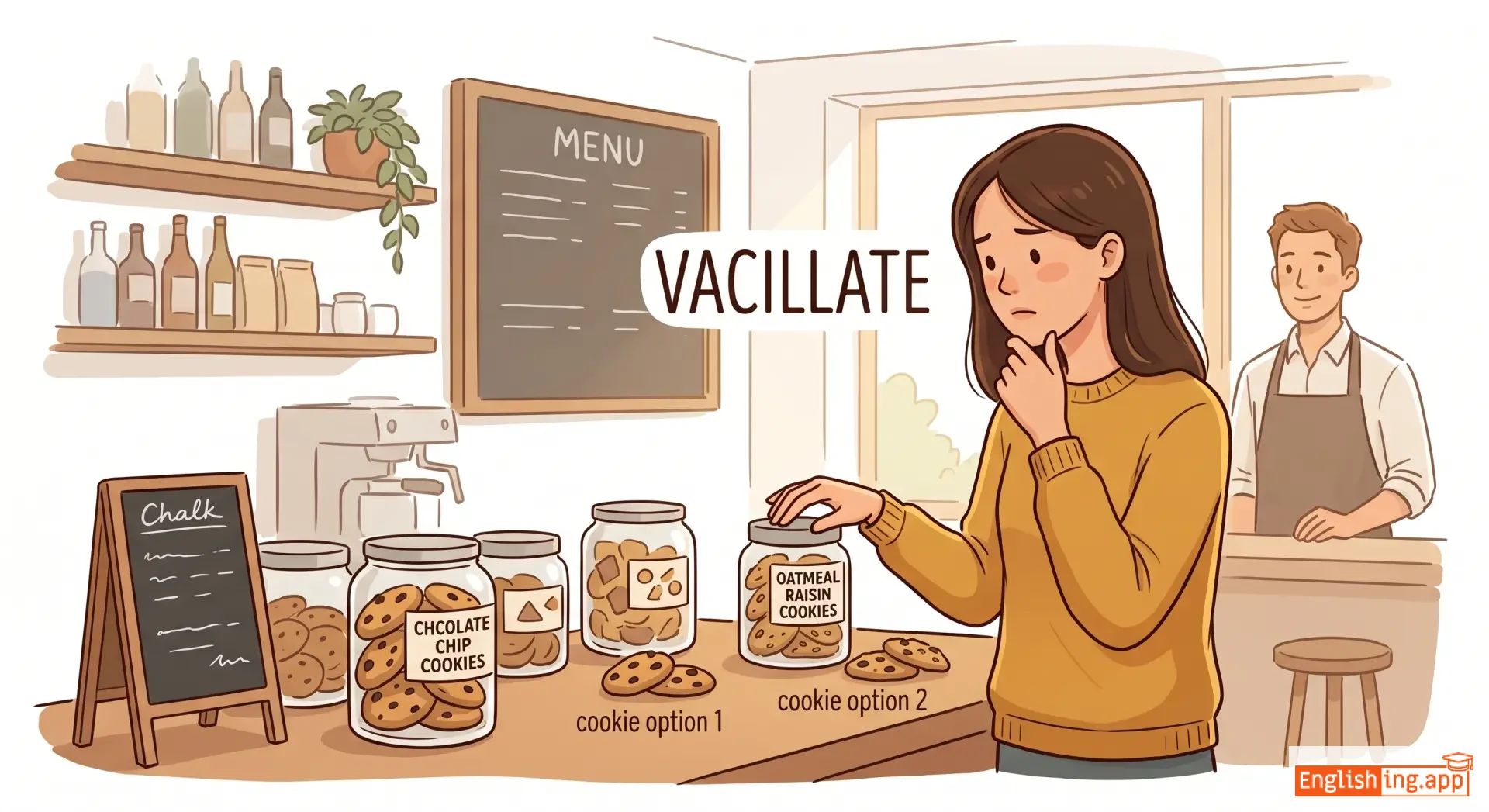
vacillate definition card — visual illustration of the meaning
verb C2
/ˈvæsɪleɪt/
幸福 (xìngfú)

to waver between different opinions or actions; be indecisive

"He vacillated between studying law and becoming a writer."
"她在获得奖项时无法掩饰自己的幸福。" (Tā zài huòdé jiǎngxiàng shí wúfǎ yǎnshì zìjǐ de xìngfú.)
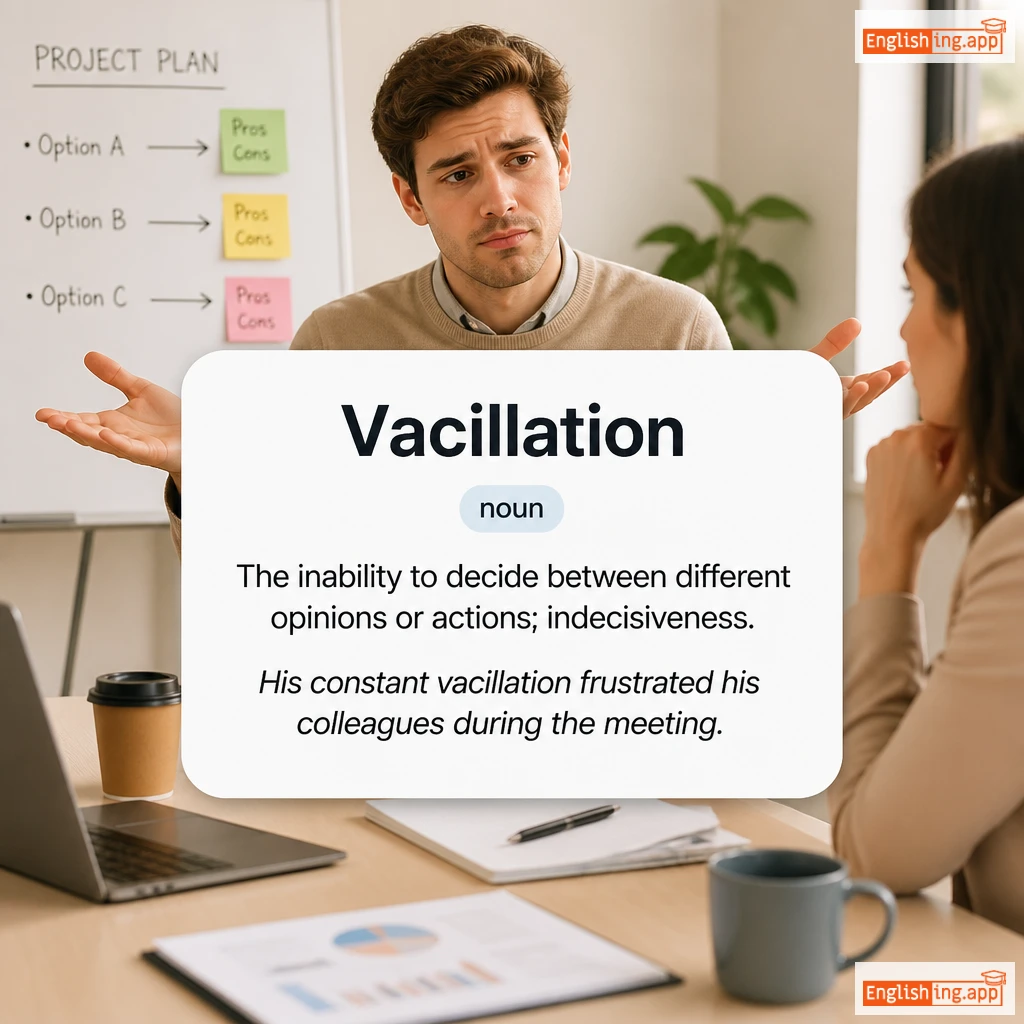
Vacillation definition card — visual illustration of the meaning
noun C2
/ˌvæsɪˈleɪʃən/
摇摆不定 (yao bai bu ding)

The inability to decide between different opinions or actions; indecisiveness.

"His constant vacillation frustrated his colleagues during the meeting."
"他的持续犹豫让他的同事在会议期间感到沮丧。" (Ta de chixu youyu rang ta de tongshi zai huiyi qijian gandu ju shang.)
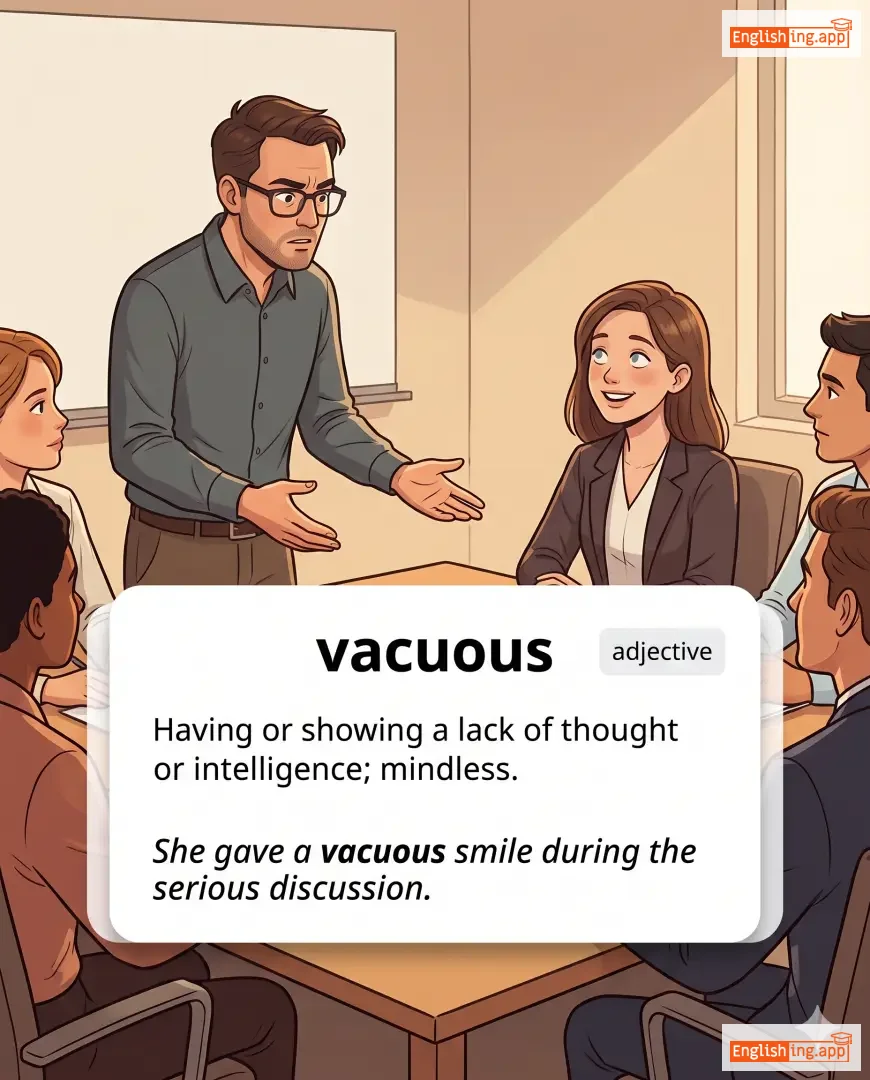
vacuous definition card — visual illustration of the meaning
adjective C2
/ˈvækjuəs/
空洞 (kongdong)

Having or showing a lack of thought or intelligence; mindless.

"She gave a vacuous smile during the serious discussion."

"她在严肃的讨论中露出了空洞的笑容。" (Tā zài yánsù de tǎolùn zhōng lùchūle kōngdòng de xiàoróng.)
noun C2
/ˈveɪɡəri/
意外变化 (yiwai bianhua)

An unexpected and inexplicable change in a situation or someone's behavior.

"The vagaries of the weather made planning difficult."

"天气的变化使得计划变得困难。" (tianqi de bianhua shide jihua biande kunnan.)
adjective C2
/veɪnˈɡlɔːriəs/
自负的 (zì fù de)

Excessively proud of oneself or one’s achievements; boastful.

"The vainglorious leader boasted about his minor achievements."

"那个自负的领导者炫耀着他的微不足道的成就。" (Nàgè zì fù de lǐng dǎo zhě xuàn yào zhe tā de wēi bù zú dào de chéng jiù.)
noun C2
/ˈveɪnɡlɔːri/
虚荣 (xūróng)

Excessive vanity or boastfulness about one's achievements.

"His speech was filled with vainglory and self-praise."

"他的演讲充满了虚荣和自我吹嘘。" (Tā de yǎnjiǎng chōngmǎnle xūróng hé zìwǒ chuīxū.)
noun C2
/ˈvæləns/
装饰帷幔 (zhuang shi wei man)

A decorative drapery hung across the top of a window or bed.

"She chose a floral valance to match the curtains in her bedroom."

"她选择了一款花卉装饰帷幔来搭配她卧室里的窗帘。" (Ta xuan ze le yi kuan hua hui zhuang shi wei man lai da pei ta wo shi li de chuang lian.)
noun C2
/ˌvælɪˈdɪkʃən/
告别辞 (gaobiecí)

The act of saying farewell; a formal goodbye.

"The professor gave a touching valediction at his retirement ceremony."

"教授在退休仪式上发表了感人的告别辞。" (Jiàoshòu zài tuìxiū yíshì shàng fābiǎo le gǎnrén de gàobiécí.)
noun C2
/ˌvælədɪkˈtɔːriən/
最佳学生 (zui jia xue sheng)

The student with the highest academic achievements in a graduating class, often chosen to give the farewell speech.

"She was honored as the valedictorian of her class."
"她被尊为班级的最佳学生。" (Ta bei zun wei banji de zui jia xue sheng.)
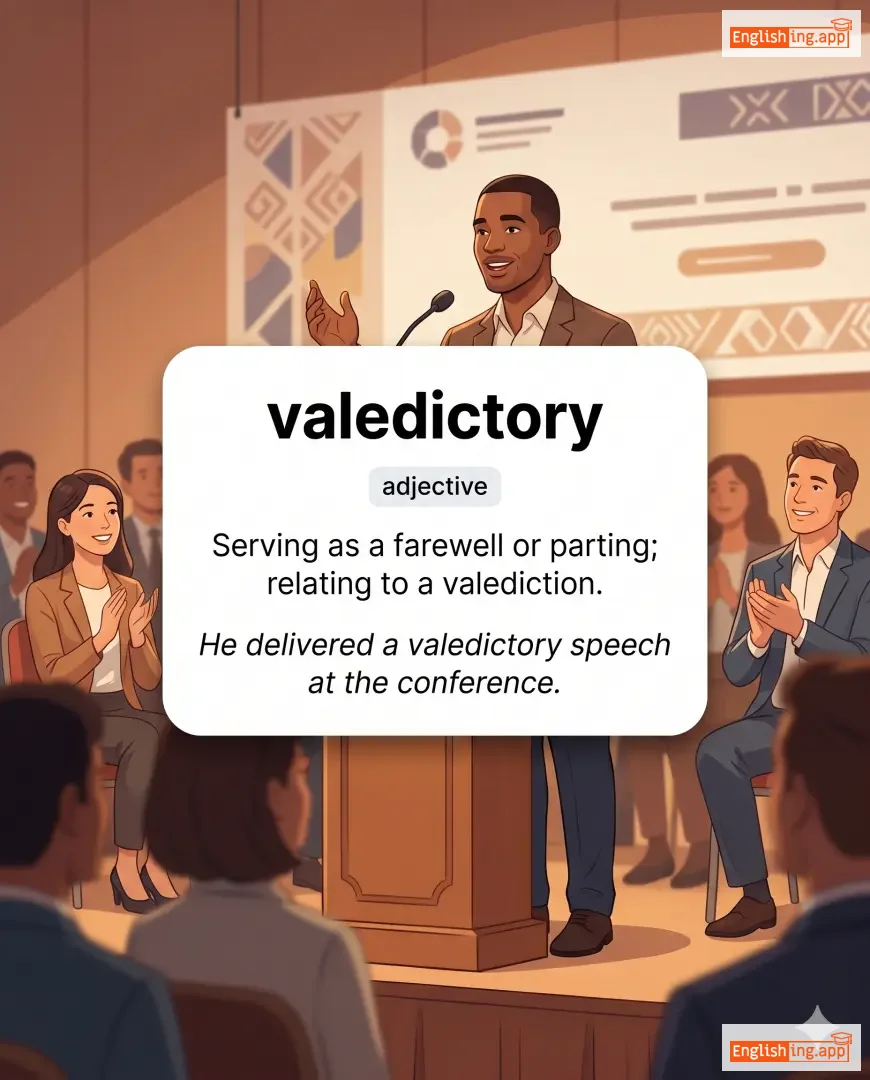
valedictory definition card — visual illustration of the meaning
adjective C2
/ˌvælɪˈdɪktəri/
告别的 (gàobié de)

Serving as a farewell or parting; relating to a valediction.

"He delivered a valedictory speech at the conference."

"他在会议上做了告别演讲。" (Tā zài huìyì shàng zuòle gàobié yǎnjiǎng.)
noun C2
/ˌvælɪˌtjuːdɪˈnɛəriən/
疑病症患者 (yí bìng zhèng huàn zhě)

A person who is unduly anxious about their health or constantly concerned with minor ailments.

"He was regarded as a valetudinarian, always worrying about his health."

"他被认为是一个疑病症患者,总是为自己的健康担忧。" (Tā bèi rènwéi shì yīgè yí bìng zhèng huàn zhě, zǒng shì wèi zìjǐ de jiànkāng dānxīn.)
adjective C2
/ˈvælərəs/
勇敢的 (yǒnggǎn de)

showing great courage and bravery

"The valorous soldier led his troop into battle without hesitation."

"勇敢的士兵毫不犹豫地带领他的部队进入战斗。" (Yǒnggǎn de shìbīng háo bù yóuyù de dàilǐng tā de bùduì jìnrù zhàndòu.)
adjective C2
/ˈvæpɪd/
乏味的 (fámèi de)

lacking liveliness, flavor, or interest; dull and uninspired

"The lecture was so vapid that half the audience fell asleep."

"讲座如此乏味,以至于一半的听众都睡着了。" (Jiǎngzuò rúcǐ fámèi, yǐ zhì yú yībàn de tīngzhòng dōu shuìzhe le.)
adjective C2
/ˈveɪpərəs/
蒸汽的; 模糊的 (zhēngqì de; móhu de)

consisting of vapor; vague or insubstantial

"The morning air was filled with vaporous mist."

"早晨的空气充满了蒸汽般的雾气。" (Zǎochén de kōngqì chōngmǎnle zhēngqì bān de wùqì.)
verb C2
/ˈvɛəriəˌɡeɪt/
使多样化 (shǐ duōyàng huà)

To diversify or mark with different colors or patterns.

"The artist used different shades to variegate the design."

"艺术家使用不同的阴影来使设计变得多样化。" (Yìshùjiā shǐyòng bùtóng de yīnyǐng lái shǐ shèjì biàn dé duōyàng huà.)
adjective C2
/ˈvɛəriəˌɡeɪtɪd/
五彩斑斕 (wucai banlan)

Having different colors, especially in irregular patches or streaks.

"The garden was full of variegated plants."

"花園裡充滿了五彩斑斕的植物。" (huayuan li chongman le wucai banlan de zhiwu)
noun C2
/ˌvɛəriəˈɡeɪʃən/
变色 (biansè)

The appearance of differently colored zones in the leaves, flowers, or stems of plants.

"Variegation makes the foliage look more attractive."

"变色使得植物的叶子更加吸引人。" (Biansè shǐdé zhíwù de yèzi gèngjiā xīyǐn rén.)
noun C2
/ˈvæsəl/
附庸 (fù yōng)

A person or country in a subordinate position to another, especially in feudal times under a lord.

"The king granted land to his vassal in return for loyalty and service."

"国王为他的附庸提供土地,以换取忠诚和服务。" (Guówáng wèi tā de fùyōng tígōng tǔdì, yǐ huànqǔ zhōngchéng hé fúwù.)
noun C2
/ˈvɔːdəvɪl/
歌舞杂耍 (gewu zashua)

A type of entertainment popular in the early 20th century, featuring a mixture of comedy, song, dance, and variety acts.

"The vaudeville show included comedians, magicians, and dancers."

"歌舞杂耍表演包括喜剧演员、魔术师和舞者。" (Gewu zashua biaoyan baokuo xijuyanyuan, moshushi he wuzhe.)
📢

vaunt

verb C2
/vɔːnt/

to boast or brag about something, especially in an excessive way

"He would often vaunt his achievements in front of his colleagues."

adjective C2
/ˈvɔːntɪd/
过度吹嘘 (guòdù chuīxū)

praised or boasted about, especially excessively

"The vaunted technology failed to deliver the expected results."

"过度吹嘘的技术未能交付预期的结果。" (Guòdù chuīxū de jìshù wèi néng jiāofù yùqī de jiéguǒ.)
adjective C2
/ˈvɛdʒɪtəl/
植物的 (zhíwù de)

relating to or consisting of plants or vegetation

"The soup had a distinct vegetal flavor."

"汤有一种独特的植物味。" (Tāng yǒu yī zhǒng dútè de zhíwù wèi.)
verb C2
/ˈvɛdʒɪteɪt/
发呆 (fā dāi)

to live in a dull, inactive, or unchallenging way, often with little physical or mental effort

"He spent his vacation vegetating on the couch in front of the TV."

"他把假期都用来在沙发上看电视,什么都不做。" (Tā bǎ jiàqī dōu yònglái zài shāfā shàng kàn diànshì, shénme dōu bù zuò.)
noun C2
/vəˈliːɪti/
微弱的愿望 (weiruo de yuànwàng)

A wish or inclination not strong enough to lead to action.

"His interest in painting never grew beyond a mere velleity."

"他对绘画的兴趣从未超越一个微弱的愿望。" (Tā duì huìhuà de xìngqù cóngwèi chāoyuè yīgè wēiruò de yuànwàng.)
noun C2
/ˈvɛləm/
羊皮纸 (yangpizhi)

a fine parchment made originally from the skin of a calf, used for writing or printing

"The ancient manuscript was written on vellum."
"古老的手稿是用羊皮纸写的。" (Gǔlǎo de shǒugǎo shì yòng yángpí zhǐ xiě de.)
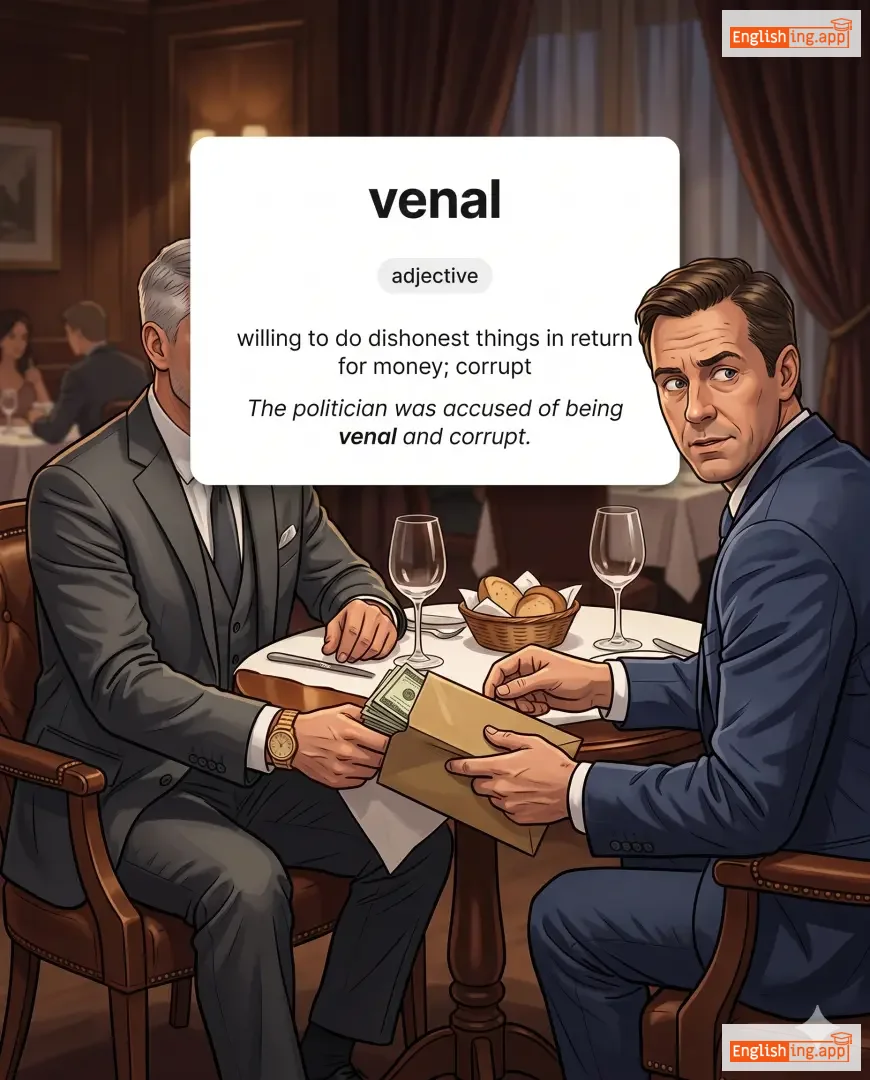
venal definition card — visual illustration of the meaning
adjective C2
/ˈviːnəl/
贪污的 (tānwū de)

willing to do dishonest things in return for money; corrupt

"The politician was accused of being venal and corrupt."

"这位政治家被指控为贪污腐化。" (Zhè wèi zhèngzhìjiā bèi zhǐkòng wéi tānwū fǔhuà.)
noun C2
/viːˈnæləti/
贪污腐化 (tānwū fǔhuà)

the quality of being open to bribery or corruption

"The scandal revealed the venality of several senior officials."

"丑闻揭示了几位高级官员的贪污腐化。" (Chǒuwén jiēshìle jǐ wèi gāojí guānyuán de tānwū fǔhuà.)
adjective C2
/ˈvɛndɪbəl/
可销售的 (kě xiāo shòu de)

Capable of being sold; marketable.

"Only vendible products were displayed at the trade fair."

"只有可销售的产品在贸易展会上展示。" (Zhǐyǒu kě xiāo shòu de chǎnpǐn zài màoyì zhǎnlǎn huì shàng zhǎnshì.)
noun C2
/vɛnˈdɪʃən/
销售 (xiaoshou)

The act of selling; sale.

"The auction was a formal vendition of the estate's assets."

"拍卖是财产资产的正式销售。" (Pāimài shì cáichǎn zīchǎn de zhèngshì xiāoshòu.)
adjective C2
/vəˈnɪəriəl/
性病的 (xingbing de)

relating to sexual intercourse or sexually transmitted diseases

"Doctors warn about the dangers of venereal diseases."

"医生警告性病的危险。" (Yisheng jinggao xingbing de weixian.)
adjective C2
/ˈviːniəl/
可宽恕的 (kě kuānshù de)

forgivable, not seriously wrong

"Forgetting to call was a venial fault."

"忘记打电话是一个可宽恕的错误。" (Wàngjì dǎ diànhuà shì yīgè kě kuānshù de cuòwù.)
adjective C2
/ˈvɛntrəl/
腹侧的 (fùcè de)

relating to the underside or abdominal part of an animal or organ

"The fish has a white ventral surface."

"鱼的腹侧表面是白色的。" (Yú de fùcè biǎomiàn shì báisè de.)
adjective C2
/ˈvɛntʃərəs/
冒险的 (màoxiǎn de)

Willing to take risks or try out new and exciting things; adventurous.

"The venturous explorers set out to cross the uncharted desert."
"那些冒险的探险者出发穿越未被探索的沙漠。" (Nàxiē màoxiǎn de tànxiǎnzhě chūfā chuānyuè wèibèi tànsuǒ de shāmò.)
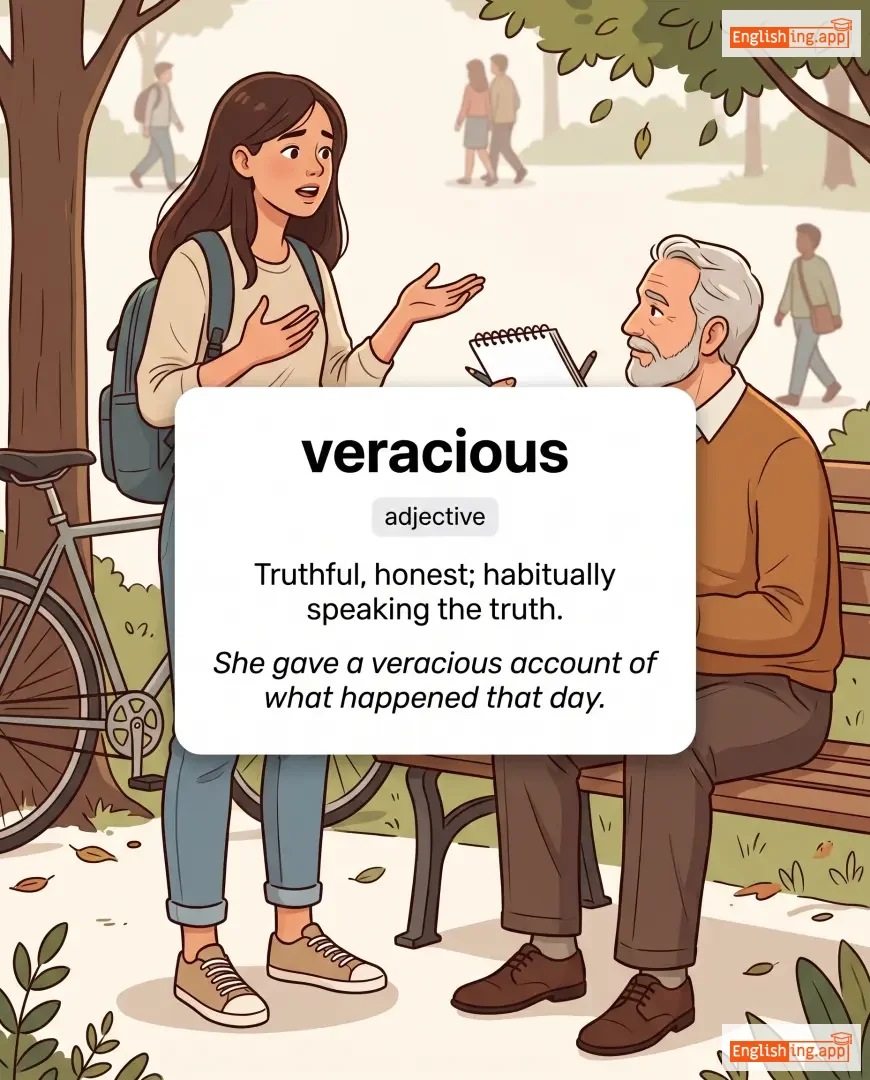
veracious definition card — visual illustration of the meaning
adjective C2
/vəˈreɪʃəs/
真实的 (zhēnshí de)

Truthful, honest; habitually speaking the truth.

"She gave a veracious account of what happened that day."

"她给出了那天发生的事情的真实描述。" (tā gěi chūle nà tiān fāshēng de shìqíng de zhēnshí miáoshù.)
noun C2
/ˈvɜːrbiɪdʒ/
废话 (feihua)

Excessive use of words, often with little content or meaning; wordiness.

"The contract was filled with unnecessary legal verbiage."

"合同充满了不必要的法律废话。" (Hetong chongmanle buyiyao de falu feihua.)
adjective C2
/ˈvɜːrdənt/
青葱 (qing cong)

Green with grass or other rich vegetation; lush and fertile.

"The hills looked verdant after the monsoon rains."

"经过季风雨后,山丘看起来绿意盎然。" (Jīngguò jìfēng yǔ hòu, shānqiū kàn qǐlái lǜ yì àngrán.)
noun C2
/ˈvɜːrdɪɡriːs/
铜绿 (tong lü)

A green or bluish deposit that forms on copper, brass, or bronze surfaces due to oxidation.

"The old statue was covered in verdigris after years of exposure to the rain."

"那座古老的雕像在多年暴露于雨水中后,覆盖了一层铜绿。" (Na zuo gulao de diaoxiang zai duonian baolu yu yushui zhonghou, fuguo le yi ceng tong lü.)
adverb C2
/ˈvɛrɪli/
的确 (dique)

truly; certainly; without a doubt

"Verily, I say unto you, this is the truth."

"的确,我对你们说,这就是事实。" (Dique, wo dui nimen shuo, zhe jiushi shishi.)
adjective C2
/ˌvɛrɪˈsɪmɪlər/
类似于真实 (lèisì yú zhēnshí)

appearing to be true or real

"The story seemed verisimilar though it was entirely fictional."

"这个故事看起来类似于真实,尽管它完全是虚构的。" (Zhège gùshì kàn qǐlái lèisì yú zhēnshí, jǐnguǎn tā wánquán shì xūgòu de.)
noun C2
/ˌvɛrɪsɪˈmɪlɪtjuːd/
逼真 (bī zhēn)

the appearance of being true or real

"The movie was praised for its verisimilitude to actual events."

"这部电影因其与实际事件的逼真感而受到称赞。" (Zhè bù diànyǐng yīn qí yǔ shíjì shìjiàn de bī zhēn gǎn ér shòudào chēngzàn.)
noun C2
/ˈvɛrɪti/
真实性 (zhēn shí xìng)

a true principle or belief; the state of being true

"The verity of his statement was confirmed by evidence."

"他陈述的真实性通过证据得到了确认。" (Tā chén shù de zhēn shí xìng tōng guò zhèng jù dé dào le quèrèn.)
adjective C2
/vərˈmɪkjələr/
像虫子一样 (xiàng chóngzi yīyàng)

having a shape or appearance like a worm; worm-like

"The artist used a vermicular design to decorate the border of the manuscript."
"艺术家用虫子一样的设计装饰手稿的边缘。" (Yìshùjiā yòng chóngzi yīyàng de shèjì zhuāngshì shǒugǎo de biānyuán.)
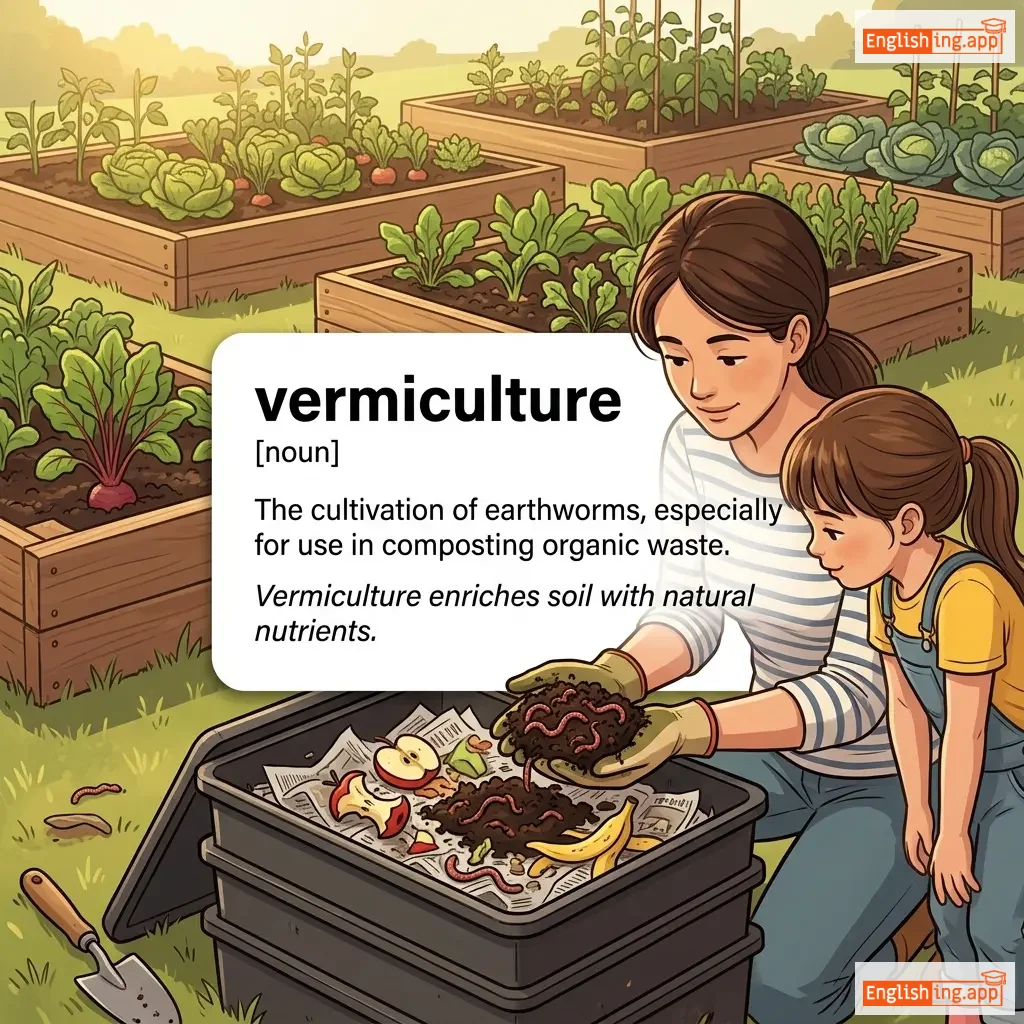
vermiculture definition card — visual illustration of the meaning
noun C2
ˈvɜː.mɪ.kʌl.tʃər
蚯蚓养殖 (qiūyǐn yǎngzhí)

The cultivation of earthworms, especially for use in composting organic waste.

"Vermiculture enriches soil with natural nutrients."
"蚯蚓养殖为土壤提供自然养分。" (Qiūyǐn yǎngzhí wèi tǔrǎng tígōng zìrán yǎngfèn.)
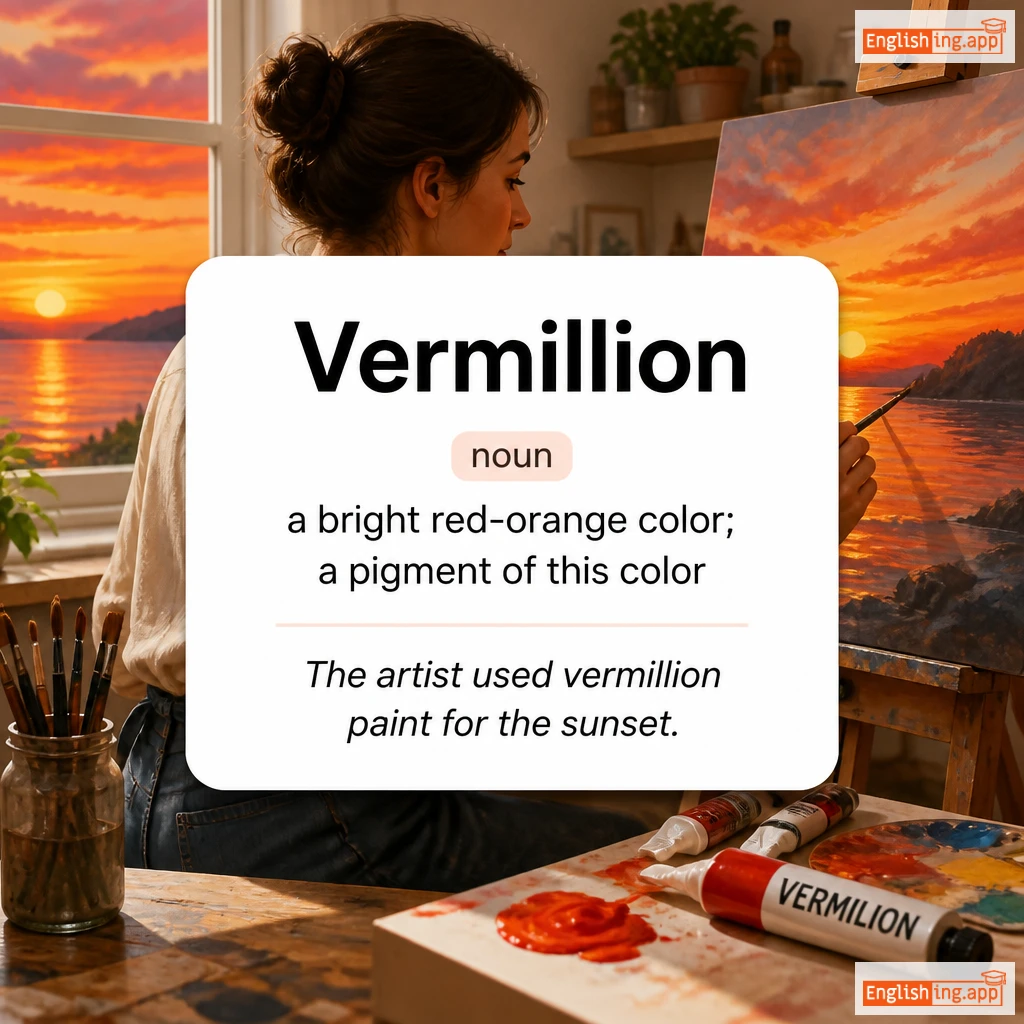
Vermillion definition card — visual illustration of the meaning
noun C2
/vərˈmɪl.jən/
鲜红色-橙色; 这种颜色的颜料 (vermillion)

a bright red-orange color; a pigment of this color

"The artist used vermillion paint for the sunset."

"艺术家为日落使用了维米利昂颜料。" (Yìshùjiā wèi rìluò shǐyòngle wéimìlì'áng yánliào.)
adjective C2
/ˈvɜːrnəl/
春天的 (chūntiān de)

related to spring; fresh, youthful

"The garden was filled with vernal beauty after the long winter."

"经过漫长的冬季,花园充满了春天的美丽。" (Jīngguò màncháng de dōngjì, huāyuán chōngmǎnle chūntiān de měilì.)
adjective C2
/vɜːrˈtɪdʒɪnəs/
眩晕的 (xuànyùn de)

Causing dizziness due to great height or steepness.

"The tourists looked down from the vertiginous cliffs with awe."

"游客从眩晕的悬崖上低头望去,满怀敬畏。" (Yóukè cóng xuànyùn de xuán yá shàng dī tóu wàng qù, mǎn huái jìng wèi.)
noun C2
/vɜːrv/
活力 (huólì)

Great enthusiasm, spirit, or energy in expression or performance.

"The actor performed his role with remarkable verve."

"这位演员以惊人的活力表演了他的角色。" (Zhè wèi yǎnyuán yǐ jīngrén de huólì biǎoyǎn le tā de juésè.)
adjective C2
/vɛˈstɪdʒiəl/
遗迹的 (yíjì de)

Relating to a small, undeveloped remnant of something that was once much larger or more functional.

"Humans have a vestigial tailbone that no longer serves its original purpose."

"人类有一个遗迹的尾骨,它不再执行其原始功能。" (Rénlèi yǒu yīgè yíjì de wěigǔ, tā bù zài zhíxíng qí yuánshǐ gōngnéng.)
noun C2
/ˈvɛstmənt/
宗教服饰 (zōngjiào fúshì)

a garment, especially a ceremonial or official robe worn during religious services

"The priest wore a golden vestment during the ceremony."
"神父在仪式中穿着金色的圣袍。" (Shénfù zài yíshì zhōng chuānzhuó jīnsè de shèngpáo.)
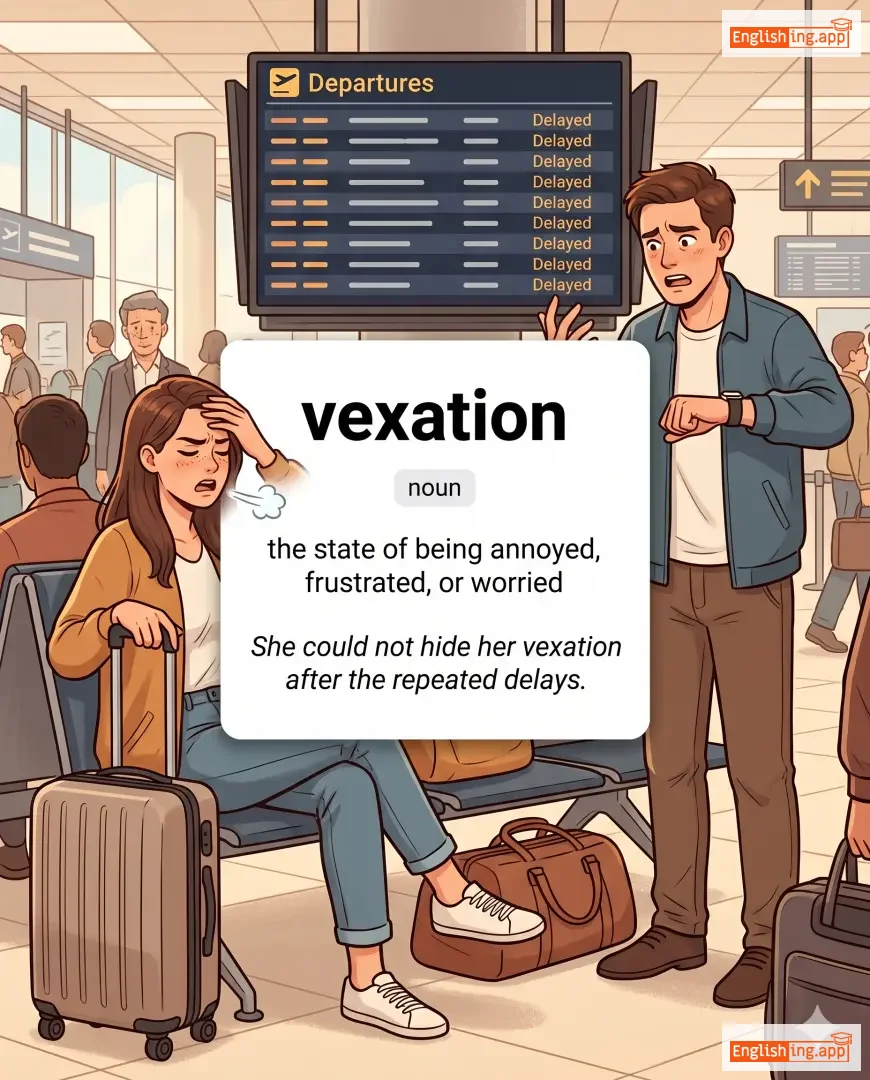
vexation definition card — visual illustration of the meaning
noun C2
/vɛkˈseɪʃən/
烦恼 (fánnǎo)

the state of being annoyed, frustrated, or worried

"She could not hide her vexation after the repeated delays."

"她在反复的延迟后,无法掩饰她的烦恼。" (Tā zài fǎnfù de yánchí hòu, wúfǎ yǎnshì tā de fánnǎo.)