Vocabulary Videos
40 videos available.
 ja
ja
Acrimony: English vocabulary meaning and example
Learn the English word "Acrimony".
Meaning: Acrimony, noun. It means bitter, angry hostility in speech or behavior. Synonyms: bitterness, rancor.
Example: The two former friends parted with such acrimony that they never spoke again.
Japanese: Acrimony は、言葉や態度に表れる苦々しい怒りや敵意という意味です。
Japanese example: かつての二人の友人はとても険悪に別れ、その後二度と話しませんでした。
#LearnEnglish #EnglishVocabulary #Englishing
 ja
ja
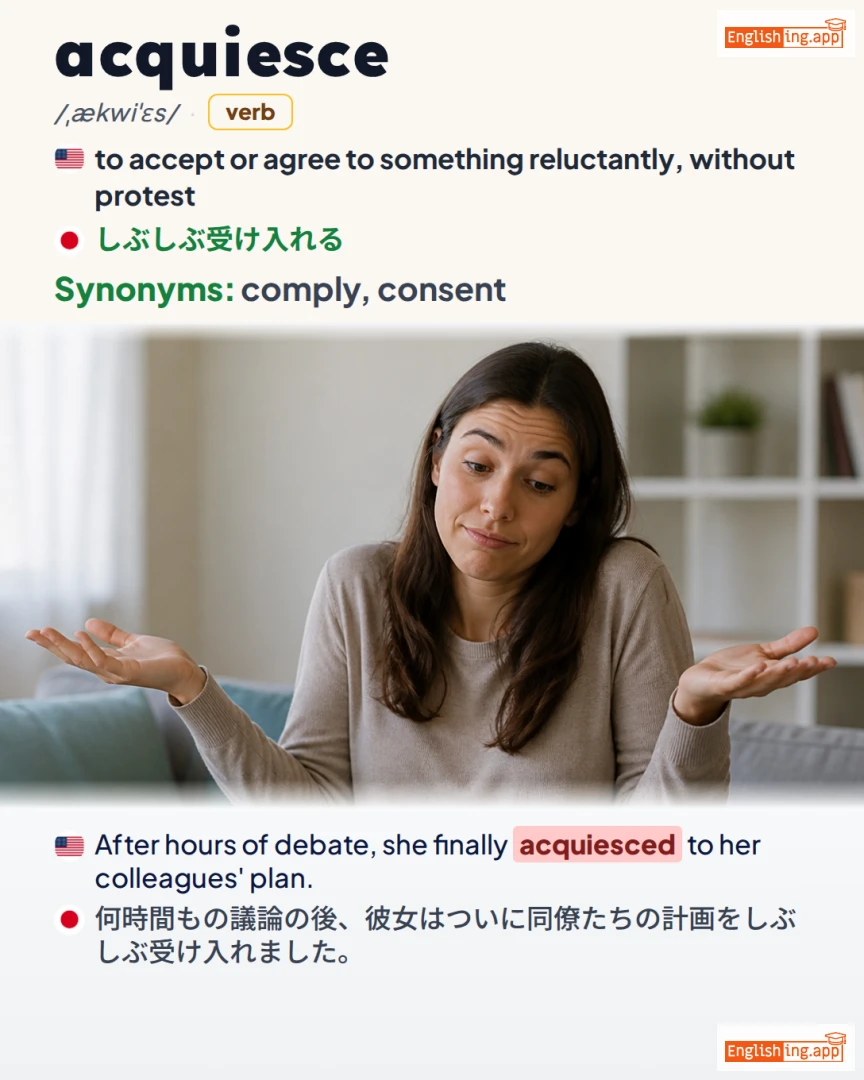
Acquiesce: English vocabulary meaning and example
Learn the English word "Acquiesce".
Meaning: Acquiesce, verb. It means to accept or agree to something reluctantly, without protest. Synonyms: comply, consent.
Example: After hours of debate, she finally acquiesced to her colleagues' plan.
Japanese: Acquiesce は、本当は気が進まなくても、反対せずに受け入れるという意味です。
Japanese example: 何時間もの議論の後、彼女はついに同僚たちの計画をしぶしぶ受け入れました。
#LearnEnglish #EnglishVocabulary #Englishing
 ja
ja
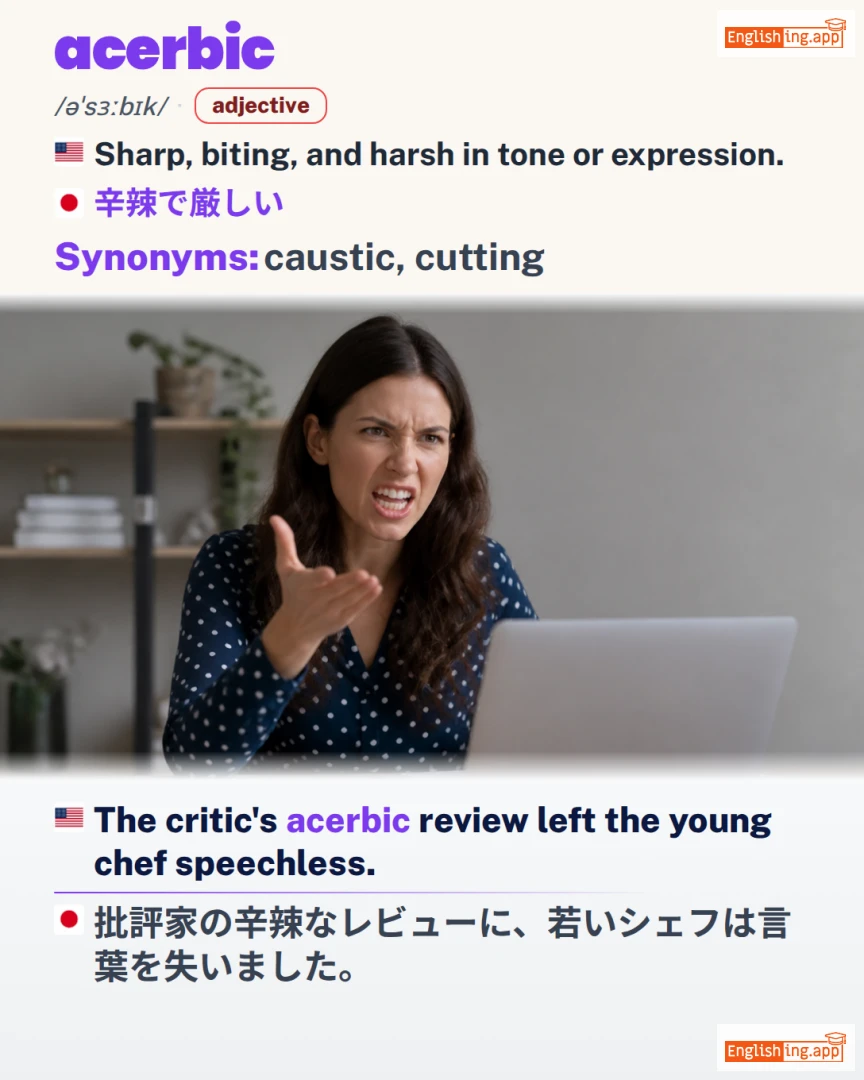
Acerbic: English vocabulary meaning and example
Learn the English word "Acerbic".
Meaning: Acerbic, adjective. It means Sharp, biting, and harsh in tone or expression. Synonyms: caustic, cutting.
Example: The critic's acerbic review left the young chef speechless.
Japanese: Acerbic は、言葉や口調が鋭く、辛辣で、聞く人に刺さるような意味です。
Japanese example: 批評家の辛辣なレビューに、若いシェフは言葉を失いました。
#LearnEnglish #EnglishVocabulary #Englishing
 ja
ja
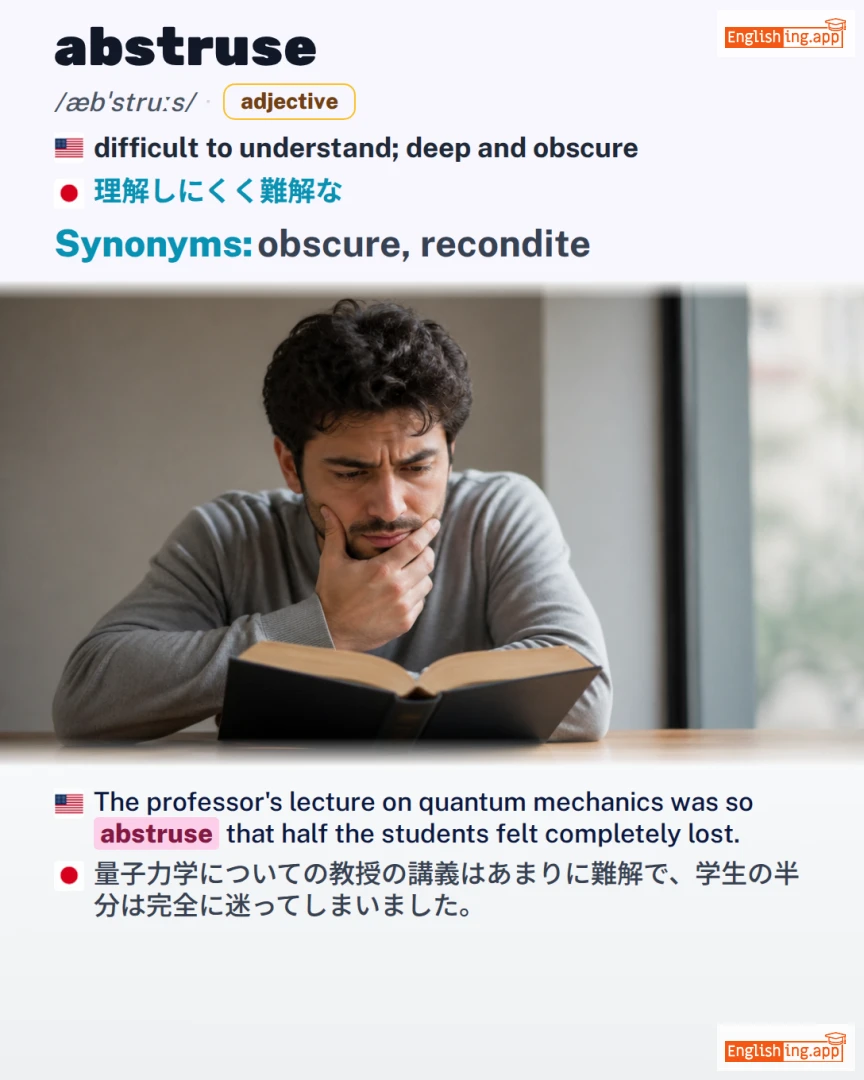
Abstruse: English vocabulary meaning and example
Learn the English word "Abstruse".
Meaning: Abstruse, adjective. It means difficult to understand; deep and obscure. Synonyms: obscure, recondite.
Example: The professor's lecture on quantum mechanics was so abstruse that half the students felt completely lost.
Japanese: Abstruse は、深くて複雑、または専門的すぎて、多くの人にとって理解しにくいという意味です。
Japanese example: 量子力学についての教授の講義はあまりに難解で、学生の半分は完全に迷ってしまいました。
#LearnEnglish #EnglishVocabulary #Englishing
 ja
ja
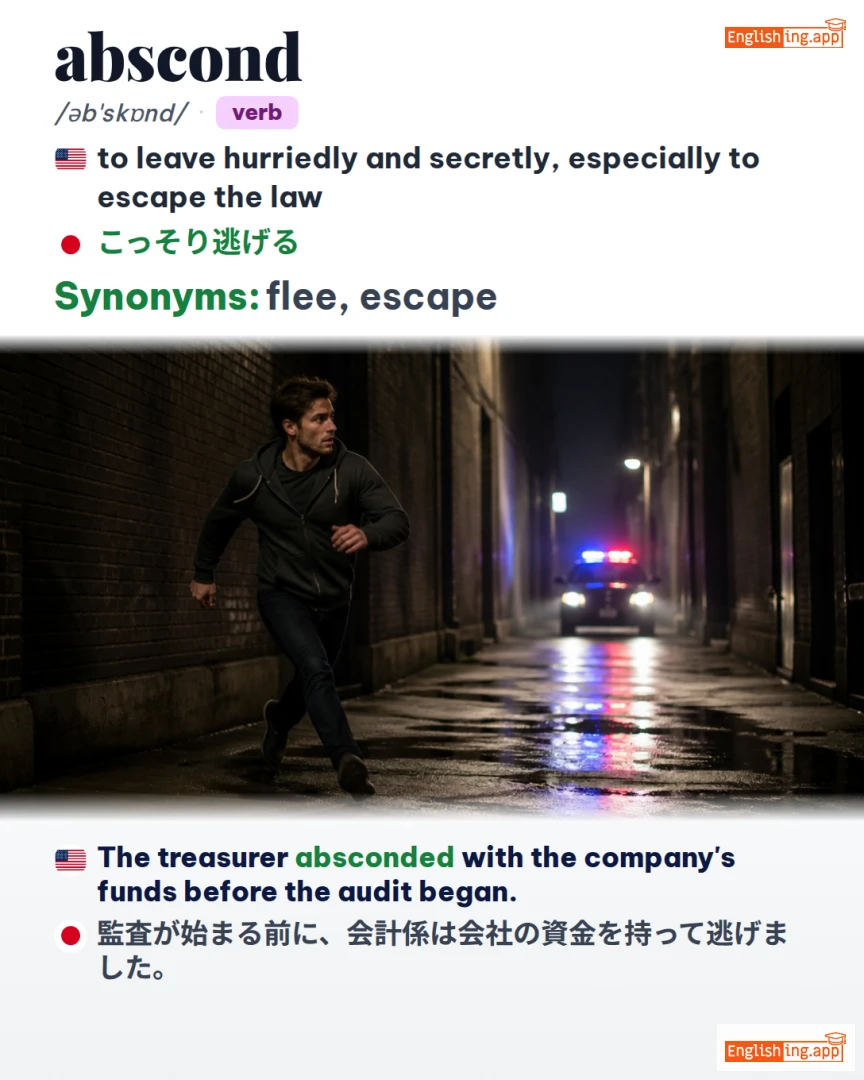
Abscond: English vocabulary meaning and example
Learn the English word "Abscond".
Meaning: Abscond, verb. It means to leave hurriedly and secretly, especially to escape the law. Synonyms: flee, escape.
Example: The treasurer absconded with the company's funds before the audit began.
Japanese: Abscond は、特に法律や罰を避けるために、急いでこっそり逃げるという意味です。お金や盗んだ物を持って逃げる場面でよく使います。
Japanese example: 監査が始まる前に、会計係は会社の資金を持って逃げました。
#LearnEnglish #EnglishVocabulary #Englishing
 ja
ja
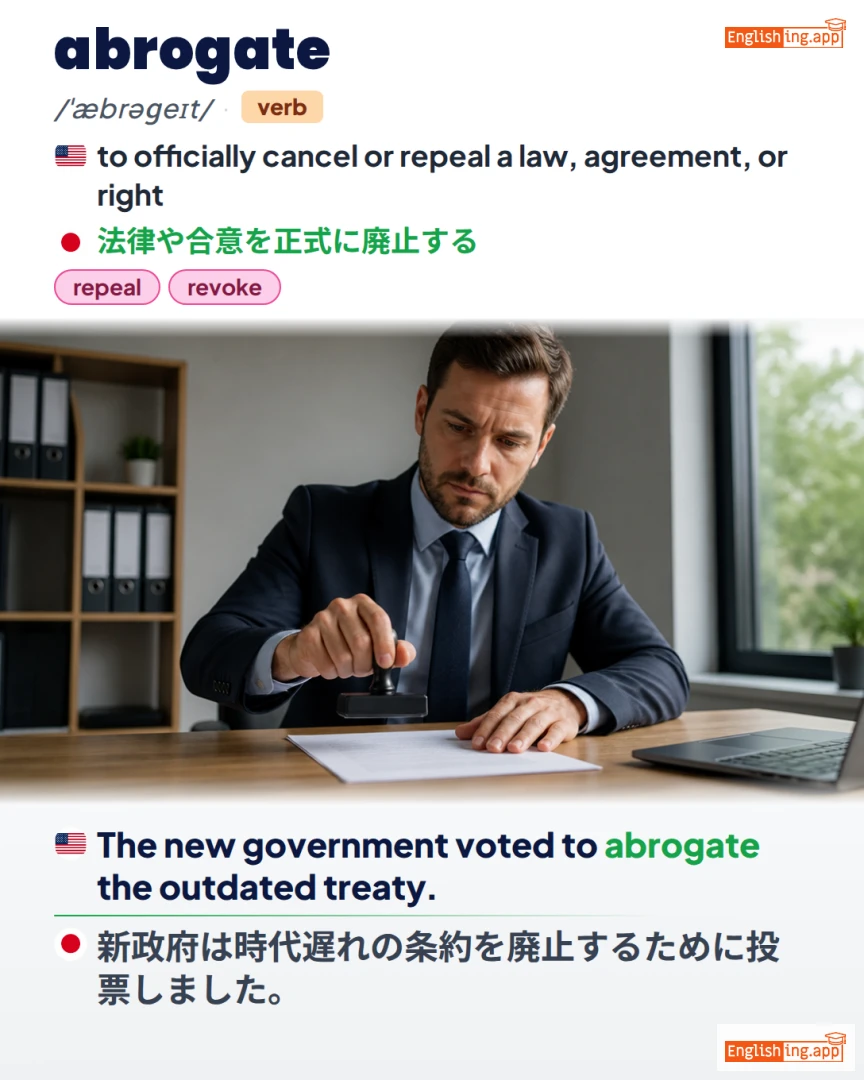
Abrogate: English vocabulary meaning and example
Learn the English word "Abrogate".
Meaning: Abrogate, verb. It means to officially cancel or repeal a law, agreement, or right. Synonyms: repeal, revoke.
Example: The new government voted to abrogate the outdated treaty.
Japanese: Abrogate は、法律、合意、権利などを正式に取り消す、または廃止するという意味です。政府や権限のある人が行うことが多いです。
Japanese example: 新政府は時代遅れの条約を廃止するために投票しました。
#LearnEnglish #EnglishVocabulary #Englishing
 ja
ja
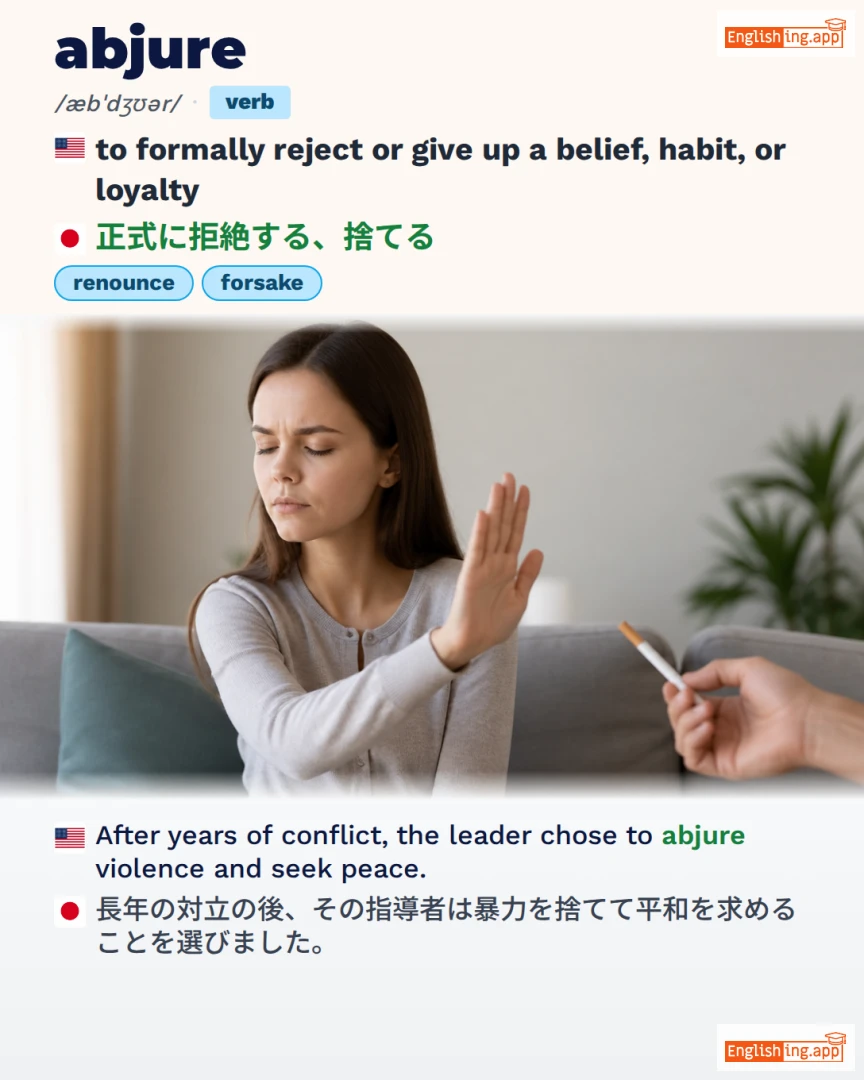
Abjure: English vocabulary meaning and example
Learn the English word "Abjure".
Meaning: Abjure, verb. It means to formally reject or give up a belief, habit, or loyalty. Synonyms: renounce, forsake.
Example: After years of conflict, the leader chose to abjure violence and seek peace.
Japanese: Abjure は、信念、習慣、忠誠などを正式に拒絶したり捨てたりする意味です。強い決意を持ってやめる感じがあります。
Japanese example: 長年の対立の後、その指導者は暴力を捨てて平和を求めることを選びました。
#LearnEnglish #EnglishVocabulary #Englishing
 ja
ja
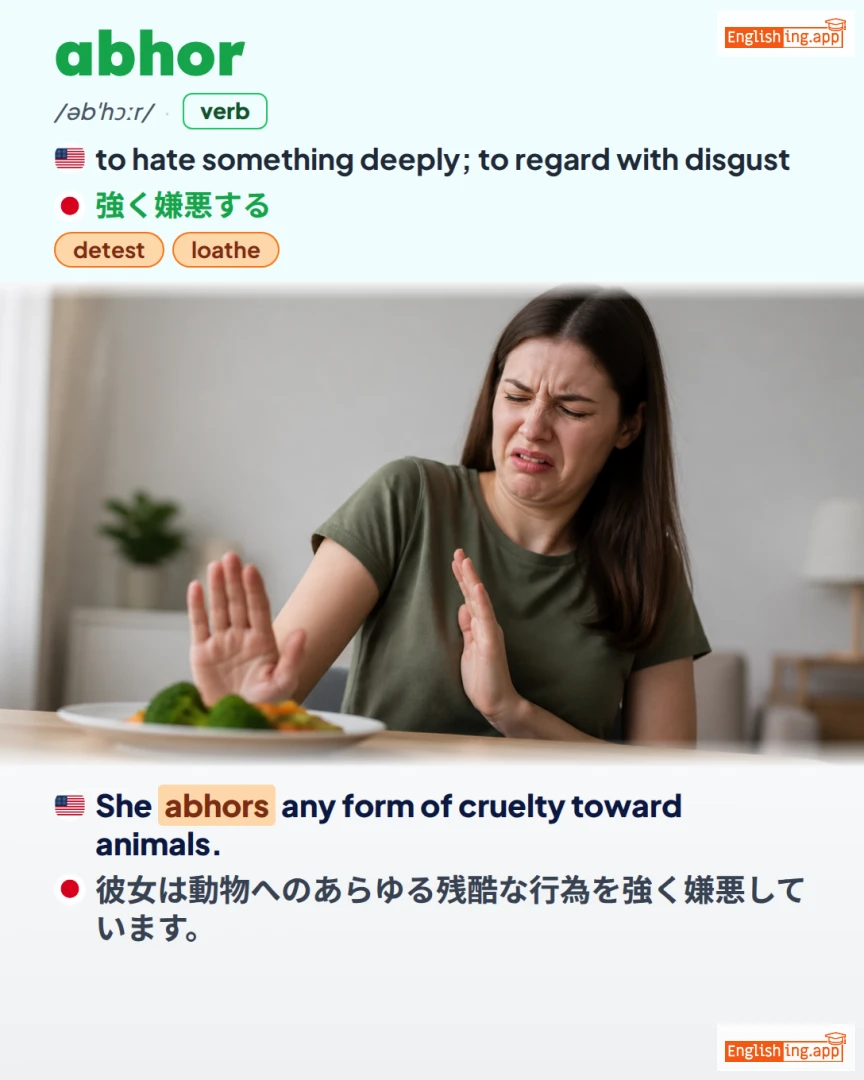
Abhor: English vocabulary meaning and example
Learn the English word "Abhor".
Meaning: Abhor, verb. It means to hate something deeply; to regard with disgust. Synonyms: detest, loathe.
Example: She abhors any form of cruelty toward animals.
Japanese: Abhor は、何かを深く嫌い、強い嫌悪感を持つという意味です。普通の dislike よりずっと強い表現です。
Japanese example: 彼女は動物へのあらゆる残酷な行為を強く嫌悪しています。
#LearnEnglish #EnglishVocabulary #Englishing
 ja
ja
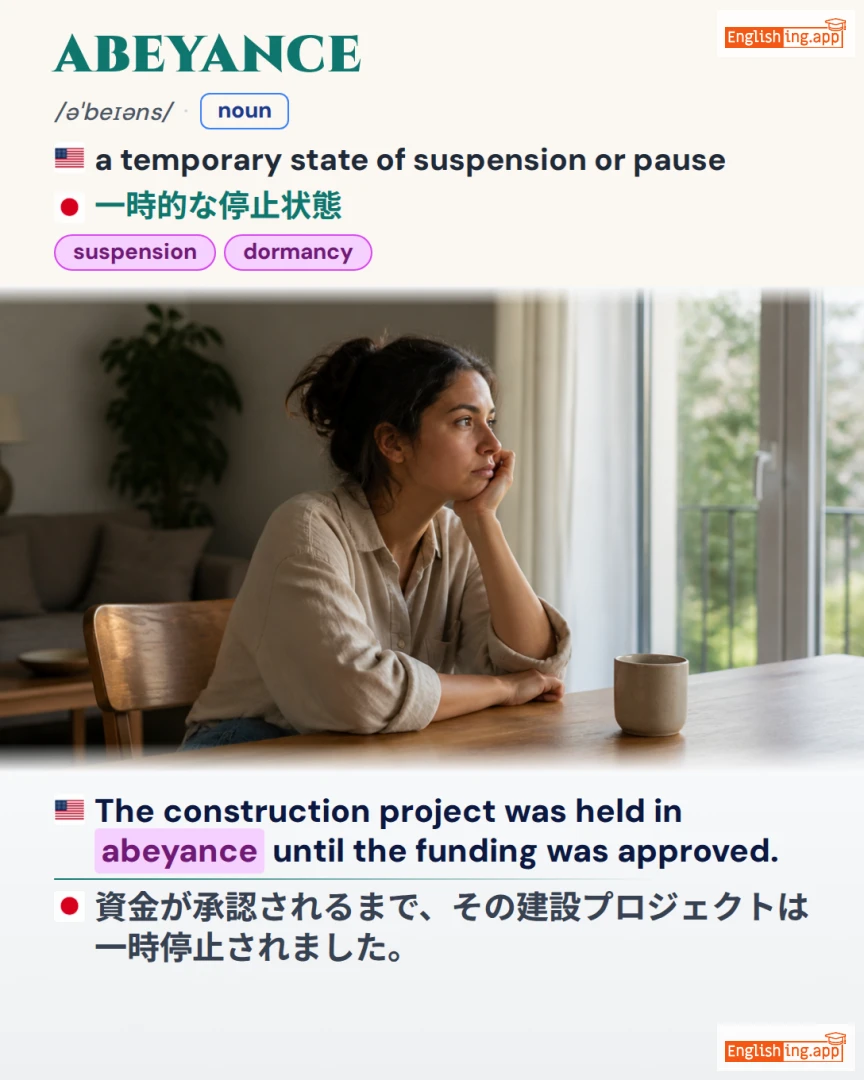
Abeyance: English vocabulary meaning and example
Learn the English word "Abeyance".
Meaning: Abeyance, noun. It means a temporary state of suspension or pause. Synonyms: suspension, dormancy.
Example: The construction project was held in abeyance until the funding was approved.
Japanese: Abeyance は、何かが一時的に止められている状態です。終わったわけではなく、後で再開されるのを待っています。
Japanese example: 資金が承認されるまで、その建設プロジェクトは一時停止されました。
#LearnEnglish #EnglishVocabulary #Englishing
 ja
ja
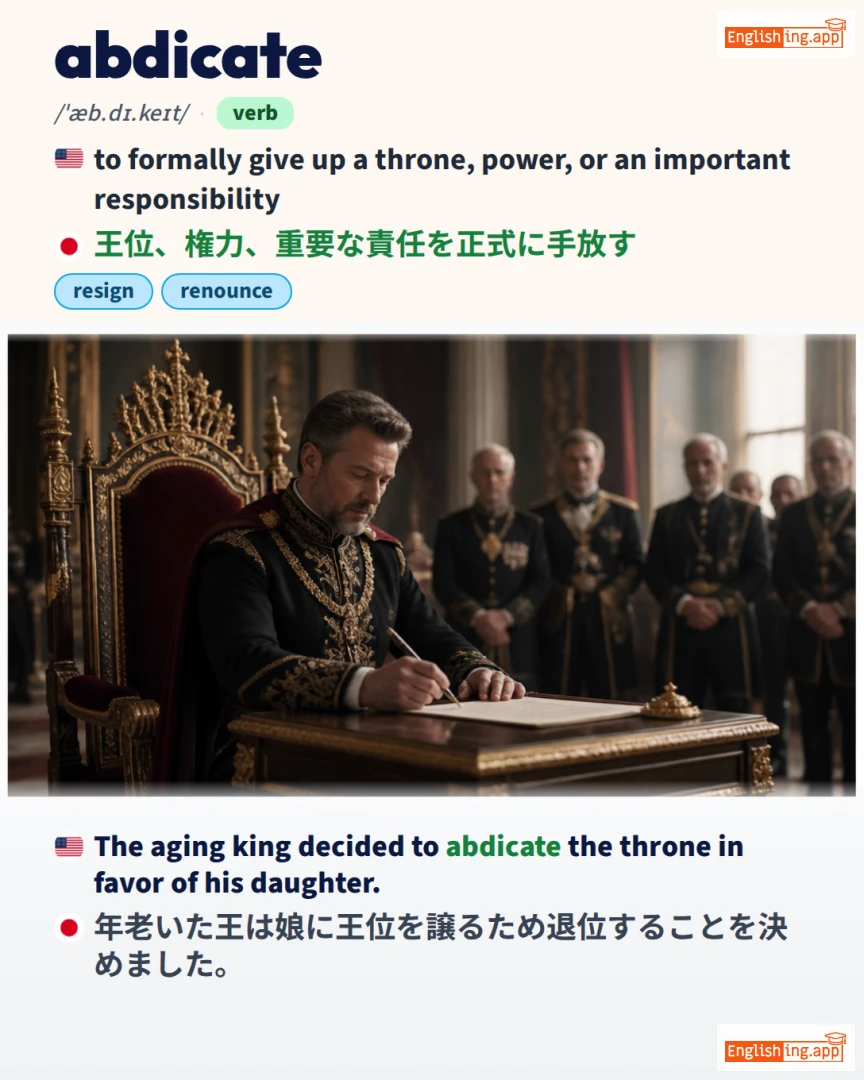
Abdicate: English vocabulary meaning and example
Learn the English word "Abdicate".
Meaning: Abdicate, verb. It means to formally give up a throne, power, or an important responsibility, usually by stepping down from a high position. Synonyms: resign, renounce.
Example: The aging king decided to abdicate the throne in favor of his daughter.
Japanese: Abdicate は、王位、権力、または重要な責任を正式に手放すという意味です。権威ある立場から自分で退くときに使います。
Japanese example: 年老いた王は娘に王位を譲るため退位することを決めました。
#LearnEnglish #EnglishVocabulary #Englishing
 ja
ja
Abate: English vocabulary meaning and example
Learn the English word "Abate".
Meaning: Abate, verb. It means to become less intense or to gradually reduce, like a storm losing power or pain slowly fading away. Synonyms: subside, diminish.
Example: We waited inside until the storm began to abate.
Japanese: Abate は、強さや激しさがだんだん弱まるという意味です。嵐、痛み、プレッシャーなどが少しずつ小さくなるときに使えます。
Japanese example: 嵐が弱まり始めるまで、私たちは中で待ちました。
#LearnEnglish #EnglishVocabulary #Englishing
 ja
ja
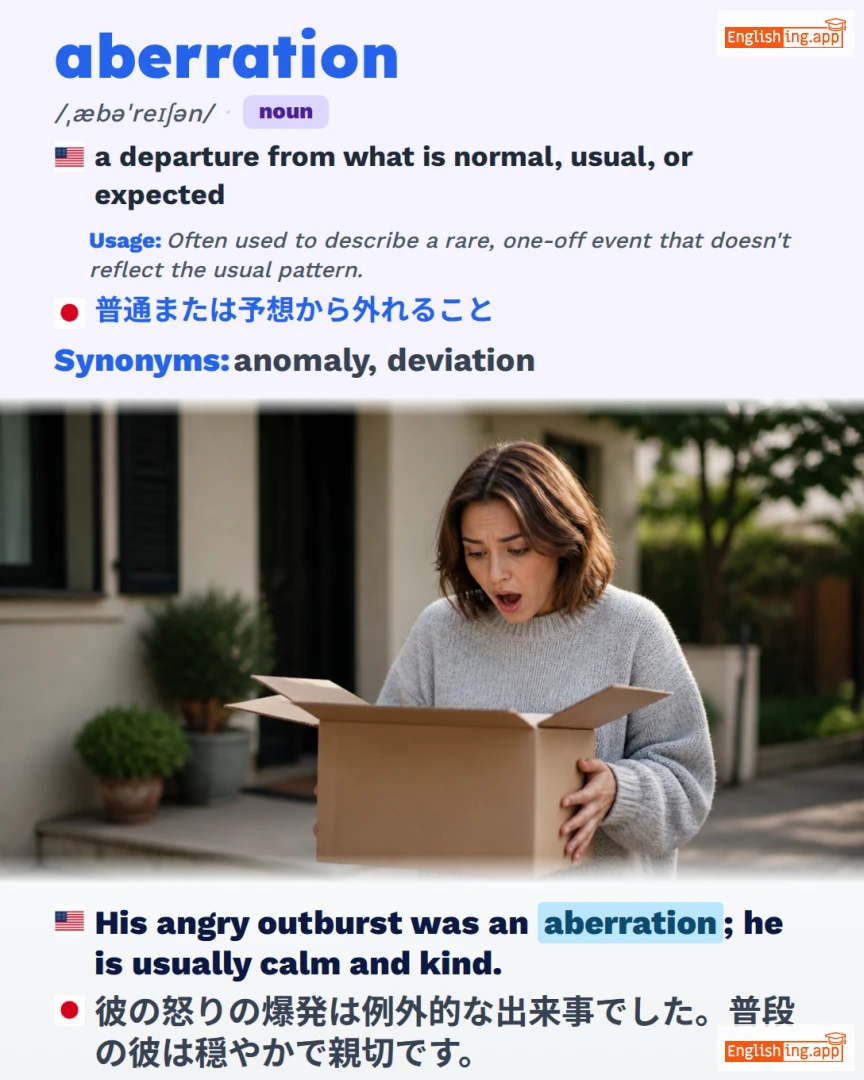
Aberration: English vocabulary meaning and example
Learn the English word "Aberration".
Meaning: Aberration, noun. It describes a moment, action, or result that is not normal or expected, like a strange one-time break from the usual pattern. Synonyms: anomaly, deviation.
Example: His angry outburst was an aberration; he is usually calm and kind.
Japanese: Aberration は、普通または予想されるパターンから外れることです。よく、普段とは違うまれな出来事や失敗を説明するときに使います。
Japanese example: 彼の怒りの爆発は例外的な出来事でした。普段の彼は穏やかで親切です。
#LearnEnglish #EnglishVocabulary #Englishing
 ja
ja
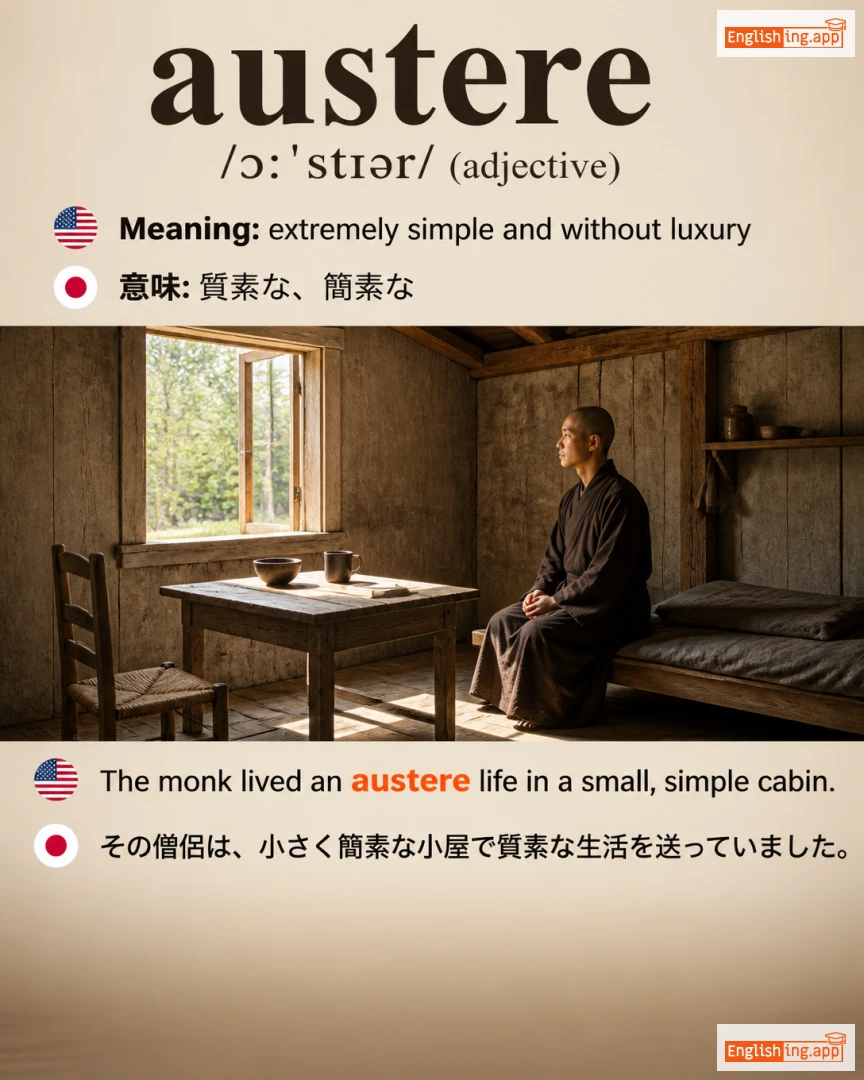
Austere: English vocabulary meaning and example
Learn the English word "Austere".
Meaning: Extremely simple and without luxury.
Example: The monk lived an austere life in a small, simple cabin.
Japanese: 質素な、簡素な。
Japanese example: その僧侶は、小さく簡素な小屋で質素な生活を送っていました。
#LearnEnglish #EnglishVocabulary #Englishing
 ja
ja
Ambivalent: English vocabulary meaning and example
Learn the English word "Ambivalent".
Meaning: having mixed or contradictory feelings about something.
Example: She felt ambivalent about accepting the job offer, excited about the opportunity but worried about leaving her hometown.
Japanese: 相反する気持ちを同時に持っている、どちらとも言えない気持ちの。
Japanese example: 彼女はその仕事のオファーを受けることについて複雑な気持ちを抱いていた。チャンスにわくわくしながらも、故郷を離れることを心配していた。
#LearnEnglish #EnglishVocabulary #Englishing
 ja
ja
Auspicious: English vocabulary meaning and example
Learn the English word "Auspicious".
Meaning: Showing signs that future success is likely.
Example: A bright sunny morning was an auspicious start to our journey.
Japanese: 縁起の良い
Japanese example: よく晴れた朝は、私たちの旅の縁起の良いスタートでした。
#LearnEnglish #EnglishVocabulary #Englishing
 ja
ja
Acquire: English vocabulary meaning and example
Learn the English word "Acquire".
Meaning: to get or gain something, especially through effort or experience.
Example: She worked hard to acquire the skills needed for her new job.
Japanese: 獲得する、身につける
Japanese example: 彼女は新しい仕事に必要なスキルを身につけるために、懸命に努力した。
#LearnEnglish #EnglishVocabulary #Englishing