Vocabularies

English Vocabulary Dictionary | Word Meanings, Definitions & Examples

adjective
/prɪˈdɒmɪnənt/

Having superior strength, influence, or authority; most common or noticeable.

"The predominant color in the painting is blue."

adverb
/prɪˈdɒmɪnəntli/

mainly; for the most part

"The population in the city is predominantly young."

verb
/prɪˈdɒmɪneɪt/

To be the strongest, most common, or most influential element.

"Traditional values still predominate in the community."

noun
/priːˈɛmɪnəns/

The fact of surpassing all others; superiority.

"The university has gained preeminence in medical research."

👩‍🔬

preeminent

adjective
/priːˈɛmɪnənt/

Surpassing all others; very distinguished in some way.

"She is a preeminent scientist in the field of genetics."

🛡️

preempt

verb
/priːˈɛmpt/

To take action in order to prevent something from happening; to take the place of something.

"The government acted quickly to preempt a financial crisis."

noun
/priˈɛmpʃən/

The act of taking action before someone else; the right to purchase or act before others.

"The company exercised preemption to acquire the land before competitors."

🛡️

preemptive

adjective
/priˈɛmptɪv/

Serving or intended to prevent something by taking action first.

"The government took preemptive measures to control inflation."

🪞

preen

verb
/priːn/

To groom or dress oneself with care; to show pride in one's appearance.

"She preened in front of the mirror before leaving for the party."

verb
/ˌpriːɪnˈɡeɪdʒ/

To contract or engage beforehand; to arrange in advance.

"The workers were preengaged before the project officially started."

verb
/ˌpriːɪˈstæblɪʃ/

To establish or set up beforehand.

"Certain rules were preestablished before the meeting."

verb
/ˌpriːɪɡˈzɪst/

to exist beforehand or before something else

"These customs preexist the arrival of modern technology."

noun
/ˌpriːɪɡˈzɪstəns/

the state of existing before something else

"Philosophers often debated the preexistence of the soul."

noun
/ˈprɛfəs/

an introduction to a book, speech, or other written work

"The author explained his motivation in the preface."

adjective
/ˈprɛfətɔːri/

serving as an introduction or preface

"He made some prefatory remarks before the lecture began."

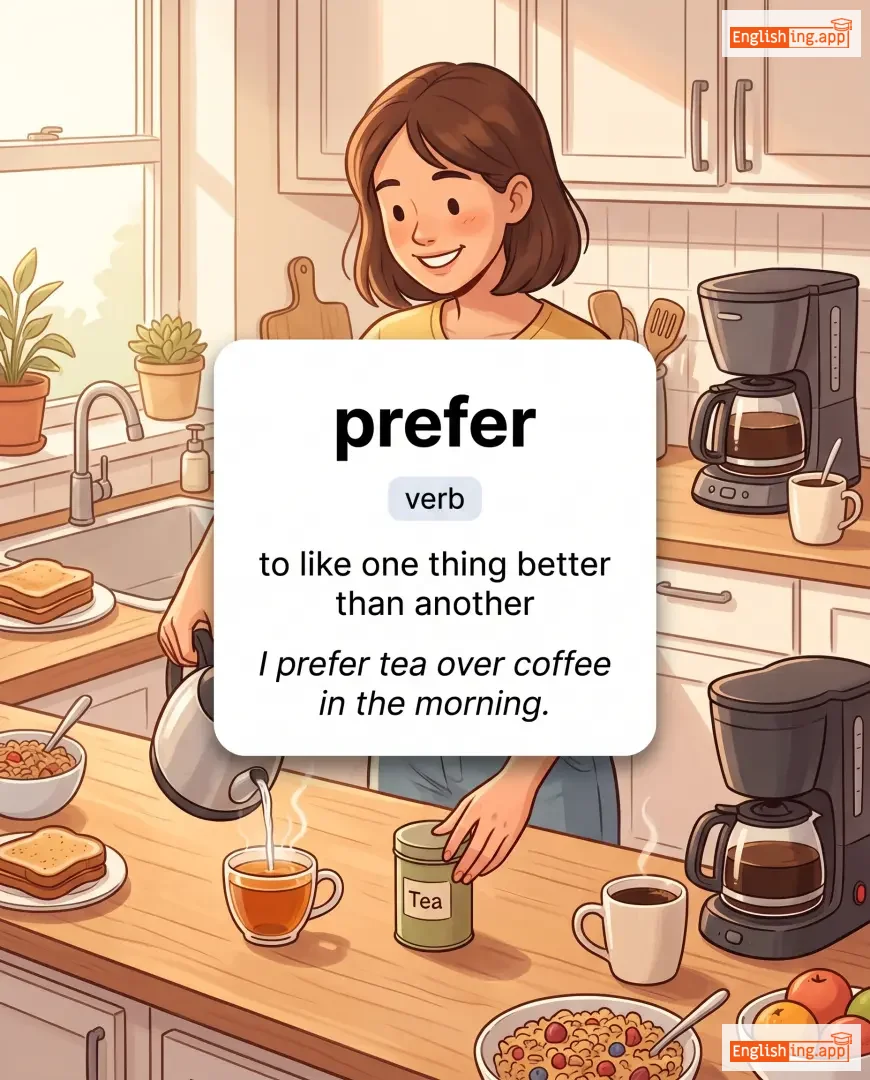
prefer definition card — visual illustration of the meaning
verb
/prɪˈfɜːr/

to like one thing better than another

"I prefer tea over coffee in the morning."

adjective
/ˈprɛf(ə)rəb(ə)l/

more desirable or suitable; better than something else

"It is preferable to take the train rather than drive in heavy traffic."

noun
/ˈprɛf(ə)rəns/

a greater liking for one alternative over another

"She has a preference for tea over coffee."

adjective
/ˌprɛfəˈrɛnʃəl/

showing or giving advantage to one over others

"Members receive preferential treatment at the club."

noun
/prɪˈfɜːrmənt/

promotion or advancement in rank, position, or office

"He hoped for preferment in the government office."

verb
/priːˈfɪɡjər/

to represent, show, or foreshadow something in advance

"The economic reforms prefigure major social changes."

noun/verb
/ˈpriːfɪks/

a word, letter, or number placed before another; as a verb, to add something in front of something else

"Developers often prefix variables with an underscore."

noun
/ˈprɛɡnənsi/

the condition of being pregnant; the period during which a woman carries a developing fetus

"Her pregnancy was carefully monitored by her doctor."

adjective
/ˈprɛɡnənt/

having a child developing in the womb; also, full of meaning or significance

"She announced that she was three months pregnant."

adjective
/prɪˈhɛnsɪbəl/

capable of being grasped or seized

"The tool has a prehensible handle that improves safety."

adjective
/prɪˈhɛnsaɪl/

adapted for seizing or grasping, especially by wrapping around an object

"The monkey used its prehensile tail to hang from the branch."

🖐️

prehension

noun
/prɪˈhɛnʃən/

the act of grasping or seizing; the ability to take hold of something

"Therapists assessed the patient's prehension during hand therapy."

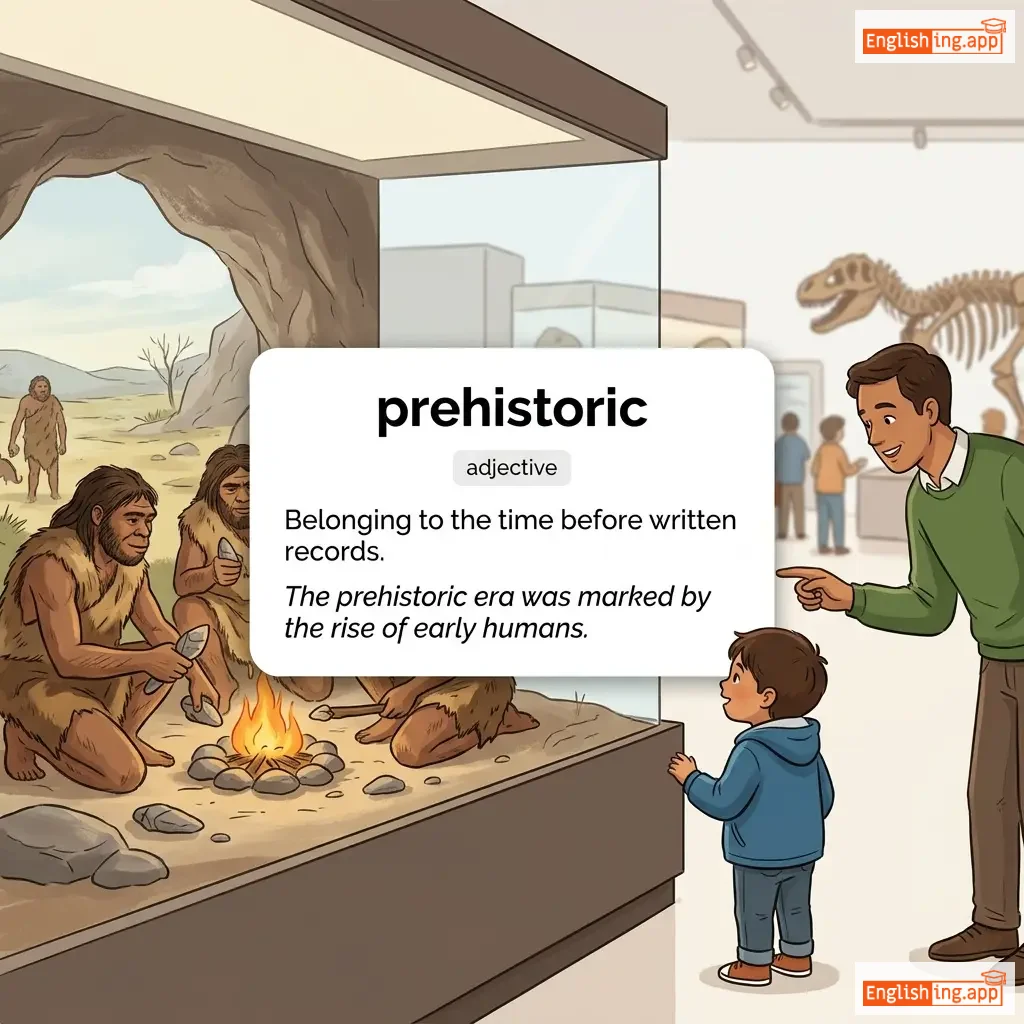
prehistoric definition card — visual illustration of the meaning
adjective
ˌpriːhɪˈstɒrɪk

Belonging to the time before written records.

"The prehistoric era was marked by the rise of early humans."

noun
/ˈprɛdʒədɪs/

An unfair and unreasonable opinion or feeling, especially when formed without enough thought or knowledge.

"Prejudice often prevents people from seeing the truth about others."

adjective
/ˈprɛdʒədɪst/

having or showing a dislike or bias against a person or group without proper reason

"He was prejudiced against people from other regions."

noun
/ˈprɛləsi/

The office, dignity, or system of church government by prelates.

"The medieval church was dominated by prelacy and its traditions."

noun
/ˈprɛlət/

A high-ranking member of the clergy, especially a bishop or abbot.

"The prelate delivered a sermon to the congregation."

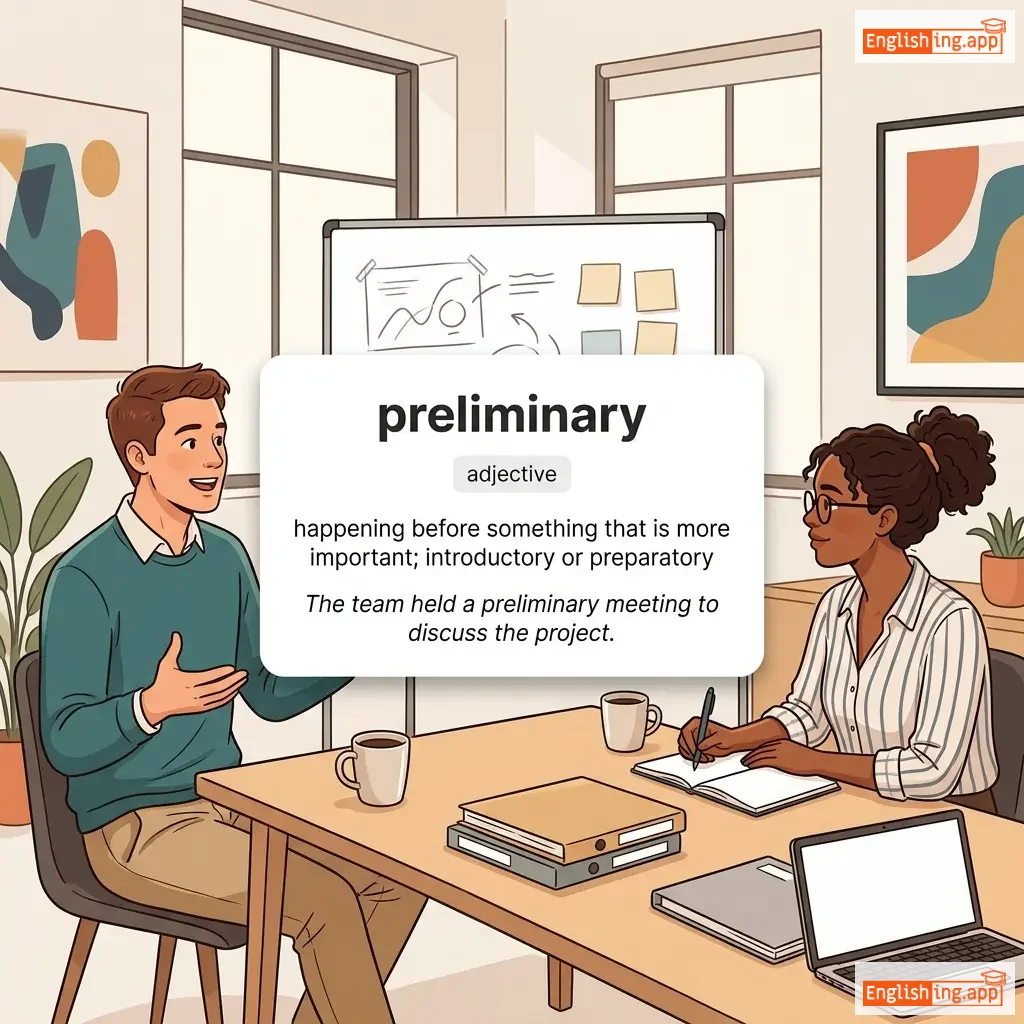
preliminary definition card — visual illustration of the meaning
adjective
/prɪˈlɪmɪˌneri/

happening before something that is more important; introductory or preparatory

"The team held a preliminary meeting to discuss the project."

noun
/ˈprɛljuːd/

An action, event, or statement that serves as an introduction to something more important.

"The small fight was only a prelude to a bigger conflict."

adjective
/ˌpriːməˈtjʊər/

Happening or done before the usual or proper time.

"His decision to quit the job was premature."

verb
/ˌpriːˈmɛdɪteɪt/

to think about and plan something (especially a crime) beforehand

"The suspect was accused of premeditating the crime."

adjective
/ˌpriːˈmɛdɪˌteɪtɪd/

planned in advance; done deliberately

"The crime was clearly premeditated."

noun, adjective
/prɪˈmɪər/ or /ˈpriːmiər/

the head of government in some countries; first in importance or rank

"The French premier addressed the nation."

noun
/ˈprɛmɪs/

a statement or idea on which reasoning or an argument is based; also a building or property

"His argument was based on a false premise."

noun
/ˈpriːmiəm/

an amount of money paid regularly for an insurance policy; something of superior quality or value

"You need to pay your insurance premium every year."

noun
/ˌpriːməˈnɪʃən/ or /ˌprɛm-/

a strong feeling that something is about to happen, often something negative

"She had a premonition of danger before the trip."

adjective
/prɪˈmɒnɪtəri/ or /ˌpriːməˈnɪtəri/

giving a warning or prediction about something, especially something unpleasant

"He ignored the premonitory signs of illness."

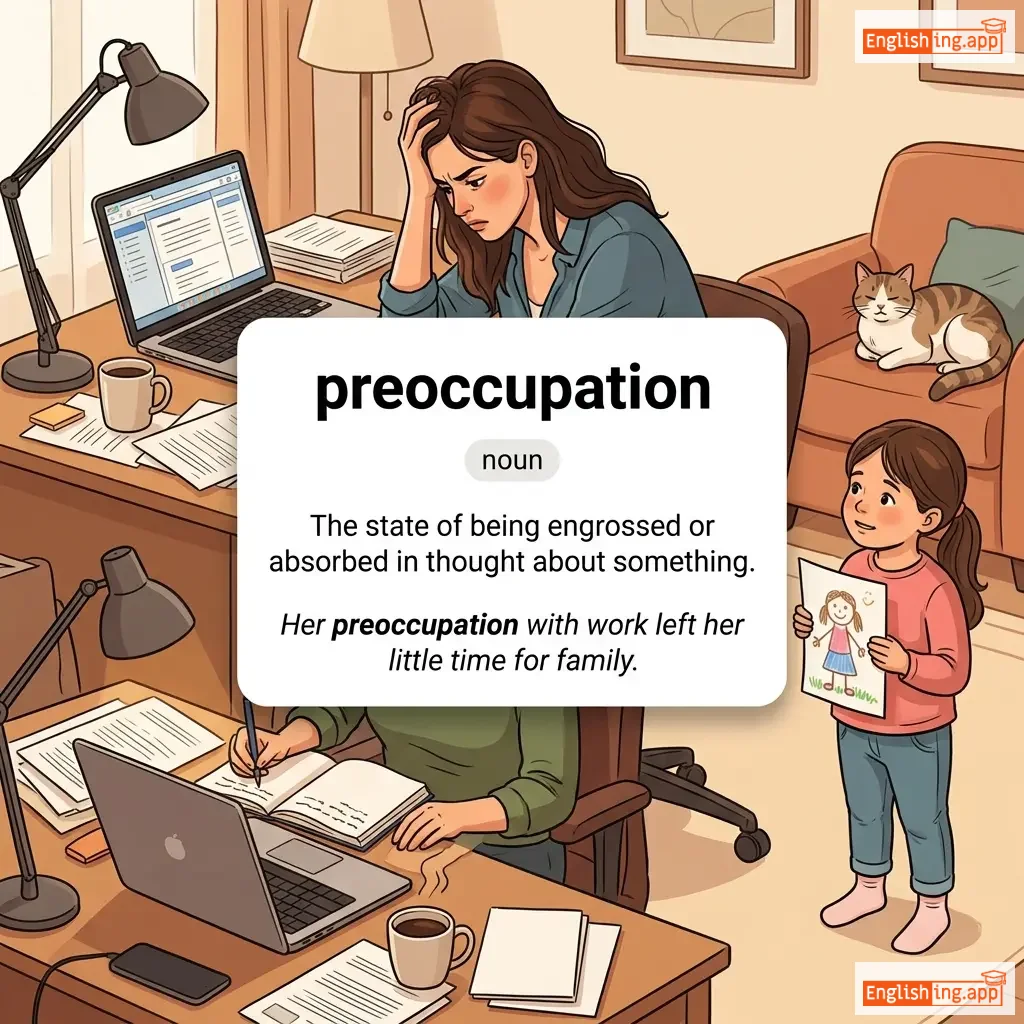
preoccupation definition card — visual illustration of the meaning
noun
/priːˌɒkjuˈpeɪʃən/

The state of being engrossed or absorbed in thought about something.

"Her preoccupation with work left her little time for family."

verb
/priːˈɒkjʊpaɪ/

To dominate or engross the mind of someone to the exclusion of other thoughts.

"Worries about the future preoccupy him constantly."

verb
/ˌpriːɔːrˈdeɪn/

To decide or determine an outcome in advance, especially by fate or divine will.

"They believed their meeting was preordained by destiny."

noun
/ˌprɛpəˈreɪʃən/

The act of getting ready or making arrangements for something.

"The team made careful preparation for the presentation."

adjective
/prɪˈpærətɔːri/

Serving as preparation or preliminary before the main event.

"They held a preparatory meeting before the main conference."

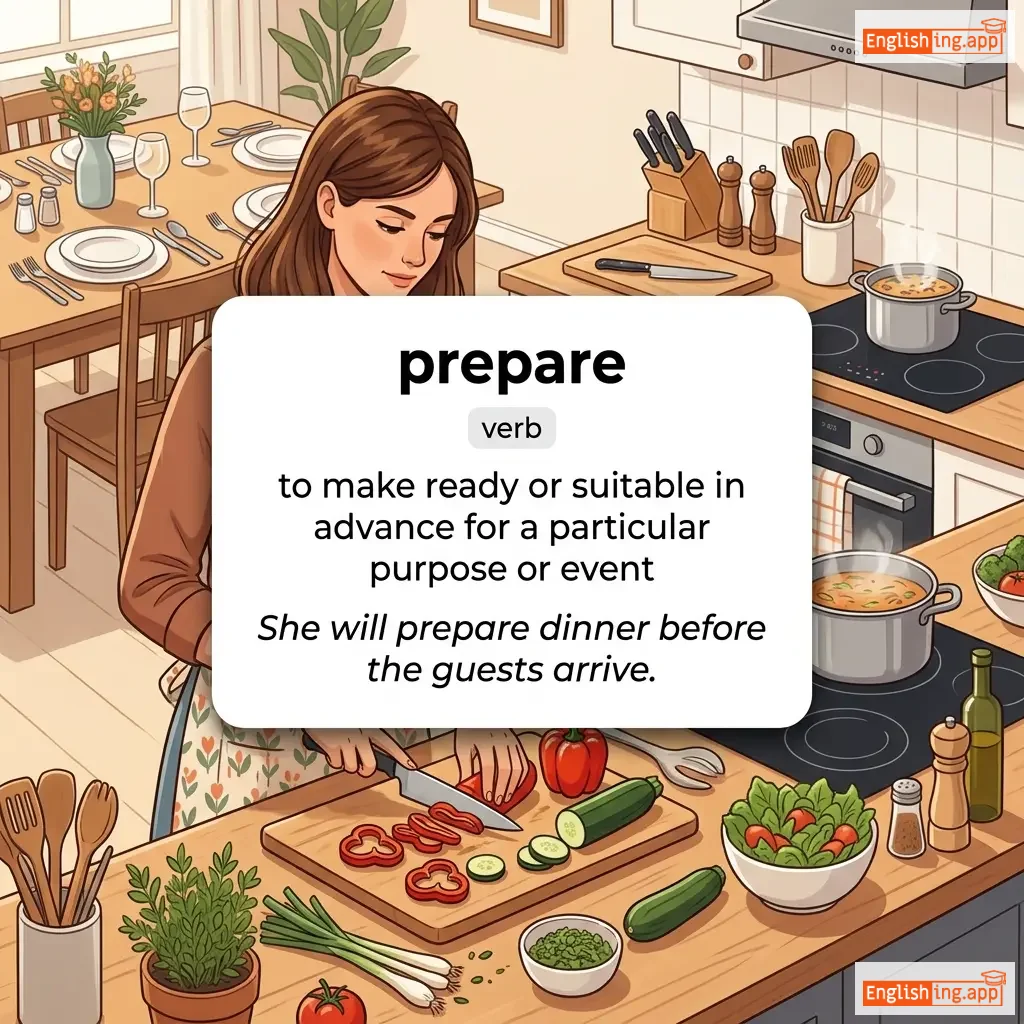
prepare definition card — visual illustration of the meaning
🍽️

prepare

verb
/prɪˈpɛə/

to make ready or suitable in advance for a particular purpose or event

"She will prepare dinner before the guests arrive."

adjective; verb (past and past participle of prepare)
/prɪˈpɛrd/

made ready in advance; having made plans or taken steps beforehand

"She was fully prepared for the final exam."

noun
/prɪˈpɒndərəns/

The quality or fact of being greater in number, quantity, or importance.

"There was a preponderance of evidence against the defendant."