Vocabularies

English Vocabulary Dictionary | Word Meanings, Definitions & Examples

🏜️

nomad

noun
/ˈnoʊmæd/

A person who has no permanent home and moves from place to place.

"The desert was once home to nomads who lived by herding animals."

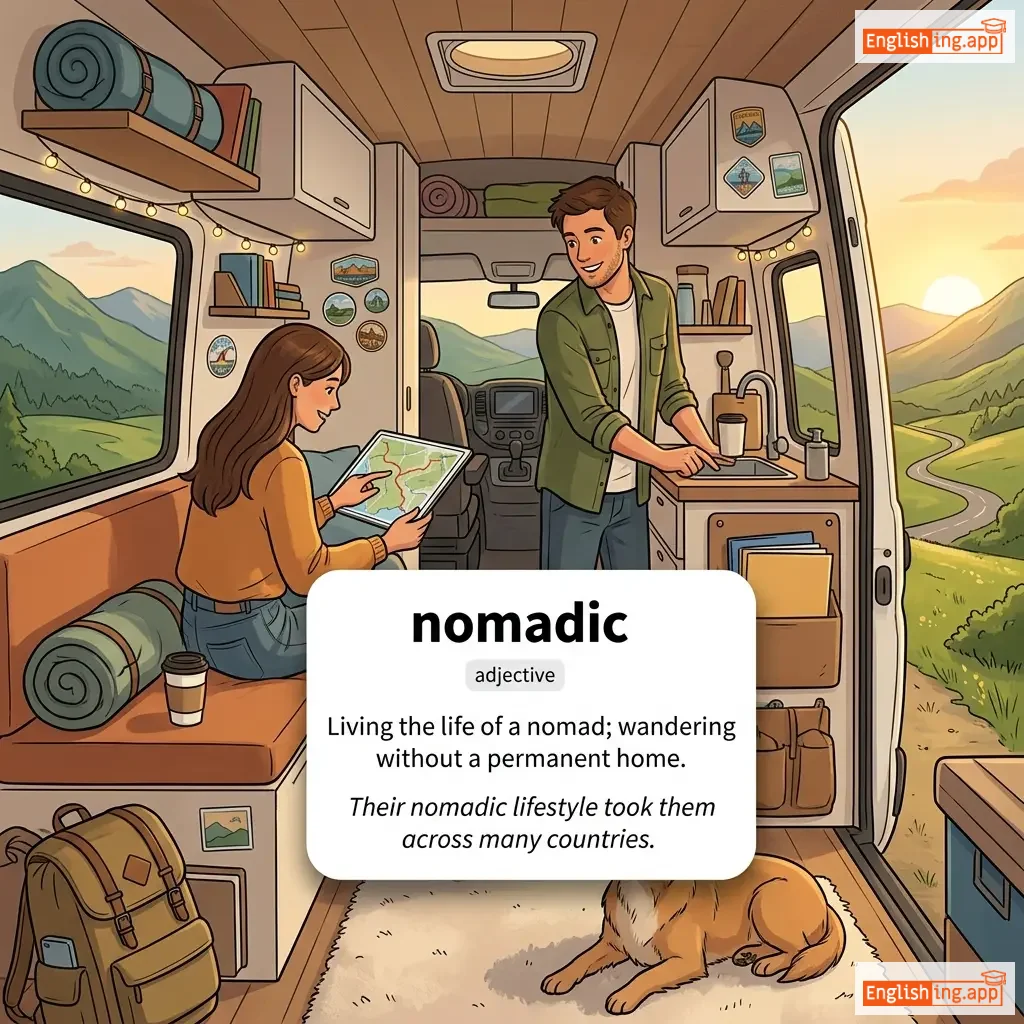
nomadic definition card — visual illustration of the meaning
adjective
/noʊˈmædɪk/

Living the life of a nomad; wandering without a permanent home.

"Their nomadic lifestyle took them across many countries."

noun
/ˈnoʊmənˌkleɪtʃər/

A system of names or terms used in a particular science, art, or field.

"The chemical nomenclature can be difficult for beginners to understand."

⚖️

nomic

adjective
/ˈnɒmɪk/

Relating to laws, rules, or systems.

"The philosopher discussed the nomic necessity of natural laws."

adjective
/ˈnɒmɪnəl/

Existing in name only; very small in amount.

"He was the nominal leader of the group but had no real power."

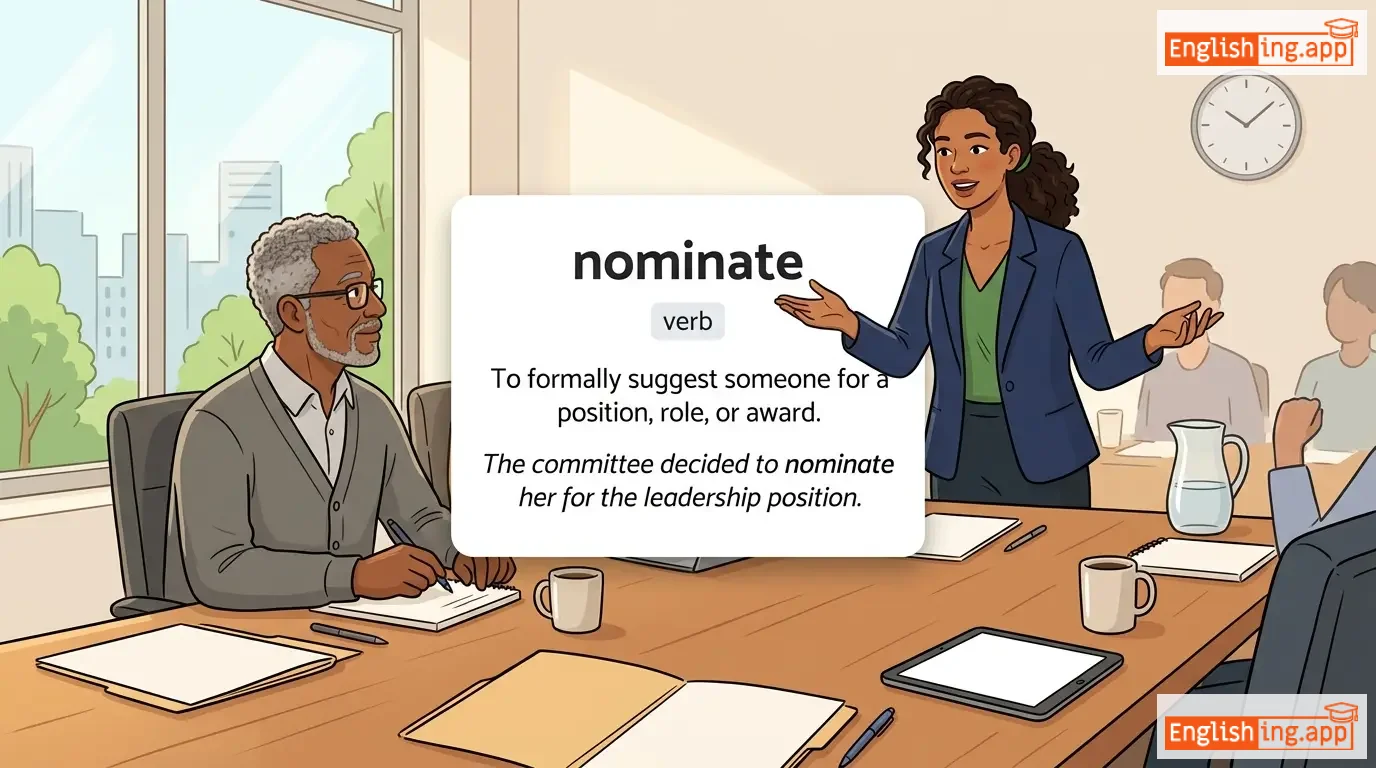
nominate definition card — visual illustration of the meaning
🗳️

nominate

verb
/ˈnɒməˌneɪt/

To formally suggest someone for a position, role, or award.

"The committee decided to nominate her for the leadership position."

noun
/ˌnɒməˈneɪʃən/

The act of formally proposing someone for a role, position, or award.

"Her nomination for the award surprised everyone."

🎖️

Nominee

noun
/ˌnɒmɪˈniː/

a person who is formally suggested or chosen for a position, award, or role

"She was the nominee for the Best Actress award."

noun
/ˌnɒn ˈsɛkwɪtər/

a statement or conclusion that does not logically follow from the previous statement

"His comment about the weather was a complete non sequitur during the budget discussion."

noun, adjective
/nɒn ˈkɒmbətənt/

a person not engaged in fighting during a war, such as civilians or medical staff

"The Red Cross workers were treated as non-combatants in the conflict."

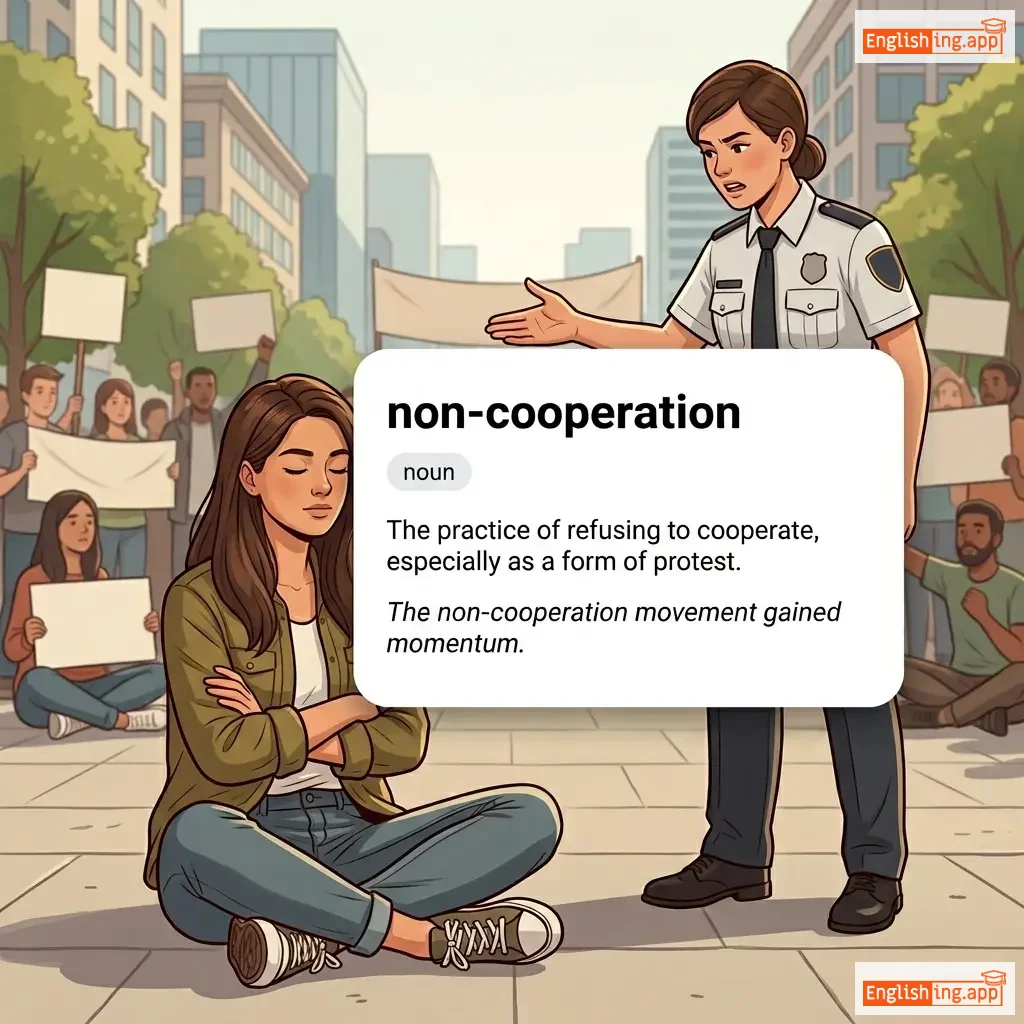
non-cooperation definition card — visual illustration of the meaning
noun
ˌnɒn.kəʊˌɒp.ərˈeɪ.ʃən

The practice of refusing to cooperate, especially as a form of protest.

"The non-cooperation movement gained momentum."

adjective
/ˌnɒn ɪɡˈzɪstənt/

not real or not present; lacking existence

"The supposed evidence turned out to be non-existent."

noun; adjective
/ˌnɒnˈprɒfɪt/

an organization that does not operate for profit and reinvests surplus to achieve social goals; not intended to make financial profit

"She works for a non-profit that provides free education to underprivileged children."

noun, adjective
/ˌnɒn ˈrɛzɪdənt/

a person who does not live in a particular country or place permanently

"Non-resident students often pay higher tuition fees."

⏱️

Non-stop

adverb
/ˌnɒnˈstɒp/

continuing without stopping; without interruption

"The train traveled non-stop from London to Paris."

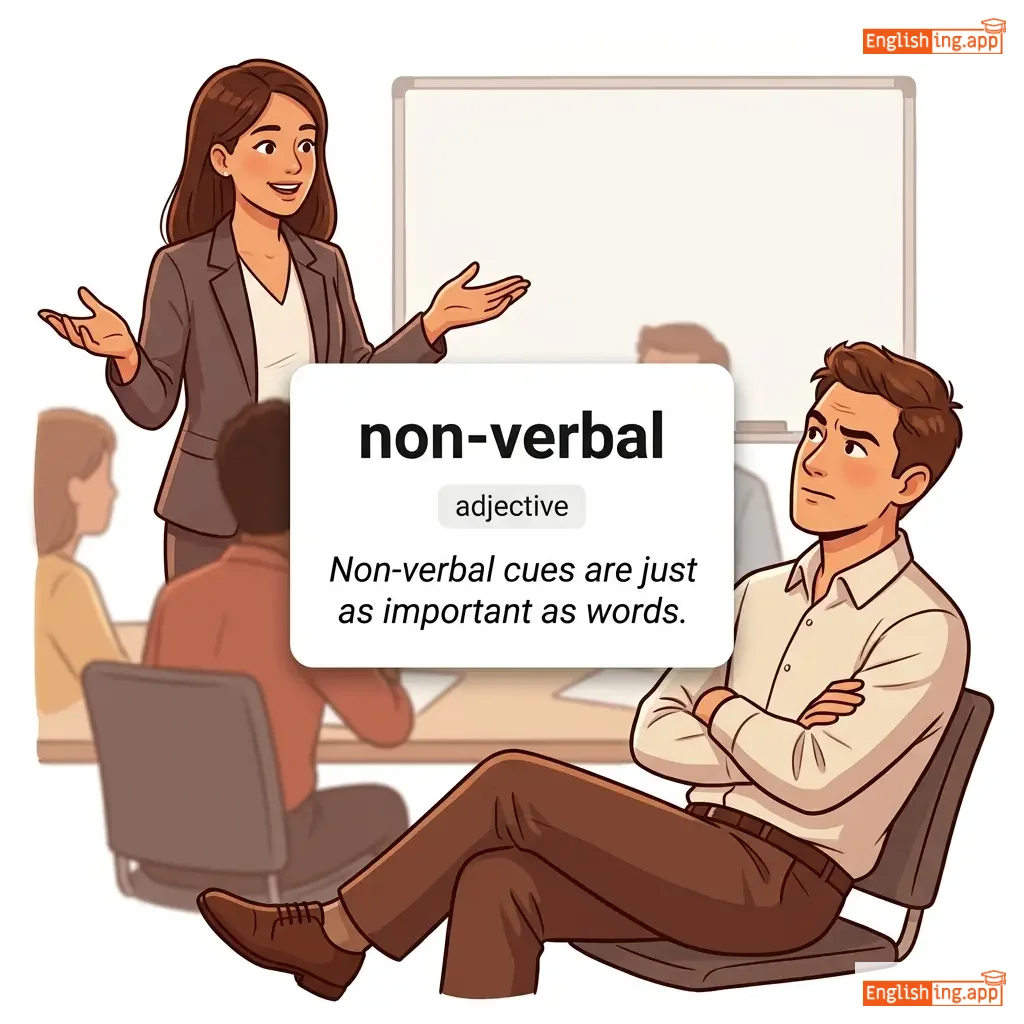
non-verbal definition card — visual illustration of the meaning
adjective
/ˌnɒnˈvɜː.bəl/

Not involving or using words or speech; communicated through gestures, body language, or facial expressions.

"Non-verbal cues are just as important as words."

noun
/ˈnɒn.ɪʤ/

the period of being under the legal age of majority; youth or immaturity

"During his nonage, all legal decisions were made by his guardian."

noun
/ˈnɒnʃələns/

A relaxed and calm state, showing lack of concern or interest.

"She answered the tough questions with surprising nonchalance."

adjective
/ˈnɒnʃələnt/

Appearing calm, casual, and unconcerned.

"He gave a nonchalant shrug and walked away."

adjective
/ˌnɒnkəˈmɪtl̩/

Not expressing or showing a clear opinion, decision, or commitment.

"She gave a noncommittal reply when asked about her future plans."

adjective
/ˌnɒndɪˈskrɪpt/

Lacking distinctive or interesting features; dull and unremarkable.

"He lives in a nondescript apartment building on the edge of town."

🚫

none

pronoun
/nʌn/

not any; no one; not one

"None of the students passed the exam."

noun
/nɒnˈentəti/

A person or thing of no importance or significance.

"Once a powerful leader, he is now treated as a political nonentity."

🌧️➡️🏞️

nonetheless

adverb
/ˌnʌnðəˈlɛs/

in spite of that; nevertheless

"It was raining, but nonetheless, they went hiking."

adjective
/ˌnɒnpəˈreɪl/

Having no equal; unrivaled or matchless.

"Her beauty was considered nonpareil in the region."

verb
/ˌnɒnˈplʌs/

To surprise and confuse someone so much that they are unsure how to react.

"The unexpected question seemed to nonplus the speaker."

verb
/ˌnɒnˈplʌst/

Past tense of nonplus; surprised and confused.

"She was completely nonplused by his sudden decision."

verb
/ˌnɒnˈplʌst/

Past tense of nonplus; surprised and unsure how to react.

"He stood nonplussed at the strange remark."

adjective
/ˌnɒnˈprɒfɪt/

an organization that does not aim to make a profit, often serving a social or charitable purpose.

"She works for a nonprofit organization that helps children."

noun
/ˈnɒnsəns/

Words or ideas that have no meaning or make no sense.

"His explanation was pure nonsense."

adjective
/ˌnɒnˈtrɪviəl/

Not simple or easy; requiring effort or significant thought.

"Solving the equation turned out to be a nontrivial task."

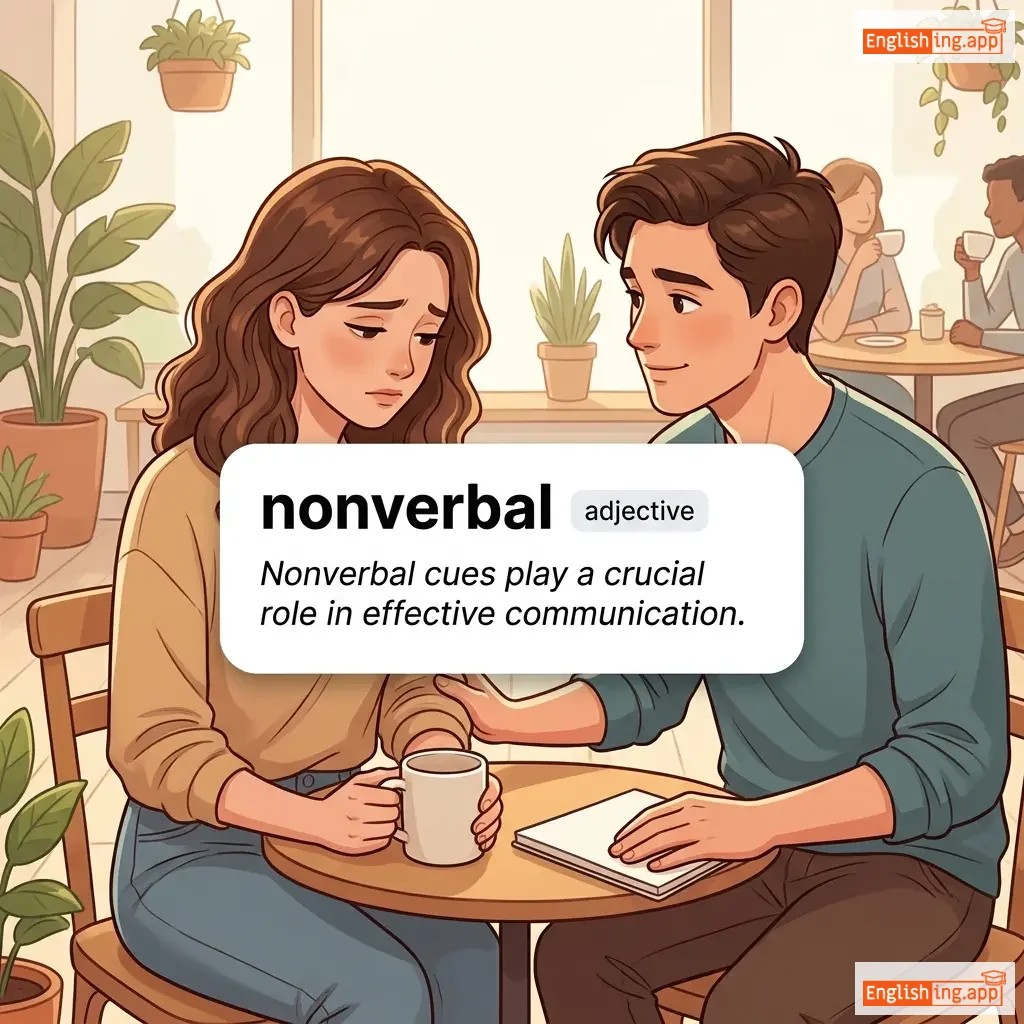
nonverbal definition card — visual illustration of the meaning
adjective
ˌnɒnˈvɜːr.bəl

Communication using body language, facial expressions, or gestures instead of words

"Nonverbal cues play a crucial role in effective communication."

noun (plural)
/ˈnuːdəlz/

long, thin strips of dough made from flour, water, or eggs, cooked and eaten as food

"She cooked noodles with vegetables for dinner."

☀️

noon

noun
/nuːn/

12 o'clock in the daytime; midday

"The meeting will start at noon."

🪢

Noose

noun
/nuːs/

A loop with a running knot, used especially for trapping or hanging.

"The cowboy tied a noose to catch the wild horse."

🚫➡️🚫

nor

conjunction
/nɔːr/

used to introduce a negative clause after a negative statement

"He didn't call, nor did he send a message."

📏

Norm

noun
/nɔːrm/

An accepted standard or a usual practice.

"Wearing uniforms is the norm in many schools."

adjective
/ˈnɔː.məl/

conforming to a standard; usual, typical, or expected

"It is normal to feel nervous before an interview."

⚖️

normalcy

noun
/ˈnɔːrməlsi/

The condition of being normal; a return to usual or expected conditions.

"After the flood, the town struggled to regain a sense of normalcy."

verb
/ˈnɔːrməlaɪz/

to bring something back to a normal or standard condition; to make something conform to a standard

"The government took steps to normalize relations with neighboring countries."

adverb
/ˈnɔːməli/

in a usual or expected way

"I normally wake up at 7 AM."

⚔️

Norman

noun
/ˈnɔːrmən/

A member of a people of mixed Scandinavian and Frankish origin who settled in Normandy, or relating to their culture.

"The Normans conquered England in 1066."

adjective
/ˈnɔːrmətɪv/

relating to rules, standards, or norms that govern behavior or beliefs

"The study focused on the normative aspects of cultural behavior."

🧭

north

noun
/nɔːrθ/

the direction toward the top of a map or the opposite of south

"We traveled north to reach the mountains."

noun
/ˌnɔːrθˈiːst/

the direction between north and east; a region or area located in that direction.

"The storm is moving toward the northeast."

🌨️

northern

adjective
/ˈnɔːðərn/

relating to the north or situated in the north

"The northern part of the country is known for its cold climate."

adverb
/ˈnɔːθwədz/

towards the north; in a northerly direction

"The birds migrate northwards in spring."

noun, adjective, adverb
/ˌnɔːrθˈwest/

the direction that is between north and west; situated in or moving toward this direction

"Seattle is located in the northwest of the United States."

👃

nose

noun
/noʊz/

the part of the face that contains the nostrils and is used for breathing and smelling

"He has a sharp nose and can smell things from far away."

noun
/noʊz rɪŋ/

a piece of jewelry worn through a piercing in the nose

"She got a small gold nose ring for her birthday."