Vocabularies

English Vocabulary Dictionary | Word Meanings, Definitions & Examples

💡

imply

verb
/ɪmˈplaɪ/

To suggest something without directly stating it.

"Her tone seemed to imply that she was upset."

adjective
/ˌɪmpəˈlaɪt/

Not showing good manners; rude.

"It is impolite to interrupt someone while they are speaking."

adverb
/ɪmˈpɒlɪtli/

in a rude or discourteous manner; without showing respect or proper manners

"He spoke impolitely to the waiter despite the polite service."

noun
/ɪmˈpɒlɪtnəs/

lack of good manners or courtesy; rude behavior

"His impoliteness towards the guests shocked everyone."

adjective
/ɪmˈpɑːlɪtɪk/

Unwise or imprudent; not showing good judgment.

"It would be impolitic to criticize them openly."

adjective
/ɪmˈpɒndərəbl̩/

Something difficult or impossible to estimate, assess, or understand

"The outcome of the election depends on many imponderable factors."

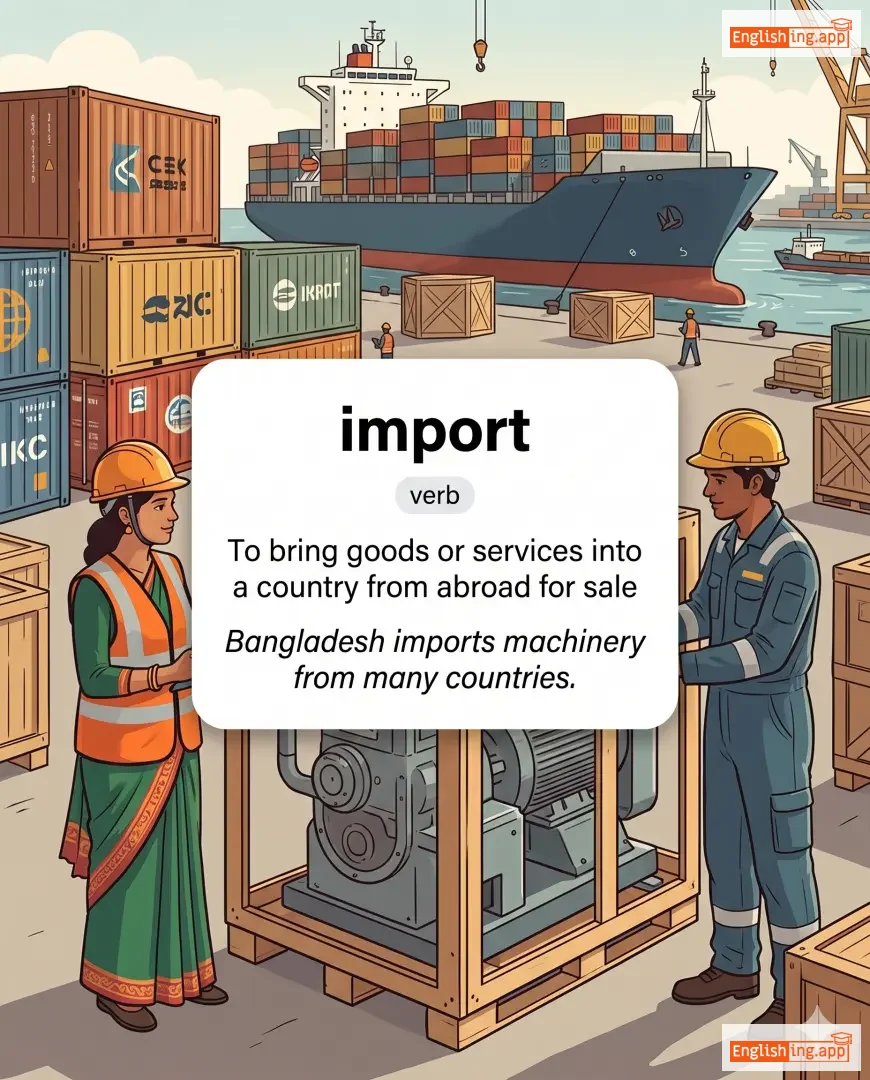
import definition card — visual illustration of the meaning
verb
/ˈɪmpɔːrt/

To bring goods or services into a country from abroad for sale

"Bangladesh imports machinery from many countries."

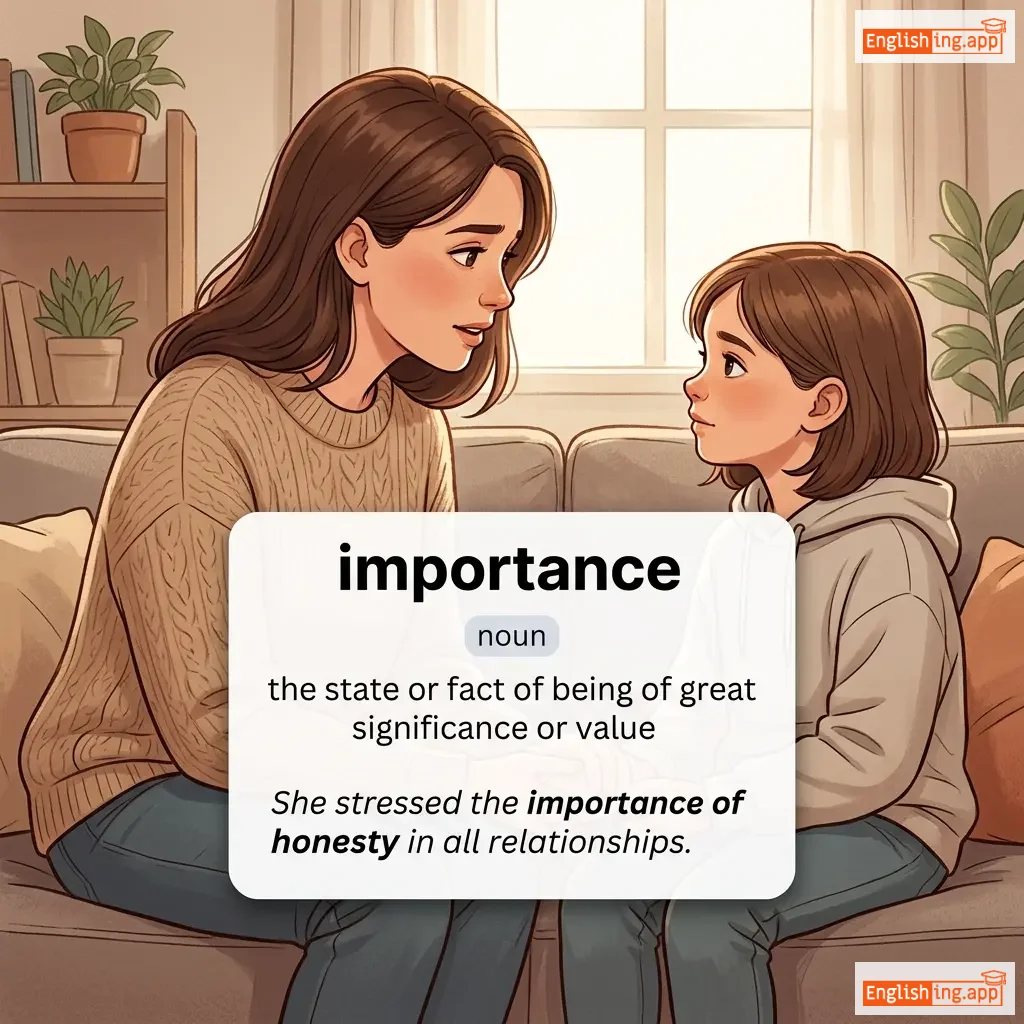
importance definition card — visual illustration of the meaning
noun
/ɪmˈpɔːrtəns/

the state or fact of being of great significance or value

"She stressed the importance of honesty in all relationships."

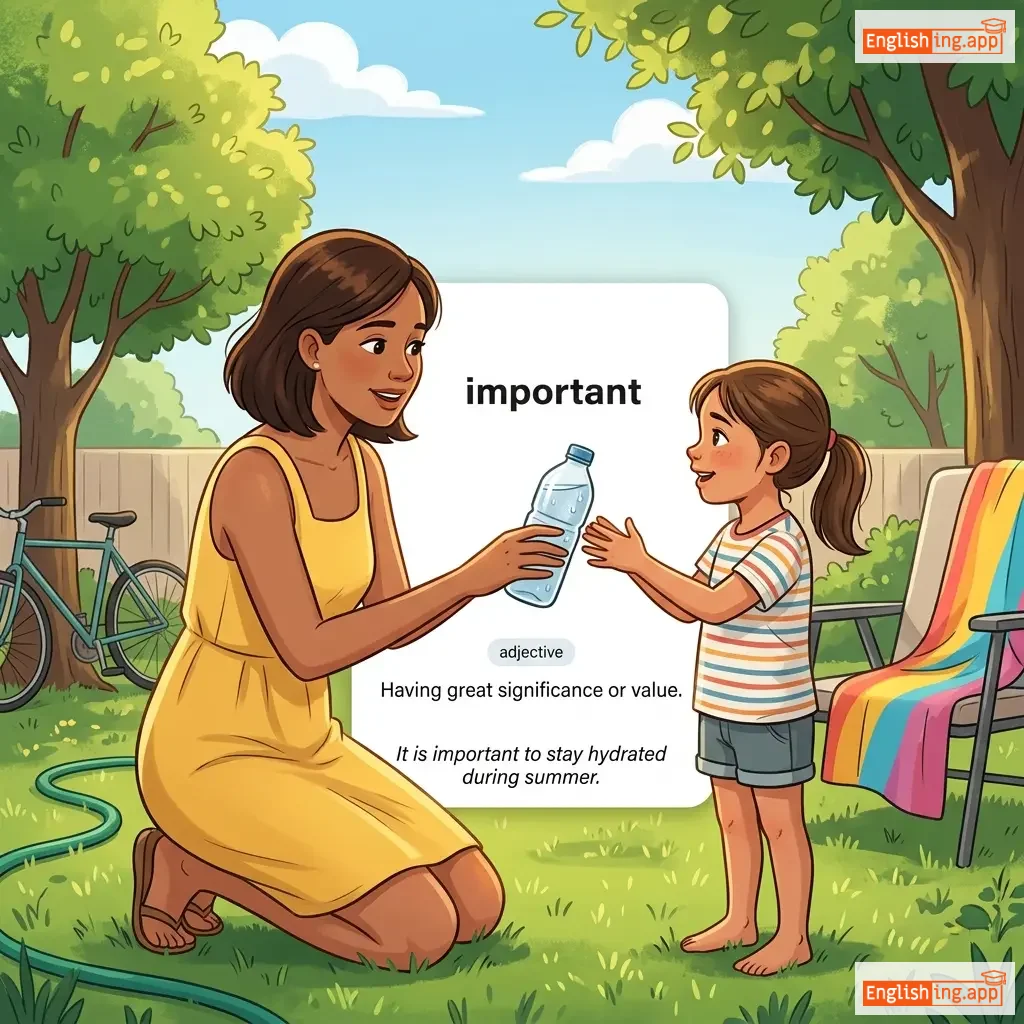
important definition card — visual illustration of the meaning
adjective
/ɪmˈpɔːrtənt/

Having great significance or value.

"It is important to stay hydrated during summer."

adverb
/ɪmˈpɔːtəntli/

in a way that is of great significance or value

"Importantly, the report highlights the need for immediate action."

noun
/ˌɪmpɔːrˈteɪʃən/

The act of bringing goods or services into a country from abroad

"The importation of luxury goods is strictly regulated."

adjective
/ɪmˈpɔːrtʃənət/

Persistent to the point of annoyance or intrusion

"The importunate salesman kept calling despite repeated refusals."

verb
/ˌɪmpɔːrˈtuːn/

To ask someone persistently or pressingly for something

"The child importuned his mother for a new toy."

verb
/ˌɪmpɔːrˈtuːnd/

asked someone persistently and pressingly for something

"She importuned her boss for a raise until he finally gave in."

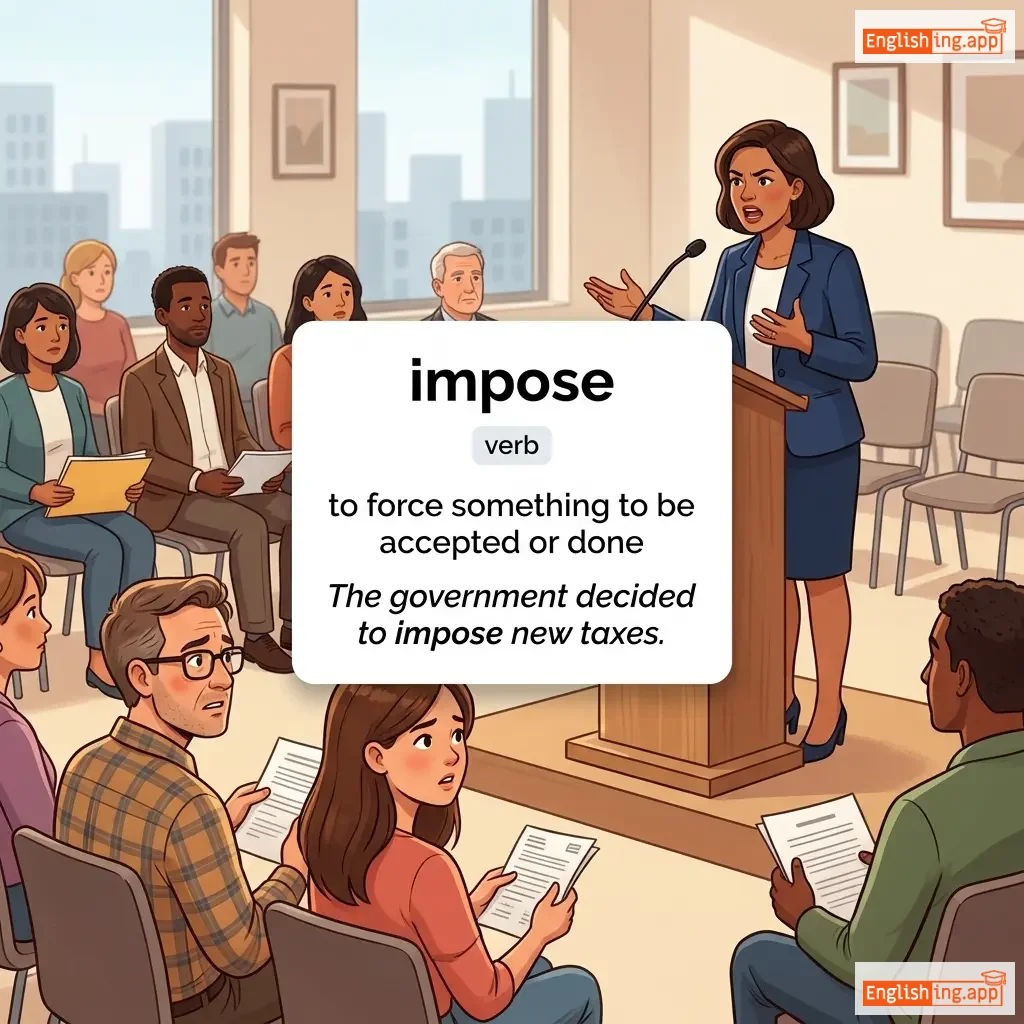
impose definition card — visual illustration of the meaning
verb
/ɪmˈpoʊz/

to force something to be accepted or done

"The government decided to impose new taxes."

⚖️

imposed

verb
/ɪmˈpoʊzd/

forced something to be accepted or put in place

"The government imposed new regulations on the industry."

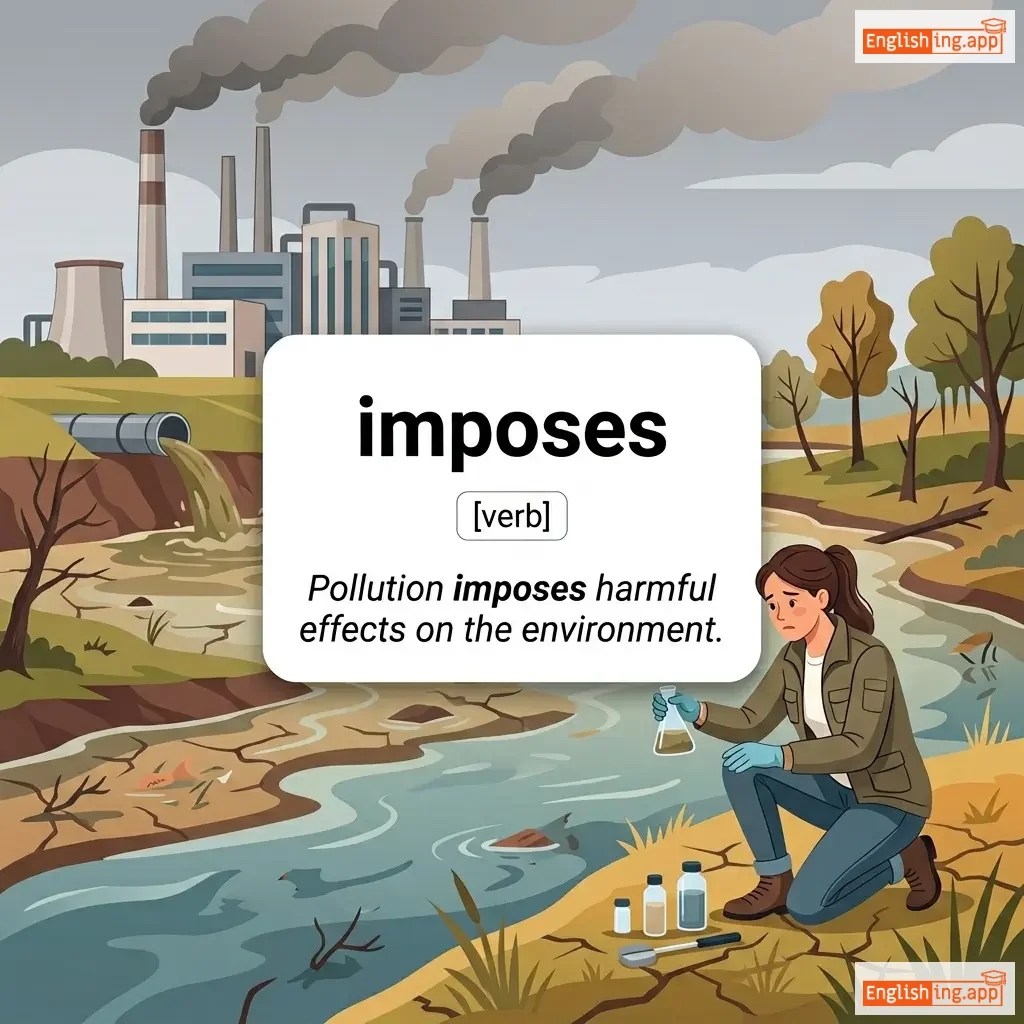
imposes definition card — visual illustration of the meaning
⚖️

imposes

verb
ɪmˈpoʊz

To establish or apply by authority; to force something unwelcome or unfamiliar to be accepted or put in place.

"Pollution imposes harmful effects on the environment."

adjective
/ɪmˈpoʊzɪŋ/

having an appearance that is grand, impressive, or commanding

"The castle is an imposing structure overlooking the valley."

noun
/ˌɪmpəˈzɪʃən/

the act of forcing something on someone; an unwelcome demand or burden

"The new tax was seen as an unfair imposition on the poor."

noun
/ɪmˌpɒsəˈbɪlɪti/

the state or fact of being impossible; something that cannot be done or achieved

"Finishing the project in one day was an impossibility."

adjective
/ɪmˈpɑːsəbl/

not able to occur, exist, or be done

"It is impossible to finish this work in one day."

noun
/ɪmˈpɑːstər/

a person who pretends to be someone else in order to deceive others

"The man turned out to be an impostor posing as a doctor."

noun
/ɪmˈpɒstʃər/

The act of pretending to be someone else in order to deceive others; deception or fraud.

"The imposture was discovered when the man failed to answer basic questions about his supposed identity."

adjective
/ˈɪmpətənt/

Lacking power, ability, or strength to take effective action.

"The citizens felt impotent against the corrupt system."

verb
/ɪmˈpɒvərɪʃ/

To make someone poor or reduce the quality or richness of something.

"The long war impoverished the entire nation."

adjective
/ɪmˈpræktɪkəbl/

Not capable of being carried out or put into practice.

"The plan seemed impracticable due to limited resources."

🧙‍♀️

imprecate

verb
/ˈɪmprɪkeɪt/

To utter a curse or invoke evil upon someone.

"The old woman imprecated her enemies with dark words."

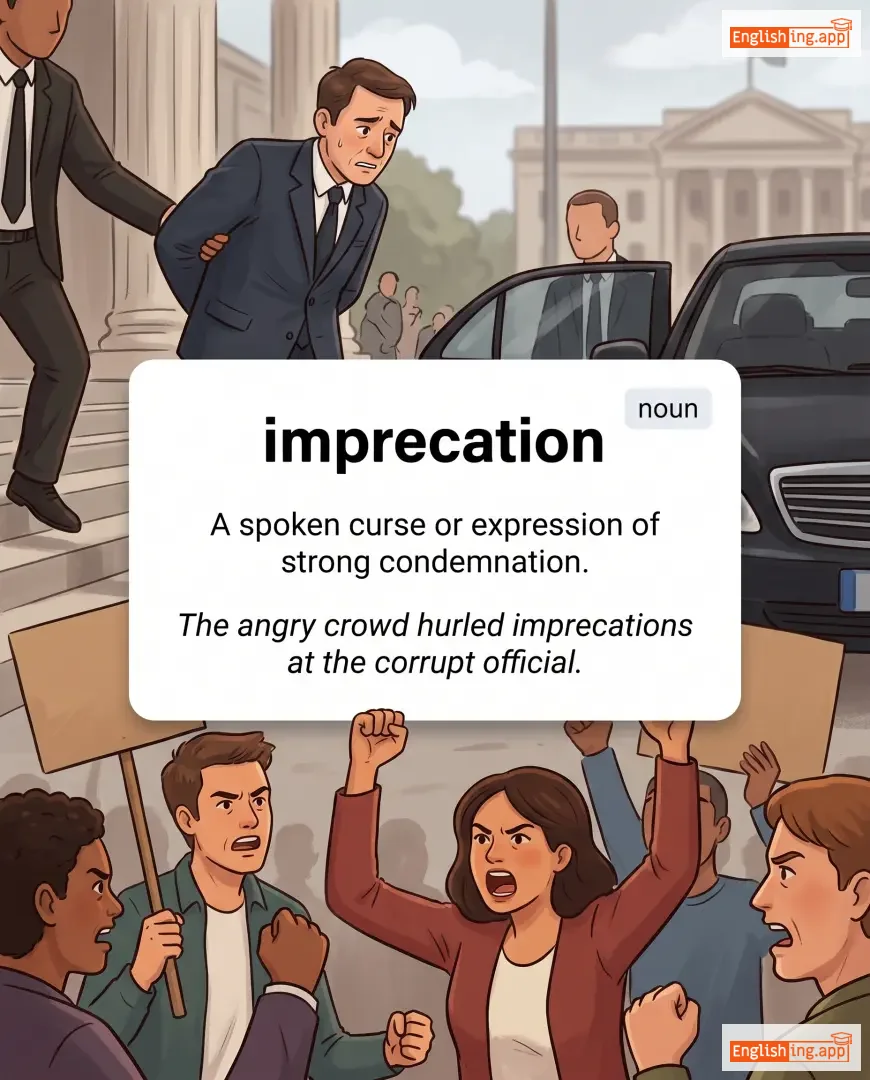
imprecation definition card — visual illustration of the meaning
noun
/ˌɪmprɪˈkeɪʃən/

A spoken curse or expression of strong condemnation.

"The angry crowd hurled imprecations at the corrupt official."

adjective
/ˌɪmprɪˈsaɪs/

Not exact or accurate; vague.

"His explanation was too imprecise to be helpful."

adjective
/ɪmˈprɛɡnəbl̩/

Unable to be captured, broken into, or defeated.

"The fortress was considered impregnable by the enemy."

verb
/ˈɪmprɛɡneɪt/

To make pregnant; to fill or saturate with something.

"The scientist used a method to impregnate the material with resin."

noun
/ˌɪmprəˈsɑːrioʊ/

A person who organizes or finances concerts, plays, or operas.

"The impresario arranged a series of concerts for the rising star."

verb
/ɪmˈprɛs/

to cause someone to feel admiration or respect

"Her speech managed to impress the audience."

🖼️

impression

noun
/ɪmˈprɛʃən/

an idea, feeling, or opinion about something or someone

"The book gave me a good first impression."

adjective
/ɪmˈprɛsɪv/

causing admiration or respect; remarkable

"The building is an impressive example of modern architecture."

noun
/ˌɪmprɪˈmɑːtər/

An official license or approval, especially to publish a book.

"The book was released with the official imprimatur of the church."

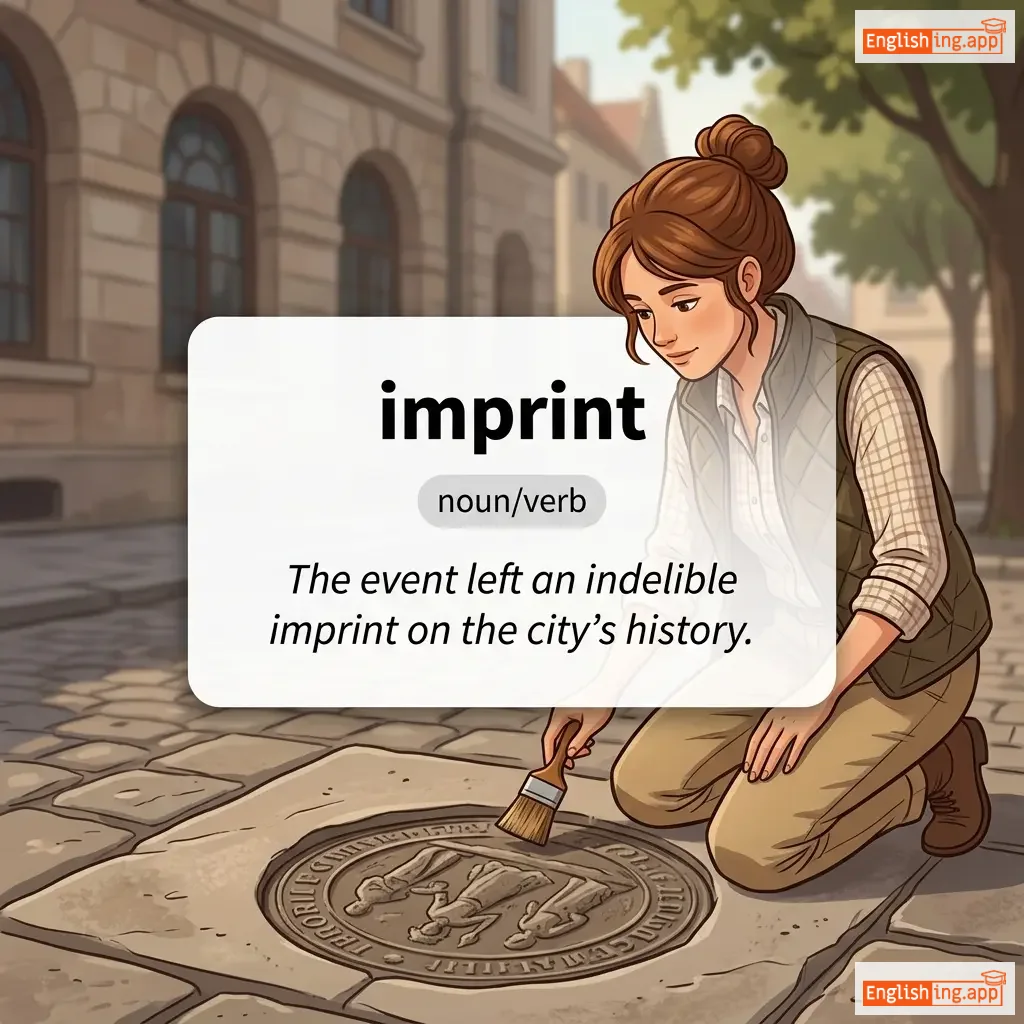
imprint definition card — visual illustration of the meaning
noun/verb
/ˈɪmprɪnt/

A mark or impression made by pressure; to establish or fix firmly in someone's mind.

"The event left an indelible imprint on the city's history."

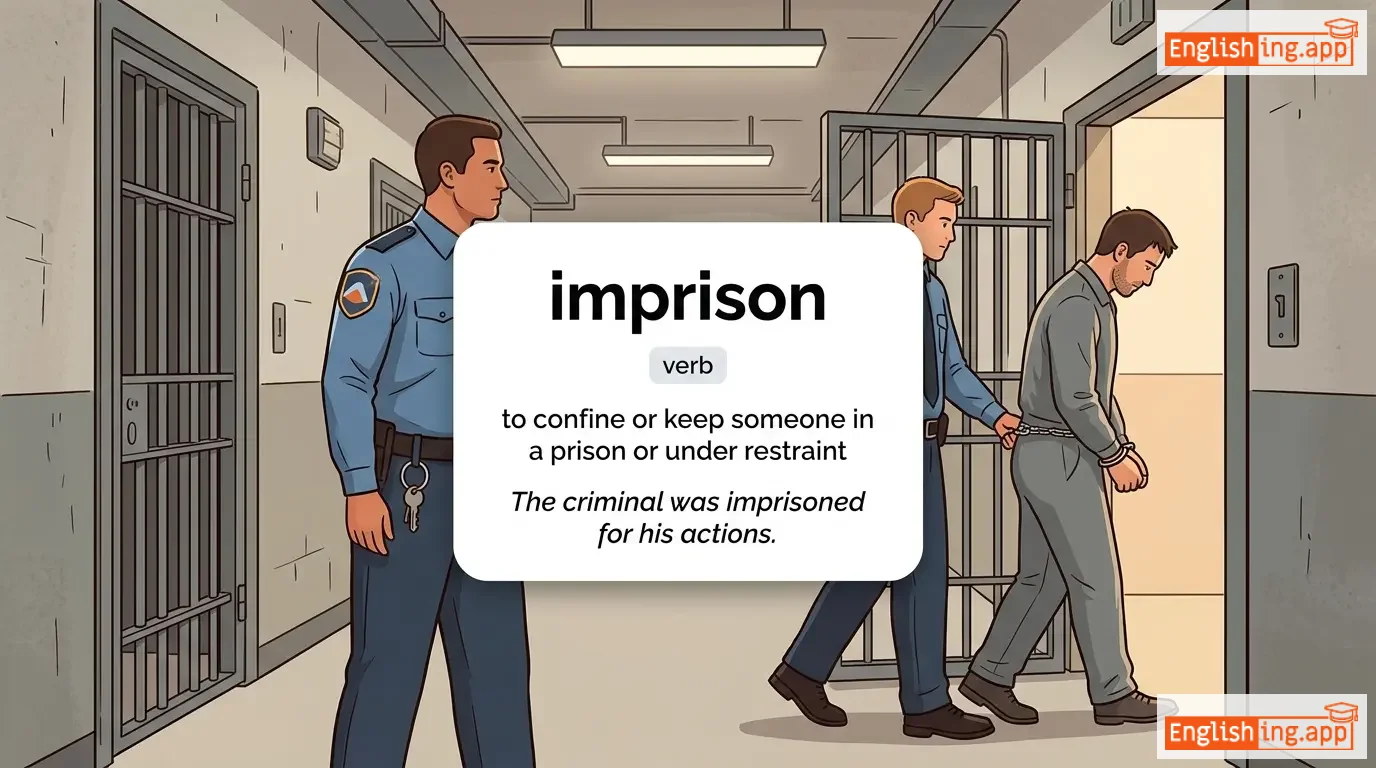
imprison definition card — visual illustration of the meaning
verb
/ɪmˈprɪzən/

to confine or keep someone in a prison or under restraint

"The criminal was imprisoned for his actions."

noun
/ɪmˈprɪzənmənt/

the act of putting someone in prison; the state of being confined as punishment

"He faced imprisonment for violating the court order."

noun
/ɪmˌprɒb.əˈbɪl.ə.ti/

the quality or state of being improbable; unlikely to be true or to happen

"The improbability of winning the lottery twice didn't stop her from buying tickets."

adjective
/ɪmˈprɒbəbl/

Not likely to be true or to happen.

"It seems improbable that he will arrive on time."

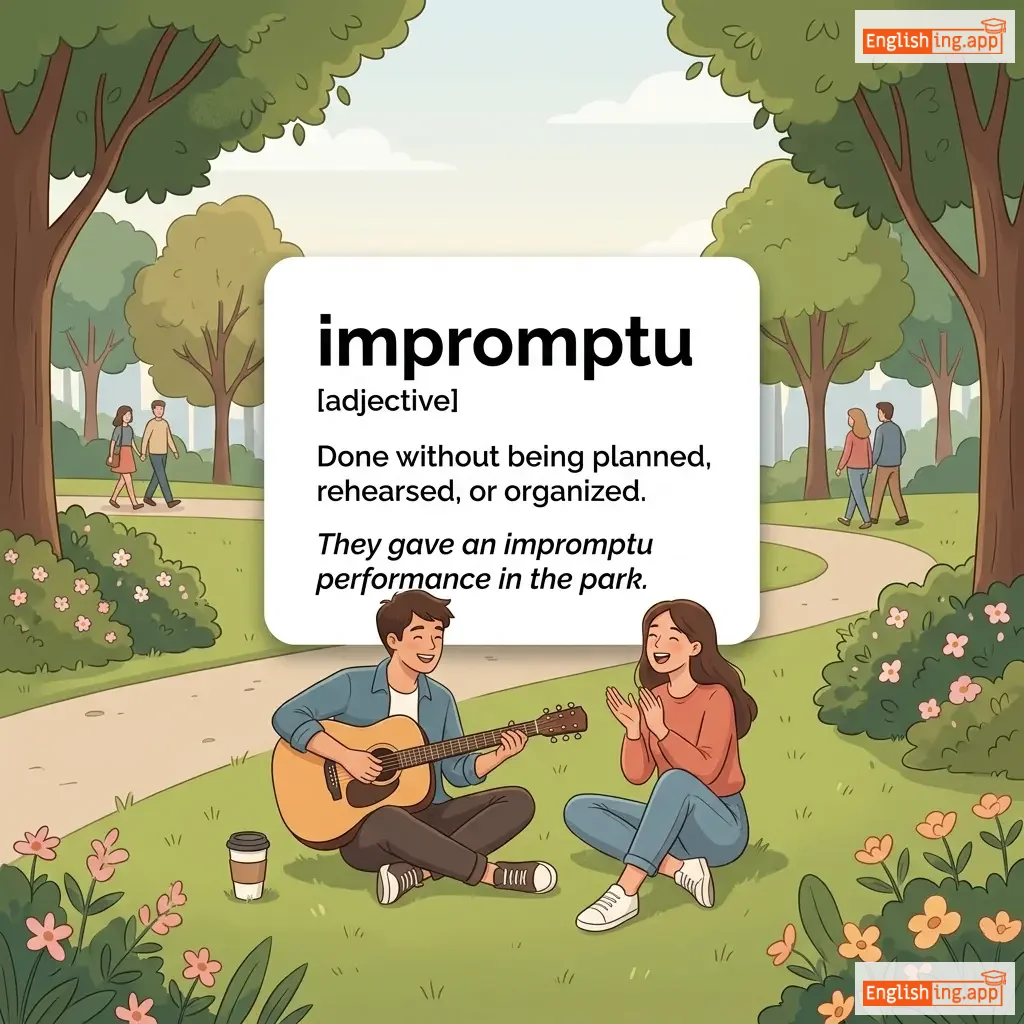
impromptu definition card — visual illustration of the meaning
adjective
/ɪmˈprɒmptjuː/

Done without being planned, rehearsed, or organized.

"They gave an impromptu performance in the park."

adjective
/ɪmˈprɒpər/

Not suitable or appropriate; against accepted standards.

"It is improper to talk loudly in the library."

noun
/ˌɪmprəˈpraɪəti/

Failure to observe standards of honesty or modesty; improper behavior.

"The politician was accused of financial impropriety."

verb
/ɪmˈpruːv/

to make something better or become better

"Regular practice will improve your skills."

adjective
/ɪmˈpruːvd/

made better or enhanced in quality or condition

"Her health has significantly improved since last month."

noun
/ɪmˈpruːvmənt/

the act of making something better

"There has been a significant improvement in his health."

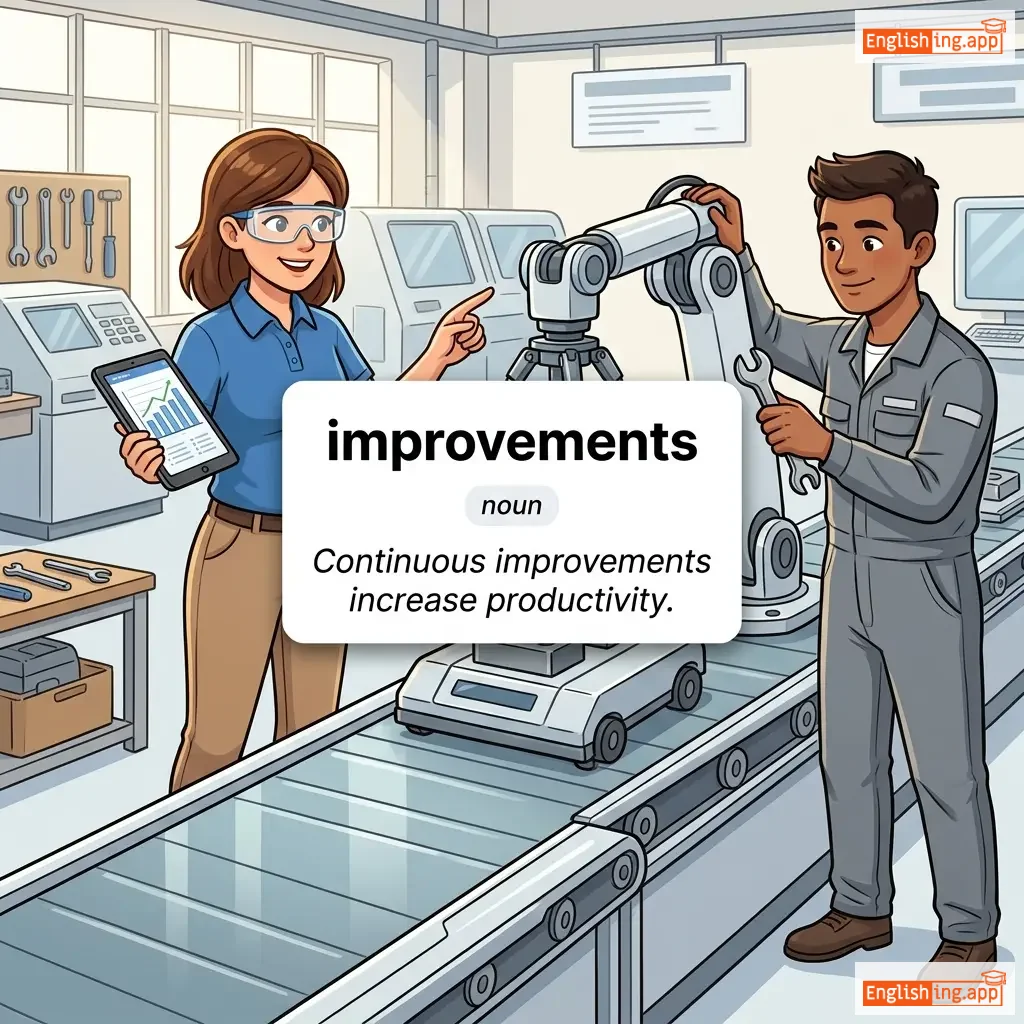
improvements definition card — visual illustration of the meaning
noun
ɪmˈpruːv.mənts

The action of making or becoming better; an instance of something becoming or being made better.

"Continuous improvements increase productivity."

noun
/ɪmˈprɑːvɪdəns/

Lack of foresight or care for future needs.

"His improvidence led to financial difficulties."

adjective
/ɪmˈprɒvɪdənt/

Not having or showing foresight; spending wastefully or without thought for the future.

"His improvident habits left him with no savings."