Vocabularies

English Vocabulary Dictionary | Word Meanings, Definitions & Examples

🍽️

gargantuan

adjective
/ɡɑːrˈɡæntʃuən/

Extremely large; enormous.

"They served a gargantuan meal at the feast."

noun
/ˈɡɑːrɡɔɪl/

A carved stone figure, often of a grotesque creature, on a building, typically used as a spout to carry water away.

"The ancient cathedral had gargoyles on every corner."

adjective
/ˈɡɛə.rɪʃ/

Excessively bright and showy, often in a tasteless or unattractive way.

"The room was decorated with garish neon lights."

noun
/ˈɡɑːr.lənd/

a wreath of flowers and leaves, worn on the head or hung as decoration

"The bride wore a beautiful floral garland during the traditional ceremony."

noun
/ˈɡɑːrlɪk/

A strong-smelling plant used as a seasoning in cooking.

"She added garlic to the curry."

noun
/ˈɡɑː.mənt/

An item of clothing.

"She bought a new garment for the party."

verb
/ˈɡɑː.nər/

To gather or collect, especially information, support, or approval.

"The politician garnered support from young voters."

verb
/ˈɡɑː.nɪʃ/

To decorate food with small items for added flavor or visual appeal.

"She garnished the dish with fresh coriander leaves."

noun
/ˈɡær.ɪ.sən/

A body of troops stationed in a particular location, usually to defend it.

"The garrison defended the fortress against the invaders."

noun, verb
/ɡəˈrɒt/

A method of execution by strangulation, or to strangle someone with a cord or wire.

"The assassin attempted to garrote his target in the alley."

🗣️

garrulity

noun
/ɡəˈruːlɪti/

Excessive talkativeness, especially about trivial matters.

"His garrulity made it hard to focus during the meeting."

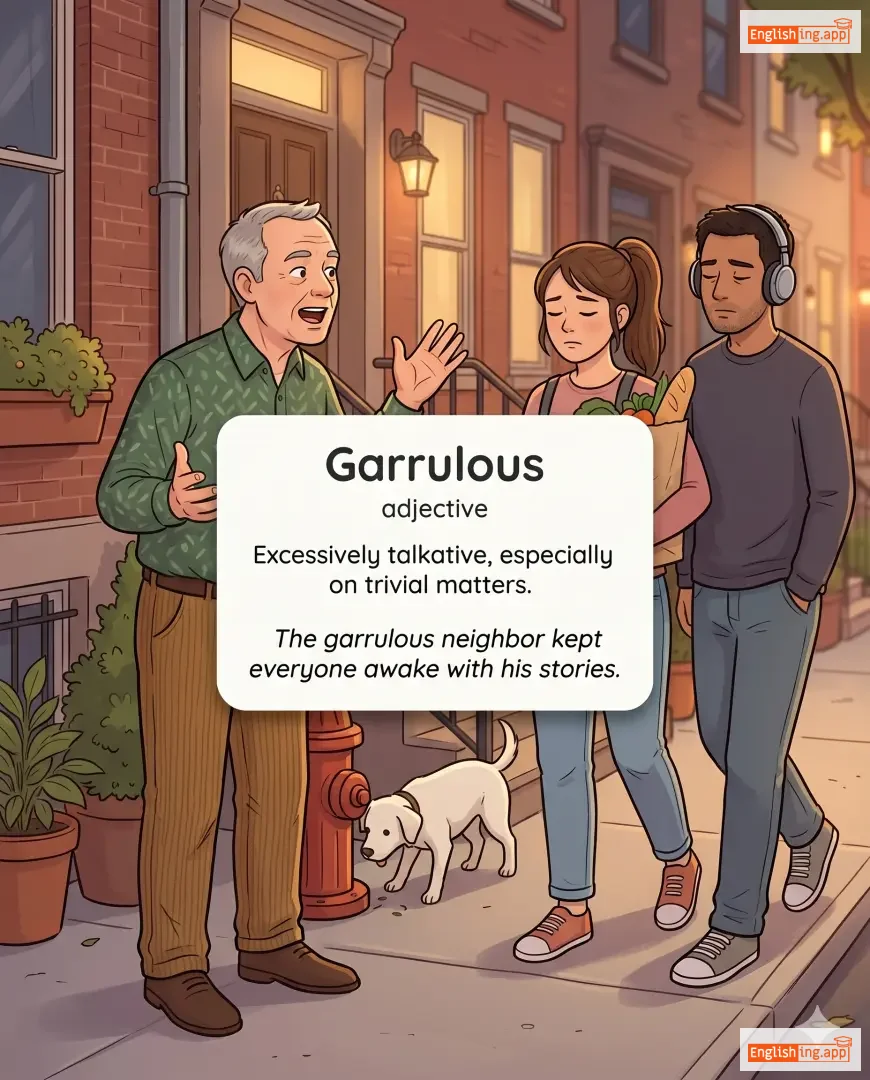
Garrulous definition card — visual illustration of the meaning
adjective
/ˈɡærələs/

Excessively talkative, especially on trivial matters.

"The garrulous neighbor kept everyone awake with his stories."

gas

noun
/ɡæs/

A substance like air that is neither solid nor liquid and can expand freely.

"The balloon was filled with gas."

noun
/ˌɡæskəˈneɪd/

Extravagant boasting or bragging.

"His endless gasconade made him unpopular among his peers."

🌫️

gaseous

adjective
/ˈɡæsiəs/

Relating to or having the form of gas.

"Carbon dioxide is a gaseous substance."

🩸

gash

noun/verb
/ɡæʃ/

A long, deep cut or wound; to cut deeply or violently.

"He had a deep gash on his leg after the accident."

noun
/ˌɡæsɪfɪˈkeɪʃən/

The process of converting solid or liquid fuel into gas.

"Gasification is widely used to produce fuel gas from coal."

noun
/ˈɡæsəˌliːn/

a liquid fuel made from petroleum, used mainly to power engines in vehicles

"The price of gasoline has increased significantly this month."

adjective
/ˈɡæstrɪk/

Relating to the stomach.

"She was prescribed medicine for her gastric problems."

noun
/ɡæsˈtraɪtɪs/

Inflammation of the lining of the stomach.

"The doctor diagnosed him with gastritis after his endoscopy."

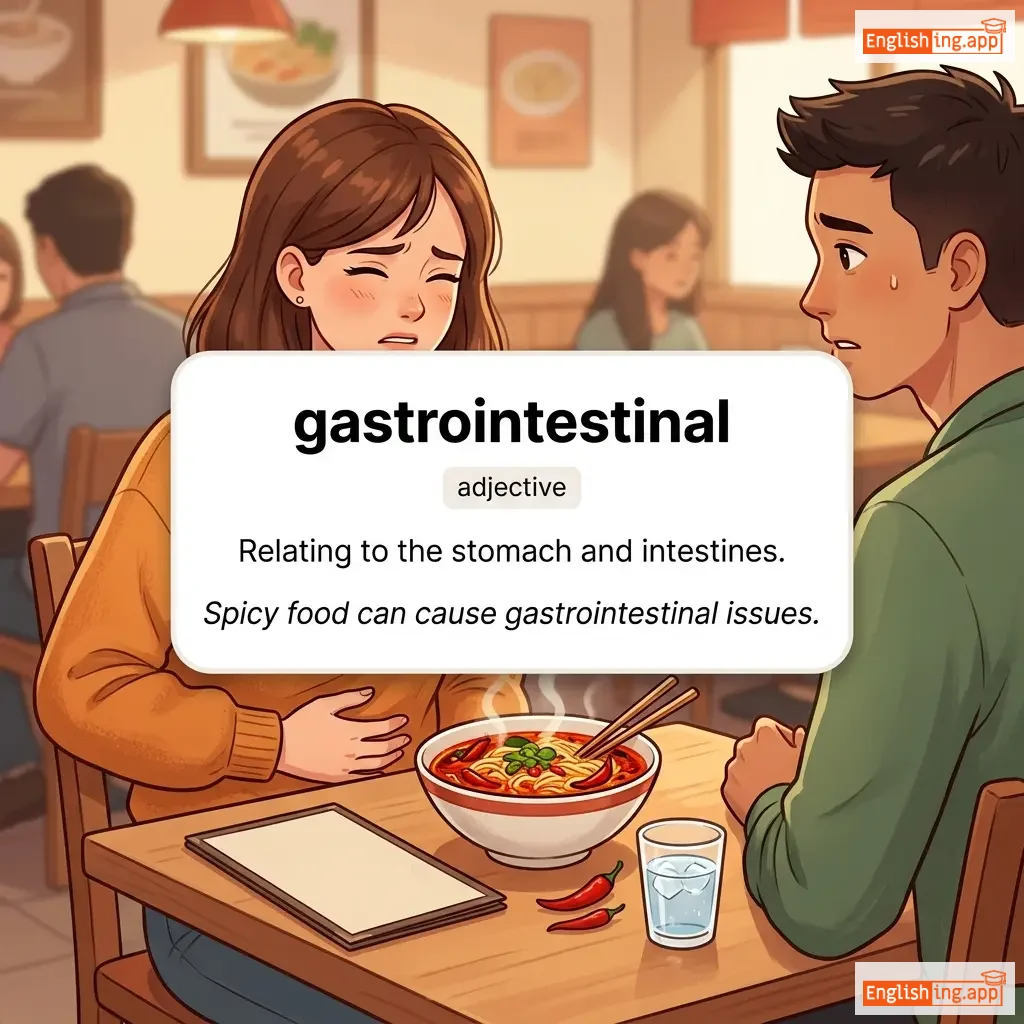
gastrointestinal definition card — visual illustration of the meaning
adjective
ˌɡæs.troʊ.ɪnˈtes.tɪ.nəl

Relating to the stomach and intestines.

"Spicy food can cause gastrointestinal issues."

🍽️

gastronomy

noun
/ɡæsˈtrɒnəmi/

The art or science of good eating and fine cuisine.

"Paris is famous for its rich tradition of gastronomy."

🚪

gate

noun
/ɡeɪt/

A movable barrier that opens and closes to allow or prevent entry through an opening.

"She closed the gate behind her as she left the garden."

noun
/ˈɡeɪt.weɪ/

an entrance or opening that provides access to a place; a means of achieving a particular state or condition

"The ancient stone gateway served as the entrance to the magnificent palace."

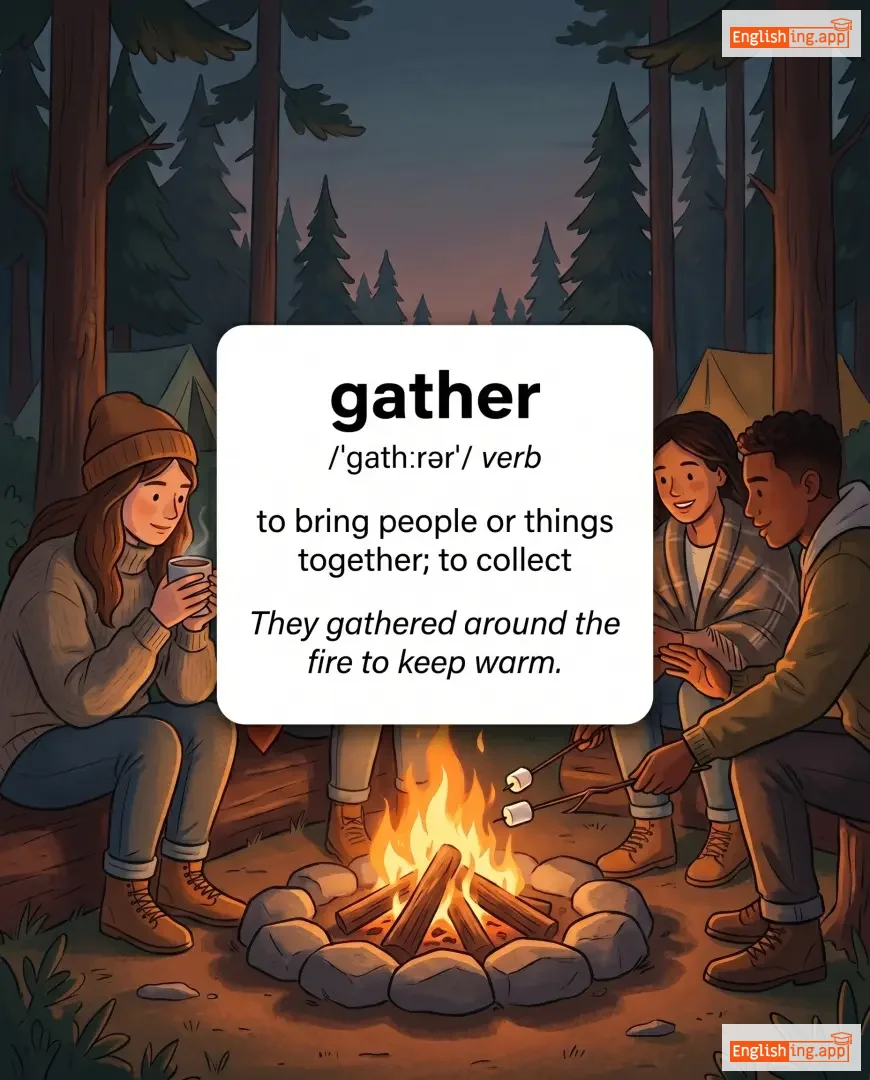
gather definition card — visual illustration of the meaning
verb
/ˈɡæðər/

to bring people or things together; to collect

"They gathered around the fire to keep warm."

noun
/ˈɡæðərɪŋ/

a meeting or assembly of people for a particular purpose

"We attended a family gathering last weekend."

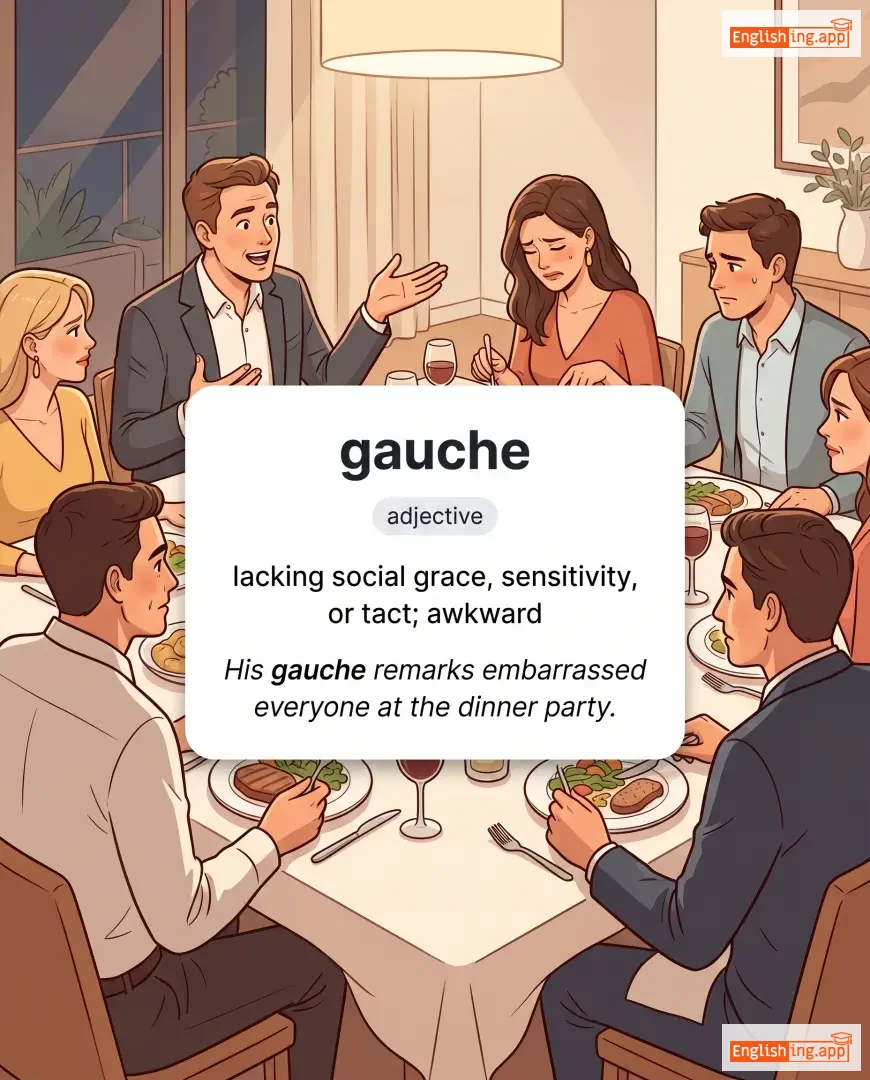
gauche definition card — visual illustration of the meaning
adjective
/ɡoʊʃ/

lacking social grace, sensitivity, or tact; awkward

"His gauche remarks embarrassed everyone at the dinner party."

💎

gaudy

adjective
/ˈɡɔːdi/

excessively showy or flashy, often in a tasteless way

"She wore a gaudy necklace that clashed with her elegant dress."

📏

Gauge

verb
/ɡeɪdʒ/

to measure, estimate, or determine the magnitude, amount, or capacity of something

"The mechanic gauged the pressure in the car tires."

🧟

gaunt

adjective
/ɡɔːnt/

extremely thin, bony, and haggard in appearance, often due to hunger or illness

"After weeks of illness, he looked pale and gaunt."

noun
/ˈɡɔːntlɪt/

a protective glove; a challenge or trial; to 'throw down the gauntlet' means to issue a challenge

"The knight threw down his gauntlet as a sign of challenge."

🔨

gavel

noun
/ˈɡævəl/

A small ceremonial mallet used by a judge or an auctioneer to signal attention or mark a decision.

"The judge struck the gavel to call the court to order."

👀

gawk

verb
/ɡɔːk/

To stare openly and rudely.

"Tourists gawked at the celebrity walking down the street."

🤦

gawky

adjective
/ˈɡɔːki/

Awkward and clumsy in appearance or behavior.

"The teenager felt gawky in his oversized suit."

🏳️‍🌈

gay

adjective
/ɡeɪ/

sexually attracted to people of the same sex; also used to mean cheerful or lively

"He came out as gay during college."

👀

Gaze

verb
/ɡeɪz/

To look steadily and intently at something, usually with admiration, surprise, or thought.

"He gazed at the stars in wonder."

noun
/ɡəˈzɛt/

An official journal, newspaper, or publication, especially one issued by a government.

"The law was published in the government gazette."

⚙️

gear

noun
/ɡɪə(r)/

Equipment or apparatus for a particular purpose; also a toothed wheel in machinery.

"The climber packed all his gear before starting the journey."

💎

Gem

noun
/dʒem/

a precious or semi-precious stone, especially when cut and polished or engraved

"She wore a beautiful gem necklace to the party."

👮‍♂️

gendarme

noun
/ˈʒɑːndɑːrm/

A French police officer, especially a member of a military-style police force.

"The gendarme stopped the car for a routine check."

⚧️

Gender

noun
/ˈdʒɛndər/

The state of being male, female, or another identity as recognized socially or culturally.

"The survey asked about participants' age and gender."

🧬

gene

noun
/dʒiːn/

A unit of heredity in living organisms, transferred from parent to offspring, determining traits.

"Eye color is influenced by genes inherited from parents."

noun
/ˌdʒiːniˈælədʒɪst/

A person who studies or traces the history of families and their lineages.

"The genealogist uncovered records dating back to the 18th century."

noun
/ˌdʒiːniˈælədʒi/

The study and tracing of lines of descent or family history.

"She spent years researching her family's genealogy."

adjective
/ˈdʒɛnərəl/

Relating to all or most people, things, or situations; not specific.

"He made a general comment about the project."

noun
/ˌdʒenəˈræləti/

A vague, non-specific statement or principle that applies broadly.

"The speech was full of generalities and lacked concrete details."

verb
/ˈdʒenərəlaɪz/

To make a broad statement by inferring from specific cases.

"It is wrong to generalize based on a few experiences."

adverb
/ˈdʒɛnərəli/

in most cases; usually; as a rule

"He generally arrives at work before 9 a.m."

verb
/ˈdʒɛnəreɪt/

to produce or create something

"The machine generates electricity."

noun
/ˌdʒɛnəˈreɪʃən/

all the people born and living at about the same time; the process of producing something

"The younger generation is more comfortable with technology."