Vocabularies

English Vocabulary Dictionary | Word Meanings, Definitions & Examples

noun
/ˈdɛskænt/

An additional melody or counterpoint sung or played above the main melody.

"The choir added a beautiful descant to the hymn."

⬇️

descend

verb
/dɪˈsɛnd/

To move or fall downward; to come or go down from a higher place.

"The hikers descended the steep mountain path."

noun
/dɪˈsɛndənt/

A person who is descended from a particular ancestor.

"She is a descendant of a famous poet."

adjective
/dɪˈsɛndənt/

Moving downward; going down or descending.

"The river followed a descendent course toward the valley."

⛰️

descent

noun
/dɪˈsɛnt/

the action of moving downward, falling, or dropping; ancestry or origin

"The climbers began their descent from the mountain peak."

verb
/dɪˈskraɪb/

to give an account of something in words, including details

"She described the scene vividly."

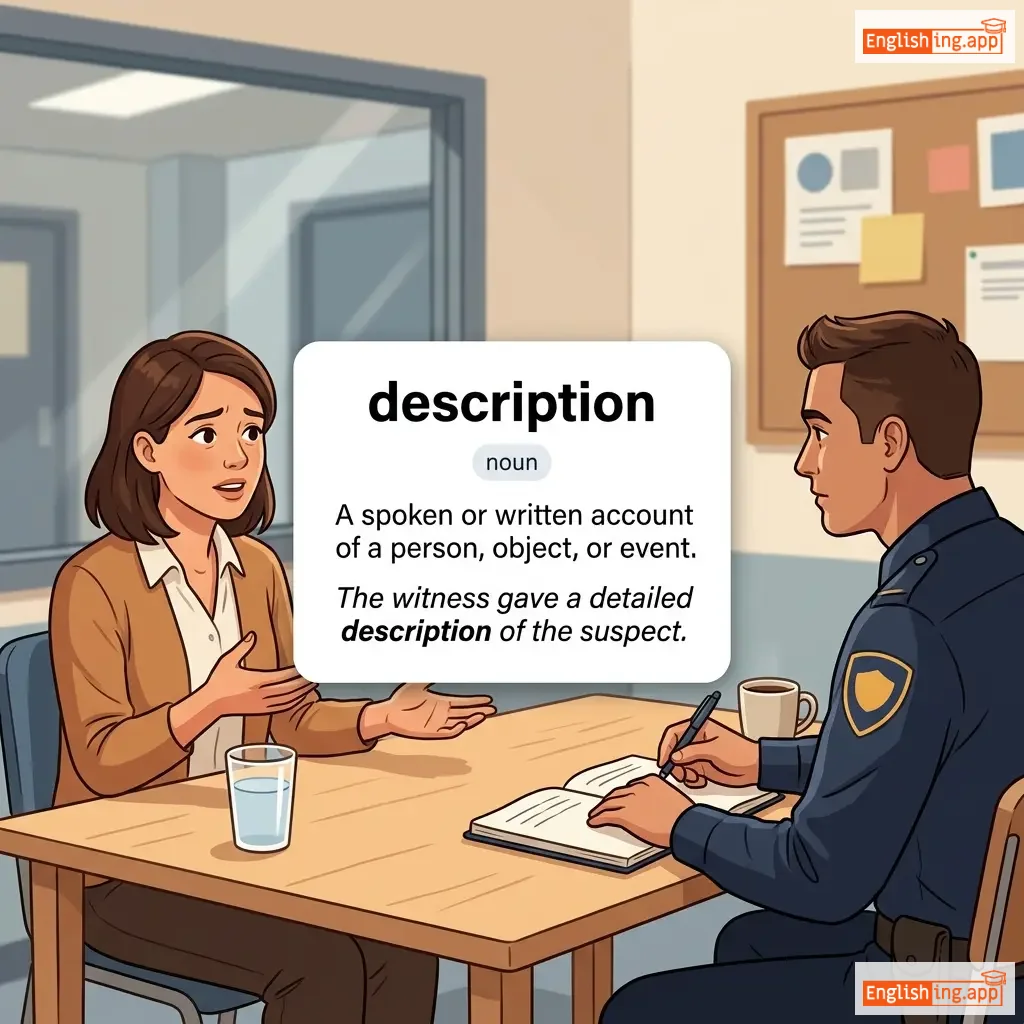
description definition card — visual illustration of the meaning
noun
/dɪˈskrɪpʃən/

A spoken or written account of a person, object, or event.

"The witness gave a detailed description of the suspect."

verb
/dɪˈskraɪ/

to catch sight of something, especially something distant or obscure

"From the hilltop, they descried a small village in the distance."

verb
/ˈdɛsɪkreɪt/

to treat a sacred place or object with disrespect or violation

"The vandals desecrated the ancient temple walls with graffiti."

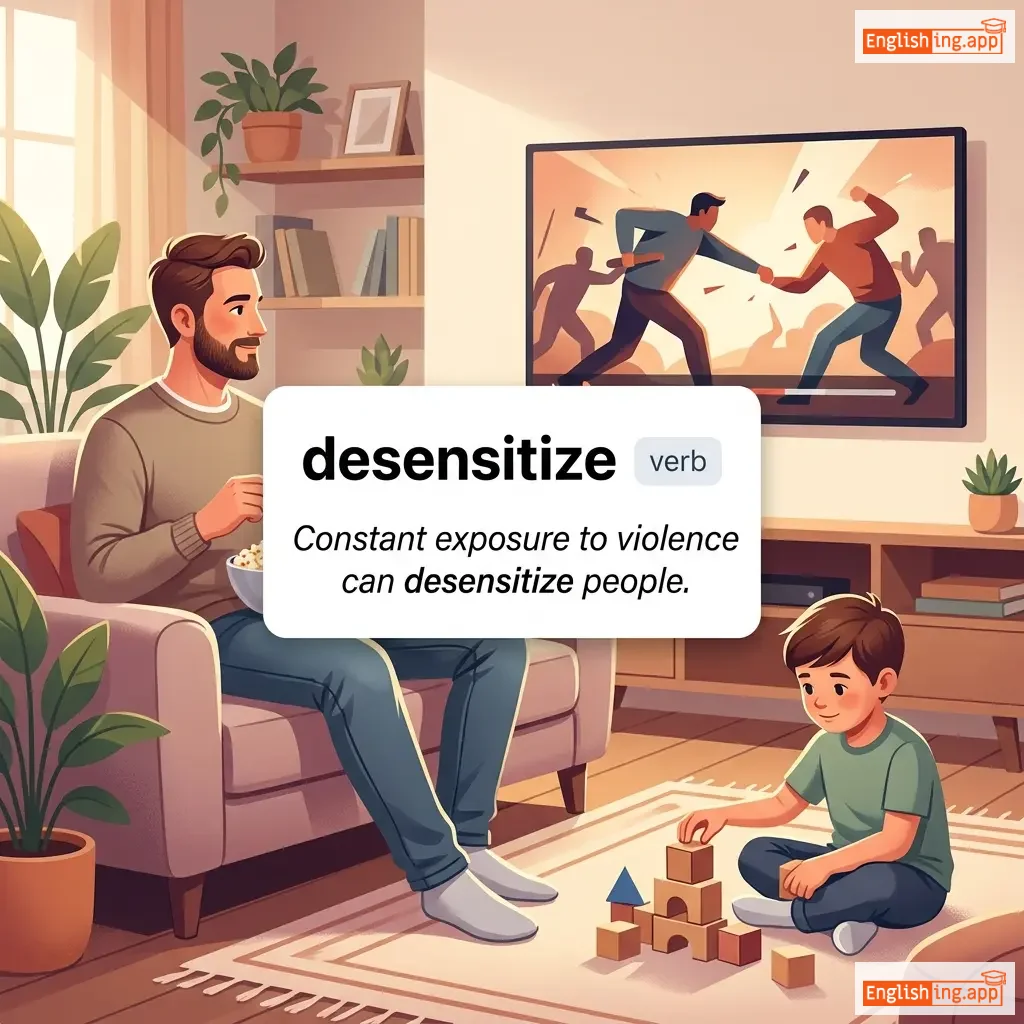
desensitize definition card — visual illustration of the meaning
verb
diːˈsɛn.sɪ.taɪz

To make someone less sensitive or reactive to something through repeated exposure.

"Constant exposure to violence can desensitize people."

🏜️

Desert

noun, verb
/ˈdez.ɚt/ (noun/adjective), /dɪˈzɜːrt/ (verb)

as a noun, a barren sandy region; as a verb, to abandon someone or something

"He deserted his friends in their time of need."

🏚️

deserted

adjective
/dɪˈzɜːrtɪd/

Empty of people; abandoned.

"The village looked completely deserted after the storm."

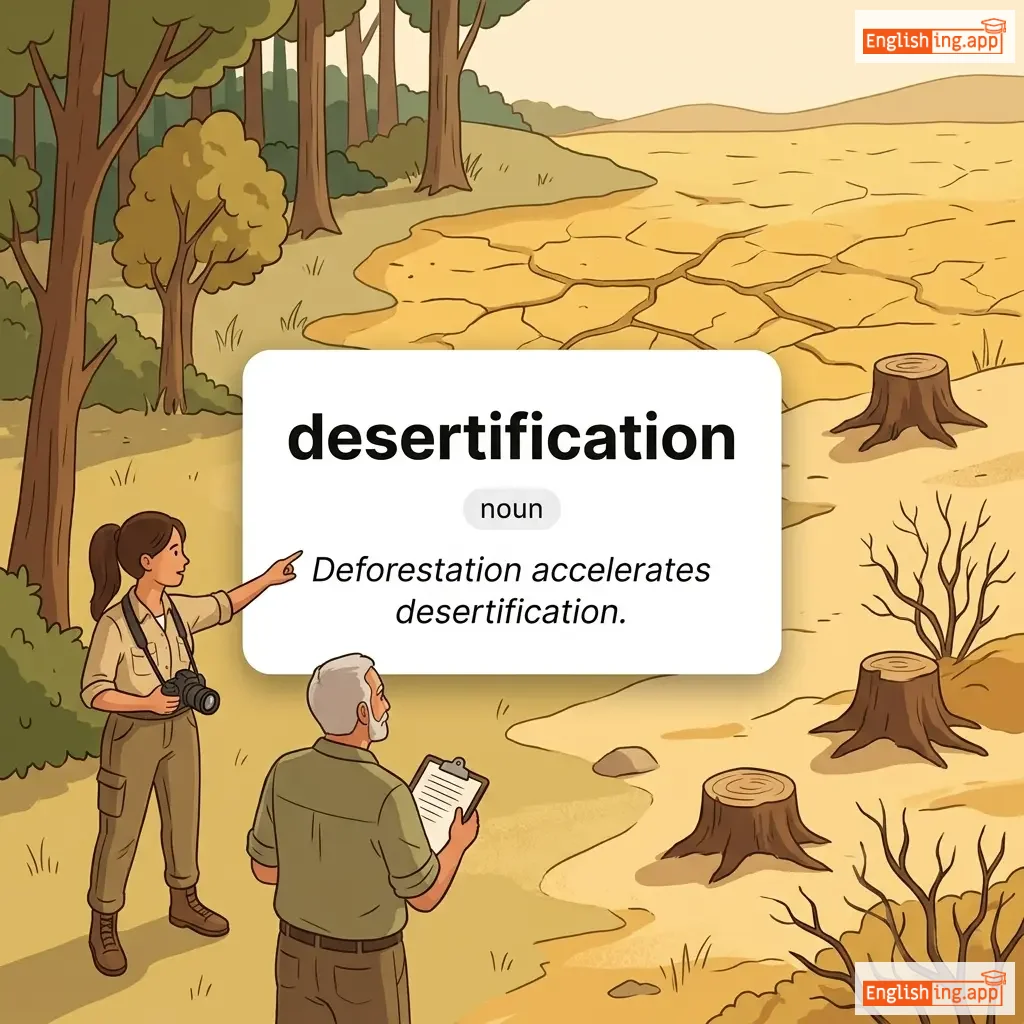
desertification definition card — visual illustration of the meaning
noun
dɪˌzɝː.t̬ə.fɪˈkeɪ.ʃən

The process by which fertile land becomes desert, typically as a result of drought, deforestation, or inappropriate agriculture.

"Deforestation accelerates desertification."

⚖️

deserts

noun
/dɪˈzɜːrts/ (noun: reward or punishment deserved)

what someone deserves, especially punishment or reward

"He finally got his just deserts for cheating in the exam."

verb
/dɪˈzɜːrv/

To be worthy of something, usually a reward or punishment.

"She worked hard and deserves recognition."

noun
/ˈdɛsɪkənt/

a substance that absorbs moisture and keeps things dry

"Silica gel packets are commonly used as a desiccant in packaging."

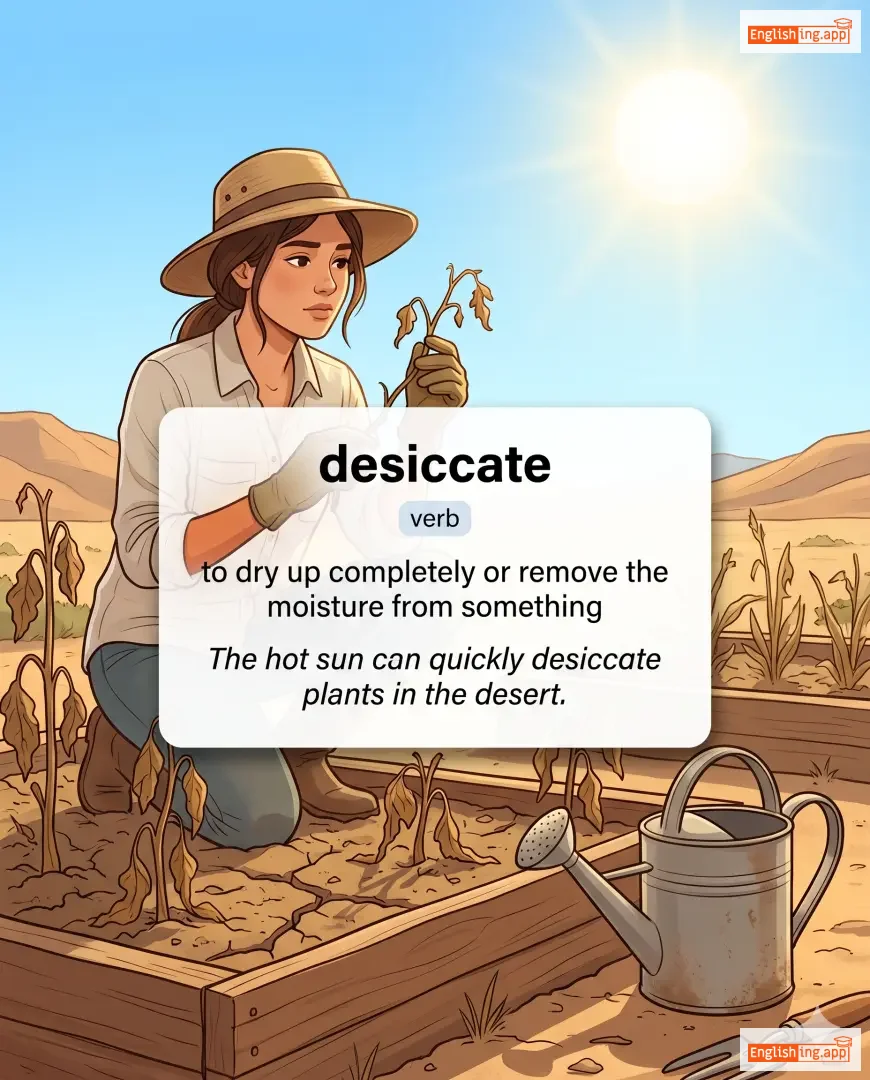
desiccate definition card — visual illustration of the meaning
verb
/ˈdɛsɪkeɪt/

to dry up completely or remove the moisture from something

"The hot sun can quickly desiccate plants in the desert."

adjective
/ˈdɛsɪkeɪtɪd/

completely dried, having had all moisture removed

"The museum displayed desiccated specimens of plants."

noun
/dɪˌsɪdəˈreɪtəm/

something that is desired or considered necessary

"For many students, financial aid is a desideratum."

verb
/dɪˈzaɪn/

to plan and create something with a particular purpose or look

"She will design the new company logo."

verb
/ˈdɛzɪɡneɪt/

to officially assign, appoint, or indicate something or someone

"The committee will designate a new chairperson next week."

noun
/ˌdez.ɪɡˈneɪ.ʃən/

the action of choosing someone for a position; a name, title, or official status

"His designation as team leader came with additional responsibilities and authority."

noun
/dɪˈzaɪnər/

a person who plans and creates the form or structure of something

"The fashion designer presented her new collection."

adjective
/dɪˈzaɪərəbl/

worth having or wanting; attractive

"The location of the house was highly desirable, with great views."

❤️

desire

noun, verb
/dɪˈzaɪər/

a strong feeling of wanting something or wishing for something to happen

"He has a strong desire to travel the world."

verb
/dɪˈzɪst/

to stop doing something, especially an action considered wrong or undesirable

"The judge ordered the company to desist from unfair practices."

noun
/dɪˈsɪstəns/

The act of stopping or ceasing from some action or behavior.

"The court urged his desistance from further unlawful activities."

🖥️

desk

noun
/dɛsk/

a piece of furniture with a flat surface used for writing or working

"The books are on the desk."

noun
/ˈdɛsktɒp/

a computer designed to be used on a desk, typically with a separate monitor, keyboard, and mouse

"I keep my documents on the desktop for easy access."

🏜️

Desolate

adjective
/ˈdɛsələt/

Empty, bleak, and without people; feeling very sad and lonely.

"The once lively town now stood desolate after the flood."

noun
/dɪˈspɛər/

The complete loss or absence of hope.

"She was in deep despair after losing her job."

adjective
/dɪˈsperɪŋ/

feeling hopeless; in despair

"She felt despairing after losing her job."

noun
/ˌdɛspəˈrɑːdoʊ/

A bold, reckless, or dangerous person, often a criminal.

"The sheriff was determined to capture the desperado who terrorized the town."

adjective
/ˈdɛspərət/

Feeling or showing a hopeless sense that a situation is so bad as to be impossible to deal with.

"He was desperate to find a job before his savings ran out."

adverb
/ˈdɛspərətli/

in a way that shows despair or great need

"He called for help desperately after the accident."

adjective
/dɪˈspɪkəbl/

Deserving hatred and contempt; vile or shameful.

"His despicable actions shocked the entire community."

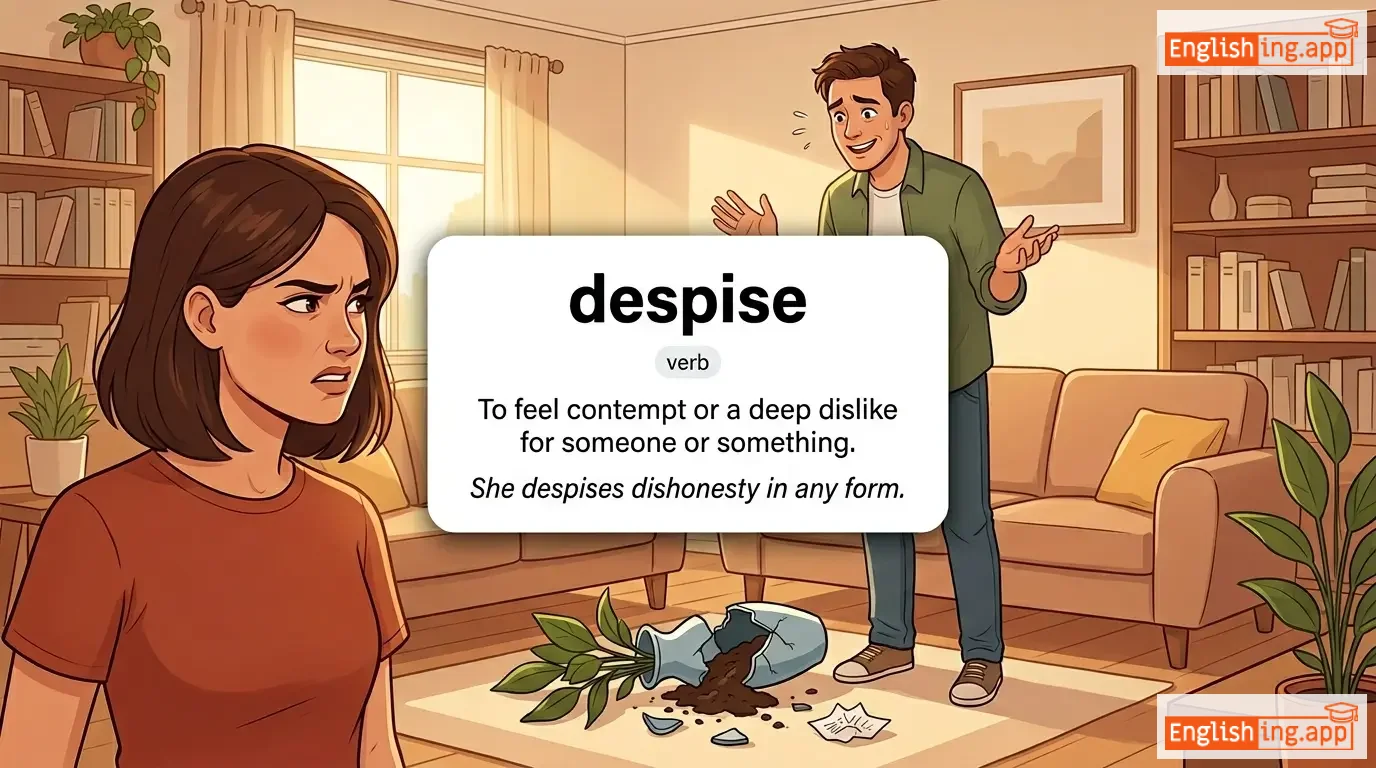
despise definition card — visual illustration of the meaning
verb
/dɪˈspaɪz/

To feel contempt or a deep dislike for someone or something.

"She despises dishonesty in any form."

preposition
/dɪˈspaɪt/

Without being affected by; in spite of.

"He continued his work despite the difficulties."

verb
/dɪˈspɔɪl/

To steal or violently remove valuable possessions from a place.

"The invaders despoiled the village during the war."

noun
/dɪˈspɔɪlər/

A person who robs, plunders, or violently takes things from others.

"The despoilers left the city in ruins."

verb
/dɪˈspɒnd/

to lose confidence or hope; to become dejected

"After repeated failures, he began to despond."

adjective
/dɪˈspɒndənt/

feeling or showing deep hopelessness or discouragement

"She felt despondent after losing her job."

noun
/ˈdɛspɒt/

a ruler with absolute power, often ruling in a cruel or oppressive way

"The despot ruled the nation with fear and violence."

⚖️

despotic

adjective
/dɛˈspɒtɪk/

exercising power in a cruel, oppressive, or authoritarian way

"The king’s despotic rule left the people in misery."

🗡️

despotism

noun
/ˈdɛspətɪzəm/

absolute power exercised in a cruel and oppressive way

"The people revolted against the era of despotism."

noun
/dɪˈzɜːrt/

the sweet course eaten at the end of a meal

"We had ice cream for dessert after dinner."

noun
/ˌdɛstɪˈneɪʃən/

the place to which someone or something is going or being sent

"Paris is a popular tourist destination."

noun
/ˈdɛstəni/

The events that will necessarily happen to a particular person or thing in the future; fate.

"She believed it was her destiny to become a doctor."

adjective
/ˈdɛstɪˌtuːt/

extremely poor and lacking the means to provide for oneself

"The earthquake left many families destitute."

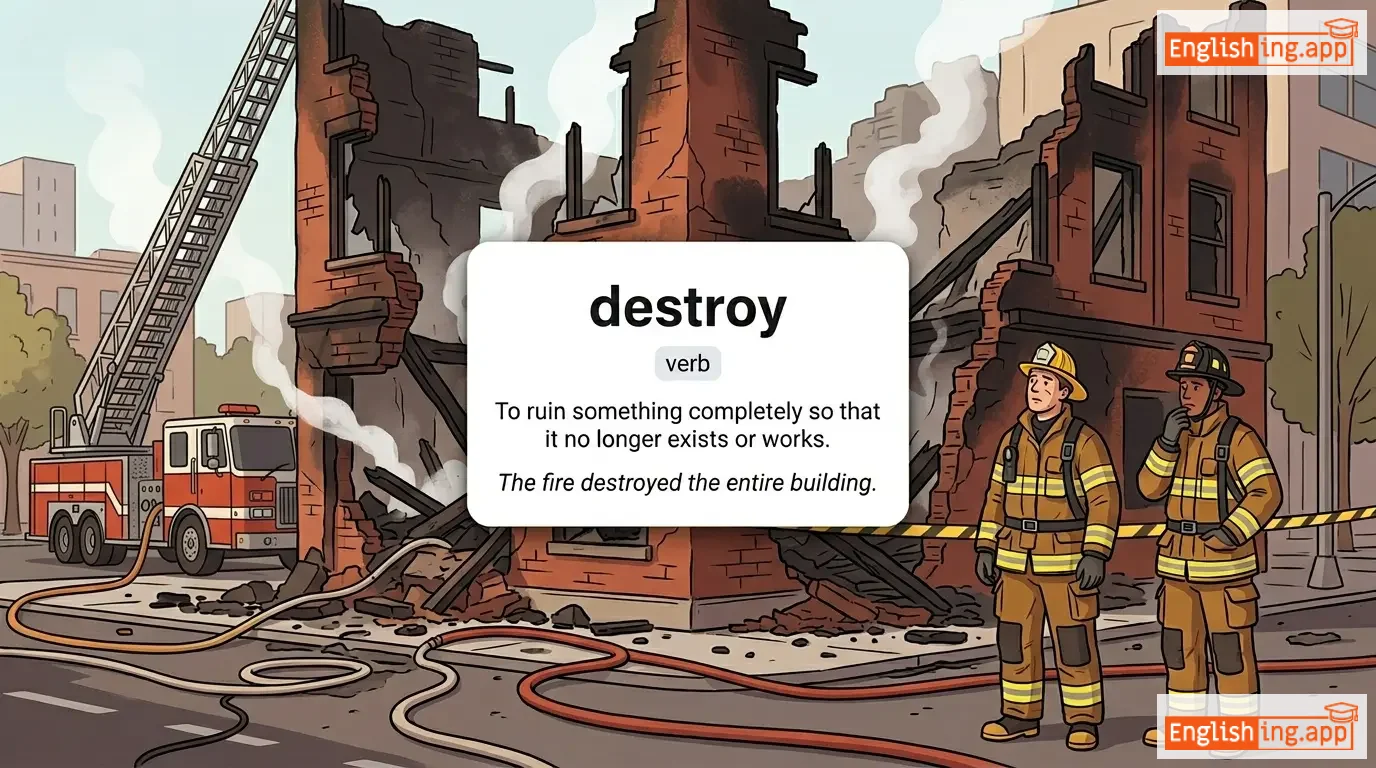
destroy definition card — visual illustration of the meaning
verb
/dɪˈstrɔɪ/

To ruin something completely so that it no longer exists or works.

"The fire destroyed the entire building."