Vocabulary Videos
40 videos available.
 de
de
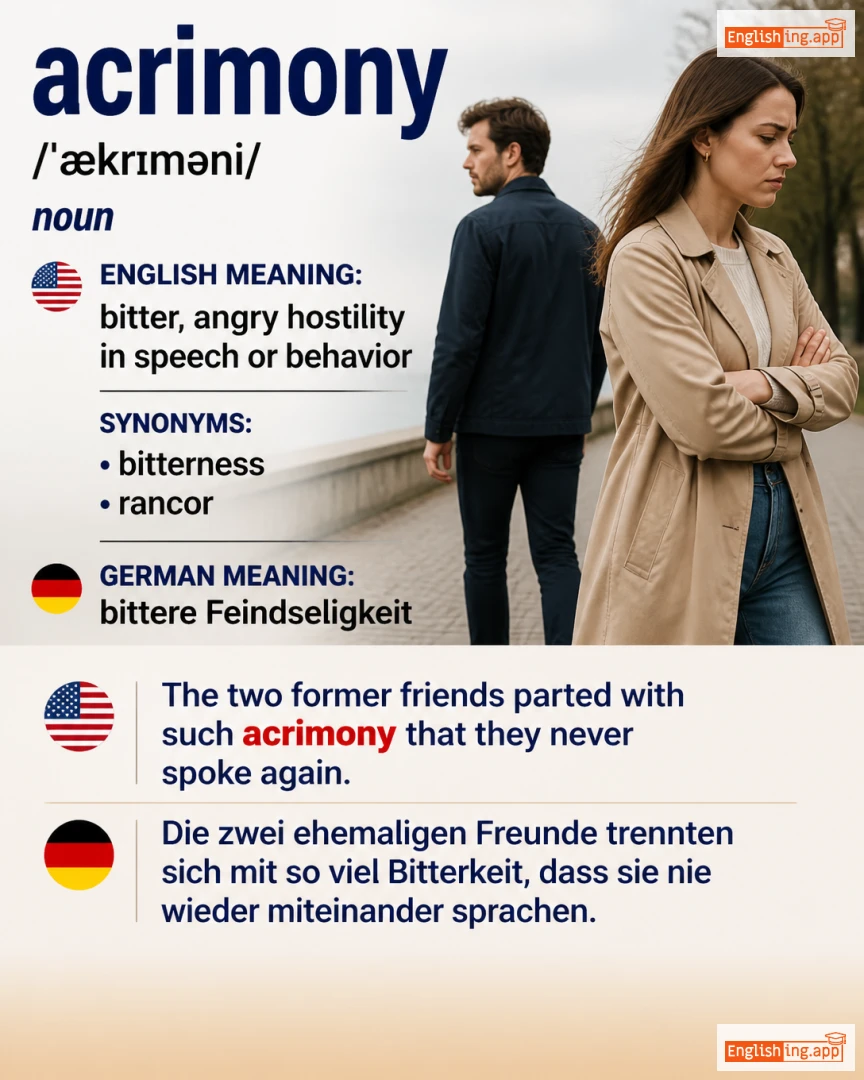
Acrimony: English vocabulary meaning and example
Learn the English word "Acrimony".
Meaning: Acrimony, noun. It means bitter, angry hostility in speech or behavior. Synonyms: bitterness, rancor.
Example: The two former friends parted with such acrimony that they never spoke again.
German: Acrimony bedeutet bittere, wütende Feindseligkeit in Worten oder Verhalten.
German example: Die zwei ehemaligen Freunde trennten sich mit so viel Bitterkeit, dass sie nie wieder miteinander sprachen.
#LearnEnglish #EnglishVocabulary #Englishing
 de
de
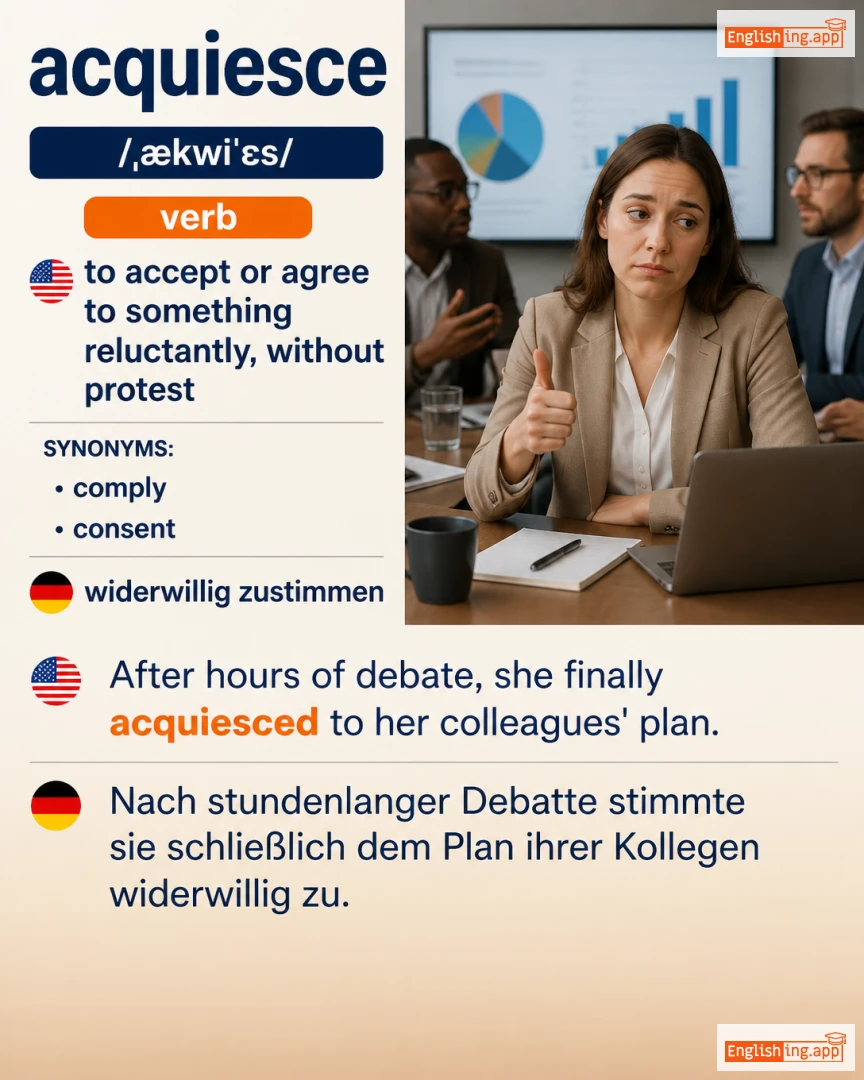
Acquiesce: English vocabulary meaning and example
Learn the English word "Acquiesce".
Meaning: Acquiesce, verb. It means to accept or agree to something reluctantly, without protest. Synonyms: comply, consent.
Example: After hours of debate, she finally acquiesced to her colleagues' plan.
German: Acquiesce bedeutet, etwas ohne Protest zu akzeptieren, oft widerwillig oder um Streit zu vermeiden.
German example: Nach stundenlanger Debatte stimmte sie schließlich dem Plan ihrer Kollegen widerwillig zu.
#LearnEnglish #EnglishVocabulary #Englishing
 de
de
Acerbic: English vocabulary meaning and example
Learn the English word "Acerbic".
Meaning: Acerbic, adjective. It means Sharp, biting, and harsh in tone or expression. Synonyms: caustic, cutting.
Example: The critic's acerbic review left the young chef speechless.
German: Acerbic beschreibt Worte oder einen Ton, die scharf, beißend und hart klingen.
German example: Die scharfe Kritik des Rezensenten ließ den jungen Koch sprachlos zurück.
#LearnEnglish #EnglishVocabulary #Englishing
 de
de
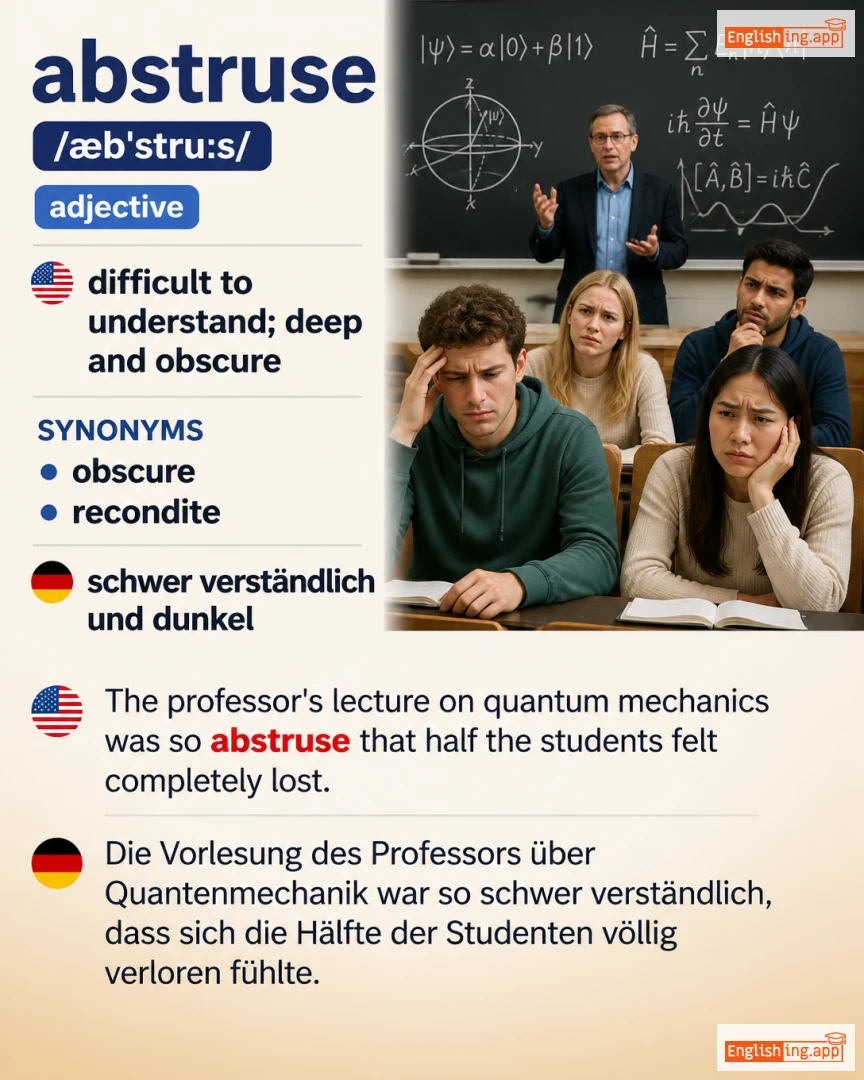
Abstruse: English vocabulary meaning and example
Learn the English word "Abstruse".
Meaning: Abstruse, adjective. It means difficult to understand; deep and obscure. Synonyms: obscure, recondite.
Example: The professor's lecture on quantum mechanics was so abstruse that half the students felt completely lost.
German: Abstruse beschreibt etwas sehr Tiefes, Kompliziertes oder Technisches, das schwer zu verstehen ist.
German example: Die Vorlesung des Professors über Quantenmechanik war so schwer verständlich, dass sich die Hälfte der Studenten völlig verloren fühlte.
#LearnEnglish #EnglishVocabulary #Englishing
 de
de
Abscond: English vocabulary meaning and example
Learn the English word "Abscond".
Meaning: Abscond, verb. It means to leave hurriedly and secretly, especially to escape the law. Synonyms: flee, escape.
Example: The treasurer absconded with the company's funds before the audit began.
German: Abscond bedeutet, schnell und heimlich zu verschwinden, oft um dem Gesetz oder einer Strafe zu entkommen. Es klingt nach Flucht nach etwas Falschem.
German example: Der Schatzmeister floh mit den Geldern des Unternehmens, bevor die Prüfung begann.
#LearnEnglish #EnglishVocabulary #Englishing
 de
de
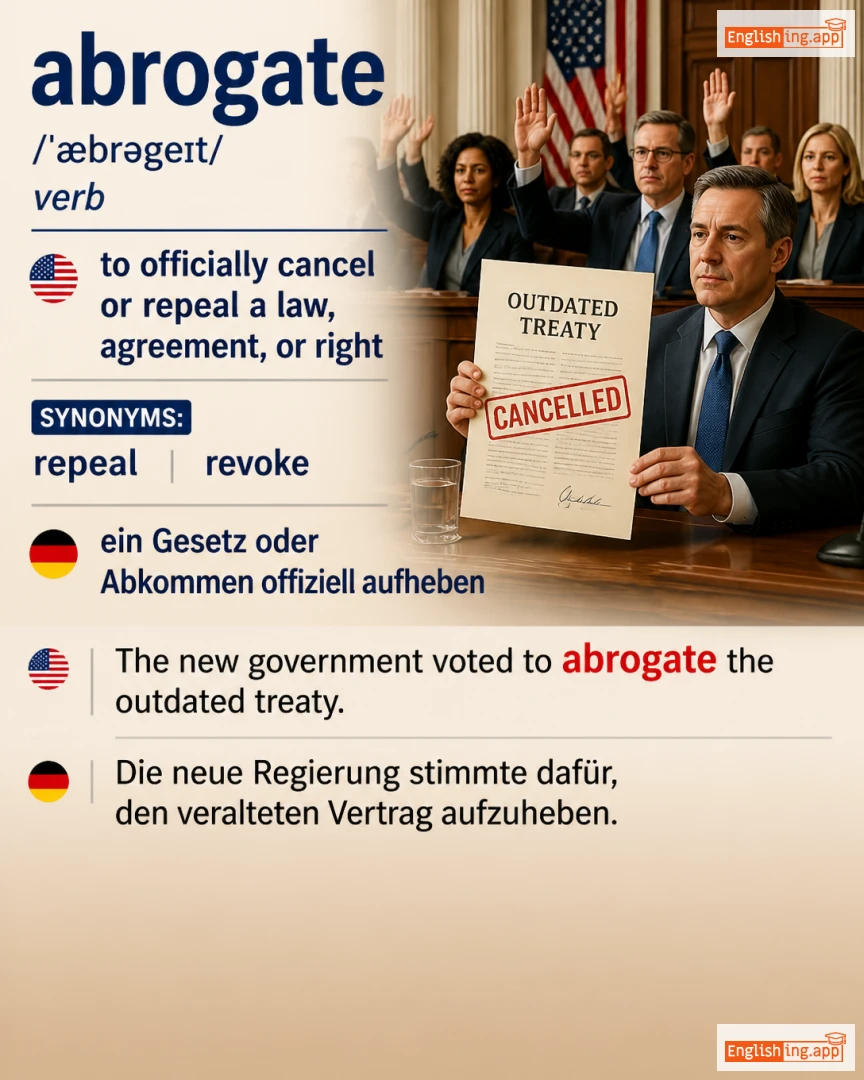
Abrogate: English vocabulary meaning and example
Learn the English word "Abrogate".
Meaning: Abrogate, verb. It means to officially cancel or repeal a law, agreement, or right. Synonyms: repeal, revoke.
Example: The new government voted to abrogate the outdated treaty.
German: Abrogate bedeutet, ein Gesetz, Abkommen oder Recht offiziell aufzuheben. Das passiert oft durch eine Regierung oder eine andere Autorität.
German example: Die neue Regierung stimmte dafür, den veralteten Vertrag aufzuheben.
#LearnEnglish #EnglishVocabulary #Englishing
 de
de
Abjure: English vocabulary meaning and example
Learn the English word "Abjure".
Meaning: Abjure, verb. It means to formally reject or give up a belief, habit, or loyalty. Synonyms: renounce, forsake.
Example: After years of conflict, the leader chose to abjure violence and seek peace.
German: Abjure bedeutet, einem Glauben, einer Gewohnheit oder einer Loyalität formell abzuschwören. Es klingt wie ein ernster, öffentlicher Verzicht.
German example: Nach Jahren des Konflikts entschied sich der Anführer, der Gewalt abzuschwören und Frieden zu suchen.
#LearnEnglish #EnglishVocabulary #Englishing
 de
de
Abhor: English vocabulary meaning and example
Learn the English word "Abhor".
Meaning: Abhor, verb. It means to hate something deeply; to regard with disgust. Synonyms: detest, loathe.
Example: She abhors any form of cruelty toward animals.
German: Abhor bedeutet, etwas zutiefst zu hassen oder zu verabscheuen. Es ist stärker als normales Nichtmögen und klingt oft moralisch sehr entschieden.
German example: Sie verabscheut jede Form von Grausamkeit gegenüber Tieren.
#LearnEnglish #EnglishVocabulary #Englishing
 de
de
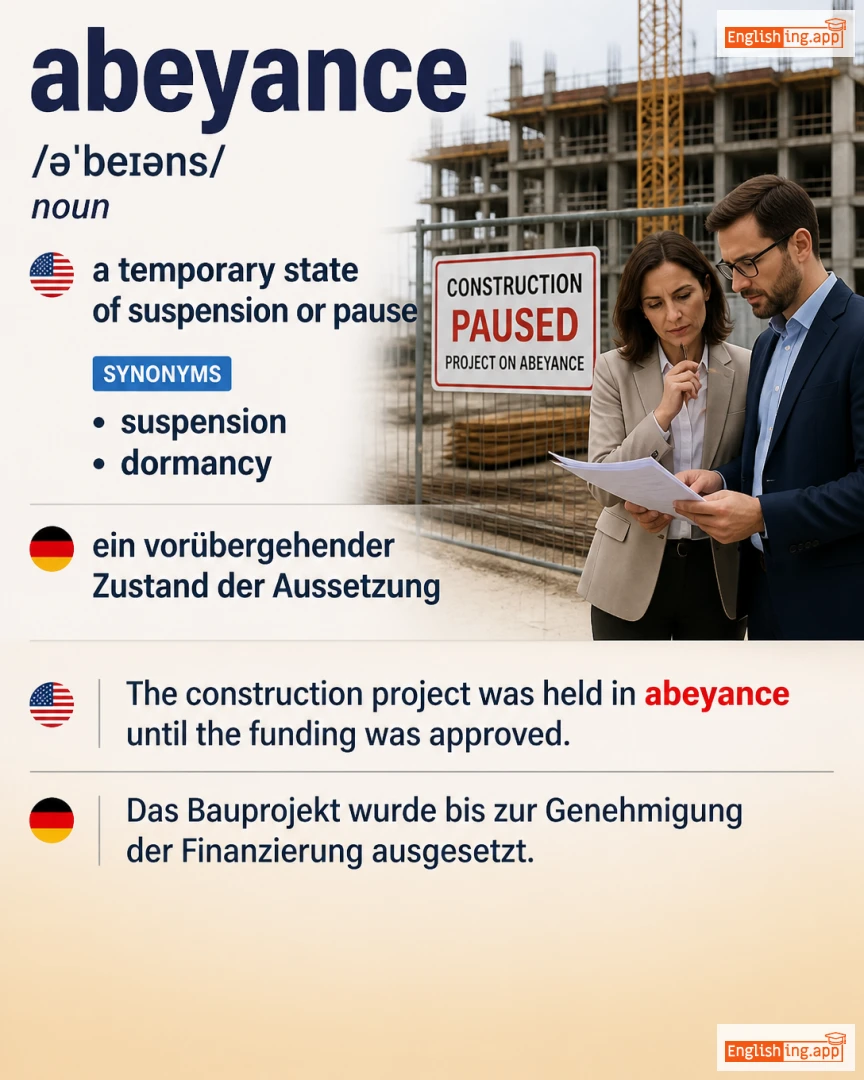
Abeyance: English vocabulary meaning and example
Learn the English word "Abeyance".
Meaning: Abeyance, noun. It means a temporary state of suspension or pause. Synonyms: suspension, dormancy.
Example: The construction project was held in abeyance until the funding was approved.
German: Abeyance bedeutet, dass etwas vorübergehend pausiert oder ausgesetzt ist. Es ist nicht beendet, sondern wartet darauf, später fortgesetzt zu werden.
German example: Das Bauprojekt wurde bis zur Genehmigung der Finanzierung ausgesetzt.
#LearnEnglish #EnglishVocabulary #Englishing
 de
de
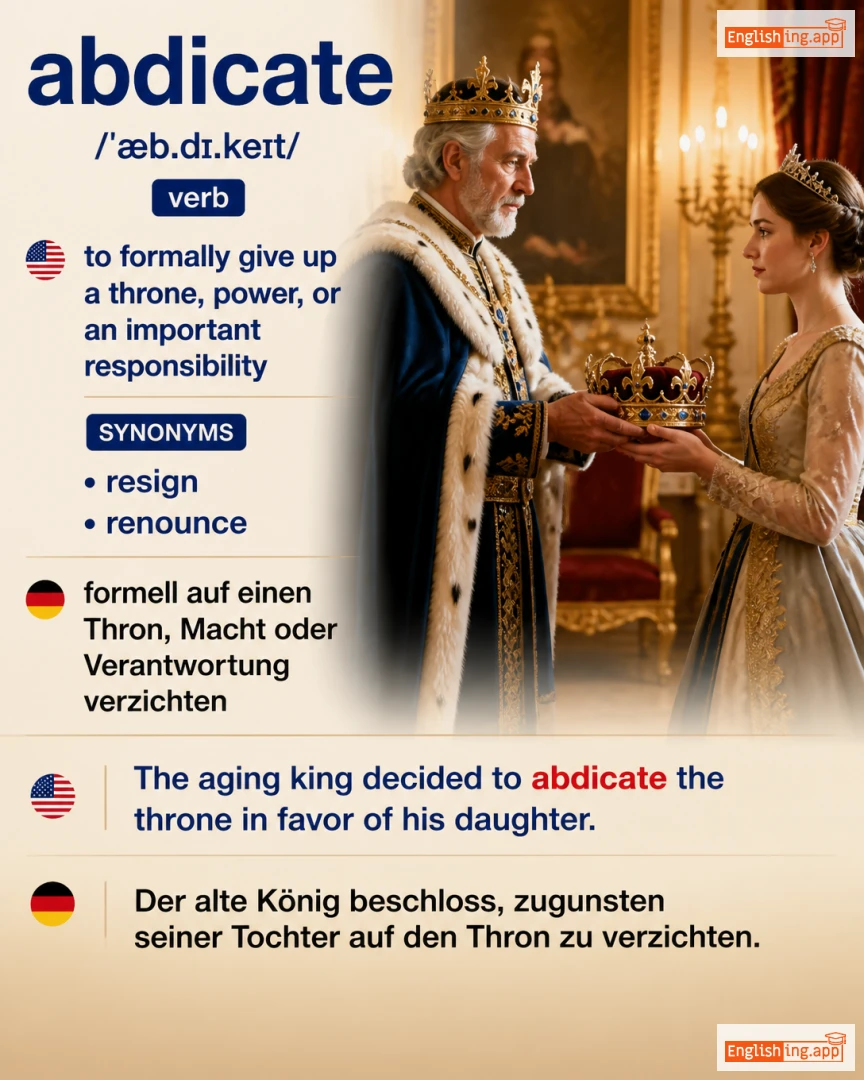
Abdicate: English vocabulary meaning and example
Learn the English word "Abdicate".
Meaning: Abdicate, verb. It means to formally give up a throne, power, or an important responsibility, usually by stepping down from a high position. Synonyms: resign, renounce.
Example: The aging king decided to abdicate the throne in favor of his daughter.
German: Abdicate bedeutet, formell auf einen Thron, Macht oder eine wichtige Verantwortung zu verzichten. Es beschreibt, dass jemand freiwillig von einer Autoritätsposition zurücktritt.
German example: Der alte König beschloss, zugunsten seiner Tochter auf den Thron zu verzichten.
#LearnEnglish #EnglishVocabulary #Englishing
 de
de
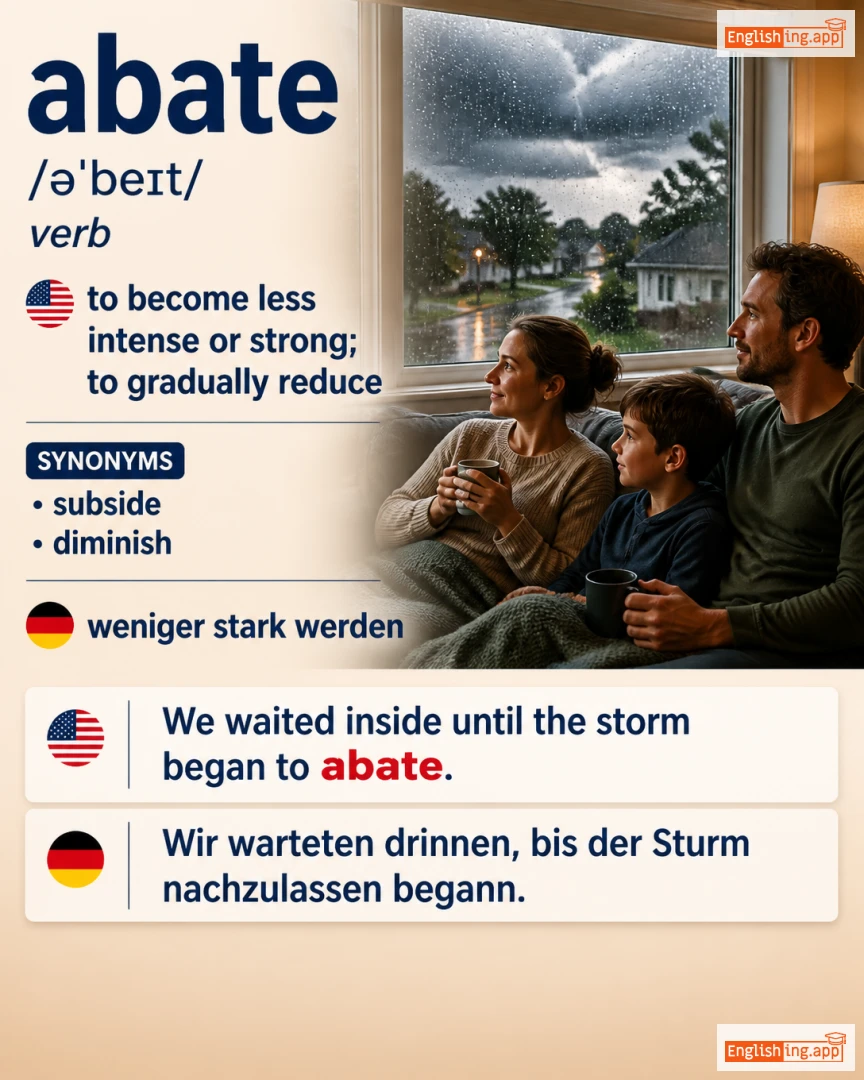
Abate: English vocabulary meaning and example
Learn the English word "Abate".
Meaning: Abate, verb. It means to become less intense or to gradually reduce, like a storm losing power or pain slowly fading away. Synonyms: subside, diminish.
Example: We waited inside until the storm began to abate.
German: Abate bedeutet, dass etwas weniger stark wird oder allmählich nachlässt. Das passt zu einem Sturm, Schmerz oder Druck, der schwächer wird.
German example: Wir warteten drinnen, bis der Sturm nachzulassen begann.
#LearnEnglish #EnglishVocabulary #Englishing
 de
de
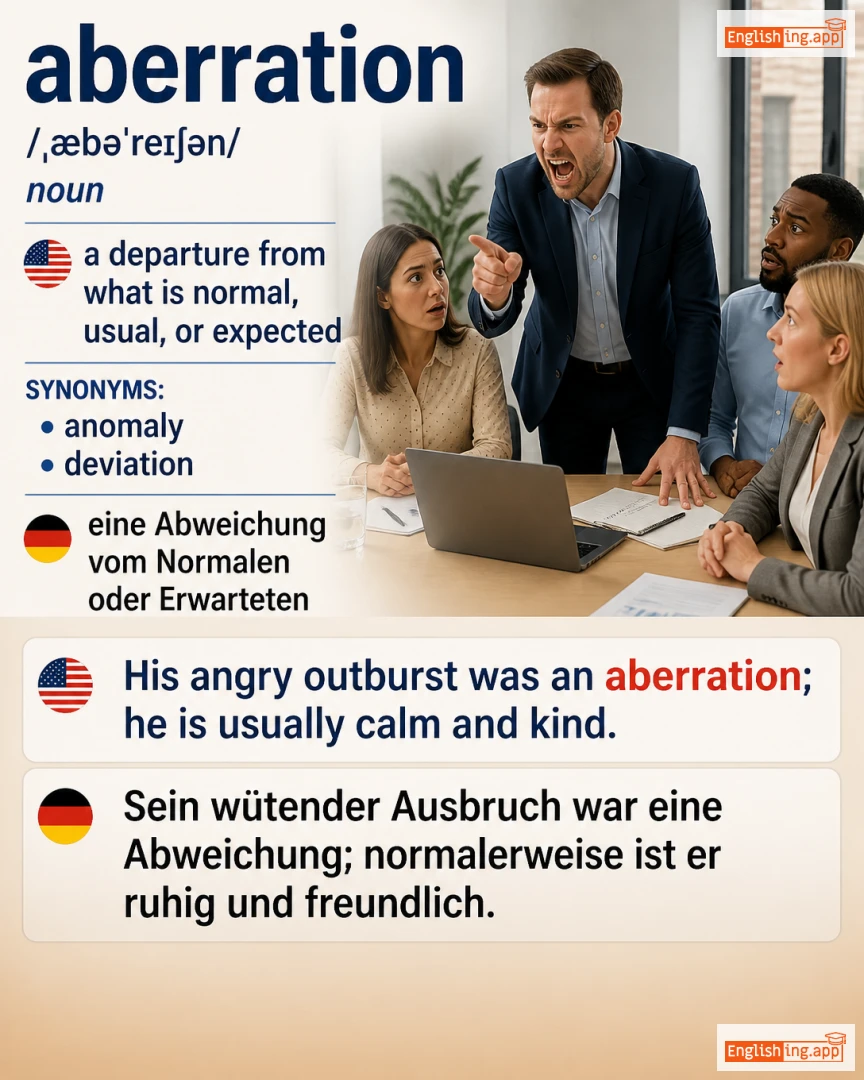
Aberration: English vocabulary meaning and example
Learn the English word "Aberration".
Meaning: Aberration, noun. It describes a moment, action, or result that is not normal or expected, like a strange one-time break from the usual pattern. Synonyms: anomaly, deviation.
Example: His angry outburst was an aberration; he is usually calm and kind.
German: Aberration bedeutet eine Abweichung von dem, was normal oder erwartet ist. Man benutzt es oft für einen seltenen Fehler oder ein ungewöhnliches Ereignis.
German example: Sein wütender Ausbruch war eine Abweichung; normalerweise ist er ruhig und freundlich.
#LearnEnglish #EnglishVocabulary #Englishing
 de
de
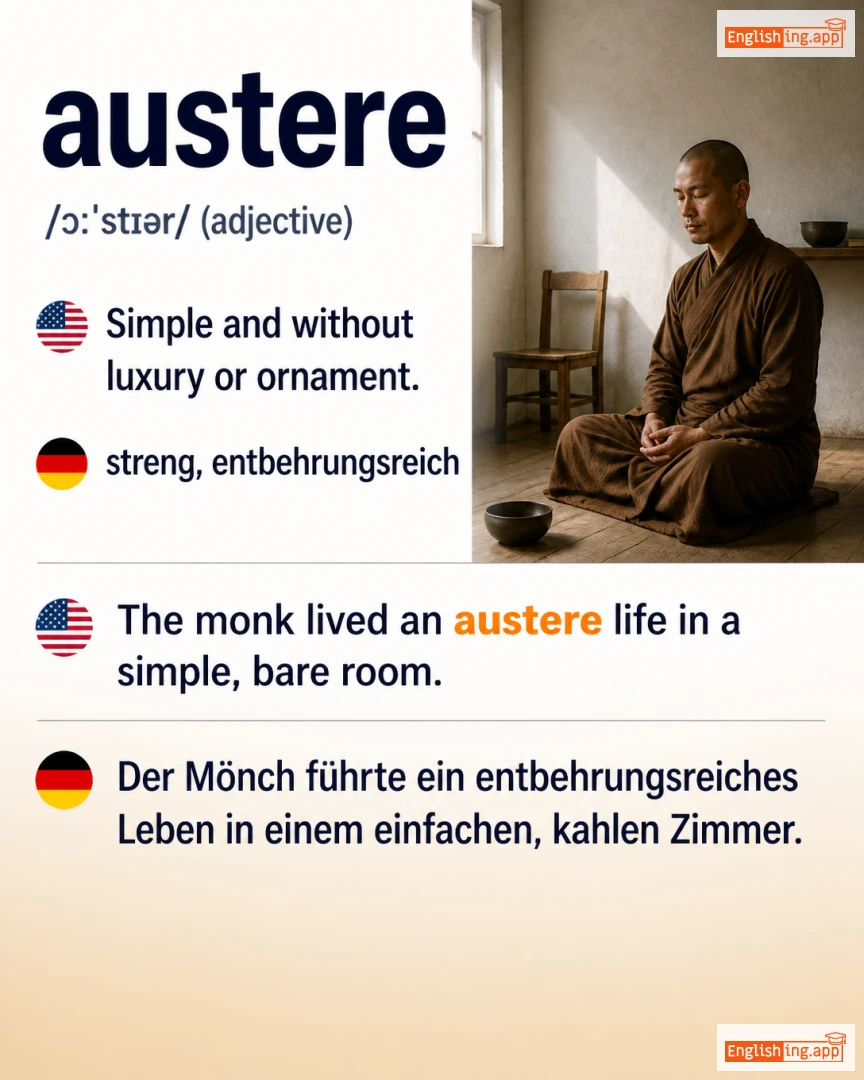
Austere: English vocabulary meaning and example
Learn the English word "Austere".
Meaning: Meaning: simple and without luxury or ornament.
Example: The monk lived an austere life in a simple, bare room.
German: Streng oder entbehrungsreich.
German example: Der Mönch führte ein entbehrungsreiches Leben in einem einfachen, kahlen Zimmer.
#LearnEnglish #EnglishVocabulary #Englishing
 de
de
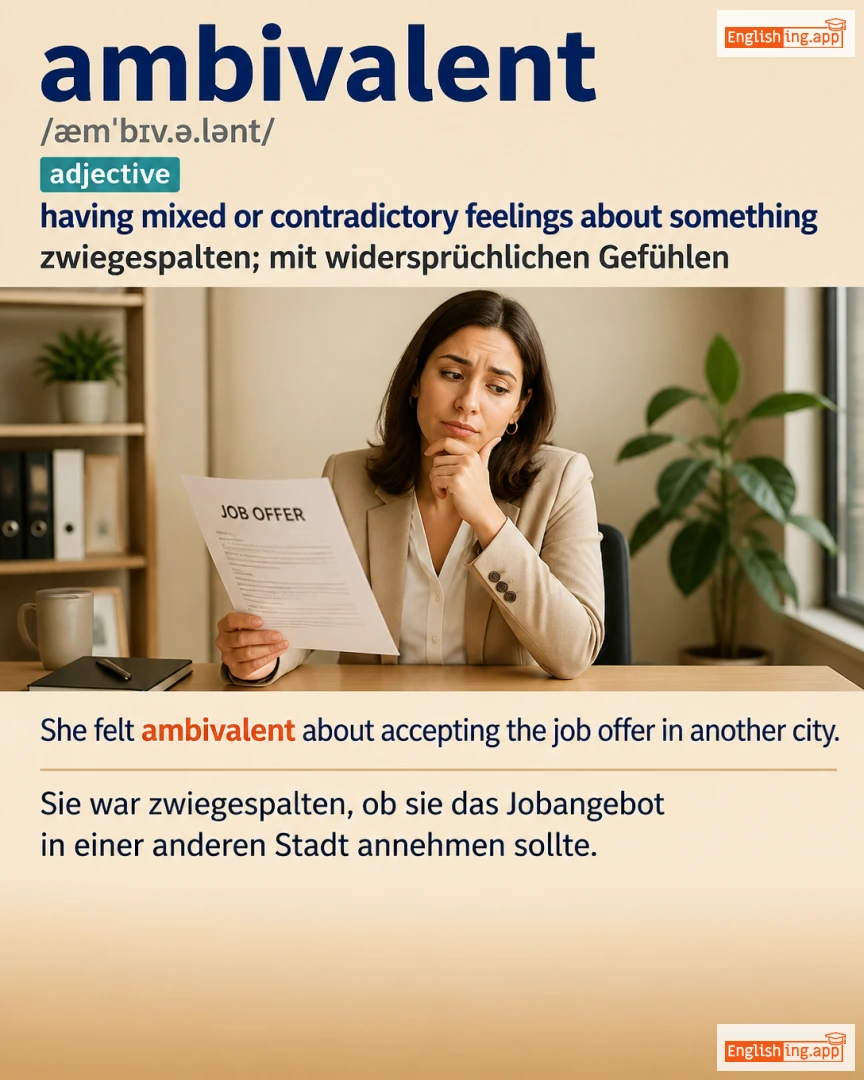
Ambivalent: English vocabulary meaning and example
Learn the English word "Ambivalent".
Meaning: having mixed or contradictory feelings about something.
Example: She felt ambivalent about accepting the job offer in another city.
German: ambivalent — zwiegespalten; gleichzeitig positive und negative Gefühle habend.
German example: Sie war zwiegespalten, ob sie das Jobangebot in einer anderen Stadt annehmen sollte.
#LearnEnglish #EnglishVocabulary #Englishing
 de
de
Auspicious: English vocabulary meaning and example
Learn the English word "Auspicious".
Meaning: Showing signs that success is likely.
Example: A sunny morning was an auspicious start to their wedding day.
German: Vielversprechend.
German example: Ein sonniger Morgen war ein vielversprechender Beginn für ihren Hochzeitstag.
#LearnEnglish #EnglishVocabulary #Englishing
 de
de
Acquire: English vocabulary meaning and example
Learn the English word "Acquire".
Meaning: to gain or obtain something, especially through effort or experience.
Example: She worked hard to acquire the skills needed for her new job.
German: Erwerben — etwas durch Mühe oder Erfahrung erlangen.
German example: Sie hat hart gearbeitet, um die Fähigkeiten zu erwerben, die sie für ihre neue Stelle benötigte.
#LearnEnglish #EnglishVocabulary #Englishing