The Girl Who Never Gave Up on Piano

Nisha always dreamed that one day she would play piano. Her aunt was a piano teacher.

"Do you aspire to be a pianist?" her aunt asked.

"Yes!" Nisha said. "I want to attain that dream."

"Then you must attend my classes," aunt said. "But I warn you - it's not easy. Anyone can start, but not everyone can finish."

The first month was awful. Nisha played badly. Her fingers were stiff. She could only learn basic notes.

"I'll never be able to do this," she cried one day. "I'm the worst student around."

"Never say that," aunt said. "You're learning. Everyone plays badly at first. The amount of practice you need is huge. But if you never give up, you will succeed."

Nisha often practiced before sleeping. Sometimes she was almost asleep sitting at the piano. Her hands were attached to the keys.

But even after three months, improvement was very little. One day Nisha was absent from class. She had become discouraged.

Her aunt went to her house. "Why were you absent?"

"Because I'm awful," Nisha said. "I practice such an amount of time, but nothing is happening. Almost a year has passed. But I still play badly."

"Do you still aspire to be a pianist?" aunt asked.

"Always," Nisha whispered.

"Then never stop. You know, I also played badly for years. Everyone around me said I should quit. But I never did. And look - now I teach. You can attain your dream. But never think it's easy. Nothing worth attaining is easy."

Nisha started again. She always attended classes. She never missed practice. Often her fingers hurt. But she continued.

Six months later, her aunt made an announcement. "We're having a recital. Anyone who wants can perform."

Nisha was nervous. "But I'm still at basic level."

"But you're not playing badly anymore," aunt smiled. "Try."

On the night of the recital, Nisha went on stage. All the ballet dancers, other piano students, families - everyone was around.

She played the first note. Then the second. Then the whole piece. It wasn't perfect. But it wasn't awful either.

When she finished, everyone clapped. Her aunt came to her and said, "You did it. Remember when you said you'd never be able to?"

"I remember playing so badly," Nisha laughed. "I remember being almost asleep from practicing. I remember that awful first month."

"But you never quit," aunt said proudly. "That's what matters. Anyone can aspire. But only those who never give up can attain their dreams."

Years later, Nisha became a piano teacher herself. When students would say, "I play so badly, I should quit," she would say:

"I also played badly. For months. I was absent from class because I felt awful. But my aunt taught me - if you truly aspire to something, you must never quit. Always practice. Always attend class. Never think the amount of effort is too much. Anyone around you may doubt you. You may almost give up. You may feel awful and play badly. But if you attach yourself to your dream and never let go - you will attain it."

She often said, 'Some dreams take months, some take years. But if you aspire to it always, and never quit, you'll attain it. Not today, not tomorrow, but someday. And when you do, you'll realize - every awful practice session, every time you played badly, every amount of struggle - it was all worth it. Because anyone can dream. But only those who never give up can make dreams real.'

And her students, inspired by her story, learned not just basic piano, but something more important - that aspiring is easy, but attaining requires never giving up, always trying, and being attached to your dream no matter how awful things seem around you. Because in the end, those who never quit are the ones who always succeed.

The Girl Who Never Gave Up on Piano
/
/

The Girl Who Never Gave Up on Piano - Mask Toggle

Emoji
Word Images Past Past Participle Third Person Singular Gerund Meaning Example Sentence Example Expression Example Expression Meaning Synonyms Antonyms Collocations
🚫
••••••
/ˈæbsənt/
adjective
••••••
- •••••• - •••••• - •••••• - •••••• - ••••••
not present at a place or event
••••••

She was absent from the meeting yesterday.

••••••
- •••••• - ••••••
missing, away, unavailable, absent-minded
••••••
present, available
••••••
absent from class, absent from work, absent due to illness
••••••
••••••
/ˈɔːlmoʊst/
adverb
••••••
- •••••• - •••••• - •••••• - •••••• - ••••••
very nearly, but not exactly or completely
••••••

He almost missed the train.

••••••

almost there

••••••
close to completing or reaching a goal
••••••
nearly, practically, virtually, approximately, about
••••••
completely, entirely, totally
••••••
almost done, almost impossible, almost every, almost finished
••••••
♾️
••••••
/ˈɔːlweɪz/
adverb
••••••
- •••••• - •••••• - •••••• - •••••• - ••••••
at all times; on every occasion
••••••

She always wakes up early in the morning.

••••••

as always

••••••
as is usual or expected
••••••
forever, constantly, perpetually, continually
••••••
never, rarely, seldom
••••••
always ready, always happy, always late, always available
••••••
💰
••••••
/əˈmaʊnt/
noun/verb
••••••
- ••••••
amounted
••••••
amounted
••••••
amounts
••••••
amounting
••••••
a quantity of something, typically the total of a thing or things in number, size, value, or extent
••••••

The total amount of money is not enough.

••••••

amount to nothing

••••••
to have no significant result or value
••••••
quantity, sum, total, volume, measure
••••••
lack, zero, nothing
••••••
large amount, small amount, total amount
••••••
👤
••••••
/ˈɛniwʌn/
pronoun
••••••
- •••••• - •••••• - •••••• - •••••• - ••••••
any person at all; used to refer to an unspecified person
••••••

Does anyone know the answer to this question?

••••••

anyone's guess

••••••
something that is very difficult to predict or know
••••••
somebody, anybody, person, individual, someone
••••••
nobody, no one
••••••
anyone else, if anyone, hardly anyone, ask anyone
••••••
🔄
••••••
/əˈraʊnd/
adverb, preposition
••••••
- •••••• - •••••• - •••••• - •••••• - ••••••
situated on every side; in a circular way; approximately
••••••

There are many restaurants around the park.

••••••

turn around

••••••
to move so as to face in the opposite direction
••••••
about, nearly, nearby, approximately, surrounding
••••••
far, away, beyond
••••••
look around, move around, all around, turn around
••••••
😴
••••••
/əˈsliːp/
adjective
••••••
- •••••• - •••••• - •••••• - •••••• - ••••••
in a state of sleep
••••••

The baby is fast asleep.

••••••

fall asleep

••••••
to begin sleeping
••••••
sleeping, dozing, resting, napping
••••••
awake, alert
••••••
fast asleep, fall asleep, sound asleep
••••••
🌟
••••••
/əˈspaɪər/
verb
••••••
- ••••••
aspired
••••••
aspired
••••••
aspires
••••••
aspiring
••••••
to have a strong desire to achieve something
••••••

Many students aspire to study abroad.

••••••

aspire to greatness

••••••
to aim for significant achievement
••••••
desire, aim, hope, strive, long
••••••
doubt, neglect, avoid
••••••
aspire to, aspire for success, aspire higher, aspire towards
••••••
📎
••••••
/əˈtætʃ/
verb
••••••
- ••••••
attached
••••••
attached
••••••
attaches
••••••
attaching
••••••
to join or fasten something to another thing
••••••

Please attach the document to the email before sending.

••••••

emotionally attached

••••••
having strong emotional feelings towards someone or something
••••••
connect, join, fasten, fix, link
••••••
detach, remove, separate
••••••
attach a file, attach importance, attach a label, attach responsibility
••••••
🎯
••••••
/əˈteɪn/
verb
••••••
- ••••••
attained
••••••
attained
••••••
attains
••••••
attaining
••••••
to achieve or reach something
••••••

She worked hard to attain her goals.

••••••
- •••••• - ••••••
achieve, reach, accomplish, obtain
••••••
fail, lose, abandon
••••••
attain success, attain goals, attain a level
••••••
🎓
••••••
/əˈtɛnd/
verb
••••••
••••••
attended
••••••
attended
••••••
attends
••••••
attending
••••••
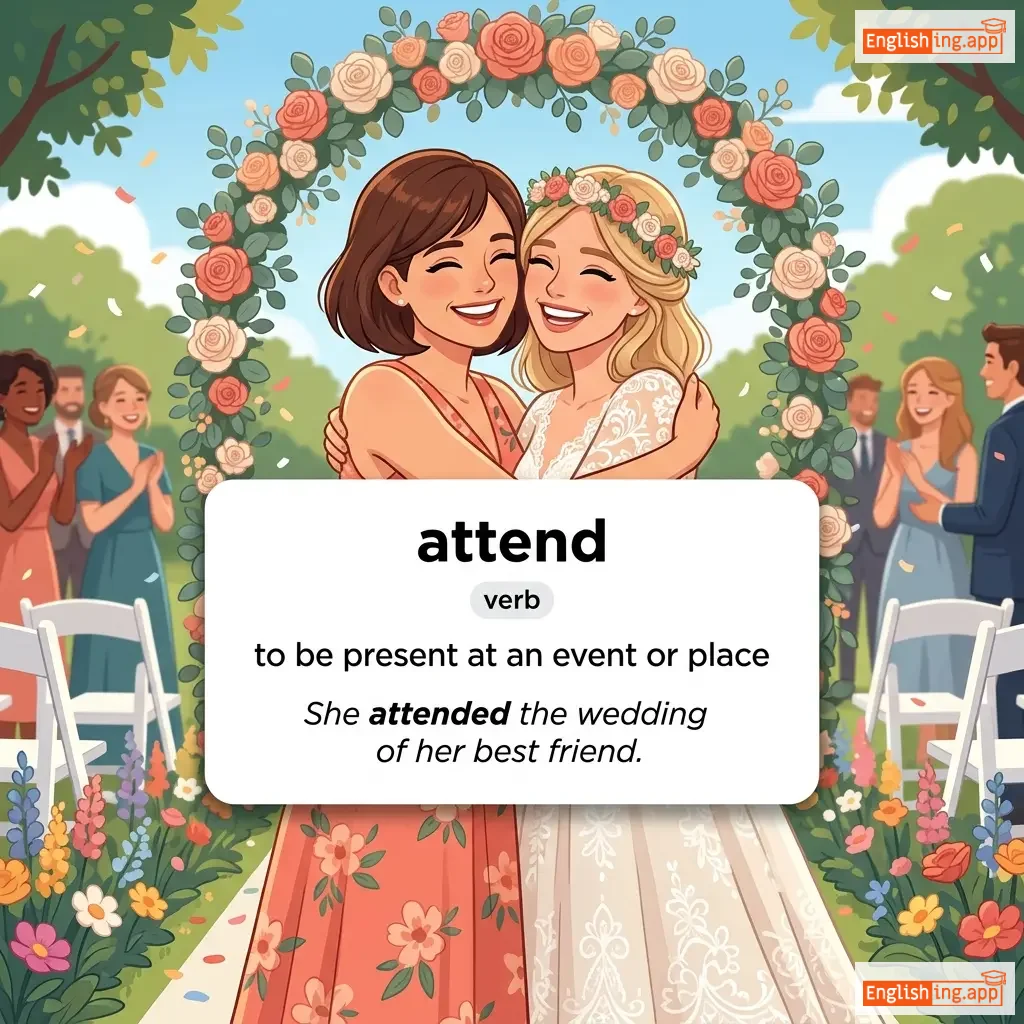
to be present at an event or place
••••••

She attended the wedding of her best friend.

••••••

attend to

••••••
to deal with or take care of something
••••••
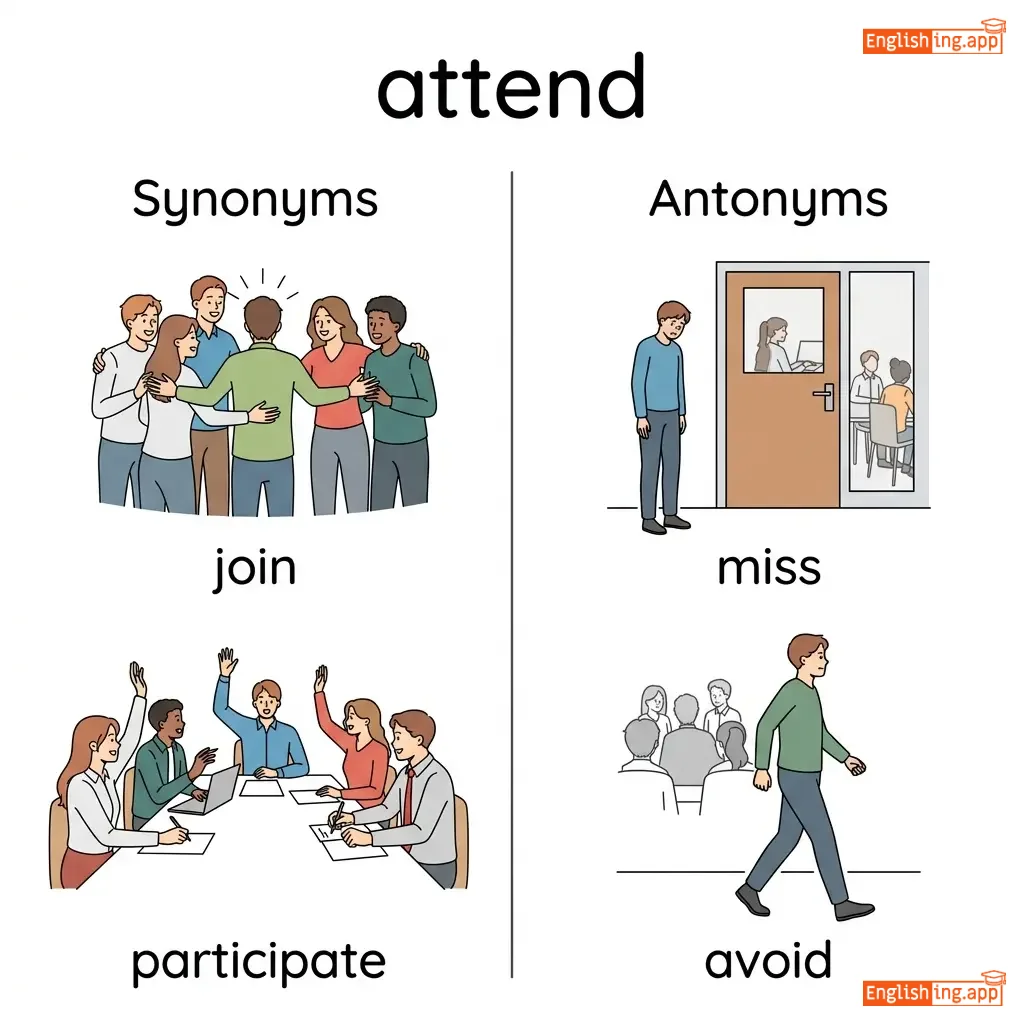
join, participate, visit, appear
••••••
miss, avoid, neglect
••••••
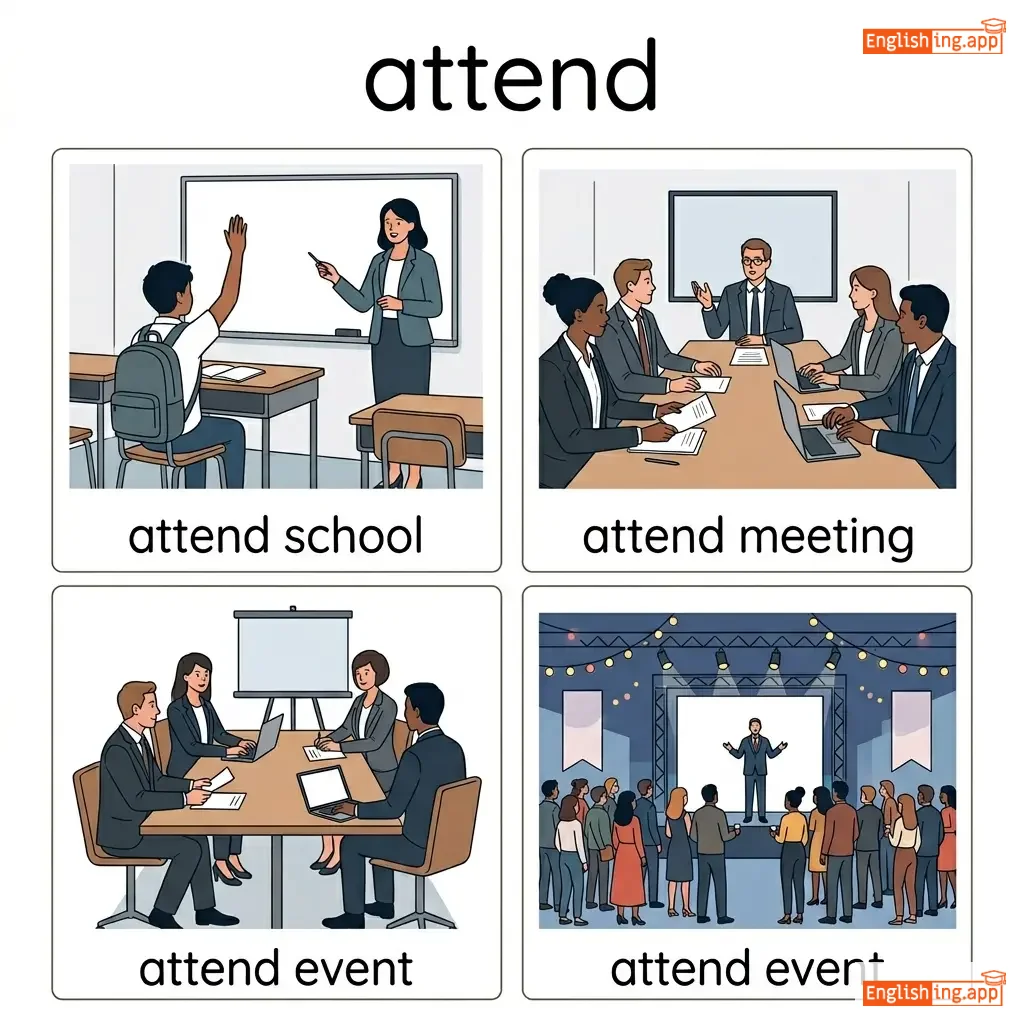
attend school, attend meeting, attend event, attend function
••••••
👩‍🦳
••••••
/ænt/
noun
••••••
- •••••• - •••••• - •••••• - •••••• - ••••••
the sister of your father or mother, or the wife of your uncle
••••••

My aunt always gives me gifts on my birthday.

••••••
- •••••• - ••••••
relative, family member, guardian
••••••
uncle, stranger
••••••
dear aunt, loving aunt, aunt and uncle, aunt’s house
••••••
😖
••••••
/ˈɔːfəl/
adjective
••••••
- •••••• - •••••• - •••••• - •••••• - ••••••
very bad or unpleasant
••••••

The weather was awful during our trip.

••••••

awful lot

••••••
a great deal or large amount of something
••••••
terrible, dreadful, horrible, unpleasant, appalling
••••••
wonderful, pleasant, delightful
••••••
feel awful, look awful, awful weather, awful mistake
••••••
😞
••••••
/ˈbædli/
adverb
••••••
- •••••• - •••••• - •••••• - •••••• - ••••••
in a way that is not good; poorly or severely
••••••

He performed badly in the exam.

••••••

badly off

••••••
to be in a poor or difficult situation
••••••
poorly, severely, inadequately, wrongly, defectively
••••••
well, successfully, adequately
••••••
badly hurt, badly damaged, badly need, badly affected
••••••
🩰
••••••
/bæˈleɪ/
noun
••••••
- •••••• - •••••• - •••••• - •••••• - ••••••
a highly stylized and artistic form of dance
••••••

She has trained for years in classical ballet.

••••••
- •••••• - ••••••
dance, performance, choreography, art form
••••••
stillness, inactivity
••••••
classical ballet, ballet dancer, ballet performance
••••••
🔑
••••••
/ˈbeɪsɪk/
adjective
••••••
- •••••• - •••••• - •••••• - •••••• - ••••••
forming the most important or simplest part of something
••••••

She taught me the basic rules of chess.

••••••

back to basics

••••••
returning to simple, fundamental principles
••••••
fundamental, essential, primary, simple, elementary
••••••
advanced, complex, secondary
••••••
basic knowledge, basic needs, basic rules, basic skills
••••••
🗓️
••••••
/mʌnθ/
noun
••••••
- •••••• - •••••• - •••••• - •••••• - ••••••
a period of about four weeks or one-twelfth of a year
••••••

She visits her grandparents once a month.

••••••

flavor of the month

••••••
something that is temporarily popular
••••••
thirty days, period, lunar month
••••••
year, day
••••••
next month, this month, per month, monthly payment
••••••
🚫
••••••
/ˈnɛvər/
adverb
••••••
- •••••• - •••••• - •••••• - •••••• - ••••••
at no time in the past or future; not ever
••••••

I have never seen such a beautiful sunset.

••••••
- •••••• - ••••••
not at all, under no circumstances, in no way, by no means
••••••
always, ever
••••••
never seen, never been, never heard, never thought
••••••
🔁
••••••
/ˈɔːfən/
adverb
••••••
- •••••• - •••••• - •••••• - •••••• - ••••••
frequently, many times
••••••

I often visit my grandparents on weekends.

••••••
- •••••• - ••••••
frequently, regularly, repeatedly, commonly
••••••
rarely, seldom, never
••••••
often visit, often see, often talk, often hear
••••••
🎹
••••••
/piˈænoʊ/
noun
••••••
- •••••• - •••••• - •••••• - •••••• - ••••••
a large keyboard musical instrument with black and white keys that produces sound by striking strings with hammers
••••••

The little girl practiced piano for one hour every day.

••••••
- •••••• - ••••••
pianoforte
••••••
- ••••••
play piano, piano lesson, grand piano, upright piano
••••••